The Deeper Truths of Yoga Revealed
This text was machine-transcribed from the printed book and may contain errors. Select the words and choose “Report a mistake”.
'Nithya Yoga is not the path TO bliss. Nithya Yoga is the path OF bliss'
Paramahamsa
Paramahamsa says let us look at what
Patanjali wanted to convey. Let us first
analyze the word yoga. In Sanskrit, the
word yoga literally means to unite or to
become one with.
Again and again, all the Eastern mystics have declared that we are energy! The body is not just a bio- mechanism as we think. Our body is an expression of energy. In the Eastern system, we call the body 'annamaya kosha', which is a sheath or outer shell of the energy. We are Energy. We are something more than what we think we are.
Having a direct experience or communion with that energy is what is called yoga. We are not human beings striving for a spiritual experience but we are spiritual beings having the human experience.
The 'path to ecstasy' implies that right now we are not in bliss and that we need to work towards ecstasy. So, ecstasy is a state that we need to strive for, a goal we need to achieve, a destination we need to reach. 'We need to be in' means 'as of now, we are not'.
The 'path of ecstasy' means the very
journey itself is ecstasy. There is no
implication here that
we are in want or
lack something or
that we need to
strive towards some
end. There is no goal
to be achieved or
destination to be
reached. Although
we might not realize
completely, we are
already in ecstasy
and we are
journeying in
ecstasy. Nithya Yoga
is all about
experiencing and
deepening the
understanding of
this truth.
Nithya Yoga simply translated would mean 'eternal union'. Eternal means past, present and future. The one thing that is 'eternal' is the truth of our nature, which is ananda or bliss. Every moment that we experience and express this, we are in total, complete 'union' with this bliss. When this happens continuously and expresses itself constantly, we experience 'eternal uniting'...nithya yoga.
Bliss Is Our Nature and Our Birthright
What is the authority on which this statement is made?
Paramahamsa says that every baby that comes into this world is an expression of this blissful state of meditation. Newborn babies come into this world with a high level of consciousness but through societal conditionings, upbringing and lifestyle we pollute their state of pure awareness.
Children, as they grow up, will constantly be expressing their natural state of bliss. They are more or less in ecstasy. We observe them spinning around, we see them dancing and jumping all over the place. They laugh and giggle for no obvious reason at all. As adults, we suppress their joy. They are told, 'Don't spin!' 'Stop jumping!' 'Stop laughing!' 'Be quiet!' We have somehow forgotten this natural energy, this naturally uninhibited, blissful state that we all expressed as a child and still have within us. It is, however, lost under all the suppression and conditionings we also received as a child.
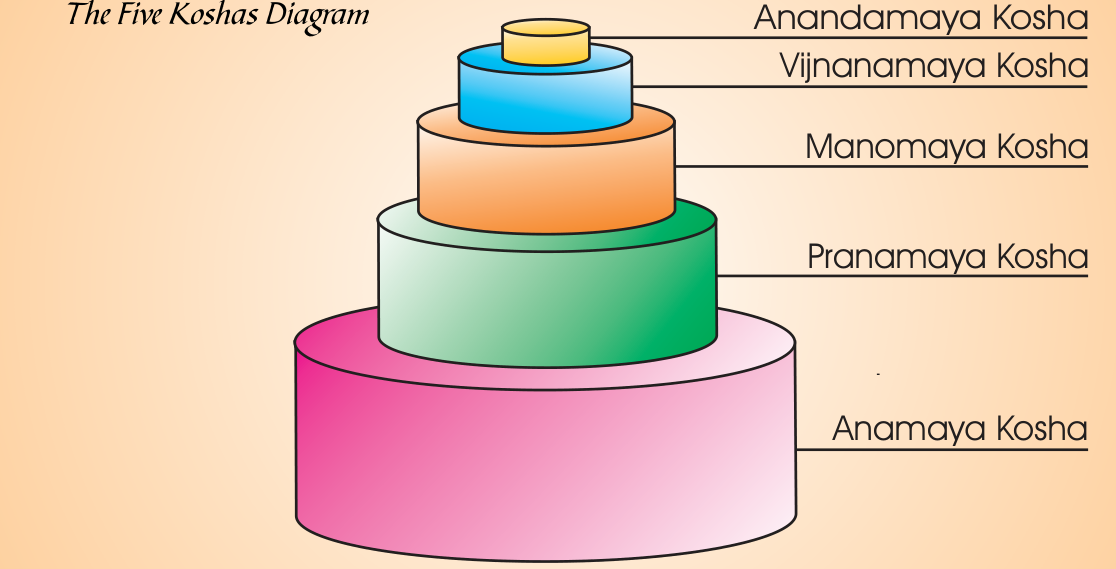
According to the Upanishads, the oldest treatise on spirituality, we have five sheaths termed as kosha in Sanskrit. These five sheaths encase our atman, our Self. They are in order of subtlety:
- annamaya kosha (physical body),
- pranamaya kosha (pranic body),
- manomaya kosha (mental body),
- vijnanamaya kosha (knowledge body) and finally;
- anandamaya kosha (bliss body).
The presence of the anandamaya kosha (bliss body) is further proof of the fact that our very nature is bliss. It exists within us. It is always there. However, it is more or
Additionally, we are composed of seven bodies and they are: the physical body, the pranic, the etheric, the spiritual, the causal, the cosmic and at our core is the nirvanic
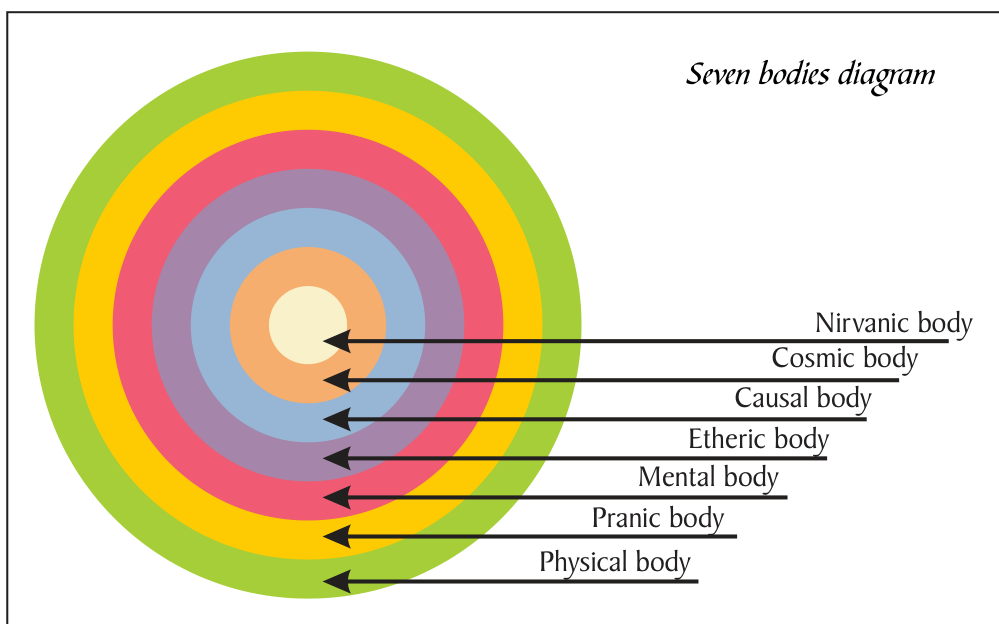
The final nirvanic body is that of total
uniting or expansive oneness with the
divine consciousness that is within us.
The final authority on the concept that our very nature is bliss is the authority given by the masters. All of the masters down the ages, from every culture and religion emphasize that by our very nature we are bliss. Rarely do all masters agree on the same thing because each spiritual master expresses their own individual experience in a unique way. The expressions of Buddha, Krishna and Jesus are different, however, their experiences are one and the same and that experience is one of bliss.
In its present state our body-mind system is not capable of staying in the exalted state of ecstasy. Too much inner pollution due to social conditionings, faulty habits and incorrect perceptions has weakened our capacity to receive the high voltage energy of ecstasy. The modern scientific, materialistic, competitive, achievement oriented lifestyle has led to a total disconnection with our inner self. We have become imbalanced in our development and growth. Through Nithya Yoga the sincere seeker will be prepared not only to experience bliss but also to express it in all aspects of life.
Ashtanga Yoga does not mean eight 'steps'. It means eight 'parts'
The aim of Nithya Yoga is to teach us how to use the tools given by Patanjali in the most effective way. How to groom our body-mind to experience, sustain and express the energy of enlightenment.
The modern mind demands a modern approach.
One of the important teachings that
Raghupati yogi expressed to
Paramahamsa was that Patanjali's
Ashtanga Yoga was never meant to be
practiced in a step by step, linear
progression. Over the years, many have
misinterpreted Ashtanga Yoga as being a
step by step process, whereby a
practitioner must master one step before
attempting the next step.
Patanjali has used the word ashta-anga (8 limbs), not ashta-pati (8 steps). He has done this with a purpose. All 8 limbs have to come together simultaneously for progress to happen. Science and spirituality, matter and energy are like the two legs of one body. If only one leg is developed at the cost of the other, then there will be lopsided growth. Therefore, a typical Nithya Yoga class is structured in such a way that we work on all eight limbs simultaneously.
Paramahamsa states that if one were to practice Ashtanga Yoga in this linear progression, it may take the practitioner lifetimes to reach the final outcome; the eighth step samadhi (bliss).
Samadhi is not an end result. Samadhi is not an explosion of bliss that happens to a favored few. In very simple terms, whenever we live with awareness in the moment, totally and completely absorbed in whatever we are doing, we are in samadhi. For example, whether cooking, writing, studying, playing with our kids, dancing or whatever, we are in the present moment. We are in the 'now', which is the only thing that is truly available to us. During such moments, we experience this state of samadhi or bliss. When this state is a continuous 24/7, 365 day experience we call it enlightenment.
In a Nithya Yoga class, instead of practicing with the understanding that samadhi or bliss is some far off goal we have to work hard to attain, the minute we walk into our class and center ourselves, we start with the idea that we are bliss and throughout the session, we deepen this understanding that we are bliss. Every technique employed in a Nithya Yoga class is practiced with this strong understanding. This has a tremendous effect on our unconscious zone. Faulty perceptions are cleared, engraved memories are melted and energy blocks are removed. There is a complete harmonious flow in what we think, perceive and do.
When we start our practice with the understanding that we are blissful by nature, a deep transformation happens within us. We change our perception from seeing ourselves as lacking in energy or in a state of dis-ease to realizing ourselves as vibrant, blissful energy sources. Therefore, 'we are bliss' becomes our very experience and expression.
We start with the body and link it to the mind, through the breath. When we do the postures (asana) with the appropriate breathing (pranayama), our focus is
The Original Understanding of Yama and Niyama
Normally, yama (restraints) and niyama (personal conduct) are taken as the first two steps of the traditional linear model of yoga. Paramahamsa says that if one decided to master yama and only then move onto the second step, they would never be able to move onto the second step. Yama includes truthfulness. Paramahamsa says that no one can ever master truth until you realize and experience the 8th step of samadhi or bliss. Yama and niyama actually happen as a flowering. They are no longer disciplines that need to be forced on us, but attitudes and behaviors that arise out of the experiencing of
The five restraints (yama) include:
1) Non-violence (ahimsa):
Non violence has always been taught to us as a morality. No morality can actually be practiced. When we have a morality imposed on us, we begin practicing it out of fear or greed. Ultimately we only end up troubled and depressed. Paramahamsa says, 'Morality should not be based on our conscience which is societal but it should arise from our consciousness, which is spiritual.' Practicing non-violence should not be imposed as a law. Naturally, if there is a law, it is there to be broken!
When we practice the limbs of yoga simultaneously with the understanding that 'we are bliss', the practice of non-violence becomes a natural expression of this blissful state. We simply fall in tune with our true essence. How can we inflict violence on anything, anyone, or on ourselves when we experience our innate bliss?
2) Truthfulness (satya):
The truth has 3 dimensions;
i) Speaking the truth
ii) Thinking the truth
iii) Living the truth
Anyone can speak the truth but only a person who has the courage to live in awareness can think, speak and live the same truth, without any kind of editing or distortion.
During the practice of Nithya Yoga, we experience the understanding that we are by our very nature, sat-chit-ananda (truth-consciousness-bliss). Over time, our mind begins to realize this as truth. Finally, we begin to express this truth in our everyday life. Then, automatically there will be no gap between what we think, feel and say. All the three aspects will become a harmonious flow. There will be no need for editing. We will effortlessly speak, think and live all of our truths.
3) Non-stealing (asteya):
When do we steal? When we feel that someone else has that which we want but which we do not have or not to the extent that we desire, we are tempted to steal. Stealing is not merely limited to taking away a physical possession belonging to someone else. It can also include taking away their personal space and energy.
Additionally, if someone confides in us and we share a person's information with some other, we're stealing away that person's trust. We are stealing that space that has been entrusted to us.
If we look upon stealing as some rule we can't break, simply our minds look for opportunities to break it. Most of the times, when we make a decision to steal, it is usually a rash, unaware decision made from our unconscious. These decisions are made in the level of instinct.
When we practice yoga with complete awareness, we begin to operate from intuition. We are filled with a blissful peace. We experience a fullness that wipes away all sense of lack. We are never in want. So, non-stealing happens naturally. It is not a law imposed on us that needs to be obeyed out of fear of punishment.
4) C e l i b a c y (brahmacharya):
Commonly, when we hear the word brahmacharya, immediately we associate it with the practice of celibacy. 'Nothing could be further from the truth,' says Paramahamsa. Brabmacharya is the most misunderstood concept. It does not imply abstinence from sex. As the very word suggests, brahma means 'reality' and charya means 'to walk'. In other words, the period of brahmacharya is to live with reality; to renounce what we don't have, which is all our fantasies and live happily with what we have, which is reality.
What about married couples? Do they
suddenly become unsuitable candidates
for the ultimate experience because they
are married? Consider the fact that most
yoga masters were and are gribastis
(householders).
Forcing the practice of celibacy (as erroneously understood) upon a person will just result in suppression. Sexual suppression will cultivate fantasies, lust and perversion in a person. The inner pressure so created will be like a volcano waiting to erupt at the slightest provocation.
Celibacy or sexual restraint is not an enforced rule one must adhere to in order to be successful in spiritual life. By practicing yoga we can begin to understand what our body needs and when it needs what. This awareness will ensure that we are never pressurized into either indulgence or suppression.
In regard to married couples, brahmacharya never meant full sexual abstinence. Kama Sutra is all about understanding and utilizing the power of sexual energy for self-transformation. During the Vedic times, there was an exquisite awareness of our individual energy being an integral part of the cosmic whole. Nothing was done to disturb the harmonious flow and the balance of these energies. The energy was neither poisoned through suppression nor was it dissipated through constant expression.
P a r a m a h a m s a d e c l a r e s t h a t brahmacharya practiced in a marriage does not mean celibacy. It implies 'walking with reality'. In other words, it is about dropping the fantasies about how the other person should be. As he time and again says: 'renounce what you don't have; live completely and joyously with what you have.' It is about totally accepting the other person exactly as he or she is. When a person can live with the other totally, with no fantasies, then, something extraordinary happens in the relationship. When we start to accept the other person for whom he or she is, we also start to accept ourselves as we are.
5) Non-possessiveness (aparigraha):
Possessiveness is born out of greed to accumulate more and fear of letting go of things or people. As long as we equate our self-worth with our possessions, we make material accumulation a way of life. Fear and greed become an integral part of our day-to-day existence.
Non-possessiveness or aparigraha implies that one should practice material simplicity to progress on the path of yoga. People may interpret this as meaning that they must give up their house, car or even family if they want to evolve spiritually.
This is not so, says Paramahamsa. Just enjoy what you have fully and completely. If you do this sincerely, you will be so full with the abundance of Existence that you will not feel the need for more than what is there.
Through our yoga practice, we develop viveka or the intelligence to discriminate between what is an absolute necessity and what is unnecessary excess. We are not dependent on external objects to give us happiness; we do not seek security through possessions or people. The
Niyama
1) Cleanliness (saucha):
Through the practice of Nithya Yoga, we realize that cleanliness is both of the body and mind. All aspects of cleanliness at a physical, emotional and psychological level are taken care of.
The practice of asana, pranayama and dhyana will ensure that we are clean from the inside out and outside in.
Each and every chakra relates to some particular emotion. When these chakra are cleansed through active meditation, we throw out the emotional grime.
Just like we take our shower everyday to clean our bodies, so too, through meditation we take a 'bliss shower' to cleanse our inner space.
Cleanliness of the body, mind and spirit happens through the practice of yoga.
2) C o n t e n t m e n t (santosha):
Contentment is a state of being 'enough unto ourselves'. So, external things or persons are no longer needed. Contentment is an acceptance of what we have at any given moment.
Through the practice of yoga, we become filled with peace, silence and energy. It is an automatic process. In a sense, we become so full of ourselves that we drop the continuous habit of seeking attention from others; we stop craving for more and more.
Contentment is a silent expression of our gratitude to Existence for whatever we have.
3) Self-discipline (tapas):
Many people understand tapas as penance or rigorous practices. Tapas means cleanliness, purification. When we do tapas, we are creating the conditions for the inner fire to cleanse us. Tapas also means the ability to persevere, to be committed to whatever we do.
4) Study of spiritual teaching (svadhyaya):
Sva means 'self' and adhyaya means 'inquiry'. In other words, means self-study or taking the journey inward. Anything, be it a book, a svadhyaya lecture, a seminar, a group discussion, an incident or a situation that helps us to learn more about ourselves is svadhyaya.
Traditionally, it meant the study of scriptures or spiritual books. When we do this, a deeper awareness of the self dawns within us and automatically we feel inclined to live in further awareness. Therefore, the desire to study additional spiritual teachings is kindled in us.
5) Surrender to God (ishwara pranidhana):
Ishvara pranidhana means that we must do our best in whatever we undertake and leave the consequences to Existence or God. It implies surrender to the Ultimate. If we stick to the spirit of yoga, we can understand that God is our pure inner self.
Sit and Be Enlightened.
By far, the most beautiful and deep truth of yoga that was revealed by Raghupati yogi to Paramahamsa was that, 'any movement if practiced with a particular idea, belief, awareness or intention is yoga'.
During His early days of training with Ragupati yogi, Paramahamsa was taught asana to help prepare his body to hold the tremendous energy of enlightenment. Apart from yoga asana, Raghupati yogi would instruct Paramahamsa to do other rigorous exercises. Raghupati yogi would instruct him to climb 20 stone pillars that were part of the temple. Paramahamsa could never understand why Raghupati yogi would force him to climb these pillars. He would question Raghupati yogi as to why he was making him do such things. Raghupati yogi would answer, 'For any purpose that you bend or move your body, that purpose and that memory will be completely inserted or recorded into your body and mind. It will become a memory, a samskara and will start to express.'
Raghupati yogi meant that the way in which you choose to move your body or the yoga asanas which you choose to practice are not too important. The practitioner's awareness and intention while performing the asanas is what really matters.
Raghupati yogi would at times tell Paramahamsa to be silent and be peaceful. Then he would immediately instruct him to run around the 25 acre temple with that idea. Paramahamsa used to think this was quite contradictory; the yogi asking him to be in silence, to be peaceful and then getting him to run? However, by the time Paramahamsa had finished running, that idea, that peace would be deeply rooted and recorded in his system.
Paramahamsa says, 'Our body itself is made out of memory. Our muscles store memory. Whether we believe it or not, accept it or not, we are an expression of our own self-hypnosis. Any way you move the body with a faith that this or that will happen in you, simply it will start expressing in you.' He goes as far as saying, 'Even when you sit, if you observe closely, so many physical movements are happening inside your body. Therefore, ordinary sitting, if you strongly believe that by sitting you will have health, and you sit just for health, simply that health will happen in you.'
In the West, too much of a disease-asana connection has happened; meaning that there is a lot of advice pertaining to which asanas we should practice to address certain ailments or disease. In an entire 24 hours, we can see that we do so many movements apart from our 90 minute yoga class. How do we come to the conclusion that only the movements done in our yoga class are can be healing? Paramahamsa always says, 'if you just sit and observe closely, you can see that so many movements are happening in your body. Therefore, even ordinary sitting can be healing. If you sit and strongly believe that you will have health just by sitting, simply
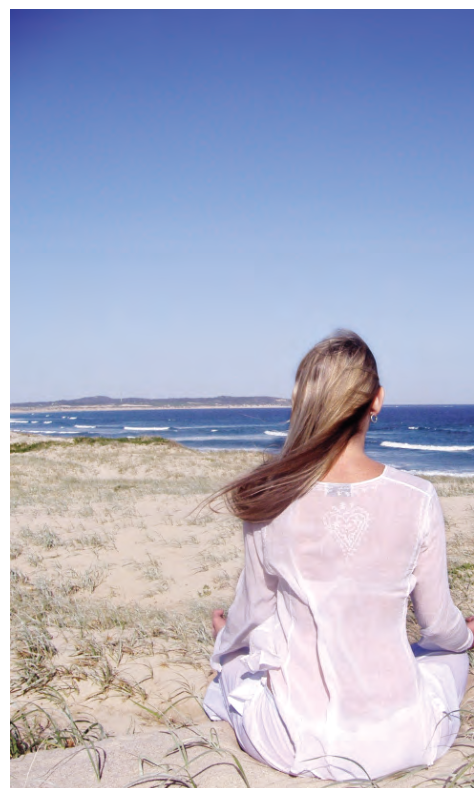
that health will happen to you.'
It is not mastery of asana or pranayama that provides the bliss in the path of yoga, but the intention with which we do something and the awareness while we are doing something that is responsible for making us experience the state of nithya ananda.
Paramahamsa has said many times, 'I am not here to add more movements to your life. I am here to add life to your movements'.
We add life and awareness to all movements and techniques practiced in a 90 minute Nithya Yoga class. We work on
strengthening and experiencing our very innate nature which is bliss.
Paramahamsa has said before, 'simply sit and be enlightened'. According to him, we already are enlightened, we just don't know how to express that energy. Nithya Yoga gives us the understanding and the tools to enable us to experience and express that energy. After maintaining a consistent practice, we realize that one can simply sit and experience this also. We can sit still and know that we are God!
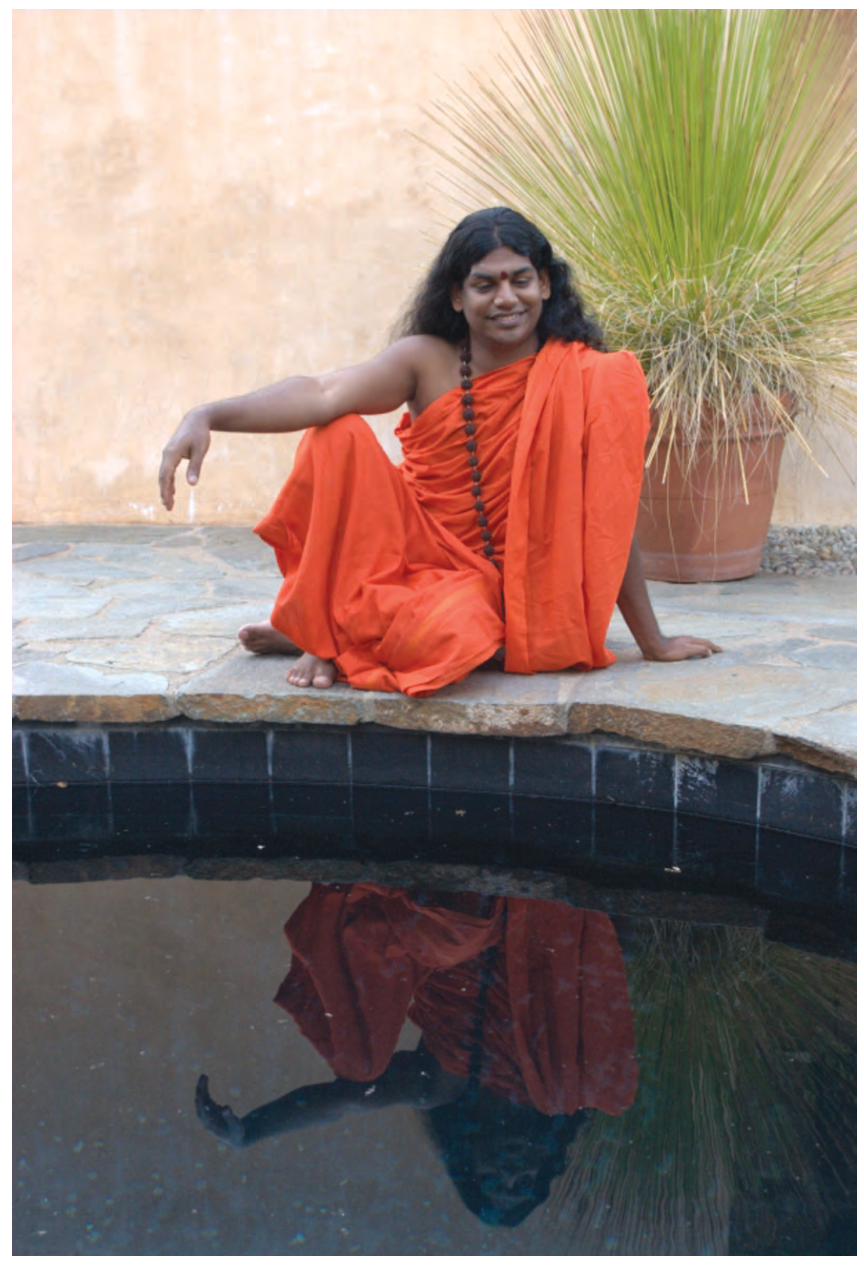
The Nithya Yoga Practice