Nithya Surya Namaskar
This text was machine-transcribed from the printed book and may contain errors. Select the words and choose “Report a mistake”.
Our body is equipped with innate intelligence to produce energy from the sun. According to the ancient science of Ayurveda, the human organism is the ultimate system on planet Earth. It is a living memory bank, a storehouse of the enormous intelligence of all the other bodies on Earth.
Nithya Yoga operates on the belief if plants can produce energy directly from the sun, why can't man? After all, every human being is composed of the same five elements, earth, water, fire, air and ether as the rest of the universe.
The practice of Nithya Surya Namaskar will awaken the body intelligence to directly create energy from the sun. For centuries we have suppressed, denied and forgotten the fact that the body has its own intelligence; the wisdom of the ages is stored in each and every cell. The ancient rishis understood this truth and therefore declared time and again that we are filled with cosmic consciousness.
Every cell in the body actively responds to environmental stimuli both internal and external. According to Indian tradition, the body is a wonderful mechanism that has the intelligence and capacity to produce energy. Nithya Surya Namaskar is designed to access the etheric energy all around us. When performed facing the East in the first rays of the morning sun along with the appropriate breathing technique and Nithya Surya Namaskar Mantra, the effect on the individual mind, body and spirit is incomparable.
It is said that a daily practice of Nithya Surya Namaskar comprising a complete set of twelve repetitions is enough to reap enormous benefits. Nothing else needs to be done.
The Nithya Surya Namaskar is so designed that it works on all body parts, every organ, every system, and every chakra. It is a moving set of postures done dynamically with the appropriate breathing.
In every Nithya Yoga class, we commence the asana series with six to twelve repetitions of Nithya Surya Namaskar (Sun salutation). Of all the asana practice, the Nithya Surya Namaskar is considered the
Nithya Surya Namaskar Mantra
A mantra is a composition of syllables, words, phrases or sentences that when repeated with awareness has a very powerful and penetrating influence on the mind. In a Nithya Yoga for Being class, before performing each repetition of Nithya Surya Namaskar, students chant the corresponding Nithya Surya Namaskar Mantra. The Nithya Surya Namaskar Mantra are composed of a bija (seed) mantra and the glorification mantra.
The bija (seed) mantra has no meaning by itself but the vibration of the mantra in the human system is very powerful. The 'Theory of Vibration' as expounded by modern scientist seems to be catching up with the truth that was delivered to humanity thousands of years ago by the inner scientists, the Vedic rishis. Scientific studies conducted by Dr Masaro Emoto of Japan has clearly proven that the nature of sound the very quality of vibrations has a profound effect on water. Considering that the human body is more than 80% water, the scientific community is waking up to the enormous possibilities that are available to mankind. On the flip side of the coin we need to wake up to the enormous damage created in the human psyche with words and sounds and the negative qualities attached to them. Bija mantra do not have any literal meaning, but by chanting them we set up powerful vibrations of energy within the body and the mind. They are six in number and repeated in the following order:
~ om hram
~ om hrim
~ om hroom
~ om hraim
~ om hraum
~ om hraha
12 Glorification mantra highlight the various aspects of the Sun. When chanted with complete awareness before every repetition of Nithya Surya Namaskar, the mantra confer the same qualities on the committed practitioner.
Through this simple though highly effective method, we realize that the outer sun symbolizes the shining intelligence in our inner sky; we come to understand our connectivity to the cosmic energy that is all pervasive.
I ~ om hram nithya mitraya namaha salutations to the Eternal Friend of all
2 ~ om hrim nithya ravaye namaha salutations to the Eternal Shining One
3 ~ om hroom nithya suryaya namaha salutations to the Eternal One who induces activity
4 ~ om hraim nithya bhanave namaha salutations to the Eternal One who illumines
5 ~ om hraum nithya khagaya namaha salutations to the Eternal One who moves swiftly
6 ~ om hraha nithya pushne namaha salutations to the Eternal Giver of strength
7 ~ om hram nithya hiranya garbhaya namaha salutations to the Eternal golden Cosmic Self
8 ~ om hrim nithya mareechaya namaha salutations to the Eternal Lord of dawn
9 ~ om hroom nithya adityaya namaha salutations to the Eternal Son of Aditi, the Infinite Cosmic Mother
IO ~ om hraim nithya savitre namaha salutations to the Eternal Benevolent Mother
II ~ om hraum nithya arkaya namaha salutations to the Eternal One who is praiseworthy
I2 ~ om hraha nithya bhaskaraya namaha salutations to the Eternal One who leads to enlightenment
I
II
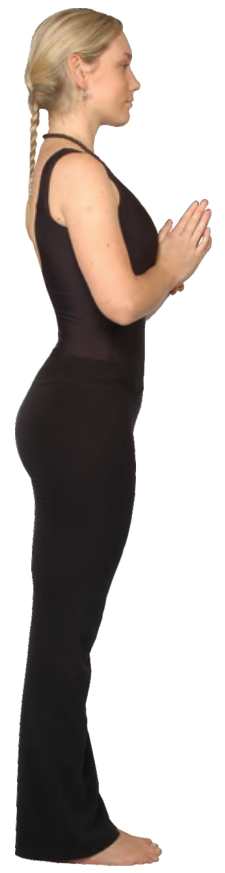
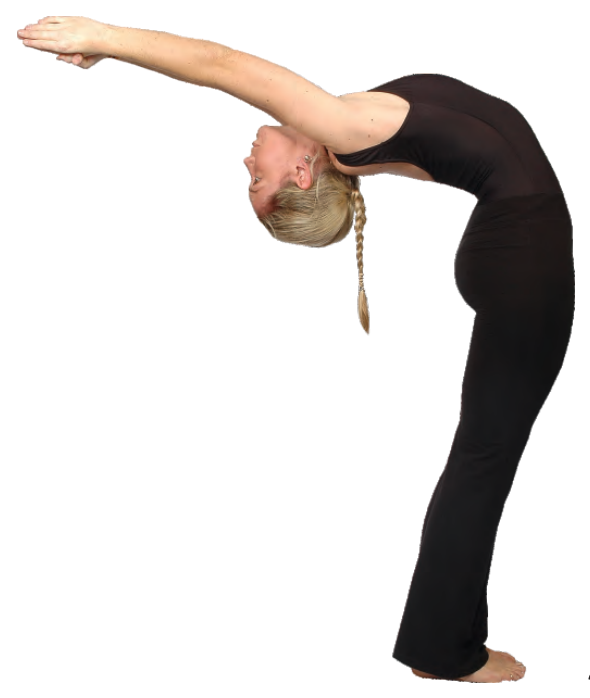
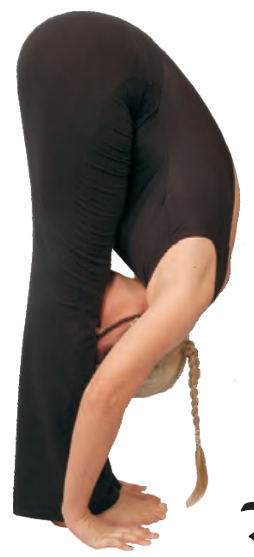
Nithya Surya Namaskar Asana Sequence
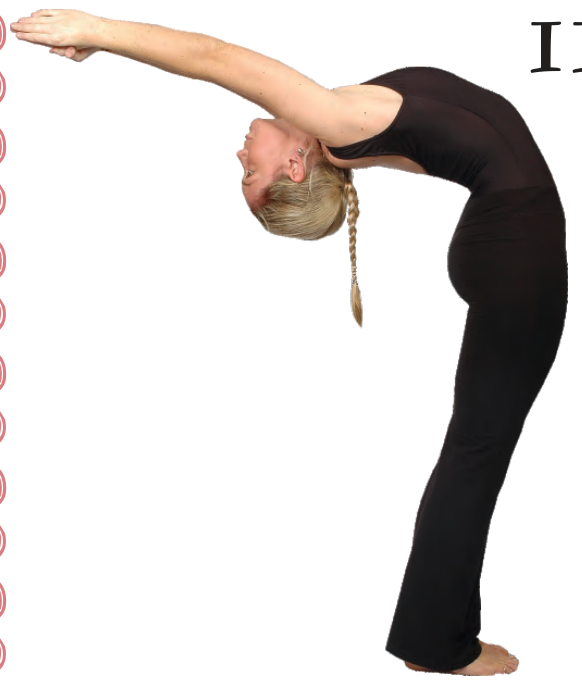
90
THE NITHYA YOGA PRACTICE
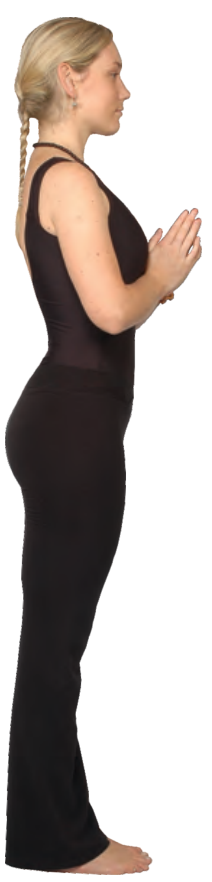
I
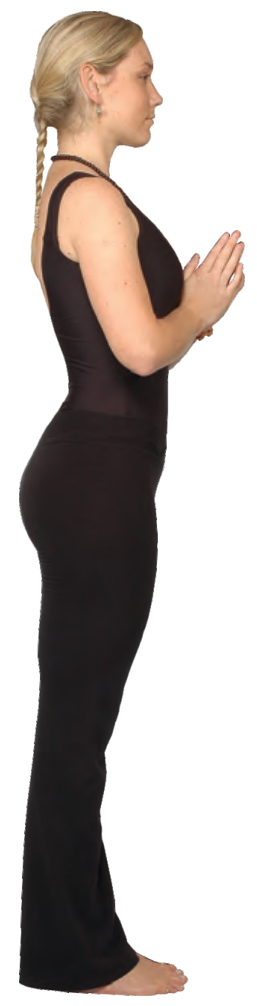
Stand with the feet together or slightly apart for balance. Bring hands together into namaskar (prayer position) in front of the chest. Keep the eyes open throughout the practice of Nithya Surya Namaskar. Chant the corresponding Nithya Surya Namaskar
2
Inhaling, gracefully sweep
the arms up over your head
and gently arch the spine
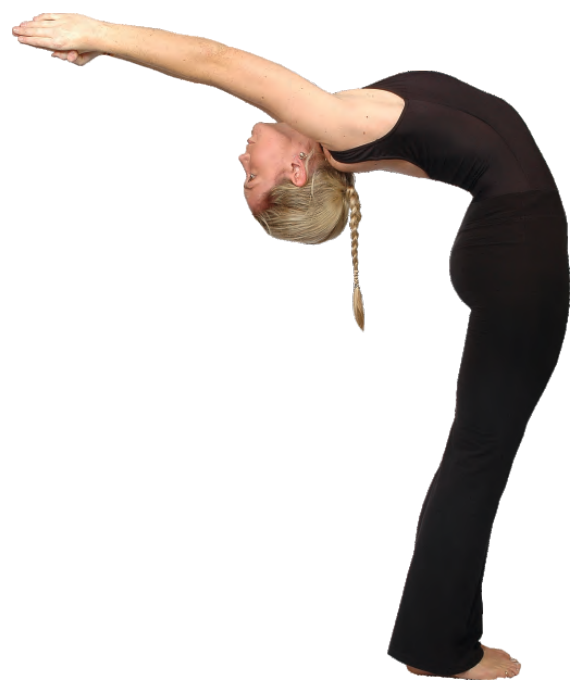
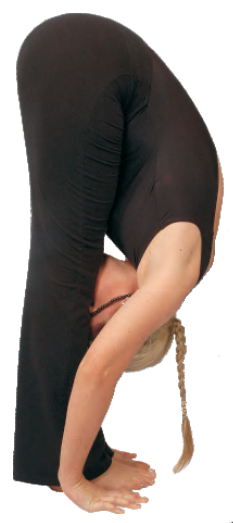
3
Exhaling, sweep the arms
forward and down so the
hands touch the floor close to
the feet and the forehead
comes in close to the knees
knces. Please bend the knees
to allow for greater ease in
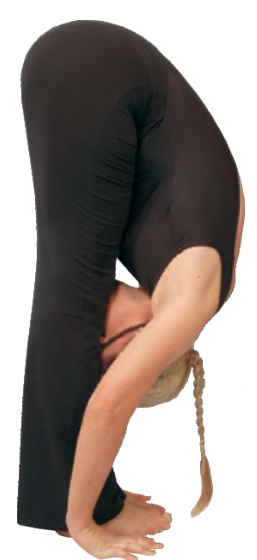
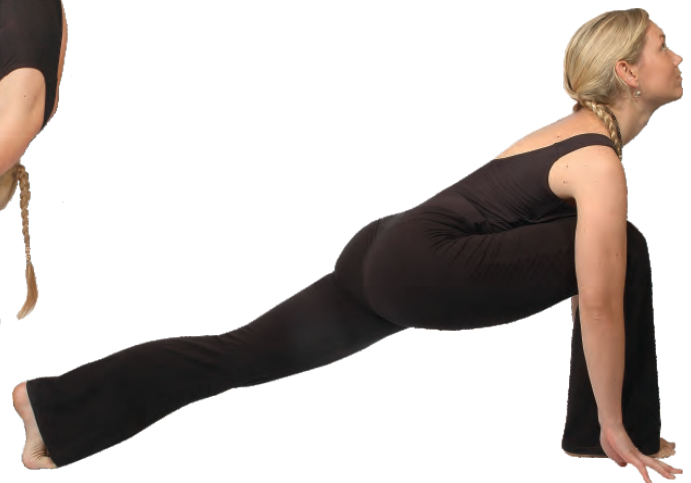
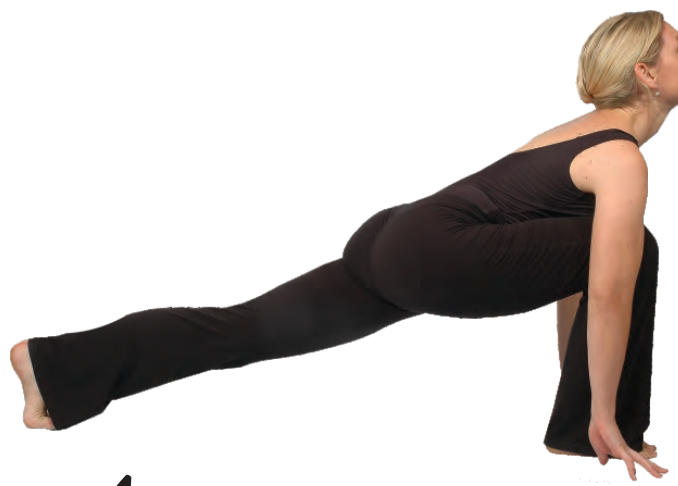
4
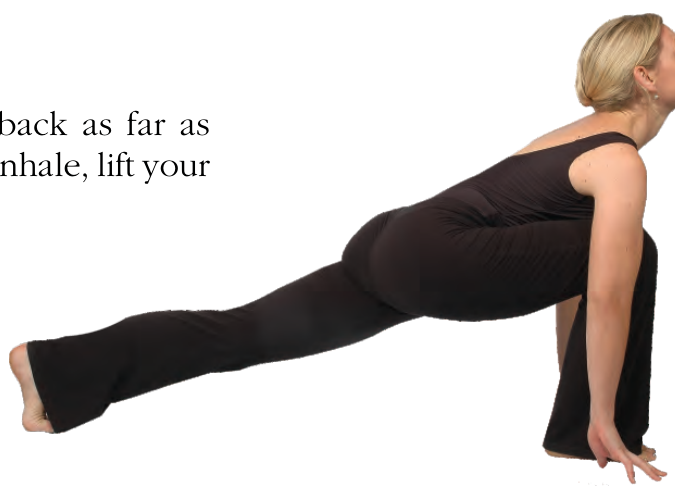
Step the right foot back as far as
you can and as you inhale, lift your
heart center up.
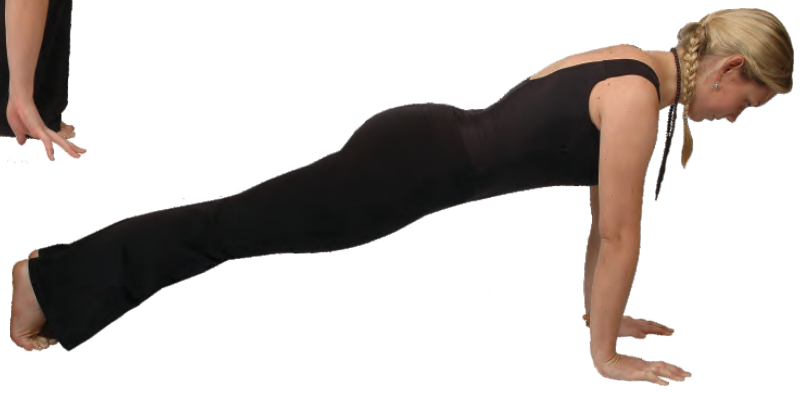
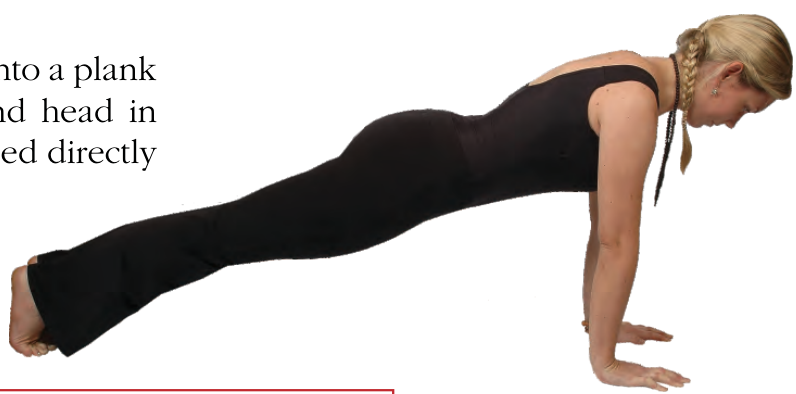
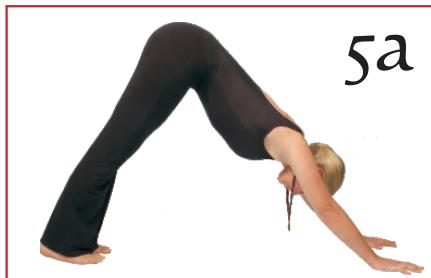
5 Step the left foot back and come into a plank position with the spine, neck and head in one straight line, your hands placed directly beneath your shoulders.
5a
Beginners Option Step
the left foot back and raise
the hips high into the air
assuming parvatasana
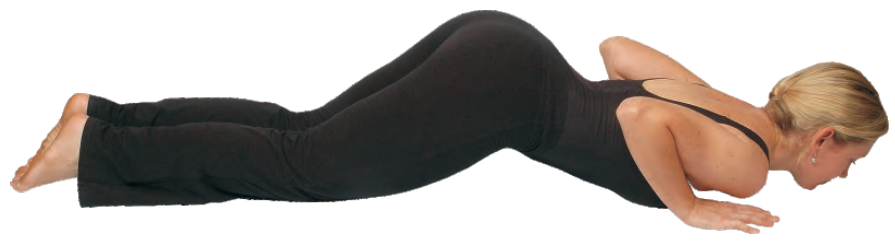
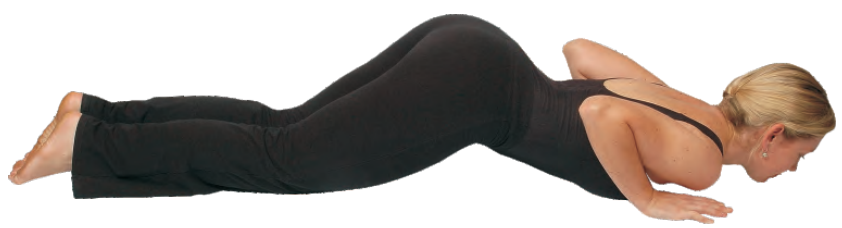
6
On the exhale, lower the knees,
chest and chin to the floor and
assume ashtanga namaskara
(salute with eight parts or points).
Keep the chin forward and point the
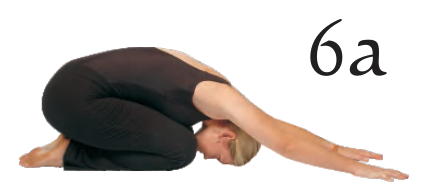
6a Beginners Option On the exhale, lower the knees to the floor, bring your forehead to the floor and stretch your hands in front assuming shashankasana (hare pose).
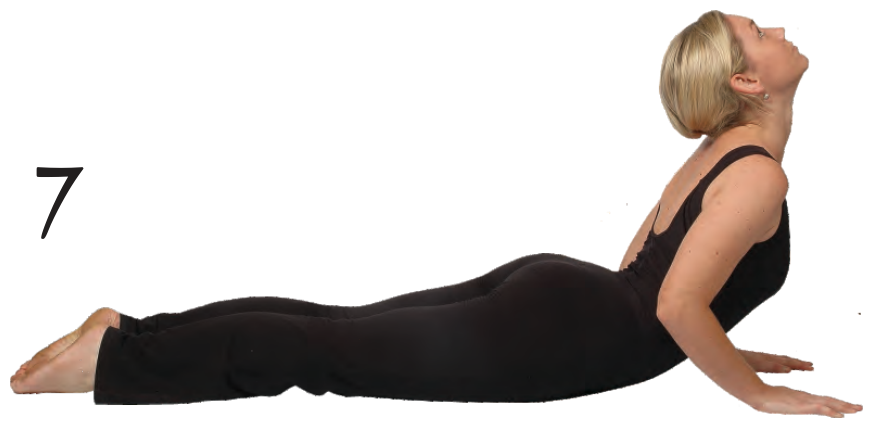
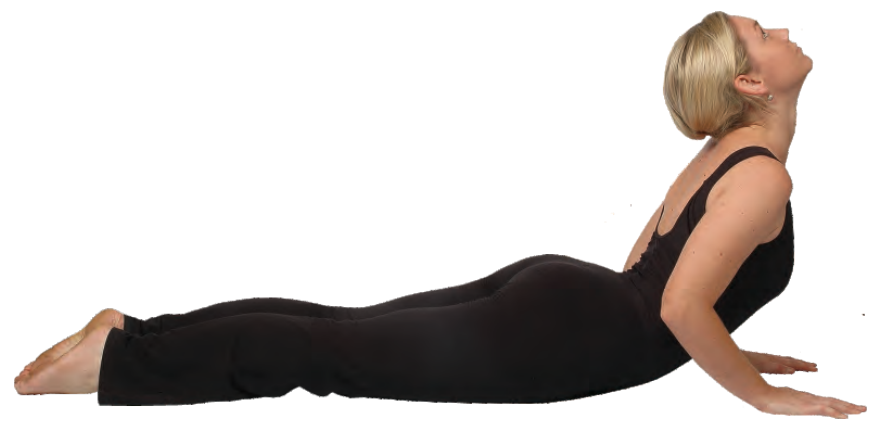
7
On the inhale, gently push with
your hands, lift the heart off the
floor. Keep the elbows bent at a
90 degree angle and come into
bhujangasana (cobra's pose).
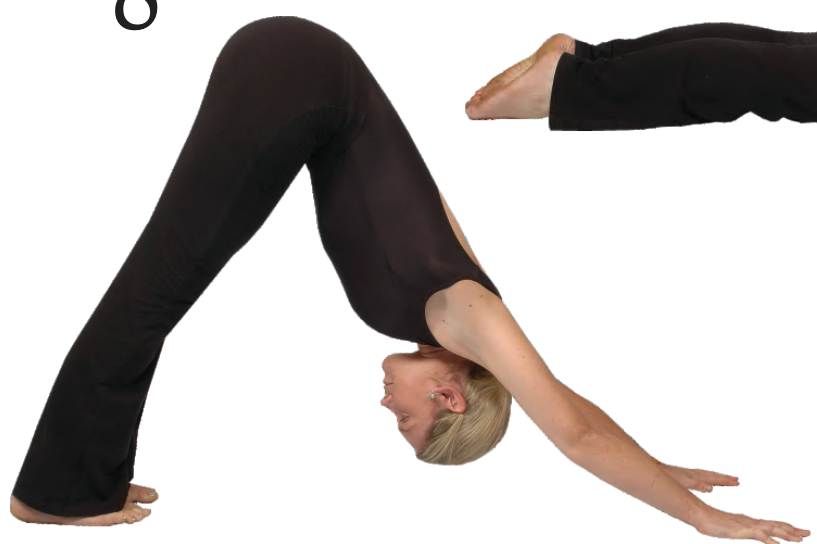
8
Push with your hands,
raise your hips into the air
and assume ardho mukha
svanasana (downward
facing dog pose),
exhaling. Spread the
fingers wide and gently
push your heels toward
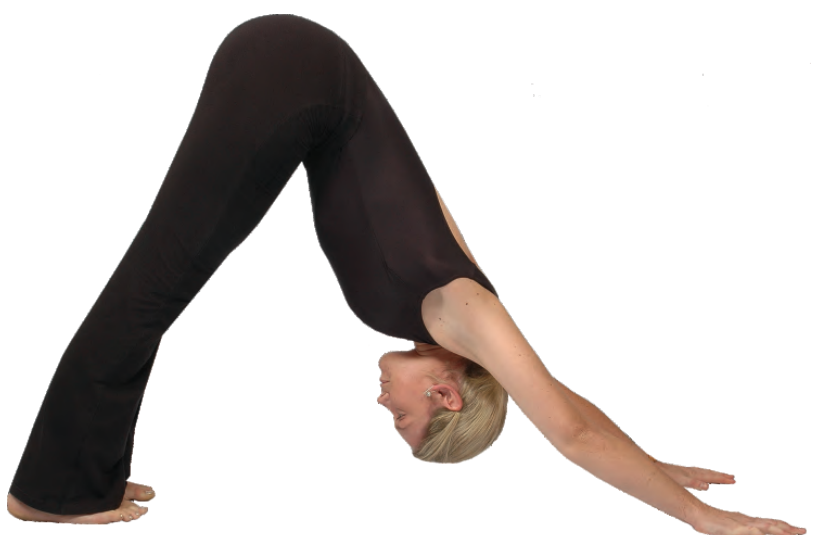
9
Gently look forward at your
hands and step the right foot
forward as far as you can, close
to the hands. Inhale, lift your
heart.
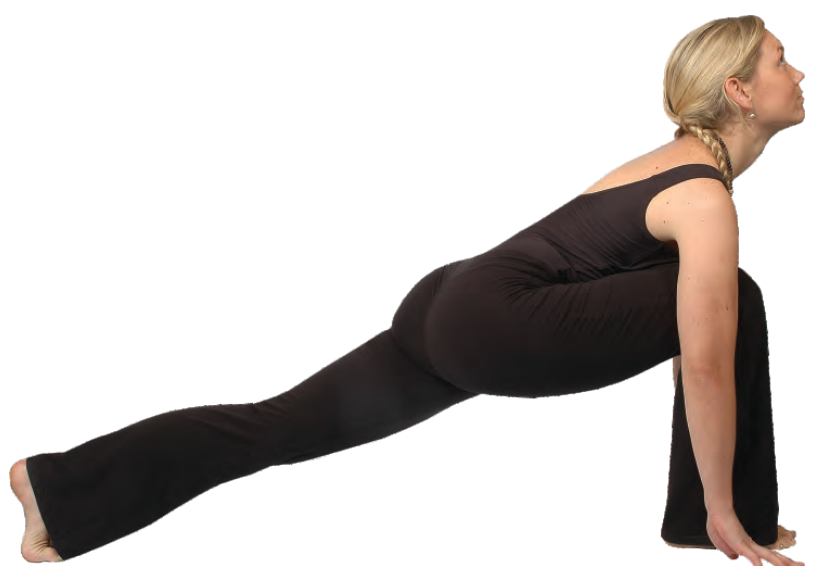
10
Step the left foot forward to meet
the right hand. Bend your knees a
slightly if you need, exhale and
bring the head in close to the legs.
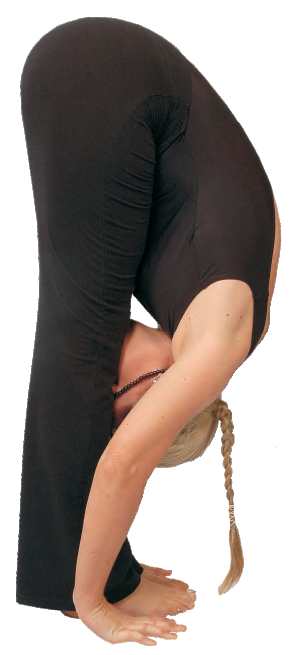
11
On the inhale, sweep your
arms up over your head
and gently arch the spine if
you like Saluting the Sun.
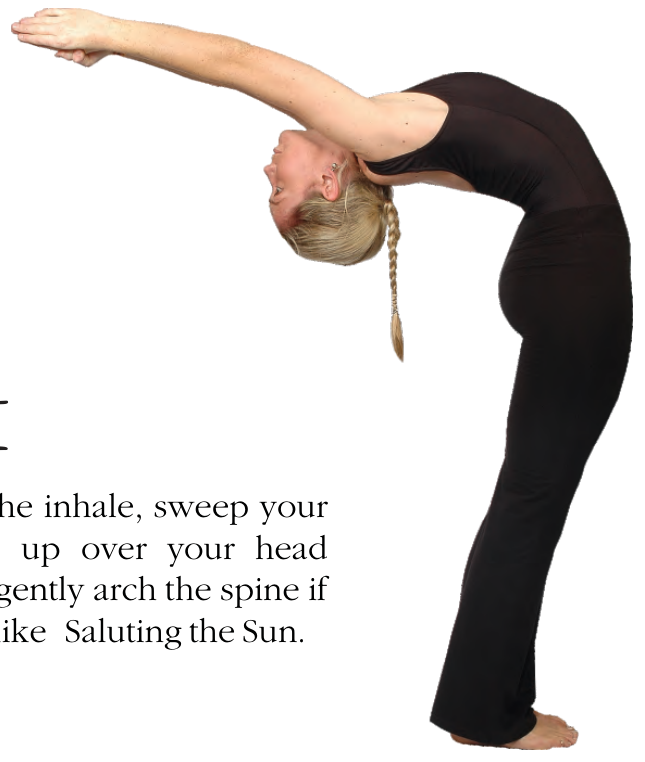
12
Exhale, bring your arms down
and your hands back into
prayer position in front of your
heart.
VINYASA KRAMA
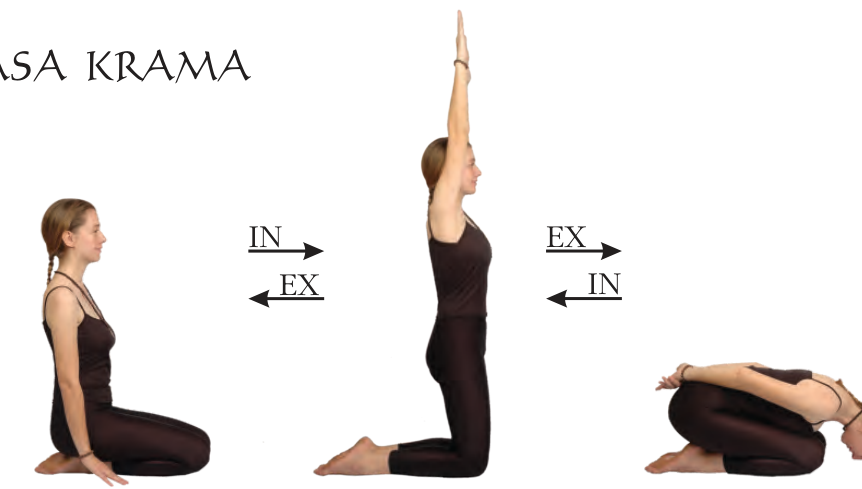
The intelligent linking of postures that forms a complete sequence in the practice session is called vinyasa krama.
The word 'vinyasa' means 'joining or linking' and 'krama' means 'the process. 'vinyasa' is derived from the Sanskrit term 'nyasa' which means 'to place', and the prefix 'vi' means 'in a special way'. In other words, it means the succession of activities undertaken with a single focus, which allows a harmonious flow.
Vinyasa krama is the wisdom of the yoga tradition, which states that a practice must be done to suit our life situation. The correct linking of individual asana and appropriate breathing in a flowing sequence has a deep physiological impact. Static postures do not lend themselves to expressing the incredible potential inherent in each posture.
In Vinyasa Krama, asana are performed with a conscious linking of the breath with the movement. If your intention is to practice asana to realize the Self, every breath you take will help break down your sense of separation from others.
The vinyasa approach is central to the transformative process of yoga. It is a method that can be applied to all aspects of yoga. It is rooted in the yoga traditions and is yet the most scientific approach to day to day living.
The vinyasa method is a step by step process that takes account of the pros and cons of a single asana, a situation or an approach. That is why in an asana sequence, there are always preparatory postures to get to the main asana and counter-poses to relieve any tension. It is important to come back into a position from which we can comfortably resume our everyday activities. For example, it is not enough to want to climb a mountain. It is important that we know how to climb up the mountain, how to stay there and how to climb down. This understanding and preparation is what vinyasa is all about.
Vinyasa krama is the art of knowing when you have integrated the work of a certain stage of practice and are ready to move on. It is not just any sequence of asana or action. It is one that awakens and sustains consciousness.
Chakra specific asana
As we have established previously in this
The seven chakra
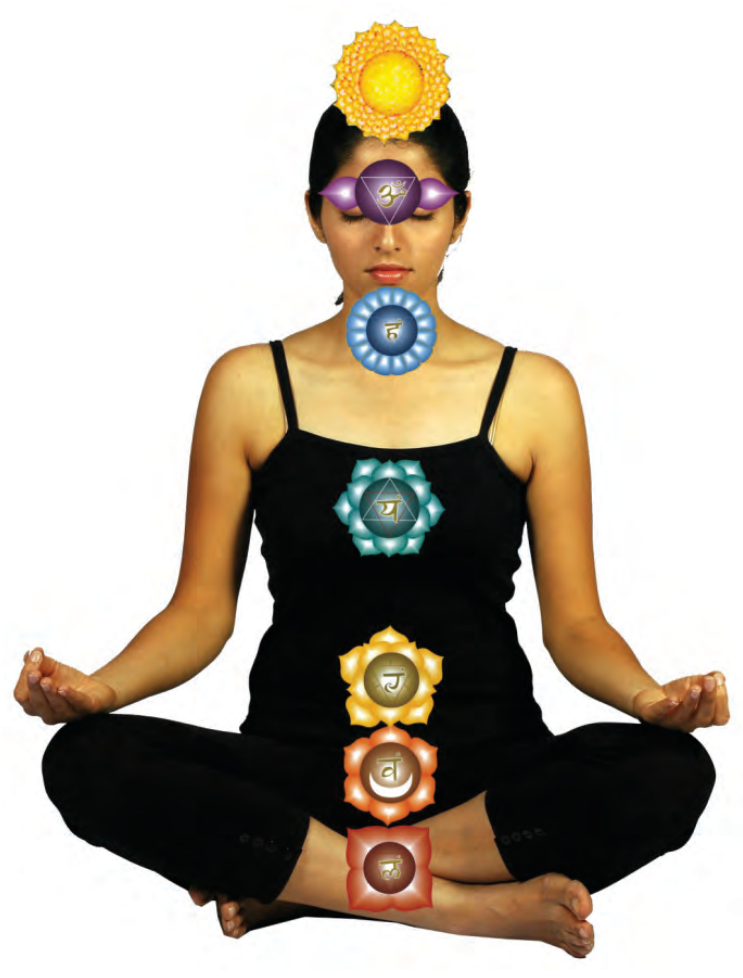
It is a proven fact that these chakra correspond to and affect the functioning of specific glands that constitute the body's endocrine system. All of our dis-ease is only caused from an imbalance in any one of these chakra because our body and mind are very deeply rooted in our inner consciousness.
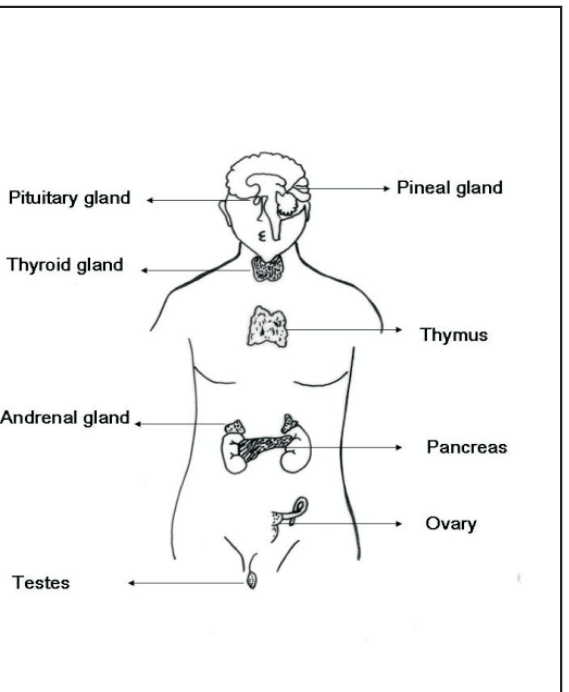
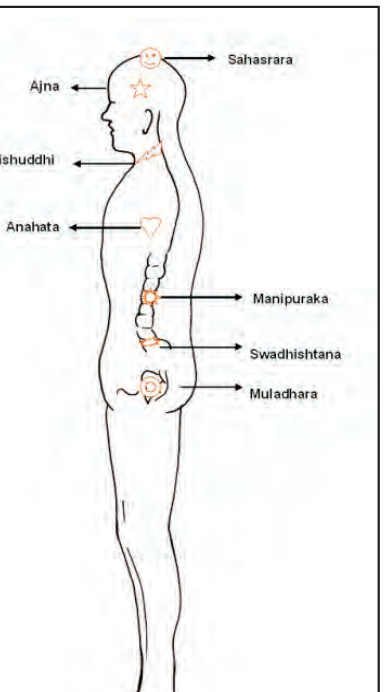
Glands associated with the chakra. Location of the chakra.
The various yogic techniques practiced in a class of Nithya Yoga have been carefully selected so as to ensure that each chakra is addressed, cleansed, energized and left generating the boundless energy it has been designed to generate, an energy whose very nature is that of ananda or bliss.
In Nithya Yoga, all asana are chakra specific. At the energy level, the asana work on the chakra through the glands and at the physiological level, they work directly on the production of these hormones. Along with the other aspects of the Nithya Yoga class, they work powerfully on removing the energy blocks, clearing the mind and detoxifying the system to promote good health and a sense of well being.
PRANAYAMA
In Nithya Yoga, pranayama is considered an integral aspect of the whole session. Parmahamsa believes that ananda or bliss is the bedrock of our existence. This bliss is available in the very prana that is all around and within us.
The word pranayama consists of two parts, prana (life force energy or simply that which is infinitely anywhere) and ayama (to stretch, to extend, to control). In a Yoga class, pranayama would mean the various techniques that we use to learn proper breathing to increase vitality, to calm the nervous system and to relax the body-mind for meditation to happen. By the use of various techniques, we enhance the quality and flow of prana.
Breath is the link between the body and mind. Whatever happens in the mind is reflected through the breath. For example, when we feel the emotion of anger, our breath becomes short and sharp and blocks the flow of energy from the corresponding chakra. When we are an emotionally disturbed state, all we need to do is to take ten deep breaths (inhale and exhale), and watch the emotion coming back to equilibrium. The techniques of pranayama are just various methods through which the awareness can be created about the deep connection between our emotions and our breath. The techniques are not important in themselves. What is important is the awareness of our breath when we are in an emotionally disturbed state. Just as the emotions affect the breath, the breath in turn can affect our emotions.
In Nithya Yoga, we go one step deeper.
While using the various techniques of pranayama we visualize breathing in bliss and breathing out bliss. By inhaling the bliss energy and exhaling bliss energy we ensure that while we are being energized all that is around us is also benefitted. The message that 'We are bliss' is carried very powerfully and very deeply into our system.
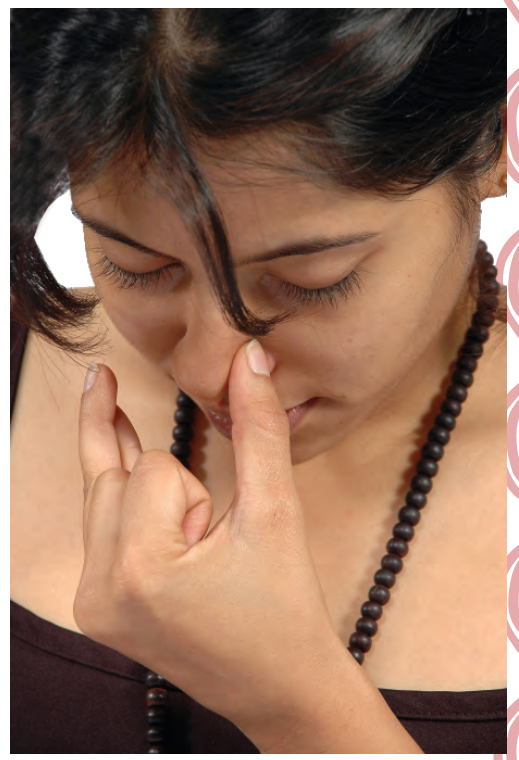
Normally we are used to a practice that tells us to breathe in positive energy and breathe out the negative energy. If we just pause a while and look at what we are doing we will realize that we are contradicting our understanding of our connectivity to the world around us. We are using powerful intentions that are self-defeating.
Two things are happening here: when we say that on each exhale we are breathing out negativity we are unconsciously creating and establishing the samskara that we are filled with negativity. If we are only going to breathe out negativity, where is the positivity available for the next inhalation? Though Nature has an inbuilt capacity to cleanse the environment of negative energy, it becomes increasingly difficult to do so. If a
critical mass of humanity is doing this how long can Nature keep producing healing energies to cleanse this enormous negativity? We must understand that Nature responds to our every thought and emotion. It is our thoughts that create our world.
Nithya Yoga understands and respects this umbilical connection we have with Mother Nature. Therefore in a Nithya Yoga class we learn that at all times we are consciously breathing in and breathing out blissful energy. This sends a subtle and elevating message to the cellular structure: that we and everything around us and we are infused with the blissful, cosmic energy. This further deepens our belief that we belong to a holographic cosmos. We are all One at the level of energy, which is essentially blissful. This truth becomes our samskara, the deepest engraved memory.
Paramahamsa declares that breath carries the prana like a truck carries goods. Once they enter the body, prana and air separate. While air does the physiological work of supplying oxygen, etc, prana, life energy, permeates every cell in the body and activates the samskara (engraved memories) that are embedded in the system. If the engraved memories are positive and growth promoting, then prana will enhance their essence but if they are negative and painful, they get aggravated further.
For those who have attended a class on stress management, a lot of importance is given to exhalation and the lengthening of the exhalation, as it is believed that through exhalation we bring the body to a state of relaxation. This is not so says Paramahamsa, 'inhalation is life and exhalation is death.' The emphasis on exhalation at the level of energy has the same effect as the administering of steroids at the level of the body. At first the effect may seem good and positive, but in the long run, it destroys the system.
Prana is life force and as mentioned earlier, the breath carries the prana. The nature of prana is such, it activates whatever exists in the system. Prana does not discriminate between the positive and negative engraved memories. Whatever is present gets energized. So if we are filled with depression, anger, jealousy, low self esteem and so on, the prana activates these emotional states.
The mind of the modern man is such that it carries deeply engraved negative memories. Therefore, the transformation through traditional yoga practice is much slower. Nithya Yoga understands the effect of prana on samskaras (deeply engraved memories). We can utilize the full potential of the prana if we cleanse our system before going into the regular yoga practice. In Nithya Yoga, we ensure that every chakra is cleansed of these negative emotions through the practice of the dynamic meditations. It is the guaranteed solution to flush out all the energy blocks and toxins within the system. If thereafter we go into the practice of asana and pranayama, we will very naturally access our full energy potential.
Once the initial cleansing happens, the thought and visualization that 'we are bliss' is introduced and is deepened with every breath that we take. In due course this becomes a powerful memory, the energy of which starts filling our inner space. This is why it is imperative that a powerful cleansing meditation is done before the practice of any form of pranayama.
By focusing on the breath, we bring our mind naturally into the state of pratyahara (withdrawal of the senses) and the process of looking inward begins.
When pranayama is practiced along with
the asana and the mudra, the numerous
energy blocks within our system are
removed and the experience of bliss is
deepened.