CURE FOR HOT FLASHES IN MENOPAUSE
This text was machine-transcribed from the printed book and may contain errors. Select the words and choose “Report a mistake”.
Disease Description
Hot flashes (also known as hot flushes, or night sweats if they happen at night) are a symptom of the changing hormone levels that are considered to be characteristic of menopause.
Hot flashes, a common symptom of menopause and pre-menopause, are typically experienced as a feeling of intense heat with sweating and rapid heartbeat, and may typically last from two to thirty minutes for each occurrence. The sensation of heat usually begins in the face or chest, although it may appear elsewhere such as the back of the neck, and it can spread throughout the whole body. Some women pass out if the effects are strong enough. In addition to being an internal sensation, the surface of the skin, especially on the face, becomes hot to the touch. This is the origin of the alternative term "hot flush," since the sensation of heat is often accompanied by visible reddening of the face. Excessive flushing can lead to rosacea.
The hot-flash event may be repeated a few times each week or constantly throughout the day, with the frequency reducing over time.[citation needed] Hot flashes may begin to appear several years before menopause starts and last for years afterwards. Some women undergoing menopause never have hot flashes. Others have mild or infrequent flashes. The worst sufferers experience dozens of hot flashes each day.
In addition, hot flashes are often more frequent and more intense during hot weather or in an overheated room, the surrounding heat apparently making the hot flashes themselves both more probable and more severe. Severe hot flashes can make it difficult to get a full night's sleep (often characterized as insomnia), which in turn can affect mood, impair concentration, and cause other physical problems. When hot flashes occur at night, they are called "night sweats." As estrogen is typically lowest at night, some women get night sweats without having any hot flashes during the daytime.
STEPS TO BE FOLLOWED
- VAJRA ASANA
- KARSHAKA KUMBHAKA
- SAMA KUMBHAKA
1. VAJRA ASANA
GHERANDA SAMHITA, UPADESHA 2, VERSE 112
॥ अथ वज्रासनम् ॥
जङ्घा यां वज्रवत् कृत्वा गुदपाश्वें पदावुभौ ।
वज्रासनं भवेदेतत्द्योगिनां सिद्धिदायकम्॥
Janghaabhyaam Vajravath Kruthvaa Gudha-Paarshve Padhaavubhau | Vajraasanam Bhavedethad Yoginaam Siddhidaayakam ||2.12||
TRANSLATION Having hardened the thighs like steel, and placing both the legs on the sides of the anus is called Vajra asana, which gives great extraordinary powers.
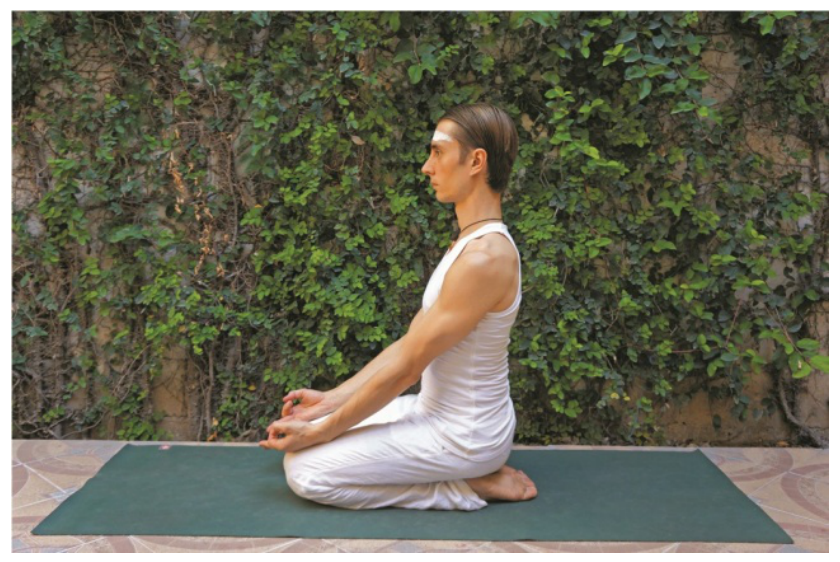
TECHNIQUE
- With knees, ankles and big toes touching the ground, stand on a kneeling position.
- Sit erect with the heels under your buttocks
- Erect in this asana 30 seconds
IN VAJRA ASANA, NEXT
2. KARSHAKA KUMBHAKA KUMBHAKA PADDHATI, VERSES 101 - 102
KARSHAKA KUMBHAKA is of two types – a) UTKARSHAKA KUMBHAKA b) APAKARSHAKA KUMBHAKA In Utkarshaka we have to inhale by holding the nose at the root whereas in Apakarshaka we have to hold the nose partially.
a) UTKARSHAKA KUMBHAKA KUMBHAKA PADDHATI, VERSE 101
नासामूलं मुद्रयित्वा तदग्रे रेचपूरकौ।
कुर्यादुत्कर्षकं कुम्भः स्वयमुक्तः स्यम्भुवा ॥ १०१ ॥
Naasaamoolam Mudrayitvaa Thadahagre Rechapoorakau | Kuryaath Uthkarshakam Kumbham Svayam Uktaha Svayambhunaa ||101||
TRANSLATION The inhalation and exhalation should be performed after holding the nose at its root. This is Uthkarshaka Kumbhaka uttered by the Svayambhu Shiva.
TECHNIQUE
- Inhale completly and hold the nose at its root (Where the nose bone starts)
- Now inhale and exhale internally.
- Do this as long as possible.
- When you can't hold any more, release the nose and exhale slowly
- Do this 21 times
IN VAJRA ASANA, NEXT
b. APAKARSHAKA KUMBHAKA
KUMBHAKA PADDHATI, VERSE 102
घ्राणार्द्धं मुद्रयित्वाधोभागे यद्रेचपूरकौ ।
कुर्यात्स ब्रह्मण प्रोक्तः कुम्भको ह्यपकर्षकः ॥ १०२ ॥
GhraanaarddhamMudrayitvaadho--BhaageYadhrecha-Poorakau | KuryaathsaBrahmanaaProkthaha KumbhakoHyapakarshakaha||102||
TRANSLATION One should perform the Apakarshaka Kumbhaka which is performing inhalation and exhalation with holding the nostrils partially as explained by Lord Brahma.
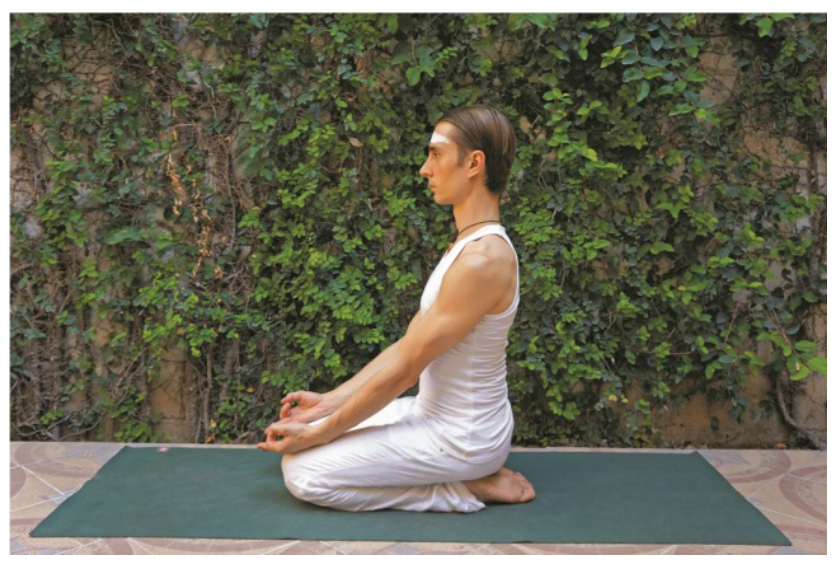
TECHNIQUE
- Close the nostrils partially
- Now inhale
- Hold as long as you can judiciously
- Exhale as slowly as you can
- Partially close the nostrils and exhale slowly 6. Do this 21 times
IN VAJRA ASANA, NEXT-
3. SAMA KUMBHAKA
KUMBHAKA PADDHATI, VERSE: 99
आरेकपूरामनसा ना यादाशुगं धृतिः।
समः कुम्भो भगवता प्रोक्तः श्रीचन्द्रमोलिना ॥
Aarekapooraa-Manasaa Naabhyaadhaashugam Dhruthihi | Samaha Kumbho Bhagavathaa Prokthaha ShreeChandramoulinaa ||99||
TRANSLATION Mentally holding the breath in places like navel without actually inhaling and exhaling is called Sama Kumbhaka by Sri Chandramouli Shiva.
TECHNIQUE
- Stop inhaling and exhaling
- Hold the breath and mentally retain the breath in throat
- When you can not hold any more relax
- Do this for 11 minutes
END OF KRIYA
Kriya Date
14-Jan-2012