CARE FOR HYPERTENSION
This text was machine-transcribed from the printed book and may contain errors. Select the words and choose “Report a mistake”.
Disease Description
Hypertension (HTN) or high blood pressure, is a chronic medical condition in which the blood pressure in the arteries is elevated. This requires the heart to work harder than normal to circulate blood through the blood vessels. High blood pressure is said to be present if it is persistently at or above 140/90 mmHg. Hypertension is diagnosed on the basis of a persistently high blood pressure.
Hypertension is a major risk factor for stroke, myocardial infarction (heart attacks), heart failure, aneurysms of the arteries (e.g. aortic aneurysm), peripheral arterial disease and is a cause of chronic kidney disease.
Hypertension is rarely accompanied by any symptoms, and its identification is usually through screening, or when seeking healthcare for an unrelated problem. A proportion of people with high blood pressure reports headaches (particularly at the back of the head and in the morning), as well as lightheadedness, vertigo, tinnitus (buzzing or hissing in the ears), altered vision or fainting episodes.
STEPS TO BE FOLLOWED
- MRUTASANA WITH CHIN MUDRA
- UDDEEYAANA BANDHA
- JAALANDHARA BANDHA
- MUKTA ASANA
- BHASTRIKAA
- BHRAAMAREE KUMBHAKA
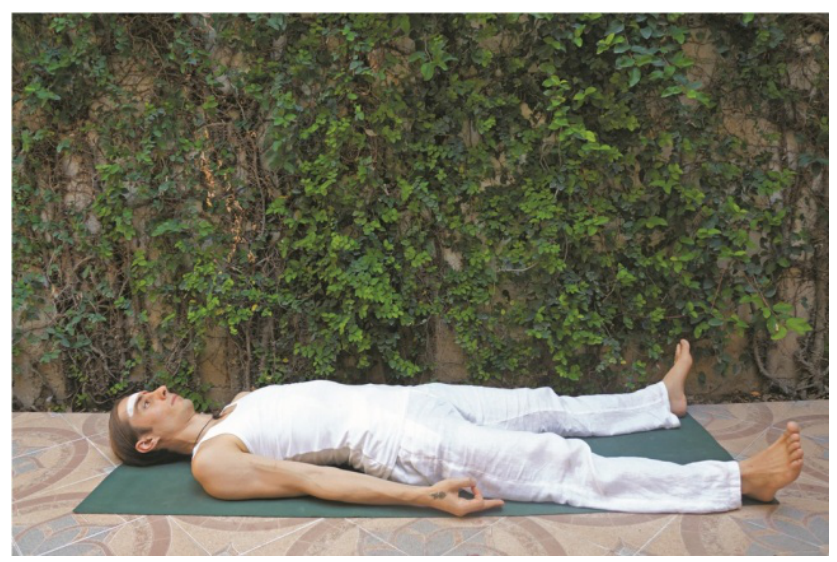
1. MRUTASANA with CHIN MUDRA GHERANDA SAMHITA, UPADESHA 2, VERSE 19
उत्तानं शववद् भूमौ शयानन्तु शवासनम् ।
शवासनं श्रमहरं चित्त विश्रान्ति कारणम् ॥
Uttaanam Shashavad-Bhoomau Shayaanantu Shavaasanam |
Shavaasanam Shramahara Chitta-Vishraanti-Kaarakam || 2.19 ||
TRANSLATION Lying flat on the ground like a corpse is called the Mrutasana (the corpse posture). This posture destroys fatigue, and quiets the agitation of the mind.
TECHNIQUE
- Lying flat on the ground (use mat but no pillow or any support for head) with palms facing up
- Relax and settle in this posture for 30 seconds
- Do chin mudra (bring your index finger to your thumb) in this posture
IN MRUTASANA, NEXT-
2. UDDEEYAANA BANDHA
GHERANDA SAMHITA, UPADESHA-3, VERSE: 10
॥ अथ उड्डीयान-बन्धः ॥
उदरे पश्चिमं तानं नाभेरुर्ध्वं तु कारयेत्।
उड्डानं कुरुते यस्मादविश्रान्तं महाखगः।
उड्डीयानं त्वसौ बन्धो मृत्यु-मातङ्ग-केसरी ॥
Udare pashchimam taanam Naabheroordhvam tu kaarayet | Uddaanam kurute yasmat Avishraantam mahaakhagaha | Uddeeyaanam tvasau bandhao Mrutyu-Maatanga-Kesaree || 3.10 ||
TRANSLATION One should contract the bowels above and below the navel so that the abdominal organs touch the back. The one who practices this uddeeyaana bandha continuously becomes a conqueror of death. The great bird (Kundalini) flies up in the Sushumna and flies there itself constantly.
TECHNIQUE
- Lye down on same asana and eyes should be kept open
- Take a deep breath in and exhale completely, but do not be forceful
- After exhaling, perform jalandhara bandha by moving the chin down to the chest and raising the shoulders
- Pull the abdominal muscles inward so that the organs of the abdomen touch the back muscles
- Hold as long as you can 6. When you can't hold anymore, Before inhaling, relax the stomach and abdomen, release jaalandhara bandha
- Then inhale through the nostrils slowly
- Before repeating another round, breathe normally for a minute or two
- Initially start with 3 times and gradually increase upto 10 times
IN MRUTASANA, NEXT-
3. JAALANDHARA BANDHA
GHERANDA SAMHITA, UPADESHA 3, VERSE: 12
॥अथ जालन्धरबन्धकथनम् ॥
कण्ठसङ्कोचनं कृत्वा चिबुकं हृदये न्यसेत् ।
जालन्धरे कृते बन्धे षोडशाधारबन्धनम् ॥
Kanta-sankochanam krutvaa Chibukam hrudaye nyaset |
Jaalandhare krute bandhe Shodasha-aadhaara-bandhanam ||3.12||
TRANSLATION
Contracting the throat, place the chin on the chest. This is called Jaalandhara Bandha. By this bandha the sixteen adharas are closed.
TECHNIQUE
- Remain in same asana
- Inhale fully
- Place the chin on the chest and contract the throat
- Fix the Gaze at the tip of the nose
- Hold as long as possible judiciously
- Release the throat lock and exhale slowly, when you feel you can't hold anymore
- Do this 21 times
NEXT-
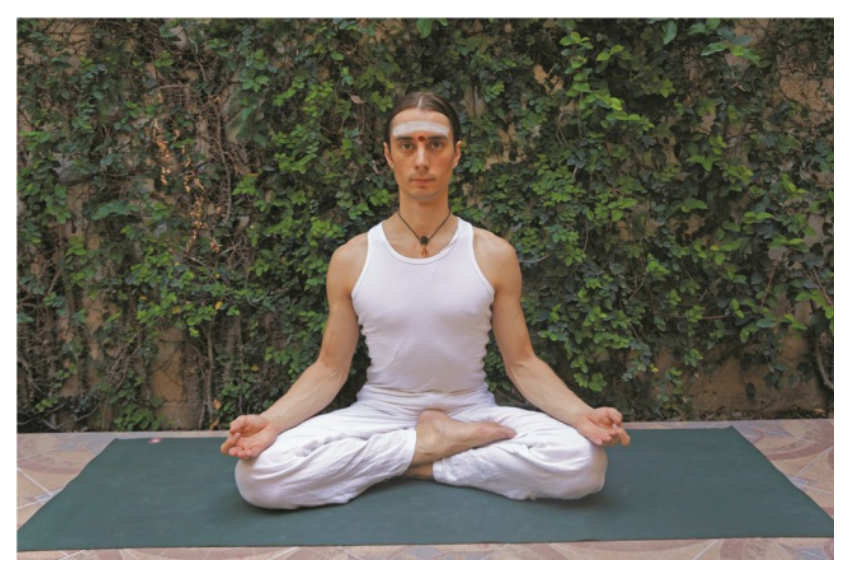
4. MUKTA ASANA
GHERANDA SAMHITA, UPADESHA 2, VERSE 11
पायुमूले वामगुल्फं दक्षगुल्फं तथोपरि ।
समकाय शिरो ग्रीवं मुक्तासनं तु सिद्धिम् ॥
Paayu-moole Vaama-gulpham Daksha-gulpham Tathopari | Samakaaya-Shiro-Greevam Muktaasanam tu Siddhidam || 2.11 ||
TRANSLATION
Place the left heel at the root of the organ of generation and the right heel above that, keep the head and the neck straight with the body. This posture is called the Mukthasana. It is giver of Siddhis.
TECHNIQUE
- Place the left heel at the root of the organ of generation and the right heel above that
- Keep the head and the neck straight with the body.
- Keep this posture for 30 seconds
IN MUKTA ASANA, NEXT-
5. BHASTRIKAA
GHERANDA SAMHITA, UPADESHA-5, VERSES 75- 77
॥ अथ भस्त्रिकाकुम्भकः ॥
भस्त्रैव लोहकाराणां यथाक्रमेण संभ्रमेत्।
तथा वायुम् च लभभधभभपरभमटभद्गपभमपरभमत्र चालयेच्छनैः॥
एवंविव्शतिवारं च कृत्वा कुर्याच्च कुम्भकम्।
तदन्ते चालयेद्वायुं पूर्वोक्तं च यथाविधि॥
त्रिवारं साधयेदेनं भस्त्रिकाकुम्भकं सुधीः।
न च रोगो न च क्लेश आरोग्यं च दिने दिने॥
Bhastraiva lohakaaraanaam Yathaa-kramena sambhramet | Tathaa vaayum cha naasaabhyaam Ubhaabhyaam Chaalayet shanaihi || 5.75 ||
Vimshati-vaaram Cha Krutvaa Kuryaachcha Kumbhakam | Tadante Chaalayet Vaayum Poorvoktam Cha Yathaavidhi || 5.76 ||
Trivaaram SaadhayetEnam Bhastrikaa-Kumbhakam Sudheehi | Na Cha Rogo Na Cha Klesha Aarogyam Cha Dhine Dhine || 5.77 ||
TRANSLATION As the bellows of the ironsmith constantly dilate and contract, similarly let him slowly draw in the air by both the nostrils and expand the stomach; then throw it out quickly (the wind making sound like bellows).
Having thus inhaled and exhaled twenty times as stated above, then let him perform Kumbhaka and then let him expel it by the previous method (this completes one round of Bhastrikaa). Let the wise one perform this Bhastrikaa(Bellows-like) Kumbhaka thrice; he will never suffer any disease and will be always healthy.
TECHNIQUE
- Inhale slowly expanding the stomach
- Exhale slowly
- Do this 21 times
- After 21 times, now inhale slowly
- Hold the breath as long as you can
- When you feel you can't hold quickly expel the air with the sound of bellows. At this moment the stomach should contract to touch the back (This is one Bhastrikaa)
- Do this complete sequence three times
IN MUKTA ASANA, NEXT-
6. BHRAAMAREE KUMBHAKA
GHERANDA SAMHITA, UPADESHA-5, VERSES:78-82
॥ अथ भ्रामरी-कुम्भकः ॥
अर्धरात्रे गते योगी जन्तूनां शब्दवर्जिते ।
कर्णौ पिधाय हस्ता यां कुर्यात् पूरक-कुम्भकम् ॥
शृणुयाद्दक्षिणे कर्णे नादमन्तर्गतं शुभम् ।
प्रथमं झिञ्झीनादं च वंशीनादम् ततः परम् ॥
मेघझर्झरभ्रामरी घण्टाकांस्यं ततः परम् ।
तुरीभेरीमृदङ्गादिनिनादान्कदुन्दुभिः ॥
एवं नानाविधो नादो जायते नित्यम यसात् ।
अनाहतस्य शब्दस्य तस्य शब्दस्य यो ध्वनिः ॥
ध्वनेरन्तर्गतं ज्योति ज्योतिरन्तर्गतं मनः।
तन्मनो विलयं याति तद्विष्णोः परमम् पदम् ॥
एवंभ्रामरीसंसिद्धिः समाधिसिद्धिमाप्नुयात् ॥
Ardha-raatre Gate Yogee Jantoonaam Shabda-varjite |
Karnau Pidhaaya Hastaabhyaam Kuryaat Pooraka-Kumbhakam || 5.78 ||
Shrunuyaat Dakshine Karne Naadamantargatam Shubham |
Prathamam Jhinjhimeenaadam Cha Vamsheenaadam Tataha Param ||5.79||
Megha-Jharjhara-Bhraamaree Ghantakamsyam Tataha Param |
Turee-Bheree-Mrudangaadi-Ninaadaanaka-Dundubhihi ||5.80||
Evam naanaavidho Naado Jaayate Nithyamabhyaasaath |
Anaahatasya Shabdasya Tasya Shabdasya Yo Dhvanihi || 5.81 ||
Dhvanerantargatam Jyoti Jyotirantargatam manaha |
Tanmano vilayamYaati Tad-vishnoh Paramam Padam |
Evam BhraamareeSamshiddhihi Samaadhi-siddhim-aapnuyaath || 5.82 ||
TRANSLATION
At the past midnight, in a place where there are no sounds of any animal, &c., to be heard, let the yogi practice puraka and kumbhaka, closing the ears by the hands. He will hear then various internal sounds in his right ear. The first sound will be like that of crickets, then that of a lute, then that of a thunder, then that of a drum, then that of a beetle, then that of bells, then those of gougs of bell-metal, trumpets, kettles-drums, mridanga, military drums, and dundubhi, etc.
Thus various sounds are cognized by daily practice of this Kumbhaka. Last of all is heard the Anahatha sound rising from the heart; of this sound there is a resonance, in that resonance there is a light. In that Light the mind should be immersed. When the mind is absorbed, then it reaches the Highest seat of Vishnu (Parama-pada). By success in this Bharaamaree Kumbhaka one gets success in samadhi
TECHNIQUE
- Close your ears with hands and close your eyes and hum intensely.
- Do this for 7 minutes
Note: 10-15 minutes after doing this kumbhaka one should eat something
END OF KRIYA
Kriya Date
01-Nov-2011