CURE FOR HYPERTENSION
This text was machine-transcribed from the printed book and may contain errors. Select the words and choose “Report a mistake”.
Disease Description
Hypertension (HTN) or high blood pressure, is a chronic medical condition in which the blood pressure in the arteries is elevated. This requires the heart to work harder than normal to circulate blood through the blood vessels. High blood pressure is said to be present if it is persistently at or above 140/90 mmHg. Hypertension is diagnosed on the basis of a persistently high blood pressure.
Hypertension is a major risk factor for stroke, myocardial infarction (heart attacks), heart failure, aneurysms of the arteries (e.g. aortic aneurysm), peripheral arterial disease and is a cause of chronic kidney disease.
Hypertension is rarely accompanied by any symptoms, and its identification is usually through screening, or when seeking healthcare for an unrelated problem. A proportion of people with high blood pressure reports headaches (particularly at the back of the head and in the morning), as well as lightheadedness, vertigo, tinnitus (buzzing or hissing in the ears), altered vision or fainting episodes.
STEPS TO BE FOLLOWED
- NAADEE SHUDDHI
- PAVANA MUKTHASANA
- BHRAAMAREE KUMBHAKA
- YOGA NIDRA
1. NAADEE SHUDDHI HATHA PRADEEPIKAA, UPADESHA 4, VERSES 11 & 13
बद्धपद्मासना योगी प्राणं चन्द्रेण पूरयेत्।
धारयित्वा यथाशक्ति भूयः सूर्येण रेचयेत् ॥
येन त्यजेत्तेन पीत्वा धारयेदतिरोधतः।
रेचयेच्च ततोऽन्येन शनैरेव न वेगतः॥
Baddha-Padma asanaa Yogee Praanam Chandrena Poorayet | Dhaarayitvaa Yathaa-Shakti Bhooyaha Sooryena Rechayet ||4.11||
Yena Tyajet Tena Peethva Dhaarayeth Athirodhitaha | Rechayechcha Tatho'nyena Shanaireva Na Vegatha||4.13||
TRANSLATION
The Yogi seated in Baddha Padma asana, should first inhale through the left nostril and retain the breath up to his capacity and exhale through the right nostril.(4.11)
Having drawn in the air through the same nostril through which it was exhaled, the breath should be retained to the maximum capacity. Then the exhalation should be done through the other nostril very slowly and not in haste. (4.13)
TECHNIQUE
- Sit in Padma asana or Siddhaasana or Baddha Padma asana posture
- Inhale slowly through the left nostril
- Retain the breath inside as long as you can and exhale through the right nostril
- Inhale slowly through the right nostril
- Retain the breath inside as long as you can and exhale through the left nostril
- Do this 21 times
NEXT
2. PAVANA MUKTHASANA
YOGAASANA, UPDESHAM 3, VERSES 4 & 5
द्वयोस्तु पादयोः पार्ष्णिं लात्त्वास्वस्वनितम्बके ।
जानुनी वक्षसि धभभकमभद्रखभश्रकलभभद्रभि करबन्धनैः ॥
एवंविधस्थितिर्यत्र तत्र वायुमुक्तासनम् ।
भवेदनेन वशाशुद्धिर्मलस्थवायोर्मोचनम् ॥
Dvayostu Paadayoho Paarshni Laatvaasva-svasvanitambake |
Jaanunee Vakshasi Saadhur Badhnaati Karabandhanaihi || 3.4 ||
Evam-vidha-Sthitir-yatra Thathra Vayumukthaasanam |
Bhavedanena Vashaashuddhir Malastha-Vayor-Mochanam || 3.5 ||
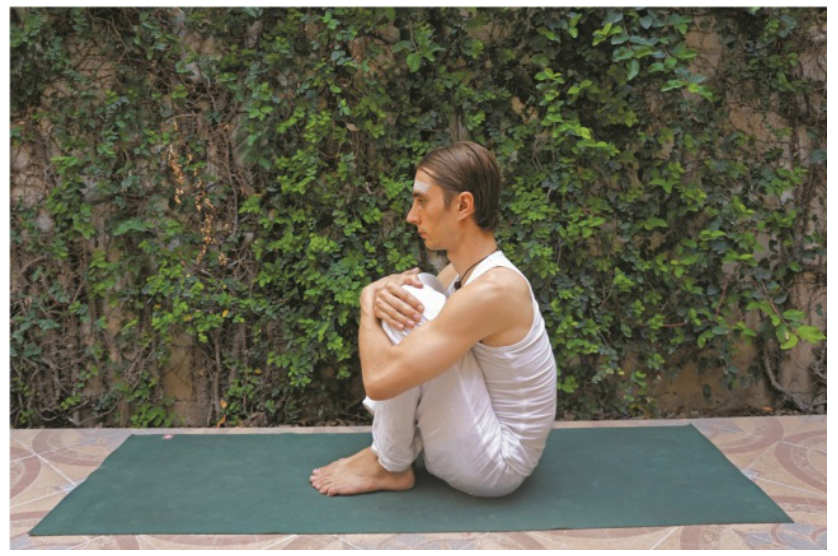
TRANSLATION Having brought the two heels close to the perineum and having brought the knees close to the chest region, by the tying of the hands the noble soul one ties the knees.
Where there is this kind of a posture, it is called Vayu/Pavana Mukta asana. By this the large intestine gets cleansed by the release of the wind.
TECHNIQUE
- Stay on ground.
- Bring two heels close to perineal region.
- Keep the knees raised. Hold knees with two hands and press them against the chest.
- Remain in this pose for 30 seconds
IN PAVANA MUKTHASANA, NEXT
3. BHRAAMAREE KUMBHAKA
GHERANDA SAMHITA, UPADESHA-5, VERSES :78-82
॥ अथ भ्रामरी-कुम्भकः ॥
अर्धरात्रे गते योगी जन्तूनां शब्दवर्जिते ।
कर्णौ पिधाय हस्ता यां कुर्यात् पूरक-कुम्भकम् ॥
शृणुयाद्दक्षिणे कर्णे नादमन्तर्गतं शुभम् ।
प्रथमं झिञ्झीनादं च वंशीनादम् अतः परम् ॥
मेघझर्झरभ्रामरी घण्टा कांस्यं ततः परम् ।
तुरीभेरीमृदङ्गादिनिनादानकदुन्दुभिः ॥
एवं नानाविधो नादो जायते नित्यमभ्यासात् ।
अनाहतस्य शब्दस्य तस्य शब्दस्य यो ध्वनिः ॥
ध्वनेरन्तर्गतं ज्योति ज्योतिरन्तर्गतं मनः ।
तन्मनो विलयं याति तद्विष्णोः परमम् पदम् ॥
एवंभ्रामरीसंसिद्धिः समाधिसिद्धिमाप्नुयात् ॥
Ardha-raatre Gate Yogee Jantoonaam Shabda-varjite | Karnau Pidhaaya Hastaabhyaam Kuryaat Pooraka-Kumbhakam || 5.78 ||
Shrunuyaat Dakshine Karne Naadamantargatam Shubham | Prathamam Jhinjhimeenaadam Cha Vamsheenaadam Tataha Param ||5.79||
Megha-Jharjhara-Bhraamaree Ghantakamsyam Tataha Param | Turee-Bheree-Mrudangaadi-Ninaadaanaka-Dundubhihi ||5.80||
Evam naanaavidho Naado Jaayate Nithyamabhyaasaath | Anaahatasya Shabdasya Tasya Shabdasya Yo Dhvanihi || 5.81 ||
Dhvanerantargatam Jyoti Jyotirantargatam manaha | Tanmano vilayamYaati Tad-vishnoh Paramam Padam | Evam BhraamareeSamshiddhihi Samaadhi-siddhim-aapnuyaath || 5.82 ||
TRANSLATION At the past midnight, in a place where there are no sounds of any animal, &c., to be heard, let the yogi practice puraka and kumbhaka, closing the ears by the hands.
He will hear then various internal sounds in his right ear. The first sound will be like that of crickets, then that of a lute, then that of a thunder, then that of a drum, then that of a beetle, then that of bells, then those of gougs of bell-metal, trumpets, kettles-drums, mridanga, military drums, and dundubhi, etc
Thus various sounds are cognized by daily practice of this Kumbhaka. Last of all is heard the Anahatha sound rising from the heart; of this sound there is a resonance, in that resonance there is a light. In that Light the mind should be immersed. When the mind is absorbed, then it reaches the Highest seat of Vishnu(Parama-pada). By success in this Bharaamaree Kumbhaka one gets success in samadhi.
TECHNIQUE
- Close your ears with hands and close your eyes and hum intensely.
- Do this for 7 minutes
Note: 10-15 minutes after doing this kumbhaka one should eat something
NEXT
4. YOGA NIDRA YOGA TARAVALI, VERSES 25&26
विच्छिन्न सङ्कल्प विकल्प मूले निश्शेष निर्मूलित कर्मजाले ।
निरन्तराभ्यास नितान्त भद्रा साजृम्भते योगिनि योगनिद्रा ॥
विश्रान्तिमासाद्य तुरीयतल्पे विश्वाद्यवस्था त्रितयोपरिस्ते ।
सम्विन्मयीं कामपि सर्वकालं निद्रां सखे निर्विश निर्विकल्पाम् ॥
Vichchina-Sankalpa-Vikalpa-Moole Nishshesha-Nirmoolita-Karma-Jaale |
Nirantara-Abhyaasanitaanta Bhadraa Saajumbhate Yogini Yoganidraa ||25||
Vishraantim Aasaadhya Tureeya-Talpe Vishvaadhya'vasthaa-Tritayoparisthe |
Samvinmayeem Kaamapi Sarvakaalam Nidraam Sakhe Nirvisha Nirvikalpaam ||26||
TRANSLATION
Having cut-off from the base of thinking and having completely nullified the net of the action, in other words being unclutched from thoughts, unclutched from actions and unclutched from the fruits of actions by constant practice, the most sacred space of yoga nidra happens in yogi (verse 25).
Oh! Friend, having taken relaxation in the bed of Consciousness, all the time reside in the state of Nirvikapla Yoga Nidra which is above the first three states of wakefulness, dream and deep slumber and which is the embodiment of pure knowledge and awareness (verse 26).
TECHNIQUE
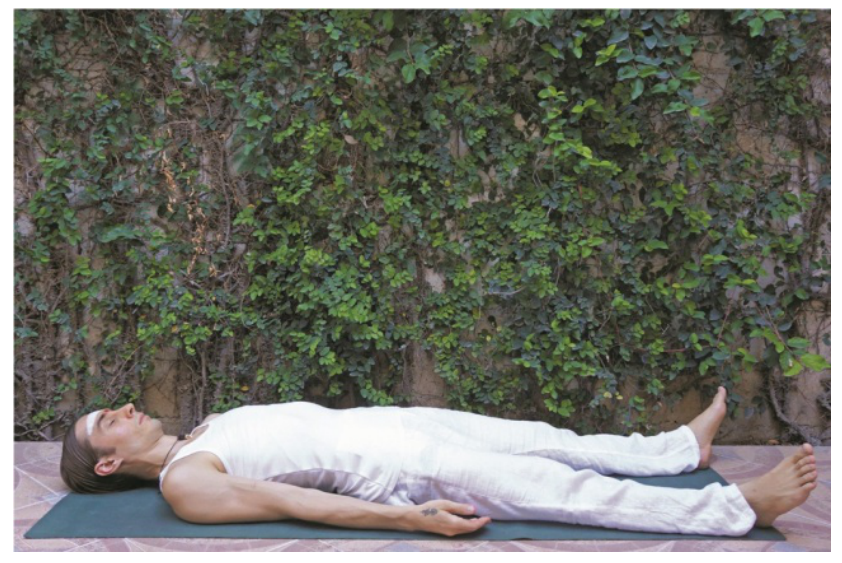
- Just lie down on your back
- Unclutch immediately. By the unclutching and the laziness combined together, you will fall into a kind of a half sleep. Get into that sleep. That is what is yoga nidra.
- Do this for 21 minutes or right before sleep at night.
END OF KRIYA
Kriya Date 02-Nov-2011