CARE FOR ARTHRITIS
This text was machine-transcribed from the printed book and may contain errors. Select the words and choose “Report a mistake”.
Disease Description
Arthritis is a form of joint disorder that involves inflammation of one or more joints.
There are over 100 different forms of arthritis. The most common form, osteoarthritis (degenerative joint disease), is a result of trauma to the joint, infection of the joint, or age. Other arthritis forms are rheumatoid arthritis, gout, psoriatic arthritis, and related autoimmune diseases. Septic arthritis is caused by joint infection.
The major complaint by individuals who have arthritis is joint pain. Pain is often a constant and may be localized to the joint affected. The pain from arthritis is due to inflammation that occurs around the joint, damage to the joint from disease, daily wear and tear of joint, muscle strains caused by forceful movements against stiff, painful joints and fatigue. Arthritic disorders like lupus and rheumatoid can also affect other organs in the body with a variety of symptoms like inability to use the hand or walk, feeling of tiredness, fever, weight loss, muscle aches and pains, tenderness.
Arthritis can make it very difficult for the individual to remain physically active, contributing to an increased risk of obesity, high cholesterol or vulnerability to heart disease. Individuals with arthritis are also at increased risk of depression, which may be related to fear of worsening symptoms.
STEPS TO BE FOLLOWED
- BHADRA ASANA
- SHOONYAKA KUMBHAKA
- KEVALA KUMBHAKA
- BHOROLIKAA KUMBHAKA
- TRAATAKA KUMBHAKA
- VAM GATI KUMBHAKA
- KUMUDA KUMBHAKA
- KRAMA NETRA
1. BHADRA ASANA HATHA PRADEEPIKAA, UPADESHA 2, VERSE 37
गुल्फौ च वृषणस्याधः सीवन्याः पार्श्वयोः क्षिपेत् ।
पार्श्वपादौ तु पाणी यां दृढं बद्ध्वा तु निश्चलम् ॥
Gulphau Cha Vrushaanasyaadhaha Seevanyaaha Paarshvayoho Kshipeth | Paarshvapaadhau Thu Paaneebhyaam Dhrudam Badhvaa Thu Nishchalam ||2.37||
TRANSLATION
One should place the two ankles under the scrotum adjacently to the perineum and hold the feet firmly with hands and remain steady.
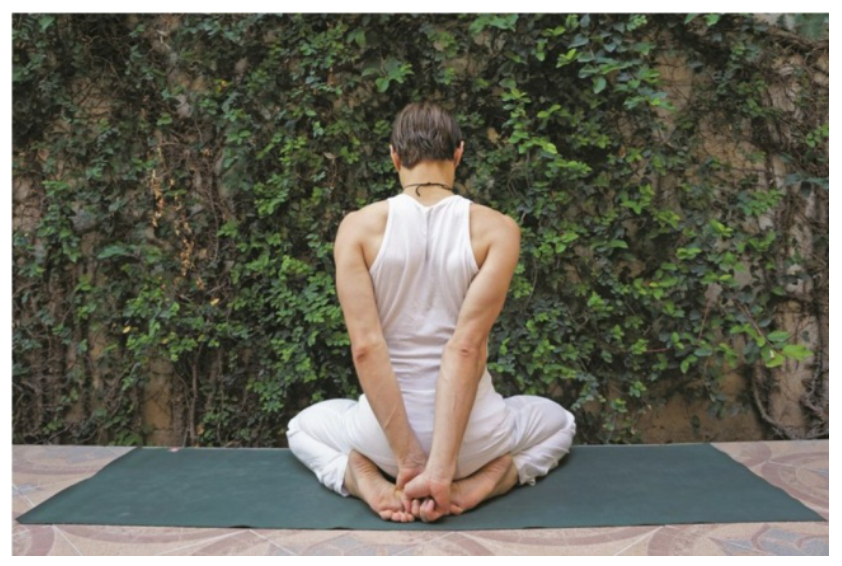
TECHNIQUE
- Place the heels adjacent to each other and close to the perineum
- Hold the feet with hands
- Remain steady for 30 seconds
IN BHADRA ASANA, NEXT
2. SHOONYAKA KUMBHAKA
SAURA PURAANA, CHAPTER 12, LINES: 22-24
TRANSLATION After exhaling one should hold the breath outside without inhaling the air and should contemplate on the internal moon and suck mentally the nectar oozing out of it.
TECHNIQUE
- Exhale completely
- Hold the breath outside as long as you can
- Now visualize moon on the crown of your head
- Visualize nectar oozing out of the moon
- Mentally suck the nectar
- When you can’t hold the breath outside, slowly inhale
- Do this 21 times
IN BHADRA ASANA, NEXT
3. – KEVALA KUMBHAKA
HATHA PRADEEPIKAA, CHAPTER 4, VERSE 64
रेचकं पूरकं त्यक्त्वा सुखं यद्वायुधारणम् ।
प्राणायामोऽयमित्युक्तः स वै केवलकुम्भकः॥
rechakam poorakam tyaktvaa sukham yadvaayudhaaranam | praanaayaamo (a)yamityuktah sa vai kevalakumbhakah ||
TRANSLATION Neither in inhaling nor in exhaling but in retaining the breath kevalakumbhaka is said to be very easy
TECHNIQUE
- Hold the breath automatically without inhalation or exhalation specifically.
- When you cannot hold anymore relax
- Allow the breathing to become normal
- Do this 21 times
IN BHADRA ASANA, NEXT-
4. BHOROLIKAA
JOGA PRADEEPIKAA, VERSES 477 TO 481
TRANSLATION cum TECHNIQUE
- Along with the a humming sound inhale completely
- Without using the fingers to close the nose retain the breath inside as long as you can
- When you can't hold more, release the breath through the nostrils without humming
- Repeat this 21 times
IN BHADRA ASANA, NEXT-
5. TRAATAKA KUMBHAKA
JOGA PRADEEPIKAA, VERSES 491 TO 493
TRANSLATION-cum-TECHNIQUE
- Pull your tongue upwards
- Inhale through the nostrils, Retain, and contract the throat and rest the chin on the chest
- When you can't hold, Exhale through the nostrils
- Repeat this 21 times
IN BHADRA ASANA, NEXT-
6. VAAMA GATI KUMBHAKA
HATHA SANKETA CHANDRIKA , CHAPTER 10, LINE 28
TRANSLATION-cum-TECHNIQUE
- Inhale through both the nostrils
- Hold the breath as long as possible judiciously
- Exhale through both the nostrils.
- Repeat this 21 times
IN BHADRA ASANA, NEXT
7. KUMUDA KUMBHAKA
KUMBHAKA PADDHATHI, VERSE: 190
॥ अथ कुमुदकुम्भकः ॥
पूरयेच्चन्द्रमार्गेण धारयित्वाध्वजायुधे ।
रेचयेत्तमुभा यां चेत्कुमुदः कुम्भकः स्मृतः ॥
Poorayeth Chandra-Maargena DhaarayithvaaDhvajaayudhe | RechayethThamUbhaabhyaam ChethKumudaha Kumbhakaha Smruthaha ||190||
TRANSLATION The breath should be inhaled through the left nostril. After retaining the breath, if the exhalation is done through both the nostrils, it is called Kumuda Kumbhaka.
TECHNIQUE
- Inhale through the left nostril
- Hold the breath
- Exhale through both the nostrils
- Repeat this 21 times
IN BHADRA ASANA, NEXT
8. KRAMA NETRA KUMBHAKA
KUMBHAKA PADDHATHI, VERSE: 191
॥ अथ क्रमनेत्रकुम्भकः ॥
सकृत्सूर्येण चापूर्य धार्यं चन्द्रेण पूरयेत् ।
धारयेच्च प्रयत्नेन रेचयेत् क्रमतस्तथा ॥
नेत्रकुम्भक इति ख्यातः क्रमतो व्युत्क्रमादपि ॥
SakruthSooryenaChaapoorya DhaaryaChandrenaPoorayeth | Dhaarayeth Cha Prayathnena RechayethKramathas-Thathaa ||191 ||
TRANSLATION
One should take the breath in through the right nostril, hold the breath and then again inahale through the left nostril. He should with effort hold the breath again and exhale in the same order. This is known as krama-netra kumbhaka. This is also done in the reverse order.
TECHNIQUE
- Inhale through the right nostril
- Hold the breath
- Inhale through the left nostril
- Hold the breath
- Exhale through the right nostril
- Hold the breath
- Exhale through the left nostril
- Hold the breath
- Do this 21 times
Kriya Date 01-Dec-2011