CURE FOR ANXIETY
This text was machine-transcribed from the printed book and may contain errors. Select the words and choose “Report a mistake”.
Disease Description
Anxiety disorder is a blanket term covering several different forms of a type of mental illness of abnormal and pathological fear and anxiety.
The term anxiety covers four aspects of experiences an individual may have: mental apprehension, physical tension, physical symptoms and dissociative anxiety. The emotions present in anxiety disorders range from simple nervousness to bouts of terror.
Anxiety disorders can arise in response to life stresses such as financial worries or chronic physical illness to the actual potential danger but still are overwhelmed by the fear.
Low levels of a neurotransmitter that reduces activity in the central nervous system, contribute to anxiety.
Anxiety also raises blood pressure and heart rate and can cause nausea, vomiting, stomach pain, ulcers, diarrhea, tingling, weakness, and shortness of breath. Some other symptoms are frequent self-doubt and self-criticism, irritability, sleep problems and, in extreme cases, thoughts of not wanting to be alive.
STEPS TO BE FOLLOWED
- VARAHA ASANA
- TRISHOOLA KUMBHAKA
- SEETHKAAREE PRAANAAYAAMAA
- SHEETHALEE KUMBHAKA
- TRINETRA KUMBHAKA
1. VARAHA ASANA
YOGAASANA MAALAA SACITRA, VERSE: 76
॥ अथ वराहासनम्
पगथली की माहिली कोर् मिलाई फणा पाणि कडु कैसे ।
एडी मूलद्वार नीचै राखै जांघ छीद्र अंगूल च्यारी अंत्र ।
हाथ दौ कांधापरि आणि मौरा हथेली अंगुली काठी लगावै ।
हाथ जोडि लगाई राखै द्रिष्ट नासाअग्र ।
असण कौ गुण अडिठ बण आदिदे गुबडा जाई ।
Pagathalee Kee Maahilee Kora Milaayee Phanaa Paani Ookadu Baise | Edee Mooladvaara Neechai Raashai Jaangha Cheedra Angoola Chyaaree Anthra |
Haatha Dovu Kaandhaapari Aani Mauraa Hathelee Angulee Kaatee Lagaavai | Haatha Jodee Lagaayee Raashai Drishti Naasaagra | Aasana Kau Guna Aadita Bana Aadhidhe Gubadaa Jaayee || 76 ||
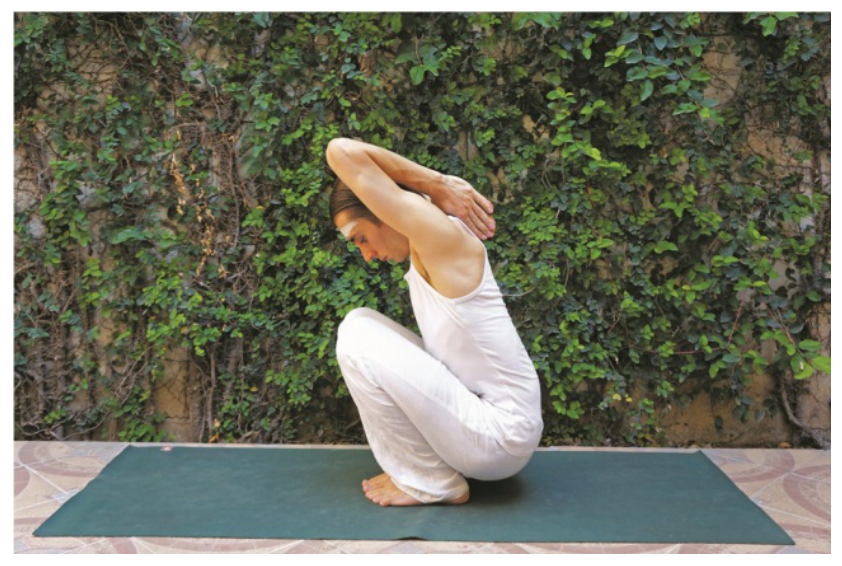
TRANSLATION -cum- TECHNIQUE
- Stay on the floor in the squatting position
- Keep the feet together and place the heels at the buttocks
- Spread the toes apart
- Raise the knees and press the abdomen with thighs
- Join the palms together and take them to the back
- Fix the gaze at the tip of the nose.
- Stay in this pose 30 seconds
IN VARAHA ASANA, NEXT
2. – TRISHOOLA KUMBHAKA
KUMBHAKA PADDHATHI, VERSE: 193
घोणा यां च मुखेनापि युगपत् पूरयेत् सदा ।
त्रिशूलिना त्रिशूलारख्यः कुम्भ उक्तस्त्रिशूलनुत् ॥
Ghonaabhyaam Cha Mukhenaapi YugapathPoorayethSadhaa | ThrishoolinaaTrishoolaakhyaha KumbhaUkthas-Trishoolanuth ||193||
TRANSLATION Always inhale through the nostrils and mouth together at a time. This is called the Trishoola Kumbhaka – the remover of triple sufferings – as explained by the Thrishooli Shiva.
TECHNIQUE
- Inhale through the nostrils and also through the mouth simultaneously
- Hold the breath as long as you can judiciously
- Now exhale through the nostrils slowly and relax 4. Do this 21 times
IN VARAHA ASANA, NEXT
3. SEETHKAAREE PRAANAAYAAMA
HATHA PRADEEPIKAA, UPADESHA 4, VERSE 43
सीत्कां दद्यात् सदा वक्त्रे घ्राणेनैव विसर्जयेत् ।
एवमभ्यास योगेन कामदेवो द्वितीयकः ॥
Seethkaam dadyaath sadaa Vaktre Ghraanenaiva Visarjayet |
Evam Abhyaasa-Yogena Kaamadevo Dviteeyakaha ||4.43||
TRANSLATION
By drawing the breath in through the mouth, make a hissing sound, without opening the mouth, and exhale through the nose. By practicing this, one becomes a second Kaamadevatha (god of love).
TECHNIQUE
- Stay in same asana
- Press the lower and upper teeth together and separate the lips as much as comfortable
- Breath in slowly through the gaps of the teeth
- Listen to the sound of the breath as the air is being drawn in
- Close the mouth at the end of the inhalation
- Exhale slowly through the nose
- Do this 21 times
IN VARAHA ASANA, NEXT-
4. SHEETHALEE KUMBHAKA
GHERANDA SAMHITA, UPADESHA 5, VERSES 73 & 74
जिह्वया वायुं आकृष्य उदरे पूरयेत् शनैः ।
क्षणं च कुम्भकं कृत्वा नाशाभ्यां रेचयेत् पुनः ॥
सर्वदा साधयेत् योगी शीतली कुम्भकं शुभम् ।
अजीनं कफ–पित्तं च नैव तस्य प्रजायते ॥
Jihvayaa Vaayum Aakrushya Udare Poorayet Shanaihi |
Kshanam Cha Kumbhakam Krutvaa Naasaabhyaam Rechayet Punaha || 5.73 ||
Sarvadaa Saadhayet Yogee Sheethalee-kumbhakam Shubham | Ajeernam Kapha-Pittam Cha Naiva Tasya Prajaayathe || 5.74 ||
TRANSLATION Draw in the air through the mouth (with lips contracted and tongue thrown out), and fill the stomach slowly. Retain it there for a short time. Then exhale through both the nostrils. Let the Yogi always practice this Sheethalee Kumbhaka, giver of bliss; by so doing, he will be free from digestion, phlegm and bilious disorders.
TECHNIQUE
- Continue to sit in same asana
- Close the eyes and relax the whole body
- Extend the tongue outside the mouth and roll the sides of the tongue up so that it forms a tube
- Inhale slowly through the tongue and fill the abdomen slowly
- At the end of inhalation, roll the tongue in, close the mouth
- Retain it there for a short time
- Then exhale through both the nostrils
- Do this 21times
IN VARAHA ASANA, NEXT-
5. TRINETRA KUMBHAKA
KUMBHAKA PADDHATHI, VERSE: 192
सकृच्चन्द्रेण चापूर्य धार्यं सूर्येण पूरयेत् ।
नियम्य पूरयेन्नो यां धारयित्वा यथाविधि ॥
त्रिनेत्रकुम्भकः प्रोक्तः त्रिनेत्रेण त्रिसिद्धिदः ॥
SakruthChandrenaChaapoorya DhaaryaSooryenaPoorayeth |
NiyamyaPoorayennobhyaam DhaarayithvaaYathaa-Vidhi ||
Thrinethra-KumbhakahaProkthaha ThrinethrenaThrisiddhidhaha ||
TRANSLATION Inhale through the left nostril and retain, inhale through the right nostril and retain and then inhale through both the nostrils, retain the breath (all these in one shot before exhalation). This is the Trinetra Kumbhaka – the giver of three siddhis – as explained by the three-eyed Shiva.
TECHNIQUE
- Inhale through the left nostril
- Hold the breath as long as you can judiciously 3. With out exhalation, inhale through the right nostril
- Hold the breath as long as you can judiciously
- Again without exhaling, inhale through both the nostrils
- Hold the breath as long as you can judiciously
- Now exhale through both the nostrils slowly
- Do this 21 times
END OF KRIYA
Kriya Date
16-Nov-2011