Important note
This text was machine-transcribed from the printed book and may contain errors. Select the words and choose “Report a mistake”.
重 要 提 示
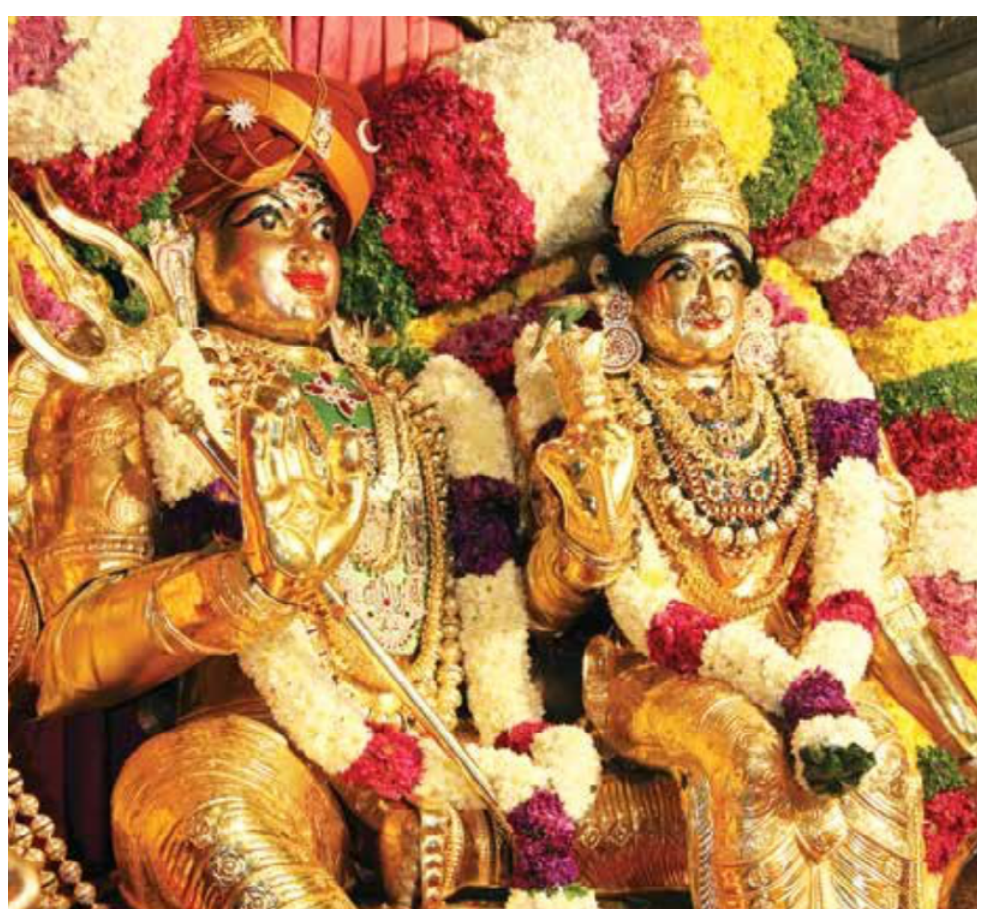
The Hindu Pakasastra is the science of Vedic cooking, delivered to the world by Paramasiva Himself. In defining the recipes utmost care is seen in ensuring maximum nutri- tion for a healthy body, mind and consciousness. The book clearly categorises food products into Sattvik, Rajasic and Tamasik character elucidating the effect on our body and mind when we consume those specific food products.
印度教《烹飪聖典》是吠陀烹飪的科學,由
帕冉瑪希瓦本人親自傳達給這個世界的。在定義食譜
時,最謹慎的是要確保為健康的身體、思想和意識提
供最多的營養。這本書清楚地將食品分類為悅性、刺
激性和惰性,闡明了當我們食用這些特定食物時對我
們身心的影響。
Accordingly, The Supreme Pontiff of Hinduism Jagat- guru Mahasannidhanam His Divine Holiness Bhagavan Nithyananda Paramashivam strongly promotes sattvic diet, as this is most conducive to taking individuals to higher states of consciousness and well being. Therefore, users of the recipes described herein need to use their discretion for dishes that mention non-satvik ingredients such as green chillies, on- ion, garlic, asafoetida, etc. Kailasa recommends using alterna- tives or avoiding those specific ingredients.
因此,印度(興都)教最高教皇,普世靈性導師 聖尊
尼希亞南達·帕冉瑪希瓦上師強烈提倡悅性飲食,因為這
最有利於將人帶入更高的意識和幸福狀態。因此,使用這
裏講述的食譜的人需要自己斟酌決定所提及的非悅性成分
的材料,比如:青辣椒、洋蔥、大蒜、阿魏膠等。凱拉薩
建議使用替代品或避免這些特定成分的材料。
Further, Pakasastra promotes vedic age cooking, such as use of earthen hearths & ovens, firewood, dry grass & coal for burning, hand grinding, earthenware & non-oxidising metal utensils such as bronze, copper and bronze for cooking and serving. Each of these are not ancient primitive practices alone but are the most advanced techniques to ensure best health of the body, mind and consciousness. Once again, users need to use their discretion on how this can be accomplished in their kitchens. Though alternatives are available today (such as gas stove, usage of cooker, electric mixer grinders etc) the SPH strongly recommends to take all possible efforts to align to the methodologies in Pakasastra.
此外,《烹飪聖典》提倡的是吠陀時代的烹飪方法,
如使用土灶爐,木柴、乾草和炭火製熱,手工磨製,使用
陶器和非氧化金屬如青銅、黃銅器具來烹調和盛菜。不僅
每一種都是古老的原始做法,而且是確保身體、思想和意
識最佳健康的最先進技術。再說一次,使用此聖典者需要
自行決定怎麼在自己的廚房裏做到這些。儘管今天有例如:
使用燃氣灶、炊具、電動攪拌機,研磨機等的替代品,但
印度教最高教皇強烈建議,做菜時,要盡可能的,保持和
《烹飪聖典》中的方法一致。
Pakasastra being a vedic age science of cooking only pro- motes organically grown products as ingredients. Use of dairy products such as pure ghee, milk, curds and buttermilk are mentioned in many recipes. At Kailaasa only ahimsa milk (milk obtained only through non-violent treatment of the cow/animal) is encouraged. In absence of ahimsa milk or if one is vegan, users need to use their discretion in finding al- ternate ingredients for such recipes, and ones that are in tune with sattvic diet. Ultimately, Pakasastra aims to take you to the highest state of consciousness and healthful living. We humbly urge you to make an effort to try a few principles or recipes as per Pakasastra and experience the immense benefits for yourself at the physical, psychological and conscious level.
《烹飪聖典》是一門吠陀時代的烹飪科學,它只把有
機種植的產品作為推廣材料。許多食譜中都提到使用乳製
品,比如純酥油、牛奶、凝乳和酪乳。在凱拉薩,只鼓勵
使用非暴力對待的牛奶。在沒有非暴力對待的牛奶或是純
素食者的情況下,用戶需要自行決定為此類食譜尋找替代
材料,和與悅性飲食相適應的材料。最終,《烹飪聖典》旨
在帶你進入意識和健康生活的最高狀態。我們謙卑地勸告
你們努力按照《烹飪聖典》,嘗試一些理論或食譜,去體
驗一下對自己的身體、心理和意識層面帶來的巨大好處。
As a person on the spiritual path of enlightenment, you need to dovetail the wisdom in the Pakasastra with the several nuggets of knowledge shared by the SPH on diet, exercise, aus- hada, meditation etc., all designed to achieve enlightenment.
作為一個走在靈性開悟道路上的人,你需要將《烹飪
聖典》中的智慧與大師在飲食、運動、非暴力、冥想等幾
個方面分享的知識相結合。所有這些都旨在成道開悟!
Thank You. 謝謝你們!
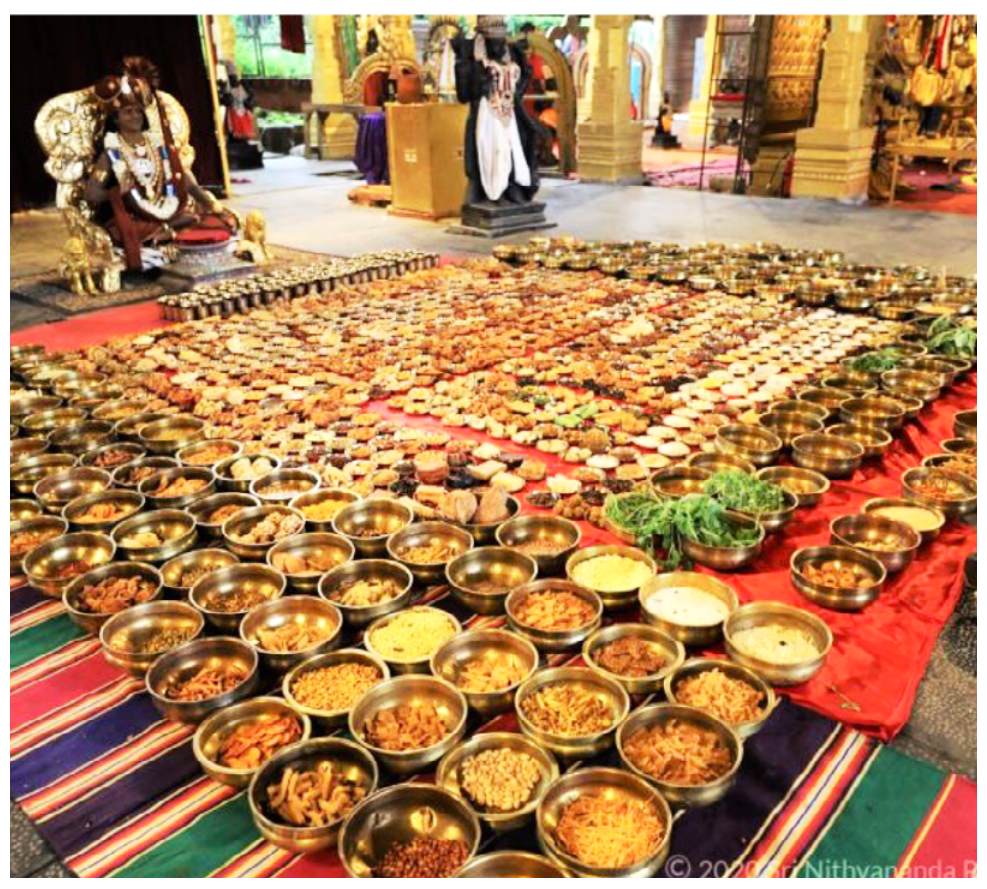
1 . Nourishment (Poshanai) 營養 The protection of the body containing the Jeevatma (individual consciousness) from all diseases through anna- paanam (food and drinks) is called Nourishment. As per the saying (shareera maathyangalu dharmasaadhanam) , the first duty among all deeds that we humans do to fulfill our needs during our lifetime is Nourishment. 所謂營養,就是含有個體意識 (Jeevatma) 的身體 通過anna-paanam(食物和飲料)獲得免於所有疾病的 保護。正如諺語 (shareera maathyangalu dharmasaadha- nam) 所說,我們人類一生中為滿足自己需求所做的一 切事情中,首要責任就是營養。
The foundation for nourishment is anna-paanam (food and drinks) ; when the measurement of the taste of the ingredients (in food or drinks) is inappropriate, the bod- ily principles which takes in this nourishment is disturbed from its original state, causing the bodily principles to over or under function creating suffering in the body. Hence, we should ourselves eat and feed others, the food prepared by using all the good ingredients created on this earth, which are suitable to the bodily principles; accordingly we should drink the required amount of water and make others do the same. It is also our responsibility to ensure that no harm is caused to our body due to wind, rain, snow, etc.
營養的基礎是食物和飲料 (anna-paanam);當 (食
物或飲料的) 各種成分的味道測量不適當時,攝入這種
營養的身體法則的原始狀態就會被打亂,導致身體法則
功能過強或過弱,進而造成身體痛苦。因此,在我們自
己進食或餵養他人時,應該使用地球上生長的、適於身
體法則的所有好材料來製作食物;因此,我們應該飲用
足量的水,並讓其他人也這樣做。我們也有責任確保不
因風、雨、雪等原因對自己身體造成傷害。
2 . Bodily Principles - their status, food, actions etc.
身體法則 —— 它們的狀態、食物和行動等
Among all creatures created by the divine, we humans who have intelligence (6th sense) live as long as He (divine) has determined, as per His orders, in this lifetime and life beyond. In order to perform our duties, enjoy the fruits of our deeds, and live happily, we should consume appropri-ate food such that the foundation of our body- the bodily principles are as follows:
在所有神創造的生靈中,我們人類擁有智慧 (第
六感),按照祂 (神) 的命令,在今生和來生,活得同
神所決定的一樣久。為了履行我們的職責,享受我們
行為的成果,並幸福地生活,我們應該吃適當的食物,
並遵循如下身體運作的基礎 —— 身體法則:
- Jataragni – should not be too intense or too dull; but should be balanced;
- Rakta maamsaadi Dhathu (tissues like blood, muscles etc.) to be pure and strong; - Tridoshas - Vatta, Pitta, Kapha/Sleshmam to be bal- anced and in their original states;
- Panchabhootas - 5 elements - Vaayu (air), Tejas (fire), Appu (water), Prithvi (earth), Aakaaya (space) should be blissful;
- Triguna - Saatvika, Raajasa, Taamasa - where sattva is more and rajas and tamas are lesser.
- 胃火(Jataragni): 避免過於強烈或沈悶; 保持平衡;
- 身體組織 (Rakta maamsaadi Dhathu, 如血液、肌 肉等): 保持純淨和強壯;
- 三種屬性 (Tridoshas): 風型 (Vata)、火型(Pitta)、 水型 (Kapha/Sleshmam), 平衡並保持其原始狀態;
- 五大元素 (Panchabhootas): 氣 (Vaayu)、火 (Tejas)、 水 (Appu)、土 (Prithvi) 和空間 (Aakaaya) 保持在 喜樂的狀態;
- 三種特質 (Triguna): 增加悅性 (sattva) 並減少動性 (rajas) 和惰性 (tamas) 。
The food for the body having 5 constituents namely Sat- tu (nutrients), Sakkai (fibre), Suvai (taste), Gunam(quality), Dosham(defect) should be such that each constituent of food feeds each one of the 5 foundational bodily principles namely Agni (fire), Dhathu (body tissues), Bhootam (5 elements), Dosham, Gunam for the body that carries the atma (con- sciousness).
為身體準備的食物, 應當具備五種成分, 即營養 (Sattu)、纖維 (Sakkai)、味道 (Suvai)、特質 (Gunam) 和屬性 (Dosham)。為了這個攜帶意識 (atma) 的身 體, 每種食物成分分別滋養了五項基礎性的身體法則, 即胃火 (Agni)、身體組織 (Dhathu)、五大元素 (Bhoo-tam)、屬性 (Dosham) 和特質 (Gunam) 。
If it is not so, the defects of the food constituents cause damage to the bodily principles and in turn they fail to per- form their appropriate functions causing ill health to the body. Among the 5 bodily principles, except body tissues, the rest can be understood only through our actions or emotions.
若非如此,食物成分殘缺會破壞身體法則,使之
無法發揮應有功能,導致身體不健康。在五項身體法
則中,除了身體組織,其餘的只能通過我們的行為或
情緒來理解。
JATHARAGNI:
This digests the food we intake and throws out one component of food - fibre in the form of excreta and gives the other constituents - Sattu, Suvai, Dosham, Gunam to the other bodily principles - Dhathu, Bhootam, Dosha, Gunam. Also, the Vayu Bhoota (air element) segregates the embryo in the womb into various tissues and Jataragni gives form to each of them. These are the functions of Jatharagni. Hence, the food that we consume should contain both sakkai and sattu. The existence of Jatharagni can be experienced surely believed by the burning sensation in the stomach and heat produced when the 2 palms are rubbed against each other.
胃火 (JATHARGNI) :
這項身體法則指,消化我們攝入的食物,以排泄
物的形式排出食物纖維,並將食物的營養(Sattu)
、味道(Suvai)、屬性(Dosham)和特質(Gunam)給
予其他身體法則——身體組織(Dhathu)、五大元素
(Bhootam)、屬性(Dosha)和特質(Gunam)。氣
元素(Vayu Bhoota)將子宮中的胚胎分離成不同組
織,而胃火為每個組織賦予形式。這是胃火的作用。
因此,我們的食物應該同時包含纖維和營養。胃火的
存在可以通過胃部的灼熱感以及兩只手掌相互摩擦時
產生的熱量來體驗。
SAPTA-DHAATHUKKAL (7 body tissues) :
Just as stone, mud, wood, water are foundational mate- rials to building a house to live, in the same way the body tis- sues - plasma(rasam) , blood (raktam) , flesh (maamisam), bone (asthi) , bone marrow (majjai) , reproductive tissues (shukla) and adipose (medas) are instrumental to create the body carrying the jeevatma (consciousness). These take the nutrients along with the essence (rasam) in the pulp as their food and give the rest of the food constituents - taste, dosham, gunam to the bodily principles - bhootham, dosham, gunam. These are the functions of our body tissues. Hence, the food that we consume should contain fluid (pasai) of liquid nature in order to wet the tissues. The essence of the food (nutrients) soaks and stays in the plasma tissue on the 1st day. On the 2nd day, the anna rasam, soaks into the plasma tissue, and the previously soaking essence-rasam flows into the blood tissue. Similarly it flows into the flesh on the 3rd day, into the adipose tissue on the 4th day, into the bone on the 5th day, into the bone marrow on the 6th day, into the reproductive tissue on the 7th day; nourishes them and provides undimini- shing strength to the body on the 8th day. As these 7 dhatus can be seen by the eyes directly, we cannot doubt their existence.
七種身體組織 (SAPTA-DHAATHUKKAL) :
正如石頭、泥土、木頭、水是建造房屋的基礎材
料一樣,身體組織——血漿 (rasam)、血 (raktam)、
肉 (maamisam)、骨 (asthi)、骨髓 (majjai)、生殖
組織 (shukla) 和脂肪 (medas) 有助於創造攜帶意識
(jeevatma) 的身體。這些組織攝取食物漿中的營養精
華,並將食物其餘的組成部分——味道、平衡能量和
好的意識留給其他的身體法則——五元素、生物元素
和特質。這就是我們身體組織的功能。因此,我們所
吃的食物應該包含液體的流動性質 (pasai) 以濕潤身
體組織。第1天,食物的精華 (營養物質) 浸透並停
留在血漿組織中。第2天,anna rasam 滲入血漿組織,
之前浸出的 essence-rasam 流入血液組織。同樣,第3
天它流入肌肉組織,第4天進入脂肪組織,第5天進入
骨骼,第6天進入骨髓,第7天進入生殖組織;食物的
淨化滋養所有這些組織,在第8天仍然為身體不斷提
供力量。由於這7個身體組織 (dhatus) 可以肉眼直
接看到,我們無法懷疑它們的存在。
TRIDOSHA:
Among these, the Vata dosha takes the Vaata component in the food we intake, and enables the body to bend, to turn to the left and right, to stand, to run, to speak and addition- ally it also helps the intelligence, senses and mind to function in their appropriate states. These are the functions of Vaata. Pitta takes the Pitta dosha component in the food we in- take, and provides various benefits to the body like radiance, health, taste to the tongue, right heat to the Jatharagni, and love for food. It also helps Jatharagni to digest the food. These are the functions of Pitta. Sleshmam / Kapham takes the Kapha component in the food we intake and makes the body shine, provides courage, strength and also helps limbs like hands and legs to move as they want. These are the functions of Sleshmam.
三種屬性(TRIDOSHA):
在這個過程中,風型屬性 (Vata dosha) 攝取我們
食物中的風型成分,讓身體可以彎曲、左右轉動、站
立、跑步和說話,此外它還幫助智力、感官、心智在
適當的狀態下發揮作用。這些都是風型屬性的作用。
火型屬性 (Pitta dosha) 從我們的食物中攝入火型成分,
並為身體提供各種好處,比如容光、健康、舌頭味覺、
胃火的正確熱度,以及對食物的熱愛。這些都是火型
屬性的功能。水型屬性 (Sleshmam/Kapham) 攝入我
們食物中的水型成分,讓我們的身體閃閃發光,提供
勇氣和力量,並且幫助四肢(如手和腿)按照意願移
動。這些是水型屬性的功能。
The above mentioned 3 doshas takes the 3 doshas in the food we intake as their food; and gives the other food components namely taste and guna to the 2 bodily princi- ples, bhoota and guna respectively. Thus, the food that we intake should consist of ingredients with balanced doshas which in turn balance the Vaataadi doshas in the body. Vomiting due to giddiness, fainting are the indication of Pitta dosha, pricking sensation(kutthal pudaittal) are the indication of Vaata dosha; Sleshma dosham can be identified from con- ditions like cold/phlegm and cough due to excess cold. How- ever, only if they are more than their balanced states, these indications can be seen.
上述3種屬性從我們的食物中汲取不同的生物能
量;並將剩下的食物成分,亦即味道和特質留給了剩
下來的2項身體法則,分別是五大元素和特質。因此,
我們攝入的食物中應當包含風、火和水三種屬性相互
平衡的成分,這反過來可以平衡我們身體中的三種屬
性。頭暈嘔吐,昏厥是火型屬性的指徵;刺痛感 (kut-
thal pudaittal) 是風型屬性的指徵;水型屬性可以從諸
如感冒/痰以及因著涼而咳嗽等情況中識別出來。但
是,只有在三種屬性的平衡狀態被打破時,這些指徵
才會顯現出來。
PANCHA BHOOTA (5 elements) : Among these, the air element (Vaayu) , takes the as- tringent taste in the food nutrients as its food, and divides the shapeless embryo in the womb into various body tissues and doshas. Tejas or fire, takes the pungent taste in the food nutrients as its food, and gives form to the tissues and doshas which were divided by Vaayu (air element). Appu (water) , takes the sweet taste in the food nutrients as its food, and protects the foetus with its wet nature, from any damage that can be caused due to the jwala (flames) produced from the combining of vaayu and tejas. Prithvi (earth) , takes the sour and salty taste in the food nutrients as its food, and pro- tects the tissues and doshas protected by Appu, from any de- fects that can be caused due to too much wetness. Aakash- am (space) , takes the bitter taste in the food nutrients as its food, and causes the forms created and protected by vaayu, jwaalam, appu, prithvi to thrive. These are the functions of the Pancha bhootas.
五大元素(PANCHA BHOOTA):
在上述過程中,氣元素(Vaayu)吸收食物營養
中的澀味,並將子宮中尚未成形的胚胎分裂成各種身
體組織和屬性。火元素(Tejas)吸收食物營養中的辣
味,為氣元素所分裂的組織和屬性給予形狀。水元素
(Appu) 吸收食物營養中的甜味,以其濕潤的特性保
護胎兒,使其免於受氣元素和火元素結合產生的火焰
(jwala) 造成任何傷害。土元素 (Prithvi) 吸收食物
營養中的酸味和鹹味,保護那些受到水元素保護的組
織和屬性,使之避免由於過於濕潤而導致缺陷。空間
元素 (Aakasham) 吸收食物營養中的苦味,讓那些由
氣元素、火元素、水元素、土元素創造和保護的組織
形式得以茁壯成長。這就是五大元素的功能。
Hence, the food we intake should contain all 6 tastes which are the food for the pancha bhootas which perform important functions in our body. In addition to the above mentioned functions of the pancha bhootas, each of them takes the support of the others and performs some more im- portant functions as said below.
因此,我們攝入的食物應該包含所有6種味道,它
們是在我們身體中發揮重要作用的五大元素的食物。
除了上述功能外,五大元素中的每一個都需要其他元
素支持,並執行一些更重要的功能,如下所述:
1. VAAYU BHOOTAM - air element creates
- Samaana with the help of Aakasha (space)
- Vyaana by itself
- Udaana with the help of Tejas (fire)
- Apaanana with the help of Appu (water)
- Praana with the help of Prithvi (earth)
1. 氣元素(VAAYU BHOOTAM)—— 由氣元素創造
- 借助空間元素 (Aakasha) 達到中和 (Samaana)
- 借助氣元素自身達到「氣和」(Vyaana)
- 借助火元素 (Tejas) 達到「火和」(Udaana)
- 借助水元素 (Appu) 達到「水和」(Apaanana)
- 借助土元素 (Prithvi) 達到「土和」(Praana)
2. TEJAS BHOOTAM - fire element creates
- Dhatus (tissues) with the help of Aakasha (space)
- Skin with the help of Vaayu (air) - Eyes by itself
- Tongue with the help of Appu (water)
- Nose with the help of Prithvi (earth)
2. 火元素 (TEJAS BHOOTAM) ── 由火元素創造
- 借助空間元素 (Aakasha) 產生身體組織
(Dhatus)
- 借助氣元素 (Vaayu) 產生皮膚
- 借助火元素自身產生眼睛
- 借助水元素 (Appu) 產生舌頭
- 借助土元素 (Prithvi) 產生鼻子
3. APPU BHOOTAM - water element creates - Sound with the help of Aakasha (space) - Emotions with the help of Baayu (air) - Form with the help of Tejas (fire) - Taste by itself - Smell with the help of Prithvi (earth)
3. 水元素 (APPU BHOOTAM) ── 由水元素創造
- 借助空間元素 (Aakasha) 發出聲音
- 借助氣元素 (Vaayu) 產生感情
- 借助火元素 (Tejas) 產生形體
- 借助水元素自身產生味覺
- 借助土元素 (Prithvi) 產生嗅覺
4. PRITHVI BHOOTAM - earth element creates - Gas with the help of Aakasha (space) - Hands with the help of vaayu (air) - Feet with the help of Tejas (fire) - urethra with the help of Appu (water) - Anus by itself
4. 土元素 (PRITHVI BHOOTAM) ── 由土元素創造
- 借助空間元素 (Aakasha) 產生氣息
- 借助氣元素 (Vaayu) 產生雙手
- 借助火元素 (Tejas) 產生雙腳
- 借助水元素 (Appu) 產生尿道
- 借助土元素自身產生肛門
5. AAKAASHA BHOOTAM - space element creates - Aakasha by itself - Mind with the help of vaayu (air) - Buddhi (intelligence) with the help of Tejas (fire) - Chitta - with the help of Appu (water) - Ego with the help of Prithvi (earth) 5. 空間元素 (AAKAASHA BHOOTAM) ―― 由空間 元素創造 - 借助空間元素 (Aakasha) 自身形成空間 - 借助氣元素 (Vaayu) 形成思維 - 借助火元素 (Tejas) 形成智慧 (Buddhi) - 借助水元素 (Appu) 形成覺知 (Chitta) - 借助土元素 (Prithvi) 形成自我意識 (Ego)
If we are to believe the existence of Pancha-bhootas as one of our bodily principles, we can understand it by the small following example. When we forcefully blow air onto our palm and we feel the air hit the palm, we can under- stand the existence of vaayu bhoota (air element). And from the heat generated from it, we can understand the existence of Tejas (fire element). And from the moisture it generates, we can understand the existence of Appu (water element). And from the place from where the breath starts, we can understand the existence of Prithvi (earth element). And be- cause there exists a path between the place from where the breath starts and where it hits the palm, we can understand the existence of Akasha bhoota (space element).
如果我們想要相信五大元素作為我們身體法制之
一而存在,我們可以通過下面的小例子進行理解。當
我們用力向手掌吹氣,我們感覺到空氣打在手掌上,
如此我們可以理解氣元素 (Vaayu bhoota) 的存在。感
受由此產生的熱量,我們可以理解火元素 (Tejas) 的存
在。通過這一過程產生的潮濕感,我們可以理解水元
素 (Appu) 的存在。從呼吸開始之處,我們可以理解
土元素 (Prithvi) 的存在。而由於呼吸開始之處與其擊
打手掌之處兩者之間存在一條路徑,我們可以理解空
間元素 (Akasha bhoota) 的存在。
TRIGUNAS:
The functions performed by the body along with the consciousness, with the help of the doshas, are made more efficient by the trigunas. Among the 3 gunas, The Sattva guna takes in the sattva guna in the food we intake as its food, and makes our actions filled with truth, purity, wisdom and gives us happiness, delight, strength, fame, enlightenment, peace, compassion, self-fulfillment, devotion to the divine, profit, right strategy, efforts to perform good deeds. The Rajo guna takes in the rajasic nature in the food we intake as its food, and makes us lusty, angry, greedy, arrogant, jealous, and cunning in our strategy. One who has more of this guna, in order to fulfill his desires, performs many daring and harmful actions and as its result, experiences cheap benefit and cheap pleasures, deep suffering, huge loss, unending worry, exces- sive lust, confusion etc. and lives without happiness always. The Tamo guna takes in the 3rd component namely tamasa guna in the food we intake as its food, and makes our actions ignorant, useless and creates more bad effects. One who has more of this guna, always loses a stable mind, strategy, think- ing, ability to work with self-drive, without others' force, disci- pline and lives life like that of an animal.
三種特質(TRIGUNAS):
身體跟隨意識執行的各種功能,在各種屬性的幫
助下得以實現,而在三種特質的幫助下變得更加有效
率。在三種特質中,悅性特質(Sattva guna)從我們
所吃的食物中吸收悅性(Sattva guna),並使我們的
行動充滿真理、純潔、智慧,同時給予我們幸福、
喜悅、力量、聲譽、覺悟、和平、慈悲、自我實現、
對神的奉獻、收益、正確的策略,以及努力實施善
行。動性特質(Rajo guna)從我們所吃的食物中吸收
其中的刺激性,並讓我們在自己的生活策略中變得亢
奮、憤怒、貪婪、傲慢、嫉妒和狡猾。一個帶有更多
這種特質的人,會為了滿足其欲望而做出許多大膽而
有害的行為,其結果是會經歷廉價的利益、廉價的快
樂、深重的痛苦、巨大的損失、無盡的憂慮、過度的
欲和困惑等,生活總是沒有幸福感。惰性特質 (Tamo
guna) 吸收我們食物中的第三種成分,即惰性 (Tamasa
guna),它使我們的行為變得無明、無用,並產生更
多不良影響。如果一個人有較多這種特質,就會失去
穩定的頭腦、策略、思維和自主工作能力,離開了他
人的強制和紀律約束,就會活得像動物一樣。
Hence, the food that we intake should contain the gu- nas (food-components) which are the food for the Trigunas (bodily principles) of the body. However, it is the nature of the world to like the uttama (best) guna. Hence, it is good to intake food predominant in sattva guna. As said above, details on Sattvic, Rajasik and Tamasic creatures and objects and how they are created are given in the following section which explains Trigunas - one of the food components.
因此,我們攝入的食物應該包含為身體法則中的
特質 (Trigunas) 所吸收的食物成分 (Gunas)。然而,
喜歡最好的品性 (Uttama guna) 是這個世界的本性。
因此,最好食用以悅性特質為主的食物。如上所述,
悅性、動性和惰性的生物和物體,以及它們是如何被
創造的,將在下文解釋三種特質——食物成分之一
的章節中進行詳細闡釋。
3. Hunger and Food 饑餓與食物
Hunger: When creatures don't intake food which is the cause of their survival, their Jatharagni (digestive fire) begins to eat its own muscles and suck blood. The suffering or illness created then is called hunger. At that time, intak- ing good food and drinks as said before is the duty of each creature. If not, because of the hunger, beauty, strength, joy, desire, food and speech decreases and many defects are created in the body. The above truth was explained by the Tamil women saint Avvaiyar as a poem, which is given below.
饑餓:當生物不食用其賴以生存的食物時,它們 的胃火 (Jatharagni) 就開始吞噬自己的肌肉和血液。
由此產生痛苦或疾病,而這就是所謂的饑餓。此時,
按照前述規則食用好的食物和飲料是每個生物的職
責。若非如此,由於饑餓,美貌、力量、快樂、欲望
和話語會減少,身體會產生許多缺陷。上述真理由泰
米尔女圣人Avvaiyar用下面这首诗做了解释:
மானங் குலங்கல்வி வண்மை அறிவுடைமை
தானந் தவமுயற்சி தாளாண்மை-தேனி
கசிவந்த சொல்லாயாமேற் றாமுறுதல் பத்தும்
பசிவத் திடப்பறந்து போம்
Aahaaram (food): The food and drinks consumed by creatures in order to survive, for the foundational body principles - Agni, Dhatu, Bhootam etc. to flourish and to stay happy is called Aahaaram (food). This food is not uni- form to all creatures but varies according to the created beings. It is explained as follows:
食物(Aahaaram):生物為了生存而消耗食物和
飲料,從而能夠維持基本的身體法則——胃火、身
體組織、屬性等蓬勃發展並保持快樂,即稱為食物
(Aahaaram)。這種食物並不是對所有生物都一樣,
而是因生物種類不同而不同。其解釋如下:
Trivial insects and worms which crawl on the floor feed on creatures more minute than them that live in air, water, and dirt; large and small birds that fly in the sky feed on tender shoots, flowers, vegetables and fruits, meat etc; dif- ferent species of animals that live in jungles and on moun- tains feed on grass, plants and herbs in general, leaves and meat; we humans, with rational thinking, and a tongue that can identify taste, choose food objects created on this earth which comprise of the 5 food components - sakkai (fibre), sattu (nutrient), suvai (taste), dosham and gunam, that provide us with health, strength, taste to tongue and intel- ligence; we make them suitable and then consume, or con- sume them as is.
小昆蟲和地上爬行的蠕蟲,以生活在空氣中、
水中和泥土中那些比它們更微小的生物為食;天上
飛的大小鳥類以嫩芽、花朵、蔬果、肉類等為食;
生活在山林的各類動物則通常以草、草本植株、樹
葉或肉類為食;我們人類,具理性思維,還具有
能辨別味道的舌,選擇在地球上五類成份兼備的食
用對象——纖維(Sakkai)、營養(Sattu)、味道
(Suvai)、屬性(Dosham)和特質(Gunam),它們
為我們提供健康、力量、口感與智慧;我們加工食
物使其適於食用再吃,或直接取用。
Even our food is not uniform and varies according to the land, products from the land, varieties of food and dharma (nature) of the body (Shareera dharmam). This is explained as follows:
甚至我們的食物也並不統一,根據土地品種、
土地產出、食物種類和身體之道(Shareera dharmam)
的不同而不同。解釋如下:
people who live in places of Hindustan like Kashi (Varanasi), Kolkata, Delhi, Lucknow, consume the major cereals that grow in these regions namely wheat and pad-dy, and dishes like rice (bath) or flat-bread (roti) made from these cereals, along with suitable vegetable side dish-es; people residing in Maharashtra in places like Mumbai, Pune, Nasik, Solapur, consume cereals that mainly grow in these regions like wheat, maize, pearl millet, finger mil-let and dishes like flatbread (rotti) or pancakes (pagar) made from these cereals along with suitable vegetable side dishes; those residing in Karnataka, in places like Mysore, Bengaluru, Kodagu, consume the major cereals that grow in these regions like paddy, maize, pearl millet, foxtail mil-let, finger millet, little millet and dishes rice, kali (pudding/ sangadi) or pancake (pakari) prepared from them along with suitable vegetable side dishes; Telugu people resid-ing in Andhra-Pradesh in places like Ganjam, Godavari, Krishna, Kurnool and Tamil people residing in Dravidian places like Northern-Arcot (Aarkaadu), Coimbatore, Sa- lem, Tiruchirappalli, Thanjavur, Madurai and Tirunelveli consume the major cereals that grow in these regions namely paddy, maize, pearl millet, finger millet, foxtail millet, and dishes like rice and pudding made from these cereals, along with vegetables, rasam (thin spicy soup) and kuzhambu (broth); Malayali people residing in Ker- ala consume the major cereal that grow in this region namely paddy, prepared as rice or kanji (porridge), along with suitable side dishes like Kalan, Olan, Avial.
居住在印度斯坦地區如迦什(瓦拉納西)、加爾
各答、德里、勒克瑙等地的人們,以生長在本地的
主要穀物即小麥、稻穀為食,將其加工成米餅(Bath)
或麵餅 (Roti) 並配以合適的蔬菜製作餐食;居住在
印度馬哈拉施特拉邦,如孟買、浦那、納西克、索拉
普爾等地的人們,以主要生長在本地的穀物為食,
比如將小麥、玉米、珍珠粟、小米製成烙餅 (Roti)
或薄煎餅 (Pagar) 並配以合適的蔬菜製作餐食;生
活在印度卡納塔克邦地區如邁索爾、班加羅爾、科
達古等地的居民,主要以穀物如稻穀、玉米、珍珠
粟、粟米、穇子、小米為食,將其加工成飯菜、
布丁(Kali/Sangadi) 或煎餅 (Pakari) 並配以相應的
蔬菜製作餐食;居住在印度安得拉邦地區如甘賈
姆、戈達瓦里、克里希納、庫爾努爾等地的泰盧固
人,以及居住在印度達羅毗荼地區如北阿爾科特(
阿爾卡杜)、哥印拜陀、塞勒姆、蒂魯吉拉伯利、
坦賈武爾、馬杜賴和蒂魯內爾維利的泰米爾人,
以本地的主要穀物為食,即稻穀、玉米、珍珠粟、
穇子、粟米,將其製成穀飯和布丁等,並配以蔬
菜、辣湯 (Rasam) 和酸辣湯 (Kuzhambu);居住在
印度喀拉拉邦的馬來亞人,以生長本地的主要農
作物即稻穀為主食,將其加工成米飯或粥 (kanji)
,並佐以諸如蔬菜酸乳咖哩 (Kalan)、椰奶葫蘆瓜
(Olan)、蔬菜椰奶咖哩 (Avial) 等相應的配菜。
However today, after the establishment of railways by the British, which has spread across all regions of our kingdom, paddy is exported to regions where there is no paddy, wheat is exported to regions where there is no wheat; and after the export of cereals from regions where they are cultivated began, these cereals have become the major cereals in the consumption of the rich, civilized people in all the regions given above.
然 而 今 天 , 在 英 國 人 修 建 了 遍 佈 我 們 國 家 所 有 地 區 的 鐵 路 後 , 稻 穀 出 口 到 了 不 產 稻 穀 的 地 區 , 小 麥 出 口 到 了 不 產 小 麥 的 地 區 ; 自 從 各 個 穀 物 原 產 地 開 始 出 口 各 種 穀 物 後 , 這 些 穀 物 已 經 成 為 上 述 所 有 地 區 富 裕 、 文 明 的 人 們 的 主 食 。
4. Features of Food Constituents 食物成分的特性
The five constituents of food, namely Fiber, Nutrient, Taste, Dosham (vital energy), Gunam(quality of food) have been spoken about earlier. Of these, besides Fiber and Nutrient, the other three which are Taste, Dosham and Gunam cannot be seen by eyes or felt by touch, but can only be known through taste, resulting body distor- tions, and the good and bad effects of our actions.
食 物 的 五 種 成 分 , 即 纖 維 、 營 養 、 味 道 、 屬 性 ( 生 命 能 ) 、 特 質 ( 食 物 性 質 ) , 上 文 已 詳 述 。 其 中 除 了 纖 維 和 營 養 外 , 剩 下 的 三 種 成 分 ―― 味 道 、 屬 性 和 特 質 , 無 法 用 肉 眼 看 到 , 只 能 通 過 味 覺 、 食 用 後 的 身 體 變 化 及 其 對 我 們 行 為 好 或 壞 的 影 響 來 了 解 。
Fiber (Sakkai): When creatures chew and swallow their food, the portion that's not ingested but spit out, and also the portion that's not absorbed with the blood or flesh but gets thrown out as excreta is known as Fiber.
纖 維 (Sakkai): 當 生 物 咀 嚼 和 吞 咽 食 物 時 , 那 些 未 被 消 化 而 要 吐 掉 的 部 分 , 以 及 那 些 未 被 血 液 或 肌 肉 吸 收 而 是 作 為 排 泄 物 排 除 體 外 的 部 分 , 稱 為 纖 維 。
Nutrient (Saatu) : When creatures chew and swal- low the food, the portion that"s not spit out but digested, and portions which in turn are absorbed by the blood- stream or flesh in turn giving strength to the body, and not excreted out is known as Nutrient.
營養 (Saatu):當生物咀嚼和吞咽食物時,食物
中沒有吐出來而是消化了的部分,以及被血液或肌
肉吸收、給身體帶來力量而沒有排泄出來的部分,
稱為營養。
Taste (Suvai) : Anything that"s created on earth, when placed on the tongue, gives the tongue a kind of knowledge or feeling. That which makes you experience this feeling is known as Taste or Essence. These tastes are not only for the enjoyment of the tongue, but are also made to be as fuels for the Five Elements (Pancha bhoota ) which is one aspect of the many bodily princi- ples. Though some of these tastes don"t please the tongue nor bring happiness to the mind, since they fuel their re- spective Elements of the body, we mix them with other tastes that are pleasing to the tongue and consume them. If we don"t consume in this manner, the Elements that relate to their respective tastes are deprived of their fuel, don't perform their intended functions, causing many ill effects to us. These tastes are mixed into the many objects of this world, and cannot be seen distinctively through the eyes. Hence, they can only be known through the tongue, and not be seen by eyes nor known to the touch. These tastes are Bitter, Sweet, Sour, Salty, Astringent, Pungent/ spice, and thus known as the Six Tastes. These tastes are not just uniquely present but are also present in (food) objects as an integrated mix of two or more tastes. But whichever taste is predominant, is ascribed to that type of food object.
味道 (Suvai):大地產出的東西,置於舌頭上, 都會給舌頭一種感知或感覺。使你體驗這種感覺的
東西稱為味道或精華。這些味道不僅是為了舌頭的
享受,它們也是諸項身體法則之一——五大元素的
燃料。儘管一些味道無法取悅舌頭,也無法給頭腦
帶來愉悅感,由於它們能點燃身體中與之對應的元
素,我們將其與其他能取悅舌頭的味道混合,然後
食用它們。如果我們不以這種方式進食,那些與相
關味道對應的元素就會缺乏燃料,無法發揮應有的
功能,並給我們造成許多病痛影響。這些味道與這
個世界上的許多物質混合,無法通過肉眼清晰看到。
因此,它們只能通過舌頭進行感知,無法用眼看,
也無法用手摸。這些味道是苦、甜、酸、鹹、澀、
辣,因此稱為六味。六味不僅可以單獨存在,也可
以兩味或多味組合的方式存在於食物體中。但無論
哪種味占主導地位,都取決於食物的類型。
Bitter (kaippu) : Any food object, the instant it is placed on the tongue, spreads to all of the regions of the tongue, obliterates the tastes of other food items present, and removes all the dirt in the mouth, its taste is known as Bitter. Those that predominantly exhibit bitter taste are Bitter Gourd (pagarkai) , Bitterberry (sundakkai) , etc.
This taste has the power to enable speedy digestion, Arosikaharam. Taken in limited quantities, this can cure fever, fainting/breathlessness, infection, leprosy. This reduc- es the burning sensation in the body. It can purify milk. This can detoxify poison and phlegm. If consumed in ex- cess, it will cause ill-effects.
苦味 (kaippu):任何食物,只要一將它放在舌
頭上,就會擴散到舌頭所有區域,抹去其他食物的
味道,並清除口腔中所有污垢,這種食物的味道就
稱為苦。以苦味為主的食物有苦瓜 (Pagarkai)、苦莓
(Sundakkai) 等。
苦味俱有促進消化的力量 (Arosikaharam)。少量
食用,可以治療發燒、昏厥/呼吸困難、感染和麻
風病。這能減少身體的燒灼感。它可以淨化牛奶,
也能解毒化痰。如果過量食用,會產生不良影響。
Sweet (thithippu) : Any food object that has ants and flies buzzing around it and that, when placed in the mouth causes a sense of enjoyment in the mind, its taste is known as Sweet. Those that predominantly exhibit a sweet taste are jaggery, sugar, rock candy, etc.
This taste has the quality of cold, and slow digestion. When consumed in limited quantities, it can have the qualities of curing urinary tract diseases, clearing Pitta and Vayu, destroying poison, comforting the throat re- gion, and increasing milk production. When consumed in excess, it can cause fever, respiratory disorders, lymphatic swelling of throat region etc. and also fatten the stomach and make you obese.
甜味(thithippu):任何有螞蟻圍繞或蒼蠅在周
圍嗡嗡作響的食物,當它被放進嘴裡,會在頭腦中
產生一種享受的感覺,其味道就稱為甜味。以甜味
為主的食物是粗糖(Jaggery)、白糖、冰糖等。
甜味性寒,消化緩慢。少量食用,可以治療泌
尿系統疾病、清潔火型和風型屬性,消滅毒素,舒
緩咽喉區域,並增加牛奶產量。如果過量食用,會
引起發燒、呼吸系統紊亂、咽喉部淋巴腫脹等,還
會使胃部堆積脂肪,並導致肥胖。
Sour (pulippu) : The kind of food object, when placed in the mouth, can remove all dirt, gives goosebumps, causes dizziness, causes teeth to feel hypersensitive, the taste of that food item is known to be Sour. Those that predominantly exhibit sour taste are tamarind fruit, lem- on, tomato, etc.
This taste enables digestion. In limited quantities, it is tasty and controls Vayu. In excess, it can exacerbate Pit- ta and Kapha and cause itching, burning sensation, and lead to contamination of the blood.
酸味(pulippu):這類食物放入口中,可以清
除所有污垢,讓人起雞皮疙瘩,引起頭暈、牙齒過
敏,其味道就是酸味。以酸味為主的食物是羅望子
果、檸檬、番茄等。
酸味有助於消化。少量食用,味道可口,可以控
制氣型屬性。過量食用,則會刺激風型和水型屬性,
導致刺痛、灼燒感,並導致血液污染。
Salty (uvarppu): The kind of food object, when placed in the mouth, causes more saliva secretion, irri- tation and burning sensation in the throat, the taste is known as Salty. Those that predominantly exhibit salt taste are salt, rock salt (induppu) and crystal sea salt (pottil uppu).
This taste has the quality of heat. Enables digestion, and in limited quantities, it is tasty, cleans excretory or- gans, mitigates Vayu, softens the body, expels contami- nated fluids as sweat. In excess, it causes Vatha related blood diseases, leprosy, etc. Hair will prematurely gray, body becomes weak, and it leads to eye disorders.
鹹味(uvarppu):這類食物放入口中會引起更多的
唾液分泌,以及喉嚨的刺激和燒灼感,這種味道稱為
鹹味。以鹹味為主的食物是食鹽、岩鹽(Induppu)和
海鹽(Pottil uppu)。
鹹味性熱,有助於消化。少量食用,是美味的,
可以清潔排泄器官,調和風型屬性,軟化身體,排出
如汗水等受污染的體液。食用過量,它會導致與風型
屬性相關的血液病、痲風病等,讓頭髮早白,身體虛
弱,還會導致各種眼疾。
Astringent (thuvarppu): The kind of food object, when placed in the mouth, causes a sensation of immo- bility, makes the tongue lifeless like wood, and blocks the throat, the taste is known as astringent. Those that pre- dominantly exhibit astringent taste are wood apple, areca nut, haritaki, coconut pod, etc.
This taste has the quality of cold. It gets digested slow- ly, purifies the blood, removes Pitha and softens the skin. When taken in excess, it causes thickening of the tongue, increases Gas (Vayu) and causes acidity (Aamakattu).
澀味 (thuvarppu):這類食物放入口中會產生一
種無法動彈的感覺,讓舌頭像塊木頭一樣麻木並堵
塞喉嚨,這種味道稱為澀。以澀味為主的食物有木
蘋果、檳榔果、訶子、椰子殼等。
澀味性寒。它消化緩慢,能淨化血液,祛除
火型屬性,軟化皮膚。如果食用過量,會增厚舌
頭,增加體內氣體(風型屬性 Vayu),和身體酸度
(Aamakattu)。
Pungent(kaarppu) : The kind of food objects, when placed in the mouth, sharply creates burning sensation in the tongue, causes discomfort on the tip of the tongue, creates burning sensation on the inner walls of the cheeks, makes the eyes, nose, and mouth watery, its taste is known as Pungent. Those that predominantly exhibit a pungent taste are chilly, pepper, mustard, etc.
This taste has the quality of heat. It enables digestion. When consumed in limited quantities, it removes phlegm, heals injuries and throat related diseases. In excess, it can cause heat and leads to many other diseases.
辣味 (kaarppu):這類食物放入口中,會在舌頭
上造成劇烈的灼熱感,在舌尖造成不適,口腔內壁
產生灼燒感,讓人流眼淚、鼻涕和口水,這就是辣
味。以辣味為主的食物有辣椒、胡椒、芥末等。
辣味性熱,促進消化。少量食用,可以祛痰,
治療傷口和咽喉相關疾病。過量食用會導致發熱,
並引發許多其他疾病。
Doshas – Vital Energies (doshangal) : These also, like Taste, are not distinguishable by being visible to the eyes, but are mixed in with worldly objects. These defects man- ifest at the time of digesting the food objects in which they are predominant, or otherwise be known when the distor- tions created by them manifest. Though these are called doshas (that which can cause defect) , when present in moderation, they feed the naturally present three doshas (thus aiding the many actions commanded by the limbs, mind, intellect and senses). But only when present in ex-cess, or at very low levels, they can create many ill effects. Hence, instead of shunning them as objects of defect, they should be used by mixing with other food objects which have the capability to mitigate such defects. If this is not done, the three inherent doshas in our body will be starved and cause many harmful consequences. The three Doshas are Vaatam*, Pittam*, and Sleshmam/Kapham*. These three doshas, besides being uniquely present as the single dosha in food objects, are also present as a mix of two or even all three in food objects. However, the dosha that is most predominantly present is ascribed to that food object.
屬性 (Doshas) ―― 生命能 (Doshangal) :它們
和味道一樣,無法肉眼分辨,它與世界上各種物質
混雜在一起。其缺點在生物消化那些它們占主導地
位的食物時表現出來,或者在它們造成身體扭曲時
被感知。雖然它們被稱為屬性(因為它們能造成身
體缺陷),但是當它們均衡存在時,可以滋養自然存
在的三種屬性(從而幫助實現四肢、頭腦、智力和
感官所控制的多種活動)。但是當它們過量或處於
極低水平時,它們會造成許多疾病影響。因此,與
其將它們作為有缺陷的物體而加以迴避,還不如將
它們與其他有能力中和這些缺陷的食物混合食用。
如果不這樣做,我們體內固有的三種屬性就會挨餓,
並造成許多有害後果。三種屬性分別是風型屬性
(Vaatam)、火型屬性 (Pittam) 和水型屬性 (Slesh-
mam/Kapham)。三種屬性,不僅可以單獨存在於食
物中,也可以兩種甚至三種全部存在於食物中。然
而,哪種屬性占主導地位取決於食物類型。
Vaatam: Whichever food object produces a pricking pain sensation, gnawing pain, or burps, the dosha of that object is called Vaata dosha. Food objects that predomi-nantly exhibit Vata dosha in nature are Corn, Little Millet (Samai), Mochai (seeds of broad beans), jackfruit -raw or ripe, raw mango, groundnut, tapioca etc.
風型屬性 (Vaatam):任何會產生刺痛感、咬痛
或打嗝的食物,其屬性就是風型(Vaata dosha)。
以風型屬性為主的食物有玉米、小米(Samai)、
蠶豆種子(Mochai)、生的或熟的菠蘿蜜、生芒果、
花生、木薯等。
Pittam: Whichever food object that produces diz-ziness, stomach churning, vomiting, or unsteady mind, either during digestion or afterwards, the dosha of that object is called Pitta dosha.. Food objects that predomi-nantly exhibit Pitha dosha in nature are Cannabis (Mar-ijuana), Opium, tobacco, cluster beans (Kothavaraikai), Custard apple (Seethaphal), Ridge Gourd (peerkankai), green gram/petite yellow lentil, sesame, groundnut, etc.
火型屬性 (Pittam):任何在消化中或消化後
會引起頭暈、反胃、嘔吐或心智不穩定的食物,
其屬性就是火型(Pitta dosha)。以火型屬性為主
的食物有大麻(Marijuana)、鴉片、煙草、簇豆
(Kothavaraikai)、番荔枝(Seethaphal)、角瓜
(Peerkankai)、綠豆/小黃豆、芝麻、花生等。
Sleshmam/Kapham: Whichever food object pro-duces internal shivering, sore throat, heavy headedness, or cold infection, either during digestion or afterwards; the dosha of that object is called Kapha dosha. Food ob-jects that predominantly exhibit Sleshmam dosha in nature are cucumber, Kozhumichai (citrous fruit like l emon), Pearl Millet (Kambu), Okra (Ladies Finger/Ven-daikai, white pumpkin, etc.
水型屬性(Sleshmam/Kapham):任何在消化中
或消化後會引起內部寒顫、喉嚨痛、昏沈或感冒的
食物,其屬性為水型(Kapha dosha)。以水型屬性
為主的食物有黃瓜、青檸(Kozhumichai)、珍珠稷
(Kambu)、秋葵(Okra)、白南瓜等。
Triguna (three qualities) : Just as how the previously described Taste and Dosha cannot be perceived by sight or touch, but can only be perceived by sensations of the tongue or after-effects inside the body, in the same man- ner these qualities can only be perceived by the good and bad effects of our actions, and the happy or sad states caused in the body. These Qualities (Gunas) are of three kinds, namely Sattva, Rajas, and Thamas.
三種特質(Triguna):正如前文所屬的味道和
屬性無法通過視覺或觸覺感知,只能通過舌頭味覺
或身體內產生的事後影響來感知,同樣地,這些
特質也只能通過食物對我們行為好或壞的影響以
及給我們身體帶來的快樂或悲傷狀態來感知。這
些特質(Gunas)有三種,即悅性(Sattva)、動性
(Rajas)和惰性(Thamas)。
Sattva Guna (Sattvam) : The kind of food object whose nutrients when regularly consumed contains foundational body constituents of tissues, cleanliness, health, and balanced strength, causes the mind, intel- lect, and senses to be not distorted, but be clear, peace- ful, compassionate, devotional, fulfilled, and blissful and cause us to live joyful lives by always performing good deeds, the nature/quality of such a food object is known to be Sattva Guna (Sattvic).
悅性特質(Sattvam):這類食物的營養素中包
含基礎性身體成分,包括組織、清潔系統、健康和
均衡的力量,如果經常食用,可以使頭腦、智力和
感官不會變得紊亂,而是變得清晰、平靜、慈悲、虔
誠、滿足和幸福,並能通過讓我們常行善事而過上
快樂的生活,這類食物的的特質為悅性(Sattvic)。
Rajo Guna (Rajas): The kind of food objects whose nutrients when regularly consumed, contains founda- tional body constituents of tissues, intoxication and excessive strength, causes the mind and intellect to be subject to vacillation, anger, ego, excessive lust, desires, courage, causes one to commit many bad deeds due to the vacillation and excessive lust, and causes one to perform many courageous actions, yet live without joy; the nature of such food object is known to be Rajo Guna (Rajasic).
動性特質 (Rajas):這類食物的營養素中包含
基礎性身體成分包括身體組織、中毒和過度力量,
如果經常食用會導致頭腦和智力受制於動搖、憤
怒、自我、過度性欲、欲望、勇氣,使人因游移不
定和過度性欲而做出許多惡行,並讓人做出許多勇
敢的行為,而無法快樂的生活;這類食物的特質即
稱為動性 (Rajasic)。
Thamo Guna (Thamas) : The kind of food objects whose nutrients when regularly consumed, contains foundational body constituents of tissues, intoxication and excessive strength, causes the mind and intellect to be subject to vacillation, foolishness, anger, dullness, ex- cessive lust, lack of joy, deception, revenge, and sleep, the nature/quality of such food object is known to be Thamo Guna (Thamasic).
惰性特質 (Thamas):這類食物的營養素中包
含基礎性身體成分,包括身體組織、中毒和過度力
量,如果經常食用,會導致精神和智力受制於猶
豫、愚蠢、憤怒、遲鈍、過度性欲、缺乏快樂、欺
騙、報復和困倦,這類食物的特質稱為惰性特質
(Thamasic)。
INNER DIVISIONS OF THE THREE GUNAS, AND THEIR MANIFESTED CREATIONS
三種特質的內部分化及其顯化
Amongst the integral to bodily principles and food constituents, these three gunas are known to be most superior. One should strive to increase the Uttama(best) qualities (gunas), while reducing the mediocre and low- er qualities. Of these, the noble quality of Sattva created Fourfaced Brahma and other Devathas, the mediocre Rajo Guna gave rise to human beings, and all kinds of creatures including ants and insects, and the lower Thamas is the source for inanimates such stone, sand, tree, water. These three gunas are further divided into three each, and these divisions merge into one another and expresses as the following:
在完整的身體法則和食物成分中,這三種特質
被認為是最重要的。一個人應該努力提高最優的特
質(Uttama gunas),而減少中等的和較低等的特
質。在這些特質中,高貴的悅性特質創造了四面梵
天(Fourfaced Brahma)和其他的天神(Devathas),
中等特質造就了人類以及包括螞蟻和昆蟲在內的所有
生命形式。而低等特質是諸如石頭、沙子、樹木、
水等非動物(Inanimates)的源頭。這三個特質每
一個又進一步分化成三種特質,而這些分支又彼此
結合,其表達如下:
| SATTVAM 悅性 | RAJAS 動性 | THAMAS 惰性 |
|---|---|---|
| Sattva Sattvam 1. 悅性悅性 | Rajas Sattvam 4. 動性悅性 | Thamas Sattvam 7. 惰性悅性 |
| Sattva Rajas 2. 悅性動性 | Rajo Rajas 5. 動性動性 | Thamo Rajas 8. 惰性動性 |
| Sattva Thamas 3. 悅性惰性 | Rajo Thamas 6. 動性惰性 | Thamo Thamas 9. 惰性惰性 |
These nine gunas in turn combine with each of the three primary gunas to form the following:
這九種特質轉而又與三種主要特質組合,形成 以下組合形式:
| SATTVAM 悅性 | RAJAS 動性 | THAMAS 惰性 |
|---|---|---|
| Sattva Sattva Sattva 1. 悅性悅性悅性 | Rajas Sattva Sattvam 10. 動性悅性悅性 | Thamas Sattva Sattvam 19. 惰性悅性悅性 |
| Sattva Sattva Rajas 2. 悅性悅性動性 | Rajas Sattva Rajas 11. 動性悅性動性 | Thamas Sattva Rajas 20. 惰性悅性動性 |
| Sattva Sattva Thamas 3. 悅性悅性惰性 | Rajas Sattva Thamas 12. 動性悅性惰性 | Thamas Sattva Thamas 21. 惰性悅性惰性 |
| Sattva Rajas Sattvam 4. 悅性動性悅性 | Rajo Rajas Sattvam 13. 動性動性悅性 | Thamo Rajo Sattvam 22. 惰性動性悅性 |
| Sattva Rajo Rajas 5. 悅性動性動性 | Rajo Rajo Sattvam 14. 動性動性動性 | Thamo Rajo Rajas 23. 惰性動性動性 |
| Sattva Rajo Thamas 6. 悅性動性惰性 | Rajo Rajo Thamas 15. 動性動性惰性 | Thamo Rajo Thamas 24. 惰性動性惰性 |
| Sattva Thamas Sattvam 7. 悅性惰性悅性 | Rajo Thamas Sattvam 16. 動性惰性悅性 | Thamo Thamas Sattvam 25. 惰性惰性悅性 |
| Sattva Thamo Rajas 8. 悅性惰性動性 | Rajo Thamo Rajas 17. 動性惰性動性 | Thamas Thamo Rajas 26. 惰性惰性動性 |
| Sattva Thamo Thamas 9. 悅性惰性惰性 | Rajo Thamo Thamas 18. 動性惰性惰性 | Thamas Thamas Thamas 27. 惰性惰性惰性 |
These 27 gunas manifest as superior or inferior nature of the above mentioned Devatas, humans and animals, and inanimate objects. Of these, us human beings in the nature of Rajasic beings having Sattvic qualities, should strive to develop all Sattvic qualities. For this purpose, it is quite essential for us to know the advantages and disad- vantages of the Sattvic related Thamasic food objects that are grains and plants/herbs(gandha mooladi thavarangal) which constitute our food.
這 27 個特質表現為上文提到的天神 (Devatas)、
人類和動物,以及非生物物質的高等或低等性質。
其中,我們人類歸屬於動性生物本質並同時擁有悅
性特質,應當努力發展所有的悅性特質。為了這個
目的,我們很有必要了解與悅性相關的惰性食物的
優缺點,包括穀物和植物/草藥 (Gandha Mooladi
Thavarangal),它們構成了我們的食物。
rice
pudding
pancakes
indian bread
米飯
布丁
煎餅
印度麵包
cooking small rice by draining
starch (kanji vadittu seium siru arisi saadam)