What Is Brahma's Day And Night ?
This text was machine-transcribed from the printed book and may contain errors. Select the words and choose “Report a mistake”.
Authored by
THE SPH NITHYANANDA PARAMASHIVAM

8.15
मामुपेत्य पुनर्जन्म दुःखालयमशाश्वतम् ।
दुःखालयमशाश्वतम् नाप्नुवन्ति महात्मानः संसिद्धिं परमां गताः
॥ ८=१५॥
māmupetya punarjanma duḥkhālayam
aśāśvatam nāpnuvanti mahātmānaḥ
saṁsiddhiṁ paramāṁ gatāḥ
After attaining Me, the great souls who are devoted to Me in yoga are never reborn in this world. This world is temporary and full of miseries and they have attained the highest perfection.
POWERFUL COGNITION
After attaining Krishna the great souls who are steepted in yoga never return to this temporay world which is full of miseries becasue they have attained the highest perfection of the state of blissful thoughtlessness
8.16
आब्रह्मभुवनाल्लोकाः पुनरावर्तिनोऽर्जुन ।
मामुपेत्य तु कौन्तेय पुनर्जन्म न विद्यते
॥ ८=१६॥
ā-brahma-bhuvanāl lokāḥ
punarāvartinorjuna māmupetya tu
kaunteya punarjanma na vidyate
From the highest planet in the material world [brahmaloka] down to the lowest, all are places of misery wherein repeated birth and death take place. One who reaches My abode, O Kaunteya, is never reborn.
POWERFUL COGNITION
If we achieve one glimpse, it's over. That one glimpse acts like a conscious torch, and guides us through these seven layers when we leave the body.
8.17
सहस्रयुगपर्यन्तमहर्यद् ब्रह्मणो विदुः ।
रात्रिं युगसहस्रान्तां तेऽहोरात्रविदो जनाः
॥ ८=१७॥
sahasrayuga-paryantam aharyad
brahmaṇo viduḥ rātriṁ yuga-
sahasrāntāṁ te'ho-rātravido janāḥ
By human calculation, a thousand
ages taken together is the duration
of Brahma's one day. His night is
just as long
POWERFUL COGNITION
One year for us is one day for the devatas, demigods. For Brahma, a thousand ages are taken as one day. Time is actually not chronological, but psychological. If we can stop the next thought from happening within our inner space, our kṣaṇas can be increased to any extent. It can extend to eternity.
8.18
अव्यक्ताद् व्यक्तयः सर्वाः प्रभवन्त्यहरागमे ।
रात्र्यागमे प्रलीयन्ते तत्रैवाव्यक्तसंज्ञके
॥ ८=१८ ॥
avyyaktād vyaktayaḥ sarvāḥ prabhavanty
aharāgame rātryāgame pralīyante
tatraivāvyakta-saṁjñake
From the unmanifest, all living entities
come into being at the beginning of
Brahma's day. With the coming of
Brahma's night, they dissolve into the
same unmanifest.
POWERFUL COGNITION
all living entities arise From the unmanifest, and dissolve into the same unmanifest.
INTRODUCTION
Now He says, 'After attaining Me the great souls who are steeped in yoga never return to this temporary world, which is full of miseries, because they have attained the highest perfection.' The understanding of this science, the very intellectual understanding, gives the inspiration to experience truth and naturally leads us to the ultimate Truth. Here Kṛṣṇa says, 'If you achieve this state, you never come back.' He inspires us; He persuades us to enter that state, to enter thoughtless awareness.
The only job of an Enlightened Master is to make everyone realize the truth that he himself has experienced. That is the only aim. There is no ulterior motive or vested interest. People again and again look at an Enlightened Master with suspicion. They suspect foul play.
Understand one thing: A person
who remains at the inner source of
bliss never cares for anything
external. Please understand that he
does not need external sources of
happiness because he has something
more powerful. The inner guide is
so powerful that the being is always
blissful. That is the reason he does
not see the world as a collection of
miseries. You see, an enlightened
Master may not get food for days,
yet he is always blissful. Even in
such situations, the only things that
he experiences are gratitude and
compassion.
He is neither attached to
sorrow nor to happiness. He is
detached from both to the
same degree. He is always in a
state of gratitude to the
Universe. Worldly things do
not affect him. Happiness and
sorrow are not in his dictionary.
An enlightened Master looks at
misery and happiness with total
gratitude and surrender to the
Universe. Enlightened beings
are beyond happiness as you
understand it. They are not
attached to anything. They are
pure compassion.
THE PATH TO
ATTAIN SELF
One more thing, an enlightened being surrenders everything that he has and gets, to Existence. When he gets food, he surrenders that; when he is hungry for days, he surrenders that to Existence. whether he has money or is in poverty, he is rich inside because he surrenders everything. He says, ‘Let Existence take care.’ All his responsibilities are handed over to Existence.
There is a great relief inside when that state of surrender happens. We suddenly light up in joy. We consider something as misery because we think we are responsible for that something. We think we control it. That is why, when something does not happen according to our expectations, we see it as misery.
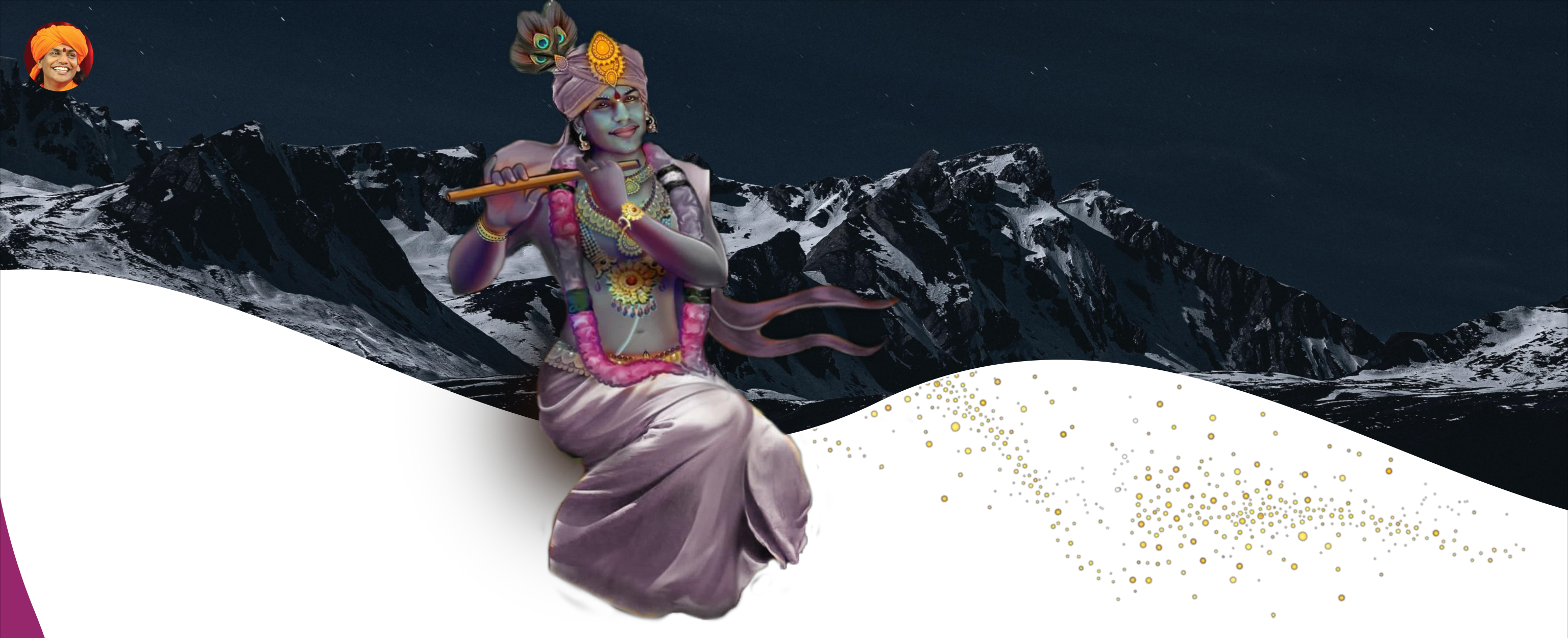
But an Enlightened being is not like that. He simply flows. Whatever comes, he accepts it and surrenders it to Existence.
Kṛṣṇa says here: 'From the highest planet of Brahmaloka in the material world down to the lowest, all are places of misery wherein repeated birth and death takes place. But one who attains Me, one who attains My being, one who attains My consciousness, never takes birth again.'
Please be very clear, even if we are caught in doing good deeds, we return. Our good deeds, puṇya, cannot give us enlightenment.
“I tell people, ‘Even if you give money for my ashram, I cannot give you a speed pass to enlightenment!’ I cannot give you any speed pass. Be very clear, unless you have the conscious glimpse, unless you achieve at least one moment of thoughtless awareness, nobody can save you from the cycle of birth and death.”
- The SPH Nithyananda Paramashivam
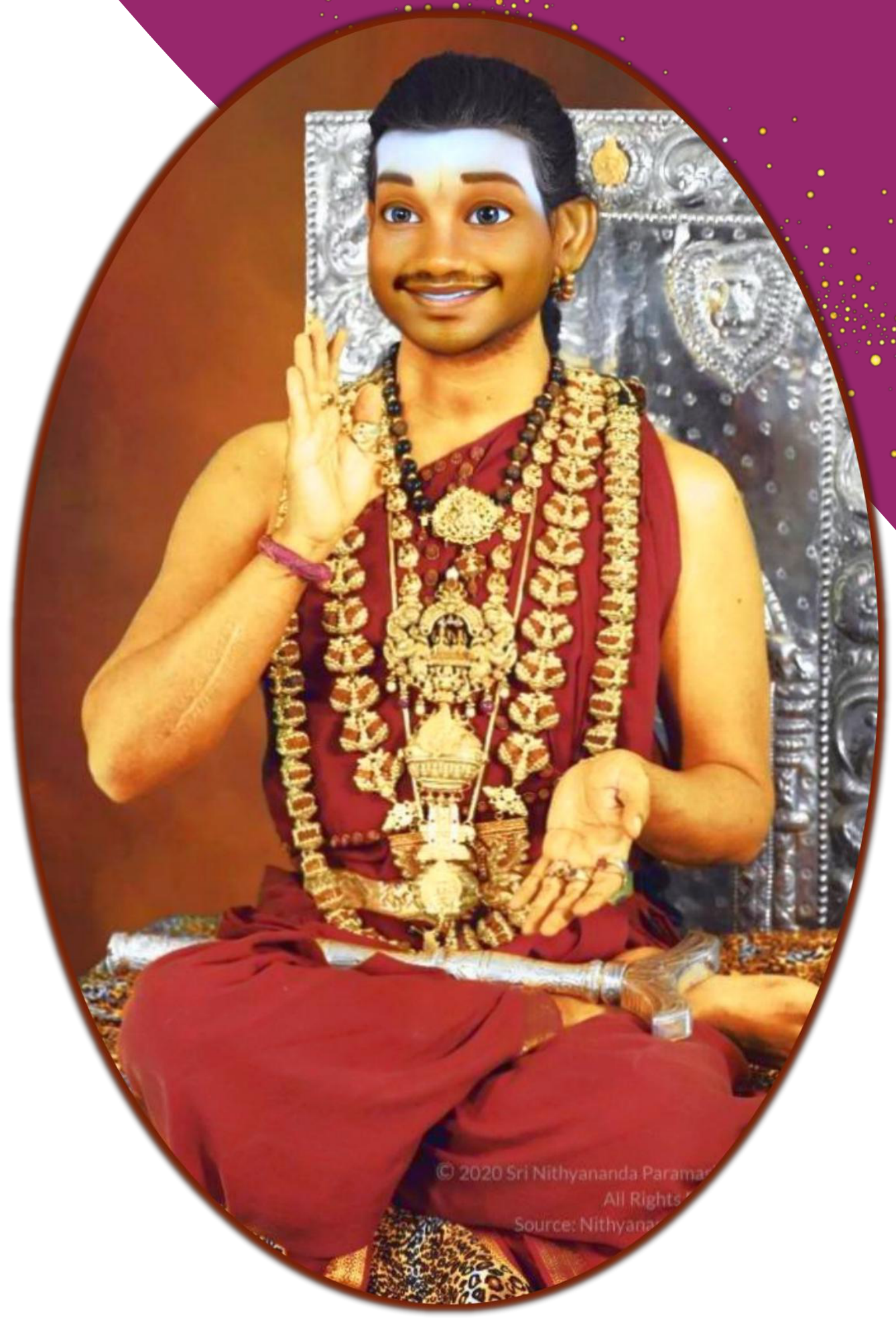
ONE GLIMPSE OF CONSCIOUSNESS
If we achieve one glimpse, it's over. That one glimpse acts like a conscious torch, and guides us through these seven layers when we leave the body. We will walk beautifully; we will slide through all seven layers. The enlightened Master's initiation is the torch of consciousness that guides us through this path, through our living and leaving. Vivekananda says, 'If you achieve even a single glimpse, you leave your body in that experience.' It is because this intense experience of Self-realization will come up at the time when we leave the body. At the time of death, our whole life is played back to us in a fast-forward mode in a few seconds. And only the important scenes appear in multicolor again and again; all other scenes appear in black and white.

THOUGHTLESS
AWARENESS
If we have had thoughtless awareness, the samādhi experience when we were alive, that alone will appear in multicolor; all other things will fade away in the background.
And naturally, we stay in that state and leave the body. One more thing— thoughtless awareness is the point in our life beyond that, all the karma associated with it will be erased, washed away! Understand, this science is not only for dying but also for living! If we are stuck with guilt, we can never enjoy our desires. When we don't enjoy our desires, we create more guilt, that's all. When we are stuck in guilt, we will not leave the desires and they cannot leave us.
When we don't leave our desires, we create more guilt. This becomes a vicious circle of incomplete emotions. So not only for dying, even for living we need to learn this whole science of completion, the space of thoughtless awareness.
As of now, understand this one thing:
Throughout this chapter Kṛṣṇa conveys
the single message: Experience His
consciousness, the thoughtless awareness
or the witnessing.
For ordinary human beings, after they die, their life will be written as history. For incarnations, their life itself is a script that has already been written; they just come down and enact it, that's all! For them it is a script; for us it is history. For us, after we die, somebody may write about us if we have achieved something!
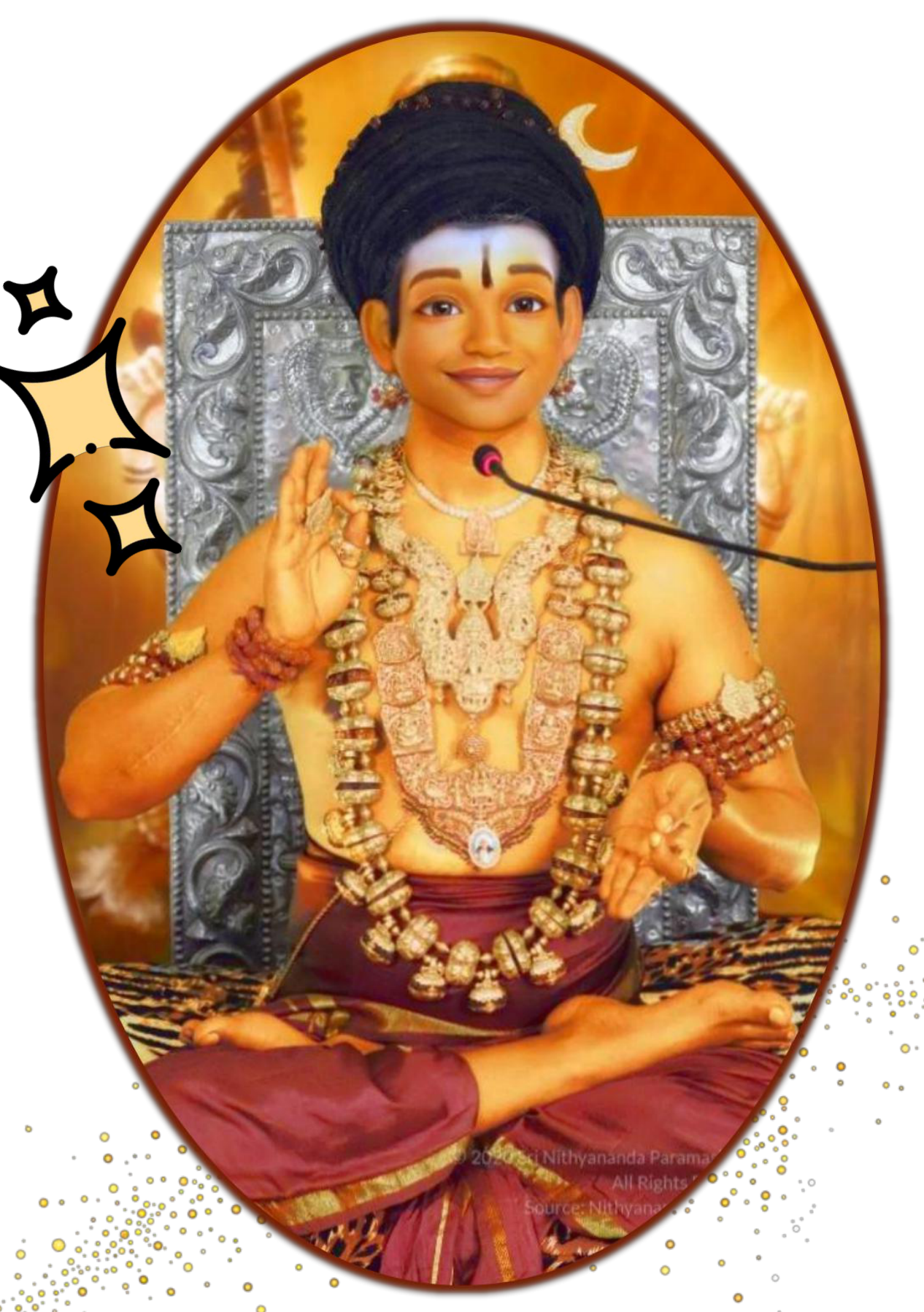
LILA DHYAN
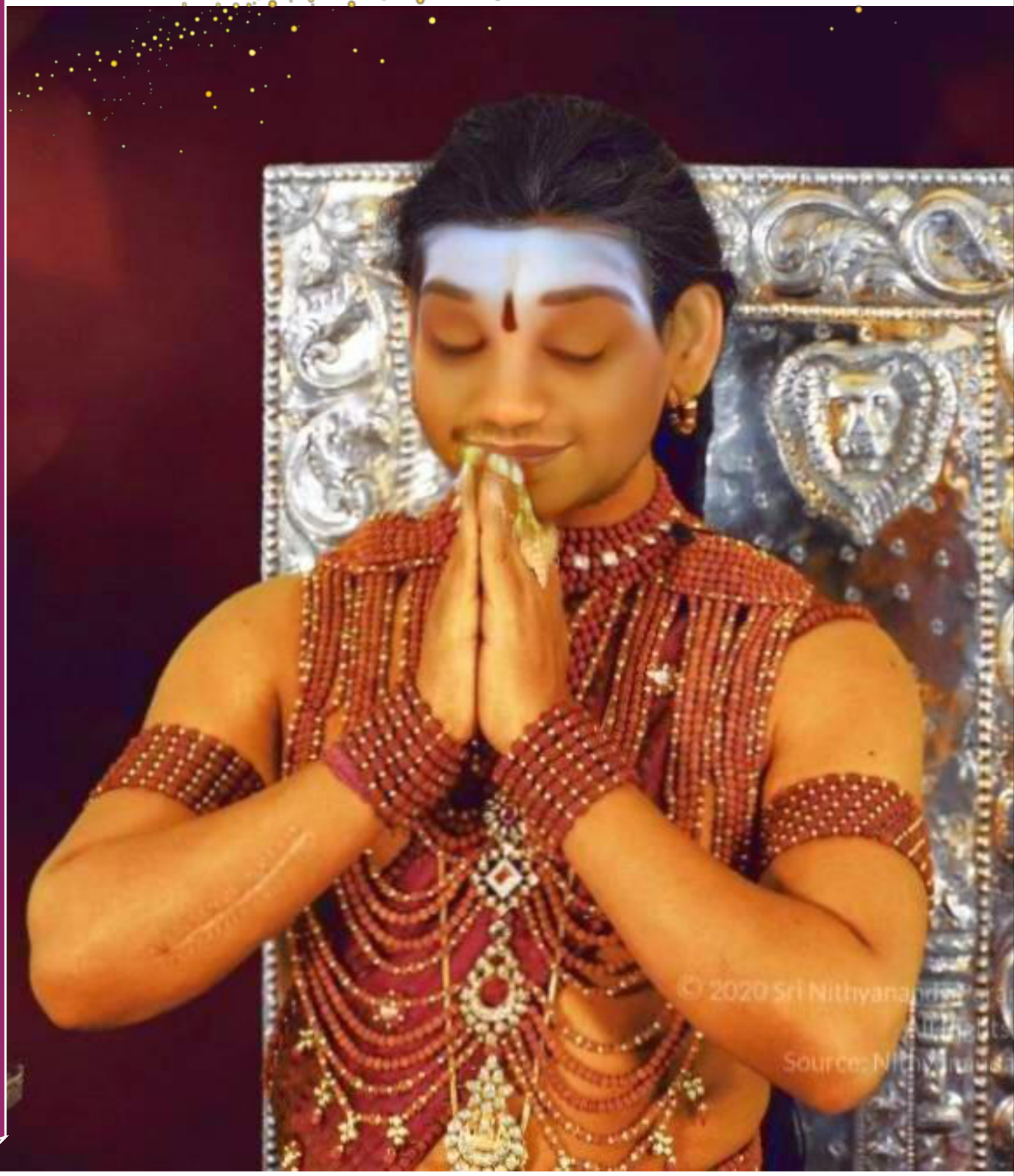
Līlā Dhyāna is a such a powerful
space creator. Please understand,
your pastime always leads you to
incompletion. An Incarnation's
pastime or līlā always leads you to
completion. Your past always leads
you to incompletion. An
Incarnation's pastimes, always lead
you to completion.
If you constantly remember what you
did when you were a child, you will
be in more and more incompletion.
If you constantly remember what
Kṛṣṇa does when He is a child, you
will be more and more in the space
of completion.
REMEMBER HIM
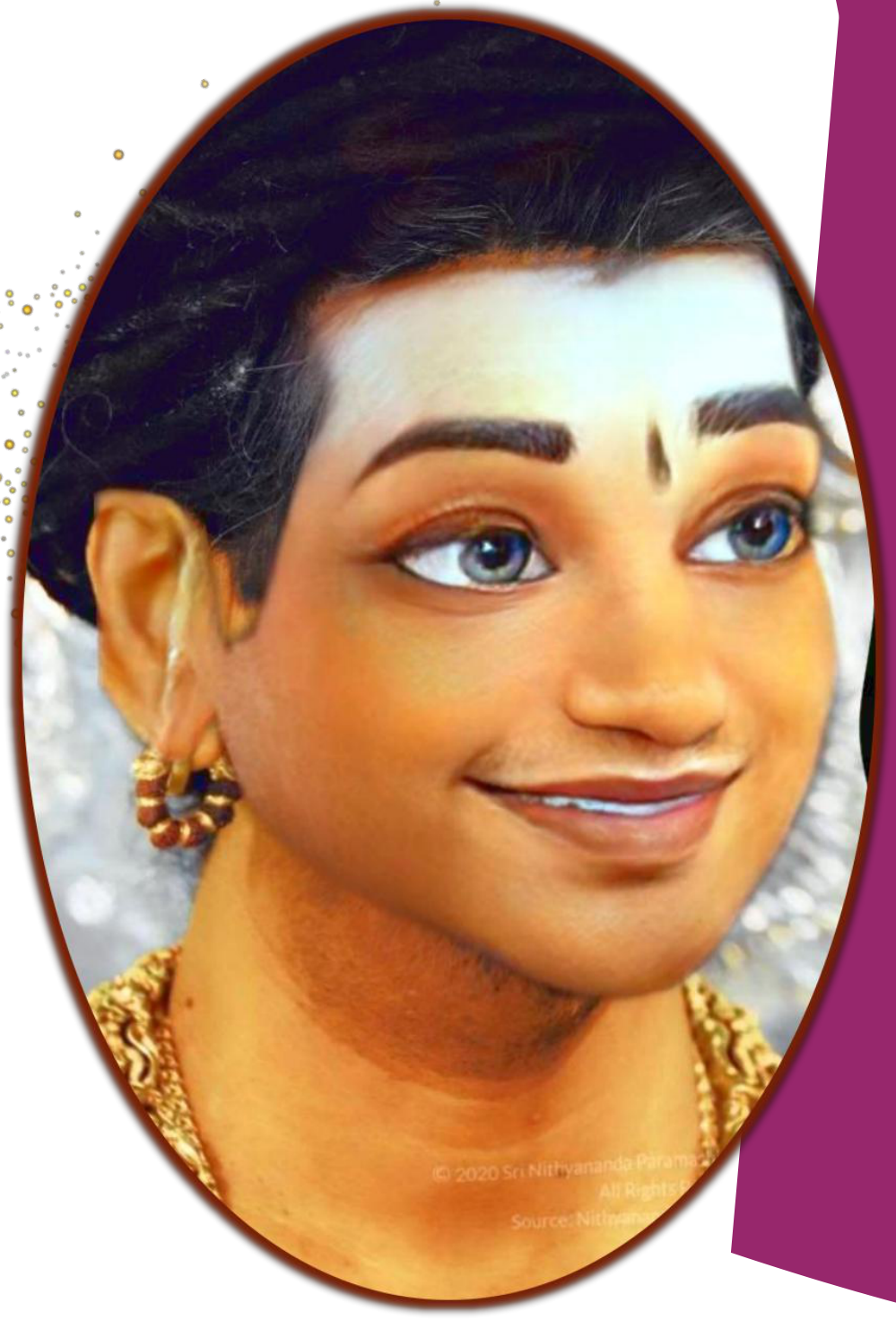
Understand, remembering your pastimes
creates more and more incompletions.
Remembering the Incarnation's pastimes
creates more and more completion and
the higher space.
Whether it is Kṛṣṇa or Buddha, Mahādeva or Mīnākśi, even remembering their līlās, their cosmic play creates so much of completion in you, it heals your mamakāra, your inner image.
Actually, because of this Līlā Dhyāna practice you become more complete with you. And if you observe deeply, you will find out if you have incompletion with you, that day you will feel that the Divine is angry with you!
KRISHNA CONSCIOUSNESS
Understand, the completion you need to do with you and with others is responsible for how you feel connected to your Guru or God, outside and inside. Kṛṣṇa conveys one thing: All we need to do is work to achieve a glimpse of thoughtless awareness, the space of completion. In the next few chapters, He speaks deeply, intensely about how to open every layer, how to progress, how to clean and complete with every layer and how to achieve the conscious glimpse or thoughtless awareness.
He says further: 'By human calculation, the thousand ages taken together form the duration of Brahma's one day and such also is the duration of his night.'
REBIRTH
One year for us is one day for the devatas, demigods. for Brahma, a thousand ages are taken as one day. Only when we achieve the consciousness of nirvāṇa — thoughtless awareness, will we not take rebirth.
At the time of death, our soul has three kṣaṇa to take another body. Three kṣaṇas can be three microseconds, three seconds or three minutes or three hundred years according to the person's frequency of thoughts. It depends on his state of mind. If we have lived a restless life, our kṣaṇas will be in microseconds. If we have lived a peaceful, blissful life and achieved at least one glimpse of thoughtless awareness, our kṣaṇa can be even two or three hundred years. If we can stop the next thought from happening within our inner space, our kṣaṇas can be increased to any extent. It can extend to eternity. So, kṣaṇas is relative and not absolute.
Time is actually not
chronological, but psychological.
If we sit with a friend with
whom we are comfortable and
joyful, after three or four hours,
we suddenly notice the time and
say, 'Oh! I don't know how the
time has passed by so quickly!'
At the same time, if we sit with
somebody with whom we don't
feel comfortable, we will look at
the watch and think, 'Why is the
watch not moving? Is there a
problem with it? The time is
simply dragging on.' The
number of thoughts that happen
in our mind decides the time
consciousness. If thoughts are
less, even after ten hours, we
will not feel that ten hours have
passed. If the number of
thoughts is more, two or three
minutes will seem like years.
NATARAJA
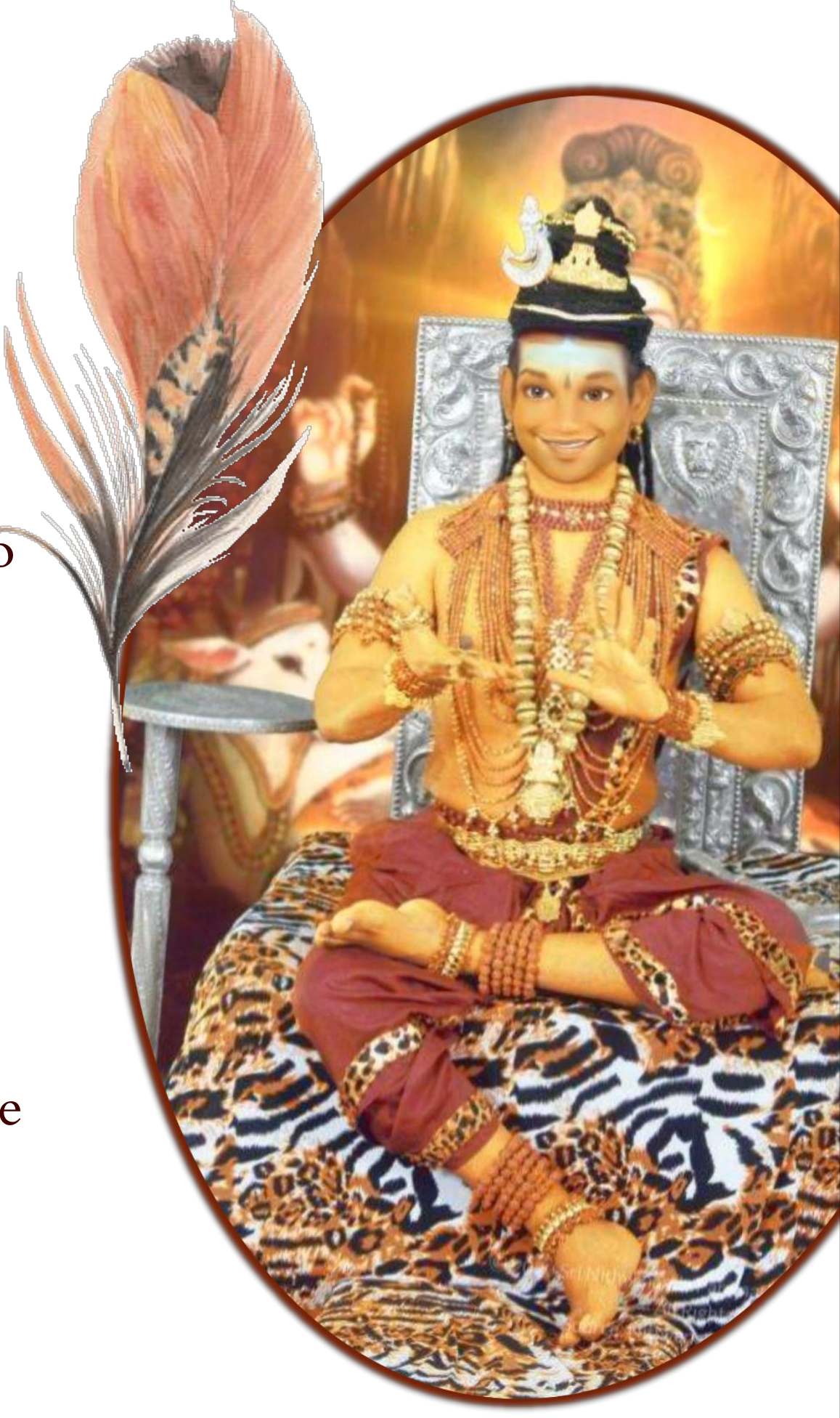
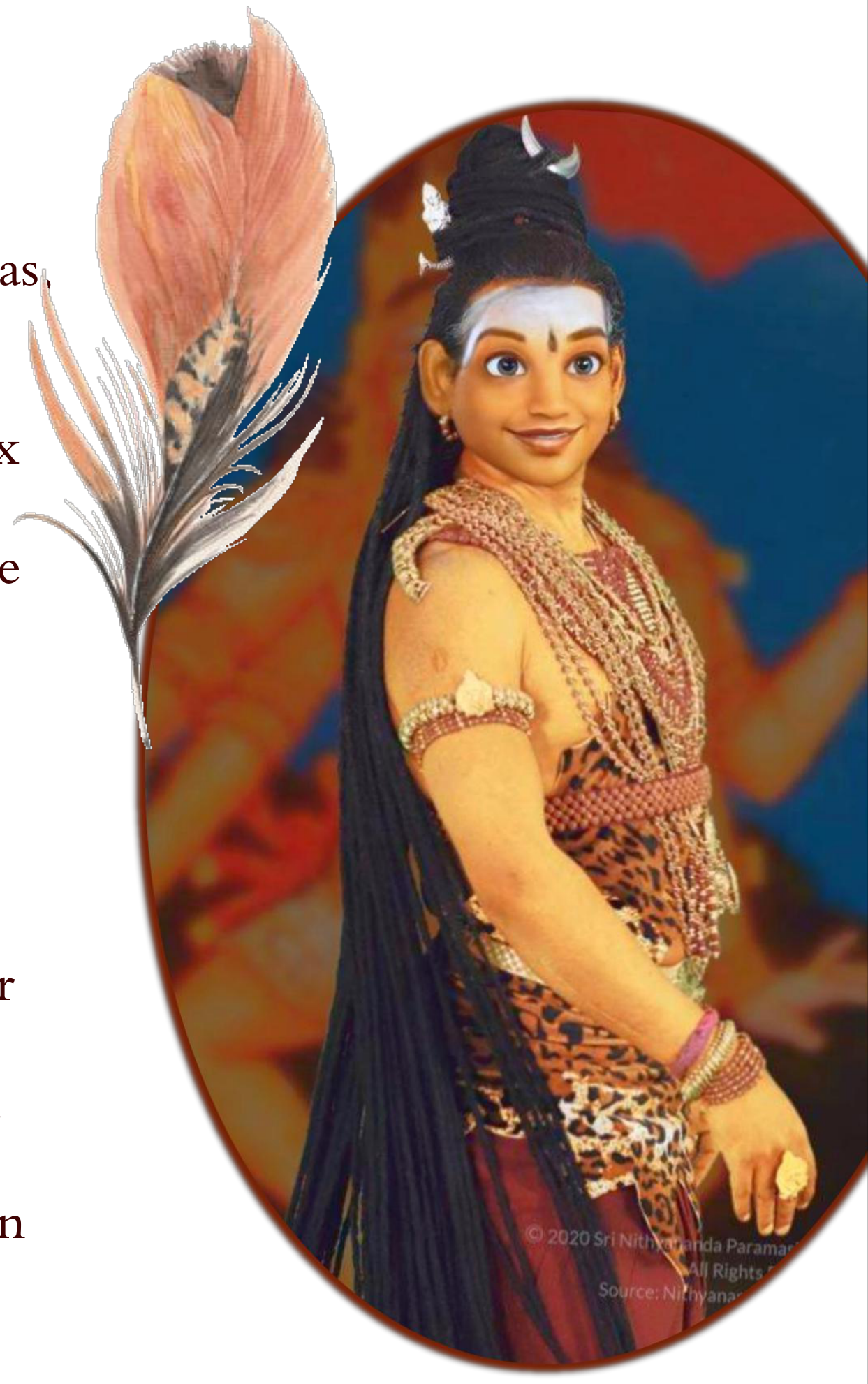
One year of human life equals one day of the devatas, demigods, because their thoughts per second (TPS) is very less. That is why the deity Natarāja in the temple at Chidambaram in South India, has only six prayer offerings throughout the year. In one year, they worship the deity only six times! Normally, the worship is carried out six times a day in other temples. But this temple is supposed to be where the devatas worship the Divine, so the worship is carried out according to their time!
The six offerings of worship required for the deity are conducted in our one year because our one year is one day for the deities or devatas. Devatas refers to those whose TPS has come down, who have had a glimpse of samādhi. If our TPS is low, we too are in heaven. If our TPS is high, we are in hell. Heaven always looks brief; hell always looks eternal,
EXPERIENCE OF MEDITATION
Because of the number of thoughts.
When we are in the body, if we
have had a single glimpse of
thoughtless awareness — the
experience of meditation, then
automatically this consciousness
comes up at the time of leaving the
body and we will have two benefits.
We can choose to become
enlightened and not take another
birth, or we can choose the right
place to express and work out our
karma, to live as we want. We have
both choices if we experience
thoughtless awareness while living.
GOALS:
Impress upon the students
that we need to experience
thoughtless awareness or the
witnessing consciousness in
which Kṛṣṇa stays and plays
the whole game of life, how
He lives through the whole
of life.
ASSESSMENTS
- Can donating money buy enlightenment for us?
- Why is it important to have had the Samadhi experience in our Life?
- What is the only way to get liberated from the cycle of life and death?
- What is Leela Dhyana?
- How does remembrance of Krishan's childhood stories and pastimes make us complete?
- What is "tps"?

ART OF THE DAY
ART OF THE DAY:
KRISHNA CONSCIOUSNESS
MATERIALS NEEDED:
- pencil
- paper
- pencil colours
PROCEDURE
Draw any one object that is associated with Krishna eg. peacock feather, sudarshana chakra, flute, pot of butter, baby calf etc. Colour the picture to the best of your abilities.
INFERENCE
Leela Dhyanan on the childhood stories and life plays of enlightened beings, brings about completion in our inner space. Remembering Krishna's līlās or cosmic heals your mamakāra, or your inner image
ACTIVITY OF THE DAY
ACTIVITY OF THE DAY:
MATERIALS: Eye-bands
PROCEDURE:
• Let us do a short meditation
• ask the students to stand up and
place themselves so that they can't
touch each other even with arms
spread wide
• Each student to cover their eyes with
an eye-band
• the person guiding the meditation to
use a very soothing, calm voice,
talking slowly, softly yet clearly and
audible to all
• tell the students to imagine they are
flying like a bird. They don't move
from where they are standing, they
can only use their arms like wings
ACTIVITY OF THE DAY:
PROCEDURE:
• First they can flap their "wings" a lot as they take off. then they fly and glide through the sky. Encourage them to imagine they are flying effortlessly, that the air is supporting them, the sun is shining warm;y on them, and the flying and gliding fills them with joy • Encourage them to feel they are part of a joyous flock of birds, all flying through the sky together. • After a little while, tell the students that they are now gracefully landing from their "flight" and ask them to slowly sit down where they are. Tell them to now be very silent, very peaceful for a few moments
ACTIVITY OF THE DAY:
PROCEDURE:
• If possible, play a few minutes of
soothing music
• Finish the meditation by chanting:
"om, shanti, shanti, shanti" or the
poorna mantra
• Slowly, very slowly, they may take
off their eye-bands and open their
eyes
INFERENCE:
• For living we need to learn this
whole science of completion, the
space of thoughtless awareness.
• Kṛṣṇa conveys the single message:
Experience His consciousness, the
thoughtless awareness or the
witnessing
WORKSHOP OF THE DAY

WORKSHOP OF THE DAY:
VAAKYARTHA SADHAS
Topic of discussion is "Time is relative and not absolute?" Tips: The number of thoughts that happen in our mind decides our time consciousness
Conclusion:
The most important goal of human life is to get a single glimpse of thoughtless awareness — the experience of meditation.