The Supreme Abode Of God
This text was machine-transcribed from the printed book and may contain errors. Select the words and choose “Report a mistake”.
Authored by
THE SPH NITHYANANDA PARAMASHIVAM

8.19
भूतग्रामः स एवायं भूत्वा भूत्वा प्रलीयते ।
रात्र्यागमेऽवशः पार्थ प्रभवत्यहरागमे
॥ ८=१९॥
bhūtagrāmaḥ sa evāyaṃ bhūtvā
bhūtvā pralīyate rātryāgame'vaśaḥ
pārtha prabhavaty aharāgame
Again and again the day comes, and
this host of beings is active; and
again the night falls, O Pārtha, and
they are automatically annihilated.
POWERFUL COGNITION
When we understand that at higher dimensions, all that we see is destroyed and created continuously, we realize the futility of holding onto things, even our own body.
8.20
परस्तस्मात्तु भावोऽन्योऽव्यक्तोऽव्यक्तात्सनातनः ।
यः स सर्वेषु भूतेषु नश्यत्सु न विनश्यति
॥ ८-२०॥
paras tasmāttu
bhāvo'nyo 'vyakto'vyaktātsanātanaḥ yaḥ sa
sarveṣu bhūteṣu naśyatsu na vinaśyati
Yet there is another nature, which is
eternal and is
beyond this manifest and unmanifest
matter. It is supreme and is never
annihilated. When all in this world is
annihilated, that part remains the same.
POWERFUL COGNITION
When at a higher dimension, we realize that all that we see is destroyed and created continuously, only one thing is neither created nor destroyed and that is the Ultimate Consciousness'!
अव्यक्तोऽक्षर इत्युक्तस्तमाहुः परमां गतिम् ।
यं प्राप्य न निवर्तन्ते तद्धाम परमं मम
॥ ८=२१॥
avyakto’kṣara ity uktas tamāhuḥ
paramāṃ gatim yaṃ prāpya na
nivartante tad dhāma paramaṃ mama
That Supreme abode is said to be
unmanifest and is the indestructible and
is the Supreme destination. When one
gains this state one never comes back.
That is My supreme abode.
POWERFUL COGNITION
That Supreme abode is said to be unmanifest and indestructible and is the Supreme destination. When one gains this state one never comes back. That is My supreme abode.
8.22
पुरुषः स परः पार्थ भक्त्या लभ्यस्त्वनन्यया ।
यस्यान्तःस्थानि भूतानि येन सर्वमिदं ततम् ॥८-२२॥
puruṣaḥ sa paraḥ pārtha bhaktyā
labhyas tv ananyayā yasyāntaḥ-sthāni
bhūtāni yena sarvam idaṁ tatam
O Pārtha (son of Pṛthā), the
supreme person, who is greater than
all, is attainable by undeviating
devotion. Although He is present in
His abode, He is all-pervading, and
everything is situated within Him
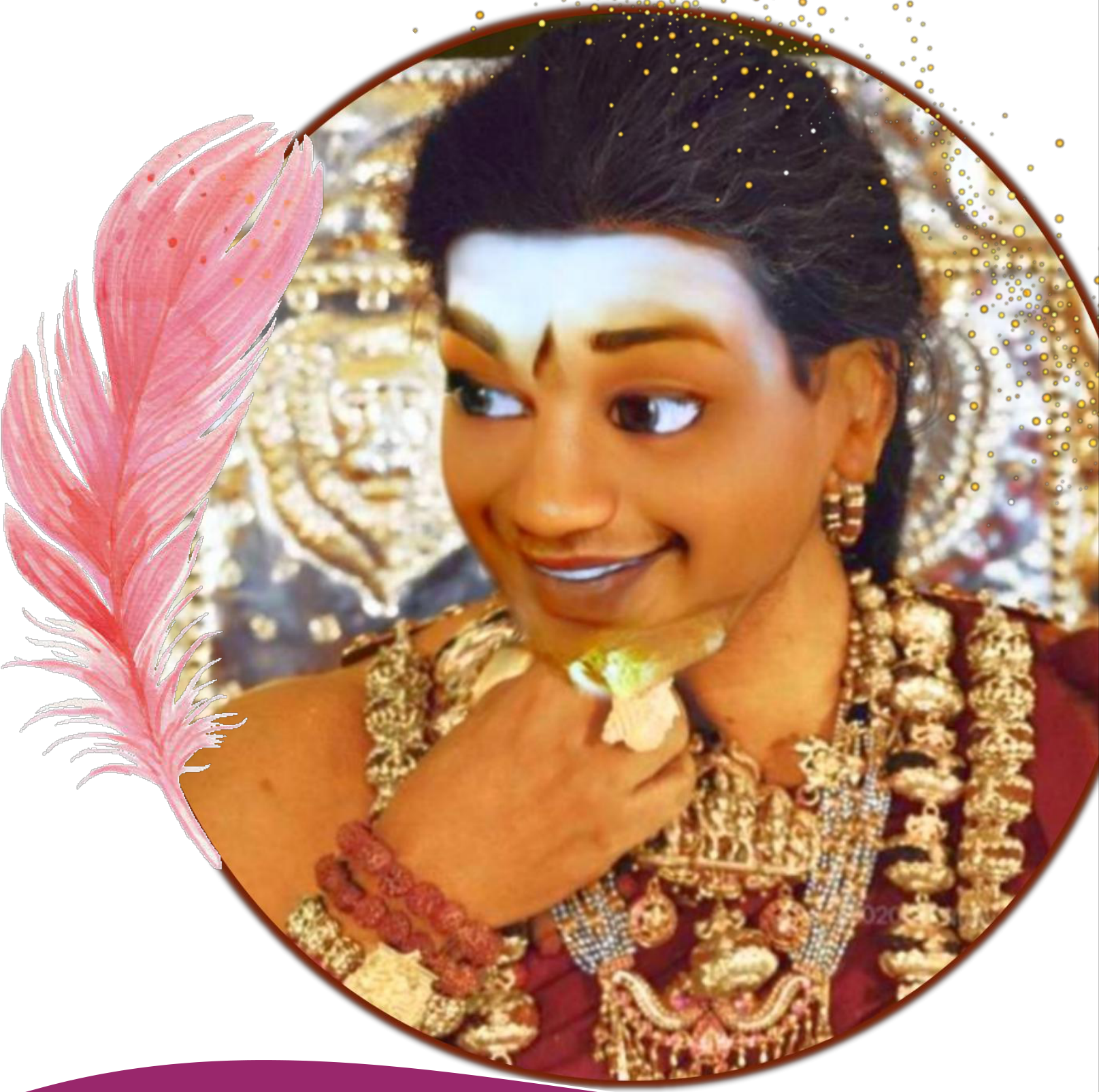
POWERFUL COGNITION
The abode where one will not return to refers to the state of the being when it transcends joys and sorrow.
INTRODUCTION
Kṛṣṇa explains how transient this
material world is. During a single
‘blink of Brahma’— the Lord of
creation, so many things change. In
our concept of time, we see things
as permanent, but when we operate
in a different zone of space and
time, all this becomes temporary.
Our ignorance makes us think that
all that we see is real and
permanent. Once we understand
that this entire life and the world
around us is impermanent, we see
everything from a completely
different space. Why do we run
behind material things? Why do we
again and again want to possess
things?

In our concept of time and space, we see material things as permanent. We think we can control them. We want to have ownership over everything that is available. And the problem is everyone wants the same thing! Everyone fights to take charge of the same thing. We are like cats fighting over a piece of bread.
Please listen, we fight to catch hold of this body. We want to hold onto this body for as long as we can. Even at sixty or seventy, many people go in for plastic surgery. They do things to look young. Why? They do not want to accept the truth that the body is impermanent.

CREATION AND DESTRUCTION
When you look around, you see that the Earth is stationary. It is not moving. When you look from the moon, you see the earth moving. When you go beyond the moon, you see that the moon also moves. Once we raise ourselves to higher dimensions, we see the actual truth.
As long as we limit ourselves to this space, we think the earth is stationary. When we change our concept of space and time, when we change our reference point in space and time, we realize that all we think of as permanent, all that we think is ours is not permanent. It is continuously being created and destroyed.
INFINITE TIME
This is what Kṛṣṇa says. We
believe in a concept of finite
time and limited space and we
cling to that without realizing
what is beyond this dimension.
We are greedy to accumulate
more and more material
pleasures because we see them
as real and permanent. We
think they will stay with us
forever. That is one side. On
the other side we fear that they
will be taken away from us. We
are always in a state of fear.
Both these — greed and fear —
are the main sources of our
misery.
When we live in bondage to fear and greed, we continuously build saṃskāras. We create more and more desires. First of all, we are not trying to fulfill our true desires or prārabdha karma. Then on top of that, we build a whole new set of desires. In our concept of time and space, we think things are permanent. We think we own them and we should take care of them and control them.
When we understand that at higher dimensions, all that we see is destroyed and created continuously, we realize the futility of holding onto things, even our own body. Kṛṣṇa says that in all this creation and destruction, only one thing is neither created nor destroyed and that is the 'Ultimate Consciousness'!

TIME AND
SPACE
What we think of as an age is a
fraction of a second to Brahma and
everything we see as permanent is
being made and destroyed every
time Brahma blinks.
Do not analyze the literal meaning
of this. Do not analyze how it is
possible. Do not worry about how
many hours, how many seconds
make one day of Brahma?
Do not worry about what is
Brahma's time or what is Śiva's
time or Kṛṣṇa's time. Kṛṣṇa refers
to the concept of time and space as
it exists in the Ultimate
consciousness and as an
Enlightened Master experiences it.
EVERYTHING IS TRANSIENT
Appreciate and intranalyze the deeper meaning. Understand that whatever we see is transient. Nothing is permanent. It is like putting our hand in a river and trying to hold the water in our hand. What happens?
The river flows past, and our hand is empty. Once we realize this truth, our whole idea about time and space will change. We will see everything around us in a different way and understand the futility of the rat race.

The seven layers that the spirit travels through at the time of death. The first four layers are related to the physical body-mind system. They store emotionally laden memories: patterns related to desires, guilt and pain experienced during that lifetime. The fifth layer is experienced during deep sleep and when leaving the body. The sixth layer is associated with happy memories and the seventh layer is beyond sorrow and happiness; it is the Ultimate consciousness.
Even attachment to happy memories brings us back into the cycle of birth and death. It is not enough if we transcend pains and sufferings alone. Understand that happy incidents are also temporary and try to move beyond them.
FOCUS YOUR THOUGHTS ON THE DIVINE
The abode where one will not
return to refers to the state of the
being when it transcends joys and
sorrow. Kṛṣṇa again and again talks
about focusing one's thoughts on
the Divine.
The only way to think of the Divine
at the time of our death is by
thinking about Him all the time. At
that time, we suddenly cannot
think of God. In such pain and
suffering, we suddenly can't think
of God if we have always been
thinking about money and food in
our life. It is impossible. That is
why Kṛṣṇa insists upon continuous
devotion to the Supreme - bhaktyā
labhyas tv ananyayā (8.22).
LAST THOUGHT DETERMINES YOUR NEXT BIRTH
When we live in a state of continuous
devotion, our last thought will be of
the Divine. Please be very clear: Our
last thought determines our next birth.
There is no doubt about it. When we
continuously think about God, we
understand the truth that everything
around us is Him.
When we are continuously in that
meditation, we see Kṛṣṇa in everything
around us. You see, thousands of
thoughts come to us every minute. Let
as many thoughts as possible be of God.
We do not need to reduce the number
of thoughts. Let the thoughts be of
God. Let us immerse ourselves in
thinking about the supreme soul.
This purifies our inner space.
THINK OF GOD
Throughout the day, how many times do we think of God? Maybe before a meal, or before going to bed. Otherwise, it is only when we face some problem, that we think of God! But how many times do we think of some film actress or actor? Everything in the newspapers, on television or on the internet is about something with which we are not really connected.
Out of thousands of thoughts, less than one percent is probably related to God. Everything else is related to something external. Please listen, every thought is energy and we waste more than ninety nine percent of our energy on something that is not really needed for us. If we can channel this energy to look inward, to see the source of our existence, we explore a new dimension of our Self. We are ready to do anything other than think about God or our Self. Why? We think it is a waste of time. We always make business plans.
iLLOGiCAL THOUGHTS
We do something only if we feel
we will get something from it. But
if we analyze our thoughts carefully,
we are not thinking of anything
productive. Our thoughts are
simply completely illogical.
Most of the time, we justify
ourselves when someone asks us to
think of God. We say, 'Why think
of God? What will we get? I have
better things to think about like
work and my studies.' However
these are mere justifications. If we
sit and write down our thoughts,
we will see that we are not
thinking about work or anything
productive. Our thoughts are
completely illogical and random.
iMMERSE
YOURSELF iN GOD
So why not think about God? We
feel thinking about God does not
give us any immediate results.
But be very clear, when we are
completely immersed in thoughts
of God, our inner space is purified
and transforms into the space of
completion. Completion is God!
We are preparing our Self. At the
time of death, these thoughts will
liberate us. Constantly thinking
about God enriches us when our
soul passes through the energy
layers at the time of death.
GOALS:
Impress upon the students that
completely immersing oneself in
thoughts of God is the best
strategy to prepare yourself to
handle death.
ASSESSMENTS
❖ What is the only one thing
that is neither created nor
destroyed?
❖ What is the pitfall in having
attachment to happy
memories?
❖ What are the benefits of
entertaining thought of the
Divine?

ART OF THE DAY
ART OF THE DAY:
SHiVA LiNGA
MATERIALS NEEDED:
- match sticks
- glue
- scale
- pencil
- scissors
PROCEDURE
Make a sketch of a shiva linga on a sheet of paper. Now glue one side of the match stick and place it inside the sketch so as to completely cover the image. Be creative in placing the dark tip of the matchstick to create design patterns on your shiva linga. Or you may cut out the dark tip before pasting the stick onto the image and use the cut outs for decoration.
ART OF THE DAY:
SHIVA LINGA
INFERENCE
Encourage the kids to direct their creative potential in activities that involve visualization of the divine forms and imagery.
Make the divine part of your every expression!
ACTIVITY OF THE DAY
ACTIVITY OF THE DAY:
PROCEDURE:
Let us list out five customs of the Hindus that encourage them to remember God constantly. Example. Hindu parents name their children after Gods, Ganesha or Guru is invoked before starting any task, divine leelas are great bedtime stories, all Hindu festivals celebrate life events of divine incarnations, etc.
INFERENCE:
We must find more and more ways to make the divine part of our everyday life. The only way to think of the Divine at the time of our death is by thinking about Him all the time.
WORKSHOP OF THE DAY
WORKSHOP OF THE DAY:
VAAKYARTHA SADHAS
Topic of discussion is "How does belief in the concept of finite time and limited space fuel misery?
Conclusion: We do not need to reduce the number of thoughts. Let the thoughts be of God. This purifies our inner space.
- BHAGAVAD GITA -
BOOK VIII, VOLUME VII
How To Pass In Light ?
Authored by
THE SPH NITHYANANDA PARAMASHIVAM
यत्र काले त्वनावृत्तिमावृत्तिं चैव योगिनः ।
प्रयाता यान्ति तं कालं वक्ष्यामि भरतर्षभ
॥ ८=२३॥
yatra kāle tv anāvṛttim āvṛttim
caiva yoginaḥ prayātā yānti
taṃ kālaṃ vakṣyāmi
bharatarṣabha
O best of the Bhārata, I shall
now explain to you the
different times when passing
away from this world,
one returns or does not
return
POWERFUL COGNITION
if we have always lived with our attention focused towards higher consciousness, we will travel in that path and disappear into Brahman. We will become enlightened.
अग्निर्ज्योतिरहः शुक्लः षण्मासा उत्तरायणम् ।
तत्र प्रयाता गच्छन्ति ब्रह्म ब्रह्मविदो जनाः
॥ ८=२४॥
agnir-jyotir ahaḥ śuklaḥ ṣaṇmāsā
uttarāyaṇaṁ tatra prayātā gacchanti
brahma brahmavido janāḥ
Those who pass away from the world during the influence of the fire god, during light, at an auspicious moment, during the fortnight of the moon ascending and the six months when the sun travels in the north, and have realized the supreme Brahman do not return.
POWERFUL COGNITION
When one passes in light, symbolic of times when our mind is totally balanced and when we are not agitated, he never comes back.
४.२५
धूमो रात्रिस्तथा कृष्णः षण्मासा दक्षिणायनम् ।
तत्र चान्द्रमसं ज्योतिर्योगी प्राप्य निवर्तते
॥ ८=२५॥
dhūmo rātristathā kṛṣṇaḥ ṣaṇmāsā
dakṣiṇāyanam tatra cāndramasaṃ
jyotir yogī prāpya nivartate
The mystic who passes away from
this world during the
smoke, the night, the moonless
fortnight, or the six months when
the sun passes to the south, have
done good deeds go to the cosmic
layer and again comes back.
POWERFUL COGNITION
Reclaim your freedom! Declare your freedom! Raise your inner space to the peak joy, fulfillment, and excitement.
४.२६
शुक्लकृष्णे गती ह्येते जगतः शाश्वते मते ।
एकया यात्यनावृत्तिमन्ययावर्तते पुनः
॥ ८=२६॥
śukla kṛṣṇe gatī hy ete jagataḥ śāśvate
mate ekayā yāty anāvṛttim
anyayāvartate punaḥ
According to the Vedas, there are two
ways of passing from this world: one
in the light and one in darkness. When
one passes in light, he does not return;
but when one passes in darkness, he
again comes back.
POWERFUL COGNITION
When we become aware of these root thought patterns and are free from them, we leave the body and become liberated.
INTRODUCTION
Those who know the supreme Divine attain that Supreme by passing away from the world during the influence of Agni, the fire-god, during light or at an auspicious moment of the day, also during the fortnight of the waxing moon or during the six months that the sun travels in the north, referred to as uttarāyaṇaṁ.
Understand, these are not chronological calendars. If it were a chronological calendar, then at uttarāyaṇaṁ time, all of us can commit suicide and be done with it, that’s all! But that is not what is meant here. All these things have metaphorical meanings. When He says uttarāyaṇaṁ, Kṛṣṇa means when our mind is totally balanced and when we are not agitated.
In the Mahābhārat war it is said that Bhīśma Pitāmaḥ waits for uttarāyaṇam to leave the body. Don't think he waited for January. He waited until his mind settled down from the agitations and incompletions, and he establishes himself in the space of completion.
He had fallen in battle and was lying down on a bed made of arrows. He must have felt agitated. He must have felt, 'My grandson, whom I taught everything, for whom I did everything, did this to me.' He would have been disturbed. So he waited until the agitation settled down. That is what is meant by the words, 'he was waiting for uttarāyaṇam.'

THINK PSYCHOLOGICAL NOT CHRONOLOGICAL
Don't think these are chronological concepts. They are psychological. If it were chronological, then do you think that the millions of people who die in those six months become enlightened? Enlightenment is not an accident! It is a pure conscious choice. So be very clear, when He says agnir jyotir ahaḥ śuklaḥ.
He means if we are conscious ... agnir jyotir ... means when your being is conscious ... when your being is fully alive, awakened, naturally you go up. (śuklaḥ means going above, kṛṣṇa means going down). If we live throughout life centered on the eyes, our energy leaves through the eyes. At the last moment, we open the eyes and the soul leaves. If we live throughout life centered on the tongue, eating, our mouth opens and the soul leaves through it. So if we live throughout life centered on higher consciousness, our energy leaves through the sahasrāra, the crown cakra, the energy center on the top of our head.

BRAHMA BRAHMAVIDO JANAH
Kṛṣṇa says brahma brahmavido
janāḥ. He means that if we have
always lived with our attention
focused towards higher
consciousness, we will travel in
that path and disappear into
Brahman. We will become
enlightened.
So be very clear, these conditions
are not chronological. They are
psychological. Bhīśma waited
until his mind settled, until he
felt completely peaceful, till he
was able to forgive and complete
with everybody and himself, and
till he was able to reach conscious
awareness. Then he entered
enlightenment.
Next, Kṛṣṇa says that the person who passes away from this world during smoke, the night, the fortnight of the waning moon or those six months when the Sun travels in the south, referred to as Dakṣiṇāyaṇaṁ, reaches the Moon but comes back again. Again, this is psychological. They can't say that in these six months nobody can become enlightened. They can't say, 'During the six months of dakṣiṇāyaṇaṁ, the Enlightenment gates are locked, no entry. Only at uttarāyaṇaṁ time, the gates are open. Come at that time.' No! They can't say, 'Dakṣiṇāyaṇaṁ time is non-working hours and only uttarāyaṇaṁ time is working hours.' There are no working hours for enlightenment. It is purely because of the conscious choice of one's being.
LIGHT &
DARKNESS
Kṛṣṇa says that according to the
Vedas, there are two ways to pass
from this world: one in light and
one in darkness—śukla-kṛṣṇa gatī
hy ete jagataḥ śāśvate mate. When
one passes in light, he does not
return, but when one passes in
darkness, he comes back again—
ekayā yāty anāvṛttim ananyāvartate
punaḥ (8.26). What does Kṛṣṇa
mean by light and darkness, śukla-
kṛṣṇa? They refer to the levels of
consciousness one has reached. If a
person leaves the body without
knowing what drove him all
along—his saṁskāras, his desires,
fears, guilt, etc., which we call root
thought patterns—then this
ignorance is what He refers to as
darkness.
BREAK YOUR ROOT THOUGHT PATTERN
If you look inside, the reason for your low inner space, powerless inner space will be some root thought pattern. Break that! Reclaim your freedom! Declare your freedom! Raise your inner space to the peak joy, fulfillment, and excitement.
Please understand, when Śwetaketu, a young seeker mentioned in Upaniṣads, was initiated by his Guru, his Guru said only nine times — 'Tat Tvam Asi! Tat Tvam Asi! Tat Tvam Asi!' (thou are that), and Śweta-ketu became enlightened. Why then, even if you listen to 'Tat Tvam Asi' nine-thousand times, you don't become enlightened? Carry the right inner space! On the rock, seed can not sprout as a tree.
In the right fertile ground only, the seed can become a tree. In the right inner space only, the teachings can become reality. Right inner space means where all the root thought patterns of suffering are destroyed. Listen! All root thought patterns are destroyed where your inner space is fertile for experiencing the higher ideals and ideas.
When we become aware of these root thought patterns and are free from them, we leave the body and become liberated. This is what He means by light. He says that when this happens, the being does not return to the body.
GOALS:
Impress upon the students that
we need to have the right inner
space where all our root thought
patterns of suffering are
destroyed and where your inner
space is fertile for experiencing
the higher ideals and ideas.
ASSESSMENTS
❖ What does the word
"uttarāyaṇaṁ" mean?
Differentiate between the
chronological concept and the
psychological meaning of this
word?
❖ What are the different ways in
which life energy exits the body
at death? What inclinations of the
deceased person determine its
port of exit?
❖ What is the meaning of the verse "Tat Tvam Asi!"?

ART OF THE DAY
ART OF THE DAY:
LIGHT AND DARK
MATERIALS NEEDED:
- Electronic device with internet
- Google docs.
PROCEDURE
Request each child to Select two pictures from the internet that depict two contrasting ideas. If a child does not have internet access, let them contribute ideas to the topic:
• Each picture must represent an idea that you would consider as “Light” versus another that you would consider “Dark”. Make the contract as stark as possible. • Here are a few examples to help you visualize the contrasting ideas you are looking for, like the blue sky versus a night sky, a new budding leaflet versus a dried up leaf falling to the ground, a smiling face versus a tear rolling down a face etc.
ART OF THE DAY:
LIGHT AND DARK
PROCEDURE
Paste the pictures on to your google doc and title the collage "Dark versus Light". Share with the Group by taking a printout or posting a PDF of the Google Doc to your class WhatsApp group.
INFERENCE
The contrasting ideas of light and dark is often used in literary and artistic works to symbolically denote the levels of consciousness or life positivity expressed. Becoming aware of one's darkness or root thought patterns is the first step towards bringing in light or becoming free from them altogether.

ACTIVITY OF THE DAY
ACTIVITY OF THE DAY:
PROCEDURE:
Write down all your root thought patterns that torment you eg. unfulfilled desires, fears, guilt, etc. in your notebook. The notebook is private to you and should not be shared with anyone. And complete with all your root thought patterns by symbolically visualizing that you are dropping them at the feet of the master and offering a prayer that you be freed of them.
ACTIVITY OF THE DAY:
INFERENCE:
If you look inside, the
reason for your low
inner space, powerless
inner space will be some
root thought pattern.
Break your root thought
patterns! Reclaim your
freedom! Declare your
freedom! Raise your
inner space to the peak
joy, fulfillment, and
excitement.
WORKSHOP OF THE DAY
WORKSHOP OF THE DAY:
VAAKYARTHA SADHAS
Topic of discussion is: “Tat Tvam Asi!” meaning “You are that!”
CONCLUSION: When we become aware of our root thought patterns and are free from them, we leave the body in restful awareness and become liberated from the cycle of birth and death.

WORKSHOP OF THE DAY:
VAAKYARTHA SADHAS
Conclusion: What Kṛṣṇa says: This is the path on which a man can easily leave and liberate himself, and also the path on which he can suffer and destroy himself. Both ways are now shown by Kṛṣṇa.
- BHAGAVAD GITA -
BOOK VIII, VOLUME VIII