CHAPTER 10: Vibhūti Yogaḥ
This text was machine-transcribed from the printed book and may contain errors. Select the words and choose “Report a mistake”.
10.1 Bhagavān Kṛṣṇa says: Listen carefully again, Oh mighty-armed Arjuna! Because you are My dear friend, I shall speak further on the Supreme knowledge for your welfare.
śrī bhagavān uvāca
bhūya eva mahā-bāho śṛṇu me paramaṁ vacaḥ |
yat te ‘haṁ prīyamāṇāya vakṣyami hita-kāmayā || 10.1 ||
Master’s relationship with his disciple is in many forms. Usually it is described in five forms.
The most basic relationship between a Master and disciple is that of a Master and a servant, dāsa bhāva. The relationship of Hanumān with Rāma represents this type. Another is the relationship of a mother with her child, vātsalya bhāva, as in the case of Yaśodā to infant Kṛṣṇa. The third is the relationship of a child with the mother, mātru bhāva, like the relation of Rāmakṛṣṇa to Ma Kālī.
The fourth relationship is that of friendship, sakha bhāva, feeling that the Master is the closest friend. The fifth is that of the beloved, madhura bhāva, like the relationship of Rādhā to Kṛṣṇa.
Here, Kṛṣṇa refers to the fourth relationship, sakha bhāva, as exemplified by His friendship with Arjuna. He is the Master to His disciple Arjuna as well as Arjuna’s friend.
Usually, as an individual ego, we see the Whole as our enemy. We are like small waves in a big ocean. However, suddenly, the wave starts thinking that the ocean is its enemy. When it is created, while it exists or when it drops, the wave is connected to the ocean. However, the wave thinks that it is in some way different from the ocean. Not only that, the wave starts fighting with the ocean. For the wave to realize that it is fully connected to the ocean, it must be consumed by the ocean. The ego must dissolve. The individual identity of the wave must disappear. This is the first step to Enlightenment.
We live in the illusion of our self-created identities. Each wave relates to another wave but not to the ocean. It adopts another wave as its father, mother, wife or child and relates with them. However, ultimately, each one of these related waves disappears into the ocean just like the wave itself.
If we look at the human body, we can see this oneness so beautifully exemplified. The human body consists of trillions of cells living in total harmony. The individual cell, though it has intelligence by itself, can survive even if its center, the nucleus, which is considered the central intelligence of the cell, is removed. However, when it is a part of the whole body, it is not the intelligence of the individual cell alone that is at work, but the collective intelligence of the body-mind system that governs. This collective intelligence ensures that this remarkable system of the human body-mind works smoothly.
We are waves of the Divine. We are part of this Whole. We cannot be an isolated existence. We exist in the cosmic Whole just as the wave exists in the vast expanse of the ocean. The ego gives us the feeling that we are individual, separate and isolated whereas the reality is that we are a part of this Existence, in It and supported by It.
Existence is Your Friend!
There are two ways in which we can live. First, we can embrace and welcome reality, in which case our ego or root pattern must dissolve because only then can we face reality. Please understand that this reality is
God. God is not some entity hidden in some remote corner of the Universe or in the sky. He is the reality around us.
The second way of living is how most of us live: We create a shell, a dream world around ourselves to defend a false ego which has no substance in reality. This is what is meant by māyā—illusion. Since we are hidden in this capsule of our unreal world with our ego as the center, we cannot feel the immediate presence of God, who is actually the closest to us.
The prāṇa (vital energy), the air that we breathe, which is going inside our body and coming out, is not our property. It is the property of Existence. We do not need air to survive. We need prāṇa to survive. Constantly, we take prāṇa through the air from the Cosmos. If the incoming breath carries more prāṇa than the outgoing breath, we are going towards life. Then, we expand, we strengthen our body, our energy. If the outgoing breath carries more prāṇa than the incoming breath, be very clear, we are going towards death. Understand that whatever we think of as our being cannot function, if prāṇa doesn’t go in and come out.
The first thing Kṛṣṇa teaches as rājavidya rājaguhyaṁ (secret of all secrets), is that Existence is not your enemy. It responds to your thoughts. It continuously cares for you. It is intelligence.
If you live with the attitude of enmity with the Whole, even when you live, you will constantly be tortured. When you live with the feeling of friendliness or sakha bhāva, with the attitude that Existence is your friend, that Existence is your own, you feel a deep easiness.
Above all, more than the easiness, you will feel deeply connected to Existence. Even if the wave thinks that it is different from the ocean and starts defending itself from the ocean, ultimately it will fall into the ocean, however much it tries to defend itself! By its very nature, the wave starts in the ocean, exists in the ocean and falls into the ocean. If it understands that it is a part of the ocean, it will be utterly relaxed. It will live a blissful life. If it fights the fact, it will fight with the ocean. But eventually it has to fall into the ocean.
The ultimate secret that Kṛṣṇa wants to reveal is that Existence, Parāśakti, Brahman, is your friend, not your enemy. It is intelligence and it responds to your thoughts. This is the first understanding.
Next, in this chapter, Kṛṣṇa says, ‘I am That.’ He says, ‘I am the whole of Existence.’ In the next chapter, He gives the experience of the Cosmic consciousness to Arjuna. These chapters lead Arjuna step-by-step to an elevated consciousness.
In the previous chapter, rājavidya rājaguhyaṁ yogaḥ Kṛṣṇa says, ‘Drop your enmity with Existence, against the Universal energy, Brahman and Ātman.’ In this chapter, Vibhūti Yogaḥ, He says, ‘I am the same energy. Not only you don’t need to have enmity, you can have deep love.’ Now, He explains how to feel connected to Existence. In the next chapter, Viśvarūpa Darśana Yoga, He gives the Cosmic experience to Arjuna that He is in the whole Cosmic consciousness.
First, He removes enmity, then, He creates the feeling of connectedness, deep friendliness. Finally, He gives the advaitic (non-dual) experience. These three chapters lead Arjuna step-by-step. They elevate Arjuna from a low level to a higher level.
Let us study this scripture, Yogaśāstra, with intense devotion and deep sincerity. Along with Arjuna, we will grow into completion. We will not miss it.
Kṛṣṇa says, ‘For your benefit, because you are My dear friend, I shall speak to you further, giving knowledge that is better than what I have already explained.’ Kṛṣṇa explains His glory not for His own sake but for Arjuna’s sake. Kṛṣṇa does not explain His glory to show His ego.
Here, Kṛṣṇa does not speak about Himself out of ego. Whether Arjuna accepts it or not, Kṛṣṇa is Kṛṣṇa.
Kṛṣṇa was in a blissful state even before Arjuna became His disciple. Kṛṣṇa will be in a blissful state even after Arjuna becomes His disciple. Irrespective of whether Arjuna is His disciple or not, Kṛṣṇa is in the same blissful consciousness.
Even with all His glory, He allowed Arjuna to call Him by His first names. He never said, ‘Don’t you know who I am? How dare you call me by my first name?’ He never carried a business card!
Even when Arjuna was talking to Kṛṣṇa in a friendly way, He was humble. Kṛṣṇa responded to Arjuna in the same way that Arjuna spoke to Him. Kṛṣṇa is simple and humble. Before the Gītā started, at the time of the Gītā and after the Gītā, Kṛṣṇa is the same, eternally.
He explains so that Arjuna will understand, intranalyze and experience Him. When Kṛṣṇa says, ‘I am,’ He means the cosmic consciousness, the egoless being and the enlightened energy. Again and again, He expresses the glory
of enlightenment, the glory of ātmajñāna (knowledge of the Self). That is why He is so complete and confident. With such clarity, with such integrity and authenticity, He explains, 'I am Everything.' Even to utter these words, you need courage.
Trust God has Intelligence, and Surrender
Arjuna, Kṛṣṇa's disciple, is totally in love with Kṛṣṇa. He has totally surrendered to Kṛṣṇa. He is not ready to suspect anything. By now, he is clear. His head has stopped working. His logic has stopped analyzing.
This truth should be declared only to a person who is totally, intimately related and feeling connected to the Divine. Arjuna has completely surrendered to Kṛṣṇa. What is surrender? When we hear the word 'surrender', we think that it is the easiest thing to do since we don't need to do anything. For example, if we meditate, we need to do something. But if we need to surrender, we think we don't need to do anything. Hence, we think it is easy.
This is because we think about surrender in a totally different way compared to what the Masters mean by the word 'surrender'. When we use the word 'surrender', we only say that we have surrendered. We do not really surrender.
Our faith and surrender are mere words. We delude ourselves thinking we have surrendered. In fact, we have not. Our faith, our surrender is never total surrender. There are three levels of surrender: Surrendering the 'I,' surrendering the mind, and finally, surrendering both the 'I' and the mind. Surrendering the 'I' is surrendering the individual ego. Surrendering the mind is surrendering the mental setup, the root thought patterns.
When you truly surrender to the Divine, surrender can work miracles on you. When you offer yourself at the feet of the Master, your ego disintegrates.
The ultimate intelligence is first understanding that Existence cares for us, and secondly, surrendering to that Existence. Realizing that Existence is not a brute force or power but an intelligent energy, is the key to a life of bliss.
When we surrender the mind, we go from 'mind' to 'no-mind' state. The mind actually arises from possessiveness. Tantra says that the ego is based upon possessions. Look deeply and we will see that the origin of our mind lies in whatever we think of as ours. Our idea of 'mine' creates the sense of 'I'. Most of us think that from 'I,' the 'mine' arises. No! It is from the sense of 'mine' that 'I' arises. The root of the tree of 'I' is 'mine'.
Total surrender with total responsibility is Living Enlightenment. If we look into our lives, we see that our relating with God is never true surrender. Most of the time, we beg God to give us what we want. The next stage is when we bargain: If you give me this, I will give you that. The third stage is blaming God: I went to this temple so many times; yet, God has not listened to me. Understand, we don't have the intelligence to know what we want. If God were to listen to our requests and desires, this world would have perished a long time ago! This game of begging, bargaining and blaming in the name of praying has nothing to do with true devotion.
If we trust God has only power, śakti, we never win in life. When we trust He also has intelligence, buddhi, we surrender. Only then things can start happening. When we surrender, we believe that God has power and intelligence. When we believe God has only power, religion starts. When we believe He has wisdom, spirituality starts.
Decide consciously that from this moment, you will surrender everything at the feet of God, to the energy that runs this whole world. We don't need to believe in any name or form. Trust the energy pervading the Universe and trust it to run your life.
Now, even after we surrender, at some time, a doubt will naturally arise in us whether we have totally, actually surrendered. Understand that the divine intelligence gave us the intelligence to surrender in the first place and that same divine intelligence has given us this doubt to doubt our surrender. Surrender the doubt also at the feet of the divine energy. So, do not wait to change and become perfect before surrendering. No! Surrender yourself as you are, consciously, totally. Surrender deeply and your whole being will be flooded with new bliss.
True Love Is Divinity
Kṛṣṇa says, Because you are My dear friend, you are deeply connected to Me, I am revealing this truth to you.
bhūya eva mahā-bāho śṛṇu me paramam vacaḥ ।
yat te 'haṁ prīyamāṇāya vakṣyami hita-kāmayā ॥ 10.1
Let me explain a few basic things. Actually, when we feel deeply connected to some person, the person will almost look like God. Whether it is our spouse, kids, parents or our Master, he will look like God. Whatever he does, we will feel that he is divine.
In Saṁskṛit, we have two beautiful words: pravṛitti and nivṛitti.
Pravṛitti means the incompletions that you carry, leading you to more and more incompletions. The incompletion you carry makes you do many actions, which lead you to do more and more incompletions. That is pravṛitti.
Nivṛitti means the completion that you carry, leading you to more and more completion. Your actions should be nivṛitti based not pravṛitti based.
What is the difference between intellect and intelligence? Intellect is always prejudiced. Intelligence is always fresh. When we pass judgment and collect evidence to substantiate our decision, it is intellect. When we first collect evidence and pass judgment without bias or prejudice, it is intelligence.
Feel Deeply Connected to KṚṢṆA
Now, all we need is the mood of being deeply in love with Kṛṣṇa, deeply connected to Kṛṣṇa, deeply related to Kṛṣṇa. If we can open ourselves to Kṛṣṇa when He describes His glories, His vibhūti, it will not be words. We will feel it.
First, Kṛṣṇa removed the enmity between jīvātma (Self) and paramātma (supreme Self). Arjuna is the jīvātma. Kṛṣṇa is the paramātma.
We may not be aware but we continuously maintain enmity with paramātma, Existence. That is why we suspect life. We have fear about what will happen in the next moment. We are afraid of life because we don’t believe what is going to happen the next moment will enrich us. We don’t trust Existence.
First, Kṛṣṇa removes the enmity between the individual Self and Existence. Now, He explains the glory of Existence. Next, He gives the experience that the individual Self and the supreme Self are the same. Step-by-step, He leads Arjuna from viśiṣiṭādvaita (a school of thought which says that the individual self is a part of Existence, with its own attributes) to dvaita (duality, a school of thought which says that the individual self is separate from Existence), to advaita (non-duality, truth that the individual self is Existence), to beyond advaita into anubhūti, experience.
jīva—individual Self; jagat—the world in which this self lives, and Iśvara—creator of jīva and jagat, or in other words God.
Initially, we see these three as separate entities, just as the water drop sees itself as separate from the ocean. There are different approaches in Hindu philosophy as to how the individual Self can reach the Creator, the Divine. The concepts of viśiṣiṭādvaita and dvaita are based on a separation between the Self and the Creator, with deep devotion connecting the two. Devotion leads the Self to the Divine and an understanding of the Divine. Yet they remain separate. It is like the water drop realizing it is part of the ocean and yet separate.
Advaita philosophy integrates the Self and the Creator into one non-dual entity, of which jagat, the world, forms a part. So the three seemingly separate entities merge into oneness. Advaita says that separation is an illusion, māyā, and that true realization of the non-dual aspect of the Self and the Divine leads to liberation and Enlightenment. These are different ways of looking at the same truth. None of them is wrong.
Kṛṣṇa leads Arjuna from the concept of separation into the understanding of integration. Kṛṣṇa makes Arjuna understand that nothing stands between him and Kṛṣṇa, except his level of understanding of the space of completion.
Trust Existence and Radiate Divine Grace
Be very clear: There are two kinds of lives. One is living completely with trust and the other is living completely with an insecure feeling.
On the other hand, the person who lives with deep trust in Existence may have less comfort but he never misses that comfort. People who trust Existence are always showered with blessings. They will live like God on planet earth. They will be a blessing for the whole planet. The Earth is alive because of a few people who live radiating this trust, who live radiating the divine grace.
We should trust, even if we are exploited. After all, we are going to live on this earth for a maximum of seventy to eighty years. In those years, why should we continuously suffer? If we defend ourselves because of our insecurity, we will not only offend others but we will also miss the joy of living on planet Earth.
I am asking you to trust Existence, not based upon my intellectual knowledge but from my personal experience. If you trust my words, when you trust Existence and relax from your tensions, headaches, worries and problems, be sure that you will be taken care of. Miracles will happen in your life. When you put your energy totally on trust, an alchemy takes place in you.
Understand, when you surrender, there is utter relaxation in you and your responsibilities are shifted to a higher authority. This is surrender. Do your duty and leave all of the responsibility to Existence. She will take care!
So we have two choices: We can live offending and defending continuously. Even if we have comfort, our being will carry a wound. Or we can lead a totally relaxed life with utter freedom and complete trust in Existence. We can have physical, mental, emotional and psychological freedom. We can have liberation here and now.
The moment we live with trust, we are liberated. Nothing hurts us anymore. If we live with the truth, we beautifully live even our death because we trust that Existence will take care of us even then. If we live without trust, we will be killed by the fear of death. Every moment, we will be dying. With trust, even in our death, we will be living, celebrating!
Here, if we can relax and feel deeply connected to what Kṛṣṇa says, we will experience the state that Kṛṣṇa is now going to express about His glories in Yoga of His Divine Manifestations, Vibhūti Yogaḥ.
Neither the hosts of deities nor the great sages know My origin, My opulence.
I am the source of the deities and the sages.
He who knows Me as the unborn,
without beginning, and Supreme Lord of all the worlds,
prose
Only he, who has this clarity, is wise and freed from all bondage
I AM Everything
Kṛṣṇa explains, ‘Oh my dear! Understand, I am everything—vetti loka maheśvaram (10.3). I have come down. I have happened in this body to liberate you.’
Continuously, I receive emails from all over the world, ‘Swamiji, you gave me darśan (vision) and removed my sufferings. Swamiji, you appeared in front of me and answered my question.’ Then they ask, ‘Swamiji, are you aware of the times when you appear and give darśan to us?’
Now, let me tell you clearly, honestly: I do not know when the darśan is happening. Let me break the business secret. Let me tell the whole truth as it is. Just because of your trust, deep love and devotion, the cosmic energy guides you by giving darśan using this form, that’s all. I rent this body to the Divine. Because I disappeared, because my ego disappeared, the Divine uses this form to guide you. Over! Otherwise, it is totally between you and the cosmic energy. I cannot involve myself. I have no say. I cannot appear for any specific person and say, ‘He is my favorite!’ No! I cannot show favoritism. It is not under my control.
It is between your inner space and the Divine. It is your ability, your attitude to receive, that creates the bridge. Again and again, I tell people: All I can do is, go back and download the information regarding the
darśan that you had, and tell you what exactly happened and what instruction was given to you. That's all.
With all enlightened people, this is what happens. The moment I claim that I gave darśan, the whole thing is over. Then, the Divine will stop using this form. As long as I am clear that this is not me and it is Parāśakti, Existence, using this form, She continues to use this flute to play Her songs. She continues to use this form to carry on with Her mission. She continues to use this form to bless Her devotees.
All you need to do is—just get out of your system. The Divine will get in. If you get out of your system, the Divine will get in.
A deep, passive waiting without knowing what is going to happen is passive surrender. That is total surrender. The moment you decide, ‘I will wait forever,’ things happen.
The first chapter of the Gītā is Arjuna Viṣāda Yogaḥ. Arjuna's dilemma was so great, yet he was willing to trust Kṛṣṇa and let go. In such a powerless situation, no mental decision taken is correct and when the Master guides you, you must be ready to let go and follow what he says completely, implicitly.
Arjuna had the courage to believe totally in Kṛṣṇa and let go, which was why he had the Viśvarūpa Darśan, the cosmic vision of Kṛṣṇa. We must have the energy to let go, to allow the dark night to happen to us. Only if we have trust in the Master can the ultimate gain happen to us.
We need to trust in order to experience the unknown space. At that moment, we have only the Master to hold onto. We must accept the new experience happening to us, and deeply trust that the energy to transcend our old personality is entering us.
Kṛṣṇa emphasizes the feeling of connectedness. Feeling deeply connected to the Master is the basic need to understand this Truth. That is why the East gave so much importance to the Guru, the Master.
10.4 Intelligence, knowledge, freedom from doubt and delusion, forgiveness, truthfulness, control of the senses, control of the mind, happiness, distress, birth, death, fear, fearlessness, non-violence, equanimity, satisfaction, austerity, charity, fame and infamy, all these qualities of living beings are created by Me alone.
10.5 The seven great sages and before them, the four great Manus, come from Me, they arose from My mind and all the living beings populating the planet descend from them.
10.6 He who knows all this glory and powers of Mine, truly, he is fully united in Me; of that there is no doubt.
Kṛṣṇa says, ‘Whatever you have, whether you have a good name or a bad name, it is created by Me.’ Then be certain that whatever you have is a gift from the Divine.
Kṛṣṇa asks us to complete with life as it is. Only when we accept ourselves as we are, can we accept others. Only then we will feel deep friendliness with others. Deep friendliness with others is spirituality.
I am Everything, Complete With Everything
Love is the flowering of our consciousness. Whenever our consciousness expresses itself through the heart, compassion happens, lust becomes love. The touch will become so vibrant, so soothing. I firmly believe that love is the greatest healing power on planet Earth. I tell my healers, ‘If you can’t spread love, you can never heal.’
Spirituality means flowing. Spirituality means radiating, spreading love and compassion. Whenever we enrich out of compassion, we never feel that we have served. We feel that we have been given an opportunity to serve, to enrich.
Whether we believe it or not, as of now, we have a deep enmity or hostility towards others and ourselves. We live in constant self-doubt, self-hatred and self-denial.
To correct this, the first thing you need to do is completion with yourself and accept yourself as you are.
Some people tell me, ‘I am unable to accept myself as I am, Swamiji. What can I do?’ I tell them, ‘At least accept that you are unable to accept yourself, that is enough.’ If we accept that we are unable to accept ourselves, it is enough. We will drop from the mind. That very acceptance will bring completion in us and open a new consciousness in us.
When we try to poison others, there will be a deep sense of guilt in us because the same mind is working in our inner space. We use strong words when we are angry. And once the anger dies down, the sharpness that had been emitted outward turns inward to create a deep guilt. The height of the anger and the depth of the guilt are equal. If the height increases, the depth increases as well.
When Kṛṣṇa says, ‘Happiness and distress, birth and death, fear and fearlessness, non-violence and equanimity, satisfaction, austerity, charity, name and fame, fame and infamy, all these various qualities of living beings are created by Me alone,’ He means be complete with life as it is, be authentic to all aspects of your life: your inner image, outer image, others’ image and life’s image. If all the four images reach their peak possibility, it is Enlightenment.
The moment we create the space of completion and complete with life as it is, we experience divinity in everything. We don’t exclude anything. The moment we complete, a cognitive shift happens in us. As of now, the cognitive process happening inside our mind, is centered on enmity. The moment we declare completion with ourselves and with life, we complete with the whole world.
When you are complete with you, the Universe will be complete with you. When you are incomplete with you, the Universe will be incomplete with you. Completion with you is sātori. Completion with the Cosmos is samādhi.
I am the source of all the spiritual and material worlds. Everything arises from Me.
The wise, who know this, are devoted to Me and surrender their heart to Me.
With mind and lives absorbed on Me, always enlightening one another and talking about My
glories, the wise are content and blissful.
To those who are always engaged in Me with love, I give them enlightenment by which they
come to Me.
Out of compassion to them, I destroy the darkness born out of their ignorance by the shining
lamp of knowledge.
Let us enter into meditation, because all the following verses in this chapter must be experienced. They cannot be understood.
Later Kṛṣṇa says, ‘Amongst the Ṛṣi, I am Nārada. Among the months, I am Margazhi. Among the rivers, I am Gaṅgā. Among the fish, I am Makara.’ He explains His glories at length.
We may think, ‘Why does He explain these things in a detailed way?’ He makes us understand, wherever we see the glory, wherever we see the Divine radiating, there lies the greatness.
We experience life as divine and a blessing when we understand these things. It happens when we connect with the Divine, when we trust, when we completely open up, when we don’t have other vested interests and when we do not beg for anything from life.
As long as we are begging for things in the hope that, ‘with this, I will feel blissful,’ or ‘with that, I will feel blissful’, we will ask only for this or that. Only when we understand, ‘I want just Him, nothing else. I want the pure experience of the Divine, nothing else,’ we experience the whole of Existence in a totally different way. The cognitive shift starts happening in us.
In the same way, Arjuna already felt deeply connected to Kṛṣṇa as his friend. Now, he understands the glories of Kṛṣṇa. When Kṛṣṇa reveals His glories and expands, Arjuna also expands. He says, ‘Oh God! I am a friend of such a great person. Oh Kṛṣṇa, You are a great person. I am your friend. I am deeply connected to You.’
Always Engage in Me
Kṛṣṇa explains inch by inch. He reveals who He is and how He is shining. He talks about Līlā dhyāna, meditating on the divine play of the Lord. What the eyes see intensely gets registered in the mind. What gets
registered in the mind, the eyes see intensely. When the mind is engaged in the Divine, when the heart is captivated by the Divine, we automatically live every moment remembering the Divine. We enjoy talking to each other about the Divine glories because all around us, we see these glories. We are so full of Divine ecstasy and bliss, so fully complete and not wanting anything, because we see life overflowing with Divine bliss and glory.
This was the state of the gopīs, the blessed girls who tended cattle in Kṛṣṇa’s home Brindāvan. They constantly played with Kṛṣṇa from the time of His infancy. Their entire world revolved around Him. Their minds and hearts were filled with Kṛṣṇa, with no intellect filtering their emotions.
Viṣṇu, whose incarnation Kṛṣṇa is, wanted to teach a lesson to his disciple, Nārada. Nārada considered himself to be Viṣṇu’s greatest devotee. Kṛṣṇa played His līlā (divine play) and pretended he had a headache. His devotees brought him all kinds of medicines, which he tried and pronounced useless.
He told them, ‘The only substance that will cure my malaise is the dust from the feet of a true devotee.’
Nārada and the great sages were shocked. How could they allow the dust of their feet to fall on their Master’s head? ‘It will be a sacrilege,’ they argued.
One day Viṣṇu pretended to become annoyed. He told Nārada, ‘Get out of My sight. Go to the gopīs in Brindāvan and tell them what I said and seek a solution.’
When Nārada reached Brindāvan, the gopīs were so busy with their chores that they would not talk to him. Nārada explained, ‘I have come from Vaikunṭa.’ They were not impressed. He told them, ‘Vaikunṭa is the home of Viṣṇu.’ ‘Who is Viṣṇu?’ they asked. Nārada said, ‘Viṣṇu is Kṛṣṇa.’
As soon as he uttered the word Kṛṣṇa, they gathered around Nārada and asked him in one voice, ‘How is our Kṛṣṇa, our darling?’ Nārada said, ‘He is suffering from a headache.’ They asked, ‘What can we do? We cannot let our Kṛṣṇa suffer.’ Nārada told them that Viṣṇu had asked for the dust from the feet of one of his true devotees.
One gopī immediately removed her upper cloth. She placed it on the ground and all the gopīs danced upon this cloth to collect the dust from their feet. Folding the cloth, not worried that she had nothing covering her breasts, the gopī said, ‘Here take this to our Kṛṣṇa. We do not know which of us is his true devotee. So this has all the dust from all our feet. Go now and give it to Him.’
Nārada asked, ‘Aren’t you worried that you are giving Kṛṣṇa the dust from your feet to put on His head?’
In one voice, the gopīs answered, ‘Are you crazy? He, our Lord and Lover, is suffering and has asked for the dust from our feet. If it would cure Him, we are ready to dance on His head! We shall give our lives for Him.’
Nārada, humbled, returned to Vaikunṭa with the gopī’s upper cloth filled with dust from their feet. Viṣṇu took the cloth in His hands, smelled the dust and pronounced Himself fully cured. The sages, devas and Nārada watched in amazement.
‘What did they tell you, Nārada?’ He asked. ‘Did they give useless reasons and advance futile arguments as to why they could not apply the dust from their feet on their Lord and Master, as you all did?’
Nārada hung his head in shame.
Even to this day all main entrance steps to Viṣṇu temples have the imprint of feet carved upon them. These imprints represent the feet of devotees whose feet dust Viṣṇu covets more than all the crowns He is adorned with!
Kṛṣṇa says, ‘With mind and lives absorbed on Me, always enlightening one another and talking about My glories, the wise are content and blissful. To those who are always engaged in Me with love, I give them enlightenment for which they come to Me.’
teṣāṁ satata yuktānāṁ bhajatāṁ prīti pūrvakam |
dadāmi buddhi yogaṁ taṁ yena mām upayānti te || 10.10
Kṛṣṇa here talks about satsang, the collection of people whose hearts, minds and bodies are immersed in Him. They are the ones who can talk about nothing except Him, who are filled with bliss and love for their Lord and Master. He promises He will provide them the intelligence to enlighten them and bring them to Him.
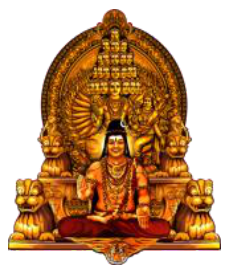
Master Destroys Ignorance
An ashram is an intensified satsang that is forever, twenty-four by seven. That is why I motivate groups of people to form ashrams, spiritual communities, where they can follow their spiritual quest with one-pointed minds.
We are eligible to be part of an ashram community when we are deeply in love with our Master. The motivation to live in an ashram is neither fear that he will hurt us if we leave, nor greed that he will take us to a non-existent heaven if we stay. Rather, it is love born out of this present moment of completion.
You are the supreme Truth, supreme sustenance, supreme Purifier, the Primal, Eternal and
Glorious Lord.
All the sages like Nārada, Asita, Devala, and Vyāsa have explained this.
Now you are personally explaining to me.
Oh Keśava, I accept all these truths that You have told me. Oh Lord, neither the gods nor
the demons know You.
Surely, You alone know Yourself by Yourself,
Oh Perfect One, the origin of beings, Oh Lord of beings, Oh God of gods, Oh Lord of the
world.
Only You can describe in detail Your divine glories by which You pervade this
Universe.
How may I know You by contemplation?
In which forms should I contemplate on You, Oh Lord?
Tell me in detail of Your powers and glories, Oh Janārdana. Again, please tell for my
satisfaction as do not tire of listening to Your sweet words.
Whatever Arjuna says is merely to keep his end of the dialogue going. Arjuna knows that there is no need for Kṛṣṇa to say anything now. Yes, he would be delighted if Kṛṣṇa were to speak of His glories, His līlā. However, Arjuna is in such a state of meditation, ready for his ultimate experience, that whatever his Master says or does would not matter to him.
Kṛṣṇa said, ‘Yes, Oh Kurusreśta, I will talk to you surely of My divine glories;
But only of the main ones as there is no end to the details of My glories.
I am the Spirit, Oh Guḍākeśa, situated in all living beings. I am surely the beginning,
middle and end of all beings.
Of the Āditya, I am Viṣṇu. Of the luminaries, I am the bright sun. Of the Mārut, I am Mārīcī. Of the
Nakṣatras, I am the Moon.
Of the Veda, I am the Sāma Veda. Of the gods, I am Indra. Of the senses, I am the mind and
in living beings,
I am the consciousness.
Of the Rudra, I am Śaṅkara and of the Yakṣa and Rākṣasa, I am Kubera, god of wealth.
Of the Vasu, I am fire and of the peaks, I am Meru.
Of the priests, understand, Oh Pārtha, that I am the chief Bṛhaspati. Of the warriors, I am
Skanda.
Of the water bodies, I am the ocean.
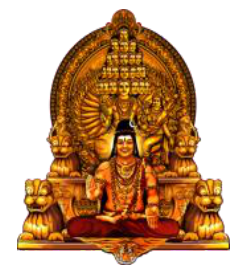
10.25 Of the great sages, I am Bhṛgu. Of the vibrations, I am the OṀ. Of the sacrifices, I am the chanting of holy names. Of the immovable objects, I am the Himālayas.
Kṛṣṇa declares that He is everything that really matters. Kṛṣṇa says that He is the ultimate consciousness in all beings and He is the beginning, middle and end of all beings. He declares that He pervades the entire space and time and beyond.
aham ātmā guḍākeśa sarva-bhūtāśaya sthitaḥ /
aham ādiś ca madhyaṁ ca bhūtānām anta eva ca // 10.20
Kṛṣṇa is both the macrocosm and the microcosm: the Brahmāṇḍa, Cosmos and the piṇḍāṇḍa, individual being. His energy permeates all living and non-living entities and He decides upon their nature.
A Master is one who can transcend time and space and reach consciousness. Kṛṣṇa, the great Master, is in the twelfth plane, that of pure consciousness. He is beyond all dimensions, beyond time, and beyond space. He is the beginning and He has no beginning. He is the end and He has no end.
He is the Creator. He is the Created. He is also the Creation. In this huge canvas of the Universe, He is the canvas. He is the paint. He is also the strokes and He is the painting. There is nothing that He is not.
I am VIṢṆU. I am Śankara. I am OṀ
Kṛṣṇa declares that amongst the Vedas, He is the Sāma Veda. The Vedas are the timeless truths expounded by the ṛṣis (sages) as the expressions of truth experienced by them. These are the revelations of the truth experienced through intuition by the seers. There are four Vedas: Ṛg Veda, Yajur Veda, Sāma Veda and Atharva Veda.
Each Veda consists of four parts: mantra-saṁhita or hymns, brāhmaṇa or explanations of mantras (or rituals), āraṇyaka, forest books which give the philosophical meaning of rituals, and the Upaniṣads, essence of the Vedas.
The Sāma Veda is a collection of hymns in praise of agni (fire), Indra (king of the gods) and soma (drink of the gods). While the Ṛg Veda is the oldest Veda, Sāma Veda is the basis for all musical systems of India. The basic notes of all music, not just of Indian music, originated with Sāma Veda. The seven notes, which are the fundamentals of all music all over the world, were derived from Sāma Veda, which even today is sung, and not recited.
The Ṛg Veda and other Vedas may be recited only by a few scholars today, but Sāma Veda is heard everywhere. It is the essence of Carnatic and Hindustani music forms, the two major classical music forms of India. As the essence of music, Sāma Veda is also the essence of dance forms. One does not need to understand music and dance. It is enough to indulge and experience. So it is with Kṛṣṇa. All we need to do is experience Him.
Among the gods, Kṛṣṇa says He is Vasava (Indra), the king of gods. The five senses, jñānendriya, namely sight, hearing, smell, taste and touch, originate from the mind and are of the mind. Without the mind, the senses cannot function. He says He is the subtlest and most powerful, the mind. In living beings, He is the life force, the consciousness, not merely body and mind.
Rudras are the elemental powers worshipped by the Ṛg Veda. The word Rudra means to cry. Metaphorically the Rudras were worshipped to obtain some gain. When in deep anguish, if one prays to one of the Rudras in awareness, it was believed to bring results. There are eleven Rudras: Aja, Ekapāda, Ahirbudhnya, Virabhadra, Girīśa, Śaṅkara, Aparājita, Hara, Anakaraka, Pināki, Bhaga and Śambhu. Śankara is the doer of good. Śankara is also the precursor to Śiva in the evolution of the Hindu constellation of divinity.
Śiva means causeless auspiciousness; auspiciousness born without a reason. Wherever Śiva is, good happens for no reason. Of the Rudras, Kṛṣṇa says He is Śankara, rudrāṇāṁ śaṅkaraś cāsmi (10.20).
Yakṣas are celestial beings considered to be the creators of wealth. The king of the Yakṣas is Kubera, the god of wealth. Rākṣasas too are celestial beings of a negative nature of hoarding power and wealth. Yakṣas and Rākṣasas are keepers of wealth. They do not enjoy wealth. Of the Yakṣas and Rākṣasas, Kṛṣṇa says He is the god of wealth, the king Kubera.
The Vasus are the attendants of Viṣṇu. They represent various aspects of Nature. The Brihadāraṇyaka Upaniṣad mentions eight Vasus: agni (fire), pṛthvī (earth), vāyu (wind), antarikṣa (space), āditya (light), dyaus
(sky), candramas (moon) and nakṣatrāṇi (stars). Kṛṣṇa says among the Vasus, He is the formless fire.
Meru is the golden peak, the metaphoric abode of gods, and its foothills are the Himalayas. It also represents the human spine. Amongst the peaks, Kṛṣṇa says He is the majestic Meru.
Bṛhaspati is the priest of the gods. He dispels darkness and ignorance and destroys the enemies of the gods. Among the warriors, Kṛṣṇa says He is Skanda, the supreme General of the forces of gods. Skanda is the son of Śiva and Pārvatī, who destroyed Tārakāsura, the demon who, along with his hordes of demons, tormented the devas. This is a metaphysical representation of the Divine as the Supreme General of the being, vanquishing the senses, desires and ego.
Of the great sages, Kṛṣṇa says He is Bhṛgu, one of the Saptarṣis (seven sages who form the cosmic energy). Bhṛgu is believed to have been created by Brahma to aid him in the creation of the Universe.
Of the vibrations, Kṛṣṇa says He is the transcendental OṀ—girām asmy ekam akṣaram (10.25). OṀ is the primal sound from which the Universe manifested itself. It is the praṇava, the mystic symbol.
Of the different types of sacrifices, Kṛṣṇa says He is the japa or chanting of holy names—yajñānāṁ japa-yajño ’smi (10.25).
Of the immovable objects in the world, He says He is the mighty and majestic Himalayas. The Himalayas, literally meaning ‘the abode of snow’, is home to hundreds of peaks, including the highest peak in the world. Some great rivers originate in it and flow through it, including Gaṅgā, Yamunā, Brahmaputra and Indus.
The Himalayas have a great unique spiritual significance as well. Kailasa, abode of Śiva, is the earthly representation of the metaphorical Meru. The Himalayan mountains are the spiritual incubator of the world. The Himalayas are truly a powerful energy field.
The Himalayan Mountains are home to me. I never believed, when I left home to travel to the Himalayas, that I would return to South India. It was in the Himalayas that I met Mahāvatār Bābā, the great Master who has been living in these mountains for thousands of years. You may believe it or not believe it, but that is the Truth.
On the way to Kedarnath, Mahāvatār Bābā called me by the name I am now called. He walked into me after calling me ‘Paramahamsa Nithyananda’. I thought he was asking me to look for a master named Nithyananda!
So I went searching for this master. More than a year later, at Calcutta, on the banks of the river Hooghly, a tributary of the river Gaṅgā, an old Sannyāsi insisted on giving me Sannyāsa before he died. I was not keen to take Sannyāsa. I was looking for Enlightenment. But he insisted. So I agreed.
To my utter surprise he gave me the name - Paramahamsa Nithyananda.
I asked this Sannyāsi, ‘Why?’ He said, ‘I do not know. This is what I was asked to do.’ He did not explain who asked him to give me the name and initiation. So, I tell my disciples that Mahāvatār Bābā is our Kulaguru, Master of our lineage, and Kedar is our kṣetra, our spiritual location.
When Kṛṣṇa says, ‘I am the Himalayan Mountain out of all unmoving things, sthāvarāṇāṁ himālayaḥ (10.25).’ I can feel the energy of Kṛṣṇa in these mountains. Everyone who has been with me on these trips have felt it at some point. They are blessed. They have been in Kṛṣṇa consciousness!
10.26 Of all the trees, I am the Banyan tree and of all the sages of the gods, I am Nārada. Of the Gandharvas, I am Citraratha.
Of the realized souls, I am the sage Kapila.
10.27 Of the horses, know me to be Ucchaiśravas born of the nectar generated from the churning of the ocean.
Of the elephants, Airāvata and of men, the king.
10.28 Of the weapons, I am the thunderbolt. Of the cows, I am Kāmadhenu;
For begetting children, I am the god of love. Of the snakes, I am Vāsuki.
10.29 Of the serpents, I am Ananta. Of the water deities, I am Varuṇa. Of the ancestors, I am Aryamā and of the ones who ensure discipline, I am Yama.
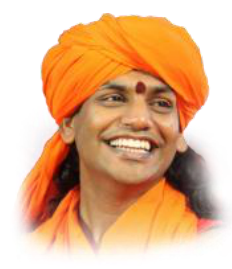
Of the Daitya (demons), I am Prahlād and of the reckoners, I am Time. Of
the animals, I am the king of animals (Lion) and of the birds, I am Garuḍa.
Kṛṣṇa says among the trees He is the banyan tree, aśvatthaḥ sarva vṛkṣāṇām (10.26). The banyan tree develops its root-like structures from the branches. These grow into the earth as secondary roots. The metaphysical meaning of the banyan tree is that just as the banyan tree grows its roots upside down unlike other trees, the spiritual person shuns the illusory outer world, the world that most people run after. Instead, he goes inwards towards the Absolute.
In a later chapter Kṛṣṇa says that the leaves of the banyan tree are the Vedas. He who knows this tree is the knower of the Vedas.
Of all the spiritually enlightened Masters, the Ṛṣis, Kṛṣṇa says He is Nārada. Nārada is considered the greatest of all devotees. His mind is immersed in remembering Viṣṇu, forever chanting 'Nārāyaṇa, Nārāyaṇa'. Kṛṣṇa identifies Himself with His greatest devotee.
Of the Gandharvas, the celestial beings, Kṛṣṇa says He is Citraratha. Gandharvas are celestial beings skilled in music and they are guardians of the soma juice—the nectar of the divine beings. Citraratha is the king of the Gandharvas.
I am the Complete Being
Among the Siddhas, the complete beings, the Self-realized persons, Kṛṣṇa says He is Kapila, the complete sage. Kapila is the author of the Sāṅkhya Yoga system of philosophy, which deals with the elements of the physical Universe and the spiritual world. He is also the founding father of Mahānirvāṇi Pīṭha—Kapila Sarvajña Pīṭha. Kapila is considered an incarnation of Viṣṇu and Mahādev.
There is a beautiful book called Kapila Gītā, Kapila's teachings to his mother, Devāhuti recorded in Śrīmad Bhāgavatam and other books Kapila's Sāṅkhya Sūtra and Sāṅkhya Kārika based on his philosophy. When I was studying them, I found such beautiful expressions! If you read Kapila, you won’t find a single moral lesson or even a definition of morality or immorality. But, the followers of Kapila will be the most beautiful moral beings on planet Earth, because He just puts you into the natural flow of your being. You don’t hide anything from others and yourself. You are not afraid of anything that is within or outside you.
What pristine purity! Kapila is the definition of the natural law of Existence, the innate intelligence. I tell you, Kapila is as beautiful as the gopikās of Bhāgavatam, as intelligent as Kṛṣṇa's Gītā, and as natural as Dharmarāja (name of Yudhiṣṭra, the righteous king). Only with certain completion, can you understand the intelligence, beauty, and naturalness, all that can flow together in one space, that is Kapila.
Next, Ucchaiśravas is the legendary snow-white horse that emerged during the churning of the ocean of milk described in the Bhāgavatam.
According to the history, the devas, the good, oppressed by the asuras, the evil, appealed to Lord Viṣṇu for help. Viṣṇu directed devas to churn the ocean of milk upon which Viṣṇu rests, using Meru, the mountain, as the staff and Vāsuki, the serpent, as the rope. Viṣṇu became the base as a tortoise upon which Meru rested. Since the devas did not have the strength to do the job alone, they took the help of the asuras promising them a share in whatever materialized.
During the churning, various divine entities emerged. Among these were the divine horse, Ucchaiśravas, and the four-tusked king of the elephants, Airāvata, whom Indra took as his mount. As part of the churning process, a deadly poison hālahāla also emerged that threatened to take the lives of the devas and asuras. Śiva came to their rescue and drank the poison. Finally, the nectar of immortality emerged. Viṣṇu, in the form of a beautiful damsel Mohini.kept the asuras occupied, while He allowed the devas to drink the amṛta, nectar of immortality, and become invincible.
This is a metaphysical representation signifying how we are pushed and pulled by desires in our lives. From this churning in our life, various products emerge. The nectar of immortality emerges when we offer our entire being to the Divine, as we go beyond the push and pull of desires, beyond life and death. Then we dwell in ultimate bliss. There may be obstacles in the path. Yet, the Master supports and protects us during our churning, as we endeavor to realize the ultimate state. Just as Śiva drank the poison that came out as a result of churning the ocean, the Master holds the disciple steady as the unconscious root patterns, saṁskāras rise to the surface during our spiritual maturing.
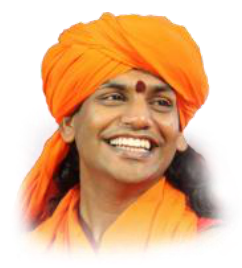
Kṛṣṇa says, among the weapons, He is vajra, the thunderbolt. This is the weapon of Indra, king of the demigods. Viṣṇu is considered to be present in the vajra. Indra was specifically given this weapon—the thunderbolt, for a purpose. Kṛṣṇa does not choose His own weapon, the cakra, the mighty discus. Instead he used Indra's vajra that was made from the bones of the great sage Dadhīci, who gave up his life to destroy the evil Vṛtāsura.
Among the cows, He says He is the sacred cow, Kāmadhuk or Kāmadhenu, which also emerged during the churning of the ocean. In the Hindu way of life, the cow is worshipped for her essential utility. Kāmadhuka is considered to be the cow that grants all wishes and is the mother of all cows.
Kṛṣṇa says, for begetting children, He is the god of love, the basis for procreation. He says He is the Vāsuki of serpents. Vāsuki is the king of snakes. Vāsuki was used as the rope and he wound himself around Meru, the staff, for churning the ocean of milk. Kṛṣṇa says, among the nāgas, non-poisonous snakes or creatures of the nether world, He is Ananta, the many-hooded serpent who forms the bed of Lord Viṣṇu. He is said to support all the planets on his various hoods, including the Earth.
Among the water beings, Kṛṣṇa says He is Varuṇa, the god of the mightiest water body, the ocean.
Among the ancestors, Kṛṣṇa says He is Aryamā, one of the Ādityas, who presides over a planet occupied by the energy bodies of our ancestors.
Of the ones who ensure discipline, Kṛṣṇa says He is Yama, the Lord of death. Death is the perfect equalizer of all beings. Death is the only certain thing in the life of all beings and it treats everyone exactly the same whether they are big or small, rich or poor. So the Lord of death, Yama, ensures perfect discipline. The Saṃskṛit word yama means both discipline and death. Yama is the first of the eight limbs of Patañjali’s Aṣṭāṅga Yoga.
Of the Daityas, Kṛṣṇa says He is Prahlād—prahlādaś cāsmi daityanāṁ (10.30). The Daityas are considered to be a race of beings that warred against the demigods. Prahlād was the son of a powerful Daitya King, Hiraṇyakaśipu. Prahlād was a pious child, an embodiment of integrity. The young Prahlād is a supreme example of devotion. His life is the example that total surrender to the Divine is possible and that such surrender leads the Divine to completely care for His devotees, in all situations and at all times.
Of the reckoners, Kṛṣṇa says He is Kāla, Time itself—kālaḥ kalayatām aham (10.30). Time is the ultimate reckoner. No being exists who can beat Time. Irrespective of who it is, Time always moves on. It cannot be stopped by anyone. Of the animals, Kṛṣṇa says He is the Lion, king of the jungle. Among birds, He says He is Garuḍa, king of birds, the eagle who is the mount of Lord Viṣṇu.
Of the purifiers, I am the Wind.
Of the wielders of weapons, I am Rāma.
Of the water beings, I am the Shark and
of the flowing rivers, I am Jāhnavi (Gaṅgā).
Of all creations, I am surely the Beginning and end and the middle, Oh Arjuna. Of all knowledge, I
am the Spiritual knowledge of the Self. Of all arguments, I am the Logic.
Of the letters, I am the ‘A’. Of the dual words, I am the Compounds and surely I am the never-ending
time. I am the Omniscient who sees everything.
I am the all-devouring Death and I am the Creator of all things of the future. Of the feminine, I am
Fame, Fortune, Beautiful speech, Memory, intelligence, Faithfulness and Patience.
Of the Sāma Veda hymns, I am the Bṛhat Sāma and of all poetry, I am the Gāyatrī. Of the months, I
am Mārgaśīrṣa and of the seasons, I am Spring.
Of all the cheating, I am Gambling.
Of the effulgent things, I am the Effulgence.
I am Victory, I am Effort, I am the Goodness of the good.
Of the descendants of Vṛṣṇi, I am Vāsudeva Kṛṣṇa. Of the Pāṇḍava, I am Arjuna.
Of the Sages, I am also Vyāsa and of the thinkers, I am Uśāna.
10.38 Of rulers, I am their Scepter. Of the victorious, I am Statesmanship. Of all secrets, I am also Silence. Of the wise, I am Wisdom.
Of the purifying elements, Kṛṣṇa says He is the formless and pure wind—pavanaḥ pavatām asmi (10.31). The wind pervades the other elements such as earth, water and fire and removes impurities.
Of the wielders of weapons, He says He is Rāma, the seventh incarnation of Viṣṇu—rāmaḥ śastra-bhṛtām aham (10.31). Śrī Rāma defeated Rāvaṇa, the demonic ruler of Laṅkā who abducted his wife, Sīta. Rāma was a righteous ruler and chosen heir to his father’s throne. Yet, Rāma went into exile to uphold his father’s vow. Rāma is considered the greatest archer ever known. Of the ten incarnations of Viṣṇu, Rāma is the incarnation just prior to Kṛṣṇa. Of the aquatic beings, the fish, He says He is the Shark, the most powerful and feared.
Of the rivers, He says He is Gaṅgā. The river Gaṅgā is worshipped in India as goddess Gaṅgā. Millions of people pray in the waters of the Gaṅgā everyday. On its banks, millions of people gather everyday to offer pūjā to Gaṅgā and to take a holy dip in the waters.
Of all the creations, Kṛṣṇa says He is the beginning, the middle and the end, thus establishing that He is all that existed, exists and will exist. He is the creator, created and creation—sargāṇām ādir antaś ca madhyaṁ caivaham arjuna (10.32).
Of the various branches of knowledge, He is the ultimate spiritual knowledge, Self-realization—adhyātma vidyā vidyānām (10.32). Other branches of knowledge result from intelligence. Only Self-realization requires intuition and something beyond.
Of all arguments, He says He is the logic that binds everything together. Of the letters, Kṛṣṇa says He is the first letter, ‘akṣarānām a-kāro ‘smi’, the origin of all that is spoken and written. Of the dual words, a class of words in Saṃskṛit, He is the compound word.
He affirms He is never-ending time and the Creator of this Universe, Brahma. Kṛṣṇa says He is the Creator and Destroyer.
Of the feminine qualities, He says He is the seven Devīs, goddesses, who impart fame, fortune, beautiful speech, memory, intelligence, faithfulness and patience. In Saṃskṛit all these qualities have feminine nouns to represent them. He says these attributes in women come from Him.
Kṛṣṇa said in an earlier verse that among the Vedas, He is the Sāma Veda that contains beautiful songs and hymns. Now, He says, among these hymns, He is the Bṛhat Sāma, a unique melody.
Of all poetic meters, He says He is Gāyatrī—gāyatrī chandasām aham (10.35). Various invocations and prayers in the Vedic literature are set to Gāyatrī meter, including Devi Gāyatrī, Rudra Gāyatrī, etc. This chanda, meter is 24 syllables, usually in 3 or 4 lines.
. Here, Kṛṣṇa states that Gāyatrī is the greatest of the mantras. Its popularity has been evident from the earliest Vedic times. This was the first mantras taught when the child entered a gurukul, the traditional Cedic schools of Enlightened Masters.
Gāyatrī literally translated means ‘the song that liberates’. Gāyatrī is an invocation to the ultimate intelligence. This prayer creates self-awareness, self-completion:
Om bhūr bhuva suvaḥ tat savitur vareṇyam bhargo
devasya dhīmahi dhiyo yonaḥ prachodayāt
Freely translated, this means:
We bow to You, that Ruler of physical, mental and spiritual planes, That which is beyond all, the supreme Brilliance, May You kindle our inner awareness! It is a prayer to the supreme intelligence to awaken our inner intelligence.
Among the months, Kṛṣṇa says, He is the month of Mārgaśīrṣa, November and December in the Gregorian calendar. In India, these months bring joy to people as they are the time when grains are collected from the fields. Also, the month has a lot of spiritual significance because the auspicious days of Vaikuṇṭa Ekādasi fall in this month. This month in the divine calendar is the early morning time, the brahma muhūrtam, the most auspicious part of the day. This is the time recommended to focus on worship.
Among the seasons, Kṛṣṇa says, He is spring. Nature is at the pinnacle of Her creation in spring with new blossoms on trees and pleasant weather, which is neither too hot nor too cold. Spring thus signifies life, growth and the beginning of the cycle of life.
Kṛṣṇa declares that of all vices, He is gambling. Even in the vices He says He is present! Anybody who deludes himself by thinking that He is not present in ‘unvirtuous’ activities should realize that the Divine exists everywhere and in all activities and things.
Kṛṣṇa says, He is the effulgence that is the essence of all radiant things. He declares He is the Victory of the victorious, the effort needed to succeed, and satva, Goodness, amongst the attributes.
Kṛṣṇa’s father, Vāsudeva, was a member of the Vṛṣṇi or Yādav race. Amongst the Vṛṣṇis, Kṛṣṇa says He is the ultimate, Vāsudeva Kṛṣṇa. Amongst the Pāṇḍavas, He says He is the arch bowman, Arjuna.
Of the sages, He says He is Vyāsa, author of the great epic Mahābhārat that includes the Bhagavad Gītā. Vyāsa is also referred to as Veda Vyāsa, the compiler of the Vedas who split one Veda into four Vedas so that the common person could understand the knowledge in the Vedas.
Of the thinkers, Kṛṣṇa says, He is Uśāna, also known as Śukra, guru of the asuras, celestials with a negative bent of mind.
Kṛṣṇa says, ‘I am the scepter, the daṇḍa, the rod of punishment of the King.’ As a Master, Kṛṣṇa wields the yoga daṇḍa, the divine staff of wisdom. A ruler is not merely a refuge for his subjects, but also the rule giver, the disciplinarian. So is the Master.
10.39 Also, of whatever beings exist, I am the Seed, Oh Arjuna. There is nothing that exists without Me in all creations, moving and unmoving.
10.40 There is no end to My Divine glories, Oh Parantapa. What has been said by Me are examples of My detailed glories.
10.41 You should know that whatever glories exist or anything beautiful and glorious that exists, all that surely is born of just a portion of My splendor.
10.42 Of what use is it to know about the many manifestations of this kind, Oh Arjuna? I pervade this entire world with just a part of Myself.
Now, let us also experience these words of Kṛṣṇa in a mood of absolute surrender and total gratitude.
Close your eyes, and meditate on the divine glory of Kṛṣṇa.
Express deep gratitude for whatever way your life has been elevated. Express deep gratitude to whoever has helped you achieve health, wealth and education. Each and every one of these are expressions of the Divine.
Remember every one of them for the reasons they were in your life. Remember all of them who helped you to flower in your life. Remember all of them with love and respect, with love and gratitude.
Remember your mother who gave you this body. She is the embodiment of the Divine, Parabrahma Kṛṣṇa. Give her your gratitude. Remember your father who gave you life. Feel him and give your gratitude to him.
Remember all the teachers and professors who gave you education. They are embodiments of the Divine. Feel deeply grateful to all of them for enriching your life and to your being.
Whoever has helped you to grow economically, whoever contributed to your economical growth, directly or indirectly, remember all of them and give your gratitude to them. Feel deeply connected to all of them.
Whoever gave you mental strength and understanding about life when you needed it, whenever you were depressed whoever gave you courage, remember all of them. They are embodiments of the Divine, representatives of the Universal Consciousness. Remember all of them and give them your gratitude.
Whoever helped you grow spiritually, whoever helped you grow in spiritual understanding, remember all of them. Give them your gratitude. They are representatives of the Divine.
Whoever helped you with understanding on the level of material wealth or spiritual growth, remember all of them and offer them your gratitude.
Ultimately, give gratitude to the divine energy, Parabrahma Kṛṣṇa, who gave this intelligence and understanding to us in our life.
Just drop yourself and become one with the Cosmic energy. May you become part of the whole Universe, part of the energy that is moving the sun, moon and planet Earth.
Oṁ śānti, śānti, śāntihi...
Relax. Now open your eyes. Continue to spend at least the next few hours in this mood of surrender. Drop yourself. You will see this experience works miracles in your being. It can transform you.
Forget about yourself. Drop yourself and let the Divine, let this Cosmic energy prevail. Let Him be. Let the Divine be. This surrender mood can transform your whole consciousness. It can make you experience the ultimate truth that Kṛṣṇa explains here: His glories, His vibhūti, His Divine glory.
When you are blissful, whatever you see looks divine and glorious. May you reach that bliss.
Let us pray to Parabrahma Kṛṣṇa, the Universal energy, Existence, to guide us all and to give us all the experience of eternal bliss, Nityānanda.
Thus ends the tenth chapter named Vibhūti Yogaḥ, ‘The Yoga of Divine Manifestations,’ of the Bhagavad Gītā Upaniṣad, Brahmavidyā Yogaśāstra, the scripture of yoga dealing with the science of the Absolute in the form of Śrī Kṛṣṇārjuna saṃvād, dialogue between Śrī Kṛṣṇa and Arjuna.
CHAPTER 11