BEYOND SCRIPTURES
This text was machine-transcribed from the printed book and may contain errors. Select the words and choose “Report a mistake”.
There are millions of scriptures and books on planet Earth. From time immemorial, human beings have created scriptures and still continue to create spiritual books. But Bhagavad Gītā is incomparable. Unlike any other, this book has penetrated human consciousness so deeply. No other book has contributed to the preparation of so many Enlightened Beings on planet Earth. Bhagavad Gītā is the unabridged dictionary and encyclopedia of spirituality.
Spiritual literature can be classified into three categories. First we have śāstras: Sāstras give us clarity about the goal of human life. They give intellectual understanding about the ultimate truth of man and God.
Śāstras are the scriptures which guide us to have the right cognitions of life. They logically and intellectually answer all major questions so that we can be logically convinced to follow the ultimate path. There are many examples. The śrutis and smṛtis of sanātana-hindu-dharma, the sacred scriptures such as the Vedas and Upaniṣads, the guidelines such as the Manusmṛti and Itihās, and the great epics, historical happenings such as Rāmāyaṇa, Mahābhārat, are śāstras.
The second category of literature is stotra. It is the expression of someone who has realized the ultimate Truth; who has had the glimpse of divine love. When such a person expresses his joy, the expression is stotras. When we worship and surrender ourselves to the Divine, the form of expression is stotras, devotional compositions.
The literature from the heart is stotras; literature from the head is śastras. The third type of literature, called sūtras, gives us techniques to realize the state of uniting with the Divine.
Śāstras give us intellectual understanding, stotras give emotional feeling connection, Sūtras give the being level experience. Śāstras are like signboards, intellectual scriptures that explain the basics of life. They alone cannot lead us to enlightenment; although they can take us to an Enlightened Master. Stotras enrich us to surrender to the Divine. The glory of the Divine is expounded on by the stotras. Sūtras give us techniques to achieve devotion or Enlightenment.
Stotras are spoken from the level of emotion, feeling. Sūtras mean the technique that helps us achieve the goal of the śāstras and the stotras.
People who are intellectually oriented, need śāstras—intellectual scriptures. They do not do anything unless they are intellectually convinced. We cannot say that because of this attitude, they should not seek spirituality, the path of living the highest potential and expanding with peak possibility. Listen, we should look at man with more compassion. We can’t put faith as the main criterion to enter into spirituality, then we are refusing spirituality to almost 90% of humanity. We should create a system through which we can reach and enrich every individual with the science of completion and creation.
Our Vedic seers created śāstras—the absolute science of living in completion while creating our peak possibility. They logically taught us the path and the goal—why we are asked to do what we do, why we need spirituality in our day-to-day living. All these major questions are proven logically in śastras and the conclusions are given. Understand, śāstras completely take away our doubts. Doubt is a devil. Once a doubt enters our mind in the form of self-doubt, self-hatred and self-denial, we can’t sleep, we can’t rest until we clear and complete with it. Śāstras help us get rid of these doubts intellectually, scientifically!
Unless we have complete intellectual clarity, complete cognition, our belief will be a pseudo belief; anyone can shake our faith as it will be rooted in self-doubt. Our cognition is not complete cognition till the śāstras of integrity, authenticity, responsibility and enriching become the basis of our cognition. Till then our cognitions are nothing but confusions, self-doubts. Our faith does not have a strong base, it is like a building without a foundation. It will collapse. The same will happen to us if we don’t have the base of śāstras.
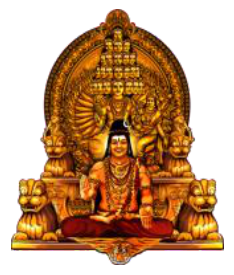
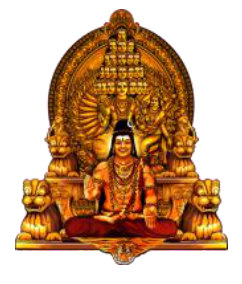
Next are the stotras. Stotra means expressing our experience, our deep love or devotion to our Master or God. Many people ask, ‘Swamiji, why does Hinduism have idol worship?’ Listen. Hinduism does not have idol worship. We don’t worship the idol; we worship through the idol. When we stand in front of the idol, do we say, ‘Oh stone! Give me a boon. Oh stone! Please save me?’ No! We say, ‘Oh God, please save me.’ We don’t worship the idol; we worship through the idol. So we are not doing idol worship. In Vaiśnavism, the devotional stream of Hinduism, there is a beautiful word Arcāvatār. This means the idol worshipped in the temple is the Incarnation of God, it is not just a stone.
Incarnation means the Divine descending on planet Earth, just like the ten Incarnations of Viṣṇu. All these idols are like these ten Incarnations. Just like these Incarnations, the stone, the idol that we worship to relate with God is called Arcāvatār.
When we stand in front of the idol and pour our heart out through verses, this enriching expression is what is stotras. All the songs written by great devotees like the Alvars, Nayanmars, Mīrā and Caitanya, are stotras. People ask me, ‘Swamiji, sometimes I don’t feel like chanting these stotras. Should I do it mechanically even if I don’t like doing it?’ I say, ‘Do it with integrity and authenticity. You may feel it is a mechanical exercise for one or two days. But, it will become your being once you start enjoying the meaning and experiencing what you express. It will become your feeling that enriches you deeply.’ The reason I allow these stotras to be chanted is this—I can see thousands of people, when they have feeling connection with the Divine, they flower and become enlightened. So, when you express your heart, it becomes stotra.
Understand, in Vedic tradition, even God is a stepping-stone for Enlightenment. All the forms and names of the Gods, everything is used for attaining Enlightenment, for nirvikalpa samādhi, for living advaita. When the devotion, the feeling connection is awakened in you, you automatically go towards enlightenment.
Next are the sūtras. Sūtras give us the technique to reach enlightenment. Sāstras are from the intellectual level. Stotras are from the emotional level. Sūtras are from the being level.
There are three kinds of human beings: head oriented, heart oriented and being oriented. To fulfill everyone, our enlightened sages have created three kinds of literature—śāstras, stotras and sūtras. Bhagavad Gītā is the only book that is a combination of śāstras, stotras and sūtras, with something more!

PLANET EARTH IS A
BATTLEFIELD
Dhṛtarāṣṭra said: O Sañjaya, assembled on this righteous holy land of pilgrimage at Kurukṣetra, what
did my sons and those of Pāṇḍu, eager and ready to fight, do?
Sañjaya said:
O King, seeing the Pāṇḍava army in full military formation, Duryodhana went to his teacher, and
spoke the following words.
My teacher, behold the great army of the sons of Pāṇḍu,
Expertly arranged by your intelligent disciple, the son of Drupada,
, 1.5, 1.6 Many are the heroes and mighty archers equal to Bhīma and Arjuna in war;
Yuyudhāna, Virāṭa, and the great warrior Drupada, Dṛṣṭaketu, Cekitāna, and the heroic king
of Kāśī; Also Purujit, Kuntibhoja, and the great man Śaibya; the valiant Yudāmanyu, the
formidable Uttamauja, the son of Subhadrā, and the sons of Draupadī, all great warriors.
Best of the Brāhmaṇas, let me tell you, who are the powerful warriors on our side—the generals
of my army, for your information, I mention them.
It is significant that a blind man gave the opening statement of this great scripture. Not only had he lost the power of sight, but also the power of insight, the wisdom to distinguish between right and wrong.
Dhṛtarāṣṭra's brother Pāṇḍu handed over to him his throne, as well as the care of his five children. From the point of view of any righteous person, these five Pāṇḍava princes were Dhṛtarāṣṭra's responsibility as well. However, the separation born out of the self-doubt in Dhṛtarāṣṭra's mind was clear when he said, 'My sons and the sons of Pāṇḍu.'
'What are they doing?' he asked Sañjaya plaintively, 'These sons of mine, the hundred Kaurava princes, and those five sons of Pāṇḍu, the Pāṇḍava princes?' He claimed no ownership or responsibility of the Pāṇḍava princes or concern for their welfare. His concern was for his own sons.
Dhṛtarāṣṭra is the embodiment of self-doubt which is always blind! His attachment to his sons, especially the crown prince Duryodhana, had blinded his powers of reasoning. Whatever his son did received his endorsement. From early adolescence, Duryodhana had been plotting to kill his Pāṇḍava cousins. Although Dhṛtarāṣṭra pretended ignorance of his son's evil deeds, he was aware of what his son was up to. Even when Duryodhana and his brother Duśśāssana went to the extreme of disgracing Draupadī, the wife of Pāṇḍavas, trying to disrobe her in public court, Dhṛtarāṣṭra seemed powerless to act. When Duryodhana finally refused to give the Pāṇḍavas even a needlepoint of land, still Dhṛtarāṣṭra kept quiet, ensuring that blood would be shed.
Dhṛtarāṣṭra was fully aware that he was non-integrated and inauthentic, following the evil path of adharma and that it would result in the destruction of his clan. Yet he seemed powerless to act otherwise. Dhṛtarāṣṭra's tale is common to humankind. Often, we follow wrong paths even though we know it is wrong, we go out of integrity and authenticity almost as if under a hypnotic spell of doubting ourselves. Gītā, therefore, begins from this premise of blinding self-doubting pattern, the primal pattern that invokes all other patterns in us!
Mahābhārat is not merely the fight between good and evil. Far from that, it is about our root patterns, our inner conflict in being unable to do the right thing, not being courageous enough to stand for what is right, and not taking responsibility to be complete. It is about the lack of awareness, clarity and courage to follow the path of righteousness, dharma of integrity, authenticity, responsibility, and enriching. It is a fight between good and evil within us, not merely outside of us. It is actually a fight between the completions and incompletions within us, between possibilities and patterns within us.
Kṛṣṇa, the Superconscious, constantly looms over our being, eternally reminding us of our space of highest positivity, possibility, divinity and enlightenment with His tremendous patience and infinite compassion. Yet we ignore this divine call within us, caught in self-doubting illusion that what we choose instead will make us happy.
Listen. I tell you, all wars between countries are nothing but triggering the collective root patterns of that society. Whether it is war at home, or war in the communities, or war between the countries, the root pattern is responsible.
Incompletion at the level of a single individual piles up and becomes the incompletion at the level of society. Incompletion in the level of society piles up and becomes the incompletion in the level of large communities. Incompletion in the level of large communities piles up and becomes the incompletion in the level of the whole country. Incompletion in the level of countries leads to and causes wars.
War is the result of incompletions. Whether it is war between you and you, or war between a country and country, it is the result of incompletions, which is there in a single human being. Kurukṣetra war is the ultimate war of the collective root patterns of humanity itself.
Dhṛtarāṣṭra refers to Kurukṣetra, the site of this world war, as a holy land or place of righteousness, dharmakṣetra.
dharmakṣetre kurukṣetra samavetā yuyutsavaḥ ।
māmakāḥ pāṇḍavāś caiva kim akurtava sañjaya ॥ 1.1
People ask, 'How can a battlefield be called a holy land?' If you study the history of humanity, you find that it has always been a battlefield. Whether these wars were morally guided or misguided is a matter of opinion. What is right for one need not be right for another.
Listen! Mahābhārat beautifully says, 'Let the fight be in kurukṣetra!' In Saṃskṛit, kurukṣetra means space of creation. Kuru means doing. Let the fight be in the space of creation. The whole place of fight should not be with the lowest realm, but with the highest realm! So, you will always be in the middle. In the fight itself, you will always be in the middle, and in the end you will be at the peak.
Life is a fight till you are enlightened. But, let your fight be in kurukṣetra, the field of creation, not in the field of losing. Don't be constantly fighting with, 'Will I get heart-attack and die?' 'Will my health collapse?' 'Will others leave me?' 'Will I become bankrupt?' No! The ground on which the battle happens decides your existence and expansion. Let your visualization be—'Will I become CEO or not?' 'Will I become a yogi or not?' 'Will I become jñani or not?' 'Will I become rich or not, leader or not?' 'Will I become enlightened or not?'
I tell you, if your fight is in the direction of kuru, you will win the game very easily with least or no stress. It does not take more than forty-eight hours to convince yourself to shift the battleground. You just need to complete some of the self-doubts that you got from your elders, family and societal conditioning. Complete with them! So, all you need to do is just shift your core visualization, your core cognition, your core energy.
Change the battlefield and enter the energy-field of dharma, led and controlled by Śrī Kṛṣṇa, immediately you will experience so much of completion. Kṛṣṇa is the epitome of dharma (righteousness), and Kṛṣṇa was on the side of the Pāṇḍavas, then how could they lose? The tragic fate of Dhṛtarāṣṭra was that he knew that the destruction of his clan was inevitable, and yet his self-doubts had turned into self-denial, making him powerless and deny the obvious path of dharma.
Listen. The moment you change the battlefield from adharma to dharma, you may even become enlightened; because it is your default parking spot that decides whether you are enlightened or not. Otherwise you ARE enlightened! You just need to remember and reclaim it. The best way to remember and reclaim it is to complete with your self-doubting patterns and shift the battlefield itself. See, now your battlefield is—'any one day I am going to become bankrupt. Let me delay it as much as possible!' Instead, let it be—'any one day I am going to become the richest being. Let me do it as early as possible!'
EGO NEEDS SUPPORT
Your goodself, Bhīṣma, Karṇa, Kṛpa, who are ever victorious in battle, an even so
Aśvatthāma, Vikarṇa and the son of Somadatta.
Many other heroes there are who are prepared to lay down their lives for my sake; all are well-equipped
with different weapons, and well experienced in warfare science.
The strength of army of ours, protected by Bhīṣma, is invincible whereas the strength of their army
carefully protected by Bhīma is limited.
Stationed in your respective divisions on all strategic fronts, all of you must give full protection
to Grandfather Bhīṣma.
Bhīṣma, the mighty patriarch of the Kuru dynasty, their glorious grandsire, then blew upon his conch
loudly, roaring like a lion and Duryodhana was joyful.
Duryodhana was a coward by nature. Cowardice is the smell of inauthenticity. Courage is the fragrance of authenticity. He was inauthentic as his mamakāra, what he perceived as himself, was much lower than his ahaṃkāra, what he projected as himself to others.
Understand, when one is in denial, suffering is naturally going to be there. His root pattern of self-denial, of deep fear and insecurity had always made him feel threatened by the fact that his Pāṇḍava cousins especially Arjuna and Bhīma were far more superior, physically stronger and skilled than him.
Duryodhana felt secure only when surrounded by cronies. His strength and valor arose from the feeling of being supported by his clan and the army around him. On the positive side, Duryodhana was an extremely generous friend who gave his all for the sake of someone he trusted. This quality had attracted strong men like Karṇa to him who swore undying loyalty. Even though Karṇa knew that Arjuna was his own brother, all he could say to his mother Kuntī was that she would finally be left with five sons, implying that one of her sons, either Arjuna or Karṇa, would perish in the war. Such was the loyalty that Duryodhana evoked in his friends.
Duryodhana now rightly went on to claim that there were a number of people, who were great warriors, who would willingly lay down their lives for him. He then began to boost his own morale by saying that the power of the Kaurava army led by Bhīṣma was immense, whereas the Pāṇḍava army with Bhīma as one of the commanders was limited in power. Duryodhana’s reference to Bhīma alongside Bhīṣma was due to the fear pattern that he had, of the oath that Bhīma had taken—to break Duryodhana’s thigh and drink his blood to avenge the insult to Draupadī. Duryodhana knew that the only factor that could prevent it would be the protection of Bhīṣma.
Duryodhana then addressed the Kaurava army, exhorting them to support their Commander-in-Chief, Bhīṣma. In response, Bhīṣma blew his conch like a lion, making Duryodhana joyful. Bhīṣma was the first Kaurava Commander-in-Chief and Duryodhana wanted to make sure that the entire Kaurava army was committed to his leadership. Bhīṣma, the greatest warrior either side had known, was leading the Kaurava army. Duryodhana wanted to take no chances that his past hatred towards Bhīṣma would affect his assembled supporters. Though he knew that Bhīṣma and even Droṇa would have gone with the Pāṇḍava princes and Kṛṣṇa, had it not been their strong bonds of duty, he could not afford to antagonize them.
The Qualities of Dharma
Bhīṣma is the embodiment of dharma, righteousness. He is the Pitāmaḥ, the great-father of Mahābhārat, the grand sire and patriarch of the Pāṇḍavas and Kaurava clan. Bhīṣma was born to Gaṅgā as Devavrata. He was the only surviving son of eight sons whom Gaṅgā had given birth to. So, Gaṅgā, the sacred most river energy
is the great grandmother of Mahābhārat. When Bhīṣma’s father king Śāntanu wanted to marry Satyavatī, a daughter of a fisherman, Devavrata swore to remain as a brahmacāri, never to marry, so that his stepmother Satyavatī’s children could have access to his father’s throne. Satyavatī was the grandmother of both Pāṇḍu and Dhṛtarāṣṭra. Bhīṣma was highly respected for his valor and sagacity. It is one of the greatest ironies of Mahābhārat that wise men like Bhīṣma and Droṇa chose to be on Duryodhana’s side, knowing fully well that whatever path Duryodhana was following was not only morally incorrect, but also against dharma, the cosmic law.
In the highest spiritual sense there is no right or wrong morally. Everything is neutral. Bhīṣma and Droṇa were not ordinary people, they were highly matured souls, adept in living the scriptural truths. Moreover, they were fully aware that Kṛṣṇa is a divine Incarnation, and the very fact that Kṛṣṇa sided with the Pāṇḍavas was a clear indication to them as to how the war would unfold. As great warriors themselves, they had no fears about their own deaths; and more importantly they had no guilt, no incompletions about what they had embarked upon.
Great men like Bhīṣma, Droṇa, and Kṛpācārya, trusted their inner space. Duryodhana was their prince and they were committed to him. Not attached to the result of the war, they were certain that Duryodhana would perish and they would too, along with him. In fact, at one point in the war when Kṛṣṇa was greatly angered at the rout that Bhīṣma was causing in the Pāṇḍava army, Kṛṣṇa got down from Arjuna’s chariot that He was driving and advanced menacingly towards Bhīṣma. Bhīṣma instantly laid down his arms, joined his palms in prayer to the advancing Kṛṣṇa who was wielding a chariot wheel as His sudarśana cakra, the divine discus weapon on His finger, and greeted Him. ‘Lord, it will be the greatest blessing for me to die at Your hands.’
To these great warriors, dying on the battlefield was the duty of a kṣatriya, a warrior. They weren’t concerned with the righteousness of Duryodhana’s motives. Their integrity transcended the moral rights and wrongs established by society and religion.
What is morality? In a given society, in a given era, morality is generally the accepted standards of what is desirable and undesirable, what is considered right or wrong conduct and good or bad behavior of a person, a group or an entity. Morality is about good and bad, right and wrong. It changes from time to time, era to era. When time changes, all this changes!
Please understand, integrity is not morality or ethics of the society.
Integrity is a spiritual value. Integrity is you fulfilling the word and thought you give to yourself and others, and experiencing a state of pūrṇatva, completion with yourself and others.
Integrity is not ethics. Ethics is different, integrity is different. Morality and ethics vary from time to time. Integrity is absolute. These warriors disapproved of Duryodhana’s insult of the Pāṇḍava princes and Draupadī in the court but did not protest. They disapproved of Duryodhana’s instigation of this war and yet took his side, knowing fully well that what lay ahead was destruction.
Flow with Nature
This was not foolishness or resignation from the powerless space. This was surrender to the inevitable, surrender to the Divine. At the level of their consciousness, these great Masters allowed Nature to take its own course. To relax and allow whatever happens to happen is the sure sign of an evolved spirit. Ordinary humans have the freedom to think, choose and act. As a result, they think they are in control of their destinies. In a sense they are; they make their decisions and act upon them. But it is their unconscious root patterns that drive them to all these decisions.
A cycle is created as the root thought patterns lead to certain incomplete actions and those incomplete actions in turn mold their mental set-up and lead to more and more incompletions. Yet, a human has the choice to break out of this cycle of incompletions and live in freedom. This freedom is the space of completion. And the science of completing with this incomplete cycle of root patterns is the science of completion, pūrṇatva. This is the dharma taught in the Gītā scripture.
Listen! There are two ways to live life.
One is to accept the world and life as it is, as we perceive it without any resistance being complete, to see the reality as IT IS—what in Saṃskṛt is termed Sṛṣṭi Dṛṣṭi. The other way is to try to make circumstances evolve according to our viewpoint, to create the reality as we want to see, called Dṛṣṭi Sṛṣṭi. The first attitude, one of acceptance out of completion brings happiness; the second, one of resistance, brings suffering. No one
can change the world according to his viewpoint. It is an exercise doomed to encounter failure. At best, we can transform ourselves, that's all. And when we do transform ourselves, we are also empowered with the great inner powers to create the reality as we want, for ourselves and others!
No revolution has ever succeeded in bringing about any significant, positive change. Revolutionaries who claim that they are against dictatorship become dictators themselves. That has always been history. Ironically, an Enlightened Master has no such freedom. He is a faithful channel of the universal energy, Parāśakti, the Divine Existence. Every move, every thought is at the behest of the Divine. An Enlightened Being is beyond choice; He is in complete surrender to the Divine.
Bhīṣma was of pure divine origin, the son of Gaṅgā. Gaṅgā is the embodiment of pure inner space. Bhīṣma had the gift of icchā-mṛtyū, self-willed death. His dharma, his integrity and authenticity were the standard for his era. Yet Bhīṣma kept quiet when Draupadī was attempted to be disrobed and insulted. Because he had the wrong association with self-denial, Duryodhana and being in integrity to his huge vow to always protect the kingdom's royal seat, he did not act when Duryodhana denied the Pāṇḍavas even a patch of land the size of a needle tip.
He chose to fight for Duryodhana. However, when Duryodhana requested him to lead the Kaurava army, Bhīṣma told him that the Pāṇḍava princes were as dear to him as Duryodhana was, and while he would wage war against their army, he could not take their lives. This was the condition under which Bhīṣma agreed to fight against the Pāṇḍava army on Duryodhana's behalf.
Yet, in this instance, Bhīṣma's compassion for Duryodhana overcame his distaste for his actions and behavior. Bhīṣma understood the desperate fear running through Duryodhana's mind, and he felt the need to reassure him. In response to these exaggerated claims of Duryodhana, Bhīṣma blew his conch as a sign of resounding affirmation of whatever had been said by Duryodhana. Sañjaya said that Bhīṣma's conch sounded like the roar of a lion, coming from the oldest and the bravest of all the warriors assembled on the battlefield. It was also an affirmation of Bhīṣma's own support to the Kaurava prince and the signal for the war to begin. Bhīṣma's conch was a celebratory signal, seeking victory.
The WAR BEGINS
1.12 Conches, bugles, trumpets, drums, and horns all suddenly sounded; Their combined sound renting the skies.
1.13 Then, seated on a magnificent chariot drawn by white horses, both Mādhava (Kṛṣṇa) and Arjuna sounded their divine conches.
1.14 Hṛṣīkeśa (Kṛṣṇa) blew on His conch, the Pāñcajanya; Dhanañjaya (Arjuna) sounded the Devadatta and Vṛkodara (Bhīma) sounded his mighty conch called Pauṇḍra.
1.15 1.16 1.17 King Yudhiṣṭra, the son of Kuntī, blew his conch, the Anantavijaya; Nakula and Sahadeva blew the Sughośa and Maṇipuṣpaka. That great archer, the king of Kāśī, the great fighter Śikhaṇḍī, Dṛṣṭadyumna, Virāṭa and the invincible Sātyaki, Drupada, the sons of Draupadī, and the others, such as the mightyarmed son of Subhadrā, all sounded their conches.
Conches, called śankha in Saṃskṛit, are the shells of mollusks that live in the sea. From time immemorial, Hindu scriptures have referred to the use of conches during ritualistic, devotional and celebratory occasions. In general, a conch is blown to signify obeisance to the Divine, or in celebration of an auspicious, victorious occasion.
Each of the great warriors in the Mahābhārat war had his own conch with its unique sound signature. Most of the great warriors also had their own chariot flags and their weapons, especially their bows, had great spiritual significance. It is said that Arjuna's presence in any part of the battlefield would be known by the sound of his conch and the twang of his bow!
When Bhīṣma blew his conch in support of Duryodhana, the response was tumultuous on both sides. Every warrior on the battlefield took out his conch and blew his signature note. Of all the sounds that emanated at that moment, a few were heard above the rest. Kṛṣṇa sounded His Pañcajanya, the conch of Viṣṇu, which drowned out all other sounds. It was the victorious announcement for all that the Divine was already present with the Pāṇḍava army.
Vyāsa, through Sañjaya, attributes divinity only to Kṛṣṇa’s conch, not to anyone else’s. He refers to Kṛṣṇa as Mādhava, and later as Hṛṣīkeśa. Mādhava signifies that Kṛṣṇa is an Incarnation of Viṣṇu, the husband of Lakṣmī, goddess of wealth and fortune. In this context, it signifies that whoever Kṛṣṇa sides with would be invincible. Kṛṣṇa is then referred to as Hṛṣīkeśa, controller of the senses, the superconscious, who has created the māyā, the illusion that is this great war of Mahābhārat. Vyāsa implies that all that happens is a creation of Kṛṣṇa. For what purpose? He alone knows. The Divine truly has no purpose. The Divine IS, that’s all.
Kṛṣṇa was Arjuna’s charioteer. Arjuna’s chariot and his bow, Gāṇḍīva were a blessing from Agnī, the fire god. The chariot was capable of traversing all three worlds. The chariot flew the flag of Hanumān, the monkey god, the close confidante, disciple of Lord Śrī Rāma, the earlier Incarnation of Viṣṇu or Kṛṣṇa. Hanumān had blessed Bhīma that he would be with the Pāṇḍava princes at all times, and he himself would ride upon Arjuna’s chariot flag. Wherever Hanumān is, Śrī Rāma is present. So Arjuna is accompanied not only by Śrī Kṛṣṇa, but also by His earlier Incarnation Śrī Rāma! Arjuna and the Pāṇḍava princes were twice blessed! Arjuna is referred to as Dhañanjaya, winner of wealth, in reference to his ability to generate the wealth needed by his brother Yudhishtṛa.
Not to be outdone, Bhīma, also called Vṛikodara blew on his conch Pauṇḍra, a fearsome sound that invoked dread amongst the Kaurava army. Bhīma was feared by his enemies for his strength and anger. The other three Pāṇḍava princes, Yudhiṣṭra, Nakula and Sahadeva and then by the great warriors, Drupada, Virāṭa, Sātyaki, Śikhaṇḍī, Dṛṣṭadyumna, Abhimanyu and others followed, all blowing their conches in celebration of their impending victory.
Each of these warriors had a great history. Yudhiṣṭra, the eldest of the Pāṇḍava princes, was born to his mother Kuntī through the grace of Yama, the god of justice and death, and was universally known as Dharmarāja, the king of truth, as he was established in dharma, an embodiment of integrity with the power of words, never known to tell a lie. Nakula and Sahadeva embodied enriching, the power of living who were born to Mādri, the second wife of Pāṇḍu, through the grace of the Aśvini Kumāras, celestial beings.
Drupada, the king of Pāñchāla, was the father of Dṛṣṭadyumna and Draupadī, wife of the Pāṇḍavas. Virāṭa was the king in whose kingdom the five Pāṇḍava princes and Draupadī spent a year in hiding. His daughter married Abhimanyu, Arjuna's son by Subhadrā, Kṛṣṇa's sister. Śikhaṇḍi was born as Bhīṣma's nemesis, when Ambā, a princess whom Bhīṣma captured as a bride for his stepbrother Vicitravīrya, immolated herself to be reborn to avenge her shame.
It is as if Sañjaya, the narrator of the war, repeatedly tries to impress upon the blind king Dhṛtarāṣṭra the caliber of the Pāṇḍava warriors. Sañjaya specifically refers to these warriors as 'aparājita', invincible, ever victorious in whatever task they undertook, implying that they would be victorious in this war.
It is significant that Bhīṣma's conch, sounded by him as the Commander-in-Chief of Kaurava army, to signify the war opening, was responded to by Kṛṣṇa, and not by Dṛṣṭadyumna, the Pāṇḍava Commander-in-Chief, or any of the other Pāṇḍava princes. Kṛṣṇa's was a response of victory, not a reaction to the challenge issued by Bhīṣma.
Law of Cosmos is Responsibilism
Understand, if you feel that you are not responsible, you react. If you feel that you are responsible, you respond. When all your actions are responses and not reactions, you are a karma yogi; no karma binds you—you are living in completion and expressing completion. The cosmic vibration of Kṛṣṇa's Pañcajanya conch was a declaration of His responsibility for everything in and around Him, an acceptance of the fact that whatever was thrown at the Pāṇḍava army was being accepted by Him, Divinity Incarnate.
Kṛṣṇa, as the Superconscious guide of the Pāṇḍavas, the five embodiments of dharma, absolves them of any incompletions, any guilt or wrongdoing by taking upon Himself the responsibility for everything happening and is to happen.
The biggest question we have in our mind is, 'How can I be responsible for everything happening around me? I can be held responsible for what is happening inside me. How can I be held responsible for what is happening outside me? For example, if an accident happens in my life, how can I be responsible?' Everybody asks this question! Let me answer you.
Listen: there is an important difference between being the cause for something, and being responsible for it! Sometimes you may not be the reason for a certain happening, but if it is affecting your life, you ARE responsible for that happening. For example, you may not be the cause of political corruption in your country, but as a citizen of the country, you ARE responsible for it! You may not be the reason for it, but that doesn't mean that you are not responsible in truth.
You need to know that unless you take responsibility, you are neither going to improve the situation, nor you are going to expand your inner space.
- A person who does not feel responsible even for his own actions is an animal. He lives in a very low-level consciousness! Duryodhana along with the Kaurava army represents this low-level consciousness.
- A person who feels responsible for his own actions is a human being. He lives in a middle-level consciousness! There were many warriors who felt responsible for their actions, their duties and even supported Duryodhana, they represent this middle-level consciousness.
- A person who takes responsibility even for others' actions is Divine. He lives in leadership consciousness, Iśvaratva. Śrī Kṛṣṇa is the Īśvara, the leader of the Universe, responsible for the whole Cosmos, with the ability to do anything with the Cosmos.
We always feel that responsibility is a burden. NO! It is a power! Responsibility makes you powerful. Responsibility directly leads you to leadership consciousness, Īśvaratva. As long as you feel responsible only for your family, you remain as the head of just your family. When you feel responsible for the community, you become a leader of the community. As your feeling of responsibility expands in you, your leadership quality also expands as a power.
The decision to feel responsible for the whole Cosmos is Enlightenment! Feeling responsible for the Whole and declaring to live by your feeling is responsible declaration, known in Hindu spiritual practice as nididyāsana. Responsible declaration unlocks the power of feeling or prema śakti in you.
Listen. Cosmos functions on 'responsibilism.' The law of Cosmos, the natural law of Existence, dharma is responsibilism. The law of nature is responsibilism. Kṛṣṇa leads the whole war with this one truth, satya of ‘responsibilism.’
The whole Mahābhārat war is Kṛṣṇa’s expression of the power of His responsibilism, Īśvaratva. Even though Kṛṣṇa or His actions are not responsible for the war, even though He is not the reason for the war, He takes the responsibility even for others’ inauthenticity and others’ irresponsibility and reestablishes dharma, the cosmic law of responsibilism. This is the job of an Incarnation.
The rest of the Pāṇḍava army, including Arjuna, follow Kṛṣṇa’s lead by blowing their divine conches.
ARJUNA FALTERS
This tumultuous sounding of the conches reverberated in the sky and the earth, and
shattered the hearts of the sons of Dhṛtarāṣṭra.
Then, seated in his chariot, which bore the flag of Hanumān, Arjuna lifted his
bow, fixed his arrows and looking at the sons of Dhṛtarāṣṭra spoke to Kṛṣṇa.
1.21, 1.22 Arjuna said: O Acyuta (Infallible One), please position my chariot between the two armies and let me see the warmongers gathered here with whom I must wage this battle.
When Bhīṣma sounded his conch, it invited back the resounding response of the conches of the Pāṇḍava warriors.
There is no mention by Sañjaya that Bhīṣma’s conch or the accompanying sounds of drums and trumpets from the Kaurava army caused any concern amongst the Pāṇḍava army.
What he says now is different. With the roar of the conches of the Pāṇḍava warriors, led by Kṛṣṇa and Arjuna, Sañjaya says that the hearts of the sons of Dhṛitarāṣṭra were shattered.
The words used here are significant. He says that the blowing of the conches created vibrations in the sky and upon the earth. The conches of the Pāṇḍava princes and other great warriors were not mere musical instruments; they were filled with great spiritual power and divine presence. They were in fact mantra or sacred sounds, which created powerful vibrations affecting the environment. That is the uproar Sañjaya was talking about.
In the Hindu Purāṇas, epics, one finds references to weapons called astra. An astra is not a physical weapon. It is a thought, a word that was given enormous power by its creator to destroy, even to the extent of a nuclear device. Later in the Mahābhārat war, power nuclear weapons like Brahmāstra, deadliest of all the astras, capable of delivering destruction were attempted to be used. Just by the power of thought and words,the nuclear energy was invoked in the warrior’s mounted arrow. Kṛṣṇa received the Brahmāstra on Him before it could do any damage.
The conches that the Pāṇḍava warriors used were not meant to destroy physically, but they were clearly successful in destroying the fantasies of the Kaurava princes. The purpose of sounding conches was to set the stage for the battle and to define its boundaries. The Pāṇḍava princes and warriors had the comfort of knowing that they were doing what was right, both in their own hearts and in the eyes of God, since they had the association and support of Kṛṣṇa Himself. The Kaurava princes were afraid. All that motivated them was greed and envy. They did not have divine purpose as their motivation.
Sañjaya, with his powerful ājña, third eye vision, was able to see far beyond the superficial responses on the battlefield. He was able to unravel the unconscious, deep rooted patterns, emotions and responses of the warriors. Whatever may have been the perceived reaction of the Kaurava army to the response from the Pāṇḍava warriors, Sañjaya concludes that the Kaurava princes were demoralized, imbalanced. The armies went face-to-face in military formation. The conches had sounded in anticipation. The warriors on both sides were waiting for their commanders to signal the first move in offense.
Arjuna was at the forefront of the Pāṇḍava army. He had blown his conch, Devadatta, at the same time as Kṛṣṇa sounded His Pañcajanya. Arjuna had taken up his divine bow Gāṇḍīva, and had fixed the arrow to the bow. However, instead of releasing the arrow, Arjuna looked at the Kaurava army amassed in front of him, with all the Kaurava princes, his cousins, facing him. He then addressed Kṛṣṇa, his friend, mentor, divine guide and charioteer.
For the first time in this scripture, Arjuna speaks. Arjuna is not the mere hero of Mahābhārat in this Gītā scripture. He is the embodiment of all humanity. He is Nara, the human aspect of Nārāyaṇa, Lord Viṣṇu, who in turn is Kṛṣṇa. Kṛṣṇa and Arjuna, as Nārāyaṇa and Nara, as the Divine and human, is the theme that runs throughout Bhagavad Gītā and also much of the epic Mahābhārat.
‘Achyuta, O Infallible One,’ said Arjuna to his friend and mentor, ‘Please take me to a vantage point between the two armies so that I can see for myself who I am fighting with. Let me see who is assembled here on this battlefield,’ he says. ‘Kṛṣṇa, please show me who I must vanquish.’
Arjuna already knew to the last man, each one who was on that Kurukṣetra battlefield. He had no
confusion about whom he was fighting. All these decisions, negotiations, changing of loyalties, dropouts, all these happened in the days before the war. The lines had been drawn very clearly, even if unwillingly in some cases.
It made no sense at all for Arjuna to ask Kṛṣṇa at this last minute to show him clearly who he was fighting against. It was as if he was hoping that at the last minute something would occur to change the course of events. If that were to happen, he knew that it could only take place through the grace of his charioteer, friend and guide, Mādhava.
It is as if Arjuna was making a desperate plea to Kṛṣṇa, 'Please show me something that I do not know. Show me something that You alone know, Oh Achyuta (Infallible Divine). Take me there, where You will, and show me.'
INTELLIGENCE QUESTIONS
1.23 Let me see these well wishers in this war of the evil-minded Duryodhana,
who have come together here to fight.
1.24 Sañjaya said:
O descendant of Bhārata, being thus addressed by Guḍākeśa (Arjuna), Hṛṣīkeśa Kṛṣṇa
then drew up the fine chariot in the midst of both armies.
Arjuna starts out on a challenging note. He says he would like to see all those who had assembled to fight him, in support of the evil minded Duryodhana. Accordingly, Kṛṣṇa drew up the chariot between the two armies so that Arjuna could have a good look at all those who had gathered.
Arjuna is being called Guḍākeśa in this verse—Guḍakeśana Bhārata, the one who has transcended sleep or the need to sleep. Sleep, here, also refers to the unconscious mind, the incomplete inner space. Please listen. Sleep is nothing but the rest we need to give to our tired inner chatter. Sleep is related to the incompletions of the mind. All our incompletions, that drive our actions, reside in our unconscious space as root thought patterns. Only thing we need to go beyond sleep is a complete inner space. Integrity brings deep sleep to us, makes us conquer tiredness and ultimately conquer sleep.
Arjuna's Integrity, the Power of Words
Let me define Integrity, the first spiritual principle. Integrity is the key which unlocks the power of words, or vākśakti.
Integrity is you fulfilling the word or thought you give to yourself and to others, and experiencing a state of completion, pūrṇatva with yourself and with life.
Integrity has two dimensions—honoring the words you give to yourself and honoring the words you give to others. Integrity means not just fulfilling, but honoring the word you give to you and others as your very life, is Integrity. Listen. Honoring the word you give to you—that is the key point.
Who is the first person to hear the words you utter? YOU! When you honor the words you give to yourself, your confidence in yourself grows and your self-doubt melts away. YOU become powerful! When you honor the words you give to others, others’ confidence in you grows. Your relationship with that person becomes powerful!
The words you utter are YOU! You become the words you speak to yourself and others. If you go on saying, ‘I am sick, I am sick’, you simply will become sick. In the same way, if you constantly tell yourself, ‘I am healthy’, your energy will wake up. You will be very healthy! Cosmic energy awakens in your system and makes your declarations a reality. It is important to choose the right words, because you can create your reality with the power of your words!
A small story about the power of words, vāk śakti.
Once, a small town was visited by a saint. As the saint passed by a small hut, a woman came to him and begged him to pray for her dying child. Since the saint was new to the town, a crowd gathered around him, curious to see if he could do anything. The woman brought the sick child out to him and he said a prayer over her.
Do you really think your prayer will help the child, when even medicine has failed? After all, they are just some words!’, yelled a man from the crowd.
The saint turned and started shouting at the man, ‘You idiot, you don’t know what I am doing! Just shut up!’ The man was furious! His face grew red and hot. ‘How dare you insult me,!’ he shouted at the saint.
The saint smiled at him calmly and said, ‘If one word has the power to make you so angry, may not another word have the power to heal this child?’
That is the power of words!
Listen: every thought we complete is the word we give to us. We have to honor it. The first step of integrity is completing all the negative words we created within us about us and life, and completing all of them. With integrity, our inner chatter disappears, it never becomes tired.
By bringing integrity to his thinking and words, Arjuna had conquered his tiredness, his boredom, his powerlessness and conflicts. When we have integrity and authenticity, when we give our life to fulfill our words, Cosmos intervenes to fulfill our words and makes them into reality. Arjuna is being referred to here as one who has conquered sleep, as a result of tirelessly doing pūrṇatva, completion with all the negative words he carried. Because of Arjuna's integrity, the power of words or vākśakti became available to him. To fulfill the words of Arjuna, Śrī Kṛṣṇa, the Cosmos Himself becomes his charioteer, leading him to his total surrender to Divine.
Kṛṣṇa has been called Hṛṣīkeśa, one who controls the senses from His powerful space of completion.
A person who does not have even one moment of powerlessness or incompletion in his life is an Enlightened Being. A person who never had any patterns, any incompletions in his life, right from his birth, is an Incarnation. Physically, mentally, and spiritually, Śrī Kṛṣṇa is the space of eternal completion. His senses are complete as He knows what He experienced through them is not the source of happiness. The relationship between Kṛṣṇa and Arjuna is the highest form of interaction between the Divine and the human.
Stages of Surrender
This surrender happens in three stages. At the first level it is an intellectual surrender, the intellectual acceptance of what the Master represents and what he means to you. A true seeker reaches this stage when he encounters the real Master, Sadguru destined for him. The seeker sees in the Master, qualities he has been searching for. His questions start dying down and answers come even before questions happen.
Intellectual surrender to the Master replaces inadequate questions with adequate doubts. Doubts are not violent like questions as they do not arise from the root patterns or ego. They arise from a genuine, authentic need to know, to create adequate, complete cognition. Despite his high level of surrender, one does see Arjuna initially in this state of questioning, perhaps as a lesson to us.
At the next level, one reaches the state of emotional surrender. From śāstras one moves to stotras, from the head to the heart. It is like coming home when the heart surrenders. One feels a deep connection with the Guru and constantly remembers Him. It is impossible to forget Him. His memory brings tears to one's eyes, tears of gratitude that are impossible to hide.
Śrī Rāmakṛṣṇa says so beautifully, 'When thinking of the Divine or your Guru, Master, if you have tears streaming down your cheeks, be very sure that this is your last birth.' Emotional surrender leads one close to liberation.
At the final level, is surrender of the senses. One truly realizes Hṛṣīkeśa, Master of senses, and gives up one's distorted, incomplete sense of reality and embraces the Truth of the absolu reality of Advaita, non-duality that the Master and every Incarnation have expressed. Ultimately, we must move beyond both doubt and faith to completion that creates a deep trust in the Master, recognizing that everything the Master expresses is for our liberation. As Arjuna progresses through the Gītā, layers of his incompletions peel off, and he travels into deeper stages of surrender.
Please understand, when we are driven by root patterns, we don't even know what we do, why we do— why we are making money, why we have married, why we are living. Nothing! The Kaurava warriors blindly driven by Duryodhana, did not know—why they are fighting, why they want power and exactly what is going to happen? With such an unconscious, incomplete space, Duryodhana and his allies did not suffer from any doubts. When our root patterns are driving our life, we may believe that we are winning, but we will never be driven to victory. If your enemy is driving you, will he be driving you towards victory? Mired totally in self-denial patterns, these Kaurava warriors followed Duryodhana blindly, unaware that the person they followed was blind himself.
Arjuna, on the other hand, is in turmoil. He is driven by Hṛṣīkeśa, the Master of senses, who can control and complete any root pattern. Arjuna's charioteer is Kṛṣṇa Himself, whose very life is a living science of completion. As Kṛṣṇa brings the chariot to a stop between the two armies, in a metaphoric sense, He brings Arjuna's inner space to a steady state to drive him to completion.
With Duryodhana's self-denial root pattern of saying 'no' to life, cloning itself into the manifold Kaurava army of conflicting patterns, even if Duryodhana won any war out of that pattern, he would never achieve satisfaction or completion. Because the reason he is fighting for power is to feel secure from his fear. He will feel secured only when he breaks that pattern, not by winning the war! It is the wrong strategy, for the wrong reason!
Arjuna, unlike Duryodhana, has become aware of his root patterns, he is exposed to his inauthenticities, and is working to free himself from their bondage. However, he is not in the zone of light yet. The conflict between Arjuna and Duryodhana is the conflict that all humans face within themselves—a conflict between their possibility and patterns, their deep unconscious desires, the incompletions driven by their root patterns, and the possibility of completion, consciousness. Completion is consciousness! Which part wins depends on one's ability to complete and surrender to the superconscious Divine or the Master, Śrī Kṛṣṇa.
As long as one is in darkness, one does not miss light. But, Arjuna is in the state of a person who has had sight and has now lost it, who was in the light of completion, but fell into the darkness of incompletion. Yet, only in its own light, can a moon even see its dark patches. And so is Arjuna now seeing his incompletions face-to-face and is blessed to have the source of light, Jagadguru Kṛṣṇa to enlighten him. He is an intelligent man, but suddenly wondered whether what he was doing might be wrong and evil. So he is disturbed.
Duryodhana, on the other hand, has a mind that is always in darkness, He has never experienced true intelligence or completion. Therefore, words like 'immoral' or 'non-integrity' or 'inauthenticity,' 'dharma' or 'adharma' would make no sense to him.
ARJUNA'S DILEMMA
1.25 to 1.30 In the presence of Bhīṣma, Drona and other rulers of the world, Hṛṣīkeśa said, Pārtha, behold all the Kurus who are assembled here. There, Arjuna could see within the armies of both parties,
His elders, grandfathers, teachers, maternal uncles, cousins, sons, grandsons
And friends, as well as his fathers-in-law and well wishers. When Arjuna, the son of Kuntī, saw all these friends and relatives present there,
He was overwhelmed with deep pity and said: Kṛṣṇa, seeing my friends and relatives present before me, eager to wage war,
I feel my limbs trembling, my mouth drying, and my hair standing on end.
My bow, Gāṇḍīva, slips from my hands, and my skin burns. I am unable to stand here any longer.
I am forgetting myself, and my mind reels. I foresee only evil omens, O killer of the Keśī demon.
Kṛṣṇa parked the chariot between the two armies and said to Arjuna, ‘Here are the people you wished to see.’ Arjuna wanted to see those who were about to fight him and die, and Kṛṣṇa, with no mercy at all, showed him that these were Arjuna’s near and dear ones.
Kṛṣṇa Himself was related to Arjuna. Kuntī, Arjuna’s mother, also known as Pṛthā, was Kṛṣṇa’s aunt, sister of Kṛṣṇa’s father Vāsudeva; so He addresses Arjuna here as Pārtha, the son of Pṛthā, emphasizing their relationship. Kṛṣṇa is also referred to in Gītā as Pārthasārathi, the charioteer of Pārtha, Arjuna.
Assembled in front of Arjuna were compatriots of his father Pāṇḍu, grandfathers and great grandfathers such as Bhīṣma, his own teachers such as Droṇa and Kṛpa, uncles such as Śakuni, brothers and cousins as all the Kaurava princes were, friends and well wishers. At one time or another, each of them had been an object of affection and respect to Arjuna. Now, they were part of this enemy army.
Arjunaviśāda, root pattern of a thinking Man
The expression of Arjuna’s dilemma starts here.
The theme of Gītā is the story of Arjuna’s dilemma, his incompletion and its completion by Kṛṣṇa.
As a warrior, as a kṣatriya, Arjuna was used to killing in battle. He was no stranger to death and violence. As long as those who faced him were his enemies Arjuna had no difficulty in carrying out the execution. However, those in front of him now were his svajanam—his relatives, people who actually were like his father, grandfathers, uncles, brothers, sons and grandsons, tied to him with bonds of blood. Many others were his friends with whom he had previously enjoyed bonds of loyalty.
Arjuna’s dilemma was not one of nonviolence, ahiṁsā. As a kṣatriya, this word had no place in his dictionary. His dilemma was one of violence, violence born out of his ego, his identity. He could kill people he did not identify with, but he could not bear to kill those whom he could relate with himself in one way or another. The bonds of family were far stronger than Arjuna had imagined. These bonds were rooted in his ego, and to cut these bonds was to destroy himself. This was Arjuna’s dilemma.
What follows now is a bunch of fantasies, inauthenticities that Arjuna’s mind weaves in an attempt to justify his dilemma. It is what the human mind conjures up time and again as its projection of the unconscious root thought patterns, trying to justify as authentic action.
Sañjaya says that Arjuna was overwhelmed with pity. Some translate this as compassion. Compassion, true compassion, which is the hallmark of an
Enlightened Being, is non-discriminatory; it does not differentiate.
Please listen. When responsibility expresses through your heart, it is compassion. To the truly compassionate person, the whole world, of both living and nonliving beings, is an extension of his own self. Anything that hurts any object around such a person would hurt him, and he too would feel the pain.
However, Arjuna's emotion was discriminatory, inauthentic. He felt pity only because they were his kinsmen, only because he identified with them, not because of his authenticity and responsibility to enrich them, not because he felt that all of them were his own extensions, and so by not fighting them he would in turn not fight himself.
This was not compassion born out of ahiṁsā, nonviolence, but pity born out of hiṁsā, violence. Arjuna's emotions arose from his root pattern, his ego.True compassion arises from a state of integrity and authenticity, the absence of ego where one's inner and outer identities are aligned, and one expresses peak of one's positivity and possibility. It arises from a state of responsibility, out of no-mind and no-thought, where the feelings of 'I' and 'mine' have disappeared and one realizes that one is the Source of everything and so one is responsible for everything. True compassion is a state of completion and bliss, one of true surrender to the Universe.
Our four great Inner powers
Please understand, the four spiritual principles of integrity, authenticity, responsibility and enriching are the four Vedas, caturveda to experience surrender to the Cosmos and to have the power to simply manifest the reality of your choice!
Listen! Whether you know it or not, whether you believe it not, you have four giant powers sitting inside you. Though you use these powers everyday in your life, you don't use them consciously, with a clear intention. Please understand, all these powers are great energies, just like electricity or wind power. If you handle them properly, they can shower you with everything you want. But if you don't handle them properly, they will continue to impact your life in negative ways.
These powers are related to the four major dimensions of your life—your words, your thinking, your emotions, and your living. When you awaken your peak possibility in each of these dimensions, it becomes a great power and support in your life.
Each of the four powers is guided by a spiritual principle known as tattva. The tattva is the key to unlock the corresponding power in you.
First spiritual principle is Integrity. When you practice integrity, the power of words or vāk śakti will be available to you.
Second tattva is Authenticity. When you practice authenticity, the power of thinking or mano śakti will be open to you.
Third tattva is Responsibility. The power of feeling or prema śakti will be possible when you practice responsibility.
And the fourth tattva is Enriching. You will have access to the power of living or ātma śakti the moment you decide to enrich others.
The foundation for these tattvas is pūrṇatva—completion of all the patterns we carry.
When we live these spiritual principles and express these four great powers, the individual self merges with the universal Self, and true compassion happens out of the space of completion with the Cosmic Consciousness; from the experience that one is part of that Brahman.
Listen. Arjuna's pity arose out of fear of losing his identity, his fear of expansion, his root pattern or ego. Arjuna was mortally afraid. He claimed that his throat was parched, his hair was standing on edge and his divine bow was slipping from his sweaty hands. If one did not know Arjuna better, one would have considered him a coward.
Arjuna was no coward. He had no fear for his own physical safety. He was not concerned that he might be injured or that he might die. As a warrior of warriors, these feelings were beneath him. But, Arjuna was afraid of breaking social and ethical laws. His values and beliefs, his bio-memories, his root thought patterns, told him that what he was doing was wrong and unacceptable. So powerful was this feeling that he was reeling, quivering, dazed and unable to think or function.
Can something like this really happen? Can a hero lose his composure and exhibit the physical symptoms of a frightened coward? A true hero to whom death is play, who is trained from childhood by the greatest of Masters not only in the control of his body, his sleep, but of his mind as well? Arjuna’s situation shows how the mind can play games with the best of us, how the root patterns can take over the mind in so powerful a manner as to make us powerless, without our awareness.
Arjuna was frightened that he would be held responsible for the death of his kinsmen, people who were father, grandfather and other such important figures to him. He was afraid that even if others did not blame him, he would suffer the guilt and regret for his actions for the rest of his life. So great was this fear root pattern of potential guilt, that it drove Arjuna into behaving inauthentically like a coward. All he could foresee was disaster and evil all around him. At another, far deeper level, Arjuna was terrified of his own destruction. The moment one starts identifying with svajanam, kinsmen, family, friends and relatives, it is a material identification, born out of possession arising from one’s ego, the feeling of ‘I’ and ‘mine.’
Possession is born of attachment, and leads to attachment as well. There can be no feeling of possessing something unless one is attached to it. People speak of attachment, liking and love. All these are valid only as long as a sense of possession exists. The moment the object of love turns around and displays independence and unwillingness to be possessed, the liking and the love disappears.
Possession arises out of our survival need, from our mūlādhāra cakra, an energy center located at the base of the spine. It is a primal feeling that yokes us to mother Earth. Out of the need for possession, feelings of lust, greed and anger arise. Often what one cannot possess, one wants to destroy.
‘What I cannot have, let no one have,’ we often feel, out of our incompletion. Possession leads to violence. It is also the deep-rooted desire for possessions, the feeling of ‘mine,’ that gives rise to your identity ‘I.’ The need to possess does not stem from your identity. It is the other way around. ‘Mine’ leads to ‘I,’ not ‘I’ to ‘mine.’ This is why you cannot eliminate your identity till you renounce your attachment to all your desires and possessions. You need to get rid of the ‘mine’ first. Only then the ‘I’ disappears.
Understand, incompletions will make you feel the whole world should be yours. Incompletions will continue to make you feel you can own, possess the whole world. Incompletions continuously make you exploit others.
Arjuna is in this mood and frame of mind. It strikes him at the moment of waging war, that what he is about to destroy are his own possessions, his own identity. If he were to destroy them he will be destroying a part of his own self, his own mind-body system. It is true that when someone dear to us dies, a part of our mind-body system dies with them. Arjuna knew that the destruction of so many of his near and dear ones, his kinsmen, would take a massive toll on him, akin to committing suicide.
Arjuna’s dilemma was an existential one. What is the point of eliminating others, if it results in one’s own elimination? It is a dilemma born out of partial understanding, an incomplete cognition, a peek into the truth of collective consciousness. If Arjuna were to be as unaware as Duryodhana, this doubt would have never entered his mind. Were he enlightened as Kṛṣṇa was, the answer would have been obvious. Arjuna was in between, hence his dilemma.
Why should I destroy myself? What for? These are the questions that naturally follow this line of reasoning. Arjuna was far wiser than many modern philosophers in posing this as a doubt, without venturing into any answers himself.
Listen. Utter confusion, dilemma is the first thing any person has to face in his life for Enlightenment. If we have not yet faced the dilemma, the possibility for transformation has not yet opened. When we are in dilemma, be very clear, the seeking has started in us.
Arjuna has become a seeker of Truth. He was no longer satisfied with what he had imbibed all these years—śāstras, stotras and sūtras. He wished to go beyond. He questioned them, as he had doubts. He was in a dilemma.
Arjuna-viśāda-yogaḥ is the name given to this first chapter of Gītā. Viśāda can mean many things in Saṁskṛit—grief, sorrow, despondency, despair, depression, powerlessness, dilemma and such. Here what we see is the dilemma that Arjuna was in, not knowing whether what he had been taught all his life, and what he had believed to be true, was really true after all.
RIGORS OF INCOMPLETIONS
1.31 I foresee only evil omens, O Kṛṣṇa, I do not see any good coming out of killing one's own kinsmen [svajanam] in this battle.
I do not covet my dear Kṛṣṇa, victory or kingdom or pleasures.
1.32 What use is kingdom, pleasures or even life, Kṛṣṇa?
1.33 Those for whose sake we seek kingdoms, enjoyment and happiness Now are arrayed in this battlefield ready to lose their lives and wealth.
1.34 , 1.35 Even if I am about to be slain by my teachers, fathers, sons, grandfathers, maternal uncles, fathers-in-law, grandsons, brothers-in-law and all relatives, I would not like to slay them even to gain control of all three worlds. Why then, Madhusūdana, would I wish to kill them for control of this earth?
Arjuna now started developing his theme in detail. He started expressing his doubts with clarity. One may ask, 'How can such doubts be clear?' Doubts need to be clear if they are to be resolved. Thoughts need to be integrated if they need to be complete.
Listen. A clearly expressed word is fulfillment. The word which constantly keeps you in completion and expands you is Integrity. Everything starts with the word. Unclear doubts lead only to more confusion.Thoughts and words lacking integrity lead to incompletions. Unintelligent beings that lack integrity have unclear doubts.
Integrated Listening to yourself
Arjuna's doubts were precise. Arjuna started listening to himself. Listening to you is the first step to spirituality. Constantly listening to your inner space is the beginning of integrity.
Listening brings integrity into our words. We never ever really listen, either to ourselves or to others. When you really start listening to yourself, you will naturally become more aware of the words you give to yourself and others. You will also have the ability to listen to others' words with integrity.
Listening is directly connected to your ability to handle reality as it IS, without creating your own unconscious ideas and conclusions. When you don't have listening, you always come to a conclusion even before the information is cognized in you. That is why the very first step of Hindu spiritual practice is Śravana, Integrated Listening.
Because Arjuna was listening to himself, he started thinking with integrity. When we bring integrity in our thinking, the first thing is that we will know what is happening inside us. Arjuna has clarity about the doubts arising inside him, and is now exposed to his own inauthenticities. How could he seek happiness through destruction of his kinsmen, he asked. How could any good come out of this action? How could he desire power, possessions and pleasures through such action? And if he did gain those things as a result of killing his family, of what use would such a life be to him?
Though Arjuna was in a dilemma, it was a dilemma born out of intelligence, not out of ignorance. Arjuna had been taught all his life to seek power, possessions and pleasures, and he had done it. Up to this point, he had not come across a single situation where the cost of acquiring these had seemed to be greater than the accruing profit, the resulting enjoyment. Perhaps he had never bothered to evaluate the cost and benefits.
For the first time in his life, he has faced a situation that forces him to evaluate his options. 'Do I forge ahead and destroy what is dear to me so that I get more power and possibly more pleasure?' he asks. What a fundamental question, one that each one of us should ask ourselves. How often do we lack integrity and go behind activities that promise us more material benefits, even though we know that these may in some way damage our life or the lives of those we care about?
‘What Is the Why of My Life?’ cries Arjuna
It takes a lot of courage of authenticity to bring integrated listening to our thinking, to stop and question our lives, our actions and society’s plan for us. Understand, the attitude of asking ‘WHY’ needs awareness, but we forget to ask the ‘why’. We don’t take our thoughts, words and deeds to the logical conclusion. It takes authenticity, the power of thinking, the inner strength to say to the world, ‘Stop, I want to get off; I want to know why am I doing, what I am doing? I want to seek true inner bliss!’
It takes tremendous courage of authenticity to recognize the transitory nature of life and its limited offer of happiness, to say—‘I want something more.’ It takes enormous courage to complete with the materialism of the world to seek one’s true purpose in life.
I tell you, if just the ‘why’ is kept alive, ‘why am I feeling powerless?’, ‘why am I feeling tired’, ‘why am I feeling sick?’, ‘why am I depressed?’; just if the ‘why’ is strong enough to take you to the logical conclusion, our problems will be solved. If we just keep this one question alive, ‘Why am I doing what I am doing?’ and are able to take this one question to the logical conclusion in our life, I tell you, we will be enlightened. You will radiate enriching!
‘What is the purpose of my life, Kṛṣṇa?’ wailed Arjuna.
Arjuna is now thinking with integrity and questioning himself, his training and his purpose when faced with the task of fighting against his kinsmen. The scene from his chariot has taken him off balance! In his heart he knows that what he is about to do is correct. All of his training as a kṣatriya confirms this as well. But when faced with the reality of actually killing those who have been near and dear to him, he loses his will. He is feeling completely powerless. Why?
Arjuna is a courageous man. Only a courageous person will have the confidence to open himself up so transparently and expose his innermost fear patterns, his lack of integrity and inauthenticities and seek help. Arjuna was not depressed, he was confused. He could certainly differentiate between right and wrong. His sudden confusion grew out of his awareness of his parental and societal patterns that what he had been taught throughout his life, might be wrong! Fortunately for Arjuna, his charioteer is none other than Kṛṣṇa Himself, Lord of all beings and knower of all! Only He can see what is at the heart of Arjuna’s grief. Only He could provide answers to Arjuna’s doubts and completion to his dilemma.
Arjuna argues that the reason one would fight to gain power and wealth was for the sake of one’s near and dear ones. However, his near and dear ones were the people with whom Arjuna should fight! Even if they killed him, he would not consider killing them at any cost, ‘If I would not kill them for all the riches of the three worlds, why would I destroy them for the sake of earth, this one world, alone? Arjuna questioned Kṛṣṇa. When asking, Arjuna calls Kṛṣṇa as Madhusūdana, which means the slayer of the demon Madhu. Arjuna implies that Kṛṣṇa may be a destroyer, but Arjuna himself would not like to be one like Him.
Arjuna’s dilemma had now become deeper and more complicated. He had now got into justifications as to why he should not kill; he began to justify his lack of integrity and authenticity. To any observer, his dilemma had validity. This is a common cunning, safe game we all play with ourselves. When the stakes are high in any competitive environment, when we don’t want to expand to our peak capability, we play this inauthentic game. We fantasize about rewards far greater than what could possibly materialize. The more unrealistic and unlikely the reward, the easier it is to refuse it.
Arjuna is playing this same safe, inauthentic game. Understand, when we are authentic, we will commit words which express our maximum peak capacity, as per our understanding, and as per others’ understanding of our peak capacity. When we unlock the power of thinking, we will be able to spontaneously focus our thoughts to achieve our highest potential.
Constantly functioning at your peak possibility is Authenticity. Authenticity is the key that unlocks the power of thinking, mano śakti.
Arjuna said he would not kill even if he were to be killed. This is just a spontaneous lie. I tell you, spontaneous lying means you feel powerless. You are inauthentic to yourself. It is Arjuna’s own loss of identity that is bothering him, the loss of identity that would result from the destruction of his lineage. Arjuna then says that he would not consider killing his kinsmen and teachers, even if he were offered all the three worlds of Universe in return. Why then, he queries, would the reward of just this planet Earth be attractive to him?
Who was offering Arjuna the three worlds anyway? The notion was a figment of his overexcited imagination born out of his powerlessness. If Kṛṣṇa had turned around and offered Arjuna the control of the Universe, Arjuna's dilemma would have actually become far worse! However, posing it as a symbolic question as Arjuna did, made him look noble.
Arjuna is consoling himself with the idea that the rewards of winning this battle are too small and that even if he were to be offered control of the Universe, he would not be tempted. It is a safe position he is taking, since the chances of his being offered the control of the Universe are infinitely small. What matters is that it calms his bruised, powerless mind and keeps the focus off the real source of his fear.
Time and again, people play this safe game with themselves and others. It starts when we cannot face the truth with integrity and authenticity and therefore cannot tell the truth. We just give up on ourselves and go out-of-integrity with our words and become inauthentic with our thinking. For the majority of us, our identity lies in the roles we play, the responsibilities we have, the worrying we do and the acceptance that we receive from others. Without these possessions and relationships to form the foundation of our personalities, without the foundation of ‘mine,’ we feel lost and have no ‘I.’ Like us, Arjuna found it better to invent a host of other inauthentic reasons to avoid facing the truth.
We create illusions in our mind about the situations we face, about how critical they are to our existence. Then we create fantasies in our minds about what is going to happen to us, be it an imagined good or difficulty. We do everything except being in integrity and authenticity with our space of positivity and possibility, and facing the present moment with completion.
As we will see later, facing the present moment with the space of completion, pūrṇatva; living the four spiritual principles of life— integrity, authenticity, responsibility and enriching, and awakening the four great inner powers is precisely what Kṛṣṇa forces Arjuna to do.
When Arjuna is able to surrender to Kṛṣṇa's teachings and brings completion to his root patterns, then his self-doubts and illusions dissolve. Arjuna then realizes the truth, satya of these sacred tattvas and reaches his highest possibility—living enlightenment, jīvan mukti. He understands what he needs to do and becomes a spiritual warrior, a pure instrument of Kṛṣṇa and goes about powerfully radiating responsibility, enriching himself and the world with Divine purpose.
GOOD MEN DO NOT KILL
What pleasure will we get by destroying the sons of Dhṛtarāṣṭra, Janārdana? Only
sin will overcome us if we slay these wrongdoers.
It is not proper for us to kill the sons of Dhṛtarāṣṭra and our friends. How
could we be happy by killing our own kinsmen, Mādhava?
O Janārdana, although these men are consumed by greed and they see no fault in
killing one’s family or quarreling with friends, Why should we, who understand the evil of the
destruction of a dynasty, not turn away from these acts?
Here is Arjuna’s dilemma spoken plainly. He had two options and is looking to be convinced of one or the other. The first was that going to battle was wrong, especially against his kinsmen. Therefore he should cease and resist, walk away from the war before it starts. All his arguments up to this point were in this line of thinking. At the same time, Arjuna was open to the possibility that what he had set out to do was indeed correct, in which case he would go back into battle mode, as a true kṣatriya would do.
To begin with, had Arjuna been totally convinced that war against his kinsmen was wrong, he would not have come to the battlefield. It was his lack of integrity that raised within him the question of retreat from his duty. To Arjuna’s credit, he listened to himself, to what his mind had to say and turned to the Master for guidance. He allowed Kṛṣṇa to speak into his listening. Understand, the whole spiritual life starts with authentic listening.
Arjuna’s mind now brings up one more argument. Arju na agreed that Duryodhana and his allies were the aggressors and wrongdoers. Whatever they had done to him, his brothers and his wife was not pardonable, and they needed to be punished by the laws of the land. By all rights Arjuna was quite justified in killing those wrongdoers. ‘But,’ Arjuna asked, ‘Would one wrong be corrected by another wrong? How can I be happy killing my kinsmen, however justified I might be in doing that? Their misdeeds cannot be remedied by my misdeed and that would only make me miserable.’
Arjuna’s Violence erupts
There are two incompletions central to Arjuna’s dilemma.
The first incompletion is that of relationship. The problem that Arjuna faced is one that we all face when asked to do unpleasant things to people we know. It is always easier to criticize and punish people one does not know. To be faceless is to be fearless. With people one knows, there is a danger of breaking the relationship through perceived negative behavior, even when it may be fully justified. To face this incompletion in one’s relationships, one must first develop detachment that allows action without worrying about the consequences. This detachment only comes from completion with every relationship with oneself and with others in one’s life. One follows the path of completion and leaves the result to the process. As long as the path is right, whatever destination the path takes one to, will also be right.
Listen. Vedic civilization is established on completion. You realize your potentiality, you establish yourself in the space of completion, you are God! Understand, only if we start living completion, we will understand the quality of life. I tell you, when there is incompletion, your life is stolen away from you.
Let me define Completion.
Completion is removing the delusion of incompletion, which makes you cognize that the other is separate from you. Understand, incompletion has no existence; it is only a delusive cognition. Incompletion is the delusive cognition that stands between you and the Whole. Complete with everything.
To overcome this isolation, this incompletion we need to realize that no man is an island. We are all connected at the spiritual level.
When we complete with everything, animate and inanimate, we will experience the space of non-duality, advaita, where there is no one, no two but infinite, everything is infinitely powerful. See, relationships are nothing but our own extensions. Relationships are not outside; they are just our own extensions. The ‘you’ extended outside you is our relationships. Completing with all our extensions, we will learn to complete the
incomplete 'you,' if present in other.
When we arrive on planet Earth, we are complete, integrated beings. We are open to all possibilities. Over time, we build walls believing that these walls will keep us safe and that the connections that we have established inside the walls are ours to keep. We create a delusory cognition that we possess everything within the wall. Slowly, the open space we started with becomes a maze and we are lost inside! The islands need to be bridged. We need to complete with everyone, with everything instead of isolating them and competing. Competition does not ensure survival; completion does. Understand, with competition you may have survival success, but you will never expand. Success in crisis moments is only survival success, not life success. Success in life happens only with completion.
The other incompletion that Arjuna faces is the problem of directness of action. In a war of this type, Arjuna faced transparent consequences of his action. If he shot an arrow and killed a kinsman, death was a direct result of his action. Arjuna did not have the luxury of remote destruction. He had to look the victim in the eye before releasing his arrow. He was aware of whom he was killing and why. He felt the destruction within himself when he killed someone else.
Please listen! Life is continuously happening in front of us. Arjuna is frightened in front of the eyes of life; from his disowned self, his relationships which are his forgotten extensions. This anxiety, fear, shivering is nothing but the expression of the incompletions Arjuna was carrying.
Arjuna was affected by the combination of these two delusory incompletions: that of being connected by kinship to his enemies and the fact that he had to kill them directly and personally. It affected him because he was not a Duryodhana, who was in self-denial about the consequences of his actions. It affected Arjuna because he was not a Kṛṣṇa who would have taken responsibility for his and everyone's good or bad actions, being in the powerful space of completion at all times. Arjuna was neither Kṛṣṇa nor Duryodhana. His mind was doubting that he might be doing wrong, but his mind had not yet ascended to be able to complete with his kinship bonds. This was Arjuna's dilemma. This was Arjuna's incompletion.
Earlier Arjuna said that even if his kinsmen had made big mistakes, he should not repeat the same mistakes; even if offered the entire Universe. He said that his kinsmen blinded by greed for power, were in darkness that saw nothing wrong in destroying one another and their own kinsmen. He asked Kṛṣṇa, 'Shouldn't we be distancing ourselves from these people and their attitudes, we who are not ignorant, not in darkness and not blinded?'
Now, he condemned the same kinsmen, his svajanam that he had referred to so passionately a few moments earlier; the same people who he claimed to hold in great respect and affection and therefore did not wish to kill. He shifted gears now and moved from the position of not killing them because they were his flesh and blood to a greater moral position of not wishing to kill them because it was morally reprehensible.
Arjuna said that destruction of the lineage, the dynasty, is evil, and that he recoiled from such a deed even though his opponents had no such compunction, blinded as they were by greed. Arjuna's dilemma now jumps to a larger arena. It was now a matter of tradition and respect for the lineage that could be traced back to the moon and divine beings, and an old, established tradition that would be a sin to dismantle and destroy. It's no longer about individuals; it is about the destruction of a race that had existed for thousands of years. How could he be expected to carry out such a horrible act, he pleaded.
In Arjuna's mind this was a big self-doubt. Killing a few individuals, even if kinsmen, was a mistake. Killing a whole generation was a far bigger sin, and now he was expected to destroy a whole race, the foundations of a proud and legendary dynasty. How could the future generations forgive him? This was how the argument of Arjuna's dilemma shifted. His incompletions led to greater delusory incompletions, from individual to racial destruction. When Arjuna talks about the threat to his dynasty, it arises out of a fear of his own mortality.
He has asked, 'Even if I am to die, as I must, should I not ensure the continuance of my dynasty that bears my signature, my identity, my DNA?'
Arjuna is pleading with Kṛṣṇa, 'Please tell me, am I right? Please tell me, should I withdraw from this battle?' Arjuna is now violently asking for a single instruction to escape the fear of losing his identity on which his mamakāra, inner image is built. Understand, Arjuna's identity is based on his kṣatriya up-bringing, the mentality of a warrior. Asking for one single instruction comes from his mentality of fighting, of violence that always excludes. In a fight who is the winner? Only one. In survival instinct, who is the winner? Only one.
As we will see, Kṛṣṇa never gives him a single instruction but gives him
inspiration. He gives him the whole inspiration based science of Gītā śāstra, so he can find his own answers and he raises himself by himself!
THE BREAKDOWN INTO POWERLESSNESS
With the destruction of dynasty, the eternal family tradition is destroyed too,
and the rest of the family becomes involved in immoral practices.
When immoral practices become common in the family, O Kṛṣṇa, the women of the
family become corrupted, And from the degradation of womanhood, O descendant of Vṛṣṇi,
arise social problems.
As these social problems increase, the family and those who destroy the family
tradition are cast in hell, As there is no offering of food and water to their ancestors.
Due to the evil deeds of the destroyers of family tradition,
All kinds of rituals and practices of caste and family are devastated.
O Janārdana, I have heard that those who destroy family traditions dwell always in hell.
Alas, we are preparing to commit greatly sinful acts by killing our kinsmen, driven by the desire to
enjoy royal happiness.
I would consider it better for the Kauravas to kill me unarmed and unresisting, rather than for
me to fight them.
Sañjaya said: Having said this on the battlefield, Arjuna cast aside his bow and arrows and sat down
on the chariot, his mind overwhelmed with grief.
By now, Arjuna had become desperate. His arguments seemed weak, even to him. They include the tragic impact this war would have on future generations and the entire Kuru race. Arjuna starts quoting the scriptures of social laws to explain to Kṛṣṇa the evil his destructive actions would bring to the noble lineage, which would lead to the decline in commitment to the rites and rituals that make society civilized and moral. He then elaborated upon these immoral and unrighteous acts.
He said that women in the family would become unchaste and result in children of mixed castes, which would be undesirable. Those who destroy family traditions would ruin all sacred practices and such people had no place to go but hell. To understand what Arjuna said, it is important to understand the origin of the caste tradition in Hindu religion.
At the age of five, a child was given to the care of a spiritual Master by the parents in the ancient Indian education system called gurukul. The Master became mother, father and teacher to the child. In the gurukul itself, the science of completion was taught to the child. The child grows up as a complete being. The child's natural aptitudes formed the basis for the caste classification, varṇāśrama. Brāhmaṇas (priests/teachers), kṣatriyas (kings/warriors), vaiśyas (tradesmen) and śūdras (service) are these four classes.
The Vedic gurukul system was not concerned with whether the child's parents were brāhmaṇa or vaiśya. Irrespective of parentage, children were taught the Gāyatrī mantra at age seven, which allowed their natural intelligence to blossom. If the Guru found that the child had the natural aptitude to learn the scriptures, he would be trained as a brāhmaṇa. Others were trained to enrich through materially relevant arts and sciences to re-enter the world with a mature and complete personality.
Over time, this caste system was corrupted through human greed. Those who believed that they were doing more responsible work, and therefore were more respected, such as the brāhmaṇas and kṣatriyas, decided to pass on their caste qualification to their children as if it was their birthright. Such a practice had no scriptural sanction.
Arjuna's doubts about caste pollution had no scriptural base or merit. What he referred to became the societal norm because of human greed, the collective root patterns of society. There were many instances of caste mixture even in the great Kuru lineage that Arjuna claimed would be destroyed. Satyavati, his great grandmother, was a fisherman's daughter. Arjuna himself had wives who were not of kṣatriya lineage by birth. He talked as if mired in total confusion when he linked practice of rites and rituals with morality and chastity. His logic was distorted.
Rites and rituals, as prescribed in the scriptures, are an expression of one's inner completion. Completion is not created by blind practice of rites and rituals. Arjuna voiced the sentiments of organized religion and priesthood, which derive their power and monetary base from such rites and rituals. This is how, in each culture and religion, the power of the priestly class was established, as if they were the sole mediators to God.
Arjuna talked about ancestral worship and implied that the offspring of mixed caste have no right to make offerings to their ancestors, leaving them lost in the realms beyond death. It is the confusion that has prevailed over the ages that Arjuna captured and presented. He raises doubts on behalf of mankind and seeks clarification. There are no ancestral spirits waiting to be pacified by us. If the spirit is enlightened it merges with the infinite energy. If not, it gets reborn within three kṣaṇas, three moments.
Hell and heaven are in our minds. They are psychological spaces, not geographical places. We are in hell when we are depressed, guilty, and in suffering and incompletion. We are in heaven when we are in completion and feel and express love, joy and gratitude.
Arjuna is not a fool; he understands all this perfectly. Yet, he voices his doubts as if ignorant, as if confused. He acts out of compassion for humanity when he articulates these self-doubts so that the Divine, Kṛṣṇa can answer and destroy the root of the self doubt. A thoughtful man of integrity like Arjuna cannot talk about the lack of chastity of women without blaming the men who are equally responsible. He reflects here the superior attitude of men over the ages, those who have treated women with undue superiority. The doubts he voices are those of the society he lives in, and those doubts have not changed in thousands of years.
Now, Arjuna was ready to give up on himself. He had collapsed both psychologically and physiologically. His cognition was totally imbalanced and he was now completely powerless. He was all set to run away from the battlefield and escape from the reality of his responsibility. He had convinced himself through his own illusory arguments that what he had embarked upon was evil, nothing but evil, and therefore he wanted no part of it. He said, ‘I am ready to lay down arms and be defenseless. Let Duryodhana and his men kill me.’
For a kṣatriya to say this means one of two things: His act is one of total surrender, or powerlessness of extreme confusion. A kṣatriya warrior, a supreme warrior such as Arjuna knows no fear. It is neither fear of death nor fear of injury that compels him to say what he did.
Arjuna was not in a space of total surrender yet. Nor was he in the space of ahiṁsā, nonviolence. He was not in tune with the Cosmic Consciousness— the space of non-duality, advaita, the experiential expression of infinity to say that—‘Killing others is killing myself, as I feel they are one with me.’ His arguments about not killing his kinsmen being like killing himself were born out of his incompletions,and not out of self-realization or completion.
Arjuna’s desperation was becoming extreme. He was an intelligent, thoughtful man, who was torn between his responsibilities as a kṣatriya prince, and the scriptural codes of morality. His distress, his delusion, his powerlessness was now complete. He sat down, unable to bear the weight of his emotions. He put down his bow and arrows, which signified that he was out of the battle. He was as far away from reality as he could possibly get.
Arjuna, the greatest of warriors and men of his time, Bharatarṣabha, was in the depths of despair due to the conflict between his inner and outer identities, his upbringing and value systems, his root patterns. Arjuna, at this point, was no example of a true kṣatriya. Arjuna, now being human, was a true example of mankind. He was torn between darkness and light, between patterns and possibility. He was experiencing deep conflict between the unconscious patterns that were driving him and the possibility, the reality of what he ought to do. The clarity that would come about with the grace of the greatest Master, would be his Enlightenment, his complete Completion.
The darkness that surrounded Arjuna at this stage was māyā, the illusion that prevents us from perceiving the Truth of Reality that pervades all our experiences. Yā mā iti māyā—that which is not real but appears as absolute is māyā. Māyā is not unreal in the sense that it does not exist. Māyā truly exists as reality. It veils, it covers reality, the ultimate Truth—the truth of our inner divinity, our infinite powerfulness; and therefore it is unreal, an illusion.
Had Arjuna been enlightened as Kṛṣṇa, he would not have been tormented by the play of his māyā. Had Arjuna been a Duryodhana, or even a Bhīma, whose individual consciousness was not awakened, he would have accepted the māyā without question. But, Arjuna is Nara, he is intelligent, partially awakened, he is a seeker. He is in the presence of the greatest of all Masters. He is struggling to rid himself of his māyā and seek clarity.
It is Arjuna’s root pattern that created the māyā of powerlessness in him. His own unaligned identities and his own identification with who he was, along with his conviction that he should preserve his lineage— all these delusory incompletions created the illusion in him that he was something other than who he was. These gaps between his identities created the self-doubt in him that he should do something other than what he was there to do.
Ādī Śaṅkara says beautifully: If you imbibe even a little of Bhagavad Gītā, if you drink even a drop of Gaṅgā water, if you think even once about that great Master Śrī Kṛṣṇa, you will never have to face death.
Thus ends the first chapter named Arjunaviṣāda Yogaḥ, ‘The Yoga of Arjuna’s Dilemma,’ of Bhagavad Gītā Upaniṣad, Brahmavidyā Yogaśāstra, the scripture of yoga dealing with the science of the Absolute in the form of Śrī Kṛṣṇārjuna-saṁvād, dialogue between Śrī Kṛṣṇa, Arjuna.