En-Pregnancy
This text was machine-transcribed from the printed book and may contain errors. Select the words and choose “Report a mistake”.
Worldwide, about half a million mothers lose their lives every year, due to childbirth and related complications.305 In 2019 an estimated 5.2 million children under 5 years died mostly from preventable and treatable causes. Children aged 1 to 11 months accounted for 1.5 million of these deaths. Newborns (under 28 days) accounted for the remaining 2.4 million deaths. Leading causes of death in children under-5 years are preterm birth complications, birth asphyxia/trauma, pneumonia, congenital anomalies, diarrhea, and malaria, all of which can be prevented or treated with access to
Anna Daan (Distribution of free organic meals) during festival such as Pournami (full moon day festival) - some instances
- (i) https://nithyanandapedia.org/wiki/April_17_2011 , (ii) https://nithyanandapedia.org/wiki/January_08_2012 , (iii) https://nithyanandapedia.org/wiki/November_10_2011 , (iv) https://nithyanandapedia.org/wiki/December_08_2011 , etc. every full moon day for past 27 years.
(A) Anna Daan during festivals (B) Anna Daan during Kumbh Melas serving 10 million free meals -
https://nithyanandapedia.org/wiki/April_28_2016 , https://nithyanandapedia.org/wiki/May_17_2016 https://nithyanandapedia.org/wiki/September_10_2015 etc (C) Anna Daan during natural calamities and disasters https://nithyanandapedia.org/wiki/January_02_2012 , https://nithyanandapedia.org/wiki/January_03_2012 , https://nithyanandapedia.org/wiki/January_04_2012 , https://nithyanandapedia.org/wiki/January_05_2012 , https://nithyanandapedia.org/wiki/January_06_2012 , https://nithyanandapedia.org/wiki/January_07_2012 (D) Anna Daan during COVID-19 crisis aggravated by the lock down https://fb.com/1499333043578701 , https://fb.com/1504153646429974 , https://fb.com/1504152806430058 etc.
https://khcs.nithyanandajnanalaya.org
Koblinsky, M.A., Campbell, O., 2003. Factors affecting maternal mortality. In: Koblinsky, M.A. (Ed.), Reducing Maternal
Mortality – Learning from Bolivia, China, Egypt, Honduras, Indonesia, Jamaica, & Zimbabwe. Health Nutrition and Population Series. World Bank. p. 5.
simple, affordable interventions including immunization, adequate nutrition, safe water, and food and quality care by a trained health provider when needed.306
About 90% of these maternal deaths are in the developing world.307 The United Nations Sustainable Development Goal 3 (SDG-3) puts a major focus on ending the preventable death of newborns, infants, and children under 5 (child mortality). Despite tremendous international focus on reducing preventable death of newborns, infants, and children; and despite India being one of the most powerful economic powers of the world, India has one of the highest infant deaths in the world308, much worse than several countries even those with a lower GDP per capita and more dense poorer population. The indigenous child healthcare systems of the first nations of India were destroyed in an ideological genocide during the period of colonization and the subsequent period after independence. This ideological genocide has resulted in a physical genocide of children and infants.
Historically, Sweden reduced its maternal mortality ratio (MMR) significantly by providing skilled care at birth for home births by trained midwives before cesarean section and blood transfusion became safe.309 Evidence from Sri Lanka and Malaysia in the 20ᵗʰ century showed that attendance at delivery by well-trained public health midwives with the back-up of emergency obstetric care services helped in the reduction of maternal mortality, even in resource-poor settings.310 India has a high MMR despite a long history of programs to improve maternal health, which is primarily due to a lack of consistent policies and an absence of focus on evidence-based interventions.311 Along with these policy-level issues, certain background factors have also contributed to the increase in maternal mortality, including anemia, malaria, malnutrition, poverty, low status of women, and low education levels among women, etc.312 Infrastructure like hospitals, roads, water, and sanitation are lacking in rural areas.313 Shortages of healthcare providers, poor intrapartum and newborn care, diarrheal diseases, and acute respiratory infections also contribute to the high infant mortality rate.314 The maternal mortality ratio as reported by the Registrar General of India was still high at 254 (2009), it has come
https://www.who.int/news-room/fact-sheets/detail/children-reducing-mortality
WHO, 2007. Maternal Mortality in 2005: Estimates Developed by WHO, UNICEF and UNFPA.
http://www.who.int/reproductive-health/publications/maternal_mortality_2005/mme_2005.pdf
(i) thewire.in/health/infant-deaths-india (ii) www.downtoearth.org.in/news/india-has-maximum-infant-deaths-in-the-
world-44487
Hogberg, U., 2004. The decline in maternal mortality in Sweden: the role of community midwifery. American Journal of
Public Health 94–8, 1312–1320.
(i) Hecht, R.M., 2003. Foreword. In: Pathanathan, I., Jerker, L. (Eds.), Investing in Maternal Health: Learning from
Malaysia and Sri Lanka. Health Nutrition and Population Series. World Bank Publication. p. xii. (ii) Vidyasagara, N.W., 2003. Maternal Mortality Reduction in Sri Lanka. WHO, Sri Lanka. pp. 4–5. (source) http://whosrilanka.healthrepository.org/bitstream/123456789/217/1/Maternal%20Mortality%20Reduction%20in%20Sri% 20Lanka%20--.pdf
Ved, R.R., Dua, A.S., 2005. Review of women and children’s health in India: focus on safe motherhood. In: Background
Paper for “Burden of Disease in India” National Commission on Macroeconomics and Health Publication. p. 85.
(i) International Institute of Population Sciences, 1999. National Family Health Survey 2, 1997–98. International Institute
of Population Sciences, Mumbai. (ii) Rush, D., 2000. Nutrition and maternal mortality in the developing world. American Journal of Clinical Nutrition 72, 212S–240s http://www.ajcn.org/cgi/reprint/72/1/212S (iii) UNICEF, 2000. Goal: Improve Maternal Health http://www.unicef.org/mdg/maternal.html
"Medical and Healthcare Facility Plagued". Source: Abhinandan S, Dr Ramadoss. 22 May 2008.
"Childhood Mortality and Health in India" (PDF). Source: Institute of Economic Growth University of Delhi Enclave North
Campus India by Suresh Sharma.
down to 112315. By 2007, India’s maternal deaths accounted for 25% of the total global maternal deaths316. Most of these deaths were due to preventable causes such as hemorrhage, sepsis, pregnancy-induced hypertension, and abortion-related complications. Prevention and timely management of life-threatening complications of birth are one of the key primary healthcare needs of any country. State government reports have shown phenomenal progress, but at the same time, e-governance initiatives at the center have shown that the maternal mortality data from state governments have been fudged, owing to which the Union Health Ministry started implementing measures like spot-checking the data by 2010 which found that merely 60% of the data was correct.317
The joint statement of the World Health Organization, the International Confederation of Midwives, and the International Federation of Gynecology and Obstetrics defines a skilled birth attendant as “an accredited health professional – such as a midwife, doctor or nurse – who has been educated and trained to proficiency in the skills needed to manage normal (uncomplicated) pregnancies, childbirth and the immediate postnatal period, and in the identification, management and referral of complications in women and newborns”318. Evidence shows that maternal deaths can be averted by the presence of a skilled birth attendant at the time of childbirth.
Despite global evidence of the effectiveness of well-trained midwives and skilled birth attendants in reducing maternal mortality, the Government of India has chosen to provide a short (two to three weeks) refresher course to female multipurpose workers. Historically, these workers were trained for 18 months as auxiliary nurse midwives (ANMs) and conducted deliveries. However, since the 1970s, their role has changed; few of them conduct births regularly in the community, and most focus on family planning and immunization.
In 1973, the Kartar Singh Committee of the Government of India had recommended that there should be at least one midwife (Auxiliary nurse midwife) available per 10,000-12,000 people. This ratio is less than 1/20ᵗʰ of the number of indigenous midwives that were present in the 18ᵗʰ and 19ᵗʰ-century era India. In the 1830s, William Adam, a Baptist professor at Harvard and a British Baptist missionary wrote several independent reports describing India at that time. Some of these reports were sponsored by the Governor-General of India. For Natore District (Rajashahy, presently in Bangladesh), in 1835, the report recorded a population was 1,20,928 living in 485 villages, there were 123 indigenous general medical practitioners, 205 village doctors, 21 smallpox inoculators, and 297 women-midwives.319 This number comes to about 1 indigenous midwife for every 408 people, thus about 24 times the number of Auxiliary nurse midwives recommended by the state Kartar Singh Committee in 1973. The drastic
"Maternal health". www.unicef.org.
WHO, 2007. Maternal Mortality in 2005: Estimates Developed by WHO, UNICEF and UNFPA.
http://www.who.int/reproductive-health/publications/maternal_mortality_2005/mme_2005.pdf
https://timesofindia.indiatimes.com/india/reality-check-for-states-fudging-infant-maternal-rate-
data/articleshow/10536716.cms
WHO, 2004. Making Pregnancy Safer: the Critical Role of the Skilled Attendant. A Joint Statement by WHO, ICM and
FIGO. WHO, Geneva. http://www.who.int/making_pregnancy_safer/documents/92415916692/en/index.html
The Beautiful Tree, Indigenous Indian Education in the Eighteenth Century, Dharampal, (ISBN No.: 81-85569-49-5
republished ISBN-10: 8175310952), p52, under section, “The Second Report: Survey of Nattore Thana”, originally taken from “Reports on the State of Education in Bengal”, by William Adam, first published in 1835, 1836 and 1838, reproduced with introduction by Anathnath Basu, published by the University of Calcutta, in 1941
decrease in the number of indigenous mid-wives over the two centuries is nothing short of cultural genocide, that has only aggravated the problem, the results of which have manifested as a physical genocide – deaths of women during the time of delivery and high mortality rate of new-born infants.
The problem of marginalization, stigmatization, and criminalization of natural birth in India does not have roots in the colonial era, as much as during the post-independence era. During the colonial era, India had a good midwifery-based maternal healthcare system. In those days, doctors were infrequently available in rural areas and had similar expertise as skilled midwives in birth care. Independent India veered away from the midwifery-based maternal health system. During the 19ᵗʰ Century, there were plenty of trained midwives, but no nurses were available to care for the sick and injured. To overcome this shortage of nurses, the then surgeon general of the Madras Presidency proposed that the candidates who underwent midwifery training should also undergo six months of training in nursing, and those who did not qualify as midwives were given a certificate in ‘sick nursing’320. This arrangement ensured that midwives were also trained as nurses. It was quite evident from the above that midwifery required more skills than ‘sick nursing’. With an increasing number of midwives and nurses in India during 1908, the Trained Nurses Association of India (TNAI) was formed to bring all nursing and midwifery personnel together to address their professional and organizational needs. TNAI had separate sections for health visitors, midwives, and nursing and midwifery students. During the Second World War (1939–1945), due to an excessive shortage of trained nurses, the British Government initiated a six-month course for intensive training in nursing and midwifery, which led to the formation of the Auxiliary Nursing and Midwifery Service in 1942. After the war, to continue in the government service, the newly created cadres of auxiliary nurses had to undergo one and half years of training in midwifery to get their certification as midwives; this course gradually led to the creation of ANMs321. Thus, in the early part of the 20th Century, a well-organized profession of midwives and nurses existed in India.
The British Government established the Central Board of Nursing and Midwifery in India in 1902. The Board was established to ensure safe births by providing quality services by the well-trained midwives, who were required to follow the regulations and code of conduct decided by the board322. At the same time, the chief matrons and nursing and midwifery superintendents in the Madras Presidency decided to start an examination board for the unification of training and practices of nurses and midwives. The South India and Mid-India Boards of Nurse Examiners323 were established for the examination of the trained candidates. In 1926, the Madras legislative assembly passed the nursing and midwifery act to professionalize and legally recognize the training and practice of nurses, midwives, and ‘Dais’ (traditional birth attendants (TBAs)). This led to the formation of the Madras Nursing and Midwifery
Tamil Nadu Nurses and Midwives Council. History of the Tamil Nadu Nurses and Midwives Council.
http://www.tamilnadunursingcouncil.com/history.asp.
Academy for Nursing Studies, 2005. Situational Analysis of Public Health Nursing Personnel in India, Based on National
review and Consultations in Six States. WHO India. 16. http://www.whoindia.org/linkfiles/hsd_resources_situation_analysis_of_public_health_nursing_personnel.pdf
Khanna, S., 2006. 1968 to 1977 political. In: Khanna, S., Khanna, J. (Eds.), Historical Perspectives of Nursing and Nursing
Leaders in India from 1947–2006. The East India Nursing Honor Society and Hall of Fame Inc., USA. p. 105
Trained Nurses Association of India, 2001. History and Trends in Nursing in India. TNAI, New Delhi. p. 48, 49, 65, 67.
Council324. It was the first nursing and midwifery council formed in the whole of Southeast Asia. Similar acts were later passed in Bombay and Calcutta Presidencies in 1936 and other areas of British India325. These councils maintained separate registers for nurses, midwives, and health visitors. The Bhore committee appointed by the British Government, in 1946 to review the health services in India recommended the creation of an All-India Nursing and Midwifery Council to co-ordinate the activities of the various provincial nursing and midwifery councils, to lay down a minimum educational standard326. After independence in 1947, the newly formed Government of India promulgated an act to create a regulatory body for the control and regulation of training of nurses and midwives. This act started the process of unification of the professions of nursing and midwifery, which had previously existed as separate and independent professions with separate and independent registration as registered nurses and registered midwives. This act led to the formation of the Indian Nursing Council in 1947327. In 1950, the Indian Nursing Council made important decisions in terms of training of nurses and midwives; viz (a) full course of general nursing and midwifery (GNM) should be three years followed by nine months of midwifery; (b) a course of ANM should be two years with nine months in midwifery328. It was evident from this decision that the Indian Nursing and Midwifery Council was only recognizing two courses at the time – GNM and ANM courses329. The one-year midwifery diploma course which was recognized by the various state nursing councils formed under British rule was not recognized by the Indian Nursing Council. Commenting on the history of midwifery in India, the Tamil Nadu Nurses and Midwives Council’s website says, ‘In 1957, the syllabus for the Auxiliary Nurse-Midwives Course was prescribed by the Indian Nursing and Midwifery Council in place of the Course in Midwifery and it was accepted for introduction in suitable training schools in this state. Subsequently, midwifery training was merged with general nursing and midwifery programme’.
In the beginning, these policies created new hope among traditional midwives, and several benefited from these programs. The ANM course increasingly shifted from hands-on training in the field towards theoretical training with an emphasis on preventive care services. Many village midwives lost interest in these medicalized training courses and say policymakers have never understood the psyche of the midwives. In 1972, the midwifery component of the ANM program was shortened from nine months to six months330. All the above-indicated factors along with the unification of the professions initiated the process of dilution of the role of midwives from India, and the separate midwifery training schools slowly closed down.
Tamil Nadu Nurses and Midwives Council. History of the Tamil Nadu Nurses and Midwives Council.
Indian Nursing Council, 1947. Indian Nursing Council Act, 1947. www.indiannursingcouncil.org/indian-nursing-council-
act-1947.asp
Trained Nurses Association of India, 2001. History and Trends in Nursing in India. TNAI, New Delhi. p. 48, 49, 65, 67.
Indian Nursing Council, 1947. Indian Nursing Council Act, 1947. www.indiannursingcouncil.org/indian-nursing-council-
act-1947.asp
Trained Nurses Association of India, 2001. History and Trends in Nursing in India. TNAI, New Delhi. p. 48, 49, 65, 67.
Adranvala, T.K., 1968. Nursing in India-1908-1968. Nursing Journal of India, LIX (11), 369–371.
Indian Nursing Council, 1947. Indian Nursing Council Act, 1947. www.indiannursingcouncil.org/indian-nursing-council-
act-1947.asp
In India, the term nurse-midwife is used to represent the nursing and midwifery staff of all cadres, including the staff nurses, ANMs, or village health nurses in some states.331 Historically there was no separate association of midwives in India. The 100-year old TNAI had a section for midwives, but as their training got merged with nurses, this section lost its importance and identity. This de-valuation of the profession of midwifery and its merger with nursing and midwifery was also reflected in the nursing council. The council was called the ‘Indian Nursing Council’ and not the ‘Indian Nursing and Midwives Council’, which indicates that midwives were not given equal importance. The lack of midwives on the Council meant midwives were represented by nurses. Due to the lack of midwives, the nurses started to represent midwives, and midwives today continue to have a lack of recognition by some of their nursing and medical colleagues.332 Even within the nursing and midwifery profession, there is resistance to recognizing midwifery as specialized training and giving mid-wives their due status.
Almost half a century later, the state policies and understanding have not changed – the National Rural Health Mission's Janani Suraksha Yojana scheme launched in 2015 presses expectant mothers to go for "institutional delivery" and avoid home births. The state has tried to use Dais to do the work undone by others.333
This is an extremely concerning situation, and both domestic and international experts and organizations such as WHO have laid down a track to handle this. However, a particular point where India has unfortunately failed miserably in supporting the system of child-birth healthcare workers or midwives.
The Sushruta Samhita (सुश्रुतसंहिता) is an ancient Sanskrit text on medicine and surgery, and one of the most important such treatises on this subject to survive from the ancient world.334 It includes historically unique chapters describing surgical training, instruments, and procedures which is still followed by the modern science of surgery.335 Sushruta has been called "father of surgery" and "father of plastic surgery".336 Sushruta has dealt with this most important art of midwifery at great length in the tenth chapter of Sushruta Samhita.337 Principles laid down in Sushruta Samhita and other indigenous scriptures were passed from one generation of midwives to another, and they formed an important part of the medical fraternity in the indigenous first nations of India. However, due to the
WHO SEARO, 2003. Nursing and Midwifery Workforce Management: Conceptual Framework. SEARO Technical
Publication No. 25. WHO SEARO, New Delhi. p. 2.
Vann, K.M., 1998. Professional autonomy for midwives – an essential component of collaborative practice. Journal of
Nurse-Midwifery 43, 41–45.
https://www.epw.in/journal/2009/16/indigenous-systems-medicine-special-issues-specials/can-maternity-services-
open
(i) E. Schultheisz (1981), History of Physiology, Pergamon Press, ISBN 978-0080273426, page 60-61, "... the Charaka
Samhita and the Susruta Samhita, both being recensions of two ancient traditions of the Hindu medicine". (ii) Wendy Doniger (2014), On Hinduism, Oxford University Press, ISBN 978-0199360079, page 79;Sarah Boslaugh (2007), Encyclopedia of Epidemiology, Volume 1, SAGE Publications, ISBN 978-1412928168, page 547, "The Hindu text known as Sushruta Samhita is possibly the earliest effort to classify diseases and injuries"
(i)Suśruta saṃhitā: a scientific synopsis. (1980) Indian National Science Academy. OCLC 7952879 (ii) Valiathan 2007.
Kansupada, KB; Sassani, JW (1997). "Sushruta: the father of Indian surgery and ophthalmology". Doc Ophthalmol. 93 (1 -
2): 159 - 67. doi:10.1007/bf02569056. PMID 9476614. S2CID 9045799.
http://jogi.co.in/articles/files/filebase/Archives/1966/jun/1966_311_317_Jun.pdf
genocides and massacres, the formal knowledge faded, and the expertise survived in an empirical form supported with traditional wisdom passed from generations, therefore there were a lot of variations in what was considered as best practices. Racists biases and stereotypes that prevailed during the colonial era and post-independence era made the profession and its practices being declared superstitious. The cost of this ideological discrimination in the profession was paid by the extremely high number of newborns and infant deaths in villages and suburban areas where the only available and accessible health care is traditional indigenous healthcare. The state policies further aggravated the situation by political interventions in a practical medical field.
A field scholar in the field researcher of the lives of midwives has concluded, “Most Indians have very little knowledge of traditional midwives. Most people hold the view that a Dai’s (midwives’) only work is to cut the umbilical cord of the newborn in a barbaric way (using a sharpened bamboo stick, locally known as Chanchari). Yet, the writings of Charaka and Sushruta reveal that midwives used to come from well-to-do families and were well-regarded as wet nurses, not umbilical cord-cutters. Unfortunately, we don’t know how they gradually lost their social status and became accepted as untouchable by the higher castes. My field survey of more than a decade has helped me to understand that Dais are very experienced professionals who know every bit about delivery and are good practitioners of folk medicine as well. From the very beginning of pregnancy until parturition, they are the main caretakers of expectant mothers.”338
Another field expert shares, “Two or three generations ago, women gave birth at home with dais handholding them through the entire process. Then, there were no medicines, vaccines, vitamins, or iron pills for pregnancy. Doctors and nurses didn’t exist either. People relied on the dais, whose only equipment was their skilled hands, a blade, and mustard oil. Childbirth in India used to be a cultural event with a lot of rituals that helped in the healthy transition of a woman into a mother. With the British invasion, allopathic medicines came in, pushed midwives back, and birth became more of a clinical event.”339
Similar reports from some international NGOs have reported how indigenous midwives have been primary health care providers for women in rural settings in India bringing down maternal and infant mortality rates and single-handedly improved the health outcomes for women and children.340 Indigenous midwives consider their profession selfless following the spirit of Paramashiva’s economic principle – that survival needs such as healthcare and food – have to be available as a charity or on basis of barter. Even today, the indigenous midwives refuse to accept money as personal integrity to Paramashiva’s principles but are but offered presents like sarees, cereals, and pulses. They walk miles, even late at night, to help women have natural births. Sometimes, they stayed over for an entire day with the expectant mothers in labor.
Soma Mukhopadhyay, Midwifery Today, Issue 99, Autumn 2011, https://midwiferytoday.com/mt-articles/female-
empowerment-traditional-midwives-india/
Purnima Sah, 5 Aug 2020, https://en.gaonconnection.com/should-indias-health-infrastructure-have-a-place-for-
traditional-midwives/
Monalisa Padhee, 30 Oct 2017, https://www.barefootcollege.org/achuki-devi-daima-the-life-saviour/ “Many women
credit Daima Achuki with bringing down maternal and infant mortality rates and single-handedly improving the health outcomes for women and children”
The profession was also closely knit in Hindu Jati-Varna traditions (trade or profession guilds). The guilds were marginalized and stereotypes and labeled with the western colonial identity framework called “caste”, stigmatized as – ‘chamar’ cobbler caste – who is considered a lower in the present non-Hindu post-colonial Indian society. It was not so in ancient traditional Hindu settings. The Sushruta Samhita (सुश्रुतसंहिता) the authoritative indigenous Sanskrit text on medicine and surgery has dealt with this most important art of midwifery at great length in the tenth chapter.341 It talks about specially dedicated delivery homes (सूतिका गृह). The text details that at the time of delivery, four trained and experienced midwives, who had a genial temperament and who could win the confidence of the patient were to be summoned. Sushruta goes to details like mentioning their personal hygiene as a sign of warning – such as that their fingernails must be well-trimmed and they must wear clean, white garments, etc. – as a means of quickly spot-checking their professionalism. Traditionally, and amongst practicing indigenous Hindus, midwives are addressed as – Daima342 – where the suffix “ma” is for respect as a mother. In modern post-colonial urban settings, they are addressed in derogatory ways, especially by trained government staff as “dangerous dais”.343
http://jogi.co.in/articles/files/filebase/Archives/1966/jun/1966_311_317_Jun.pdf
Monalisa Padhee, 30 Oct 2017, https://www.barefootcollege.org/achuki-devi-daima-the-life-saviour/ “Many women
credit Daima Achuki with bringing down maternal and infant mortality rates and single-handedly improving the health outcomes for women ..”
(i) Soma Mukhopadhyay, Midwifery Today, Issue 99, Autumn 2011, https://midwiferytoday.com/mt-articles/female-
empowerment-traditional-midwives-india/ “It was the missionaries who, due to the high rates of maternal and infant mortality, first attacked the age-old techniques of the Indian midwives, addressing them as ‘dangerous dai’.” (ii) Purnima Sah, 5 Aug 2020, https://en.gaonconnection.com/should-indias-health-infrastructure-have-a-place-for-traditional- midwives/ “She stopped practicing after a nursing staff, while she was assisting a mother in the labour room of a hospital, said that dais are ‘dangerous’ to pregnant mothers. Her sons do not want her to work as dai as it is not looked at as a respected job in society.”
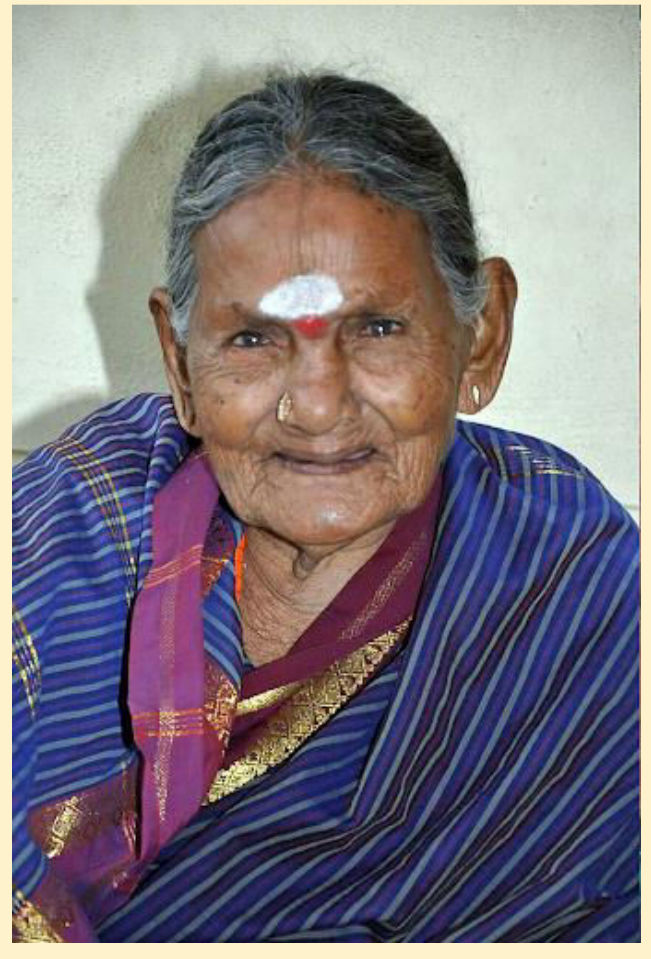
Sulagitti Narasamma
In 70 years, Sulagitti Narasamma (Janani Amma), an indigenous midwife. She performed more than 20,000 traditional deliveries free of charge over 70 years of service in deprived regions of Karnataka with no medical facilities344, which translates to at least five successful deliveries per week, free of charge. Born in Krishnapura (Tumkur), she manifested powers related to healing and body scanning. She was able to detect the pulse of the fetus while in the womb, without the use of any instruments. A devotee of Bhagwan Krishna, she was known to connect with Him in His form as Bhagwan Dhanvantri and manifest powers. She could very easily detect the position of the baby in the womb. She was awarded the fourth highest civilian award by the government of India – the Padma Sri (2018), the National Citizen's award (2013), and an Honorary doctorate (2014). This has however not redressed the situation and traditional indigenous midwives are still marginalized and stereotyped as “dangerous” by the mainstream westernized medical system of India.
In its eighteenth session, the United Nations Permanent Forum on Indigenous issues recognized the important role indigenous midwives play in maternal and child health and highlighted their hardships – “The Indigenous women have both higher morbidity and mortality rates as a result of lack of access to health care, discrimination and marginalization. The practices and knowledge of indigenous midwives are crucial to the health of indigenous peoples. Unfortunately, their criminalization persists, with a devastating impact not only on the midwives themselves but also on mothers, children, and communities.”345
Privatization and market expansion is squeezing such resourceful communities out of health services coverage and out of existence as well. Their livelihood constraints are tightened by environmental degradation, withdrawal of state welfare coverage, and loss of food security. Insufficient food, overwork, degraded environments, and increasing violence all diminish poor women’s health status even before they conceive. This is the sober context of dais’ services to women today. Most women in Tuticorin town now go to the hospital for childbirth. Sitting down to talk, expert Maruttuwachi (a respectful way of addressing traditional midwives) Irudayammal pointed to the empty basket she had just set down after selling a headload of fish.
(i) Govt. of India. "Padma Awards 2018". (ii) GovOfIndia. "Story of Dr. Sulagatti Narasamma, Janani Amma - Padma
Awardee 2018 in Social Work". Online Edition MyGov India. 2018, MyGov India. (iii) Prajwal Bhat. "Meet the Padma awardee from K'taka who helped deliver babies for 70 yrs, free of cost".
United Nations Permanent Forum on Indigenous Issues Report on the eighteenth session (22 April - 3 May 2019)
E/2019/43 E/C19/2019/10 https://www.un.org/development/desa/indigenouspeoples/wp- content/uploads/sites/19/2019/12/Update-on-UNDRIP.pdf
My livelihood is severely affected. I have to support my invalid husband and disabled son. I love attending to birthing mothers and newborn babies and people pay me well (usually Rs 500 per birth) as they don’t like to go to hospitals and [by] far prefer the care I give. But the government doctor and municipal authorities came some months back and threatened me not to do any more births in homes. Still, I attend about 10 births a month, 5 in homes and 5 in hospitals. About 20 years earlier she had attended her younger sister in childbirth, who could not get to the hospital in time. Their mother, having birthed 13 children at home, told her just what to do. Then she went to learn from some nurses in a hospital, working there for a few years until she had a community practice.
In fact, Tamil Nadu’s Marattuwachis, in common with dais elsewhere, are experiencing a reduction in income from their services and child-birthing is rarely their only or even main occupation. Due to declining economic conditions in their communities, they are paid less for this work, often in installments. Government dai-training has weakened their financial position, too, since they are now perceived as “government” employees and refused traditional payments (Stephens 1992). Source: https://www.epw.in/journal/2009/16/indigenous-systems-medicine-special-issues-specials/can-maternity-services-open
However, it is not just the cry of women in suburban, rural, or tribal settings, but women in urban settings also are forced to fight the Indian medical system for natural deliveries.346
Urgent need to humanize Childbirth in India Childbirth, in most parts of the world, is celebrated as a happy occasion. However, many women are also subjected to pain, abuse, insults, disrespect, and even death during the process of childbirth. Horiuchi et al (2016), McKay (1982), Leboyer (2011), and Tew (1990) have attempted to comprehend these dehumanizing practices. Abusive childbirth practices are reported from around the world. One such shocking incidence was reported from India in the month of May in 2015. Munmun and Sarina Bibi were physically and psychologically abused in the maternity ward of a public hospital in Kolkata. They were asked embarrassing questions such as: why they were ashamed to spread their legs in the hospital when they had no qualms about doing so with their husbands? They were forced to stop shouting. Unnecessary episiotomies (surgical incision between the vaginal and anal canals to supposedly widen the birth canal) were performed on them (Chattopadhyay 2015). In Brazil, a woman named Adelir was arrested at midnight and forced to undergo a caesarean delivery (also C-section) against her will. The reason cited for this was the apparent danger she would have put her child’s life in, had she not undergone a C-section. Adelir wanted a normal delivery for her third child, as she felt that the caesarean delivery during the birth of her first two children had been
(i) “I wanted to give birth naturally, but doctor after doctor insisted on a C-section”, 13 November 2017,
https://qz.com/india/1126059/amid-indias-craze-for-c-section-deliveries-a-womans-struggle-for-a-natural-birth/ (ii) 12 Sep 2016 'It was the birth I was waiting for': Why urban Indian women want to have babies at home, “Pregnant women across socio-economic categories experience a deeply-wounding lack of autonomy in the hospital system” https://scroll.in/pulse/815361/even-in-posh-places-it-is-cut-cut-cut-why-women-in-urban-india-want-to-have-babies-at- home
unnecessary. This sparked outrage and protests in Brazilian embassies all over the world (Turner and Hill 2014). Another woman, Barbara Saboya, was informed by her doctor that instead of a normal delivery as planned by her, he had decided to perform a C-section so as to be on time for a birthday party that he had to attend. Barbara immediately fled to Rio de Janeiro and had a normal delivery. She became another icon for the Brazil-led humanising childbirth movement (Nolen 2015) Childbirth brings with it not just physical pain, but also psychological fears, traumas, and postpartum depression. Dealing with these problems alone is difficult. A woman requires care, respect, and gentle guidance, especially during this time. When women are humiliated, physically abused, and denied basic comforts, care, and a healthy birthing environment, it is a matter of grave concern and disgrace for all of humanity. Healthcare is now considered as an industry where the technical component is given more emphasis than the care aspect. The industrial rationality of enhancing productivity is applied to the healthcare system. As a result, caesarean births are performed like a production line to increase efficiency (Hanlon and Picket 1984; Rattner 2009). Gradually, women begin to believe that labour is an infirmity where operations may be needed to fix a setback through a caesarean. Thus, the incidence of caesarean births, most of which are unnecessary, has skyrocketed within few years. Source: https://www.epw.in/engage/article/urgent-need-to-humanise-childbirth-in-india
KAILASA offers special care for pregnant women called En-pregnancy care which has benefited thousands of women worldwide. The service is offered completely free. It involves special meditation and yogic processes supporting pregnant women during both – the prenatal and postnatal stages.
Prenatal stress has detrimental effects on both obstetric outcomes, fetal development, and the development of an individual later in life.347 Studies have shown pregnancy deaths to have doubled in humanitarian crises.348 Humanitarian crises such as the COVID-19 pandemic increase the difficulty to access antenatal and general healthcare as well as cause stress to the mother. Pregnancy deaths in rural settings have doubled in May 2021, in urban settings, it is even more acute.349
Depression, anxiety rates increase among pregnant women, new mothers during the pandemic.350
Self-reported mental health among pregnant women, new mothers:
| Depression | Anxiety | |
|---|---|---|
| Before COVID-19 pandemic | 15% | 29% |
| During COVID-19 pandemic | 40% | 72% |
Pregnant women have quarantined themselves in Kailasa’s Preventive Quarantine centers to avail of this facility. Babies born in En-Pregnancy care are born with extraordinary health, immunity, good
https://www.ncbi.nlm.nih.gov/pmc/articles/PMC5706483
https://www.unfpa.org/resources/maternal-mortality-humanitarian-crises-and-fragile-settings
https://www.nytimes.com/2021/05/23/opinion/india-covid-pregnant-women.html
www.healio.com/news/primary-care/20200625/depression-anxiety-rates-increase-among-pregnant-women-new-
mothers-during-pandemic
weight. There have been zero incidences of preterm births in En-Pregnancy care. En-pregnancy births are known for blissful and painless birth experiences for women, which has been confirmed by the fact that (1) there have been zero incidences of epidural anesthesia in these natural deliveries, (2) shorter labor duration, (3) zero incidences of post-partum depression to date.
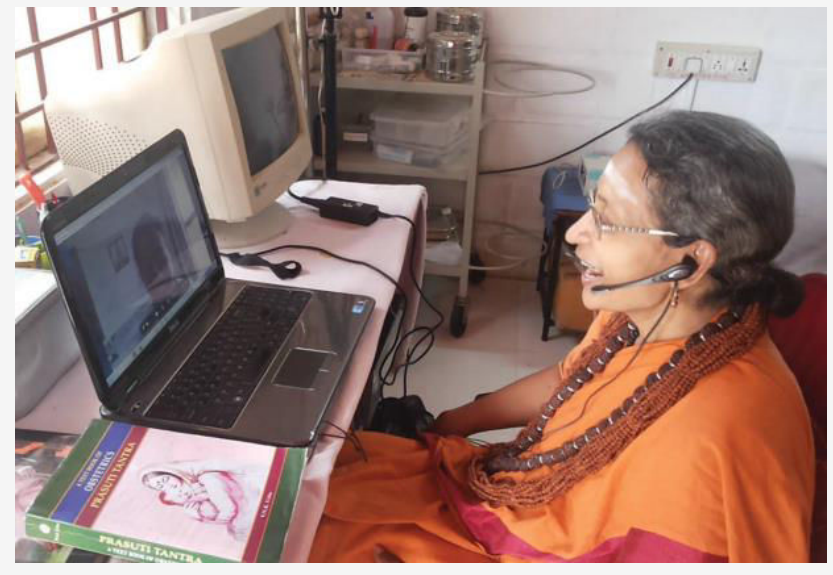
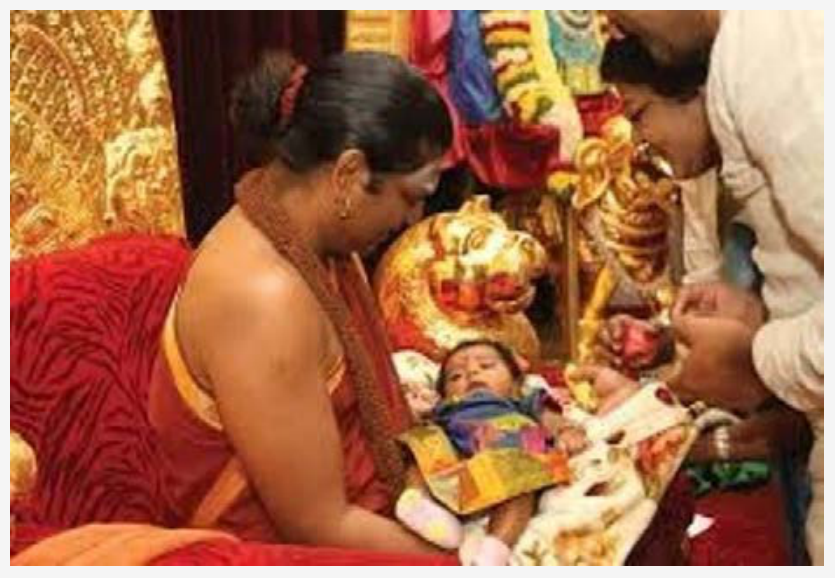
Senior female monk of the Sovereign Order of KAILASA giving free obstetrics counseling service under KAILASA’s Pregnancy care program called en-Pregnancy.
The Children born under the supervision of KAILASA’s in-Pregnancy program are found to be healthier, sharper, calmer, and be able to manifest powers of consciousness more easily.
The En-Pregnancy Care Program provides the knowledge and technique from the ancient science of giving birth to babies with high intelligence. The experiential cognitive shift in expectant parents and those parents wanting to have such babies comes directly from the initiation of The SPH Nithyananda Paramashivam during the program. Many couples who have had issues in conceiving for a long time have been also able to succeed in conceiving. KAILASA’s En-Pregnancy Care Program is based on a definite science which has been taken from the Garbhopanishad compiled by Rishi Pippallada from the Krishna Yajur Veda, the Sarvajnanottara Agama, and Tirumandiram of Tirumoolar. The Ayurveda contribution to conscious birthing has come from various texts. These are the Shastra and Apta Pramanas (scriptural and expert testimonial accounts). The Atma Pramanas (injunctions from one’s Guru based on scriptural and expert testimonial accounts of earlier Gurus) are the inputs by the SPH Nithyananda Paramashivam.351
The essence of the Conscious Pregnancy program is to create the perfect receptacle for the ultimate landing of the intelligent soul. It is a beautiful weave of the ancient Vedic practices and modern medicine endorsing the truth, that every Vedic practice is scientific to its very root, with evidence.
https://www.youtube.com/watch?time_continue=13&v=twx2nRb18QQ
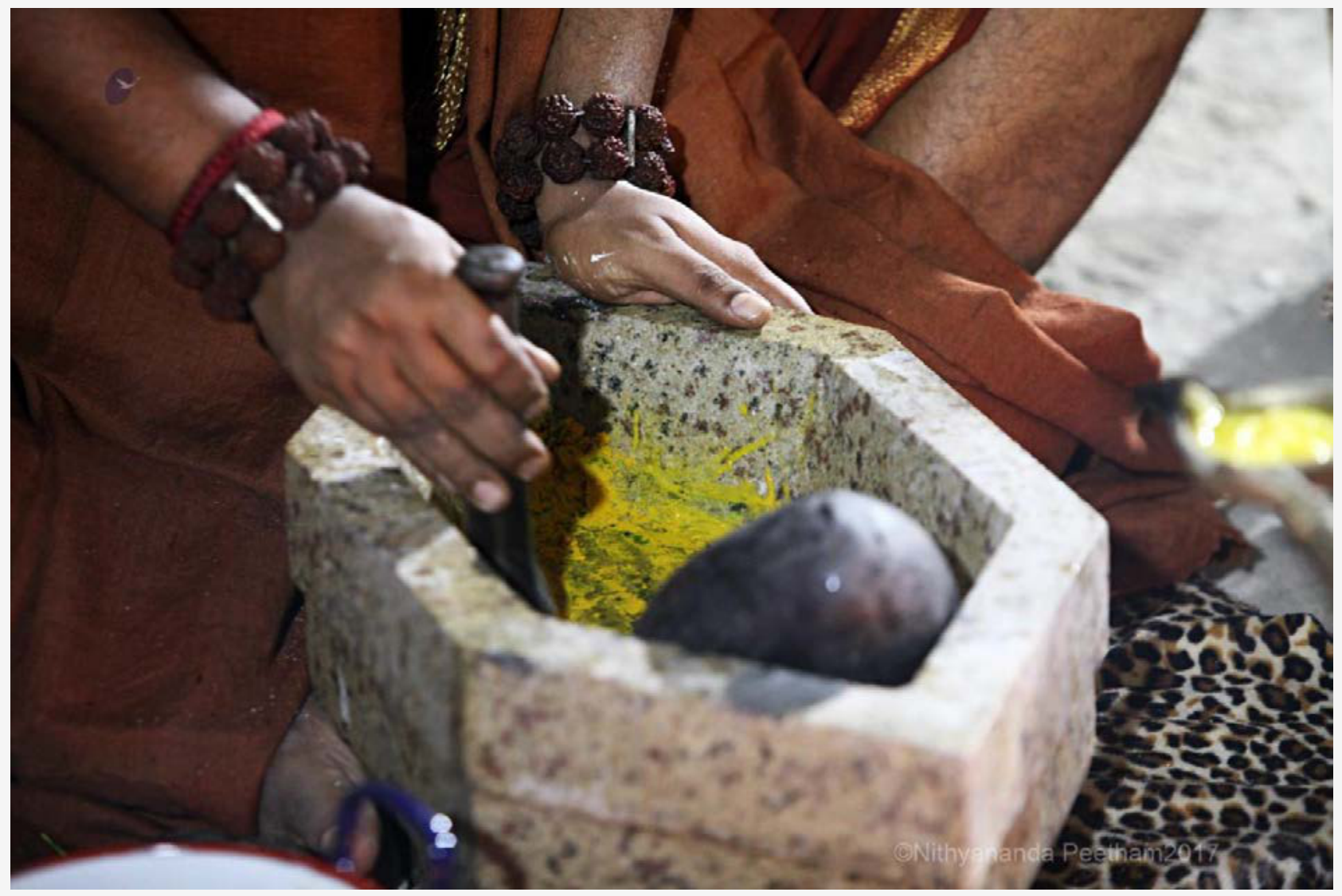
29 August 2017: The Supreme Pontiff of Hinduism, JagatGuru MahaSannidhanam, His Divine Holiness Bhagavan Sri Nithyananda Paramashivam personally making Aushadha - a spiritually energized medicinal product that integrates, and restores the physical, physiological, psychological, neurological, and conscious components of a person through the use of herbs. This is an ancient science being revived by the SPH Nithyananda Paramashivam. One such Aushada is the “Putrakameshti Aushadha” – an energized herbal medicine that aids in conception.352
Program highlights
- An insight and introduction to the 4 powers of WORDS, THINKING, FEELING AND LIVING through practicing the 4 Tattvas (root principles) - VEDIC TRUTHS of INTEGRITY, AUTHENTICITY, RESPONSIBILITY, and ENRICHING, the essence of Vedic education while pregnant.
- An understanding of COMPLETION and LISTENING is given to the couple with the technique for completion.
- Conflict-free lifestyle – enriching relationships through COMPLETION.
- Understanding happens that completion is love.
- Divine Feminine Consciousness – the complete expression of both the dimensions – as a beloved and mother. Completion is the secret behind this expression of Motherhood
https://www.youtube.com/watch?v=yl8KPh1loBg
- Science of conscious birthing and parenting – as understood from creating the perfect environment through the expression of the four powers with Dharma incorporated in them – DO NOT UNTO OTHERS WHAT WOULD CAUSE YOU PAIN IF DONE TO YOU.
- Revitalizing Yoga and Kriya – preparing for conscious and painless birthing Enriching and healing Meditative practices – nurturing the baby
Scientific Study on the Pain Score and Delivery Mode from Participants of this Program
Significance of Pain score
| Blessed | Not blessed | p-value | ||
|---|---|---|---|---|
| Pain score | 2.484±0.088 (N=95) | 6.224±0.1482 (N=85) | <0.0001 | |
| Labour duration (For normal delivery) | First stage (hrs) | 3.674±0.312 (N=52) | 9.719±0.336 (N=32) | <0.0001 |
| Second Stage (min) | 34.65±2.345 (N=52) | 78.59±4.415 (N=32) | <0.0001 | |
| Third Stage (min) | 10.87±0.2945 (N=52) | 14.97±0.7653 (N=32) | <0.0001 | |
| Maturity (weeks) | 39.18±0.226 (N=95) | 39.18±0.2324 (N=85) | NS | |
| Birth weight (Kg) | 3.023±0.049 (N=95) | 3.047±0.043 (n=85) | NS |
Student's unpaired t-test. NS-Not significant
Significance of Delivery mode
| Delivery mode | Blessed (N=95) | Not blessed (N=85) | p-value |
|---|---|---|---|
| Vaginal (normal) | 50 | 32 | <0.01 |
| LSCS (Primi) | 22 | 41 |
Chi-square test
Valuable Input from the Paediatrician Who Has Followed Up with These Babies From Birth
One feature that strikes babies born through en pregnancy care program is the "awareness" and the sharp focus that these babies demonstrate at birth.
Born with good birth weights, needing no resuscitation, keen feeders, non-colicky babies, extremely social, observant, understanding and self satiated babies are the few terms that describe them in short.
They enjoy good immunity and radiate their blissful space all around them!
Dr. Srilekha from Bangalore
In this, one of the biggest contributions of Hinduism and the SPH Nithyananda Paramashivam has been presented to the world, the true grand narrative of Hinduism, and showcased the effectiveness of Hindu health care policies, especially through the COVID care centers. Principles applied in managing blood banks for example are very different from principles applied in banks holding currencies. Lack of established best practices and principles in pandemic management has manifested in various extremes such as – the hoarding of vaccines353 in some places, the wastage of vaccines354 in others, and an unaddressed shortage of vaccines globally355. For two decades the leader of the SPH Nithyananda Paramashivam has been creating enlightenment ecosystems in form of sustainable townships across more than a hundred cities in several countries. Most of these townships such as the ASMT Monastery India, Bengaluru have been opened to offer multi-layered quarantine as a free public service with free food/accommodation, free internet to work from home (monastery). The ASMT community has seen a fair amount of success in these Preventive Quarantine centers with zero reported cases of COVID infection in the past two years and has already saved many lives.
For the past twenty-six years, the SPH Nithyannada Paramashivam through KAILASA, its citizens, and volunteers has worked tirelessly to offer the services of Sanatana Hindu Dharma (Hinduism) in its true authentic form, applying the principles of Hinduism for making the world a better place.
https://www.bbc.com/news/health-55229894
https://healthpolicy-watch.news/indias-vaccine-wastage-concerns/
https://www.business-standard.com/article/current-affairs/world-coronavirus-dispatch-no-easy-fix-for-global-vaccine-
shortage-121051600344_1.html
Anna Daan (Distribution of free organic meals) during festival such as Pournami (full moon day festival) - some instances
- (i) https://nithyanandapedia.org/wiki/April_17_2011 , (ii) https://nithyanandapedia.org/wiki/January_08_2012 , (iii) https://nithyanandapedia.org/wiki/November_10_2011 , (iv) https://nithyanandapedia.org/wiki/December_08_2011 , etc. every full moon day for past 27 years.
(A) Anna Daan during festivals (B) Anna Daan during Kumbh Melas serving 10 million free meals -
https://nithyanandapedia.org/wiki/April_28_2016 , https://nithyanandapedia.org/wiki/May_17_2016 https://nithyanandapedia.org/wiki/September_10_2015 etc (C) Anna Daan during natural calamities and disasters https://nithyanandapedia.org/wiki/January_02_2012 , https://nithyanandapedia.org/wiki/January_03_2012 , https://nithyanandapedia.org/wiki/January_04_2012 , https://nithyanandapedia.org/wiki/January_05_2012 , https://nithyanandapedia.org/wiki/January_06_2012 , https://nithyanandapedia.org/wiki/January_07_2012 (D) Anna Daan during COVID-19 crisis aggravated by the lock down https://fb.com/1499333043578701 , https://fb.com/1504153646429974 , https://fb.com/1504152806430058 etc.
The SPH Nithyananda Paramashivam has emphasized the need and urged the government worldwide to provide food, safety, medical care, shelter, and all survival needs to all human beings under their care, with absolute multilayer quarantine, until coronavirus is eliminated from planet earth including all different strains of the virus. The SPH Nithyananda Paramashivam has urged citizens worldwide, especially from regions severely affected by the pandemic to protect themselves as the topmost priority and avail these free quarantine facilities that the community has created, especially as home quarantine has failed for many and is known to be a primary reason for a large number of deaths in many scenarios.361 In May 2021, KAILASA opened its temple-monastic-community premises (Aadheenams) in India for providing multi-layer preventive quarantine as a free service for protecting people from the ongoing COVID-19 pandemic. Irrespective of race, religion, caste, nationality, gender, etc., the service is offered completely free of charge to all. For two decades the leader of the ASMT Hindu community, the Supreme Pontiff of Hinduism (SPH) Jagat Guru Mahasannidhanam (JGM) His Divine Holiness (HDH) Bhagavan Nithyananda Paramashivam had been creating sustainable townships (enlightenment ecosystems) across more than a hundred cities in several countries. Most of these townships such as the ASMT Monastery India, Bengaluru have been opened to offer multi-layered quarantine as a free public service with free food/accommodation, free internet to work from home (monastery). The ASMT community has seen a fair amount of success in these Preventive Quarantine centers with zero reported cases of COVID infection in the past two years and has already saved many lives.
The psychological health impact of COVID has become an extremely concerning problem that is particularly affecting the younger population more. There has been an increase in self-harm, self-sabotage, and suicidal behavior in the student community.362 Kailasa has provided free online meditation and Yoga classes to reach out to people in distress who cannot avail of the benefits of Kailasa’s COVID care facilities directly. These include powerful Hindu principles from the Veda-Agamas such as Science of Completion (Purnatva), and the Collective Integrity process. Science of Completion
(i) Tsunami Relief https://nithyanandapedia.org/wiki/January_05_2005 , (ii) Andhra Flood Relief
https://nithyanandapedia.org/wiki/October_11_2009 , (iii) Karnataka Flood Relief https://sriparashiva.github.io/kailasaarchivedwebsites/services-dhyanapeetam/pages/flood-relief2009-KA.shtml and Directly contributing to the Chief Minister's relief fund https://nithyanandapedia.org/wiki/October_12_2009 , (iv) Phase two flood relief effort (Mahabubnagar & Kurnool) in Andhra Pradesh https://sriparashiva.github.io/kailasaarchivedwebsites/services-dhyanapeetam/pages/flood-relief2009-AP2.shtml , (v) Thane cyclone relief https://nithyanandapedia.org/wiki/January_05_2012 etc.
Thane cyclone flood relief, Anna Daan, medical camps etc. https://nithyanandapedia.org/wiki/January_02_2012 ,
https://nithyanandapedia.org/wiki/January_03_2012 , https://nithyanandapedia.org/wiki/January_04_2012 , https://nithyanandapedia.org/wiki/January_05_2012 , https://nithyanandapedia.org/wiki/January_06_2012 , https://nithyanandapedia.org/wiki/January_07_2012
(i) 365 day blood donation camps - https://nithyanandapedia.org/wiki/August_15_2009 (ii)
https://nithyanandapedia.org/wiki/December_11_2011 etc.
https://economictimes.indiatimes.com/news/india/home-quarantine-is-prime-reason-for-large-number-of-deaths-in-
assam-himanta-biswa-sarma/articleshow/82739223.cms
https://www.indiatoday.in/education-today/news/story/don-t-forcefully-vacate-students-from-hostels-amid-pandemic-
karnataka-deputy-cm-1794792-2021-04-25
(Purnatva) empowers people to redress their inner and external conflicts, by identifying the root of thought currents that make them experience powerlessness, meaninglessness, hopelessness and replacing these with powerful cognitions and truths that remind them of their innate peaceful and blissful nature, giving them the strength to face life holistically as it comes. Likewise, the Collective Integrity process helps people stay together with Completion (Purnatva) and non-conflict as a collective group supporting each other. This is extremely crucial for the world today, especially given the fact that globalization of disease has made the world to be only as resilient as the least resilient country and person363, particularly concerning for the highly contagious COVID-19 which has spread with scale and severity not seen since Spanish flu364. These and many other processes and teaching from Hinduism, provide a psychological support system and empowering people for life. More than a million people worldwide have been benefited from these programs. Research on meditation has indicated that every minute of meditation brings a reduction in the crime rate.365
The ASMT community runs indigenous schools called Nithyananda Gurukul which offer traditional, religious, and modern education (Edexcel IGCSE) completely free of cost and is recognized366 for academic excellence and consistently having a significant number of children completing matriculation at an age lesser than the national average. Nithyananda Hindu University has a memorandum of understanding signed with the Republic of Mauritius for opening its branches in Mauritius.367
Since the creation of the Millennium Development Goals, there have been historic achievements in reducing child mortality,
The country registered a 4.5 percent annual rate of reduction in under-five mortality between 1990-
2019. The number of under-five deaths in India dropped from 3.4 million in 1990 to 824,000 in 2019. The infant mortality rate (deaths per 1,000 live births) in India declined from 89 in 1990 to 28 last year, with the country registering 679000 infant deaths last year, a significant decline from 2.4 million infant deaths in 1990. The country also witnessed a decrease in neonatal mortality rate between 1990 and 2019 from 57 to 22 - 1.5 million neonatal deaths in 1990 to 522,000 deaths in 2019.
Improving maternal health and tackling HIV/AIDS, tuberculosis, malaria, and other diseases. In 15 years, the number of people newly infected by HIV each year has dropped from 3.1 million to 2 million, and over 6.2 million lives were saved from malaria. Since 1990, maternal mortality fell by 45 percent, and worldwide there has been an over 50 percent decline in preventable child deaths globally.
Marc Fleurbaey (2020), We are all in this together? More than you think, 6 April
(i) "Pandemic Influenza Risk Management WHO Interim Guidance" (PDF). World Health Organization. 2013. p. 19.
Archived (PDF) (ii) Spreeuwenberg P, Kroneman M, Paget J (December 2018). "Reassessing the Global Mortality Burden of the 1918 Influenza Pandemic". American Journal of Epidemiology. Oxford University Press. 187 (12): 2561 - 2567. doi:10.1093/aje/kwy191. PMC 7314216. PMID 30202996. (iii) Rosenwald MS (7 April 2020). "History's deadliest pandemics, from ancient Rome to modern America". The Washington Post.
https://www.jstor.org/stable/27522387
9 August 2018, Nithyananda gurukul honored with World Education Summit, Leadership Award
(i) http://state.gov.kailasa.sk/?p=620 (ii) https://www.indiatoday.in/india/story/where-is-nithyananda-not-on-our-land-
says-ecuador-mauritius-new-speculated-refuge-1625894-2019-12-06
Despite this incredible progress, AIDS is the leading cause of death among adolescents in sub-Saharan Africa, and 22 million people living with HIV are not accessing life-saving antiretroviral therapy. New HIV infections continue to rise in some locations and in populations that are typically excluded or marginalized.
The chronic and catastrophic disease remains one of the main factors that push households from poverty into deprivation. Non-communicable diseases (NCDs) impose a large burden on human health worldwide. Currently, 63% of all deaths worldwide stem from NCDs – chiefly cardiovascular diseases, cancers, chronic respiratory diseases, and diabetes. The cumulative economic losses to low- and middle-income countries from the four diseases are estimated to surpass US$ 7 trillion by 2025. Additionally, there continues to be underinvestment in the social circumstances and environmental factors affecting health. The job on HIV and health is far from done.
Promoting health and well-being is one of 17 Global Goals that make up the 2030 Agenda for Sustainable Development. An integrated approach is crucial for progress across the multiple goals.
With developments in modern medicine such as the discovery of antibiotics and developments in vaccination, the global average life expectancy of humans increased.368 Antibiotic resistance has been an important discussion point in sustainable development goals.369 The ancient indigenous education of India had a profound positive impact on sustainable solutions to health, such as the development of natural freely available organic antibiotic remedies370, free and affordable371 healthcare, vaccination372 procedures, surgical373 procedures, etc.
Affordable and accessible universal healthcare especially for marginalized communities – A report from 1835-38 by William Adams, for Thana of Natore (Rajashahy, Bangladesh), recorded the population at 120,928 with 485 villages, 123 "native general medical practitioners", 205 “village doctors”, 21 “smallpox inoculators” (vaccinators), 297 women-midwives. Comparing the number of auxiliary nurse midwives (a state healthcare worker) recommended in modern India, by a State commission was to be at least one for a population of 10000-12000 people374 which is merely 4% of what was found to be during 1830 that too without any government support. Though these traditional midwives have been deprived of formal traditional education as they had 200 years ago, Sulagitti Narasamma375 a traditional midwife has performed more than 15000 traditional successful child deliveries in tribal and impoverished regions of India completely free of charge for seventy years until
Adedeji WA. THE TREASURE CALLED ANTIBIOTICS. Ann Ib Postgrad Med. 2016;14(2):56-57.
https://sustainabledevelopment.un.org/content/documents/634484-Cars-Antibiotic%20resistance%20(ABR)%20-%20No%20sustainability%20without%20antibiotics%20-%20ReAct.pdf
https://www.nature.com/articles/37838
Gopinath BG. Foundational ideas of Ayurveda. Medicine and Life Sciences in India. In: Subbarayappa BV, Chattopadhyay
DP, editors. New Delhi: Centre for Studies in Civilizations; 2001. pp. 59–107. History of Science, Philosophy and Culture in Indian Civilization; Part 2. Vol. IV.
J. Van Alphen; A. Aris (1995). "Medicine in India". Oriental Medicine: An Illustrated Guide to the Asian Arts of Healing.
London: Serindia Publications. pp. 19-38 ISBN 978-0-906026-36-6.
Kansupada, KB; Sassani, JW (1997). "Sushruta: the father of Indian surgery and ophthalmology". Doc Ophthalmol. 93 (1-
2): 159-67. doi:10.1007/bf02569056. PMID 9476614. S2CID 9045799.
S.L. Goel (1 January 2008). Rural Health Education. Deep & Deep Publications. pp 9 - ISBN 978-81-8450-115-5.
"Padma Shri awardee Sulagitti Narasamma passes away at 98". The Economic Times. 25 December 2018
she died in 2018 for which she has been recognized³⁷⁶ with the fourth-highest civilian award in the Republic of India. India has the maximum number of infant deaths in the world³⁷⁷, with a significant number of cases being from minority communities such as Adivasis and Dalits³⁷⁸, and thus could greatly benefit from the revival of the traditional medical system and education. Similarly in other dimensions of health care, such as orthopedics, the total number of orthopedic operations done by a few of the top hospitals in the US³⁷⁹ put together is around 17000 annually, whereas a small village named Rachapalem in India performs more than 60000 non-invasive orthopedic treatments as per ancient indigenous tradition all free of charge³⁸⁰. The Central Government of India, Ministry of AYUSH³⁸¹ was formed in the year 2014, to support such traditional healthcare systems, and is a step in the right direction for achieving sustainable development goals 2030. To undo the damage of colonialization and destruction of the traditional education system, various non-profit public-private joint ventures in skill development such as Kaushal College have set up several nursing colleges to increase the rural healthcare workers and especially empower impoverished rural women with jobs³⁸².
(d) SDG-3 and 11 (Good health and wellbeing, sustainable cities and communities)
The Census data of India, indicate that home quarantine for protection from COVID-19 pandemic as per the guidelines³⁸³ of the Central Ministry of Health is nearly impossible to implement for the majority of households in India³⁸⁴. The ASMT community led by the Supreme Pontiff of Hinduism (SPH) JagatGuru Mahasannidhanam (JGM) His Divine Holiness (HDH) Bhagavan Sri Nithyananda Paramashivam, has worked for over two decades for the creation of sustainable communities modeled around ancient Hindu lifestyle in the form of KAILASA – the civilizational Hindu nation. For the past 27 years, the SPH has worked tirelessly and offered the social services of Hinduism³⁸⁵, for example, the citizens and volunteers of Kailasa led by the SPH serve more than 3 million³⁸⁶ free organic
³⁷⁶ "Story of Dr. Sulagatti Narasamma, Janani Amma - Padma Awardee 2018 in Social Work". MyGov India. 2018 ³⁷⁷ (i) https://www.downtoearth.org.in/news/india-has-maximum-infant-deaths-in-the-world-44487 (ii) The Lancet - Child mortality: the challenge for India and the world, 19 Sep 2017 DOI:https://doi.org/10.1016/S0140-6736(17)32469-8 ³⁷⁸ Health: Inequities in Health in India and Dalit and Adivasi Populations (January 2018) DOI:10.1007/978-981-10-5089-3_5 (pp.97-120), Authors: Sudharshini Subramaniam Madras Medical College ³⁷⁹ https://gcr.org/top/orthopedics ³⁸⁰ thehindu.com/news/national/andhra-pradesh/despite-advances-in-medicine-puttur-kattu-has-global-takers/article25669726.ece ³⁸¹ Ministry of Ayurveda, Yoga, Naturopathy, Unani, Siddha, Sowa-Rigpa and Homoeopathy ³⁸² https://hr.economictimes.indiatimes.com/news/workplace-4-0/learning-and-development/parfi-foundation-trains-18000-underprivileged-youths/80132044 ³⁸³ https://www.mohfw.gov.in/pdf/Guidelinesforhomequarantine.pdf ³⁸⁴ (i) https://www.thehindubusinessline.com/news/covid-19-on-why-home-quarantine-is-impossible-for-the-majority-of-indians/article32275067.ece (ii) https://timesofindia.indiatimes.com/india/why-home-quarantine-is-difficult-in-india/articleshow/74704620.cms ³⁸⁵ https://nithyanandapedia.org/wiki/Main_Page ³⁸⁶ Anna Daan (Distribution of free organic meals) during festival such as Pournami (full moon day festival) - some instances
- (i) https://nithyanandapedia.org/wiki/April_17_2011 , (ii) https://nithyanandapedia.org/wiki/January_08_2012 , (iii) https://nithyanandapedia.org/wiki/November_10_2011 , (iv) https://nithyanandapedia.org/wiki/December_08_2011 , etc. every full moon day for past 27 years. meals per month in religious gatherings every month and have served over a billion387 free meals in total. The citizens and volunteers of KAILASA have saved millions388 of human lives through various disaster relief works such as the 2012 Thane cyclone389 and blood donation camps390. In May 2021, KAILASA opened its temple-monastic-community premises (Aadheenams) in India for providing multi-layer preventive quarantine as a free service for protecting people from the ongoing COVID-19 pandemic. Irrespective of race, religion, caste, nationality, gender, etc., the service is offered completely free of charge to all. Under this service, the ASMT temple community offers free stay, free organic food, free medicines, free medical care, free internet, etc.
The sustainable development goal for child mortality is to reduce the rate to less than 2.5% in all countries of the world. Achieving this goal would mean that the number of child deaths would be more than half in the SDG era, from 6.3 million in 2015 to 2.66 million in 2030.391
The COVID-19, which originated in December 2019, spread fast with more than 500,000 confirmed cases and 23,000 deaths to date, affecting around 170 countries and territories around the world in just 3 months.
There is an immense inequality in the capacities of governments, organizations, and people on two grounds – (1) health response, (2) economic recovery. Surviving the highly contagious COVID-19 where the world is only as resilient as the least resilient country and person requires governments, organizations, and people to collectively address the crisis. From 3200 BCE392, 56393 nations in Asia had
(A) Anna Daan during festivals (B) Anna Daan during Kumbh Melas serving 10 million free meals -
https://nithyanandapedia.org/wiki/April_28_2016 , https://nithyanandapedia.org/wiki/May_17_2016 https://nithyanandapedia.org/wiki/September_10_2015 etc (C) Anna Daan during natural calamities and disasters (refer next footnote) (D) Anna Daan during COVID-19 crisis aggravated by the lock down https://fb.com/1499333043578701 , https://fb.com/1504153646429974 https://fb.com/1504152806430058 etc.
(i) Tsunami Relief https://nithyanandapedia.org/wiki/January_05_2005 , (ii) Andhra Flood Relief
https://nithyanandapedia.org/wiki/October_11_2009 , (iii) Karnataka Flood Relief https://sriparashiva.github.io/kailasaarchivedwebsites/services-dhyanapeetam/pages/flood-relief2009-KA.shtml and Directly contributing to the Chief Minister's relief fund https://nithyanandapedia.org/wiki/October_12_2009 , (iv) Phase two flood relief effort (Mahabubnagar & Kurnool) in Andhra Pradesh https://sriparashiva.github.io/kailasaarchivedwebsites/services-dhyanapeetam/pages/flood-relief2009-AP2.shtml , (v) Thane cyclone relief https://nithyanandapedia.org/wiki/January_05_2012 etc.
Thane cyclone flood relief, Anna Daan, medical camps etc. https://nithyanandapedia.org/wiki/January_02_2012 ,
https://nithyanandapedia.org/wiki/January_03_2012 , https://nithyanandapedia.org/wiki/January_04_2012 , https://nithyanandapedia.org/wiki/January_05_2012 , https://nithyanandapedia.org/wiki/January_06_2012 , https://nithyanandapedia.org/wiki/January_07_2012
(i) 365 day blood donation camps - https://nithyanandapedia.org/wiki/August_15_2009 (ii)
https://nithyanandapedia.org/wiki/December_11_2011 etc.
https://ourworldindata.org/child-mortality
(i) Ved Veer Arya, “THE CHRONOLOGY OF INDIA: From Manu to Mahabharata”, Aryabhata Publications, ISBN
8194321301 (ii) Nilesh Oak estimates the period as 5561BCE, “When Did The Mahabharata War Happen?: The Mystery of Arundhati”, ISBN 0983034400
(i) Saktisangama Tantra, Chapter- Sundari Khandha, Saptam Patala, Verses 16-73, refer Saktisangama Tantra Vol III
https://archive.org/details/SaktisangamaTantraVolIIIIGaekwadOrientalSeries/page/n83/mode/2up (ii) List of 56 nations https://docs.google.com/document/d/1H7OJADdrFjrdl8nR5KMuc7sJKG6zXOob0K6X5wbmBno/view
multilateral treaties based on the Hindu principle – ‘वसुधैव कुटुम्बकम्’ (Vasudeva Kutumbakam) – “Entire world is my family”.
अयं बन्धुरयंनेति गणना लघुचेतसाम्। उदारचरितानां तु वसुधैव कुटुम्बकम्॥
Maha Upanishad Ch. 6, verse 71- 73.394
(c) Provide sustainable community livings with multi-layered quarantine
Home or Self-quarantine is not a viable solution for a vast majority of people for either health safety or economic reasons. In Assam, home quarantine has been reported to be a primary reason for a large number of deaths.395 In some places, governments have moved people out of home quarantine to covid-care-centers396. Other issues linked with quarantine, especially in small houses are mental health problems397 – such as an increase in suicidal ideation, especially amongst the younger population398. This requires friendly quarantine setups which are self-sustained and sufficient in terms of food stock and supplies, recreation, employment, education, etc. In India, State Governments have attempted to provide free and paid399 solutions which face various challenges related to hygiene, exorbitant pricing.400 Some facilities401 have seen challenges related to requests for private accommodation.402 Experimental townships such as Auroville403 have demonstrated a fair amount of success in creating a friendly, safe, and compliant quarantine facility. However, solutions such as Auroville are not open to the public. For two decades the leader of the ASMT Hindu community, the Supreme Pontiff of Hinduism (SPH) Jagat Guru Mahasannidhanam (JGM) His Divine Holiness (HDH) Bhagavan Nithyananda Paramashivam had been creating townships like Auroville across more than a hundred cities in several countries. Most of these townships such as the ASMT Monastery India, Bengaluru have been opened to offer multi-layered quarantine as a free public service with free food/accommodation, free internet to work from home (monastery). The ASMT community has seen a fair amount of success in these townships with zero reported cases of COVID infection in the past two years and has already saved many lives.
Translation of the Maha Upanishad Chapter 6 verses 71-73, “Only the denigrated small-minded with a very pathetic
outlook of life discriminate between kin and a stranger; while for the magnanimous, the entire world is a family.”
https://economictimes.indiatimes.com/news/india/home-quarantine-is-prime-reason-for-large-number-of-deaths-in-
assam-himanta-biswa-sarma/articleshow/82739223.cms
https://timesofindia.indiatimes.com/city/mumbai/mumbai-20l-in-home-quarantine-in-state-govt-to-shift-them-to-
covid-centres-in-phases/articleshow/83129114.cms
www.kff.org/coronavirus-covid-19/issue-brief/the-implications-of-covid-19-for-mental-health-and-substance-use/
(i) https://www.webmd.com/lung/news/20210210/child-suicides-rising-during-lockdown (ii)
https://www.washingtonpost.com/health/2020/11/23/covid-pandemic-rise-suicides/
https://timesofindia.indiatimes.com/city/bengaluru/compulsory-paid-quarantine-irks-people-returning-to-karnataka-
from-other-states/articleshow/75707798.cms
https://www.indiatoday.in/india/story/karnataka-quarantined-man-claims-gross-mismanagement-by-authorities-
1679768-2020-05-19
https://indianexpress.com/article/india/coronavirus-outbreak-manesar-quarantine-facility-diamond-princess-japanese-
cruise-ship-6312521/
https://www.newindianexpress.com/nation/2020/mar/13/coronavirus-demand-for-separate-rooms-hindering-
functioning-of-armys-quarantine-facility-2116207.html
https://www.thehindu.com/news/national/tamil-nadu/the-auroville-way-of-tackling-the-
pandemic/article34748146.ece
The SPH Nithyananda Paramashivam has urged citizens worldwide, especially from regions severely affected by the pandemic to protect themselves as the topmost priority and avail these free quarantine facilities that the community has created, especially as home quarantine has failed for many and is known to be a primary reason for a large number of deaths in many scenarios.404 The SPH Nithyananda Paramashivam has emphasized the need and urged the government worldwide to provide food, safety, medical care, shelter, and all survival needs to all human beings under their care, with absolute multilayer quarantine, until coronavirus is eliminated from planet earth including all different strains of the virus.
(d) Educate citizens on individual pandemic management
Unlike previous pandemics, the current era provides active, real-time, and visual information about fatalities. Underreporting of this data may give false hope and make people reckless. Exaggerations in reporting can also make people reckless as they may feel eventual death due to a coronavirus is inevitable. Proper education is extremely crucial, as it will dramatically reduce the number of deaths and reduce the challenge on the health-care-systems. Alcohol-related deaths have hit a record high during this pandemic405, and long post-lockdown liquor lines406 are some extremely worrisome issues regarding which people need to be educated. As a top priority, people need to be given confidence in their life and security about their future for them to stop behaving recklessly or fall into depression and commit suicide407.
Being the only Hindu nation, it is KAILASA’s Dharmic (cosmically ordained) responsibility to offer its humble services – the time-tested, age-old authentic solutions from the Vedagamas, the ancient Hindu scriptures, to the entire humanity.
For the last 26 years, the Federal Government of KAILASA through the department of health addressed the holistic health needs of all its citizens through Yogic, Ayurvedic, Naturopathy, and Siddha Solutions, and Medical care. KAILASA shall continue working towards this goal, more so especially during the present time of the COVID-19 pandemic, when the world is desperately looking for solutions.
https://economictimes.indiatimes.com/news/india/home-quarantine-is-prime-reason-for-large-number-of-deaths-in-
assam-himanta-biswa-sarma/articleshow/82739223.cms
https://www.bbc.com/news/health-55900624
https://www.bbc.com/news/world-asia-india-52640266
https://timesofindia.indiatimes.com/city/bengaluru/suicides-touched-11-year-high-in-2020-experts-blame-
covid/articleshow/80605949.cms
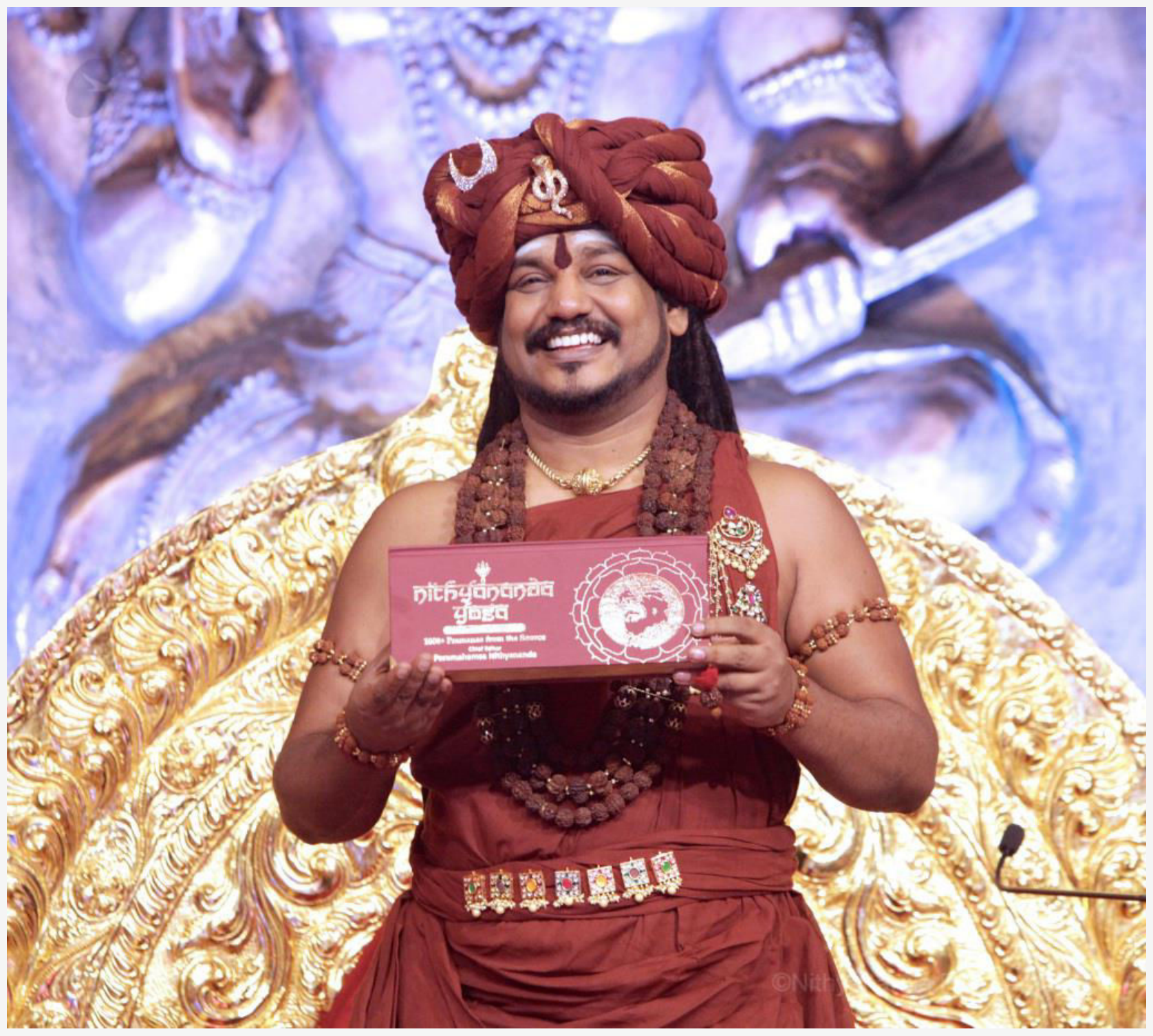
21 June 2017: The Supreme Pontiff of Hinduism, JagatGuru MahaSannidhanam, His Divine Holiness Bhagavan Sri Nithyananda Paramashivam released the world’s most exhaustive compilation of original Yoga techniques with scriptural references as given by Paramashiva more than ten-thousand years ago in source scriptures. Unlike modern adulterated practices done in the name of Yoga (such as beer-Yoga), which are dangerous, this compilation provides original techniques which are safe, effective, and give not only health benefits but lead to enlightenment, the actual purpose of Yoga.
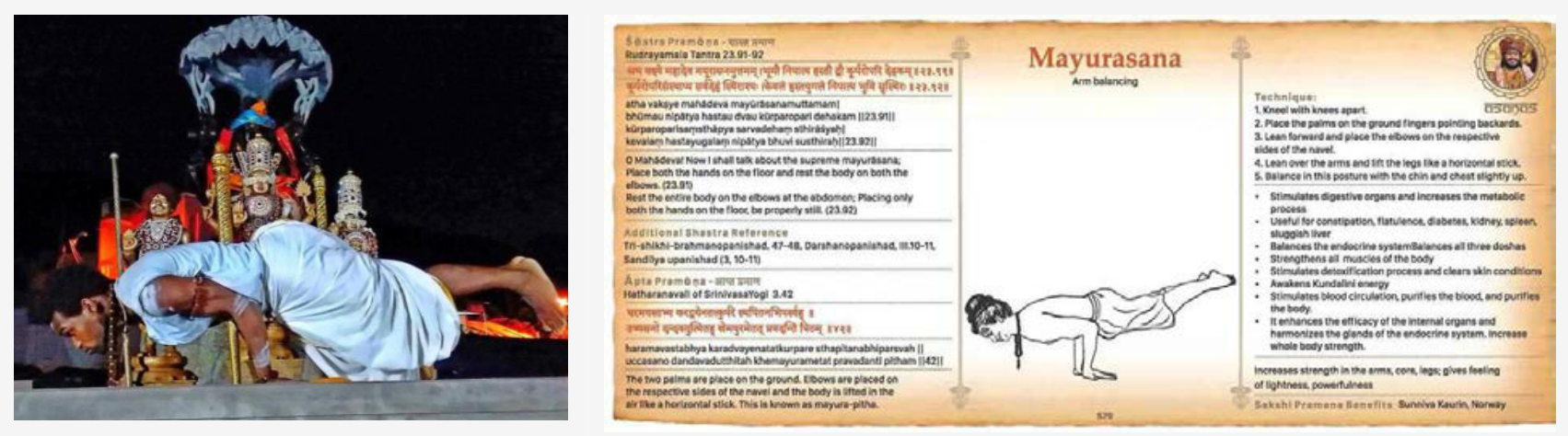
Peacekeepers of the Sovereign Order of KAILASA practice, demonstrate and teach Nithya Yoga exactly as revealed in the scriptures.
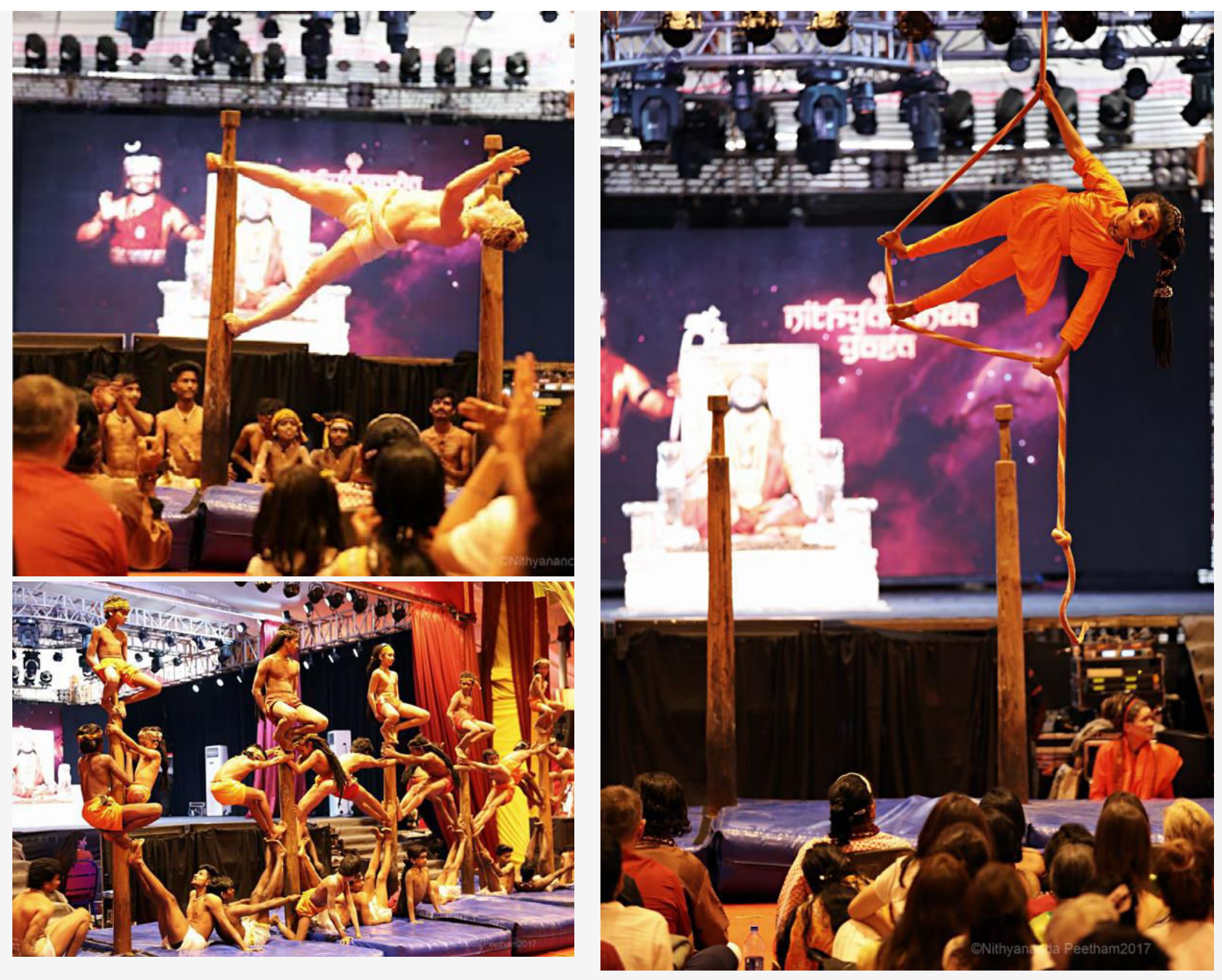
December 2017, Shivastamba Yoga performance; during the Mahasadashivoham (an International Hindu Conference)
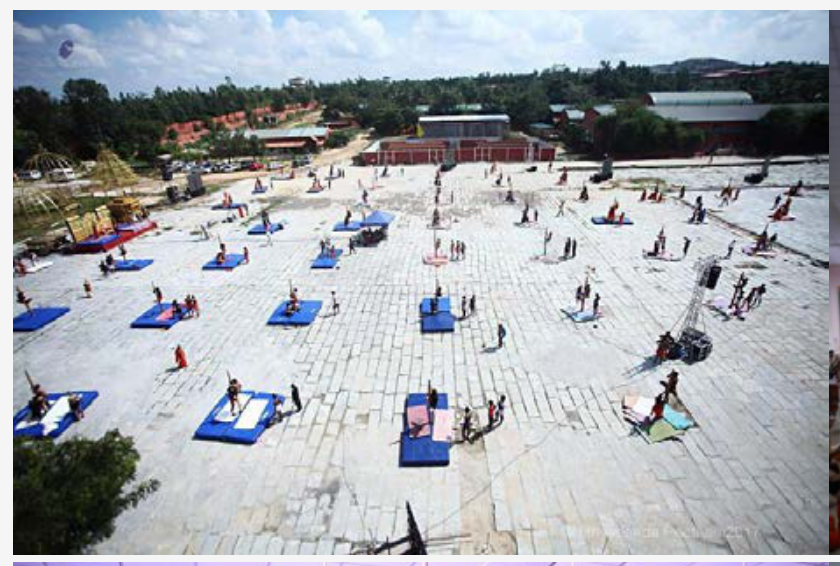
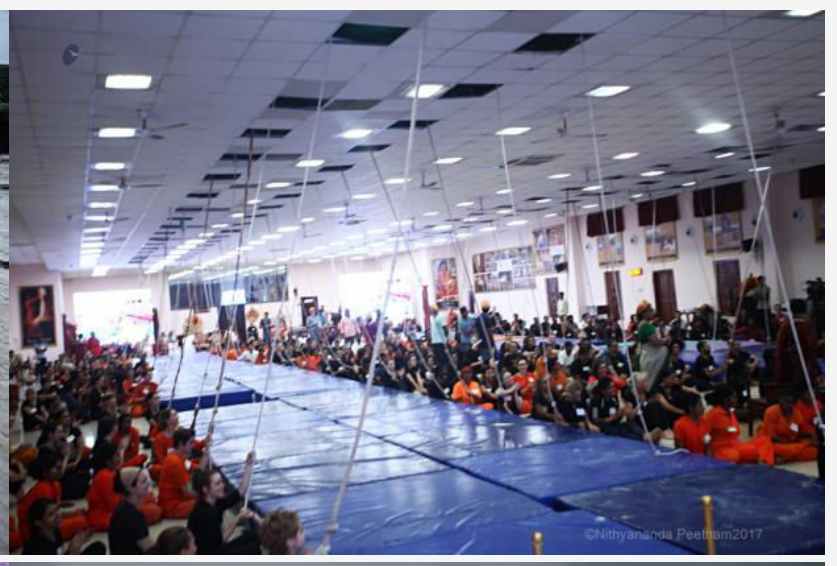
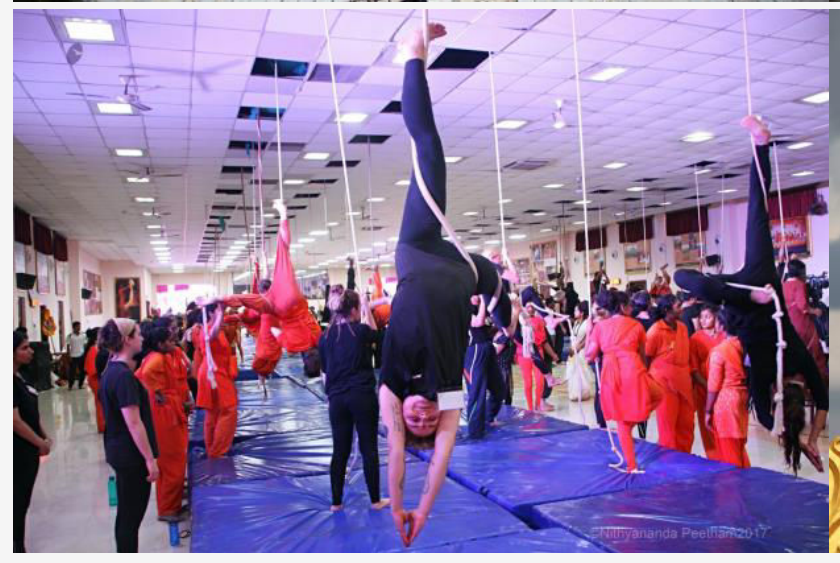
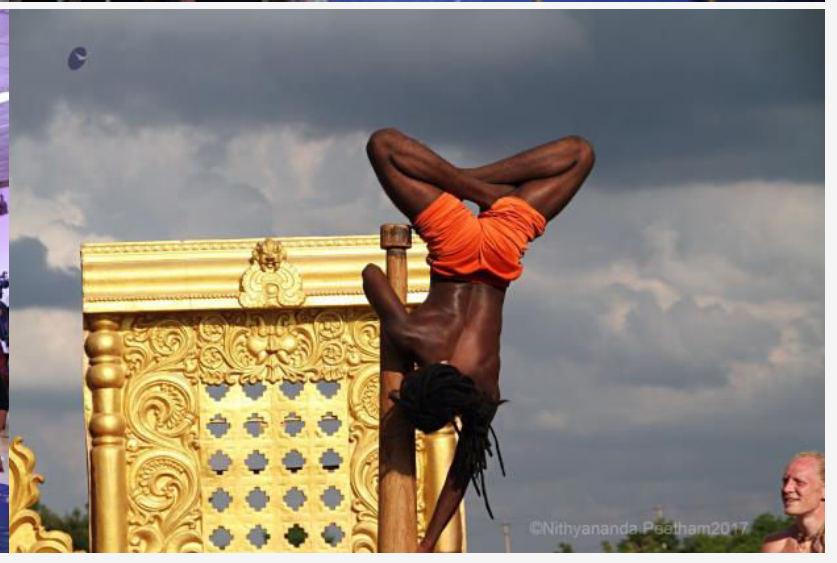
The SPH Nithyananda Paramashivam and KAILASA’s Nithyananda University received the Guinness World Record on 30 Sept 2017 for largest Rope Yoga lesson, and another Guinness World Record on 3 Oct 2017 for largest Mallakhamba lesson.
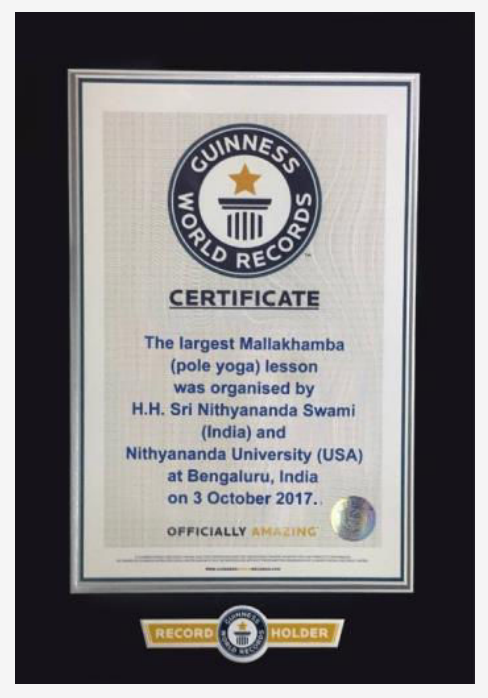
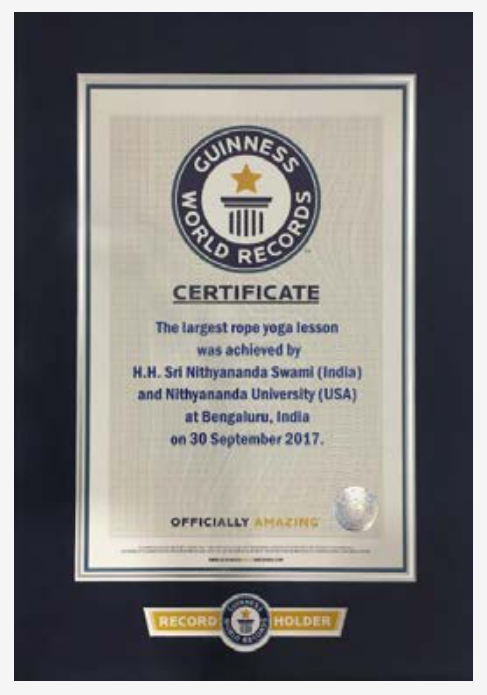
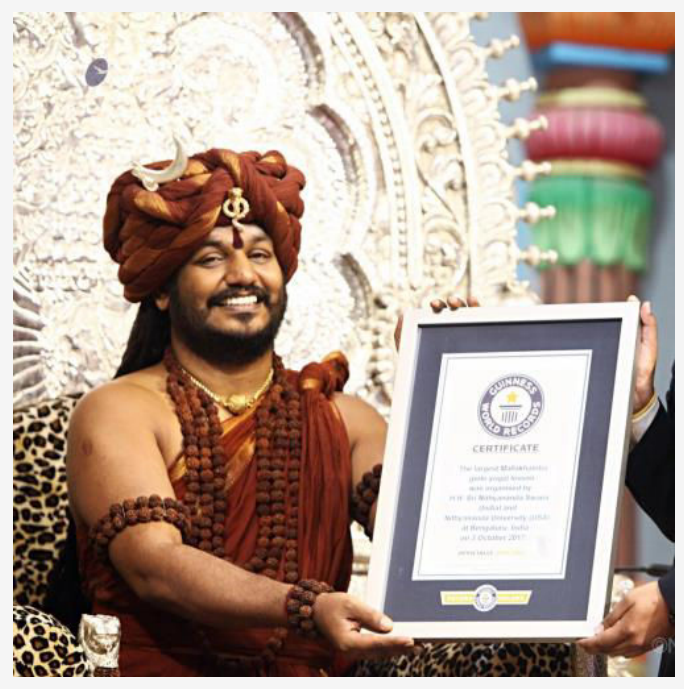
His Divine Holiness Sri Nithyananda Paramashivam and KAILASA’s Nithyananda University received the Guinness World Record on 30 Sept 2017 for largest Rope Yoga lesson, and another Guinness World Record on 3 Oct 2017 for largest Mallakhamba lesson.
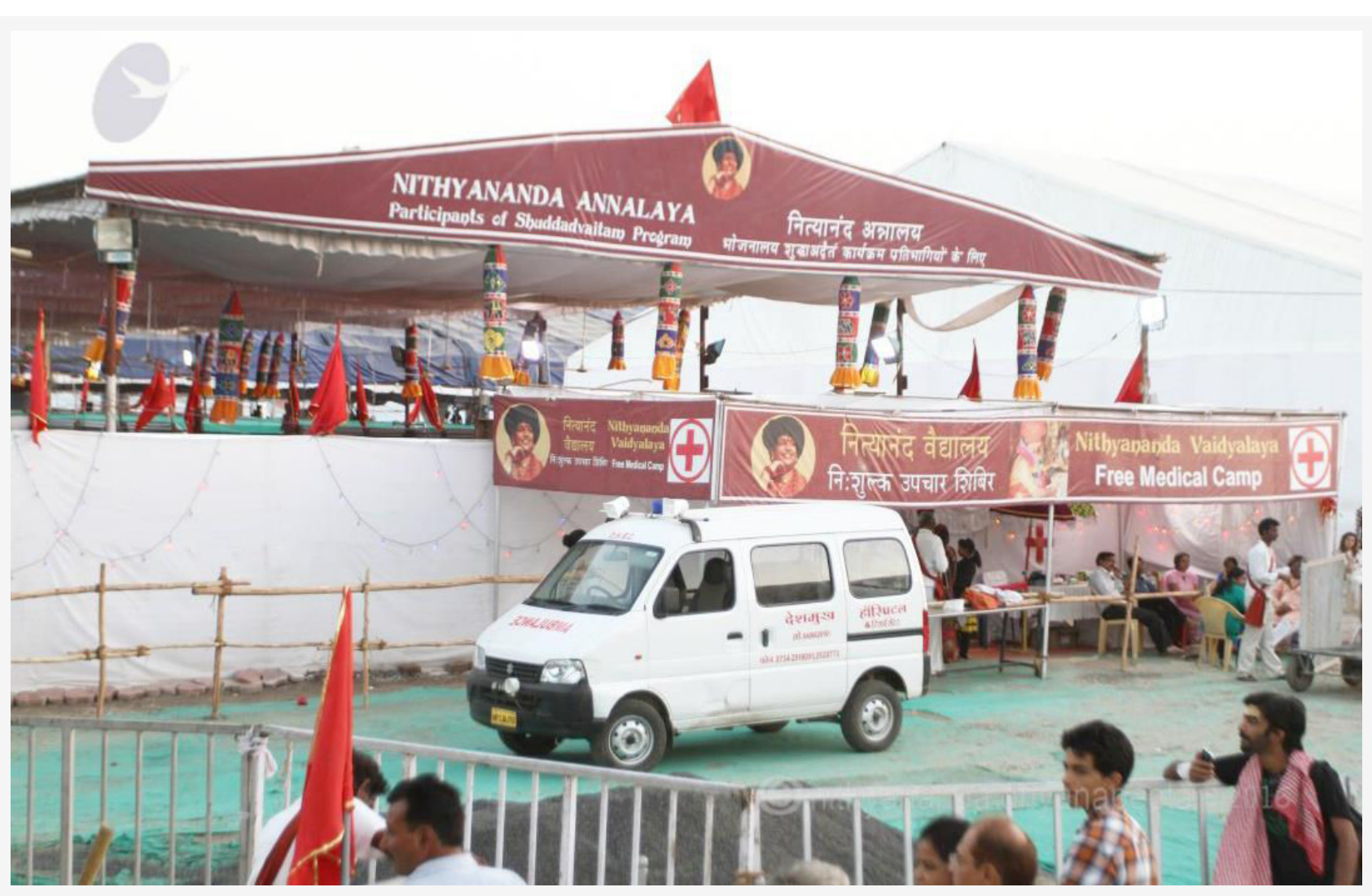
The Free Medical camps were run by Yellow Om, the Sovereign Order of KAILASA, and KAILASA’s Department of Health at Ujjain Kumbh Mela 2016. The camp was visited by 10 Million citizens of KAILASA and Hindus.
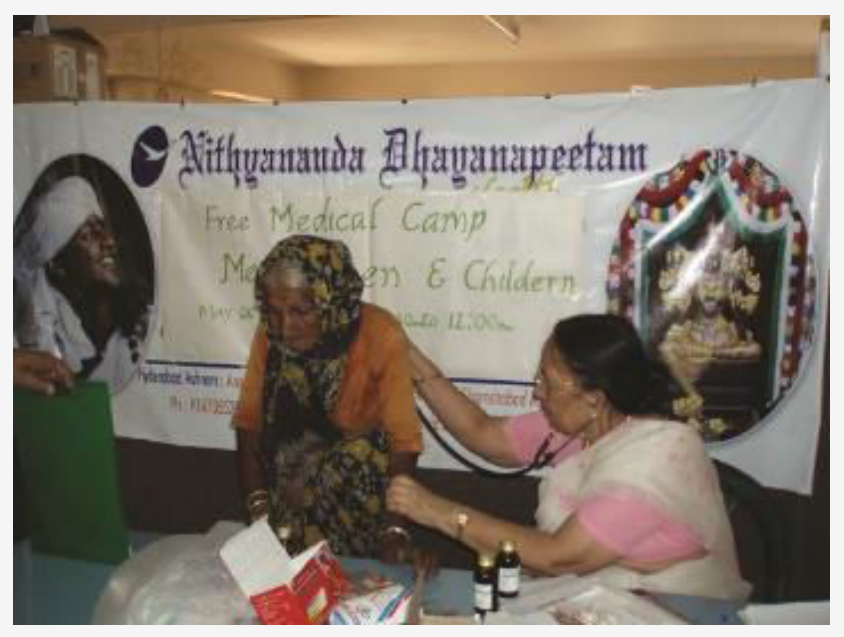
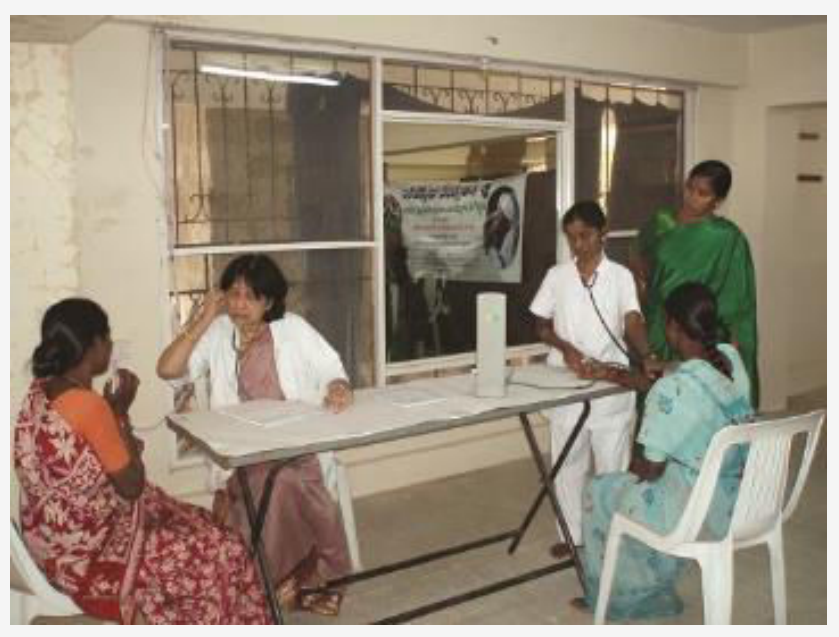
The Free Medical camps were run by KAILASA’s Department of Health, KAILASA’s Yellow Om, and the Sovereign Order of KAILASA at different places from 2006 to 2018.
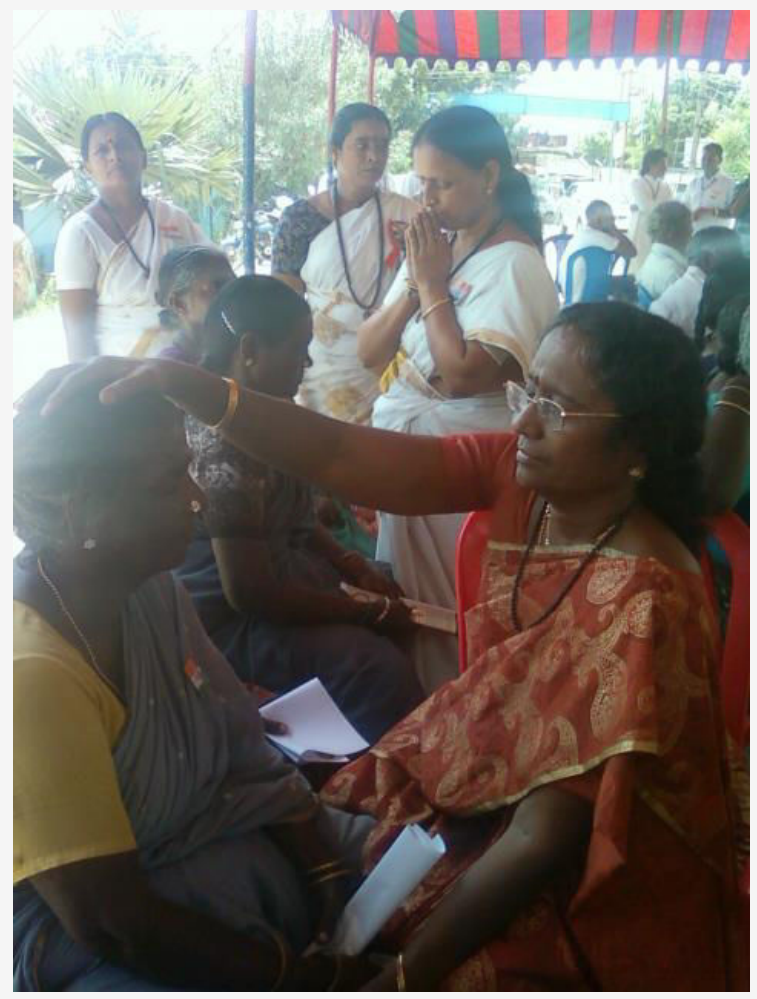
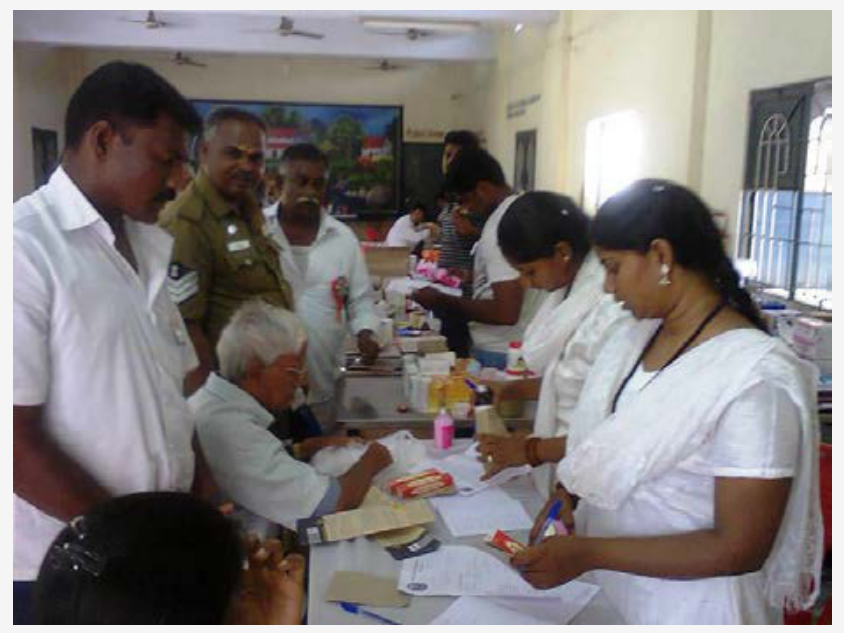
Free multispecialty Medical Camps organized by KAILASA's Department of Health and KAILASA's Yellow Om worldwide in urban and rural areas, giving a free diagnosis, medicines, and other medical support.
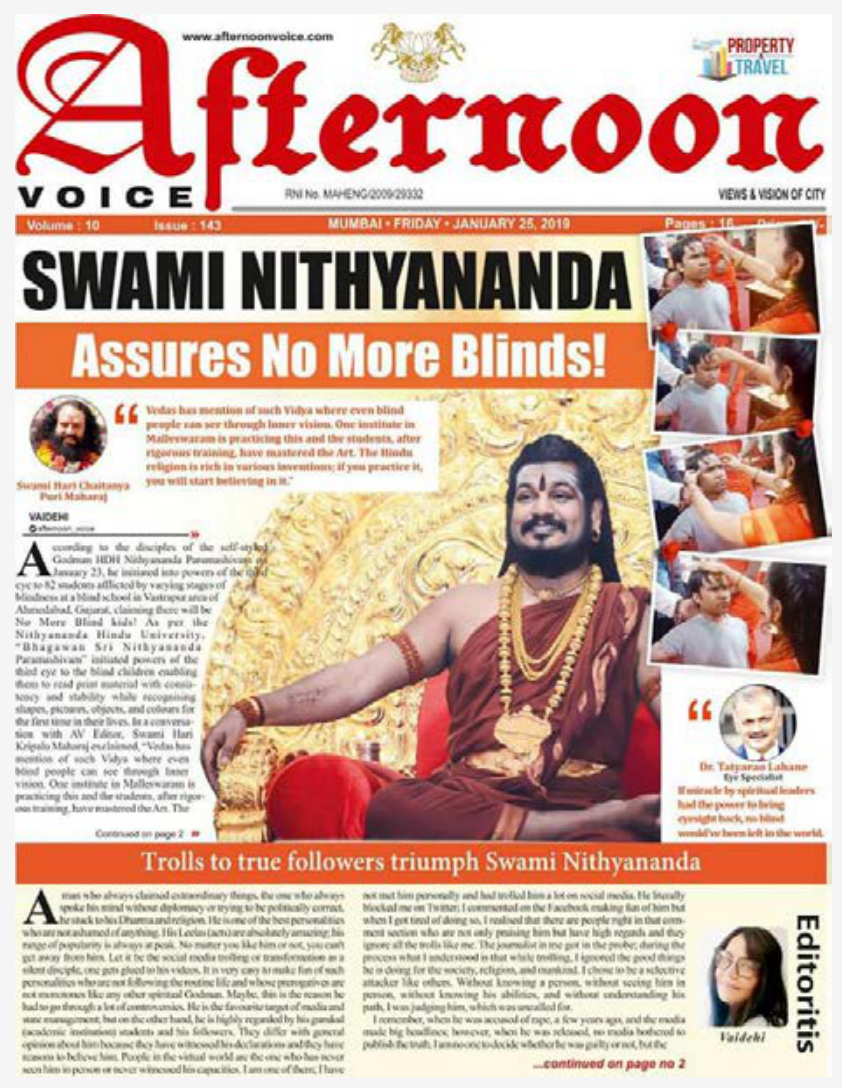
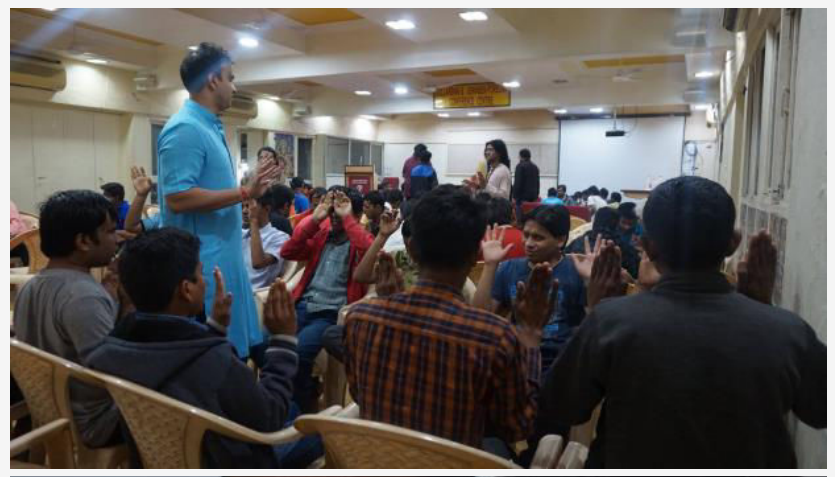
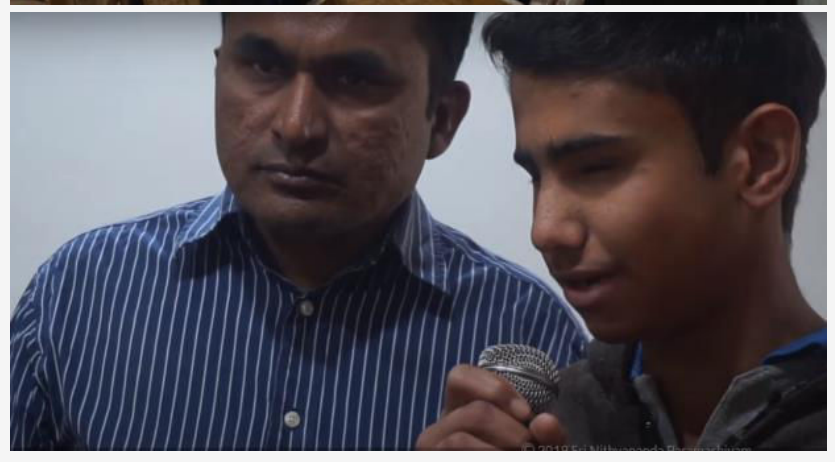
25 January 2019: The SPH Nithyananda Paramashivam initiated born blind children through His Disciples, enabling blind children to see using their third eye.
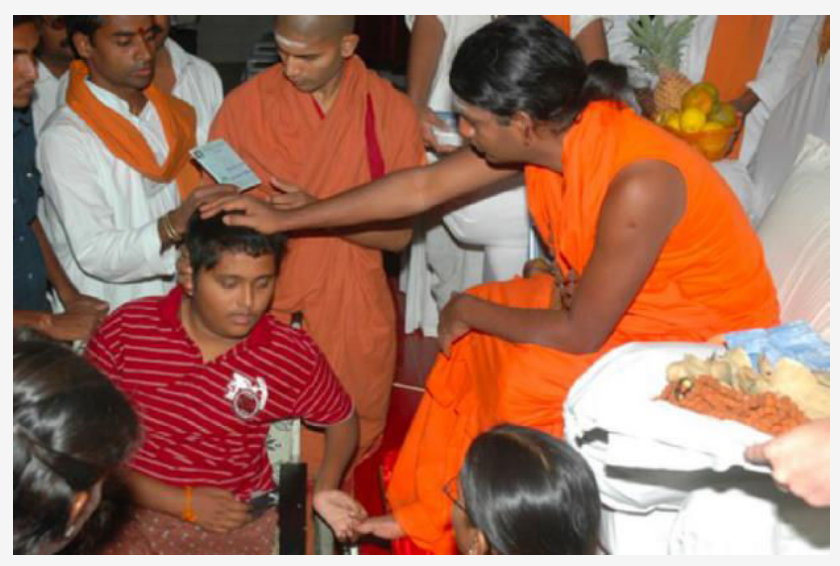
2006: Bangalore, Child unable to walk receives a healing touch of His Divine Holiness. Many experience miraculous healing effects of the so-called incurable diseases with the compassion and blessings of His Divine Holiness Bhagavan Sri Nithyananda Paramashivam.
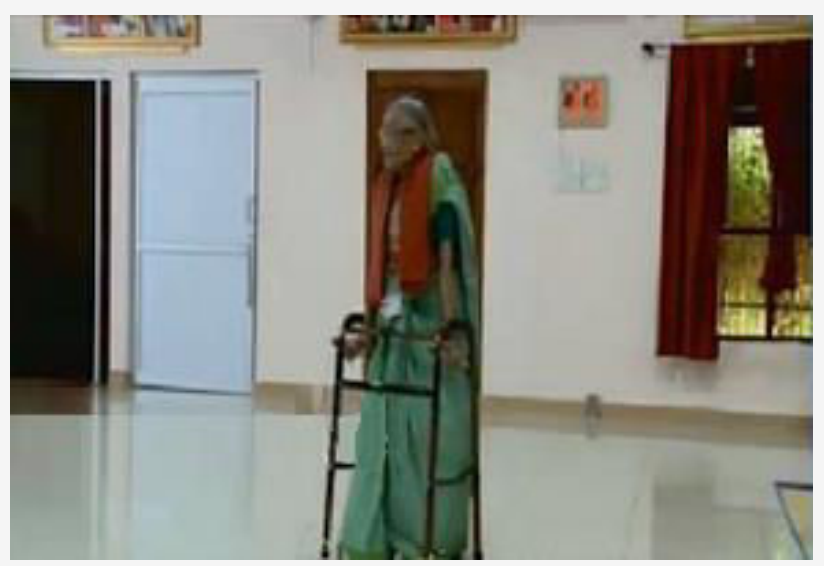
Sept 2014: An eighty-year-old lady who was not able to walk and was wheelchair-bound for more than a decade was able to walk with His Divine Holiness blessings.
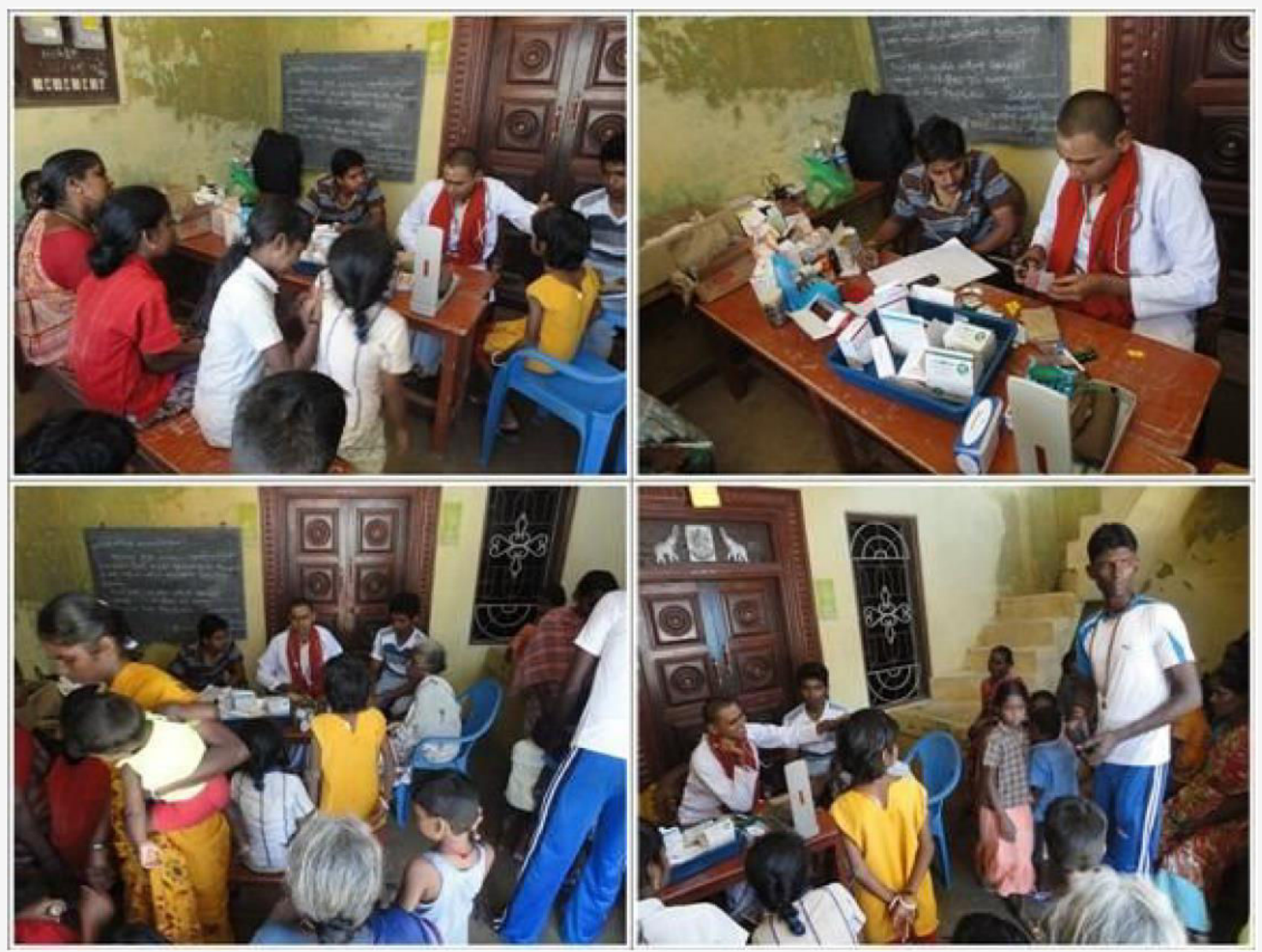
Free and accessible medical camps all over the State of Tamil Nadu are held in over 50 places benefitting millions of people run directly by the Sovereign Order of KAILASA and Yellow Om.
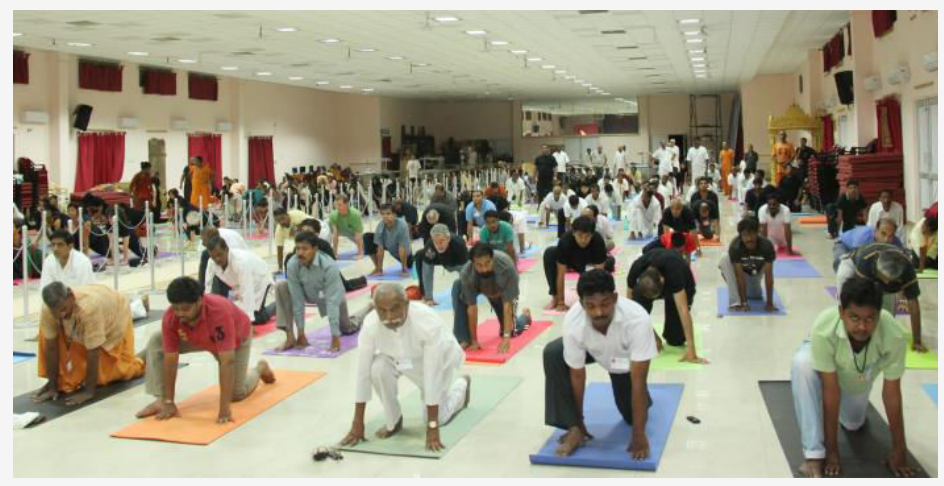
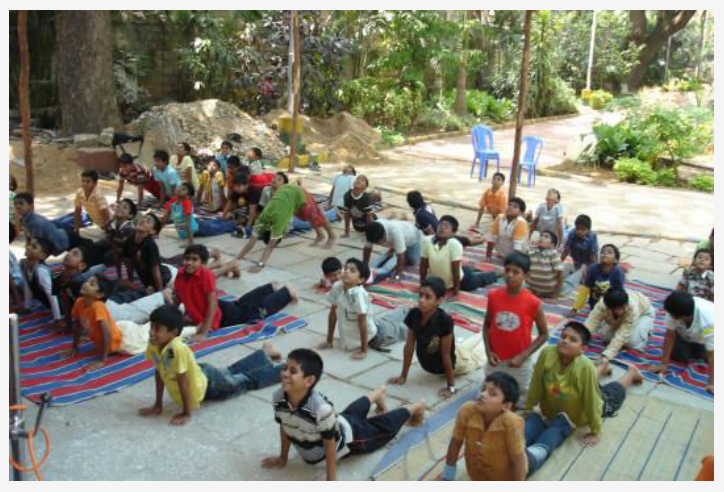
The Sovereign Order of KAILASA and Yellow Om conducting free Yoga classes, for men and women of all ages, in various parts of the world.
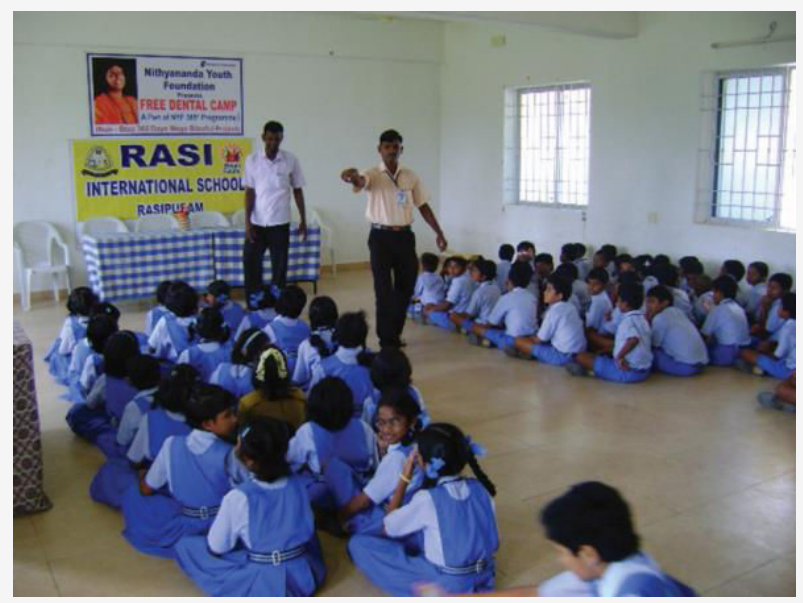
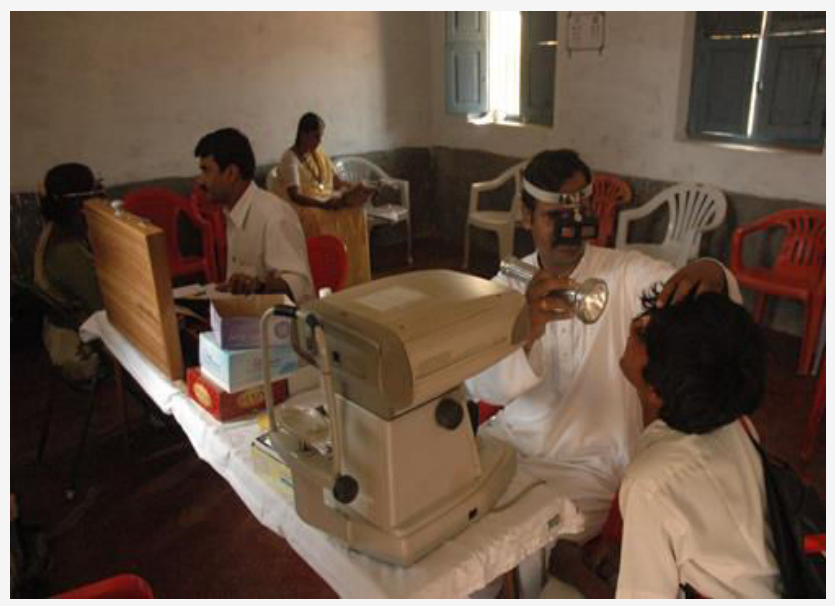
| Free Social Services For Children – Education, Medical, Meditation, Education Materials - free Dental Camp - Rasipuram, Tamil Nadu | 2007: ENT (Eyes/Nose/Throat) Medical Camp organized by the doctors of KAILASA’s Yellow Om, and the Department of Health KAILASA. |
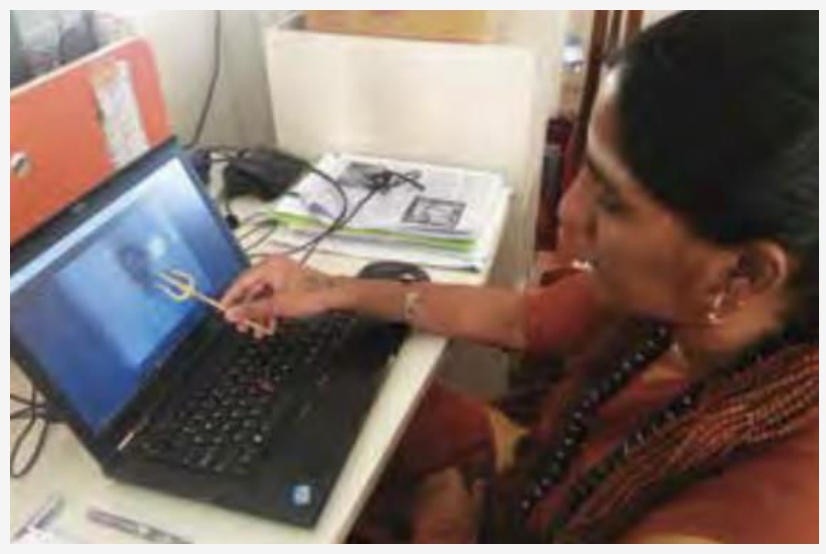
Ma Nithya Jnanatmananda Swami, a monk of the Sovereign Order of KAILASA is an initiated spiritual healer and a sanyasi (monk) disciple of His Divine Holiness. His Divine Holiness blessed Ma Jnanatma Swami with a Trishul (trident) saying, "Whoever you touch with this Trishul will be healed." Since then, she has been healing people all over the world. Ma Jnanatma Swami shares, "The minute I touch someone with this Trishul and enter the space of Oneness with Paramashiva, I can just feel the healing energy flowing from my being to the other.
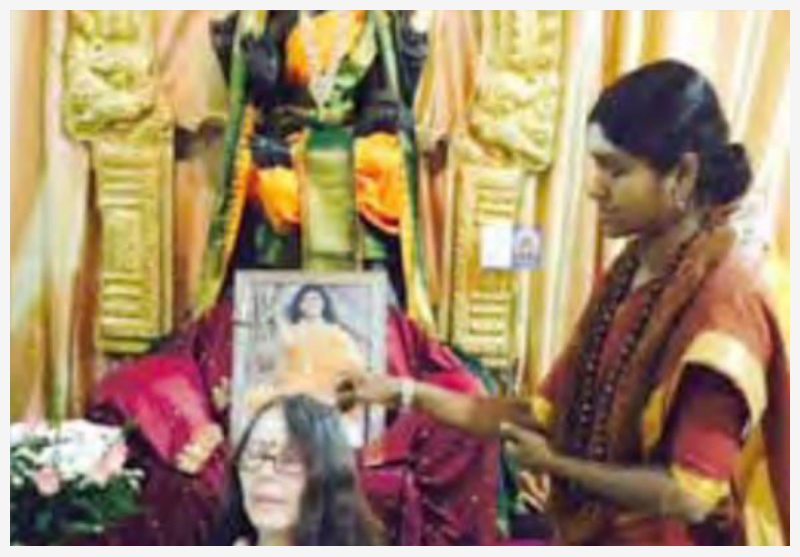
Ma Nithya Prematmananda Swami, a monk of the Sovereign Order of KAILASA was initiated as a specialist healer and a distance healer by His Divine Holiness Bhagavan Sri Nithyananda Pramashivam. She shares her experience, “Swamiji blessed me to be a healing specialist and a long-distance healer, using an energized healing spear to heal anyone, both in person or even with their photo. This is an extraordinary gift from Swamiji that I am blessed to have and share with the world .”
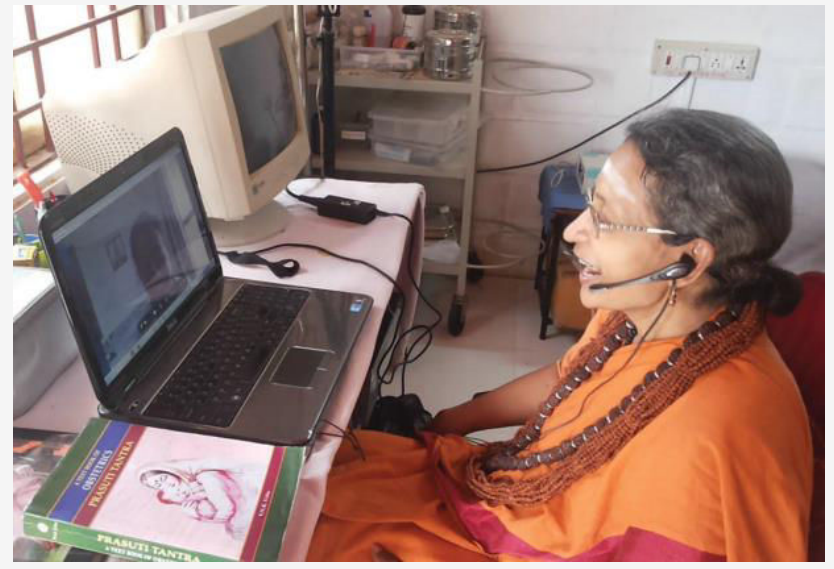
Senior female monk of the Sovereign Order of KAILASA giving free obstetrics counseling service under KAILASA’s Pregnancy care program called en-Pregnancy.
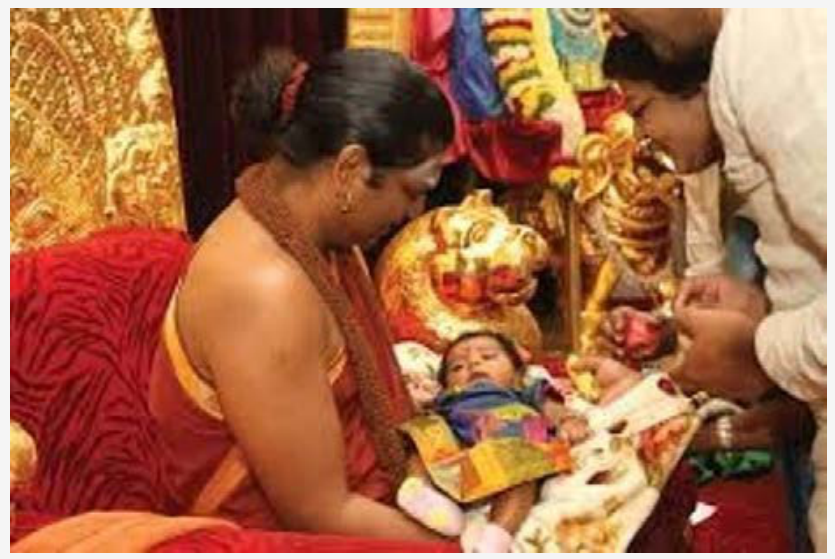
The Children born under the supervision of KAILASA’s in-Pregnancy program are found to be healthier, sharper, calmer, and be able to manifest powers of consciousness more easily.
Functions of various departments, agencies, and administrative units of KAILASA towards providing yogic, ayurvedic solutions and medical care to the world:
(a) In coordination with the Department of Education, all seventeen nations of KAILASA - all Samrajyams (kingdoms), Samsthanas (spiritual kingdoms), all their branches, all the 1,500 de facto embassies of KAILASA
(i) Have organized all manpower resources under the international agency structure of the ‘Yellow Om’.
(ii) They work with all Hindus and citizens of their nation, organizing under Yellow Om reaching out to all citizens in providing Yogic, Ayurvedic, Naturopathy, and Siddha Solutions and Medical care.
(iii) Yellow Om conducts Online Yoga sessions for improving the immune system and detoxifying the toxins from the body and mind
(iv) Yellow Om expanded the Yogic, Ayurvedic, Naturopathy and Siddha Solutions and Medical health care services of KALASA, and increased the allocation of human resources in managing the health care of the citizens
(v) In strict compliance with Paramashiva economic policy - laid down in the Veda Agamas that all health care and survival needs are provided without charge - all services of Yellow Om are offered free of charge. The citizens and beneficiaries would be free to offer any amount in donation or none based on their free will.
(vi) Yellow Om provides integrity in charge in each of the entities of KAILASA to ensure the daily conduct of Yogic practices, such as cleansing of bowels, cleansing of eyes and nose-tracts, the practice of 108 yogic postures that include conscious breathing techniques, and all 12 components of Yoga.
(b) KAILASA’s Department of Health in coordination with Yellow Om
(i) Has published several preventive and supporting Ayurvedic health care recipes, such as :
(1) Neem and Turmeric paste
(2) Pachai Pattani Vratam
(3) Nirahara Samyama
(ii) Devised novel means to increase manpower and time resources allotted for the care of prenatal children and pregnant mothers by extending the en-Pregnancy services.
(c) KAILASA's Department of Yoga provides training in The most authentic Yoga - Nithyananda Yoga compiled from Veda-Agamas (the source scriptures of Hinduism) to create a larger group of Acharyas (ordained teachers) who further help citizens to Kailasa to learn and practice Yoga and live a holistic life.
In 2020, 30 million citizens of KAILASA worldwide went through a series of detox processes to improve their immune system in the light of the COVID-19 pandemic such as a 28-day spiritual regimen involving Vratha (Hindu fasting), meditation, chanting of sacred syllables of Mahavakya, hygienic living, and social distancing called Pacchai Pattini Vratham. Citizens of KAILASA and practicing Hindus believe that it is KAILASA’s Dharmic (cosmically ordained) responsibility to find spiritual solutions for all the world’s problems. This program of intense prayer and fasting for 28 days to heal the world of COVID-19, was part of KAILASA’s larger initiative for world peace and health.
Ayurveda and Traditional Medicine
In Hinduism, nature, and planet earth408 are respected as living divine mother energies capable of providing us with all our survival needs – food, medicines, etc. Though traditional medicines such as TCM409 and Ayurveda410 are effective in addressing COVID-related issues, and a few years ago a Nobel prize was awarded for scientific work based on traditional medicine411 the mainstream western medicine has chosen to characterize Ayurveda as pseudoscience412 and TCM as unscientific413. Such demeaning of traditional medicine systems has led nations to consider taking defensive unilateral decisions to protect their interests.414 Outright rejection of traditional medicine is not wise and such policies should be revisited especially as these medicine systems are time tested and have kept people healthy for several generations. Kailash Union recommends governments worldwide provide solutions like KAILASA’s Hindu Medical care (which includes completely free of charge services such as Ayurveda, Yoga, Siddha, Western medicines, and multi-layered quarantine) for complementing their ongoing public health efforts.
ॐ वसुंधराय विद्महे भूतधत्राय धीमहि तन्नो भूमिः प्रचोदयात्। “Om, let me meditate on the Earth The One who provides all, bless
us with abundance, And let the Goddess of Earth illuminate my mind” (Bhumi Devi Gayatri Mantra)
Zhao Z, Li Y, Zhou L, et al. Prevention and treatment of COVID-19 using Traditional Chinese Medicine: A review.
Phytomedicine. 2021;85:153308. doi:10.1016/j.phymed.2020.153308
(i) https://www.thehindu.com/news/national/kerala/many-patients-turn-to-ayurveda-for-post-covid-
care/article34755600.ece (ii) https://www.thehindubusinessline.com/news/mix-of-modern-ayurvedic-medicine-helps- treat-covid-19/article34701852.ece
https://www.nobelprize.org/womenwhochangedscience/stories/tu-youyou
(i) Semple D, Smyth R (2019). Chapter 1: Thinking about psychiatry. Oxford Handbook of Psychiatry (4th ed.). Oxford
University Press. p. 24. doi:10.1093/med/9780198795551.003.0001. ISBN 978-0-19-879555-1. (ii) Sujatha, V (July 2011). "What could 'integrative' medicine mean? Social science perspectives on contemporary Ayurveda". Journal of Ayurveda and Integrative Medicine. 2 (3): 115 - 23. doi:10.4103/0975-9476.85549. PMC 3193682. PMID 22022153. (iii) Manohar, PR (April 2013). "Uniform standards and quality control of research publications in the field of Ayurveda". Ancient Science of Life. 32 (4): 185 - 6. doi:10.4103/0257-7941.131968. PMC 4078466. PMID 24991064. (iv) Bausell, R. Barker (2007). Snake Oil Science: The Truth About Complementary and Alternative Medicine. Oxford University Press. p. 259. ISBN 978-0-19- 538342-3.
(i) Singh S, Ernst E (2008). Trick or Treatment: Alternative Medicine on Trial. London: Bantam. ISBN 978-0593061299. (ii)
"Hard to swallow". Nature. 448 (7150): 105–6. July 2007. Bibcode:2007Natur.448S.105. doi:10.1038/448106a. PMID 17625521 (iii) Shang A, Huwiler K, Nartey L, Jüni P, Egger M (October 2007). "Placebo-controlled trials of Chinese herbal medicine and conventional medicine comparative study". International Journal of Epidemiology. 36 (5): 1086–
92. doi:10.1093/ije/dym119. PMID 17602184
https://www.bmj.com/content/369/bmj.m2285
Organizing Siddha Medicine During COVID-19 Pandemic
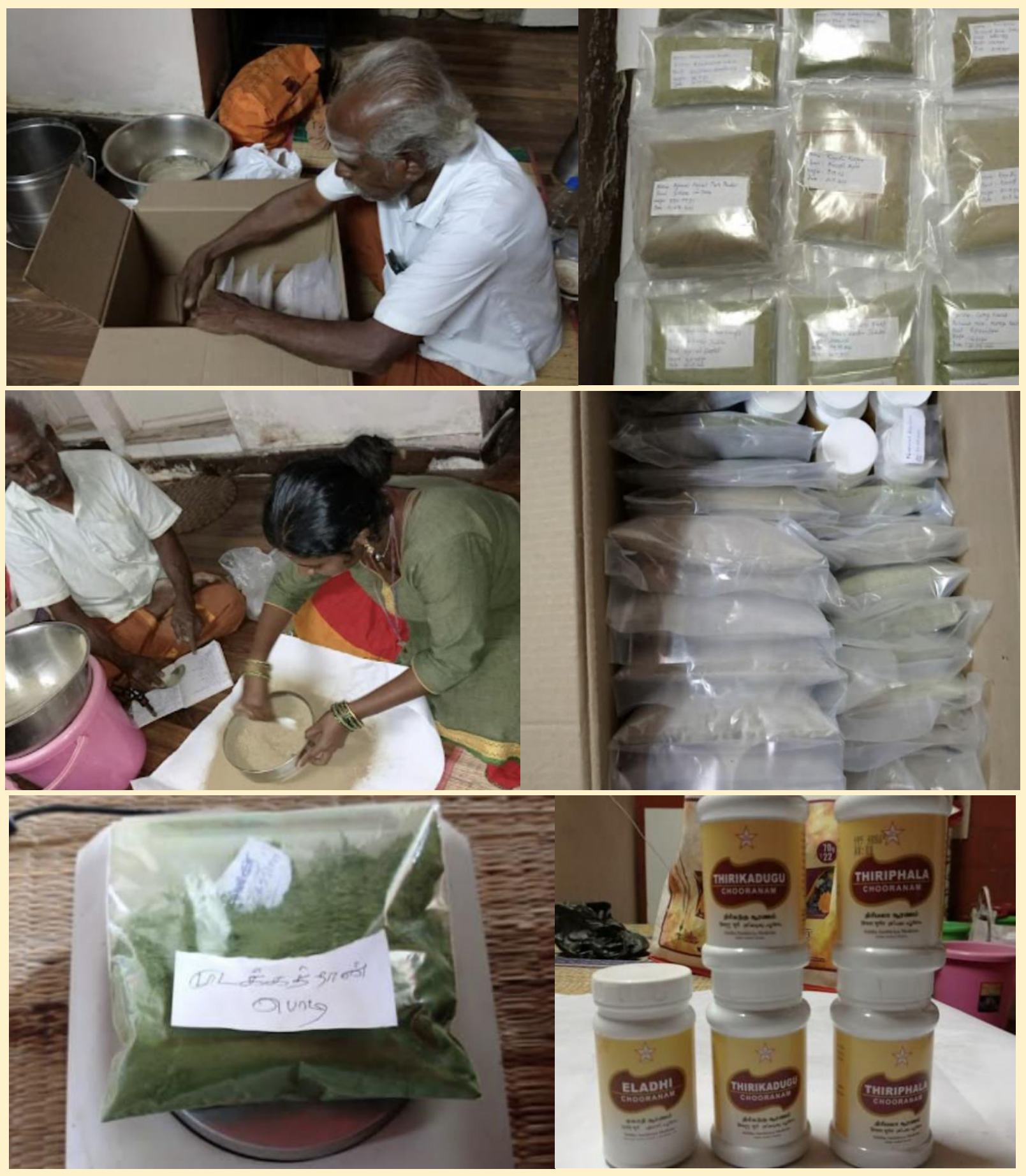
Science of Aushada
Aushada is one of the most mystical alchemy sciences in Sanatana Hindu Dharma which can give instant enlightenment to a seeker without any need for practice. This is done through a special technique where thought-currents about specific enlightenment-truths are programmed into herbs, which are then consumed by the seeker. These herbs have the power to work on the seekers' muscle-memory, bio-memory, and bio-energy, to cause superconscious mutation and put them in the experience of Oneness with Paramashiva. Additionally, suitable thought currents can also be given to heal any disease which a person might be suffering from, thus making it a powerful medicinal system as well. The science of Aushada forms the materia-medica of the Hindu medical system, including Siddha, Ayurveda, and other indigenous systems.
The SPH Nithyananda Paramashivam has gifted the world with the science of Aushada by actually preparing various such Aushadas and making the participants apply them in many programs He conducted. Some of these Aushadas are the Shakti Aushada, Amritattva Aushada, enlightenment pill, Jeevan Mukti Aushada, etc. Just by applying these Aushadas, participants experienced kundalini awakening and started manifesting Shaktis.
Yoga
Yoga is the most widely practiced religion in the world chosen consciously by people. It is estimated that there are 300 million regular practitioners of Yoga worldwide and the numbers are growing each year. Originating thousands of years ago from ancient indigenous nations of India (Bharat) it has spread farther and deeper than any other philosophy in the world. Yet Yoga has been diluted – sometimes beyond recognition. Even in India many practitioners and teachers cannot distinguish what is real authentic Yoga and what are corruptions introduced subsequently for specific purposes. The SPH Nithyananda Paramashivam is reviving and initiating millions into the authentic Yoga prescribed by Paramashiva – the Adi Yogi (primordial Yogi), who is the first-ever Yogi who walked the planet.
The SPH Nithyananda Paramashivam has revealed that Yoga is not just for body flexibility and strength but was originally revealed by Paramashiva for living enlightenment and manifesting spiritual powers.
The SPH Nithyananda Paramashivam has tremendously contributed to Yoga as a reviver of 108 Asanas (postures) along with 12 components for each as an everyday lifestyle for millions of followers worldwide. The 12 components such as breath, mudra, visualization, mantra, etc. multiply the efficacy of each posture, bringing tremendous physical, mental, and holistic benefits.
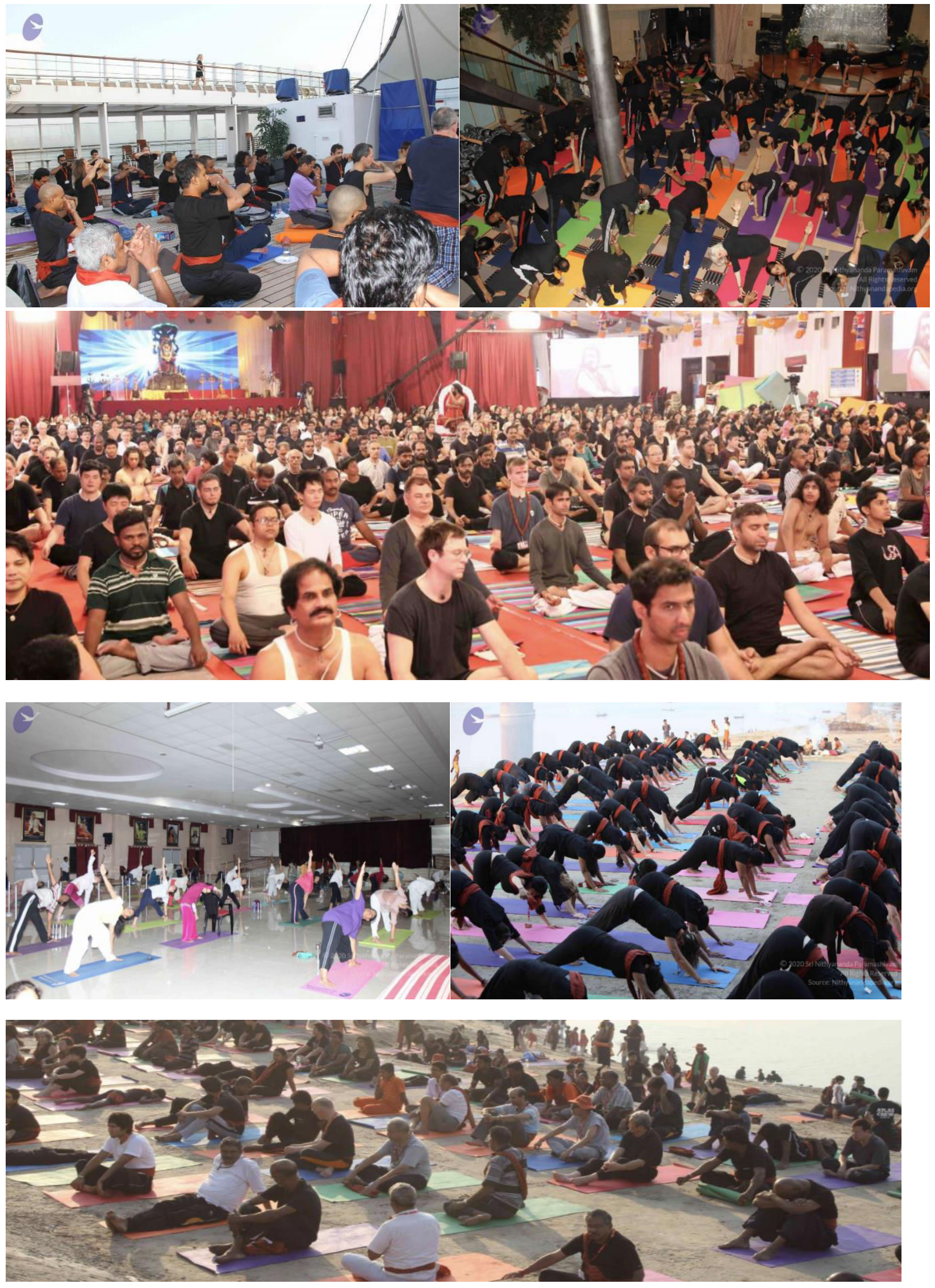
Celebrating Global peace & religious freedom through Nithyananda Yoga initiatives manifesting the communion with the Divine (through the years)
Highlights of the contributions of the SPH Nithyananda Paramashivam and KAILASA in Yoga
- Reviver of 108 scientifically validated Kriyas (combinations of postures, movements, and breath), specifically targeted to 108 major diseases or disorders such as diabetes, arthritis, blood pressure, rheumatism, etc.
- The SPH Nithyananda Paramashivam periodically trains Yoga practitioners to be Yogacharyas
- Yoga teachers - who reach the authentic Science of Nithyananda Yoga to the world at large.
- The SPH Nithyananda Paramashivam has revived the ancient Pole Yoga (Shivastamba Yoga) and Rope Yoga (Kundalini Rajju Yoga) in which yogic asanas (postures) and weight balancing techniques are performed to create the Yogic physiology aligning it to cosmic geometry, that manifests superconscious powers.
- The SPH Nithyananda Paramashivam was awarded two Guinness World Records for the largest rope Yoga (Kundalini Rajju YogaSM) and largest pole Yoga (Shivastamba YogaSM) classes, bringing worldwide attention to these extraordinary forms of Yoga. * The Guinness World Records® for the largest rope Yoga (Kundalini Rajju Yoga℠) class
- 30 September 2017 * Holder of the Guinness World Records® for the largest pole Yoga (Shivasthamba Yoga℠) class - 3 October 2017
- Published the original ancient 1008 Hindu scriptural pieces of evidence on Yoga - with original Sanskrit verses, scriptural references, and English translation - in freely downloadable form as well as a printed publication “Nithyananda Yoga” for Yoga teachers and practitioners worldwide.
Ancient Yogic Scriptures are rare and written in verses that appear cryptic to those who are not educated in the indigenous sciences and are not guided by an enlightened master. This makes the research by individual freelancers and professional Yoga Teachers prohibitive. The greed of the USD 100 Billion Yoga business has adulterated Yoga by health-risking, dangerous manipulations such as ‘beer Yoga’, ‘chicken Yoga’, and the like. To re-establish the purity of Yoga as prescribed by Paramashiva and provide sincere Yoga Teachers with proper scriptural reference in English with original Sanskrit verses and references) for their personal research and development and teaching others, and the benefit of sincere Yoga practitioners, The SPH has researched and published the Nithyananda Yoga Book.
The SPH Nithyananda Paramashivam has decoded the original Shashtanga Yoga (six-limbed Yoga) as delivered by Paramshiva and revived it as Nithyananda Yoga, practiced by several thousands of people worldwide through in-house programs, web television, and social media.
Over 5 million lives were enriched by His Holiness through His world tour talks on Yogic sciences.
Over 300 Yogic techniques and 108 Yogic Flows (Rajasekara Vinyasa Krama) shared with the world for awakening their inner potential energy (Kundalini Shakti) and manifest the Yogic powers.
The context and vision
Yoga has become a USD 80 billion industry, incorporating everything you can think of from animals to food. And everyone is looking to get their share, be it through expensive apparel or sponsored Instagram posts. However, Yoga is much more than a fitness fad or a lucrative marketing strategy.
Some people practice Yoga to build a strong physique, for the healing of an ailment, or for relieving stress and anxiety. However, throughout the years, the source of Yoga has been lost and the entire science has been diluted. Many of the traditional Yogic asanas and their context have completely disappeared from mainstream practice. Yoga is not just about asanas but aligning the body to the cosmic geometry and experiencing different states and dimensions. To miss this context is missing the whole purpose of Yoga.
Adiyogi, Paramashiva (primordial Hindu Divinity), is the creator of Yoga. He delivered the original Yoga Sutras as a way to experience the Ultimate, Him, through our bodies. This is called Shashtanga Yoga. Throughout Hindu history, after the revelation of Yoga by Paramashiva Himself, great Yogis and sadhus practiced Yoga to acquire the best physique and physiology to manifest the state and powers of Paramashiva. This is authentic Yoga. The essence is that Yoga has a religion, that's Hinduism. And Hinduism is real.
Paramashiva developed Yoga for humans of the past, present, and future, therefore Yoga cannot be developed, it can only be diluted. Aghoris, sadhus, sannyasis have always exemplified the yogic powers and demonstrated incredible feats. As recently as a few centuries back, powerful yogis roamed the earth shamelessly showcasing these powers. However, because of cultural genocide and pillaging, Hindus themselves forgot about these possibilities which have always existed, until 1978 when the SPH Nithyananda Paramashivm incarnated to revive authentic Yoga.
The SPH Bhagavan Nithyananda Paramashivam, the Cosmos itself, landed like a lightning bolt and revived the authentic Yoga from the Source. He is taking humans and making them superhumans with yogic bodies meant for manifesting powers. For the first time, The SPH Nithyananda Paramashivam is re-introducing the shastra Pramanas and reviving the purest form of Yoga. He has already collected, preserved, translated, and delivered to the world many of the original yogic scriptures which were virtually inaccessible. He is the only being teaching Yoga based on Authentic Hindu Shastras and it is only Yoga for manifesting Shaktis, the amazing powers of Paramashiva. As a lifelong yogi and Avatar, The SPH Nithyananda Paramashivam can give an experiential understanding to His disciples by transmitting the state and space of a yogi. With two World Records in Shivasthamba Yoga and Kundalini Raju, He is taking the world of Yoga by storm. He has published 108+ Nithya Kriyas, 900+ yogic asanas, 300+ yogic techniques, 600 meditation techniques, and much more. He has initiated tens of thousands of Nithya Yogis worldwide.
He continues to give breakthroughs to all his disciples by initiating them into new yogic powers. His vision is to make Nithyananda Yoga the certifying authority on Yoga as per the Vedic scriptures - to bring authenticity back to the practice. He will have 1000s of Nithyananda Yoga Acharyas ordained to share this authentic science with the world. And to verify everything with shastra Pramana and Apta Pramana, He intends to build the world's largest library of Yogic techniques authenticated by the yogic scriptures.
He is establishing Yoga as a powerful science to explore your possibilities, manifest Shaktis, and explore the 25 states of Consciousness and 11 dimensions of the universe.
Yoga is the roadmap for every human being to realize their ultimate potential and possibilities to realize their ultimate spiritual identity of oneness with the source. Anyone and everyone has the right to live a life with no suffering, with health, better relationships, abundance, creativity.
It transforms humans into superhumans by building a yogic body to manifest powers and hold the state of enlightenment. First time in the world re-introducing Yoga through complete Shastra Pramanas for each asana, so The SPH Nithyananda Paramashivam is reviving the science of Yoga in its pure form with no dilution, foolproof, and time-tested.
The SPH Nithyananda Paramashivam- The one and only Master adept in the two sampradayas of the living stream of Hinduism: Yoga Vedanta and Veda Agama Foundation of you are God, and he is collecting, preserving, translating the original scriptures on Yoga and making them available free to the world.
Principles of Nithyananda Yoga
The Avatar, the SPH Nithyananda Paramashivam explains:
"The first principle of the science of NITHYANANDA YOGA is – Matter-Anti- matter. Sound- anti- sound. Sex-anti-sex, Vyakta and Avyakta, Usha and Chaya. When the sun works on Usha, it is Vyakta. When he works on Chaya, it is Avyakta. The whole Yoga fundamentally manifests the powers of Paramashiva. Anti-sound is not against sound. It is the Avyakta component of sound. When something is happening in Avyakta, what is reflected is – sound. When something is happening on Avyakta, what is reflected is anti-sound. Anything done at the level of Usha, due to the matter’s quality of going up and down and dying, does not stay permanently. Anything done in anti-matter as it does not go down, stays permanently.
Anti-matter is more long-living than matter. We are always attached to expression as life, that is why we are always attached. Expressing as life is more for the matter. Existence as life is more for anti-matter. When I work on you guys manifesting powers, I don’t work on Usha, I work on Chaya. If it is done on Usha, it will only work on the mind. If it is done in Chaya, it will remain in the body. What shadow needs to be created, if it is done based on chaya, it is based on the body. Biological remains will remain. The mind’s existence is too smaller compared to the body’s continued existence. Remnants of the body in the altered form exist tons of time longer than the remnants of mind, even in the altered states of consciousness."
Guinness World Records
Nithyananda Kundalini Rajju Yoga Guinness World Record
30th Sept 2017
Bidadi, India.
The SPH Nithyananda Paramashivam sets the world record for the Largest rope Yoga lesson at the Nithyananda Peetam, Bengaluru Aadheenam on the 30th of September 2017. This award, given for the very first time, recognized the largest class ever conducted in Kundalini Rajju Yoga℠, the practice of rope Yoga.
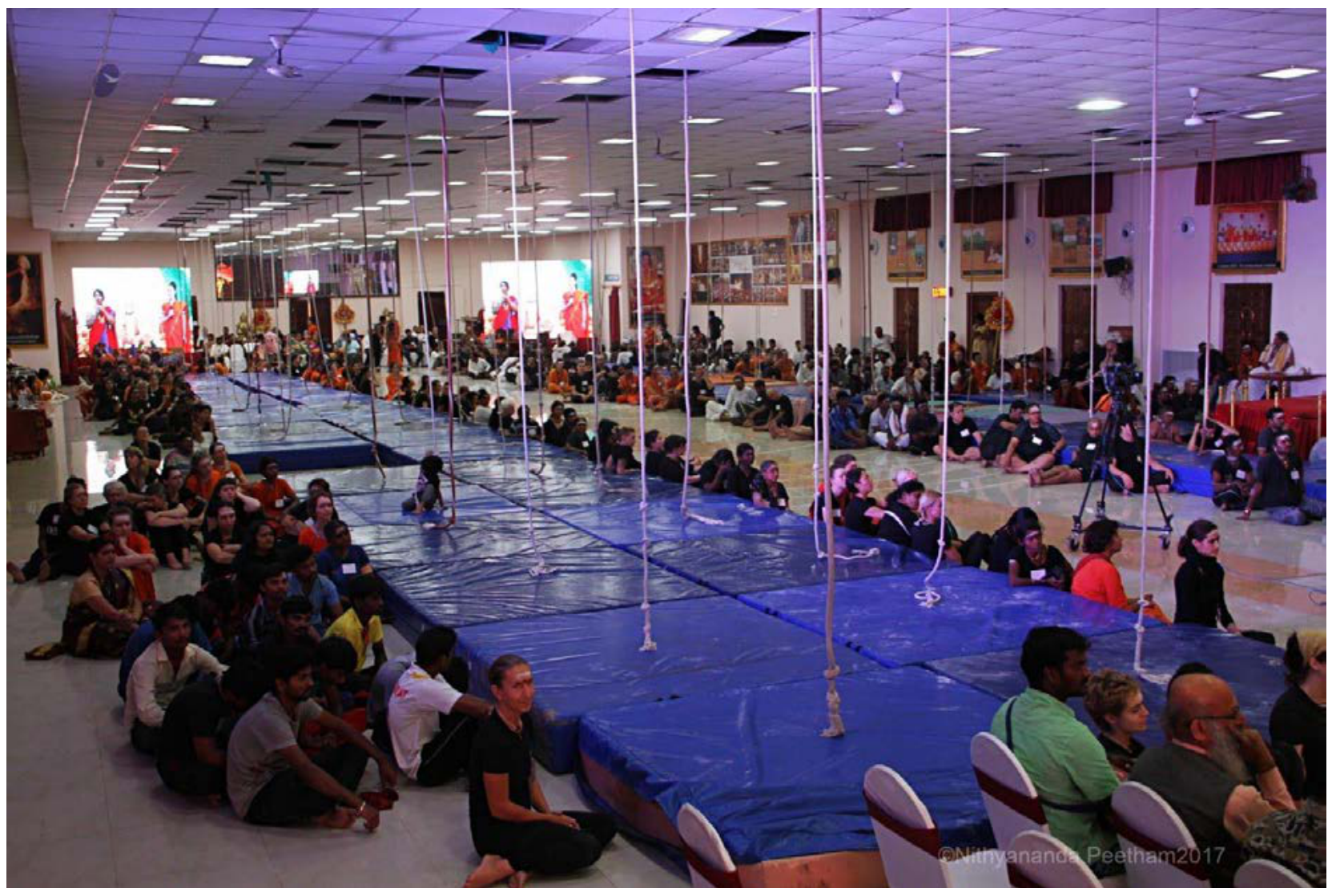
Kundalini Rajju Yoga℠ has its roots in the ancient science revealed in the sacred Shaiva Agamas. The SPH is bringing back the sanctity of this sacred science rooted in the Sanatana Hindu Dharma. He has tangibly proven Yoga is not just about asanas or pranayama, but a direct experience of extraordinary powers latent in every human being.
Nithyananda Yogis℠ - initiated disciples of the SPH completed the 60-minute lesson in Nithyananda Kundalini Rajju℠ in the very first attempt this afternoon.
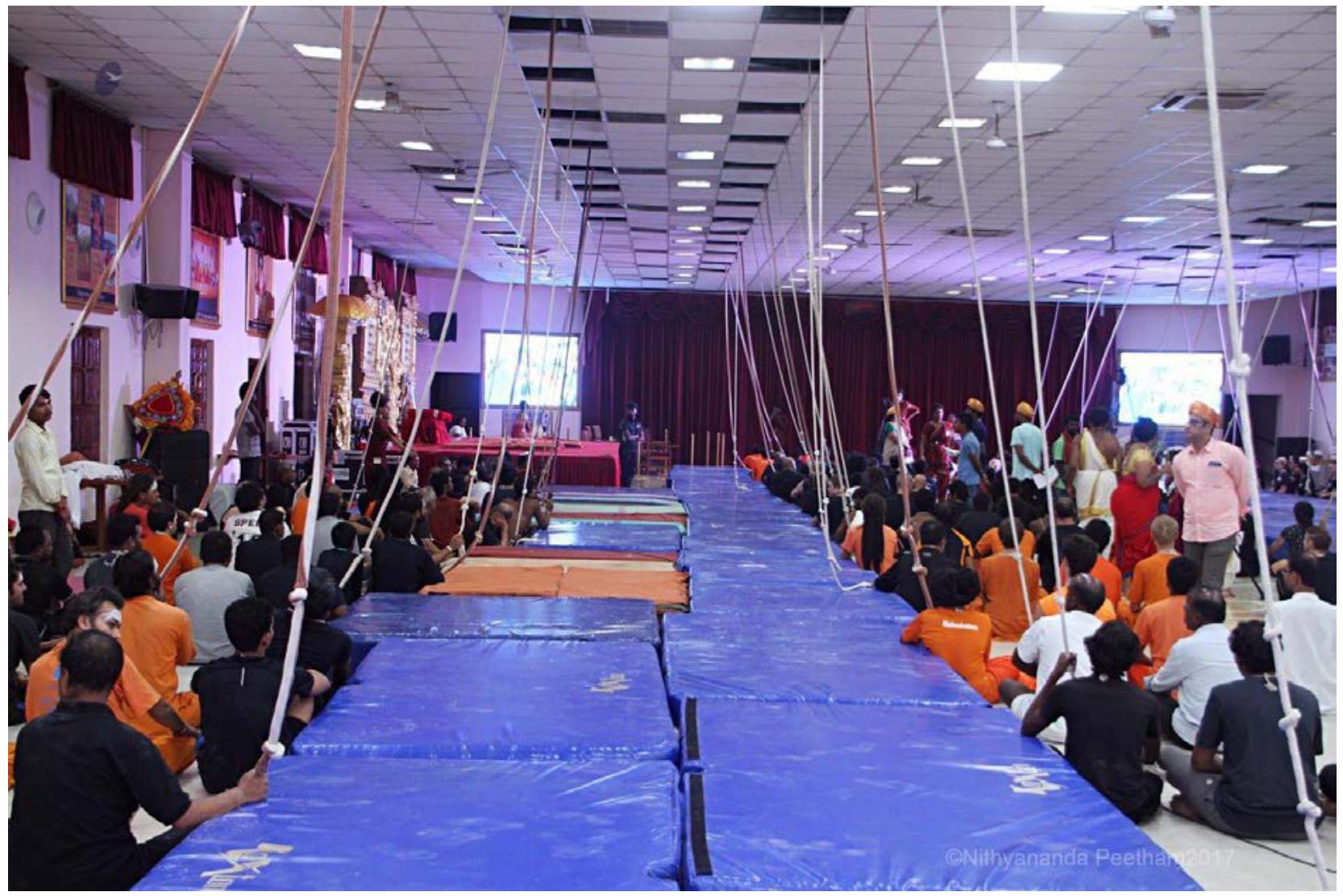
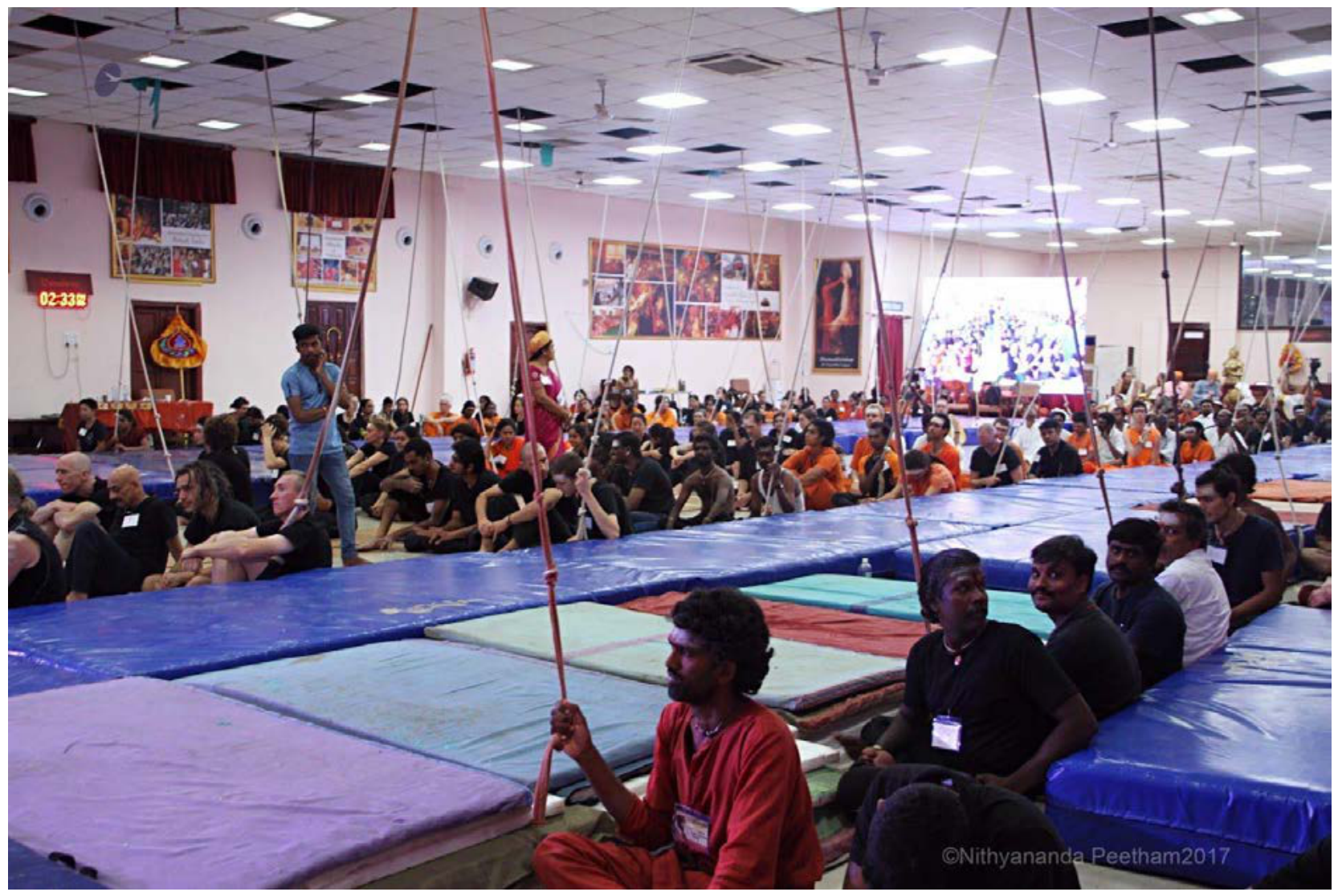
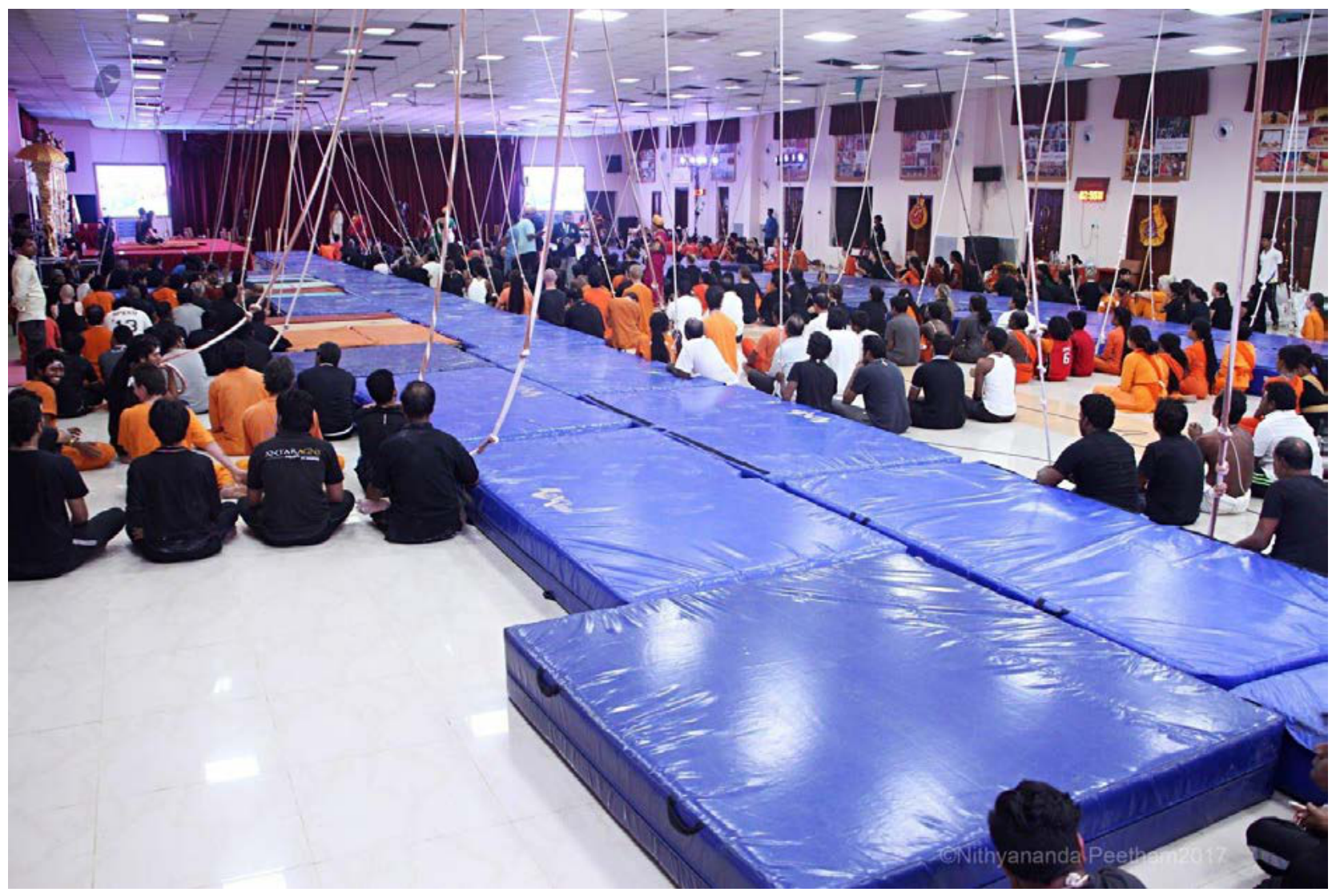
The SPH, widely accepted and revered as a living avatar, is revealing Yoga from the original source, the Yoga Pada of the Shaiva Agamas, and in the Upanishads. Throughout Hindu history, great Yogis and rishis practiced Yoga to acquire the best physique and physiology to manifest the state and powers of Sadashiva. Nithyananda Yoga℠ is different in that it is not a practice, but a blissful entanglement with the Avatar which awakens the powerful kundalini shakti or dormant energy of the individual.
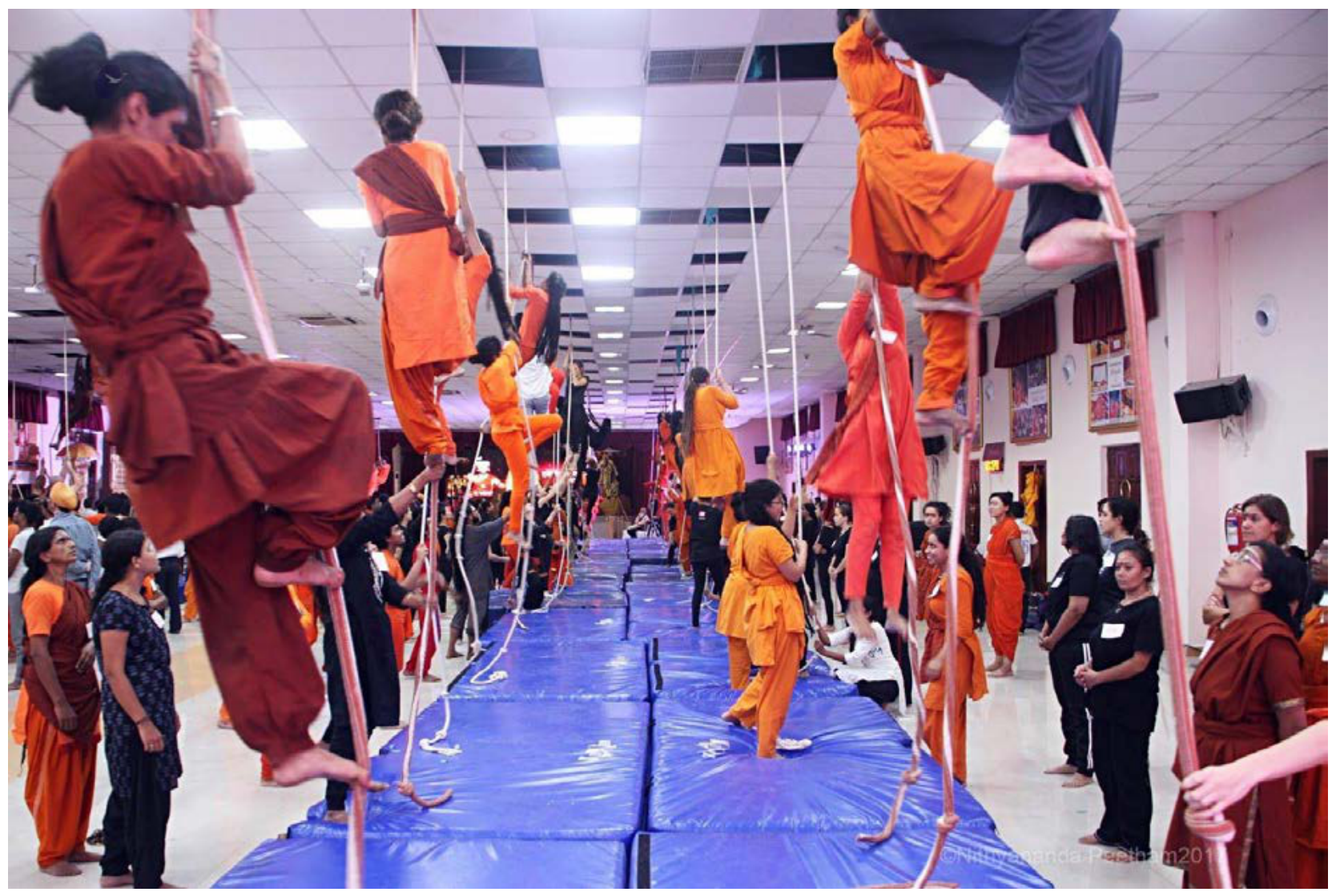
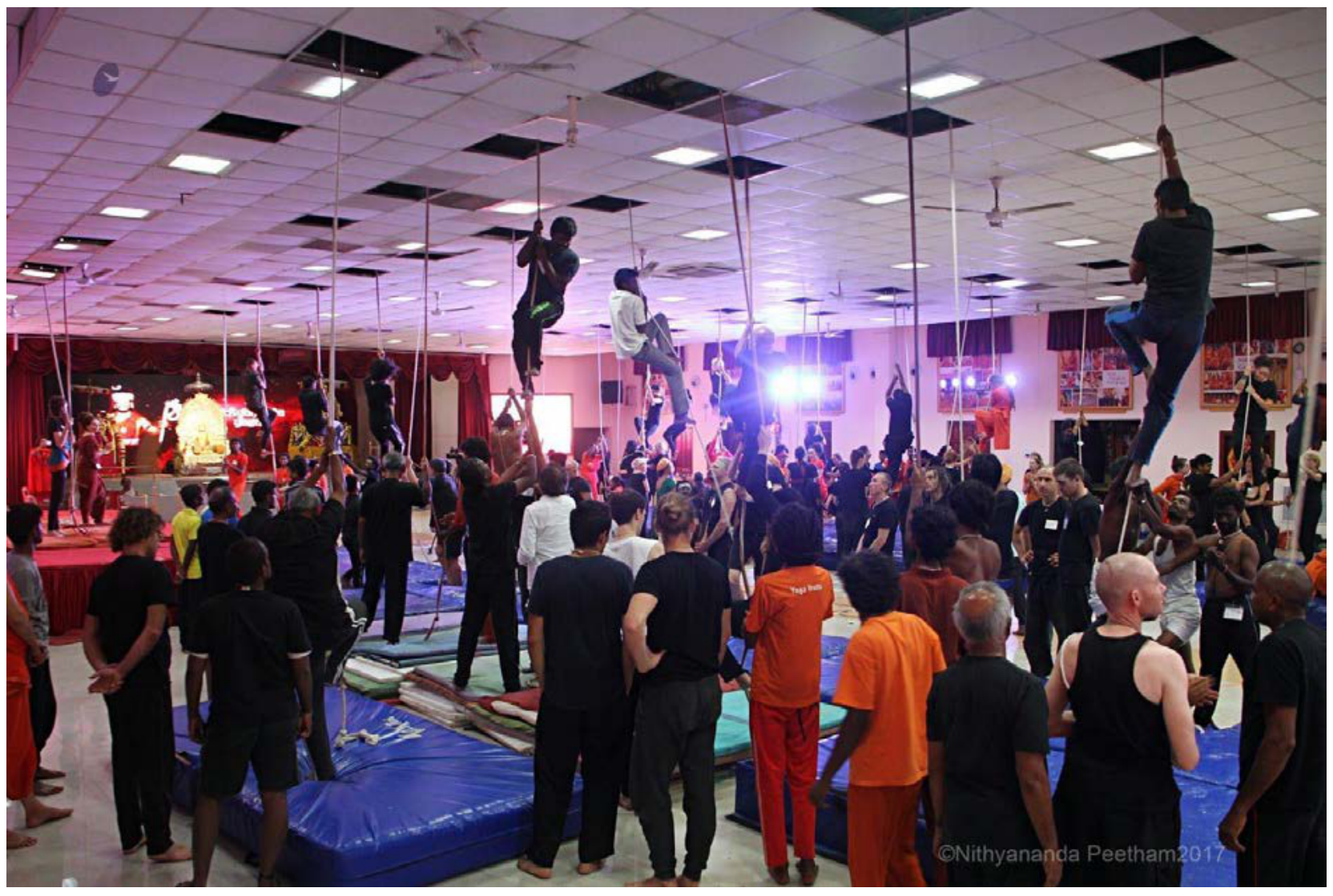
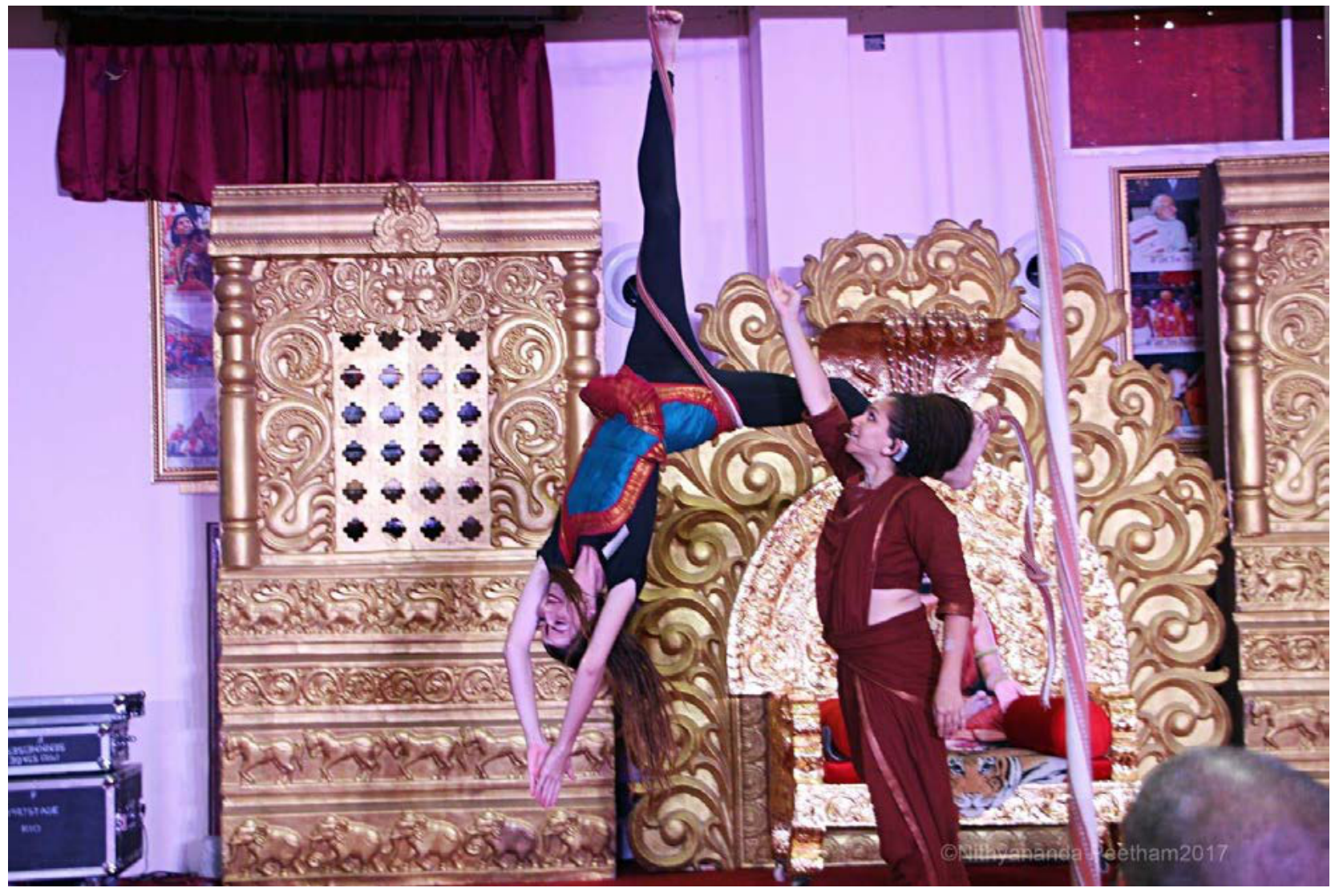
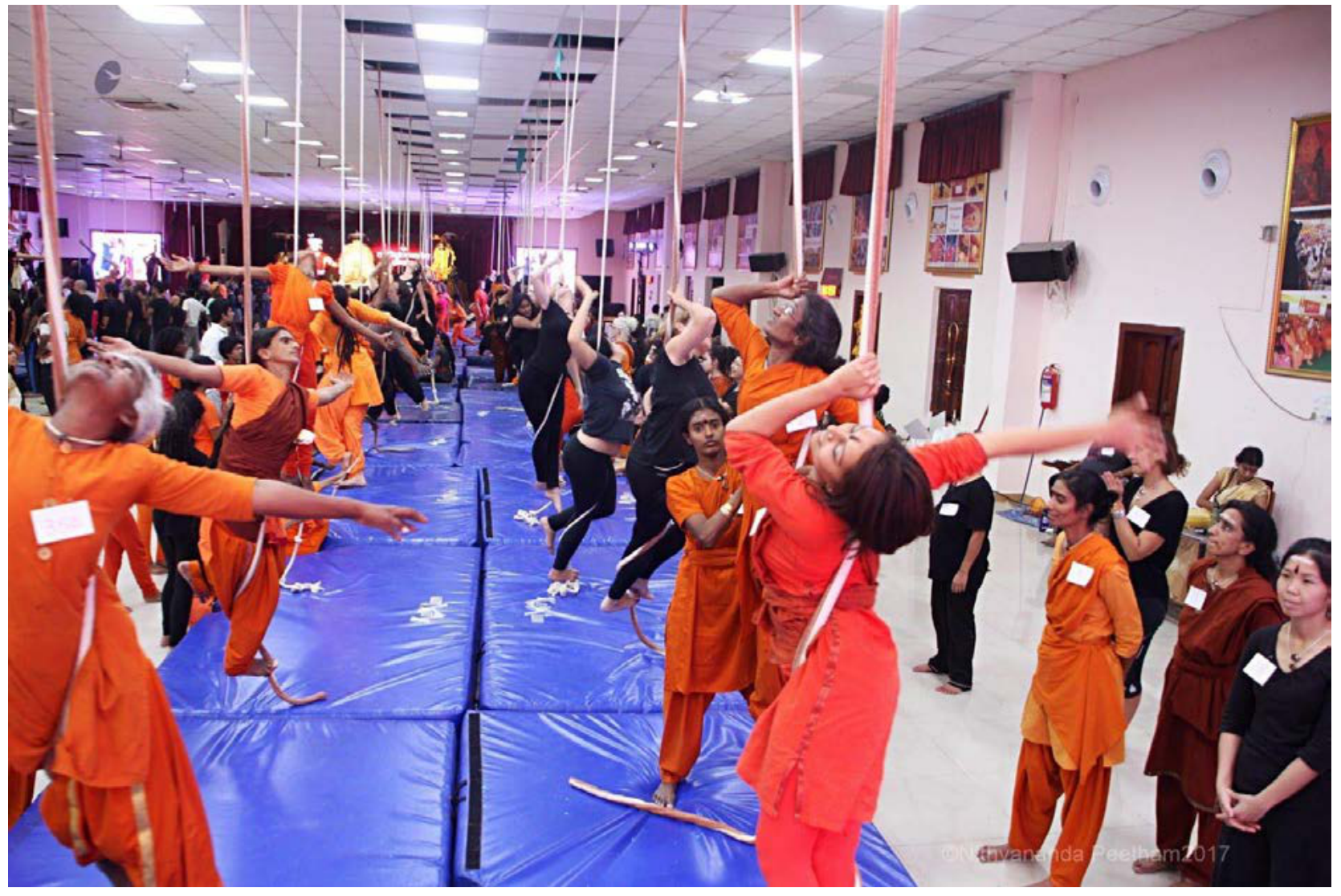
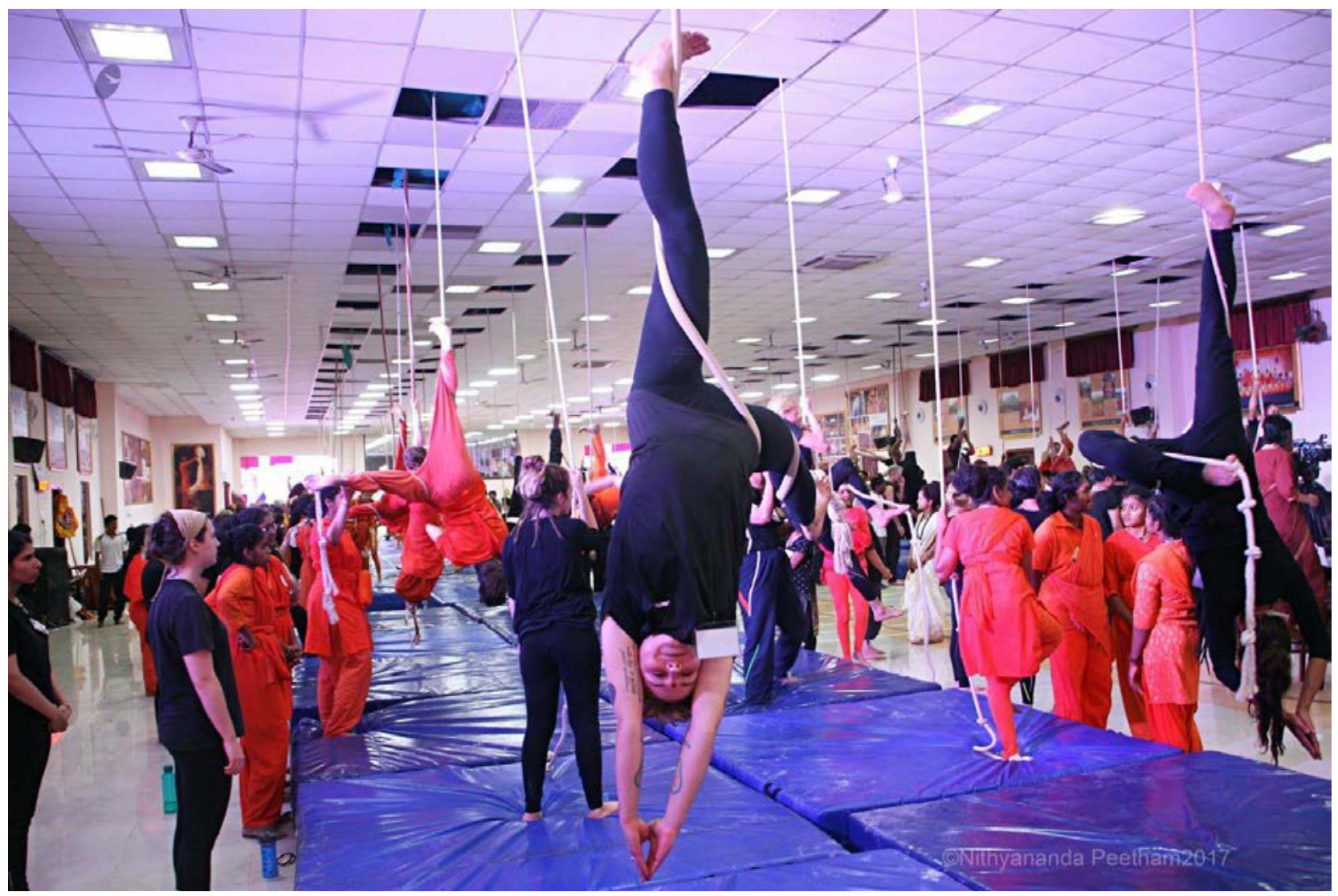
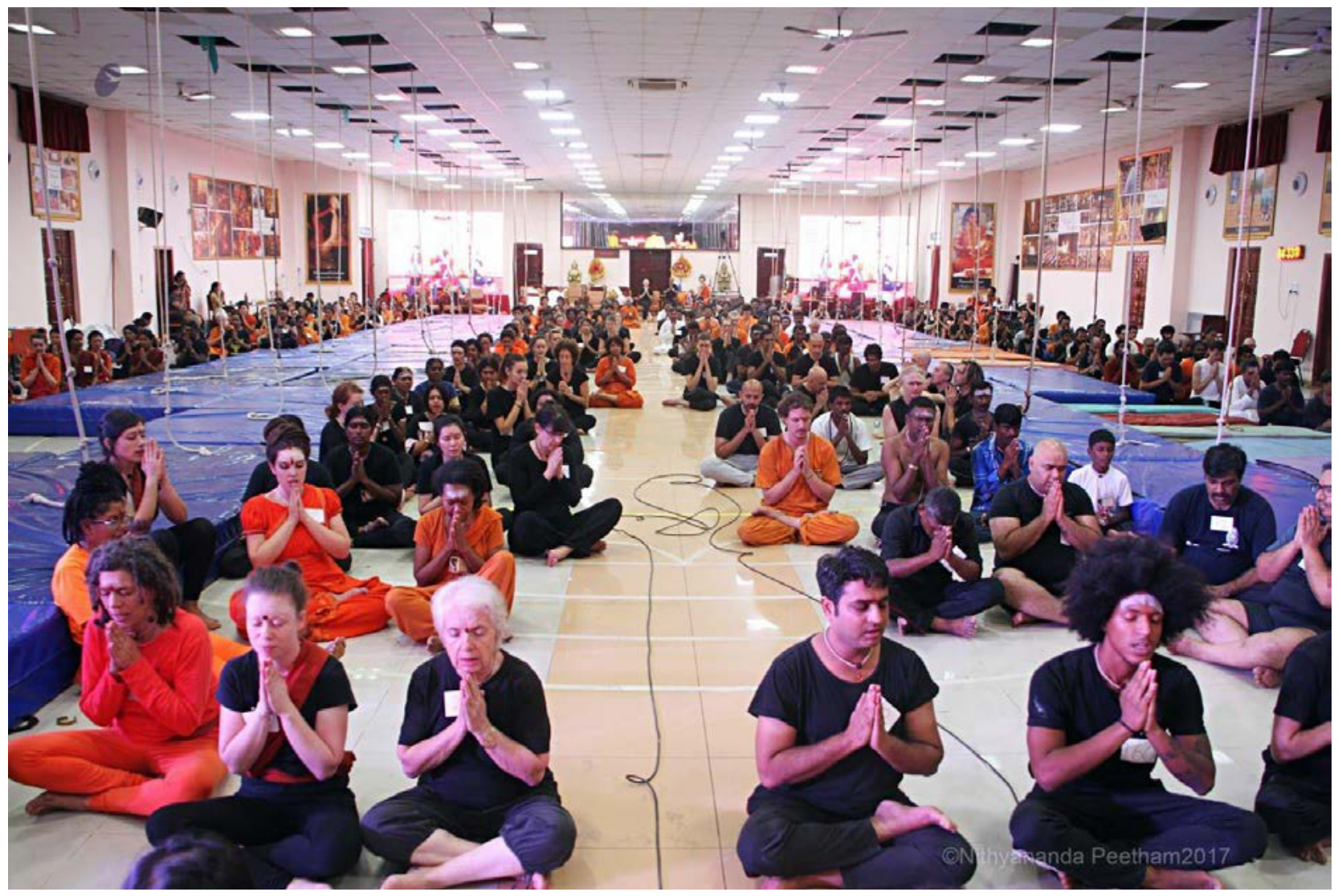
Swapnil Dangarikar, the official adjudicator from Guinness World Records®, honored the SPH Bhagavan Sri Nithyananda Paramashivam with the certificate of successful "officially amazing" record of the largest rope Yoga lesson on behalf of Guinness World Records.
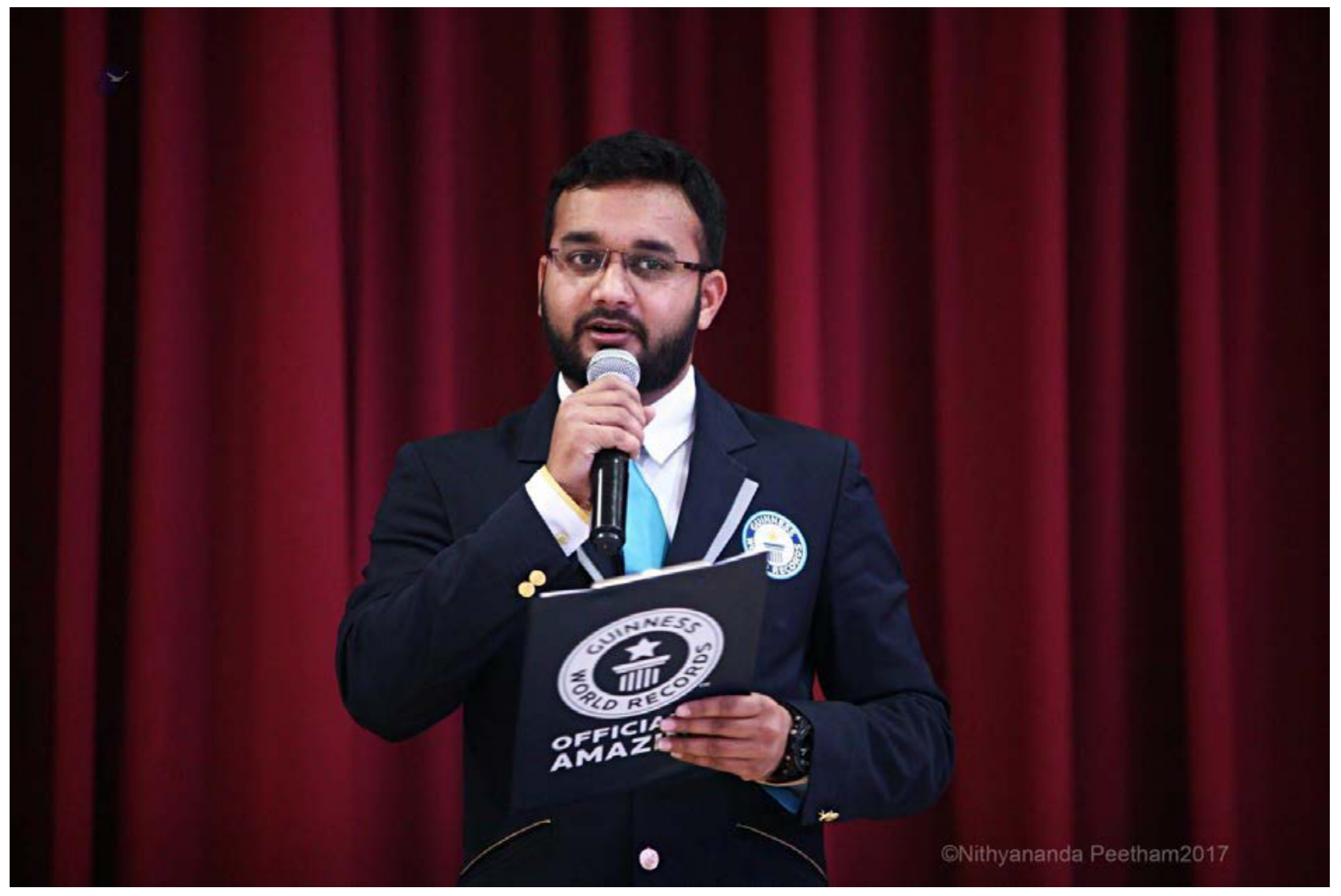
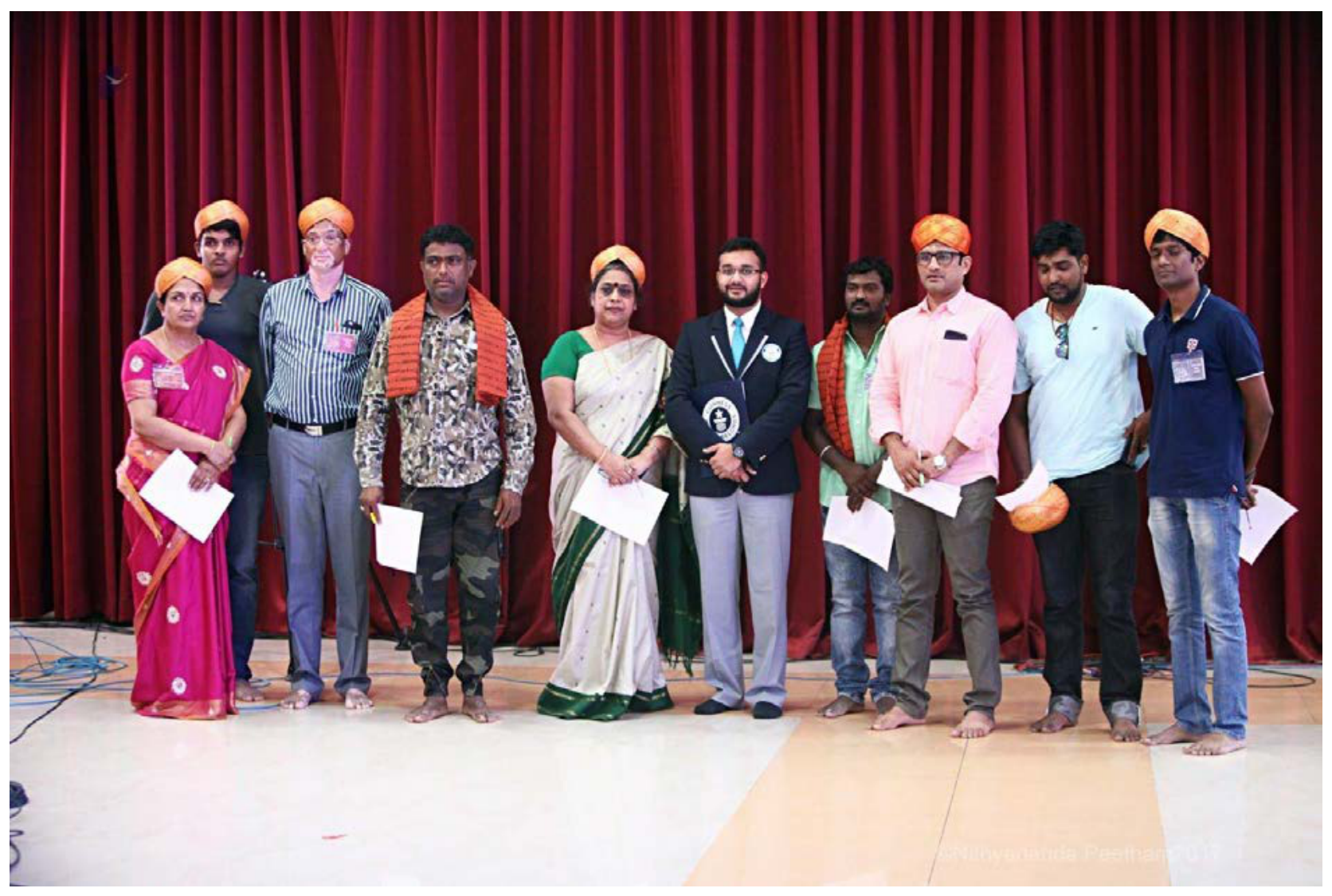
The SPH Nithyananda Paramashivam declared as OFFICIALLY AMAZING
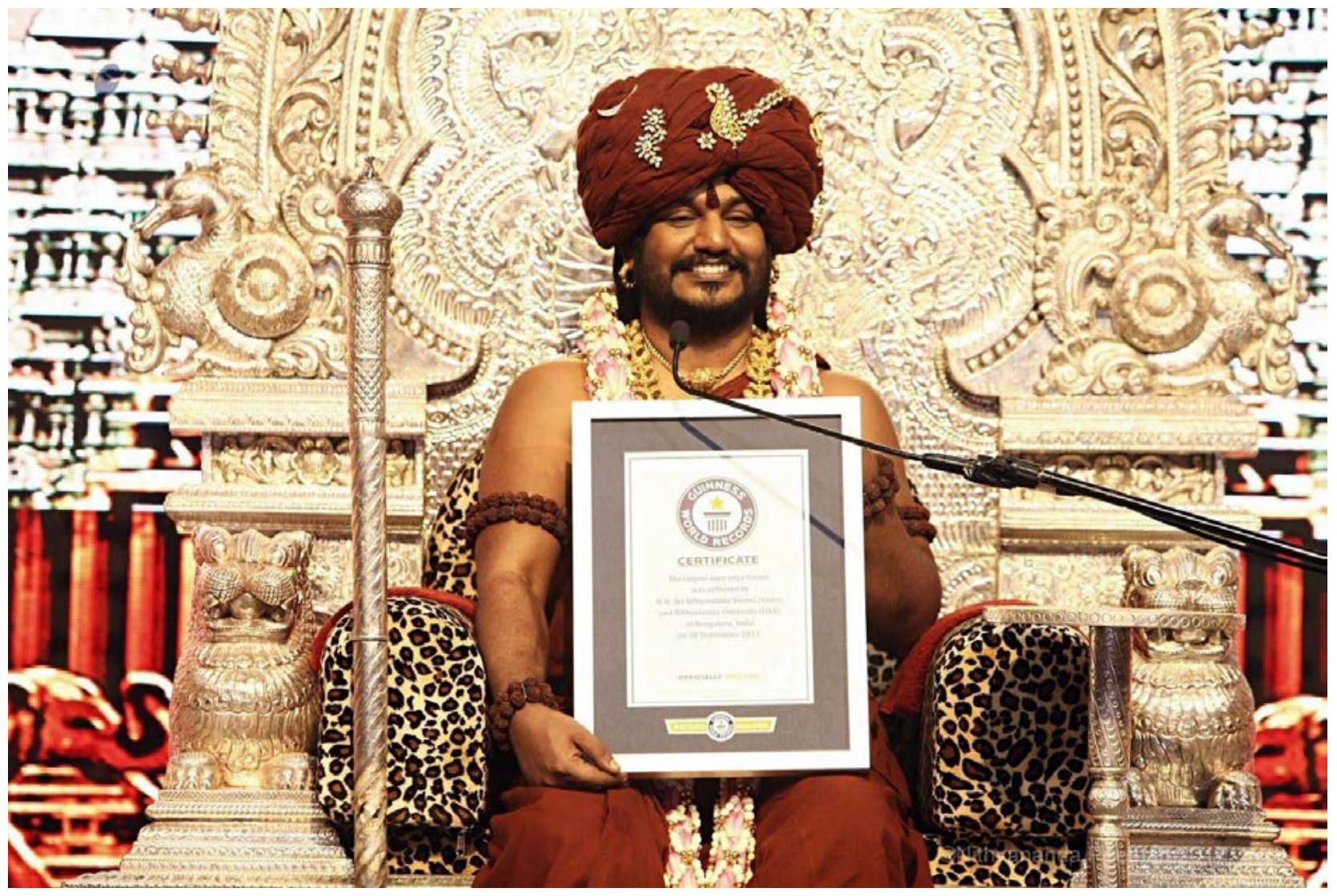
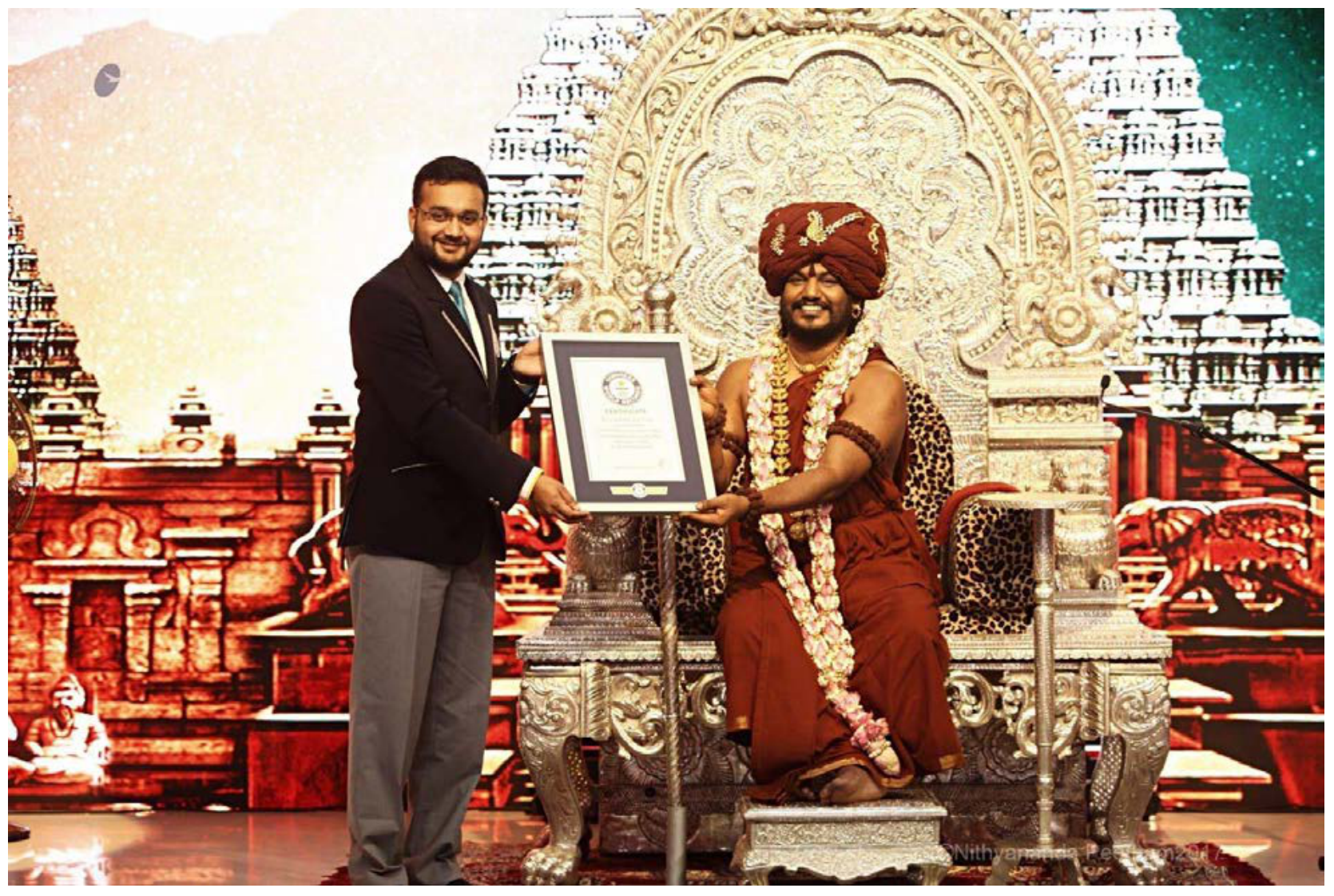
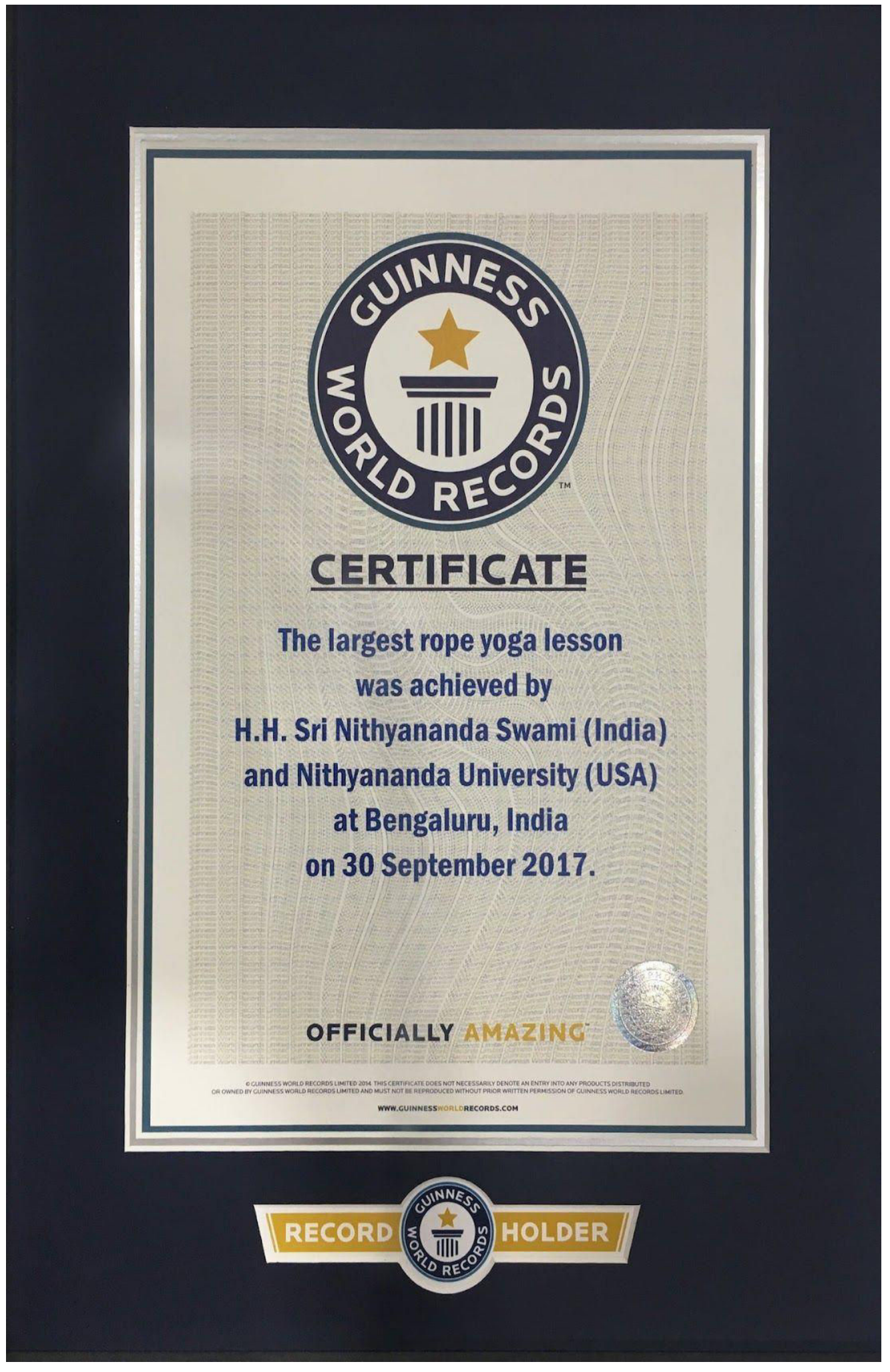
Nithyananda Kundalini Rajju Yoga℠ is a certified course offered by Nithyananda Hindu University.
Nithyananda Shivasthamba Yoga Guinness World Record
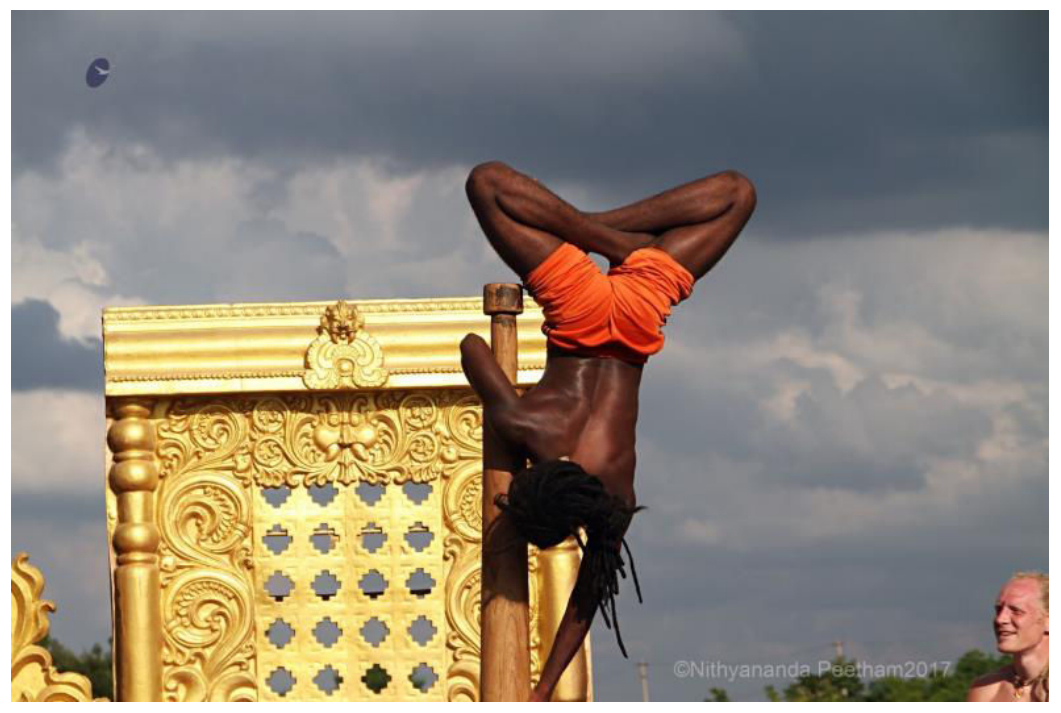
03 October 2017
Bidadi, India
In just 2 days after setting the Guinness World Record® for the Largest rope Yoga lesson, the SPH Bhagavan Sri Nithyananda Paramashivam set yet another record, this time for the Most people performing Mallakhamba Yoga (Shivastambha Yoga), commonly known as pole Yoga. In an extraordinary display of powers of yogic body and initiation by the Avatar to awaken the kundalini shakti or inner potential energy of every individual, 263 initiated disciples of the SPH from 44 countries aged from 16 to 74, including men and women, successfully completed the Mallakhamba/Shivastambha class at the Nithyananda Peetham, Bengaluru Aadheenam.
True to his integrity to reviving all dimensions of Sanatana Hindu Dharma back to their original glory, The SPH Nithyananda Paramashivam has taken this ancient traditional yogic science of Mallakhambha to the whole world, beyond the boundaries of gender, age, culture, nationality, socio-economic backgrounds, or even physical abilities.
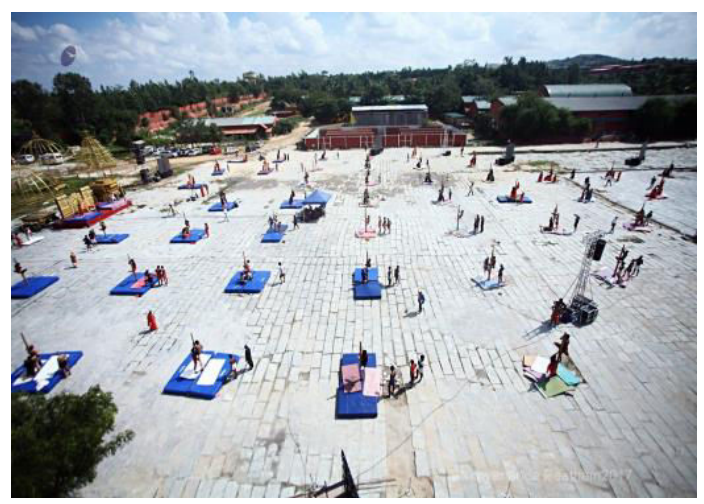
Shivasthamba Yoga℠, also known as Mallakhamba, or pole Yoga is a traditional Indian sport in which Yogi performs Yogic postures on a vertical wooden pole. Shivasthamba Yoga℠ has its roots in the ancient science revealed in the sacred Shaiva Agamas. Shivasthamba Yoga℠ is a powerful tool to add power and flexibility to the system.
Ordinarily, being adept at Shivasthamba Yoga℠, an exercise that awakens Kundalini Shakti, the innate energy current that lays dormant in every human spine, requires intense dedication, hard work, and years of practice. Yet, the disciples of the SPH, just through the power of his initiation and blessings, express powers that include the ability to instantly perform asanas, or postures, on the pole. Through
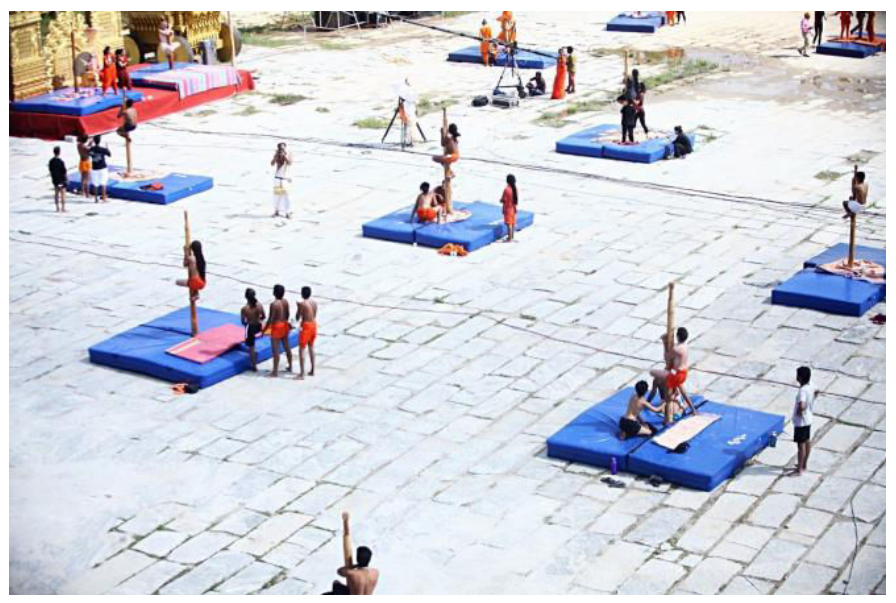
Shivastambha Yoga, the awakened Kundalini energy is never lost, and the body remains completely healthy and fit.
The landmark event was adjudicated by a
slew of “stewards” including Sri Uday
Deshpande, the world-renowned master of
Mallakhamba Yoga, and witnessed by
thousands including the naga sadhus of
Panchayati Akhada, Niranjani.
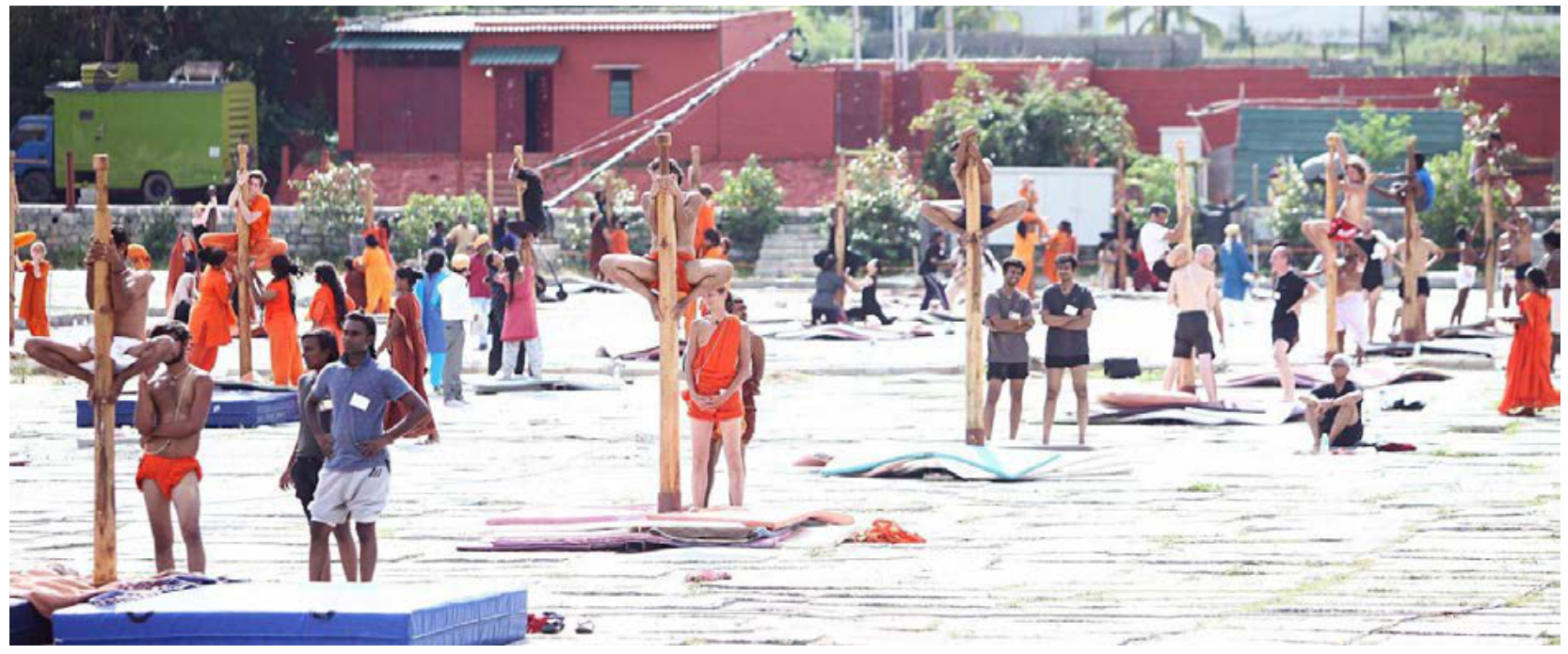
Swapnil Dangarikar, the official adjudicator from Guinness World Records®, honored the SPH Bhagavan Sri Nithyananda Paramashivam (then knows as His Holiness Paramahamsa Nithyananda) as "officially amazing" with the record for the Most people performing Mallakhamba Yoga (commonly known as pole Yoga) on behalf of Guinness World Records®.
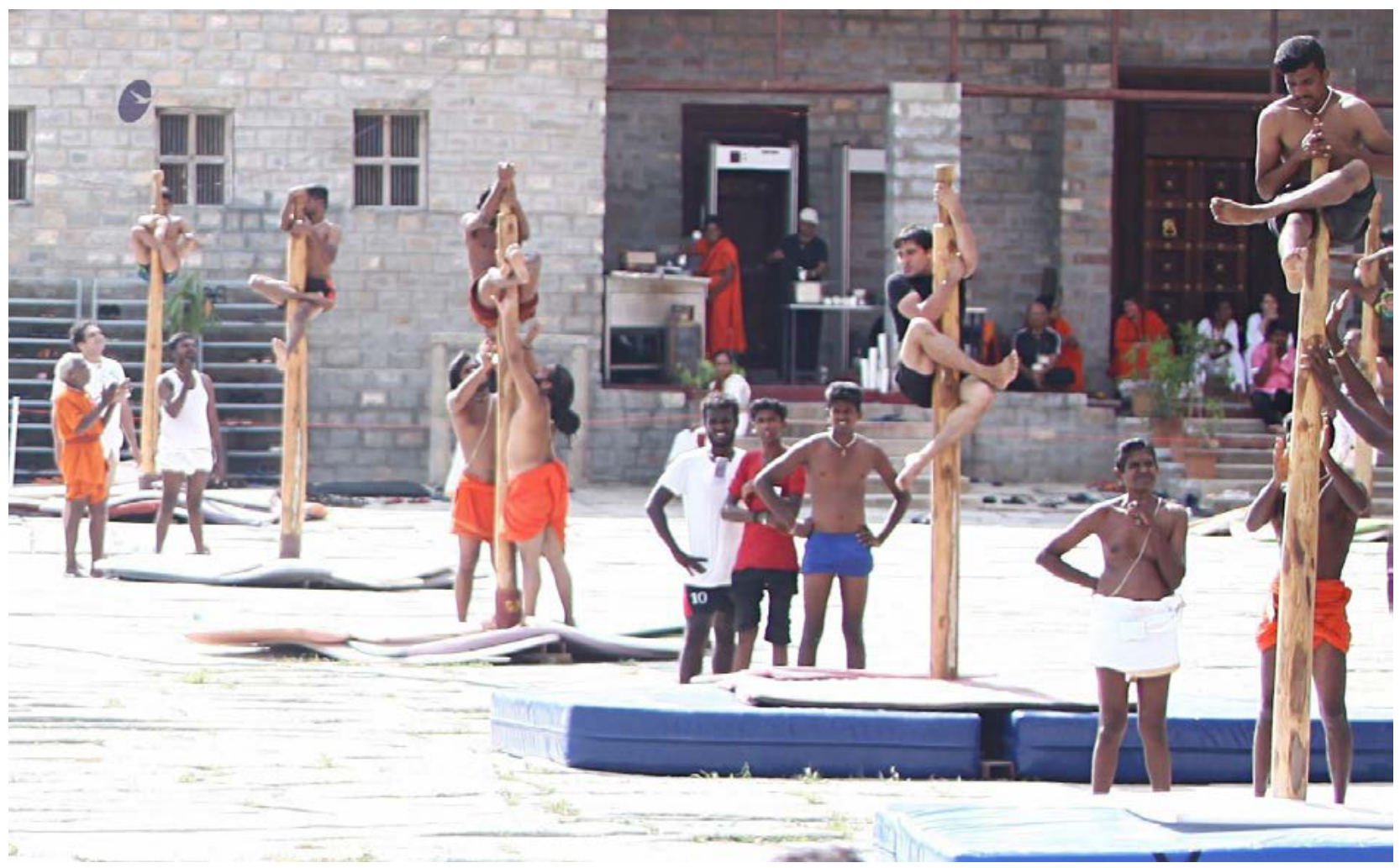
The SPH in his acceptance address expressed his gratitude to Guinness World Records for their support in bringing legitimacy to the various dimensions and powers and arts of Hinduism and reaffirmed his commitment to reviving the ancient sciences and arts of Hinduism for practical usage by modern human beings.
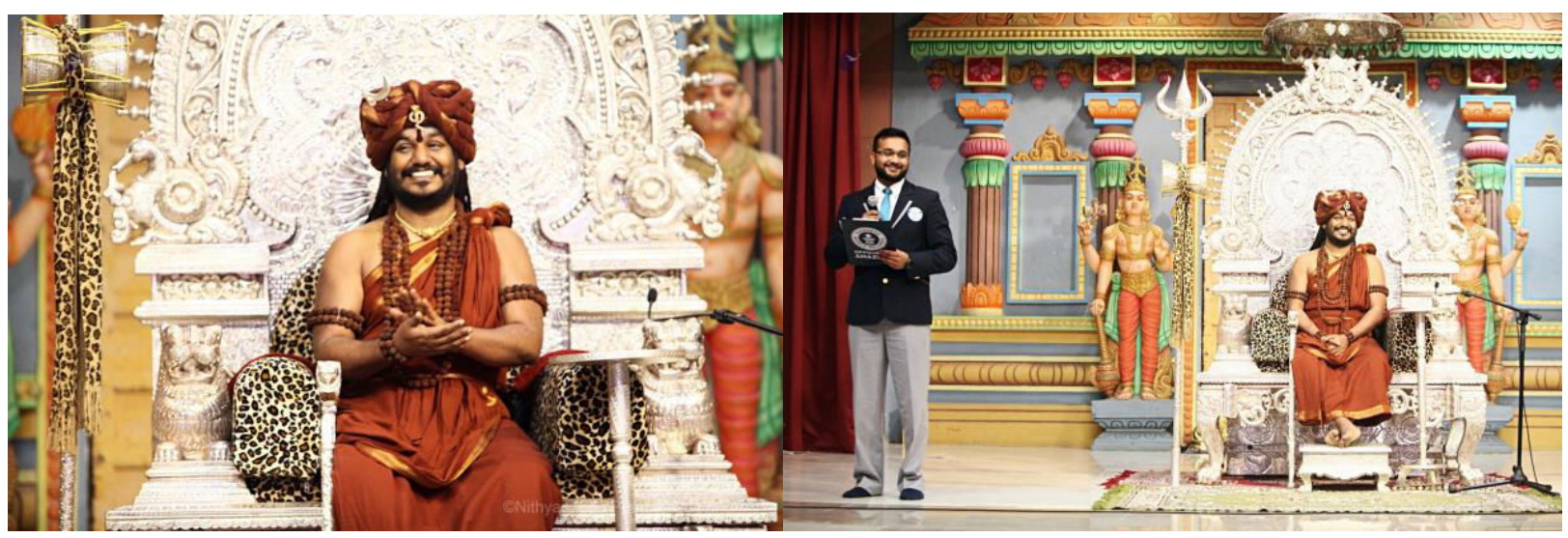
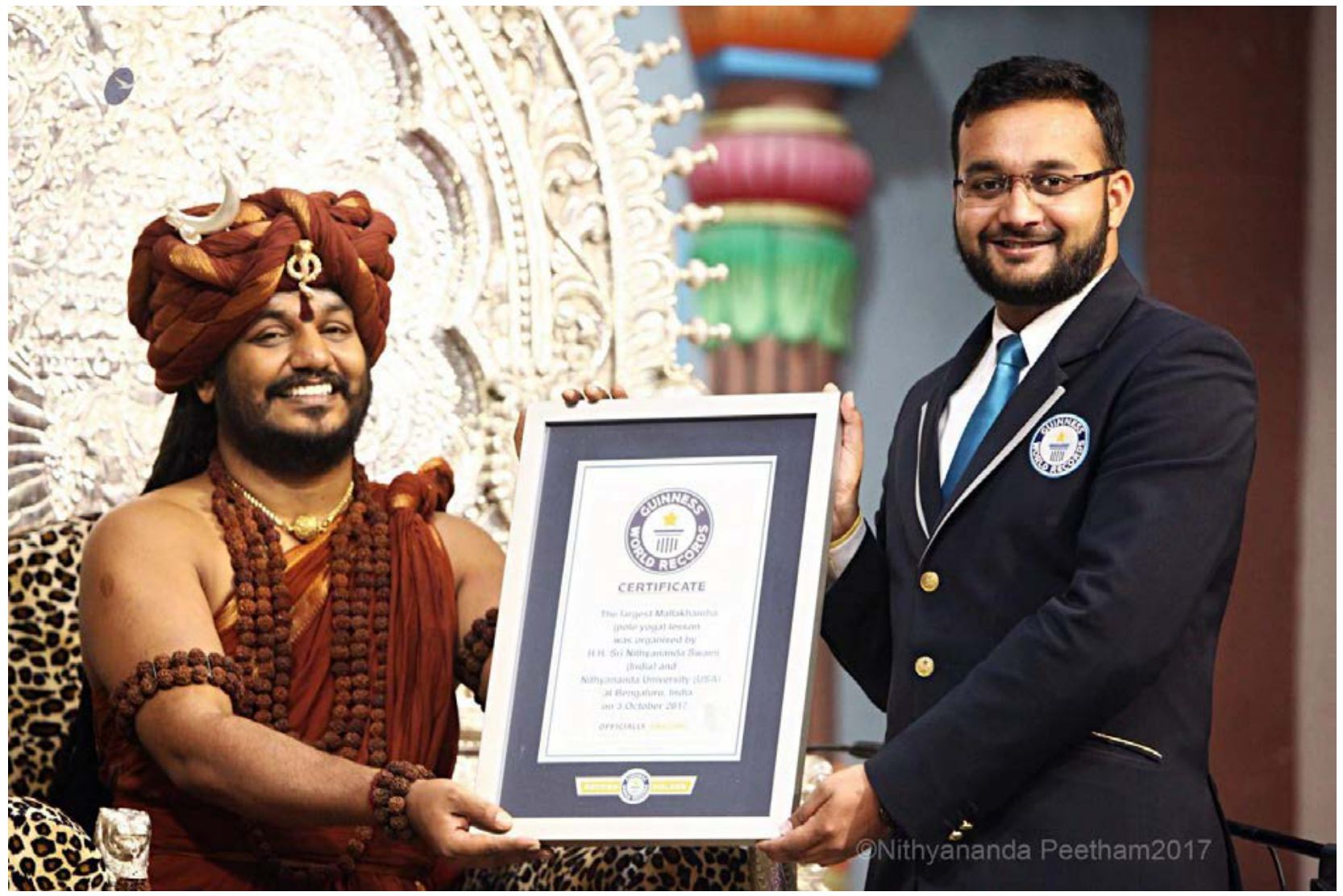
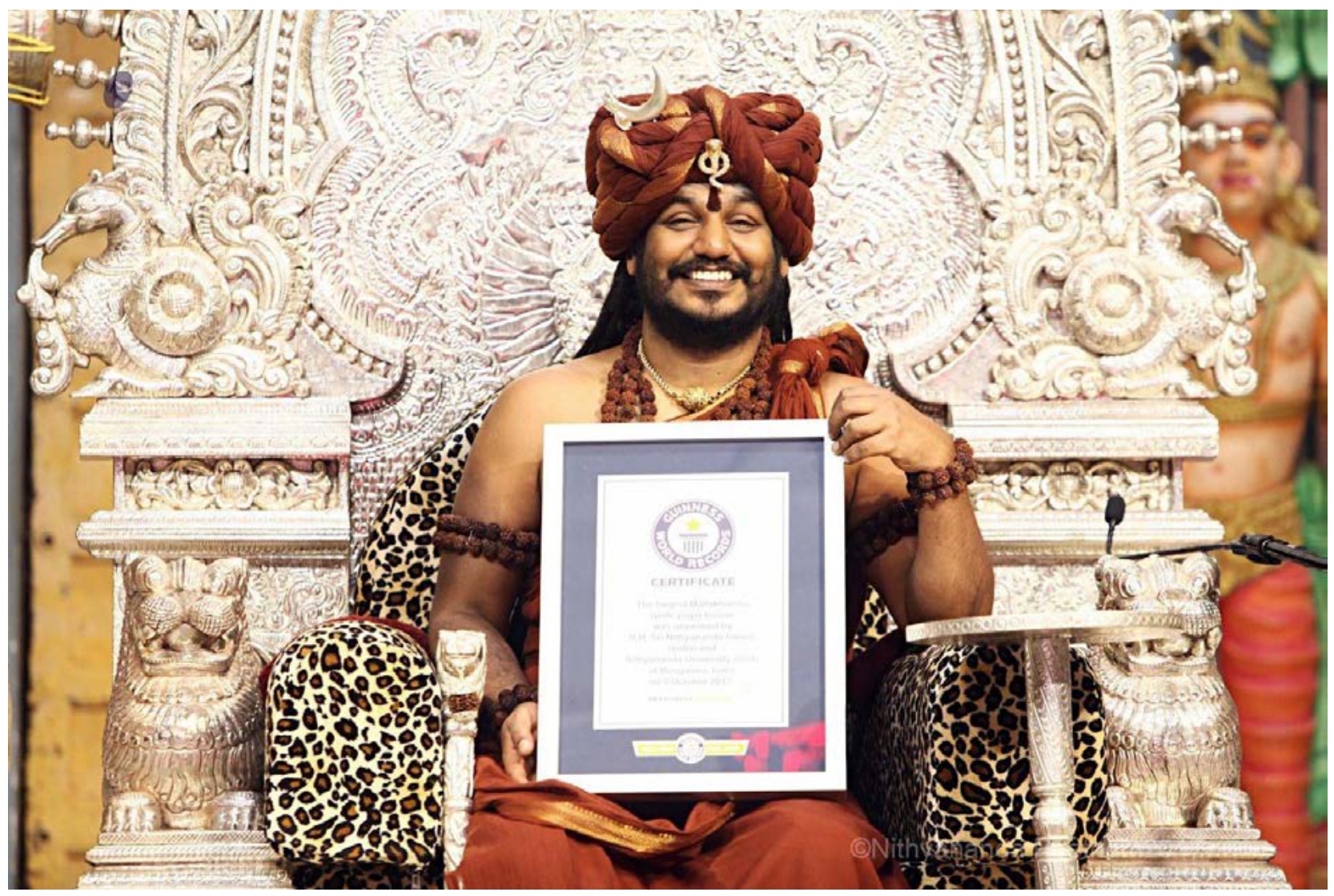
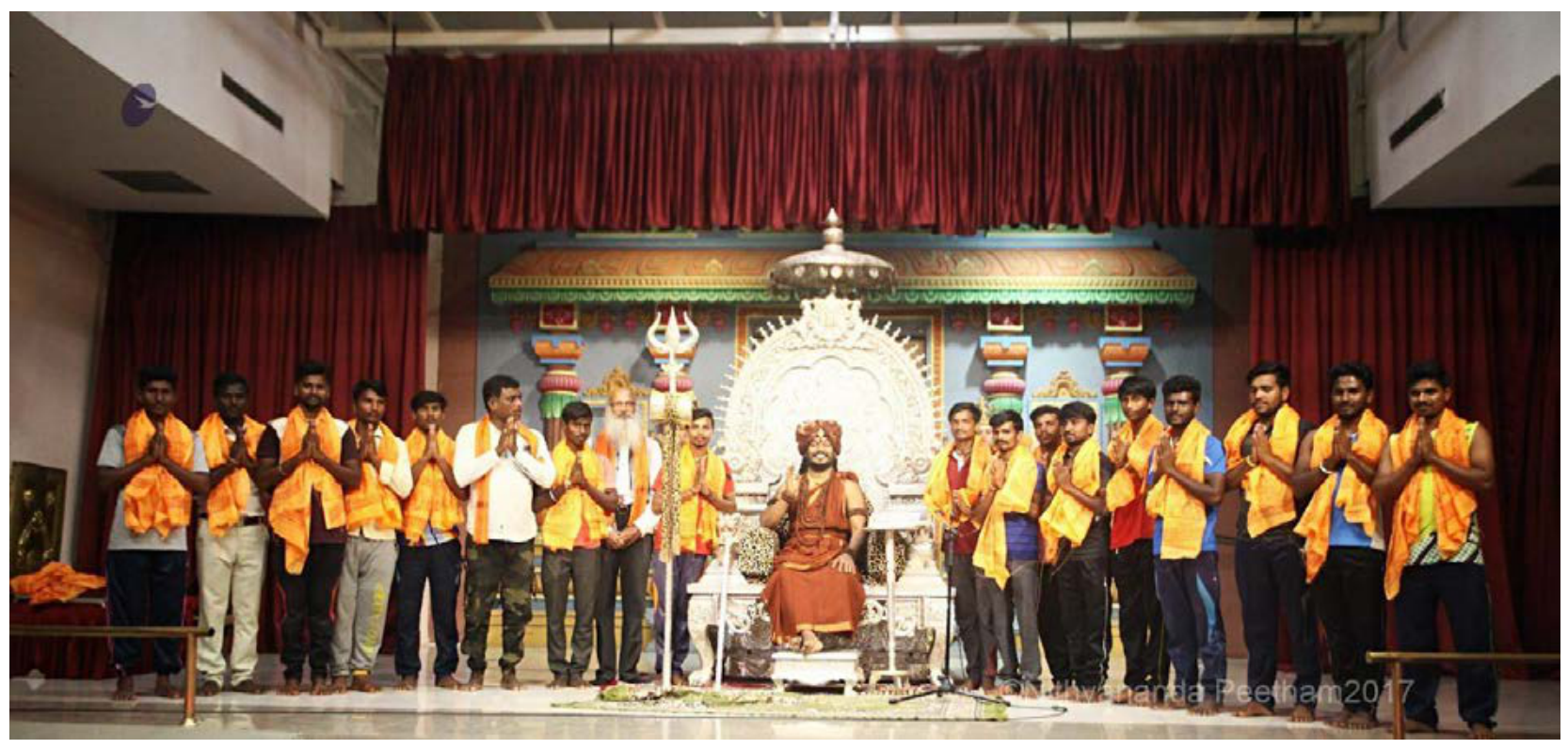
International Yoga Day 2017 - Bengaluru Aadheenam
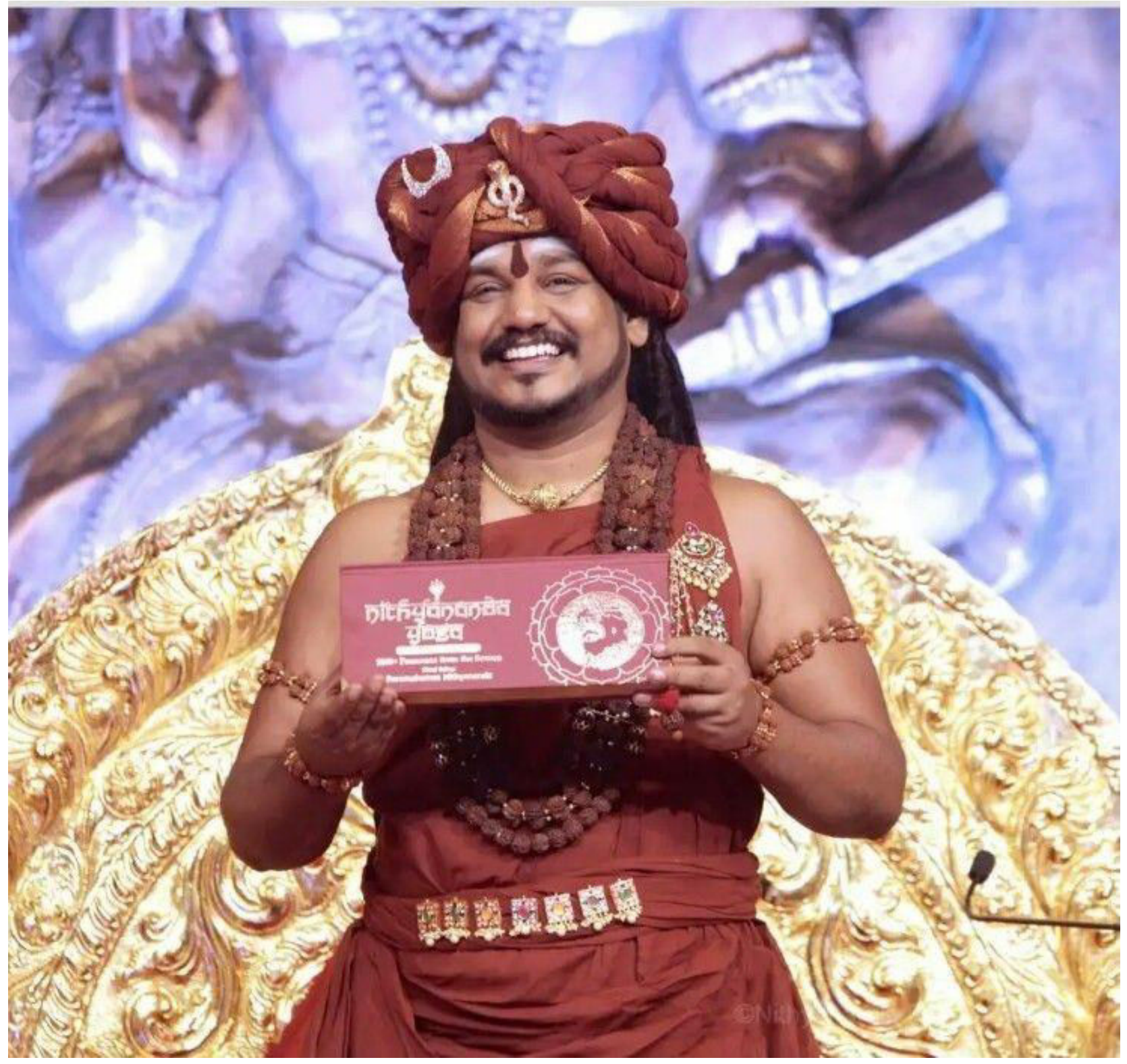
The SPH releases The Book that will change the face of Yoga as known by the world today. Nithyananda Yoga - Evolution of New SPecies - 1008 Pramanas From the Source
From Chief Editor Bhagavan Nithyananda Paramashivam
In conjunction with International Yoga Day, 2017, the SPH set a unique first-ever world record: 108 of his initiated disciples demonstrated the power of Third Eye Awakening
With physical eyes closed and blindfolded, each one passed three strictly monitored tests, reading whatever was written for them and accurately reproducing drawings made for them to trace. 108 dignitaries came from around the world as an ethics committee to ensure the tests were performed strictly following scientific criteria. These guests included doctors, school administrators, artists, publishers, heads of state, leaders of religious organizations, and more. Among them, Sri Vedantam-Ji, founder and chairman of Vishwa Hindu Parishad, Mr. Prasad, State President of BJP, Dr. Raju, Research Director of NIMHANS, Mallikarjun, Principal of BMS engineering college and Manjunath, Leader of Bajrang Sene, showed great enthusiasm for the powers displayed.
Following the mass demonstration, the SPH addressed the crowd with a special Satsang discourse in celebration of World Yoga Day.
One highlight of the evening was the release of the ultimate sourcebook on Yoga, “Nithyananda Yoga: Evolution of New Species.” For the first time, the ultimate authority on Yoga is being presented with scriptural-evidences of Yoga, the Shaastra Pramanas - from the Vedaagamas; with a fourfold level of authentication called Pramanas.
“This book makes a strong statement,” says His Holiness, “Yoga has a religion; that religion is Hinduism!”
“Yoga is from the HINDU SHASTRAS and the originator of YOGA IS SADASHIVA HIMSELF!”
- The SPH JGM HDH Bhagavan Sri Nithyananda Paramashivam
For the first time, the ultimate authority on Yoga is being presented with scriptural-evidences of Yoga, the Shaastra Pramanas - from the Veda-Agamas; with the Apta Pramanas, the enlightened experiences of the Enlightened Yogis, Rishis, Yogis, incarnations, and Atma Pramana, the SPH’s own experience of the truth, and Sakshi Pramanas, the experiences of the
initiated disciples of the SPH.
One of the first in series of the vast revelations is the Yoga Pada, the Yoga sections of the Agamas, this book serves the true Yoga practitioner or anyone who bends the body for Yoga, as the true undiluted sourcebook to explore and experience the true Yoga with its infinite dimensions from the founder of Yoga, Lord Paramashiva, as revived by the SPH Bhagavan Sri Nithyananda Paramashivam. These sourcebooks have been used in the Prathama Vinyasa Krama.
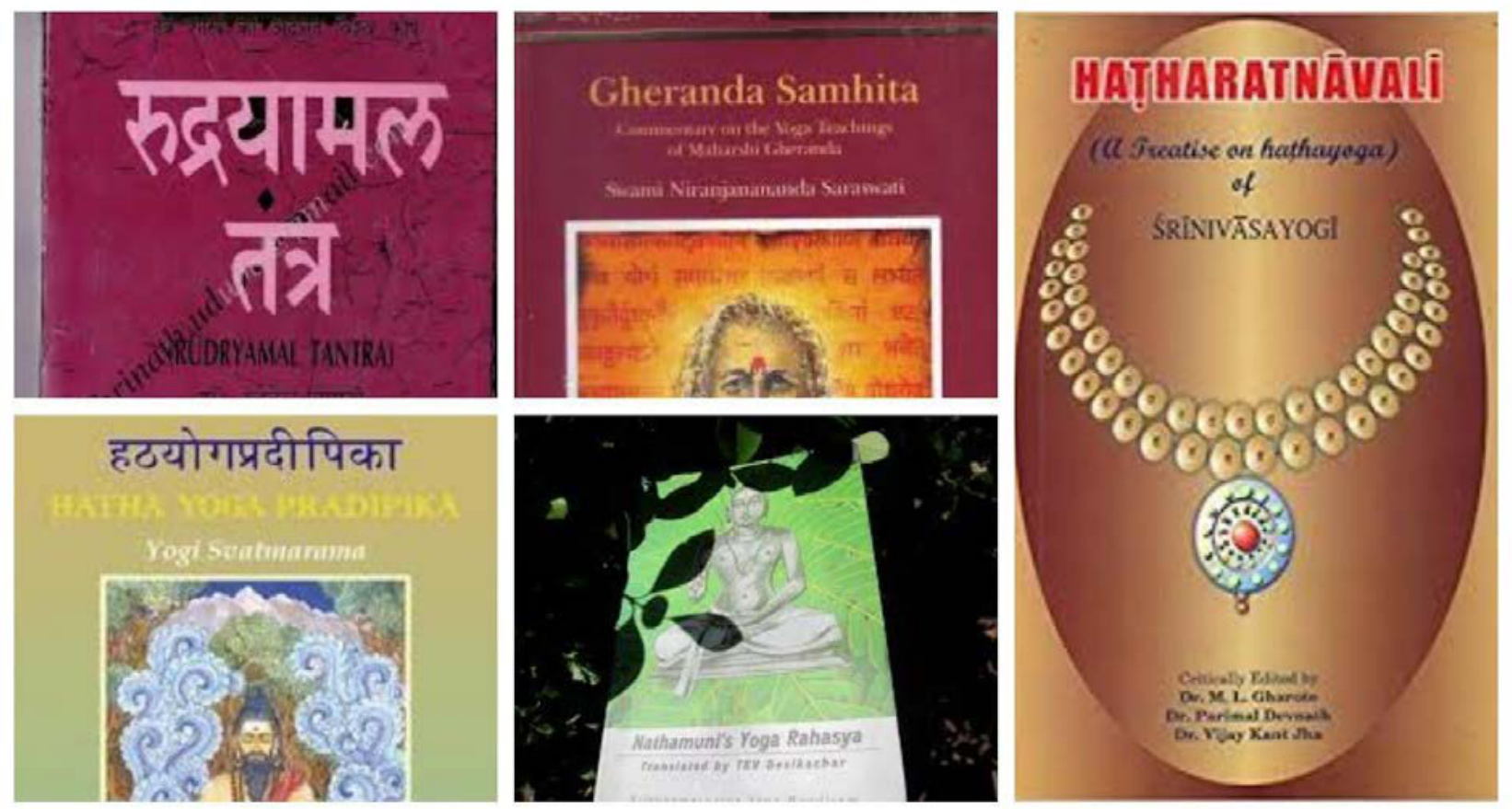
Shastra Pramana:
Tri-Sikhi-Brahmanopanishad
Rudrayamala Tantram
Rudrayamalam uttara-tantram
Varahopanishad
Sandilyopanishad
Yoga Chudamany Upanishad
Yoga-Tattvopanishad
Apta Pramana:
Yoga asana mala sacitra
Joga Pradipika
Kapalakurantakas hathabhyasa-paddhati
Nathamunis Yoga rahasya
Hatharatnavali Vinyana bhairava tantra
Gheranda samhita
Shiva samhita
Hathapradipika
Yoga rahasya
Hatha sanketa chandrika
Yoga sampradaya (lineage) is the spiritual path to experience the superconscious breakthrough and attain oneness with Paramashiva through extensive yogic practices such as asana, pranayama, bandha, Japa, etc., which aim to align the geometry of the seekers’ bodies with the cosmic geometry and making them experience Oneness with Paramashiva, the Supreme Consciousness. This is achieved by raising an individual’s Kundalini Shakti, or inner potential energy, present in the Muladhara Chakra, all the way up to Sahasrara Chakra, where Paramashiva resides. The Yoga sampradaya from Paramashiva consists of 12 limbs, namely, asana, pranayama, visualization, verbalization (Japa), Shastric reference (Pramana Mantra), mudra, bandha, Karana, mandala, Abharana, weightlifting, and Aushada. The first instruction on Yoga to the world was given by Paramashiva Himself as SYoga Pada of Agama to the Saptarishis thousands of years ago. Thereafter, many great masters like Patanjali, Swatmarama, Matsyendranatha, Gorakhnatha, and others experienced oneness with Paramashiva and expressed the truths and experience of Yoga in the language of their own time and revived the tradition of Yoga. The Shastra Pramana of the Yoga Pada of Agama given by Paramashiva Himself, along with the Apta Pramana (personal experience) of these masters such as Patanjali Yoga Sutras, Gheranda Samhita, and HathaYoga Pradipika, form the knowledgebase of the Yoga Sampradaya.
Prathama Vinyasa Krama - 108 asanas in 1 Hour
Prathama Vinyasa Krama forms an integral part of the daily spiritual routine of all disciples of the SPH Bhagavan Sri Nithyananda Paramashivam. It is a set of 108 asanas, offered to the world by The SPH Nithyananda Paramashivam as the first level of Yoga to be practiced by people. The asanas are not practiced as standalone postures but are accompanied by other 11 limbs mentioned before, hence making it an authentic Hindu ritual as given by Paramashiva Himself to make the practitioner manifest Paramashivatva, that is, Oneness with Paramashiva, the Ultimate Superconsciousness. The practitioners, simply by doing Prathama Vinyasa Krama daily, experience Kundalini Awakening and start manifesting Paramashiva Shaktis, along with developing the peak of health and the ability to mold their bodies the way they want.
Some Asanas with their Pramanas