Shapes and colours
This text was machine-transcribed from the printed book and may contain errors. Select the words and choose “Report a mistake”.
DAY: 1
SHAPES AND COLORS
Topic: Colors – red, maroon, lavender. Shapes – circle, sphere.
Contents:
Vocabulary: red, circle, pendulum, wheels, light, reflected, green, blue, yellow, primary colors, black, lavender, maroon, 3 dimensional (3D), curved, ball, globe,
Material required: Different objects in circle shape and red color.
Presentation: • You can see objects in color because of the color of light reflected on them. • Light has three primary colors; green, blue and red. When these primary colors are mixed together, other colors are created. • If no light is reflected and all the colors are absorbed by the object, it appears in black color. • Make circle and encourage the children to sit on it when they come to the circle. • Encourage the children to look around the class for red things and some objects in circle shape. Introduce the colors of maroon and lavender; show them pictures and objects so they can identify the colors. • Tell them a circle is a shape that is made up of curved lines and that circles have no sides. • A sphere is a 3 dimensional shape (3D), it is circular, but because it is 3D, it will be round and like a ball or globe. • Ask the children to find some spherical shapes in the classroom or to think of some shapes they have seen before. • Red is a primary color. Discuss how colors affect us emotionally and ask how red makes them feel (red is a warm color and it usually makes us feel alert). • Maroon is a dark, deep red, like the color of wine, and similar to burgundy. It is reddish purple in color. • Lavender is bluish purple in color, and the name comes from the flower lavender. It is calming and creates a relaxing effect. • Explain what happens when we mix yellow or white or blue, talk about primary colors, and how we can create other colors from them. • Tell children to make circles with their arms or fingers. Show them circles in different size. • Discuss about different objects like wheels, hula hoops, pendulum, ring, bangle that are in circle shape.
Assessment: • What is your favorite red thing? • Which insects or bugs are red? • Can you say some words that rhyme with the word red? • What is the color of apples? • How does red make us feel? • What have you learnt about circles today? • Name some objects in circle shapes? • Does circle have any sides? • What color is maroon? • Can you name some things you've seen that are maroon? • Where did the word lavender come from? • Is it named after a frog? • What effect does it have on us when we see lavender? • What is a sphere? • What does 3 dimensional (3D) mean? • Is a ball or a mat in the shape of a sphere? • What color can we create by mixing yellow with red? (orange)
Closing: To facilitate the children to name and recognize red color, and circle shape. To relate the colors and shapes to their environment, learn new words and to name all the colors and identify them.
Evaluation:
Skills: • Visual discrimination: color-red, shape- circle. Different objects in circle shape and red color. • Cognitive skills- understanding and recognizing the geometric shape. • Math skills- sorting, patterning. • Cause and effect: mixing different colors with red we get a new color.
Expansion:
Color pallet - Using a plate or pallet and different colors, we can show the children, that by mixing red color with white gives pink, red and yellow makes orange, red and blue makes purple, yellow and blue make green and so on.
“Triangle time” – “Circle time” can have the shape changed each day of the theme, for example, when there is the topic of triangles, that day they can sit on a triangle drawn with chalk having “Triangle time”.
DAY : 2
Topic: Colors – yellow, burgundy, purple. Shapes - oval, cube
Content
Vocabulary: oval, yellow.
Material required: Different objects in yellow, burgundy, and purple color. Different objects that are oval and cube shapes.
Presentation: • Introduce the class to the new colors and shapes. • Yellow can create many other colors by mixing them together. • Show the children a collection of pictures or objects in yellow things. Ask the children to find classmates who are wearing yellow. • Ask them how the color yellow makes them feel. Explain that yellow is a warm color and encourages creativity. Talk about how lemons, bananas, sunflowers are yellow in color. • Tell them to sort all the yellow objects and arrange them in a line or group them in different sizes. • Purple is made by combining red and blue. There can be dark and light shades of purple and many things around us are purple like flowers, grapes, grape juice etc. • Burgundy is a color that is a variation of purple, it is similar to maroon and a purplish red color. • An oval is similar to a circle because it is made up of curved lines and has no corners or sides, but it is different because it is not round like a circle. • Show or demonstrate some objects like eggs, baseball, mirror etc in oval shape and tell that many people have faces in oval shapes. • A cube is a 3 dimensional shape (3D), it is square shaped, but because it is 3D, it will be like a box, ice cube etc. • A cube has six corners, and the distance between all corners will be equal.
Assessment: • What are your favorite yellow things? • Name few things that are in yellow? • What is the color of lemon and sunflower? • Can you name some things that are purple? • What is your favorite color? • What have you learned about ovals? • How are ovals and circles alike? • Name few things that are in oval shape? • Do ovals have sides or corners?
Closing: To enable the child to recognize the oval shape and yellow color by showing different objects and to develop their ability to sort and place them in different size and color.
Evaluation - Skills:
Language skills- to answer to different questions, to say lot of vocabulary words. • Visual discrimination- different objects in yellow color and oval shapes. • Math skills- sorting, patterning, arranging in series.
DAY: 3
Topic: Colors – blue, indigo, violet. Shapes – square, cylinder
Content: Vocabulary: square, blue, corners, sides.
Material required: different objects in square shape, picture charts of shapes, different objects in blue color.
Presentation: • Blue is an important color, and both indigo, and violet are made by mixing from blue. Indigo is a slight purplish blue and violet is made by mixing blue and more red. • Colors make life interesting and discuss the possibilities of having a world where all things are black and white. • Have a basketful of multicolored items in the middle of the circle. Invite the children to find all the blue items in the basket. • Tell the children that blue is considered to be a cool color and that it is generally a color that makes us feel calm. Tell them that color of sky, some flowers, fruits blue in color and so on. • Explain to the children that a square has four equal sides and four corners. Make them count the corners and sides in a square. • Encourage the children to find squares in the classroom. Show to them, square shaped books, blocks, window, board so on. • Cylinder has two circles one on top and one at the bottom and no sides. Some examples of cylinders are; water bottle, tube light, lipstick, pen, etc. Assessment: • What is the color blue? • Name few things that are in blue? • What are your favorite blue things? • How many corners does a square have? • Name a few objects in square shape? • Are the sides equal to each other in a square? • What is a cylinder? • Is a cylinder a 3D shape?
Closing: To make them to understand the geometric shape of square and cylinder by explaining to them about their different features. To enable the child to recognize the colors blue, indigo and violet by showing and demonstrating different objects.
Evaluate:
Skills developed: · Bodily kinesthetic - by finding the blue items from basket. · Spatial skills- to color the picture in blue. Encourage the children to draw or trace the square and cylinder shape. To use play dough to make shapes. · Listening skill: to make them listen to the bells inside the square boxes when it is moved. · Logical- mathematical- to make and cut four smaller squares to create a square puzzle and so on.
Shapes and colours
DAY: 4
Topic: Colors – green, magenta. Shapes – triangle, and cuboid.
Content:
Vocabulary: green, magenta, triangle, cuboid.
Material required: different objects in color green, pictures, different objects in triangle shape, puzzles.
Presentation: • Colors and shapes are all around us, they make up our world. • Green can be made by mixing blue and yellow together. • Magenta is a pinkish purple made by mixing red and blue together. • Show the children few objects that are in green color. Ask them to look outside and ask them what they have seen in green. • Tell the children that green makes us cheerful and it a signal light for traffic to go. Show them different types of leaves. Tell them about fruits and vegetables that are in green color. • Make the children sit in a triangle shape, and for a change have "triangle time" instead of circle time. Collect few items that are in triangle shape and show to them. • Explain the children that a triangle has three sides and three corners. Point each side and corner of a triangle and show to them. • Provide paper squares to the children and show them how to fold the square to a triangle. • Cuboid has four rectangles and two squares. It is a 3D shape.
Assessment: • What would the world be like without green? • What are the things that are green? • What does the green traffic light represent? • Name few fruits and vegetables in color green? • What is the shape of a pizza? • How many sides and corners are there in triangle? • Name few objects in triangle shape? • What shape do you get when you fold a square paper? • Have you seen a block in the shape of a cuboid? • Is a cuboid a 3D shape?
Closing: To enable the child to recognize the color green and develop keen observation. To understand the shape of triangle by explaining and showing the three sides and corners.
Skills developed: • Critical thinking- if there is no green color in the environment what happens. • Language skills- answer the question, build up confidence in communicating. • Math skills- sorting, patterning. • Gross motor skills- jump on shapes, find few objects in green.
Shapes and colours
DAY: 5
Topic: Colors – beige, mauve. Shapes – rectangle, prism.
Content:
Vocabulary: purple, rectangle.
Material required: different objects in purple color, different objects in rectangle shape.
Presentation: • Beige is a light brown color, and mauve is a pinkish purple. • Demonstrate the colors using objects or flashcards with the words clearly printed. • Encourage the children to find beige and mauve things in the classroom. Show them different objects in those colors. • Explain and show the children the objects in rectangle shape. Tell them that a rectangle has four sides and four corners. • Tell them that all the sides of rectangle are not equal only the parallel sides are equal to each other. • Show the children by mixing red and blue we get purple. Explain to them that by mixing different we can get some colors • A prism is made up of three rectangles and two triangles, it is a 3D shape and some examples are tents, and prism crystals.
Assessment: • Name a few things that are in beige or mauve colors? • What have you learned about rectangle? • How many sides are there in rectangle? • How many corners are there? • Are all the sides equal in rectangle? • Can you think of something in your room or home that is a rectangle? • What are some examples of a prism?
Closing: To facilitate the child to name and recognize the colors, learn new words and use these words in their vocabulary. To understand the geometric shapes of rectangle and prism and to name some of the objects that are in those shapes.
Evaluate:
Skills: • Visual discrimination- distinguishing different colors. • Math skills- four sides, four corners. • Cause and effect- mixing red and blue gives purple.
Extension:
Art party – Material required: aprons (bibs), paintbrushes, paint, chart paper, cello tape, sketch pen. During art activities, the children can have an art party, explain that they are each artist, give them aprons, paintbrushes, and paint, and let them do a painting of their choice on a piece of paper, write their names, the date in the right hand side, once they are finished using chart paper, make a simple frame and tape it in front of their painting. Write Art Day, on the frame, with their name and let them admire their work.
DAY 1: ART
CRAYON COLORING
Material required: uncolored art sheet, various color crayons.
Procedure: The children are asked to hold the crayon firmly and color inside the given picture if possible, they can use various colors of their choices related to the given picture.
Skills developed: Tripod grasp, pre writing skills, eye hand coordination.
MAKE A SPHERE
Material required: Newspaper, cello tape, poster colors or water colors, safety scissors.
Procedure:
Step: 1:- Take a newspaper and crush it like a ball shape and stick it with cello tape.
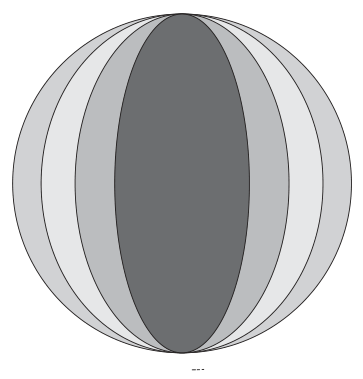
Step: 2:- After sticking paint it with different colors.
Variation: Children's can draw their creative design instead of painting.
DAY 1: ACTIVITY
ADDING COLOR AND POURING LIQUID WITH EYE DROPPER
Goals: To improve their eye hand coordination, comparing and measuring, fine motor skills.
Vocabulary: Transfer, dropper, liquid pour, color.
Material required: Food color, eye dropper, water
Introduction and Presentation: Get all the materials together. Fill the tub with water. Take the food color and add a little water to make a concentrated color. They can first transfer the water from one cup to another using their hands.
Shapes and colours
Give each child an eye dropper and demonstrate how it is used to fill with the liquid when it is pressed. Tell them to fill the cup with water using eye dropper.
Assessment: • What happens when we press the eye dropper? • What happens when we release the eye dropper after pressing it? • Can we fill the cup with liquid using an eye dropper? • What are the uses of eye dropper?
Skills developed: eye hand coordination, fine motor skills, cognitive skills of cause and effect
Closing: Ask them to transfer water from cup to cup, use funnel and tea filter.
Variation: Transfer other liquids by using filter and funnel.
COMPLEX SORTING
Activity: To sort different materials according to their color, shape and size.
Vocabulary: Grains, leaves, flowers, beans, shapes, colors, sizes.
Goals: To improve their: Cognitive skills, Pre math skills, Fine motor skills, Eye hand coordination
Material required: Color papers, grains, leaves, flowers, beans, etc. of different types of colors, sizes and shapes.
Presentation: Have all the materials ready for the activity. Give each child the materials in a plate. Give each child different color paper/grains/grams/flowers/leaves etc and show them how to sort according to their shapes/size/colors. Ask them to feel the different textures.
Assessment: • Ask them whether we can count the grains and grams when it is large in quantity. • Ask them to name the colors and size of given materials. • Ask them about the texture. • Do we measure or count the grains.
Skills developed: Cognitive skills. Pre math skills. Fine motor skills. Eye hand coordination
Conclusion: By this activity they will be able to understand and classify the objects according to the colors, size, texture, and shape.
DAY 1: GYM
RUNNING ON THE SPOT
Goals: To improve their gross motor skills, balancing and spatial awareness.
Presentation: Encourage the children to stand in one place or if possible draw a circle and make them stand inside it. Tell the children to run standing inside the circle or in the same place.
Skills developed: Develops gross motor skills and spatial awareness.
PICK UP COLORED BALLS
Goals: To improve their eye hand coordination, color discrimination, gross motor skills, whole hand grasp.
Presentation: Place all the colored balls on the floor and place few colored baskets. Tell the children to pick up the balls and put them in the respective color basket.
Skills developed: Gross motor skills, social emotional skills of playing and cooperating with others, color discrimination, whole hand grasp.
DAY 2: ART
CUT AND STICK SHAPES
Material required: Different color oil paper, plain sheet, glue, and safety scissors.
Procedure: Children are given the oil paper; they can cut in to different shapes using safety scissors (triangle, circle, oval, rectangle, and semicircle). Draw the outline of the shape to make a clown shape on the plain sheet and children can see the outline and stick the shapes in those places. One triangle on top and one circle below and two oval shapes inside the circle for the eyes and one upward crescent for the mouth and one semi circle below the circle for the body and two rectangle for legs and two rectangles for hands. Bigger kids can do the collage sticking without the model.
Skills developed: Develops their fine motor skills, eye hand coordination.
COLOR MIXING PAINTING
Material required: Plain sheet, Different poster color, and bowl for mixing colors.
Procedure: Give different poster colors, a bowl and drawing sheet to the children, tell and show them what happen when we mix two or more color. Encourage the children to mix different colors to make new color, to get orange they can mix red color with yellow color, to get pink color they can mix white color with red color etc. they can paint using these mixed color wherever required.
Skills developed: Develops their fine motor skills, eye hand coordination and cause and effect.
DAY 2: ACTIVITY
SQUEEZING COLOR SPONGE
Goals: To develop their whole hand grasp, fine motor, cognitive skills of exploring cause and effect.
Material required: different color sponge, water, water tub.
Presentation: Invite the children to the activity. Present them to hold the sponge and squeeze them giving pressure in their palm. Tell them to soak the sponge in the water tub for a while and ask them to squeeze it using their palm. Give each child one sponge and ask them to squeeze it using whole hand grasp.
Assessment: • What is the color of the sponge? • What happen when we soak sponge in the water? • Which sponge do you feel heavy, dry sponge or wet sponge? Why? • What happens when we squeeze the soaked sponge?
Skills Developed: Develops their whole hand grasp, fine motor skills, cognitive skills of exploring cause and effect.
Variation: They can also fill the cup by squeezing sponge and describe about half, full, empty, quarter etc.
PATTERNING WITH BEADS
Goals: To develop their pre math skills, eye hand coordination, cognitive skills.
Vocabulary: Pattern, sequence etc.
Material required: Different shapes, size, color of beads.
Introduction and Presentation: Place the cubby with beads on the table. Take two or one same color beads and place it on the table for example: 2 orange beads and 2 green beads. First they can keep two orange beads then two green beads, then two orange beads then two green beads etc. They can do it with using more colors of beads by keeping it alternatively.
Ask the children to follow the same sequence in an order.
Assessment: • How many colors of beads did you use for patterning? • Count the number of beads you pattern?
Evaluation: Evaluate them by observing whether they are able to follow the sequence correctly.
Skills developed: Pre math skills. Eye hand – coordination. Cognitive skills.
DAY 2: GYM
FIND THE HIDDEN SHAPES
Goals: To stimulate their curiosity, thinking skills and social skills, pre-reading skills Presentation: Objects are taken according to the theme. Hide the objects in the out door play area before children come to play. Make some clue sheets with pictures to say which color object the treasure is. Ask the children to search for the treasure (the hiding objects) with the clue sheets Skills developed: This game develops their pre-reading skills when they track the object with the clue. Their cognitive skills, social skills when they work as a team to find the treasure, it will improve their curiosity and critical thinking skills.
COLOR GAME
Goal: To develop their cognitive skills of learning colors and their gross motor skills, social skills. Presentation: One child who volunteers to be catcher will be made to tie or close their eyes. And the catcher will be asked "color, color, what color do you choose". The catcher will name a color. All others should find and touch that color who ever doesn't touch that particular color will be the next catcher. Skills developed: Gross motor skills. Cognitive skills. Social skills.
DAY 3: ART
MAKE A PRISM
Material required: Chart paper, fevicol or cello tape, glass paper, safety scissors. Presentation: Take a chart paper fold it in to two fold, which forms a triangle shape like on both the sides. Stick the end of the folded part using fevicol or cello tape. Take some glass paper and cut them into some triangle shape. Now both the open sides are covered with these triangle shapes, made out of glass paper.

BLOCK PRINTING
Material required: Various block, stamp pad, holder, plain sheet or art sheet. Procedure: Children are asked to hold the block firmly, pressing the block in stamp pad and print it on the paper. Children can name the print after seeing the impression. Skills developed: Tripod grasp, fine motor skills, cognitive skills of understanding cause and effect.
DAY 3: ACTIVITY
DRAWING IMAGINARY PICTURE USING SHAPES
Material required: Plain sheet, pencil or sketch pen.
Presentation: Ask the children to draw basic shapes like circle, square, triangle, rectangle etc on a provided paper and ask them to create an imaginary picture with those shapes for example

Skills developed: Creative thinking, fine motor skills, pre writing skills..
KALEIDOSCOPE
Activity: To watch the design in the kaleidoscope
Goals: To improve their visual discrimination, eye hand coordination, sustaining attention
Vocabulary: Kaleidoscope, prism, cylinder, mirror, pattern and design
Material required: Kaleidoscope
Introduction and presentation: Show how to hold the kaleidoscope and then by closing one eye how we have to see through it. As we keep on turning the kaleidoscope we can see different designs that are formed with different colors. Inside the kaleidoscope there are small pieces of colored glass and the pieces are reflected in the mirror forming the designs and patterns.
Assessment: • What are the shapes of patterns that you see in the kaleidoscope? • What is there inside the kaleidoscope? • How does it make those designs? • Why do you close one of your eyes to see the kaleidoscope?
Closing: Talk about the designs formed, different shapes of kaleidoscope, making of a kaleidoscope
Evaluation: Evaluate each kid's ability to hold the kaleidoscope and see through it by closing one eye, their attention, and language skills. How are they able to explain what they see inside.
DAY 3: GYM
ORANGES AND LEMON GAME
Goal: To develop their expressive language skills, their auditory skills, social skills.
Presentation: Ask the children to stand in a line. Two mentors will hold their hand and rise up their hand like a mountain and ask the children to pass through it when the mentors start singing the song and at the end of the song whoever is caught inside has to sing a rhyme to set them free. Song: "Oranges and Lemons, Sold for a penny All the schools girls Are so many Grass in green, and the rose is red, Remember me when I am caught"
Skills developed: Auditory skills. Expressive language skills. Social skills.
SHAPE CORNERS
Goal: To familiarize the children with different shapes and to develop their auditory skills and gross motor skills.
Presentation: Different shapes should be drawn on the floor. Children are asked to walk around the shapes and listening to the audio music. When the music stops they have to stand on the shapes and name the shape correctly.
Skills developed: It stimulates their auditory skills, gross motor skills, receptive language skills, cognitive skills of knowledge of different shapes. Musical chair (But in musical chair whoever did not get chair to sit will be out waiting for next turn).
DAY 4: ART
BUD PAINTING
Material required: cotton buds, paint pallets, different poster color, uncolored art sheet or plain sheet.
Procedure: Children can dip the cotton buds in the paint (different colors) and paint or make dots on the picture given holding the bud firmly.
Skills developed: Fine motor skills and tripod grasp.
SKETCH PEN BLOW PAINTING
Material required: Sketch pens for blowing, blower, uncolored art sheet.
Procedure: Insert the specially designed sketch pen in to the blower, nib pointed to the big hole and fix it tight. Ask the children to hold the blower such that nib is pointed to the paper 2 inches above the paper and ask the children to blow hard on the other side of the blower so that colors come out like spray. Encourage children to do it inside the picture.
Skills developed: Oral motor skills.
DAY 4: ACTIVITY
HIT THE STICK
Goals: To improve their attention span, visual tracking skills and social/ emotional skills of enjoying. Material required: One ice cream stick. Presentation: Children are asked to sit and mentor can place the ice cream stick on the table. Ask each child to touch the stick, give three turns for each. When they try to touch take off the ice cream stick back. Evaluation: Observe how well they are able to track the ice cream stick and touch it. Skills developed: Visual tracking skills, social emotional skills, persistence skills.
TRACE AND DRAW 3D SHAPES
Goals: To improve their fine motor skills, eye hand coordination, pre writing skills. Material required: Plain sheets, pencils or crayons or sketch pen, stencils (related to various themes or a block or a shapes. Presentation: Provide plain papers to the children and given them a stencil or a block or a shape and ask them to place it on the paper and ask them to hold it firmly with other hand and trace the stencil or block or shape, inside or outside. Skills developed: Pre writing, fine motor skills, eye hand coordination.
DAY 4: GYM
WAVING COLORED RIBBONS
Goal: To develop their gross motor skills, Follow directions, social and emotional skills, memory skills. Presentation: Motivate the children to hold the colored ribbons in their hands. Direct them to do simple hand movements like up, down, right side, left side. Make them to shake their both hands holding the ribbons. Make them to shake hands and also jump simultaneously. Direct them to hold each other and dance with ribbons. Make the children do different steps with music and song holding the ribbon. They can follow some rhythm and pattern and dance. Skills developed: Develops their gross motor skills, social/ emotional skills and direction skills and memory skills of following the rhythm and pattern.
PASSING BALL BEHIND
Goals: To develop their social skills, eye hand coordination. Presentation: Children will stand in a line one behind the other and the child standing first will pass the ball backward to his friend without turning and the child standing second will receive the ball and pass it on to the next child and so on. Skills developed: Eye hand coordination. Concentration. Social skills. Variation: They can pass different items according to the theme.
DAY 5: ART
MAKING RAINBOW
Goal: To develop their creativity, cognitive skills of exploring cause and effect, eye and hand coordination.
Material required: Poster colors (violet, indigo, red, blue, green, yellow, orange), paint brush, scale or bangle, plain sheet, paint pallet.
Presentation: Encourage children to talk about rainbow, rainbow colors and make them sit around the table. Give each child a plain sheet and keep paint of 7 colors kept on the paint pallet. Guide children to use paint brushes to keep one drop of each color on the left corner of the plain sheet. Give them the scale or a bangle to place it on the plain sheet and move it across the other end in 180°C to make curve. Rainbow will be formed
Skills developed: Develops their eye hand coordination, creativity, cognitive skills of exploring cause and effect.
MIRROR IMAGE
Material required: Uncolored art sheet or plain sheet, different poster colors.
Procedure: Ask the children to first fold the art sheet and unfold it again, now paint one half of the picture or put few droplets of paint on one half of the picture and fold the paper again and press it nicely and now children are asked to unfold the paper and observe the impression or designs formed on the paper.
Skills developed: Fine motor skills and eye hand coordination, cognitive skills of understanding cause and effect.
DAY 5: ACTIVITY
ADDING COLOR TO RICE AND SORTING
Activity: To sort rice according to their color.
Goals: To improve their: Cognitive skills, Pre math skills, Fine motor skills, Eye hand coordination
Vocabulary: Rice, color, sorting.
Material required: Rice, different colors.
Presentation: Have all the materials ready for the activity. Give each child some rice in a plate and make them to sit near the table. Tell them to add color to the rice. Show them how to sort the rice according to their color. Ask them to feel the texture.
Assessment: • What is the natural color of rice? • What happens when we add color to the rice? • Name some different varieties of rice. • Can you count the rice if it is in large quantity? • Name the unit we use to measure the rice.
Evaluation: Ask them to name the colors and size of the rice. Ask them the texture. Do we measure or count the rice.
Skills developed: Pre math skills, eye hand coordination, fine motor skills.
Shapes and colours
COLOR PALLETS
Goals: Familiarize them to sort the color pallets according to intensity
Vocabulary: Visual discrimination, vision, dark shades, light shades.
Material required: Different color pallets with different shades, colored balls, blocks, toys for sorting, colored dots of paper.
Introduction & Presentation Children can see the various color pallets and arrange them in increasing order of intensity of color from lighter shades to darker shades with different colored balls, bits of paper they can sort and group according to color, match the same colored objects.
Assessment:
• Which is your favorite color?
• Which organ is used for seeing?
• Which bird can see in the dark?
• Why we cannot see in the dark?
• What happens when we close our eyes?
Closing: Ask them to name the different colors, first basic colors and then secondary colors.
Evaluation: Evaluate what all colors they can name, what all the shades they can order.
Variation: Sorting colored noodles, sorting colored balls, colored pegs, colored blocks, colored bits of paper, Sorting colored clips, colored water packets, toffees.
DAY 5: GYM
SQUATTING
Goals: To improve their gross motor skills and their hip muscles.
Presentation: Encourage the children to stand in a half seated position and move forward in that position.
Skills developed: Develops their gross motor skills and their hip muscles.
AIR CYCLING
Goal: To develop their gross motor skills and their abdomen muscles.
Presentation: Children are asked to lie down on the ground on their back. They are demonstrated to lift both their legs and try to pedal their legs in the air.
Skills Developed: It develops their leg muscles (gross motor skills) and abdomen muscles.
BALLOON PLAY
Goal: To develop their whole hand grasp, eye hand coordination, gross motor skills, auditory skills.
Presentation: Children are presented with a balloon each to toss the balloon in the air and to catch it. Children can stand in a circle and pass the balloon for the music and when music or clap sound stops the person who has the balloon will come in the middle and sign a rhyme.
Skills developed: Develops their gross motor skills, auditory skills, eye hand coordination, whole hand grasp.