BODY PARTS ( INTERNAL )
This text was machine-transcribed from the printed book and may contain errors. Select the words and choose “Report a mistake”.
DAY : 1
Topic: Discuss about brain, heart and their importance.
Vocabulary: Head, brain, heart.
Material required: Picture book, model of a heart and brain, flash cards.
Presentation: ● Show them the picture of brain; point out the location of brain. Explain in details about the functions of brain like how we think, act only because of brain. ● Encourage the children to touch the cotton ball, explain them how soft and delicate it is. In this manner our human brain is very delicate and it has to be protected, so it is placed in the skull. Ask the children to touch and feel the hard texture of the skull. ● Brain is made of nerve cells called neurons. ● Using flash card, show the children picture of heart. ● Now talk in detail about heart. ● Heart is a vital organ in our body. ● It pumps blood to all other organs in our body. ● It is red in color; the size of heart is equal to the size of our fist. ● Our body is divided in to head, thorax and abdomen. Heart and lungs are in the thorax region. ● We cannot see our heart since it is inside and protected safely in the rib cage. ● Ask the children to jump for a minute and then check the heart beat using stethoscope. ● When we run, jog, jump, dance etc our heart beats fast. The rhythm of the heart beat is lub dub lub dub. ● The doctors use a stethoscope to check the heart beat. We can feel the pulse at the pulse point located near the wrist.
Assessment: ● Where is our brain located? ● What is the function of the brain? ● Where do you store knowledge? ● Which part of the body helps you with the answer when we ask you a question? ● What is the brain made up of? ● Which is the top most part of the body? ● What is the color of the heart? ● Can we see the heart? ● Can we feel the heart beat? ● What is the use of stethoscope? ● Who uses stethoscope? ● When does your heart beats faster? ● What is the function of your heart?
Closing: Recollect the subject with the children. Review the details, talk about the function of the heart.
Evaluation: Expressive and receptive language skills, knowledge about the topic. Children are asked to feel the heart beats of their friends with the stethoscope.
BODY PARTS ( INTERNAL )
DAY : 2
Topic: Discuss about lungs, liver, intestines and importance of stomach.
Vocabulary: Lungs, liver, intestine, stomach
Material required: Picture book or model of lungs, liver, intestine and stomach.
Presentation: • Liver has many functions, including turning digested food into blood proteins. • Bile juices from liver and digestive juices from pancreas containing proteins called enzymes which helps in breaking down of our food into separate nutrients. • Intestine is of two types: small intestine and large intestine. Broken down food mixed with enzymes in stomach is passed in to the tube called small intestine which has many finger like projections, those finger like projections absorb nutrients and sent it to blood. • Foods which are undigested are sent to large intestine, where waste is turned solid and it is sent out of our body through rectum and anus. • Discuss that when we eat food the teeth breaks up the food into very small parts so it becomes easy to swallow. That is the reason why we need to chew the food nicely so the stomach can easily digest the food. • Then it goes to our food pipe or esophagus and in to our stomach. Here it breaks down in to smaller parts and the juices are absorbed by small and large intestines. In this way the body obtains nutrition and energy. We need nutrition to build our bones, skin and muscle. • Discuss about practicing good nutritional food habits. • Show the pictures and point out to the windpipe and lungs. • When we breathe in air, it goes down to the windpipe and into the lungs. • We have two lungs, one on the right and one on the left side. • These vital organs like heart and lungs are placed in ribcage since it is delicate. • Show the X-ray and point where heart and lungs are situated.
Assessment: • How many liver do we have? • What is the function of the small intestine? • What is the function of the liver? • Where the waste food is sent? • Can we see our stomach? • What happens when we eat too spicy or hot food? (we can feel it in our stomach). • What is the function of your lungs? • Can we see our lungs? How many lungs do we have? • What is breathing?
Closing: Recollect the subject and explain again if needed.
Evaluation: Expressive and receptive language skills. Pre math skills
BODY PARTS ( INTERNAL )
DAY : 3
Topic: Tiscuss about muscles, skeleton, skin.
Vocabulary: muscle, relax, skin, and feel.
Material required: Flash cards, picture book and samples of different texture.
Presentation: • Show the muscles and talk about the importance of muscles. • Discuss in detail about skeleton. • The skeleton is a set of bones, skeleton system is important for movement. • Infants have around 300 bones as they grow some of the bones fuses with other bones and an adult skeleton is made up of 206 bones. It supports our body. They protect our vital organs. Our bones help us to stand upright, sit. • Muscles are like cushion which covers the skeletal system. • They allow us to move and give us strength. More than six hundred muscles are there in our body. • In order to help us to move, our muscles contract and relax over and again. • We have muscles throughout our body. • Talk about skin, sense of touch. • Skin is the outer covering of our body. We feel through our skin. • Ask the children to compare different textures and discuss sharp, soft, hard, sticky etc. • The sense of touch is called tactile, and this sense helps us to feel in a variety of ways. We can enjoy the smooth feel of satin, prickly grass, or even rough sand. • Our tactile sense also helps us to be careful, if the water in the bathtub is too hot or warm for us. • We have to do lot of physical exercises to keep ourselves fit.
Assessment: • Can we see our muscles? • Why is warming up required before yoga or an exercise? • What are muscles? • Why are muscles important? • What happens if we don't have muscles? • How do you feel when you touch cotton? • What is the tactile sense? • How do you know when something is too hot? Can you smell heat? • Why is skin so important? • What happens if we don't have any pain? (We will hurt us badly). • What protects our organs? • What is skeletal system? How many bones do we have? • What are the functions of skeletal system? • What all do we need to eat to get strong bones?
Closing: To make them understand about the importance of muscles and skin.
Evaluation: Expressive and receptive language skills. Gross motor skills. Cognitive skills.
Extension: Blind fold the children, feel different textures or substance like ice and match them. They can close their fist tightly for few seconds and relax it
DAY : 4
Topic: Talk about blood, its color and importance
Vocabulary: Blood, red blood cells, white blood cells, fluid, flows, blood vessels, platelets, hemoglobin, veins, arteries, oxygen, nutrients, etc
Material required: Picture book, straws, red water color (or) a model
Presentation: • Encourage children to look at their veins on wrist. • Blood is the red fluid which carries oxygen, nutrients, chemicals to heart and it flows to all parts of our body cells that are required to survive. It also washes away all the waste products, including carbon-dioxide. • Our blood has three main things mixed; they are red blood cells, white blood cells and platelets. Red blood cells are button-shaped red color cell which has protein rich in Iron called Hemoglobin that gives the blood red color. • White blood cells plays an important role in body's defense against diseases. White blood cells swallow germs. • Platelets help in clotting and healing if there is a cut or hurt. • Blood flows through the veins, arteries which are the blood vessels. Large blood vessels are called Arteries. • Arteries carry pure blood and veins carry impure blood. Each human being has average of 5 ½ liters of blood in the body.
Assessment: • What is the color of our blood? • Which part of our body pumps blood? (Heart) • How hurt heals by itself? • Our blood be solid or liquid? • Why is blood so important for our body? • Why blood is red in color? • What happens if blood is not flowing to the heart? (Heart will stop pumping)
Closing: Recollect information about the blood and importance of blood
Evaluation: Evaluate their expressive language skills, receptive language skills by asking questions, how well they answer and evaluate their knowledge about the topic.
Extension: Children can try experiments using straws and red colored water and observe how blood flows through the body.
BODY PARTS ( INTERNAL )
DAY : 5
Topic: Talk about kidney and its importance
Vocabulary: Kidney, bean shaped, regulate, body fluid, filter, urinary bladder, urine, toxic, chemicals, excess, liquid, waste, disposal etc
Material required: Picture book and model of kidney
Presentation: ● Encourage children showing the model of kidney and explain about it. ● Kidneys are two bean shaped organ in the middle of the back. It filters blood and regulates our body fluid, salt level. ● Urinary bladder is the bag where urine, our body's liquid waste is filled and we empty it by urinating. ● Our body's extra liquid, toxic chemicals is filtered by our kidney and sent out of our body as urine.
Assessment: ● What is the shape of our kidney? ● How many kidneys do we have? ● Where is our kidney located? ● What is the function of our kidney? ● Where is the liquid waste sent after filtering blood? ● How waste liquid is sent out of our body?
Closing: Recollect the information about kidney and its importance
Evaluation: Evaluate their cognitive skills, language expressive, receptive skills and pre-math skills
DAY 1: ART
MAKE A HEART CRAFT
Material required: Crush paper, red color paper (oil paper), scissors and cello tape.

Preparation: Crush waste paper or tissue paper, fold red color paper in to half
Procedure:
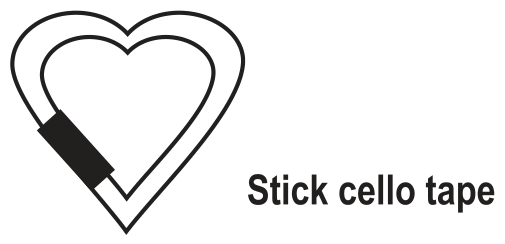
Step: 1:- Take the folded red color paper, draw a heart shape and cut it out. Leave the mark portion. So you can flap it. When you open it will come out in this way as shown in picture.

Step: 2:- Put the crush paper inside the heart and take cello tape and stick around all the sides. Then it becomes like a bump heart shape.
Variation: Instead of crush paper you can use cotton or sponge it can be more soft.
BALLOON PAINTING
Material required: Water color, brush and balloons.
Procedure: Children are asked to paint on the balloon with different colors according to their own choice. They can also draw or make design or write something on the balloon.
Skills developed: Sensory skills, eye hand coordination, fine motor skills, pre- writing
DAY 1: ACTIVITY
ORDERING HEART SHAPE BY SIZE
Goals: To improve their cognitive skills of comparing, identifying, recalling and responding, texture skills.
Vocabulary: Heart, shape, ordering, arranging, comparing.
Material required: Different size heart shape toys or pictures.
Introduction and Presentation: Make the children to sit near the table. Keep different size heart shape pictures or heart shape toys on the table. Describe them about the functions of heart. Show them how to arrange the heart shape according to the size of the heart. Encourage them to do the same. They can arrange the heart shapes from biggest to smallest or they can arrange it from smallest to biggest.
Assessment: • On which part of our body heart is situated? • What are the functions of heart? • How many heart human beings have? • Name the instrument we use to check our heart beat. • What is the size of heart? • Count the heart shape that you arranged? • What is the color of the heart?
Evaluation: Evaluate whether they are able to arrange the heart correctly. How well they can answer about the heart.
Skills developed: Sensory awareness. Cognitive skills of comparing, identifying, recalling and responding.
Expressive language skills.
BODY PARTS ( INTERNAL )
BUBBLE BATH FOR BABIES
Goals: To improve fine motor and whole hand grasp.
Vocabulary: Clean, dirty, bubbles, transparent, hot, warm, lukewarm, cold, wet, dry.
Material required: Water, Soap, Tub, Baby dolls.
Introduction and Presentation: Take the tub and fill it with water, add the soap and make bubbles by splashing the water around until bubbly. Ask each child to pick a baby doll and sit down next to the tub.
Explain how it's important to take bath and keep things clean. Demonstrate how to wash the baby very carefully and gently.
Assessment: ● Ask them how the bubbles look? ● What is the color of water after adding soap? ● How does the water and bubbles feel? ● What is the shape of the bubble?
Rhyme: "This is the way we wash the baby doll, wash the baby doll" (from the tune of: "Mulberry bush").
Evaluation: Evaluate if they understand the concepts of wet, dry, temperature, clean, dirty etc. Add dirt in the beginning to make the baby dirty.
Skills developed: Sensory awareness, self help skills, tactile skills, whole hand grasp.
DAY 1: GYM
PASSING HEART SHAPED BALLOONS
Goal: To develop their social skills, eye hand coordination, auditory skills.
Presentation: Children will sit in a circle form and they pass the heart shape balloon to each other and when the music stops whoever has the heart shape balloon has to get up and do the action, or sing rhymes and then again they pass the ball and other child will get turn..
Skills developed: Auditory skills. Eye hand coordination Concentration Social skills.
Variation: They can pass different items according to the theme.
GENERAL EXERCISE
BODY PARTS ( INTERNAL )
DAY 2: ART
SHAPE STICKING
Material required: Different color oil paper, plain sheet, glue.
Procedure: Children are given the oil paper cut in to different shapes (triangle, circle, oval, rectangle, and semicircle). Draw the outline of the shape to make a clown shape on the plain sheet and children can see the outline and stick the shapes in those places. One triangle on top, one circle below, two oval shapes inside the circle for the eyes, one upward crescent for the mouth, one semi circle below the circle for the body , two rectangle for legs and two rectangle for hands. Bigger kids can do the collage sticking without the model.
Skills developed: Develops their fine motor skills, eye hand coordination.
SPRAY PAINTING
Material required: uncolored art sheet or plain sheet, different poster colors, alphabet stencils or number stencils related to the theme example flowers, fruits, and animals etc, tooth brush.
Procedure: children are asked to keep the stencil in the appropriate place on the art sheet or the plain sheet. They have to dip the toothbrush in the paint and hold the tooth brush upside down with one hand, above the art sheet and move the bristles of the tooth brush with other hand on the comb held in the other hand. Children are asked to observe that the paint is sprayed by this movement in the paper. Now they can take the stencil and observe the design.
Skills developed: fine motor skills, eye hand coordination, cognitive skills of observing cause and effect.
DAY 2: ACTIVITY
SORTING GRAINS BY COLOR AND SHAPES
Goals: To improve their fine motor skills, pre math skills of patterning, arranging objects in a series.
Vocabulary: Grains, shapes, small/ medium/ large, Colors, Pattern, Matching, Pairs
Material required: Different types of grains, bowl, and plate.
Presentation: Make all the materials ready for the activity. Give each child a bowl which contains variety of grains. First show them how to sort the grains by color and shapes. Make them to sort grains according to the color and shape and tell them to keep it separately in the plate.
Assessment: Which group has the large number of grains? Which group has the small number of grains? Can we count the grains when it is in large quantity? How many different types of grains did you separated? Name the unit which we use for measuring grains.
Evaluation: Evaluate each child's ability to arrange grains according to their shapes and colors, patterning, grouping and naming the shapes and color.
Skills developed: Pre-math skills, Patterning, Grouping, Sorting, Ordering, Language skills, Fine motor skills
TASTE MATCHING
Goals: Familiarize them with different tastes, ability to differentiate and identify the different tastes. To make them aware of gustatory discrimination
Vocabulary - Taste, taste buds, gustatory sensation, bitter, sweet, sour, salty, spicy.
Material needed: Different products with variety of tastes like mustard seed powder, asafoetida, amchur powder, turmeric powder, dry neem powder, salt, sugar, Tamarind powder, all kept in non – transparent boxes.
Presentation: Give them the different powders to taste and ask them to name the taste. Ask them to match the same tastes when the same items are given.
Assessment: ● Which organ is used for tasting? ● Which is your favorite taste? ● Which fruit tastes sour? ● Do you like bitter taste? ● Can we eat something that is too spicy? ● Can we eat something that is too salty? ● What is the taste of ice cream? ● Can we enjoy a food which is not having any taste? ● What is the taste of the water?
Variation: Introduce new taste with variety of objects. Reinforce the tastes whenever they eat. Ask them to identify the opposite tastes like sweet, bitter.
Evaluation: First do the activities with eyes open and then with eyes closed, note down how many taste each one identified, matched and named. What all open ended questions they answered. Keep the record to note down the progress when the activity is repeated again. Ask them about the different taste of their lunch and snacks.
Conclusion: Analyze how many different tastes they can identify, match, and name.
BODY PARTS ( INTERNAL )
DAY 2: GYM
TUG OF WAR
Goals: To stimulate their gross motor skills, whole hand grasp, social skills, auditory skills.
Presentation: Motivate the children and group them as two A and B Offer them a long ribbon or cloth to hold on either ends. Ask Group A to hold one end of the ribbon or cloth and Group B to hold the other end. When they hear the clap sound they should start pulling from each side.
Skills developed: Develops his gross motor skills, whole hand grasp, social skills, auditory skills.
TUMBLING
Goal: To improve their balance, co-ordination, spatial awareness and gross motor skills.
Presentation: Children whoever learning to tumble can use the wedge placed on the safety mats to tumble.
Place mats on all the sides. They can do tumbling on the grass also.
Skills Developed: Develops their spatial awareness, hip muscles, gross motor skills, balance and co-ordination.
Variation: Children can also do tumbling using their hands.
DAY 3: ART
TEXTURE COLORING
Goal: To develop their creativity, fine motor skills, tactile skill, cognitive skills of understanding and exploring cause and effect.
Material required: Uncolored art sheet related to the theme, sand or rava or salt, poster colors, texture toys (like small tyres etc).
Introduction and presentation: Encourage children to sit for the art and present them the ways to do the texture painting. Children can also use texture toys to paint the pictures.
They can observe the painting and touch and feel the texture after the paint has dried.
Skills developed:Develops their creativity, fine motor skills, tactile skills, cognitive skills of understanding cause and effect.
MIRROR ART
Material required: Uncolored art sheet or plain sheet, different poster color.
Procedure: Ask the children to first fold the art sheet and unfold it again, now paint one half of the picture or put few droplets of paint on one half of the picture and fold the paper again and press it nicely and now children are asked to unfold the paper and observe the impression or designs formed on the paper.
Skills developed: Fine motor skills and eye hand coordination, cognitive skills of understanding cause and effect.
DAY 3: ACTIVITY
FLOAT AND SINK
Goals: To make them understand the concept of float and sink.
Vocabulary – Float, sink, heavy, light.
Material required: Collection of objects (or) substances which float and sink in water, water in a big, wide bowl.
Presentation: Make them understand the concept of float and sink, of various items, Ask them to put few different substances in water and observe the result. Explain and ask them why different items float and sink.
Assessment: Can a stone float in water? Can a heavy object float in water? Feather will float (or) sink in water? What will happen when you put a stone in water? Will a paper boat float (or) sink in water? Why some objects float and some sink in water?
Skills developed: Logical thinking Observation skills, Understanding cause and effect Pre-math skills , Comparing
Conclusion: These activities help to teach the concepts of float and sink.
WRINGING TOWEL
Goals: To develop their fine motor skills, eye hand coordination, whole hand grasping skills.
Vocabulary: Wringing, towel, water, squeezing, wet, dry.
Material required: Towel, big bowl of water, empty bowl.
Introduction and Presentation: Dip the towel in bowl of water and ask the child to wring the towel in another empty bowl using hand movement in opposite direction. Let each child take turn and do this activity.
Assessment: What happens when you dip the towel in the water? What comes out when you wring the wet towel? Can we wring the towel with one hand? Can we wring the towel by moving the hands in same direction?
Skills developed: Develops their fine motor skills. Eye hand coordination. Hands working together in opposite action.
DAY 3: GYM
FLOOR DRAWING
Goal: To develop their fine motor skills, eye hand coordination, social skills.
Presentation: Each child is given a chalk with holder and asked to trace his friend's body. His/ her friend has to lie on the floor without moving, when he/ she is tracing the body. Friend can trace his/ her body too.
Skills developed: Fine motor skills. Eye hand coordination. Social skills.
YOGA EXERCISE
BODY PARTS ( INTERNAL )
DAY 4: ART
BLOCK PRINTING
Material required: Various shapes blocks, stamp pad, holder, plain sheet or art sheet.
Procedure: Children are asked to hold the block firmly and print the block pressed in stamp pad on the paper. Children can name the print after seeing the impression.
Skills developed: Tripod grasp, fine motor skills, cognitive skills of understanding cause and effect.
WET CHALK COLORING
Material required: Uncolored art sheet, different color chalks dipped slightly in water with chalk holder.
Procedure: Children are told to hold the chalk holder firmly and color inside the given picture with different colored chalk.
Skills developed: Tripod grasp, pre writing skills, eye hand coordination.
DAY 4: ACTIVITY
CLEAN UP BITS OF PAPER
Goals: To improve their whole hand movement, fine motor, self help skills, pre math skills of grouping.
Vocabulary: Pick, broom, dustpan, clean, paper bits, dirty, messy, gravity, sorting, grouping
Material required: Toy broom, dust pan, bits of paper.
Presentation: Drop bits of paper on the ground present to the children how to sweep the bits of paper using toy dust pan.
Closing: Ask them to try the same.
Evaluation: Evaluate their self help skills, fine motor and whole hand movement and record the observation.
Skills Developed: Gross motor; Fine motor, Sensorial, problem solving and language
Variation: They can clean up toys from different cubbies and sort it into right cubbies. Go out door and clean the garden. Tell them to sort the paper and leaves and other items into different bins. Mop after cleaning the dust using wet cloth or mop, learn to squeeze the towel or the mop.
BLOWING WATER USING STRAW
Goals: To improve their oral motor skill, language skill, cause and effect.
Vocabulary - Blow, water, straw, air.
Material required: Water, straw
Presentation: Make each child sit at the table. To present the activity, take straw and take some water in a bowl. Holding one end of the straw to your mouth and the other end above the water, start blowing through the hole. Then demonstrate how when you blow air through the straw ,the water particles moves. Ask each child to blow into a straw and observe the movement. Give some heavy objects and ask them to blow it.
Assessment: ● When we blow what comes out? ● What happens when we blow water with straw? ● What helps the water to move? ● Can we move heavy objects by blowing?
Variation: Then can even blow beads, wooden chips etc.
Evaluation: Evaluate each child's ability to blow with straw.
Evaluate their oral motor skill, their concentration on the activity, their understanding of cause and effect.
Conclusion: This helps them understand the effects of air pressure and improves their oral motor skills and their understanding of cause and effect.
DAY 4: GYM
SKIPPING
Goals: To improve their gross motor skills and balancing skills.
Presentation: Encourage the children to hold the skipping rope in the hand and ask them to skip over the rope. Encourage them to move forward and backward skipping. Skills developed: Develops their gross motor skills and balancing skills.
BACKWARD MUSICAL CHAIR
Presentation: Arrange chairs in two rows back to back or in a circle. Use one less chair than the children playing the game e.g. (if 8 children then place 7 chairs). Start some music and have the children to run around the chairs. When you stop the music, the children quickly find a chair and sit down. The child left without a chair is out. Continue the game, removing one chair each round, until there are two children and one chair left. The child who gets the last chair wins. Skills developed: Auditory skills, gross motor skills
DAY 5: ART
MAKING MINI BOOK
Goals: To develop their eye hand coordination, fine motor skills, logical thinking skills.
Material required: Any materials, pictures related to the theme can be chosen, a small book with plain sheet has to be made, glue, crayons.
Introduction and presentation: Children are given one book each and they can be explained about theme and they can stick the pictures or materials or children can draw related to the theme in their book.
Skills developed: Develops their eye hand coordination, fine motor skills, logical thinking skills.
FOOT TRACING
Material required: Plain papers, pencils or sketch pens or crayons.
Procedure: Children are provided with the plain paper and a pencil or a crayon or a sketch pen and ask the children to place their one palm on the paper in sitting position and try to trace their outline.
Skills developed: Fine motor skills and eye hand coordination.
BODY PARTS ( INTERNAL )
DAY 5: ACTIVITY
LACING STRAWS
Activity: To lace straw using one- one correspondence.
Goals: To develop their fine motor skills, eye hand coordination, pincer grasp, pre math skills of patterning and understanding of one to one correspondence.
Material required: Different straws cut in to small pieces, long woolen thread cut equally for all the children.
Vocabulary: String, straws, lacing, pattern etc.
Presentation: Place the required material on the table and distribute it to the children equally. Ask the children to hold the thread in one hand and pick one straw using thumb and index finger and ask them to insert the thread through the straw and string the straws one by one.
They can also follow a particular pattern.
Assessment: • What is the shape of the straw? • How did the thread go through the straw? • If there is no hole will the thread go inside? • How many have you stringed?
Evaluation: Evaluate their skills by repeating the activity and observing the progress.
Skills developed: Fine motor skills, eye hand coordination, pincer grasp, pre math skills of patterning, one to one correspondence.
PEELING LADIES FINGERS SEEDS
Goals: To improve their pincer grasp, intrinsic muscle control, eye-hand coordination, sensory skills
Content :
Vocabulary: Peeling, ladies finger, seeds, grouping.
Material required: Ladies finger, plates.
Introduction and presentation: Demonstrate how to peel the ladies finger using thumb and index finger. Demonstrate them how to remove the seeds from the lady finger. Tell them to count the seeds and group it according to the numbers.
Assessment: • Ask them about the texture of ladies finger. • What is the color of ladies finger? • What is the color of seeds of ladies finger? • Can we count the seeds of ladies finger? • Count the seeds that you have grouped.
Closing: Ask the children about the uses of ladies finger and ask them how we can grow ladies finger in our house.
Evaluation: Evaluate each child's ability to peel ladies finger.
Skills developed: Pincer grasp, eye hand coordination, tactile skill and sensory skill.
Variation: They can peel peas, hay straw, banana, orange.
DAY 5: GYM
JOGGING
Goals: To improve their gross motor skills, balancing and spatial awareness.
Presentation: Encourage the children to stand in one place or if possible draw a circle and make them stand inside it. Tell the children to run standing inside the circle or in the same place.
Skills developed: Develops gross motor skills and spatial awareness.
SKIPPING
Goals: To improve their gross motor skills and balancing skills.
Presentation: Encourage the children to hold the skipping rope in the hand and ask them to skip over the rope. Encourage them to do forward and backward skipping.
Skills developed: Develops their gross motor skills and balancing skills.
HIT THE TARGET
Goal: To develop their eye hand coordination, fine motor skills, gross motor skills.
Presentation: Ask the children to hold the ball firmly with one or both hands and toss the ball on the target. Encourage them to toss it correctly on the target.
Skills developed: Eye hand coordination, fine motor skills and gross motor skills.
BODY PARTS ( INTERNAL )
BODY PARTS-II - TRIVIA
- Which is the longest bone in our body?
- How many bones do we have?
- How many bones do new born baby have?
- Which part of the body grows quickest until you are 5 years?
- What do muscles do?
- Which are the places where two bones are connected?
- Why do we have bones?
- How do we look without bones?
- What is the use of blood?
- In which side of your body is the heart?
- How many lungs do you have?
- Which part of the body purifies the air?
- Which part of your body carries messages to and from your brain telling it if you are hungry, hot or cold etc?
- Which part of our body filters waste from the blood?
- Which part of the body pumps blood to various parts of the body?
- What is the color of the blood?
- Where is the heart located?
- How is the heart protected?
- What is the substance secreted by the glands?
- What is the elastic tissue called which connect two bones in a joint?
- What protects the brain?
- How does our kidney look like?
- What mineral is good for our bones?
- What is inside a bone?
- What is muscle made up of?
- How does a brain appear?
- How many times our heart beats in a minute?
- When do our lungs expand?
- When do our lungs compress?
- Will our brain goes to sleep when we sleep?
- Which instrument is used to check the heart beat?
- A doctor who specializes in treating children is called as?
- What helps us to grow?
- Which part of our body gives messages to every organ and muscle in our body?
- Where is the funny bone in our body?
- What is our body mostly made up of?
- Where does our food go?
- Which part of our body takes air to the longs from nose?
- Which part of our body takes food from our mouth to stomach?
- Which plays an important role in digestion in our body while chewing food?
- What is the normal body temperature of human?
- How does our sweat flow out from the body?
- What makes our muscles stronger and healthier?
- Which cells protect the body against infection?
- What do red blood corpuscles do?
- What are softer bones called as?
- Which part of our body grinds the food and makes digestion easy?
- How can we detect our body temperature?
- How many chambers heart is divided in to?
- Where is the smallest bone located in our body?
BODY PARTS ( INTERNAL )
BODY PARTS-II - ANSWER
- Thigh bone or femur.
- 206
- 300, when grows bones join together decreasing in number.
- Brain.
- Muscles make parts of our body move.
- Joints.
- To protect the soft parts inside our body, to move and to hold up.
- Like floppy jelly fish.
- It carries oxygen to all parts of the body.
- Left side.
- 2.
- Lungs.
- Nerves.
- Kidney.
- Heart.
- Red.
- Inside chest towards the left.
- By the ribcage.
- Hormones.
- Ligaments.
- Skull.
- Brown large sized beans.
- Calcium.
- Soft, jelly material called bone marrow.
- Thin fibers.
- Large, soggy, pinkish gray walnut.
- 60-70 times per minutes.
- When we inhale (breathe in).
- When we exhale (breathe out).
- No.
- Stethoscope.
- Pediatrician.
- A chemical from our brain called growth hormone.
- Brain.
- On our elbow, it has a big nerve running over it, if you bang it you feel a strange tickle
- Water and tiny cells.
- To intestines from stomach.
- Wind pipe.
- Food pipe or oesophagus.
- Saliva, it has some enzymes to break down food easily.
- 98.6° F.
- From the tiny pores in our skin.
- Exercise.
- White blood Corpuscles in our body.
- Carries oxygen to all parts of our body.
- Cartilages.
- Stomach.
- Using thermometer.
- 4
- Ear.