dhyana and samadhi
This text was machine-transcribed from the printed book and may contain errors. Select the words and choose “Report a mistake”.
Merging with the Source
chapter 5
dhyana and samadhi
ध्यान समाधि Merging with the Source
Dhyāna is a Sanskrit word meaning ‘meditation’. It is the derived from the root word, dhī, meaning the mind and yana, meaning moving.
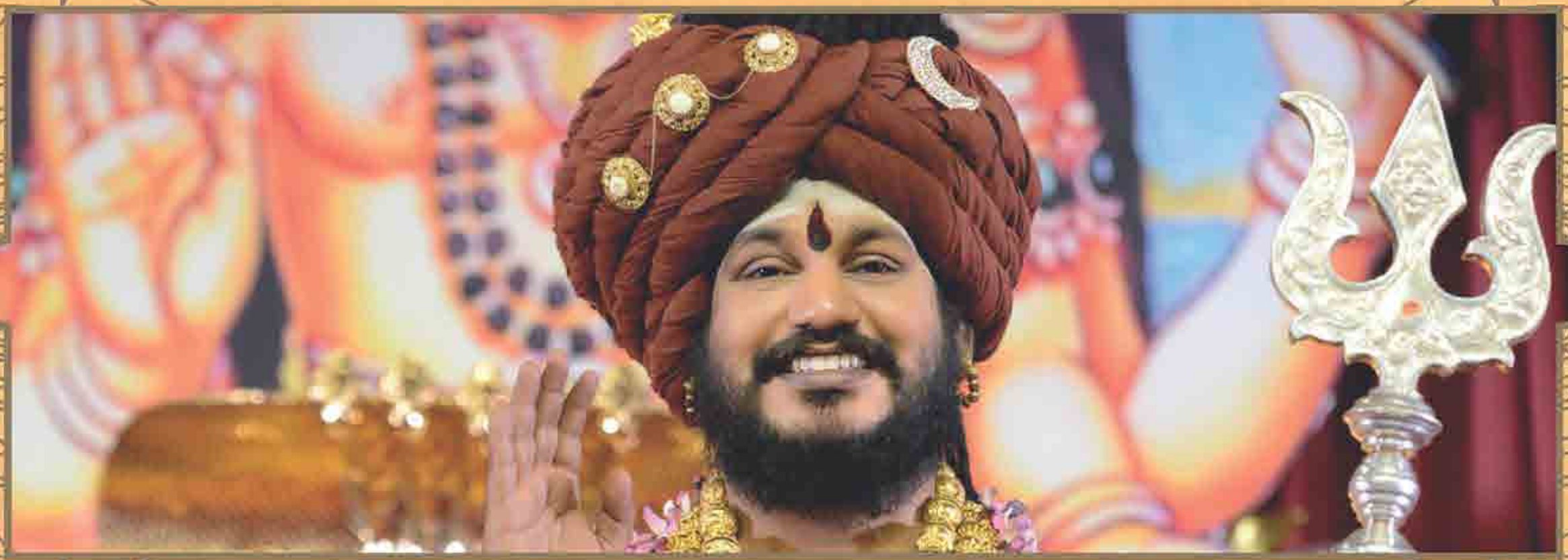
Paramahamsa Nithyananda explains that Dhyāna is not concentrating on one object. Dhyāna is raising your frequency to a certain level so that the object on which the meditation is happening, and the meditator, both lose their boundary and become one. Meditating on for example a piece of cloth to where the mind and the object lose their boundaries, become one, and disappear into the source from where they both arise, is Dhyāna.
Dhyāna does not involve seeing colors and light, hearing music, or sensing the presence of Divine beings. Dhyāna is not having supernormal experiences. While aspirants may have these experiences, this itself is not meditation. All experiences are of the mind, and Dhyāna can happen only when you drop the mind.
Meditation is not an escape from Life. In fact, meditation is intimately connected with Life. Paramahamsa Nithyananda says that Consciousness spirling outward is Life. Life spiraling inward, towards Consciousness, is meditation. Meditation is a continuous evolutionary process, each experience taking us to higher levels of awareness and understanding, while clearing away the mental garbage of many lifetimes.
One can meditate on anything and if the boundary is lost, even enlightenment can be experienced. For Paramahamsa Nithyananda, his first enlightenment experience happened at the age of twelve. Nithyananda was playfully experimenting with the simple technique of trying to find the source of His thoughts. He noticed that something opened up inside him which resulted in an experience that was far beyond the scope of His two physical eyes. Today, we are able to understand that what the young Avatar had was a spontaneous awakening of the Third Eye and the experience of Advaita, Oneness with the Whole!
“The first experience was, that I was able to see everything
around me, above me, the whole 360 degree. I realized not only was I able to see, I was able to feel, experience, the skin of the stone, the rock on which I was sitting on the skin of this body, both carry me equally. In both I exist equally."
Paramahamsa Nithyananda
As Paramahamsa Nithyananda explains, during Dhyāna, not only the mind, but also the object on which it has been meditating, loses its boundary and becomes one with the Source from which both have arisen - resulting in intense joy, peace and bliss. During this experience of Oneness, the qualities of the object of meditation manifests in the one meditating. That is why it is so important to meditate on a source of higher energy like a deity or Guru.
The attainment of the supreme state, space and shaktis of Sadashiva Himself, is the fruit of meditation. Initiated members of the Nithyananda Sangha practice Dhyāna by visualizing the laughing face of the master in a special point between the navel and solar plexus called the Ananda Gandha. By entering a state of Oneness with the Master, they are able to manifest yogic powers such as blindfolded reading, remote viewing, body scanning, levitation and materialization.
Samadhi is a Sanskrit word describing a state of meditative consciousness. A yogi can attain it by the practice of dhyāna. One is completely aware of the present moment. The mind becomes still.
Bhava Samadhi is a state of ecstatic consciousness that arises from a space of unconditional devotion to your chosen ideal. Bhava means mental attitude, feeling, emotion. This state of consciousness sometimes spontaneously happens in us.
"Practicing the presence of God is the greatest, most powerful technique to put you in Bhava Samadhi immediately. Practicing the presence of God is constantly feeling you are with Him, He is with you. Practicing the presence of God means cognizing His presence is there with you and constantly relating with Him, keeping Him present in your presence. Keeping Him present in your presence, is Practicing the Presence of God!"
Paramahamsa Nithyananda
"Bhava Samadhi means the zone where the solid is not solid, liquid is not liquid, where that gap between the solid and the liquid is just overlapping on each other. It is like a - when the ice and water meets and melts, that zone. Neither the formlessness nor the physical form. You can say the doorstep. Neither you are in nor you are out. Same way, nor in the space of complete formlessness, or in the space of name and form. where the solid is becoming liquid. where the form is becoming formless. That zone. That is what I call Bhava samadhi." Paramahamsa Nithyananda
Nirvikalpa Samadhi happens once one becomes one with the ultimate. "Nirvikalpa" means being without any changes. "Vikalpa" means changes, oscillation, diversion, dilution, differentiation. All these can be different meanings of the word Vikalpa. 'Nirvikalpa' means without any of this. When one achieves Nirvikalpa Samadhi, he literally becomes God. 'Nirvikalpa Samadhi' means your whole being, your whole identity dissolving into the cosmic existence. The individual inner space has no more disturbances, differences.
The best direct experience of Nirvikalpa Samadhi can be achieved by unclutching. The word "unclutching" is the Ultimate Spiritual Truth. Unclutching can directly upgrade your very consciousness. The process can be understood by describing three terms: clutching, disclutching and unclutching. Clutching means holding on to, getting attached. Disclutching means completely getting disconnected, breaking. Unclutching means moving back to clutch anytime when it is needed. Continuously you are clutched to your body, to your mind, to your emotions, to many things. You are clutched even with your Facebook identity! The ideas your mind creates - the idea of joy, idea of pain, idea of pleasure - you clutch with so many things . Unclutching, even if it is practiced sincerely in a very small level, brings so much of awakening in you. For example, you can practise it every moment when you have a thought. When a thought raises in you, without supporting it, encouraging it, entertaining it or being entertained by it, just relax from it.
If you start relaxing from the thoughts which are raising, you will experience freedom from the identity which you created.
Please understand, unclutching is not even a path leading to Nirvikalpa Samadhi, it is a process directly giving you the experience of Nirvikalpa Samadhi. The moment you start unclutching, you are falling into Nirvikalpa Samadhi. It is not a peak to attain it, it is a valley in which you need to fall. It is not an object to attain it, peak to achieve it, it is a valley to be fallen in it. When one achieves Nirvikalpa Samadhi it is not even an achievement.
"Unclutching is the purest form of meditation. Unclutching is the purest Samadhi." Paramahamsa Nithyananda
dhyāna
Embodied State of Consciousness - Bhava Samadhi ....................................................................... Atma Pramāṇa - आत्मा प्रमाण Paramahamsa Nithyananda
Pratyahāra means withdrawing from everything else. Dhāra a means flowing on one thing. Dhyāna means that truth towards which you are flowing, revealing itself to you—Being in that state continuously is Samādhi.
Leela Dhyan ....................................................................... Atma Pramāṇa - आत्मा प्रमाण Paramahamsa Nithyananda
Shaktipata should be happening constantly in your system by the sweet Leela Dhyāna, a sweet remembrance. Blessed are those in whom the Leela Dhyāna continuously happening, means Shaktipata has become eternal in you. Shaktipata, the first thing it does in you - increasing the viscosity of Bliss, increasing the depth and presence and intensity of the Bliss in you, so that automatically breaks the Pitta layer, Delusion layer.
Defining Dhyana / Meditation ....................................................................... Atma Pramāṇa - आत्मा प्रमाण Paramahamsa Nithyananda
Developing the brain's ability to catch the subtlest visualizations, through long practice of internal silence, is called Unclutching or meditation.
Dhyana not Only for Inner Peace, but to Raises the Subtlety of Brain Grooves and Brain's Ability ....................................................................... Atma Pramāṇa - आत्मा प्रमाण Paramahamsa Nithyananda
Practicing surrender or Unclutching or Ananda Gandha Dhyāna, Complete completion, all this not only brings peace into your heart, it raises the subtlety of your brain grooves and your brain's ability to capture and live the higher truths. The most subtle one your brain captured, makes itself as your cognition and life's goal.
Subtle Visualizations, Experience or Imagination Become Reality in Dhyana
Ātma Pramāṇa - आत्मा प्रमाण Paramahamsa Nithyananda
Anything which is subtle, the most subtlest experience, imagination, visualization, your brain is able to capture, it will make that as the base for its function. I don't need to do anything other than describe how the materialization happens to My Baalasants, the way they are able to capture. The moment their subtle grooves in the brain captures this, that power will start manifesting in them. Why I am saying Baalasants, because they are more ready to listen, their inner space has more peace, their brains have more subtle grooves to imbibe what I am sharing. When I explain that science, if you can visualize it, that power will start manifesting in you; because anything your brain can visualize, it will make that as your basic functionality. If I can explain – moving from one body and another body, Astral travel – and your brain is subtle enough to capture it, visualize it, you will start manifesting that power. All powers are like that only. You just need the completion space and Guru who properly makes your brain grooves to CATCH IT.
Having Subtle Understanding of Cosmos Sacred Secrests Makes You a Yogi
Ātma Pramāṇa - आत्मा प्रमाण Paramahamsa Nithyananda
Anything your brain can capture and enjoy, your life will make that into reality. If your brain can capture and enjoy the most subtlest understandings of Cosmic sacred secrets and the spiritual powers, you will just become Yogi, Divya Shariri.
Creating the Inner Space of Completion and Peace
Ātma Pramāṇa - आत्मा प्रमाण Paramahamsa Nithyananda
Ability to reflect the subtlest truths, ability to reflect the sacred understandings, ability to catch the most sacred bliss, ability to capture the powerfulness of the Consciousness, ability to look into the Source of the Cosmos, happens with tremendous completion and peace in the inner space.
You Associating Yourself More with Consciousness
Ātma Pramāṇa - आत्म प्रमाण Paramahamsa Nithyananda
Associating yourself with Consciousness, the Pure Consciousness more and more is Dhyāna .
From Pranayama to Meditation
Śāstra Pramāṇa - शास्त्र प्रमाण
Srimat Sarvajnanottra Agama.
Yoga Pada 13
प्राणापानौ समौ कृत्वा सुषुम्नान्तरचारिणौ ॥ १३
तयोर्वृत्तिं निरुद्ध्यात्मा शिवं ध्यायेत् विचक्षणः ।
prāṇāpānau samau kṛtvā suṣumnāntaracāriṇau || 13
tayorvṛttiṁ niruddhyātmā śivaṁ dhyāyet vicakṣaṇaḥ |
Translation Having equalized the outbreath and inbreath (prana and apana) and having enabled the breath to flow through within the central channel (susumna) and having arrested the workings of inbreath and outbreath, the well-skilled sadhaka should deeply meditate on Lord Siva.
Defining Dhyāna
Āpta Pramāṇa - आप्त प्रमाण Haṭhapradīpikā of Svātmārāma VI.19
अथ ध्यानम्
ध्यानं च सर्वचिन्तानां निवृत्तिर् वै निगद्यते ॥
या तत्वे निश्चला चिन्ता सैव ध्यानं प्रकीर्तितं ॥ १९ ॥
atha dhyānam
dhyānaṁ ca sarvacintānāṁ nivṛttir vai nigadyate ||
yā tatve niścalā cintā saiva dhyānaṁ prakīrtitaṁ || 19 ||
Translation Dhyāna is said to be the technique, which frees the mind from all the thoughts. Practice of unswerving concentration of the thoughts, on any of the elements, is defined as Dhyāna. 19
Dhyāna-Mudrā
Āpta Pramāṇa - आप्त प्रमाण Haṭhapradīpikā of Svātmārāma VI.21
अन्तश्चेतो बहिश्चक्षुर्-अधःस्थाप्य हि सुखासनम् ॥
समत्वं च श्रीरस्य ध्यानमुद्रेति सिद्धिदा ॥ २१ ॥
antaśceto bahiścakṣur-adhaḥsthāpya hi sukhāsanam ||
samatvaṁ ca śrīrasya dhyānamudreti siddhidā || 21 ||
Translation Adopt a comfortable sitting posture, with the eyes gazing at an external point, while mind is focused inside, keeping the body straight and remaining motionless. This is dhyāna-mudrā, which bestows success. 21
Meditate on the Self
Āpta Pramāṇa - आप्त प्रमाण Haṭhapradīpikā of Svātmārāma VI.29
आधारे प्रथमे चक्रे दीपं काञ्चनसन्निभम् ॥
नासाग्रे दृष्टिरात्मानं ध्यात्वा मुञ्चति किल्विषात् ॥ २९ ॥
ādhāre prathame cakre dīpaṃ kāñcanasannibham ||
nāsāgre dṛṣṭirātmānaṃ dhyātvā muñcati kilviṣāt || 29 ||
Translation Fixing the gaze at the tip of the nose, one should meditate on the Self, which is as bright as a golden light situated on the first cakra, that is ādhāra. Thus one frees one- self from the sins. 29
dhyāna
Meditate on Swadisthana
Āpta Pramāṇa - आप्त प्रमाण Haṭhapradīpikā of Svātmārāma VI.30
स्वशब्देन भवेत् प्राणः स्वाधिष्ठानं तदाश्रयम् ।
स्वाधिष्ठानं तु तच्चक्रं सदा ध्येयं निगद्यते ॥३०॥
svaśabdena bhavet prāṇaḥ svādhiṣṭhānaṃ tadāśrayam |
svādhiṣṭhānaṃ tu taccakraṃ sadā dhyeyaṃ nigadyate ||30||
Translation Sva stands for prana, svadhisthana is the abode for that (prana), (sva {self} + adhistana {abode}). This is how svadhīthana cakra Is define, which should be meditated upon. 30
Meditate on Manipuraka
Āpta Pramāṇa - आप्त प्रमाण Haṭhapradīpikā of Svātmārāma VI.32
तरुणादित्यसङ्काशे चक्रे च मणिपूरके ।
नासाग्रे दृष्टिरात्मानं ध्यात्वानन्दमयो भवेत् ॥३२॥
taruṇādityasaṅkāśe cakre ca maṇipūrake |
nāsāgre dṛṣṭirātmānaṃ dhyātvānandamayo bhavet ||32||
Translation One meditates upon the Self placing it on the manipura cakra, which is as effulgent as the morning sun, by fixing the gaze on the tip of the nose and experienceing complete Bliss. 32
Meditate on the Heart
Āpta Pramāṇa - आप्त प्रमाण Haṭhapradīpikā of Svātmārāma VI.47
विद्युत्-प्रभे च हृत्पद्मे प्राणायामैर्-विभेदितॆ ।
नासाग्रे दृष्टिरात्मानं ध्यात्वा ब्रह्ममयो भवेत् ॥४७॥
vidyut-prabhe ca hṛtpadme prāṇāyāmair-vibhedite |
nāsāgre dṛṣṭirātmānaṃ dhyātvā brahmamayo bhavet ||47||
Translation One should meditate on the Sefl placed in the lotus heart, which is as bright as lightening and purified by the practice of pranayama, fixing the gaze on the tip of the nose. Thus one becomes identified with Brahman. 47
Meditate on Siva
Āpta Pramāṇa - आप्त प्रमाण Haṭhapradīpikā of Svātmārāma VI.49
निर्गुणं च शिवं शान्तं गगने विश्वतोमुखम् ॥
नासाग्रे दृष्टिरैकाकी ध्यात्वा ब्रह्मसमो भवेत् ॥४९॥
nirguṇaṁ ca śivaṁ śāntaṁ gagane viśvatomukham ||
nāsāgre dṛṣṭirekākī dhyātvā brahmasamo bhavet ||49||
Translation One should meditate on the Siva, who is nirguna (without attributes), peaceful and omnipresent, placing it in the gagana (ether - brahma-randra) and fixing the gaze on the tip of the nose. Thus one becomes identified Brahman. 49
dhyāna
Meditate on Vishuddhi
Āpta Pramāṇa - आप्त प्रमाण Haṭhapradīpikā of Svātmārāma VI.50
सततं घण्टिकामध्ये विशुद्धे दीपकप्रभे ।
नासाग्रे दृष्टिरात्मानं ध्यात्वा दुःखं विमुञ्चति ॥५०॥
satataṁ ghaṇṭikāmadhye viśuddhe dīpakaprabhe |
nāsāgre dṛṣṭirātmānaṁ dhyātvā duḥkhaṁ vimuñcati ||50||
Translation One should meditate on the Atman (Self), in the visuddha cakra, which is as illuminating as the light and located in the throat. Doing so, one attains freedomg from misery. 50
Meditate on Self in Palate
Āpta Pramāṇa - आप्त प्रमाण Haṭhapradīpikā of Svātmārāma VI.51
स्रवत्-पीयूषसम्पूर्णे लम्बिका चन्द्रमण्डले ॥
नासाग्रे दृष्टिरात्मानं ध्यात्वा मृत्युं प्रमुञ्चति ॥५१॥
sravat-pīyūṣasampūrṇe lamnikā candramaṇḍale ||
nāsāgre dṛṣṭirātmānaṁ dhyātvā mṛtyuṁ pramuñcati ||51||
Translation One should meditate on the Atman (Self), visulizing it in the orb of moon located in the palate, wherefrom the nectar oozes and keep the gaze on the tip of the nose. Thus one transcends death. 51
Meditate on third eye
Āpta Pramāṇa - आप्त प्रमाण Haṭhapradīpikā of Svātmārāma VI.52
भ्रुवोरन्तर्गतं देवं सन्माणिक्य-सुखोपमम् ।
नासाग्रे दृष्टिरात्मानं ध्यात्वानन्दमयो भवेत् ॥५२॥
bhruvorantargataṁ devaṁ sanmāṇikya-sukhopamam |
nāsāgre dṛṣṭirātmānaṁ dhyātvānandamayo bhavet ||52||
Translation One should meditate on the Atman (Self), visulizing it as a deity between the two eye-brows, which is brightly shining like the rays of pure diamond, while keeping the gaze on the tip of the nose. Thus one is filled up with Bliss. 52
9 points of Meditation
Āpta Pramāṇa - आप्त प्रमाण
Haṭhapradīpikā of Svātmārāma VI.55
गुदं मेढ्रश्च नाभिश्च हृत्पद्मं कण्ठ उच्यते ।
घण्टिका लंबिकास्थानं भ्रूमध्यं च नभोबिलम् ॥५५॥
gudaṃ meḍhraśca nābhiśca hṛtpadmaṃ kaṇṭha ucyate |
ghaṇṭikā lambikāsthānaṃ bhrūmadhyaṃ ca nabhobilam ||55||
Translation
Anus, genitals, navel, lotus heart, throat, uvula, palate, center of the eye-brows and nabho-bila (brahma-randhra) - are the nine sites for meditation as told by the yogīs.
Attain Powers through Meditation
Āpta Pramāṇa - आप्त प्रमाण
Haṭhapradīpikā of Svātmārāma VI.56
कथितानि नवैतानि ध्यानस्थानानि योगिभिः ।
उपाधितत्वयुक्तानि कुर्वन्त्यष्टगुणोदयम् ॥५६॥
kathitāni navaitāni dhyānasthānāni Yogibhiḥ |
upādhitatvayuktāni kurvantyaṣṭaguṇodayam ||56||
Translation
Practice of the meditation, accompanying
attributes and elements brings about the
eightfold virtues.
Meditation on Heart Padma
Āpta Pramāṇa - आप्त प्रमाण
Haṭhapradīpikā of Svātmārāma VI.61
वज्रासनो नित्यम्-ऋजुपक्रयो भवेत् प्राणम्इमं नियम्य ।
उद्बुद्ध-हृत्पद्मककर्णिकायां ध्यायेत् तत्वमयः स मुक्तः ॥६१॥
vajrāsano nityam-ṛjuprakayo bhavet prāṇam-imam niyamya |
udbuddha-hṛtpadmaka-karṇikāyāṃ dhyāyet tatvamayaḥ sa muktaḥ ||61||
Translation
Adopt the posture of vajrasana daily keeping the body erect, have control on the breath and visualize the tatva in the petals of the hṛt padma. Thus one attains liberation. 61
See the Ultimate Reality
Āpta Pramāṇa - आप्त प्रमाण
Haṭhapradīpikā of Svātmārāma VII.38
अर्धोद्धाटित-लोचनः स्थिरमना नासाग्रदत्तेक्षणः
चन्द्रार्कावपि लीनताम्-उपनयेन्-निष्पन्दभावान्तरे ॥
ज्योति-रूपम्-अशेष-बाह्यरहितं देदीप्यमानं परम्
तत्वं तत्पदमेति वस्तुपरमं वाच्यं किमत्राधिकम् ॥३८॥
ardhodghāṭita-locanaḥ sthiramanā nāsāgradattekṣaṇaḥ
candrārkāvapi līnatām-upanayen-niṣpandabhāvāntare |
jyoti-rūpam-aśeṣa-bāhyarahitaṃ dedīpyamānaṃ param
tatvaṃ tatpadameti vastuparamaṃ vācyaṃ kimatrādhikam ||38||
Translation
Keeping the eyes half-open and mind poised, fix the gaze on the tip of the nose, slow down the pace of both iḍā and piṅgalā, maintain an internal calm, visualize the ultimate Reality as brightly shining internal light. Thus, one attains the Absolute State of tatva (Self), beyond all material realm. What else remains to be said? 38.
| Knowledge of Person Qualified for Yoga and Shivoham as the Fruit of Dhyāna ...................................................................................... Śāstra Pramāṇa - शास्त्र प्रमाण Srimat Sarvajnanottra Agama - Yoga Pada 2,3 | यो ध्याता यच्च तद् ध्यानं तद्वै द्यानप्रयोजनम् ॥ २ आत्मा ध्याता मनो ध्यानं ध्येयः सूक्ष्मो महेश्वरः ॥ ३ यत् परं परमैश्वर्य एतद् ध्यानप्रयोजनम् । yo dhyātā yacca tad dhyānaṃ tadvai dyānaprayojanam | 2 ātmā dhyātā mano dhyānaṃ dhyeyaḥ sūkṣmo maheśvaraḥ | 3 yat paraṃ paramaiśvarya etad dhyānaprayojanam | Translation Only that person who has known well the nature of meditator, meditation and the fruit of meditation is fit enough to undertake the disciplines of Yoga.The individual self is the meditator. Mind is meditation. The Great Lord S'iva is the One to be meditated. The attainment of the supreme qualities of S'iva,superior to which there is nothing, is the fruit of meditation. | |||
|---|---|---|---|---|---|---|---|
| Effect of Pranayama, Dharana, Pratyahara, Dhyāna ...................................................................................... Śāstra Pramāṇa - शास्त्र प्रमाण Srimat Sarvajnanottra Agama - Yoga Pada 16 | प्रणायामैर्दहेद्देषान्धारणाभिस्तु किल्बिषम् ॥ १६ प्रत्याहारेण संसर्गान्ध्यानेनानश्वरान् गुणान् । praṇāyāmairdaheddoṣāndhāraṇābhistu kilbiṣam | 16 pratyāhāreṇa saṃsargāndhyānenānaśvarān guṇān | Translation By the practice of pranayama, the sadhaka incinerates all the defilements. By dharana, he annihilates all of his sinful effects. By pratyahara, he maintains himself completely free from the negative thoughts and vices. And by dhyana, he becomes capable of nullifying the effects of even those qualities which do not decay. | ||||
| Meditating in Supreme Self Residing Neither Inside nor Outside the Body ...................................................................................... Śāstra Pramāṇa - शास्त्र प्रमाण Srimat Sarvajnanottra Agama - Yoga Pada 28 | द्यां कलां ततः कालं मायां विद्यां ततः परम् । द्रष्ट्रानुकमशः सर्वान् पुनरस्त्रेण भेदयेत् ॥२८॥ vidyāṃ kalāṃ tataḥ kālaṃ māyāṃ vidyāṃ tata: parama | draṣṭvānukramaś: sarvān punarastreṇa bhedayet | 28 | Translation This self is neither inside the body nor outside the body. Neither it is at a greater distance nor at a closer point. It is in a supreme space which is beyond the range of 36 tattvas and of the worlds contained in them. The refined seeker should install his mind in that supreme place. |
Meditating in Supreme Self - Description
Śāstra Pramāṇa - शास्त्र प्रमाण
Srimat Sarvajnanottra Agama -
Yoga Pada 29
विद्येश्वरं ततस्तत्तवं ततः सदाशिवं परम् ।
भित्वा तु क्षुरिकास्त्रेण ततः सूक्ष्मं शिवं विशेत् ॥ २९॥
vidyeśvaraṃ tatastattavaṃ tataḥ sadāśivaṃ param | bhitvā tu kṣurikāstreṇa tataḥ sūkṣmaṃ śivaṃ viśet||29||
Translation Pervading completely in all directions – across, above, below, outside, inside and so on – the self always exists in its own state being dissociated from all things. Being self luminous it shines forth with its own brilliance and illumines everything. The refined seeker should always meditate on his own self which is of such nature.
Meditation to Experience Oneness with Shiva
Śāstra Pramāṇa - शास्त्र प्रमाण
Srimat Sarvajnanottra Agama -
Yoga Pada 30
अमृतात्मा शिवं साक्षात् तस्मिन् विष्टस्तु योगवित् ।
सूर्यग्यः सर्वगः सूक्ष्मः सर्वेशः सर्वक्रद्बवेत्ः ॥ ३० ॥
amratātmā śivaṃ sākṣāt tasmin viṣṭastu yogavit | saryagya: sarvaga: sūkṣma: sarveśa: sarvakradbhavet:|| 30 ||
Translation The self is not to be considered as absolutely non-existent( na s'u'nyam). In its own state it is bereft of adjuncts such as body, instruments and so forth ( na as'u'nyam). But in its embodied state it is associated with relevant body , Instruments, location and enjoyments( na s'u'nyam). In its liberated state, it becomes one with S'iva who is eternally free from the constricting adjuncts. The refined seeker should meditate on his own self as completely dissociated from adherence to such notion of state as existent or non-existent.
Description of Position, Space and State for Yogic Meditation
Śāstra Pramāṇa - शास्त्र प्रमाण Paramesvaragama (Ch. 10, 23)
ध्यानपद्धतिः
आतिष्ठेत् स्थाणुवत् स्वस्थो यथा दीपो निवातः ।
समं कायशिरोग्रीवं धारयन्नचलं स्थिरम् ॥२३॥
dhyānapaddhatiḥ
ātiṣṭhet sthāṇuvat svastho yathā dīpo nivātagaḥ |
samaṃ kāyaśirogrīvaṃ dhārayannacalaṃ sthiram ||23||
Translation
Yogi should be seated on a clean place in a steady posture keeping the head, neck and the body straight without making any movement like a trunk of the tree or an unflinching flame of the lamp (23).
dhyana
Describing Location of Focus for Meditation on Sadashiva (part 1)
Śāstra Pramāṇa - शास्त्र प्रमाण Paramesvaragama (Ch. 10, 24)
हृत्पुण्डरीके नाभ्यां वा स्वाधिष्ठानेऽपि मूलके ।
विशुद्धौ चापि चाज्ञायां सहस्रारेऽपि वा शिवे ॥ २४॥
hṛtpuṇḍarīke nābhyāṃ vā svādhiṣṭhāne'pi mūlake |
viśuddhau cāpi cājñāyāṃ sahasrāre'pi vā śive ||24||
Translation
On one of the lotus centre of the heart, navel, Svadhisthana, Muladhara, Vishuddha, Ajna, Sahasrara. 24
Describing Location of Focus for Meditation on Sadashiva (part 2)
Śāstra Pramāṇa - शास्त्र प्रमाण Paramesvaragama (Ch. 10, 25)
ब्रह्मरन्ध्रे शिखाग्रे वा द्वादशान्ते चिदात्मनि ।
एतदन्यतमस्थाने ध्यायेन्मां परमेश्वरम् ॥२५॥
brahmarandhre śikhāgre vā dvādaśānte cidātmani |
etadanyatamasthāne dhyāyenmāṃ parameśvaram ||25||
Translation
Brahmarandra (top of the head), crown of the crest, Dvadasanta (western crest) or soul. O Sive! Then Yogi should meditate on me as the supreme God. 25
Description of Dhyāna
Śāstra Pramāṇa - शास्त्र प्रमाण Mahanirvani Tantram (5, 137)
ध्यानं तु द्विविधं प्रोक्तं सरूपारूपभेदतः ।
अरूपं तव यद्ध्यानमवाङ्मनसगोचरम् ॥ १३७ ॥
dhyānaṃ tu dvividhaṃ proktaṃ sarūpārūpabhedataḥ |
arūpaṃ tava yaddhyānamavāṅmanasagocaram || 137 ||
Translation
Dhyāna or contemplation is two-fold, according to the distinction of, with and without forms. But meditation on thee (Devi) without any form is beyond the range of mind and speech. 137
Dhyāna on (Brahma - Heart Lotus)
Śāstra Pramāṇa - शास्त्र प्रमाण
Kirana Agama - Yoga Pada (32a-35)
हृत्पद्मं प्राकृतं ज्ञेयं ततङ्गह्माधिदैवतम् ।
साधनीयो विशुद्धोऽत्र प्रथमाक्षर मध्यगः ॥
तत्र नाद्यो दश ज्ञेया विज्ञेया प्रथमा भवेत् ।
सौम्याचैव पशूनक्षैः सृटिस्सा चेतनात्मिक ॥ ३३ ॥
बन्धनी मोचनी चेयं मोहिनीयं क्रमात्स्मृताः ।
एकादशसमाख्याता ब्रह्मा पद्मे प्रतिष्ठितः ॥
तत्र ब्रह्मा स्वरुप्रेन भावनीयोथ वर्णगः ।
धराध्यव्यक्तामार्गान्ते भवेत्-सौम्या सुशुभना ॥३५॥
hṛtpadmaṃ prākṛtaṃ jñeyaṃ tataḍbrahmādhidaivatam |
sādhanīyo viśuddho'tra prathamākṣara madhyagaḥ ||
tatra nāḍyo daśa jñeyā vijñeyā prathamā bhavet |
saumyācaiva paśūnakṣaiḥ sṛtissā cetanātmika || 33 ||
bandhanī mocanī ceyaṃ mohinīyaṃ kramātsmṛtāḥ |
ekādaśasamākyātā brahmā padme pratiṣṭhitaḥ ||34||
tatra brahmā swarūpena bhāvanīyotha varṇagaḥ |
dharādhyavyaktamārgānte bhavet-saumyā suśbhanā ||35||
Translation Heart-lotus is denoted as prakrta padma, and Brahma is its presiding deity. Out of the five syllable of mula mantra, the finest syllable is considered to be one with the presiding deity
Brahma who is to be meditated upon as the pure Lord. Associated with the heart lotus there are ten important nadis - vijñaya, prathama, saumyā, paśūni, akṣi, vedātmika, cetana, bandhanī, mocanī and mohinī.
Brahma is to be contemplated upon as endowed with his own characteristics and shinning forth in the form of first syllable.Through this kind of Dhyāna, the aspirant can attain victory over tattvas from prthivi to avyakta.
| Reaching the Place Belonging to Visnu Śāstra Pramāṇa - शास्त्र प्रमाण Kirana Agama - Yoga Pada (36) | उपरिष्टाद्यथाऽगच्छेत् हरिस्थानं भवेत्-खग । नाडयष्षोडशाब्जस्था विज्ञेयाः कर्णसंस्थितः ॥ ३६ ॥ upariṣṭādyathā'gacchet haristhānaṃ bhavet-khaga । nāḍayaṣṣoḍaśābjashā vijñeyāḥ karṇasaṁsthitaḥ || 36 || | Translation When he rises above the plane of heart lotus (mentally) he reaches a place belonging to visnu. 36 | | Region Where Vishnu Resides Occupied by Sixteen Nadis Śāstra Pramāṇa - शास्त्र प्रमाण Kirana Agama - Yoga Pada (37) | तत्र विष्णुस्ततश्शुद्धो द्वितीयोऽक्षरमास्थितः । शुभा मनोरम दीप्ता सुदीप्ता भीमकारिका ॥ ३७ ॥ tatra viṣṇustataśśuddho dvitiyo'kṣaramāsthitaḥ |I37II | Translation There are sixteen nadis occupying the region of the ears. With all purity and in the form of the second syllable Lord Visnu resides there. | | Names of the Sixteen Nadis Śāstra Pramāṇa - शास्त्र प्रमाण Kirana Agama - Yoga Pada (37-38) | शुभा मनोरम दीप्ता सुदीप्ता भीमकारिका ॥ ३७॥ सुधूमा पिङ्गला पीता वारुणी शीघ्रगाचला । शशारिका स्प्रभा चैव ज्ञादा मोक्षदा परा ॥ ३८॥ śubhā manorama dīptā sudīptā bhīmakārikā ||37|| sudhūmā piṅgalā pītā vāruṇī śīghragācalā | śaśārikā sprabhā caiva jñādā mokṣadā parā ||38|| | Translation The name of the 16 nadis are: śubhā, manorama, dīptā, sudīptā, bhīmakārikā,sudhūmā, piṅgalā, pītā, vāruṇī, śīghragācalā, śaśārikā, sprabhā, caiva, jñādā, mokṣadā and parā ||38|| | | Description on Dhyana on Vishnu Śāstra Pramāṇa - शास्त्र प्रमाण Kirana Agama - Yoga Pada (39) | इत्येताष्षोडश ज्ञेया हरिमावृत्य संस्थिताः । स्वरुपेणाभ्यसेद्विष्णुं अथवा वर्णरूपकम् ॥ ३९॥ ityetāṣṣoḍaśa jñeyā harimāvṛtya saṁsthitāḥ | svarūpeṇābhyasedviṣṇuṁ athavā varṇarūpakam ||39|| | Translation These sixteen nadis are there surrounded of Visnu who is to be meditated upon as shining forth with his own features and appearing one with the second syllable.39 |
From Avyakta to Purusha ........................................................................ Śāstra Pramāṇa - शास्त्र प्रमाण Kirana Agama - Yoga Pada (40)
तदभ्यासादयत्नेन सिद्धिस्स्यात्पुरुषान्तिका ॥ ४० ॥
tadabhyāsādayatnena siddhissyātpuruṣāntikā || 40 ||
Translation Through the practice of this Dhyāna, one can easily get over the letters of tattvas from avyakta to purusa. 40
Meditation on Palate Region (Uvuka) ........................................................................ Śāstra Pramāṇa - शास्त्र प्रमाण Kirana Agama - Yoga Pada (40-41)
उपरिष्टाद्यथास्थानं तद्आस्थानं सुनिर्मलं ॥४०॥
तालुसंस्थन्तु पद्मस्थं चतुर्ऋविंशति नाडिभिः ।
upariṣṭādyathāsthānaṁ tadāasthānaṁ sunirmalaṁ ||40||
tālusaṁsthantu padmasthaṁ caturviṁśati nāḍibhiḥ |
Translation Above the place of the second lotus there is a lotus region which is very pure. This is in the region ocupied by the uvula (or palate). There are 24 nadisrunning around the lotus-petals.
Twenty Four Energy Channels - Nadis ........................................................................ Śāstra Pramāṇa - शास्त्र प्रमाण Kirana Agama - Yoga Pada (41-43)
स्वर्णा श्रवणी जल्पा उत्कृष्ट्रा प्राणवर्तिनी ॥४१॥
सशब्दा वाहिनी बोद्ध्री मनमी भईवनी शुभा
ब्राह्मी दिनप्रधानाख्या नियोक्षी रेतवाहिनी ॥४२॥
पितृमार्गानुगा नाडी देवमार्गप्रदर्शित ।
आकऋषिणी विकषिणी प्राणहा प्राणवर्धिनी ॥४३॥
चित्तसंस्था सुसंस्था च धूमा चैव तथा धृवा ।
svarṇā śravaṇī jalpā utkṛṣṭā prāṇavartinī ||41||
saśabdā vāhinī boddhrī manamī bhaīvanī śubhā
brāhmī dinapradhānākhyā niyokṣī retavāhinī ||42||
pitṛmārgānugā nāḍī devamārgapradarśita |
ākarṣiṇī vikaṣiṇī prāṇahā prāṇavardhinī ||43||
cittasaṁsthā susaṁsthā ca dhūmā caiva tathā dhṛvā |
Translation
They are (24 nadīs): svarṇā, śravaṇī,
jalpā, utkṛṣṭā, prāṇavartinī, saśabdā,
vāhinī, boddhrī manamī, bhaīvanī,
brāhmī, dinapradhānā, niyokṣī,
retavāhinī, pitṛmārgānugā,
devamārgapradarśita, ākarṣiṇī, vikaṣiṇī,
prāṇahā, prāṇavardhinī, cittasaṁsthā,
susaṁsthā, dhūmā and dhṛvā.
Description of Dhyana on Rudra
Śāstra Pramāṇa - शास्त्र प्रमाण Kirana Agama - Yoga Pada (44)
ज्ञेयो रुद्रस्स्वरूपेण तृतीयार्णगतो ऽ पि वा ॥४४॥
jñeyo rudrassvarūpeṇa tṛtīyārṇagato S pi vā ||44||
Translation Rudra is to be contemplated upon as being surrounded of these twenty four nadis and as endowed with his own divine form and shinning forth in the form of third syllable.
Raising Yourself Through this Dhyana
Śāstra Pramāṇa - शास्त्र प्रमाण Kirana Agama - Yoga Pada (45)
तदभासादनन्तेश पदं यावद्गतिर्भवेत् ।
tadabhāsādananteśa padaṁ yāvadgatirbhavet |
Translation Through the practice of this kind of dhyana, the aspirant can ascend to the place of Ananteswara. Note: Ananta means the serpent Ananta Sesa. As He is the Lord of Ananta, He is known as Ananteswara.
Dhyana on Bindu
Śāstra Pramāṇa - शास्त्र प्रमाण Kirana Agama - Yoga Pada (56-57)
बिन्दोरूर्ध्वं भवेन्नादस्सूक्ष्मो दीर्घो ऽ ब्जतन्तुवत् ॥५६॥
मेघ्नाद इवाभावाद् - सदाशिवभवेषुभिः ।
bindorūrdhvaṁ bhavennādassūkṣmo dīrgho S bjatantuvat ||56||
meghnāda ivābhāvād - sadāśivabhaveṣubhiḥ |
Translation Above the place of bindu (fore-head) there ascends a path which is subtle and long as the subtle thread of lotus stalk. This is the place of Lord Sadashiva where innumerable sounds like the loud noise of clouds can be heard internally.
Description of Dhyana on Sadashiva
Śāstra Pramāṇa - शास्त्र प्रमाण Kirana Agama - Yoga Pada (57-58)
ऊर्ध्वनान्तकेनाथ स्वरूपेण कलात्मकह् ॥५७॥
चतुर्णादीसमोपेतस्सो ऽ पि पद्मान्तसंस्थितह् ।
इन्दिका दीपिका चैव वएङ्का मोचिका तथा ॥५८॥
ūrdhvanāntakenātha svrūpeṇa kalātmakaḥ ||
caturṇādīsamopetasso S pi padmāntasaṁsthitaḥ |
indikā dīpikā caiva veikā mocikā tathā ||
Translation O Garuda, Lord Sadashiva is to be meditated upon as shining forth with is own divine form made of kala mantras and adorned with rising snakes. He is seated on the lotus surrounded of four nadis - indikā, dīpikā, weikā and mocikā.
Dhyana to Become Knower of All
Śāstra Pramāṇa - शास्त्र प्रमाण
Kirana Agama - Yoga Pada (59)
तस्यापि परतश्शक्तिर्- ज्ञेया कुण्डलिनीति च ।
शब्दान्ते तु भवेत्तस्यास्-सूक्ष्मरुपानुरुपिणी ॥ ५९ ॥
tasyāpi parataśśaktir- jñeyā kuṇḍalinīti ca |
śabdānte tu bhavettasyās-sūkṣmarūpānurūpiṇī || 59 ||
Translation Above the region of Sadāṣiva mandala exists sakti mandala known as kuṇḍalinī. This is beyond the reach of sound and it is with subtle form. 59
Seat of Shakthis and
Names of the Four Nadis
Śāstra Pramāṇa - शास्त्र प्रमाण
Kirana Agama - Yoga Pada (60)
चतुर्णादी समोपेता सा विज्ञेया ऽपि मध्यमा ।
सूक्ष्मा चैव सुसूक्ष्मा च तथा ऽचैवा मृता मृता ॥ ६०॥
caturṇādī samopetā sā vijñeyā 'pi madhyamā |
sūkṣmā caiva susūkṣmā ca tathā 'caivā mṛtā mṛtā ||60||
Translation Sakti is seated there surrounded of four nādīs - sūkṣmā, susūkṣmā, amṛtā and mṛtā.
Benefits of this Dhyana
Śāstra Pramāṇa - शास्त्र प्रमाण
Kirana Agama - Yoga Pada (61)
सर्वज्ञस्सर्वकस्ता च तदभ्यासाद्भवत्यसौ । ६१ ।
sarvajñassarvakastā ca tadabhyāsādbhavatyasau |
Translation Through the practice of this kind of dhyāna, one can become the knower of all and the doer of all.
Dhyana on Parashakti
Śāstra Pramāṇa - शास्त्र प्रमाण
Kirana Agama - Yoga Pada (61-62)
तर्यापि परतश्शक्तिश् - चतुर्णाडीयुता परा ॥ ६१ ॥
पद्ममध्ये स्थित सा ऽ पि सूक्ष्मा ऽ भ्यत्मनिरञ्जना ।
taryāpi parataśśaktiś - caturṇāḍīyutā parā || 61 ||
padmamadhye sthita sā S pi sūkṣmā S bhyatmanirañjanā |
Translation Above the place of Sakti is the mandala of parāśakti in which there arefour nadis - vyāpinī, ananta, anāthā and anāśrita. She Is seated at the center of lotus with a subtle and impeccable form.
Manifesting Shakthi
through this Dhyana
Śāstra Pramāṇa - शास्त्र प्रमाण
Kirana Agama - Yoga Pada (62-63)
व्यपिनि व्योमरूपा चानन्ता ऽ नाथाप्यनाश्रिता ॥
दुर्लभ्या च तदभ्यास्द् - व्यापकस्तत्क्षनाद्भवेत् ॥
vyāpinī vyomarūpā cānantā S nāthāpyanāśritā ||
durlabhyā ca tadabhyāsd - vyāpakastatkṣanādbhavet ||
Translation Through the practice of this kind of Dhyāna, one can achive the power of Vyāpakatva (all-pervasiveness), the power which is not to be attained even by divine and celestial beings.
Description of Place Existing Above Parashakti
Śāstra Pramāṇa - शास्त्र प्रमाण Kirana Agama - Yoga Pada (63-64)
तस्यापि पर्तस्स्थानम् निष्कलं नित्यमव्ययम् ॥
ज्ञनरुपञ्च बोधव्यं निश्चलानिलसन्निभ्यम् ।
tasyāpi partassthānam niṣkalam nityamavyayam || 63 ||
jñanarūpañca bodhavyam niścalānilasannibhyam |
Translation The place existing above Parāśakti - maṇḍala is niṣkala; it is eternal and everlasting (avyaya). It is the nature of consciousness and it is as still as motionless air.
Yogi Reaching the Non-Return Zone
of Higher Conciousness
through Dhyana
Śāstra Pramāṇa - शास्त्र प्रमाण Kirana Agama - Yoga Pada (64)
एवं क्रमाद्गतो योगी तस्थान्न निवर्तते ॥
evam kramādgato yogī tasthānna nivartate || 64 ||
Translation A Yogin who ascends to that highest maṇḍala and gets absorbed in it (samādhi bhāvana) through the gradual practice of dhyāna process never comes back to his mundane state.
Three Nadis as Three Gunas Pervading the Three-Fold Existence
Śāstra Pramāṇa - शास्त्र प्रमाण Kirana Agama - Yoga Pada (69)
त्रिम्बवच्च गुणाधारं शक्ति-दैवत-सम्युतम् ।
नाडीत्रयमिदं ज्ञेयं त्रिकव्याप्तं यथार्थतः ॥ ६९ ॥
trimbavacca guṇādhāram śakti-daivata-samyutam |
nāḍītrayamidam jñeyam trikavyāptam yathārthataḥ ||69||
Translation These three nadis exist in the form of the three fundamental gunas and they are being controled by their respective Shakti and Rudra. All the three-fold existents are pervaded by these three nadis.69
Meditation to Know Past, Present and Future
Śāstra Pramāṇa - शास्त्र प्रमाण Kirana Agama - Yoga Pada (70)
त्रिकाअविषयज्ञानं - एतदभ्यासातो भवेत् ।
वामेनातृत -विष्ठ्यं दक्षिणेना ऽ गतम् भवेत् ॥ ७० ॥
trikāaviṣayajñānaṁ - etadabhyāsāto bhavet |
vāmenātṛta -viṣhṭyaṁ dakṣiṇenā S gatam bhavet ||70||
Translation Through the continued practice of Dhyāna based on these three nādis, one can attain the power of knowing all things concerned with the past, present and future.
Nadi Corresponding to the Shakti
Śāstra Pramāṇa - शास्त्र प्रमाण Kirana Agama - Yoga Pada (71)
वर्तमानन्तु मध्येन मार्गेन क्रमयोगतः । (७१)
vartamānantu madhyena mārgena kramaYogataḥ | (71)
Translation That which has occured during the past time can be known through vāma nādi (iḍā); happenings of the present time that occur all over the world can be known through the right nāḍi (piṅgala); future can be known through the middle nāḍi known as suṣumna.
Attainment of Higher States in Six Months
Śāstra Pramāṇa - शास्त्र प्रमाण Kirana Agama - Yoga Pada (71)
निष्ठ्आध्यं तस्य षण्मासात् - ज्ञानमुत्पद्यते ध्रुवम् ॥७१॥
niṣṭhādhyam tasya ṣaṇmāsāt - jñānamutpadyate dhṛvam ||71||
Translation Through the proper process of Dhyāna based on these three nādis, one can certainly attain the state of niṣṭha etc. within the period of six months.
Dhyana on Shambu in the Heart Region
Śāstra Pramāṇa - शास्त्र प्रमाण Kirana Agama - Yoga Pada (72)
गतागतौ पटोस्तस्य योगिनो नात्र संशयः ।
अथवा भावयेच्छम्भुं स्वदेहानुतरात्मकम् ॥७२॥
gatāgatau patostasya Yogino nātra saṁśayaḥ |
athavā bhāvayecchambhuṁ svadehānutarātmakam || 72 ||
Translation He becomes a perfect Yogin endowed with the power of knowing the past present and future. There is no doubt about this kind of acheievement. If not in this manner, the aspirant can meditate upon Lord Sambhu who assumes a form as small as an atom in the heart of all beigns.
Location and Description of Dhyana
Śāstra Pramāṇa - शास्त्र प्रमाण Kirana Agama - Yoga Pada (73)
स्वमताच्च परं शान्तं नासागाराद् - द्वादशाङ्गुले ।
सत्स्थितं शारमार्गेन व्याप्त भाव्यं यथार्थतः ॥७३॥
svamatācca paraṁ śantaṁ nāsāgārād - dvādaśāṅgule |
saṁsthitaṁ śāramārgena vyāpta bhāvyaṁ yathārthataḥ || 73 ||
Translation He can be meditated upon in a place twelve angulas above the plane of his nose-tip, a place known as Dvādaśāñta, which is superior to all and which is of the nature of ineffable clamness.
Shakti to Ascend to the All-Pervading Space
Śāstra Pramāṇa -शास्त्र प्रमाण Kirana Agama - Yoga Pada (74)
शिरः-पाऋइय्दि संयुक्तम् - ऊर्ध्वदेवं स्वहृद्गतम् । (७४)
śiraḥ-pāṅyiḍi saṁyuktam - ūrdhvadevaṁ svahṛdgatam | (74)
Translation
Through the proper pronouncement of prāsāda kala as instructed by the preceptor one can mentally ascend to that highest place which pervades everything.

| Oneness with Cosmos in Samadhi ......................................................................... Ātma Pramāṇa - आत्मा प्रमाण Paramahamsa Nithyananda | In Samadhi, cosmos will do your job |
|---|---|
| Bhava Samadhi ......................................................................... Ātma Pramāṇa - आत्मा प्रमाण Paramahamsa Nithyananda | Practicing the presence of God is constantly feeling you are with him, he is with you. Practicing the presence of God is the greatest, most powerful technique to put you in Bhava Samadhi immediately. |
| Deeper Description of Bhava Samadhi ......................................................................... Ātma Pramāṇa - आत्मा प्रमाण Paramahamsa Nithyananda | I could see very clearly, my mind has raised to the level of bhava samdhi, means the zone where the solid is not solid, liquid is not liquid, where that gap between the solid and the liquid is just overlapping on each other. It is like when the ice and water meets and melts, that zone. Neither the formlessness nor the physical form. You can say the doorstep. Neither you are in nor you are out. Same way, nor in the space of complete formlessness, or in the space of name and form. where the solid is becoming liquid. where the form is becoming formless. That zone. That is what I call Bhava samadhi. |
| Moving to the Next Levels of Samadhi ......................................................................... Ātma Pramāṇa - आत्मा प्रमाण Paramahamsa Nithyananda | In enlightenment, if you are having first level of Samadhi, if you don't verbalize even internally and just be a witness, you will be led to the next level of Samadhi. |
| Description of Nirvikalpa Samadhi ......................................................................... Ātma Pramāṇa - आत्मा प्रमाण Paramahamsa Nithyananda | 'Nirvikalpa' means being without any changes. 'Vikalpa' means changes, oscillation, diversion, dilution, differentiation. All these can be different meanings of the word Vikalpa. 'Nirvikalpa' means without any of this. When one achieves Nirvikalpa Samadhi, he literally becomes God. He becomes one with the ultimate. 'Nirvikalpa Samadhi' means your whole being, your whole identity dissolving into the cosmic existence. The individual inner space has no more disturbances, differences. |
samādhi
Description of Samadhi Experience
Ātma Pramāṇa - आत्मा प्रमाण Paramahamsa Nithyananda
See, usually what happens when I fall into that samadhi is, kind of a light ball which assumed this body overtakes this body.
Unclutching is Samadhi
Ātma Pramāṇa - आत्मा प्रमाण Paramahamsa Nithyananda
Unclutching is the purest form of meditation. Unclutching is the purest Samadhi.
Sahaja Samadhi
Ātma Pramāṇa - आत्मा प्रमाण Paramahamsa Nithyananda
Your eyes are open, but you are not seeing. Your ears are open, but you are not hearing. Your are not sleeping, your cognition is alive but you are not cognizing, that is the state called Sahaja Samādhi. After sometime even if you are cognizing, you will not move out of that state. You will continue to be in that state and you will continue to cognize, that is the perfect of Sahaja Samadhi.
Pure Questioning Leads to Samadhi
Ātma Pramāṇa - आत्मा प्रमाण Paramahamsa Nithyananda
Start the Pure Questioning, you will see automatically your attention will get centered on something which cannot be verbalized. This question will not lead to answer, it will lead to an experience – embodied state. The embodied state is the answer for this question. Sahaja Samadhi is the answer for Pure Questioning.
Description of Jnana-Shakti
śāstra Pramāṇa - शास्त्र प्रमाण Shiva Samhita(BA)-III.67
यदा निष्पत्तिर्भवति समाधेः स्वेनकर्मणा ।
जीवन्मुक्तस्य शांतस्य भवेद्धीरस्य योगिनः ॥
यदा निष्पत्तिसंपन्नः समाधिः स्वेच्छया भवेत् ।
गृहीत्वा चेतनां वायुः क्रियाशक्तिं च वेगवान् ॥
सर्वांश्चक्रान्विजित्सा च ज्ञानशक्तौ विलीयते ॥ ६७ ॥
yadā niṣpattirbhavatī samādheḥ svenakarmaṇā |
jīvanmuktasya śāṃtasya bhaveddhīrasya yoginaḥ ||
yadā niṣpattisaṃpannaḥ samādhiḥ svecchayā bhavet|
gṛhītvā cetanāṃ vāyuḥ kriyāśaktiṃ ca vegavān ||
sarvāṃścakrānvijitsā ca jñānaśaktau vilīyate || 67 ||
Translation When the jivan-mukta (delivered in the present life,) tranquil Yogi has obtained, through practice, the consummation of samadhi (meditation), and when this state of consummated samadhi can be voluntarily evoked, then let the Yogi take hold of the chetana (conscious intelligence), together with the air, and withthe force of (kriya-sakti) conquer the six wheels, and absorb it in the force called jnana-sakti.
Samadhi Bhavana
Āpta Pramāṇa - आप्त प्रमाण Kirana Agama-Yoga pada.61(b)-64
तस्यापि परतश्शक्तिश् - चतुर्नाडीयुत परा ॥
पद्ममध्ये स्थिता सऽपि सूक्ष्मा ऽ भ्यन्त निरञ्जना ।
व्यापिनी व्योम्रूपा चानन्ता ऽ नाथाप्यनाश्रिता ॥
दुर्लभ्या च तदभ्यासाद् - व्यापकसातक्ष्णाद्बवेत् ।
तस्यापि पर्तस्स्थानम् निस्कलं निश्चलानिलसन्निभम् ।
एवं क्रमाद्गतो योगी तस्थानान्न निवर्तते ॥
tasyāpi parataśśaktiś - caturnāḍīyuta parā ||
padmamadhye sthitā saSpi sūkṣmā S bhyanta nirañjanā |
vyāpinī vyomrūpā cānantā S nāthāpyanāśritā ||
durlabhyā ca tadabhyāsād - vyāpakasātatkṣaṇādbhavet |
tasyāpi partassthānam niskalaṁ niścalānilasannibham |
evaṁ kramādgato yogī tasthānānna nivartate ||
Translation Above the place of Sakti is the mandala of Parasakti in which there are four nadis - vyapini, ananta, anatha and anasrita. She is seated at the centre of lotus with a subtle and impeccable form. Through the practice of this kind of Dhyāna , one can achieve the power of vyapakatva, the power which is not to be attained even by divine and celestial beings. The place existing above Parasakti-mandala is niskala; it is eternal and everlasting (avyaya). It is of the nature of consciousness and it is as still as motionless air. A yogin who ascends to that highest mandala and gets absorbed in it (samadhi bhavana) through the gradual practice of Dhyāna process never comes back to his mundane state.
Attain Siddhi and Moksha
Śāstra Pramāṇa - शास्त्र प्रमाण Shiva Samhita-V.208-209
य इदं पठते नित्यमाद्योपान्तं विचक्षणः ।
योगसिद्धिर्भवेत्तस्य क्रमेणैव न संशयः ॥
समोक्षं लभते धीमान्य इदं नित्यमर्चयेत् ॥ २०८ ॥
मोक्षार्थिभ्यश्च सर्वेभ्यः साधुभ्यः श्रावयेदपि ।
क्रियायुक्तस्य सिद्धिः स्यादक्रियस्य कथम्भवेत् ॥ २०९ ॥
ya idaṃ paṭhate nityamādyopāntaṃ vicakṣaṇaḥ |
Yogasiddhirbhavettasya krmeṇaiva na saṃśyaḥ ||
samokṣaṃ labhate dhīmānya idaṃ nityamarcayet || 208 ||
mokṣārthibhyaśca sarvebhyaḥ sādhubhyaḥ śrāvayedapi |
kriyāyuktasya siddhiḥ syādakriyasya kathambhavet || 209 ||
Translation
The wise one, who reads it daily from
beginning to end, undoubtedly,
gradually obtains success in Yoga. He
attains emancipation who honours it
daily. 208.
Let this science be recited to all holy
men, who desire emancipation. By
practice success is obtained, without it
how can success follow? 209.
samadhi
Householders Obtain Success
Śāstra Pramāṇa - शास्त्र प्रमाण Shiva Samhita-V.210-212
तस्मात्क्रियाविधानेन कर्तव्या योगिपुंगवैः ।
यद्दृच्छालाभसन्तुष्टः सन्युक्तवान्तरसंज्ञकः ॥
ग्रहस्थश्चाप्यनासक्तः स मुक्तो योगसाधनात् ॥ २१० ॥
गृहस्थानां भवेत्सिद्धिरीश्वराणां जपेन वै ।
योगक्रियाभियुक्तानां तस्मात्संयतते गृही ॥ २११ ॥
गेहे स्थित्वा पुत्रदारादिपूर्णः ।
सङ्गं त्यक्त्वा चान्तरे योगमार्गे ॥
सिद्धेश्चिह्नं वीक्ष्य पश्चाद् गृहस्थः ।
क्रीडेत्सो वै सम्मतं सार्धयेत्वा ॥ २१२ ॥
tasmātkriyāvidhānena kartavyā Yogipuṃgavaiḥ |
yadṛcchālābhasantuṣṭaḥ sanyuktvāntarasaṃjñakaḥ ||
grahasthaścāpyanāsaktaḥ sa mukto Yogasādhanāt || 210 ||
Translation
Therefore, the Yogi should perform Yoga according to the rules of practice. He who is contented with what he gets, who restrains his senses, being a householder, who is not absorbed in the household duties, certainly attains emancipation by the practice of Yoga.Even the lordly house-holders obtain success by japa, if they perform the duties of Yoga properly.
Let, therefore, a householder also exert in Yoga (his wealth and condition of life are no obstacles in this).Living in the house amidst wife and children, but being free from attachments to them, practicing
gṛhasthānāṃ bhavetsiddhirīkṣvarāṇāṃ japena vai |
Yogakriyābhiyuktānāṃ tasmātsaṃyatate gṛhī || 211 ||
gehe sthitvā putradārādipūrṇaḥ |
saṅgaṃ tyaktvā cāntre Yogamārge ||
siddheścihmaṃ vīkṣya paścād gṛhasthaḥ |
kriḍetso vai mammatam sārdhyetvā || 212 ||
Yoga in secrecy, a householder even finds marks of success (slowly crowning his efforts), and thus following this teaching of mine, he ever lives in blissful happiness.