chapter 12: asana
This text was machine-transcribed from the printed book and may contain errors. Select the words and choose “Report a mistake”.
आसन Tuning with the Cosmos
Asanas, or body postures, are probably the most commonly known aspect of Yoga. Whereas some people understand "Yoga" as being a given set of postures and breathing techniques, Asana is only one of the 6 limbs of the original Shastanga Yoga revealed by Sadashiva.
Paramahamsa Nithyananda describes Asanas as "steady and comfortable body postures to tune oneself with the Cosmos."
Since most people are either in a state of restlessness (rajas) or tiredness (tamas), the body needs preparation to enter into the experience of Yoga. Asanas allow the body and mind to come to a state of balance and restful awareness (sattva), where one can easily enter into the deeper and more subtle dimension of yoga.
A person is made up of three bodies - the physical or gross body (sthula sharira), the subtle body (sukshma shareera) and the causal body (kaarana shareera). Chakras are the subtle energy centers that are present at the intersection of the physical, the subtle and the causal body. They are aligned in an ascending column from the base of the spine to the top of the head. Asanas involve placing these centres in relative position with each other. Those positions can be represented by geometrical figures.
"If the asanas are practiced in a certain manner, one becomes prepared for the purification of the nadis. It is excellent in alleviating the diseases, prana and bodily heat are enriched. Minor diseases are also cured, and bodily heat and prana are stimulated. One feels light. Life span is enhanced. Premature death is prevented."
Hathatatvakaumudi (Ch.9.18-19)
Some of the benefits of Asanas include:
- optimizing the digestive functions (e.g. Matsyendrasana, Hathatatvakaumudi Ch.7.8),
- regulating fever and imbalances caused due to the humours (e.g. Mayurasana, Hathatatvakaumudi Ch.7.10),
- removing fatigue (e.g. Savasana, Hathatatvakaumudi Ch.7.12), giving mental stability,
- enhancing enthusiasm and stamina (e.g. Virasana, Hathatatvakaumudi Ch.7.19), and ultimately,
- ensuring success to the yogi (e.g. Siddhasana, Shiva Samhita-III.85).
Each posture embodies a certain mental-emotional state. Ultimately, asanas allow us to be in tune with the embodied states of consciousness of joy, lightness and bliss. To experience that, one has to hold the right intention and visualisation.
Paramahamsa Nithyananda shares the truth in a deeper sense: “With whatever intention you move your body, that intention will become your reality. Whether it is health, power, enlightenment, Sadashivatva, that intention is imbibed into every muscle, cell and nerve of the body, and manifests as reality.”
In the practice of Nithyananda Yoga, Asanas thus allow us to awaken and experience Bliss in the body, Amrita Sarira, and manifest the state and powers of Sadashiva.
Let us explore in this section the traditional Asanas prescribed by Sadashiva and their benefits.
Tune yourself with the cosmos
Ātma Pramāṇa - आत्मा प्रमाण Paramahamsa Nithyananda
Asanas are steady and comfortable body postures to tune oneself to the Cosmic energy.
Yoga is a science
Ātma Pramāṇa - आत्मा प्रमाण Paramahamsa Nithyananda
Yoga is a great science where your body is trained to achieve it’s peak potential through asanas, your mind is trained through liberated thinking, and your breathing structure is trained through pranayama.
It is about your spiritual identity
Ātma Pramāṇa - आत्मा प्रमाण Paramahamsa Nithyananda
Yoga is meant to awaken your mystical powers. Realizing your spiritual identity is the ultimate goal of yoga.
Physical postures are important
Ātma Pramāṇa - आत्मा प्रमाण Paramahamsa Nithyananda
Physical postures are not excluded, but that does not mean only physical postures are yoga.
According to the original sources
Ātma Pramāṇa - आत्मा प्रमाण Paramahamsa Nithyananda
Whether bending the body or blowing the nose, asana or pranayama, visualization or meditation, go back to the original source, original scriptures, original instructions, manifest and get benefitted by it.
Become one with the āsana
Ātma Pramāṇa - आत्मा प्रमाण Paramahamsa Nithyananda
One āsana, even if you don't experience, you can see it, grasp it. But the more and more things become subtle, it's the depth of your experience. How much you feel one with it, that much only you will know it.
Definition of asana
Ātma Pramāṇa - आत्मा प्रमाण Paramahamsa Nithyananda
Asanam means, where each of your muscles should sit on the other very comfortably and stably.
Aghorasana
Seated
Apta Pramāṇa - आप्त प्रमाण Joga Pradipika 205-208
पूर्व कहो भिश्चिका जोई वाही विधि जो कीजै सोई ।
सब अंगुरी मुख बाहरि आने मुखको पुनि संपुट करि ठाने ॥२०५॥
जिभा उलति तालवे धरै हाथांसो आरंभ पुनि करै ।
आरंभ की क्रिया है जाई विधिपूर्व अब वर्णो सोई ॥२०६॥
pūrva kaho bhiçrikä joé vähé vidhi jo kéjai soé | saba aiguré mukha bähari äne mukhako phuni sampuöa kari öhäne ||205|| jibhä ulaöi tälave dharai häthäàso ärambha puni karai | ärambha ké kriyä hai jäé vidhipürva aba varëo soé ||206||
for extended verse see end of chapter
Take all of the fingers away from the mouth and make a hollow like mouth. Turn the tongue and place it on the palate. Put right hand on the face and place the thumb towards the right nostril. Then inhale through the right nostril and after kumbhaka exhale through the left nostril. While inhaling again, inhale through the left and proceed in reverse order.
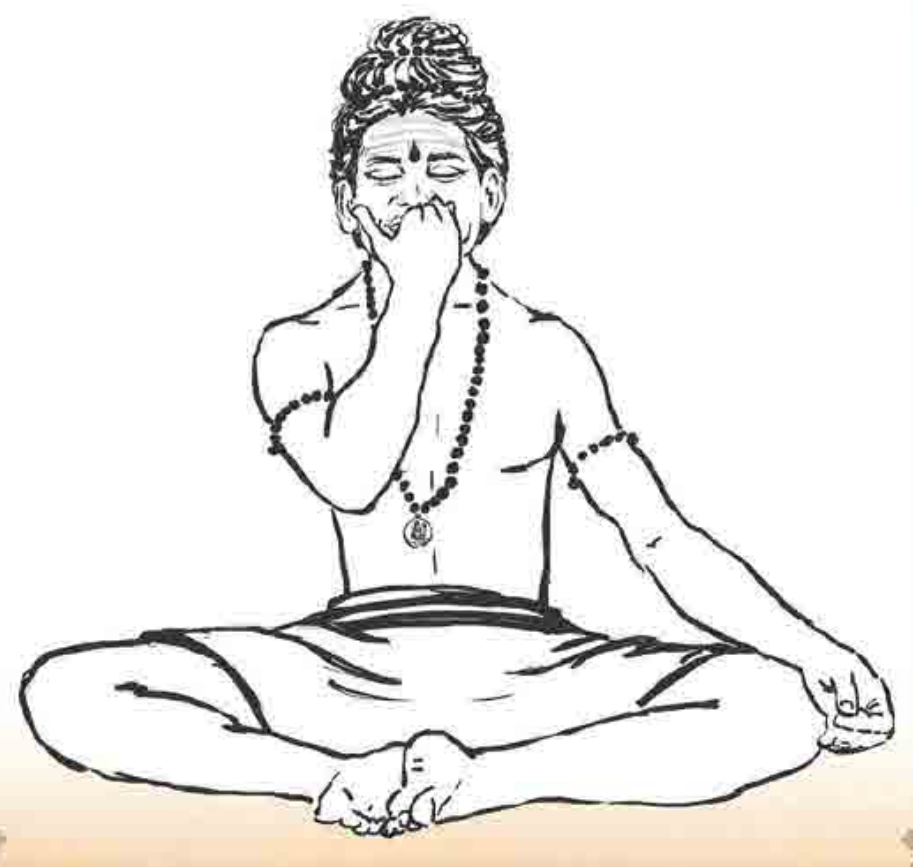
Apta Additional References Yoga-Asanamala Sacitra (ms.)-39
Every asana is very clearly described
by Mahadeva in Hatha Yoga literatures,
including the way you need to breathe.
Technique:
1. Sit with the heels together and knees apart
- The right palm should be placed on the mouth.
- Turn the tongue backwards.
- Inhale through the right nostril and hold the breath judiciously.
- Exhale through the left nostril.
- Inhale through left nostril and hold the breath judiciously.
- Exhale through the right nostril.
- Repeat this breath for 3 minutes.
This Meditative asana brings stability to the mind through withdrawing from the senses. This makes a complete energy circuit.
Anandamandirāsana
Seated
Śāstra Pramāṇa - शास्त्र प्रमाण Rudrayamala Tantra 23.103-104
अथ वक्ष्ये वीरनाथ आनन्दमन्दिरासनम् ॥ २३.१०३ ॥
यत्कृत्वा अमरो धीरो भवत्येवेह साधकः ।
हस्तयुग्मं पाददेशे पादयुग्मं प्रदापयेत् ॥ २३.१०४ ॥
atha vakṣye vīranātha ānandamandirāsanam||23.103||
yatkṛtvā amaro dhīro bhavatyeveha sādhakaḥ|
hastayugmaṁ pādadeśe pādayugmaṁ pradāpayet||23.104||
O! Vīrnātha, now I shall talk about ānandamandirāsana;Doing which the resolute practitioner becomes immortal. (23.103, 104)O Kaul! stand properly like a rod and rest on the front part of the buttocks.
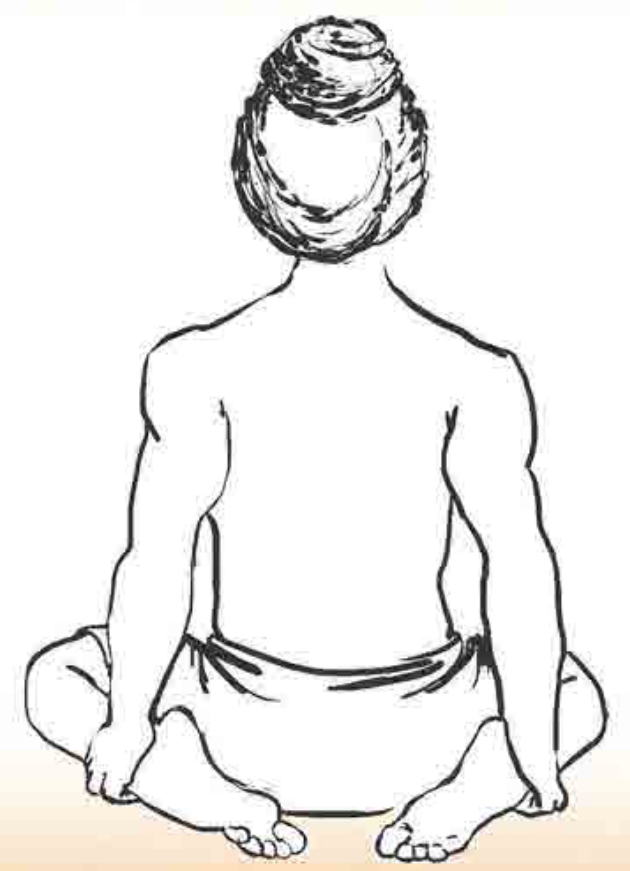
Technique:
- Sit with the legs folded by the side
- Keep the front part of the buttocks on the ground
- Sit upstraight
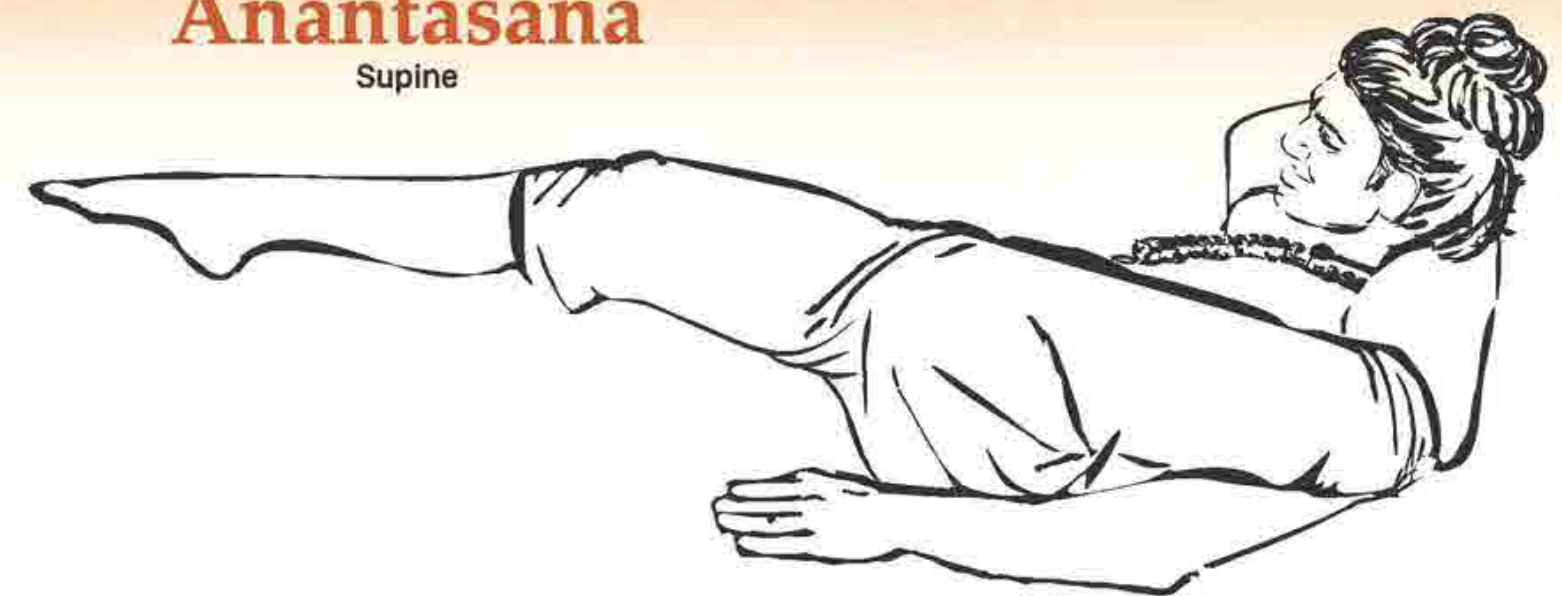
Anantasana
Supine
Āpta Pramāṇa - आप्त प्रमाण Kapala-Kurantaka-Hathabhyasa-Paddhati-4
उत्तान शयनं एकैकं पादं ग्रीवायां विन्यस्य
इतर हस्तेन पादाग्रं गृहीत्वा इतरपादहतिस्तौ
लंबीकृत्य तिष्ठेत् अनन्तासनं भवति ॥४॥
uttāna śayanaṃ ekaikaṃ pādaṃ grīvāyāṃ vinyasya itara hastena pādāgraṃ gṛhītvā itarapādahatistau lambīkṛtya tiṣṭhet anantāsanaṃ bhavati || 4 ||
Lying supine place one foot on the neck, then by other hand hold the top of the other foot and then extend both of that hand and that foot. This is known as Anantasana. 4.
Apta Additional References Kapala-Kurantaka-Hathabhyasa-Paddhati
Balances the prana & apana energies.
Technique:
- Lie on back with straight legs.
- Place one of the legs behind neck and hold toes with opposite hand.
- Head rests on the foot.
- Straighten the other arm next to the body.
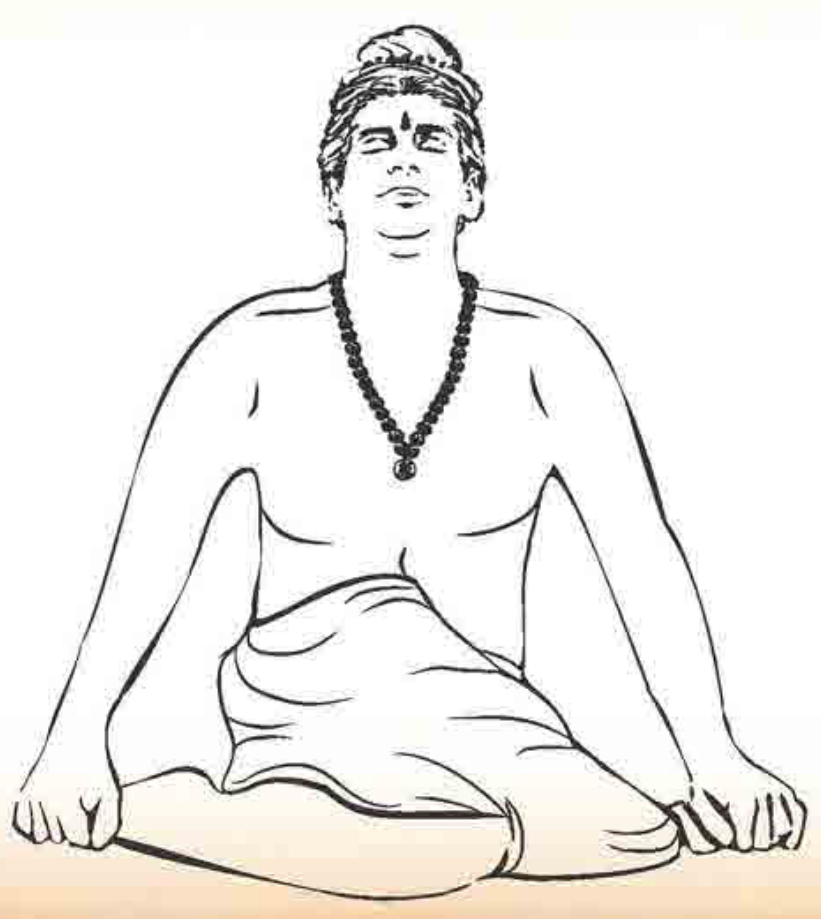
Anasuyasana I
Seated
Āpta Pramāṇa - आप्त प्रमाण
Joga Pradīpikā-III.87-89
दछिन गोडो नीचो ठानै
वांवो ताके ऊपर आनै ।
गोदा संधि मिलावै भारी
आदा पद पुनि पसारै ॥८७॥
||caupaé ||
dachina goòo néco öhänai
väàvo täke üpara änai |
goòä sändhi milävai bhäré
äoä pada puni deta pasäré ||87||
for extended verse see end of chapter
Place left knee above the right knee so that both the knees should touch each other. Extend the legs away from the body. Catch hold of the toes with opposite hands. Gaze at the tip of the nose. Daily practice of this asana makes the body lustrous. It removes all kinds of diseases.
Apta Additional References
Joga-pradīpika(London ms.)-11
Technique:
- Place the left knee above the right knee so that both knees touch each other.
- Keep the feet by the side of the buttocks.
- Extend the legs away from the body.
- Catch hold of the toes with opposite hands.
- Gaze at the tip of the nose.
Engages moola bandha, abdominals and inner thighs Deeply opens and stretches hip flexors and gluts Relaxes entire back, spine and shoulders Increases blood flow to brain Beneficial to lower body organs, improves menstrual and reproductive issues Creates a complete energy circuit with hands clasped and legs crossed Contraindication: Avoid with any back pain or knee pain
Sakshi Pramana Benefits
Ma Nithya Nirishvarananda, Miami, Yoga Acharya
Anasuyasana is a great outer hip opener, and if you have limited hip flexibility, it is easier to sit on top of a pillow or folded blanket to elevate the hips. This asana brings a feeling of presence and awareness of the inner and outer space.
Anasuyasana II
Forward Bend
Āpta Pramāṇa - आप्त प्रमाण Yoga-Asanamala sacitra 44
जीमणा गोदा की स्यंधि उपरि डावा गोडा की संधि मिलाई राखै
गोडास्यौ ले पगथल्या ली आडवाइ सूधा राखै
हाथा स्यौ पगाका अगूठा पकदै अथवा दोऊ हाथ पाछा
नै करि काकसी करै
मूलद्वार पाछै काकसी राखै
anasuyäsanä 2
jémaëä goòä ké syandhi upari òävä goòä ké sandhi milä i räñai
goòäsyau le pagathalyä lau äòavä i südhä räñai
häthä syau pagäkä agüöhä pakaòai athävä doü hätha pächä
nai kari käkasé karai
müladvära pächai käkasé räñai
for extended verse see end of chapter
After spreading the feet wide apart followed by placing one knee over the other, one is supposed to catch holdof the hands over the back. Then one should bend the head down to touch the nose to the ground.
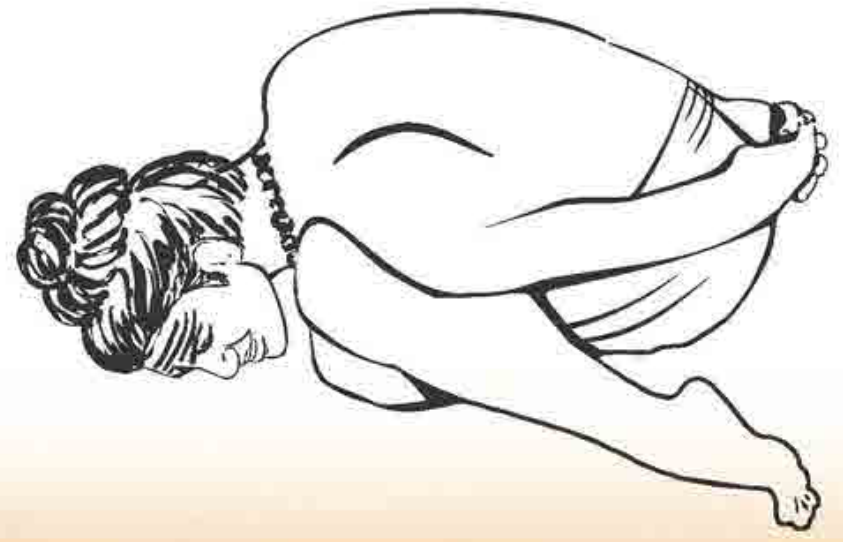
Apta Additional References Asana-namani 53
Technique:
- Place one knee above the other
- Hold the hands from the back
- Bend down to touch the nose on the ground
- Gaze at the tip of the nose
- Remain in this pose 30 seconds
The body becomes lustrous like gold; free of diseases. There are several benefits of this asana, Even if practiced 2 times a month it gives tejas to the body.
Andha asana
Forward Bend
Āpta Pramāṇa - आप्त प्रमाण Yoga Pradipika-193-197
प्रथम पगथली सम ठहरावै कोर माहली उभै मिलावै ।
फणापाण उकड कर बैठे दोउ एडी गुदा निवैसै ॥१९३॥
prathama pagathalé sama öhaharävai kora mähalé ubhai milävai |
phaëäpäëa ukaòa ka ra baise dou eòé gudä nivaise || 193 ||
for extended verse see end of chapter
Sit on the toes together placing arms above the heels. Keep knees and thighs together and extend them infront. Gazing at the knees, place whole body on the thighs. Bring both the hands from outside the legs and place elbows on the ground.
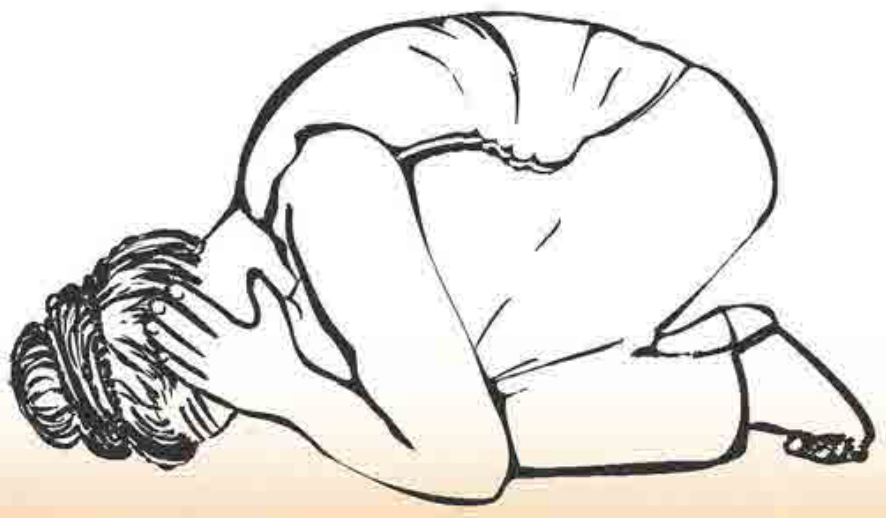
Apta Additional References Joga pradipika (or Yoga-äsanamälä sacitra-33)
explain that usually night blindness is removed by putting cow ghee and black pepper in the eyes and emphasizes the exhalation to be done from the mouth ensuring to close the anal region.
Technique:
- Kneel down and lower the head in between the knees.
- Keep the elbows adjacent to the knees.
- Hold the head with the hands.
This removes night blindness and even blind can see with eyes.
Angusthasana
Balancing
Āpta Pramāṇa - आप्त प्रमाण Hatharatnavali (III.16)
कबन्धासनमित्याहुः गोरक्षासनमेव च ॥
अंगुष्ठमुष्टिकं ज्ञेयं ब्रह्मप्रासादितं तथा ॥१६ ॥
kabandhäsanamityähuù gorakñäsanameva ca || aìguñöhamuñöikaà jïeyaà brahmapräsäditaà tathä || 16 ||
Sit on the toes and touch the two knees together on the ground. Place the buttocks on the heels and fold the hands on the chest. This asana is similar (in some versions the same) as Utkatasana
Apta Additional References kiraṇa-ṭīkā-II.46, Yogasanam(sacitra)-61
Technique:
- Squat and sit on the heels, legs together, back straight.
- Place the palms together in front of the chest and gaze forward.
Engages and strengthens the feet, calves, abdominals and thighs. Engages the mula- and uddiyana-bandhas. Improves balance and has a grounding effect. Anjali Mudra stimulates the heart chakra and creates a complete energy circuit in the body. Removes lethargy, anxiety and depression. Allows Kundalini to easily flow upwards. Brings attention inwards.
Increased focus on balance, strengthens toes
Sakshi Pramana Benefits Sunniva Kaurin, Norway
Anilasana
Seated
Āpta Pramāṇa - आप्त प्रमाण Joga Pradipika (346-347)
दोउ हाथ भूमपर ठानो कहूणि जाडि नाभीलग आनै ।
फणा दोउ ऐसे विधि करै पिट्ठि हथेल्याकी परि धरै ॥३४६॥
ऐसे रहै कराकै पाणि धरै नासामध्य आणि ।
यासौ तपत मिटे तन केरी जैतराम प्रकट कहै टेरी ॥३४७॥
dou hātha bhūmapara öhäno kahūëi jăòi näbhilaga änai |
phaëä dou aisai vidhi karai piñöi hathelyäké pari dharai || 346 ||
aisai rahai karäkai päëi dharai näsämadhya äëi |
yäsau tapata mlöe tana keré jaitaräma prakaöa kahai öeré || 347 ||
Place both hands on ground and keep both elbows joined together at the navel. Arrange the feet on hands which are placed prone. Fix the gaze at the nose.
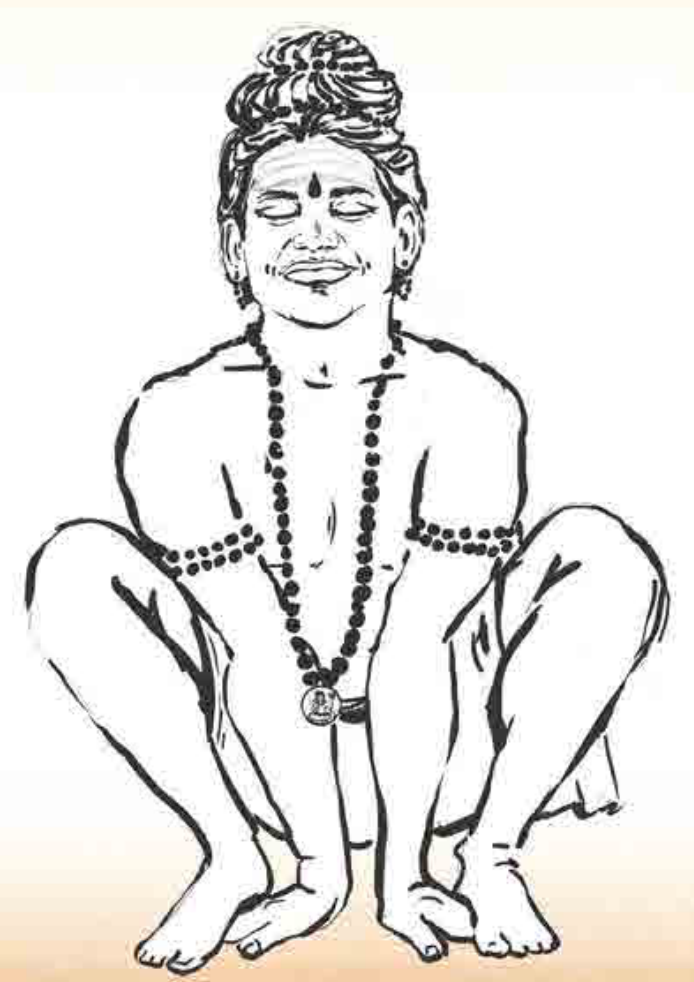
Apta Additional References JP(L) - 80
Technique:
- Come to a full squat posture.
- Place the hands below the feet, palms facing down.
- Keep the arms straight, elbows joined together at the navel (Option: If you cannot hold the squat position, you can sit on the ground).
- Fix the gaze at the nose.
- Remain in this pose 30 seconds.
This reduces the bodily heat
Anjani asana
Seated
Āpta Pramāṇa - आप्त प्रमाण Joga Pradipika (283-286)
दोउ करकी उभै हतेली कोर वारिली मै ले भेली ।
सो आगा नै भूपरि दाखै माहा नै अंगुलि मिलि राखै ॥२८३॥
अंगुष्ट छीदा राखै दोई पुनह हथेली पिष्ठि जु जोई ।
तापरि मूलद्वारि टिक बैठे बहुज्यौ जुगति करै एक बैठे ॥ २८४॥
dou karaké ubhaī hatelé kora värilé maï le bhelé |
so ägä nai bhüpari däkhai mähä nai aïguli mili räkhe ||283 ||
aïguñöa chédä räkhai doé punaha hathelé piñöé ju joi |
täpari müladväri öika baise bahujyau jugati karai eka baise || 284||
for extended verse see end of chapter
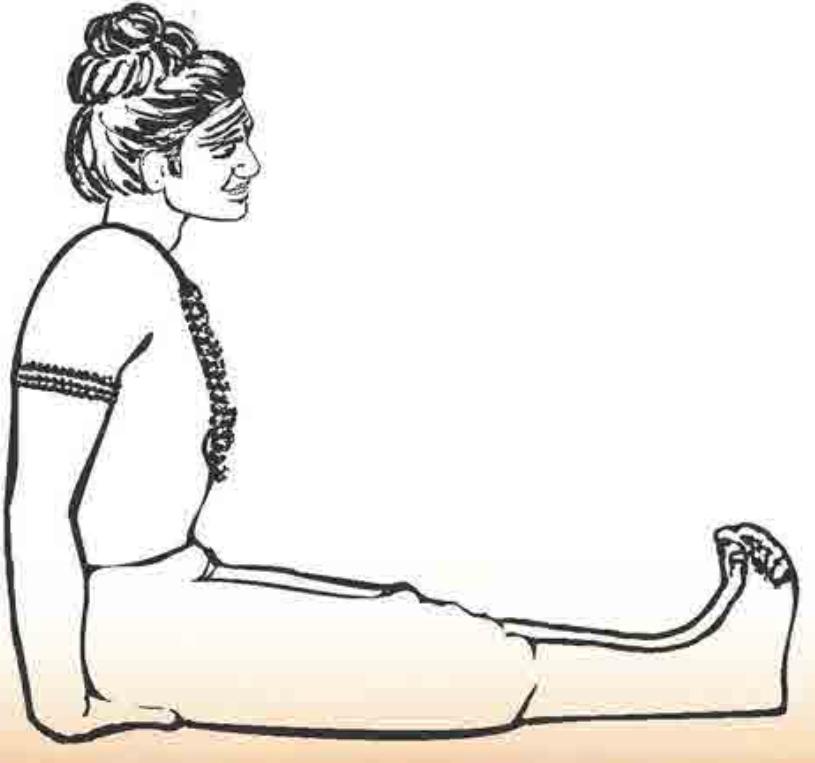
Place both the hands of respective sides on the ground with palm upturned. Fingers will remain straight and together. The back part of the palm should be near anus. Hands should touch the sides of the abdomen. Extend legs in front with toes pointing upward and heels on the ground. Heels and toes should remain together. Gaze should be nasal. This wards of harasa diseases.
Apta Additional References YMS (ms.)-69
Technique:
- Sit with legs stretched forward keeping the heels on the ground and toes pointing upward.
- Place both the hands under the buttocks, palms facing upward and fingers close together.
- Bring the elbows close to the body as much as possible.
- Gaze at the center of the eyebrows.
It cures trembling of the body.
Brings feeling of stability and strength
Sakshi Pramana Benefits Ma Nithya Nirishvarananda, Miami, Yoga Acharya
Ankusasana
Supine
Āpta Pramāṇa - आप्त प्रमाण Kapala-Kurantaka-Hathabhyasa-Paddhati-5
उत्तानशयीतः एकैकं पादम् ग्रीवायाां कुर्वन् इतरं
हस्तं कर्णमूले स्थापयेत् तस्यैव हस्तस्य
कूपरं भूमौ निधाय इतर हस्त पादौ
सरलिकृत्य तिष्ठत् अङ्कुशासनं भवति ॥५॥
uttānaśayītaḥ ekaikaṃ pādam grīvāyāṃ kurvan itaraṃ
hastaṃ karṇamūle sthāpayet tasyaiva hastasya
kūparaṃ bhūmau nidhāya itara hasta pādau
saralīkṛtya tiṣṭat aṅkuśāsanaṃ bhavati ||5||
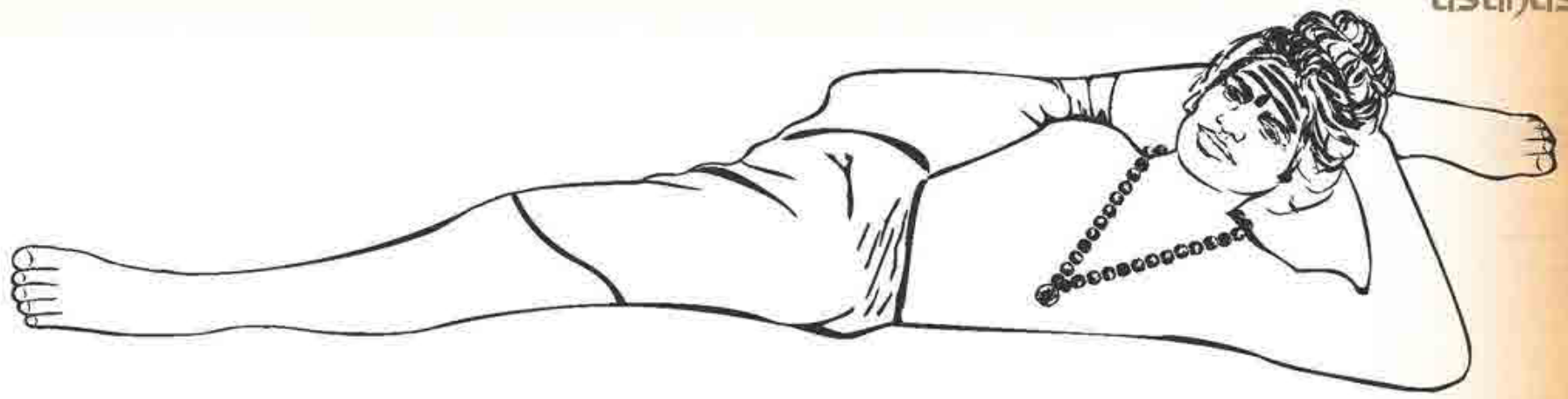
Lying supine place one foot on the neck, then place the hand on the root of the ear, and place the elbow of that hand on the ground, then extend straight the other hand and the other foot and stay. This is known as Aṅkuśāsana.
Apta Additional References STN-3
Opens the root chakra and brings apana energy upwards. Strengthens the abdominals, back and neck. Stretches the spine, gluteal and pelvic muscles.
Technique:
- Lie on the back.
- Place one leg behind the head.
- Place the hand from the opposite side at the base of the ear.
- Keep the elbow on the ground for support.
- Keep the other leg straight.
Apānāsana
Seated
Śāstra Pramāṇa - शास्त्र प्रमाण Rudrayamala Tantra (23.68-70)
केवलं पादमेकञ्च स्कन्धे चारोप्य यत्नतः।
एकपादेन गगने तिष्ठेत् दण्डवत् प्रभो ॥२३.६८॥
अपानासनमेतद्धि सर्वेषां पूरकाश्रयम्।
कृत्वा सूक्ष्मे शीर्षपद्मे समारोप्य च वायुभिः॥२३.६९॥
kevalaṁ pādamekañca skandhe cāropya yatnataḥ| ekapādena gagane tiṣṭhet daṇḍavat prabho||23.68|| apānāsanametaddhi sarveṣāṁ pūrakāśrayam| kṛtvā sūkṣme śīrṣapadme samāropya ca vāyubhiḥ||23.69||
for extended verse see end of chapter
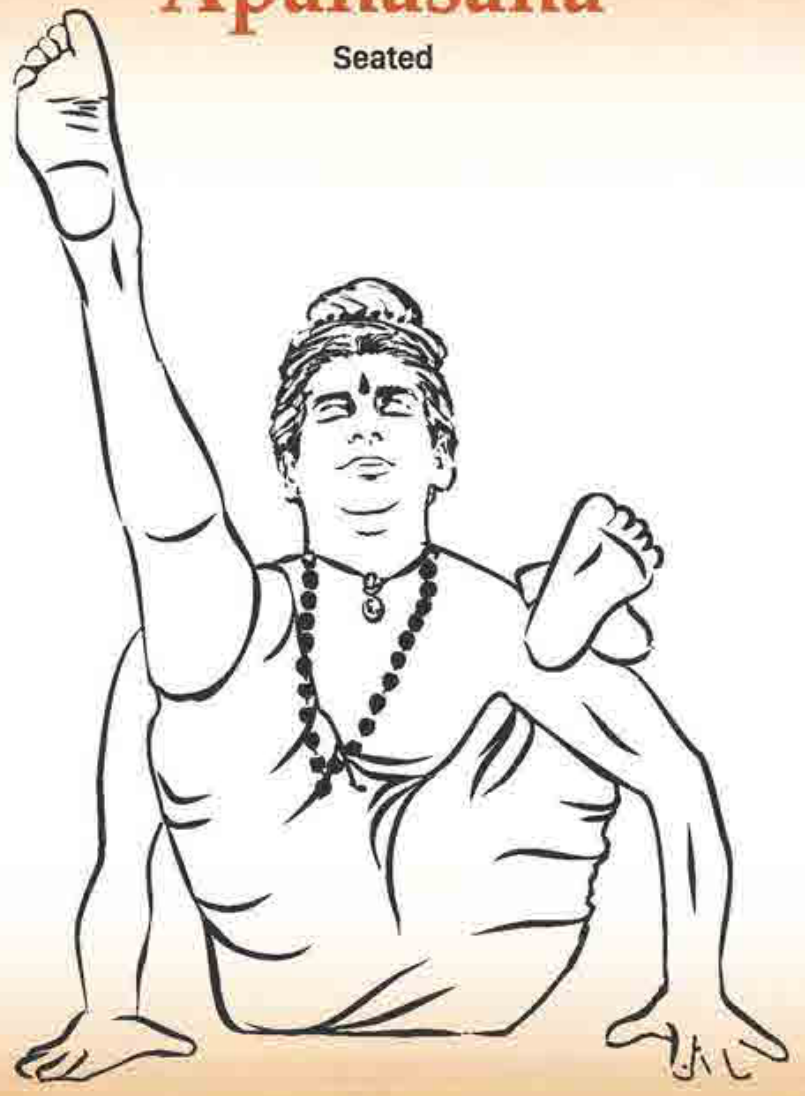
(If you) Place just one foot on the shoulder with effort and (raise) the second foot like a rod towards the sky it surely becomes apānāsana, (and if) by doing pūraka in śīrṣpadmāsana by the subtle breath then person (who is bound to die one day, anybody who is born will surely die one day) becomes a siddha. This way prāṇa and apāna become one, and by doing this apānāsana one becomes yogeśwara (supreme among Yogis). (23.68, 69, 70)
Technique:
- Sit and bring one leg on top of the shoulder.
- Keep the hands on the ground.
- Raise the other leg straight towards the sky.
Arambha asana
Forward Bend
Āpta Pramāṇa - आप्त प्रमाण Yoga-Asanamala Sacitra (ms.)-30
दोउ पग मिलिवा पसारी पगाका अगुठा पकडि लिलाट गोडा लगावै
सरीर समीराषै आसन कौ गुण आरभ की बिधि उत्तर
सनमुष बैसी आरम्भ करै
dou paga milivā pasārī pagākā aguṭhā pakaḍi lilāṭa goḍā lagāvai
sarīra samīrāṣai āsana kau guṇa ārabha kī bidhi uttara
sanamuṣa baisī ārambha karai || 30 ||
for extended verse see end of chapter
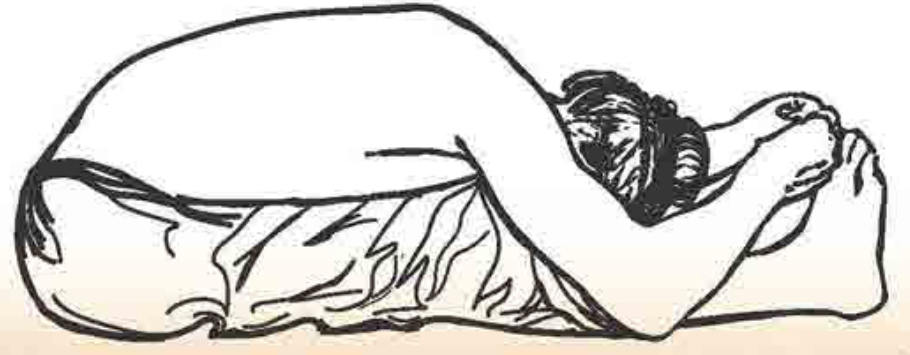
Sit with legs extended in front. Catch a hold of the big toes with the index and middle finger. Place the head over the knees. It is recommended to consume a liquid gruel made of green mung dal and rice should be taken sip by sip, and after few minutes then start the asana. Arambasana is practiced with nadi shodana pranayama starting with 12 matras all the time through 24 hours with intermittent rest of an hour or so. Start inhaling from the left big toes with the index and middle finger. Place the head over the knees.
Technique:
- Sit with legs extended in front.
- Catch hold of the big toes with the index and middle finger.
- Place the head over the knees.
Ardhachandrasana
Standing
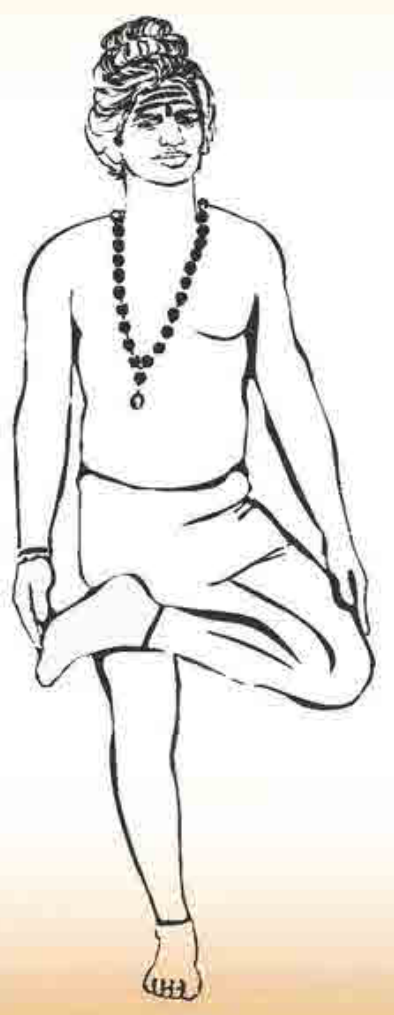
Technique:
- Stand straight
- Balance on the right foot as you bring the left knee up
- Bring the left foot to the right hip, bringing the knee down
- Stand strong relaxing the arms by the sides
- Repeat on the other side
Improves posture, balance, and concentration. Increase flexibility in the hip joints, knees, and ankles. Regular practice of this asana regulates and balances the function of the central nervous and lymphatic systems. Primordial meditative posture. A hips-opening posture, stretches adductors (inner thighs), external rotators. Allows the body to be held completely steady for a long peroid of time, relaxes the nervous system, enable the mind to become calm.Directs the flow of prana to the spine.Breath slows down, muscular tension decreases, blood pressure reduces in posture.
Increased focus and presence, feeling of comfortability and stretching
Sakshi Pramana Benefits Sunniva Kaurin, Norway
śāstra Pramāṇa - शास्त्र प्रमाण Kirana Agama- Yoga pada- verse 8
तद्वत्-पादाअद्वयं कृत्वा स्वरलोलाऽन्य संस्थितम् |
अर्धचन्द्रं भवेदेवं वीरासनमथ शृणु ॥
tadvat-pādāadvayaṁ kṛtvā svaralolā'nya saṁsthitam |
ardhacandraṁ bhavedevaṁ vīrāsanamatha śr̥ṇu ||
Placing the legs as before (ie. as in padmasana) and keeping one on the other mutually, ardhachandrasana can be assumed.
Atmaramasana
Supine
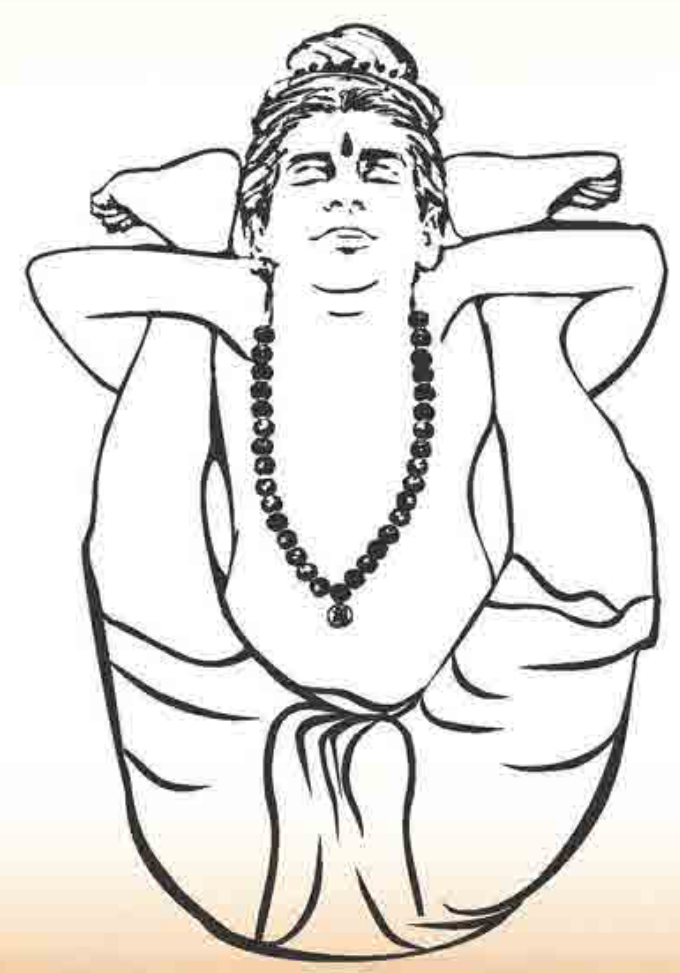
Āpta Pramāṇa - आप्त प्रमाण Yoga-Asanamala Sacitra (ms.)-14
घआतमरामासन प्रथम सूधौ सोवै ॥ पग उच्चाई आगनै आनै दोई पगा बिचि हाथ करि कहौणी की माहिली संधिमै फणा अथवा पगथल्याका लाक कौर वाणा राखि भुजाकलाया सौ दौवै हाथा की काकसी करि गुदी पीछै राखै माथो उच्चौ राखै दृष्टि नाशा अग्र आसण कौगुण जैतिन विरिया एकाती बैसी ध्यान धारा करै ता पाछै अरू पहलीय आसन चढतौ सधै तौ एता गुन होई अगनी बिरधि होई पवन सलिलता बैहै सरीर सुद्ध हो ई नाडी सुद्ध होई सरीर का रौग जाई और रोग की उतपति न होई ॥ १४ ॥घ
First lie on back. Raise the legs towards head. Bring the hands in between the legs. Turning the hands over the legs, hold the feet in elbows. Interlock the fingers over shoulders and raise the head. Fix the gaze at the tip of the nose.
Apta Additional References JP-149-153, HP(ms.)-II.138-139,
Also known as adhyatma-asana or pralopa-asana (Yoga ASANAMALA SACITRA-14). This is also called mrtti-bhanjikasana
Technique:
- Lie down on your back.
- Raise the legs towards the head.
- Wrap the arms around the ankles and interlace the fingers behind the neck.
- Gaze at the tip of the nose.
Gastric fire is improved. Rectifies the flow of prana in the body and purifies the nadis. Removes diseases.
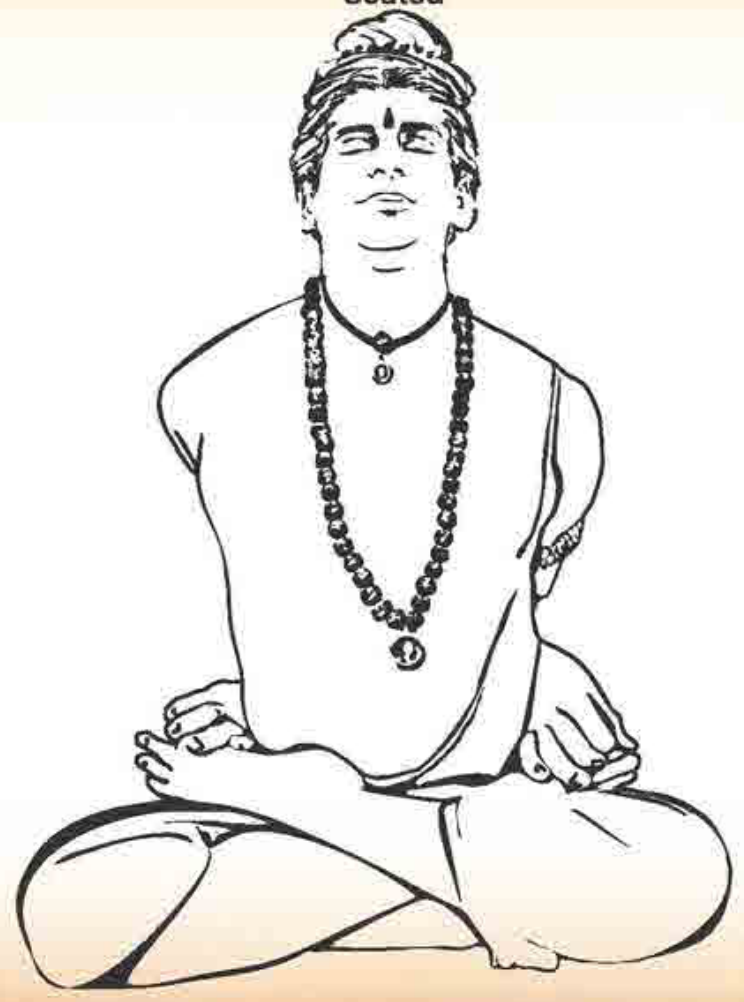
Baddha-Padmasana
Seated
Śāstra Pramāṇa - शास्त्र प्रमाण Tri-shikhi-brahman Upanishad (40)
पद्मासनं सुसंस्थाप्य तदङ्गुष्ठद्वयं पुनः ।
व्युत्क्रमेणैव हस्ताभ्यां बद्धपद्मासनं भवेत् ॥ ४० ॥
padmāsanaṃ susaṃsthāpya tadaṅguṣṭhadvayaṃ punaḥ | vyutkrameṇaiva hastābhyāṃ baddhapadmāsanaṃ bhavet || 40 ||
Having well established the Padmasana posture, (should one hold) the two big toes with (his) two hands stretched crosswise, it becomes the Baddha-padmasana (the bound- lotus-postion).
Āpta Pramāṇa - आप्त प्रमाण Gheranda Samhita II .9
अथ पद्मासनम्
वामोरूपरि दक्षिणं च चरणं संस्थाप्य वामं तथा
दक्षोरुपरि पश्चिमेन विधिना धृत्वा कराभ्यां दृढम् ॥
atha padmāsanam vāmorūpari dakṣiṇaṁ ca caraṇaṁ saṁsthāpya vāmaṁ tathā dakṣorupari paścimena vidhinā dhṛtvā karābhyāṁ dṛḍham || 30 ||
for extended verse see end of chapter
The right foot is placed on the left thigh and the left on the right, the big toes are held with the respective hands crossed behind the back, chin fixed upon the chest and the gaze directed towards the tip of the nose. This padmasana, which removes the diseases of the Yogis. 30
Apta Additional References
HSC-39, Goraksh Paddhati (1-12),
HTK (VII, 29), HR (III. 34-38)
Technique:
- Put the right foot over left thigh and left foot over right thigh.
- Cross the arms behind the back
- Firmly catch hold of the toes with the respective hands.
- Press the chin over chest.
- Fix the eyes at the tip of the nose.
It removes diseases. Purifies the internal cavity (belly). Purifies eyes, speech, mind.
Feeling of being free, pose feels effortless
Sakshi Pramana Benefits Sunniva Kaurin, Norway
Baddhakeki Asana Arm Balance
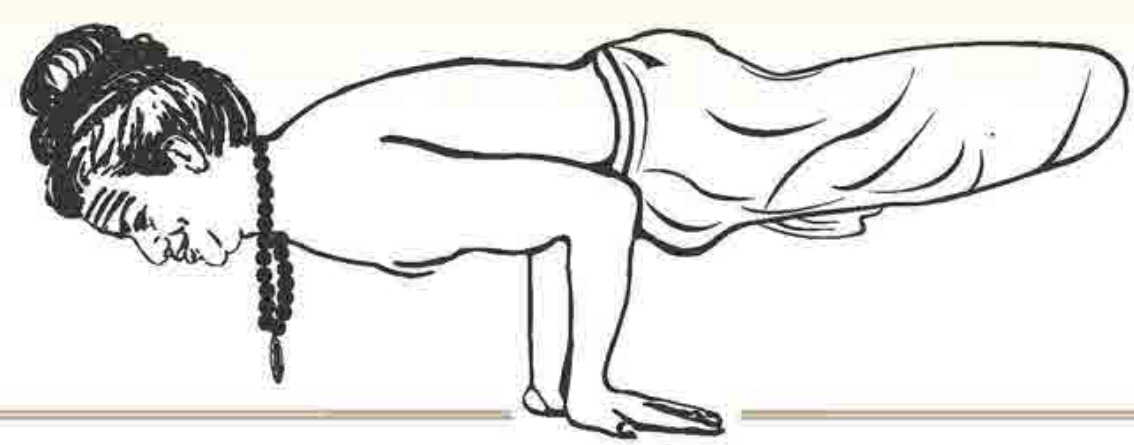
Āpta Pramāṇa - आप्त प्रमाण Hatharatnavali (III 42,45)
घउञ्चासनो दण्डवदुत्थितः खे मायूरमेतत् प्रवदन्ति पीठम् ॥४२ ॥
मयूरं पद्मकं कुर्यात् बद्धकेकीति कथ्यते ॥४५ ॥घ
uccäsano daëòavadutthitaù khe mäyürametat pravadanti péöham ||42|| mayüraà padmakaà kuryät baddhakekéti kathyate ||45||
for extended verse see end of chapter
Place both the palms on the ground. Place both elbows on the side of the navel. Stand on the hands lifting body in air with legs in padmasana. Mayura is called baddhakeki.
Technique:
- Sit in padmasana
- Stand on the knees and lean forward over the arms
- Place the hands on the ground fingers pointing backwards
- Lean forward and place the elbows on the lower abdomen
- Shift the weight forward and lift the legs off the ground
- Balance on the arms with the chin and chest up
Increases strength in the arms, opening in the upper back, engages lower back
Sakshi Pramana Benefits Ma Nithya Nirishvarananda, Miami, Yoga Acharya
• Stimulates digestive organs and increases the metabolic process • Useful for constipation, flatulence, diabetes, kidney, spleen, sluggish liver • Balances the endocrine system • Balances all three doshas • Strengthens all muscles of the body • Stimulates detoxification process and clears skin conditions • Awakens Kundalini energy
Badhāsana
Seated
Śāstra Pramāṇa - शास्त्र प्रमाण Rudrayamala Tantra 23.107-108
अथान्यदासनं वक्ष्ये साधकानां हिताय वै ॥२३.१०७॥
पवनासरुपो खेचरो योगिराड् भवेत् ।
स्थित्वा बद्धासने धीरो नाभेरधःकरद्वयम्॥२३.१०८॥
ऊर्द्धर्वमु डः पिबेद् वायुं निरुद्ध्येत् यमाविले।
athānyadāsanaṃ vakṣye sādhakānāṃ hitāya vai ||23.107|| pavanāsarūpo khecaro Yogirāḍ bhavet| sthitvā baddhāsane dhīro nābheradhaḥkaradvayam||23.108|| ūddharvamu ḍaḥ pibed vāyuṃ niruddhyet yamāvile|
Now I shall talk about another asana for the benefit of the practioners; Doing the pavanāsana the practitioner can levitate (khechara) and becomes a king among Yogis.Remaining in badhāsana the resolute practitioner should place both hands on the upper part of the navel; Raise the head upwards and inhale the air and block the double-holed senses. (23.107,108)
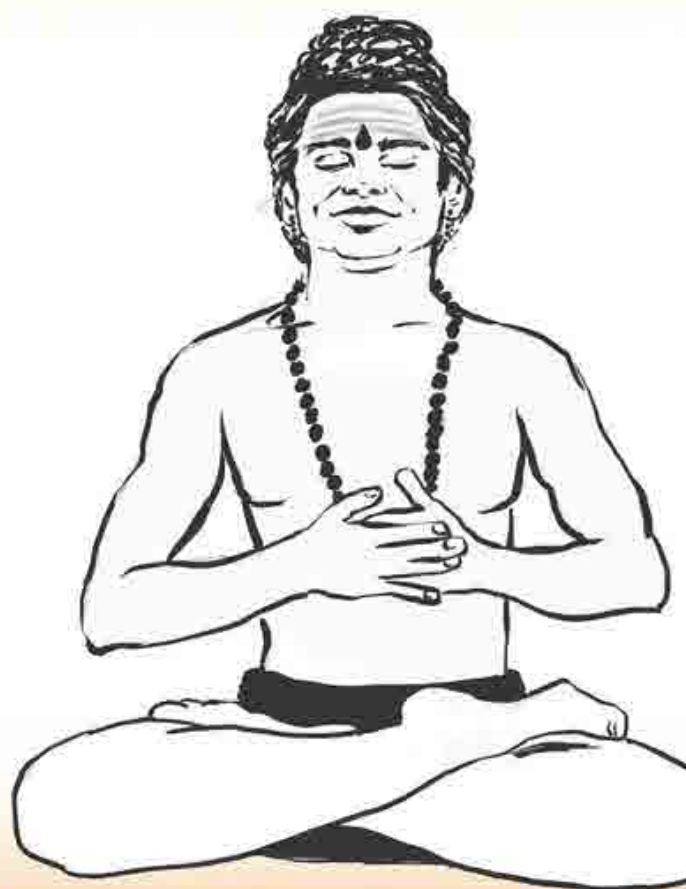
Technique:
- Sit in padmasana
- Place the hands on the upper portion of the navel
- Raise the chin to inhale
Bairaganatha Asana
Prone
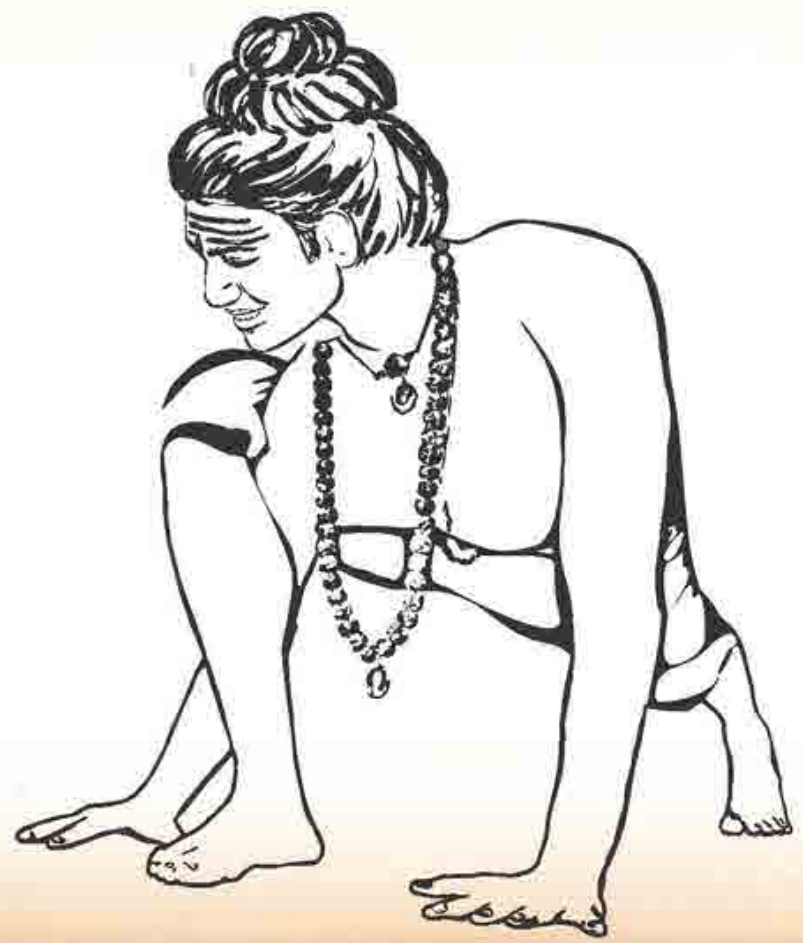
Āpta Pramāṇa - आप्त प्रमाण Yoga-Asanamala Sacitra (ms.) 95
आसण कौ गुण पीती जाई
āsaṇa kau guṇa pītī jāī
Put both hands on ground at width of the shoulders and stretch them. Stretch both the legs backwards. Bend the right knee and cross it over the right arm and place the right foot between two hands. Raise the head up a little.
Technique:
- Place both hands on the ground shoulders width apart.
- Stretch the left leg back and step the right forward.
- Cross the right arm under the leg
- Keep the right foot between two hands.
- Raise the head.
Strengthens the arms, shoulders, back and abdominals. Stretches the legs and hip. Removes disorder caused by pitta (bile).
Opens up hips/groin
Sakshi Pramana Benefits Li Yeen Chow, Singapore, Unemployed
Balaguna Asana
Seated
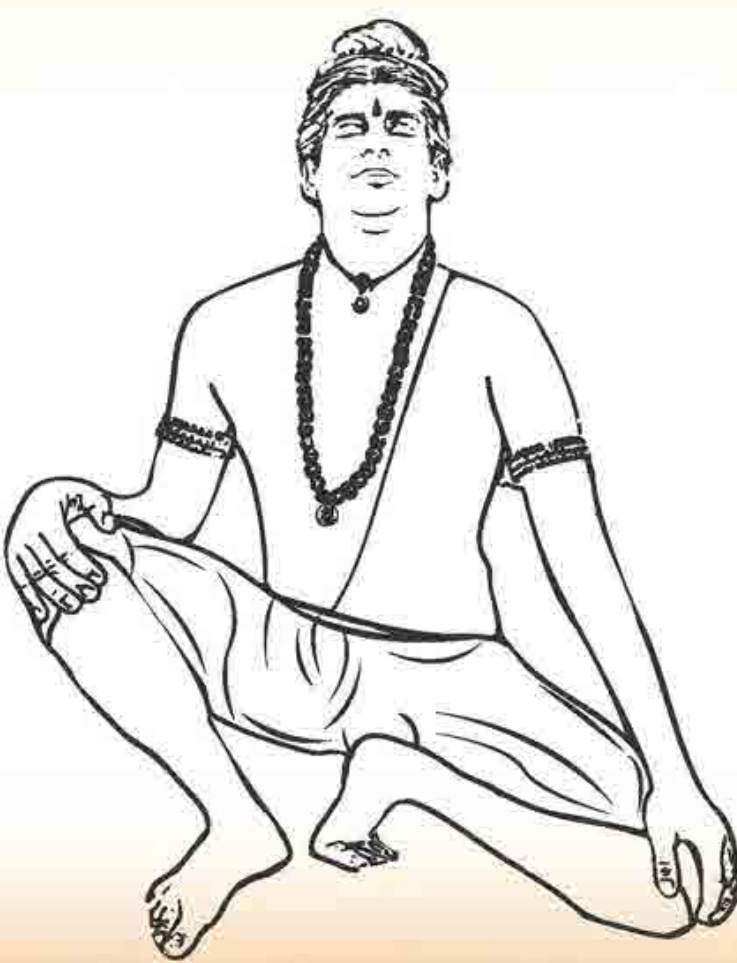
Äpta Pramāṇa - आप्त प्रमाण
Yoga-Asanamala Sacitra (ms.) 93
आसण कौ गुण जलबिकार जाइ
āsaṇa kau guṇa jalabikāra jāi
Place the left toes on the round and rest the buttocks on the left heel. Bend the right knee and place it vertically close to the chest. Rest the hands on respective knees and maintain an upright position of the trunk.
Technique:
- Place the left toes on the ground and rest the buttocks on the left heel.
- Bend the right knee with right foot on the ground and place it vertically close to the chest.
- Rest the hands on respective knees and maintain an upright position of the trunk.
Removes disorders caused by water (jala vikara)
Stretch in the lower back, chest expansion
Sakshi Pramana Benefits Li Yeen Chow, Singapore, Unemployed
Bandhayonīāsana
Seated
Śāstra Pramāṇa - शास्त्र प्रमाण Rudrayamala Tantra 23.55-57
यत्न मध्ये महादेव बन्द्धयोन्यासने श्रु अऊ ।
यत् कृत्वा खेचरो भूत्वा विचरेदीश्वरो यथा ॥ २३.५५॥
yatra madhye mahādeva banddhayonyāsane śru āu| yat kṛtvā khecaro bhūtvā vicaredīśvaro yathā||23.55||
O! Mahādeva, in the middle of this, listen to the bandhayoniāsana; Doing which the practitioner attains khechara and goes all over like Īśwara. (23.55)
for extended verse see end of chapter
Technique:
- Sit and press one heel at the perineum and the other over the genitals.
- Bring the little fingers next to the mouth.
- Block the nostrils with the ring fingers
- Bring the middle fingers on top of the eyes
- Block the ears with the index fingers (you can also use the thumbs)
Bhekāsana
Arm Balance
śāstra Pramāṇa - शास्त्र प्रमाण Rudrayamala Tantra 23.63-65
भेकानामासनं योगं निजवक्षसि सम्मुखम्।
निधाय पादयुगलं स्कन्धे बाहु पदोपरि॥२३.६३॥
ध्यायेद्धि चित्पदं भ्रान्तमासनस्थः सुखाय च।
यदि सर्वाङ्गमुत्तोल्य गगने खेचरासनम्॥२३.६४॥
bhekānāmāsanaṃ Yogam nijavakṣasi sammukham|
nidhāya pādayugalaṃ skandhe bāhu padopari||23.63||
dhyāyeddhi citpadaṃ bhrāntmāsanast͟haḥ sukhāya ca|
yadi sarvāṅgamuttolya gagane khecarāsanam||23.64||
for extended verse see end of chapter
For bhekāsana Yoga place both the feet facing each other on the chest effortlessly;Then keep both arms on the shoulders around the feet in front. (While this āsana is being done) concentrate on the supreme consciousness looking upwards to attain bliss for the disillusioned one sitting in this āsana. If all the body parts are raised upwards uniformly, it becomes khecarāsana. (23.63, 64) The aforesaid mahābhekāsana give the practitioner all siddhis (Yogic powers); He who practises it while chanting the mahāmantra, acquires ultimate knowledge here. (23.65)
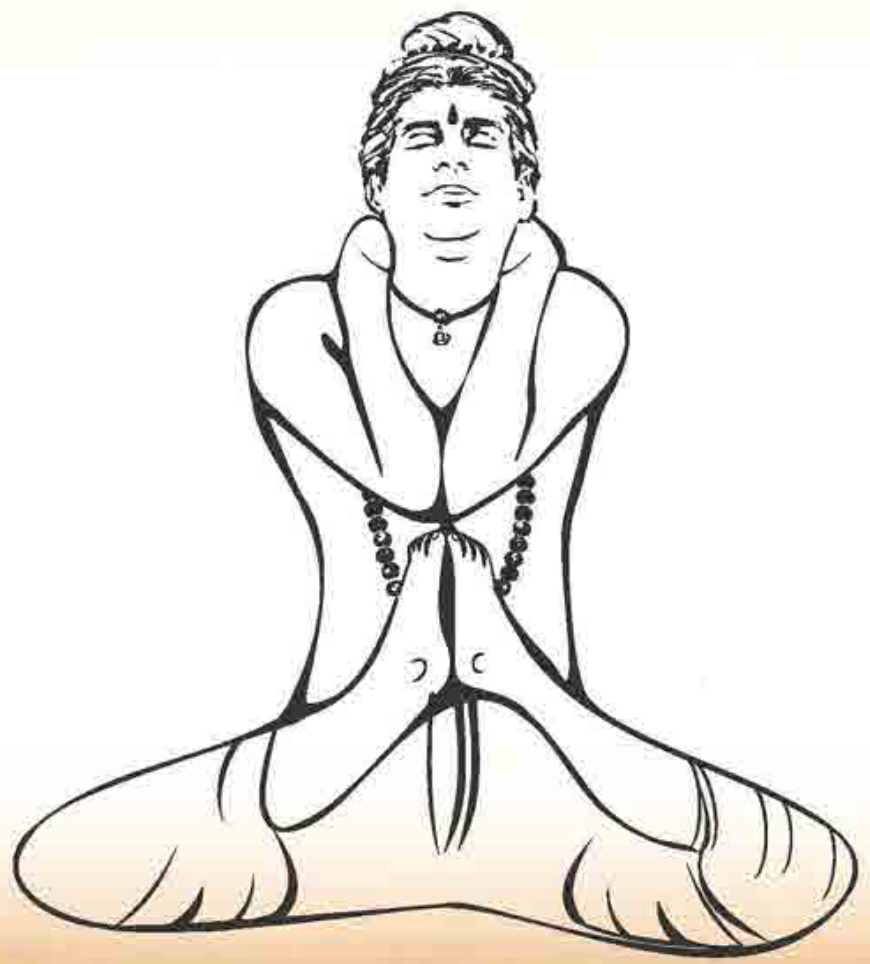
Technique:
- Bring the sole of the feet together and place them over the chest.
- Keep the hands on the shoulders
- Gaze at the point between the eyebrows
Bhadragorakha asana
Seated
Āpta Pramāṇa - आप्त प्रमाण Joga Pradipika 129-131
दोऊ पगथली संपुट करै कोर वारिली भूपरि धरै ।
कोर वारिली राखै ऐसै तापरि मूलद्वारि टिकि बैठे ॥ १३१ ॥
गोडा पीडी भूपरि दाखै हाथ दोऊ गोडा परि राखै ।
द्रिष्ट्रि त्रिकुटी मध्य जु ठानै ताकौ गोरखभद्र बखानै ॥ १३२ ॥
doū pagathalī sampuṭa karai kora vārilī bhūpari dharai | 'kora vārilī rākhe aisai tāpari mūladvāri ṭiki baise || 131 || goḍā pīḍī bhūvapari dākhai hātha doū goḍā pari rākhai | driṣṭi trikuṭī madhya ju ṭhānai tākau gorakhabhadra bakhānai || 132 ||
*for extended verse see end of chapter
Sit on the ground, fold both the legs and join the soles. Now arrange to keep soles in such a way that arms placed upon the fingers of the legs. Both the knees should touch the ground and hand being placed upon them respectively. Gaze should be between the eyebrows. All diseases are warded off and Yogi is never subjected for any type of dejection.
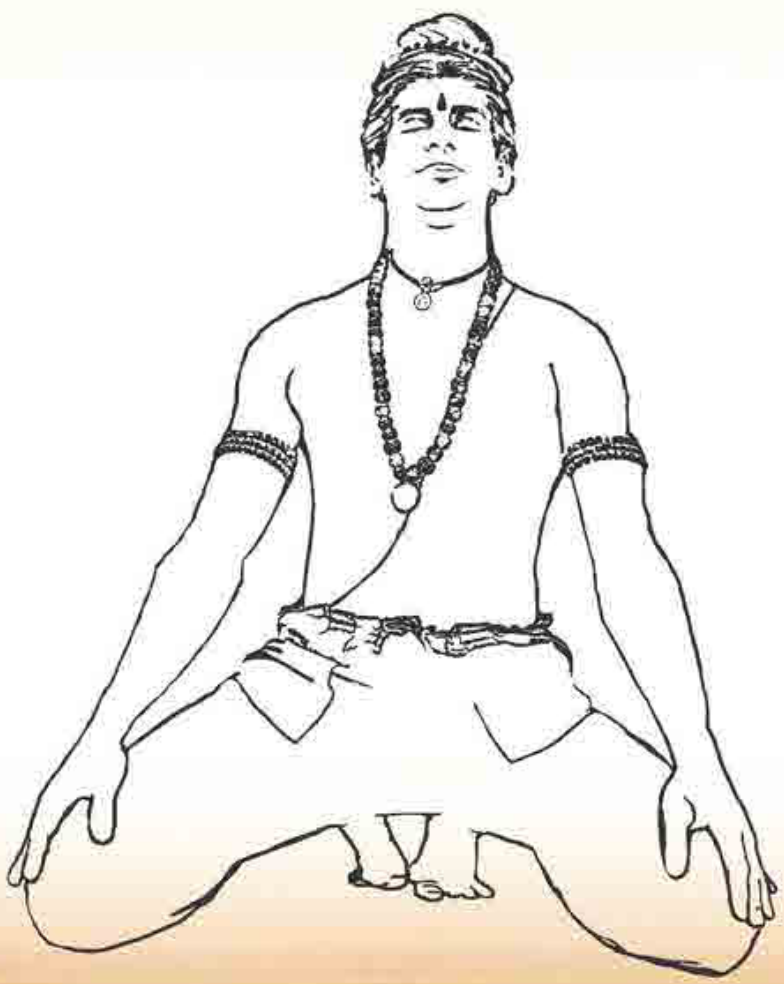
Apta Additional References Yoga-Asanamala Sacitra (ms.)-8
Technique:
- Sit on the ground.
- Bring the sole of the feet together with the toes and knees on the ground.
- Place the anus on the heels.
- Place the hands on the knees.
Removes all diseases and gets rid of all worries
Śāstra Pramāṇa - शास्त्र प्रमाण
Sandilyopanishad 3.8
गुल्फौ तु वृषणस्याधः सीवन्याः पार्श्वयोः क्षिपेत् ।
पादपार्श्वे तु पाणिभ्यां दृढं बद्ध्वा सुनिश्चलम् ।
भद्रासनं भवेदेतत् सर्वव्याधिविषापहम् ॥ ८ ॥
gulphau tu vṛṣaṇasyādhaḥ sīvanyāḥ pārśvayoḥ kṣipet | pādapārśve tu pāṇibhyāṃ dṛḍhaṃ baddhvā suniścalam | bhadrāsanaṃ bhavedetat sarvavyādhiviṣāpaham || 8 ||
(The Yogin) should place the two ankles of the leg below the testicles, on either side the frenum of the prepuce. Then with both hands holding firmly the two feet by their sides, and remaining motionless. This will be the Bhadrasana, the panacea for all ills and the antidote against all poisons.
Āpta Pramāṇa - आप्त प्रमाण
Hatharatnavali (3-30)
गुल्फौ च ॠस्नस्यधह् सिवन्यहू पर्व्योह् क्सेपेत् |
पर्व्पदौ च पनिभ्यम् द्र्धम् बद्ध्व सुनिस्यलम् |
भद्रसनम् भवेदेतत् सर्व्व्यधिविसपहम् ॥ ३० ॥
gulphau ca vrsanasyadhah sivanyah parsvayoh ksipet | parsvapadau ca panibhyam drdham baddhva suniscalam | bhadrasanam bhavedetat sarvavyadhivisapaham || 30 ||
The two ankles are put under the scrotum on the two sides of the perineum. One catches hold of the feet with hands and remains steady. This is bhadrasana, which removes all the diseases and toxins.
Bhadrasana I
Seated
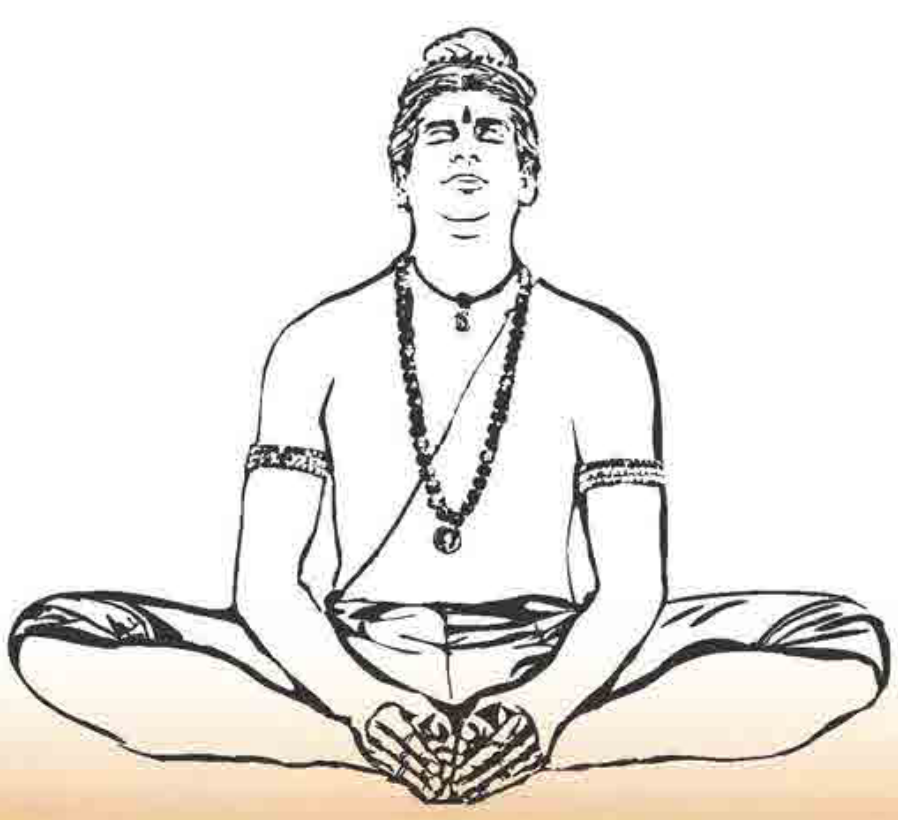
Apta Additional References Haṭhapradīpikā of Svātmārāma (10 chapters)-II. 37-38
Technique:
- Bring the sole of the feet together with the heels close to the perineum
- Hold the sides of the feet firmly with the two hands.
- Sit upstraight and remain motionless.
Stimulates the reproductive organs and improves digestive processes. Helps with stress, anxiety, tension and depression. Removes all toxins and efficient in alleviating all diseases. Suggest bhadrasana to get rid of diseases caused by vitiation of kapha and vata. Helps stabilize the mind. Removes all diseases and toxins.
Through the regular practice of Yoga, I have been able to sit in Bhadrasana. There is a stretching of the inner thighs which I enjoy, along with the increased flow of energy throughout the body.
Sakshi Pramana Benefits Jasumati Vekaria, London
Bhadrasana II
Seated
Āpta Pramāṇa - आप्त प्रमाण Gheranda Samhita II.9-10
भद्रांसनम् गुल्फौ च वृषण॑स्याधो व्युत्क्रमेण सम॑हितः ।
पादांगुष्ठौ कराभ्यां च धृ॑त्वा च पृष्ठ॑हृदृअतः ॥ ९ ॥
bhadrāsanam gulphau ca vṛṣaṇasyādho vyutkrameṇa samāhitaḥ | pādāṅguṣṭhau karābhyāñca dhṛtvā ca pṛṣṭhadeçataḥ || 9 ||
for extended verse see end of chapter
Placing both heads upside down under the testicles, cross the hands behind the back and hold the toes of the feet, as in Padmasana. Taking the position of Jalandhara bandha, fix the gaze on the tip of the nose. This is called the bhadrasana and its practice destroys all diseases.
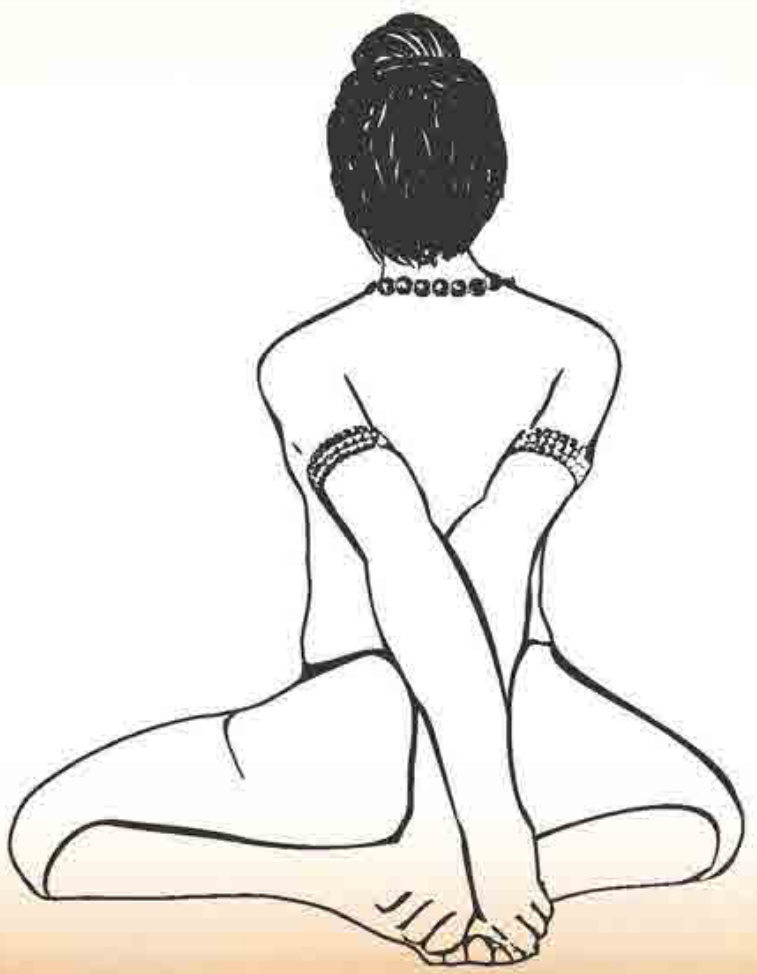
Technique:
- Sit in bhadrasana i with the sole of the feet together
- Turn them upside down, toes pointing back and sit on the heels.
- Take hold of the feet from the back with a finger lock.
- Apply Jalamdhara bandha by contracting the throat.
- Fix the gaze at the tip of the nose.
Rids one of all diseases
Bhaga asana I
Seated
Āpta Pramāṇa - आप्त प्रमाण Joga Pradipika 223-226
घउलटा मोडि पाव दो कैसे बहुरो जुगति करै एक ऐसे ।
पावन महिला गुलफु जु होउ कुला पाखति लावे सोउ ॥२२३॥
ऋपिष्टि पगथल्यां की पुनि जोई हाथासो मोंडै वह सोई ।
ताको जंघघनिके ढगि ल्यावै तासो तिनकी पिष्टि लगावै ॥२२४ ॥घ
ulaöä moòl päva dou baise bahuro jugati karai eka aise | pävana mahilä gulaphu ju hou kulä päkhati läve sou ||223|| piñöi pagathalyää ké puni joé häthäso moòai vaha soé | täko jaîghanike òhagi lyävai täso tinaké piñöi lagävai ||224|
for extended verse see end of chapter
Fold both the legs towards backside in such a manner that heels are touching the sides of respective hips. Turn the soles upward with hands. Toes of both the feet should be kept on reproductive organs. Place hands on knees and gaze between eyebrows. Air flows in the body without obstruction, removes ailments of joints due to vata i.e. one of the three humors of the body. Any obstruction in the path of Prana and Apana is also removed immediately.
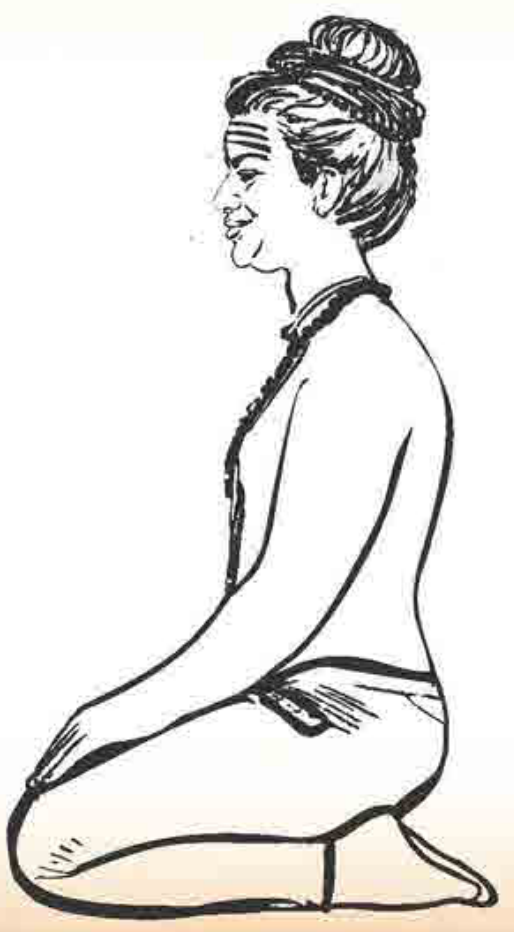
Technique:
- Kneel down and sit on the heels.
- Soles are upturned and toes are kept close to the body with the help of hands.
- Place the hands on knees.
- Sit with the spine upright.
- Gaze between the eyebrows.
Helps free movement of prana and apana. Gets rid of arthritis and joint pain (sandhivata).
Makes one feel grounded
Sakshi Pramana Benefits Sunniva Kaurin, Norway
Bhaga āsana II
Seated
Āpta Pramāṇa - आप्त प्रमाण Yoga-Asanamala Sacitra (ms.) 46
पग उलाटा मोडी बैठे
पगा का माहिला गुलफ कूला पाषता लगावै पछै पगथल्या का पिष्टि
हाथा स्यौ मोडि जाघा बारिली कानी आणी पगथली पीछि लगावै
मेढ उपरि पग की आगुली अग्र मिलावै
paga ulāṭā moḍī baisai
pagā kā māhilā gulapha kūlā pāṣatā lagāvai pachai pagathalyā kā piṣṭi
hāthā syau moḍi jāghā bārilī kānī āṇī pagathalī pīṣṭi lagāvai
meḍha upari paga kī āgulī agra milāvai
for extended verse see end of chapter
Bring the soles of feet together and heels together and touch the toes at the navel. Place the hands on knees. Fix the eyes at the tip of nose.
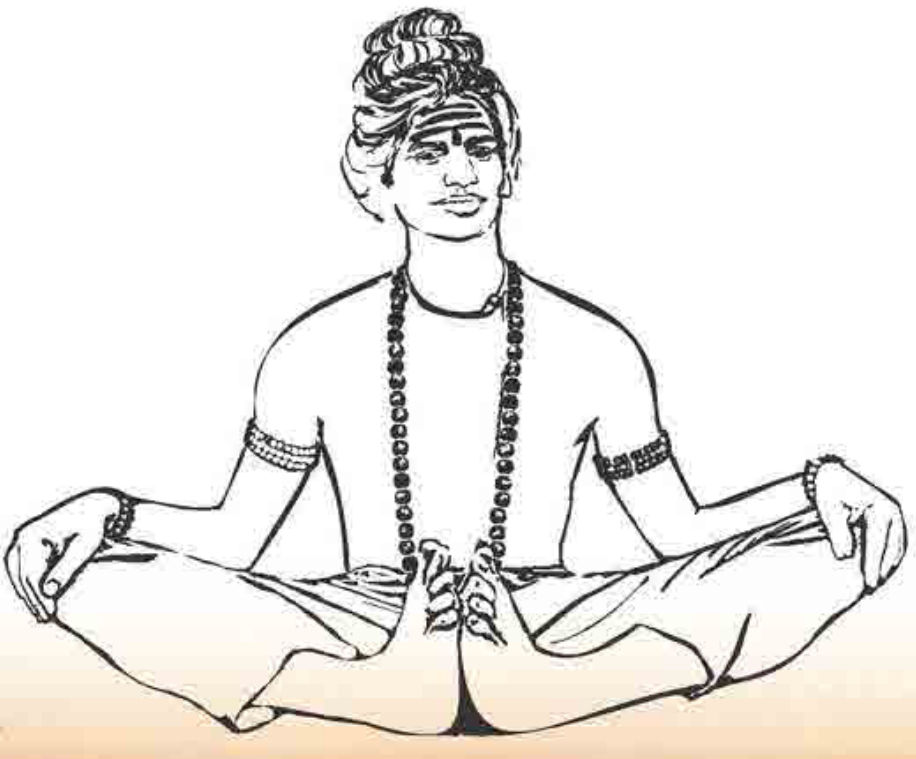
Technique:
1. Bring the soles of the feet together. 2 Bring the toes to the navel.
- Place the hands on the knees.
- Fix the eyes at the tip of the nose.
Opens the groin. Improves flexibility in ankles, feet and knees. Stimulates the lower 3 chakras and the heart. Releases the granthis (blockages). Gives relief from sandhivata (joint pain).
Bhaga asana III
Seated
Āpta Pramāṇa - आप्त प्रमाण Yoga asanas 23-24
वामपार्ष्णींगुदंस्थाप्य दक्षांघ्रिंवामजघने ।
मध्यमातर्जन्यङ्गुष्ठै नासादृष्टी श्रुतीः क्रमैः ॥
च्छाद्यपेज्जिनं भ्रुवि मनोलात्वा स्थिरं मनः ।
एवंविधासनं यत्र तत्र साधो भगज्ञम् ॥
vāmapārṣṇaugudaṃsthāpya dakṣāṅghriṃvāmajaghane |
madhyamātarjanyaṅguṣṭhai nāsādṛṣṭī śrutīḥ kramaiḥ ||
cchādyapejjinaṃ bhruvi manolātvā sthiraṃ manaḥ |
evaṃvidhāsanaṃ yatra tatra sādho bhagasnam ||
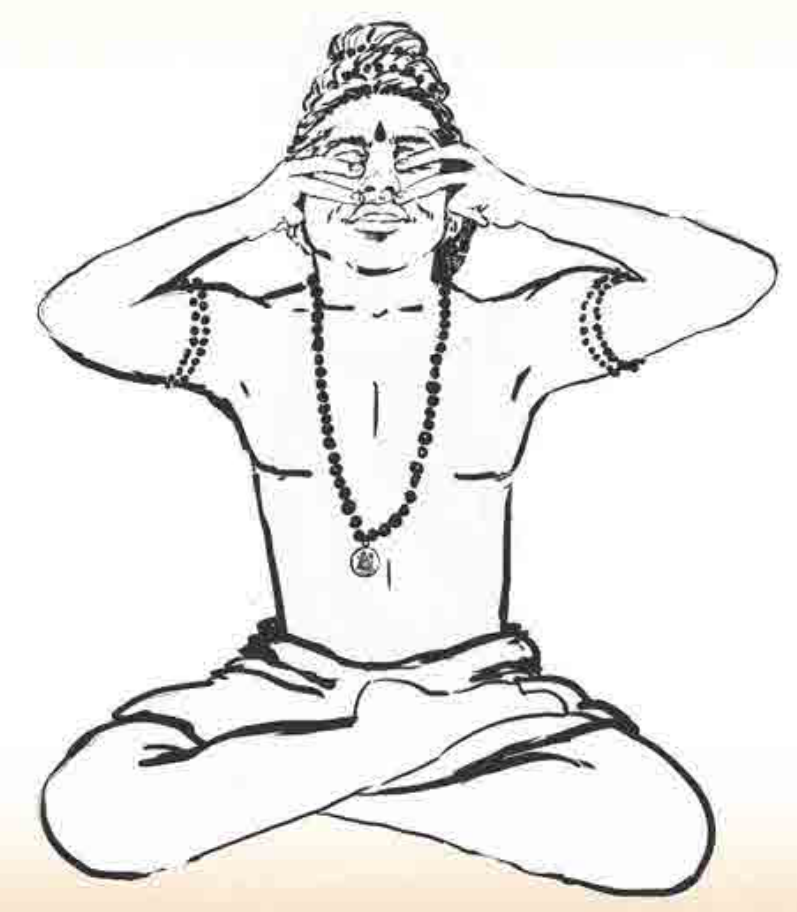
In sitting, place left heel at the anus and right foot on left thigh. Close ears with thumbs, nose with middle fingers and eyes with index fingers. Then bring the mind at the middle of the eyebrows and concentrate on Arihanta (Lord).
Technique:
- Sit with left heel at the anus and right foot on the left thigh.
- Close the eyes with index fingers, nose with middle fingers, and ears with thumbs.
- Bring your awareness to the eye brow center.
- Meditate on the Master or Deity.
Brings stability of mind.
Bhairavasana
Seated
Āpta Pramāṇa - आप्त प्रमाण Hatharatnavali-III.48
घगुल्फौ सम्पीड्य चान्योऽन्यं व्युत्क्रमेणोत्थितं शनैः ॥
जान्वोः पार्श्वगतौ हस्तौ दण्डवद् भैरवासनम् ॥४८॥
gulphau sampéòya cänyo'nyaà vyutkrameëtothitaà çanaiù || jänvoù pärçvagatau hastau daëòavad bhairaväsanam ||48||
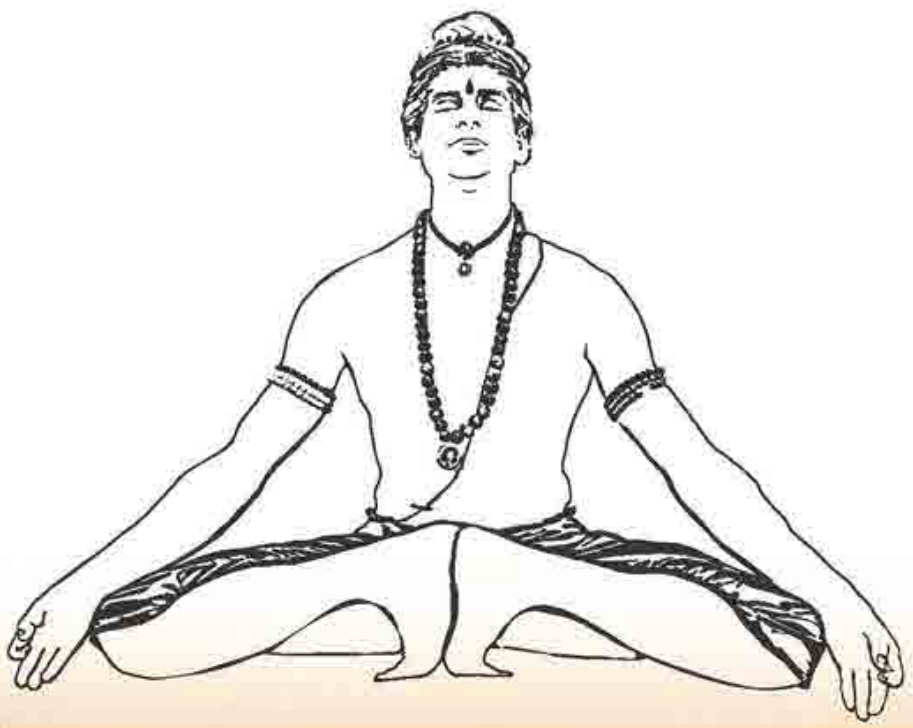
Press the two ankles with each other and raise them up. Place the hands straight by the sides of the knees. This is bhairavasana. 48
Technique:
- Press the soles of the feet together.
- Rotate the feet, bringing the toes down and heels up.
- Place the hands by the sides of the knees.
- Sit up stright.
Deeply opens the hip flexors and inner thighs. Strengthens the abdominals and back. Improves flexibility and strength in ankles, feet and knees.
Bhairu asana I
Seated
Āpta Pramāṇa - आप्त प्रमाण Yoga-Asanamala Sacitra (ms.)-34
दोउ पगकी थल्याकी माहिली कौर मिलाइ फणा पाणि उकडू मडूattribute
दौन्यौ एडी योनिस्यान राखै
दोउ हाथ पीठि पाछै आणी काकसी करी काठी पकडि राखै दृष्टि नाभि राखै
dou pagaké thalyäké mähilé kaura milä i phaëä päëi ukaòü
maòü baisai
daunyau eòé yonisthäna räñai
dou hätha péöhi pächai äëé käkasé karé käöhé pakaòi räñai
dåñöi näbhi räñai
for extended verse see end of chapter
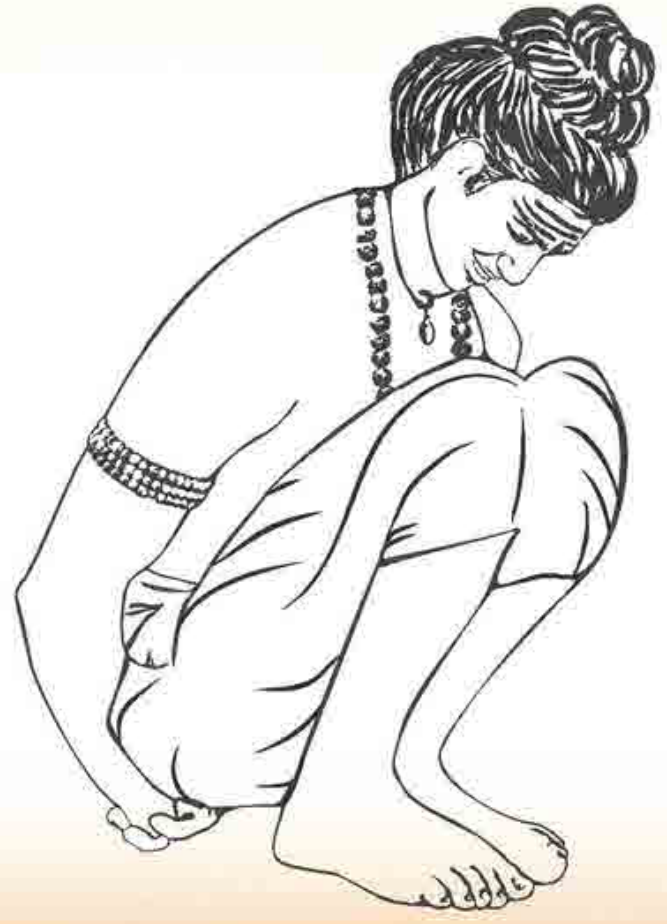
Sit on the ground in squatting posture. Join both feet together and squat in such a manner that the heels are touching the perineum. Hold the hands at the back and sit upright. Fix the gaze at the navel.
Apta Additional References Similar to bhutai-asana
Technique:
- Come to a deep squat.
- Keep the heels together close to the perineum.
- Hold the hands togheter at the back and sit up straight.
- Gaze at the navel.
Overcomes hikka (hiccups) and awakens the kundalini.
Bhairu asana II
Seated
Āpta Pramāṇa - आप्त प्रमाण Joga Pradīpikā 95-98
मुलद्वार टिक बैसिक धरई वामपद गुद औंधौ करई ।
एड अग गुदातरि धरै उर्ध्व चिटी अंगुष्ठतरि करै ॥ ९५ ॥
गुलफ वारिलौ कूलै आनै पुनह माहिलौ भूपरि ठानै ।
बहुरि चरन दाहिनौ जोई हृदै आनि लगावै सोई ॥९६॥
muladvāra öika baisika dharaé vämapada guda aundhau karaé | eòi agra gudātari dharai urdhva ciöé aîguñöatari karai || 95 || gulapha värilau külai änai punaha mähilau bhüpari öhänai | bahuri carana dähinau joé hradai äni lagävai soé || 96 ||
for extended verse see end of chapter
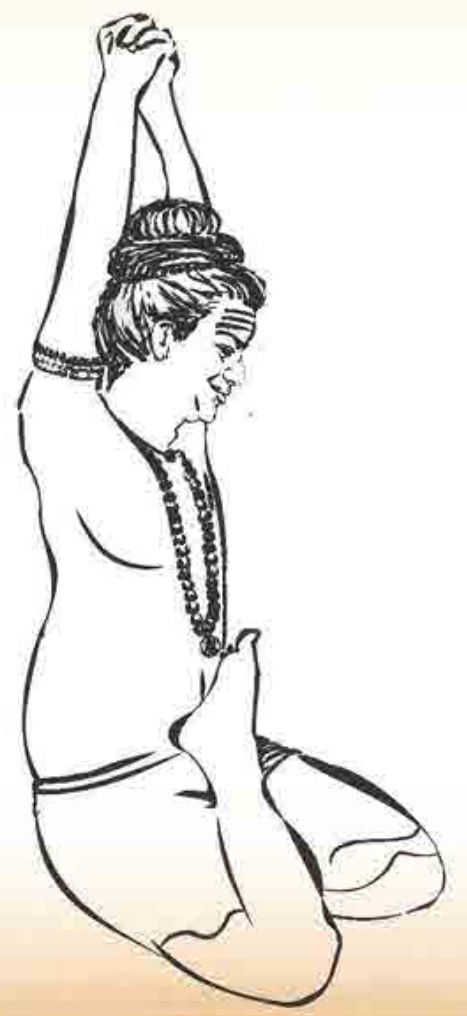
Fold the left leg in such a manner that heel should touch the arms and the ankle is brought below the buttock. Fold the right leg in such a way that heel should press the navel and toes should touch the chest and the knee of the same leg should touch the ground in front at the distance of a cubit.
Then raise the hands above the head and interlock the fingers and gaze should be at the tip of the nose. All types of vata dosas are removed. Problems of spleen, tumor, acidity and hiccup will be removed. Practice of this asana for three hours, kundalini getting irritated starts moving upwards and opens the lotus of heart (anahat), Nadis get purified.
Apta Additional References
Also known as siddhi-bhairu-asana.
More reference found in: YMS-3,
HP(ms.)-II.57-60, Ana-41, JP(L)-13.
Technique:
- Sit on the left heel keeping the knee on the ground.
- Place the right foot on the left thig and keep the heel in a way to press the navel region, toes touching the chest.
- Interlace the fingers and raise both arms keeping the body upright.
- Gaze at the tip of the nose.
Removes abdominal disorders like enlargement of spleen, gulma etc. Purifies the nadis and releases the granthis (knots). Relieves from acidity and hiccups. Kundalini moves upwards and purifies the heart chakra.
Bharathari asana
Seated
Āpta Pramāṇa - आप्त प्रमाण Joga Pradipika (III.273-274)
॥ अथ भरथरी आसन ॥
आसन गोपी चन्द कह्यो जैसे । याहु को कीजे पुनि तैसे ।
कोर पगथल्या की माहिली । सिषा आंनि मेले दोऊ मिली ॥ २७३ ॥
|| atha bharatharé āsana ||
āsana gopé canda kahyo jaise , yähu ko kéje puni taise |
kora pagathalyä ké mähilé , siñä änni mele doû milé || 273 ||
for extended verse see end of chapter
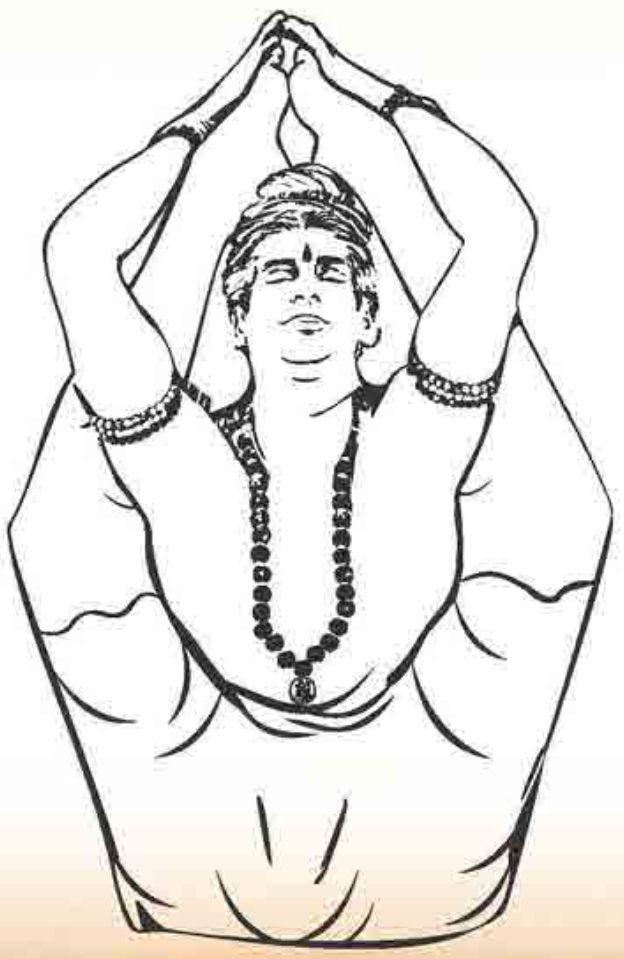
This Asana is performed in a similar manner as Gopicanda Asana. Sit on the floor joining the soles and holding the toes making a fingerlock. Raise the feet over the head . Fix the gaze at the tip of the nose.
Apta Additional References YMS-66, AYG-53.
Technique:
- Sit on the floor joining the soles and holding the toes making a fingerlock.
- Raise the feet over the head.
- Fix the gaze at the tip of the nose.
Aids in making Mulabandha happen
Bharadvaja asana
Seated
Āpta Pramāṇa - आप्त प्रमाण Yoga-rahasya of Srinatha-muni-VI.8,10
भरद्वाज आसन
इदानी गर्भिणीनां योगाभ्यासो यथा लघु ।
सुखप्रसवलाभाय प्रोच्यते प्राक्तने पथि ॥
bharadvāja āsana idānē garbhiëénāä yogābhyāso yathä laghu | sukhaprasavalābhäya procyate präktane pathi ||
for extended verse see end of chapter
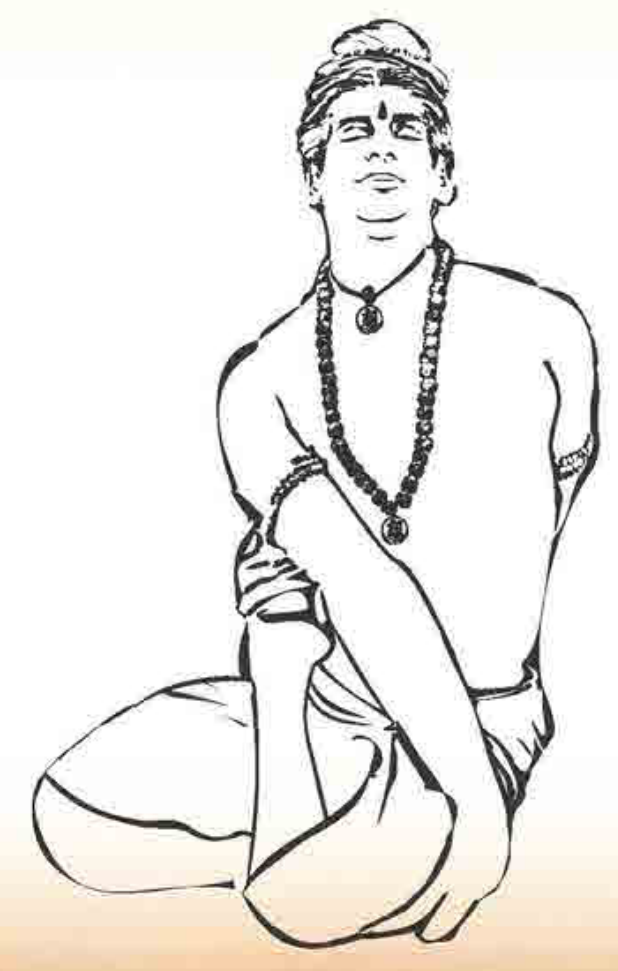
Now, practicing the Yogasanas for pregnant slightly(at ease/without straining much) for smooth delivery will be told as earlier way. Danda, Padma, Bharadwaja, Veera, Vajra, sama these are to be practiced with Deep Exhalation.
Technique:
- Sit on the right heel.
- Place the left foot over the right thigh.
- Catch the left foot with the left arm around the back.
- Slide right hand fingers under the left knee.
- Turn the head to the right and breathe deeply.
Practicing the Yogasanas for pregnant slightly(at ease/without straining much) for smooth delivery will be told as earlier way.
Bhidoka asana
Seated
Āpta Pramāṇa - आप्त प्रमाण Joga Pradipika (III.184-188)
प्रथम बैसि दोउ पाव पसारै कछुक उर्धको कुरडो डारे।
एड्यांमधि आंतरो राखे मुद्र हाथ परमाण सु दाखै ॥१८४॥
फणा उर्धको उचो राखे खवा उभै गोडा में आनैं।
तिनके मधि जुगत सो ठाने ॥१८५॥
prathama baisi dou pāva pasärai kachuka urdhako kurado däre |
edyämmadhi äntaro räkhe mudra hätha paramäëa su däkhai ||184 ||
phaëä urdhako uco räkhe khavä ubhai goòä mem äneà |
tinake madhi jugata so öhäne ||185 ||
for extended verse see end of chapter
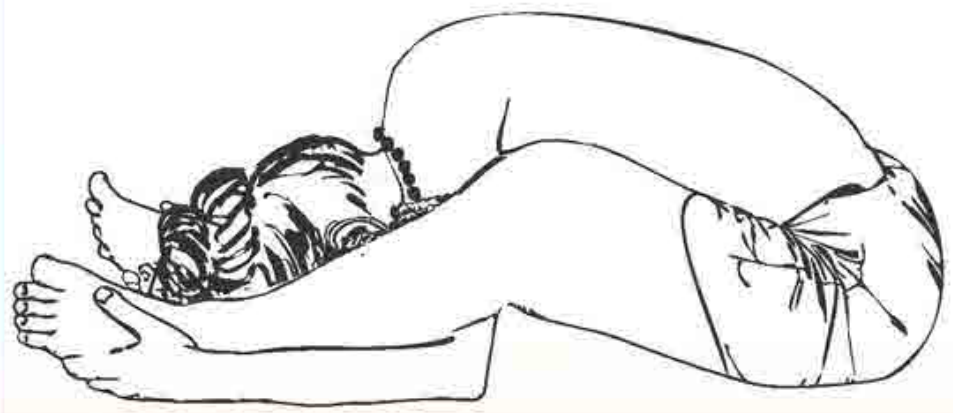
Sit with legs extended on the floor. Keep the heels apart about a cubit. Toes point upwardly. Bend the head forward reaching the armpits up to knees. Insert both hands under legs turning them take hold of feet from outside. Touch the ground with forehead. Gaze is directed at the center of eyebrows.
Apta Additional References Yoga-Asanamala Sacitra (ms.)-29
Technique:
- Sit with legs extended on the floor.
- Keep the heels apart.
- Toes point up.
- Bend the head forward reaching the armpits upto knees.
- Insert both hands under legs turning them take hold of feet from outside. 6.Touch the ground with forehead.
7. Gaze is directed at the center of eyebrows.
This asana removes fever, all sorts of disturbances in the stomach and purifies the whole body. This practice overcomes fever, jaundice and abdominal.
Bhisraka asana
(Misraka asana)
Seated
Āpta Pramāṇa - आप्त प्रमाण Joga Pradipika. 197-203
दोउ पगांकी एडी होई गोडाफणों वाणों फुनि होई।
गोडा जंघघ अधर करि राखै आडेवाह इसी विधि दाखै ॥१९८॥
दोउ एडी उर्धही मूलद्वार ताउपर करै।
पुनि अंजुली हाथा दाखै तांमे फुनि पोलोटकी दाखै ॥१९९॥
dou pagäiké eòé joé goòäphaëoà väëoà phuni hoé |
goòä jaïgha adhara kari räkhai äòeväha isé vidhi däkhë ||198||
dou eòé urdhahé müladvära täupara karai |
puni aïjulé häthä däkhai tämme phuni poloöaké däkhë ||199||
for extended verse see end of chapter
Sitting on toes and placing buttocks on heels. Separate the knees sidewards and place on the ground. Make a hollow of palms and place it on mouth. Keep thumbs under teeth and close the lips fix the gaze steadily at the tip of nose. Inhale through pingala nadi and exhale through mouth to the capacity.
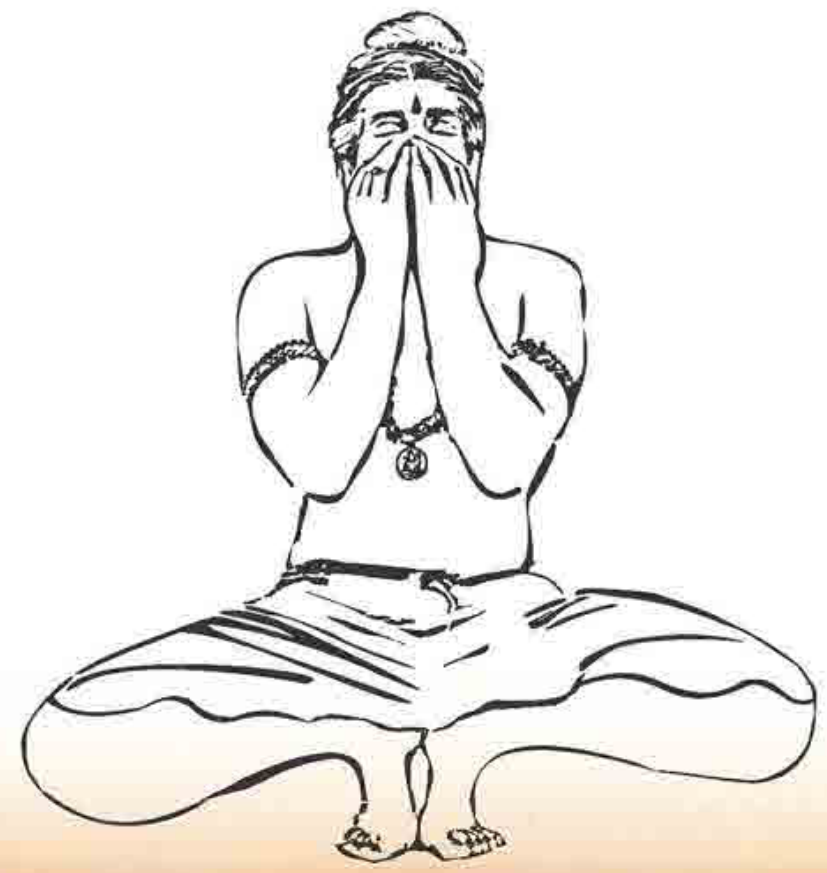
Technique:
- Sit on the toes and place buttocks on heels.
- Separate the knees.
- Make a hollow with your hands and place it on the mouth.
- Keep thumbs under the teeth and close the lips.
- Gaze at the tip of nose.
- Inhale through right nostril and exhale through the mouth.
Practice of this asana digests excess consumption of food. One gets rid of cough and fever.' .It removes fever and makes the body disease free.
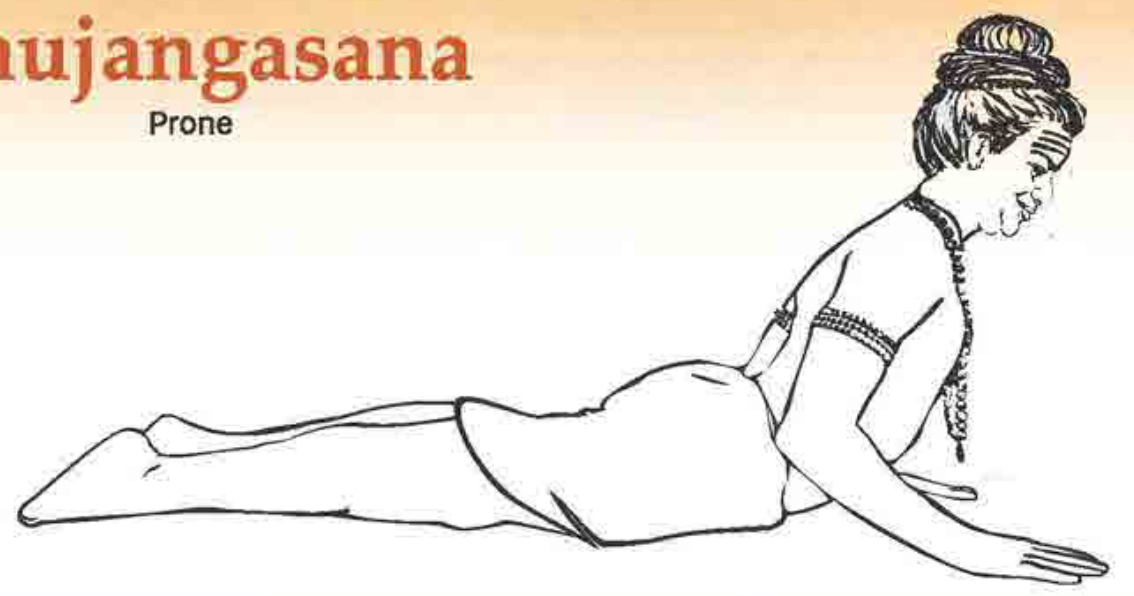
Bhujangasana
Prone
Āpta Pramāṇa - आप्त प्रमाण Gheranda Samhita. II.42-43
आंगुñöहनäभिपर्यन्तमधोभूौमी विनिन्यसेत् ।
करäभ्याïच धरäà धृåत्वä üर्ध्वçérñàù फééव हि ॥४१॥
देहäग्न्रिर्वर्द्धते नित्यà सर्वरोगविन्äçअनम् ।
जäगर्ति भुजगé देवé भुजोìगäसनसäधन्äत् ॥४२॥
aìguñöhanäbhiparyantamadhobhümau vininyaset | karäbhyäïca dharäà dhåtvä ürdhvaçérñaù phaëéva hi ||41|| dehägnirvardhdate nityaà sarvarogavinäçanam | jägarti bhujagé devé bhujaìgäsanasädhanät ||42||
for extended verse see end of chapter
Keep the body from the toes to the navel on the floor and placing the palms of the hands also firmly on the floor, raise the head like a snake. This is called Bhujangasana. The fire of the body increases, all diseases are destroyed and kundalini Shakti is awakened by the practice of bhujangasana.
Apta Additional References
BrYS III.49-50
Technique:
- Lie down on your belly.
- Place the hands by the chest, forehead on the ground. Point the toes.
- Keep the palms on the ground and raise the head and chest like a snake.
Strengthens the entire back, shoulders, abdominals and thighs. Opens the chest and expands the lungs capacity. Beneficial for digestion, sciatica, flexibility in spinal cord and elevates mood. Increase gastric fire, Awakens the kundalini and removes all bodily diseases.
Opening of the chest
Sakshi Pramana Benefits Sunniva Kaurin, Norway
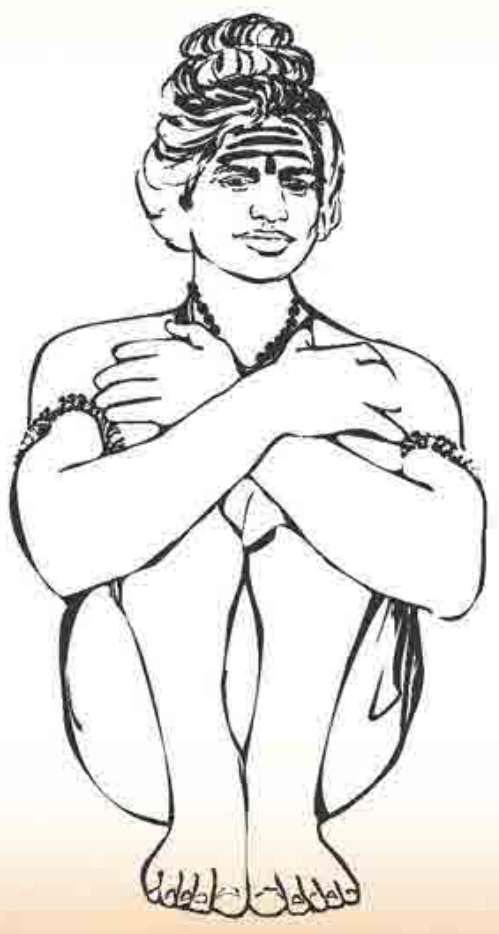
Bodhashoka asana
Seated
Āpta Pramāṇa - आप्त प्रमाण Joga Pradipika-220-222
दोउ पगथली भूपरी धरै कोर माहिली ऐसे करै ।
कोर मिलाई उकड बैठे जंघघा छाती अग्र निवेसे ॥ २२० ॥
व्यबूक गोडा उपरि करै नासाद्रिष्टि अचल ले धरै ।
भुजा परस्पर पकडे दोई खवां लागनी कठीन जु सोई ॥ २२१ ॥
dou pagathalé bhüparé dharaï kora mähilé aise karai | kora miläé ukaòa baise jaïghä chäté agra nivese || 220 || vyabüka goòä upari karai näsädriñöi acala le dharai | bhujä parasapara pakaòe do é khaväà lägané kaðhéna ju soé || 221 ||
for extended verse see end of chapter
Place both the soles on the ground. Fold the legs and arrange them in such a way that the thighs touch the chest. Place the chin on knees. Gaze should be at the tip of nose. Catch hold of both the hands bringing wrist upon the knees. Catch hold wrist by hands. It removes the problem of hysteria.
Apta Additional References Yoga-Asanamala Sacitra (ms.)-45
Technique:
- Sin and Place both the soles on the ground.
- Fold the legs and press knees to chest.
- Rest the chin on knees.
- Cross the forearms and hold opposite knees.
- Keep the gaze at the tip of the nose
Brings feeling of contemplation
Sakshi Pramana Benefits Keong Chow, Singapore, Yoga Teacher/Freelancer
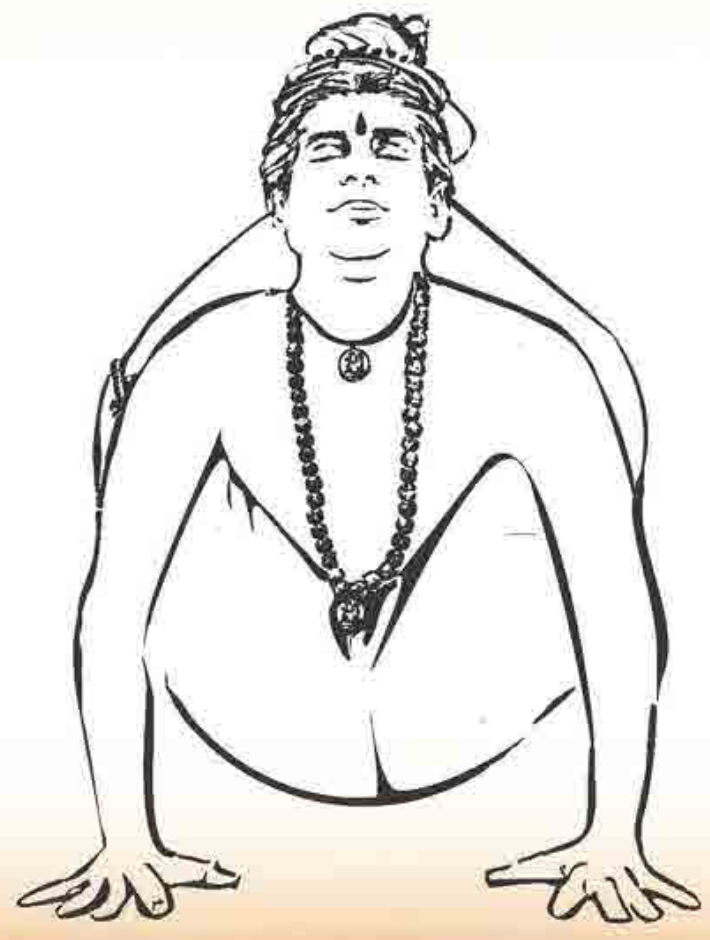
Brahma asana
Arm Balancing
Āpta Pramāṇa - आप्त प्रमाण Joga Pradipika-344-345
॥ अथ ब्रह्म आसन ॥
बैठै प्रथम मूल कै पाणि दो उ पग कँधि धरै आणि ।
बहुरि पापडा परि ले जावैं कूँषि नषैल कें ठहरावै ॥ ३४४ ॥
|| atha brahma āsana ||
vaëöhai prathama mūla kai päëi do u paga kändhai dharai äëi |
bahurï päpaòä pari le jävai kûñi nañaila keà öhaharävai || 344 ||
for extended verse see end of chapter
First sit on the buttocks, place both legs upon the shoulder and remain suspended with the help of hands, Gaze to be fixed on tip of nose. One attains intuitive knowledge.
Apta Additional References Hatharatnavali III.65
Technique:
- Sit on the floor.
- Raise both legs over the head upon the shoulder.
- Raise the uper body with the help of the hands.
- Gaze to be fixed on tip of nose.
Increases the vak shakthi, the power of words. Intuitive knowledge is attained with regular practice.
Brahma-Jurankusa
-asana
Balance
Āpta Pramāṇa - आप्त प्रमाण Joga Pradipika-189-192
षदोउ फणापाणि होय कैसे एडी दो गुदा निवैसे ।
कोर पगथल्यांकी माहिली आपस माहि राखै मिली ॥१८९॥
दोउ गोडा आगे आनै सुधो करि उंचा ले ठाने ।
हाथ दोऊ ले उपर धरै हथेली सुधी करें ॥ १९०॥
dou phaëäpäëi hoya baise eòeá do gudä nivaíse | kora pagathalyäîké mähilé äpasa mähi räkhai milé ||189|| dou goòä äge änai sudho kari uïcä le öhäne | hätha doü le upara dhare hathelé sudhé kareà || 190 ||
for extended verse see end of chapter
Sit straight with supine and neck in one line. Being seatted on toes touching each other, placing arms above the heels. Bring both the knees in front, keeping them straight raise them a little. Place both hands above the legs with palms turned upward and fingers stretched. Gaze between the knees as if meditating.
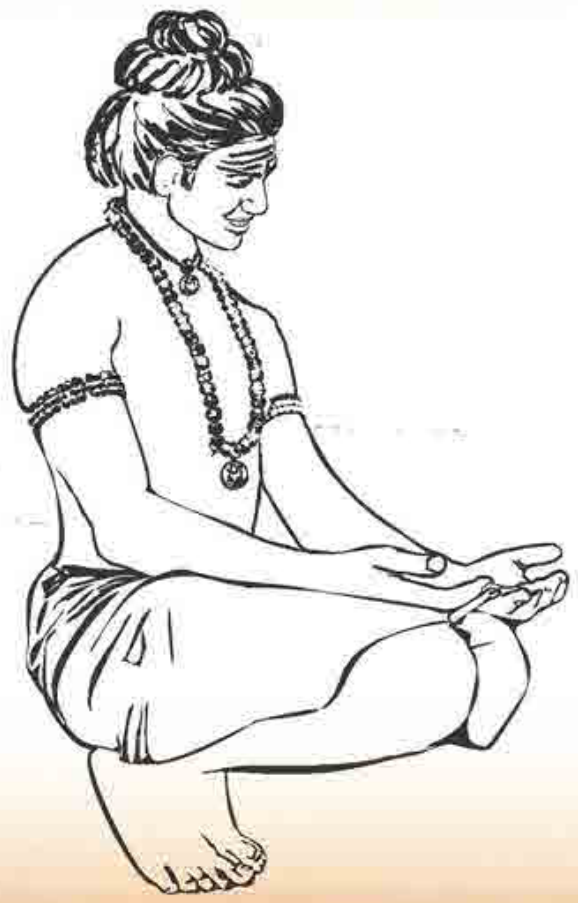
This asana should be practiced till ones gets tiredness. Also found in: Yoga-Asanamala Sacitra (ms.)-32
Technique:
- Bend the knees and come to the tip of your toes, let the toes touch each other.
- Sit straight with spine, neck and head in one line.
- Keep both the knees in front and raise them from the ground.
- Place both hands above the legs with palms turned upward and fingers stretched.
- Gaze between the knees in meditative space
Relief from fever.
Cakra asana I
Seated
Śāstra Pramāṇa - शास्त्र प्रमाण Varahopanishad (5.17)
सव्योरु दक्षिणे गुल्फे दक्षिणं दक्षिणेतरे ।
निदध्यादृजुकायस्तु चक्रासनमिदं मतम् ॥ १७ ॥
तत्र चक्रासनलक्षणमाह- सव्येति ॥ १७ ॥
savyoru dakṣiṇe gulphe dakṣiṇaṃ dakṣiṇetare | nidadhyādṛjukāyastu cakrāsanamidaṃ matam || 17 || tatra cakrāsanalakṣaṇamāha- savyeti || 17 ||
One should place the left thigh over the right heel and the right thigh over the left heel with his body erect. This is considered to be the Cakra posture. (17)
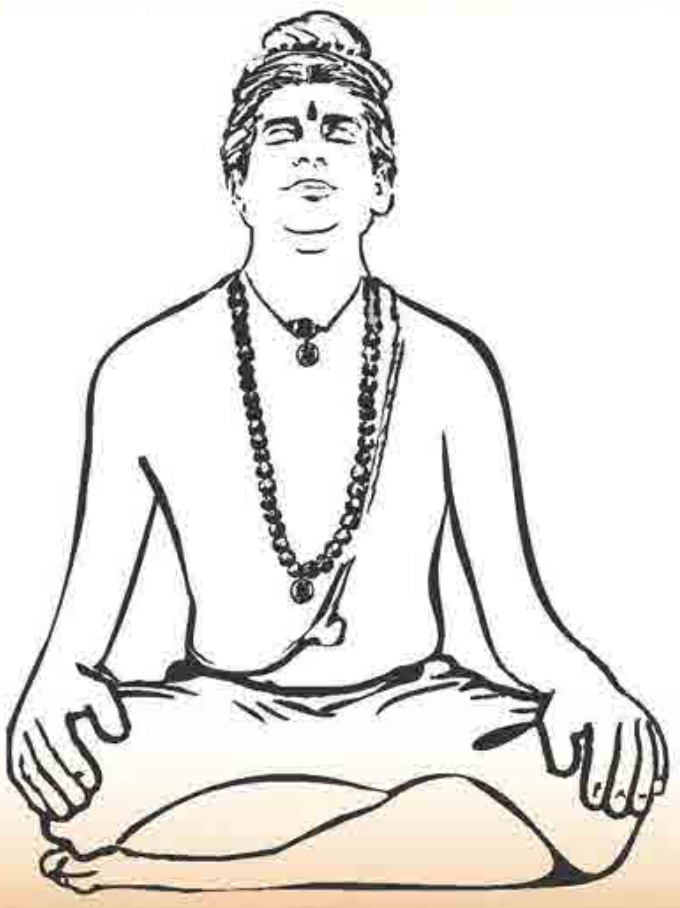
Technique:
- Sit with the spine straight.
- Cross the legs and keep the feet under the thighs
Cakra asana II
Inverted
Āpta Pramāṇa - आप्त प्रमाण Hatharatnavali-III.15
घशवासनस्थः द्वौ पादौ कुर्यान्मस्तकतः परौ ।
व्युत्क्रमेण ततः शीघ्रमेतत् सर्वस्य साधनम् ॥
चक्रासनं गुल्मप्लीह वातरौगादिनाशनम् ॥ १५ ॥
çaväsanasthaù dvau pädau kuryänmastakataù parau |
vyuktkrameëa tataù çéghrametat sarvasya sädhanam ||
cakräsanaà gulmapléha vätarogädinäçanam || 15 ||
In the pose of Savasana, lift the two legs and stretch them towards to place them on either side of the head, by this, as said, this will give benefit for all. Chakraasana removes, inflammation, spleen related issues, acidity etc.
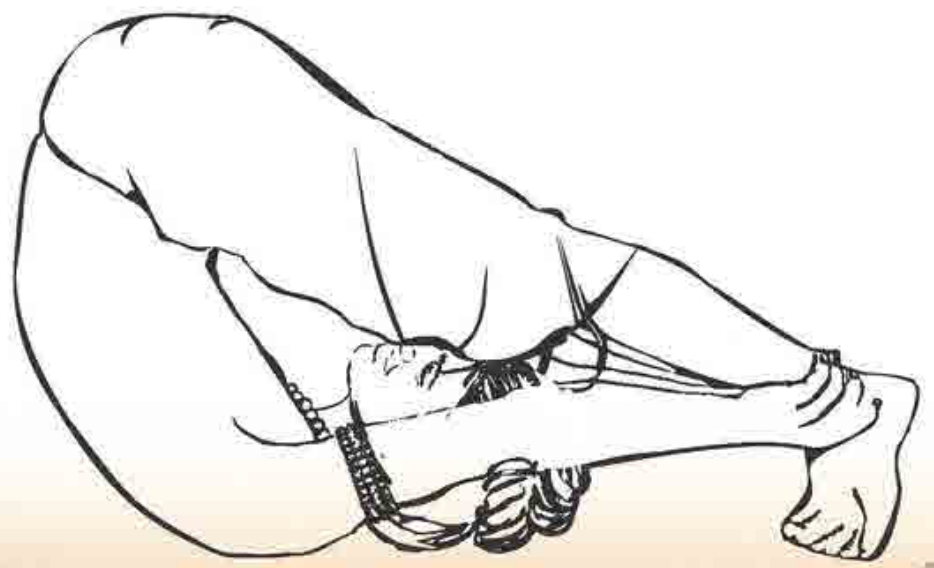
Apta Additional References
YSC. II.46.15, KT-II.46.p.244-245, Abs-31-32. alternate technique SYK-24,SCA-33. SYK-24,Yas-67- called pada-hastasana. Meditation Pose-VU-V.17; PVS-246 and YSC-II.46;p.85- alt techniques. Cfkamalasana-v. STN-35 provides illustration for cakrasana. RY-43:25 baddhacakrasana and maha-cakrasana as variations of this pose- no description though.
Technique:
- Lie on your back
- Lift your hips and stretch your legs towards the head.
- Bring the hands toward the feet and hold your ankles.
Overcomes disorders from vitiations of vata, enlargement or diseases of the spleen, and relieves disorders of gulma (inflammation).
Cakriasana
Forward bend
Āpta Pramāṇa - आप्त प्रमाण joga pradēpikā 145-148
चक्रि-आसनडावा
पगकी पगथली तथा सु बारिली कोर ।
आनै वाइ कूँखिपारि हाथा सो जोर ॥ १४५ ॥
cakri-āsanaḍāvä
pagaké pagathalé tathā su bärilé kora |
änal väī kūkhipari häthä so jora || 145 ||
for extended verse see end of chapter
Sit on the floor in long position. Hold the left foot with hands and place its sole in left arm-pit. Take right leg backwards and raise it. Raise the hands upwards and by bringing them forward, place palms and head on ground with fingers pointing forward. Fix the gaze at the tip of the nose.
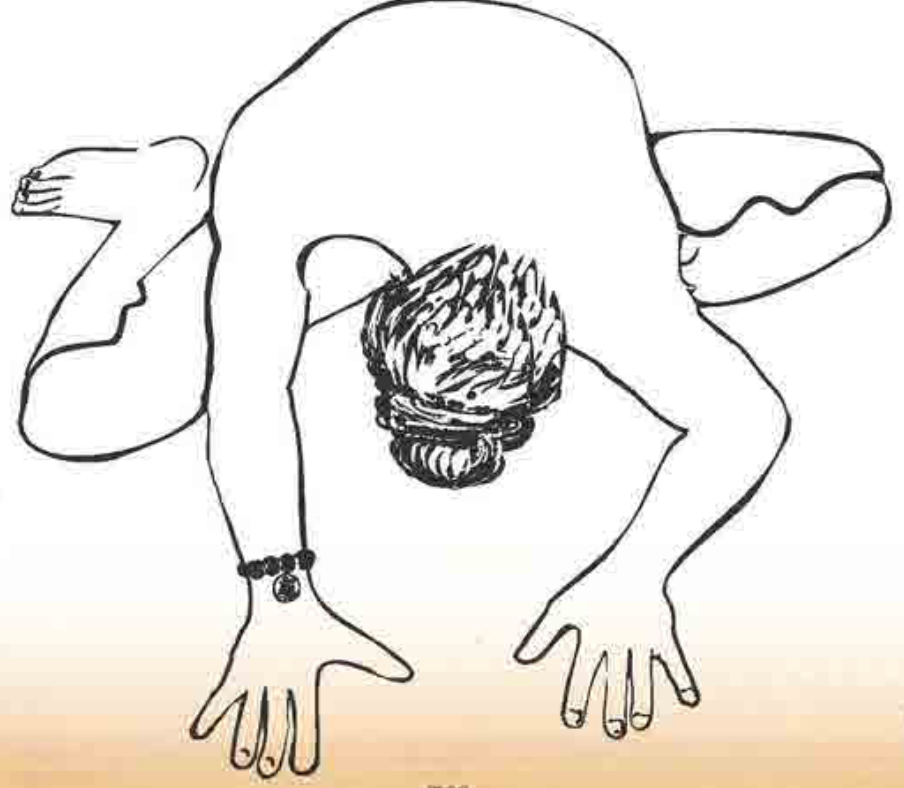
Apta Additional References Yoga-äsanamälä sacitra -13
Technique: 1.Sit on the floor.
- Hold the left foot with hands and place the sole of the foot on the left arm-pit.
- Bend the right leg and take it backwards
- Bringing the hands forward and place the palms and head on ground with fingers pointing forward.
- Fix the gaze at the tip of the nose.
This asana purifies the body, and cures the diseases of jalandhara such as (jalodara, udararoga, retention of water)
Carpatacokasana
Seated
Āpta Pramāṇa - आप्त प्रमाण Joga Pradīpikā-254-255
दोउ पगथली संपुट धारे आगा ने कर जोरय सारे ।
गोडा भूसौ लगता राखे हाथ दोउ गोडापरि दाखै ॥ २५४ ॥
dou pagathal sampua dhäre ägä ne kara joraya säre |
goòä bhûsau lagatä räkhe hätha dou goòäpari däkhai || 254 ||
*for extended verse see end of chapter
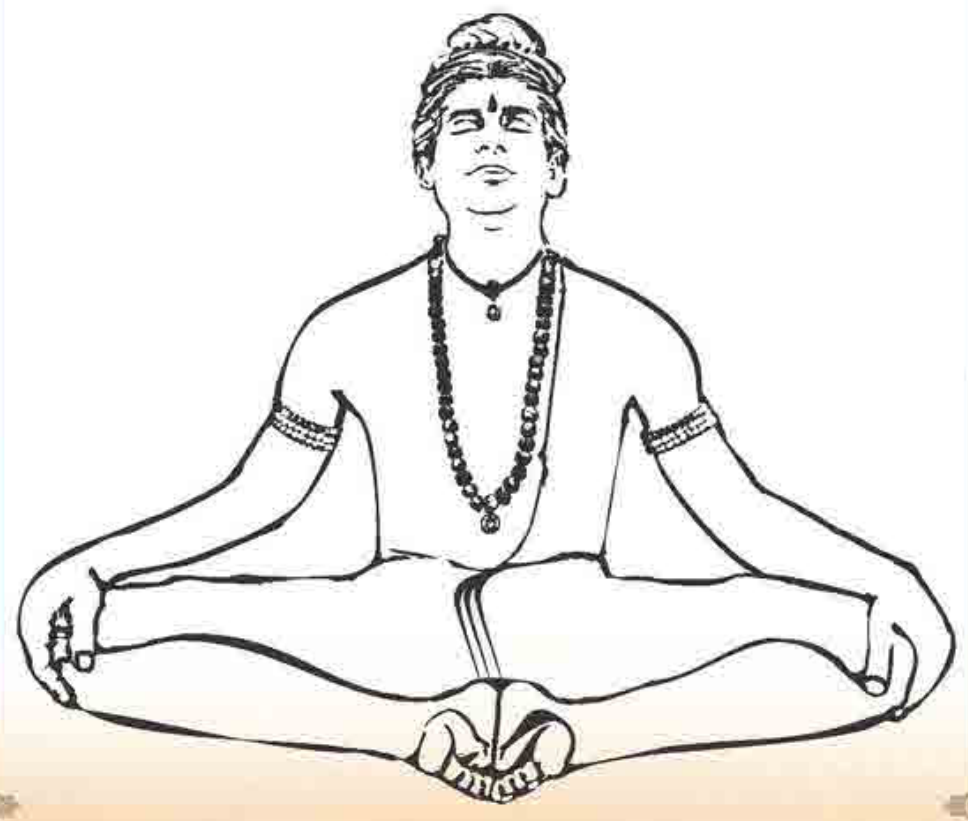
Bring both the soles together and place them in front. Knees should touch the ground. Both hands should be placed on the knees and press them towards ground. Gaze between eyebrows. This removes night blindness and eyesight is purified.
Apta Additional References Same as gvalipava-asana. Reference also found in Yoga ASANAMALA SACITRA-56, AYG-41
Technique:
- Sit up straight.
- Bring the soles of the feet together in such a way that the knees come as close to ground as possible.
- Place the hands on knees and press them down.
- Fix the gaze in between the eyebrows.
It improves eyesight, and removes heat from the eyes.
Cinakipava asana
Seated
Āpta Pramāṇa - आप्त प्रमाण Yoga-Asanamala Sacitra (ms.)-63
घदोउ पगाकी येडी धरती लगिवा मेढ लगावै
पगथली माहली कौर अंगुठाकी सधि सूधि जोडै
बारिलि कोर फना घुल्या राषैघ
dou pagäké yeòé dharaté lagivä meòha lagävai pagathalé mähalé kaura aìguõhäké sadhi südhi joòai bärili kora phanä ñulyä räñai
*for extended verse see end of chapter
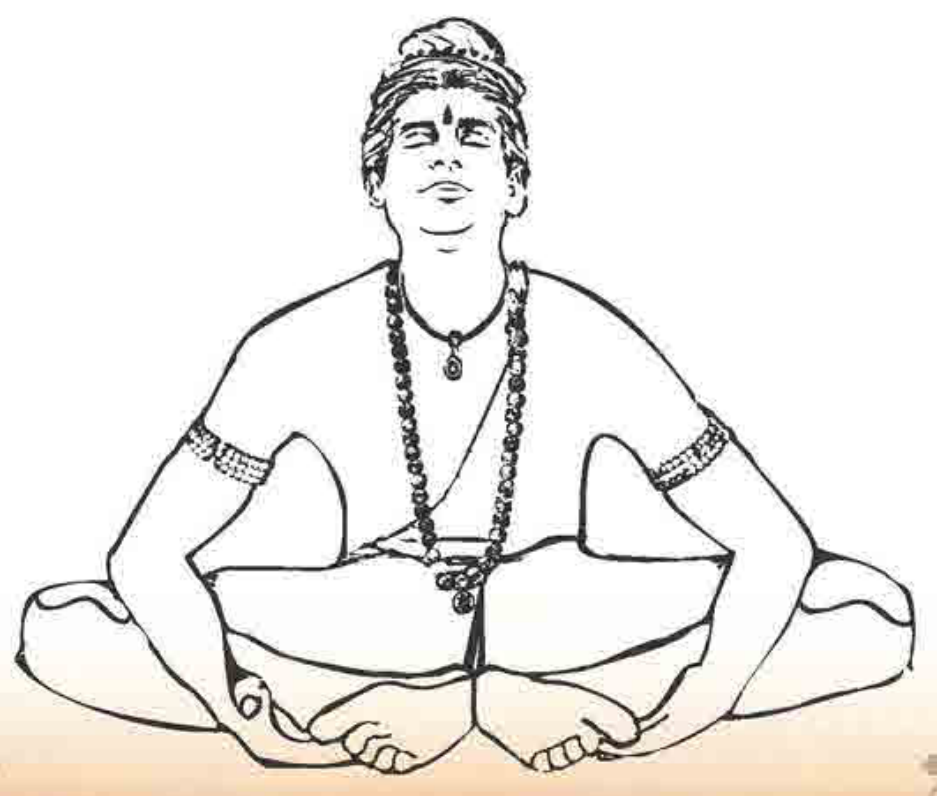
While sitting on ground, draw legs close to the seat in such a way that heels comes together and goes apart. Bend the arms and place elbows on respective knees. Keep the back of hands and fingers on ground in supine position. Direct gaze at tip of nose. Controls movement of Naga vayu.
Technique:
- Sit up straight on the ground.
- Draw legs close to the seat in such a way that the heels come together and knees goes apart.
- Toes are separated and the soles of the feet are looking up
- Bend the arms and place elbows on respective knees.
- Keep the back of hands and fingers on ground and palms facing up.
- Direct gaze at tip of nose."
Controls movement of Naga vayu (responsible for belching, burping and all upwards wind movement from your stomach.)
Release tension in the hips/groin
Sakshi Pramana Benefits Keong Chow, Singapore, Yoga Teacher/Freelancer
Citra(ka) asana
Seated
Āpta Pramāṇa - आप्त प्रमाण joga pradīpikā-278-282
प्रथम पगथली संपुट करै पुनह जुगति ऐसी विस्तरे ।
डाईं कहूणी माहिली संधि तापरि दोउ एडी बंध ॥२७८ ॥
फणा जुगम डरथकरि राखै बहुरि जुगति ऐसी विधि दाखै ।
बहुरि पगथली महली कोर सीस लगावे करिकै जोर ॥ २७९॥
prathama pagathalī sampuṭa karai punaha jugati aisī vistare |
ḍāīṁ kahūṇī māhilī sandhi tāpari dou eḍī bandha || 278 ||
phaṇā jugama ḍarathakari rākhai bahuri jugati aisī vidhi dākhai |
bahuri pagathalī mahalī kora sēsa lagāve karikai jora || 279 ||
for extended verse see end of chapter
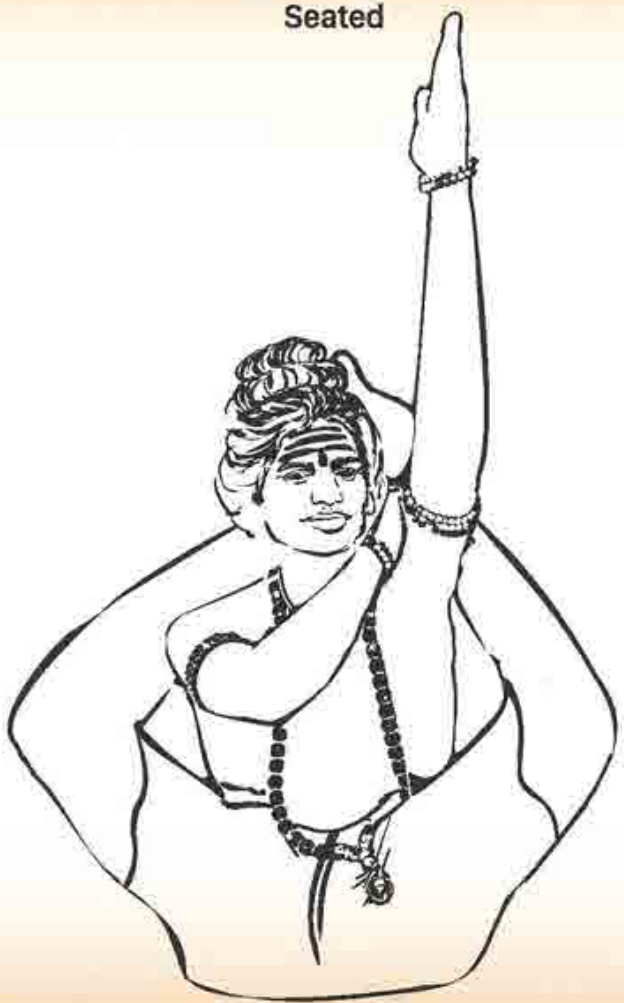
First of all bring the soles together and with the help of left elbow, take both the legs behind so as the soles touches the head. Heels should point towards forehead. Encircle the neck with the right hand and elbow should touch the navel and let the hand touch the abdomen. Gaze should be nasal. This asana helps in warding off the stone problem in the stomach.
Apta Additional References HATHARATNAVALI-III.19, AYG-54,YNS-68
Technique:
- Sit on the ground and bring the soles of the feet together.
- Bring both legs behind the head.
- Soles touch the head and heels point to forehead.
- Raise the left arm straight up.
- Encicles the neck with the right arm touching the left shoulder while elbow touches the navel.
- Gaze at tip of nose.
Removes gallstone or gallbladder stone
Devasana
Āpta Pramāṇa - आप्त प्रमाण joga pradépikä -166-167
॥ अथ देव आसन ॥
प्रथमे सूधो सोवे सोई । करे कांसकी कर गह दोई ।
एडयां अंबर पगथैल्यां दाषै । करि अतिक वित्त तास परि राखै ॥ १६६ ॥
|| atha deva äsana ||
prathame südho sove soé , kare käìkasé kara gaha doé |
eòayäm ambara pagathélyää däñai , kari atika vitta täsa pari räñai ||166 ||
for extended verse see end of chapter
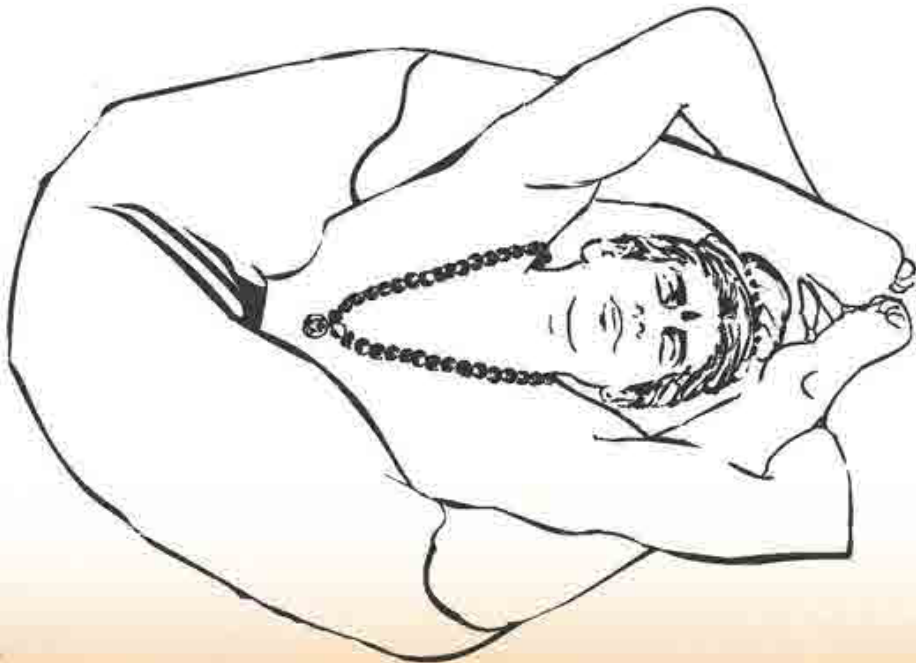
Lie on the floor, raise the legs upward. Forming a fingerlock of the hands put it on the ankles. Next bring the legs near the head and soles on the ground. Stay there keeping the head and hands in this manner.
Technique:
- Lie on the floor.
- Raise the legs and bring them over the head, toes together, soles on the ground.
- Forming a fingerlock, brings the hands back and hold the ankles
- Stay there keeping the position.
Removes the disturbance from the ghosts.
Dhanantara asana
Seated
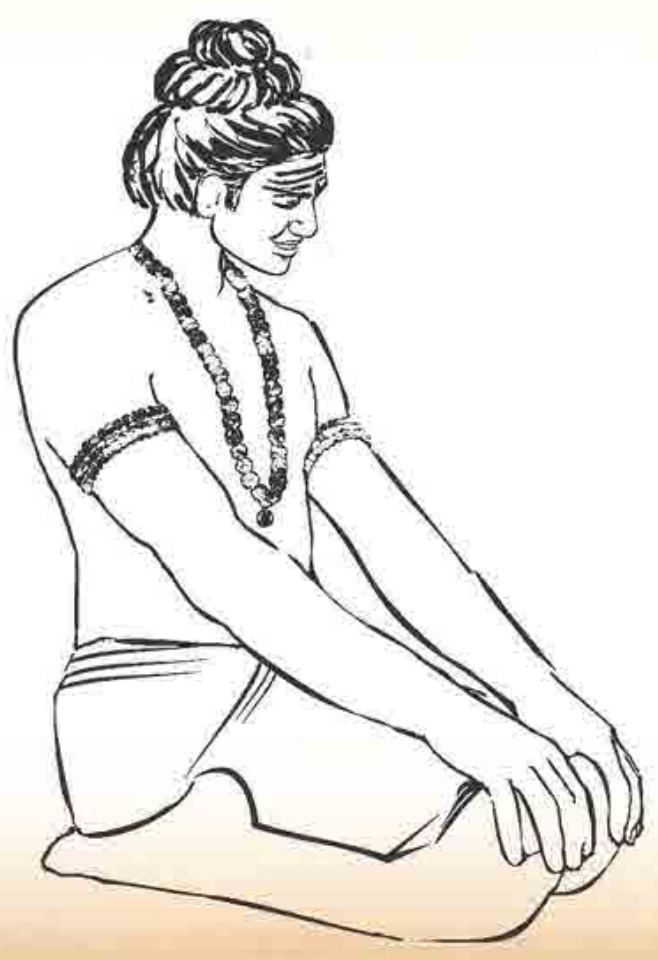
Āpta Pramāṇa - आप्त प्रमाण Yoga-Asanamala Sacitra (ms.)-70
धनन्तर आसन
पूरबबिधि परि हाथाकी काकसी स्यौ फणा षरा मोडी
पगाकी आगुली अग्रि मेढ्रु लगावैध
dhanantara āsana
pūrababidhi pari hāthāḱé käkasé syau phaëä ñarä moòé
pagāḱé ägulé agri meòhu lagāvai
for extended verse see end of chapter
Sit with legs extended. Bend the legs and placing the feet under the buttocks Soles of feet brought together. Form a finger-lock and hold the toes in it pull the feet closer to the perineum. Place hands in respective knees. Fix the gaze at the tip of the nose.
Apta Additional References āsana-Yoga-grantha-62
Technique:
- Sit on the ground.
- Bend the legs and place the feet under the buttocks
- Sole of the feet togheter and heels close to the perinum.
- Rest the hands on knees respectively.
- Gaze at the tip of the nose.
Overcomes piles
Dhanurasana I
Śāstra Pramāṇa - शास्त्र प्रमाण Tri-shikhi-Brahman Upanishad (43)
पादाङ्गुष्ठौ तु पाणिभ्यां गृहीत्वा श्रवणावधि ।
धनुराकर्षकाकृष्टं धनुरासनमीरितम् ॥ ४३ ॥
pādāṅguṣṭhau tu pāṇibhyāṃ gṛhītvā śravaṇāvadhi | dhanurākarṣakākṛṣṭaṃ dhanurāsanamīritam || 43 ||
Grasping the big toes with the hands and drawing them up to the ear, even as a bow is drawn, is said to be the Dhanurasana (drawn bow-posture).
Āpta Pramāṇa - आप्त प्रमाण Hathapradipika-II.11
पादांगुष्ठौ तु पाणिभ्यां गृहित्वा श्रवणावधि ॥
धनुराकर्षणं कृत्वा धनुरासनमुच्यते ॥ ११॥
pādāṁguṣṭhau tu pāṇibhyāṁ gṛhitvā śravaṇāvadhi || dhanurākarṣaṇaṁ kṛtvā dhanurāsanamucyate || 11 ||
The big toes are caught with the hands and are pulled upto the ears (alternately). Thus one assumes the shape of a stretched bow. This is called dhanurasana.
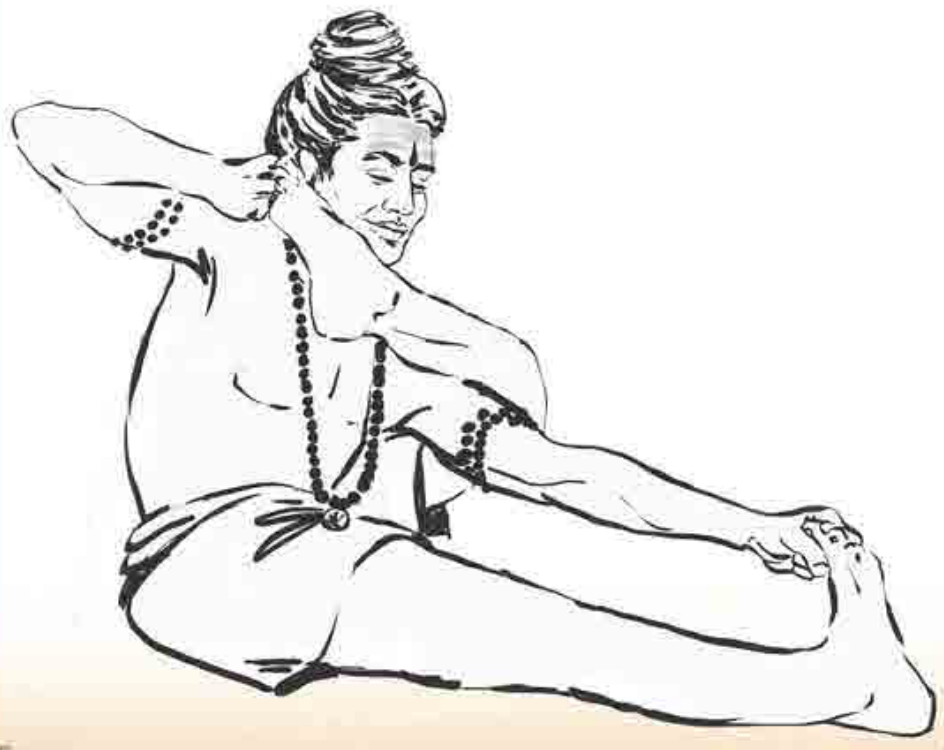
Apta Additional References
Hatharatnavali III.51, KKH-51,
same as akarna dhanurasana
Technique:
- Sit up straight with legs forward.
- The big toes are caught with the opposite hands and are pulled up to the ears (alternatively).
- Thus one assumes the shape of a stretched bow.
This asana purifies nadis and overcomes inertia.
It helps to have very flexible hamstrings to perform Dhanurasana i. But, this asana is still accessible for many by leaning slightly forward or slightly bending the straightened leg. There is engagement in the upper back, and slight twisting benefit, and a feeling of lengthening through the upper body.
Sakshi Pramana Benefits Ma Nithya Nirishvarananda, Miami, Yoga Acharya
Dhanurasana II
Back Bend
Āpta Pramāṇa - आप्त प्रमाण Gheranda Samhita II 18
प्रप्रसार्य पादौ भुवि दण्डरूपौकरौ
च पृष्ठे धृतपाद्युग्मम्।
कृत्वा धनुस्तुल्यविवर्त्तित्ताङ्गं
निगद्य योगी धनुरासनं तत् ॥१८ ॥
prasärya pädau bhuvi daëòarüpaukarau
ca påñöhe dhåtapädayugmam |
kåtvä dhanustulyavivarttitäìgaà
nigadya yogé dhanuräsanaà tat ||18||
Dhanurasana: Spreading the legs on the ground, straight like a stick, and catching hold of (the toes of ) the feet with the hands, and making the body bend like a bow, is called by the Yogis the Dhanurasana or Bow-posture.
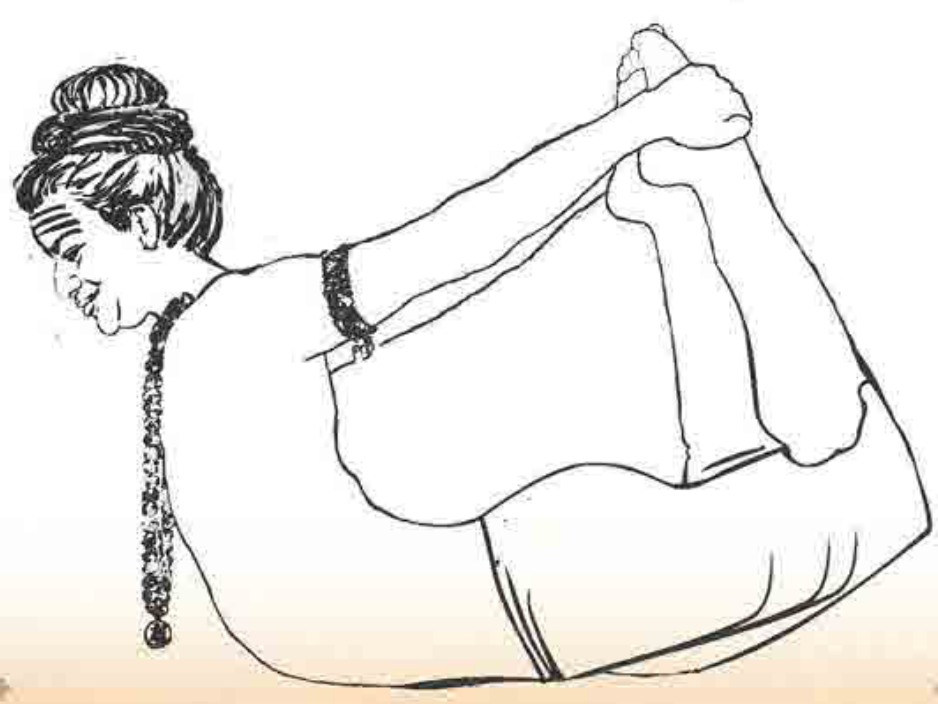
Technique: 1. Lie flat on your belly on the ground. 2. Bring the hands back 3. Bend the knees and catch your ankles with hands, respectively 4. Lift the chest and legs bening the body like a bow
Improves digestion and gastrointestinal problems. Helps in constipation and menstrual problems. Improves blood circulation. Gives flexibility and strength to the back.
Opens the heart, feeling of liberation
Sakshi Pramana Benefits Keong Chow, Singapore, Yoga Teacher/Freelancer
Ekapadasana I
Balancing
asanas
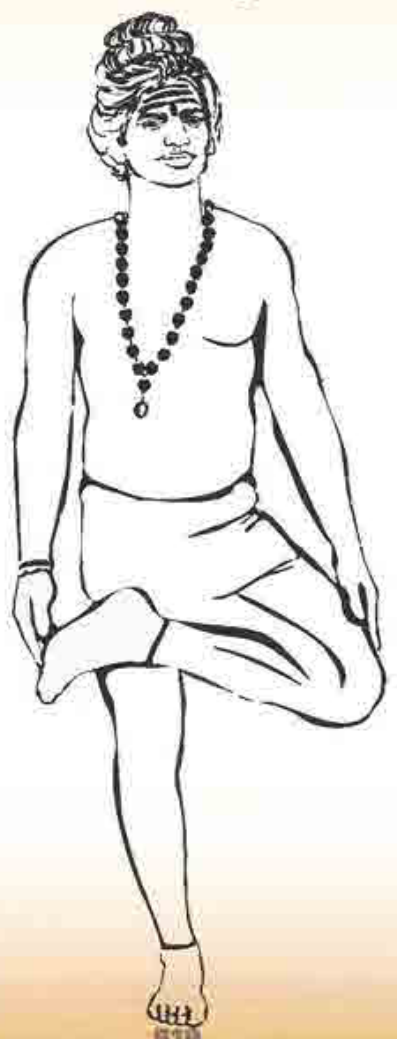
Āpta Pramāṇa - आप्त प्रमाण Yogasanam 5
दक्षांघ्रिं वामपादस्य जंघघोपरि निधाय च।
द्व्यः पाणिं जानुपार्श्वयोः स्पृशेत्कुमितरांघ्रिणा
एवंविधासंनयत्र तत्रैकांघ्रद्यासनं भवेत्।
रक्तशुद्धिरनेन स्याज्ज्वरनाशं च मूलतः॥२०॥
dakñäghrià vämapädasya jaìghopari nidhäya ca |
dvyaù päëià jänupärçvayoù spåçetkumitaräìghriëä
evaàvidhäsannayatra tatraikäìghryäsanaà bhavet |
raktaçuddhiranena syäjjvaranäçaà ca mülataù ||20||
one stands on one leg, the other foot is placed on opposite thigh. Hands are hanging on sides touching the knees.
Technique:
- Stand up straight on one leg.
- Place the other foot on the opposite thigh.
- Relax the hands on the sides of the body touching the knees
Purifies blood, cures fever
Ekapadasana II
Seated
Āpta Pramāṇa - आप्त प्रमाण Hatha Ratnavali III.64
एकपादमथो कण्ठे उत्थाप्यैकं च दण्डवत् ॥
करौ सम्पुटितौ कृत्वा एकपादं तदुच्यते ॥६४ ॥
ekapādamatho kaëöhe utthäpyaikaà ca daëòavat ||
karau sampuöitau kåtvä ekapädaà taducyate ||64||
Having placed one leg over the neck, the other leg is raised up like a stick. Then hands are folded on the chest. This is called ekapada. 64
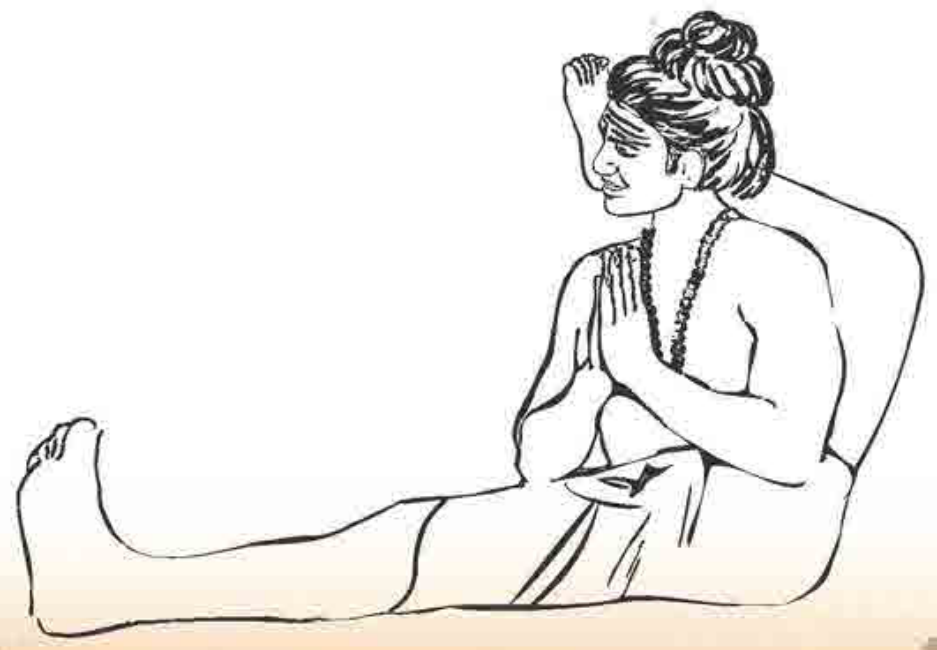
Technique:
1. Sit on the floor 2. Place one leg over the neck 3. Stretch the other leg on the ground 4. Palms together in front of the heart
Heals disorders of the spleen ; increases digestive fire; strengthens the nervous system; Activates the mula bandha and the kundalini shakti.
Garudasana I
Balancing
Śāstra Pramāṇa - शास्त्र प्रमाण Varahopanishad (5.17)
गरुडासनमावक्ष्ये येन ध्यानं स्थिरं भवि।
सर्वदोषाद्विनिर्मुक्तो भवतीह महाबली ॥२३.९८॥
एकपादमुरी बदध्वा एकपादेन द डवत्।
जङ्घापादसन्ध्विदेशे ज्ञानव्यग्रं व्यवस्थितम्॥२३.९९॥
garuḍāsanamāvakṣye yena dhyānaṃ sthiraṃ bhvi| sarvadoṣādvinirmukto bhavatīha mahābalī ||23.98|| ekapādamurau baddhvā ekapādena da ḍavat| jañaghāpādasandhideśe jhānavyagraṃ vyavasthitam||23.99||
for extended verse see end of chapter
Now (I shall talk) garuḍāsana doing which the mind becomes stable in this world;(And the practitioner) becomes free of all sorts of imperfections and becomes a mahābali (a person with super powers). (23.98)
Stand on one foot straight like a rod and place the other foot on the (opposite) thigh at the joint of the groin, doing so restless (practitioner for knowledge) becomes stable minded. (23.99)
After doing this āsana meditate on saṁhāra mudra;Then worship Yoganātha and sarveśvara. (23.100)
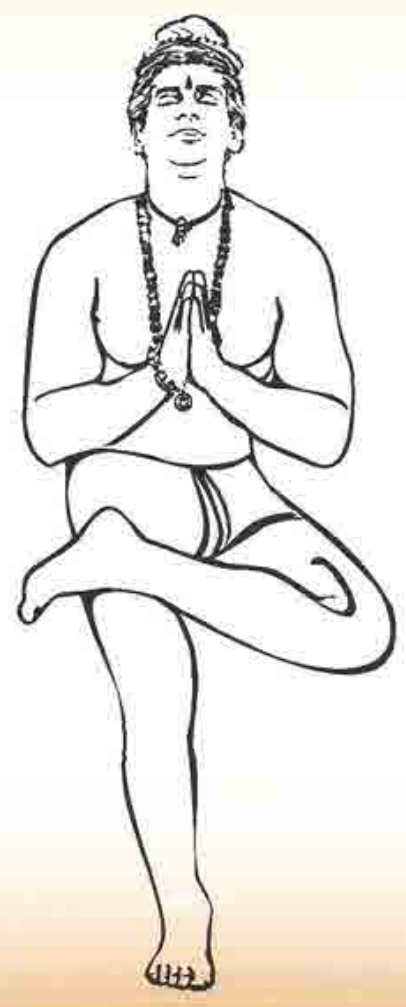
Technique:
- Stand on the right leg and slightly bend the knee
- Bend the left leg and place the sole of the foot on the right thigh
- Palms togheter in front of the heart.
Strengthens the feet, groin, abdominals and back muscles. Stretches the knees, pelvic muscles and back of sacrum. Improves the balance, stability and focus. Anjali mudra stimulates the heart chakra and acknowleges divinity with oneself and all of life.... 'Prevents spreading of snake poison and the like. It controls discharge of semen.
Increased awareness on the body, opens the upper back
Sakshi Pramana Benefits Sunniva Kaurin, Norway
Garudasana II
Seated
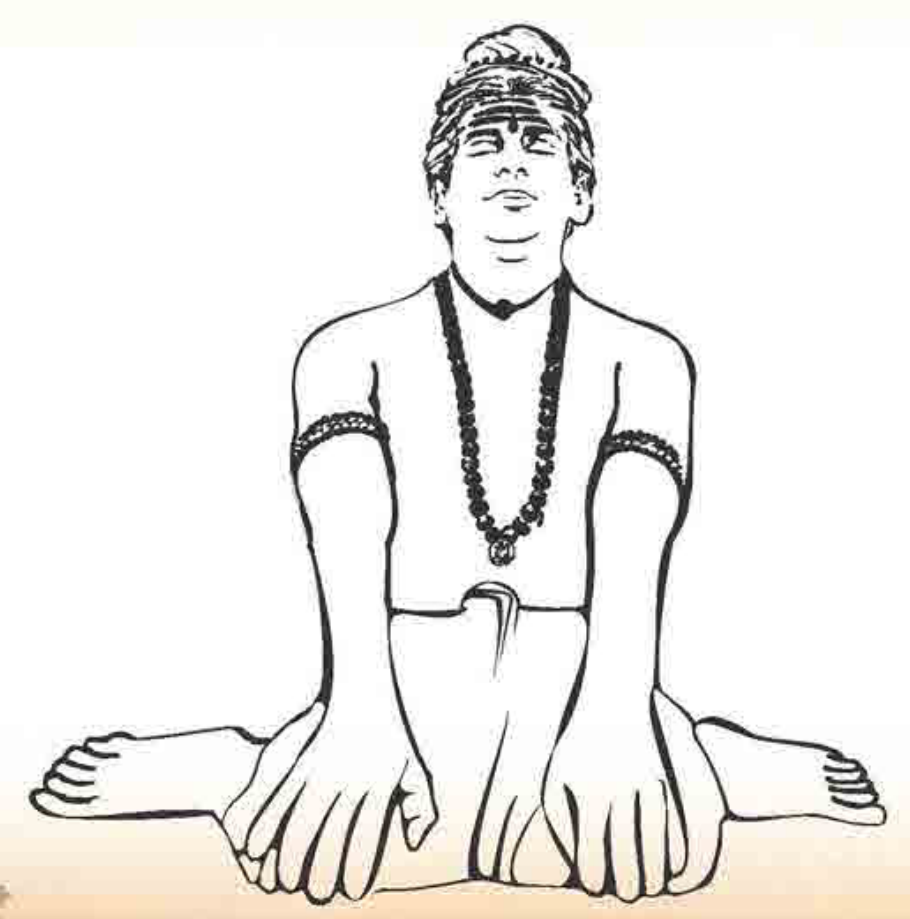
Āpta Pramāṇa - आप्त प्रमाण Gheranda Samhita II.36
जङ्घघोरुभ्यां धरां पीड्य स्थिरकायो द्विजानुना ।
जानूपरि करयुग्मं गरुडासनमुच्यते ॥३६॥
jaṅghorubhyāṁ dharāṁ pīḍya sthirakāyo dvijānunā | jānūpari karayugmaṁ garuḍāsanamucyate ||36||
Press the ground with both the thighs and knees, keep the body steady and sit with both hands on the knees. Strengthens muscles, tones the nerves, and loosens joints of the shoulders, arms and legs.
Apta Additional References BrYs-III.44; HS-asana-44
Technique:
- Sit in vajrasana. (Sit on your heels)
- Move the feet to the side, toes pointing outwards.
- Allow the thighs and knees to rest on the ground.
- Keep spine straight, keep hands on the knees.
Improves blood circulation in legs, digestion and gas problems. Helps with symptoms of menopause. Improves posture.
Garudasana III
Seated
Āpta Pramāṇa - आप्त प्रमाण Yoga-Asanamala Sacitra (ms.) 72
डावो पग मोडि येडी माहिलौ गुलफ मूलद्वार नीचै दे
बैसै जीमणी पगथली धरती टेकि गोडो ऊँचौ उभौ राखै
पगथली माहिली धरती टेकि गोडा अरु पीडी माहिली
òävo paga moòi yeòé mähilauà gulapha müladvära nécai de baïsai jémaëé pagathalé dharaté öekí goòo üïcau ubhau räñai pagathalé mähilé dharaté öekí goòä aru péòé mähilé
for extended verse see end of chapter
Sit on the ground. Bend the left leg and place its ankle under the anus. Then place right foot close to the side of the left knee and calf, keeping its knee vertically raised. Place hands on respective knees and direct the gaze at the tip of the nose.
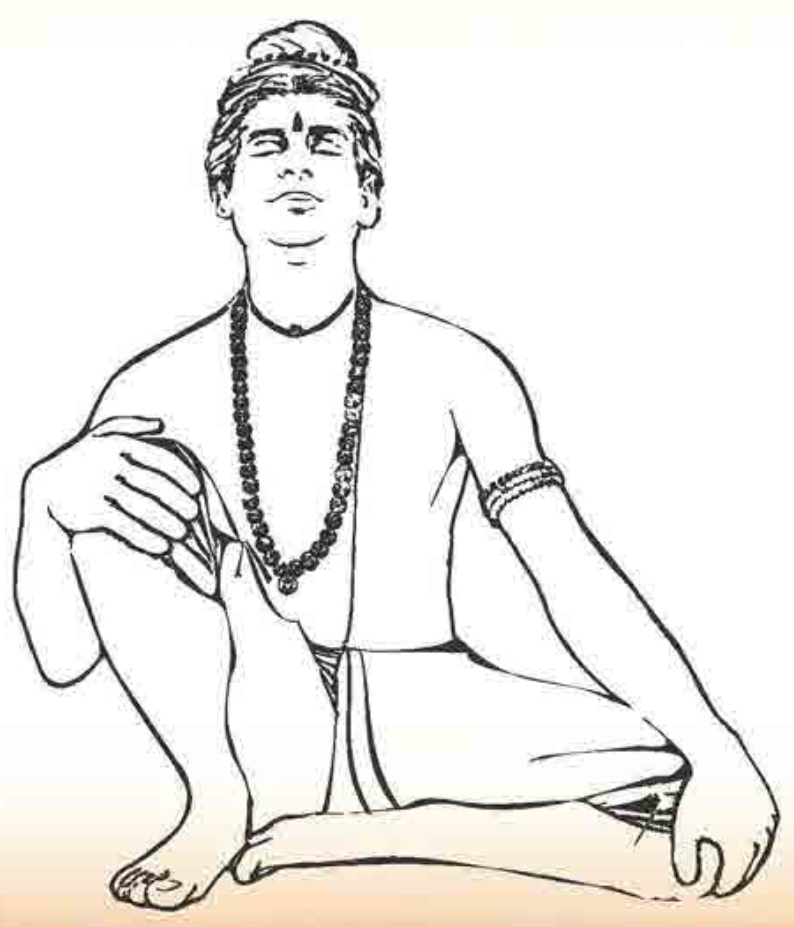
Technique:
- Bend the left leg and place its ankle under the anus.
- Place right foot on the ground and keep the knee vertically raised.
- Place hands on respective knees
- Gaze at the tip of the nose.
Controls discharge of semen.
Gohi asana
Inverted
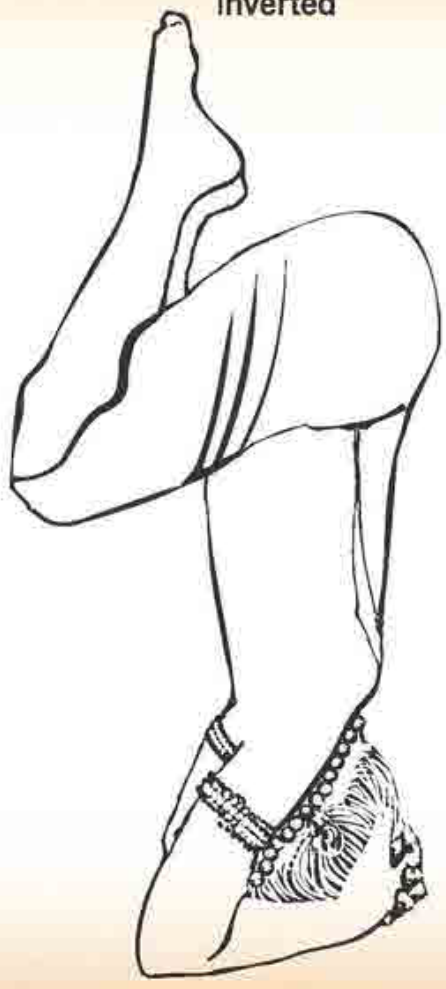
Āpta Pramāṇa - आप्त प्रमाण Joga Pradipika .171-174
गोही आसन
दोऊ हाथ कहुण्या स्यौले कलाई हथेली आंगुल्या की पीढ़ी
धरति टेकै कलाई जुडिवा राखै कलाया की माहिली कानी माथौ
gohé āsana
doü hätha kahuëyä syaule kalä é hathelé ägulyä ké péñöé
dharati õekai kaläé juòivä räñai kaläyä ké mähilé käné mäthau
for extended verse see end of chapter
Bring the elbows and forearms together and place them on ground. Place the head on forearms kept together. Raise the trunk towards the sky. Then fold the legs at knees and touch the heels to the buttocks. Touch the chin to knees and fix the gaze at the nose.
Apta Additional References Also called sisumarasana, found in MS-20, HP(ms.)-II.156
Technique:
- Kneel down.
- Place the forearms on the ground, fingers interlocked, elbows shoulder width apart.
- Bring the crown of the head on the ground, hands at the back of the head.
- Straighten the legs and walk forward, until hips come in line with shoulders.
- Bring the knees to the chest, keeping the heels close to the buttocks.
Helps to heal from all diseases of head and eyes.
Feeling of being focused, engagement of the core muscles
Sakshi Pramana Benefits Sunniva Kaurin, Norway
Gomukhāsana
Śāstra Pramāṇa - शास्त्र प्रमाण Sandilyopanishad (3-2)
सव्ये दक्षिणगुल्फं तु पृष्ठपार्श्वे नियोजयेत् ।
दक्षिणेऽपि तथा सव्यं गोमुखं गोमुखं यथा ॥ २ ॥
savye dakṣiṇagulphaṃ tu pṛṣṭhapārśve niyojayet | dakṣiṇe'pi tathā savyaṃ gomukhaṃ gomukhaṃ yathā || 2 ||
One should place his right ankle of the leg on the left side of the back (of the leg) and also the left ankle of the leg on the right side similarly. This is Go-mukha, resembling the face of the cow.
Additional Shastra Reference Tri-shikhi-brahmanopanishad (36), Darshanopanishad (III, 3-4)
Āpta Pramāṇa - आप्त प्रमाण Hathapradipika II.6
सव्ये दक्षिणगुल्फं तु पृष्ठपाश्वे नियोजयेत् ॥
दक्षिणेऽपि तथा सव्यं गोमुखं गोमुखाकृतिम् ॥ ६ ॥
savye dakṣiṇagulphaṁ tu pṛṣṭhapāśrve niyojayet || dakṣiṇe'pi tathā savyaṁ gomukhaṁ gomukhākṛtim || 6||
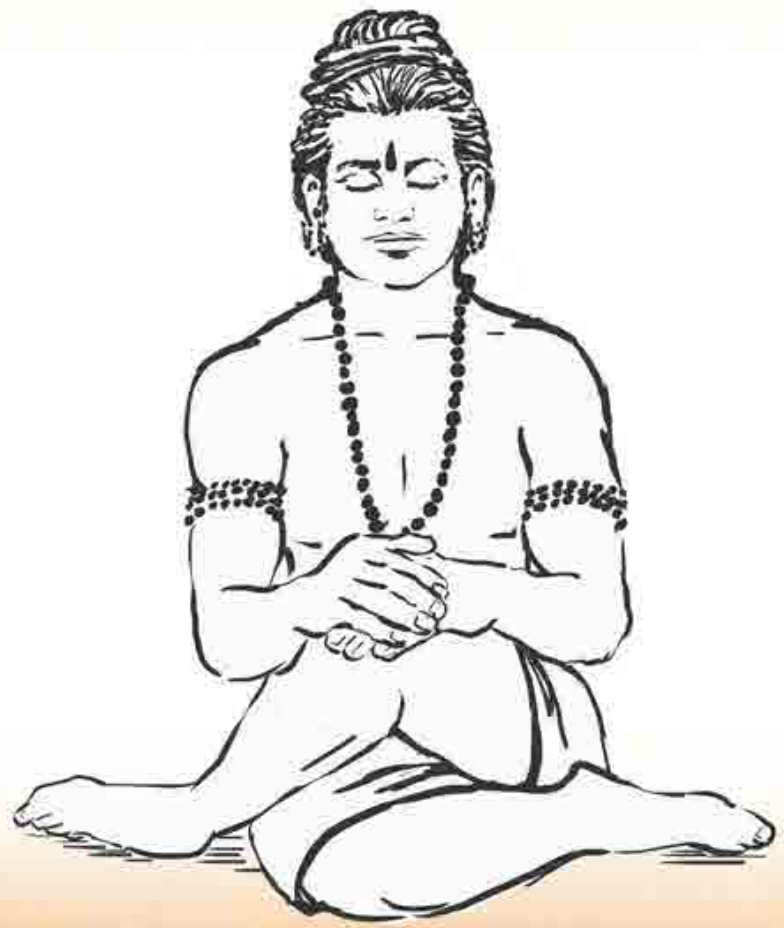
One places the right ankle by the side of the left hip and the left ankle by the side of the right hip. Thus imitating the shape of the head of a cow. This is gomukhasana
Seated
Apta Additional References
Hatharatnavali.III-53,
Gheranda Samhita.II-16, HSC-35
Technique:
- Place the right ankle by the side of the left hip and the left ankle by the side of the right hip.
- Keep knees on top of each other.
- Sit with the spine straight.
- Keep the hands on the knees.
Deeply opens and stretches the hips and gluteus.This asana brings control on apanavayu if properly apply mulabandha. Also it overcomes bhagandara(fistula) and arsa (piles). Helps in sciatica, enhances the working of the kidneys, thereby helping those with diabetes. It also works the chest muscles and helps in treating sexual ailments. Practicing this asana regularly can reduce stress and anxiety. This asana is used in Nithyananda Kriyas for diabetes and obesity.
Chest expansion and balancing when done on both sides
Sakshi Pramana Benefits Li Yeen Chow/Singapore/Unemployed
Gopīcanda-āsana I
Seated
Āpta Pramāṇa - आप्त प्रमाण Yoga-āsanamālā sacitra - 65
पूरब बिधि पगाक अंगुठा कंठकूप राखै येडी हिरद लगावै
कांगसी ऐडचा आगूली परि राखै दृष्टि नासा अग्र
आसण कौगुण ईंडी पींगलाकी पवन थंब जालंधरबंध लागै
òävo paga moòì yeòé mähilauà gulapha müladvära nécai de baisai jémaéé pagathalé dharaté öeki goòo üïcau ubhau räñai pagathalé mähilé dharaté öeki goòä aru péòé mähilé
Bring both soles together. Make a fingerlock and hold the sides of the feet. Raise the feet and arrange the heel on chest and toes in the depression of throat. Rest the chin on fingerlock and gaze at the nose.
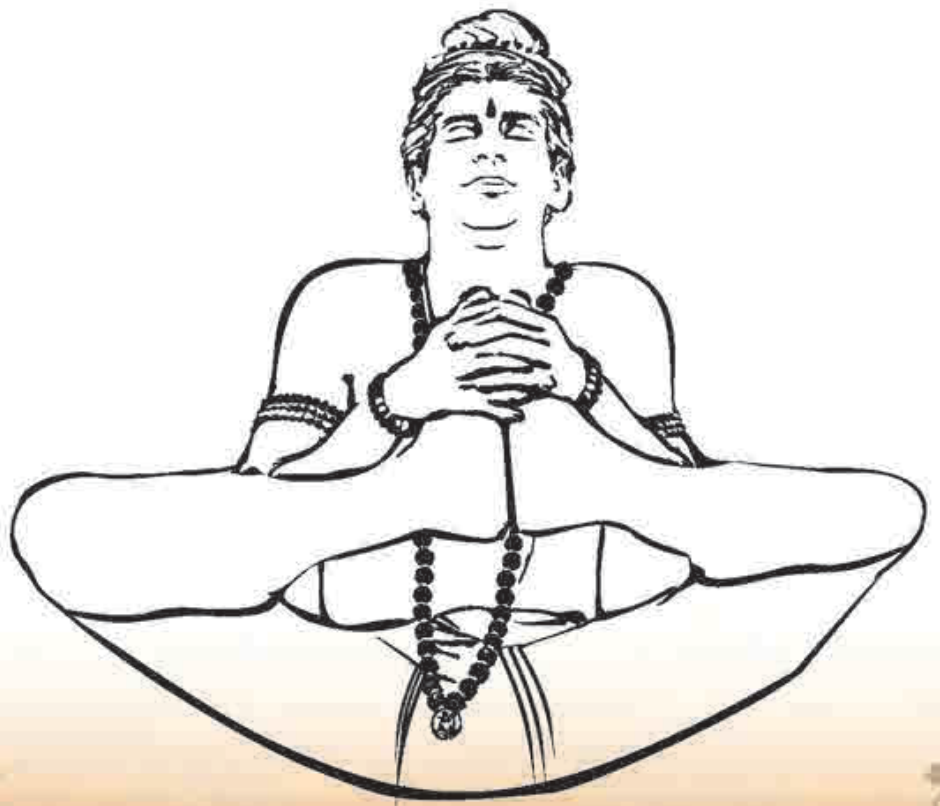
Technique:
- Sit on the floor with the soles of the feet together.
- Hold the toes with a fingerlock, raise the feet and arrange the toes in the groove at the throat.
- Bring heels to touch the chest.
- Rest the chin on the fingerlock.
- Fix the gaze at the tip of the nose.
Helps in Jalandhar Bandha and successful with Ida and Pingala Nadis
Gorakh(jan)jali asana
Seated
Āpta Pramāṇa - आप्त प्रमाण joga pradīpikā-85-87
प्रथम ही ऊभौ होय बहुरि नीचौ पुनि होवै ।
दोउ कर दोउ जंघघ मधि नीकी विध पौचै ॥
बहुरि दोउ भुज सनै जंघघ बाहर ले आनै ।
नासादृष्टि लगाइ काकसी नाभि जु ठानै ॥ ८५ ॥
pratham hé übhau hoya bahuri nécau puni hovai |
dou kara dou jaïgha madhi néké vidha paucai ||
bahuri dou bhuja sanai jaïgha bähara le änai |
näsädriñöi lagäi käkasé näbhi ju öhänai || 85 ||
for extended verse see end of chapter
Stand erect and then bend forward, bring both the hands at the level of thighs from the back side and make a fingerlock and then sit in squatting position so as fingerlock should touch the navel. Various miraculous effects in the body of Sadhaka may be felt. Kundalini leaves the Brahmarandhra and becomes straight.
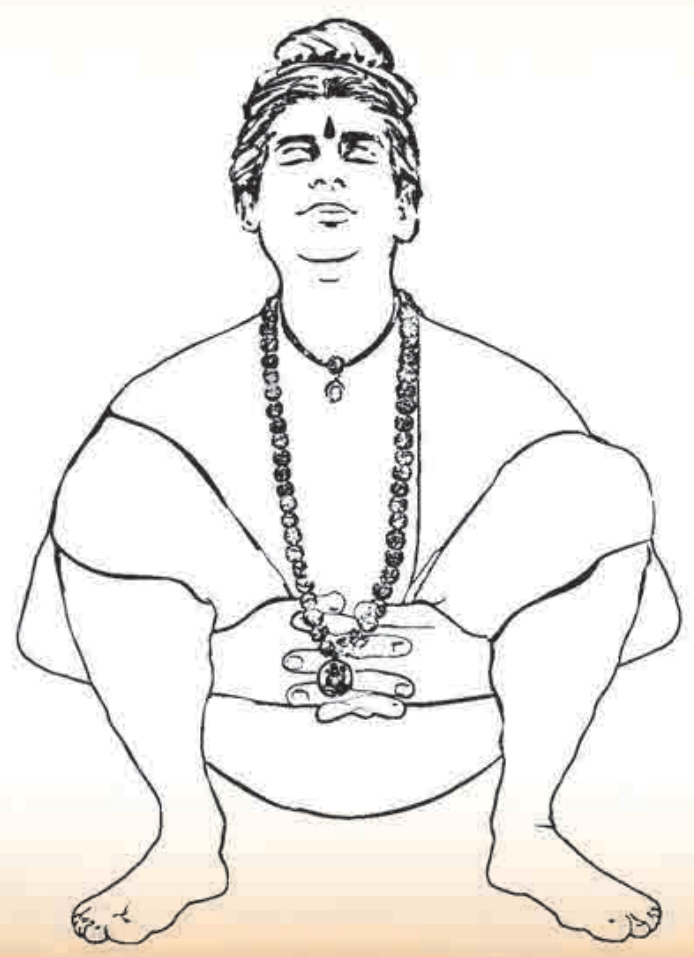
Apta Additional References
Yoga ASANAMALA SACITRA-41-42;
HP(ms.)-II.95; JP(L)-10
Technique:
- Squat keeping the hands in betweeen the thighs and calf muscles.
- Interlock the fingers with the palm on the navel.
- Fix the gaze at the tip of the nose.
- Remain in this position for 30 seconds.
Gives extraordinary benfits to human body. With the practice of this asana for 1 year, kundalini is awakened and some divine miracles experienced.
Goraksasana
Seated
Āpta Pramāṇa - आप्त प्रमाण Gheranda Samhita-II.24-25
जानूर्वोरन्तरे पादावुत्तानौ व्यक्तसंस्थितौ ।
गुल्फौ चाच्छाद्य हस्ताभ्यामुत्तानाभ्यां प्रयत्नतः ॥२४॥
कण्ठसङ्कोचनं कृत्वा नासाग्रमवलोकयेत् ।
गोरक्षासनमित्याह योगिनां सिद्धिकारणम् ॥२५॥
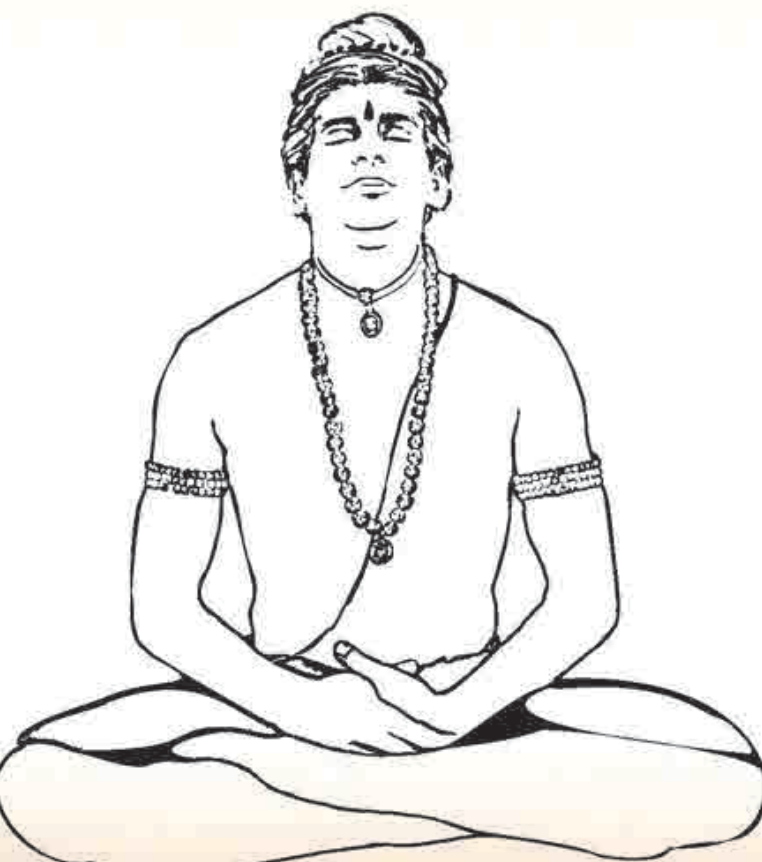
jānūrvorantare pādāvuttānau vyaktasaàsthitau | gulphau cācchādya hastābhyāmuttānābhyāà prayatnataù ||24|| kaëöhasañkocanaà kåtvā nāsāgramavalokayet | gorakñāsanamityāha Yogināà siddhikāraëam ||25||
Between the knees and the thighs, the two feet turned upward. And placed in a hidden way, the heels being carefully covered by the two hands outstretched; the throat being contracted, let one fix the gaze on the tip of the nose. This is called gorakashasana. It gives succes to the Yogis.
Apta Additional References
BrYS-III.28-29; HS-asana-31-32;
Hatharatnavali-III.16; AYG-39
Technique:
- Sit cross-legged with the toes hidden between the thighs and calves.
- Keep the hands on the heels.
- Contract the throat and fix the gaze at the nose.
Enables Yogis to attain siddhi. Focuses the mind to achieve a state of concentration.
Granthibhedasana
Seated
Śāstra Pramāṇa - शास्त्र प्रमाण Rudrayamala Tantra 23.79-82
अथ वक्ष्ये नीलकण्ठ ग्रन्थिभेदासनं शुभम्।
ज्ञात्वा रुद्रो भवेत् क्षिप्रं सूक्ष्मवायुनिषेवणात् ॥२३.७९॥
कृत्वा पद्मासनं मन्त्री जङ्घयोः हृदये करौ।
कूर्परस्थानपर्यन्तं विभेद्य स्कन्धधारणम् ॥२३.८०॥
atha vakṣye nīlakaṇṭha granthibhedāsanaṃ śubham|
jñātvā rudro bhavet kṣipraṃ sūkṣmavāyuniṣevaṇāt ||23.79||
kṛtvā padmāsanaṃ mantrī jaṅghayoḥ hṛdaye karau|
kūrparasthānaparyantaṃ vibhedya skandhadhāraṇam||23.80||
for extended verse see end of chapter
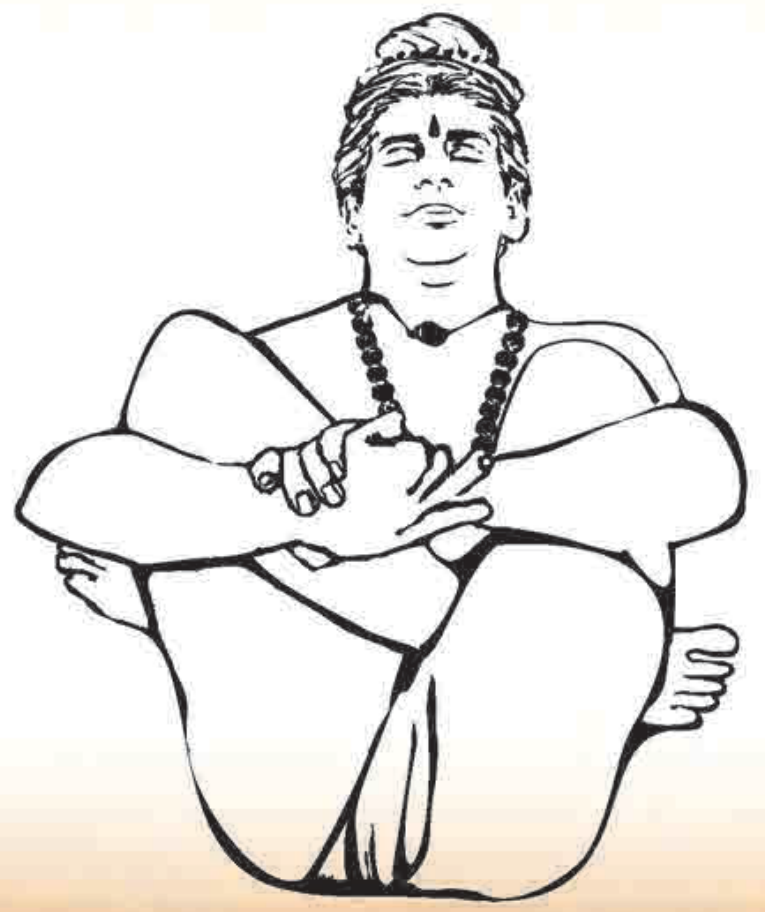
O! Neelkantha, now (I shall talk about) the beneficial granthibhedāsana; Knowing which one holds subtle breath and quickly becomes a rudra. (23.79)
The practitioner (well-versed) in the mantras should sit in padmāsana (then) raising both legs take both hands (close to) to the chest through the elbows and rest them on the shoulders. (23.80)
The practitioner (well-versed) in the mantras should (then) free himself from padmāsana and lower the head and bow five-hundred times holding the body firmly with the fingers; this is the well-known granthibheda āsana. Doing this one sees all the heavenly bodies. The practitioner of this āsana should dissolve the mind in the subtle breath and concentrate on parmātma. (23.81, 82)
Technique:
- Sit in Padmasana
- Fold the legs onto the chest.
- Wrap the arms around the leg
- Keep the knees close to the shoulders
Grdhrasana
Seated
Āpta Pramāṇa - आप्त प्रमाण Matsyendra-Samhita III.25-27
जानूर्वोरन्तरे पादावुत्तानौ व्यक्तसंस्थितौ ।
गुल्फौ चाच्छाद्य हस्ताभ्यामुत्तानाभ्यां प्रयत्नतः ॥२४॥
कण्ठसङ्कोचनं कृत्वा नासाग्रमवलोकयेत् ।
gorासनमित्याह योगिनां सिद्धिकारणम् ॥२५॥
jānūrvorantare pādāvuttānau vyaktasaàsthītau | gulphau cäcchādya hastābhyāmuttānābhyāà prayatnataù ||24|| kaëöhasaikocanaà kåtvä näsägramavalokayet | gorakñāsanamityäha Yoginäà siddhikāraëam ||25||
Adopt padmasana. Place the elbows on toes. Interlock the fingers. Place the chin on knuckles. Press the thumbs against the throat.
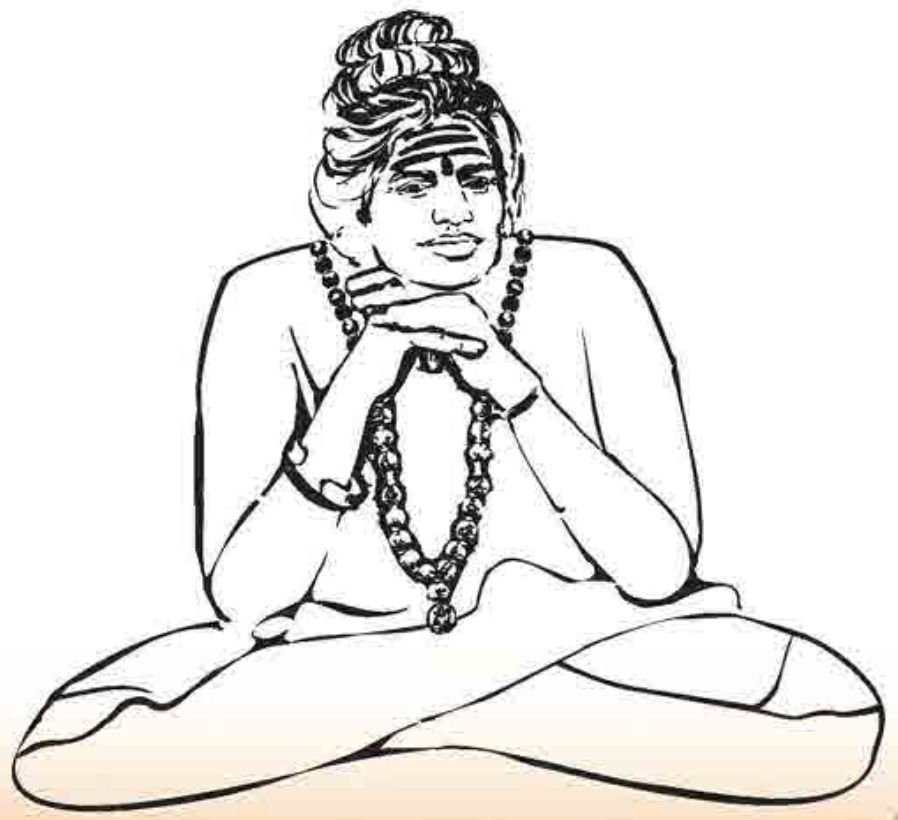
Technique:
- Sit in Padmasana.
- Place the elbows on the toes.
- Interlock the fingers.
- Rest your chin on the knuckles.
- Press the thumbs on the throat.
Brings all doshas (humural disorders) including mental and physical back to balance.
Guptasana
Seated
Āpta Pramāṇa - आप्त प्रमाण Gheranda Samhita 2.21
जानूर्वोरन्तरे पादौ कृत्वा पादौ च गोपयेत्।
पादोपरि च संस्थाप्य गुदं गुप्तासनं विदुः॥ २०॥
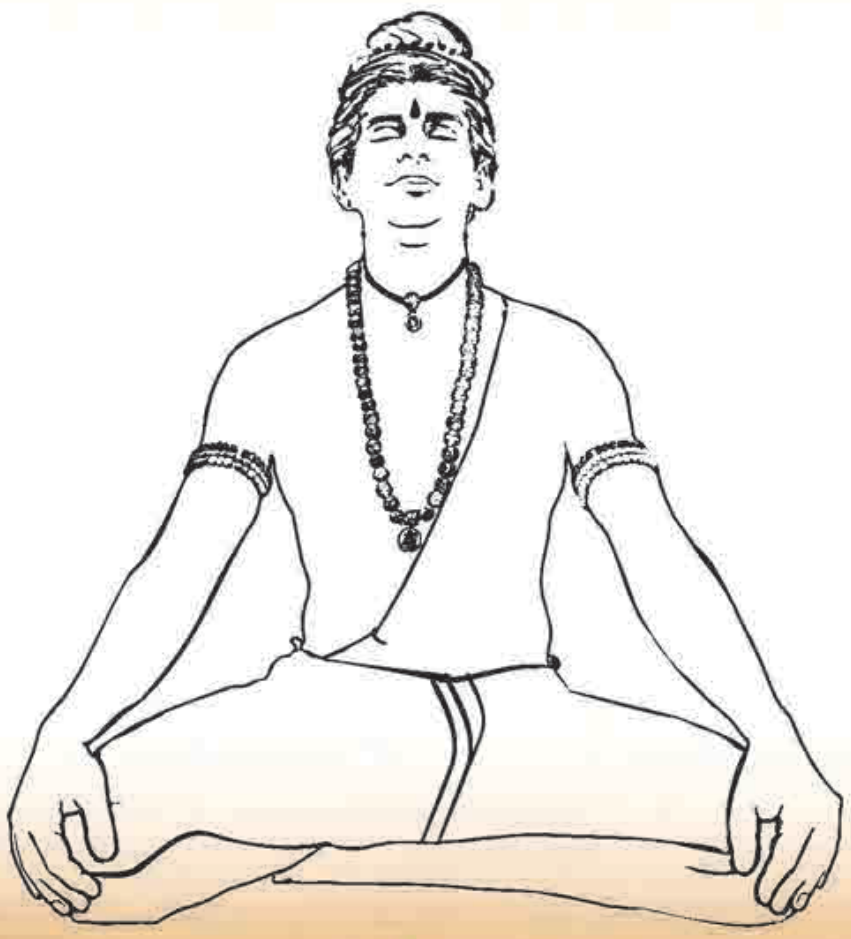
jānūrvorantare pādau kåtvā pādau ca gopayet | pādopari ca saàsthāpya gudaà guptāsanaà viduù ||20||
Keep both feet hidden in the middle portion of both the knees and bring the anal region between the feet
Apta Additional References BrYs-III.25; HS-asana-27
Technique:
- Sit on the feet crosswise.
- Press one foot against the anus.
- Sit upstraight with the hands on the knees
Same as siddhasana and easier to execute the posture. According to the scripture about siddhasana, Liberation is attained on perfecting this practice.
Gvalipava-asana
Seated
Āpta Pramāṇa - आप्त प्रमाण Joga Pradipika 256-257
॥ अथ ग्वाली पाव आसन ॥
पूर्वं चरपटचोक कह्यो सोई । वाही विधि यो कीजी सोई ।
या मे एडी भिंन जु राषै । अंगुल आठ अन्तरो राषै ॥ २५६ ॥
|| atha gvālë päva äsana ||
pürva carapaöacoka kahyo soé , vähe vidhi yo kéjé soé |
yä me eòé bhinna ju räñai , aìgula äöha antaro räñai || 256 ||
for extended verse see end of chapter
This is practiced in the manner of carpatacaukasana. In this asana, keep both the heels separate at a distance of eight fingers. Chin well placed at the jugular knotch. Gace at the tip of nose.
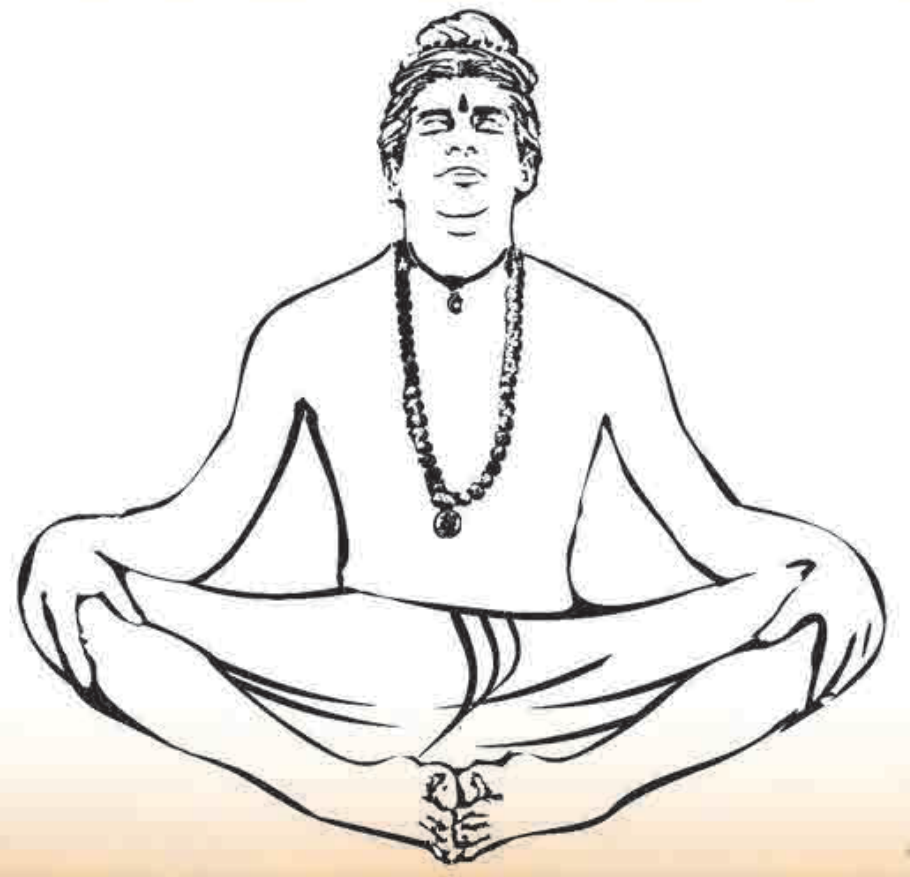
Technique:
- Sit with the soles of the feet together, legs spread apart.
- Keep the heels separate.
- Apply Jalandhara-bandha, bringing the chin in the depression of the throat.
- Gaze is fixed at the tip of the nose.
This facilitates jalandhara bandha.
Halipava-asana
Forward Bend
Āpta Pramāṇa - आप्त प्रमाण Joga Pradīpikā 261-263
पूर्वं विधि याहूं में जानौ । उभै पगथली संपुट ठानौ ।
पिष्ट पछै दोउ कर ल्यावो । दक्षिण कर सो वाम गहावो ॥ २६१ ॥
पिष्ठि हथेल्यां की जोई । अंसु सहित भूमि धरै सोई ।
puni lalāti bhūpari öhäne , eòyää lagatä mähé äneà || 262 ||
पुनि ललाति भूपरि ठाने । एड्यां लगता माही आने ॥ २६२ ॥
pürva vidhi yähüà meà jänau , ubhai pagathalé sampuöa öhänau |
piñöa pachai dou kara lyävo , dachiëa kara so väma gahävo || 261 ||
piñöi hathelyää ké joé , aàsu sahita bhümi dharai soé |
puni lalāti bhūpari öhäne , eòyää lagatä mähé äneà || 262 ||
for extended verse see end of chapter
Bring both soles together. Bring both hands towards backside and hold the left hand by the right hand and place the hand on the ground. Place forehead on the ground (by bending forward) near the ankles. Gaze at the nose. Body becomes purified. This asana facilitates kapalabhati.
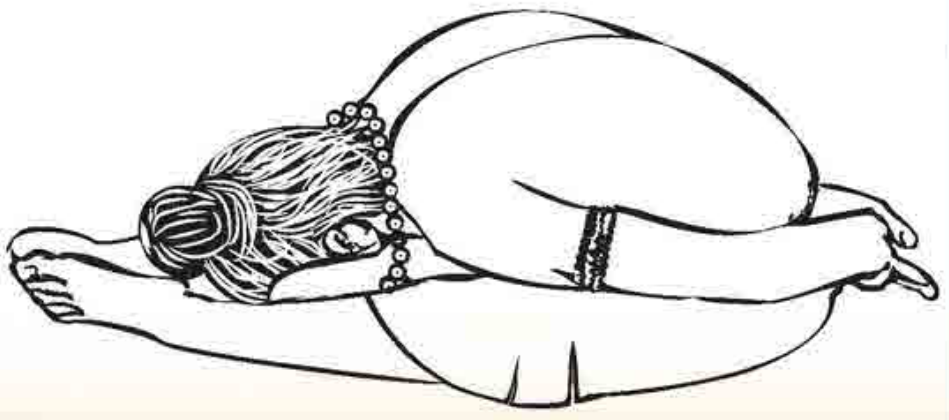
Apta Additional References Yoga ASANAMALA SACITRA-60; AYG-45. Similarity with lohasana. Alt position JP(L)-54 and NS-34. Variety of halipava-asana is similar to balaguna-asana, Yoga ASANAMALA SACITRA_93
Technique:
- Sit with the soles together.
- Bring both hands towards backside and hold the left hand by the right hand.
- Place the hand on the ground.
- Bend forward and place the forehead on the ground near the ankles.
- Gaze at the nose.
It makes you Dheera a person who conquers the inner world.
Jalandhari pava asana
Forward Bend
Āpta Pramāṇa - आप्त प्रमाण Joga Pradipika III.267-269
जलन्धरी पाव आसन
दोउ एडी मैलकै दीजै हाति पसारी ।
पुनि च्यिबुक मुखनासिका ता ढिग भूपरि धारि ॥ २६८ ॥
jalandharé päva äsana dou eòé mailakai déjai häti pasäré | puni cyibuka mukhanäsikä tä òhiga bhüpari dhäri || 268 ||
for extended verse see end of chapter
Extend both the legs in front with heels together. Place the chin, mouth and nose on the heels. Insert both the hands below the legs keeping elbows together and let the elbows and fingers placed on the ground. Palms facing upward. Gaze at the tip of nose. It removes diseases like dropsy.
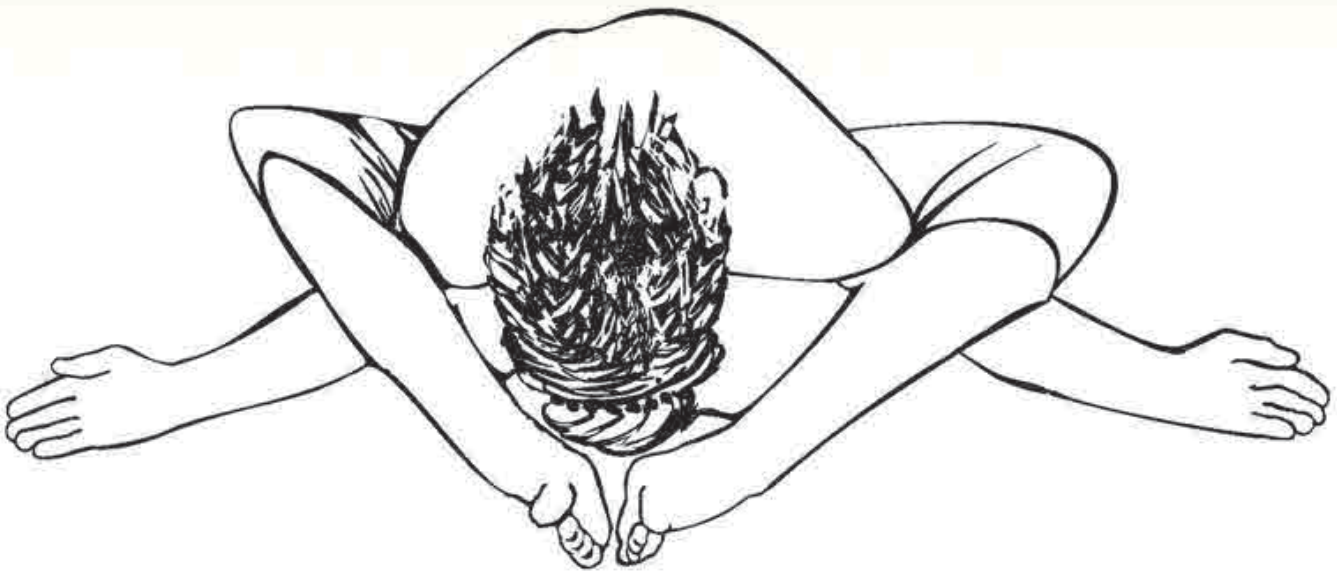
Technique:
- Sit with the feet together knees spread out.
- Insert the hands below the legs, forearms on the ground, palms facing up.
- Bring the chin to the ground neer the heels.
- Gaze at the tip of the nose.
Opens and stretches muscles of the groins, inner thighs and the back.
Jathara parivrtti
Supine
Āpta Pramāṇa - आप्त प्रमाण Yoga-rahasya of Srinatha-muni- I.52, II.17
परिवृत्तिह् कुक्षिभागे त्रिधा हि परिकीर्तितः ।
बद्धकोणं सुप्तकोणमूर्ध्वकोणमथापि च ॥
parivṛttiḥ kukṣibhāge tridhā hi parikīrtitaḥ |
baddhakoṇaṁ suptakoṇamūrdhvakoṇamathāpi ca ||
It is proclaimed that the parivritti of the navel region (jathara parivrtti) is of three variations. There are also different variations of Badha konasana, Supta konasana, Urdhva Konasana and other. 52.
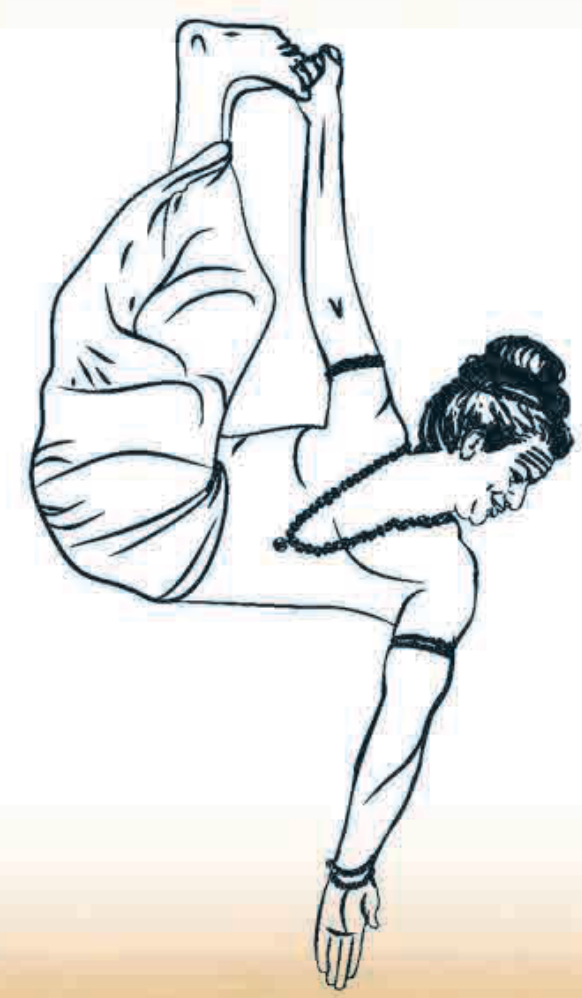
Technique:
- Lie down on your back and bring the knees to the chest.
- Extend the arms on the ground at shoulder level.
- Bring both knees to one side of the body and extend the legs
- Turn the head in the opposite direction.
- Relax and breathe deeply.
Jati asana
Back Bend
Āpta Pramāṇa - आप्त प्रमाण Joga Pradipika III.313- 316
जति आसन
दोउ एडी संपुट करै सो ले मूलद्वारितरि धरै ।
फणांपाणि उकड होय बैसै बहुरि पिष्ठि दिसि करै जु ऐसै ॥
jati āsana
dou eöé sampuöa karai so le müladväritari dharai |
phaëämpäëi ukaöa hoya baisai bahuri piñöi disi karai ju aisai ||
*for extended verse see end of chapter
Bring the heels together and place them below the anus. Take both the hands towards backside in such a way that elbows are placed on the ground. The backside of the head should also be placed on the ground. Keep the knees in front and place them on the ground. Catch hold of backside of soles by the hands. Gaze should be nasal. This purifies the body. Mnd is also controlled.
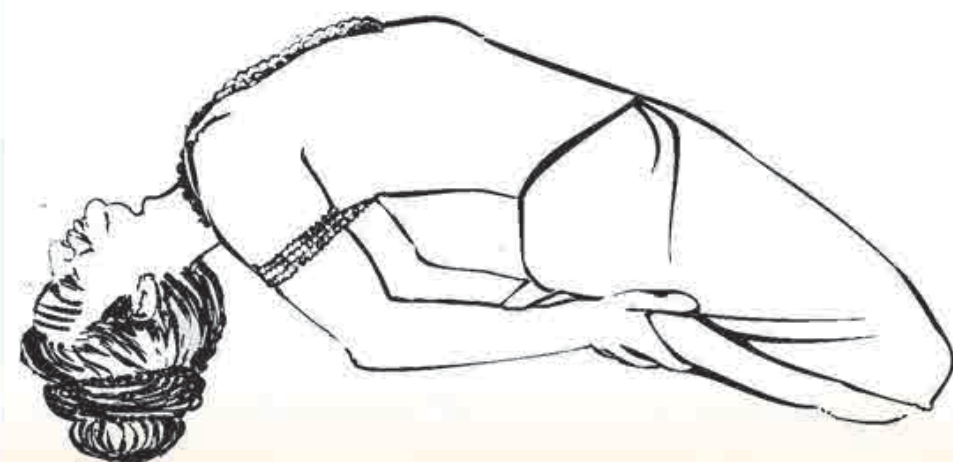
Apta Additional References Same as yati- asana YMS 79, AYG 74
Technique:
- Fold the legs and join the heels under the anus.
- Sit on the feet, knees spread out.
- Lean back and place the elbows on the ground.
- Bring the back of the head to ground.
- Hold the feet with the hands from behind.
- Gaze at nose.
Purifies the body and controls the mind.
Jatyasana
Forward Bend
Śāstra Pramāṇa - शास्त्र प्रमाण Rudrayamalam (uttara-tantram) (24.36)
अथ जात्यासनं वक्ष्ये येन जातिस्मरो भवेत् ॥ २४.३६॥
हस्ताङ्घ्रि भूमौ च गमनागमनं ततः।
atha jātyāsanaṃ vakṣye yena jātismaro bhavet || 24.36 ||
hastāṅdhri bhūmau ca gamanāgamanaṃ tataḥ|
Now I shall talk about jātyāsana doing which one remembers the past life. (24.36)
Place both the hands and feet on the floor and keep moving forward and backwards.
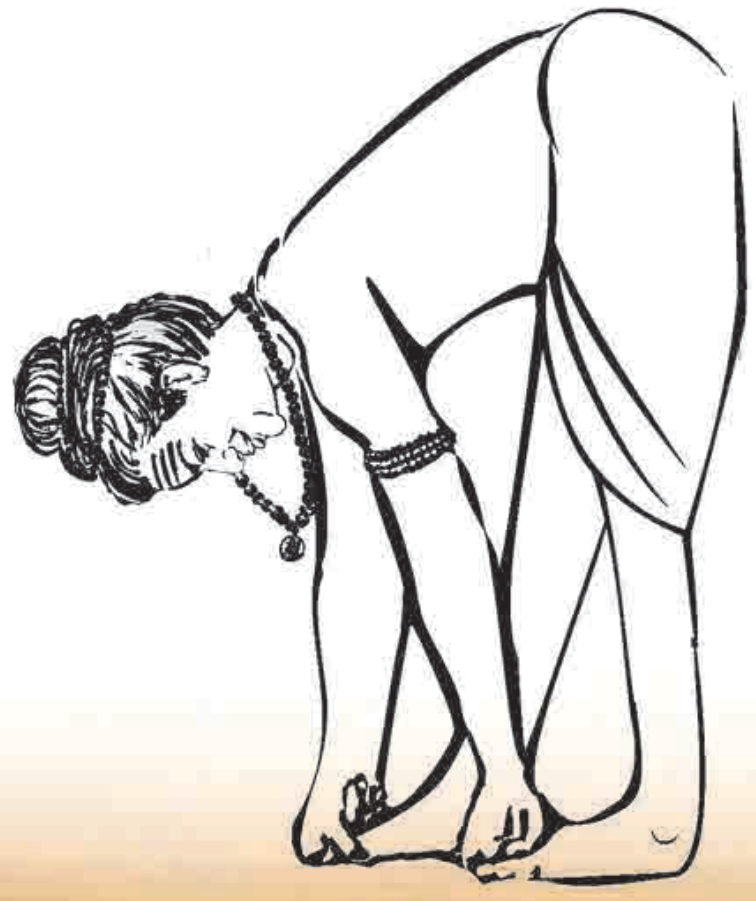
Technique:
- From a standing position, bend forward and hold toes.
- Walk back and forth.
Strenghten legs muscles and improve sense of balance.
Rudrayamala Tantra 23.94-97
अथान्यदासनं कृत्वा सर्वव्याधिनिवारणम् ।
योगाभ्यासी भवेत्क्षिप्रं ज्ञानासनप्रसादतः ॥२३.९४॥
दक्षपादोरुमूले च वामपादतलं तथा ।
दक्षपादतलं दक्षपार्श्वे संयोज्य धारयेत् ॥२३.९५॥
athānyadāsanaṃ kṛtvā sarvavyādhinivāraṇam|
yogābhyāsī bhavetkṣipraṃ jñānāsanaprasādataḥ||23.94||
dakṣapādorumūle ca vāmapādatalaṃtathā|
dakṣapādatalaṃ dakṣapārśve saṃyojya dhārayet||23.95||
for extended verse see end of chapter
Thus by doing other asanas all diseases are annulled; The practitioner of Yoga quickly becomes (siddha) as a result of jnānāsana. (23.94)
Place the sole of the left foot on the right side at the groin;(Then) place the sole of the right foot behind the back and hold it. (23.95)
O Lord! this is called the jñānāsana which gives the light of knowledge;One who does this regularly his joints become relaxed. (23.96)
By doing it alternately by the left and right method it comes to be known as muṇḍāsana;Practicing it, concentrating on it, and by perfecting it one becomes one with parmātma. (23.97)
Jnanasana
Seated
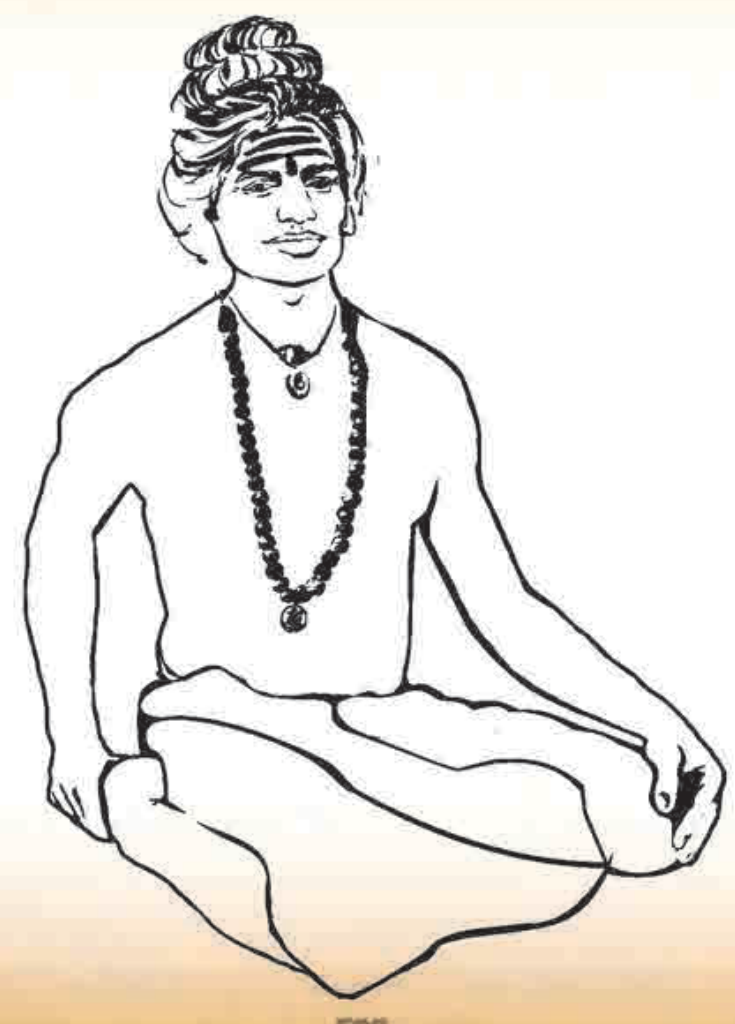
Technique:
- Place the sole of the left foot on the right side at the groin.
- Place the sole of the right foot behind the back and hold it.
- Sit upright.
Joni asana
Forward Bend
Āpta Pramāṇa - आप्त प्रमाण Joga pradipika 215-219
जोनी आसन
दोउ पगथली संपुट करै एडी मेढ्रू के ढिंग घरे ।
अर्ध हाथ को अंतर राखै लिलाट पगथल्या उपर राखें ॥ २१५ ॥
joné āsana
dou pagathalé sampuöa karai eòé meòhra ke òhìïga dhare |
ardha hätha ko antara räkhai liläöa pagathalyä upara däxheà || 215 ||
for extended verse see end of chapter
Join both the soles together and put the heels near the generative organ at a distance of half hand (12 fingers). Catch hold of sole with the help of all the ten fingers. Bring elbows on the ground near the shins. Balance the whole body. Gaze at the tip of nose. Sadhaka gets control over urine and ordure. Accumulated vayu is also liquified (removed). Inhale through mouth, exhale through the left nostril. Practise it for seven days with proper technique and also include kumbhaka gradually.
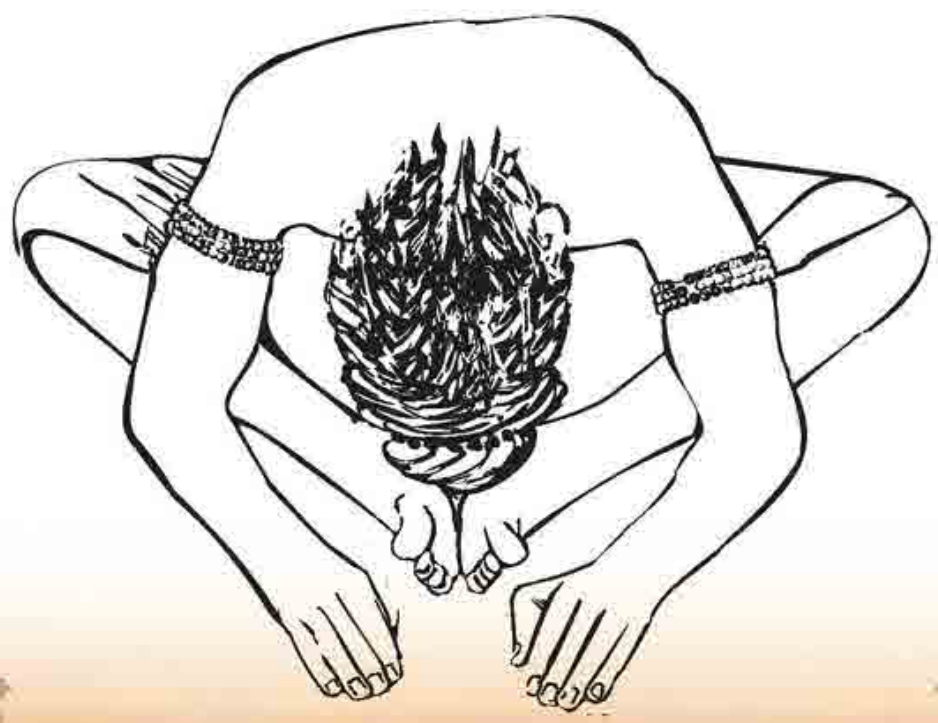
Technique:
- Sit on the floor with feet together, knees apart.
- Bend forward and place the head on the heels.
- Bring the forearms on ground.
- Gaze at the tip of the nose6. Remain in this posture for 30 seconds
Relieves disorders of Vata dosha in the abdomen region, including constipation.
Jonimudra asana
Āpta Pramāṇa - आप्त प्रमाण Joga pradipika 107-109
॥ अथ जोनिमुद्रा आसन ॥
वाम पाद की पगथली । जाहि मांहिली कोरि ।
जोनि तहां धरि वैसिये । उलटौ पाव जु मोरि ॥१०७॥
|| atha jonimudrä äsana ||
väma päda ké pagathalé , jähi mäàhilé kori |
joni tahäà dhari vaisiye , ulaöo päva ju mori ||107||
for extended verse see end of chapter
Sole of the left foot is to be turned upward and sit on it by placing perineum on the sole. Bend the right leg and place the right foot on the left thigh. Gaze should be at the tip of the nose.
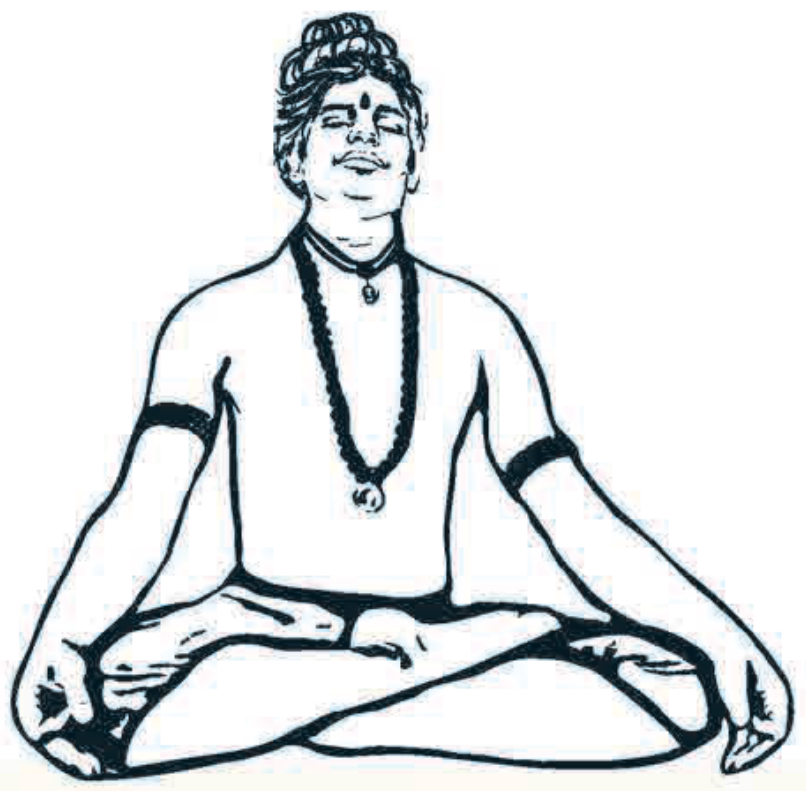
Technique:
- Sit and place the perineum on the left heel.
- Place the right foot on the left thigh
- Gaze at the tip of the nose.
This asana moves the energy upwards required in the practice of brahmacharya
Kakabhusandi asana
Āpta Pramāṇa - आप्त प्रमाण Joga pradipika 328-329
काक-भुसंडी - आसन
प्रथमे बैसक उकड ठानै दोउ हाथ पगव्यीच आनै ।
तिनको मोडि नल्यापरि ल्यावै पिष्ठपछै काकसी करावै ॥ ३२८ ॥
kāka-bhusaëòé - āsana
prathame baisaka ukaòa öhänai dou hätha pagavyéca änai |
tinako moòi nalyäpari lyävai piñöapachai käkasé karävai || 328 ||
*for extended verse see end of chapter
While sitting in squatting position bring both hands between the legs by turning them over the shins (and) form the finger lock at the back. The gaze be fixed at the tip of the nose.
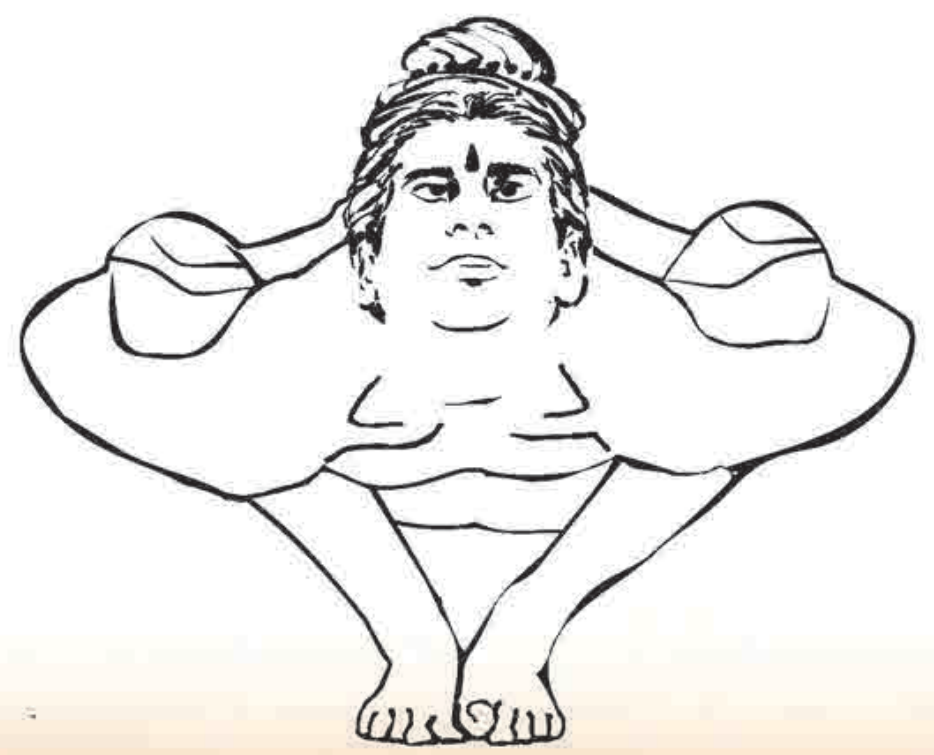
Technique:
- Squat with the feet together, knees apart
- Bring the chest between the legs
- Wrap the arms around the legs below the knee
- Hold the fingers at the back.
- Gaze at the tip of the nose.
relief from chronic fever (dirghajvara).
Kakarupaskandhasana
Seated
Śāstra Pramāṇa - शास्त्र प्रमाण Rudrayamala Tantra 23.112-114
अथ वक्ष्ये काकरूपस्कन्धासनमुत्तमम् ॥ २३.११२॥
कलिपापात् प्रमुच्येत वायवीं वशमानयेत् ।
निजपादद्वयं बद्ध्वा स्कन्धदेशे च साधकः ॥ २३.११३॥
नित्यमेतत् पदद्वन्द्वं भूमौ पुष्टिकरद्वयम् ॥ २३.११४॥
atha vakṣye kākarūpaskandhāsanamuttamam||23.112||
kalipāpāt pramucyeta vāyavīṃ vaśamānayet|
nijapādadvayaṃ baddhavā skandhadeśe ca sādhakaḥ||23.113||
nityametat padadvandvaṃ bhūmau puṣṭikaradvayam||23.114||
for extended verse see end of chapter
Now I shall talk about the supreme kākarūpaskandhāsana;Practising which the sādhaka becomes free of the sins of kaliyuga and masters the vital breath. The sādhaka should tie both his feet and place them on the shoulders (or) place both feet on the ground daily. (23.112, 113, 114)
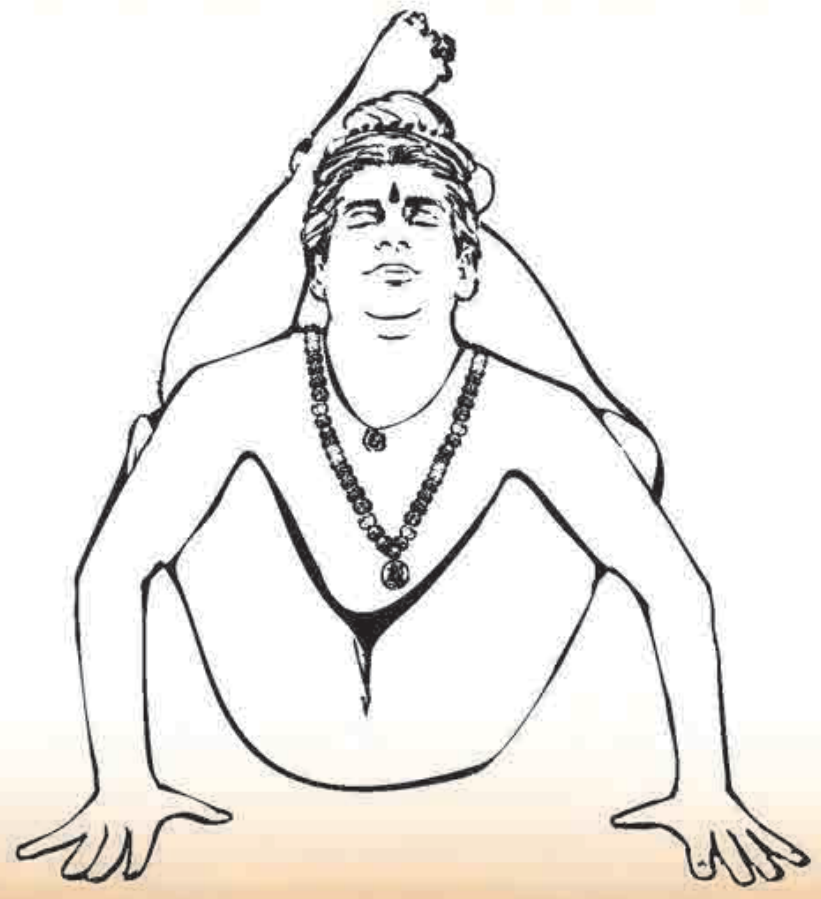
Technique:
- Sit and bring one leg behing the head.
- Bring the other leg behind the head and cross them.
- Tie the legs together with a cloth.
- Use the hands on the ground for support.
Kalyana asana
Seated
Āpta Pramāṇa - आप्त प्रमाण Joga pradīpikā 338-339
कल्यान आसन
दोउ हाथ पगां विचि आने तिनको गोडा नीचै ठानै ।
बहुरि पाखत्या बाहरि ल्यावै पुनह युगति ऐसे ठहरावै ॥
बहुरि मोडि पाठा ने आने करि परिल्याइ काकसी ठानै ।
दोउ पाद अधर करि राखै नासा अग्र दिष्ट को दाखै ॥ ३३८ ॥
kalyāṇa āsana
dou hātha pagāà vici āne tinako goòā nécai öhänai |
bahuri pākhtyä bähari lyävai punaha yugati aisai öhaharävai ||
bahuri moòi päöhä ne äne kari parilyäi käkasé öhänai |
dou päda adhara kari räkhai näsä agra driñöa ko däkhai || 338 ||
for extended verse see end of chapter
Bring both the hands between the legs and place them under the knees, while bringing the hands outside turn in such a way that the finger lock is formed. Both the feet are positioned in the air. Gaze is directed at the tip of the nose.
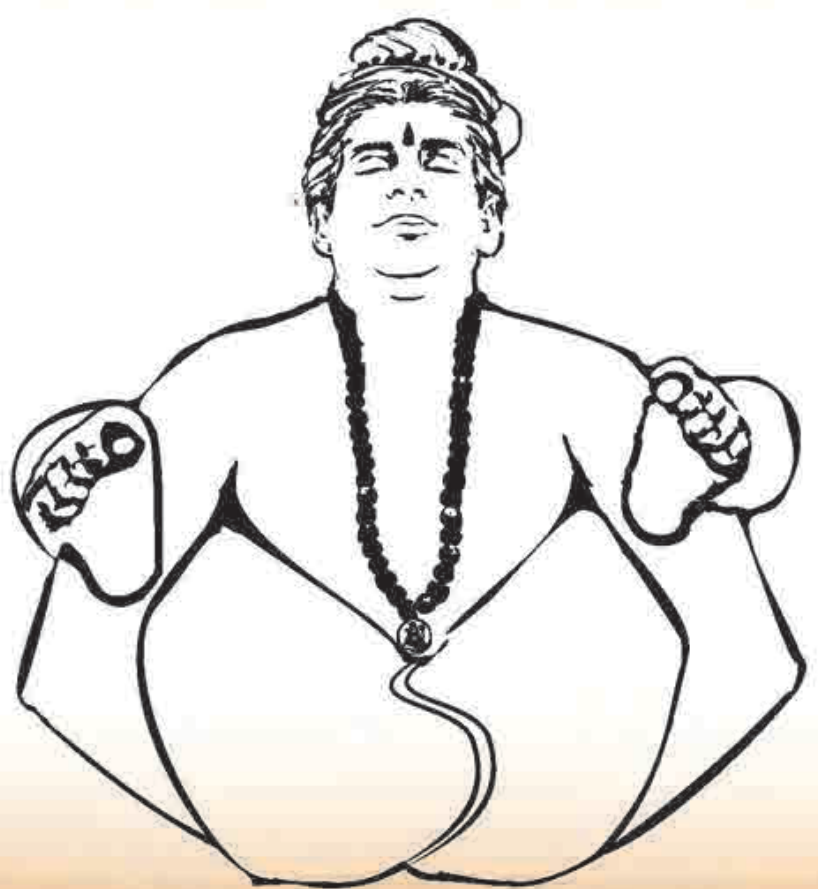
Technique:
- Sit with the legs raised.
- Bring the arms under the knees
- Interlock hands at the back.
- Fix the gaze at the tip of the nose
- Be balance in this position for 30 seconds
Practiced for 7 days along with pranayama body will be purified. One who patiently performs the asana along with pavanadharana gets his body purified.
Kamadahanasana
Seated
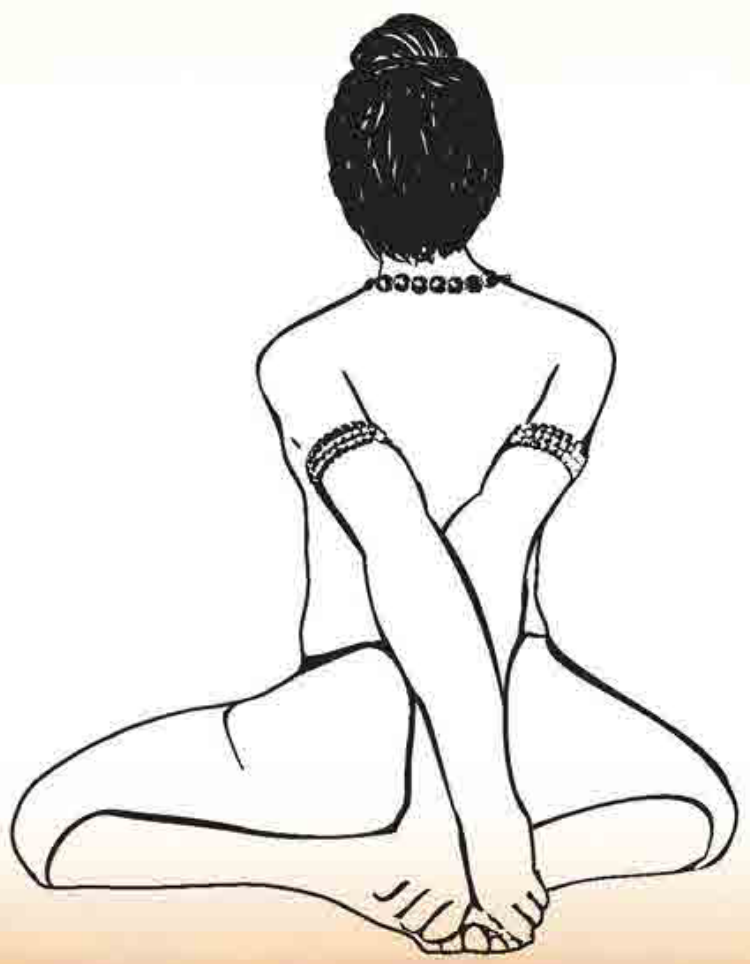
Āpta Pramāṇa - आप्त प्रमाण Hatha Ratnavali III.49
भद्रासनं सुखं स्थाप्य विपरीते तु द्वे पदे ॥
अनेन यदि कुर्याच्चैतत् कामदहनं भवेत् ॥४९॥
bhadräsanaà sukhaà sthäpya viparéte tu dve pade || anena yadi kuryäccaitat kämadahanaà bhavet || 49||
for extended verse see end of chapter
Comfortably adopt bhadrasana and place the toes turned backwards. This posture is kamadahana. 49
Technique:
- Sit with the sole of the feet together.
- Turn the toes backwards and sit on the heels.
- Stay upstraight.
• Opens and stretches the hips, groin, quadriceps, knees, feet and ankles • Improves health of reproductive organs • Releases stress and tensions held in the Mooladhara • Engages the abdominals and strengthens the back • Stimulates kidney and bladder • Stimulates digestion and elimination • Allows the kundalini to flow up the spine
Kaneri pava asana
Āpta Pramāṇa - आप्त प्रमाण Joga Pradipika-259-261
कनेरी -पाव आसन
ग्वालीपाव आसन कह्यो है जैसे याहुमै जाने विधि तैसे ।
दोउ गुलफ माहिला जानो अरु एड्याविचि कहूणी ठानो ॥ २५९ ॥
kaneré -päva äsana gvälépäva äsana kahyo hai jaise yähumaià jäne vidhi taise | dou gulapha mähilä jäno aru eòyävici kahüéé öhäno || 259 ||
for extended verse see end of chapter
Adopt Gvalipava asana, place elbows between heels and ankles, keep both the hands vertically erect and join both the palms and place the fingers on head. Gaze at the nose and adopt Uddiyana. This purifies the body.
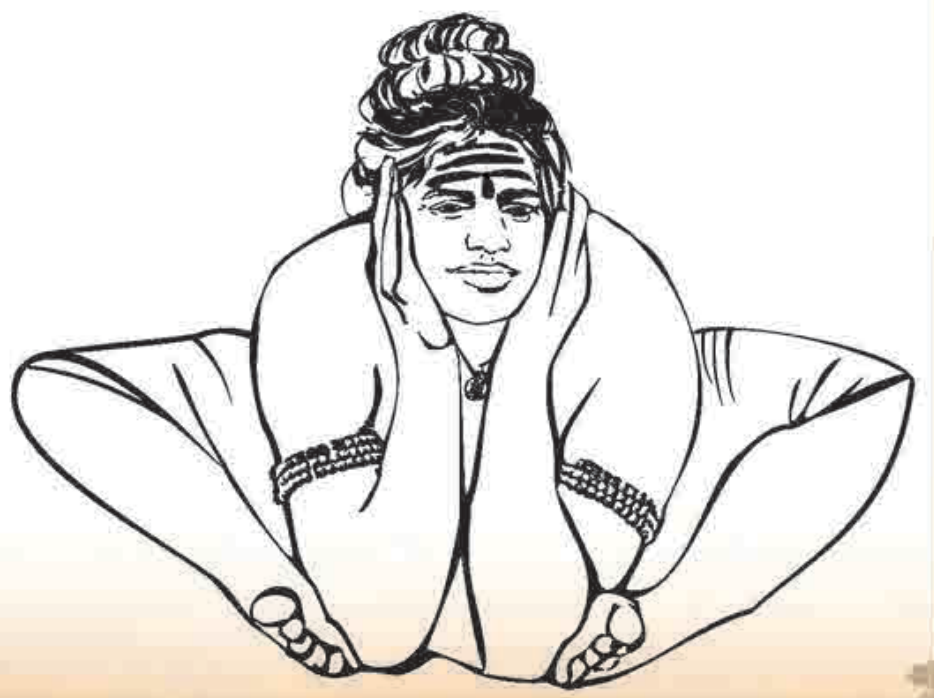
Technique:
- Sit with the soles of the feet together, legs spread apart.
- Place elbows between heels and ankles.
- Keep both the hands vertically erect
- Join both the palms and place the fingers on head.
- Gaze at the nose and adopt Uddiyana.
Body becomes purified.
Kani pava asana
Āpta Pramāṇa - आप्त प्रमाण Yoga-asanamala sacitra 94
कानि - पाव आसन
आसण कौ गुण आषि दुषता होई तो आछी हौई
kāni- pāva āsana āsaëa kau guëa äñi duñatä hoé to äché haué
Place the hands on the ground with comfortable distance between them. Bend the hands at elbows. Raise the legs off the ground and place the knees on the respective elbows and balance the body on palms.
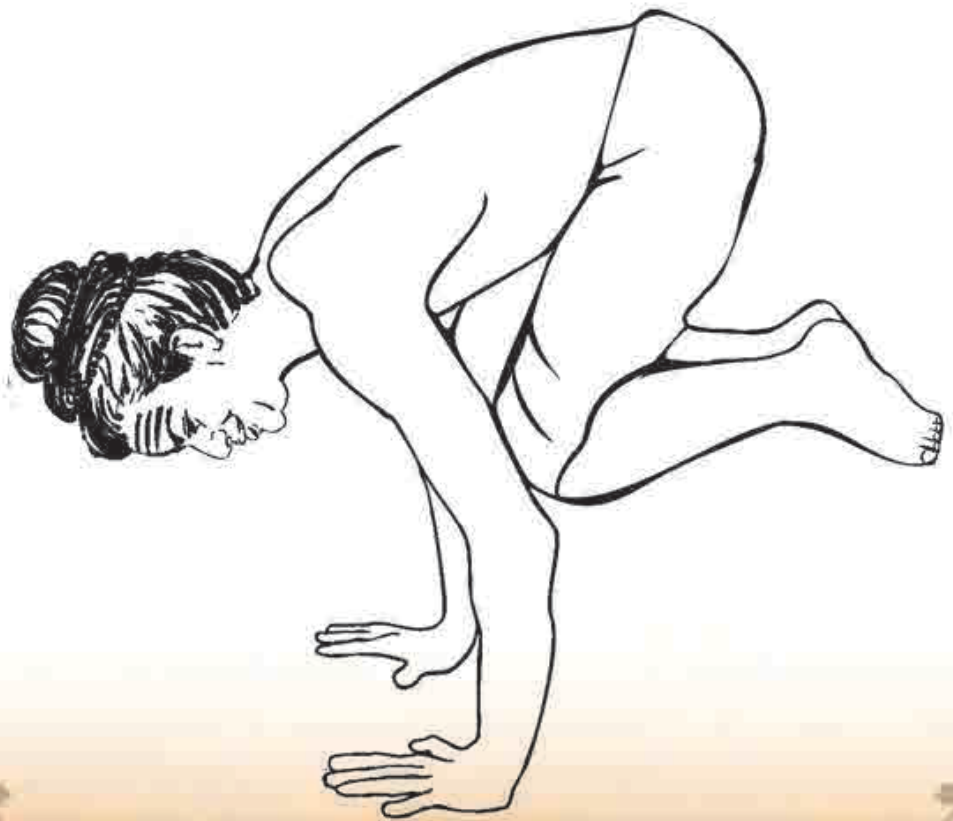
Technique:
- Place the hands on the ground, shoulder distance apart.
- Bend the elbows.
- Place the knees on the respective elbows.
- Raise the legs off the ground and balance the body.
Pain in the eyes is removed.
Kani pava asana is similar to bakasana; the easiest way to experience this asana is to trust in your own power/arm strength, by leaning forward slightly to help left the feet off of the ground. Intense body awareness is produced, and it helps to engage moola and uddiyana banda to ease the pressure/weight on the hands.
Sakshi Pramana Benefits Ma Nithya Nirishvarananda, Miami, Yoga Acharya
Kapali Asana
Inverted
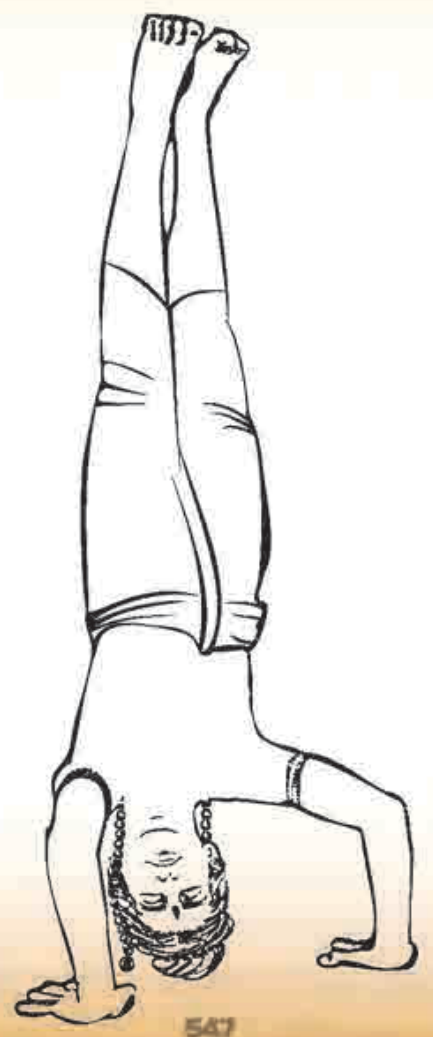
Āpta Pramāṇa - आप्त प्रमाण Yoga-asanamala sacitra 19
सीस सीषा धरति तेकी पग दोउ मिलिवा ऊर्जा कु करै
पगथली आकास दिशि सनमुष राषै दोउ हाथा की हथेली दोऊ
पाषत्या धरती टेकौ दृष्टि नासा अग्रघ
sésa séñä dharati teké paga dou milivä ücä ku karai
pagathalé äkäsa diçi sanamuña räñai do u häthä ké hathelé doü
päñatyä dharaté öekau dåñöi näsä agra
for extended verse see end of chapter
Place the head and both of the hands on the ground and stretch both the legs upside, gaze should be at the tip of the nose.
Apta Additional References YMS 19 .19. Same as pani-mukta-drumasana (YAs-58).
Technique:
- Place the hands on the ground, shoulder width apart
- Bring the head on the ground.
- Stretch both the legs upside.
- Gaze be at the tip of the nose.
• When practiced for 3 months, turn grey hair into black • Improves balance • Strengthens upper body, legs and abdominals • Reverses the effects of gravity and brings energy to the head • Improves overall health • Reduces stress and anxiety • Increase mental power and concentration • Improves self-confidence • Improves cardiovascular, lymphatic, nervous and endocrine systems
Kapilasana
Seated
Āpta Pramāṇa - आप्त प्रमाण Joga Pradipika-III.310-312
उभै पगथली सम ठहरावै तिनकी माहिली कोर मिलावै ।
फणापाणि उकड होय बैठे एडी दो उ जोनि निवैसै ॥ ३१० ॥
गोडा दोउ भूमि लगावै समसरीर नीका ठहरावै ।
हस्त दोउ गोडापरि राखै नासादृष्टि अचल करि दाखै ॥ ३११ ॥
ubhai pagathalé sama öhaharävai tinaké mähilé kora milävai |
phaëäpäëi ukaöa hoya baisai eòé do u joni nivaise || 310 ||
goòä dou bhùmi lagävai samasaréra nékä öhaharävai |
hasta dou goòäpari räkhai näsädriñöi acala kari däkhai || 311 ||
for extended verse see end of chapter
Join the soles together, balancing on toes, sit on two heels pressing perineum. Let the knees touch the ground, balancing the body, place both palms on respective knees. Gaze at the tip of nose. Semen is retained in the body. This asana purifies apana vayu.
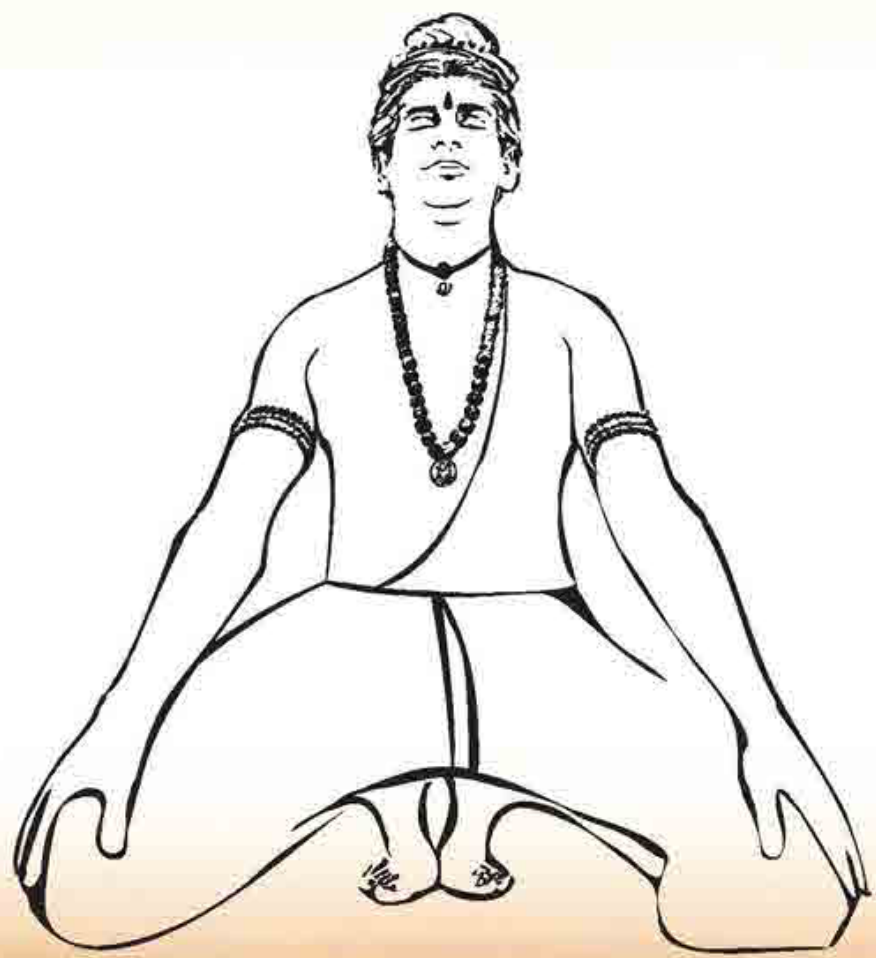
Apta Additional References Yoga-Asanamala Sacitra (ms.)-78, āsana-Yoga-grantha-73, Hathapradipika (ms.) Siddhanta-Muktavalill.96
Technique:
- Join the soles together, balancing on toes.
- Sit on the heels pressing perineum.
- Let the knees touch the ground balancing the body.
- Place both palms on respective knees.
- Gaze at the tip of nose.
Apana Vayu is purified and seminal discharge is controlled.
Keeps spine straight, opens the chest, and produces the feeling of an open flow of energy through the body
Sakshi Pramana Benefits Sunniva Kaurin, Norway
Kapotasana II
Back Bend
Āpta Pramāṇa - आप्त प्रमाण Yoga-rahasya 2.21
मेरुदण्डग्रन्थिदाढ्यसंपिपादयिषुः पुमान् ।
कपोतोष्ट्रासनाभ्यासं कुर्यान्मितहिताशनः ॥
merudaëòagranthidäòhyasampipädayiñuù pumän |
kapotoñöräsanäbhyäsaà kuryänmitahitäçanaù ||
A person desiring to strengthen the back (merudanda) and the knots (granthis) in the body, must practice kapotasana and strasana, along with intake of appropriate and limited food.
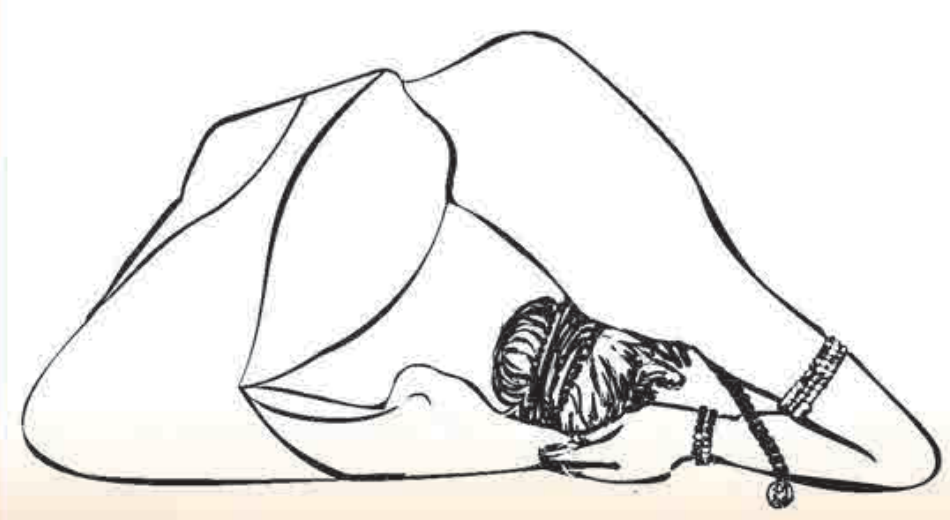
Technique:
- Kneel with the heels by the side of the hips
- Lie on your back.
- Bring the hands below the shoulders, fingers pointing towards the body.
- Raise the body and bend backards.
- Bring the forearms on the ground.
- Put the head in between the feet.
- Hold the toes with hands.
Strengthens the spinal cord and spine
Deeply opens the back, and chest, brings awareness towards deep diaphragm breathing
Sakshī Pramana Benefits Ma Nithya Nirishvarananda, Miami, Yoga Acharya
Kārmukāsana I
Śāstra Pramāṇa - शास्त्र प्रमाण Rudrayamala Tantra 23.36-38
कार्मुकासनमाकृत्य उदरे पूरयेत् सुखम्।
तदा वायुर्वशो याति कालेन सूक्ष्मवायुना ॥२३.३६॥
कृत्वा पद्मासनं मन्त्री वेष्टयित्वा प्रधारयेत्।
करेण दक्षिणोनैव वामपादान्तिकं तटम् ॥२३.३७॥
kārmukāsanamākṛtya udare pūrayet sukham| tadā vāyurvaśo yāti kālena sūkṣmavāyunā ||23.36|| kṛtvā padmāsanaṃ mantrī veṣṭayitvā pradhārayet| kareṇa dakṣiṇonaiva vāmapādāntikaṃ taṭam||23.37||
Doing the kārmukāsana contract the stomach and fill it up easily with breath; Then in due course the subtle vital breath comes under control. (23.36)
After doing padmāsana the one who has perfected the mantras, should take the right hand around the back and hold the toe of the left foot, and repeat it the same way by taking the left hand backwards and holding the toe of the right foot. (23.37)
The number of āsnas get doubled by left and right method in karmukāsana too; With the aid of dual karmukāsanas, take the breath straight in like an arrow. (23.38)
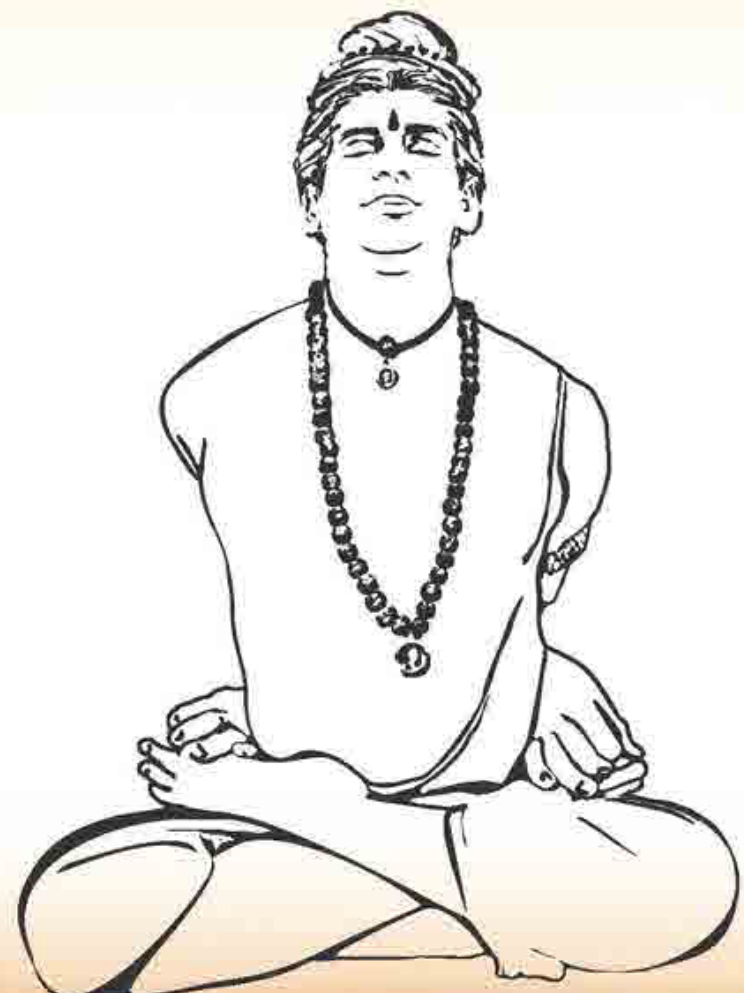
Technique:
- Put the right foot over left thigh and left foot over right thigh.
- Cross the arms behind the back
- Firmly catch hold of the toes with the respective hands.
Kārmukāsana II
Seated
Śāstra Pramāṇa - शास्त्र प्रमाण Rudrayamala Tantra 23.83-86
अथान्यासनमावक्ष्ये योगपूरकरक्षणात्।
कृत्वा पद्मासनं पादा अङ्गुष्ठजङ्घयो स्थितम् ॥२३.८३॥
हस्तमेकं तु जङ्घया कार्मुकं कूर्परोर्द्धकम्।
पद्मासने समाधाय अङ्गुष्ठं परिधावयेत् ॥२३.८४॥
athānyāsanamāvakṣye Yogapūrakarakṣaṇāt|
kṛtvā padmāsanaṃ pādā aṅguṣṭhajaṅghayo sthitam ||23.83 ||
hastamekaṃ tu jaṅghayā kārmukaṃ kūrparorddhakam |
padmāsane samādhāya aṅguṣṭhaṃ paridhāvayet ||23.84||
for extended verse see end of chapter
Now (I shall talk about ) another asana that can help to strengthen the pūraka (prāṇāyama); After doing padmāsana rest both the big toes on the thighs. (23.83)
Place one hand on the thigh and bend the other like a bow and place it on the middle part of the knee-joint keep moving the big toe while sitting in padmāsana. By doing this alternatively by the left and right method, it comes to be known as the kārmukāsana. (23.84, 85)
O Lord! He who does this supreme kārmukāsana; All his ailments disappear and he becomes blissful. (23.86)
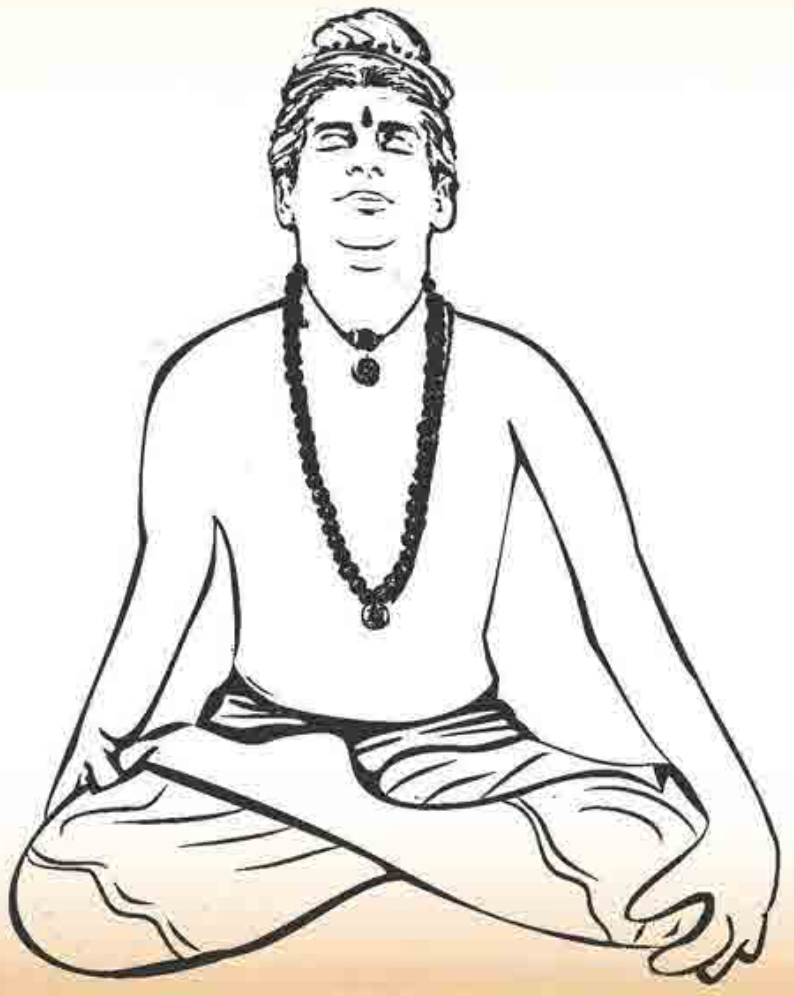
Technique:
- Sit in padmasana with the left leg over the right
- Hold the knee with one hand
- Hold the mid-thigh with the other hand.
- Sit upstraight.
Kaundinyasana
Arm balancing
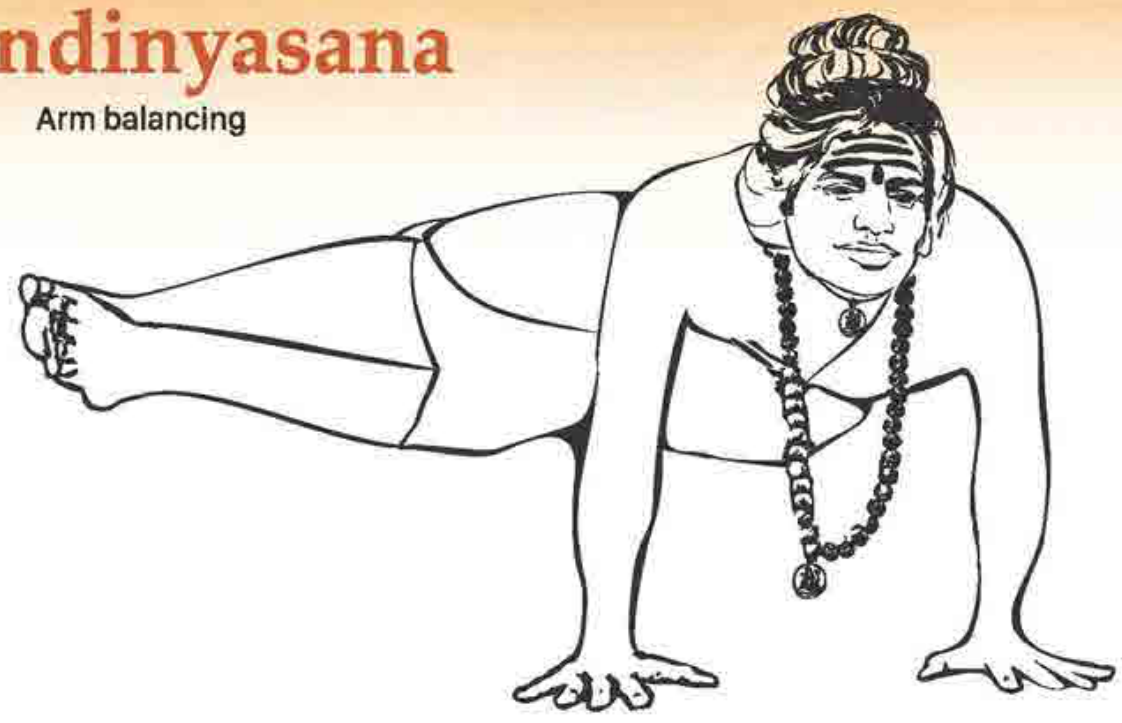
Āpta Pramāṇa - आप्त प्रमाण Nathamuni's Yoga RAHASYA I.50
वासिष्ठमथकौण्डिन्यमूर्ध्वकुक्कुटमेव च ।
अष्टावक्रमथोत्तानमयूरं सेतुबन्धनम् ।
vāsiṣṭhamathakauṇḍinyamūrdhvakukkuṭumeva ca | aṣṭāvakramathottānamayūraṃ setubandhanam |
The list of asanas is as follows- Vasisthasana, kaundinyasana, Urdhvakukkutasana, Astavrakasana, uttanala mayurasana, Setubandhasana,
Technique:
- Place the hands on the ground shoulder width apart.
- Bring both legs to the right against the armpit.
- Bend the elbows and lean over the arms.
- Lift the body and balance on the right elbow.
- Stretch the legs all the way to the right. Repeat on the left.
Khagāsana
Seated
Śāstra Pramāṇa - शास्त्र प्रमाण Rudrayamala Tantra 23.41-42
सव्यापसव्ययुगलं कुक्कुटं ब्रह्मणा कृतम् ।
बद्धं कृत्वा अधःशीर्ष यः करोति खगासनम् ॥ २३.४१ ॥
खगासनप्रसादेन श्रमलोपो भवेद् द्रुतम् ।
पुनः पुनः श्रमादेव विषयश्रमलोपकृत् ॥ २३.४२ ॥
savyāpasavyayugalaṁ kukkuṭaṁ brahmaṇā kṛtam| baddhaṁ kṛtvā adhaḥśīrṣa yaḥ karoti khagāsanam ||23.41|| khagāsanaprasādena śramalopo bhaved drutam| punaḥ punaḥ śramādeva viṣayaśramalopakṛt ||23.42||
By the left and right alternation the number kukutāsanas developed by the Brahman, get doubled; That which is done by binding the lower portion of the head with the hands is called khagāsana. (23.41) By doing the khagāsana tiredness disappears quickly; The fatigue generated by the sense objects also vanishes by doing it again and again. (23.42)
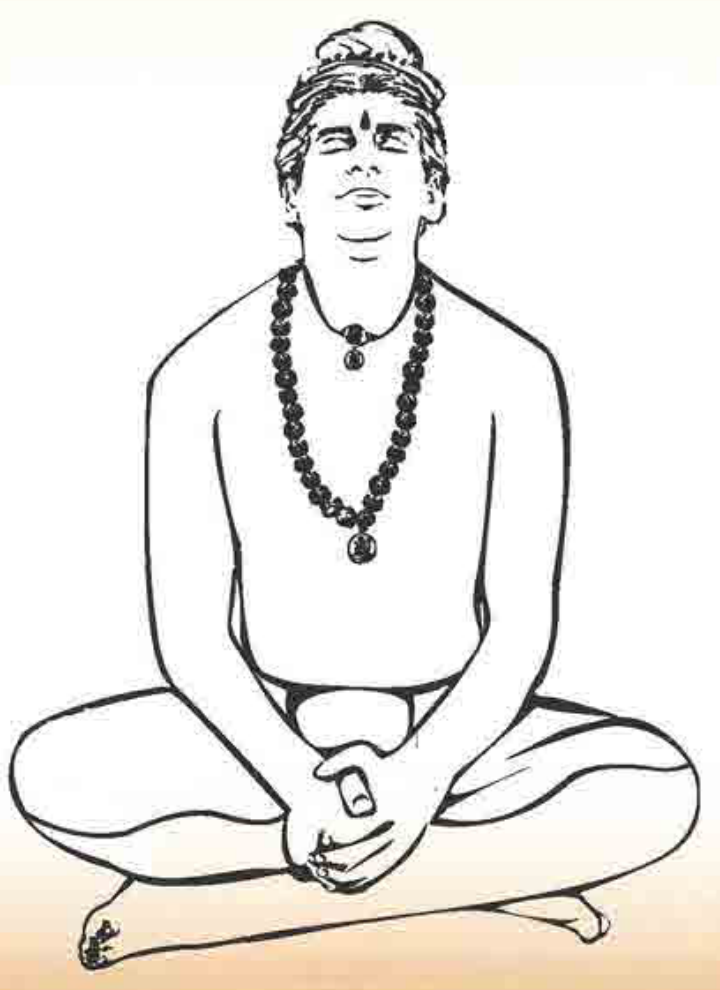
Technique:
- Sit in a comfortable position.
- Hold a cloth with the hands
- Pass the cloth behind the neck
- Sit straight using the cloth for suppport
Khadgasana
Standing
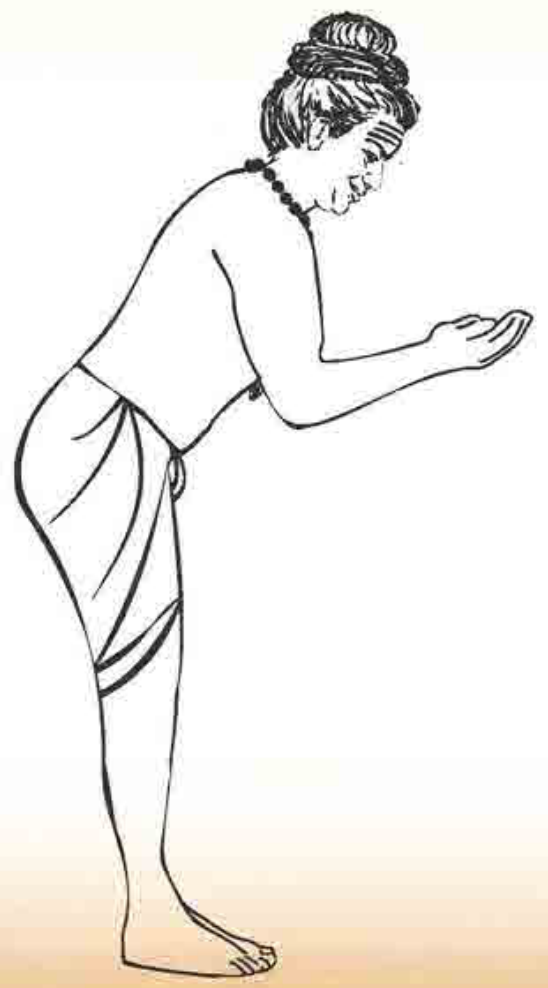
Āpta Pramāṇa - आप्त प्रमाण Kapala-Kurantaka-Hathabhyasa-Paddhati-41
नुब्जां सरत्ःअमासनं कृत्वा पादतलाभ्यं
भूमिमवष्टभ्य उत्तिष्ठेत् खड्गासनं भवति ॥४१॥
nubjāṃ sarathmāsanaṃ kṛtvā pādatalābhyaṃ
bhūmimavaṣṭabhya uttiṣṭhet khaḍḍagāsanaṃ bhavati ||41||
After performing Saratha Asana which involves lying prostrate, get up holding the ground with two soles (of the feet). This is called Khadgasana. 41.
Technique:
- Stand with the feet together.
- Lean forward and extend the arms forward.
Khañjanāsana
Seated
Śāstra Pramāṇa - शास्त्र प्रमाण Rudrayamala Tantra 23.105-106
खञ्जनासनमावक्ष्ये यत्कृत्वा सुस्थिरो भवेत् ॥ २३.१०५॥
पृष्ठे पादद्वयं बद्ध्वा हस्तौ भूमौ प्रधारयेत् ।
भूमौ हस्तद्वयं नाथ पातयित्वानिलं पिबेत् ॥२३.१०६॥
पृष्ठे पादद्वयं बद्ध्वा खञ्जनेन जयी भवेत् ।
khañjanāsanamāvakṣye yatkṛtvā susthiro bhavet ||23.105 || pṛṣṭhe pāddvayaṃ baddhvā hastau bhūmau pradhārayet | bhūmau hastadvayaṃ nātha pātayitvānilam pibet ||23.106|| pṛṣṭhe pāddvayaṃ baddhvā khañjanena jayī bhavet |
Now I shall talk of khañjanāsana doing which one becomes stable; Lock both legs behind the back and place both hands on the floor;Placing both hands on the floor inhale the breath O! Lord. By placing both legs behind the back the sādhaka becomes victorious. (23.105, 106)
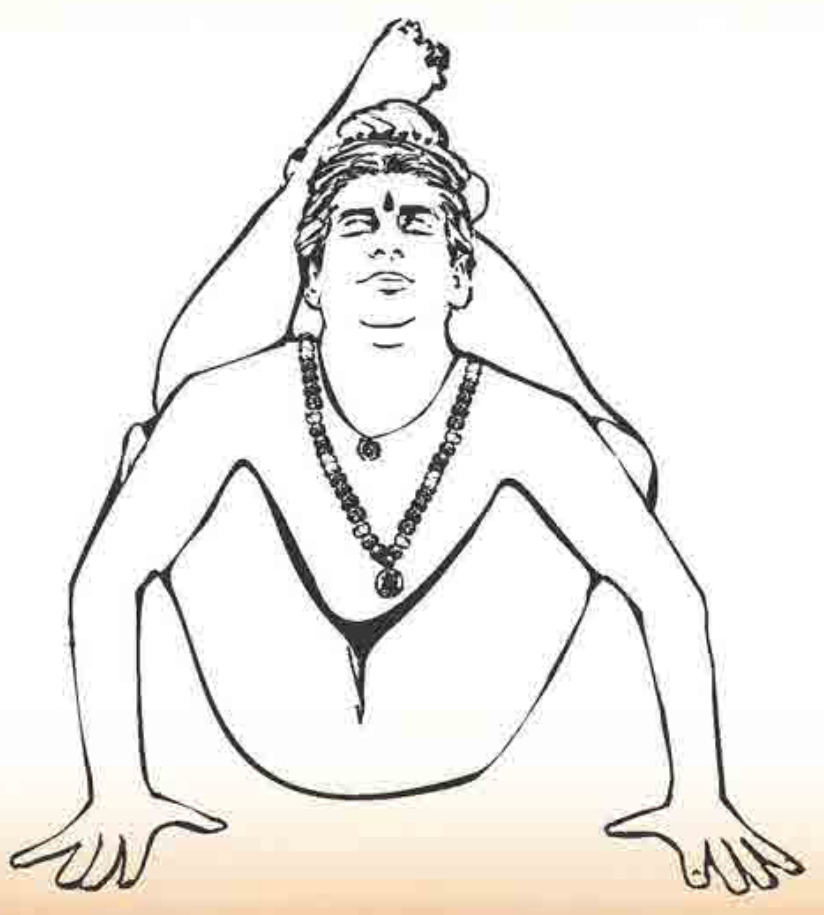
Technique:
- Sit and bring both legs at the back, behind the head
- Cross and lock the feet together
- Place the hands on the ground
Khecara-āsana
Seated
Śāstra Pramāṇa - शास्त्र प्रमाण Rudrayamalam (uttara-tantram) 23.65-64
ध्यायेद्धि चित्पदं भ्रान्तमासनस्थः सुखाय च ।
यदि सर्वाङ्गमुत्तोल्यगगने खेचरासनम् ॥ २३.६४ ॥
महाभेकासनं प्रोक्तं सर्वसिद्धिप्रदायकम् ।
महाविद्यां महामन्त्रं प्राप्नोति जपत्तीह यः ॥ २३.६५॥
dhyāyeddhi citpadaṃ bhrāntamāsanasthaḥ sukhāya ca|
yadi sarvāṅgamuttolyagagane khecarāsanam || 23.64 ||
mahābhekāsanaṃ proktaṃ sarvasiddhipradāyakam |
mahāvidyāṃ mahāmantraṃ prāpnoti japatīha yaḥ ||23.65||
For Bhekāsana Yoga place both the feet facing each other on the chest effortlessly; Then keep both arms on the shoulders around the feet in front. (While this āsana is being done) concentrate on the supreme consciousness looking upwards to attain bliss for the disillusioned one sitting in this āsana. If all the body parts are raised upwards uniformly, it becomes khecarāsana. (23.63, 64)
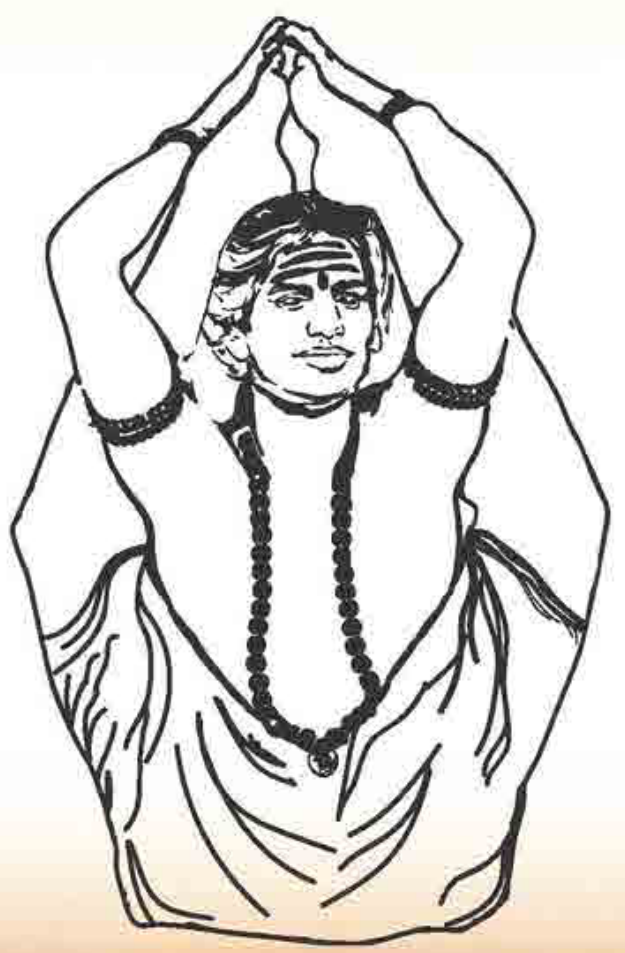
Technique:
- While sitting on floor, raise both legs over the head with the help of hands.
- Hold the toes with hands forming fists.
- Direct the gaze at the tip of nose.
Strengthens back and abdominals. Develops balance, stability and focus. Relaxing to both body and mind.
Koca(ci)ka-asana
Supine
Āpta Pramāṇa - आप्त प्रमाण Joga Pradipika-173-178; Yoga-Asanamala Sacitra (ms.)-21
कोचक आसन
दोउ हाथ छीदासा करे तिनसो उभै ईस पकरै ।
पग उचाय आगा ने आने बहुरि जुगति ऐसीक विधि ठानैं ॥ १७५ ॥
kocaka äsana
dou hätha chédäsä kare tinaso ubhai ésa pakarai |
paga ucäya ägä ne äne bahuri jugati aiséka vidhi öhäneà || 175 ||
Lie on back extending both the hands towards their respective sides. Raise the legs and bring them in front in such a way that both legs are placed on the middle of the body. Gaze between eyebrows. It stops decaying of Dhatu. All diseases including blindness at night can be overcome through the practice of this asana. This asana can be accomplished easily within 15 days.
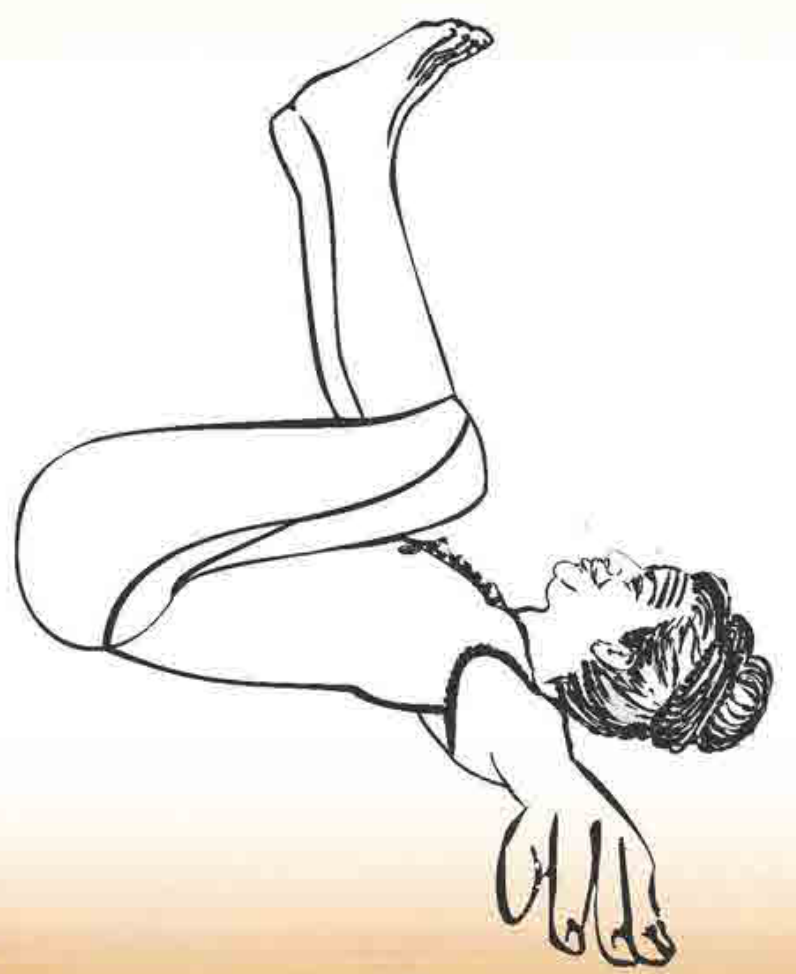
Apta Additional References YMS 21
Technique:
- Lay on back, knees pulled towards the chest, soles of the feet are facing upwards.
- Extend the hands sideward.
- Gaze between eyebrows.
Opens and releases the hips, pelvic and chest... 'It stops the decaying of Dhatu. All diseases including blindness at night can be overcome through the practice of this asana.' (easily 15 days)
Kokilāsana
Supine
Śāstra Pramāṇa - शास्त्र प्रमाण Rudrayamalam (uttara-tantram) 23.101-102
अथान्यदासनं वक्ष्ये येन सिद्धो भवेन्नरः।
अकस्माद् वायुसञ्चारं कोकिलाख्यासनेन च ॥२३.१०१॥
ऊद्धर्वे हस्तद्वयं कृत्वा तदग्रे पादयो सुधीः।
वृद्धाङ्गुष्ठद्वयं नाथ शनैः शनैः प्रकारयेत् ॥२३.१०२॥
athānyadāsanaṁ vakṣye yena siddho bhavennaraḥ|
akasmād vāyusañcāraṁ kokilākhyāsanena ca ||23.101||
ūddharve hastadvayaṁ kṛtvā tadagre pādayo sudhīḥ |
vṛddhāṅguṣṭhadvayaṁ nātha śanaiḥ śanaiḥ prakārayet |23.102||
Now I shall talk about another āsana by which one becomes a siddha; That is called kokilāsana by which the breath gets circulated instantly. (23.101)O Lord! raise both hands and stretch both legs upwards; And hold both the big toes, do this in a slow process. (23.102)Do the padmāsana properly by contracting and resting over the knee-joints.
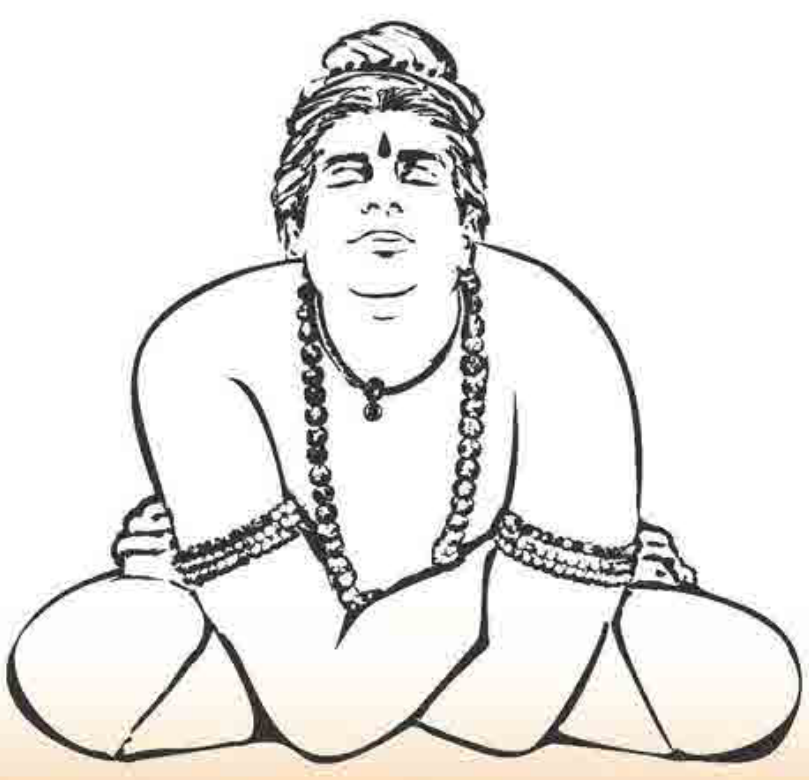
Technique:
- Sit in Padmasana.
- Hold the toes.
- Lean forward and place the elbows on the ground.
Kubasana
Twist
Āpta Pramāṇa - आप्त प्रमाण Yoga Mala sacitra-92
कुबा आसन आसण कौ गुण झोलो जायें
kubä äsana āsaëa kau guëa jholo jäyai
While sitting on the ground, place left foot on the base of the right thigh. Then bend right knee and place the right foot near the left knee in floor. Now pass the left hand outside the right knee wand with left hand catch hold of the right toes. Place right thumb at the left ear and extend the other fingers.
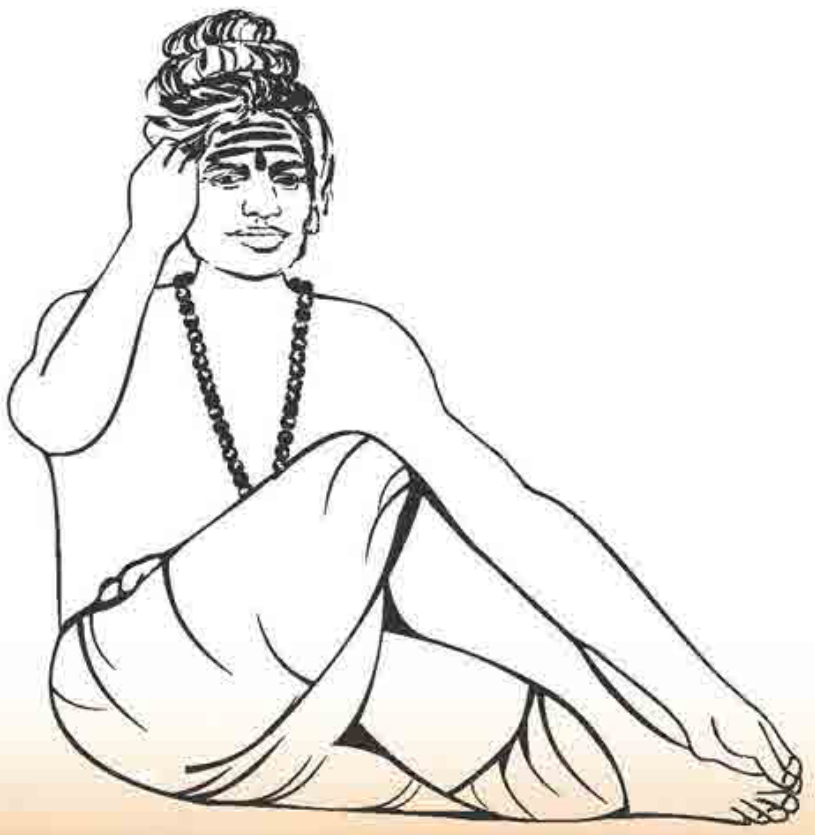
Technique:
- Sit on the floor
- Place the left foot at the base of the right thigh
- Bend the right leg and place the right foot near the left knee.
- Cross the left elbow over the outside of the right knee.
- Hold the right toes with the left hand
- Keep the right thumb on the right ear with other fingers also stretched.
Removes kapha from the body. Removes rheumatic conculsion.
Kubjikasana
Seated
Āpta Pramāṇa - आप्त प्रमाण Hatha sanketa candrika -35
कुब्जिकासन
अथ जठराग्नि - सन्दिनपं - गुल्मप्लीह - शूलहर - कुब्जिकासनम् ।
किञ्चित्तिर्यक् सक्थिमास्थाप्य जानुमूर्ध्वं धृत्वा संपरावर्तनेन ।
कक्षामूले पादमादाय तिष्ठेदेतत् पीठं कुब्जिकं वह्निकारी ॥ ३५ ॥
kubjikāsana
atha jaöharāgni - sandipanaà - gulmapléha - çulahara - kubjikāsanam |
kiïcittiryak sakthimästhäpya jänumürdhva dhåtvä samparävartanena |
kakñamüle pädamädäya tiñöhedetat péöhaà kubjikaà vahnikäré || 35 ||
Fold one knee and keep the foot by the side of the hip. Then turn the other foot upwards and place it in the respective armpit and remain steady.
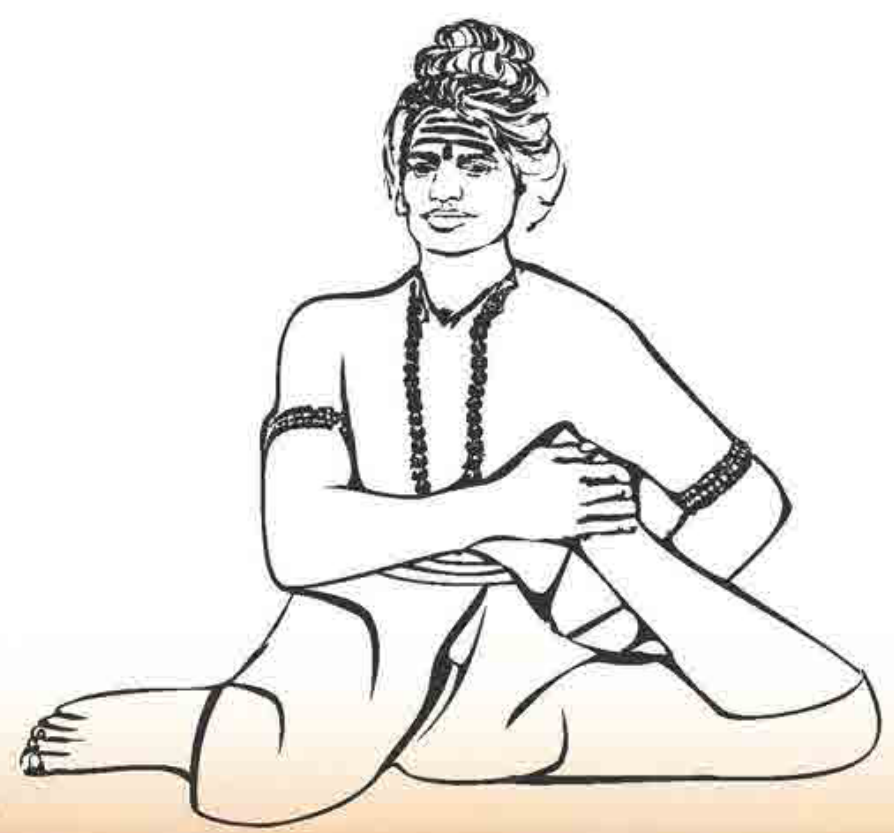
Technique:
- Sit and fold the right leg.
- Keep the foot by the side of the hip.
- Turn the left foot upwards and place it in the armpit.
- Remain steady.
Kukkutasana
Śāstra Pramāṇa - शास्त्र प्रमाण Tri-shikhi-brahmanopanishad (41)
पद्मासनं सुसंस्थाप्य नानूर्वोरन्तरे करौ ।
निवेश्य भूमावातिष्ठेद्व्योमस्थः कुक्कुटासनः ॥ ४१ ॥
padmāsanaṃ susaṃsthāpya nānūrvorantare karau | niveśya bhūmāvātiṣṭhedvyomasthaḥ kukkuṭāsanaḥ || 41 ||
Having well established the Padmasana, he who is firmly grounded on the earth (with his body) suspended inmid-air, his two hands inserted in the inter-space betweenthe knees and the thighs, assumes the Kukkutasana (cock-posture).
Āpta Pramāṇa - आप्त प्रमाण Hatharatnavali 3.73
पद्मासनं सुसंस्थ्यप्य जानूर्वोरन्तरे करौ ॥
निवेश्य भूमौ समस्थ्य व्योमस्थं कुक्कुटासनम् ॥७३॥
padmāsanaṁ susaṁsthyapya jānūrvorantare karau || niveśya bhūmau samsthapya vyomasthaṁ kukkuṭāsanam ||73||
Adopt padmasana, insert the arms between the knees and the thighs and firmly place the palms on the ground and remain aloft. This is known as kukkutasana. 73
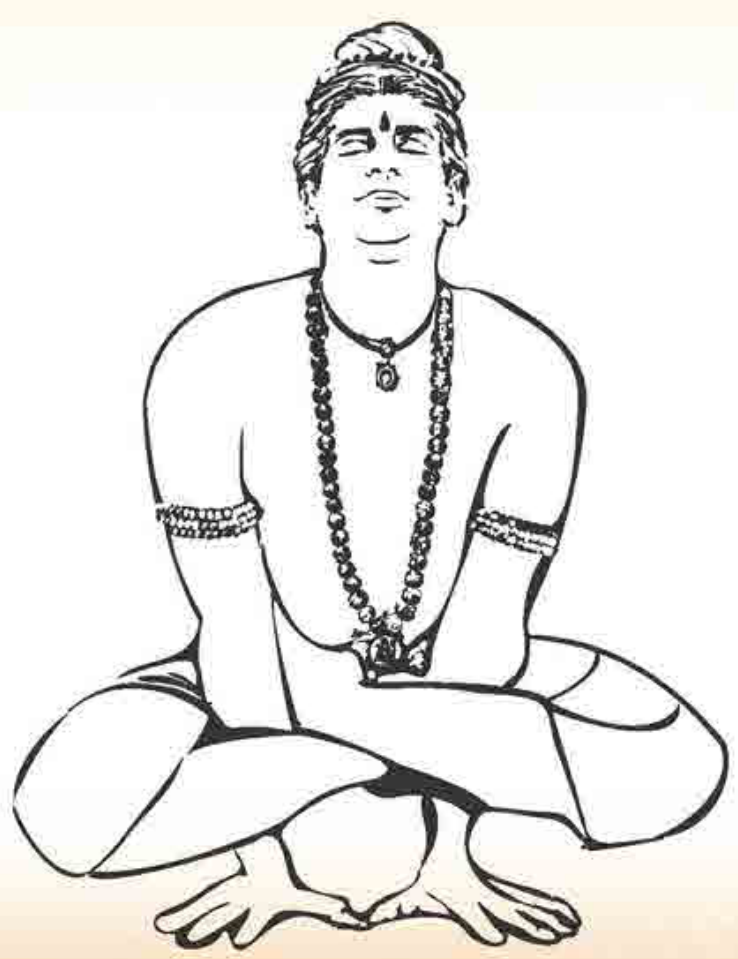
Technique:
- Sit in padmasana.
- Insert the arms between the thighs and the knees
- Place the palms on the ground.
3. Lift the body and balance on the hands.
• Brings stability of mind. Cleanses the morbidities of nadis. • Strengthens the abdominals, hands, wrists, triceps, shoulders and back • Opens the hips and groins • Energizes the body • Strengthens wrists • Creates deeper focus and concentration
Kukkutasana is easiest to perform by slightly leaning forward to bring the weight onto the hands. Engaging moola and uddiyana bandha will help to lift and keep the legs suspended. Once in the air, there is a feeling of weightlessness.
Sakshi Pramana Benefits Ma Nithya Nirishvarananda, Miami, Yoga Acharya
Kurakata asana
Seated
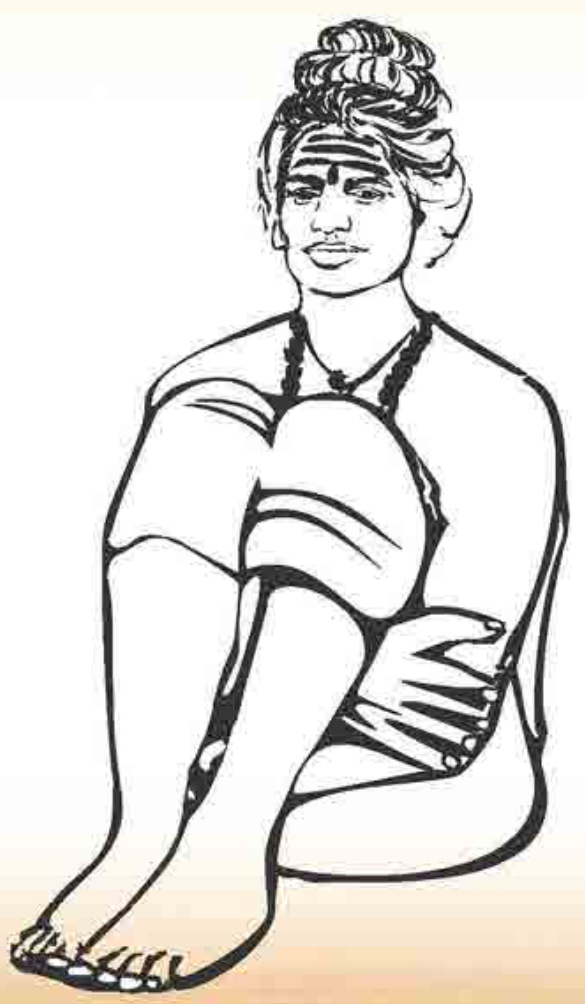
Āpta Pramāṇa - आप्त प्रमाण Joga Pradipika-325-327
कुरकट आसन
दोउ हाथ पग बाहर ल्यावै गोडा नीचे ले ठहरावै ।
आम्हां सांम्हां ऐसे करै आपस में कोहणी पकरै ॥ ३२५ ॥
kurakaöa äsana
dou hätha paga bähara lyävai goòä néce le öhaharävai |
ämhää sämhäm aisai karai äpasa meà kohaëé pakarai || 325 ||
Sitting in squatting position bring both the hands under the knees and catch hold of elbows thus the wrists of both the hands are placed in the cockpit of knees. The gaze is fixed at the tip of nose.
Technique:
- Sitting and bring the knees to the chest.
- Wrap the arms around the thighs under the calves
- Catch hold of the elbows so that the wrists are under the knees.
- The gaze is fixed at the tip of nose.
The accumulation of vayu of various kinds in the extremities (ribs) is warded off within three days. Brings relief from rheumatism (vata) effecting the ribs (or ribcage)
Kurmasana I
Seated
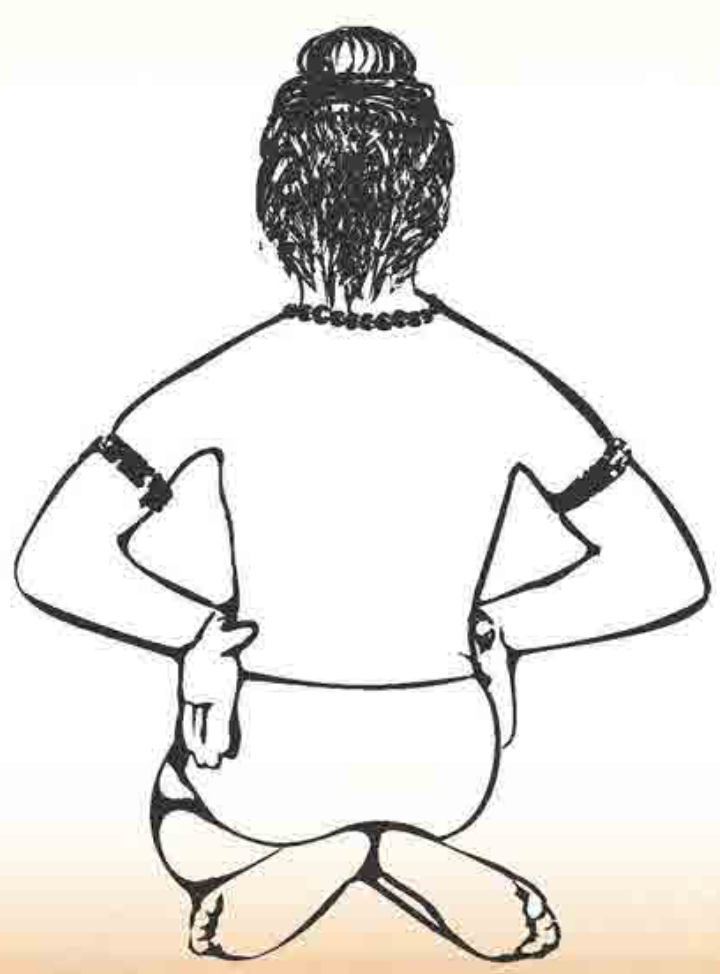
Āpta Pramāṇa - आप्त प्रमाण Hathapradipika of Svatmarama-II-8
गुदं नियम्य गुल्फाभ्यां व्युत्क्रमेण समाहितः ॥
कूर्मासनं भवेदेतदिति योगविदो विदुः ॥ ८॥
gudaṁ niyamya gulphābhyāṁ vyutkrameṇa samāhitaḥ || kūrmāsanaṁ bhavedetaditi Yogavido viduḥ || 8 ||
Having the ankles pressed well under the anus in an everted manner one remains steady. Yoga experts call this kurmasana.
Apta Additional References Gheranda Samhita II.32
Technique:
- Kneel down and sit on the ankles pressed well under the anus
- Keep the feet pointing outwards.
- You may place the hands on the hips and remain steady.
• Strengthens the quadriceps, abdominals, back • Increases flexibility to the feet and ankles • Relieves all 80 types of Vata disorders • Improves digestion, relieves flatulence and constipation • Cures varicose veins • Relieves knee pain
Kurmasana II
Forward Bend
Āpta Pramāṇa - आप्त प्रमाण Joga Pradipika 348-350
प्रथम पदम आसन
को करै गोडासंधि माहिं करि धरै ।
तरफ़ दूसरी कर दोऊ आने कोहण्या उपर संधि ले ठाने ॥ ३४८ ॥
गुदी पछे दोऊ कर ल्यावै तहां आनि कांकसी करावै ।
पुन ललाट भूऊपर धरै नासा अग्र दृष्टि थिर करै ॥ ३४९ ॥
kūrmāsana prathama padama āsanako karai goòäsandhi mähi kari dharai | tarapha dūsaré kara doū äne kohaëyä upara sandhi le öhäne || 348 || gudé pache doū kara lyävai tahäm äni käïkasé karävai | puna laläöa bhü üpara dharai näsä agra driñöi thira karai || 349 ||
for extended verse see end of chapter
First adopt the padmasana, place both hands in the knee joins (and) bring the hands out up to elbows through the other side and take them towards the anus and form the finger lock. The forehead is placed upon the ground. Gaze be fixed at the tip of the nose. Disease are warded off by this.
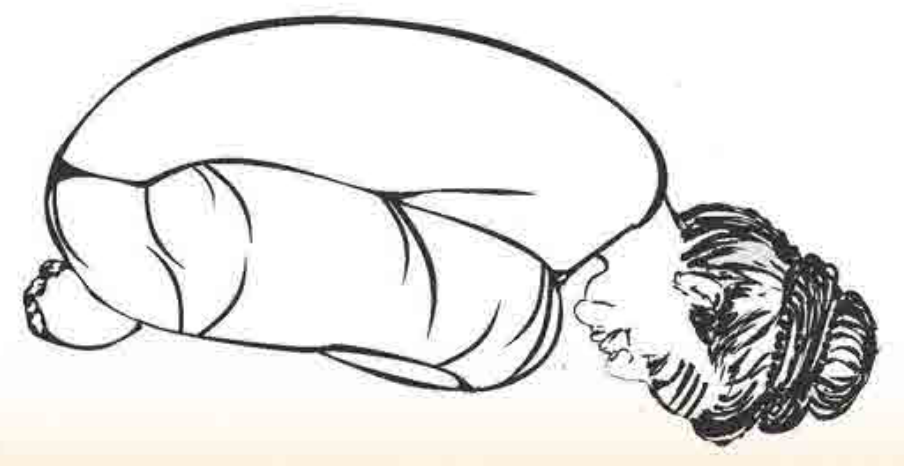
Apta Additional References Hatha-tattva-kaumudi VII.20
Technique:
- Sit in Padmasana and insert the hands in between thighs and calf muscles.
- Pull both hands up to elbows.
- Turn the arms towards back and lock the fingers.
- Bend forward and touch the forehead on the floor.
- Fix the gaze at the tip of the nose.
Opens and stretches the hips. Helps withdrawing sense organs. Cleanses the pores of skin and skin becomes bright. Also change the very course of karma.
Maccandra asana I
(maccendra)
Seated
Āpta Pramāṇa - आप्त प्रमाण Joga Pradipika III.91-94
वाम जंघघपर दछि ठानै वामहस्त पिष्ठि दिस आने ।
बहुरो दछन पद है जोई ताकी नली जु पकरै सोई ॥ ९१ ॥
वाम चरन पुनि ऐसे करै दखिन गोडा ऊपर धरै ।
बहुरौ दखिन हस्त है जोई वाम जंघघ परि आने सोई ॥ ९२ ॥
väma jaìghapara dachi öhänai vämahasta piñöi disa äne |
bahuro dachana pada hai joé täké nalé ju pakarai soé || 91 ||
väma carana puni aisai karai dachina goöä üpara dharai |
bahurau dachina hasta hai joé väma jaìgha pari äne soé || 92 ||
for extended verse see end of chapter
Place right leg on the left thigh. Take the left hand towards the backside and catch hold of right thigh. Place the left leg above the right knee. The right hand should be kept on the left thigh. Gaze should be between the eyebrows. It increases gastric fire. It removes all kinds of disorders. Kundalini becomes straight.
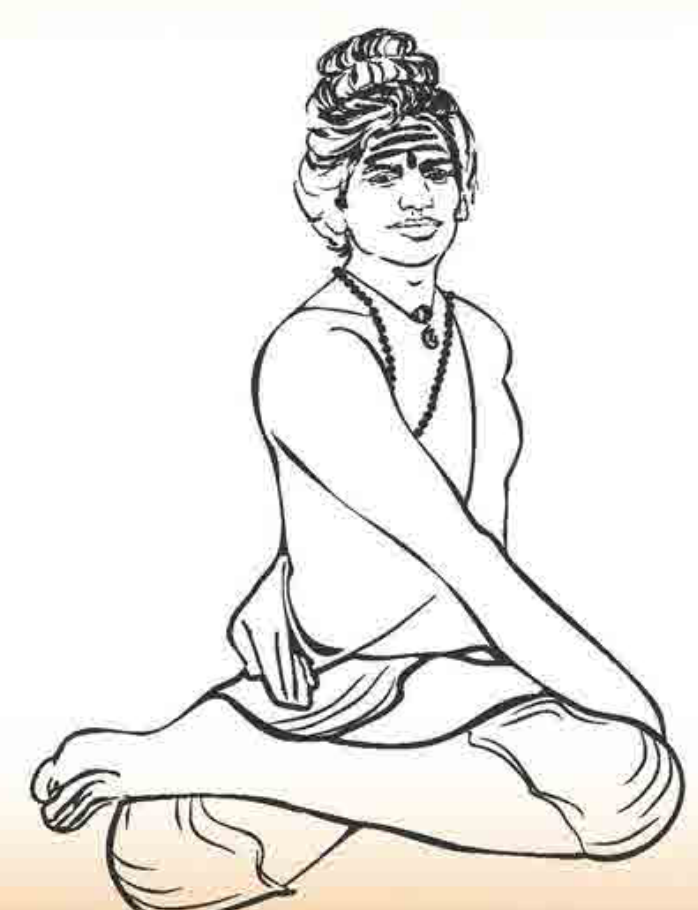
Technique:
- Sit on the ground with the right foot on the left thigh.
- Place the left foot on the right knee.
- Catch the right thigh from the back with the left hand.
- The right hand is placed on the left thigh.
- Fix the gaze between the eyebrows.
Increases the Gastric fire, brings relief from all the diseases. Raises the Kundalini shakti.
Maccandra asana II
(maccindra)
Āpta Pramāṇa - आप्त प्रमाण Joga Pradipika 235-238
मच्छिन्द्र आसन २
प्रथम जीमणी चरण जु जोई वाम जंघघपरि राखै सोई ।
ताकी एडी कङिसों लावै बहुरि जुगति यह ओर करावै ॥ २३५ ॥
maccindra äsana ii
prathama jémaëo caraëa ju joé väma jaìghapari räkhai soé |
täké eòé kaòiso lävai bahuri jugati yaha ora karävai || 235 ||
for extended verse see end of chapter
Place right leg on left thigh. The heel of right leg should be near to the waist. The toes and heel of the left leg should be fixed upon the right knee. The big toes should be caught hold of with both the hands. Place forehead on the ground and chest should touch knees.
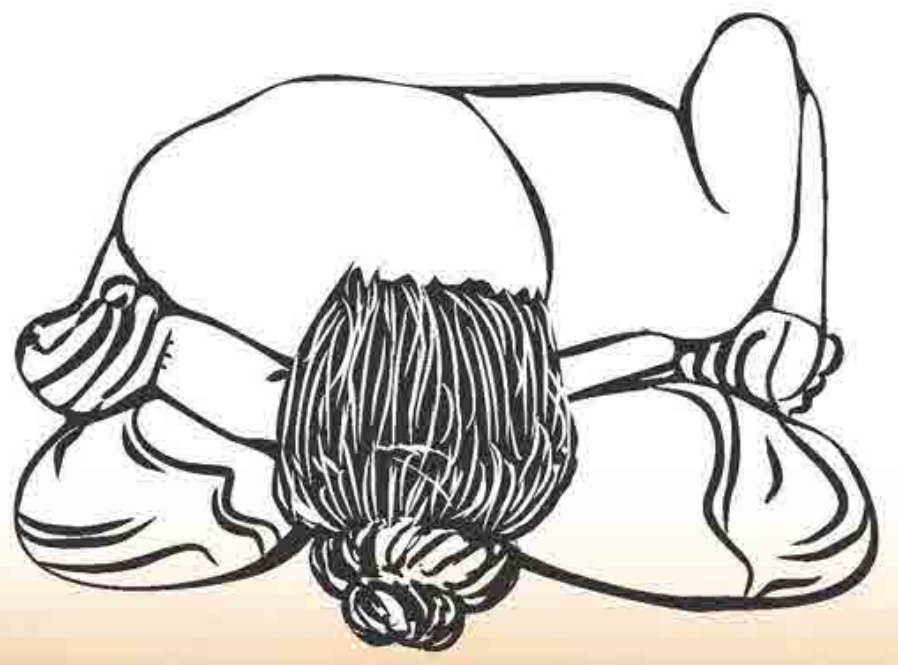
Technique:
- Sit on the ground with the right foot on the left thigh near the waist.
- Place the left foot on the right knee.
- Catch hold of the toes.
- Bend forward and place the forehead on the ground.
- Chest should come over the knees.
Knee pain is releived.
Maccandra asana III
Seated
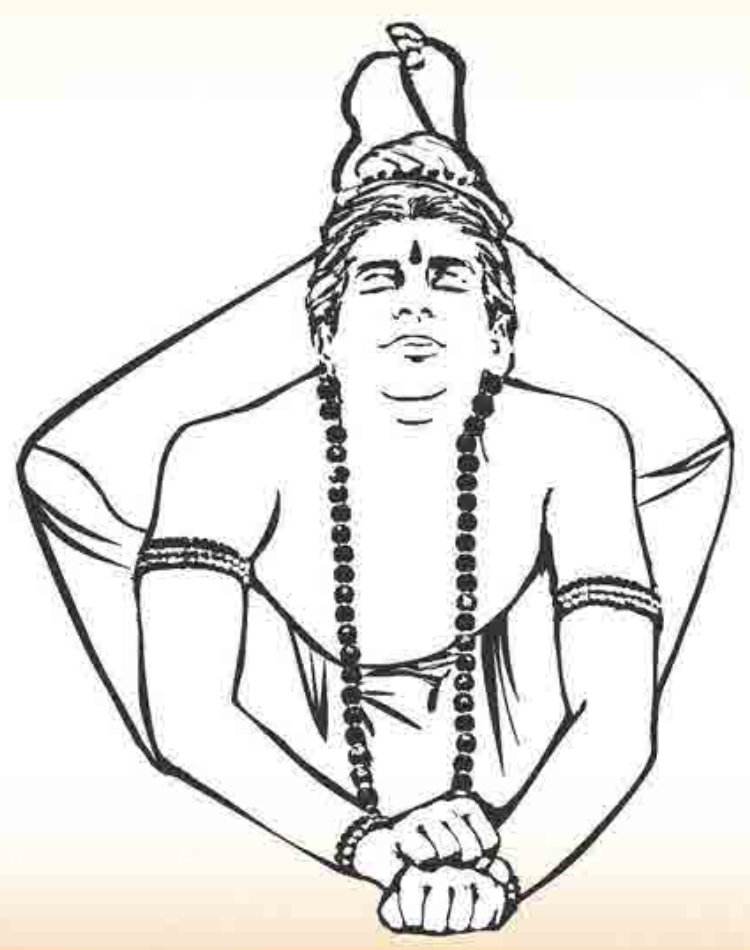
Āpta Pramāṇa - आप्त प्रमाण Yoga Asana Mala Sacitra-28
बैसी करि दोऊ काधै राखै
आटी करी दोऊ हाथ की मुठी नीचै जीमणी ऊपरि राखी
जे यहु आसन साधौ तौ पूरब रोग जाई
ओर जोगेस्र्वुर एक बिधि ओर करै
baisé karí doü kädhai räñai
äöé karé doü hätha ké muöhé nécai jémaëé üpari räñé
je yahu äsana sädhau tau püraba roga jäé
ora jogesvura eka bidhi ora karai
for extended verse see end of chapter
Sit on the floor. Take booth feet over respective shoulders and then cross the feet behind the neck. Form fists of hands and place them one over the other on the ground infront.
Apta Additional References Joga Pradipika-III.65-68
Technique:
- Sit on floor.
- Take both feet over respective shoulders and then cross the feet behind the neck.
- Form fists with the hands
- Place them one over the other on the ground in front.
Offer relief from (premature death)
Mahamudra asana
Forward Bend
Āpta Pramāṇa - आप्त प्रमाण Joga Pradipika 105-106
डावा पगकी एडी जोई सीवनि आनि लगावै सोई ।
दछिन लांबौ जु पसारै तामै आनि कागसी धरै ॥
दोऊ खवा उर्धसो धरै तिनसो फेर अभ्यास जु करे ।
नासाद्रिष्टि आन ठहरवै महामुद्रा नाम सो पावै ॥ १०५ ॥
òävä pagaké eòé joé sévani äni lagävai soé |
dachina lämbau ju pasärai tämai äni kägasé dhärai ||
doü khavä urdhaso dharai tinaso phera abhyäsa ju kare |
näsädriñöi äna öhaharävai mahämudrä näma so pävai || 105 ||
for extended verse see end of chapter
Place the left heel against the perineum, extend the right leg and catch hold the sole with hands by making a finger lock. Repeat it with the other legs. Gaze should be at the tip of the nose. Nothing remains conducive or non-conducive with regard to food. The poison converts in to nectar. Even one can avoid the death. Diseases like T.B., leprosy, tumor, indigestion etc. can be overcome.
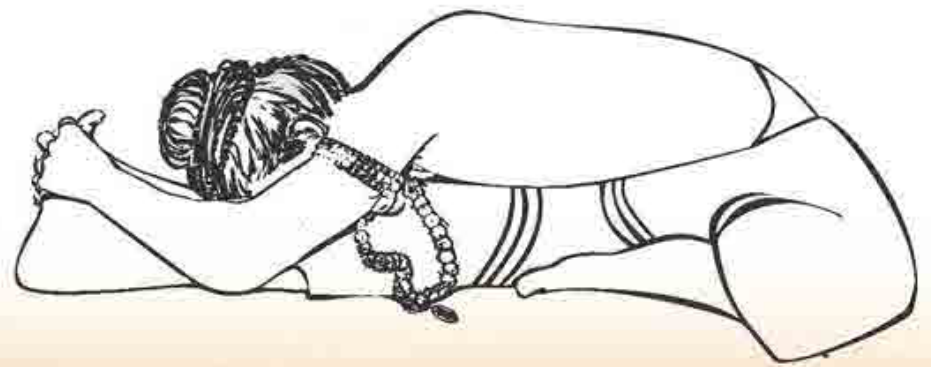
Apta Additional References āsana-Yoga-grantha-59; Yoga-Asanamala Sacitra (ms.)-7. Same as ardhapascimatana, ardhapascimottanasana, janusirasana. It is recommended to consume a liquid gruel made of green mung dal and rice should be taken sip by sip, and after few minutes then start the asana.
Technique:
- Stay on the ground with legs stretched forward
- Bend the left knee and place the heel at the perineum
- Hold the right foot with both hands with fingers interlocked
- Bend the head forward
- Place the chin on the right knee
- Fix your gaze at the nose tip
- Remain in this pose 30 seconds
- Stretches the hamstrings, calves, hips, buttocks, groin, knees
- Strengthens the abdominals and back
- Spontaneously induces all three bandhas
- Lifts and lengthens the spine
- Increases lung capacity
- Expands and opens the diaphragm
- Awakens Kundalini and makes one young
- Cures TB, leprosy, skin disease, glandular enlargement, tumor, indigestion
- Bring integration of the Self
Makada asana
Seated
Āpta Pramāṇa - आप्त प्रमाण Joga Pradipika 123-125
दोऊ पगथली संपुट आने तिनकी पिष्टि भूमिपरि ठानै ।
मूलद्वार एड्यांपरि ल्यावे मूड़ हाथ उचा ठहरावै ॥ १२५ ॥
दोउ करकी अंगुरी जोऊ वतखां आनि लगावै सोऊ ।
खाजि खुजावन की ज्यूं करै त्रिकुटी दृष्टि अचल करि धरै ॥ १२६ ॥
doü pagathalé sampuöa äne tínaké piñöi bhümipari öhänai |
müladvära eòyämpari lyäve müöa hätha ucä öhaharävai || 125 ||
dou karaké aìguré joü vatakhäm äni lagävai soü |
khäji khujävana ké jyüà karai trikuöé driñöi acala kari dharai || 126 ||
for extended verse see end of chapter
Join the two soles in such a way that back side of the feet touches the ground. Place the anus on the heels. Folding the hands raising upto soulder height, put the fingers near the armpit and imitate as if scratching (like a monkey). Gaze between the eyebrows
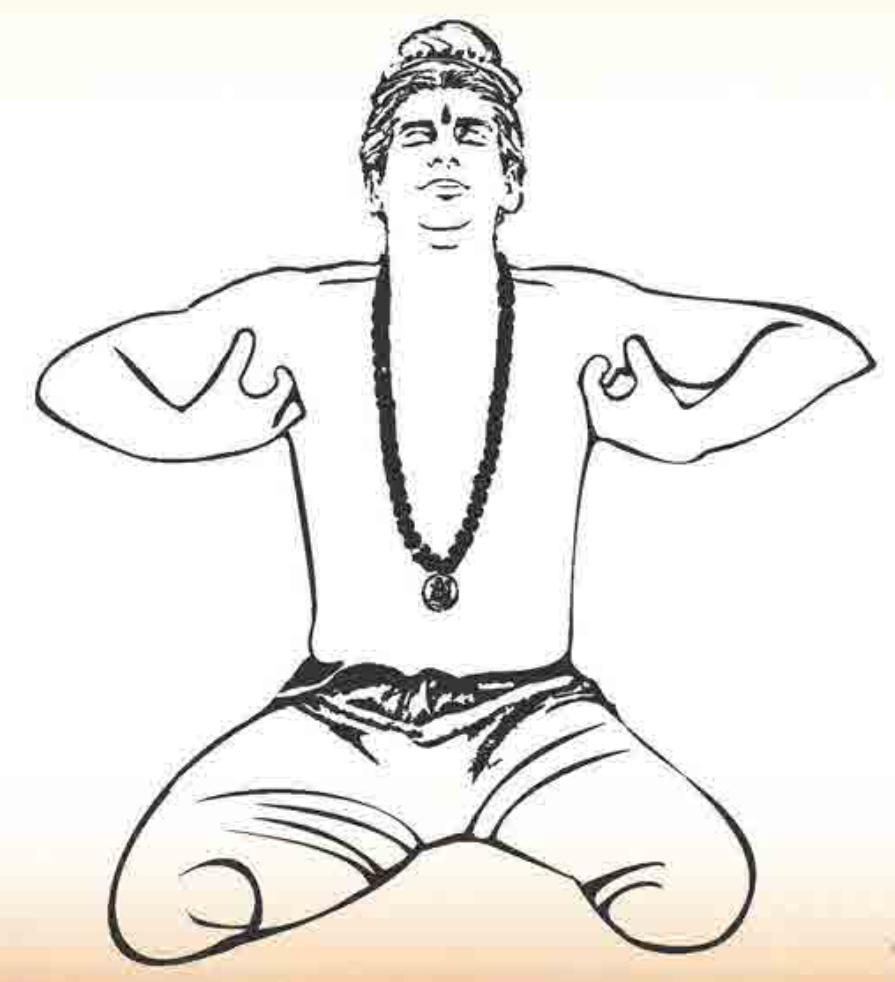
Apta Additional References Joga Pradipika-III.65-68
Technique:
- Bring the feet together touching, on the tip of your toes.
- Bend the knees all the way down to the ground as you sit on heels of feet.
- Raise the arms above the head on inhale
- On the exhale, bend the elbows and bring hands to opposite shoulder.
- Keep spine straight and elbows close to the ears.
Makarasana
Prone
Apta Pramāṇa - आप्त प्रमाण Gheranda Samhita. II.40
अध्यास्यः शेते हृदयं निधाय
भूमौ च पादौ च प्रसार्यमाणौ ।
शिरश्च धृत्वा करदण्डयुग्मे
देहाग्निकारं मकरासनं तत् ॥३९॥
adhyāsyaù çete hådayaà nidhäya
bhümau ca pädau ca prasäryamäëau |
çiraçca dhåtvä karadaëòayugme
dehägnikäraà makaräsanaà tat ||39||
for extended verse see end of chapter
Lie down on the ground face downwards, chest touching the earth, the two legs being stretched: catch the head with two arms. This is makarasana. The increaser of the bodily heat.
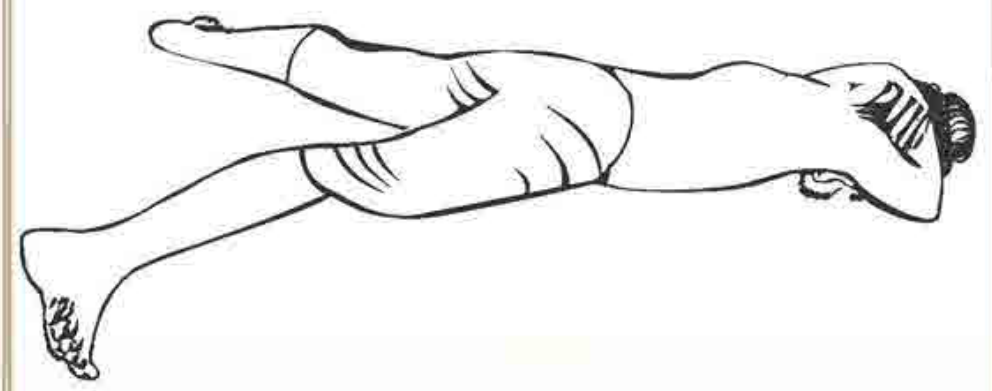
Apta Additional References
YMP-34, BrYS-III.47, HS-asana-47,
Sri-Yoga-kaustubha-18,
Yoga-rahasya of Srinatha-muni-II.19,
NPu-33:114, BrNPu
Technique: Having held the head with the two arms, one lies down on the ground facing downwards, chest touching the ground, two legs spread apart. This posture is called the Makarasana – the Crocodile posture – the increaser of bodily heat.
• Relaxes the whole body • Slows the breathing and heartbeat • Releases lower back compression • Massaging the abdominals • Reduces stress, tension and anxiety • Relieves fatigue, high blood pressure and promotes sleep • Beneficial for asthma and other lung problems • Corrects the acquired wrong process of respiration • Brings your focus inwards • Allows Kundalini to flow and increases bodily fire
Relaxing to the mind and body, brings attention inward Sakshi Pramana Benefits Li Yeen Chow/Singapore/Unemployed
Mandukasana I
Seated
Āpta Pramāṇa - आप्त प्रमाण Gheranda Samhita-II.34
पादतलौ पृष्ठदेशे अङ्गुष्ठे द्वे च संस्पृशेत्
जानुयुग्मं पुरस्कृत्य साधयेन्मण्डुकासनम् ॥३३॥
pādatalau pṛṣṭhadeśe aṅguṣṭhe dve ca saṃspṛśet jānuyugmaṃ puraskṛtya sādhayenmaṇḍukāsanam ||33||
Taking the feet at the back, the toes touching each other, bring the knees forward. This is known as the Mandukasana. 33
Apta Additional References
- Sacitra Cauryayasin Asane-81; KT-II.46p.249, BrYs-III.43, HS-asana-41, Sri-Yoga-kaustubha-57, Yogasanam(sacitra)-39. - it becomes uttanamandukasana, when forearms are crossed behind head.
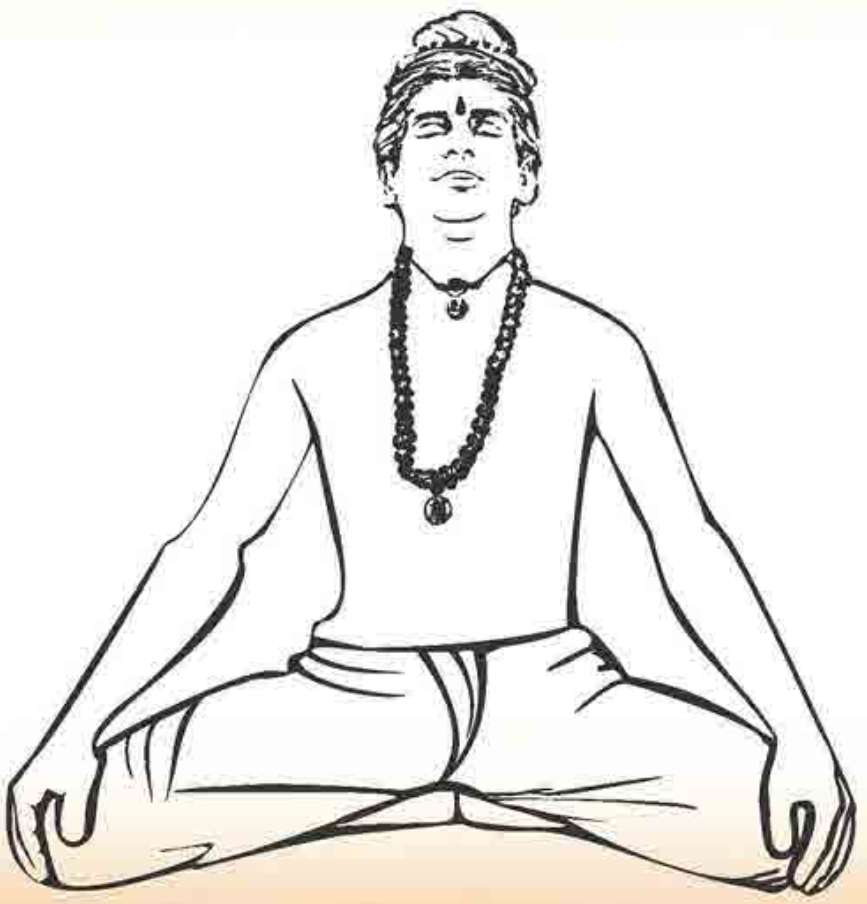
• Stretches quadriceps, groin , inner thighs and knees • Releases tension and stress • Relieves leg pain • Strengthens the abdominals and back muscles • Spontaneously induces the Moola and Uddiyana bandhas • Improves function of digestive and reproductive systems • Improves elimination • Particularly helpful for constipation, diabetes and digestion issues • Relieves stress, anxiety and mild depression • Reduces weight in the thighs, hips and abdomen Relieves menstrual cramps • Allows Kundalini energy to move up the spine • Stimulates the energy in the palms and spreads it into the chest and heart region • The posture creates a complete energy circuit and brings one's focus inwards • Removes diseases of the legsContraindication – Avoid with low back pain, knee or ankle injuries.
Technique:
- Bend the knees and sit with the soles of the feet under the buttocks.
- Keep the big toes together and separate the knees.
- Rest the hands on the knees respectively.
Mandukasana II
Seated
Āpta Pramāṇa - आप्त प्रमाण Hatharatnavali III. 55
पृष्ठं सम्पीड्य गुल्फाभ्यां जान्वंगे सवलयाकृतिः ॥
हस्तौ पादतले क्षिप्तौ मण्डूकं पाददोषहृत् ॥५५ ॥
påñöhaà sampéòya gulphäbhyäà jänvaìge savalayäkåtiù ||
hastau pädatale kñiptau maëòükaà pädadoñahåt ||55||
The ankles are placed under the buttocks. The knees are kept wide apart. Hands are placed under the feet. This is mandukasana, which removes diseases of the legs.
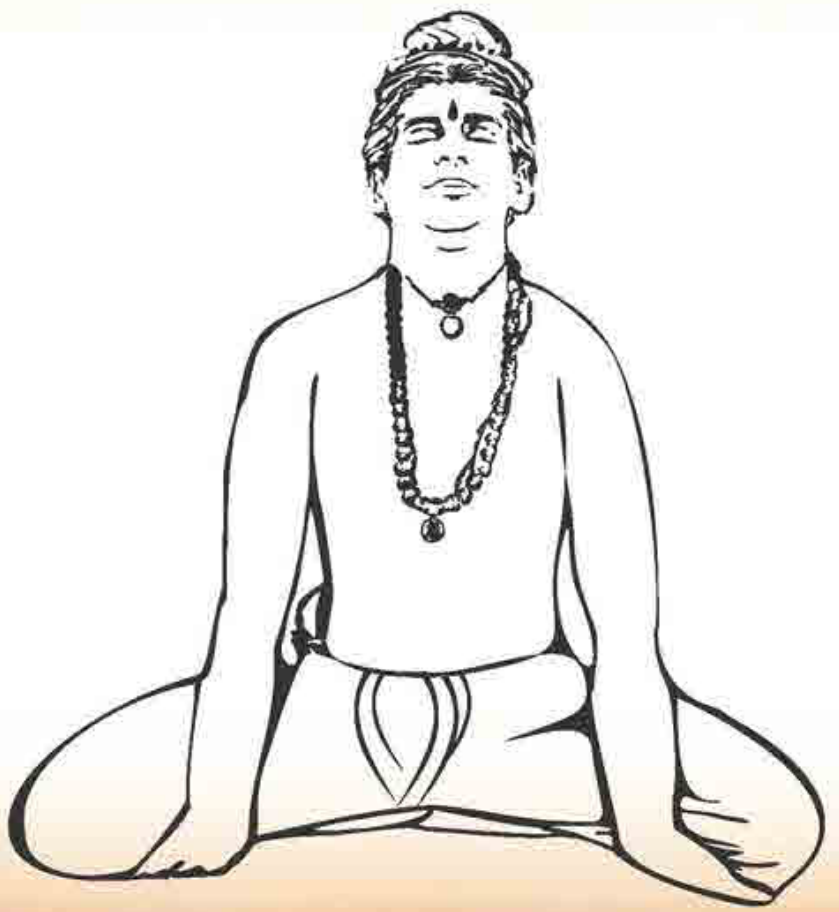
Technique:
- Bend the knees and sit with the soles of the feet under the buttocks.
- Keep the big toes together and separate the knees.
- Hands placed under the knees.
Removes diseases of the legs.
Marīci-āsana
Forward Bend
Āpta Pramāṇa - आप्त प्रमाण Yoga-rahasya of Srinatha-muni-I.51.II.17
उत्तानपादं क्रौञ्चं च मरीचिं वीरभद्रकम् ।
नटराजं त्रिकोणं च सुप्ताङ्गुष्ठप्रसारणे ॥
uttānapādaṃ krauñcaṃ ca marīciṃ vīrabhadrakam | naṭarājaṃ trikoṇaṃ ca suptāṅgaṣṭhaprasāraṇe ||
Uttanapadasana, Krauncasana, Maricyasana, Virabhadrasana, Natarajasana, Trikonasana, Supta padangusthasana and Supta prasarita padangustasana.
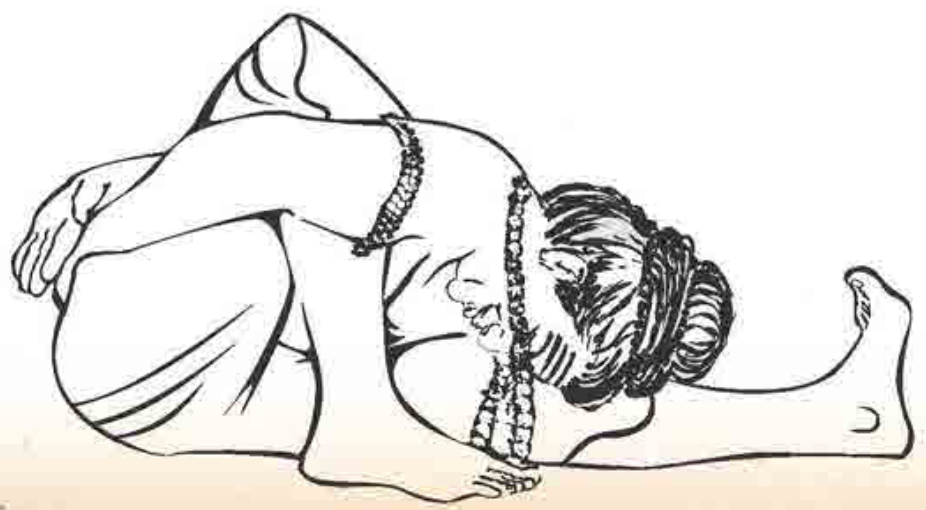
Technique: 1. Sit with legs extended. 2. Bend the right leg and place the right foot close to the groin. Keep the knee raised. 3. Lean forward so that the right arm can surround the raised knee and hold hands at the back. 4. Bend the upper body forward. 5. Touch the head to the knee of the extended leg.
Stretches, opens the hamstring, groin, shoulder and back muscles. Strengthens the abdominals and back. Increases gastric fire and stimulates the digestive processes.
Opening in the chest/shoulders, expansion in the lungs
Sakshi Pramana Benefits Ma Nithya Nirishvarananda, Miami, Yoga Acharya
Masakasana
Supine
Āpta Pramāṇa - आप्त प्रमाण Joga Pradipika-342-343
मसकासन प्रथमे सूधो सैन ही करे वामपाद कांधपरि धरे ।
तापरि दखिन पग को आने दोउ हस्त ऐसी विधि ठाने ॥ ३४२ ॥
तनसो लगिवा नीचा धारै भूपरि सूधा हसत पसारे ।
नासा अग्र दृष्टि ठहरावै याते रोगनास सब पावै ॥ ३४३ ॥
masakäsana prathame südho saina hé kare vämapäda
kändhapari dhare |
täpari dachina paga ko äne dou hasta aisé vidhi öhäne || 342 ||
tanaso lagivä nécä dhärai bhüpari südhä hasata pasäre |
näsä agra driñöi öhaharävai yäte roganäsa saba pävai || 343 ||
First lie supine placing the left leg upon the (left) shoulder, bring the right left upon it (left). While touching the body spread both the hands down on ground. Fix the gaze upon the tip of the nose.
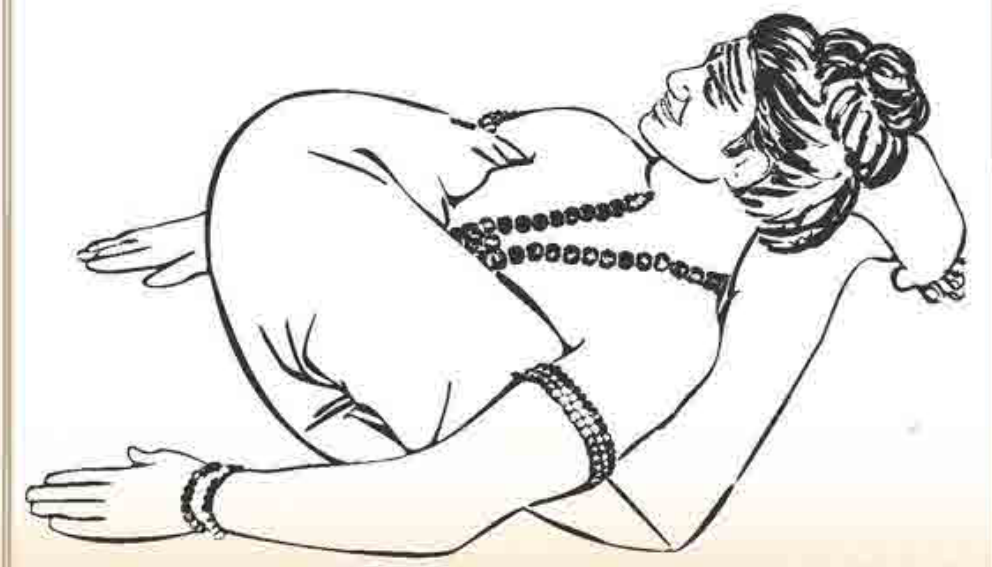
Technique:
- Lie supine and both legs behind the neck, crossed.
- Extend the arms between the legs and place the hands down on ground.
- Fix the gaze upon the tip of the nose.
Helps relieving from all diseases.
Matsya-pīṭhaka
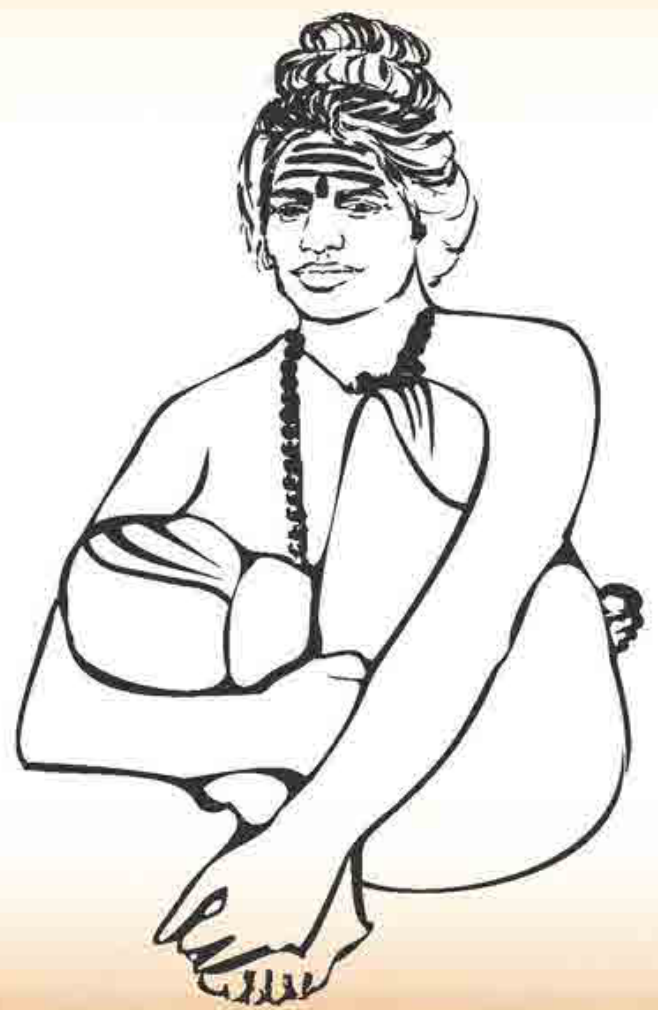
Śāstra Pramāṇa - शास्त्र प्रमाण Tri-shikhi-brahmanopanishad (49)
वामेन वामाङ्गुष्ठं तु गृहीतं मत्स्यपीठकम् ।
योनिं वामेन संपीड्य मेढ्रादुपरि दक्षिणम् ॥ ४९ ॥
vāmena vāmāṅguṣṭhaṃ tu gṛhītaṃ matsyapīṭhakam | yoni vāmena sampīḍya meḍhrādupari dakṣiṇam || 49 ||
Placing the right foot at the root of the left thigh, with the two hands embracing the knees and the left hand grasping the left big toe, is the Matsya-pīṭhaka posture.
Technique:
- Place the right foot at the root of the left thigh.
- Bend the left leg, keeping the knee raised and catch hold of the big toe with the left hand.
- Embrace the legs with the arms.
Matsyasana
Supine
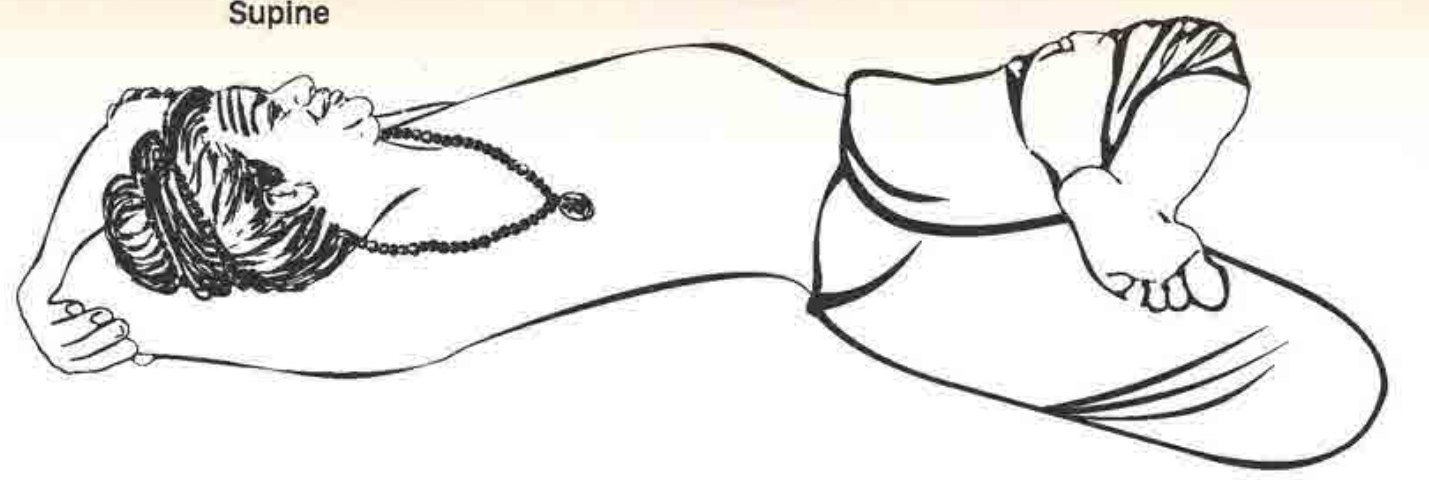
Āpta Pramāṇa - आप्त प्रमाण Gherand Samhita II.21
मुक्तपद्मासनं कृत्वा उत्तानशयनञ्चरेत्।
कूर्पराभ्यां शिरो वेष्ट्य मत्स्यासनन्तु रोगहा॥
muktapadmāsanaà kåtvä uttänaçayannaïcaret | kürparäbhyäà çiroveñöya matsyäsanantu rogahä ||21||
In the position of mukta padmasana bring the elbows of both hands around the head and lie flat on the floor.
Technique:
- Lie on the back.
- Bring the legs in padmasana and extend them on the ground.
- Bring the arms overhead and catch hold of the elbows.
• Destroys all diseases • Relieves constipation. • Corrects rounding shoulders and stretches the neck gently • Stimulates the thyroid and parathyroid glands • Relieves lower back pain during pregnancy • Brings more blood to the thoracic and cervical spine • Helps to relieve asthma and chronic bronchitis and increases lung capacity • Calms the mind and relieve stress, anxiety, depression and tension
Matsyendrasana I
Twist
Āpta Pramāṇa - आप्त प्रमाण Hathapradipika (10 chapters) II.12-13
मत्स्येन्द्रपीठं जठरप्रदीप्तिं प्रचण्डरुग्मण्डलखण्डनास्त्रम्॥
अभ्यासतः कुण्डलिनीप्रबोधं दण्डस्थिरत्वं हि ददाति पुंसाम्॥
matsyendrapīṭhaṁ jaṭharapradīptiṁ
pracaṇḍarugmaṇḍalakhaṇḍanāstram||
abhyāsataḥ kuṇḍalinīprabodhaṁ
daṇḍasthiratvaṁ hi dadāti puṁsām||
The right foot is placed at the root of the left thigh. The left leg is placed by the side of the right knee. Holding left leg by the right hand and twisting the body, one remains steady. This posture comes from Sri matsyendranath. 12Practice of matsyendrasana stimulates the digestive function and works like a weapon to destroy hosts of severe ailments. It also helps arousal of kundalini and gives stability to the spine. 13
Apta Additional References
- Hathapradipika of Svatmarama_I.26, HP(L)_II.12-13, Hathapradipika (ms.) Siddhanta-Muktavali-II.61, A-8, YMP-5, Yuktabhavadeva-VI.19, Yoga-siddhanta-candrika-II.46,p.84, ANI, Hatharatnavali-III. 12, 57-58, KT-II.46,p.243, BrYs-III.27, Hatha-tattva-kaumudi-VII.7-8, Kapala-Kurantaka-Hathabhyasa-Paddhati-105, Yoga-cintamani of Sivananda Sarasvati-76, HSC-78, YRP-4, Sri-Yoga-kaustubha-11), SriTattvaNidhi-32- same as Yogindrapitha and matsyendrapithabandhasana- Cf. kubanasana and banasana.
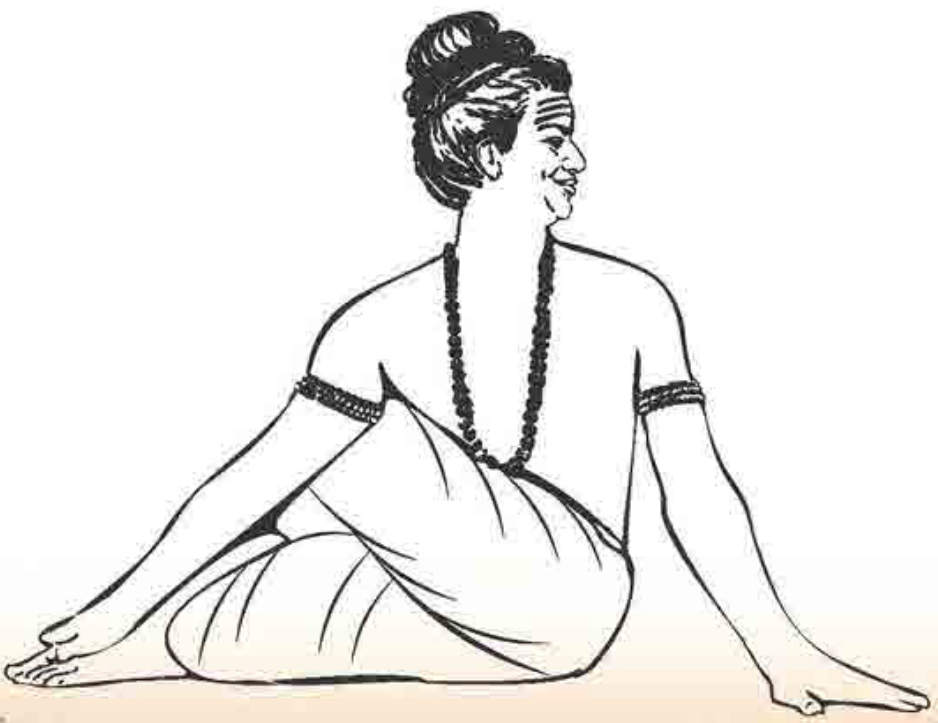
Technique:
- Place the right foot at the root of the left thigh.
- Bring left leg by the side of the right knee.
- Hold left foot by the right hand.
- Keep the left hand on the ground behind the back for support.
- Keep the spine straight and twist to the left.
- Look over the left shoulder.
- Enkindles gastric fire.
- Proves to be highly effective in alleviating host of chronic and complicated diseases.
- Steady practice of this asana awakens kundalini.
- Brings steadiness to spine
- Removing jvara (fever), ama (toxins) and sula (acute pain or colic)
Matsyendrasana II
Twist
Āpta Pramāṇa - आप्त प्रमाण Gheranda Samhita II.22-23
उदरं पश्चिमाभासं कृत्वा तिष्ठति यत्नतः ।
नम्राङ्गं वामपादं हि दक्षजानूपरि न्यसेत् ॥२२॥
तत्र याम्यं कूर्परं च याम्ये करे च वक्त्रकम् ।
भ्रुवोर्मध्ये गतां दृष्टिं पीठं मत्स्येन्द्रमुच्यते ॥२३॥
udaraà paçcimäbhäsaà kåtvä tiñöhati yatnataù |
namräìgaà vämapädaà hi dakñajänüpari nyaset ||22||
tatra yämyaà kürparaà ca yämye kare ca vaktrakam |
bhruvormadhye gatäà dåñöià péöhaà matsyendramucyate ||23||
Keeping the stomach at ease like the back, bend the left leg and place it with care on the right thigh, put the elbow of the right hand on top of it and the face on the palm of right hand. Assuming this posture, fix the gaze in the middle of the forehead. This is Mastyendra posture. 22-23
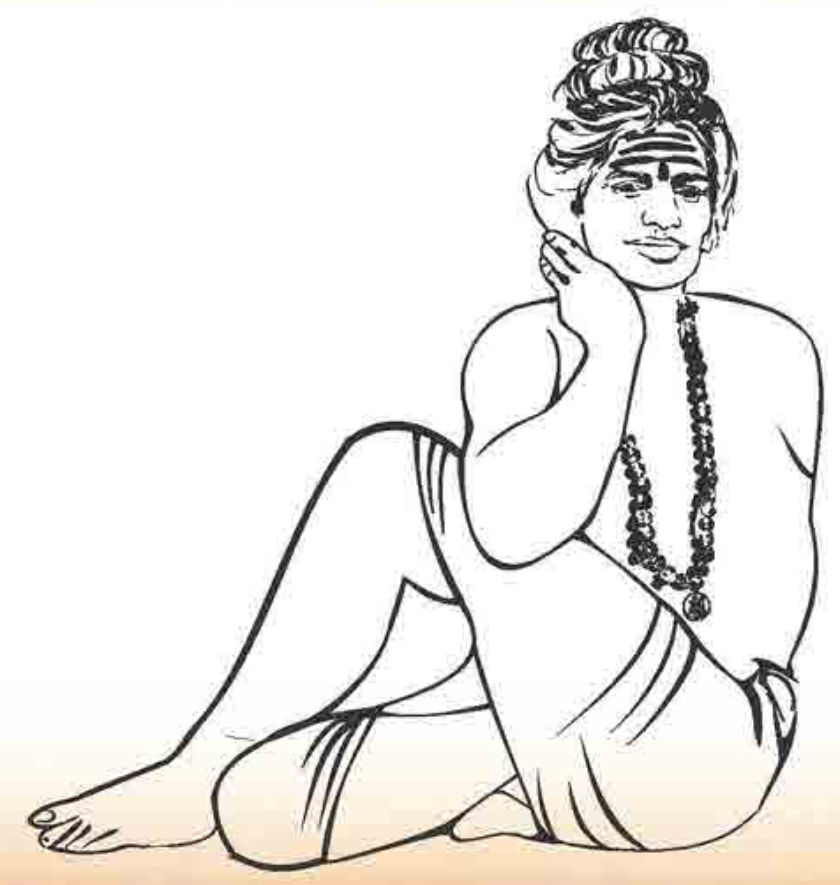
Technique:
- Bend the left knee and place the left foot on the right thigh.
- Put the right elbow on top of left knee.
- Rest the face on the right palm.
- Gaze in the middle of the forehead.
Stimulates internal organs functioning, and helps detoxify the body.
Mayurasana
Arm balancing
Śāstra Pramāṇa - शास्त्र प्रमाण
Rudrayamala Tantra 23.91-92
अथ वक्ष्ये महादेव मयूरासनमुत्तमम् । भूमौ निपात्य हस्तौ द्वौ कूर्परोपरि देहकम् ॥ २३.९१॥
atha vakṣye mahādeva mayūrāsanamuttamam|
bhūmau nipātya hastau dvau kūrparopari dehakam ||23.91||
कूर्परोपरिसंस्थाप्य सर्वदेहं स्थिराशयः।केवलं हस्तयुगलं निपात्य भुवि सुस्थिरः॥२३.९२॥
kūrparoparisaṃsthāpya sarvadehaṃ sthirāśyaḥ|
kevalaṃ hastayugalaṃ nipātya bhuvi susthiraḥ||23.92||
O Mahādeva! Now I shall talk about the supreme mayurāsana; Place both the hands on the floor and rest the body on both the elbows. (23.91)
Rest the entire body on the elbows at the abdomen; Placing only both the hands on the floor, be properly still. (23.92)
Additional Shastra Reference
Tri-shikhi-brahmanopanishad, 47-48, Darshanopanishad, III.10-11, Sandilya upanishad (3, 10-11)
Āpta Pramāṇa - आप्त प्रमाण
Hatharanavali of Srinivasayogi 3.42
घरमवस्तभ्य करद्वयेनतत्कुर्परे स्थपितनभिपर्स्वह् ॥
उच्चसनो दन्दवदुत्थितह् क्षेमयुरमेतत् प्रवदन्ति पीठम् ॥ ४२॥
haramavastabhya karadvayenatatkurpare sthapitanabhiparsvah ||
uccasano dandavadutthitah khemayurametat pravadanti pitham ||42||
The two palms are place on the ground. Elbows are placed on the respective sides of the navel and the body is lifted in the air like a horizontal stick. This is known as mayura-pitha.
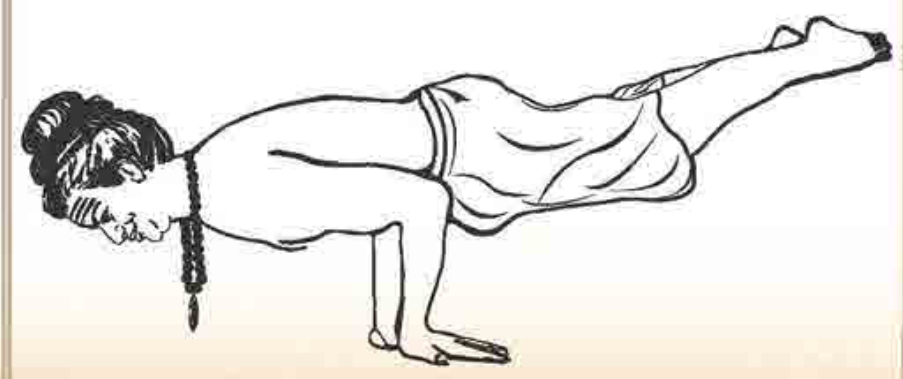
Technique:
- Kneel with knees apart.
- Place the palms on the ground fingers pointing backards.
- Lean forward and place the elbows on the respective sides of the navel.
- Lean over the arms and lift the legs like a horizontal stick.
- Balance in this posture with the chin and chest slightly up.
- Stimulates digestive organs and increases the metabolic process
- Useful for constipation, flatulence, diabetes, kidney, spleen, sluggish liver
- Balances the endocrine systemBalances all three doshas
- Strengthens all muscles of the body
- Stimulates detoxification process and clears skin conditions
- Awakens Kundalini energy
- Stimulates blood circulation, purifies the blood, and purifies the body.
- It enhances the efficacy of the internal organs and harmonizes the glands of the endocrine system. Increase whole body strength.
Increases strength in the arms, core, legs; gives feeling of lightness, powerfulness
Sakshi Pramana Benefits Sunniva Kaurin, Norway
Midakipava asana I
Forward Bend
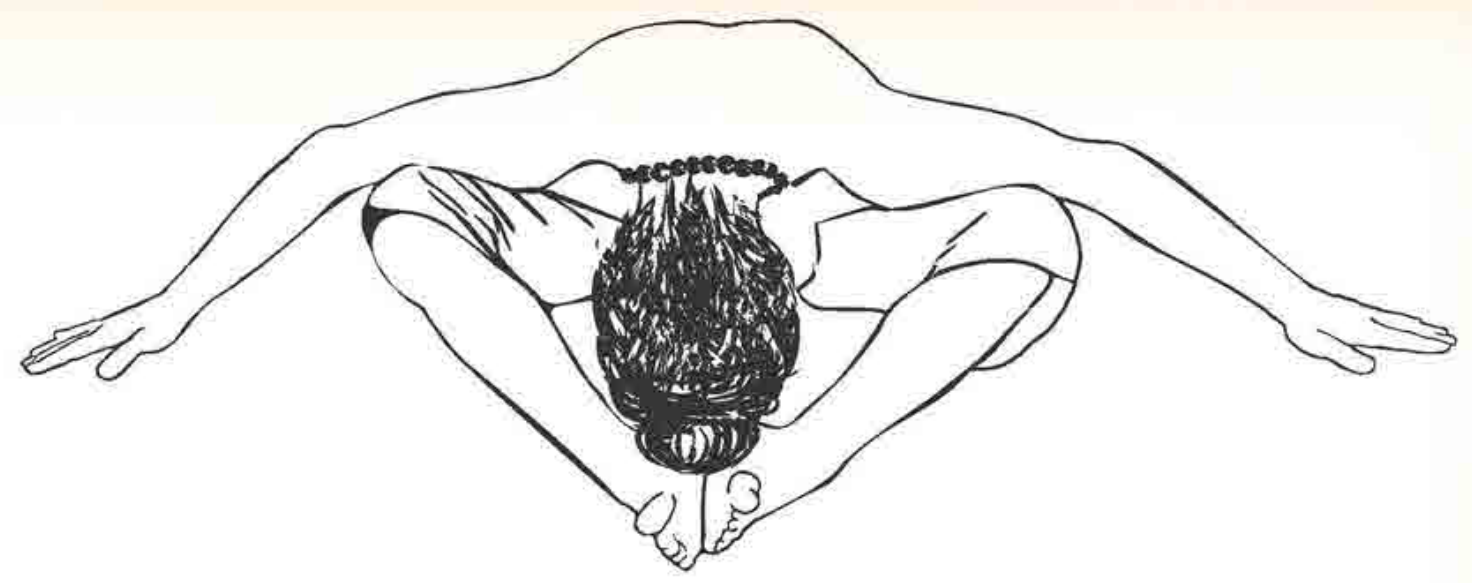
Āpta Pramāṇa - आप्त प्रमाण Yoga-Asanamala Sacitra 61
पूरब बिधि परि पगथली संपुट षोल येडी मिली राषै
येडद्यास्यू माहिली कानी अगूल दो आतरै लिलाट धरती लगावै
हाथ दोऊ गोडा उपरि लगावा अडवाइरछा परा पसारै
pūraba bidhi pari pagathalé sampüöa ñola yeòé milé räñai yeòyäsyü mähilé käné agüla do ätarai liläöa dharaté lagävai hätha doü goòä upari lagävä aòaväirachä parä pasärai
*for extended verse see end of chapter
Sit with legs extended. Close two heels together while keeping toes apart. Knees are spread sideward. Lower the body forward to touch the forehead on ground near the heels. Spread hands sideward over knees and place palms on ground. Gaze is fixed at the nose.
Apta Additional References JP.265-267; AYG-46. Similar to asthi-pava-asana illustrated in NS-72
Technique:
- Sit with the heels together while keeping the toes apart.
- Knees are spread sideways.
- Bend forward and bring the forehead to the ground near the heels.
- Spread the hands sideward over the knees and place the palms on the ground.
- Gaze at the nose.
Improves and facilitates the flow of the five secondary vayus.
Midakipava asana II
Forward Bend
Āpta Pramāṇa - आप्त प्रमाण Yoga-Asanamala sacitra 101-102
आसण कौ गुण गुलमै बाय जाई
āsaëa kau úuëa gulamai bäya jäé
Sitting on the ground, bend both legs at the knees and place the heels under the bottoms. Interlock the fingers and put them on ground at one side of the body. Bend the head forward.
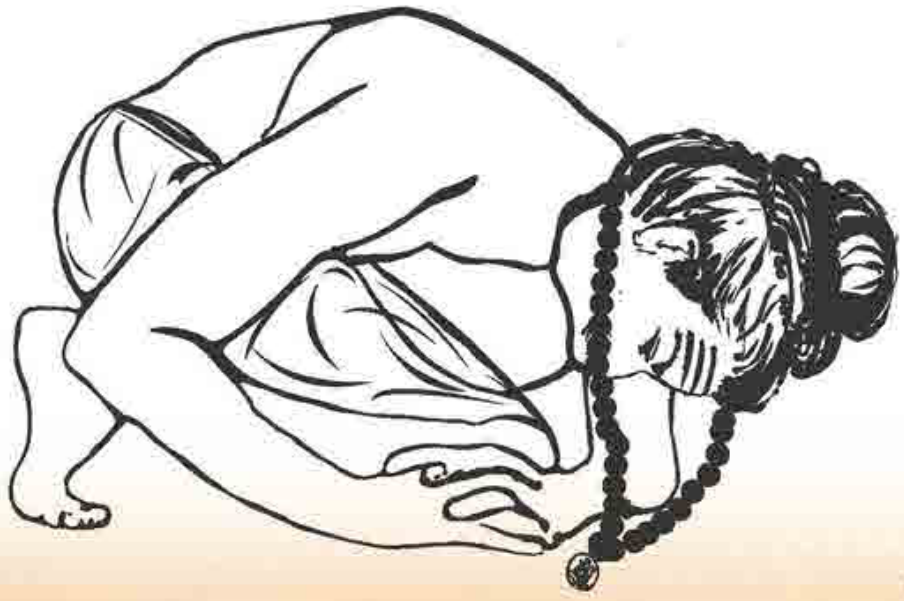
Technique:
- Kneel down and keep the feet bent, toes on the ground.
- Sit on the heels.
- Interlock the fingers and put them on ground at one side of the body.
- Bend the head forward.
Beneficial for gulma vayu.
Mrtya-bhanjika-asana
Supine
Āpta Pramāṇa - आप्त प्रमाण Joga Pradipika 152-155
मृत्यु-भंजक आसन
प्रथम सेन सूधो होय ठानै पग उचाय आगा नै आनै ।
बहुर पगथली को यो राखै कोर वारली या विधि दाखै ॥ १५४ ॥
måtya-bhaïjaka äsana
prathama sena südho hoya öhänai paga ucäya ägä nai änai |
bahura pagathalé ko yo räkhai kora väralé yä vidhi däkhai || 154 ||
Lying on back raise the legs upwards and keep the feet in such a way on the respective sides of the ear that fingers of the feet are visible. Grasp the feet from the outside firmly by taking both the palms behind the back. Head (back side) should remain on the ground. Gaze should be on tip of the nose and maintain silence. It removes all types of diseases. It immediately ensues samadhi.
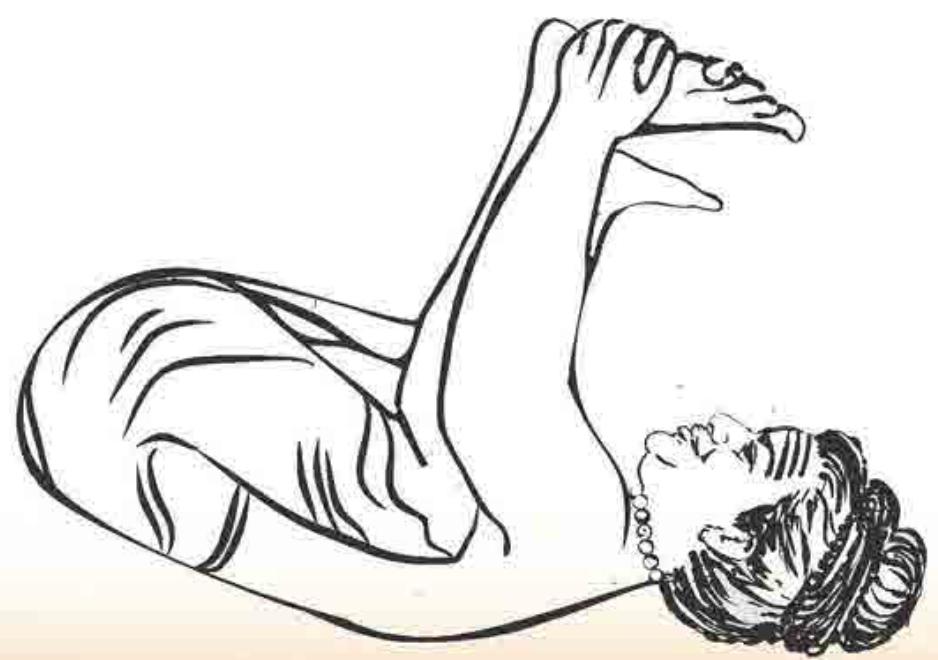
Technique:
- Lie down on the back.
- Bend the knees and bring them under the armpits.
- Hold the feet with hands and arrange the feet up vertically.
- Keep the head on the ground while gently pulling down on the feet.
- It removes all types of diseases...
- Iimmedíately ensues samadhi.'
- Revitalizes and energuzes the whole system.
- Creates a complete energy circuit and brings awareness inwards.
Opens the hips, releases the lower back, brings feeling of surrender
Sakshi Pramana Benefits Ma Nithya Nirishvarananda, Miami, Yoga Acharya
Muktasana
Śāstra Pramāṇa - शास्त्र प्रमाण Darshanopanishad (III.8-10)
निपीड्य सीविनीं सूक्ष्मां दक्षिणेतरगुल्मतः ॥ ८ ॥
वामं याम्येन गुल्फेन मुक्तासनमिदं भवेत् ।
मेढ्रादुपरि निक्षिप्य सव्यं गुल्फं ततोपरि ॥ ९ ॥
गुल्फान्तरं च संक्षिप्य मुक्तासनमिदं मुने ।
nipīḍya sīvinīṁ sūkṣmāṁ dakṣiṇetaragulbhataḥ || 8 ||
vāmaṁ yāmyena gulphena muktāsanamidaṁ bhavet |
meḍhrādupari nikṣipya savyaṁ gulphaṁ tatopari || 9 ||
gulphāntaraṁ ca saṁkṣipya muktāsanamidaṁ mune |
Pressing the right side of the frenum of the prepuce with the left ankle and the left side of the frenum with the right ankle, this becomes the Muktasana; placing the left ankle over the genitals and the right ankle over that, this, O sage' is the Muktasana.
Additional Shastra Reference Same as siddhasana (JP 357-359)
Āpta Pramāṇa - आप्त प्रमाण Gheranda-samhita II. 11
पायुमूले वामगुल्फं दक्षगुल्फं तथोपरि ।
शिरोग्रीवासमं कार्यं मुक्तासनं तु सिद्धिदम् ॥११ ॥
pāyumūle vāmagulphaṁ dakñagulphāṁ tathopari |
çirogrévāsamā karyā muktāsanaā tu siddhidam || 11 ||
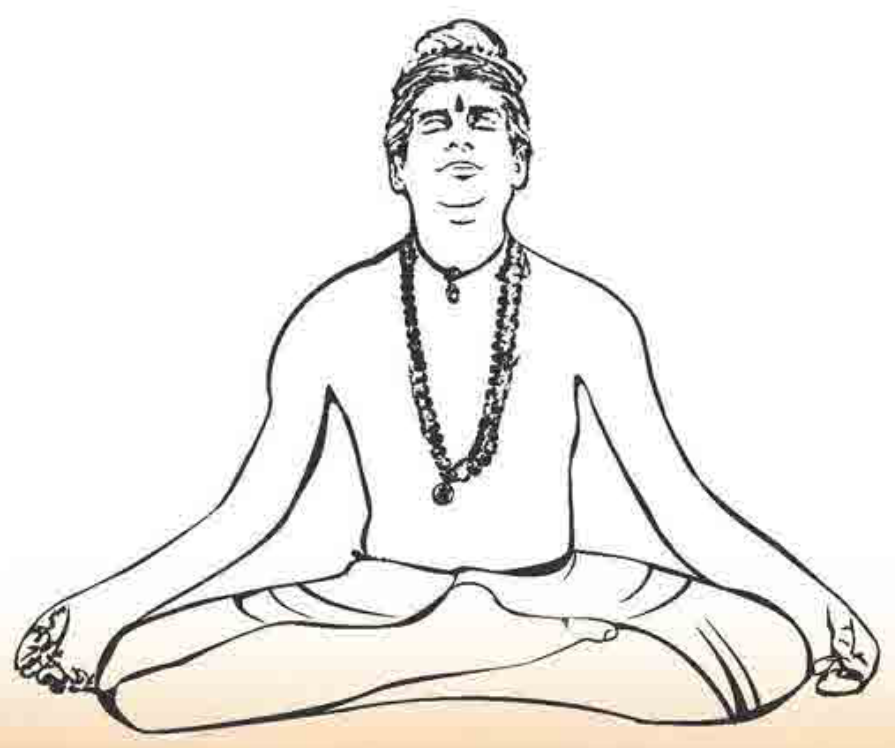
Apta Additional References BrYS-III.13
Technique:
- Sit the the left heel at root of generative organ.
- Right heel on top of it.
- Keep spine, head and neck aligned.
Meditative asana that calms the mind and relaxes the body. By practicing it a Yogi obtains perfection or siddhi.Regular practice removes diseases of morbidities (vikaras).
Mundasana
Śāstra Pramāṇa - शास्त्र प्रमाण Rudrayamala Tantram 23.24-25
आधोमुण्डासनं वक्ष्ये सर्वेषां प्राणिनां सुखम् ।
ऊर्ध्वमार्गे पदे दत्त्वा धारयेन्मारुतं सिधीः ॥२३.२४॥
सर्वासनानां श्रेष्ठं हि ऊद्धर्वपादो यदा चरेत् ।
तदैव महतीं सिद्धिं ददाति वायवी कला ॥२३.२५ ॥
ādhomuṇḍāsanaṃ vakṣye sarveṣāṃ prāṇināṃ sukham| ūrdhvamārge pade dattvā dhārayenmārutaṃ sidhīḥ || 23.24 || sarvāsanānāṃ śreṣṭhaṃ hi ūddharvapādo yadā caret| tadaiva mahatīṃ siddhiṃ dadāti vāyavī kalā || 23.25 ||
For the well-being of all creatures, I speak now about muṇḍāsanam; The expert should raise legs upwards and by lowering the head hold the vital breath. (23.24) This (muṇḍāsana) is surely supreme among all āsnas, in which the legs are raise upwards. The skill of breath control gives great siddhis to the practitioner instantly. (23.25)
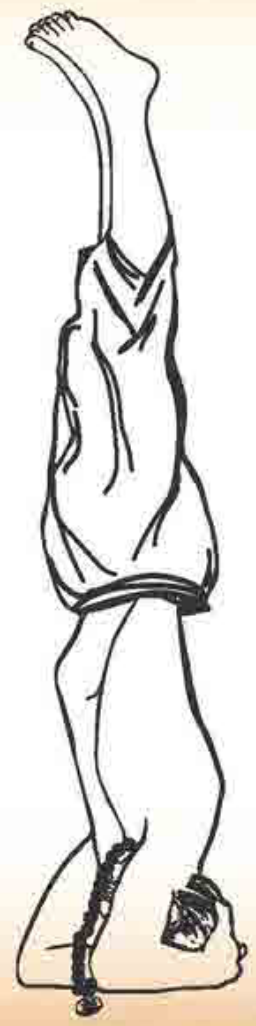
Technique:
- Kneel down.
- Interlace hands and place the forearms on the ground like a triangle.
- Bring the crown of the head down and hands supporting the back of the head.
- Straighten the legs and walk forward.
- Bring the knees to the chest, keeping the heels close to the buttocks. This is Gohiasana.
- Straigthen the legs to come to the full head stand.
Nagipava-asana
Forward Bend
Āpta Pramāṇa - आप्त प्रमाण Yoga Asana Mala Sacitra-48
पुरब विधि परि आगानै नीचौ हौई कहूणी फणा स्यौ लगाई
हाथ आगानै धरती लगावै पसारि दोऊ हाथ की अंजूली करै
भू यडी परि लगावै दृष्टि नासा अग्र आसण कौ गुण सरिर बिथा जाई ॥
puraba vidhi pari ägänai nécau hauë kahüëé phaëä syau lagäé
hätha ägänai dharaté lagävai pasäri doü hätha ké aïjülé karai
bhü yaòé pari lagävai driñöi näsä agra äsaëa kau guëa sarira bithä jäé ||
Sit on the ground with legs extended infront. Bring both soles together keeping knees sidewards on the ground. Bend the head forward place elbows on legs and extend hands on ground. Form a hollow of hands. Direct the gaze at the tip of nose.
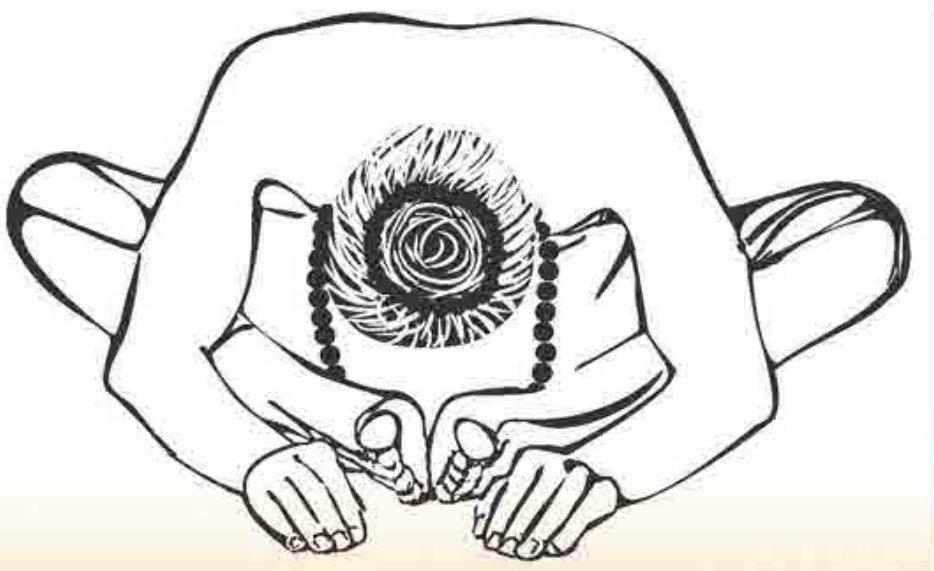
Apta Additional References Yoga-siddhanta-candrika-II.46p.82, Hathapradipika (ms.) Siddhanta-Muktavali-II.191, HSC-41, Yoga-cintamani of Sivananda Sarasvati-p.78, Hathapradipika of Svatmarama-I.45-47.
Technique:
- Sit with the soles together, knees sidewards.
- Bend forward and rest the elbows on the legs.
- Place the palms on the ground.
- Make a hollow of the hands
- Gaze at the nose tip
Pain in the body is removed
Nagrasana
Supine
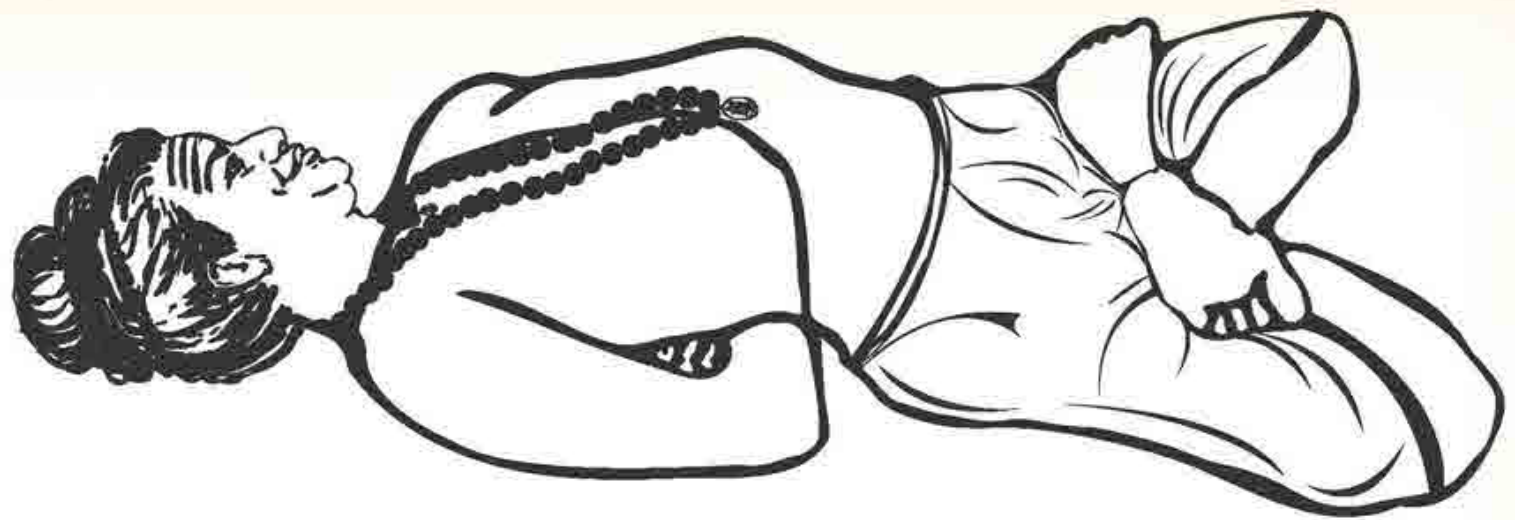
Āpta Pramāṇa - आप्त प्रमाण Joga Pradipika-351-353
धनग्र आसन प्रथम पदम आसन को ठाने दो उ हाथ पाछा ने आने ।
पाद अंगुठा पकडे आणि सोवै कहूण्या कूल्या पाणि ॥ ३५१ ॥
गोडा जंघघ अग्र को दाखे मसतग सो सम सूधो राखे ।
नासा अग्र दृष्टि को घरे आसन नग्र ईसी विधि करै ॥ ३५२ ॥
नासा रोगु जुना रहै विसाली पीनस जोय ।
जुखाम आदिक सब हरै नग्रासन गुण सोय ॥ ३५३ ॥
nagra āsanaprathama padama āsana ko öhāne do u hātha pāchä ne äne |
päda alguöhä pakaòe äeï sovai kahüëyä külyä päëi || 351 ||
goòä jaigha agra ko dākhe masataga so sama sūdho rākhe |
näsä agra driñöi ko dhare āsana nagra ésé vidhi karai || 352 ||
näsä rogu junä rahai visälé pénasa joya |
jukhāma ādika saba harai nagrāsana guëa soya || 353 ||
Adopt padmasana. Take hands over the back and cross them. Lie on the back. Keep knees touching the ground. Hold the head straight and fix the gaze at the nose.
Technique:
- Lie on your back and bring the legs in Padmasana.
- Extend the legs on the ground
- Cross the arms behind the back.
- Gaze at the nose tip.
Relieves chronic nasal conditions such as pinasana (running nose)
Nara simhasana
Seated
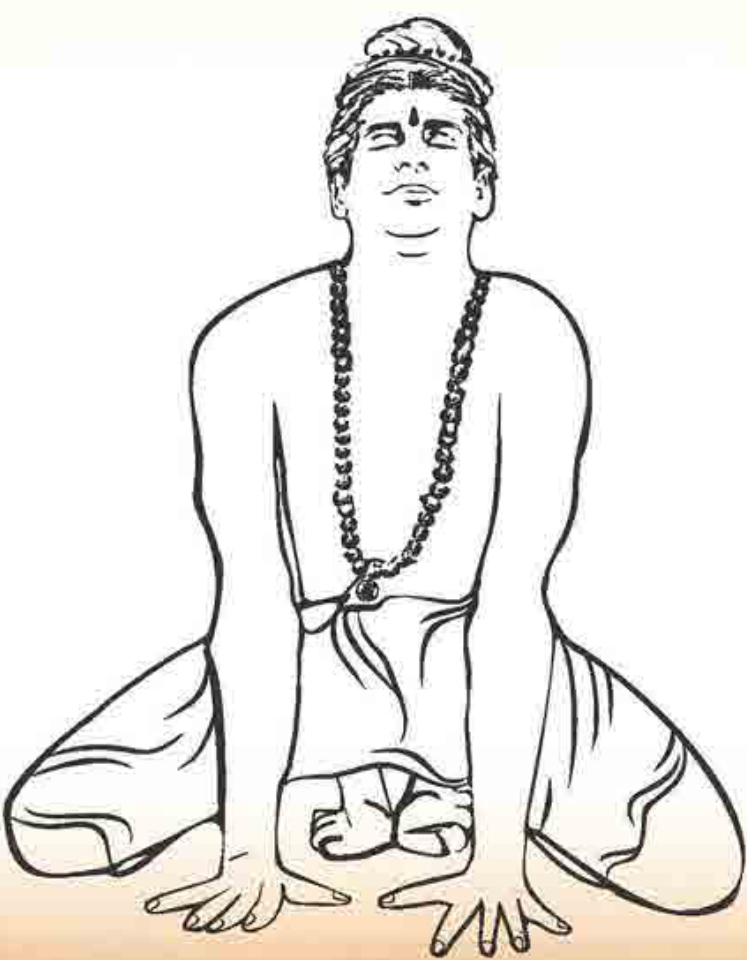
Āpta Pramāṇa - आप्त प्रमाण Joga Pradipika 303-305
॥ अथ नरसिंघघ आसन ॥
दोउ फणा पाणि होय वैसै । एडी मेलिर गुदा निवैसै ।
सुम सरीर नीका ठहरावै । नासा अग्र द्रिष्टिको ल्यावै ॥ ३०३
|| atha narasiïgha āsana ||
dou phaëä päëï hoya vaïsai , eòé melira gudä nivaïsai |
suma saréra nékä öhaharävai , näsä agra driñöi ko lyävai || 303||
for extended verse see end of chapter
Join both the feet like hand and keeping the heels together place it against anus. Gaze at the tip of nose. Place palm on the ground touching the toes. Keep all fingers separate. Both the thumb should touch each other. Open wide your mouth, take out the tongue.
Apta Additional References
āsana-Yoga-grantha-70,
Yoga-Asanamala Sacitra (ms.)-75
Technique:
- Bring heals together and sit on upright feet.
- Place the hands on the ground, fingers spread.
- Open the mouth widel and stick the tongue out.
- Fix the gaze at the tip of the nose.
Overcomes diseases and toxins. All nadis function properly. Strengthens the legs, feet and ankles. Purifies the visshudi chakra.
Naradasana
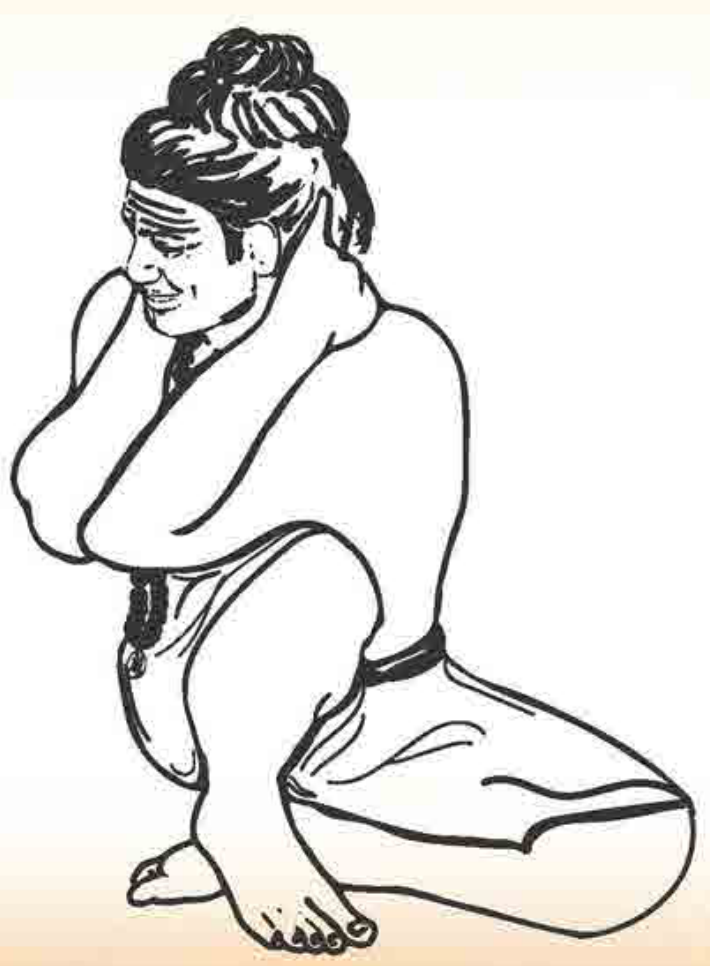
Āpta Pramāṇa - आप्त प्रमाण Joga Pradipika 298-302
नारदासन
पिष्ठि जु वाम पगथली केरि भूपरि ताहि लगावै फेरी ।
गोडा सुधौ फणो है जोई दछि पाखती राखै सोई ॥ २९८ ॥
näradäsana
piñöi ju väma pagathalé keri bhüpari tähi lagävai pheré |
goòä sudhau phaëo hai joé dachi päkhaté räkhai soé || 298 ||
for extended verse see end of chapter
Place the left sole on the ground folding it (at knee) and bringing towards backside. Fold right leg keeping knees straight pointing upward and place the right sole on the left sole. Place perineum above the left heel. Gaze should be between eyebrows. Make finger lock. Bring both the elbows towards right side of the right thigh.
Technique:
- Kneel with left leg folded back.
- Fold right leg keeping knee up.
- Place the right sole on the left sole.
- Press the perineum with the left heel.
- Gaze between the eyebrows.
- Make a finger lock behind the head.
- Bring the elbows on right side of the right thigh.
Cures deafness and purifies the ears
Natarajasana
Balance
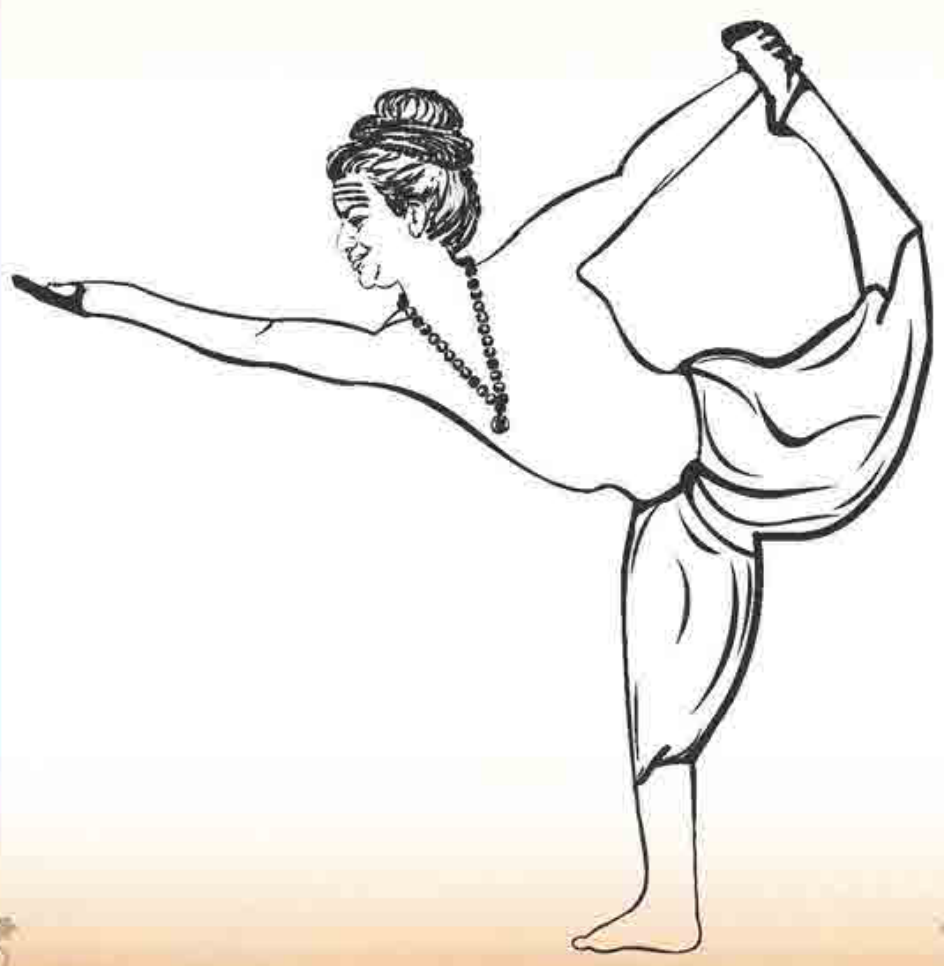
Āpta Pramāṇa - आप्त प्रमाण Nathamuni's Yoga RAHASYA I.51
उत्तानपादं क्रौञ्चं च मरीचिं वीरभद्रकम् ।
नटराजं त्रिकोणं च सुप्ताङ्गुष्ठप्रसारणे ॥
uttānapādaṁ krauñcaṁ ca marīciṁ vīrabhadrakam | naṭarājaṁ trikoṇaṁ ca suptāṅgaṣṭhaprasāraṇe ||
Uttanapadasana, Krauncasana, Maricyasana, Virabhadrasana, Natarajasana, Trikonasana, Supta padangusthasana and Supta prasarita padangustasana.
Technique:
- Stand straight.
- Keep the right leg straight.
- Bend the left leg and hold the left foot with the left hand.
- Lean forward and extend the left leg upwards.
- Blance firmly and extend the right arm forward.
Fluidity, dancing, showy, gracefulness
Sakshi Pramana Benefits Keong Chow, Singapore, Yoga Teacher/Freelancer
Neti asana
Seated
Āpta Pramāṇa - आप्त प्रमाण Joga Pradipika (54-59)
गोडा बावा पादकी आंख माहिली सोय ।
दछ चरन को वारलौ तापरि गुलफ समोय ॥ ५४ ॥
वाम पादको माहिलौ बहुरौ गुलफ जु जान ।
तापरि गोडा दछिकी आंख चाह बाहर लीवान ॥ ५५ ॥
goòä bävä pädaké äkha mähilé soya | dacha carana ko väralau täpari gulapha samoya || 54 || väma pädako mähilau bahurau gulapha ju jäna | täpari goòä dachiké äikha cäha bähara léväna || 55 ||
for extended verse see end of chapter
Left knee above right ankle and left ankle below right knee, catch hold of two arms with hands and then extending the arms in front, churn it clock and anti clockwise observing silence. Gaze at the tip of nose. It purifies the body. Removes physical disorders. Body attains lightness. Nadis are purified. It churns the pranavayu. Practise it slowly in the morning, afternoon and evening.
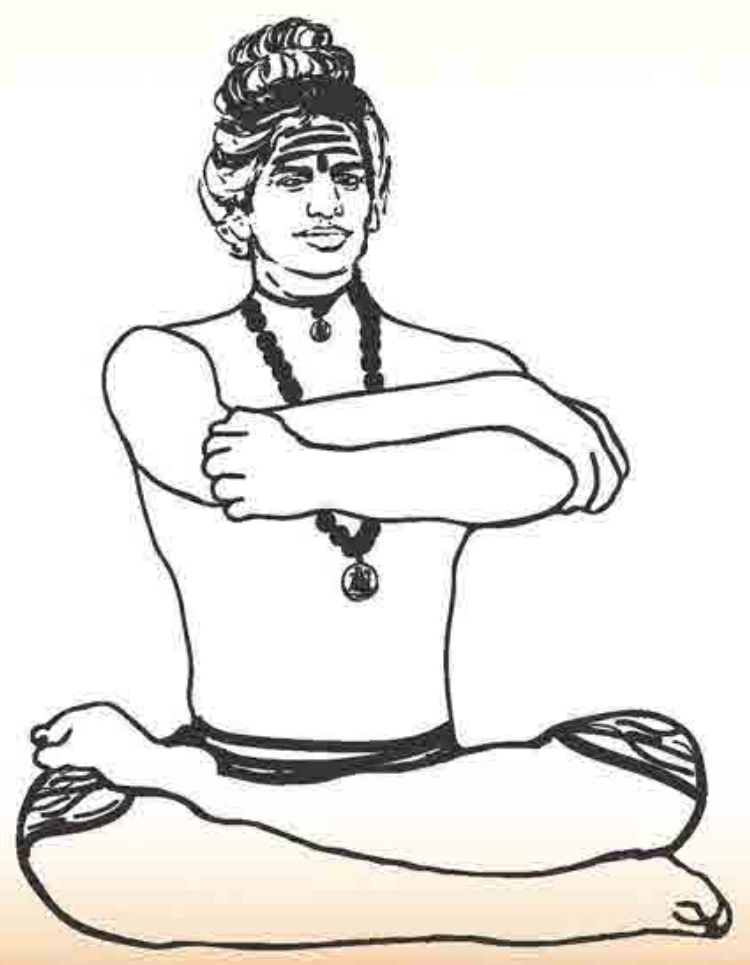
Apta Additional References ANa-5, Joga Pradipika (sanskrit manuscript No.24099 deposited in The British Library London)-3. Joga Pradipika mentions practise it thrice a day.
Technique:
- Sit with the left foot on the right knee and right foot under the left knee.
- Hold the elbows with the opposite hands.
- Extend the arm forward.
- Rotate the arms clockwise and anticlockwise.
- Fix the gaze at the nose.
This purifies the nadis, it churns the pranavaya. It purifies the body, so physical disorders will not happen. Body attains lightness.
Breathing passages clearing up
Sakshi Pramana Benefits Vlatko Ploskoski, New York
Niralambanasana
Prone
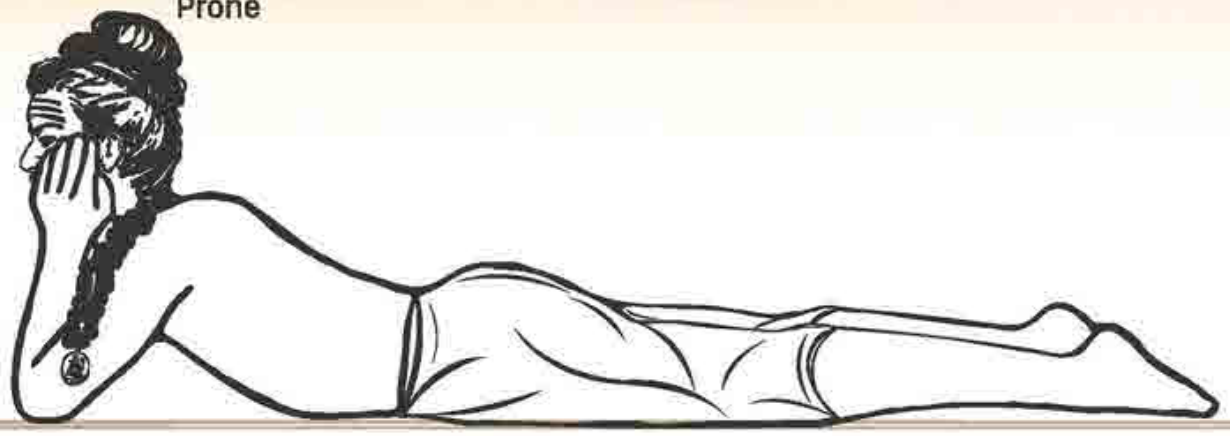
Āpta Pramāṇa - आप्त प्रमाण Hatharatnavali III 61-62
कराभ्यां पंकजं कृत्वा तिष्ठेत्कूर्परया सुधीः ॥
मुखमुन्नमयन्नुच्चैर्निरालम्बनमासनम् ॥६१॥
निरालम्बनयोगी स्यान्निरालम्बनमासनम् ॥
निरालम्बनता ध्यानं निरालम्बनमासनम् ॥६२॥
karābhyāà paìkajaà kåtvā tiñöhetkūrparayā sudhêù || mukhamunnamayannuccairnirālambanamāsanam ||61|| nirālambanayogé syānnirālambanamāsanam || nirālambanatä dhyānaà nirālambanamāsanam ||62||
Supported on the elbows, hands forming like a lotus and supporting the face, raise the face up.
Technique:
- Lie down on the stomach.
- Keep the elbows on the ground.
- Form a lotus shape with the hands
- Rest the head on the lotus.
- Practising niralambasana, a Yogi attains the state of niralambana. The posture niralambana culminates into niralambana dhyana. 62
- Retains flexibility of the spine while stimulating the attached nerves
- Beneficial for Spondylitis of lumbar region
- Beneficial for sciatica problems
- Relieves stress, tension, anxiety and mild depression
- Stretches the neck, stimulates thyroid and parathyroid glands
Feeling relaxed, like a child
Sakshi Pramana Benefits Soma Majumder, New York, Graphic Designer/ Marketing Professional
Pada-pidanasana
Balance
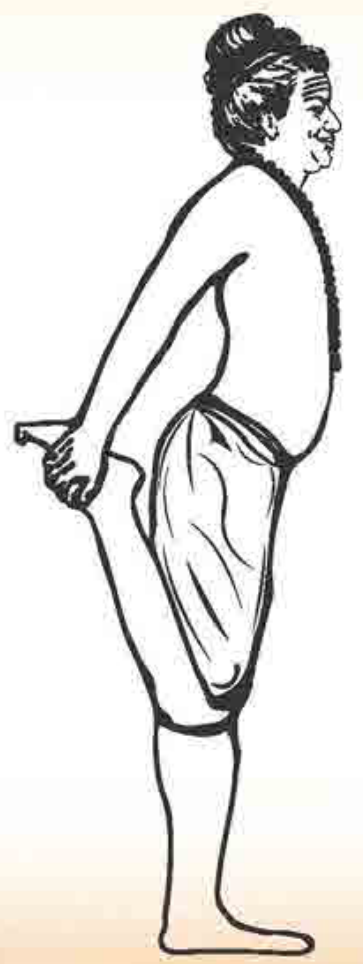
Technique:
- Standing straight.
- Bend the right knee and hold with both hands at the back.
- Balance on left the leg.
- Repeat on the other side.
• Develops balance, grace and confidence • Strengthens the feet, ankles, quadriceps • Firms the abdominals and back • Reduces flat feet • Relieve sciatica
Stretches the thighs
Sakshi Pramana Benefits Sunniva Kaurin, Norway
Āpta Pramāṇa - आप्त प्रमाण Hatharatnavali III.72
स्थित्वैकस्मिन् पादतले कराभ्यां वेष्टयेत्तनुम् ॥
पृष्ठे संस्थाप्य यत्नेन पादपीडनमासनम् ॥७२ ॥
sthitvaikasmin pādatale karābhyāà veñöayettanum || påñöhe saàsthāpya yatnena pādapéòanamāsanam ||72||
Stand on one leg. Bend other leg to bring foot to the back. Hold foot with the hands.
Padmasana I
Seated
Śāstra Pramāṇa - शास्त्र प्रमाण Rudrayamala Tantra 23.26-27
एतत्पद्मासनं कुर्यात् प्राणवायुप्रसिद्धये ।
शुभासनं सदा ध्यायेत् पूरयित्वा पुनः पुनः ॥ २३.२६॥
उरुमूले वामपादं पुनस्तद्दक्षिणं पदम् ।
वामोरौ स्थापयित्वा च पद्मासनमिति स्मृतम् ॥ २३.२७॥
etatpadmāsanaṃ kuryāt prāṇavāyuprasiddhaye|
śubhāsanaṃ sadā dhyāyet pūrayitvā punaḥ punaḥ || 23.26 ||
urumūle vāmapādaṃ punastaddakṣiṇaṃ padam|
vāmorau sthāpayitvā ca padmāsanamiti smṛtam|| 23.27 ||
(This) Padmāsanam should be done which is well-known for the siddhi (perfection) of breath control; This beneficial āsanam ought to be practised again and again until it is fully mastered. (23.26) The left foot should be placed at the bottom of the right thigh; Then the right foot on the bottom of the left thigh, this is known as padmāsanam. (23.27)
Additional Shastra Reference Srimat Sarvajnanottra Agama, Yoga Pada.8
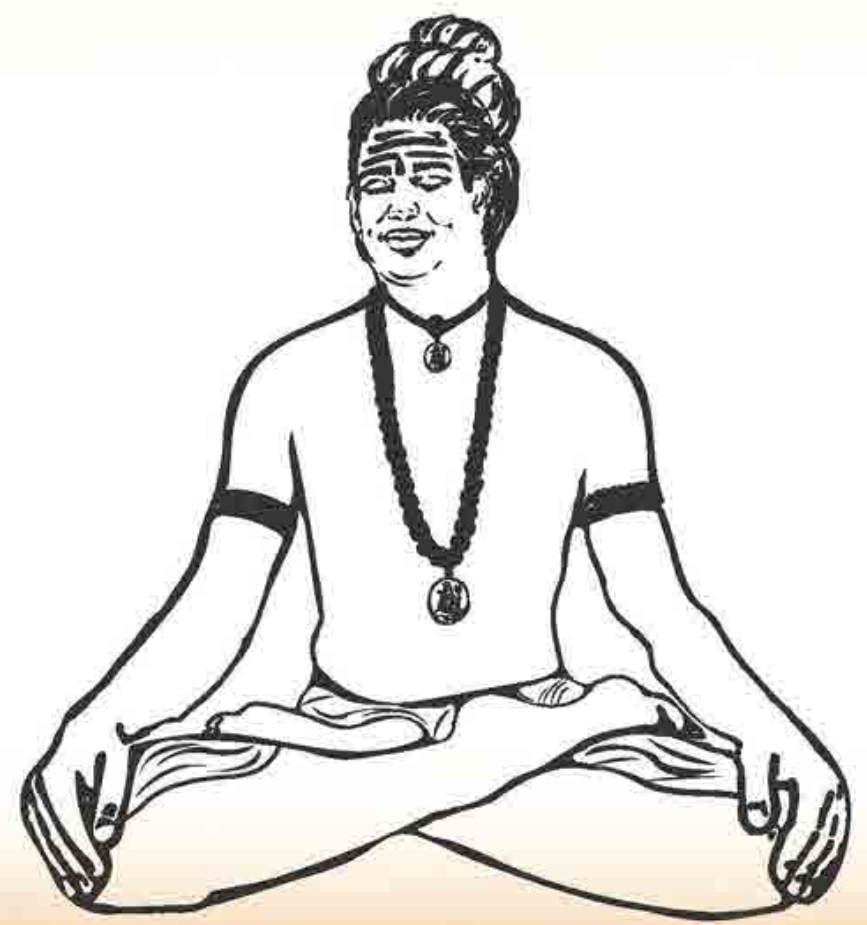
Technique:
- Sit and place the left foot on the inner right thigh
- Place the right foot on the left thigh.
- Keep the spine straight.
Primordial meditative posture. According to Shastra Pramana, padmasana destroys all diseases.
Feeling of stability
Sakshi Pramana Benefits Mijeann Najin, Los Angeles, Actress/Model
Śāstra Pramāṇa - शास्त्र प्रमाण Yoga-Cudamany-Upanishad, 1.4-5
आसनं द्विविधं प्रोक्तं पद्मं वज्रासनं तथा ॥ ४ ॥
ऊर्ध्वोरुपरि चेद्द्धत्ते उभे पादतले यथा ।
पद्मासनं भवेदेतत् सर्वपापप्रणाशनम् ॥ ५ ॥
āsanaṃ dvividhaṃ proktaṃ padmaṃ vajrāsanaṃ tathā || 4 ||
ūrdhvorupari ceddhätte ubhe pādatale yathā |
padmāsanaṃ bhevedetat sarvapāpapraṇāśanam || 5 ||
Postures are said to be of two kinds: the Padmasana and the Vajrasana. When one places the soles of his feet over the two thighs (crosswise, the right sole over the left thigh and the left sole over the right thigh), this becomes the Padma posture, which destroys all sin.
Additional Shastra Reference
Kirana Agama Yoga Pada v.7, Tri-shikhi-brahmanopanishad, 39, Yoga-kundalyupanisad-132,183, Yoga-kundalyupanisad-132,183
Āpta Pramāṇa - आप्त प्रमाण Joga Pradipika 53
पद्मासन ३
वामजंघघ पर दछिन चरण । दछिन जंघघ वामपद् धरण ॥
दोउ हस्त जंघघपर करे । सम सरीर नासा चक्षु धरै ॥
पदमासन यह नाम कहावै । व्याधि रोग सब नास ही पावै ॥ ५३ ॥
Padmāsana iii
vāmajaigha para dachina caraëa | dachina jaïgha vämapada dharaëa ||
dou hasta jaïghapara kare | sama saréra näsä cakñu dharai ||
padamäsana yaha näma kahävai | vyädhi roga saba näsa hé pävai || 53 ||
Padmasana II
Seated
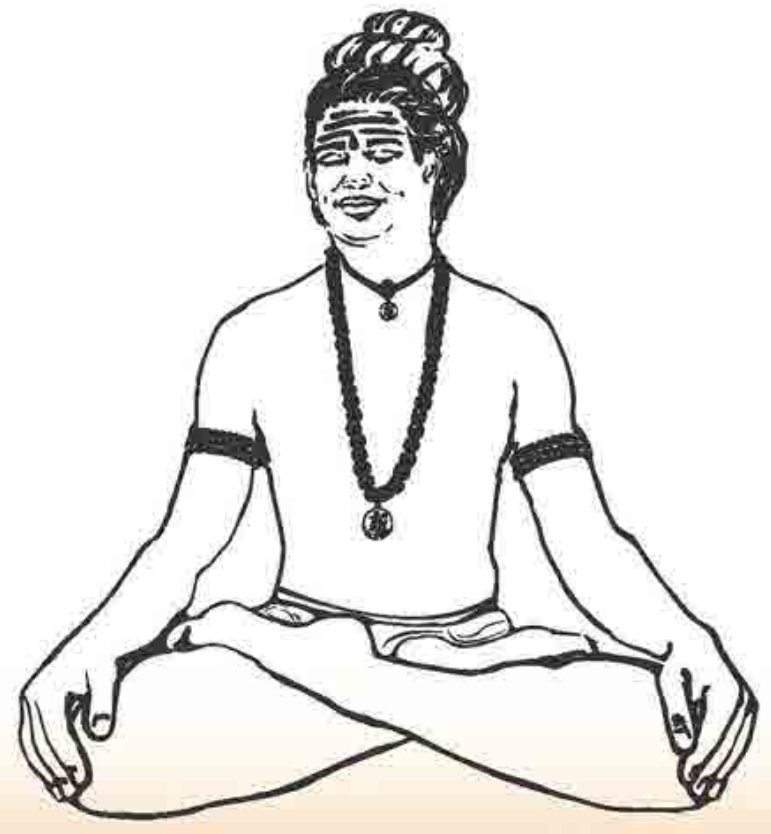
Right foot on the left thigh and left foot on the right thigh. Hands on the thighs. Keep the body straight and gaze at the tip of the nose.
Technique:
- Sit up straight.
- Place the right foot on the left thigh
- Place the left foot on the inner right thigh
- Place the hands on legs.
Primordial meditative posture. According to Shastra Pramana, padmasana destroys all diseases.
Increases concentration, doesn't allow for any thoughts to interfere
Sakshi Pramana Benefits Soma Majumder, New York, Graphic Designer/ Marketing Professional
Padmasana III
Seated
Śāstra Pramāṇa - शास्त्र प्रमाण Sandilyopanishad, 3.3
अङ्गुष्ठेन निबध्नीयाद्धस्ताभ्यां व्युत्क्रमेण च ।
ऊर्वोरुपरि शाण्डिल्य कृत्वा पादतले उभे ।
पद्मासनं भवेदेतत् सर्वेषामपि पूजितम् ॥ ३ ॥
aṅguṣṭhena nibadhnīyāddhastābhyāṃ vyutkrameṇa ca | ūrvorupari śāṇḍilya kṛtvā pādatale ubhe | padmāsanaṃ bhavedetat sarveṣāmapi pūjitam || 3 ||
Placing the soles of the two feet, O S'andilya, over the two thighs, one should hold (them) by the toes, with the two hands stretched out crosswise. This will be the Padmasana Posture, held in esteem by all (Yogin-s).
Additional Shastra Reference Darshanopanishad , III.4-5, Yoga-kundalyupanisad-132,183
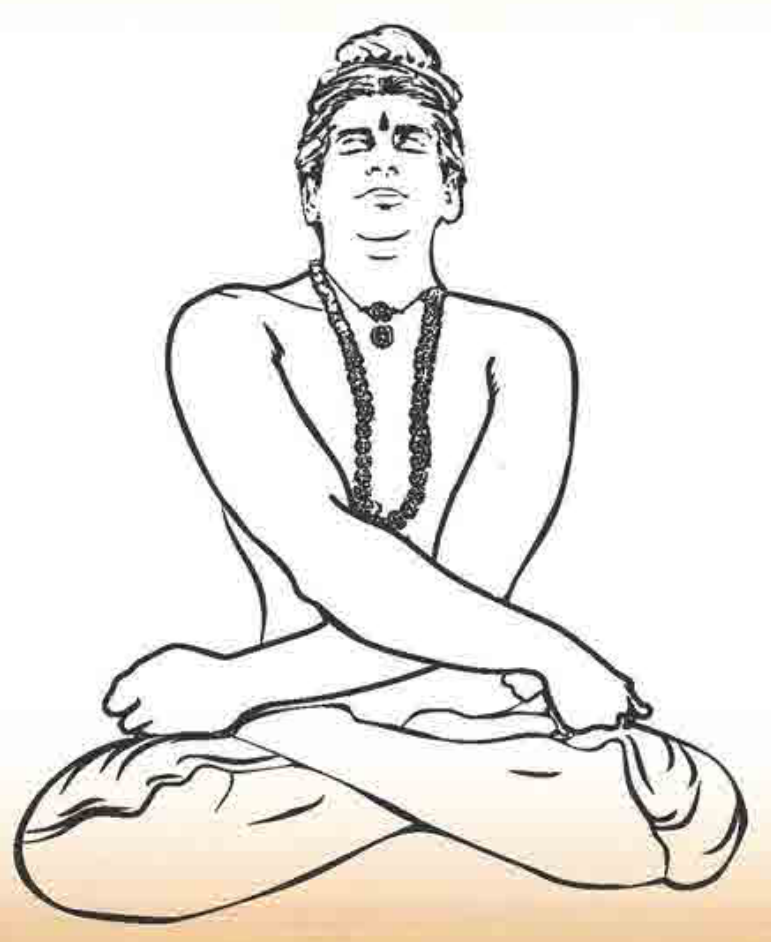
Technique:
- Sit up straight.
- Place the right foot on the inner left thigh.
- Place the left foot on the right thigh.
- Hold the toes with the opposite hand.
Meditative asana. One attains unparallel wisdom of the highest order through the arousal of kundalini sakti. and by intense concentration on the Supreme Reality. This asana brings control on prana, helps removing disease.
Padmasana creates a subtle upward flow of kundalini, and a feeling of all-knowingness.
Sakshi Pramana Benefits Ma Nithya Nirishvarananda, Miami, Yoga Acharya
Padmasana IV
Seated
Śāstra Pramāṇa - शास्त्र प्रमाण Shiva Samhita-III.88-89
उत्तानौ चरणौ क्रत्वा ऊरुसंस्थौ प्रयत्नतः ।
ऊरुमध्ये तथोत्तानौ पाणी क्रत्वा तु तादृशौ ॥
नासाग्रे विन्यसेद्दृष्टिं दन्तमूलञ्च जिव्ह्या ।
उत्तोल्य चिबुकं वक्ष उत्थाप्य पवनं शनैः ॥
uttānau caraṇau kratvā ūrūsaṃsthau prayatnataḥ |
ūrūmadhye tathotānau pāṇī krtvā tu tādṛśau ||
nāsāgre vinyasedūdṛṣṭiṃ dantamūlañca jivhyā |
uttolya cibukaṃ vakṣa utthāpya pavanaṃ śanaiḥ ||
for extended verse see end of chapter
I now describe the Padmasana which wards off (or cures) all diseases: Having crossed the legs, carefully place the feet on the opposite thighs (i.e. the left foot on the right thigh, and vice versa); cross both the hands and place them similarly on the thighs; fix the sight on the tip of the nose; pressing the tongue against the root of the teeth, (the chin should be elevated, the chest expanded) then draw the air slowly, fill the chest with all your might, and expel it slowly, in an unobstructed stream. 88
It cannot be practiced by everybody; only the wise attains success in it. 89
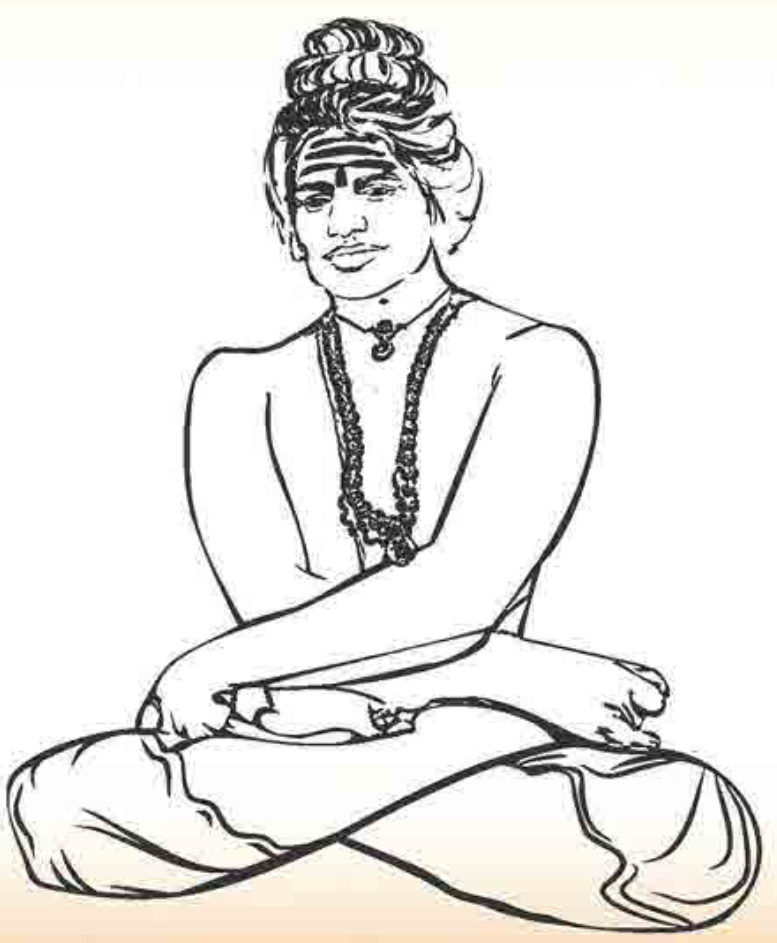
Technique:
- Sit up straight.
- Place the left foot on the inner right thigh
- Place the right foot on the left thigh
- Hold the toes with the opposite hand
- close your eyes and relax
Para asana I
Seated
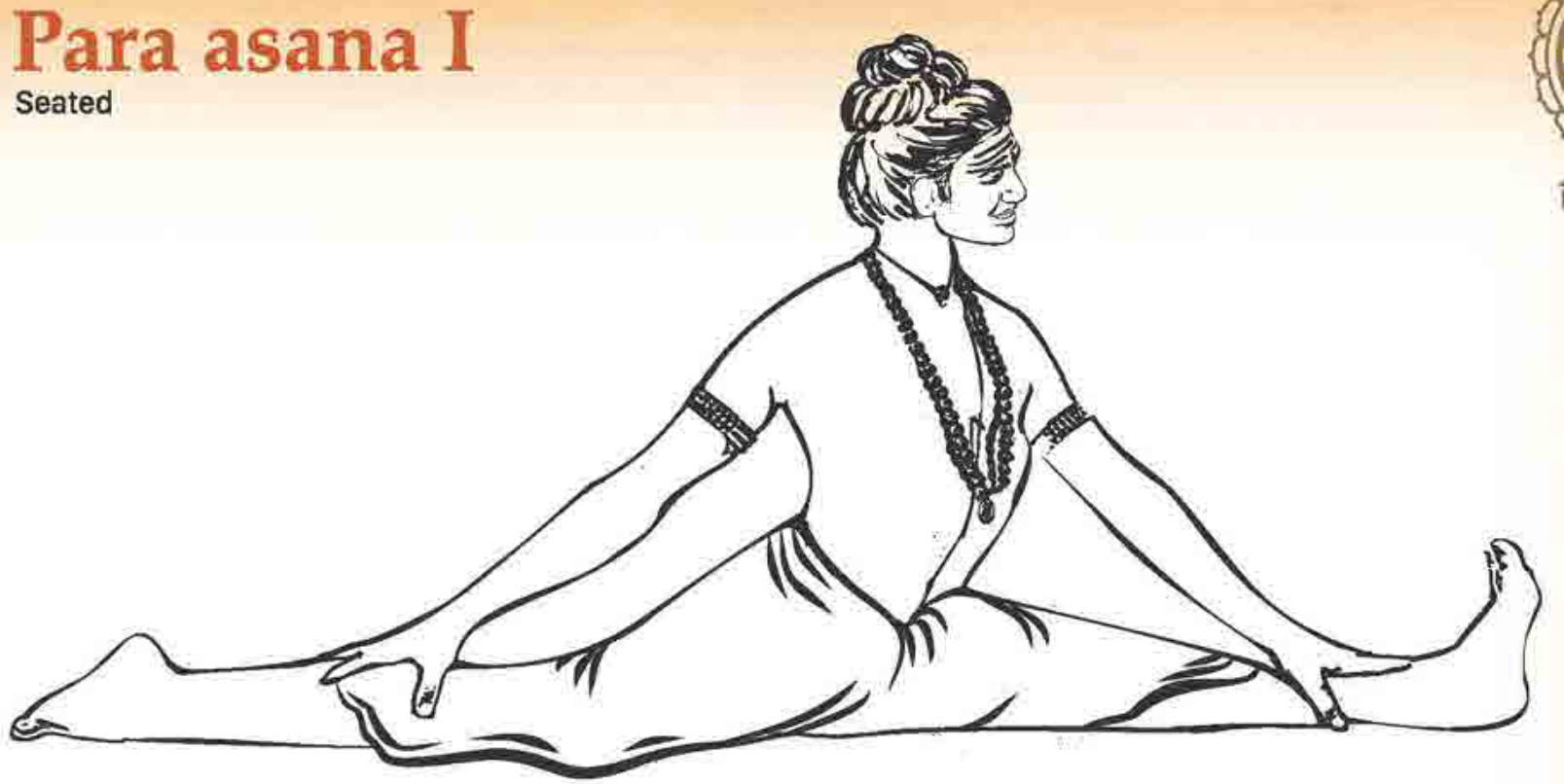
Āpta Pramāṇa - आप्त प्रमाण Yoga Asana Mala Sacitra 102-104
पर आसणा कौ गुण चोरासि वाइ जाई पवन सरल बहै पर आसण कौ गुण गठिया बाइ जाई
para äsaëä kau guëa coräsi väi jäé pavana sarala bahai para äsaëa kau guëa gaöhiyä bäi jäé
Legs are spread wide apart and hands are also spread over the legs.
Technique:
- Come onto your knee and extend the other leg in front.
- Slowly extend the leg forward while extending the other leg back.
- Extend the arms as well and hold the posture.
This asana balances 80 vitiated conditions of vata. Helps prana move freely. Alleviates gathiya vata (a type of arthiritis) Inner thigh stretch
Sakshi Pramana Benefits Li Yeen Chow
Para asana II
Seated
Āpta Pramāṇa - आप्त प्रमाण Joga Pradīpikā 126-128
॥ अथ परसराम आसन ॥
प्रथम करै पदमासन आछै । सूधो सोवे भूपरि पाछै ।
गोडा अरु जंघघा ये दोउ । भू सो लगता राषै सोई ॥ ३५४ ॥
दोउ हाथ मसतग दिस धारै । लाबां भू सो लगत पसारै ।
बहुरिजु वाम हसत है जासों । दछि हथैली पिष्टि जु तासो ॥ ३५५
|| atha parasarāma āsana||
prathama karai padamāsana āchai , sūdho sove bhūpari pāchai |
goòä aru jaìghä ye dou , bhū so lagatä räñai soé || 354 ||
dou hātha masataga disa dhärai , läbäà bhū so lagata pasārai |
bahuriju väma hasata hai jãsoà , dachi hathelé piñöi ju täso || 355 ||
For extended Verse see end of Chapter.
Sit on the anus with folded legs and knees pointing upward. Insert both the hands up to the elbow in between thigh muscles and calf muscles. Bring the legs near the body resulting into soles lifted upward. Gaze should be at the tip of the nose.
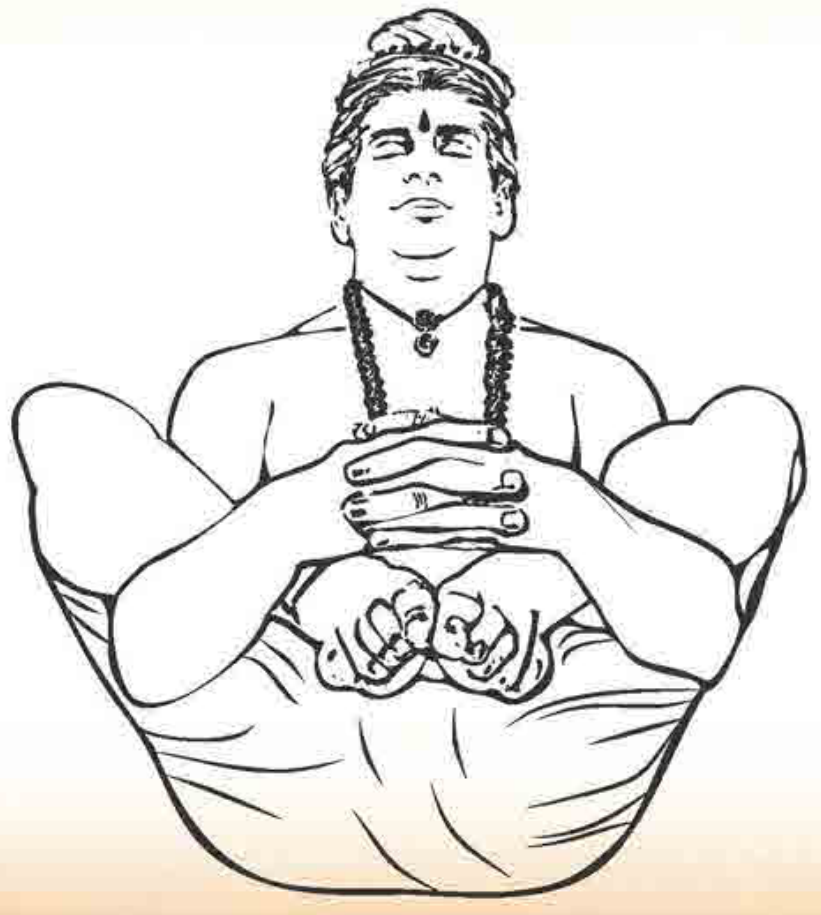
Technique:
- Sit on the buttocks with the legs folded
- Insert the legs between the thighs and calves
- Join the hands in a finger lock4. Keep the heels raised
Facilitates the arousal of kundalini.
Parasu-ramasana
Supine
Āpta Pramāṇa - आप्त प्रमाण Joga Pradipika 354-356
॥ अथ परसराम आसन ॥
प्रथम करै पदमासन आछै । सूधो सोवे भूपरि पाछै ।
गोडा अरु जंघघा ये दोउ । भू सो लगता राषै सोई ॥ ३५४ ॥
दोउ हाथ मसतग दिस धरै । लाबां भू सो लगत पसारै ।
बहुरिजु वाम हसत है जासों । दछि हथेली पिष्टि जु तासो ॥ ३५५
|| atha parasarāma āsana ||
prathama karai padamāsana ächai , sūdho sove bhūpari pächai |
goòä aru jaìghä ye dou , bhū so lagatä räñai soé || 354||
dou hätha masataga disa dhärai , läbäà bhū so lagata pasärai |
bahuriju väma hasata hai jäsoà , dachi hathelé piñöi ju täso || 355 ||
for extended verse see end of chapter
Adopt Padmasana and lie on your back in such a way that knees and thighs remain on ground. Bring both the hands towards head and spread them straight touching the ground. Place backside of right palm on left palm. Gaze at the tip of nose.354-356
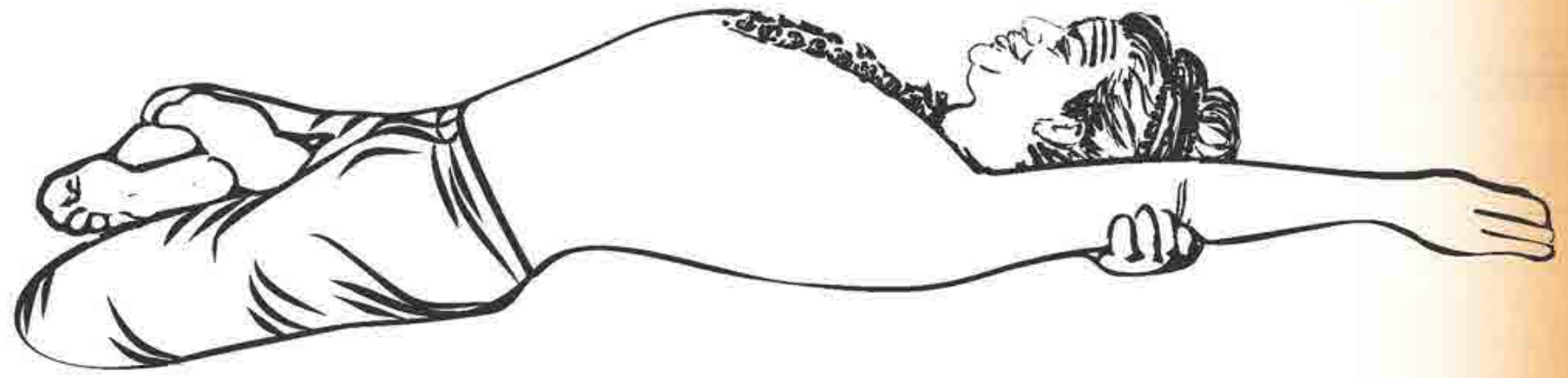
Technique:
- Lie down on the back assuming Padmasana
- Extend the legs on thr ground.
- Bring the left arm overhead.
- Catch hold of the left arm with the right hand.
- Gaze at the tip of the nose.
It ensues rest to the entire body
Parighasana
Supine
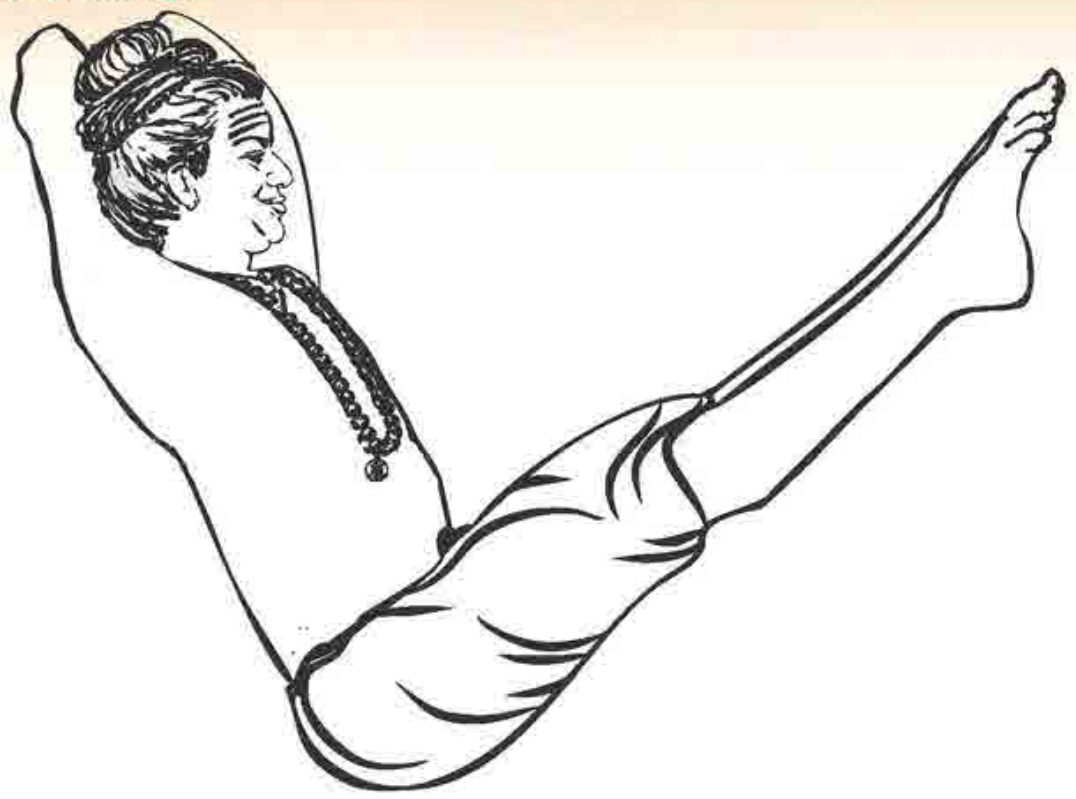
Āpta Pramāṇa - आप्त प्रमाण Kapalakurantaka's Hathabhyasa Paddhati verse 2
उत्तानं शयनं कृत्वा पादौ मिलित्वा प्रसार्य
नितंबं भूमौ स्पृष्ट्या हस्ताभ्यां कन्ंधरा
बध्वा कुंभकं कृत्वा तिष्ठेत् परिघासन भवति ॥२॥
uttānaṃ śayanaṃ kṛtvā pādau militvā prasārya nitambaṃ bhūmau spṛṣṭyā hastābhyāṃ kandharā badhvā kumbhakaṃ kṛtvā tiṣṭet parighāsana bhavati ||2||
Lying supine extend both the feet united together and touching the ground with buttocks catch firmly the shoulder with two hands and remain with kumbhaka performed. This is called Parighasana.
Technique:
- Sit and extend the legs at 45 degrees.
- Catch hold of the shoulders with the hands crossed overhead.
- Hold the breath while holding the position.
Parvati-asana
Balancing
Āpta Pramāṇa - आप्त प्रमाण Joga Pradipika 320-323
॥ अथ पारवती आसन ॥
गोडा दोउ आडा राखै ।डांउ पाद दछि जंघघ दाखै ।
फणौ जीमणौ भू परि धरै । एडी सम्यक उंची करै ॥ ३२० ॥
वाम पगथली महिली कोर । मेके दखिन पींडी वोर ।
डांउ गुलफ मांहिली जोई ।अर दछिण वारिलौ सोई ॥ ३२१
|| atha pāravatē āsana ||
goòà dou äoä răñai , òämu päda dachi jaìgha dăñai |
phaëoà jémaëo bhű pari dharai , eóé samyaka uïcé karai || 320 ||
väma pagathalé mahilé kora , meke dachina péëòé vora |
òämu gulapha mäàhilé joé , ara dachiëa värilau soé || 321 ||
for extended verse see end of chapter
Place both the knees cross wise, right leg should be placed by the side of right thigh, place the toes on the ground keeping the heel upward. The left sole should be placed by the side of right calf muscles. The left and right ankle should be kept together properly. Place both the hands on knees and gaze at the tip of nose.
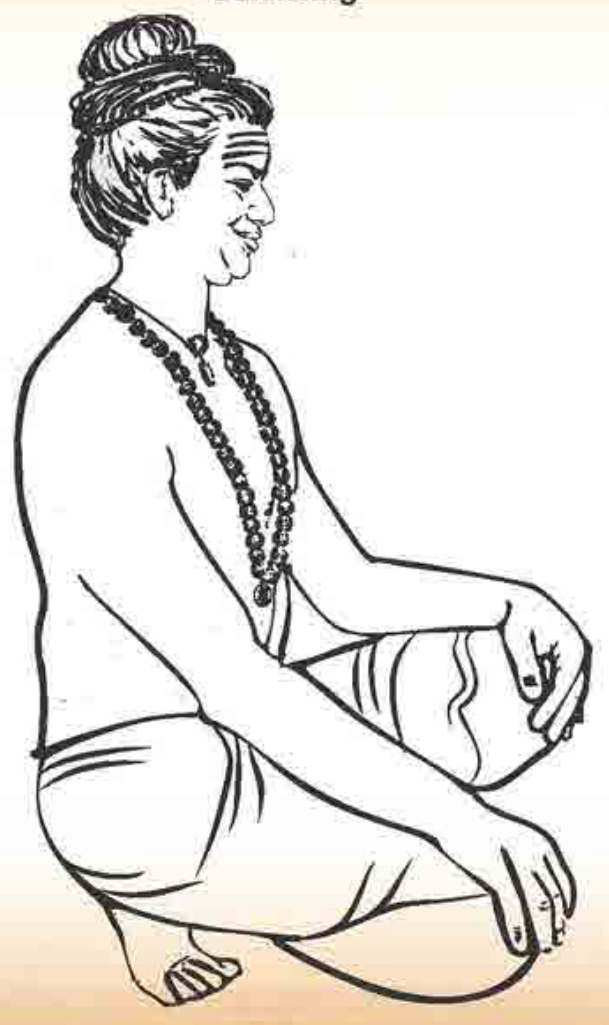
Technique:
- Bend the knees and sit on the heels of the feet, balancing on the tip of the toes.
- Bring left knee higher than right knee
- Place hands on the knees
- Gaze at the tip of the nose.
Practiced in this way, bestows the sadhaka ability to cross the hills without the feeling of exertion.
Parsva-mayurasana
Balance
Apta Additional References
One of 6 varieties of mayurasana...
see kaundinyasana, mayurasana iii
Technique:
- Sit with the legs folded together.
- Twist sideways and place the hands firmly on the ground.
- Lift the hips and extend legs sideways.
- Thus balance on the two arms.
Quick relief from all the diseases of the spleen and stomach. Cures imbalances caused by the humours. Digests excess food and bad food, stimulates gastric fire and even the deadliest of poison.
Finding balance between strength and stability, like a balancing scale
Sakshi Pramana Benefits Ma Nithya Nirishvarananda, Miami, Yoga Acharya
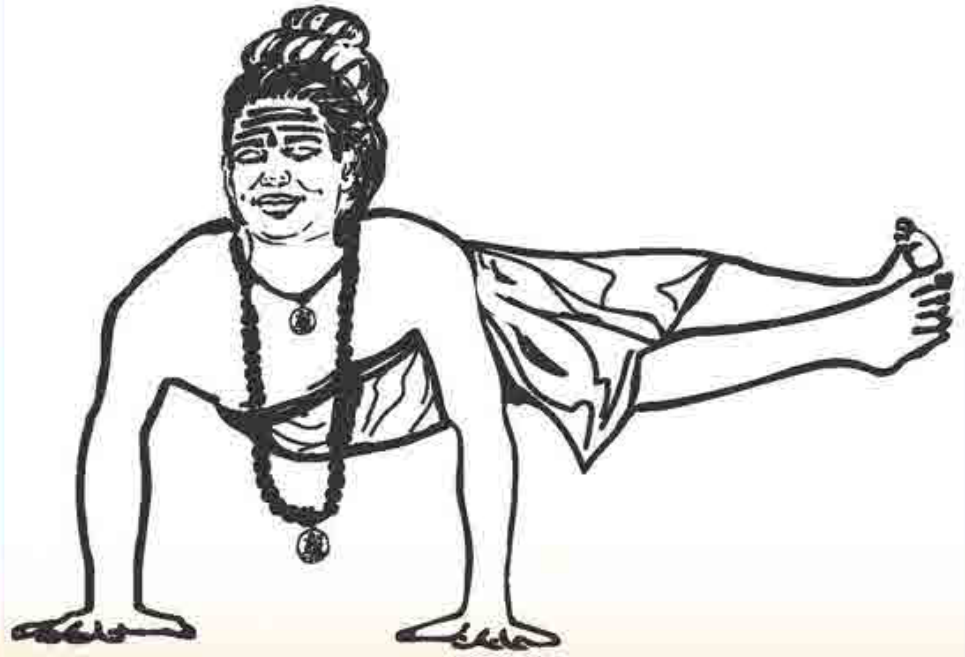
Āpta Pramāṇa - आप्त प्रमाण Hatharatnavali,III.10.44
मयूरम् दण्डवत्कुर्यान्मायूरं दण्डनामकम्
कुर्यान्मायूरं पार्श्वाभ्यां मायूरपार्श्वनामकम् ॥४४॥
mayūram daṇḍavatkuryānmāyūraṃ daṇḍanāmakam
kuryānmāyūraṃ pārśvābhyāṃ māyūrapārśvanāmakam ||44||
When mayura is practiced like a horizontal stick, it is caled danda mayura. This same when practiced on both the sides, is parsva mayura. 44.
Parvatasana
Seated
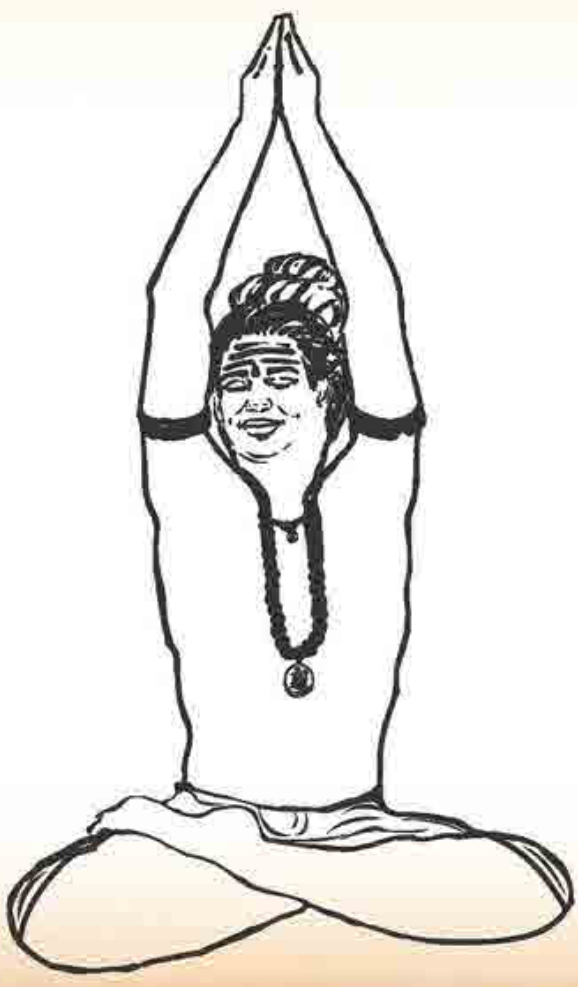
Śāstra Pramāṇa - शास्त्र प्रमाण
Rudrayamala Tantram 23.52
अथ वक्ष्ये महादेव पर्वतासनमङ्गलम्।
यत् कृत्वा स्थिररूपी स्यात् षट्चक्रादिविलोपनम्॥२३.५२॥
atha vakṣye mahādeva parvatāsanamaṅlam|
yat kṛtvā sthirarūpī syāt ṣaṭcakrādivilopanam||23.52||
O Mahādeva! now I shall talk about auspicious parvatāsana;Practising which (mental) stability is gained, and the penetration of the six cakras is called parvatāsana. (23.52)
Āpta Pramāṇa - आप्त प्रमाण
Yoga Rahasya (N)-II.22
मूत्रपिंड यकृत्प्लीहवपाशुद्ध्ये निरन्तरम्
उपविश्य च सुप्ताघध पर्वतासनमभ्यसेत्
mūtrapiėòa yakåtpléhavapäçuddhaye nirantaram upaviçya ca suptägha parvatäsanamabhyaset
To cleanse the urinary bladder, liver, sleen and diaphragm, Parvatasana must be done in seated and lying down positions.
Apta Additional References
Also known as tadasana variation and can be practiced sitting or lying down. KT-II.46p249, Yas-42, SYK-68, SCA-82, V-p885, RY-23:52-53
Technique:
- Place the right foot on the left thigh.
- Now place the left foot on the right thigh
- Keep both the arms raised above the head and join the hands
- Settle in this posture for 30 seconds(This should be practiced in both sitting as well as lying position. Kumbhaka should be done in sitting pose only.)
Purifies the lungs, spleen, urinal bladder and diaphragm.
Expansion in the lungs and diaphragm, grounded feeling while energy is simultaneously lifing upward
Sakshi Pramana Benefits
Ma Nithya Nirishvarananda, Miami, Yoga Acharya
Pascimatana asana
Seated
Śāstra Pramāṇa - शास्त्र प्रमाण Tri-shikhi-brahmanopanishad 51
जानूपरि ललाटं तु पश्चिमं ताणमुच्यते ।
येन केन प्रकारेण सुखं धार्यं च जायते ॥ ५१ ॥
jānūpari lalāṭaṃ tu paścimaṃ tāṇamucyate |
yena kena prakāreṇa sukhaṃ dhāryaṃ ca jāyate || 51 ||
Stretching the leg on the ground, touching the big toes with the fore-arms and placing the face on the knees, is said to be the Pascimatana posture.
Āpta Pramāṇa - आप्त प्रमाण Hatharatnavali 3.66-67
अथ पश्चिमातावासनम्
प्रसार्य पादौ भुवि दण्डरूपौ दोर्भ्यां पादाग्रद्वितयं गृहीत्वा ॥
जानुपरि न्यस्तललाटदेसो वसेदिदम् पश्चिगतानमाहुः ॥६६॥
Iति पश्चिगतानमसनग्र्यम् पवनम् पश्चिमवहिनम् करोति |
उदरे कर्स्यमरोगतम् च पुम्सम् ॥ ६७ ॥
atha paścimatānāsana
mprasārya pādau bhuvi daṇḍarupau dorbhyāṁ pādāgradvitayaṁ gṛhītvā ||
jānupari nyastalalaṭadeso vasedidam paścimatānamāhuḥ ||66||
Iti paścimatānamasanagryam pavanam pascimavahinam karoti |
udare karsyamarogatam ca pumsam || 67 ||
Stretch both legs on the ground. Hold the big toes by the respective hands and put forehead on the knees. 66 Pascimatana causes the currents of prana to flow through susumna, stimulates gastric fire, reduces the belly and brings good health to a person. 67.
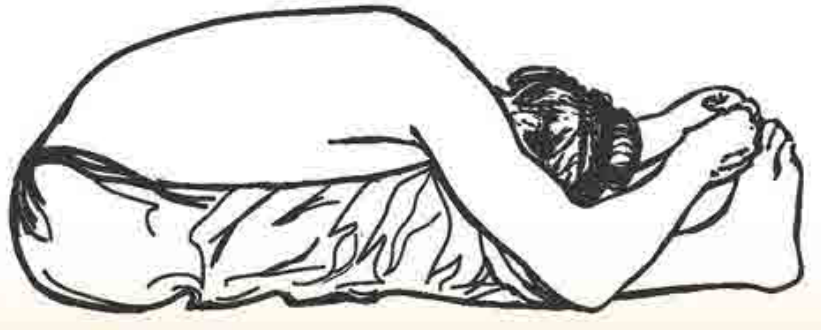
Apta Additional References Hathapradipika II.14-15, Joga Pradipika-III.69-77
Technique:
- Sit with the legs extended
- Fold forward from the hips
- Catch hold of the big toes
- Bring the forehead to the knees
Stimulates gastric fire, reduces the belly, causes prana to flow through central channel, susumna. Tones up nerves supplying the pelvic organs. Brings good health.Improves the flexibility of of the hips, buttocks, hamstring, calves and back. Stretches the back side of the body from head to ankles. Contracts the muscles on the front of body. Engages the abdominals and thorax (neck to diaphragm) Improves respiration. Improves secretion of abdominal glands. Improves blood circulation in the back and tones spinal nerves. Activates Kundalini Shakti. Increases digestive fire. Reduces visceral fat. Purifies the nadis. Removes abdominal disorders like enlargement of the spleen, digestion issues, constipation, colitis and contributes to the feeling of well-being. Causes the current of prana to pass through the susumna (posterior path), increases gastric fire, reduces belly and offers good health to a person.
Through Pascimattanasana, the whole body and mind gets rejuvenated. Holding the posture for even 5 minutes minutes is equivalent to 1 hour sleep. Try it for youself!
Sakshi Pramana Benefits Sri Mitra, India
Pavanāsana
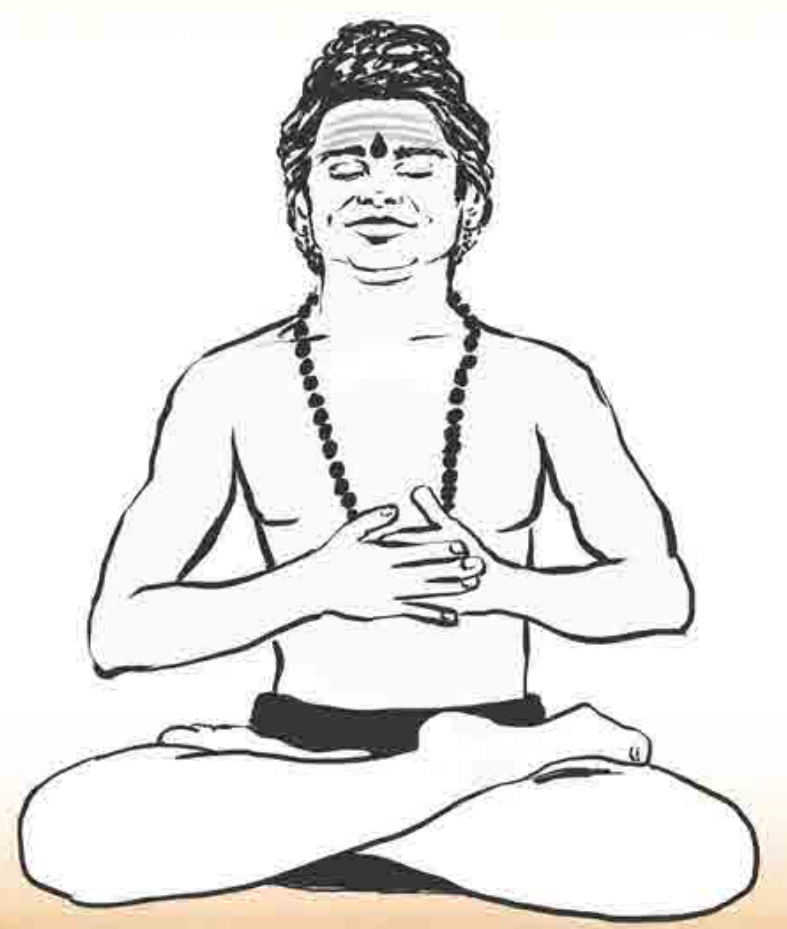
Śāstra Pramāṇa - शास्त्र प्रमाण Rudrayamala Tantra 23.107-108
अथान्यदासनं वक्ष्ये साधकानां हिताय वै ॥ २३.१०७॥
पवनासरूपो खेचरो योगिराड् भवेत् ।
स्थित्वा बद्धासने धीरो नाभेरधःकरद्वयम् ॥ २३.१०८
ऊर्ध्वमु ङः पिबेद् वायुं निरुद्ध्येत् यमाविले।
athānyadāsanaṃ vakṣye sādhakānāṃ hitāya vai||23.107|| pavanāsarūpo khecaro Yogirāḍ bhavet| sthitvā baddhāsane dhīro nābheradhaḥkaradvayam||23.108 ūddharvamu ḍaḥ pibed vāyuṃ niruddhyet yamāvile|
Now I shall talk about another asana for the benefit of the practioners; Doing the pavanāsana the practitioner can levitate (khechara) and becomes a king among Yogis. Remaining in badhāsana the resolute practitioner should place both hands on the upper part of the navel; Raise the head upwards and inhale the air and block the double-holed senses. (23.107, 108)
Technique:
- Sit in padmasana.
- Place both hands on the upper part of the navel.
- Raise the head upwards and inhale and perform kumbhaka.
Pavana-muktasana
Seated
Āpta Pramāṇa - आप्त प्रमाण Yogasanam (sacitra) 4-5
पवनमुक्तासन
द्वयोस्तु पादयोः पार्ष्णिं लात्वा स्वस्वनितम्बके ।
जानुनी वक्षसि साधुर्बध्नाति करबन्धनैः ॥ ४ ॥
एवंविध स्थितियंत्र तत्र वायुमुक्तसनम् ।
bhavedanena vaçāçuddhirmalasthavāyormocanam || 5 ||
pavanamuktāsana dvayostu pādayoù pārñëi lätvä svasvanitambake | jänuné vakñasi sädhurbadhnäté karabandhanaiù || 4 || evaàvidha sthitiryatra tatra väyumuktassanam | bhavedanena vaçāçuddhirmalasthavāyormocanam || 5 ||
Sit on ground. Bring two heels close to perineal region. Keep the knees raised. Hold knees with two hands and press them against the chest.
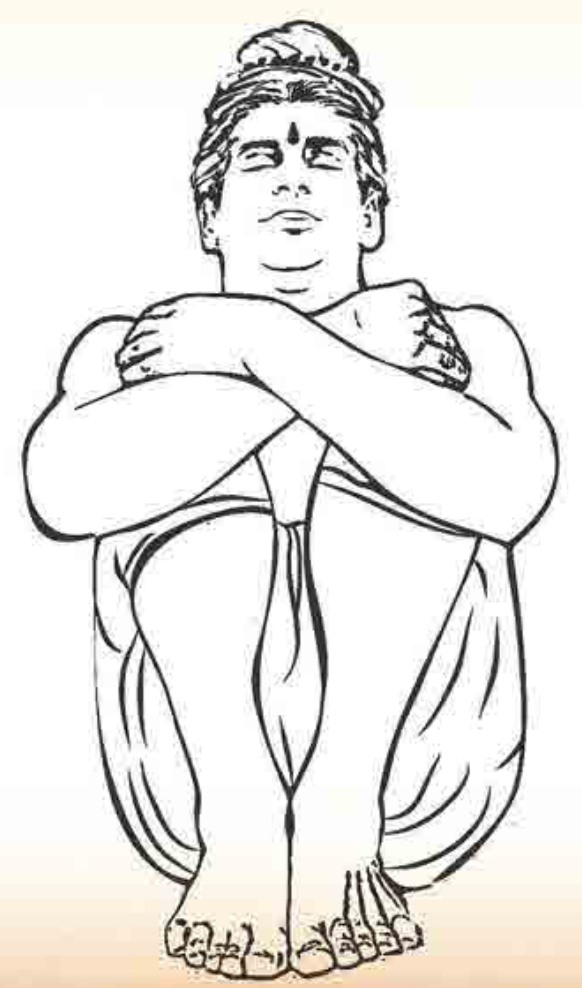
Apta Additional References Sacitra Cauryayasin Asane_5-7, Sri-Yoga-kaustubha-5, kiraṇa-ṭīkā-II.46p.242
Technique:
- Sit with the spine straight.
- Fold the legs and bring the heels to the perineum and the knees close to the chest.
- Hold the knees with the hands, arms crossed.
Compresses the internal organs. Purifies the nadis located in the abdomen. Releases obstructed vayu at the large intestine. This asana also used in Nithyananda Kriya for Achromatopsia, lower back pain, digestive issues and hypertension.
Phodyasana
Seated
Āpta Pramāṇa - आप्त प्रमाण Jogapradipika 123-124
फोद्यासन
दोऊ हाथ पग बाहर आनै गोडातरेँ कागसी ठानै ।
अंगुष्ट पिंडली लगता धरै चरण उभै अकासदिसी करे ।
पुष्टिरु कूला धरती लावै उदरसंकोच ऊर्ध ठहरावै ।
गोडा सीँसभि थंभन करै इह विधि फोद्यासन धरै ॥ १२३
phodyāsana
doū hātha paga bāhara ānai goòätarai kāgasé öhänai |
aìguñöa piëòalé lagatä dharai caraëa ubhai akäsadisé kare |
puñöiru külä dharaté lävai udarasaìkoca ürdha öhaharävai |
goòä sésabhi thambhana karai iha vidhi phodyäsana dharai || 123 ||
for extended verse see end of chapter
Sit with legs extended on ground. Slowly raise legs upward by catching hold of calves with two hands. By contracting the abdomen, raise the head up towards the knees.
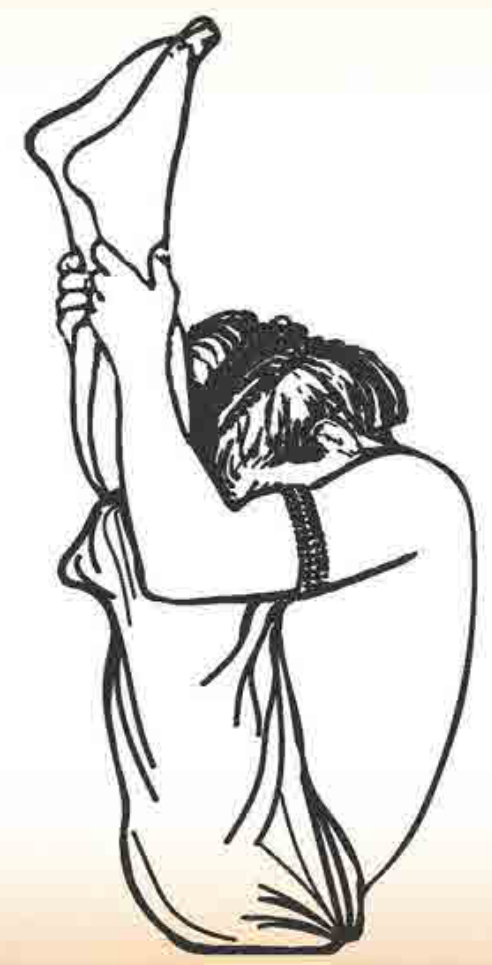
Technique:
- Be seated with legs stretched on the ground.
- Slowly raise the legs upward by catching hold of thighs behind the knees.
- Contract the abdomen and extend the legs.
- Bring the head towards the knees
Compresses the internal organs. Purifies the nadis located in the abdomen. Releases obstructed vayu at the large intestine. This asana also used in Nithyananda Kriya for Achromatopsia, lower back pain, digestive issues and hypertension.
Prāṇāsana
Seated
Śāstra Pramāṇa - शास्त्र प्रमाण Rudrayamala Tantra 23.66,67
एतत् प्रभेदं वक्ष्यामि करोति यः स चामरः।
एकपादमूरौ बद्ध्वा स्कन्धेऽन्यत्पादरक्षणम् ॥ २३.६६॥
एतत्प्राणासनं नाम सर्वसिद्धिप्रदायकम्।
वायुमूले समारोप्य ध्यात्वाऽऽकुञ्चय प्रकारयेत् ॥ २३.६७॥
etat prabhedaṃ vakṣyāmi karoti yaḥ sa cāmaraḥ| ekapādamūrau baddhvā skandhe'nyatpādarakṣaṇam||23.66|| etatprāṇāsanaṃ nāma sarvasiddhipradāyakam| vāyumūle samāropya dhyātvā"kuñcaya prakārayet||23.67||
I now tell you a variant of this āsana which leads to immortality; Lock one foot on the thigh and the other on the shoulder. This is called prāṇāsana which gives the practitioner all types of siddhis. This should be done by holding the breath in the mūlādhāra and then practised by contracting it. (23.66-67)
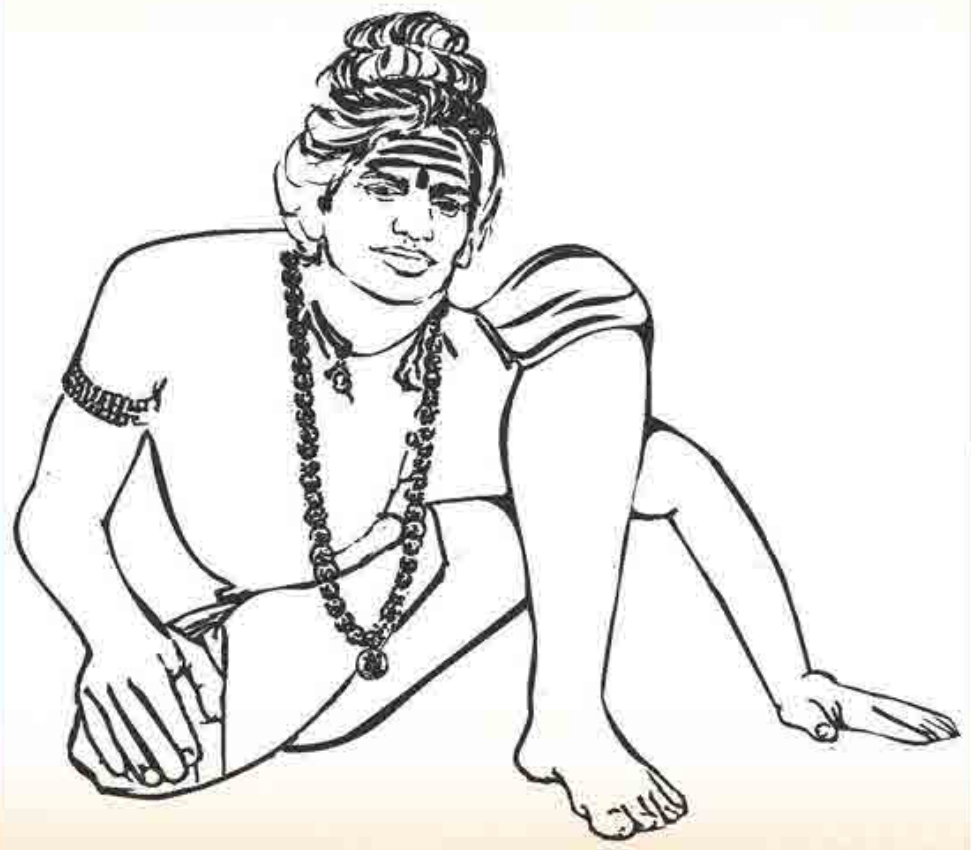
Technique:
- Sit and fold one foot at the root of the thigh.
- Bring the other shoulder below the leg.
- Hold the breath judiciously contracting the base of the spine.
Prasarita
Seated
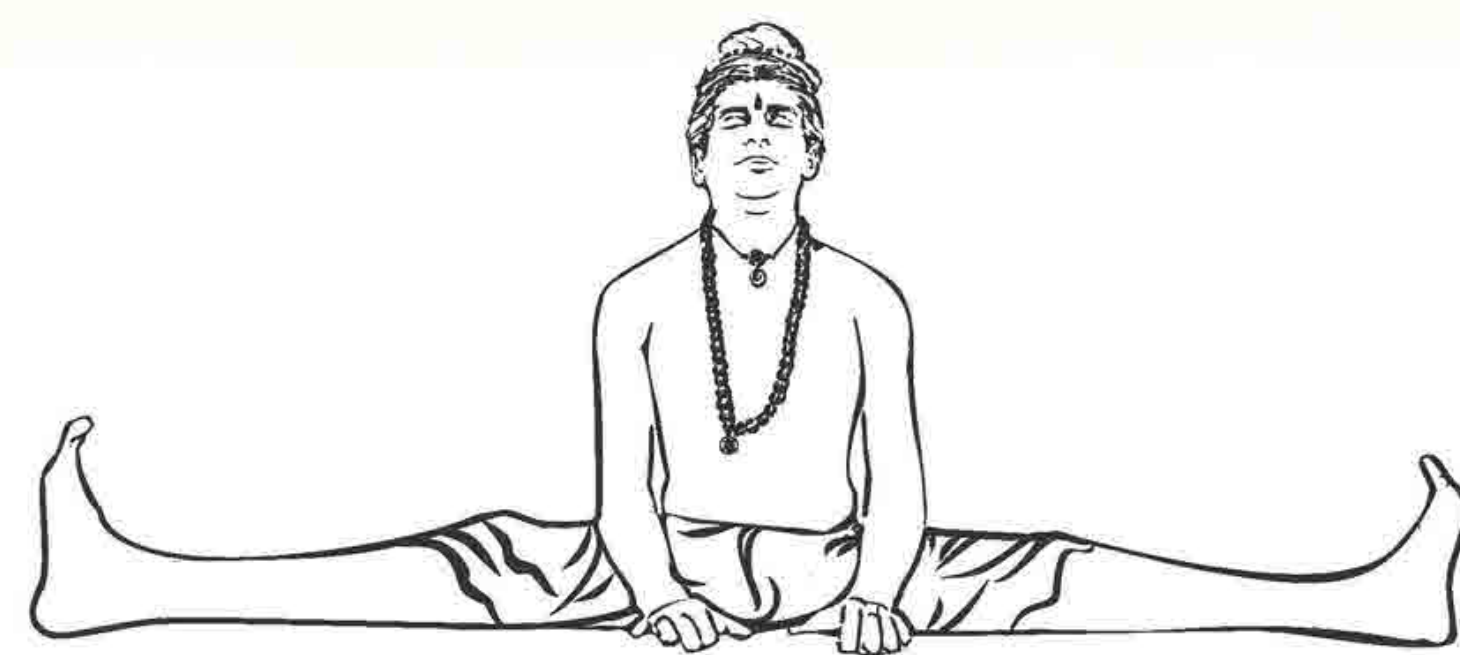
Śāstra Pramāṇa - शास्त्र प्रमाण Kirana Agama - Yoga Pada (11)
पादद्वयं प्रसार्यात्म-सुमुखं सुप्रसारितम् | (११)
pāddvayaṁ prasāryātma-sumukhaṁ suprasāritam | (11)
Stretching out the two legs (in sideways) keeping his face and chest straight, prasarita can be assumed.
Technique:
- Sit upright.
- Extend the legs in opposite directions.
Rudra asana I
Seated
Āpta Pramāṇa - आप्त प्रमाण Joga Pradipika-228-230
वाम चरनपरि दखिन राखै एक जुगति असीविधि दाखै ।
वाम पग्थली माहिली कोर दखिन कीजु बाहरली वोर ॥
ऐसे दोउ देत मिलाई गोडा राखै आडेवाई ।
एडी मूलद्वारतरि देवै गोडा उपरि हस्त जो लेवे ॥ २२८ ॥
vāma caranapari dachina rākhai eka jugati asévidhi däkhai | väma pagathalé mähilé kora dachina kéju bäharalé vora || aise dou deta milä é goòä räkhai äöeväé | eòé müladväratari devai goòä upari hasta jo leve ||228 || "for extended verse see end of chapter"
Place right foot on left in such a way that the outer part of right foot should come on the inner part of the left foot and heels be placed below the anus. Place both the hands on respective knees. Gaze between the eyebrows. If apana vayu is obstructed because of any knot, such knots are dissolved as a result of this asana. Then inhale through the left nostril upto 12 matra. Practising kumbhaka as per ones capacity then exhale through right nostril. One should practise Pranayama in this manner for eight times.
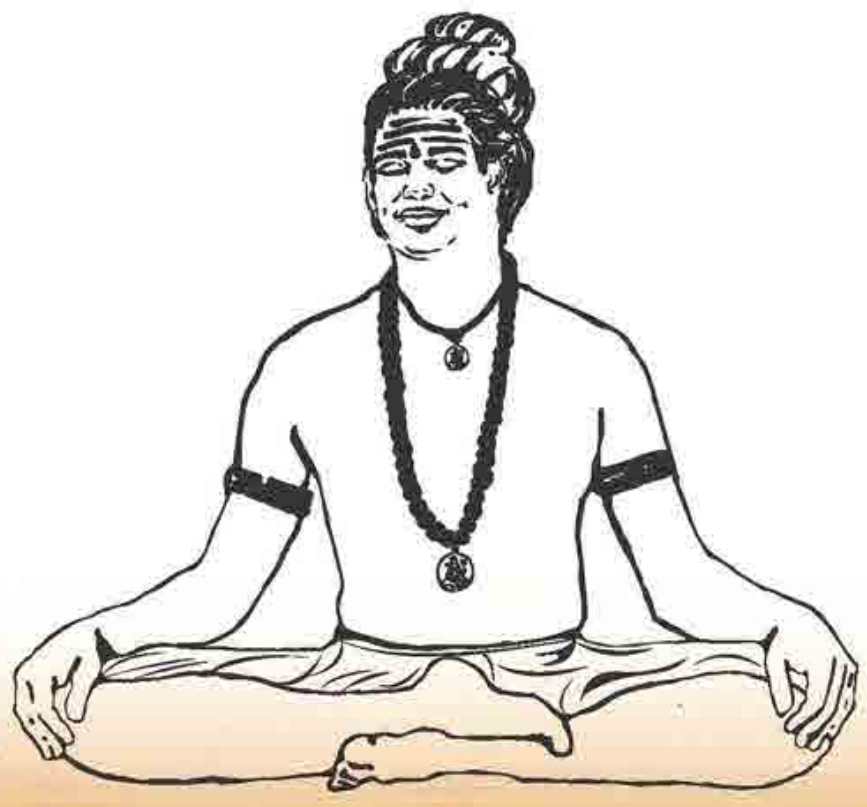
Apta Additional References YMS 47, DP variations JP(L) 43 and YMS 25
Technique:
- Sit upright.
- Place the feet in such a way that the ankles come on top of the other.
- Place the heels at the anus and spread the knees.
- Place the hands on the knees and fix the gaze at the third eye.
This asana helps purifying the path of Apana vayu
Rudra asana II
Seated
Āpta Pramāṇa - आप्त प्रमाण Yoga-Asanamala sacitra 25
रुद्र आसन
पगथली संपुट करि हाथस्यौ पग उचाई
पगांका अंगुठा दोउ लेऊ परलीकानी तालवै लगावै
पछै दोउ हाथ पगामाहे करि नीचै करि चीरै आणि
पगाकी आगलया कांकसी करै दृष्टि नासा अग्रघ
rudra äsana pagathalé sampuöa kari häthasyau paga ucäé pagäkä aïguöhä dou leü paralékäné tälavai lagävai pachai dou hätha pagämähe kari nécai kari cérai äëi pagäké ägalyä kàlkasé karai dåñöi näsä agra for extended verse see end of chapter
Sit on ground. Catch hold of respective feet by inserting hands below the pair of heels. Pull the heels towards chest. Eyes remain fixed at the tip of nose.
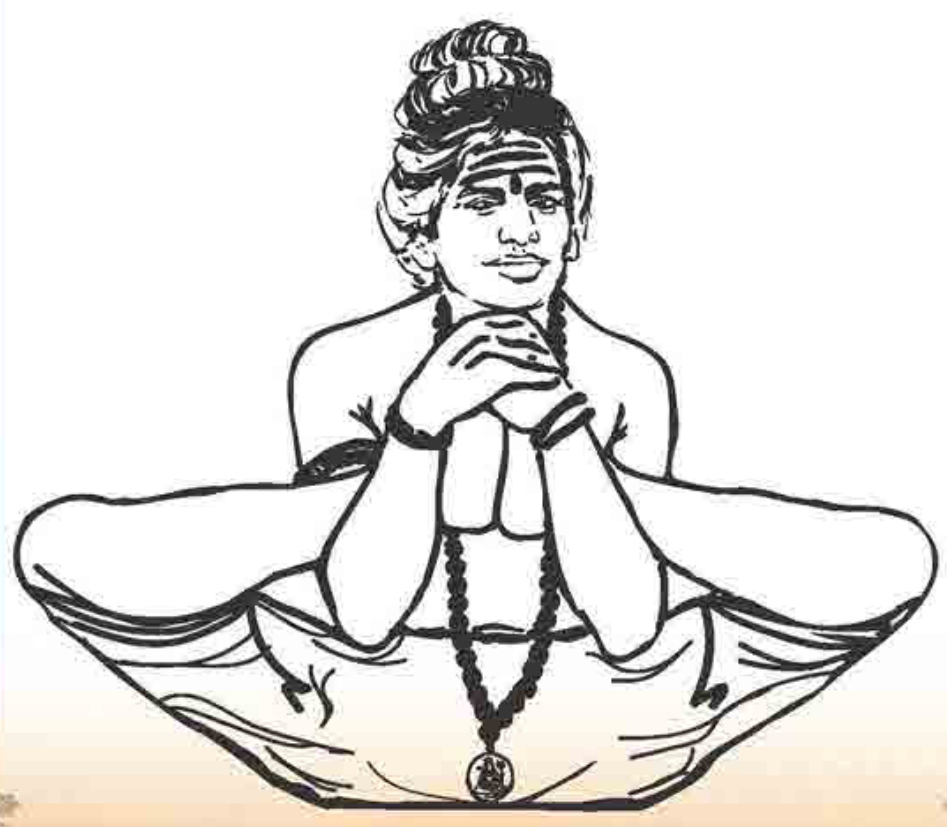
Technique:
- Sit with the sole of the feet together
- Catch hold of the feet, forming a finger lock
- Keep the spine straight and lift the feet to the chest
- Gaze at the tip of the nose
Helps improve disorders in the abdomen region.
Salabhasana
Prone
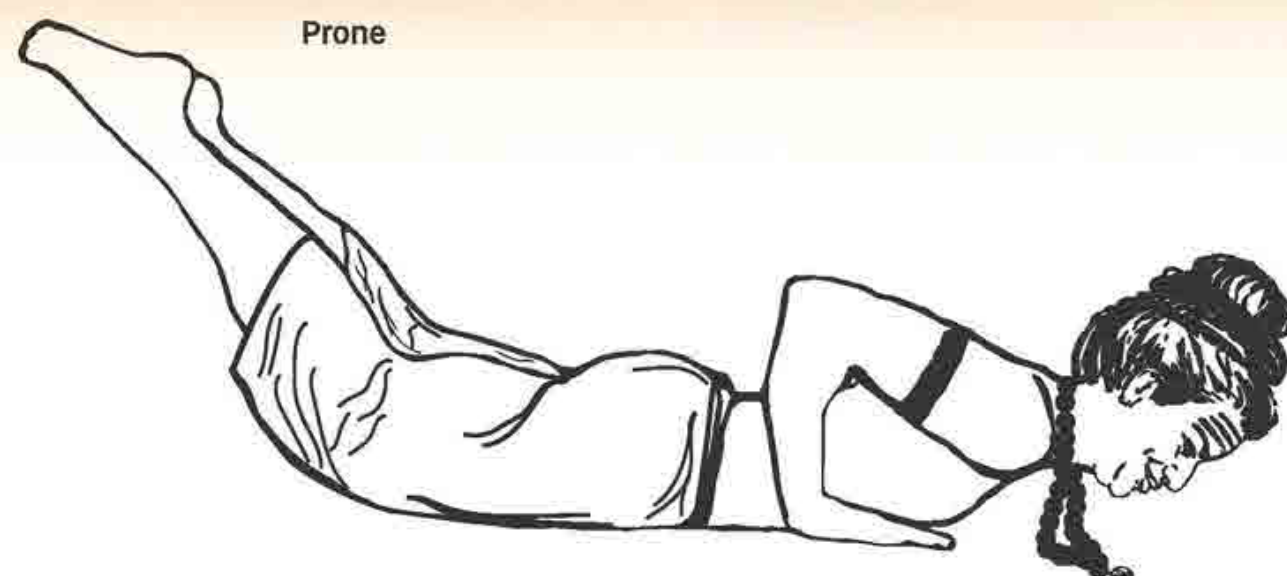
Āpta Pramāṇa - आप्त प्रमाण Gheranda Samhita II 39
अध्यास्यः शेते करयुग्मवक्षो
भूमिमवष्टभ्य करयोस्तलाभ्याम्।
पादौ च शून्ये च वितस्ति चोर्ध्वं
वदन्ति पीठं शलभं मुनीन्द्राः ॥३८॥
adhyāsyaù çete karayugmavakño
bhümimavañöabhya karayostaläbhyäm |
pädau ca çünye ca vitasti cordhvaà
vadanti péöhaà çalabhaà munéndräù ||38||
Lie on the ground, face downwards, the two hands being placed on the chest, touching the ground with the palms, raise the legs in the air one cubit high. This called the Locust-posture.
Contraindication: Do not practice if pregnant.
Technique:
- Lie down with face downwards.
- Place both hands next to the chest, palms on the ground.
- Raise the legs in the air about 9 inches.
- Builds strength and flexibility in the lower back
- Strengthens the arms and shoulders
- Recommended for sciatica, lower back pain and slipped disc
- Massages the internal organs
- Stimulates digestive fire and improves digestionlmproves functioning of the lower abdominal organs
- Beneficial for anorexia and constipation
- Stimulates the Swaddhistana chakra
- Improves concentration
Samānāsana
Seated
śāstra Pramāṇa - शास्त्र प्रमाण Rudrayamala Tantra 23.71, 72
समानासनमावक्ष्ये सिद्धमन्त्रादिसाधनात् ।
एकपादमूरौ दत्त्वा गुह्योऽन्यल्लिङ्गवक्त्रके ॥२३.७१॥
एतद् वीरासनं नाथ समानासनसंज्ञ कम्।
इत्याकृत्य जपेन्मन्त्रं धृत्वा वायुं चतुर्दले ॥२३.७२॥
samānāsanamāvakṣye siddhamantrādisādhanāt|
ekapādamūrau dattvā guhyo'nyalliṅgavaktrake||23.71||
etad vīrāsanaṃ nātha samānāsanasaṃjña kam|
ityākṛtya japenmantraṃ dhṛtvā vāyuṃ caturdale||23.72||
(Now I tell you about) samānāsana which is the cause of siddamantra etc.; Place one foot on the chest and the other on (the place between) the anus and the genitals. This, O Lord! is named vīrāsana or samānāsana. While doing this āsana (one must) chant the mantra holding the breath in the caturdala (four-leaved) of the mūlādhāra. (23.71-72)
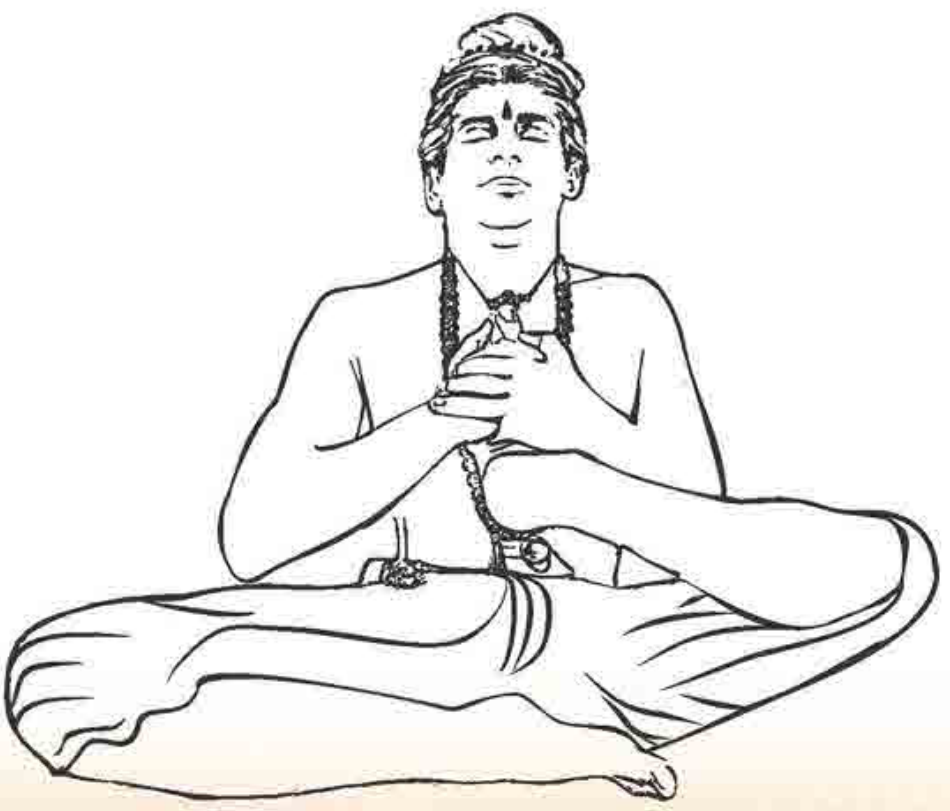
Technique:
- Sit with one heel pressed at the perineum.
- Bring the other foot to the chest.
- Hold the breath judiciously.
Sama-asana
Seated
Āpta Pramāṇa - आप्त प्रमाण Yoga-rahasya VI. 8,10
इदानीं गर्भिणीनां योगाभ्यासो यथा लघु ।
सुखप्रसवलाभाय प्रोच्यते प्राक्तने पथि ॥
दण्डपद्मभरद्वाजवीरवज्रसमानि तु ।
आसनानि सदा कुर्यात् सुदीर्घैः रेचपूरकैः ॥
idänéä garbhiëénäà yogäbhyäso yathä laghu | sukhaprasavaläbhäya procyate präktane pathi || daëòapadmabharadväjavéravajrasamäni tu | äsanäni sadä kuryät sudérghaiù recapürakaiù ||
It is a simple cross-legged position wherein one sits on ground by keeping the body straight. One is supposed to practice prolonged recaka and puraka.
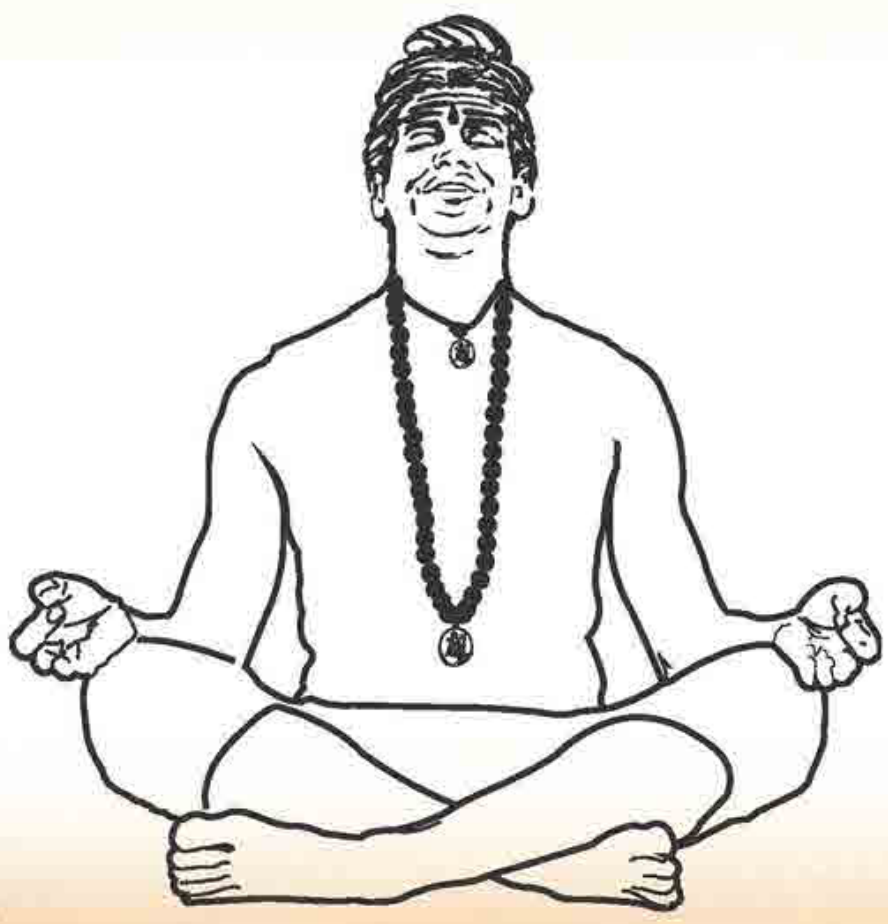
Technique:
- Sit in comfortable possition by crossing the legs.
- Keep the body straight.
- Practice pranayama in this position.
It has been suggested for pregnant women
Sankatasana
Seated
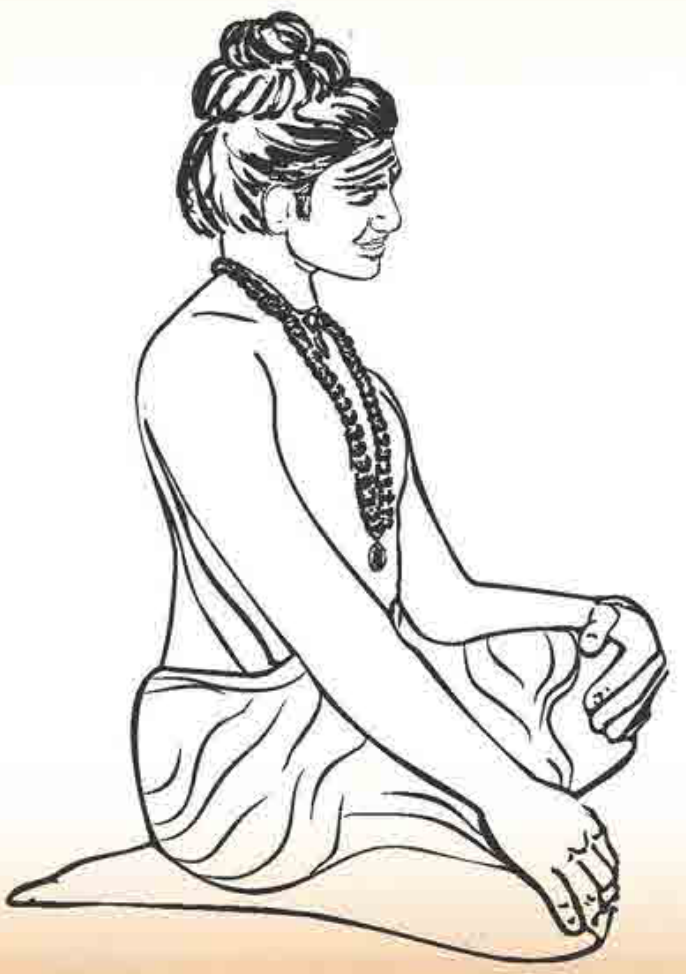
Āpta Pramāṇa - आप्त प्रमाण Gheranda Samhita II 28
वामपादं चितेर्मूलं संन्यस्य धरणीतले ।
पाददण्डेन याम्येन वेष्टयेद्वामपादकम् ।
जानुयुग्मे करयुग्ममेतत् सङ्कटमासनम् ॥२८ ॥
vāmapādaà citermūlaà sannyasya dharaëétale | pādadaëòena yāmyena veñöayedvāmapādakam | jānuyugme karayugmametat saìkaöamāsanam ||28||
Placing the left foot and the leg on the ground, surround the left foot by the right leg; and place the two hands on the two knees. This is the Sankatasana.
Technique:
- Kneel with the left foot on the ground.
- Sit on the left heel.
- Wrap the right leg over the left.
- Place the hands on the opposite knees.
Removes discomfort and swelling of legs. Improves digestion, assimilation and elimination.
Santa-dhuna-asana
Seated
Āpta Pramāṇa - आप्त प्रमाण Yoga-asanamala sacitra 109
आसण कौ गुण - मन की चंचलता मीटै ।
āsaëa kau guëa - mana ké caïcalatä méöai |
Sit on floor with legs extended. Bend the left leg, and place its heel at the right side of the genital. Now place right foot over left. Place hands on respective knees with palms upturned (YMS-109)
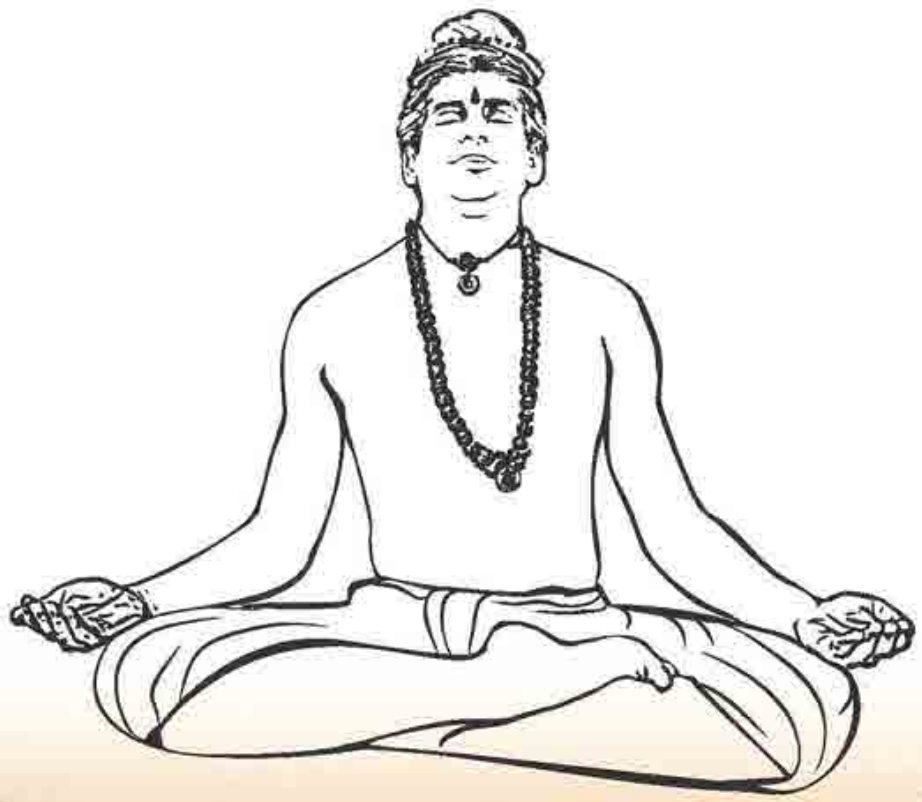
Technique:
- Sit with the left heel at the right side of the genital.
- Place the right foot over the left.
- Place hands on respective knees with palms upturned.
Overcomes fickleness of mind
Saptarishi asana
Seated
Āpta Pramāṇa - आप्त प्रमाण Joga pradipika-III.62-63
दोउ पग की पगथली तिन की लांक जु सोय ।
दोउ काषनि मैं धरै नासाद्रिष्ट समोय ॥ ६२ ॥
बहुरौ हस्त कांकसी करै । सो ले आनि सिषा पर धरै ।
dou paga ké pagathalé tina ké läika ju soya |
dou käñani maià dharai näsädriñöa samoya || 62 ||
bahurau hasta käikasé karai, so le äni siñä para dharai |
dina prati téna bera sadhi ävai, saptariñi so näma kahävai || 63 ||
Place two soles in the respective armpits, form fingerlock and put it on head, gaze at the nose. Cleanses whole body, wards off diseases entirely. Purifies lotus of the heart. Should be practised three times a day for perfection.
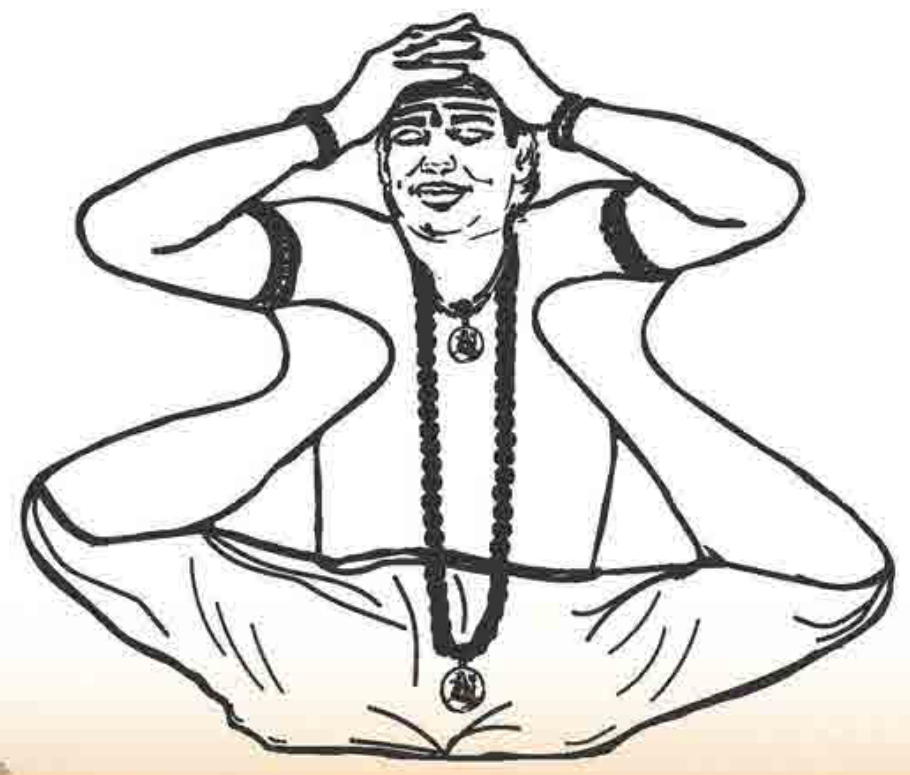
Technique:
1. Sit on the floor with the soles of the feet in the armpits. 2. Form the fingerlock and put it on the head. 3. Fix the gaze on the nose.
Cleanses the whole body, Purifies the lotus of the heart, and removes all the diseases.
Sarpāsana
Standing
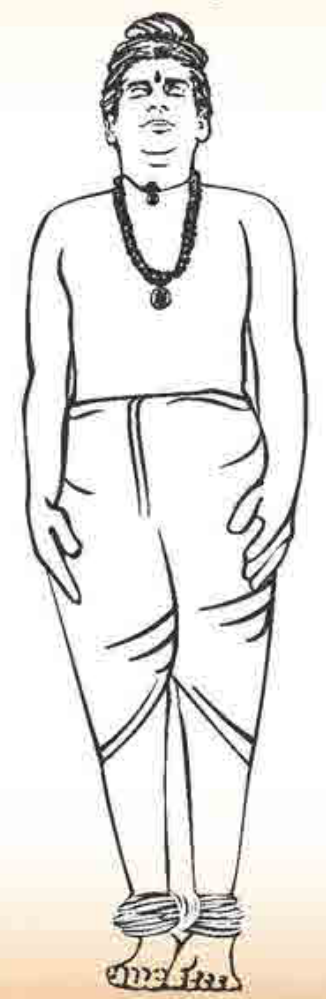
Śāstra Pramāṇa - शास्त्र प्रमाण Rudrayamala Tantra 23.109-111
अथ सर्पासनं वक्ष्ये वायुपानाय केवलम् ॥ २३.१०९॥
शरीरं द डवत्तिष्ठेद्रज्जुबद्धस्तु पादयोः ।
वायवी कु डली देवि कु डलाकारमङ्गुले ॥ २३.११०॥
atha sarpāsanaṃ vakṣye vāyupānāya kevalam||23.109|| śarīraṃ da ḍavattiṣṭhedrajjubaddhastu pādayoḥ| vāyavī ku ḍalī devi ku ḍalākāramaṅgule ||23.110||
Now I shall talk about sarpāsana that is especially good for inhaling breath. Tie both the feet with a rope and stand erect like a rod. The airy Kundali devi is shaped like a finger held in a ring form. It is adorned with ornaments etcetera. What I said is the stable sarpāsana. (23.109-110)Do this asana several times in the night by sacrificing sleep and indolence. By the help of vital breath, all obstacles such as sleep etcetera come under your control. (23.111)
Technique: 1.Tie both the feet with a rope and stand upright.
2. Hands at the side of the body touching the thighs.
Śāstra Pramāṇa - शास्त्र प्रमाण Rudrayamala Tantra 23.71, 72
Sarvangasana
Inverted
Apta Additional References Also known as surya-mandala in Yoga-rahasya of Srinatha-muni-I.53 and urdhva-sarvangasana in Sri-Yoga-kaustubha-73. Also found in: YMP-38, KT-II.46, Sri-Yoga-kaustubha-73, Sacitra Cauryayasin Asane-93, Yas-30, Yoga-rahasya of Srinatha-muni-II.13, AR-21:1936
अथ वक्ष्येऽत संक्षेपात् सर्वाङ्गासनमुत्तमम् । यत्कृत्वा योगनिपुणो विद्याभिः पण्डितो यथा। २३.८७॥
अधो निधाय शीर्षं च ऊर्द्धवपादद्वयं चरेत् । पद्मासनं तु तत्रैव भूमौ कूर्परयुग्मकम् ॥ २३.८८॥
atha vakṣye'tra saṁkṣepāt sarvāṅgāsanamuttamam|
yatkṛtvā yoganipuṇo vidyābhiḥ paṇḍito yathā||23.87||
adho nidhāya śīrṣa ca ūddharvapādadvayaṁ caret|
padmāsanaṁ tu tatraiva bhūmau kūrparayugmakam||23.88||
for extended verse see end of chapter
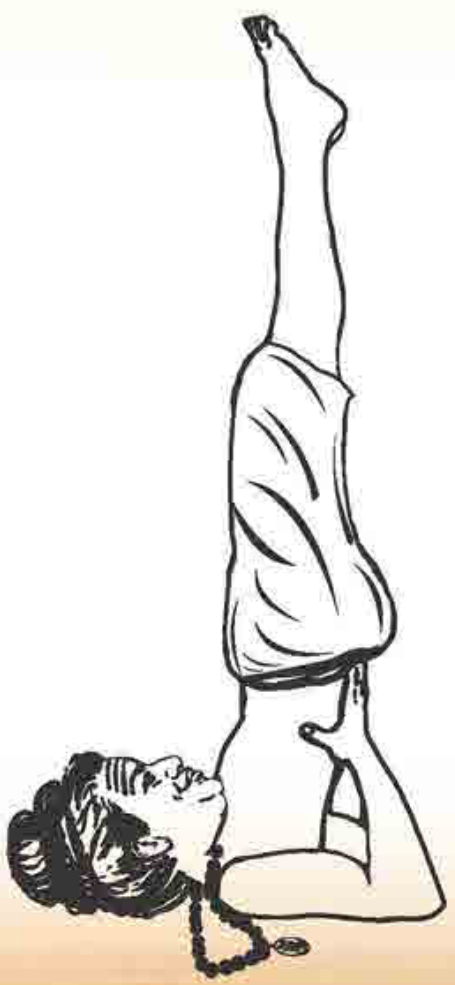
Technique:
- Lie on the back and bring the knees to the chest.
- Keep the elbows close to the body and draw the shoulders closer together
- Lift the legs up to a vertical position supporting the back with the hands
- Look straight up.
Now (I shall talk of) supreme sarvāṅgāsana briefly. Doing which the one becomes proficient in Yoga like a pandita who is the master of knowledge. (23.87) The head should be placed on the floor and both the legs raised upwards; Position both the elbows on the floor just as in padmāsana. (23.88) The adept practitioner should do this every danda for relaxation; Do not hold the breath without doing the sarvāṅgāsana. (23.89) Doing so the subtle breath begins to circulate within a month; In three months (the sādhaka) attains the stature of a deva and becomes blissful and relaxed. (23.90)
• Help relieve Thyroid glands problem. • Good for heart functioning and also prevents palpitations. • Relieve Varicose vein. • Help asthma and respiratory problems. • Good for asthma. • Relieve stomach problems, e.g. ulcer. • Strengthen the body. • Improve sleep. • Soothes headache. • Good for those have hypertension, nervous breakdown, irritation and temper.
Āpta Pramāṇa - आप्त प्रमाण Joga pradipika-III.62-63
विपरीतं मण्डलं च द्विधैव विदितं हि नः । दण्डासनं द्विधा प्रोक्तं विपरीतोपवेशने ॥
सर्वाङ्गशीर्षभागास्तु षट्षष्टिः प्रथितास्तु ते ।
viparītaṁ maṇḍalaṁ ca dvidhaiva viditaṁ hi naḥ |
daṇḍāsanaṁ dvidhā proktaṁ viparītopaveśane ||
sarvāṅgaśīrṣabhāgāstu ṣaṭṣaṣṭiḥ prathitāstu te |
Feels very feminine, nourising to the system and cooling; like the pose takes care of your system - mother-like energy. It calms one down.
Sakshi Pramana Benefits
Keong Chow, Singapore, Yoga Teacher/Freelancer
Then there are two types of inverted mandalas (arrangements)- Sirsasana and Sarvangasana. Dandasana is also of two types inverted (viparita dandasana) and seated (dandasana). It has been proclaimed that there are sixty six variations of Sarvangasan and sirasasana.
Saurasana
Seated
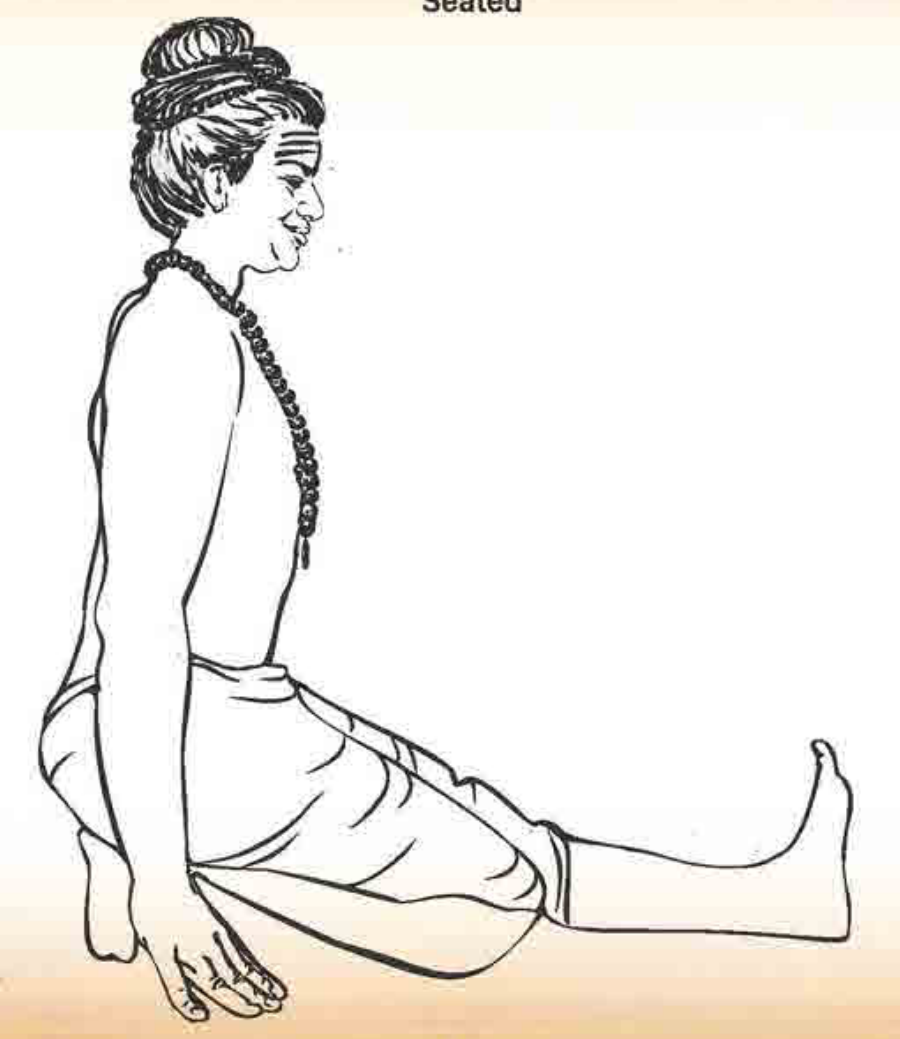
Āpta Pramāṇa - आप्त प्रमाण Hatharatnavali III 63
प्रसार्यैकं पादextलं संस्थाप्य त्वेकपादकम् ॥६३॥
prasāryaikaà pādatalaà saàsthāpya tvekapādakam || 63||
Stretch out one leg and place the other foot on the ground. 63.
Technique:
- Fold one leg and sit on the heel, foot upright.
- Stretch out the other leg pointing the toes up.
- Keep the hands by side with fingertips touching ground for balance.
- Keep spine erect.
Strengthens the feet, ankles, legs and back. Stretches the hamstrings. Develops balance, stability and focus.
Stretches out hamstrings, increased kundalini flow in the spine
Sakshi Pramana Benefits Li Yeen Chow
Savasana
Supine
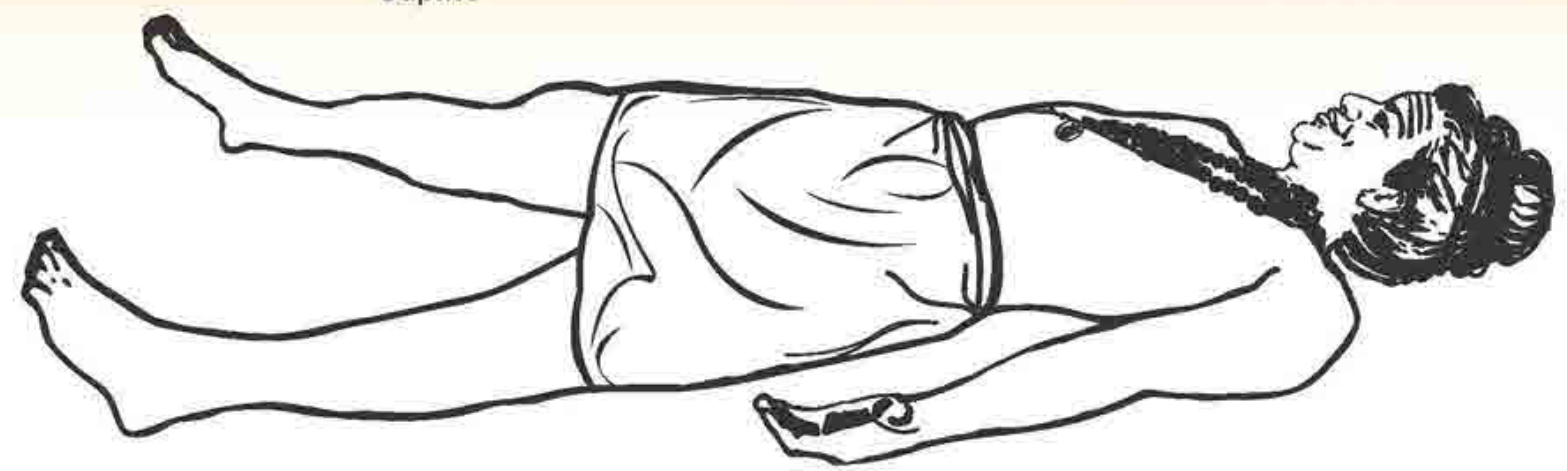
Āpta Pramāṇa - आप्त प्रमाण Hathapradipika II.18
अथ शवासनम् उत्तानं शववद् भूमौ शयनं तु शवासनम् ॥
शवासनं श्रान्तिहरं चित्तविश्रान्तिकारकम् ॥ १८ ॥
atha śavāsanaṁ uttānaṁ śavavad bhūmau śayanaṁ tu śavāsanaṁ || śavāsanaṁ śrāntiharaṁ cittaviśrāntikārakam || 18 ||
One lies supine on the ground (motionless) like a dead body. This is savasana, which removes physical fatique and gives rest to the mind. 18
Apta Additional References Hatharatnavali 3.76, also known as Pretasana (SYK-17)
Technique:
- Lie on the ground with the arms by your side at a comfortable distance from the body.
- Keep the head straight.
This asana removes physical fatique and gives rest to the mind.
Brings one into a no-thought space, increased relaxation, going into restful awareness
Sakshi Pramana Benefits Li Yeen Chow
Sayita-pascimatanasana
Seated
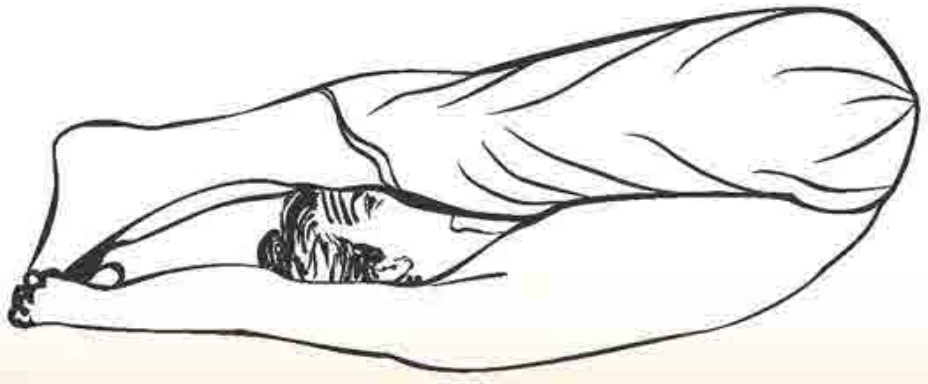
Technique:
- Lie supine.
- Rool over bringing the toes to the ground over head.
- Bring the hands to the toes.
- Keep the legs straight.
Benefits: • Stretches the spine, back, hamstrings and buttocks ... engage abdominals • Stimulates the liver, kidneys, ovaries and uterus • Helps menopause symptoms • Improves digestive fire, appetite, reduces obesity and constipation • Increases blood flow to head • Calms the mind, reduces stress, anxiety, mild depression, fatigue and helps with headaches • Invigorates the nervous system
Stretches the back, and back of legs, feeling of playfulness
Sakshi Pramana Benefits Ma Nithya Nirishvarananda, Miami, Yoga Acharya
Āpta Pramāṇa - आप्त प्रमाण Hatharatnavali III 68
तानं शयित्वा तु कुर्वीत शयितपश्चिमतानकम् ॥६८ ॥
tānaà çayitvä tu kurvéta çayitapaçcimatänakam ||68||
Lie supine and practice pascimatana to form sayita-pascimatana.
Contraindications : Do not do with any back injury
Shibu-asana
Arm Balance
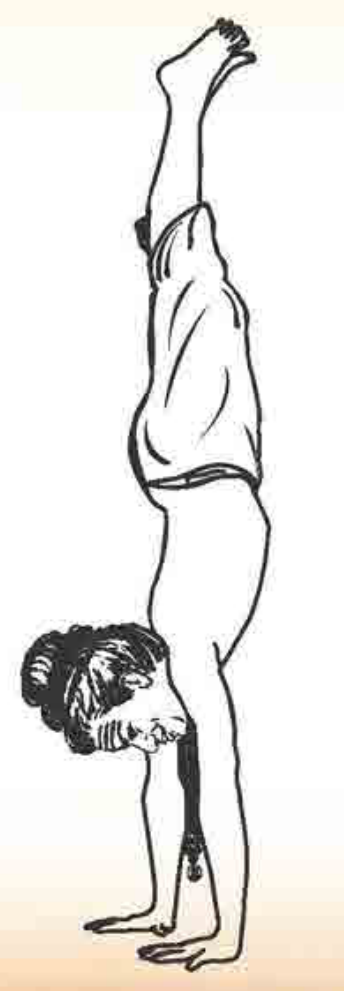
Āpta Pramāṇa - आप्त प्रमाण Yoga Asanamala Sacitra .88
शिभु आसन
दोउ पग जोडी मांहि गूलफ मिलाई उभौ हौय दोउ हाथ जोडि संपुट करै
आकास दिस सुधो पसारै मस्तग षवाचि राखै द्रिष्टि त्रिकुटी आसन सु तेज बधै ।
sibhu āsana
dou paga jodé mähi gülapha miläé ubhau hauya dou hätha joòì sampūta karai
äkāsa disa sudho pasärai mastaga ñavāci rāñai driñöi trikuöé äsana su teja badhai |
Place palms firmly on ground. Raise whole body up with support of hands alone. Legs are stretched towards the sky. Eyes are fixed between eyebrows.
Apta Additional References This is the same as mukta-hasta-vrksasana-ii, vajrol(n)i-mudra
Technique:
- Place the hands firmly on the ground,
- Kick the legs up and balance on the hands.
- Gaze between the eyebrows.
Energy (tejas) in the body will be enhanced through this asana.
Shiva-lingasana
Seated
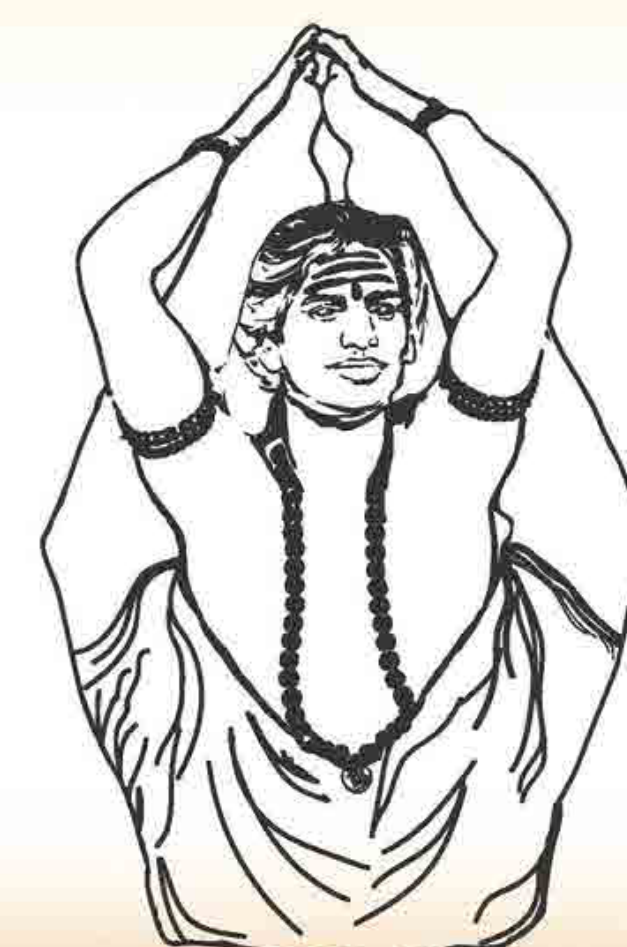
Āpta Pramāṇa - आप्त प्रमाण Joga Pradipika (233-234)
दोउ पाव सीसपरि आनै फुनि एक जुगति और ताहां ठाने ।
दोउ पगके अंगुष्ट जोऊ तिनपरि मूठी कर की दोउ ॥ २३३ ॥
तला उपरी धरै जु आन भूपरि रहै मूल के पानि ।
नासा अग्र द्रिष्ट ठहरावै सकल रोग नासको पावै ॥ २३४ ॥
dou pāva sēsapari ānai phuni eka jugati aura tãhãä öhäneà | dou pagake aìguñöa joü tinapari müöhé kara ké dou || 233 || talä uparé dharai ju äna bhüpari rahai müla ke päni | näsä agra driñöi öhaharävai sakala roga näsako pävai || 234 ||
While sitting on floor, raise both legs over the head with help of hands. Hold the toes with hands forming fists. Direct the gaze at the tip of nose.
Apta Additional References YMS-50, JP(L-45). Also called: loha-tita-asana
Technique:
- While sitting on floor, raise both legs over the head with the help of hands.
- Hold the toes with hands forming fists.
- Direct the gaze at the tip of nose.
This asana relieves all disease.
Siddha-haratali-asana
Seated
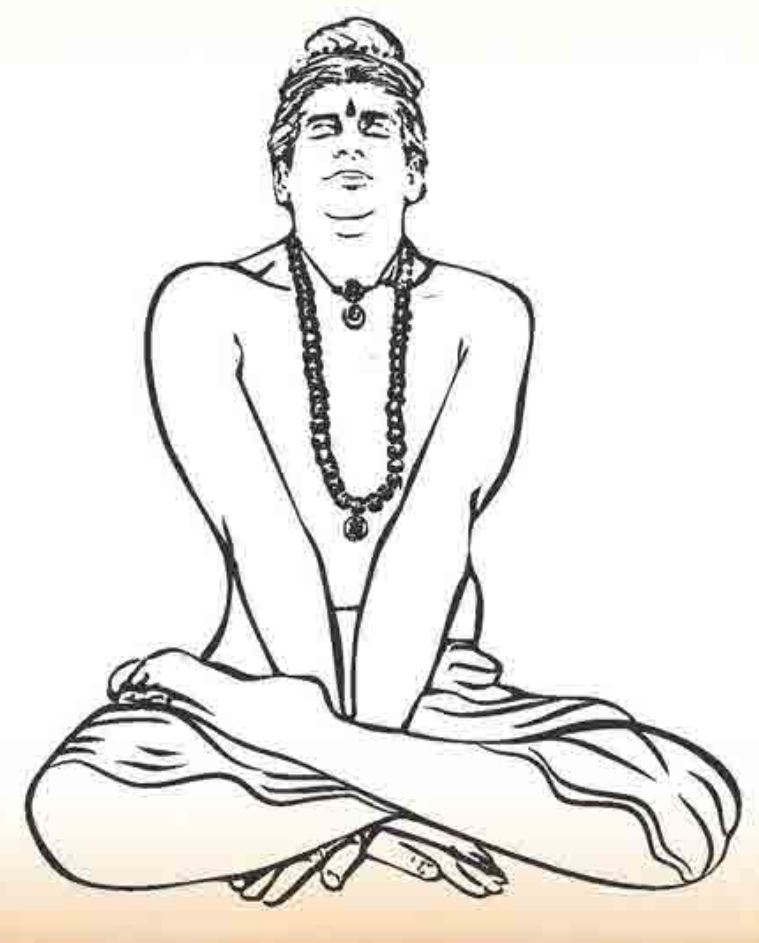
Āpta Pramāṇa - आप्त प्रमाण Joga Pradipika (330-332)
सिद्धहरताली आसन १
प्रथमं पदमआसन को करे हस्त दोउ गोडा संधि धरै ।
उभे हथेले भू धरि राखै पोहचा गोडा संधिमै दाखै ॥ ३३० ॥
पिष्ठि हथेली की है जहां आसन लगवा राखै तहां ।
नासाद्रिष्टि अचल ठहरावै सिद्ध हस्ताली नाम कहावै ॥ ३३१
siddhaharatālē āsana 1
prathamaà padamaäsana ko kare hasta dou goòà sandhi dharai |
ubhe hathele bhû dhari räkhai pohacä goòaa sandhimai däkhai || 330 ||
piñöi hathelé ké hai jahäm äsana lagavä räkhai tahää |
näsädriñöi acala öhaharävai siddha hastälé näma kahävai || 331 ||
for extended verse see end of chapter
First adopt padmasana, by crossing the legs. Insert both hands through knees and place them on ground. Fix the gaze at the nose.
Technique:
- Sit in Padmasana by crossing the legs.
- Insert both hands through the gap between the legs.
- Place the hands on the ground.
- Fix the gaze at the nose.
Practicing this asana constantly prevents diseases, and the body becomes cheerful and alive.
Strong kundalini awakening, feeling of lightness
Sakshi Pramana Benefits Ma Nithya Nirishvarananda, Miami, Yoga Acharya
Siddha-haratali-asana
Seated
Āpta Pramāṇa - आप्त प्रमाण Yoga-Asanamala Sacitra (ms.)-64
सिद्धहरताली आसन २
पगथली संपुट करि आगुल्या कौ संपुट करै
माही षुलो राषै दोऊ हाथा की कागसी करि
पगथल्या की बारिली कौर येडी धरती तेकैद्य
siddhaharatālé äsana 2
pagathalé sampuöa kari ägulyä kau sampüöa karai
mähé ñulo räñai doü häthä ké kägasé kari
pagathalyä ké bärilé kaura yeòé dharaté tekai
for extended verse see end of chapter
While sitting on ground with legs spread in front, bring heels together. Keep toes slightly separated. Keep knees spread to sides interlock the fingers and place it under the feet. Press heels against the generative organ. Fix the eyes at nose tip.
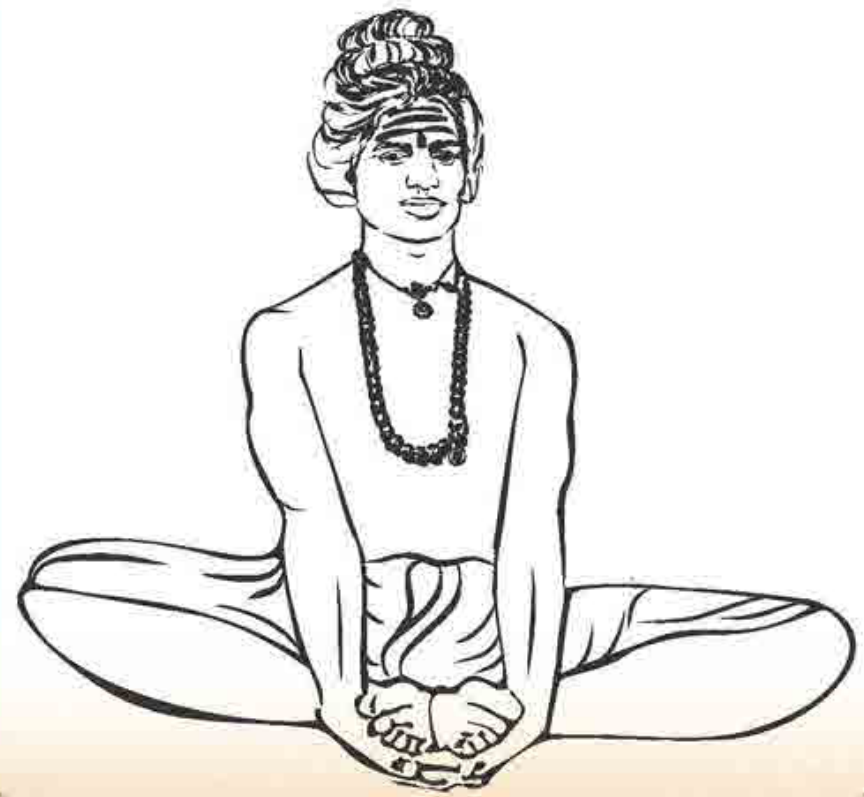
Technique:
- Sit with the spine straight.
- Keep the heels together and toes separated.
- Interlace the fingers under the feet and press the heels at the generative organs.
- Gaze at the tip of the nose.
Bring contol over (relieves) vitiated vayu located at generative organ.
Siddha-samadhi asana
Forward Bend
Āpta Pramāṇa - आप्त प्रमाण Joga Pradipika-250-253
दोउ पगथली संपुट करै सो ले आगा मे धरै ।
अंगुल आठ आंतरौ राखै एडी को ऐसै विधि दाखै ॥ २५० ॥
आणे हाथ पगां के माही कौहणी सहित तलाया ताई ।
आम्हा साम्हा कर पुनि दोई भूपर राखै सुधा सोई ॥ २५१ ॥
dou pagathalé sampuöa karai so le ägä me dharai |
aìgula ööha äntaro räkhai eòé ko aisai vidhi däkhai || 250 ||
äëe hätha pagäà ke mähé kauhaëé sahita taläyä táé |
ämhä sämhä kara puni doé bhűpara räkhai sudhä soé || 251 ||
for extended verse see end of chapter
While seated on ground, bring soles of feet together by keeping little distance of eight digits between heels. Insert hands through legs and place them on two sides on ground. Keep palms facing upwards. Bend forward to touch the nose on ground and place toes at the throat. Fix the gaze at the nose-tip.
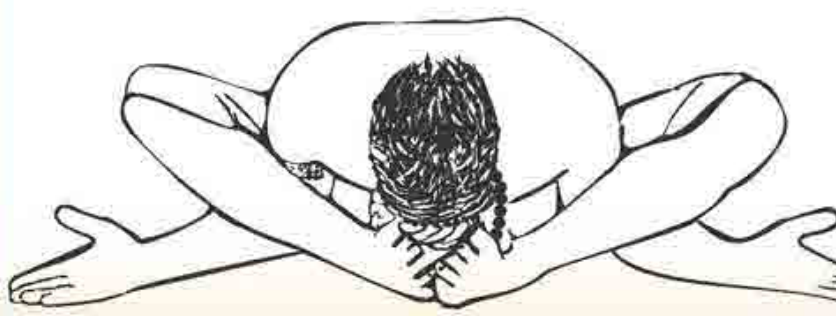
Apta Additional References YMS-55, AYG-40. JP(L)-50 illustrates this asana with slight difference in the head position.
Technique:
- Bring the feet together leaving a fist distance between the heels.
- Bring the arms below the legs with palms facing up arms stretched outwards.
- Bring nose towards the ground and the toes touching the throat.
- Gaze at the tip of the nose.
Body is purified and not troubled by diseases. If practice with pranadharana, can attain the state of Samadhi.
Siddhasana
Seated
Śāstra Pramāṇa - शास्त्र प्रमाण Tri-shikhi-brahmanopanishad, .50
ऋजुकायः समासीनः सिद्धासनमुदीरितम् ।
प्रसार्य भुवि पादौ तु दोर्भ्यामङ्गुष्ठमादरात् ॥ ५० ॥
rjukāyaḥ samāsīnaḥ siddhāsanamudīritam |
prasārya bhuvi pādau tu dorbhyāmaṅguṣṭhamādarāt || 50 ||
Pressing the secret parts with the left (foot), placing the right (foot) over the secret parts and sitting with the body erect, (this) is said to be the Siddhasana.
Additional Shastra Reference
Shiva Samhita (III.85-87), Sandilyopanishad (3.7)
Āpta Pramāṇa - आप्त प्रमाण Goraksh Paddhati 1.11
योनिस्यानकमंघ्रिमूलघटितं कृत्वा दृढं विन्यसेत्
मेढ्रे पादमथैकमेव नियतं धृत्वा विग्रहम् ॥
स्थाणुः संयमितेन्द्रियोऽचलदृशा पश्येद् भ्रुवोरन्तरम्
चैतन्मोक्षकपाटभेदनजनकं सिद्धासनं प्रोच्यते ॥ २१॥
yonisthānakamaṁghrimūlaghaṭitaṁ kṛtvā dṛḍhaṁ vinyaset
meḍhre pādamathaikameva niyataṁ dhṛtvā vigraham||
sthāṇuḥ saṁyamitendriyo'caladṛśā paśyed bhruvorantaram
caitanmokṣakapāṭabhedajanakam siddhāsanaṁ procyate|| 21||
[The Yogin] should firmly place one [i.e., the left] heel against the perineum (yoni-sthāna), while placing the other heel above the penis and pressing the chin against the chest (hridaya). With the senses restrained like a log, he should direct his gaze steadily at the [third eye] between the eyebrows. This is said to be the hero's posture, which bursts open the door to liberation. (1.11)
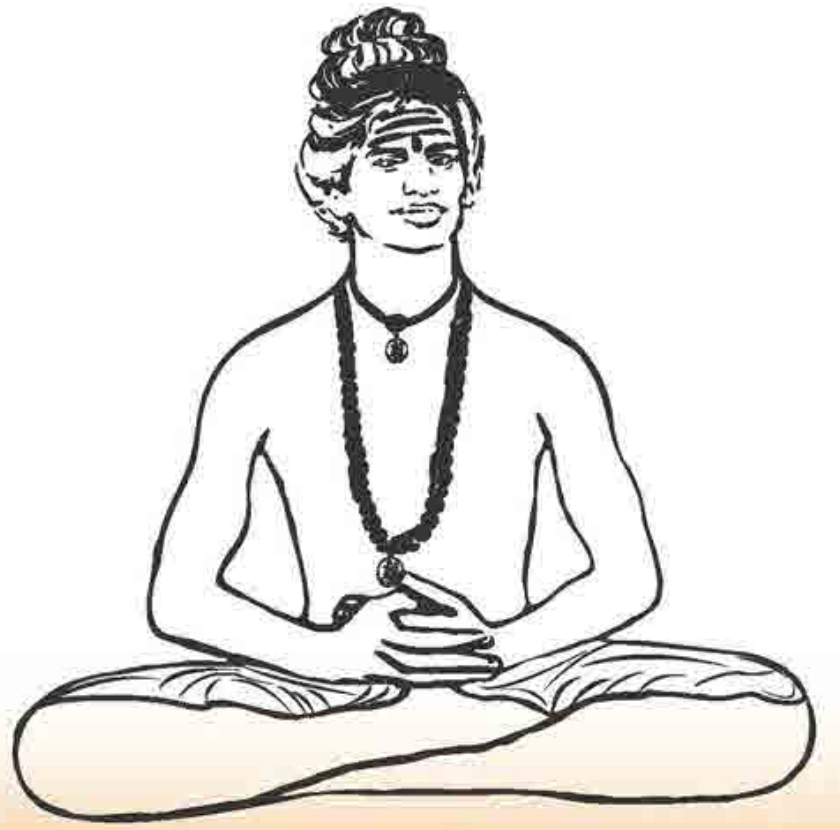
Apta Additional References
Hathapradipika II.20-29, SriTattvaNidhi-80, Joga Pradipika (357-359)
Technique:
- Press the left heel against the perineum.
- Press the right heel over organ of generation.
- Remain upright and steady with the chin down.
- Bring the gaze between the eye brows.
- Meditative asana which should be practiced diligently. Opens the door to liberation.
- Recommended for men which balances reproductive organs and regulates testosterone (Women's equivalent is Yoniasana)
- Stretches the hips, knees and ankles
- Strenghtens the core muscles
- Awakens the kundalini, purifies the 72,000 nadis and controls the apana vayu
- Alleviates heart diseases, diabetes, chronic urinary problems
- A simple but powerful asana. A meditative pose that allows you to sit upright and relaxed for longer periods of time.
- A spiritual practice used during meditation, pranayama, mudras and during practice of celibacy.
- This will take one to liberation.
- This asana is used in Nithyananda Kriyas for hypertension, long sight, asthma, addiction.
Brings stillness to the body, and turns attention inwards. Allows one to achieve meditative state.
Sakshi Pramana Benefits
Ma Nithya Nirishvarananda, Miami, Yoga Acharya
Simhasana
Seated
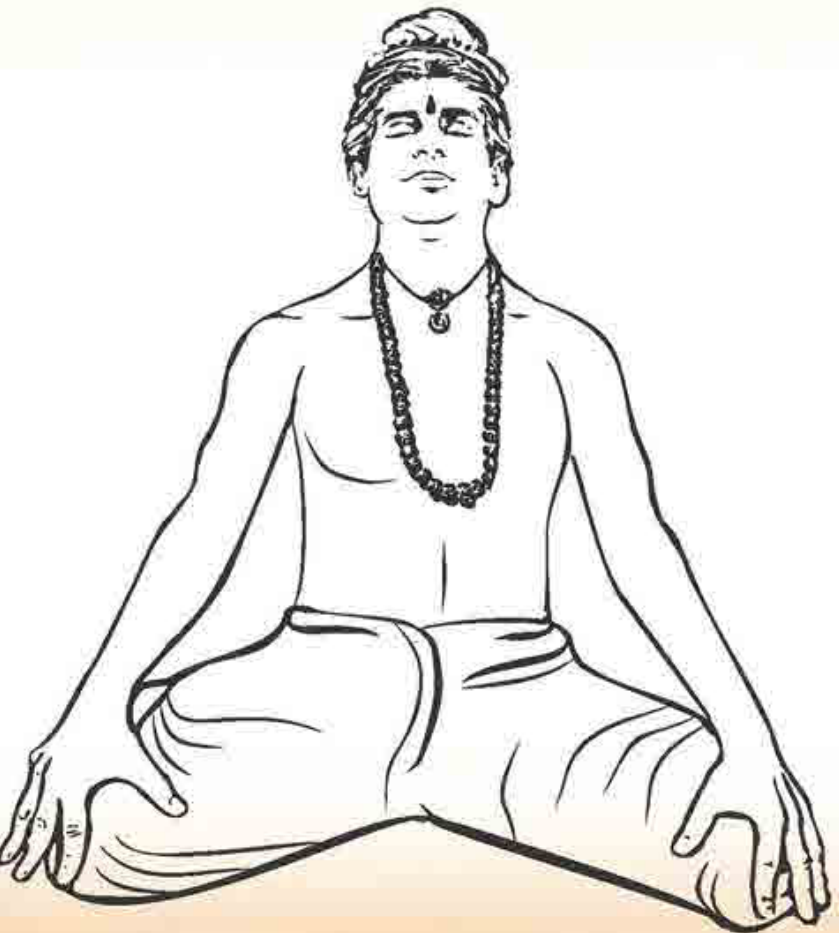
Śāstra Pramāṇa - शास्त्र प्रमाण Sandilyopanishad 3.5-6
दक्षिणं सव्यगुल्फेन दक्षिणेन तथेतरम् ।
हस्तौ च जान्वोः संस्थाप्य स्वाङ्गुलीश्च प्रसार्य च ॥ ५ ॥
व्यात्तवक्त्रो निरीक्षेत नासाग्रं सुसमाहितः ।
सिंहासनं भवेदेतत् पूजितं योगिभिः सदा ॥ ६ ॥
dakṣiṇaṁ savyagulphena dakṣiṇena tathetaram |
hastau ca jānvoḥ saṁsthāpya svāṅgulīśca prasārya ca || 5 ||
vyāttavaktro nirīkṣeta nāsāgraṁ susamāhitaḥ |
siṁhāsanaṁ bhavedetat pūjitaṁ Yogibhiḥ sadā || 6 ||
Pressing the right side (of the frenum of the prepuce) with the left heel and the other side with the right (heel) similarly, firmly placing the two hands on the two knees, with their fingers outstretched,with his mouth wide open and his body well controlled, he should fix his eyes, on the tip of the nose. This will be the Simhasana, always adored by Yogin-s.
Additional Shastra Reference Tri-shikhi-brahmanopanishad (44)
Āpta Pramāṇa - आप्त प्रमाण Gheranda Samhita II 14-15
गुल्फौ च वृषणस्याधो व्युत्क्रमेणोर्ध्वतां गतौ ।
चितिमूलो भूमिसंस्थः कृत्वा च जानुनोपरि ॥१४ ॥
व्यक्तवक्त्रो जलन्ध्रं च नासाग्रमवलोकयेत् ।
सिंहासनं भवेदेतत् सर्वव्याधिविनाशनम् ॥१५ ॥
gulphau ca vāñaëasyādho vyatkrameëordhvatāä gatau |
citimūlo bhūmisaāsthaù kåtvā ca jānunopari ||14||
vyaktavaktro jalandhraà ca nāsāgramavalokayet |
siàhāsanaà bhavedetat sarvavyādhivināçakam ||15||
The two heels to be placed under the scrotum contrarywise (i.e., left heel on the right side and the right heel on the left side of it) and turned upwards, the knees to be placed on the ground, (and the hands placed on the knees), mouth to be kept open; practising the jalandhara mudra one should fix his gaze on the tip of the nose. This is the Simhasana (Lion-posture), the destroyer of all diseases.
Apta Additional References SriTattvaNidhi-76
Technique:
- Sit on the feet crossed under the scrotum on either sides of the perineum
- Place the palms on the knees and open the mouth wide.
- Bring the tongue out and fix the gaze at the tip of the nose.\
Benefits the reproductive and digestive system. Sound in exhalation works as vocal therapy developing sonorous voice.
By using ferocity, it brings a lot of releasing, letting go; a feeling of being light and softening.
Sakshi Pramana Benefits Keong Chow, Singapore, Yoga Teacher/Freelancer
Sirspadmasana
śāstra Pramāṇa - शास्त्र प्रमाण Rudrayamala Tantra (23.68-70)
केवलं पादमेकञ्च स्कन्धे चारोप्य यत्नतः ।
एकपादेन गगने तिष्ठेत् द डवत् प्रभो ॥२३.६८॥
अपानासनमेतद्धि सर्वेषां पूरकाश्रयम्।
कृत्वा सूक्ष्मे शीर्षपद्मे समारोप्य व वायुभिः ॥२३.६९॥
kevalaṁ pādamekañca skandhe cāropya yatnataḥ| ekapādena gagane tiṣṭhet da ḍavat prabho |23.68|| apānāsanametaddhi sarveṣāṁ pūrakāśrayam| kṛtvā sūkṣme śīrṣapadme samāropya va vāyubhiḥ ||23.69|| for extended verse see end of chapter
(If you) Place just one foot on the shoulder with effort and (raise) the second foot like a rod towards the sky it surely becomes apānāsana, (and if) by doing pūraka in śīrṣpadmāsana by the subtle breath then person (who is bound to die one day, anybody who is born will surely die one day) becomes a siddha. This way prāṇa and apāna become one, and by doing this apānāsana one becomes Yogeśwara (supreme among Yogis). (23.68-70)
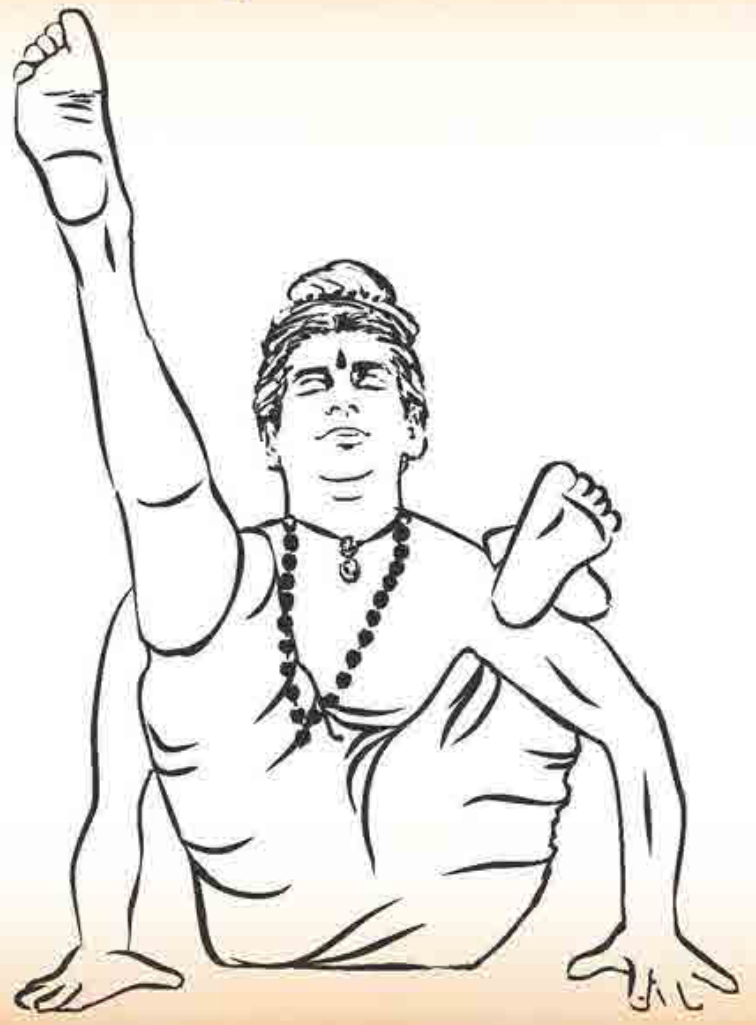
Technique:
- Sit and place one leg on top of the shoulder.
- Raise the other foot towards the sky and keep it straight
- Keep the hands on the ground.
Sirsasana
Inverted
Āpta Pramāṇa - आप्त प्रमाण Yoga Rahasya (N)- I.53-54
विपरीतं मण्डलं च द्विधैव विदितं हि नः ।
दण्डासनं द्विधा प्रोक्तं विपरीतोपवेशने ॥
सर्वाङ्गशीर्षभागास्तु षट्षष्टिः प्रथितास्तु ते ।
viparītaṃ maṇḍalaṃ ca dvidhaiva viditaṃ hi naḥ |
daṇḍāsanaṃ dvidhā proktaṃ viparītopaveśane ||
sarvāṅgaśīrṣabhāgāstu ṣaṭṣaṣṭiḥ prathitāstu te |
Then there are two types of inverted mandalas (arrangements)- Sirsasana and Sarvangasana.Dandasana is also of two types Inverted (vīparita dandasana) and seated (dandasana). It has been proclaimed that there are sixty six variations of Sarvangasan and sirasasana.
Avoid in case of spondylitis, slipped disk and other conditions of the neck and spine, vertigo, high blood pressure, blood impurities, thrombosis and other heart conditions. Pregnant women should take special care and consult a physician before attempting this pose. Always consult a doctor or a qualified Yoga instructor before taking up the practice of Sirsasana.
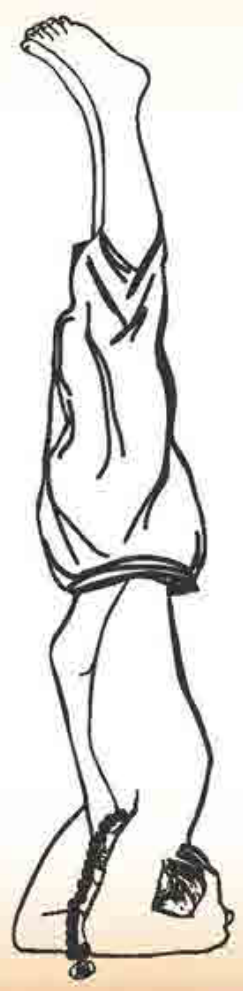
Technique:
- Kneel down.
- Interlace hands and place the forearms on the ground like a triangle.
- Bring the crown of the head down and hands supporting the back of the head.
- Straighten the legs and walk forward.
- Bring the knees to the chest, keeping the heels close to the buttocks. This is Gohiasana.
- Straigthen the legs to come to the full head stand.
- Strengthens the core muscles,shoulders, abdominals and back. I
- ncreases blood flow to the brain, eyes and other areas of the head.
- Improves digestive system, increases confidence, stability of mind, balance in body.
- Purifies the 7 chakras.
Allows one to turn attention inwards; grounding feeling; allows one to confront their own fears and change our perception about everything
Sakshi Pramana Benefits Keong Chow, Singapore, Yoga Teacher/Freelancer
Suka-deva-asana
Seated
Āpta Pramāṇa - आप्त प्रमाण Joga Pradipika-294-297
॥ अथ सुकदेव आसन ॥
डांईं जंघघ अरू पींडी मांही । दछन पींडी धरै सु तांही ।
आंष वाम गोडा माहिली । राखै दछि गोडा अग्रमिली ॥ २९४ ॥
दोउ पीडी को आग्र जो जोरि । कूला तरी दे वैसे मोरी ।
पहुंचा की संघघ ऐसै करै । जंघघ कडचा की संधि परिधरै ॥ २९५
|| atha sukadeva äsana ||
òämé jaïgha arü péëòé määhé , dachana péëòé dharai su täähé |
ääña väma goòä mähilé , räñai dachi goòä agramilé || 294 ||
do u péòé ko ägra jo jori , külä taré de vaisai moré |
pahuïcä ké saìgha aisai karai , jaìgha kaòyä ké sandhí paridharai || 295 ||
*for extended verse see end of chapter
Between the left thigh and calf muscle, place the calf muscle of right leg in the manner that both the knees come closer. Join both the ankles and place them under the buttocks. Let the thigh remain together. Place the hand on thigh in such a way that fingers form like a lotus. Both the hands should remain straight. Gaze at the tip of nose.
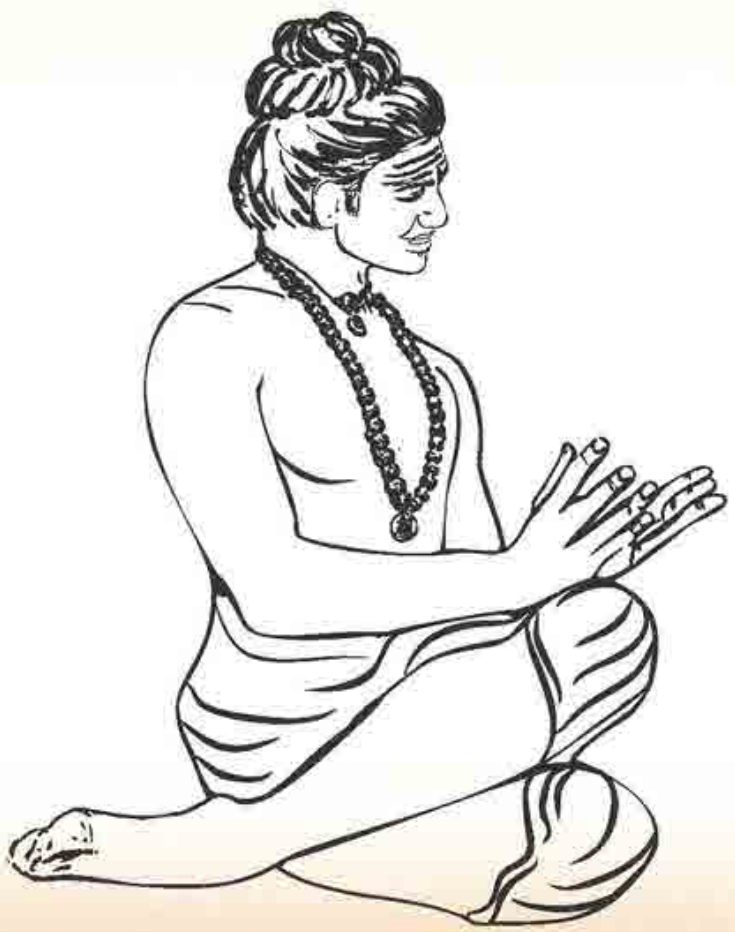
Apta Additional References Yoga-Asanamala Sacitra (ms.)-73. Same as sukasana
Technique:
- Fold the right leg and sit on the right heel.
- Cross the left leg over the right.
- Keep the knees one on top of the other.
- Place the hands on the knees in the shape of a lotus, palms facing up.
- Gaze at the tip of the nose.
One who practices it attains poetic powers.
Sukhasana
Seated
Śāstra Pramāṇa - शास्त्र प्रमाण Tri-shikhi-brahmanopanishad, 52
तत् सुखासनमित्युक्तमशक्तस्तत् समाचरेत् ।
आसनं विजितं येन जितं तेन जगत्त्रयम् ॥ ५२ ॥
tat sukhāsanamityuktamaśaktastat samācaret | āsanaṁ vijitaṁ yena jitaṁ tena jagattrayam ||52 ||
That, wherein comfort and steadiness are attained somehow or other, is known as the Sukhasana.
Additional Shastra Reference Sandilyopanishad, 3.12-13
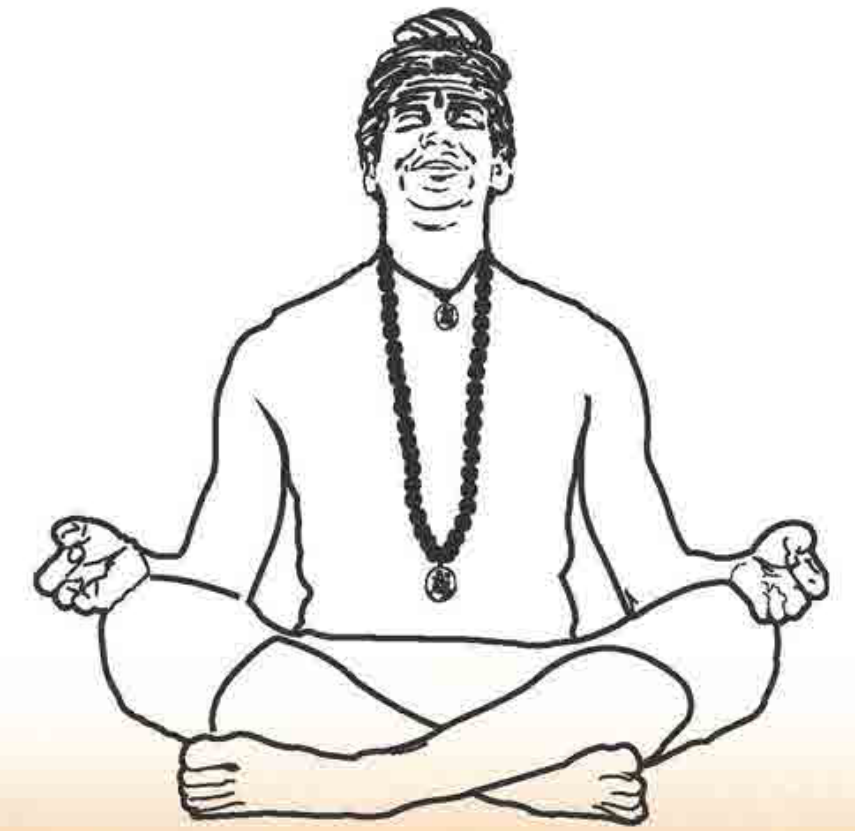
Technique:
- Sit cross-legged.
- Keep the hands on the knees.
It promotes groundedness and inner calm and relieves physical and mental exhaustion and tiredness. It intensifies the state of serenity, tranquility, and eliminates anxiety.
Sulasana
Prone
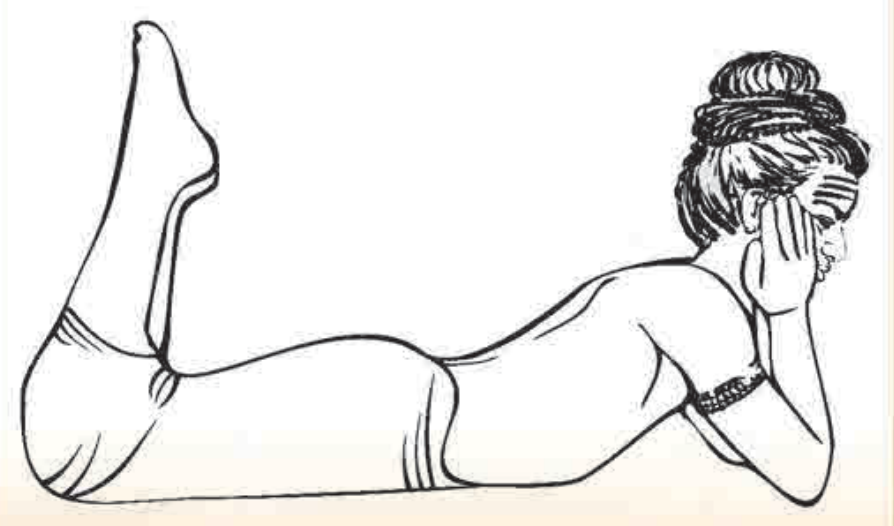
Āpta Pramāṇa - आप्त प्रमाण Kapala-Kurantaka-Hathabhyasa-Paddhati-42
कूर्पराभ्यामवनिंमवष्टभ्य हस्ततलाभ्यंहनुं
अवष्टभ्य उत्तिष्ठेत् शूलासनं भवति ॥४२॥
kūrparābhyāmavanīmavaṣṭabhya hastatalābhyāṃhanuṃ avaṣṭabhya uttiṣṭhet śūlāsanaṃ bhavati ||42||
Holding the ground with two elbows and catching the cheeks with two hands (i.e. palms), get up (extend the upper portion). This is called Sulasana.
Apta Additional References SriTattvaNidhi-40, Kapala-Kurantaka-Hathabhyasa-Paddhati-42, similar to niralambasana in Hatharatnavali-III.12,61 except the legs are down in niralambasana.
Technique:
- Lie prone with the elbows on the ground.
- Hold the chin in the hands.
- Fold the legs and point the toes up.
Strengthens the thighs, back, abdominals, shoulder and neck. Stretches the upper abdominals
Sumati asana
Prone
Āpta Pramāṇa - आप्त प्रमाण Joga pradipika 333-336
घमूलद्वारि धरती परि ठाने डावा पगपरिदछ पद आने ।
डाई पाखती को ले आवै हाथ एक अंतर ठहरावै ॥ ३३३ ॥
दोऊ एडी तेके ऐसे आडो वाई राखो तैसे ।
फणा जुगम उभा कर राखै गोडा दोउ उभा राखै ॥ ३३४
müladväri dharaté pari öhäne òävä pagapari dacha pada äne |
òäé päkhaté ko le ävai hätha eka antara öhaharävai || 333 ||
doü eòé teke aisai äòo väé räkho taisai |
phaëä jugama ubhä kara räkhai goòä dou ubhä räkhai || 334 ||
for extended verse see end of chapter"
Place the anus (region) upon the ground, place the right foot upon the left foot, bring the left leg and keep at a distance of one hand (1 cubit). Both heels are placed in such a way that they are crossed and the toes stand up and the knees are kept straight. The hands are kept upon the knees and knees remained pressed by opposite elbows. Gaze is fixed at nasal region. The body remains devoid of any disease.One who accomplishes the asana along with pavana dharana ones gets his intellect purified.Practice of this asana long with Pavana Dharana is emphasized.
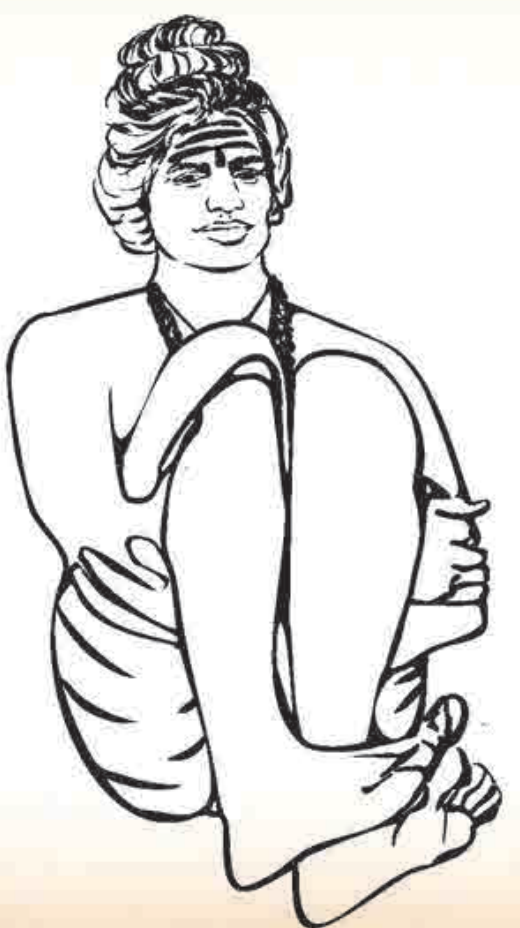
Apta Additional References Also in JP(L)-75.
Technique:
- Sit with the knees up towards the chest
- Hug the legs under the knees holding the opposites elbows.
- Keep the heels on the ground and lift the toes.
- Keep gaze at the tip of the nose.
This asana makes one healthy and improves the buddhi; intelligence
Supta konasana
Supine
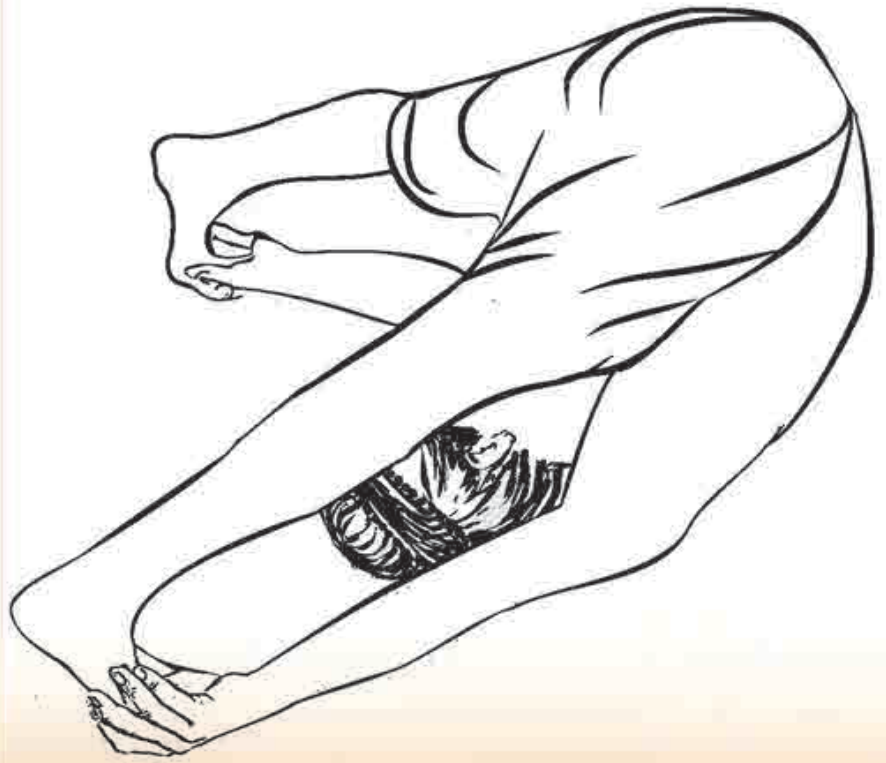
Āpta Pramāṇa - आप्त प्रमाण Nathamuni's Yoga RAHASYA I.52, II.20
परिवृत्तिः कुक्षिभागे त्रिधा हि परिकीर्तितः ।
बद्धकोणं सुप्तकोणमूर्ध्वकोणमथापि च ॥
parivṛttiḥ kukṣibhāge tridhā hi parikīrtitaḥ | baddhakoṇaṃ suptakoṇamūrdhvakoṇamathāpi ca ||
It is proclaimed that parivrtti of the navel region (jathara parivrtti) is of three variations. There is also different variations of baddha konasana, supta konasana, Urdhva konasana and others.
Technique:
- Lie down on your back, lift the hips up bringing the feet overhead.
- Touch the ground with the toes.
- Catch a hold of the toes and separate the legs as wide as possible.
- Keep the hips above the shoulders.
Good for strenghtneing the reproductive organs
Supta padangusthasana
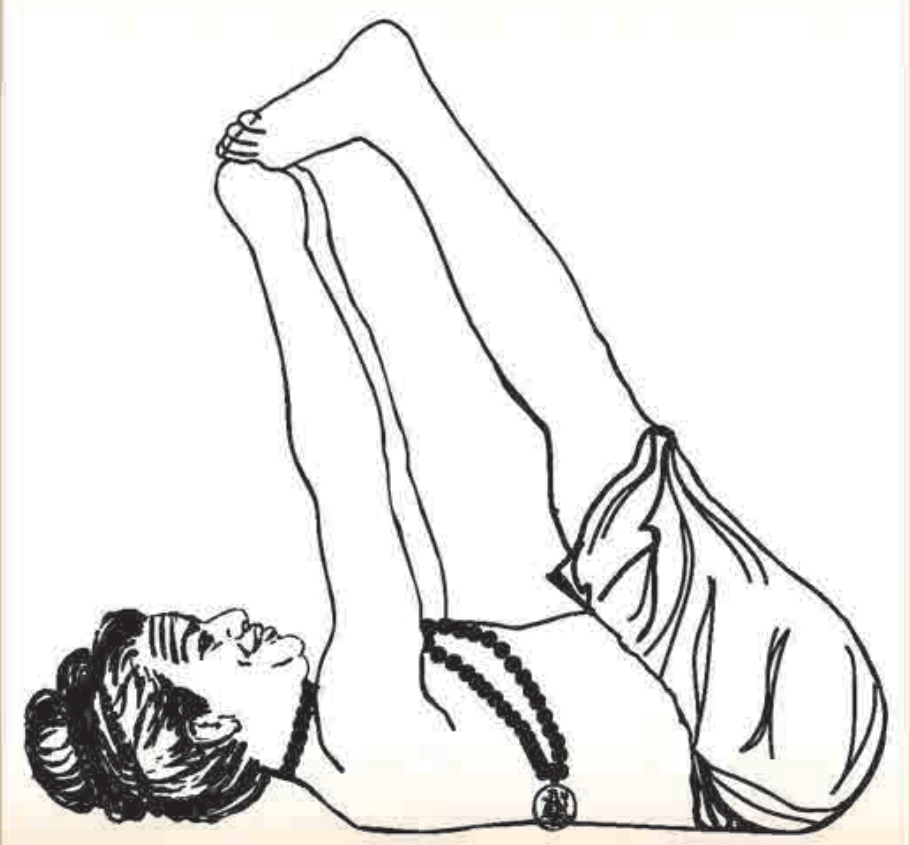
Āpta Pramāṇa - आप्त प्रमाण Nathamuni's Yoga RAHASYA 1.51
उत्तानपादं क्रौञ्चं च मरीचिं वीरभद्रकम् ।
नटराजं त्रिकोणं च सुप्ताङ्गुष्ठप्रसारणे ॥
uttānapādaṃ krauñcaṃ ca marīciṃ vīrabhadrakam | naṭarājaṃ trikoṇaṃ ca suptāṅgaṣṭhaprasāraṇe ||
Uttanapadasana, Krauncasana, Maricyasana, Virabhadrasana, Natarajasana, Trikonasana, Supta padangusthasana and Supta prasarita padangustasana.
Technique:
- Lie on the back and extend the legs.
- Catch hold of the big toes with the hands
- Keep the legs in a vertical position.
Strengthens the back and abdominals while stretching the hamstrings, calves and gluteals. Stimulates and opens the root chakra. Helps to move the apana vayu throughout the body.
Supta prasarita padangustasana
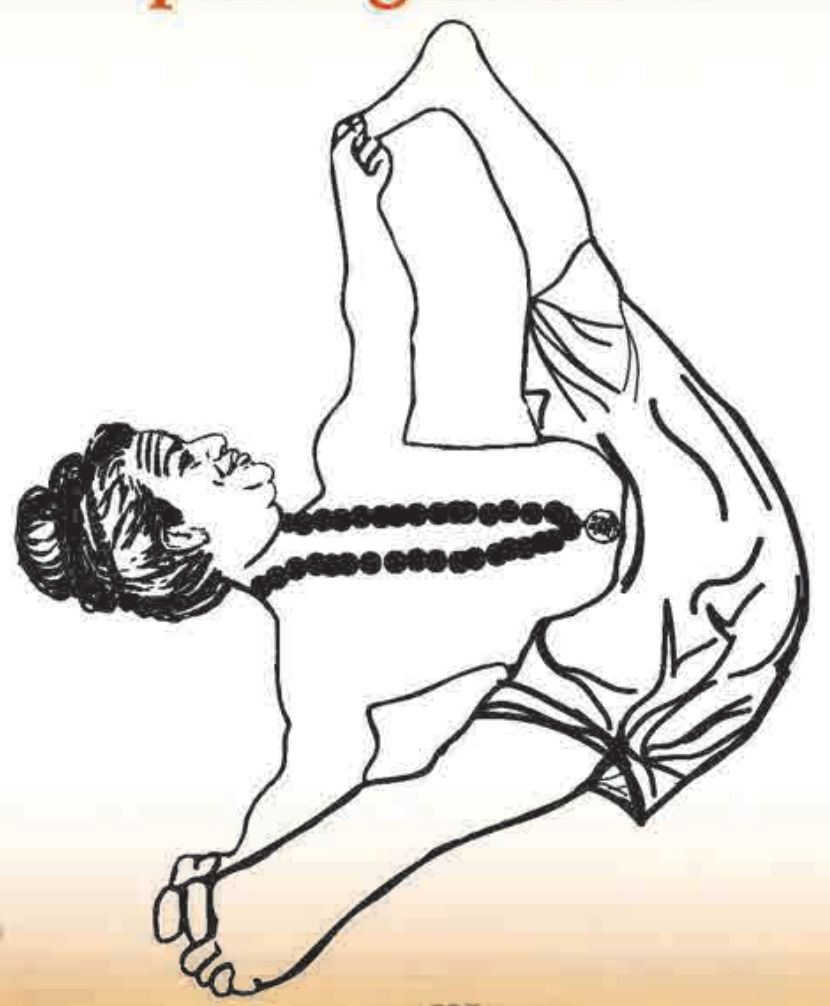
Āpta Pramāṇa - आप्त प्रमाण Nathamuni's Yoga RAHASYA I.51
उत्तानपादं क्रौञ्चं च मरीचिं वीरभद्रकम् ।
नटराजं त्रिकोणं च सुप्ताङ्गुष्ठप्रसारणे ॥
uttānapādaṃ krauñcaṃ ca marīciṃ vīrabhadrakam | naṭarājaṃ trikoṇaṃ ca suptāṅgaṣṭhaprasāraṇe ||
Uttanapadasana, Krauncasana, Maricyasana, Virabhadrasana, Natarajasana, Trikonasana, Supta padangusthasana and Supta prasarita padangustasana.
Technique:
- Lie on the back.
- Catch hold of the big toes with the hands
- Extend the legs to a vertical position
- Spread the legs apart as far as possible.
Strengthens the back and abdominals while stretching the inner thighs and gluteals. Releases and opens the lower 3 chakras which energizes the whole body.
Surya asana
Seated
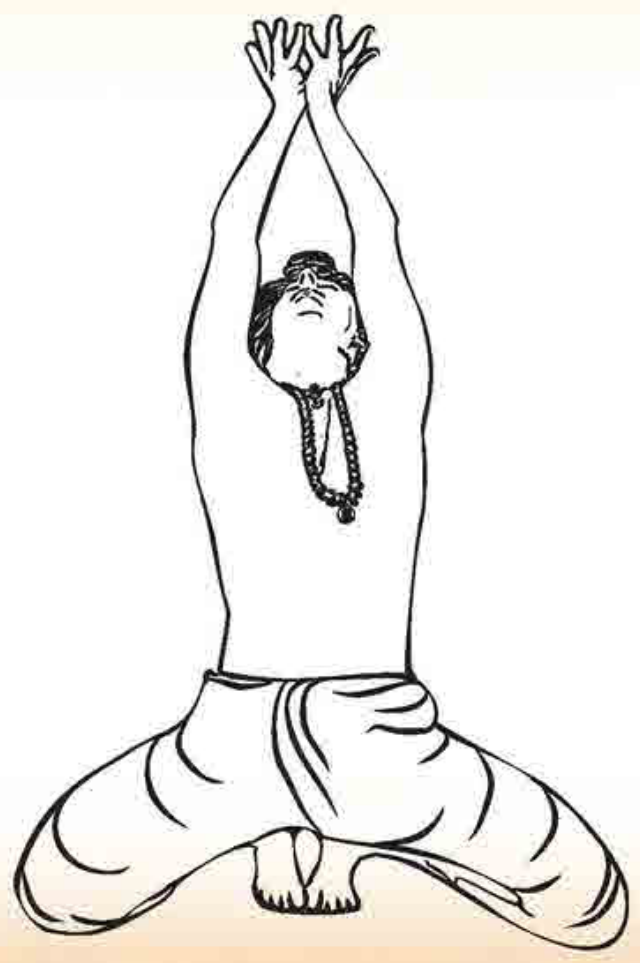
Āpta Pramāṇa - आप्त प्रमाण Joga pradipika III.82-84
एडी दोउ गुदातरि आने । फणा पाणि बैठक पुनि ठाने ॥
गोडा जंघघ अधर करि रहै । आडे वाय इसी विध गहै ॥ ८२ ॥
दोऊ भुजा नभ दिसा पसारै । कमल स्वरूप अंगुरी धारै ॥
पौहचा मधि छिद्र पुनि तानै । छिद्र विखै पुनि दृष्टि जु आनै ॥ ८३ ॥
eòé dou gudätari änai | phaëä päëi baiöhaka puni öhänai ||
goòä jaìgha adhara kari rahai | äòe väya isé vidha gahai || 82 ||
doü bhujä nabha disä pasärai | kamala svarüpa aìguré dhärai ||
pauhacä madhi chidra puni tänai | chidra vikhai puni driñöi ju änai || 83 ||
for extended verse see end of chapter
Place both the heels below the arms, knees and thighs should remain lifted up, take both the hands towards sky and form a lotus with the help of fingers. At the root of the palm a hole be formed where the sadhaka should bring his gaze. Also contract the abdomen which means practise Uddiyana. It increases the gastric fire. Removes all kinds of disorders.
Apta Additional References YMS-37, same as giri-vara-natha-aana (NS-83), Cf. sajai-asana (NS-11).
Technique:
- Sit on the heels keeping the feet upright.
- Separate the knees and place them on the ground.
- Bring the hands above the head, palms together and fingers open like a lotus.
- Look up through the opening at the base of the palms.
Will create certain heat in the body that will bring healing from diseases
Feeling of reaching out to the cosmos/expansion, receiving energy
Sakshi Pramana Benefits Sunniva Kaurin, Norway
Sustaga kapali asana
Inverted
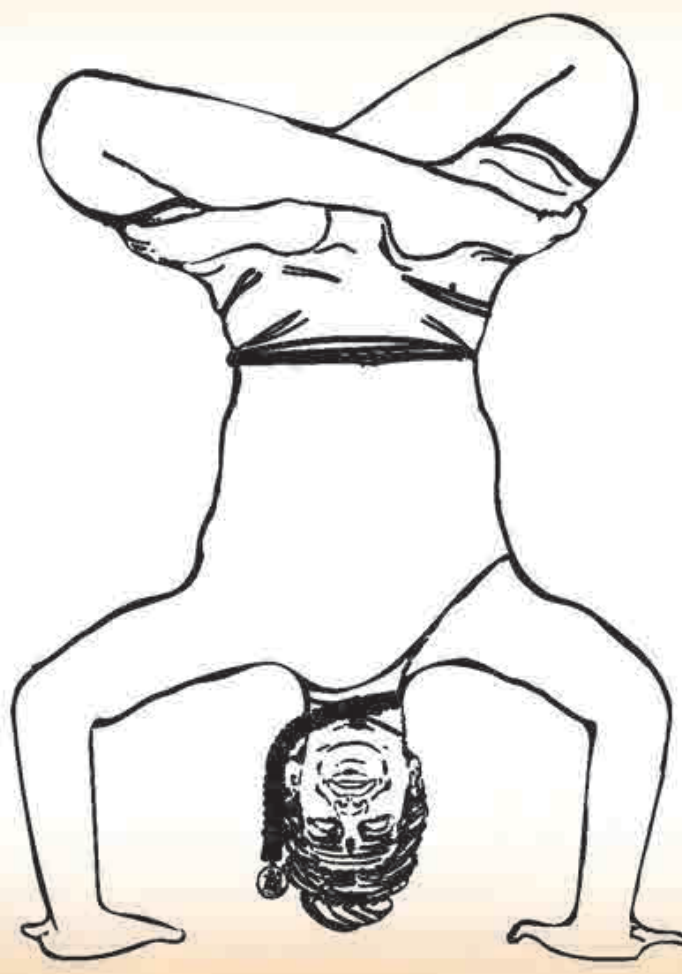
Āpta Pramāṇa - आप्त प्रमाण Yoga-Asanamala Sacitra (ms.)-97
In kneel down position lower the head on ground and place palms on ground for support. Raise the whole body on head. Now cross the legs in this position.
आसण कौ गुण कपाल आछौ होई
äsaëa kau guëa kapäla ächau hoé
Technique:
- Kneel down and place the palms on the ground.
- Bring the head on the ground.
- Raise the whole body on head.
- Now cross the legs in padmasana.
Purifies the forehead region
Brings blood flow/energy to the sahasrara, release in the hips/back while feet in padmasana
Sakshi Pramana Benefits Ma Nithya Nirishvarananda, Miami, Yoga Acharya
Svastika
Seated
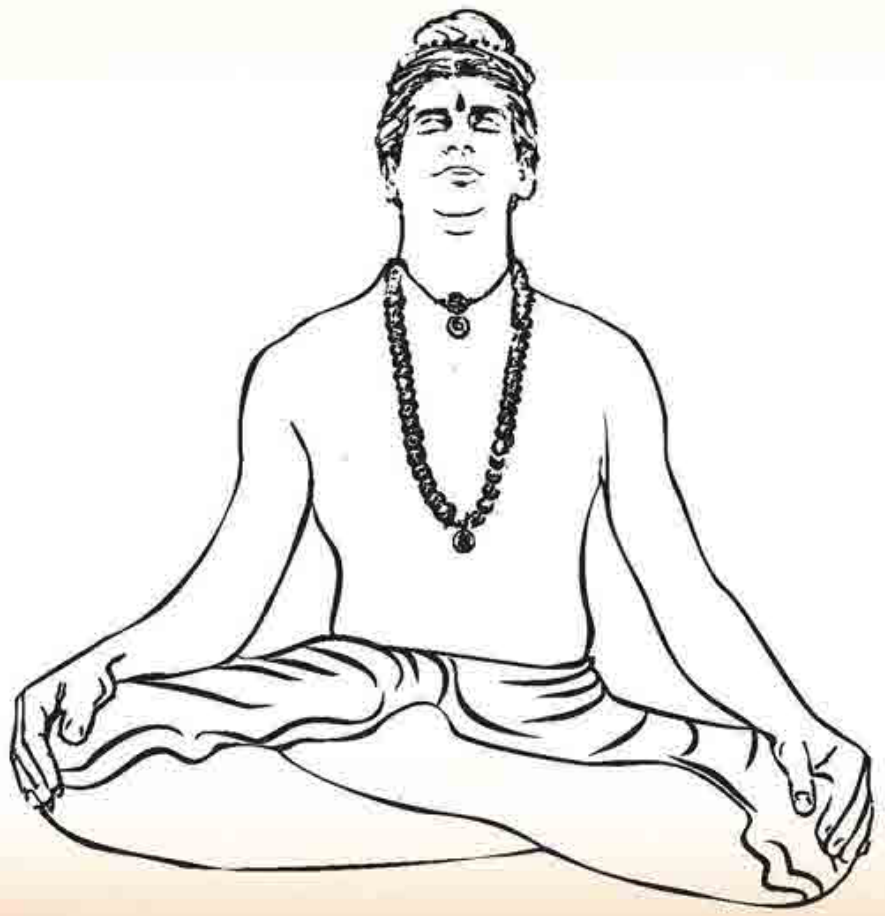
Śāstra Pramāṇa - शास्त्र प्रमाण Sandilyopanishad, 3.1
जान्वोरन्तरे सम्यक्कृत्वा पादतले उभे ।
ऋजुकायः समासीनः स्वस्तिकं तत्प्रचक्षते ॥ १ ॥
Jānūrvorantare samyakkṛtvā pādatale ubhe | ṛjukāyaḥ samāsīnaḥ svastikaṃ tatpracakṣate || 1 ||
As for the Svastika, placing the soles of the two feet between the knees and the thighs, sitting with the body erect and the posture balanced ; that they say is the Svastika.
Additional Shastra Reference Tri-shikhi-brahmanopanishad, 35, Darshanopanishad III.2-3, Yoga pada - Kirana Agama verse 6, Siva-samhita III. 95-97
Āpta Pramāṇa - आप्त प्रमाण Hatharatnavali III 52
जानूर्वोरन्तरं सम्यक् कृत्वा पादतले उभे ॥
ऋजुकायसमासीनः स्वस्तिकं तत्प्रचक्षते ॥५२ ॥
jānūrvorantaraā samyak kåtvā pädatale ubhe || åjukāyasamäsénaù svastikaà tatpracakñate ||52||
Arrange both the soles (feet) properly between the thighs and the shanks and sit straight up. This is called svastikasana. 52
Apta Additional References
Joga Pradipika. 50-51,
Gheranda Samhita.II-13
Technique:
- Sit cross-legged with toes between thighs and calves.
- Keep the hands relaxed on respective knees.
Brings relief from anxiety, tiredness, thus offering (sukha) wellness and santi (mental) peace. Brings stability of mind. Balances movement of prana.
Svottana-asana
Dynamic
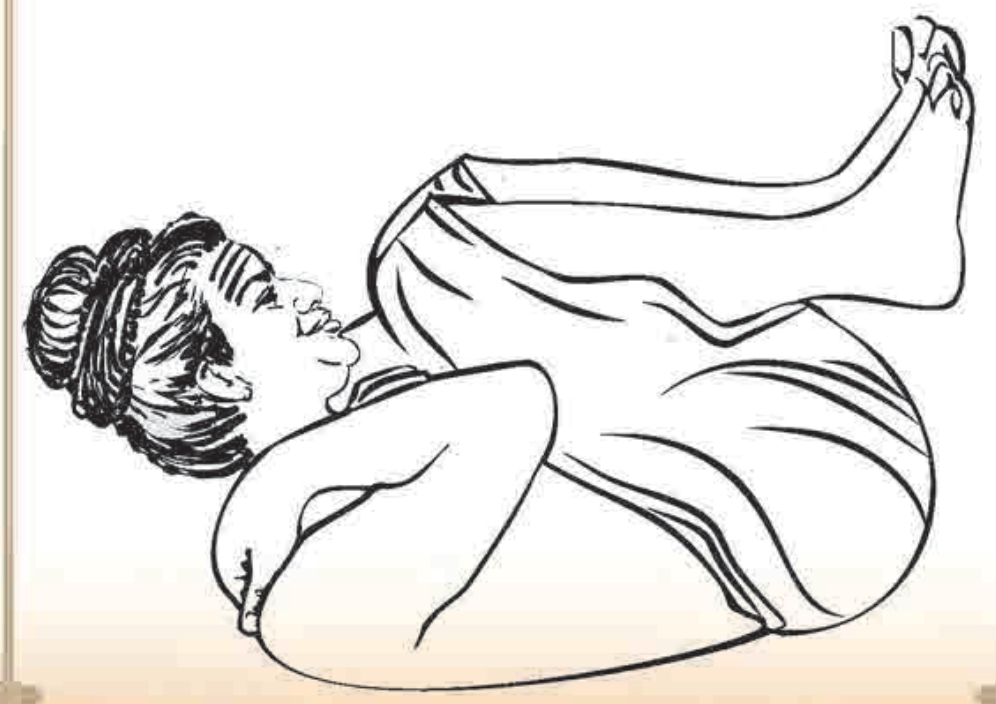
Āpta Pramāṇa - आप्त प्रमाण Kapala-Kurantaka-Hathabhyasa-Paddhati-6
शववच्छरीरम् संस्थाप्य जानुनी संमील्य नाभौ आनीय
हस्ताभ्यां कन्थरां बध्वा भामयेत् श्वोत्तनं भवति ॥६॥
śavavatcharīram saṁsthāpya jānunī sammīlya nābhau āmnīya hastābhyāṁ kandharāṁ badhvā bhāmayet śvottanam bhavati ||6||
Lying supine keeping the body like a corpse unite the knees and place these on the naval. Then holding the shoulder with two hands keep moving. This is called Svottana Asana.
Technique:
- Lie down and bring the knees to the chest.
- Bring the hands on the shoulders.
- Rock the body back and forth.
Trikonasana
Standing
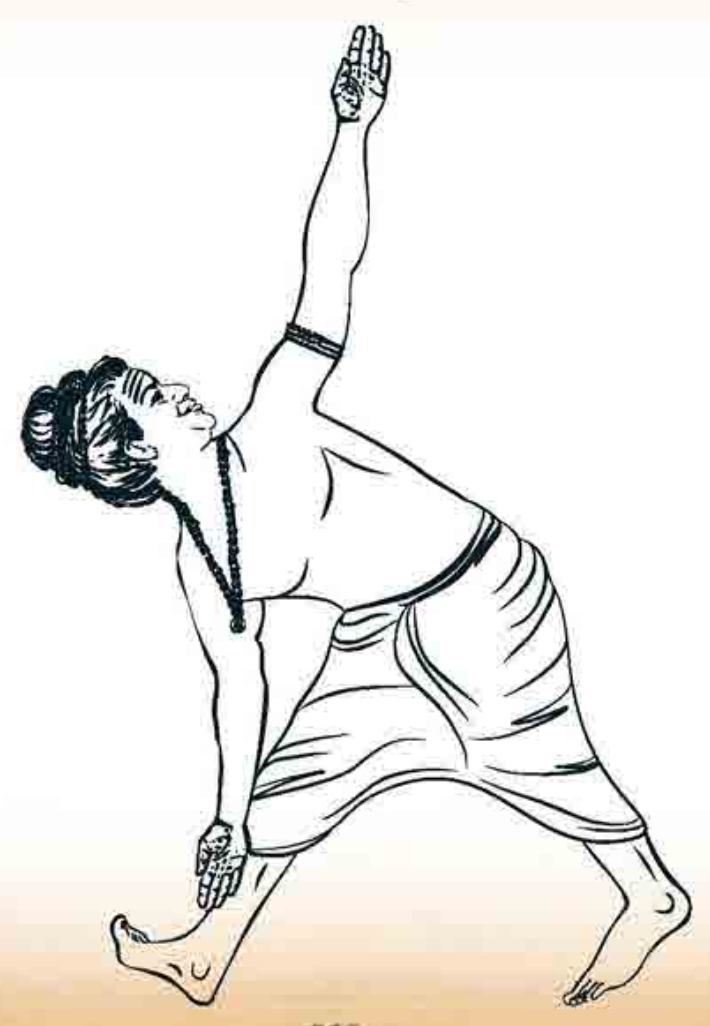
Āpta Pramāṇa - आप्त प्रमाण Nathamuni's Yoga RAHASYA I.51
उत्तानपादं क्रौञ्चं च मरीचिं वीरभद्रकम् ।
नटराजं त्रिकोणं च सुप्ताङ्गुष्ठप्रसारणे ॥
uttānapādaṃ krauñcaṃ ca marīciṃ vīrabhadrakam |
naṭarājaṃ trikoṇaṃ ca suptāṅgaṣṭhaprasāraṇe ||
Uttanapadasana, Krauncasana, Maricyasana, Virabhadrasana, Natarajasana, Trikonasana, Supta padangusthasana and Supta prasarita padangustasana.
Technique:
- Start standing in purnapadasana
- Bring the right leg back, inhale the arms parallel to ground
- Exhale, lower left hand towards the left leg, keeping the spine straight, turn head up.
Udara asana
Seated
Āpta Pramāṇa - आप्त प्रमाण Joga Pradipika-III.59-61
दोउ पगथली संपुट ठाने उभै हस्त करि उरध हि तानै ।
अंगुष्ट दोउ सम ठहरावै चिबुक निचे ताहि लगावै ॥ ५९॥
बहुरि दोउ कर ऐसे धरै आनि पगन तर बाहरि करे ।
दोउ पगन की अंगुरी जोई तिन परि करै कांकसी सोई ॥ ६०
dou pagathalé sampuöa öhäne , ubhai hasta kari uradha hi tänai | aìguñöa dou sama öhaharävai , cibuka nice tähi lagävai || 59 || bahuri dou kara aise dharai , äni pagana tara bähari kare | do u pagana ké aìguré joé , tina pari karai käïkasé soé || 60 || for extended verse see end of chapter"
Let the both soles touch each other. Insert both hands under respective legs and hold the sole with hands from down along with bending the head down, touch the sole with the chin. Gaze at the tip of the nose. Removes all sorts of abdominal diseases or all diseases are removed.
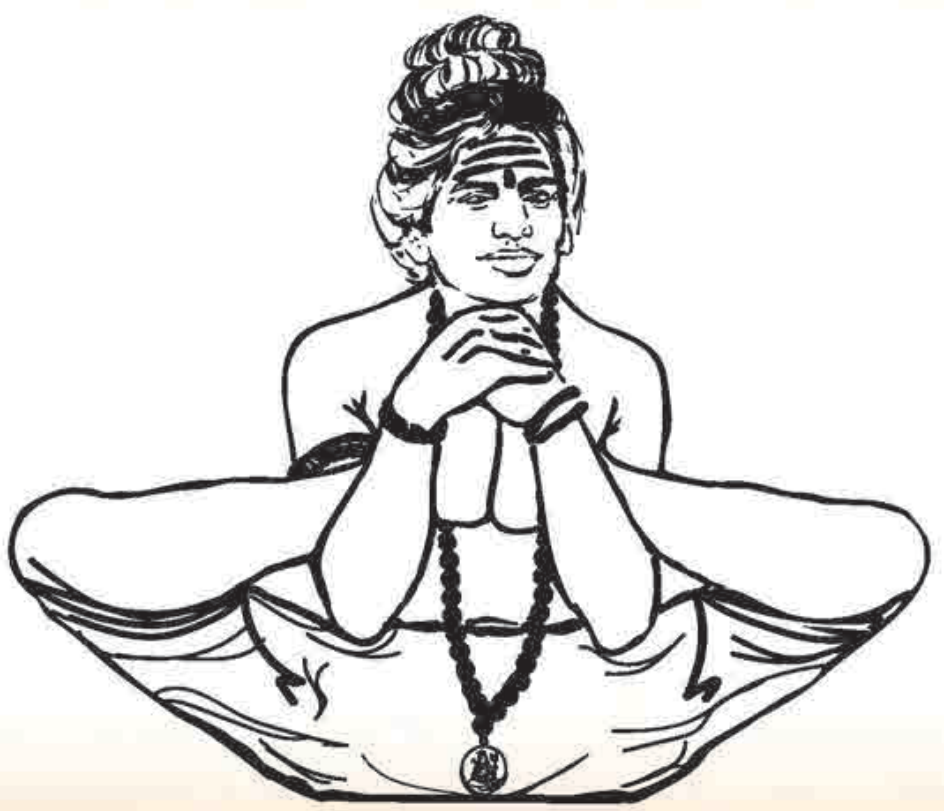
Technique:
- Sit with the soles of the feet together.
- Insert the hands underneath the legs
- Holding the feet with interlocked fingers.
- Bring the feet up to the chest.
- Bring the head down and touch the chin to the toes.
- Keep the gaze fixed at the tip of the nose.
Removes all the diseases, especially from the abdominal region.
स्वपाणिभ्यां दृढं धृत्वा जानूपरि शिरो न्यसेत् ॥
आसनोग्रमिदं प्रोक्तं भवेदनिलदीपनम् ।
देहावसानहरणं पश्चिमोत्तानसंज्ञकम् ॥
य एतदासनं श्रेष्ठं प्रत्यहं साधयेत्सुधीः ।
वायुः पश्चिममार्गेणण तस्य सञ्चरति ध्रुवम् ॥ ९२ ॥
prasärya caraëadvandvaà parasparamasaàyutam |
svapäëibhyäà dåòhaà dhåtvä jänüpari çiro nyaset ||
äsanogramidaà proktaà bhavedaniladépanam |
dehävasänaharaëaà paçcimottänasaïjïakam ||
ya etadäsanaà çreñöhaà pratyahaà sädhayetsudhéù |
väyuù paçcimamärgeëa tasya saïcarati dhruvam ||92||
for extended verse see end of chapter"
Stretch out both the legs and keep them apart; firmly take hold of the head by the hands, and place them on the knees. This is called ugrasana (the stern-posture), it excites the motion of the air, destroys the dullness and uneasiness of the body, and is also called paschima-uttana (the posterior crossed posture.) That wise man who daily practices this noble posture can certainly induce the flow of the air up through the anus. 92
Those who practice this obtain all the siddhis; therefore, those, desirous of attaining power, should practicethis diligently. 93
This should be kept secret with the greatest care, and not be given to anybody and everybody. Through it,vayu-siddhi is easily obtained, and it destroys a multitude of miseries. 94
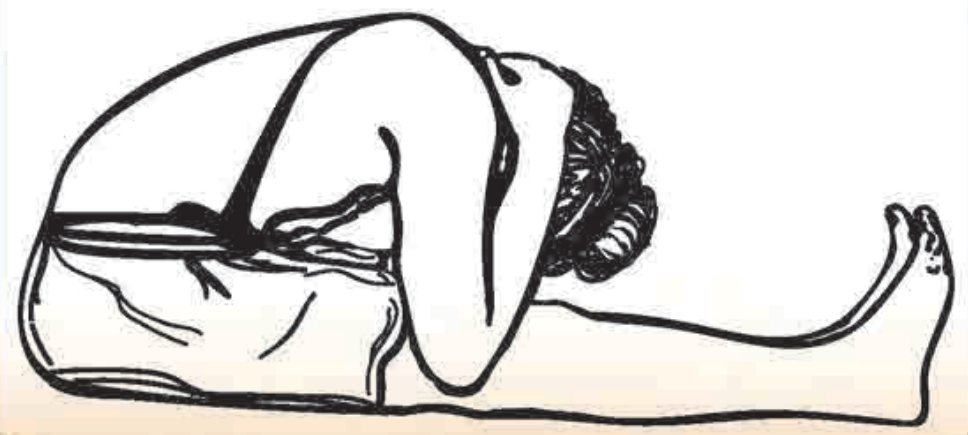
Technique:
- Sit with the legs extended.
- Firmly take hold of the head by the hands.
- Bend forward and place the head on the knees.
• Those who practice this obtain all the siddhis; therefore, those, desirous of attaining power, should practice this diligently. 93
• This should be kept secret with the greatest care, and not be given to anybody and everybody. Through it, vayu-siddhi is easilyobtained, and it destroys a multitude of miseries. 94
• Gastric fire is enhanced. Remove body fatigue.
Unmukha pitha I
Back Bend
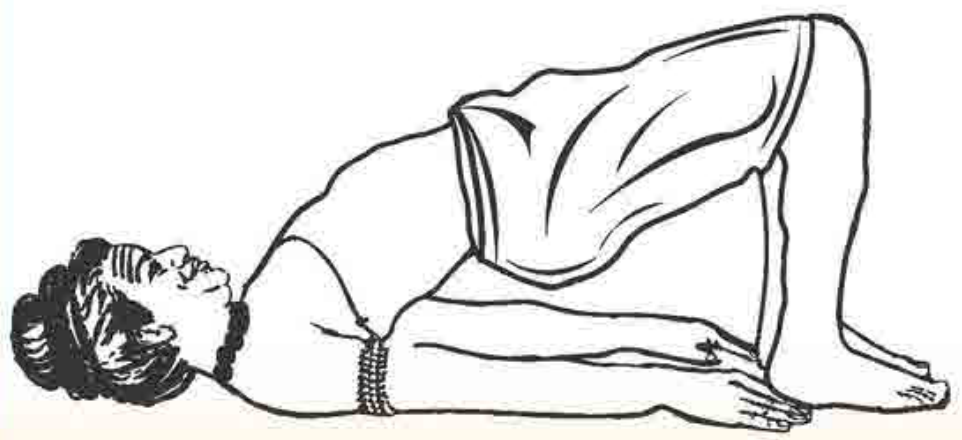
Āpta Pramāṇa - आप्त प्रमाण Yoga-rahasya of Srinatha-muni-III.18
ऊर्ध्वे च जानुनी कृत्वा शयित्वोर्ध्वमुखं तथा ।
उत्थाप्य हस्तौ तिष्ठेत्तु पीठ उन्मुखनामके ॥
ūrdhve ca jänuné kåtvä çayitvordhvamukhaà tathä | utthäpya hastau tiñöhettu péöha unmukhanämake || 18
Lie on ground in supine position. Bend the knees and then raise them. Place the palms on floor and raise the trunk also up.
Apta Additional References HP(ms.)-II.143
Technique:
- Lie on ground in supine position.
- Bend the knees and place the feet on the ground.
- Place the palms on floor and raise the trunk up.
Great for pregnant woman, bringing strength and removing weakness.
Unmukha pītha II
Prone
Āpta Pramāṇa - आप्त प्रमाण Yoga-rahasya of Srinatha-muni-VI.17
भूम्यस्तौ जानुनी हस्तौ चतुष्पदमवाङ्मुखम् ।
उत्थापिताङ्घ्रियुगलकटिस्थलमभिरुका ॥
bhūnyastau jānuné hastau catuñpadamavāìmukham | utthäpitäighriyugalakaöisthalamabhirukä ||
Lie in prone position. Place forearms and feet on ground. Raise the trunk and head towards sky taking support from elbows and knees or toes.
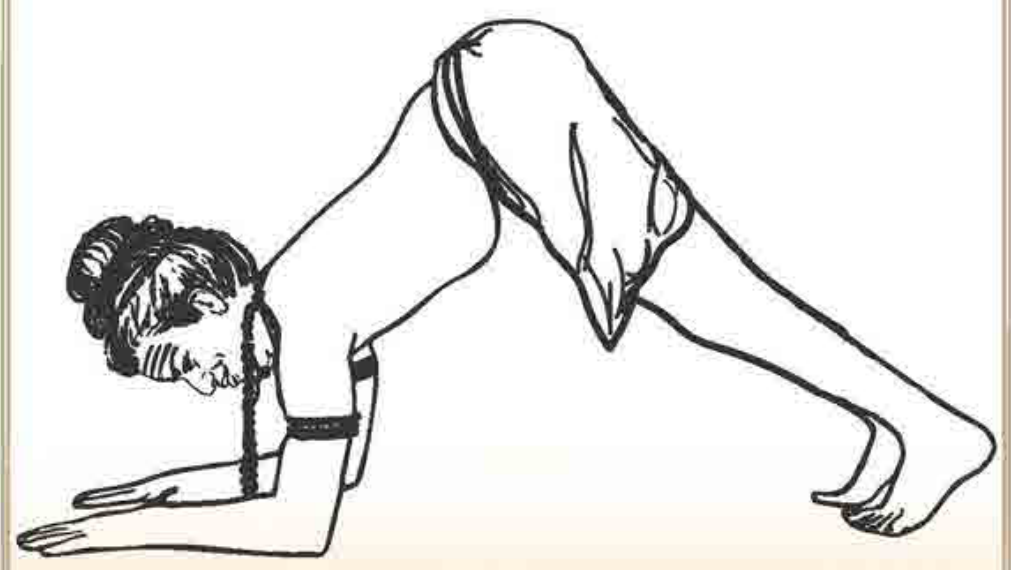
Technique:
- Lie in prone position.
- Place forearms and feet on ground.
- Raise the hips.
Developed by Gargi for pregnant women. It overcomes weakness and offers strength.
Urdha pavana asana
Supine
Āpta Pramāṇa - आप्त प्रमाण Joga Pradipika (340-341)
प्रथमे सूधो सैन करावै । गोडा उभा राषि मिलावै ।
गुलफ मांsharedहिला अंगुष्ट दोई । करे एकसा मेलर सोई ॥३४०॥
उभै हस्तू कांकसी करै । सो ले मसतक नीचै धरै ।
नासा अग्र दिष्टि ठहरावै । या तै नाडि सरलता पावै ॥३४१॥
prathame sūdho saina karāvai, goḍā ubhā rāṣi milāvai |
gulapha māṃhilā aṃguṣṭa doī, kare ekasā melara soī ||340||
ubhai hast kāṃkasī karai, so le masataka nīcai dharai |
nāsā agra diṣṭi ṭhaharāvai, yā tai nāḍi saralatā pāvai ||341||
First lie upon the back, the knees will be raised togather, both the big toes will be evenly together. Both the hands interlocked and placed under the fore head. Gaze fixed upon the tip of the nose.
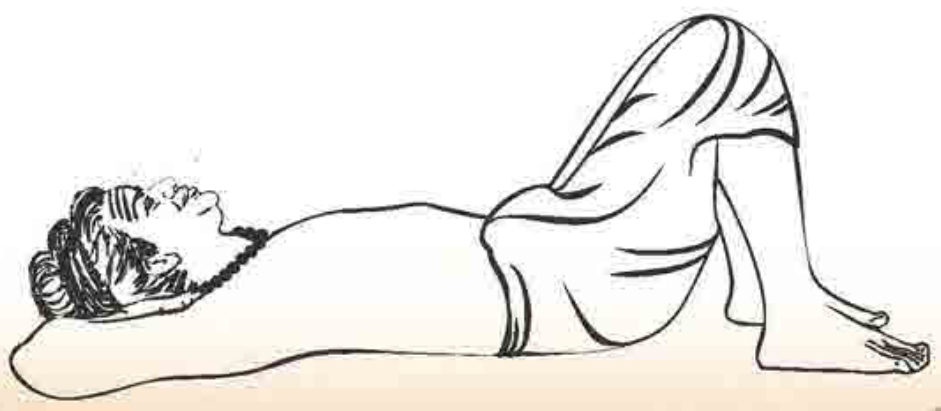
Technique:
- Lie on the back with the legs folded.
- Keep the feet on the ground.
- Interlace the fingers and rest the head on the hands.
Ushtrasana
Back Bend
Āpta Pramāṇa - आप्त प्रमाण Gheranda Samhita (II,40)
अध्यास्यः
शेते पदयुग्मम्व्यस्तंपृष्ठे निधायापि धृतं कराभ्याम्।
आकुञ्चयेत् सम्यग्गुदरास्यगाढ-
मुष्ट्रञ्च पीठं योगिनो वदन्ति ॥४० ॥
påñöhe nidhäyäpi dhåtaà karäbhyäm |
äkuïcayet samyagudaräsyagäòha-
muñöraïca péöhaà Yogino vadanti ||40||
Lie on the ground face, downwards, turn up the legs and place them towards the back, catch the legs with the hands, contract forcibly the mouth and the abdomen. This is called the Camel-posture.
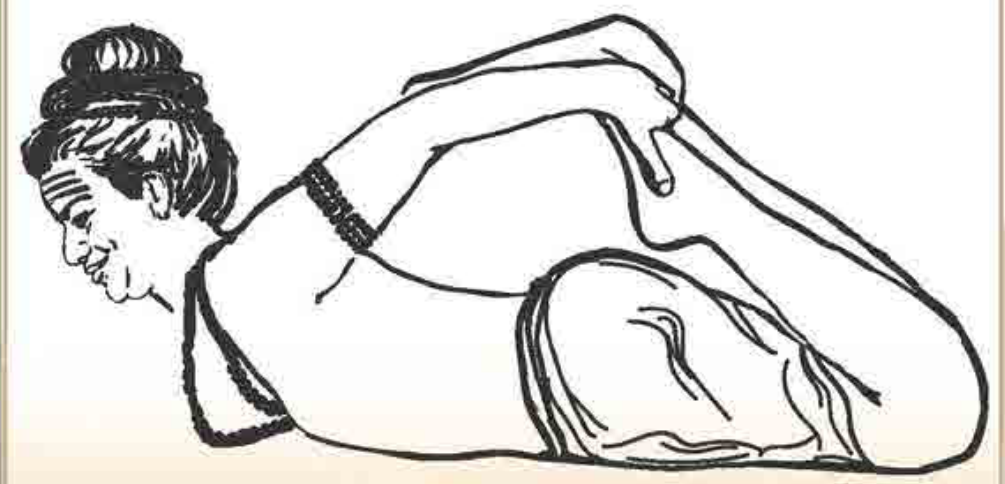
Apta Additional References BṛhadYoga-sopāna-III.48
Technique:
- Lie on the ground on your abdomen.
- Bend knees and catch the feet with the hands
- Contract forcibly the mouth and the abdomen.
Stretches the anterior muscles of the body. Improves and strengthens the flexibility of spine. Gives relaxation to the lower back. Improves digestion.
Utkatasana I
Balancing
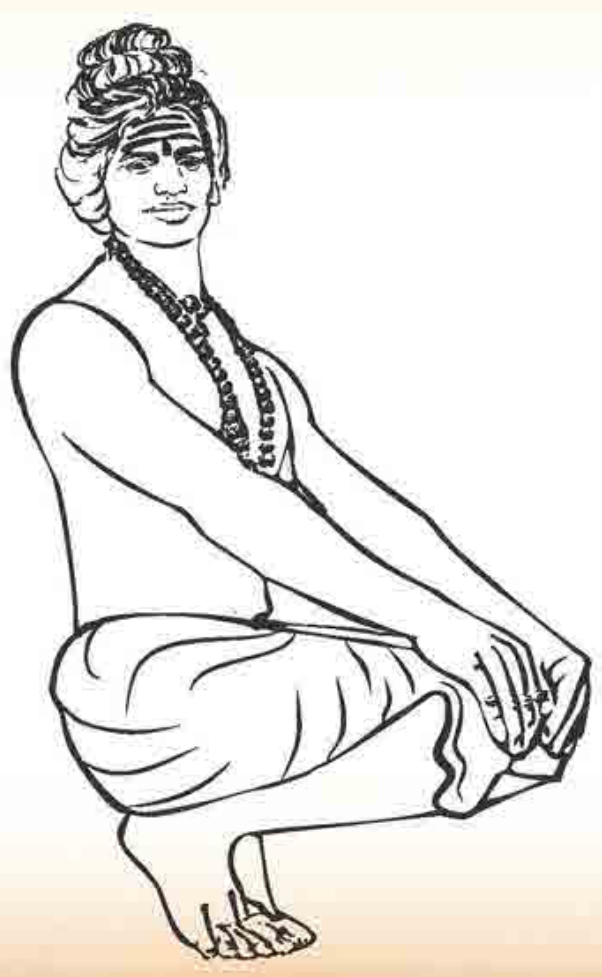
Āpta Pramāṇa - आप्त प्रमाण Gheranda Samhita II 27
युजास्फिजोः स्थीयत ऊर्ध्वजानुयत्रासने पादतलद्वयोपरि ।
स्निग्भ्यांमनागुत्तरकन्धरिण्यामस्पृश्य पीठं स्मृतिमुत्कटाख्यम् ॥३७ ॥
अस्मिन् जालन्धरे सति वह्निदीपनं भवतीति संकेत:
yujāsphijoù sthéyata ürdhvajänuyaträsane pädataladvayopari | snigbhyämmanäguttarakandhariëyämaspåcya péöhaà småtimutkaöäkhyam ||37|| asmin jälandhare sati vahnidépanaà bhavatéti saìketaù
Place toes on ground and raise the heels up and place the buttocks on them.
Apta Additional References Hatha Sanketa Candrika (47)
Technique:
- Squat down with the feet upright.
- Sit down on the heels and balance on the toes.
- Place the hands on the knees and remain steady.
Enhances gastric fire.
Feeling of being neutral, stable, balanced
Sakshi Pramana Benefits Li Yeen Chow/Singapore/Unemployed
Uttana mandukasana
Seated
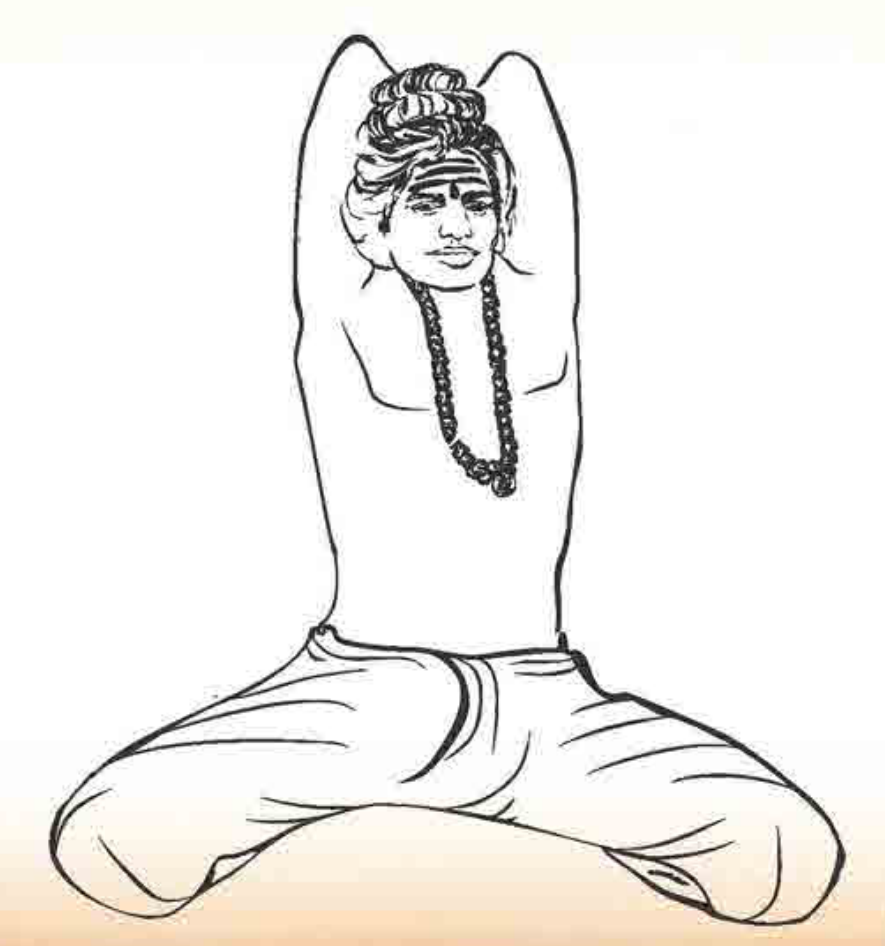
Āpta Pramāṇa - आप्त प्रमाण Gheranda Samhita II 34
मण्डुकासनमध्यस्थं कूर्पराभ्यां धृतं शिरः ।
एतद् भेकवदुत्तानमेतदुत्तानमण्डुकम् ॥३४॥
maëòukāsanamadhyasthaà kûrparäbhyäà dhåtaà çiraù | etad bhekavaduttānametaduttānamaëòukam ||34||
Uttana Manduka: Assume the Frog-posture (as in verse 34), hold the head by the elbows, and stand up like a frog. This is called the Uttana Mandukasana
Technique:
1. Squat down with the feet upright, soles together. 2. Sit on heels and spread the knees apart. 3. Keep the knees on the ground. 4. Cross the arms overhead with palms on opposite shoulders. 5. Keep spine straight while engaging the 3 bandhas.
Strengthens back, abdominals and thighs. Stretches the shoulders and thighs. Relief from discomfort and pain in the legs.
Chest expansion and elongation of the spine
Sakshi Pramana Benefits Li Yeen Chow/Singapore/Unemployed
Uttamāṅgāsana
Arm balance
स्थित्वैतदासने मन्त्री अधःशीर्ष करोति चेत्।
उत्तमाङ्गासनं ज्ञेयं योगिनामतिदुर्लभम्॥२३.४६॥
एतदासनमात्रेण शरीरं शीतलं भवेत्।
पुनः पुनः प्रसादेन चैतन्या कुण्डली भवेत्॥२३.४७॥
sthitvaitadāsane mantrī adhaḥśīrṣa karoti cet|
uttamāṅgāsanaṁ jñeyaṁ Yogināmatidurlabham ||23.46||
etadāsanamātreṇa śarīraṁ śītalaṁ bhavet|
punaḥ punaḥ prasādena caitanyā kuṇḍalī bhavet ||23.47||
*for extended verse see end of chapter
Then by becoming stable in this āsana if the head is lowered;It comes to be known as uttamāṅgāsana which is very important for the Yogis. (23.46) By doing this āsana itself the body cools down;And by doing it again and again the Kundali consciousness arises. (23.47) By the left and right method he who does it again and again;By filling up the mūlādhar padma with subtle breath and does kumbhaka. (23.48) By surely doing the kumbhaka prānāyāma by this method, the subtle breath should be dissolved in the mūlabrahmarandhra (aperture in the crown of the head) and stationed there. (23.49) After performing this beneficial āsana, just as the eye of the needle is threaded;The same way if the subtle aperture ( in the crown of the head, sūkṣmarandhra) is filled up, the mind subsides. (23.50)
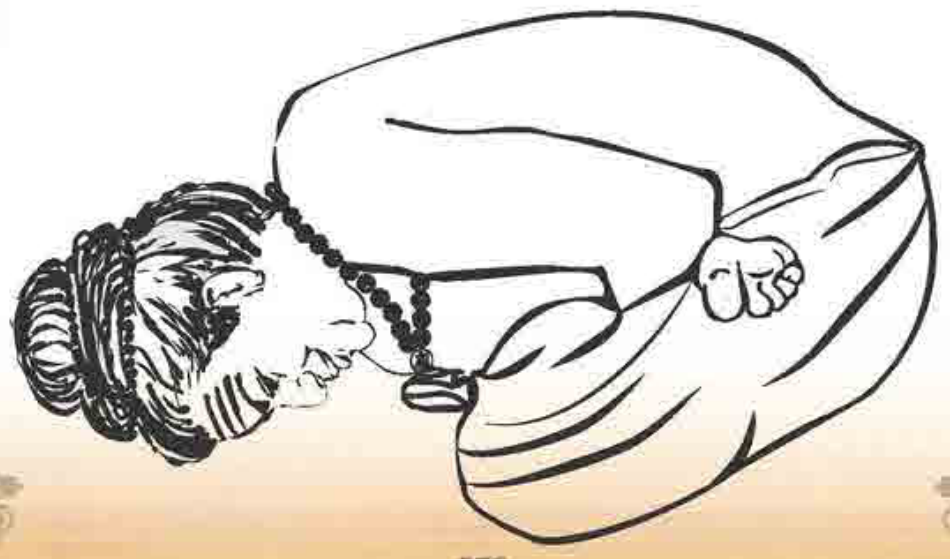
Technique:
- Sit in Kukkutasana (in padmasana insert arms through legs and balance on the arms)
- Bend the arms and lower the forehead towards the ground.
- Hold the breath in this posture.
Uttanakurmasana
Arm balance
Śāstra Pramāṇa - शास्त्र प्रमाण Tri-shikhi-brahmanopanishad (42)
कुक्कुटासनबन्धस्थो दोर्भ्यां संबध्य कंधरम् ।
शेते कूर्मवदुत्तान एतदुत्तानकूर्मकम् ॥ ४२ ॥
kukkuṭāsanabandhastho dorbhyāṃ saṃbadhya kaṃdharam | śete kūrmavaduttāna etaduttānakūrmakam || 42 ||
Remaining bound up in the Kukkuta posture and firmly pressing the neck with the two shoulders, should one stretch his body in a supine posture, with his face upward like a tortoise, this is the Uttana-kurmaka posture.
Āpta Pramāṇa - आप्त प्रमाण Hathapradipika II.9
कुक्कुटासनबन्धस्थो दोर्भ्यां सम्बध्य कन्थरे ॥
शेते कूर्मवदुत्तानमेतदुत्तानकूर्मकम् ॥ ९॥
kukkuṭāsanabandhastho dorbhyāṃ sambadhya kandhare || śete kūrmavaduttānametaduttānakūrmakam ||9 ||
One adopts kukkutasana and winds the arms around the neck and lies on back like a tortoise. This is uttana-kurmasana. 9
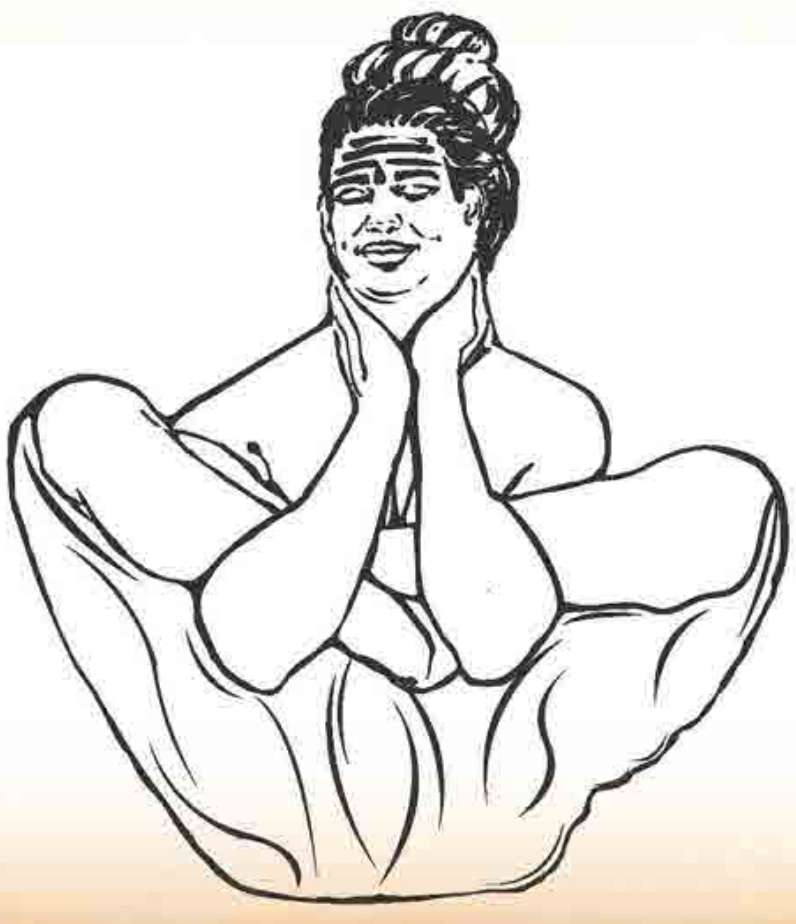
Apta Additional References Hatharatnavali-III.74, Gheranda Samhita-II.33, HSC-p32, SriTattvanidhi-85, Joga-maijare- fol.11,54-55
Technique:
- Lay on back in padmasana.
- Slip arms between legs and wrap hands around the neck.
Relief from fever, and such other diseases. It enhances gastric fire which consequently digests ama (toxic undigested food residue)
Utthanasikhipithaka Asana
Back bend
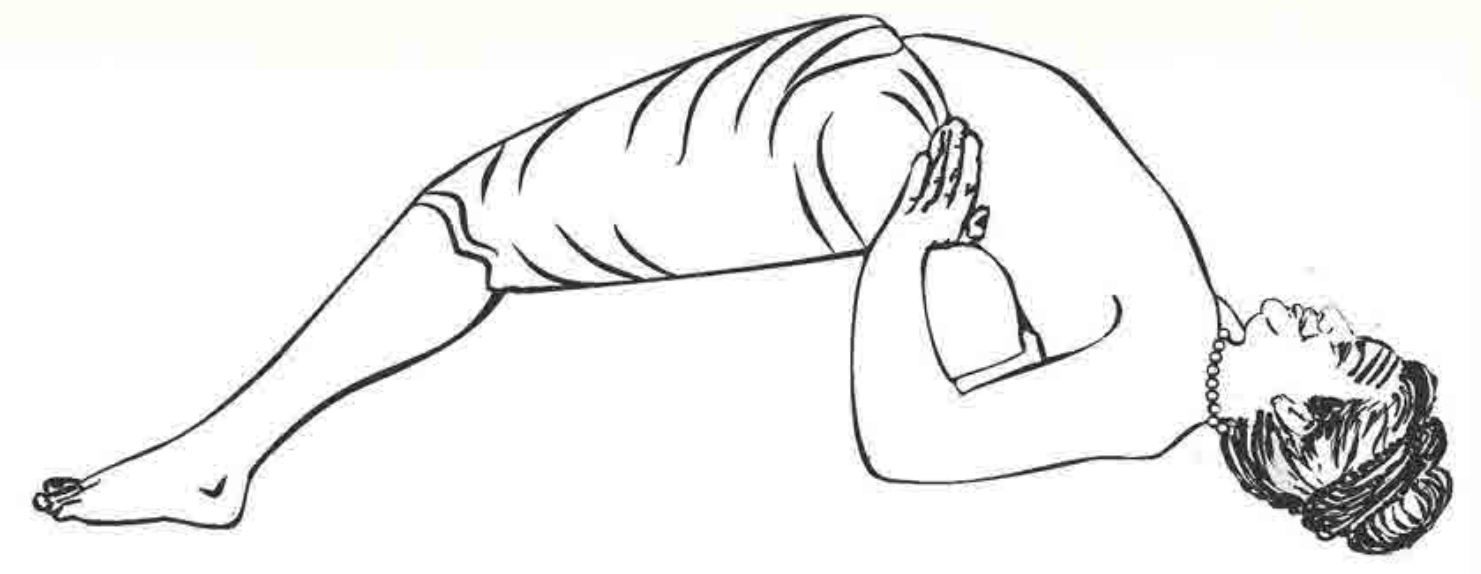
Āpta Pramāṇa - आप्त प्रमाण Yoga-rahasya (v.23)
जङ्घयोरुबलहीनश्चेत् उत्तानशिखिपीठकम्
अप्रमत्तः प्रकुर्वीत भुक्तेः प्राग्विजितेन्द्रियः
jañghorubalahénaçcet uttānaçikhipéöhakam apramattaù prakurvéta bhukteù prägvijitendriyaù
Uttanasikhipitha of YRah II 23, V 23, I 50 mentioned in this text is same as Uttanamayurasana.Lie supine. Raise the buttocks up and support them with hands placed at the waist. Elbows bear the weight of the body. Chin presses at the throat.
Technique:
- Lie down on the back.
- Raise the buttocks up and support the lower back with the hands.
- Hold the body weight on elbows.
- Chin presses at the throat.
One who feels weakness on thighs and knees should practice this asana before taking meals
Vaiśyasana
Standing
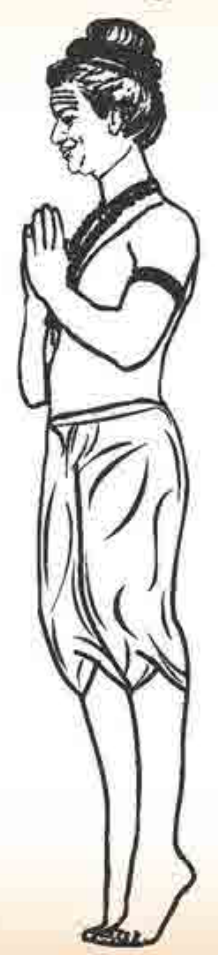
Śāstra Pramāṇa - शास्त्र प्रमाण Rudrayamalam (uttara-tantram) 24.34
केशेन पादयुगलं त्वद्ध्वा तिष्ठेदधोमुखः ।
अथ वैश्या वक्ष्ये यत्कृत्वा सत्यवान्भवेत् ॥
keśena pādayugalaṃ tbaddhvā tiṣṭhedadhomukhaḥ | atha vaiśyā vakṣye yatkṛtvā satyavānbhavet ||
Now I shall talk about vaiśyāsana doing which one becomes truthful. Place both the hands on the chest and place both toes one upon other and stand.
Technique:
- Stand-up on the toes.
- Fold the hands at the chest in salutation.
Vajra-sanghara-asana
Balancing
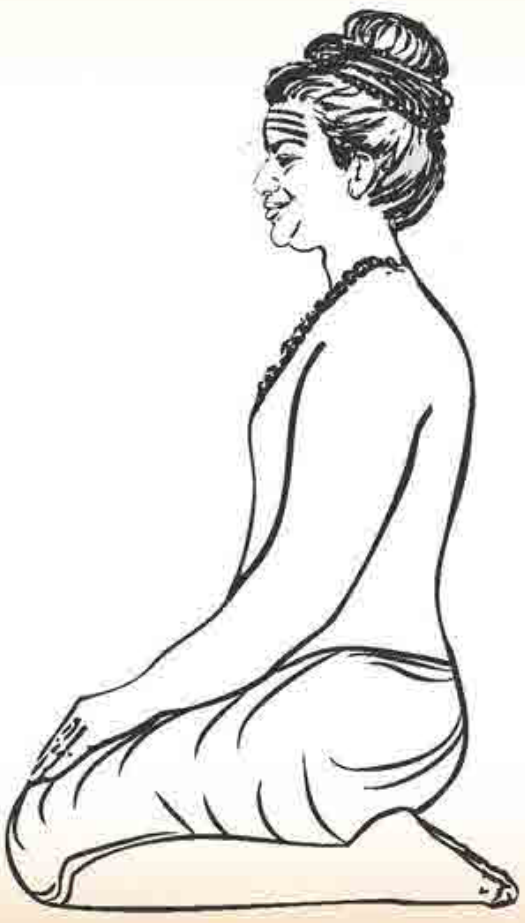
Āpta Pramāṇa - आप्त प्रमाण Joga Pradipika III.79-81
प्रथम फणा पाणी होय कैसे । दोउ एडी गूदा निवेसै ॥
गोडा ऊभा राखै थीर । आडे वाय पसारै धीर ॥ ७९ ॥
पृष्ट दिसी दोऊ कर आनै । तिनकी जुगत ऐसी विधि ठानै ॥
गहै परसपरि भुजा जु दोउ । कोहण्या लगती पकरै सोउ ॥ ८०
prathama phaëä päëé hoya baise | dou eòé güdä nïvesai ||
goòä übhä räkhai théra | äòe väya pasärai dhéra || 79 ||
påñöa disé doü kara änai | tinaké jugata aïsévidha öhänai ||
gahai parasapari bhujä ju dou | kohaëyä lagaté pakarai sou || 80 ||
for extended verse see end of chapter
Sit on toes placing heels against anus without allowing the knees to touch the ground, hold the opposite elbows by taking the hands towards back. It removes colling effect of the climate. This asana can be accomplished in seven days.
Apta Additional References Yoga-Asanamala Sacitra (ms.)-36
Technique:
- Sit on the toes, soles of feet together,Format buttoks on the heels.
- Keep the knees off the ground, spread sideways.
- Interlock arms behing your back by holding opposite arms at elbows.
Does not get affected with the cold climate. Gives relief from joint pains
Vajrasana
Seated
Śāstra Pramāṇa - शास्त्र प्रमाण Yoga-Kundaly-Upanishad 1.6
वामाङ्घ्रिमूलं कन्धाधः अन्यं तदुपरि क्षिपेत् ।
समग्रीवशिरःकायो वज्रासनमितीरितम् ॥ ६ ॥
vāmāṅghrimūlaṃ kandādhaḥ anyaṃ tadupari kṣipet | samagrīvaśiraḥkāyo vajrāsanamitīritam || 6 ||
One should place the left heel under the knot of the navel and the other heel over it, with his neck, head and body in a line. This is known as the Vajrasana posture.
Additional Shastra Reference Yogakundalini Upanishad 5-6
Āpta Pramāṇa - आप्त प्रमाण Gheranda Samhita II 12
जङ्घघाभ्यां वज्रवत्कृत्वा गुदपार्श्वे पदावुभौ ।
वज्रासनं भवेदतद्योगिनां सिद्धिदायकम् ॥१२॥
jaṅghābhyāṁ vajravatkṛtvā gudapārçve padāvubhau | vajrāsanaṁ bhavedetad Yogināṁ siddhidāyakam ||12||
Make the thigh tight like adamant and place the legs by the two sides of the anus. This is called the Vajrasana. It gives psychic powers to the Yogi.
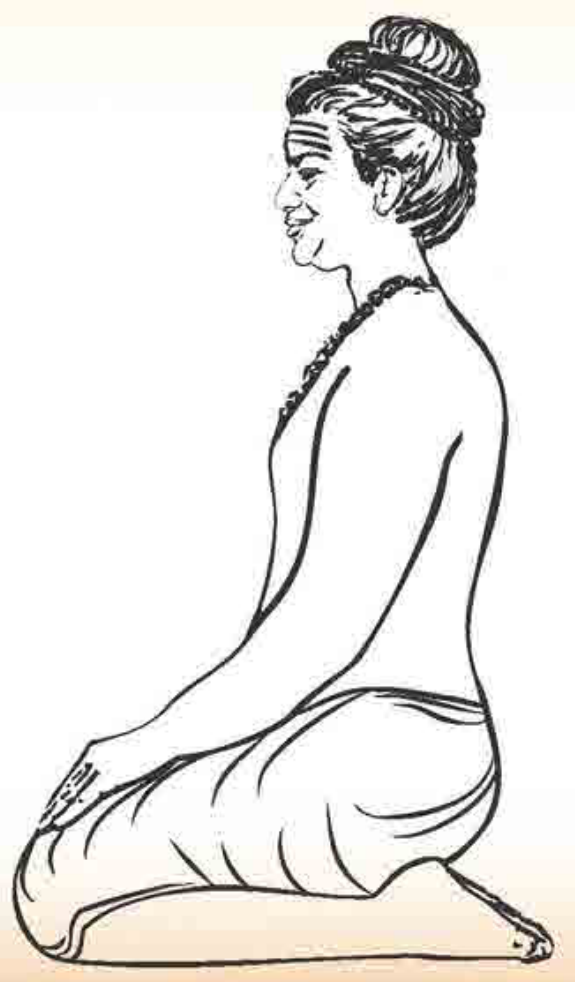
Technique:
- Kneel down and sit with the feet on either sides of the anus.
- Engage the thighs.
- Keep the hands on knees .
- Keep spine erect.
Strengthens the entire lower body, especially the thighs and gluteals. Develops, determination, stability and balance. Helps to move prana freely. Removes leg and joint pain. Improves digestive processes.Beneficial for pregnant women. While in this asana one should do prolonged recaka and puraka.
Valmika Asana
Seated
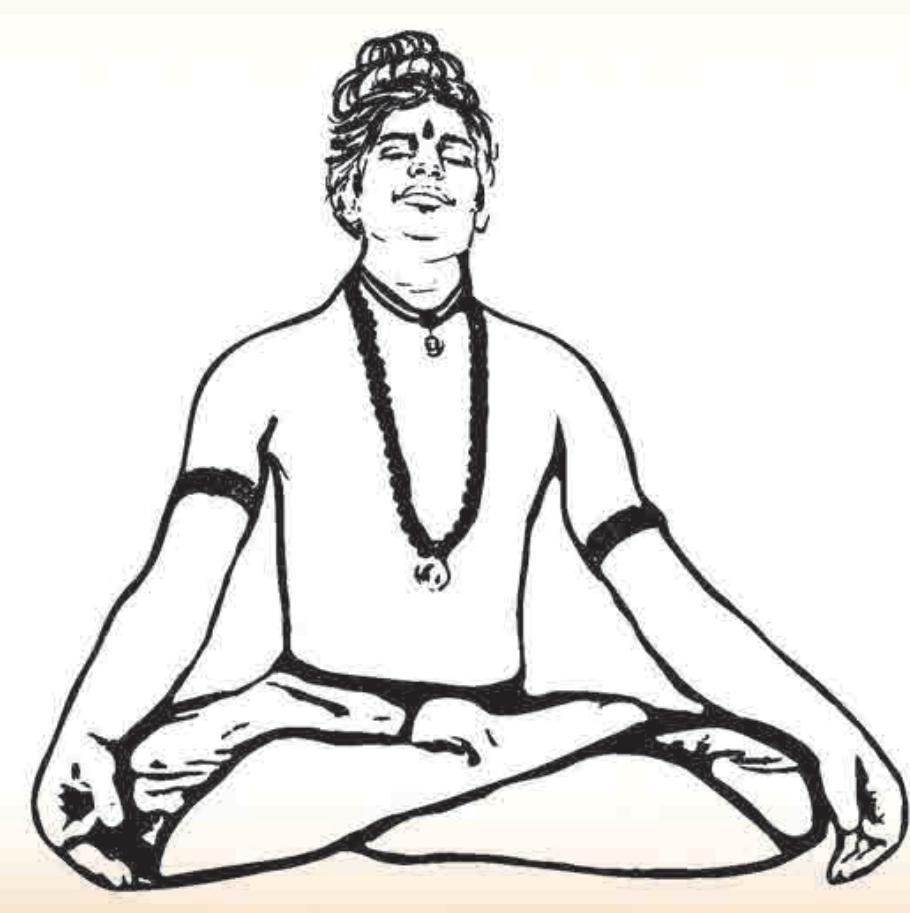
Āpta Pramāṇa - आप्त प्रमाण Joga Pradipika (239-241)
डावा पगकी पगथली पुनि एडी है जोय ।
फणां दिसी मेढू दक्षिण आणि लगावे सोय ॥२३९॥
दछि पाद की एडी जोई बाई नली लगावै सोई ।
अंगुष्ट गोडां लगता राखे पुनह पगथली धरती दाखै ॥२४०॥
òävä pagaké pagathalé puni eòé hai joya | phaëää disé meòhra dakñièa äëi lagäve soya ||239|| dachi päda ké eòé joé bäé nalé lagävai soé | aìguñöa goòää lagatä räkhe punaha pagathalé dharaté däkhai ||240|| for extended verse see end of chapter
While sitting on ground, place left heel on right side of the generative organ and toes under the thigh. Similarly, arrange right heel on left side in such a way that the toes come close to left knee. Place hands on knees and fix the gaze between two eyebrows.
Apta Additional References Yoga-Asanamala Sacitra 52
Technique:
- Sit with the left heel on right side of the generative organ and toes under the thigh.
- Place right foot on left leg with the toes close to left knee.
- Place hands on knees
- Fix the gaze between the eyebrows.
Overcomes swelling and other disorders in legs.
Varahasana
Seated
Āpta Pramāṇa - आप्त प्रमाण Yogasanam(sacitra)-76
पगथली की माहिली कोर मिलाई फणा पाणि ऊकडु कैसे
एड़ी मूलद्वार नीचे राखै जांघद्य छीद्र अंगूल च्यारी अंत्र
हाथ दोउ कांधापरि आणि मौरा हथेली अंगुली काठी लगावै
pagathalé ké mähilé kora miläé phaëä päëï ūkaòu baise eòé mŭladvära nécai răñai jàìgha chédra aìgŭla cyäré antra hätha dou kăndhäpari äëì maurä hathelé aìgulé käöhé lagävaï for extended verse see end of chapter
Sit on ground in squatting. Keep the feet together and heels set at the anus. Toes are kept apart. Keep knees raised as thighs press the abdomen. Bring palms together and thus joining hands take them together over the back. Fix the gaze at he nose. Brings relief from internal ulcer (or boil), and hump of the back.
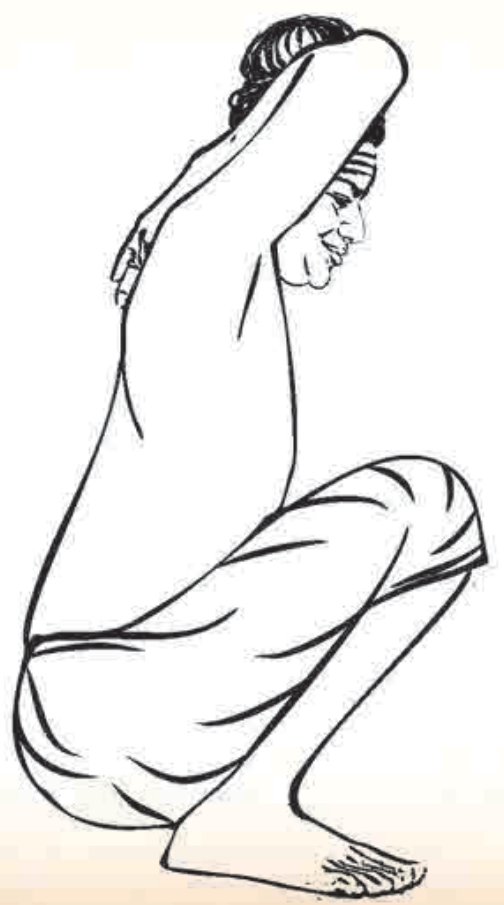
Technique:
- Squat down with the heels together toes apart.
- Keep knees raised and thighs pressing the abdomen.
- Bring palms together and take them behing the head.
- Keep the elbows close to the head.
- Gaze at the nose.
Vicitra-karaṇi
Inverted
Āpta Pramāṇa - आप्त प्रमाण Hatharatnavali (II, 69)
अथ विचित्रकरणीनामासनम् -
शयितपश्चिमतानस्थे हस्तौ तत्र प्रसारयेत् ॥
पादौ दण्डसमौ कृत्वा विचित्रकरणी भवेत् ॥ ६९ ॥
atha vicitrakaraëénämäsanam - çayitapaçcimatanasthe hastau tatra prasärayet || pädau daëòasamau kåtvä vicitrakaraëé bhavet ||69 ||
Stretch both the legs on the ground. Hold the big toes by the respective hands. Extend the hands and straighten the legs. This asana is caled vicitra karani.
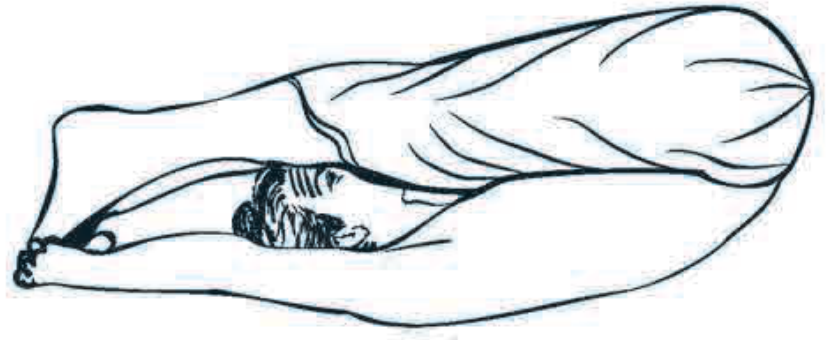
Apta Additional References supposed to be an advanced sayita- pascimatanasana, similar to langalasana
Technique:
- Lie on ground
- Bring the legs up overhead, toes touching the ground
- Extend the arms overhead towards the toes and straighten the legs.
Enhances gastric fire and gives good health. Engages the 3 bandhas. Brings flexibility to the spinal cord. Releases stress,tension, anxiety and mild depression held in the body.
Vidhunanasana
Seated
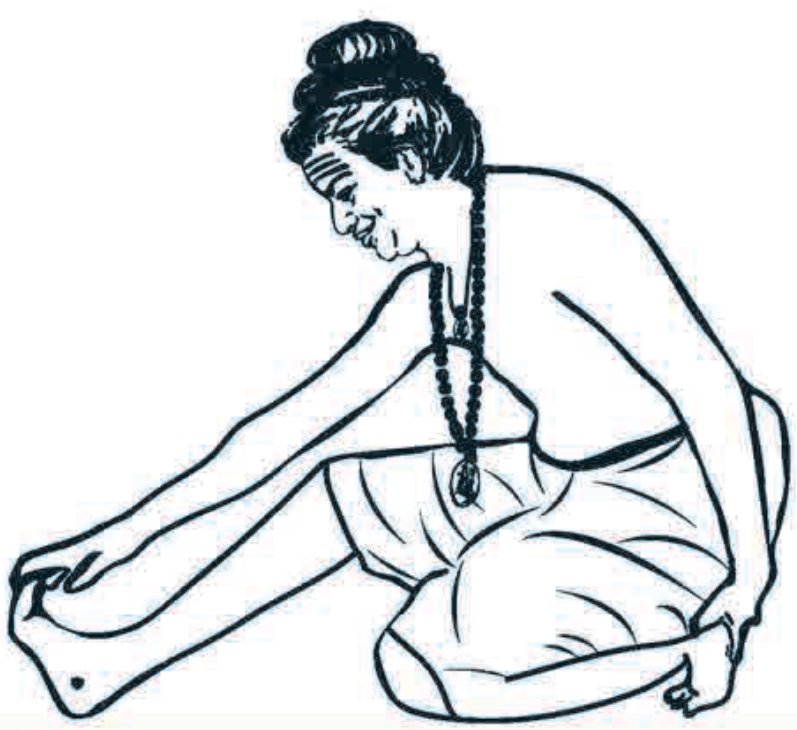
Āpta Pramāṇa - आप्त प्रमाण Hatharatnavali III 71
धगुल्फस्थितौ पादमेकं प्रसार्य
तत्पादाग्रं संस्पृशेत्तत्करेण ॥
गुल्फं चान्यं धारयेत्तत्करेण
धूनं पीठं चाभ्यसेच्चोभयत्र ॥७१ ॥
gulphasthitau pādamekaṁ prasārya
tatpādāgraṁ saṁspṛśettatkareṇa ||
gulphaṁ cānyaṁ dhārayettatkareṇa
dhūnaṁ pīṭhaṁ cābhyaseccobhayatra ||71||
By sitting on one heel, stretch the other leg forward and touch its toes with the respective hand. The other heel is held with the other hand. This is dhuna-pitha, which should be practiced on both the sides. 71
Technique:
- Sit on one heel with the foot upright.
- Stretch other leg forward, toes pointing up.
- Catch the toes of the extended leg with the respective hand.
- Keep the other hand on the respective heel.
- Repeat on the other side.
Strengthens the ankles, feet, legs and gluteals. Improves balance, stability, focus and concentration.
Stretches and strengthens the feet and legs
Sakshi Pramana Benefits Li Yeen Chow/Singapore/Unemployed
Vijogasana
Standing
Āpta Pramāṇa - आप्त प्रमाण Joga Pradipika (210-214)
गोडां वांणो ऊभौ होई गोडा आडा राखै दोई ।
दछि पादकै पाणि रहावै फणौ वाम गोडा ढिगि ल्यावे ॥२१०॥
कोर वारिली संधि भू टेके एडी वामपद संधि वसेखै ।
तामाही करि बाहरि आनै वामपदको फणो भू ठाने ॥२११॥
goòàä väëëo übhau hoé goòä äòä räkhai doé | dachi pädakai päëi rahävai phaëau väma goòä òhigi lyäve ||210|| kora värilé sandhi bhü öeke eòé vämapada sandhi vasekhai | tämähé kari bähari äneä vämapadako phaëoà bhü öhäne ||211|| "for extended verse see end of chapter"
Stand on knees. Bring right toe near the left knee at the back side. Similarly, bring left toe at the back of right knee. Take hold of shanks with hands turning them on backside in such a way that the thumbs come outside and other fingers inside. Fix the gaze between eyebrows.
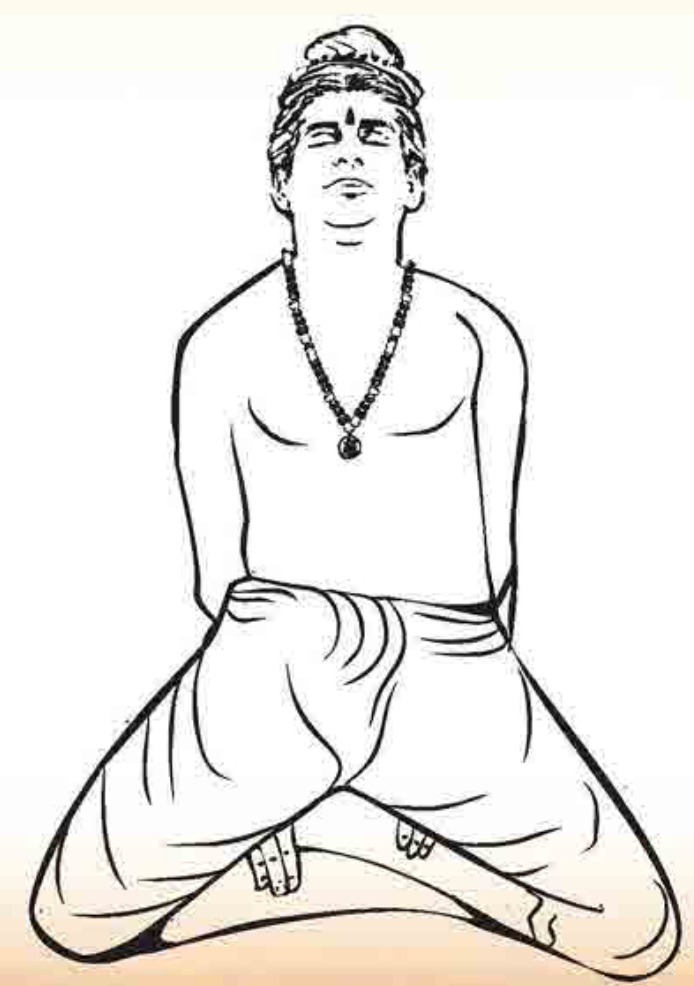
Technique:
- Stand on knees.
- Bring right foot near the left knee at the back side.
- Similarly, bring left foot at the back of right knee.
- Take hold of shanks with hands turning them on backside in such a way that the thumbs come outside and other fingers inside.
- Fix the gaze between eyebrows.
One should practice Pranayama as prescribed in this asana. It brings relief from knots (obstacles on the way of free flow) of prana.
Viparīta Karani
Inverted
करणी विपरीताख्या सर्वाधिव्याधिनाशिनी ॥ १२२ ॥
नित्यमभ्यासयुक्तस्य जाठराग्निविवर्धनी ।
आहारा बहुवस्तस्य संपाद्याः साधकस्य च ॥ १२३ ॥
karaṇī viparītākhyā sarvādhivyādhināśinī || 122 ||
nityamabhyāsayuktasya jāṭharāgnivivardhanī |
āhārā bahavastasya sampādyāḥ sādhakasya ca || 123 ||
for extended verse see end of chapter
The Karari known as Viparīta, which destroys all mental and bodily ailments, develops the Jatharagni of the daily practitioner. Various kinds of food will have to be procured by the practitioner (of that Karani). Should the kinds of food fall short, fire will eat up the body in a minute. With his head down and his feet up, he should remain for a minute on the first day.
Āpta Pramāṇa - आप्त प्रमाण Joga Pradipika (164-166)
प्रथम सयन सूधो होय ठाने पग मिलाई अंमर दिसि तानै ।
बहुरि उर्ध्वको देह ऊंचावै भूपरि मौरा पाणि रहावै ॥१६४॥
दोउ पग पुनि अवर सरीर सूधा उरध सम्य राखै थीर ।
दोउ पगथली समतां दाखै गगनदिसा सनमुख करि राखै ॥१६५
prathama sayana sūdho hoya öhāneä paga milāé ammara disi tänai |
bahuri urdhvako deha ucāvai bhūpari maurā pāëi rahāvai ||164||
dou paga puni avara saréra sūdhā uradha samya rākhai théra |
dou pagathalé samatä däkhai gaganadisä sanamukha kari rākhai ||165||
for extended verse see end of chapter
Lie supine on floor. Keep feet together. Raise both legs and trunk vertically. Body weight rests on shoulders and neck. Keep hands spread out on ground. Direct the gaze at the tip of the nose.
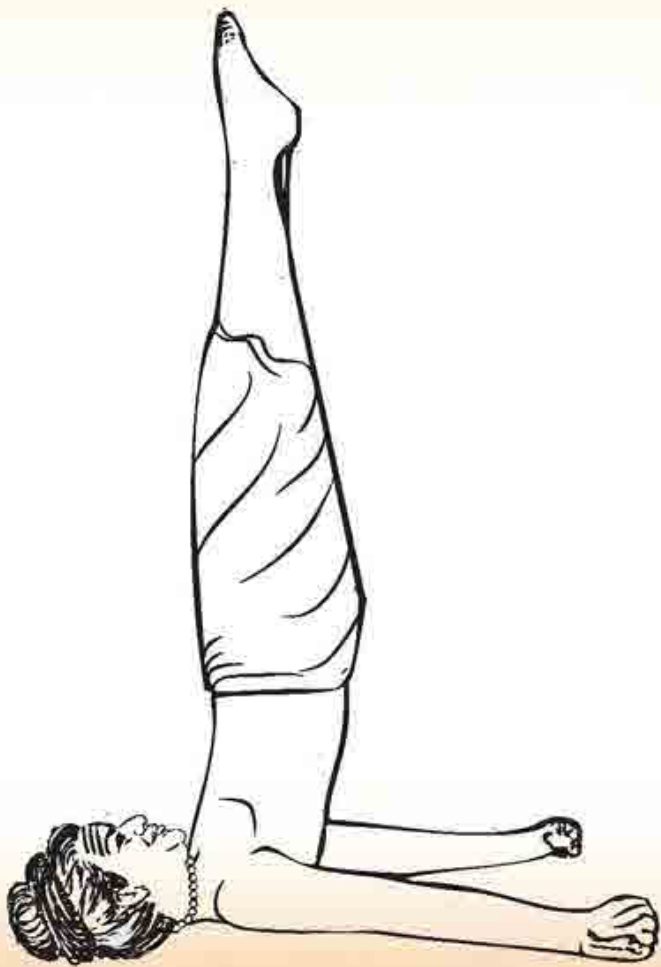
Apta Additional References YMS 17
Technique:
- Lie supine on floor.
- Raise both legs and trunk vertically.
- Body weight rests on shoulders and neck.
- Keep arms extended on the ground.
- Direct the gaze at the tip of the nose.
Alleviates all diseases.Enhances gastric fire.
Relaxing and blissful
Sakshi Pramana Benefits Li Yeen Chow/Singapore/Unemployed
Vīrāsana I
Seated
Śāstra Pramāṇa - शास्त्र प्रमाण Kiraṇa Āgama - Yoga Pada (9)
द्विगुणं पतितं पादम् वामम् दक्षिणतोत्थितम् |
कृत्वाऽन्योन्यतलस्थं तु वीरपट्टमथोच्यते ॥ ९ ॥
dviguṇaṁ patitaṁ pādaṁ vāmam dakṣiṇatotthitam |
kṛtvā'nyonyatalasthaṁ tu vīrapaṭṭamathocyate || 9 ||
Placing the left leg on the right thigh and keeping the right leg on a pedestal or on the floor and keeping the palms on one another. Vīrāsana can be assumed.
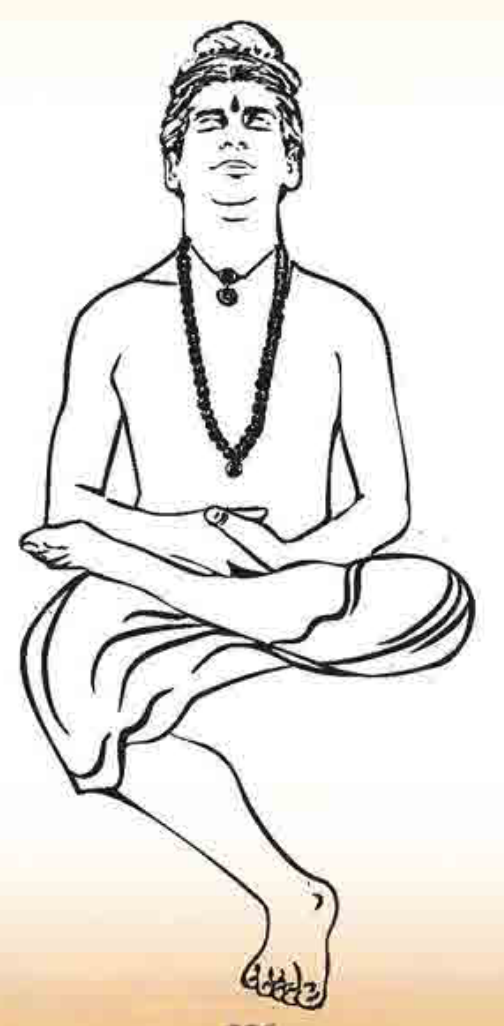
Technique:
- Sit on a pedestal.
- Place the left leg on the right thigh.
- Keep the right leg on the floor and the palms on one another.
Virasana II
Seated
Śāstra Pramāṇa - शास्त्र प्रमाण Sandilyopanishad (3, 4)
एकं पादमथैकस्मिन् विन्यस्योरुणि संस्थितः ।
इतरस्मिंस्तथा चोरुं वीरासनमुदीरितम् ॥ ४ ॥
ekaṁ pādamathaikasmin vinyasyoruṇi saṁsthitaḥ | itarasmiṁstathā coruṁ vīrāsanamudīritam || 4 ||
Placing one foot over one thigh and the other thigh over the other foot similarly, sitting thus is what is known as Virasana.
Āpta Pramāṇa - आप्त प्रमाण Hathapradipika II.7
अथ वीरासनम्
एकं पादं तथैकस्मिन् विन्यस्योरुणि संस्थितम्॥
इतरस्मिंस्तथा चोरुं वीरासनमुदीरितम् ॥ ७॥
atha vīrāsanam ekaṁ pādaṁ tathaikasmin vinyasyoruṇi saṁsthitam || itarasmiṁstathā coruṁ vīrāsanamudīritam || 7 ||
One foot is placed on the opposite thigh and the other foot under the opposite thigh. This is virasana. 7
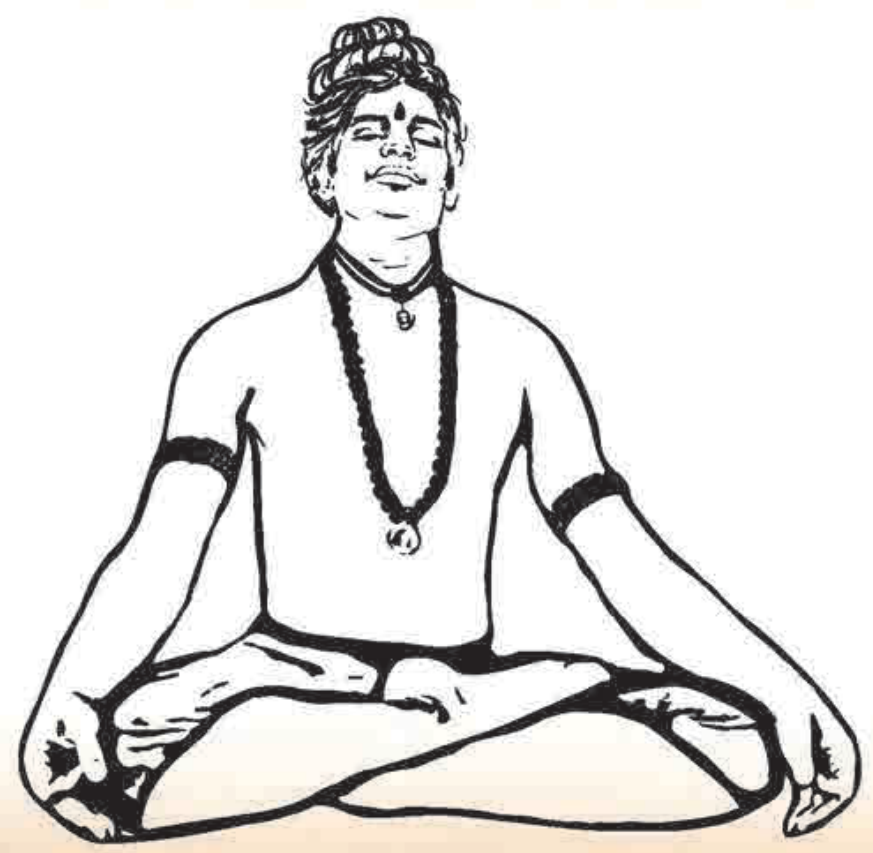
Apta Additional References Hatha-tattva-kaumudi VII. 18-19
Technique:
- Sit with one foot on top of the opposite thigh.
- Place the other foot under the other thigh.
Brings stability of mind. Enhances enthusiasm and strength. Helps achieving targeted goal. Bring relief from diseases.
Feeling of a warrior resting, where your guard is down but you awareness is still up
Sakshi Pramana Benefits Keong Chow, Singapore, Yoga Teacher/Freelancer
Vrksasana I
Balancing
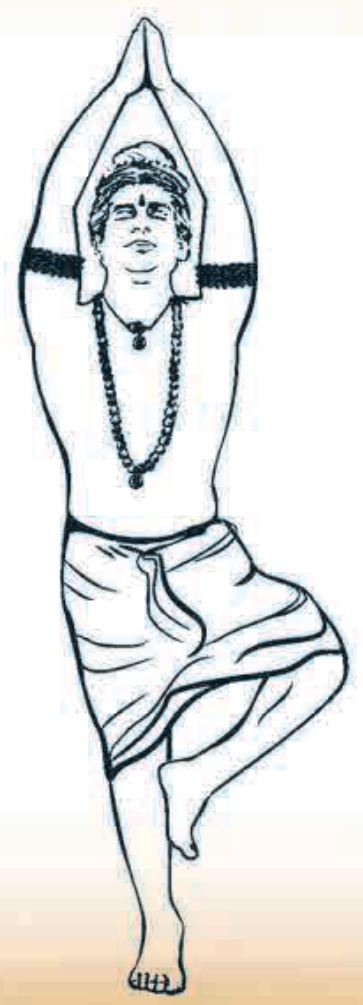
Apta Additional References BrYs-III.42, YMP-11
Technique:
- Stand upright.
- Lift the right foot and place the heel on the inner left thigh.
- Kepp the knee out sideways.
- Fold the hand together at the heart center.
- Balance on the left leg like a tree.
• Increase flexibility of the hips and stretch inner thighs, chest, and shoulders. • Strengthens your glutes, thighs, calves and spine. • Helps improve concentration and your sense of balance. • Relieves sciatica and reduces flat feet. • Connect to the earth element and being grounded. • Cleanses chakras.
Feeling of being like a tree, grounded/rooted feeling while growing talling at the same time; opens up the chest/pulls shoulders back
Sakshi Pramana Benefits Mijeann Najin, Los Angeles, Actress/Model
Āpta Pramāna - आप्त प्रमाण Gheranda Samhita II.35
वामोरूमूलदेशे च याम्यं पादं निधाय तु ।
तिष्ठेत् तु वृक्षवद्भूभौ वृक्षासनमिदं विदुः ॥३५ ॥
vämorumüladeçe ca yämyaà pädaà nidhäya tu | tiñöhet tu våkñavadbhümau våkñäsanamidaà viduù ||35||
Vriksha: Stand straight on one leg (the left), bending the right leg, and placing the right foot on the root of the left thigh; standing thus like a tree on the ground, is called the Tree-posture.
Vrksasana II
Arm balance
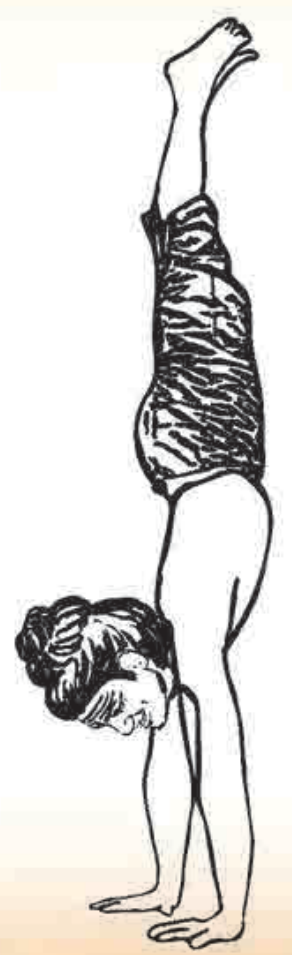
Technique:
- Bring the hands on the ground.
- Lift the body all the way up, feet pointing to the sky
- Hold body straight up.
- Helps to stimulate the entire endocrine system, such as pituitary gland, thyroid glands, etc... Also balance adrenal glands, reduce cortisol, "stress hormone".
- Strengthen the body, build up muscular strength such as pectoralis major, deltoids, latissimus, trapezius and core muscles.
- Emotional benefits: cheer up low mood and can help reduce minor depression.
- Body in upside down position, help the organs restore the position which have been pulled by gravity.
- By bringing blood to the head, relieve a minor headache, improve digestion and elimination.
Āpta Pramāṇa - आप्त प्रमाण Yoga-rahasya of Srinatha-muni-V.20
सप्तचक्रक्षालनाय वृक्षासनविशेषकान् ।
जननेन्द्रियदार्थ्याय कोणभेदान् समभ्यसेत् ॥
saptacakrakñälanäya våkñäsanaviçeñakän jananendriyadäròhyäya koëabhedän samabhyaset
One raises the whole body on palms alone with hands fully stretched.
Vrsapati Asana
Seated
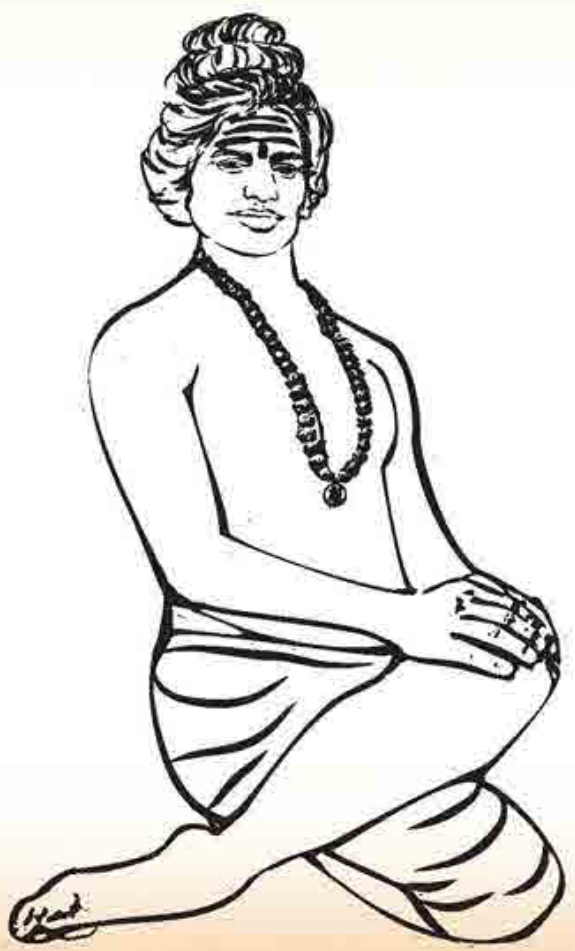
Āpta Pramāṇa - आप्त प्रमाण Yoga Asanamala sacitra 80
जीमणा गोडो अग्र करि डावो पग जीमणी पाषती आणि
मोडि येडि कुला नीचै राषी फणा पाणि अधर रहै
jémaëä goòo agra kari òävo paga jémaëé päñaté äëi moòì yeòì kulä nécai räñé phaëä päëi adhara rahai for extended verse see end of chapter
While sitting on ground, bend right knee and place right foot under right buttock. Toes are turned sidewards. Place left folded leg on right thigh. Eyes are fixed at the tip of the nose.
Apta Additional References JP 317-319
Technique:
- Kneel with the right foot under right buttock.
- Wrap left leg around right thigh.
- Place the hands on the left knee.
- Fixed at the tip of the nose.
Vrsasana
Seated
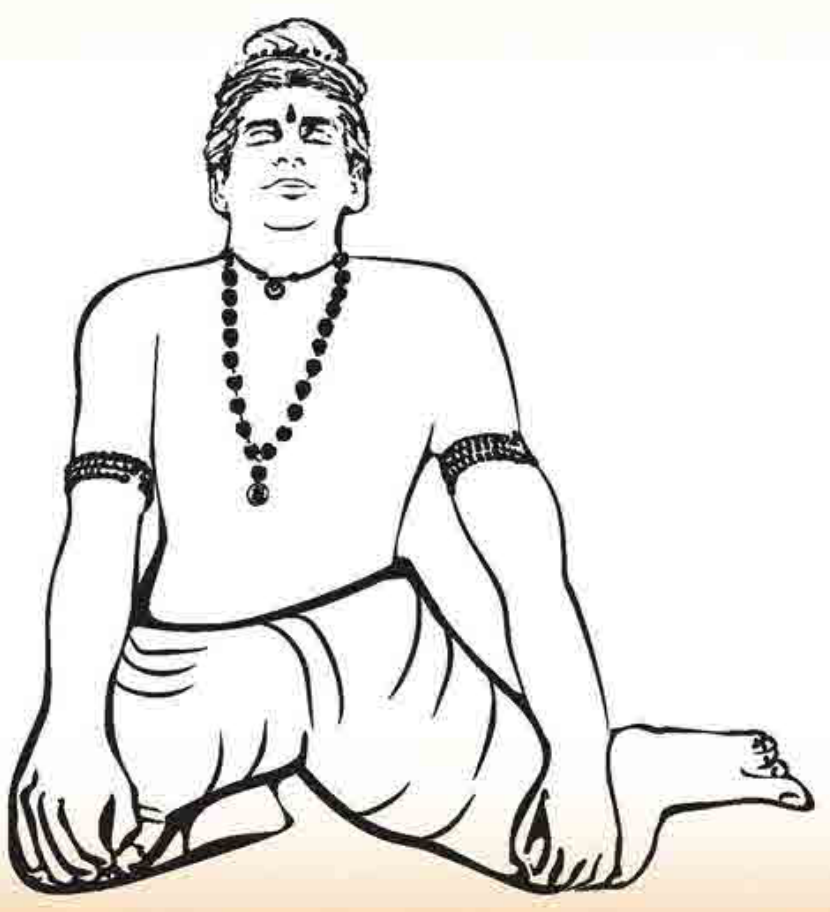
Āpta Pramāṇa - आप्त प्रमाण Gheranda Samhita (II, 38)
याम्यगुल्फे पायुमूलं वामभागे पदेतरम् ।
विपरीतं स्पृशेद्भूमिं वृषासनमिदं भवेत् ॥३७॥
yāmyagulfe pāyumūlaṁ vāmabhāge padetaram | viparétaṁ spåçedbhūmiṁ våñāsanamidaṁ bhavet ||37||
Position the anus under the right heel, place the left leg on the left of it crossing it the opposite way, and touch the ground. This is called the Bull-posture.
Technique:
- Sit with the right ankle under the anus.
- Place left foot on the ground on the left side with the toes point sideways.
- Keep spine straight with the hands on the respective knees.
- Gaze between the eyebrows.
Strengthens the thighs, back and abdominals. Stretches and opens the ankles, knees, groin and low back. Stimulates the reproductive organs, digestion processes and activates the muladhara chakra.
Vrscikasana I
Arm balance
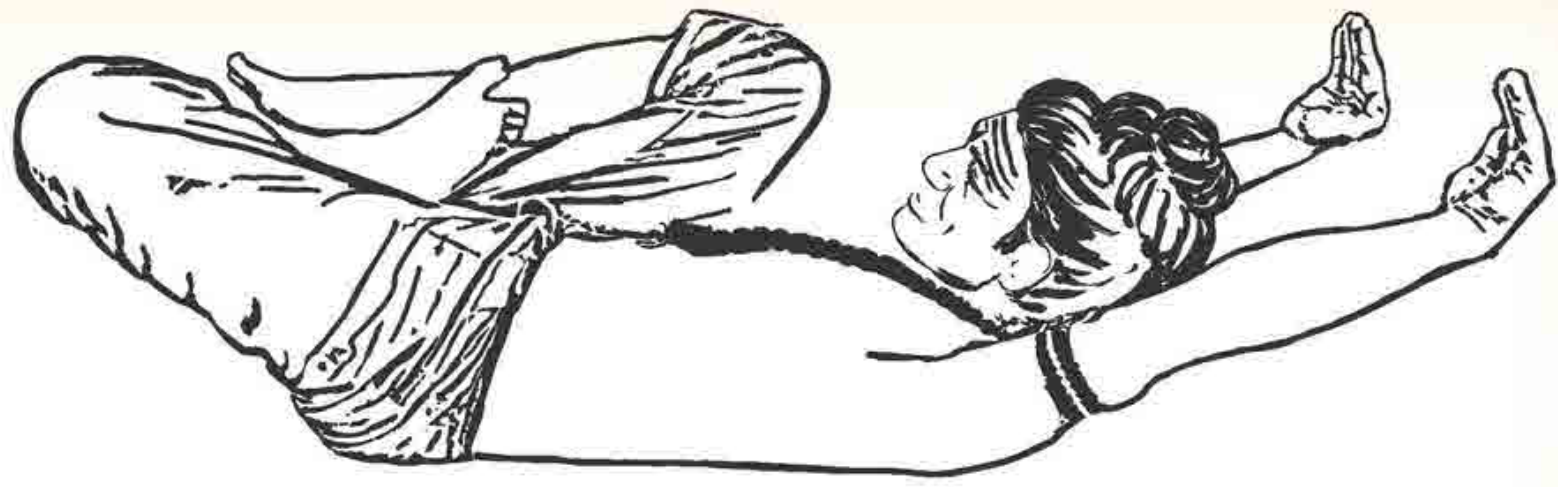
Āpta Pramāṇa - आप्त प्रमाण Hatha Sanketa Chandrika 23
वृश्चीवपुच्छ प्रतिमांघ्रिपार्ष्णी धृत्वा
स्वशीर्षे चिबुकं विधार्य कौ ॥२३॥
यत्रेति सन्तिष्ठति साधकस्त्वविषावहं
वृश्चिकसंज्ञमासनम् ॥
våçcévapuccha pratimàïghripärñëé dhåtvä
svaçérñe clbukaà vidhärya kau ||23||
yatreti santiñöhati sädhakastvaviñävahaà
våçcikasaijïamäsanam ||
Kneel down on floor. By leaning down forward place hands and elbows on ground. Raise both legs up and bend them backwards to touch feet on the head. Raise the chin up. Hold the position.
Apta Additional References Hatharatnavali (III, 75), haṭha-saṅketa-candrikā-23
Technique:
- Kneel down on floor.
- Place hands and elbows on ground, shoulder width apart
- Raise both legs up and bend them backwards to touch the head with the feet.
- Raise the chin and chest up.
- Hold the position.
Help to to get rid of diseases and (effect of ) poison. A full spinal extension, a deep back bending. Deep stretch to abdominals, hip flexors, quadriceps. Works on body strength also, especially arms.
Vrscikasana II Seated
Āpta Pramāṇa - आप्त प्रमाण Joga Pradipika 158-163
प्रथम सयन सूधो सीस केशकी संधि सु दाखै। कछु सीस उरध कर राखै।
बहुर पगथली ऐसैं ताणै गगन दिश सम्मुख करि ठाने ॥१५८॥ वामपादपरि दछिपाद वामतरि धरै।
दोउ पादकी आंटी करै ॥१५९॥ पुनह पाद की आंटी जीमणौ फणो जु जोई।
वाम पगथली परि धरे सोई ॥ बहुर पाद उच्चौकौ तानै गोडौ दछि सीसढि आनै।
सीस केशकी सांधि सु दाखै कछु सीस उरध कर राखै ॥ बहुरि पगथली ऐसे तार्णे गगनदिशा सममुख करिठाने।
दोउ हाथ माथादिसि धारै भूसौं लगिवां उdisplayर्ध पसारे। छीदी राखि अंगुरी मोरे वीछीका मुख ज्यो करि छोरे ॥
चिबुक कण्ठकूप में राखै भ्वोहनमधि द्रिष्टिको दाखै। उदरमांहि आम होय जेती या आसनसौ नासै तेती ॥१६२॥
माटी को पलाठी करी जो कदाचि कोई खाय। तिनको उपज्यो रोग सब या आसन तै जाय ॥१६३॥
prathama sayana sūdho sésa keçaké sandhi su däkhai | kachu sésa uradha kara räkhai |
bahura pagathalé aisai täëai gagana diça samukha kari öhäne ||158|| vämapädapari dachipäda vämatari dharai |
dou pädaké äëöé karai ||159|| punaha päda ké äëöé jémaëau phaëo ju joé |
väma pagathalé pari dhare soé || bahura päda ucaukau tänai goòau dachi sésaòhi änai |
sésa keçaké sändhi su däkhe kachu sésa uradha kara räkhai || bahuri pagathalé aise täëeà gaganadiçä samamukha kariöhäne |
dou hätha mäthädisi dhäre bhüsauà lagiväm urdha pasäre | chédé räkhí aìguré more véïchékä mukha jyo kari chore ||
cibuka kaëöhaküpa meà räkhe bhohanamadhi driñöi ko däkhe | udaramäàhi äma hoya jeté yä äsanasau näsai teté ||162||
mäöé ko paläöhé karé jo kadäci koi khäya | tinako upajyo roga saba yä äsana tai jäya ||163||
Lie supine on floor. Draw the pair of feet closer and arrange right foot over left and lock them. Raise legs and head and bring right knee close to head. Raise hands over the head straight and bend fingers imitating front portion of a scorpion. Fix the chin on throat and apply Jalandhara Bandha. Direct the gaze between eyebrows.
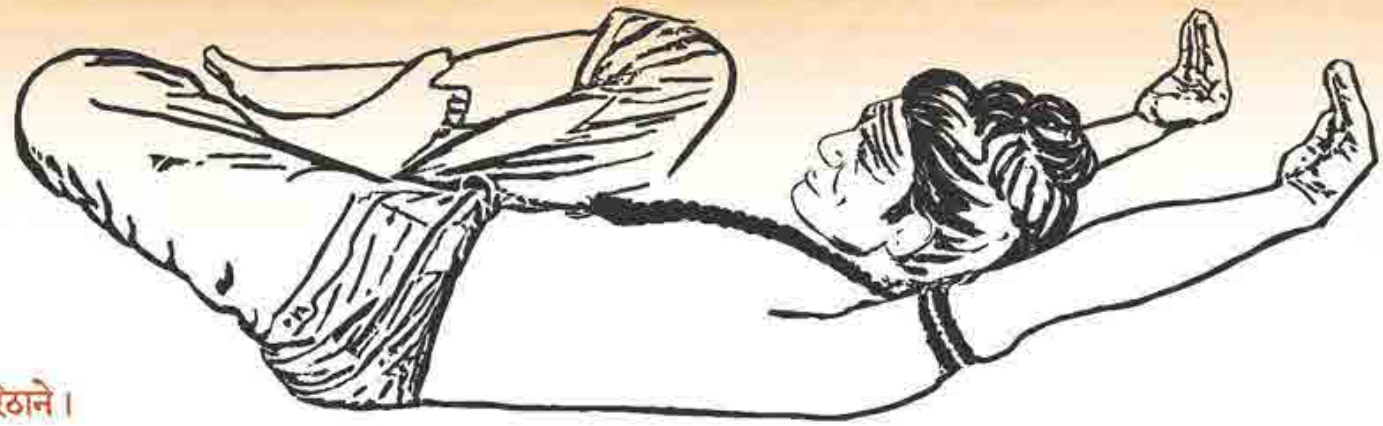
Apta Additional References Haṭha-saṅketa-candrikā 23
Technique:
- Lie supine on floor.
- Cross the feet and bring right knee close to the chest.
- Raise the head.
- Raise hands overhead with fingers bent imitating tail of a scorpion.
- Fix the chin on throat and apply Jalandhara Bandha.
- Direct the gaze between eyebrows.
Accumulation of "ama" (sticky undigested food residue; toxins) in the intestine is eliminated by this practice. Cures hose ailments which are caused due to consumption of soil. Vrscikasana is recommended to get rid of all diseases and (effect of ) poison.
Yathasanistha Asana
Seated
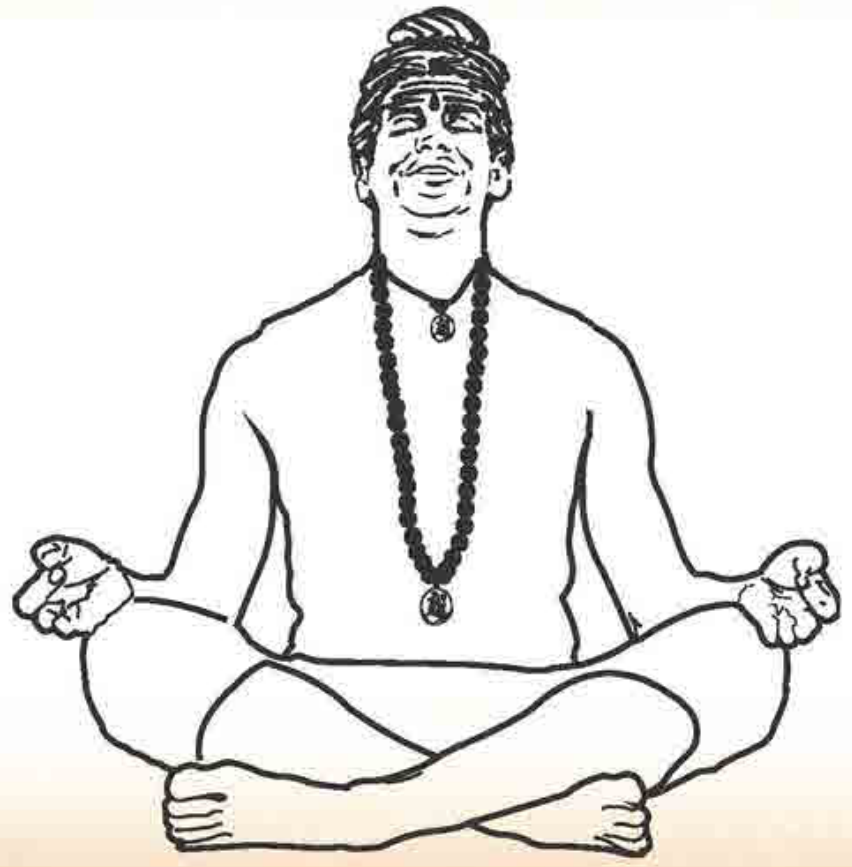
Śāstra Pramāṇa - शास्त्र प्रमाण Kiraṇa Āgama – Yoga Pada Verse 12a
पर्यङ्कं तत्समाख्यातं यथासंस्थाम् यथास्थितिः |
paryaṅkaṁ tatsamākhyātaṁ yathāsaṁsthām yathāsthitiḥ |
A posture convenient to the ease of one's own physical and mental state is known as yathasanistha (i.e sukhasana)
Technique:
- Sit with the spine straight in the way that body and mind are comfortable.
- Can use any props like a block or pillow to elevate the hips if needed.
Yoganidrasana
Supine
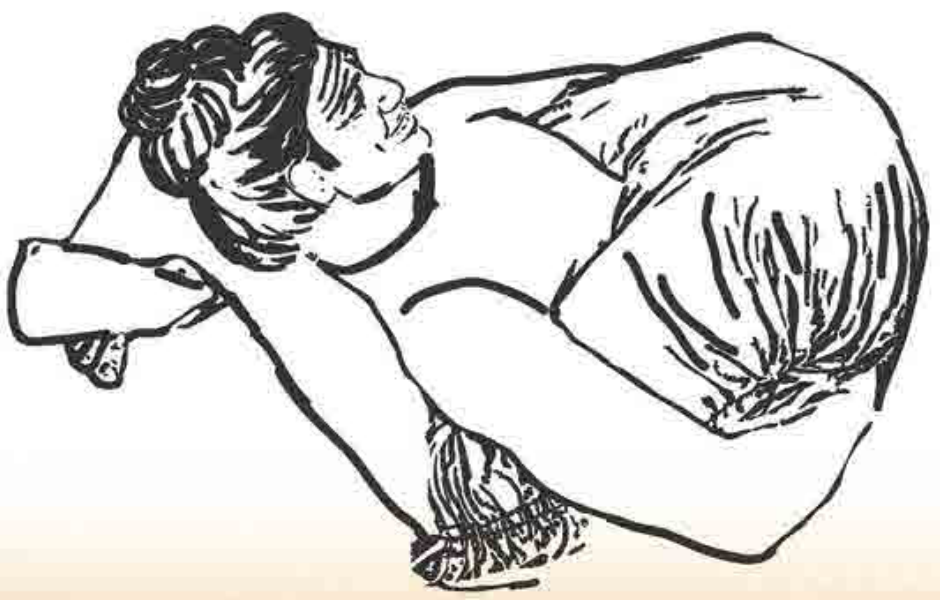
Āpta Pramāṇa - आप्त प्रमाण Hatharatnavali (III, 70)
पादाभ्यां वेष्टयेत्कण्ठं हस्ताभ्यां पृष्ठबन्धनम् ॥
तन्मध्ये शयनं कुर्याद् योगनिद्रा सुखप्रदा ॥७० ॥
pädäbhyäà veñöayetkaëöhaà hastäbhyäà påñöhabandhanam || tanmadhye çayanaà kuryäd Yoganidrä sukhapradä ||70||
Wind the legs around the neck, tie up the hands on the back and lie down. This is Yoganidra, which offers wellbeing. 70
Technique:
- Lie down and bring one leg at a time behind the head.
- Lock the feet together and rest the head on them.
- Wrap the arms through the legs and around the back.
- Firmly hold the hands together.
Yoganidrasana frees all tensions in the hips. It slows down the breath providing a deep relaxation.
Sakshi Pramana Benefits Mathieu Richer, Canada
Yogapattasana
Seated
Śāstra Pramāṇa - शास्त्र प्रमाण Kiraṇa Āgama – Yoga Pada Verse 10
कृत्वाऽदौ द्विगुणं पादौ तिर्यगूर्ध्वमधः खग |
न्यसेत्पाणिं यथापट्टं ततश्श्लिष्टाङ्गुलीयकौ ॥ १० ॥
kṛtvā'dau dviguṇaṁ pādau tiryagūrdhvamadhaḥ khaga |
nyasetpāṇiṁ yathāpaṭṭaṁ tataśśliṣṭāṅgulīyakau ||10 ||
Keeping the right leg obliquely and placing the left one on the thigh (near knee-joint) and placing the two hands so as to be propped by the knee-joints keeping the fingers stretched out and tying around the Yogapatta, Yogapattasana can be assumed.
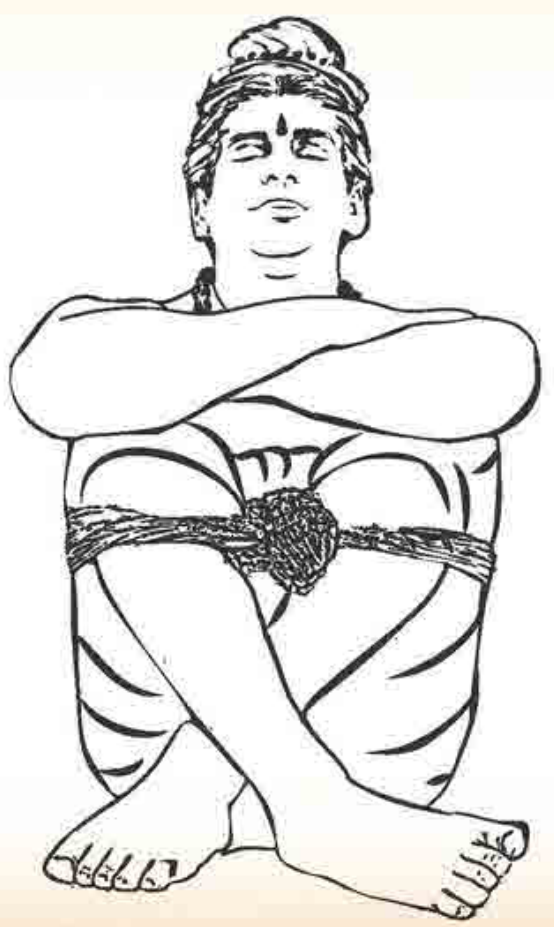
Technique:
- Cross legs with knees raised.
- Tie yagapatta (a cloth) around the legs to help hold upright.
- Cross arms, hands on the knees
- Keep spine upright.
Strengthens the core muscles.
Yogasana 1
Seated
Āpta Pramāṇa - आप्त प्रमाण Gheranda Samhita II 44-45
उत्तानौ चरणौ कृत्वा संस्थाप्य जानुनोपरि ।
आसनोपरि संस्थाप्य उत्तानं करयुग्मकम् ॥४३ ॥
पूरकैर्वायुमाकृष्य नासाग्रमवलोकयेत् ।
योगासनं भवेदेतद्योगिनां योगसाधने ॥४४ ॥
uttānau caraëau kåtvä saàsthäpya jänunopari | äsanopari saàsthäpya uttänaà karayugmakam ||43|| pürakairväyumäkåñya näsägramavalokayet | yogäsanaà bhavedetadYoginää Yogasädhane ||44||
Turn the feet soles facing up, place them on the knees; then place the hands on the ground with the palms turned upwards; inhale, and fix the gaze on the tip of the nose. This is called the Yoga-posture, assumed by Yogis when practising Yoga.
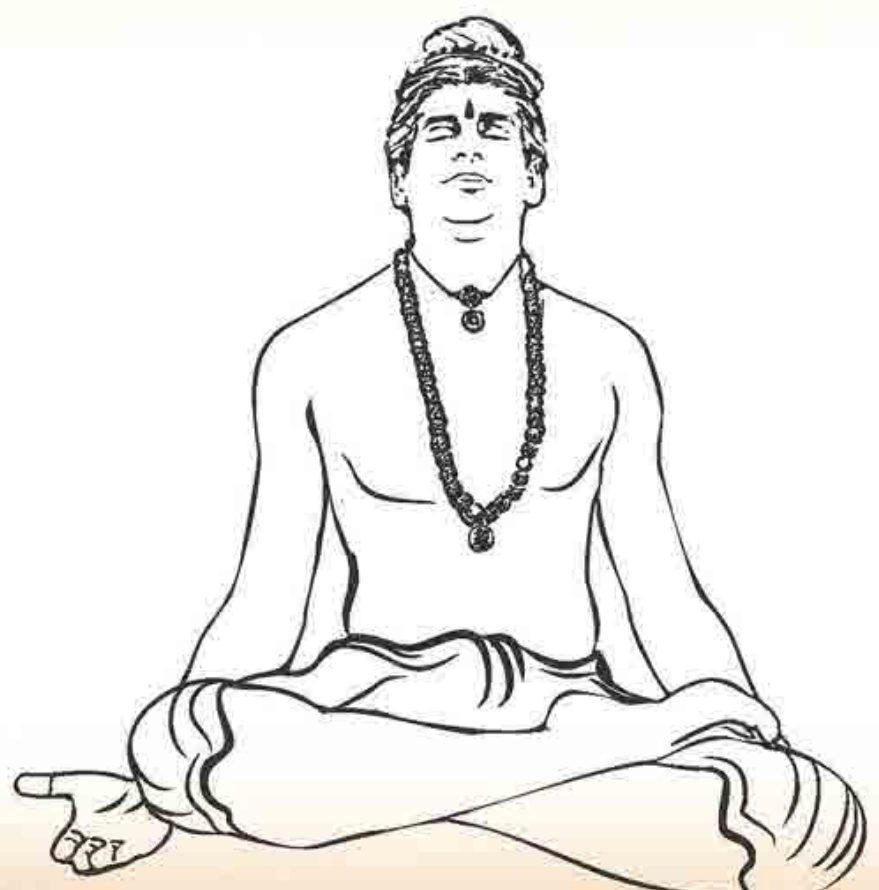
Technique:
- Sit in padmasana with feet crossed on opposite thighs.
- Extend the arms and place the upturned palms on the ground.
- Keep the spine upright.
- Gaze between the eyebrows.
Meditative asana that calms the mind and relaxes the body.
Yogasana II
Seated
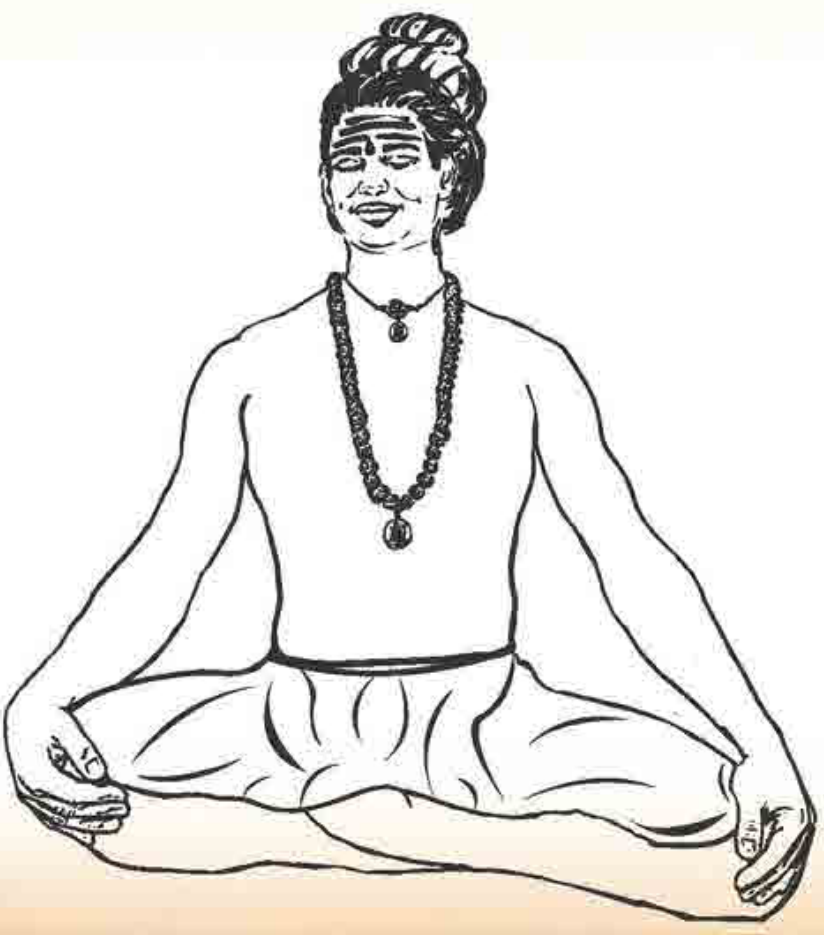
Śāstra Pramāṇa - शास्त्र प्रमाण Tri-shikhi-brahmanopanishad, 38
गुदं नियम्य गुल्फाभ्यां व्युत्क्रमेण समाहितः |
gudaṃ niyamya gulphābhyāṃ vyutkrameṇa samāhitaḥ |
yogāsanaṃ bhavedetaditi Yogavido viduḥ || 38 ||
After having pressed the anus with his ankles folded crosswise and got composure in the posture assumed, what is attained by one is Yogasana.
Technique:
- Sit on the heel pressing the anus with his ankles.
- Keep the hands on knees.
Yoniāsana
Seated
योन्यासनं पर्वतेन योगं योगफलेऽनिलम्।
तत्कालफललन्तावत् खेचरो यावदेवहि॥ २३.५३॥
पापयोगेन चक्रस्य लिङ्गाग्रं यो नियोजयेत्।
अन्यत् पदमुरौ दत्त्वा तन्न योन्यासनं भुवि॥२३.५४॥
yonyāsanaṁ parvatena yogaṁ Yogaphale'nilam| tatkālaphalalantāvat khecaro yāvadevahi||23.53|| pādayogena cakrasya liṅgāgraṁ yo niyojayet| anyat padamurau dattvā tatra yonyāsanaṁ bhuvi||23.54|| for extended verse see end of chapter
By doing the yoniāsana along with parvatāsana the fruits of vital breath are gained;Until it becomes khecara (light as space) certainly. (23.53)
He who presses the front portion of the cakra and penis with toe of his foot;And places the end of the second foot on the corresponding thigh, it becomes yoniāsana. (23.54)
O Lord! this yoniāsana is very distinguished (rare) among the Yogis (for) having filled up the body with vital breath (prāṇavāyu), and contracting the mūlādhāra cakra should be stabilised. (23.58)
The practitioner who does this āsana alternatively by the left and right method perfecting the pūraka and kumbhaka, he becomes a siddha (expert with Yogic powers). (23.59)
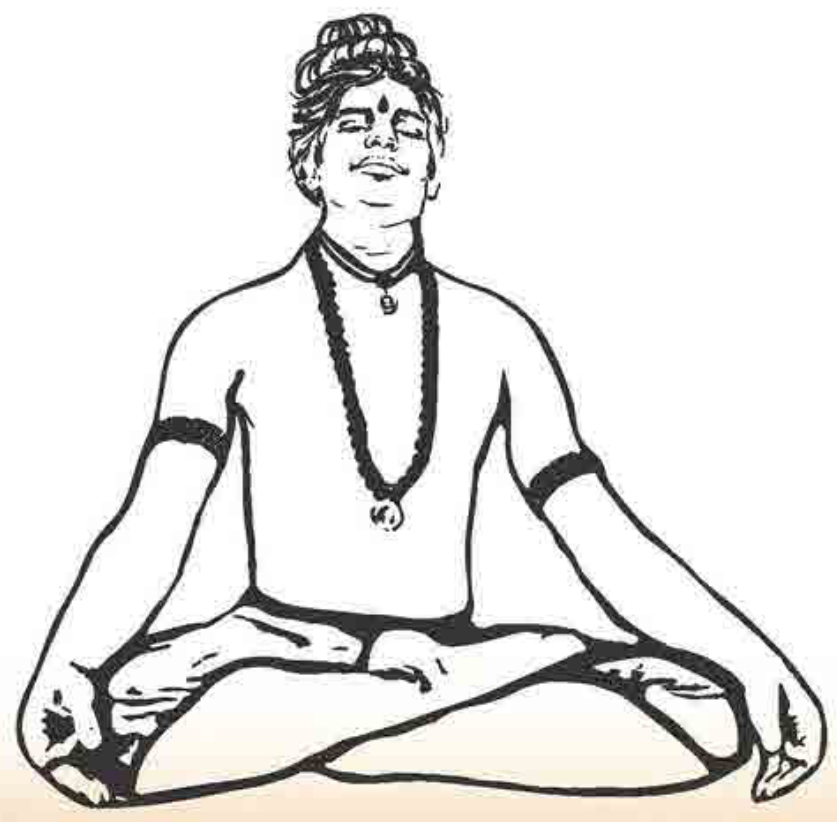
Technique:
- Sit with the left heel pressing the generative organ and toes under the thigh.
- Place right foot on opposite thigh.
- Place hands on knees