Care for Hernia
This text was machine-transcribed from the printed book and may contain errors. Select the words and choose “Report a mistake”.
A hernia occurs when an organ or fascia of an organ protrudes through the wall of its containment. Hernias most often occur in the region of the abdomen as a result of a hole or tear in the abdominal wall. Though symptoms vary, the protrusion can generally be seen and felt. They cannot be pushed back into the abdominal cavity without proper interventions, and though painless, may be chronic.
Heavy lifting, straining during pregnancy, overstretch-ing muscles, obesity, and extreme weight loss can contrib-ute to the weakening of the containing muscles. Poor nu-trition, smoking, and over-exertion can all contribute to the weakening of muscles, making hernias more likely to occur. These Nithya Kriyas were designed for care and cure of hernia.
Do the following (in the order given):
- Machchandra Asana
- Antah Kumbhaka
- Mahamudra Asana
- Antar Kumbhaka
- Makara Asana
- Bahih Kumbhaka
- Mandukasana
- Bahih Kumbhaka
- Matsya Asana 10. Bahih Kumbhaka
- Mritya Bhanjaka Asana
- Bahih Kumbhaka
1. Sit in Machchandra Asana. Yogaasana Maalaa Sacitra, Verse 51
जीमणौ पग डाई जांघ परि राषै येडि कडि लगावै।
डावाय कौ बारलो गोलफ जीमांणा गोडाकी माहिली।
आष्या परि राषै दोउ हाथा स्यौ फगाका अगूठा पकडै।
लिलाट धरती लगावै छाती कडा स्यौ लगावै।
आसण कौगुण गोडा की पिरा जाई।
Jeemanau Paga Daayee Jaangha Pari Raashai Yedi
Kadi Lagaavai |
Daavaaya Kau Baaralo Golapha Jeemaamnaa
Godaakee Maahilee |
Aashyaa Pari Raashai Dovu Haathaa Syau Pagakaa
Agootaa Pakadai |
Lilaata Dharatee Lagaavai Chaathee Kadaa Syau Lagaavai |
Aasana Kauguna Godaa Kee Piraa Jaayee ||51||
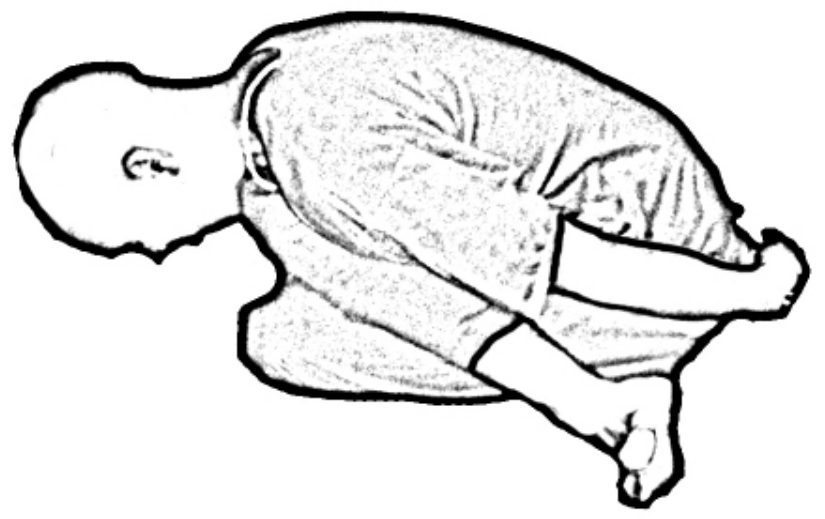
Translation and Technique
• Stay on the ground with knees folded and knees placed one over the other • Hold the feet with the hands and Keep two feet together. • Bend the head over the knees • Stay in this pose 30 seconds
2. In Macchandrasana, do Antah Kumbhaka. Kumbhaka Paddhathi, Verse 28
सुषुम्णान्तर्गतं तस्यां निर्विकल्पेन चेतसा ।
धारयेन्मारुतं योगी सोऽन्तःकुम्भः शिवोदितः ॥
SushumnaanthargathamThasyaam Nirvikalpena
Chethasaa |
Dhaarayen-maarutham Yogee So'nthah-Kumbhah-
Shivodhithaha ||28||
Translation Without any mental distractions or in other words being com-pletely unclutched, the Yogi should hold the breath in the Sushumna-the path of Kundalini along the spine. This is called the Antah Kumbhaka as explained by Lord Shiva.
Technique
• Close your eyes • Unclutch • Inhale and hold the breath • Be in the unclutched state • Exhale slowly and relax and Breath two or three times normally • Do this 21 times
3. Next, do Mahamudra Asana. Joga Pradeepikaa, Verses 105 & 106
डावा पगकी एडी जोई सीवनि आनि लगावै सोई ।
दछिन लाम्बौ जु पसारै तामै आनि कागसी धारै ॥
दोऊ खवा उर्धसो धेरै तिनसो फेर अ यास जु करे
नासादृष्टि आन ठहरावै महामुद्रा नाम सो पावै ॥
Davaa Pagakee Edee Joyee Seevani Aani Lagaavai Soyee | Dachina Laambau Ju Pasaarai Thaamai Aani Kaagasee Dhaarai ||105||
Dovoo Khavaa Urdhaso Dharai Thinaso Phera Abhyaasa Ju Kare | Naasaadrishti Aana Taharaavai Mahaamudraa Naama So Paavai ||106||
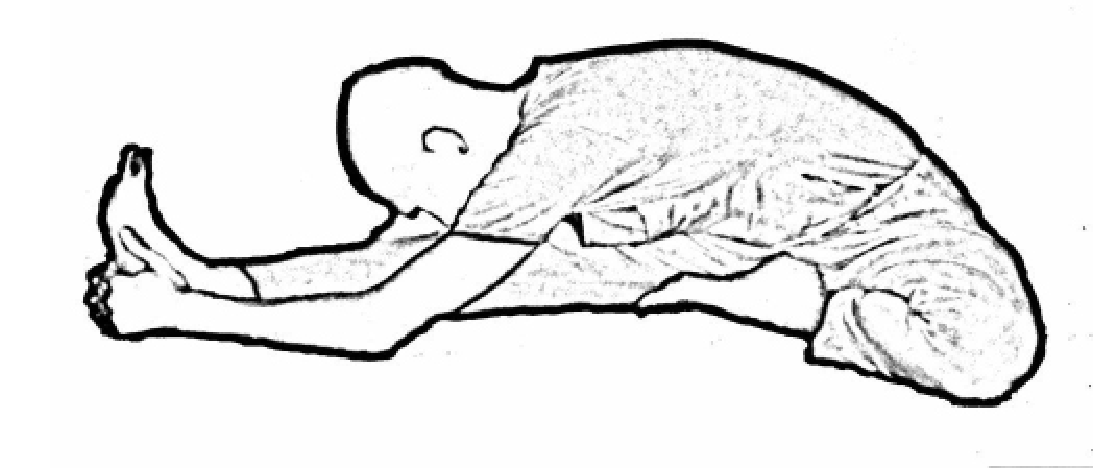
Translation and Technique
• Stay on the ground with legs stretched forward • Bend the left knee and place the heel at the perine um • Hold the right foot with both hands with fingers interlocked • Bend the head forward • Place the chin on the right knee • Fix your gaze at the nose tip • Remain in this pose 30 seconds
4. In Mahamudra Asana, do Antah Kumbhaka. Kumbhaka Paddhathi, Verse 28
सुषुम्णान्तर्गतं तस्यां निर्विकल्पेन चेतसा ।
धारयेन्मारुतं योगी सोऽन्तःकुम्भः शिवोदितः ॥
SushumnaanthargathamThasyaam Nirvikalpena
Chethasaa |
Dhaarayen-maarutham Yogee So'nthah-Kumbhah-
Shivodhithaha ||28||
Translation
Without any mental distractions or in other words being completely unclutched the Yogi should hold the breath in the Sushumna – the path of Kundalini along the spine. This is called the Antah Kumbhaka as explained by Lord Shiva.
Technique • Close your eyes • Unclutch • Inhale and hold the breath • Be in the unclutched state • Exhale slowly and relax and breath two or three times normally • Do this 21 times
5. Next, do Makara Asana. Gheranda Samhita, Upadesha, Verse 39
॥ अथ मकरसनम् ॥
अध्यास्यः शेते हृदयं निधाय भूमौ च पादौ च प्रसार्यमाणौ ।
शिरश्च धृत्वा करदण्डयुग्मे देहाग्निकारं मकरासनं तत् ॥
Adhyaasyah-Shethe Hrudayam Nidhaaya Bhoomau Cha Paadau Cha Prasaaryamaanau | Shirashcha Dhruthvaa Kara-Dhanda-Yugme Dehaagnikaar-am Makaraasanam Thath ||2.39||
Translation Having held the head with the two arms, one lies down on the ground facing downwards, chest touching the ground, two legs spread apart. This posture is called the Makarasa-na - the Crocodile posture - the increaser of bodily heat.

Technique • Lie on the ground facing downwards with the chest resting on the ground • Spread the legs wide apart • Catch hold of your head with the two arms • Stay in this pose 30 seconds
6. In Makara Asana, do Bahih Kumbhka. Kumbhaka Paddhathi, Verse 31
रेचयित्वा बहिर्वायुं बाह्याकाशे क्रमेण यत्।
धारयेत् प्रयतो योगी बहिःकुम्भस्तु रेचितः॥
Rechayithvaa Bahirvaayum Baahyaakaashe KramenaYath | Dhaarayeth PrayathoYogee Bahiha-Kumbhasthu Rechitaha || 31 ||
Translation
A Yogi should retain the breath outside after exhaling slowly. This is called Bahih Kumbhaka.
Technique
• Slowly exhale • Retain the breath as long as possible outside with out any visualization • Then slowly relax and inhale • Do this 21 times
7. Next do Manduka Asana. Hatha Ratnaavalee, Upadesha 3, Verse 55
पृष्ठं सम्पीड्य गुल्फा यां जान्वङ्गे सवलयाकृतिः ।
हस्तौ पादतले क्षितौ मण्डूकं पाददोषहृत् ॥
Prushtam Sampeedya Gulphaabhyaam Jaanvange Sava-layaakruthihi | Hasthau Paadhathale Kshipthau Mandookam Paadhad-hoshahruth ||3.55||
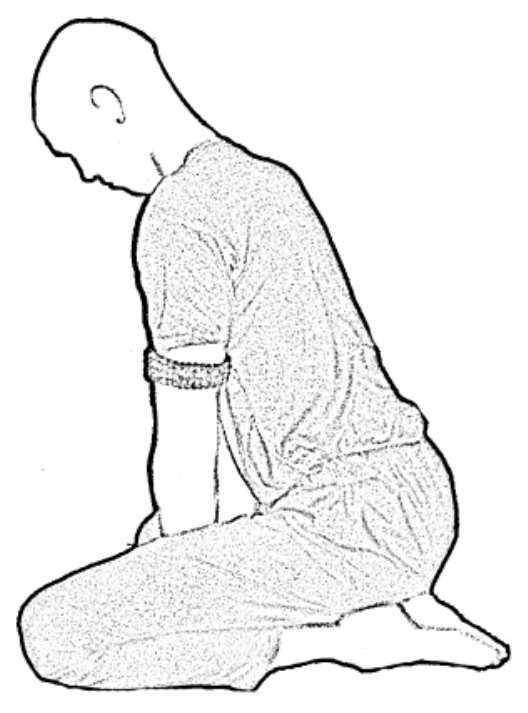
Translation The Mandukasana which relieves off all troubles of legs is being seated on the ground with legs folded backwards, buttocks resting on the heels and knees spread apart, toes touching each other and hands placed under the respec-tive knees. Technique • Stay on the floor with legs folded backwards, but tocks placed on the heels, toes touching each other • Spread the knees apart • Place the hands under the respective knees • Stay in this pose 30 seconds
8. In Manduka Asana, next Bahih Kumbhka. Kumbhaka Paddhathi, Verse 31
रेचयित्वा बहिर्वायुं बाह्याकाशे क्रमेण यत् ।
धारयेत् प्रयतो योगी बहिःकुम्भस्तु रेचितः ॥
Rechayithvaa Bahirvaayum Baahyaakaashe KramenaYath | Dhaarayeth PrayathoYogee Bahiha-Kumbhasthu Rechitaha || 31 ||
Translation
A Yogi should retain the breath outside after exhaling slowly. This is called Bahih Kumbhaka. Technique
• Slowly exhale • Retain the breath as long as possible outside with out any visualization • Then slowly relax and inhale • Do this 21 times
9. Next do Matsya Asana. Gheranda Samhita, Upadesha 2, Verse 21
॥ अथ मत्स्यासनम् ॥
मुक्तपद्मासनं कृत्वा उत्तानशयनञ्चरेत्।
कूर्परा यां शिरोवेष्ट्य मत्स्यासनन्तु रोगहा ॥
Muktha-Padmaasanam Kruthvaa Uththaana-Shayanam Chareth | Koorparaabhyaam Shiro Veshtya Mathsyaasananthu Rogahaa ||2.21||
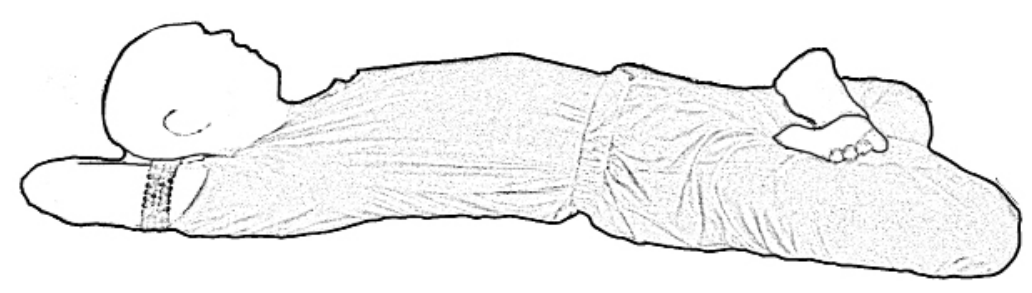
Translation
Having performed the Padmaasanam one should lie down on his back. Matsya asana, the destroyer of diseases is formed by holding the head with the elbows in this pos-ture.
Technique • Place the right foot on the left thigh • Now place the left foot on the right thigh • Now lie down on your back • Cling on to your head with your elbows • Stay in this pose 30 seconds
10. In Matsya Asana, do Bahih Kumbhka. Kumbhaka Paddhathi, Verse 31
रेचयित्वा बहिर्वायुं बाह्याकाशे क्रमेण यत् ।
धारयेत् प्रयतो योगी बहिःकुम्भस्तु रेचितः ॥
Rechayithvaa Bahirvaayum Baahyaakaashe KramenaYath | Dhaarayeth PrayathoYogee Bahiha-Kumbhasthu Rechitaha || 31 ||
Translation A Yogi should retain the breath outside after exhaling slowly. This is called Bahih Kumbhaka.
Technique • Slowly exhale • Retain the breath as long as possible outside with out any visualization • Then slowly relax and inhale • Do this 21 times
11. Next do Mritya Bhanjaka Asana. Joga Pradeepikaa, Verses 154-156
प्रथम सेन सूधो होय ठानै पग उचाय आगा नै आनै ।
बहुर पगथली को यो राखै कोर वारली या विधि दाखै ॥
वटी आंगुल्या लगति आने करि गाढी जाडांतरि ठानै ।
दोउ हाथ पग ब्अझीझ ल्यावै पुनि ताकौ ऐसे ठहरावै ॥
दछिन करकौ पहूचौ जोई वाचा कर सौ पकरै सोई ।
मस्तक भूसों लगतो राखै नासाद्रिष्ट वच्चन नही भाखै ॥
Pratham Sena Soodho Hoya Thaanai Paga Uchaaya Aagaa Nai Aanai | Bahura Pagathalee Ko Yo Raakhai Kora Vaaralee Yaa Vidhi Daakhai ||154|| Vatee Aangulyaa Lagathi Aane Kari Gaadee Jaadaanthari Thaanai | Dovu Haatha Paga Baahari Lyaavai Puni Thaakau Aise Taharaavai ||155|| Dachina Karakau Pahoochau Joyee Vaachaa Kara Sau Pa-karai Soyee | Masthaka Bhoosom Lagatho Raakhai Naasaadrishti Vacha-na Nahee Bhaakai ||156||
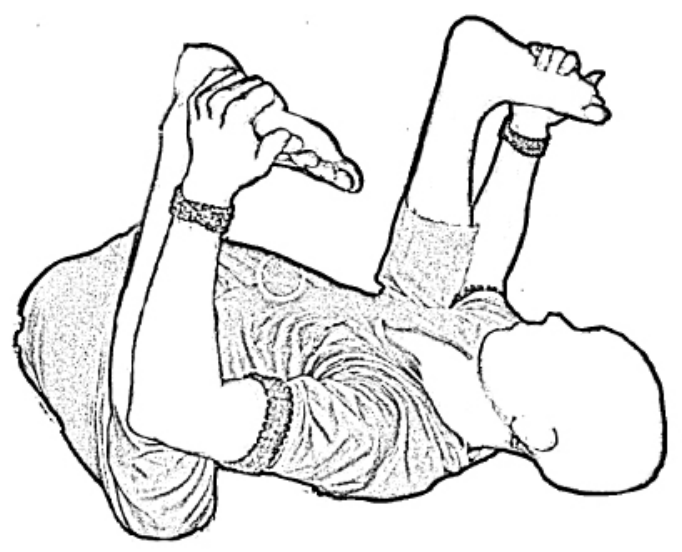
Translation and Technique • Lie on your back with face upwards • Bend the knees and take them under the armpits with legs held upwards vertically • Put the hands on feet • Gaze at the tip of the nose • Remain in this pose for 30 seconds
12. In Mritya Bhanjakasana, do Bahih Kumbhka. Kumbhaka Paddhathi, Verse 31
रेचयित्वा बहिर्वायुं बाह्याकाशे क्रमेण यत् ।
धारयेत् प्रयतो योगी बहिःकुम्भस्तु रेचितः ॥
Rechayithvaa Bahirvaayum Baahyaakaashe KramenaYath | Dhaarayeth PrayathoYogee Bahiha-Kumbhasthu Rechitaha || 31 ||
Translation
A Yogi should retain the breath outside after exhaling slowly. This is called Bahih Kumbhaka.
Technique
• Slowly exhale • Retain the breath as long as possible outside with out any visualization • Then slowly relax and inhale • Do this 21 times
END OF KRIYA