CURE FOR HERNIA
This text was machine-transcribed from the printed book and may contain errors. Select the words and choose “Report a mistake”.
Disease Description
A Hernia is the protrusion of an organ or the fascia of an organ through the wall of the cavity that normally contains it. There are different kinds of hernia, each requiring a specific management or treatment. By far the most common hernias develop in the abdomen, when a weakness in the abdominal wall evolves into a localized hole, or "defect", through which adipose tissue, or abdominal organs covered with peritoneum, may protrude.
Symptoms and signs vary depending on the type of hernia. In the case of reducible hernias, a bulge in the groin or in another abdominal area can often be seen and felt. Other symptoms include pain in the groin that may also include a heavy or dragging sensation, and in men, there is sometimes pain and swelling in the scrotum around the testicular area. Irreducible abdominal hernias or incarcerated hernias may be painful, but their most relevant symptom is that they cannot return to the abdominal cavity when pushed in. They may be chronic, although painless, and can lead to strangulation.
Most of the time, hernias develop when pressure in the compartment of the residing organ is increased, and the boundary is weak or weakened. Weakening of containing membranes or muscles is usually congenital, and increases with age, but it may be on the basis of other illnesses, stretching of muscles during pregnancy, losing weight in obese people, etc., or because of scars from previous surgery.
Increased pressure on the intervertebral discs, as produced by heavy lifting or lifting with improper technique increases the risk of herniation.
Furthermore, conditions that increase the pressure of the abdominal cavity, such as obesity, straining during a bowel movement or urination, chronic lung disease, etc. may also cause hernias or worsen the existing ones. Also, if muscles are weakened due to poor nutrition, smoking, and overexertion, hernias are more likely to occur.
STEPS TO BE FOLLOWED
- SIMHAASANA
- BAHIH KUMBHAKA
- SUMATI ASANA
- BAHIH KUMBHAKA
- SOORYA ASANA
- BAHIH KUMBHAKA
- SWASTIKAASANA
- BAHIH KUMBHAKA
- UNMUKHAPITTA ASANA
- BAHIH KUMBHAKA
- UTTANA SHIKHI PEETA ASANA
- BAHIH KUMBHAKA
- VAJRASANGHAARA ASANA
- BAHIH KUMBHAKA
1. SIMHAASANA GHERANDA SAMHITA, UPADESHA 2, VERSES: 14 & 15
॥अथ सिंहासनम् ॥
गुल्फौ च वृषणस्याधो व्युत्क्रमेणोर्ध्वतां गतौ ।
चितिरभ्द्भाटभत्र पभ्रद्रष्टभधभत्रधजभत्र म्भ्रूभभ्र च जानुनोपरि ॥
व्याृभवक्रो जलन्कभन्नश्नहभ नासाग्रमवलोकयेत् ।
सिंहासनं भवेदेतत् सर्वव्याधिविनाशकम् ॥
Gulphau Cha Vrishanasyaadho Vyuthkramenordhvathaam Gathau | Chithiyugmam Bhoomi-Samstham Karau Cha Jaanunopari ||2.14||
Vyaattha-Vakthro Jalandhrena Naasaagramavalokayeth | Simhaasanam Bhavedethath Sarva-Vyaadhi-Vinaashakam ||2.15||
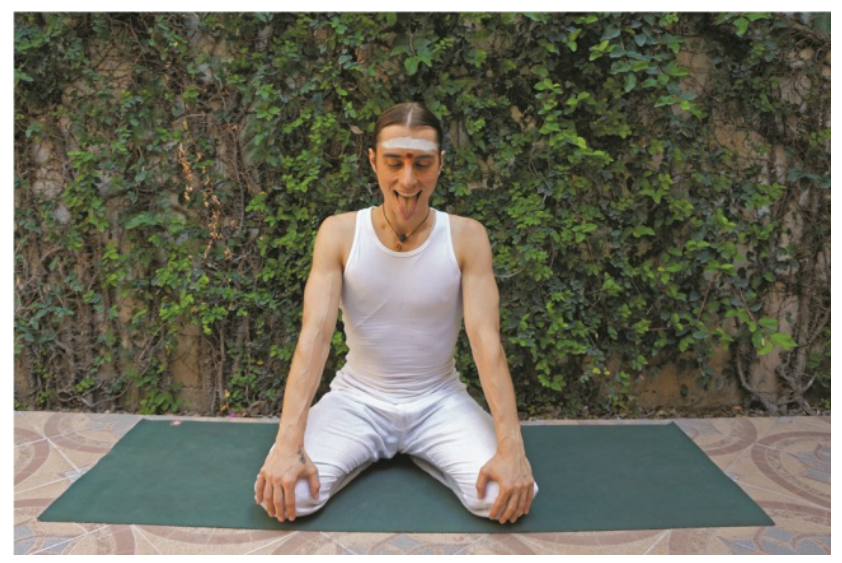
TRANSLATION One should gaze at the tip of the nose, with the jaalandhara bandha, mouth kept open and the two heels placed crosswise under the perineum, turned upwards with knees placed on the ground. This is Simha asana – the destroyer of all diseases.
TECHNIQUE
- Be seated in the kneel-down pose
- Cross the ankles and place them under the perineum 3. Place the hands on the knees and Spread out fingers
- Place the chin on the throat and contract the throat
- Open the mouth widely sticking the tongue
- Gaze at the tip of the nose
- Stay in this pose 30 seconds
IN SIMHAASANA, NEXT
2. – BAHIH KUMBHKA
KUMBHAKA PADDHATHI, VERSE: 31
रेचयित्वा बहिर्वायुं बाह्याकाशे क्रमेण यत् ।
धारयेत् प्रयतो योगी बहिःकुम्भस्तु रेचितः ॥
Rechayithvaa Bahirvaayum Baahyaakaashe KramenaYath |
Dhaarayeth PrayathoYogee Bahiha-Kumbhasthu Rechitaha || 31 ||
TRANSLATION
A Yogi should retain the breath outside after exhaling slowly. This is called Bahih Kumbhaka.
TECHNIQUE
- Slowly exhale
- Retain the breath as long as possible outside without any visualization
- Then slowly relax and inhale
- Do this 21 times
NEXT
3. SUMATI ASANA
JOGA PRADEEPIKAA, VERSES 333 - 335
मूलद्वारि धरती परि ठाने डावा पगपरि दक्ष पद आने ।
डाई पाखती को ले आवै हाथ एक अंतर ठहरावै ॥
दोऊ एडी टेके ऐसे आडो वाई राखो तैसे ।
फणा जुगम उभा कर राखै गोडा दोउ उभा दारखै ॥
गोडातैरै हाथ करि रहै आम्ही साम्ही कोहणी गहै ।
नासाद्रिष्ट अचल पर राखै आसन सुमति नाम सो भाकै ॥
Mooladvaari Dharatee Pari taane Daavaa Pagapari Dacha Pada Aane | Daayee Paakhatee Ko le Aavai Haatha Eka Antara Taharaavai ||333||
Dovoo Edee Teke Aisai Aado Vaayee Raakho Taisai | Phanaa Jugama Ubhaa Kara Rakhai Godaa Dovu Ubhaa Daakhai ||334||
Godaatarai Haatha Kari Rahai Aamhee Saamhee Kohanee Gahai | Naasaadrishti Achala Para Raakhai Aasana Sumati Naama So Bhaakhai ||335||
TRANSLATION-cum-TECHNIQUE
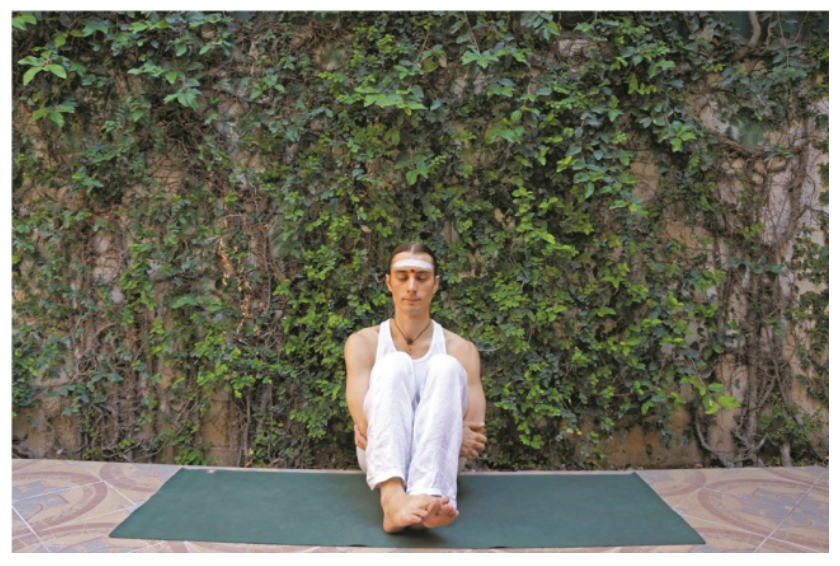
- Sit with legs stretched and knees raised
- Place the right foot on the left foot and turn it towards left side
- Raise the toes
- Cross the hands under the knees and hold the oppeosite elbows
- Fix the gaze at the tip of the nose
- Stay in this pose 30 seconds
IN SUMATI ASANA, NEXT-
4. – BAHIH KUMBHKA
KUMBHAKA PADDHATHI, VERSE: 31
रेचयित्वा बहिर्वायुं बाह्याकाशे क्रमेण यत् ।
धारयेत् प्रयतो योगी बहिःकुम्भस्तु रेचितः ॥
Rechayithvaa Bahirvaayum Baahyaakaashe KramenaYath |
Dhaarayeth PrayathoYogee Bahiha-Kumbhasthu Rechitaha || 31 ||
TRANSLATION A Yogi should retain the breath outside after exhaling slowly. This is called Bahih Kumbhaka.
TECHNIQUE
- Slowly exhale
- Retain the breath as long as possible outside without any visualization 3. Then slowly relax and inhale
4. Do this 21 times
NEXT
5. SOORYA ASANA
JOGA PRADEEPIKAA, VERSES 82 & 83
ऐडी दोऊ गुदातारि आनै । फणा पाणि बैठक पुनि ठानै ॥
गोडा जंघ अधर करि रहै । आडे वाय इसी विध गहै ॥
दोऊ भुजा नभ दिसा पसारै । कमल स्वरूप अंगुरी धारै ॥
पौहचा मधि छिद्र पुनि ठानै । छिद्र विखै पुनि सृष्टि जु आनै ॥
Aidee Dovoo Gudhaathari Aanai | Phanaa Paani Baithaka Puni Taanai ||
Godaa Jangha Adhara kari Rahai | Aade Vaaya Isee Vidha Gahai ||82||
Dovoo bhujaa nabha disaa pasaarai | Kamala svroop angurree dhaarai ||
Pouhachaa madhi chitra puni taanai | Chidra vikhai puni drishti ju aanai ||83||
TRANSLATION-cum-TECHNIQUE
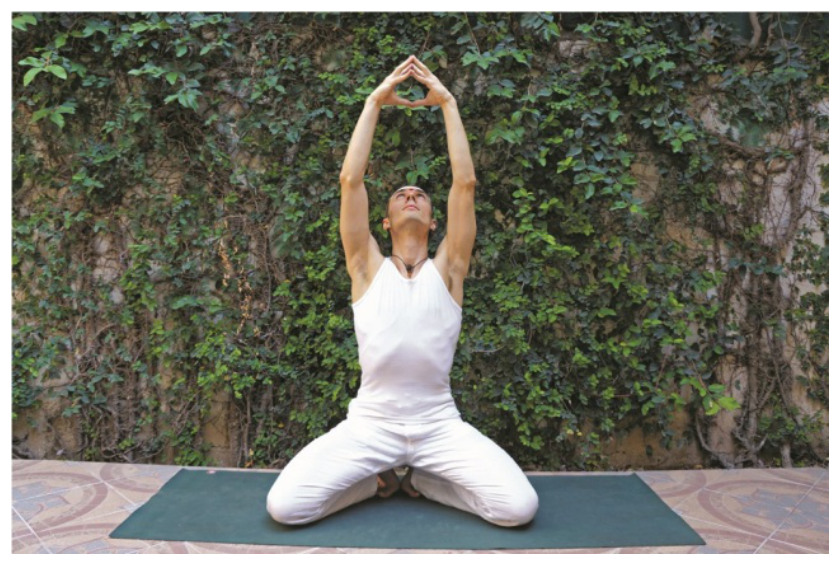
- Stay on the floor
- Place the feet together and keep them under the anus
- Spread the knees wide apart
- Sit erect
- Raise the hands above the head and make a lotus shape out of the fingers
- Look up through the gaps of fingers
- Contract the abdomen
- Stay in this pose 30 seconds
IN SOORYA ASANA, NEXT-
6. – BAHIH KUMBHKAA
KUMBHAKA PADDHATHI, VERSE: 31
रेचयित्वा बहिर्वायं बाह्याकाशे क्रमेण यत् ।
धारयेत् प्रयतो योगी बहिःकुम्भस्तु रेचितः॥
Rechayithvaa Bahirvaayum Baahyaakaashe KramenaYath | Dhaarayeth PrayathoYogee Bahiha-Kumbhasthu Rechitaha || 31 ||
TRANSLATION A Yogi should retain the breath outside after exhaling slowly. This is called Bahih Kumbhaka.
TECHNIQUE
- Slowly exhale
- Retain the breath as long as possible outside without any visualization
- Then slowly relax and inhale
- Do this 21 times
NEXT-
7. SVASTIKASANA
SHIVA SAMHITA, UPADESHA 3, VERSE: 95
जानूर्वोरन्तरे सम्यक् धृत्वा पादतले उभे ।
समकायः सुख़ासीनः स्वस्तिकं तत्प्रचक्षते ॥
Jaanoorvorantare Samyak Dhruthvaa Paadhathale Ubhe | Samakaayas-Sukhaaseenaha Svastikam Thathprchakshate ||3.95||
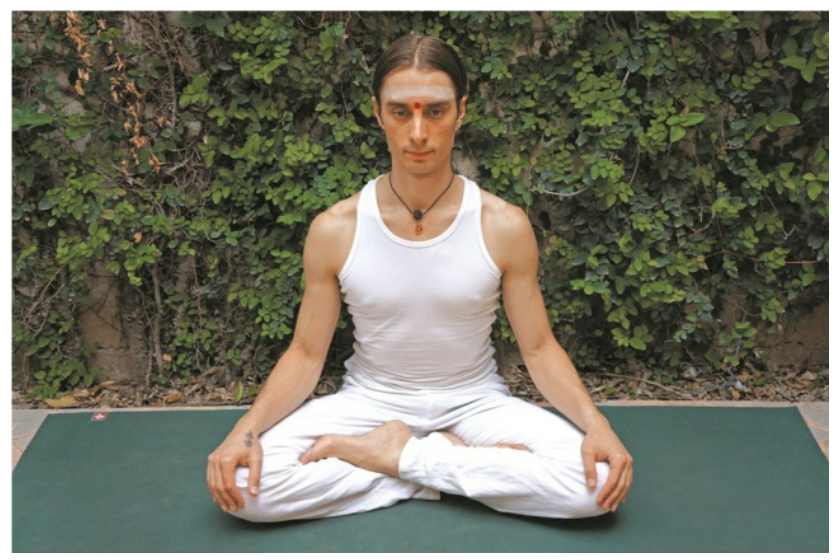
TRANSLATION Having held the toes firmly in the gap between thighs and calf muscles, in the cross-legged position and seated comfortably with the head, neck and spine straight is called Swastikasana.
TECHNIQUE
- Stay on the ground cross legged
- Place the right toe in the gap between the left thigh and the calf muscles and the left toe in the gap between the right thigh and the calf muscles
- Keep your spine erect
- Settle in this pose for 30 seconds
IN SWASTIKA ASANA, NEXT-
8. – BAHIH KUMBHKA
KUMBHAKA PADDHATHI, VERSE: 31
रेचयित्वा बहिर्वायुं बाह्याकाशे क्रमेण यत् ।
धारयेत् प्रयतो योगी बहिःकुम्भस्तु रेचितः ॥
Rechayithvaa Bahirvaayum Baahyaakaashe KramenaYath |
Dhaarayeth PrayathoYogee Bahiha-Kumbhasthu Rechitaha || 31 ||
TRANSLATION A Yogi should retain the breath outside after exhaling slowly. This is called Bahih Kumbhaka.
TECHNIQUE
- Slowly exhale
- Retain the breath as long as possible outside without any visualization
- Then slowly relax and inhale
- Do this 21 times
NEXT-
9. UNMUKHA PITTA ASANA
YOGA RAHSYA, UPADESHA 6, VERSE: 17
भून्यस्थौ जानूनी हस्तौ चतुष्पदमवाङ्मुखं ।
उत्तापिताङ्ग्रियुगल कटिस्थलमभिरुका ॥
Bhoonyasthau jaanoonee hasthou chatushpadamavaangmukham |
Utthaaptaangriyugalakatistalamabhirukaa ||
TRANSLATION
Laying on the floor facing downwards, the knees raised above the ground, face raised upwards, raising the hands and standing in this position is called Unmukha Pitta Asana.
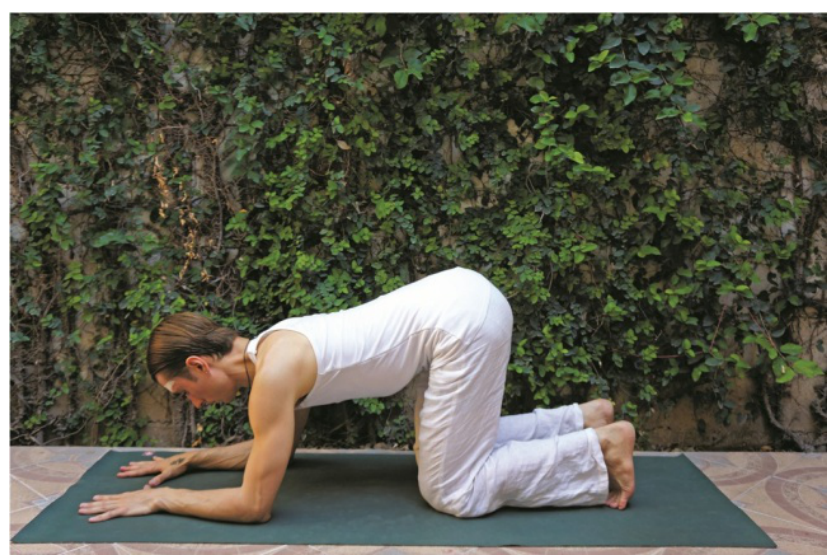
TECHNIQUE
- Come down on the hands and knees
- Place the elbows on the ground, forearms parallel to each other
- Slowly raise the knees off the ground, balancing on the ball of the feet (you may also keep the knees on the ground)
- Remain in this pose for 30 seconds
IN UNMUKHA PITTA ASANA, NEXT
10. BAHIH KUMBHKA
KUMBHAKA PADDHATHI, VERSE: 31
रेचयित्वा वहिर्वायुं बाह्याकाशे क्रमेण यत् ।
धारयेत् प्रयतो योगी बहिःकुम्भस्तु रेचितः ॥
Rechayithvaa Bahirvaayum Baahyaakaashe KramenaYath | Dhaarayeth PrayathoYogee Bahiha-Kumbhasthu Rechitaha || 31 ||
TRANSLATION A Yogi should retain the breath outside after exhaling slowly. This is called Bahih Kumbhaka.
TECHNIQUE
- Slowly exhale
- Retain the breath as long as possible outside without any visualization
- Then slowly relax and inhale
- Do this 21 times
NEXT
11. UTTAANA SHIKHI PEETAKA ASANA
YOGA RAHASYA ||UPADESHA 5|| VERSE: 23
जङ्घोरुबलहीनश्चेत् उत्तान-शिखि-पीठकम् ।
अप्रमत्तः प्रकुर्वीत भुक्तेः प्राग्विजितेन्द्रियः ॥
Janghoru-Bala-Heenashcheth Uththaana-Shikhi-Peetakam | Apramaththaha Prakurveetha Bhuktehe Praag Vijithendriyaha ||5.23||
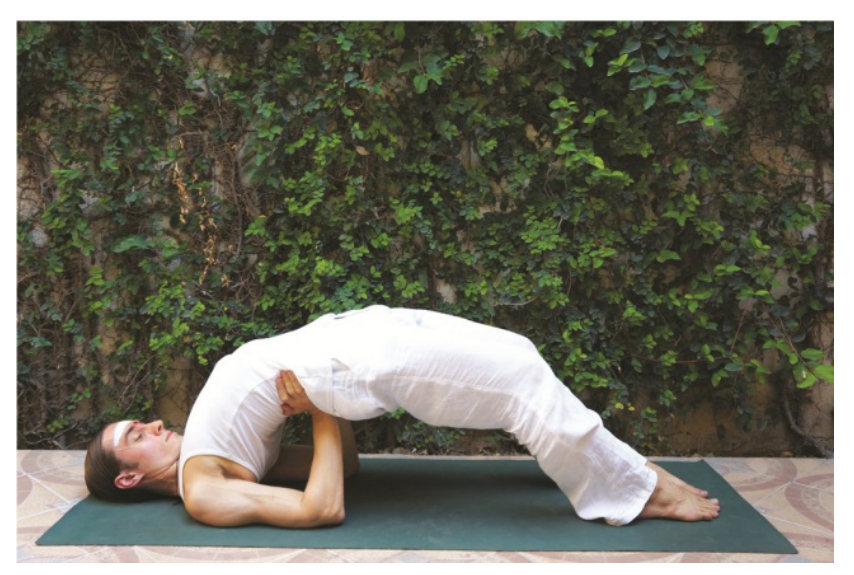
TECHNIQUE
- Lie on your back
- Raise the buttocks up and holdwith the hands placed at the hip
- Let the elbows bear the weight of the body
- Press the throat with your chin
- Remain in this pose for 30 seconds
IN UTTAANA SHIKHI PEETAKA ASANA,NEXT-
12. – BAHIH KUMBHKA
KUMBHAKA PADDHATHI, VERSE: 31
रेचयित्वा बहिर्वायुं बाह्याकाशे क्रमेण यत् ।
धारयेत् प्रयतो योगी बहिःकुम्भस्तु रेचितः ॥
Rechayithvaa Bahirvaayum Baahyaakaashe KramenaYath | Dhaarayeth PrayathoYogee Bahiha-Kumbhasthu Rechitaha || 31 ||
TRANSLATION A Yogi should retain the breath outside after exhaling slowly. This is called Bahih Kumbhaka.
TECHNIQUE
- Slowly exhale
- Retain the breath as long as possible outside without any visualization 3. Then slowly relax and inhale
4. Do this 21 times
NEXT
13- VAJRASANGHAARA ASANA
JOGA PRADEEPIKAA, VERSES 79, 80 & 81
प्रथम फणा पाणि होय पैसे । दोवु एडि गूदा निवेसै ॥
गोडा ऊभा राखै थीर । आडे वाय पसारै धीर ॥७९॥
पृष्ठि दिसी दोवु कर आनै । दिनकी जूगत ऐसीविध ठानै ॥
कहै परसपरि भुजा जू दोवु । कौहन्या लगती पकरै सोवु ॥८०॥
जाडो कबहु ना लगे अवर फुटनी जाय ॥
वज्रसङ्घार आसन यह जो दिन रात साध्य ॥८१॥
Prathama Phanaa Paani Hoy Baise | Dovu Edi Goodhaa Nivesai ||
Godaa Oobhaa Raakhai Theer | Aade Vaar Pasaarai Dheer ||79||
Prushta Disee Dovu Kara Aanai | Tinakee Jugath Aiseevidh Taanai ||
Gahai Parasapari Bhujaa Ju Dovu | Kohanyaa Lagathee Pakarai Sovu ||80||
Jaado Kabahu Naa Lage Avara Putanee Jaay |
Vajrasanghaara Aasan Yah Jo Dina Raath Saadhaya ||81||
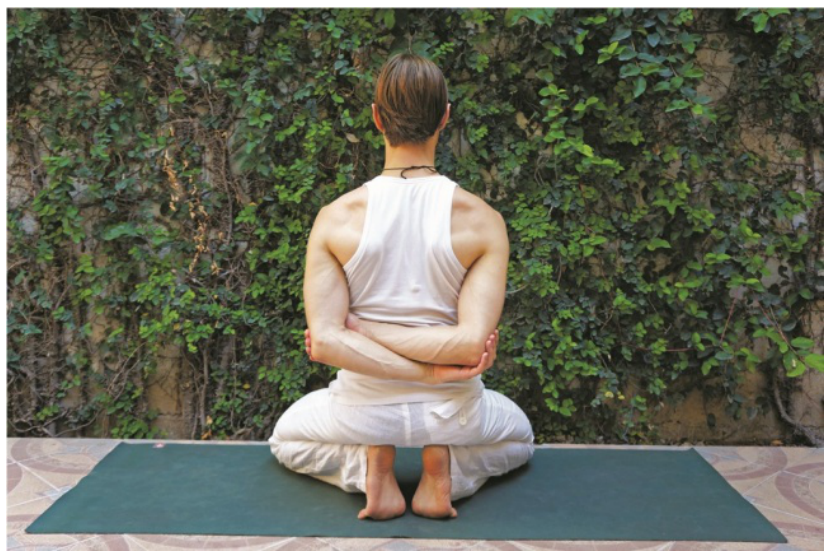
TRANSLATION-cum-TECHNIQUE
- Come to a squatting position
- Join the sole of the feet with the toes pointing downwards
- Sit with the anus resting on the heels
- Spread the knees apart sideways 5. Take the hands to the back and hold the left elbow with the right hand and vice-versa
6. Settle in this pose for 30 seconds
IN VAJRASANGHARASANA, NEXT-
12. – BAHIH KUMBHKA
KUMBHAKA PADDHATHI, VERSE: 31
रेचयित्वा बहिर्वायं बाह्याकाशे क्रमेण यत् ।
धारयेत् प्रयतो योगी बहिःकुम्भस्तु रेचितः ॥
Rechayithvaa Bahirvaayum Baahyaakaashe KramenaYath |
Dhaarayeth PrayathoYogee Bahiha-Kumbhasthu Rechitaha || 31 ||
TRANSLATION A Yogi should retain the breath outside after exhaling slowly. This is called Bahih Kumbhaka.
TECHNIQUE
- Slowly exhale
- Retain the breath as long as possible outside without any visualization
- Then slowly relax and inhale
- Do this 21 times
END OF KRIYA
Kriya Date
22-Nov-2011