CURE FOR CANCER
This text was machine-transcribed from the printed book and may contain errors. Select the words and choose “Report a mistake”.
Disease Description
Cancer, known medically as a malignant neoplasm, is a broad group of various diseases, all involving unregulated cell growth. In cancer, cells divide and grow uncontrollably, forming malignant tumors, and invade nearby parts of the body. The cancer may also spread to more distant parts of the body through the lymphatic system or bloodstream. Not all tumors are cancerous. Benign tumors do not grow uncontrollably, do not invade neighboring tissues, and do not spread throughout the body.
Determining what causes cancer is complex. Many things are known to increase the risk of cancer, including tobacco use, certain infections, radiation, lack of physical activity, poor diet and obesity, and environmental pollutants. These can directly damage genes or combine with existing genetic faults within cells to cause the disease. Approximately five to ten percent of cancers are entirely hereditary.
Cancer can be detected in a number of ways, including the presence of certain signs and symptoms, screening tests, or medical imaging. Once a possible cancer is detected it is diagnosed by microscopic examination of a tissue sample. Cancer is usually treated with chemotherapy, radiation therapy and surgery. The chances of surviving the disease vary greatly by the type and location of the cancer and the extent of disease at the start of treatment. The risk of developing cancer generally increases with age. In 2007, cancer caused about 13% of all human deaths worldwide (7.9 million). Rates are rising as more people live to an old age and as mass lifestyle changes occur in the developing world.
STEPS TO BE FOLLOWED
- MATSYENDRA ASANA
- PLAAVINEE KUMBHAKA
- MOORCCHANAA KUMBHAKA
- MAAKADA ASANA
- KAMALA KUMBHAKA
- KUMUDA KUMBHAKA
- KRAMA NETRA KUMBHAKA
1. MATSYENDRA ASANA
GHERANDA SAMHITA, UPADESHA-2, VERSES: 22 & 23
॥ अथ मत्स्येन्द्रासनम् ॥
उदरं पश्चिमाभासं कृत्वा तिष्ठति यत्नतः।
नम्राङ्गं वामपादं हि दक्षजानूपरि न्यसेत्॥
तत्र याम्यं कूर्परञ्च याम्यकरे च वक्रकम्।
भ्रुवोर्मध्ये गता दृष्टिः पीठं मत्स्येन्द्रमुच्यते ॥
Udharam Pashchimaabhaasam Kruthvaa Thishtathi Yathnataha | Namraangam Vaamapaadham Hi Dakshajaanoopari Nyaseth ||2.22||
Thathra Yaamyam Koorparam Cha Yaamya Kare Cha Vakthrakam | Bhruvor-Madhye Gathaam Drushtihi Peetam Matsyendram Uchyathe ||2.23||
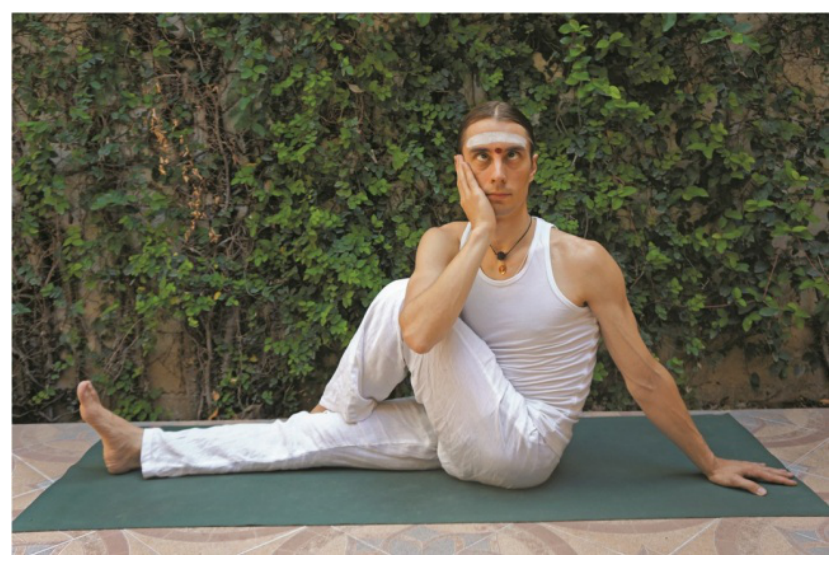
TRANSLATION Having kept the abdomen at ease, similar to the back, the bent left leg should be placed over the right lap. There in that posture the right elbow should be placed on this and the face has to be placed on the right palm. The sight fixed at the eye brow center in this posture, is called Matsyendra asana.
TECHNIQUE
- Sit and Stretch your legs
- Relax your stomach
- Bend your left leg and place it over your right lap.Keep the left knee upright.Keep the left knee upright
- Now place the right elbow on the left knee
- Place your cheek on right palm
- Fix your gaze at the center of the eye brows
- Stable in this asana for 30 seconds
IN MATSYHENDRA ASANA, NEXT
2. PLAAVINEE KUMBHAKA
KUMBHAKA PADDHATHI, VERSE: 171
यथेष्टं पूरयेद्वायुं बद्धे जालन्धरे दृढे।
हृदि धृत्वा जले सुप्त्वा प्लाविनीकुम्भको भवेत्॥
YatheshtampoorayethVaayum BadhdheJaalandhareDhrude | HrudhiDhruthvaaJaleSupthvaa Plaavinee-KumbhakoBhaveth ||171||
TRANSLATION One should fill in the air sumptuously in his lungs and then adopt Jaalandhara Bandha firmly. If one lies on water it is called Plaavinee Kumbhaka.
TECHNIQUE
- Stay on same posture. Keep your right hand perpendicular
- Inhale completely
- Contract the throat and rest your chin on the chest
- Retain the air inside as much as you can possible
- When you can't hold anymore, Release the throat lock and exhale slowly
- Do this 21 times
IN MATSYHENDRA ASANA, NEXT
3. MOORCCHANAA KUMBHAKA
KUMBHAKA PADDHATHI, VERSE: 170
॥ अथ मूर्च्छनकुम्भकः ॥
पूर्य कुम्भितं प्राणं बध्वा जालन्धरं शनैः ।
रेचयेन्मूर्च्छनाकुम्भो मनोमूर्च्छा सुखप्रदा ॥
Aapoorya Kumbhitham Praanam Badhvaa Jaalandharam Shanaaihi | Rechayeth Moorcchanaa-Kumbho Mano-Moorcchaa Sukha-Pradaaa ||170||
TRANSLATION One should retain the inhaled breath by performing Jaalandhara Bandha. Then he should slowly exhale in this Jaalandhara Bandha itself. It is called Moorcchanaa kumbhaka. It conferes bliss by reducing the (Thoughts Per Second) TPS level.
TECHNIQUE
- Sit in same asana and close the eyes
- Inhale slowly and deeply through both nostrils
- After inhaling, immediately do Jalandhara Bandha by putting your chin on the chest and locking the throat
- Retain the air inside as much as you can possible
- When you can't hold anymore, immediately Exhale through both nostrils in a very controlled manner in Jaalandhara bandha itself
- Do this 21 times
NEXT-
4. MAAKADA ASANA
JOGA PRADEEPIKAA, 125TH -127TH VERSES
दोऊ पगथली संपुट आने तिनकि पिष्टि भूमिपरि ठानै ।
मूलद्वार एडयांपरि ल्यावे मूड हाथ उचा ठहरावै ॥
दोउ करकी अंगुरी जोऊ वतखां आनि लगावै सोऊ ।
खाजि खुजावन की ज्यूं करै त्रिकुटी द्रिष्ट अनल करि धरै ॥
धरनसु कबहु ना चिगै अग्निवृद्धि अति होय ।
वेग थमै अरू उदरसुध माकड के गुन सोय ॥
Dovoo Pagathalee Samputa Aane Thinakee Pishti Bhoomipari Taanai |
Mooladvaara Edayaampari Lyaave Mooda Haatha Uchaa Taharaavai ||125||
Dovu Karakee Anguree Jovoo Vathakhaam Aani Lagaavai Sovoo |
Khaaji Khujaavana Kee Jyoom Karai Thrikutee Drishti Achala Karai Dharai ||126||
Dharanasu Kabahu Naa Chigai Agnivriddhi Athi Hoya |
Vega Thamai Aroo Udharasudha Maakada Ke Guna Soya ||127||
TRANSLATION-cum-TECHNIQUE
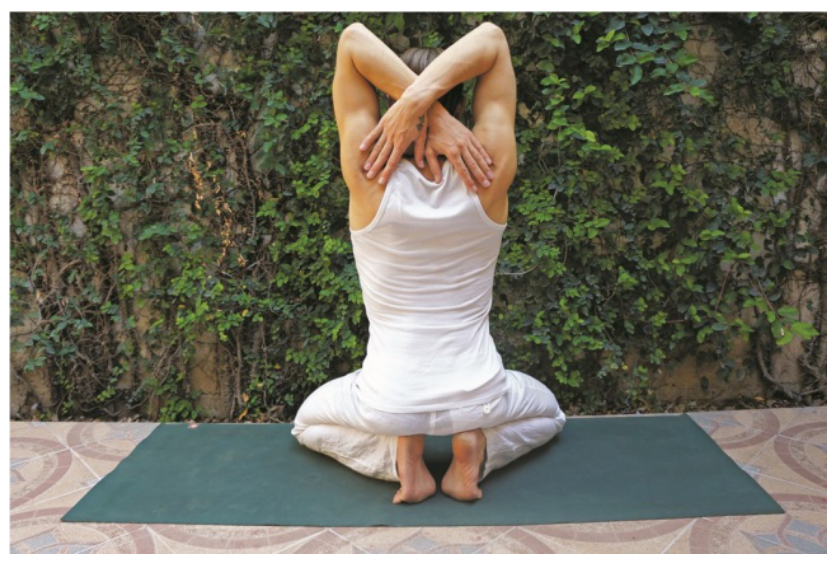
- Come to a full squat position
- Rest the knees on the floor and spread the knees a little apart
- Stay on the heels with the heels raised off the ground
- Keep the toes pointing downwards
- Raise the arms, cross them and place them behind the head
- Fix the gaze at the eyebrow center
- Remain in this pose 30 seconds
IN MAAKADA ASANA NEXT
5. KAMALA KUMBHAKA
KUMBHAKA PADDHATHI, VERSE: 189
॥ अथ कमलकुम्भकः ॥
पूरयेदर्कनाड्यासु कुम्भयित्वा यथाविधि ।
रेचयेच्चेन्दुनाड्यासु कुम्भकः कमलाभिधः ॥
PoorayethArka-Naadyaasu KumbhayithvaaYathaa-Vidhi |
Rechayecchendu-Naadyaasu Kumbhakaha Kamala-abhidhaha ||189||
TRANSLATION One should inhale through the right nostril and hold the breath properly and exhale through the left nostril. This is called Kamala Kumbhaka.
TECHNIQUE
- Inhale through the right nostril
- Retain the breath as long as you can judiciously
- Exhale through the left nostril
- Do this 21 times
IN MAAKADA ASANA, NEXT
6. KUMUDA KUMBHAKA
KUMBHAKA PADDHATHI, VERSE: 190
॥ अथ कुमुदकुम्भकः ॥
पूरयेच्चन्द्रमार्गेण धारयित्वाध्वजायुधे ।
रेचयेत्तमुभा यां चेत्कुमुदः कुम्भकः स्मृतः ॥
Poorayeth Chandra-Maargena DhaarayithvaaDhvajaayudhe |
RechayethThamUbhaabhyaam ChethKumudaha Kumbhakaha Smruthaha ||190||
TRANSLATION The breath should be inhaled through the left nostril. After retaining the breath, if the exhalation is done through both the nostrils, it is called Kumuda Kumbhaka.
TECHNIQUE
- Inhale through the left nostril
- Hold the breath as long as you can judiciously
- Exhale through both the nostrils
- Repeat this 21 times
IN MAAKADA ASANA, NEXT
7. KRAMA NETRA KUMBHAKA
KUMBHAKA PADDHATHI, VERSE: 191
॥ अथ क्रमनेत्रकुम्भकः ॥
सकृत्सूर्येण चापूर्य धार्यं चन्द्रेण पूरयेत्।
धारयेच्च प्रयत्नेन रेचयेत् क्रमतस्तथा ॥
नेत्रकुम्भक इति ख्यातः क्रमतो व्युत्क्रमादपि ॥
SakruthSooryenaChaapoorya DhaaryaChandrenaPoorayeth |
Dhaarayeth Cha Prayathnena RechayethKramathas-Thathaa ||191 ||
TRANSLATION One should take the breath in through the right nostril, hold the breath and then again inahale through the left nostril. He should with effort hold the breath again and exhale in the same order. This is known as krama-netra kumbhaka. This is also done in the reverse order.
TECHNIQUE
- Inhale through the right nostril
- Hold the breath
- Inhale through the left nostril
- Hold the breath
- Exhale through the right nostril
- Hold the breath
- Exhale through the left nostril
- Hold the breath
- Do this 21 times
END OF KRIYA
Kriya Date
18-Nov-2011