When You Take Responsibility, Everything Happens
This text was machine-transcribed from the printed book and may contain errors. Select the words and choose “Report a mistake”.
Authored by
THE SPH NITHYANANDA PARAMASHIVAM
यः सर्वत्रानभिस्नेहस्तत्तत्प्राप्य शुभाशुभम् ।
नाभिनन्दति न द्वेष्टि तस्य प्रज्ञा प्रतिष्ठिता
॥ २-५७॥
yaḥ sarvatrānabhisnehas tat tat prāpya
śubhāśubham nābhinandati na dveṣti
tasya prajñā pratiṣṭhitā
His wisdom is fixed who is
everywhere without attachment
meeting with anything good or bad
and who neither rejoices nor hates
POWERFUL COGNITION
Be fully in integrity with that object of enjoyment and with all your senses integrated only on that activity.

यदा संहरते चायं कूर्मोऽङ्गानीव सर्वशः ।
इन्द्रियाणीन्द्रियार्थेभ्यस्तस्य प्रज्ञा प्रतिष्ठिता
॥ २=५८॥
yadā saṁharate cāyaṁ kūrmo 'ṅgānīva
sarvaśaḥ indriyāṇīndriyārthebhyas
tasya prajñā pratiṣṭhitā
As the tortoise withdraws its limbs
from all sides when a person
withdraws his senses from the sense-
objects, his wisdom becomes steady in
completion
POWERFUL COGNITION
The Universal energy guides you in your decision when you take responsibility.

विषया विनिवर्तन्ते निराहारस्य देहिनः ।
रसवर्जं रसोऽप्यस्य परं दृष्ट्वा निवर्तते
॥ २=५९ ॥
viṣayā vinivartante nirāhārasya
dehinaḥ rasavarjaṁ raso'pyasya
paraṁ dṛṣṭvā nivartate
From the body, the sense objects
turn away, but the desires remain;
his desires also leave him on seeing
the Supreme

POWERFUL COGNITION
Everything is realized when you take responsibility.

SEEK THE UNATTACHED
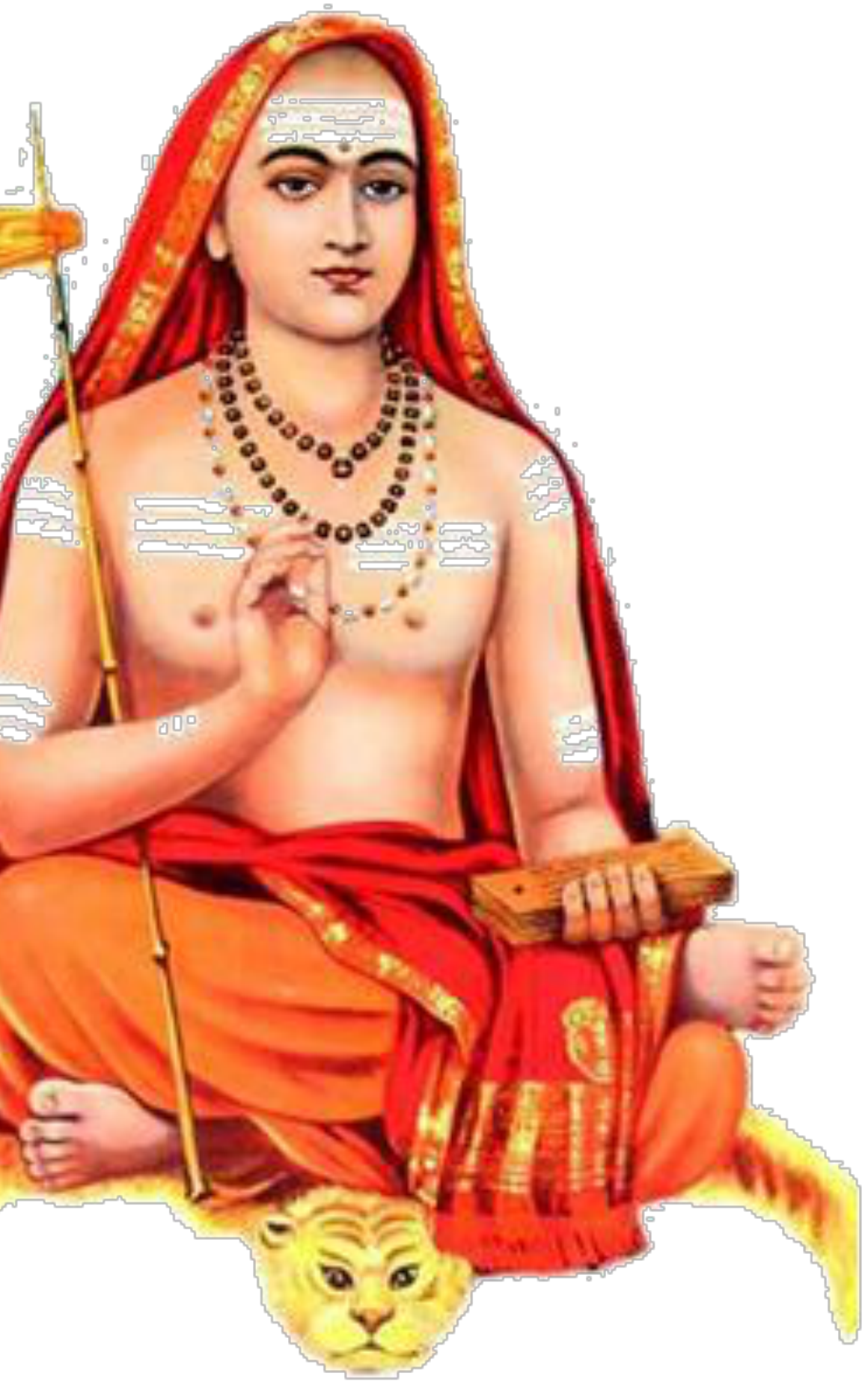
Nirmohatve niścalatatvaṁ,’ says Ādī Śaṅkarācārya, taking a cue from the Master. It means: Absence of desires leads to a clear and still mind and inner space, steeped in the wisdom of completion. When there are no desires, there are no emotions such as joy, depression, sadness, anger, disappointment, jealousy that normally arise from the fulfillment or non-fulfillment of such desires. When the mind is without fear and anger, without expectations of success and failure, the unattached mind seeks that which is unattached. First the objects drop, then the desire for the objects disappears as truth dawns. This may sound complicated, but is as simple as counting ‘1, 2, 3.’
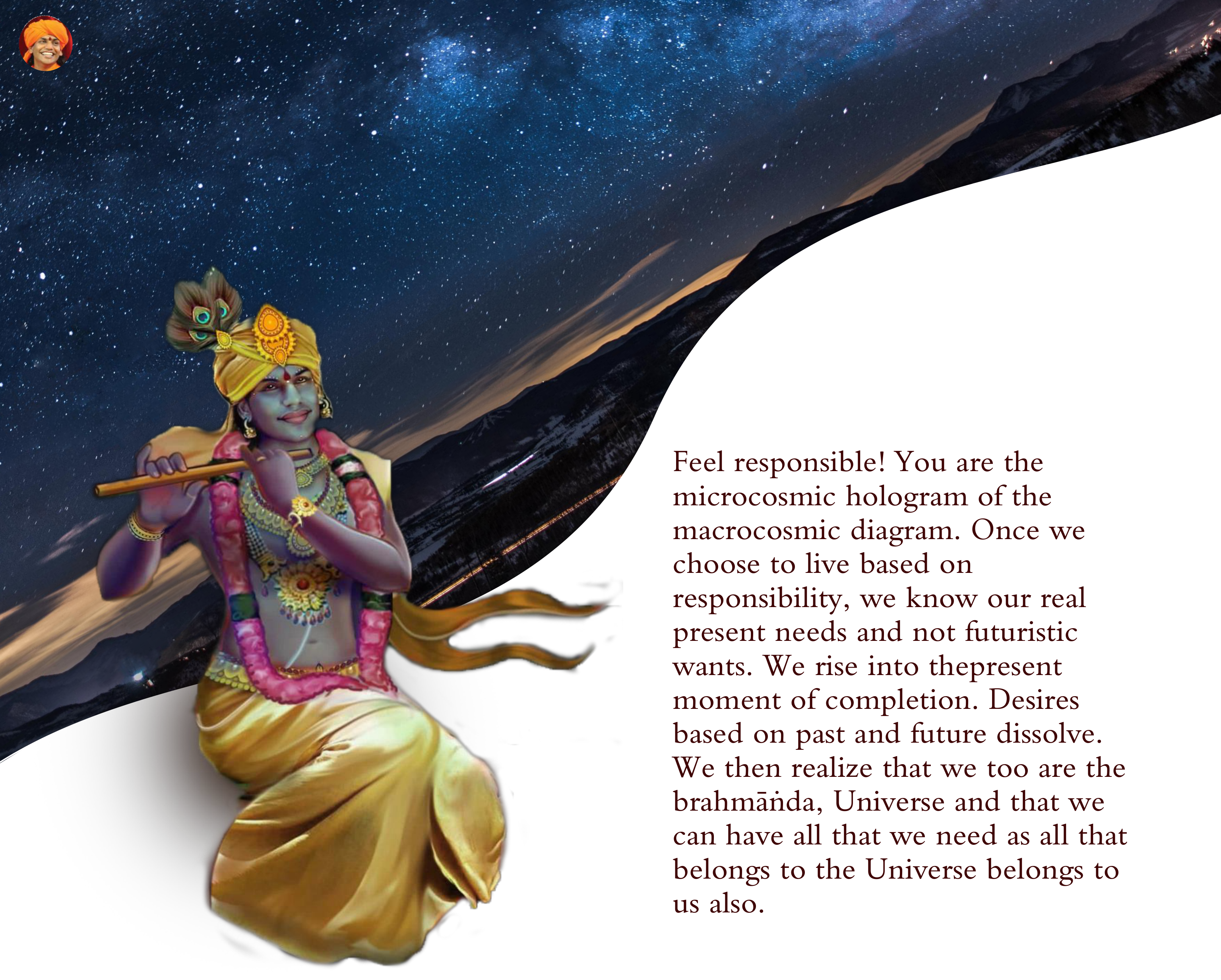
Feel responsible! You are the
microcosmic hologram of the
macrocosmic diagram. Once we
choose to live based on
responsibility, we know our real
present needs and not futuristic
wants. We rise into thepresent
moment of completion. Desires
based on past and future dissolve.
We then realize that we too are the
brahmāṇḍa, Universe and that we
can have all that we need as all that
belongs to the Universe belongs to
us also.

Be Steady in Wisdom of Completion
Kṛṣṇa aptly provides the analogy of
the tortoise, kurma to illustrate how
to withdraw one's senses inwards
and how to be centered and steady
in wisdom of completion in the
Self, tasya prajñā pratiṣṭhitā (2.58).
Its entire cycle of life is tuned to the
wisdom of nature. An animal, when
it indulges in any act, whether of ©
2020 Sri Nithyananda
Paramashivam. All rights reserved.
mating, caring, killing or saving its
own life, does all and any of these
with tremendous focus. The animal
always lives in its present moment.
Not so the human. For the human,
where his body is his mind never is.
You are responsible for everything. If you feel that you are poor, take responsibility for it. If you feel that you are sick, take responsibility for it. Responsibility makes everything, from an ordinary desire to have a good meal tomorrow to your desire to be in desirelessness become a reality.
Everything is realized when you take responsibility. When have you last done anything whatsoever with complete integrity? When were you integrated only to the food that you ate, instead of chatting, reading, and watching? You may say that we are only human, we wish to enjoy life and we wish to enjoy sensual pleasures. Please do! However, when you enjoy, enjoy fully. Be fully in integrity with that object of enjoyment and with all your senses integrated only on that activity. When you do whatever you do with one hundred percent integrity, authenticity and responsibility, you are in the space of completion. You become God!


GOAL
Helping each child understand how
to be established in wisdom of
completion.
Helping each child understand that
the whole cosmos resides inside of
them.
Helping the child see the benefits of taking responsibility for everything.
ASSESSMENTS
❖ What is the science on which the Universe functions?
❖ Who is the Universe responsible for?
❖ What is each and everyone of us responsible for?
❖ What happens when we feel responsible for existence?
❖ What is the best way to know our real present needs?
❖ What happens when you act
with one hundred percent
integrity, authenticity and
responsibility
ART OF THE DAY

ART OF THE DAY:

MATERIALS NEEDED:
- Pen
- pencils
- Paper
- Crayons
- Glue
- Sparkles
PROCEDURE
Ask the children to draw themselves in a way that takes the whole page and then ask them to draw the whole cosmos within themselves.
INFERENCE
Whatever is in the macrocosm—the whole Universe, is also there inside your body—the microcosm! If you dissect, dissect, and go into a small atom, the brahmāṇḁa (macrocosm) will be there in piṇḁāṇḁa (microcosm). Whatever is there in the piṇḁāṇḁa is there in the brahmāṇḁa. Reiterate the importance of understanding that we reside within the universe and that the universe resides within us.
ACTIVITY OF THE DAY

ACTIVITY OF THE DAY:
BECOME A TORTOISE
PROCEDURE: Ask the children to lay on the ground and to become a tortoise with their arms and legs spread out and ask them to move around for a few minutes. Then, ask them to stop and to quickly bring their arms and legs in, just like a tortoise would do when hiding in its shell. Ask the children to share about their experience.
INFERENCE: Withdrawing one’s senses inwards centers the being in the wisdom of completion in the Self. Reiterate the importance of living in the space of completion..
WORKSHOP OF THE DAY

WORKSHOP OF THE DAY:
VAAKYARTHA SADHAS
PROCEDURE
Ask the children/teenagers to engage in a discussion about incidents where they have decided not to take responsibility because they felt that the responsibility belonged to someone else. Ask them to discuss about what happens when we take responsibility for everything versus when we feel that we are not responsible.
CONCLUSION
When you are in the space of completion, you become God.
- BHAGAVAD GITA -
BOOK II, VOLUME XV
Integrate Your Mind
Authored by
THE SPH NITHYANANDA PARAMASHIVAM
यततो ह्यपि कौन्तेय पुरुषस्य विपश्चितः ।
इन्द्रियाणि प्रमाथीनि हरन्ति प्रसभं मनः
॥ २=६०॥
yatato hyapi kaunteya puruṣasya
vipaścitaḥ indriyāṇi pramāthīni
haranti prasabhaṁ manaḥ
O Kaunteya (son of Kuntī), the
turbulent senses carry away the
mind of a wise man, though he is
striving to be in control
POWERFUL COGNITION
Bring integrity to your thinking by doing completion with your root patterns

तानि सर्वाणि संयम्य युक्त आसीत मत्परः ।
वशे हि यस्येन्द्रियाणि तस्य प्रज्ञा प्रतिष्ठिता
tāni sarvāṇi saṁyamya yukta āsīta
matparaḥ vaśe hi yasyendriyāṇi tasya
prajñāpratiṣṭhitā
Having restrained them all, he should
sit steadfast, intent on Me. His mind is
steady in the present whose senses are
under control
POWERFUL COGNITION
By fighting as your own responsibility demands, you earn merits and go to heaven.
ध्यायतो विषयान्पुंसः सङ्गस्तेषूपजायते ।
सङ्गात्सञ्जायते कामः कामात्क्रोधोऽभिजायते
॥ २=६२ ॥
dhyāyato viṣayānpuṁsaḥ
saṅgasteṣūpajāyate saṅgātsañjāyate
kāmaḥ kāmātkrodhobhijāyate
When a man thinks of objects, it
gives rise to attachment for them.
From attachment, desire arises; from
desire, anger is born
POWERFUL COGNITION
Complete, for the bliss of completion.
क्रोधाद्भवति सम्मोहः सम्मोहात्स्मृतिविभ्रमः ।
स्मृतिभ्रंशाद् बुद्धिनाशो बुद्धिनाशात्प्रणश्यति
॥ २-६३॥
krodhād bhavati saṁmohaḥ saṁmohāt
smṛtivibhramaḥ smṛtibhraṁśād
buddhināśo buddhināśātpraṇaśyati
From anger arises delusion, from
delusion, loss of memory, from loss of
memory, the destruction of
discrimination, from destruction of
discrimination, he perishes.
POWERFUL COGNITION
Be Complete in the Present Moment
INTRODUCTION


Kṛṣṇa continues to explain to Arjuna how difficult it is to control the senses and what happens when one loses control of the senses.

A man, intent on spiritual progress, went to a master and begged him to teach him how to control his mind.
The master tried to explain that the mind couldn't be controlled in the way he was seeking, by stopping his thoughts, but he wouldn't listen.
Fed up, the master gave him a bottle of a liquid and told him to drink three drops three times a day. The man asked, 'That's it? It will control my mind? 'The master said, 'Just one thing, make sure you don't think of a monkey when you drink the medicine. '"Oh, sure, quite simple!' said the man as he walked out.
At the door he turned and asked, 'By the way, in case I do think of a monkey, what should I do?


You can never destroy
thoughts or suppress them.
Suppression does not work
on the mind, only
completion does. Suppressed
emotions solidify as a volcano
of patterns and explode when
they get the chance. You can
only complete with thoughts
by doing self-completion
with them, and gradually the
mind will settle down.
Lack of integrity is nothing
but suppressing your
thoughts and putting all your
problems under the carpet.

You can never destroy thoughts or
suppress them. Suppression does not
work on the mind, only completion
does. Suppressed emotions solidify as a
volcano of patterns and explode when
they get the chance. You can only
complete with thoughts by doing self-
completion with them, and gradually
the mind will settle down.
Lack of integrity is nothing but
suppressing your thoughts and putting
all your problems under the carpet.
When you do completion and settle into
the present moment, with no
expectations and no attachments, you
will find that your inner space becomes
quiet and your senses slow down.
Goals: Helping each child understand the importance of completing with every thought
ASSESSMENTS
1. What is the way to integrate our senses?
2. What happens when the
mind discovers the bliss of
completion?
3. What happens when we suppress emotions?
4. Define lack of integrity.
How does destruction arise
within us?
ART OF THE DAY

ART OF THE DAY:
VOLCANIC ERUPTION
MATERIALS NEEDED:
- 10 ml of dish soap
- 100 ml of cold water
- 400 ml of white vinegar
- Food coloring
- Baking soda slurry (fill a cup about ½ with baking soda, then fill the rest of the way with water)
- Empty 2 liter soda bottle
PROCEDURE
NOTE: This should be done outside due to the mess.
1. Combine the vinegar, water, dish soap and 2 drops of food coloring into the empty soda bottle.
2. Use a spoon to mix the baking soda slurry until it is all a liquid. Eruption time! ... Pour the baking soda slurry into the soda bottle quickly and step back!


INFERENCE:
This art project will help the children understand that this eruption is what happens when we suppress our emotions and it creates a mess in our lives. And to understand the importance of completing with each thought when it arises.

ACTIVITY OF THE DAY

ACTIVITY OF THE DAY:
MONKEY MIND
PROCEDURE:
Tell the children to spread around the room and to start intensely acting like monkeys for 5 minutes. Move like monkeys, jump around like monkeys, make sounds like monkeys, imitate monkey behavior
This activity helps the children understand the instability of the mind when we let our senses take over. So they need to know the importance of integrating their mind to something that transcends the senses in order to experience bliss.
WORKSHOP OF
THE DAY

MATERIALS NEEDED:
- Pen or pencil
- Paper
WORKSHOP OF THE DAY:
VAAKYARTHA SADHAS
PROCEDURE Ask the children/ teenagers to engage into a discussion about the cycle that leads to one's destruction by explaining it using a situation form their own life: "From attachment springs desire, from desire arises anger, from anger arises delusion, from delusion comes loss of memory, and from loss of memory develops loss of discrimination which then leads to one's destruction. "Then ask them to write a paragraph explaining the solution.
CONCLUSION The mind that discovers the bliss of completion will never want to stray again.
- BHAGAVAD GITA -
BOOK II, VOLUME XVI