Be
This text was machine-transcribed from the printed book and may contain errors. Select the words and choose “Report a mistake”.
Unaffected

Authored by
THE SPH NITHYANANDA PARAMASHIVAM

यस्मान्नोद्विजते लोको लोकान्नोद्विजते च यः।
हर्षामर्षभयोद्वेगैर्मुक्तो यः स च मे प्रियः
॥ १२=१५॥
yasmānnodvijate loko lokānnodvijate
ca yaḥ I harṣāmarṣabha-yodvegair
mukto yaḥ sa ca me priyaḥ
He, by whom the world is not
affected adversely, and who in turn
does not affect the world adversely,
and he, who is free from joy, anger,
and anxiety, he is dear to Me.
POWERFUL COGNITION
The people who are expressing from their core, are unaffected by the happenings around them. For them, all the external happenings have become a divine play, a līlā. And He sees that the play exists in Him and He does not exist in the play. Such a person is dear to Krishna.


INTRODUCTION
Kṛṣṇa says, ‘He who is not affected adversely or agitated by the world and who in turn does not affect or cause agitation in this world, is dear to Him.’ Only the person who is centered on his being, centered on the Ultimate consciousness, does not create havoc in the world. Just by being in the presence of an enlightened person, our minds calm down. We become steady. I can say that not only is the world not adversely affected by such persons, the world is blessed by their presence.
Once a person realizes that they are one with the Divine and all of Existence, how can there be any fight? How can there be any drama? There can’t be! There is only the experience of intense love and compassion on its own and towards all beings. How can there be any small enjoyments or agitations when someone is continuously experiencing eternal bliss? It is impossible. For the enlightened one, it has all become a divine play, a līlā. And He sees that the play exists in Him and not that He exists in the play.

Kṛṣṇa says that the persons who are
expressing from their core, unaffected
by the happenings around them, are
dear to Him because they are centered
on Him —mukto yaḥ sa ca me priyaḥ.
For most of us, that isn't the case. We
live on the periphery of our incomplete
personalities and make a mess of things
creating more and more incompletions
wherever we go.
To most of us, joy is a period between
experiences of sorrow and unhappiness.
It is like a period of quiet between two
battles that we call peace, just as
impermanent and just as unreal.
Joy and temporal pleasure from
sensory experiences invariably lead to
sorrow. Joy is the by-product of
fulfillment, of an expectation. When
the expectation is fulfilled the first
time, we feel happy.
Most likely, this may not happen the next time around. So instead of joy, sorrow follows. Joy can only be experienced internally if it is to be long lasting. Such joy is more accurately called bliss. Bliss is eternal, unlike joy, which is transient. Bliss is eternal. It arises when we drop expectation, when we stay centered on our being, when we are in the space of completion, the mood and mode of non- attachment.

When Kṛṣṇa refers to a state of not
being in joy, He refers to this
temporary transient joy, which is a
by-product of our desires, the joy
that comes and goes. It is powered
by our illusions and fantasies.
Only when one goes beyond this
joy with its peaks and valleys can
one truly reach a blissful state.
Both joy and sorrow must be
transcended for us to
experience bliss.
If we close our eyes and try to
focus on an object or event, after a
few seconds we see that we can't
continue. No thought or idea can
control our inner space eternally.
Always there is another thought
that comes along to replace the
last thought. This is the inner
chatter of our mind. Buddha refers
to it as the 'monkey mind.'
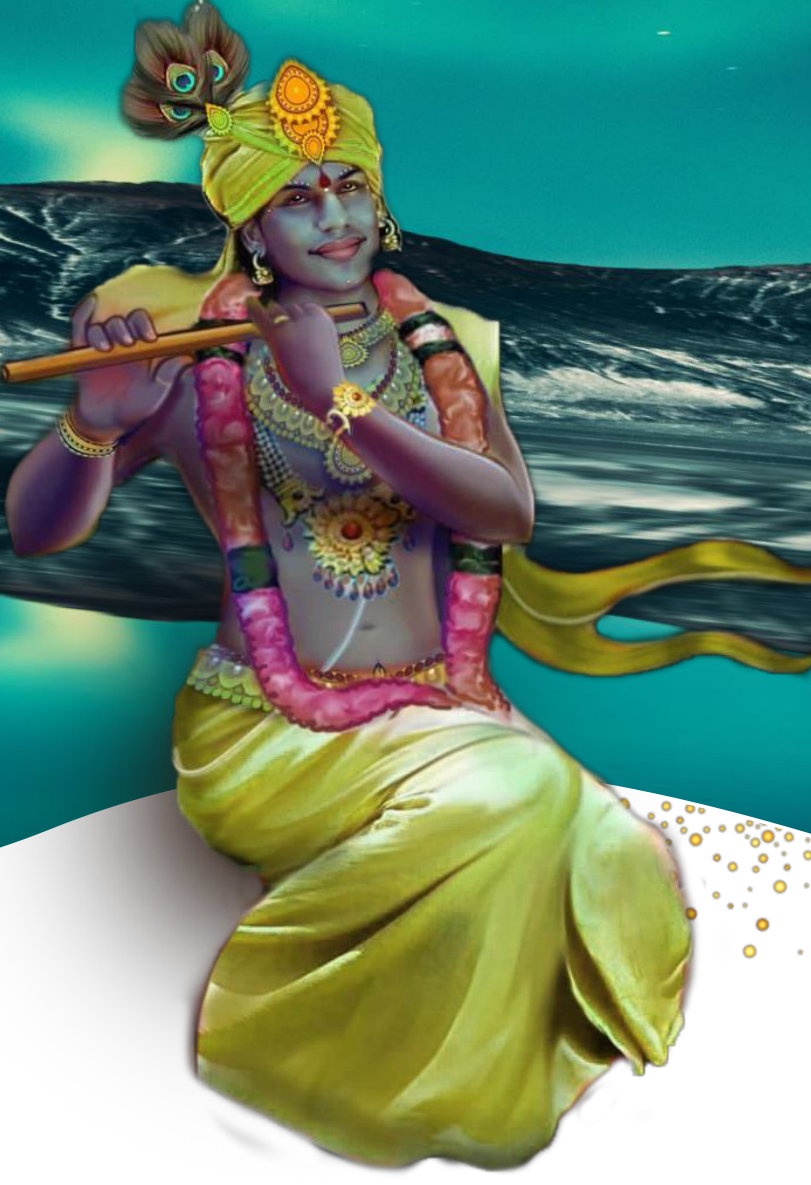
This chatter is the constant jumping of our mind between past and future. It is the journey that our mind undertakes between that it has experienced and stored as incomplete memories and the unknown, which is full of expectations and speculations, also based upon the past. This jumping, this journey, is what we call thoughts.
Anxiety builds as our ego realizes that what it desires may not happen. This loss of something that has not even happened, the product of pure speculation, causes intense emotions within us. Anxiety lives and breeds in thoughts about the future. Its source is our ego.

Ego creates expectations. Expectations related to ‘I’ and ‘mine’, ‘identity’ and ‘possession’ create the fear that what is expected may not happen. To move out of anxiety, we must move into the present moment of completion. That is the only point at which our inner chatter stops and anxiety disappears.
When Kṛṣṇa says, ‘He who is without anxiety will reach Me,’ He says that he who is in the present moment will reach Me. In the present moment our thoughts cease and we are in the space of completion, and we can see with clarity the truth of our Existence, Kṛṣṇa consciousness, and then we are one with Him.
‘Let go of anger,’ says Kṛṣṇa. ‘He who is without anger shall reach Me.’ By the literal understanding of this verse, none of us can reach Kṛṣṇa. All of us express anger at one time or another. Anger is a positive energy. Expressing anger can be positive, both for the person expressing the anger and the one receiving it. This may sound strange but it is true.

Anger is often the product of
guilt. We move into a defensive
position. We feel guilty when we
realize we did wrong. But
instead of completing with that
action, we become angry.
In a sense, this anger is also
directed at ourselves. The guilt
we feel is the result of the
internal rage against our own
weakness. Guilt is the biggest sin
we commit. Whatever we do at a
point in time, we do with the
knowledge and awareness we
possess at that time. Once we
have done what we have done,
there is nothing within our
power to change it.
We should learn to direct anger at issues and take responsibility for the issue rather than directing anger at people. When anger rises against people, divert it to issues instead of towards a person. The person is only the perceived cause as you see it. Anger breeds anger. It is a vicious cycle.
If however, we express anger and express it fully against the incident, event, or issue, without personalizing it, we can let go of that anger without harm to others and us. It is possible. You need to practice, that's all. When the emotive memory of that anger is expressed, the memory dissolves and we experience completion with that emotion. Over a period of time, the anger disappears even before it rises. Kṛṣṇa says that one must reach this 'state beyond anger' in order to be able to reach Him.

GOALS:
Impress upon the
students that once
you let go of joy,
anxiety and anger,
once you transcend
these emotions, you
reach a state of
calmness that takes
you close to God.
ASSESSMENTS

❖ What is Joy?
❖ What is Bliss?
❖ What is the difference between Joy and Bliss?
❖ What is the root cause of Anxiety?
❖ What is the root cause of Guilt?
❖ What is Anger? Is it better to direct
Anger at issues rather than at people?
What is the danger in controlling anger
within and appearing calm externally?
© 2020 Sri Nithyananda Paramashivam. All Rights Reserved
ART OF THE DAY

ART OF THE DAY:
SHIELDED
MATERIALS NEEDED
paper, pencil, acrylic paints, brush, water.
PROCEDURE
Let's do a painting that expresses the message "protected", or "shielded". Put a few drops of randomly spaced color paint in a row at the top edge of the page. Let the color paint to drip down your painting, by holding the page upright or horizontal to the ground. Once you've dripped one color a few times, bringing other vibrant color to your sheet. Then Paint an umbrella in the color of your choice! You may customize your painting by adding the image or words representing an object or idea under the umbrella that you wish to protect.

INFERENCE
The people who are expressing from
their core, are unaffected by the
chaos around them.
ACTIVITY OF THE DAY
ACTIVITY OF THE DAY:
PROCEDURE:
Let us discover the “Monkey Mind”.
Close your eyes and try to focus on an
object or event. You will see that after
a few seconds you can’t continue. No
thought or idea can remain in our
inner space eternally. Immediately
another thought that comes along to
replace the last thought.
This is the inner chatter of our mind
referred to as the ‘monkey mind.’ This
chatter is the constant jumping of our
mind between past and future. It is
the journey that our mind undertakes
between what it has experienced and
stored as incomplete memories and
the unknown, which is full of
expectations and speculations, also
based upon the past.
ACTIVITY OF THE DAY:
PROCEDURE:
This jumping, this journey, is what we call thoughts.
Now drop your monkey mind at the
feet of the Master and move into the
present moment of completion.
INFERENCE:
The state of completion, which happens
from unclutching from all thoughts, is
the only point at which our inner
chatter stops and peace prevails.
WORKSHOP OF THE DAY
WORKSHOP OF THE DAY:
VAAKYARTHA SADHAS
Topic of discussion: Anger is a positive energy"
Conclusion:
Expressing anger can be positive, both
for the person expressing the anger
and the one receiving it, if it is not
a by-product of guilt and if it is not
personalized i.e. if it can be directed
and fully expressed against the issues
instead of any person.