DAY : 5
This text was machine-transcribed from the printed book and may contain errors. Select the words and choose “Report a mistake”.
Topic: Talk about Grass lands and Deserts
Vocabulary: Grass lands, soil, temperate, grazing, herds, tropical, temperature, shrubs, landscape, mammals, season, hump, desert, rain fall, oasis, sand dunes, Sahara etc.
Presentation: ● Grass lands are one of the biomes. ● Grass lands are large areas covered by grass and grass like plants. Other plants and trees are rarely found here. ● Even the soil of most grass lands is also too thin and dry to support the growth of trees. ● Grass lands are drier than forests but not as dry as deserts. Grass lands are of two types temperate grass lands and tropical grass lands. ● The open landscape and widely spaced trees of grass lands provide land for grazing herds of mammals such as Zebra, Bison etc. ● Animals travel for long distances to find food and water in dry season. ● In temperate grass lands trees and large shrubs are totally not found, where summers are hot and winters are cold and rain fall is low throughout the year. ● Temperate grass lands are divided into two tall grass areas and short grass areas. ● Tropical grass lands are found in areas with relatively high temperatures and seasonal rain fall. These grass lands remain green throughout the wet season and change to golden brown color in the dry seasons. They have tall, uniform grass. ● Desserts are dry, sandy regions with extremely hot conditions. These regions receive less rain fall. Deserts are hot during the day and cold at night. This happens because sand absorbs much heat during day time making it very hot and releases the heat at night making the region cold. Sahara desert is the largest desert in the world. Sand dunes are hills of loose sand formed in deserts. An oasis is fertile area within a desert. It is formed when a pool of water is trapped between two rocks under the desert floor. Most desert animals are active at night. Camel is the most important animal in the desert. Camel can go for days without food and water. They store fat in their hump and water is produced from the fat during digestion.
Assessment: ● What are Grass lands? ● What are deserts? ● How will a grass land look? ● Name the animals that survive in grass land? ● Why do most herbivores live in grass lands? ● Where will animals go in dry season? ● What are the two types of grass lands? ● Which is the largest desert? ● Which is the most important animal in the desert? ● What is Oasis?
Closing: Recollect the information told with more pictures
Evaluation: Evaluate their knowledge about the topic and record it for further progress. Language skills of Expressive and Receptive, Auditory skills, Pre-math skills of understanding tall, short etc.
Extension: Children can be given hot bag to feel and relate it to the topic. Desserts are hottest than the hot bag. Camels have designed foot to walk on hot sand etc.
DAY 1 : ART
LEAF PRINTING
Material required: Real leaf or plastic leaves, uncolored art sheet or plain sheet.
Procedure: Children can dip the real leaves or plastic leaves in to different poster colors and do the printing on the sheet.
Skills developed: Fine motor skills, tactile skills.
SKETCH PEN BLOW PAINTING
Material required: Sketch pen of different colors, sketch pen blower, uncolored art sheet.
Procedure: Each child is given a sketch pen fixed with a blower and they are asked to blow. Keep it directly just above the art sheet which has to be colored. Children can observe the paint spreading on the paper while they blow.
Skills developed: Oral-motor skills, cognitive skills of understanding cause and effect.
DAY 1 : ACTIVITY
PLUCKING LEAVES
Goals: To improve their fine motor skills, eye hand coordination, math skill, language skills.
Material required: Different type of leaves.
Vocabulary: Leaves, pluck.
Introduction and presentation: To present this activity make the children sit at the table. Take a twig which contains leaves in one hand and show how to pluck the leaves one by one with thumb and fore finger. After plucking make them count the leaves, and then tell what is the size, color and uses of the leaves. Even show how to string the leaves by making hole in it and string it with string / wool.
Assessment: • What is the color of the leaves? • Name different types of leaves. • Which fingers do we use to pluck leaves?
Closing: Talk about the different size of leaves and its uses.
Evaluation: Evaluate each child's ability to pluck leaves with thumb and forefinger, their math skill, their language skills their eye hand coordination.
Variation: They can even pluck flowers.
STRING LEAVES
Goals: To improve their pincer grasp, intrinsic muscle control, eye-hand co-ordination.
Vocabulary: string, threading, leaves.
Material required: Thread, leaves.
Introduction and presentation: Explain and show them how to string leaves using thread. Encourage and help them to do the same.
Assessment • Can we string a very tiny object? • Can we do stringing with one hand? • Count the number of leaves which you have stringed?
Closing: Ask them what all materials they can thread (or) to be string, what all we cannot string.
Evaluation: Evaluate each child's ability to string the various objects, record the observations for further use, and ask them to count the leaves.
DAY 1 : GYM
PICKING LEAVES WITH TOES
Goal: To develop their fine motor skills and their balancing skills, eye and foot coordination. Presentation: Place some leaves on the ground. Ask the children to pick the leaves using their toes. Skills developed: Fine motor. Eye and foot coordination. Balancing.
OBSTACLE COURSE
Goal: To improve their gross motor skills and listening skills, memory skills. Presentation: Welcome the kids to gather in a place and multiple oral instructions will be given at once to them. For example: Take three jumps from position, crawl into the tunnel, climb the blue sliding board, balance on yellow beam, take the yellow ball drop it into the basket and get back to position. Observe how many commands they can remember and follow in the right sequence. Skills developed: They develop gross motor skills, receptive language skills, memory skills, spatial awareness, listening skills, balancing skills. Extension: They can try out different instructions including different games.
STICKING COTTON
Material required: cotton, gum, different types of biomes picture. Procedure: Children are asked to stick the cotton on the picture. They can observe and feel the texture of picture. We can talk about the uses of cotton. Children are encouraged to stick the cotton correctly on the picture. Skills developed: Fine motor skills, texture skills, cognitive skills of understanding the uses of cotton
MAKING SNOW MAN
Material required: Cotton, White color tissue paper, red color paper, glue, waste paper.
Procedure: Step: 1: Take the waste paper and crush it and make like a ball of three different sizes (e.g. big, medium, small).
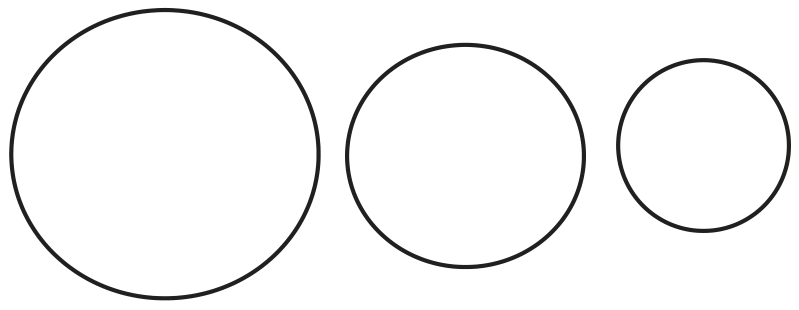
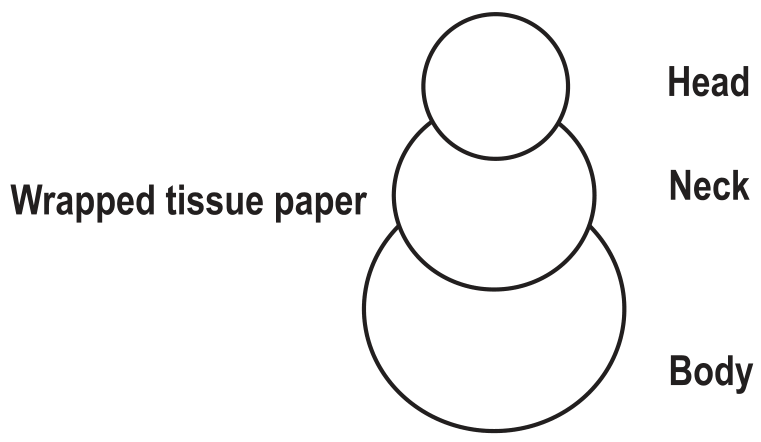
Step: 2:- Wrap all the three sizes with a tissue paper and stuck one above the other with glue keeping the biggest at the bottom as shown in the below.
Step: 3:- Take the red color paper and cut out 2 small circles for eyes and long strip for muffler.
Step: 4:- Stick the eye on the small circle and the strip around the neck like a muffler. Take cotton and stick all over the body of the snow man.
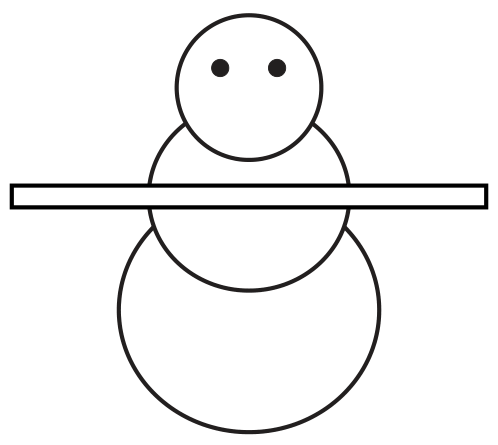
Variation: Instead of using crush paper and tissue paper you can use cotton for full body or stones (according to size).
Then the snow man is ready.
DAY 2 : ACTIVITY
ADD COLOR TO ICE CUBES
Goals: To improve their knowledge of cause and effect, sensory awareness.
Vocabulary: Colors, Cold, Wet, Frozen / Melt, Salt.
Material required: Ice cubes, Food coloring (different colors), Salt (a bit), Plates, Eye droppers
Presentation: Take the food color and add a little water to make a concentrated color. Ask the children to sit and give each a plate and an ice cube. Have the salt and food color ready. Ask them to feel the ice cubes; can they describe whether it is hot or cold? Each can take a pinch of salt and sprinkle it on to their ice cube and observe it melting making pores in to the ice. Explain how salt creates a melting action in the ice and makes little holes inside. Give each child an eye dropper and demonstrate how it is used to fill with the liquid when it is pressed. They then add a couple of drops of color to their ice cubes and observe how the colors go inside the ice cube transforming the color of the ice cube. They can also add two different colors combined to make a new color (example: red + blue = purple, yellow + blue = green).
Assessment: • What happens when salt is added? • What change occurs when color is added to the ice cube? • What color is the ice cube now? • How does the ice cube change its color? • What happens when red and blue is mixed?
Variation: Add small plastic toys to be frozen. If a small thread is placed on the ice cube it will stick to it and the kids can lift the ice cube.
Skills developed: Cognitive skills of cause and effect Logical thinking skills. Sensory development Color combinations. Visual discrimination.
Conclusion: This activity helps the kids to understand the concepts of water freezing to make ice, and develops their sensory awareness.
PEELING COTTON
Goals: To improve their pincer grasp, intrinsic muscle control, eye-hand coordination, sensory skills
Vocabulary: Peeling, cotton.
Material required: Cotton.
Introduction and presentation: Make the children to sit near the table and show them how to peel the cotton seeds and make thread by rolling the cotton on the palm. Encourage them to peel and roll the cotton. Explain about the uses of cotton.
Assessment: • Ask them about the texture of cotton? • Is cotton heavy or light? • What is the color of cotton? • What happens when we roll the cotton with our palm?
Closing: Ask them what all materials they can thread (or) to be string, what all we cannot. Ask the kids to peel the cotton using thumb and index finger and use both the palms in opposite motion to make thread.
Evaluation: Evaluate each child's ability to peel cotton and making thread from cotton.
Skills developed: Pincer grasp, eye hand coordination, tactile skill and sensory skill.
Variation: They can peel peas, hay straw, banana, orange, smash tomatoes, banana, grapes etc
DAY 2 : GYM
ANIMAL WALK
Goal: To develop their gross motor skills.
Presentation: Divide the children into two teams call one child from one team and ask that child to walk like an animal. The other team children have to identify which animal's walk, the child has imitated. Both the team will take their turn one after the other.
Skills developed: Develops their gross motor skills, cognitive skills, language expressive skills.
HOPSCOTCH
Goal: To improve their balance, gross motor skills, eye and foot co-ordination, spatial awareness.
Presentation: A hopscotch box has to be drawn on the floor it can be simple or complex. Ask the children to hop on one foot and to jump, hop, jump, turn and do the same and go back to position. Observe them how well they are able to do it.
Skills developed: It develops their balance, spatial awareness when they hop on one foot and their gross motor skills while jumping. Develops their visualization skills if they are able to do with eyes closed.
Extension: They can try closing their eyes.
DAY 3 : ART
BRUSH PAINTING
Material required: Uncolored art sheets, different poster colors, paint pallets, paint brush.
Procedure: Children can dip the paint brush in the paint (different colors) and paint the picture given holding the brush firmly. Children are encouraged to paint inside the picture.
Skills developed: Develops their fine motor skills, eye hand coordination.
COLLAGE WITH CRUSH PAPER
Material required: Different colored kite papers, glue, uncolored art sheet.
Procedure: Ask the children to crush the color paper in to small balls and stick it with glue on the given picture.
Skills developed: Fine motor skills of pincer grasp, circular movement
DAY 3 : ART
CRUSHING PAPERS
Goals: To improve their whole hand muscles movement, Fine motor, Cognitive skills of understanding cause and effect.
Vocabulary: Crushing, Paper, Pincer grasp
Material required: Papers.
Presentation: Keep papers, ready before starting an activity. Show them how to crush the paper using finger and palm. Tell them to crush the paper using fingers and palm.
Assessment:
• How does the paper look?
• What is the shape of the paper?
• Can we crush cardboard?
Skills developed: Pincer grasp. Eye hand coordination. Tripod grasp Math skill
MAGNETIC FISHING
Goals: To develop their fine motor skills, eye hand coordination, cause and effect relationships.
Vocabulary: Fishing, magnet, water, swimming, attraction, rod.
Material required: Toy fishes with magnets attached, magnetic, stalk, big bowl of water.
Introduction and Presentation: Make the children sit in a circle. Give each child turn to hold the magnetic fishing stalk and catch the magnetic fishes. They have to move the stalk according to the position of the toy fishes in water in order to catch the fishes. We can make the children understand how fish swims in water. Children can actually feel the force of attraction with the magnetic stalk and the toy fishes.
Assessment: • Where do fishes live? • Have you seen real fishes? • Will a plastic be attracted by magnetic? • Can fishes walk? Why? • In this activity why fishes are attracted to the magnetic stalk? • Can fishes live out of water?
Evaluation: Evaluate how well they understood the cause and effect relationship.
Skills developed: Develops their fine motor skills. Eye hand coordination. Cause and effect relationships.
DAY 3 : GYM
BRIDGING
Goal: To develop their gross motor skills and their hip muscles.
Presentation: Ask the children to lie on the back, ask them to fold their legs and lift the hip from the ground and stay in that position for a short period.
Skills developed: Balancing skills. Gross motor skills and it helps to develop their hip muscles.
YOGA EXERCISE
DAY 4 : ART
SPONGE PRINTING
Material required: Uncolored art sheet, paints of various colors, sponge cut in to various shapes.
Procedure: The children are asked to dip the sponge in the paint and do the sponge printing on the given picture. They can do printing with various shape or size or design sponges dipped in different colors. Encourage the children to do the printing only inside the picture.
Skills developed: fine motor skills, sensory skills, cognitive skills of knowledge of various colors and cause and effect.
WET CHALK COLORING
Material required: Uncolored art sheet, different color chalks dipped slightly in water with chalk holder.
Procedure: Children are told to hold the chalk holder firmly and color inside the given picture with different colored chalk.
Skills developed: Tripod grasp, pre writing skills, eye hand coordination.
DAY 4 : ACTIVITY
SQUEEZING SPONGE
Goals: To improve their intrinsic hand muscle power, their fine motor skills to develop their texture sense.
Vocabulary: Squeezing, crushing, sponge, hard, soft, powdery, sticky
Material required: Sponge, water.
Presentation: Keep water tub with water and sponge before starting an activity. Make all the children to sit near the table and show them how to soak sponge in the water and squeeze it. Tell them what happens when sponge soaks in water. Tell them how sponge absorbs water and while squeezing how water goes out. Encourage them to do the same activity.
Assessment: • Can we squeeze a hard material? • What happens when we keep sponge in water? • What happens when we squeeze a sponge soaked in water? • What goes out when we squeeze a sponge?
Skills developed: Fine motor skills, cognitive skills of cause and effect.
FLOAT AND SINK
Goals: To make them understand the concept of float and sink.
Vocabulary - Float, sink, heavy, light, liquid, solid.
Material required: Collection of the substances which float and sink in water, water, water tub.
Introduction and presentation: Make all the items ready on the table before showing the activity. Make the children to sit near the table. Tell them to put few stones, leaves, bits of paper, wooden chips, feathers etc in the water and tell them to observe it. Then tell them about the concept of float and sink. Ask them to put few different substances in water and observe the result.
Assessment: • Can a stone float in water? • Can a heavy object float in water? • Feather will float (or) sink in water? • What will happen when you put a stone in water? • Will a paper boat float (or) sink in water? • Why some objects float and some sink in water?
Evaluation: Evaluate how well they understand the concept, record the observation for further evaluation.
Skills developed: Cognitive skills of cause and effect, language skills.
DAY 4 : GYM
FLOOR SWIMMING
Goal: - To stimulate their gross motor skills.
Presentation: Children are asked to lie down on the floor on their tummy. Ask the children to move their hands and legs faster simultaneously and ask them to pretend like swimming.
Skills Developed: This activity develops their gross motor skills.
TUMBLING
Goal:- To improve their balance, co-ordination, spatial awareness and gross motor skills.
Presentation: Children whoever learning to tumble can use the wedge placed on the safety mats to tumble. Place mats on all the sides. They can do tumbling on the grass also.
Skills Developed: Develops their spatial awareness, hip muscles, gross motor skills, balance and co-ordination. Variation: Children can also do tumbling using their hands.
DAY 5 : ART
TEXTURE PAINTING
Goal: To develop their creativity, fine motor skills, tactile skill, cognitive skills of understanding and exploring cause and effect. Material required: Uncolored art sheet related to the theme, sand or rava or salt, poster colors, texture toys (like small tyres etc). Introduction and presentation: Encourage children to sit for the art and explain them the ways to do the texture painting. Children can also use texture toys to paint the pictures. They can observe the painting and touch and feel the texture after the paint has dried. Skills developed: Develops their creativity, fine motor skills, tactile skills, cognitive skills of understanding cause and effect.
MIRROR IMAGE
Material required: Uncolored art sheet or plain sheet, different poster colors. Procedure: ask the children to first fold the art sheet and unfold it again, now paint one half of the picture or put few droplets of paint on one half of the picture and fold the paper again and press it nicely and now children are asked to unfold the appear and observe the impression or designs formed on the paper. Skills developed: Fine motor skills and eye hand coordination, cognitive skills of understanding cause and effect.
DAY 5 : ACTIVITY
MATCHING TEXTURE TOYS
Goals: Familiarize them with different texture identification by tactile discrimination. Vocabulary -Rough, smooth, hard, soft, blunt, sharp, funny, scaly, pokey, regular, Irregular, non sticky, elastic, non elastic Material Required: Texture books, texture toys, various texture brushes, some blunt objects, cooked and uncooked noodles, jelly, texture cards, pokey textured objects, play dough, rice flour and corn flour. Presentation: Let them touch each texture and describe them about each texture, ask them to match objects of the same texture. Assessment: ● Which is the opposite texture for rough? ● Which is the opposite texture for hard? ● What is tactile discrimination? ● Which texture we have to be careful? ● Name some materials which have silky texture? ● Which animal has very furry texture? ● Which animal has pokey texture? ● How do we feel when we touch a rough texture? Evaluation: First evaluate with their eyes open and then let them identify the texture with their eyes closed. Some children may be hesitant to touch few textures, talk to them and let them slowly involve in due course of time. Record the observations. Reinforce the different textures when they eat lunch, snacks and when they play.
Skills developed: Cognitive skills of cause and effect, tactile skills and fine motor skills. Conclusion: Analyze how many textures they are able to identify and name.
MIXING COLOR TO SEMOLINA
Goals: To improve their fine motor, cognitive skills of exploring cause and effect, sensory skills. Vocabulary: Color names, Change, Texture, semolina, Wet/ dry, Grainy Material required: Semolina, Food color, Plates, Water Preparation: Have all the materials ready for the activity. Give each child a plate and make them sit at the table. Presentation: Put a small amount of semolina on each plate. Ask them to feel it. Add a small amount of powdered food coloring and ask them to mix. Add a bit of water and tell them to mix it with their fingers observing the color change, and feeling the texture. Assessment: ● What happened when we added the food color to semolina? ● What is the color of semolina? ● Did the texture change when we add water? Evaluation: Evaluate their ability to mix semolina with water and food color. Skills developed: Fine motor skills, language expressive skills, sensory awareness. Variation: Add essence, sand, rocks, pine cone, paper other material to see what happens and feel the texture and smell.
DAY 5 : GYM
BALANCING POT ON HEAD
Goal: To improve their balance.
Presentation: Give the child a pot and ask the child to keep the pot on the head. Ask the child not to hold the pot with their hand. Ask the child to hold their hands behind and walk a distance. Observe how well they can balance the pot on the head.
Skills Developed: This game helps in developing their co-ordination, balancing skills, their ability to sustain attention.
DOG AND THE BONE
Goals: - To stimulate their observing skills, auditory skills, gross motor skills, receptive language skills.
Presentation: Children are divided into two groups with equal members. They are numbered as 1-1, 2-2, 3-3 in both teams. When any number is been called (say for example-3) child numbered 3 from both the team with come and pick the object. Whoever picks the object that team will get points.
Skills developed: This game develops their auditory skills, attention, gross motor skills, receptive language skills and observing skills.
Variations: The same game can be changed as bird and grains.