DAY : 5
This text was machine-transcribed from the printed book and may contain errors. Select the words and choose “Report a mistake”.
Topic: Different colors, textures, shapes, of the toys. Talk about whether toy is living or non living thing.
Vocabulary: Slide, swing, jungle gym, balls, hula-hoop, living, nonliving, colors, shapes.
Material required: Collection of toys of different colors, shapes, texture, height for sorting, picture of toys, toys made up of different materials.
Presentation: ● Present to the kids the different varieties of toys and ask them to sort according to colors, shapes, size and height. ● Ask them whether the toy is heavy or light, soft or hard. ● Discuss how toys are nonliving things. ● Explain how toy is different from real objects. ● Need of handling toys safely. ● Hazards of playing with broken toys. ● Talk about huge toys like slide, swing, car, jungle gym, ladders and safety precautions which we have to take.
Assessment: ● Is toy a natural or man made thing? ● Is it a living or non living thing? ● Do toys grow? ● Do toys eat? ● How you feel when you touch the soft toy? ● What happens when you play with broken toys?
Closing: To enable the children to know the different colors, textures of toys and review the safety measures and the need of doing clean up.
Evaluation:
Skills: Math skills of sorting, grouping, estimating. Cognitive skills of cause and effect. Tactile discrimination skills: different textures like soft, hard, smooth etc of the toys Visual discrimination skills: different colors of toys Auditory discrimination skills. Social skills of playing cooperatively.
Extension: Kids can have a clean up party in which they can sort different colors, shapes, size toys according to their characteristics. We can have a puppet show.
DAY 1: ART
MIRROR IMAGE
Material required: Uncolored art sheet or plain sheet, different poster colors.
Procedure: Ask the children to first fold the art sheet and unfold it again, now paint one half of the picture or put few droplets of paint on one half of the picture and fold the paper again and press it nicely and now children are asked to unfold the paper and observe the impression or designs formed on the paper.
Skills developed: Fine motor skills and eye hand coordination, cognitive skills of understanding cause and effect.
MINI BOOK
Goals: To develop their eye hand coordination, fine motor skills, logical thinking skills.
Material required: Any materials, pictures related to the theme can be chosen, a small book with plain sheet has to be made, glue, crayons.
Introduction and presentation: Children are given one book each and they can be explained about theme and they can stick the pictures or materials or children can draw related to the theme in their book.
Skills developed: Develops their eye hand coordination, fine motor skills, logical thinking skills.
DAY 1: ACTIVITY
IDENTIFYING MORE OR LESS USING PLASTIC COINS
Goals: To improve their pre math skills, Analytical skills, eye hand coordination.
Content:
Vocabulary: Predicting, estimating, more, less, long, short
Material required: Different color plastic coins
Introduction and Presentation: Place the plastic coins on the table. Children can randomly collect the different color plastic coins with both their hands and they can estimate which color plastic coin is more and which color plastic coin is less. They can also arrange plastic coins according to their color.
Assessment: ● Ask them in what order they have arranged? ● Which is more and which is less? ● Which set has less number of plastic coins? ● Which set has more number of plastic coins?
Evaluation: Evaluate them by observing, how well they understood the concept, note the recording for further improvements.
Skills developed: Pre math skills, Analytical skills, Eye hand coordination.
SETTING CLOCK
Goals: To make them understand time concept, to improve their logical thinking, fine motor, eye hand coordination and visual and tracking skills.
Vocabulary: Set, clock, small hand, big hand, rotate.
Material required: Toy clock with moving hands.
Introduction and Presentation: Ask the children to settle before starting the activity.
Present the children the concept of understanding time. Place the hour hand (big hand) in 12 and move the small hand to 3 and tell them it is 3 o'clock. Give the clock to the children one by one to set the given time.
Evaluation: Evaluate them by observing how well they are about to understand and set time (hour hands).
Skills developed: Cognitive skills of understanding time concept, Logical thinking, Eye hand coordination, Fine motor skills, and Visual tracking skills.
DAY 1: GYM
RIBBON DANCE
Goal: To develop their gross motor skills, direction sense, social and emotional skills, memory skills.
Presentation: Motivate the children to hold the colored ribbons in their hands. Direct them to do simple hand movements like up, down, right side, left side. Make them to shake their both hands holding the ribbons. Make them to shake hands and also jump simultaneously. Direct them to hold each other and dance with ribbons. Make the children do different steps with music and song holding the ribbon. They can follow some rhythm and pattern and dance.
Skills developed: Develops their gross motor skills, social/ emotional skills and direction skills and memory skills of following the rhythm and pattern.
GENERAL EXERCISE
DAY 2: ART
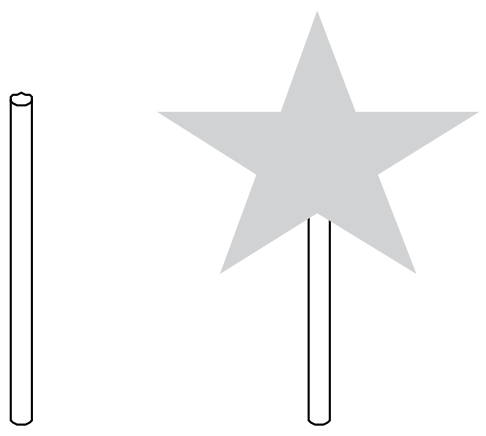
MAKE A MAGIC WAND
Material required: Chart paper, straw or stick, silver paper, gold paper, glue, scissors.
Preparation: Draw a star shape in the chart paper and cut it. Cut the same shape in the gold paper. Take the straw or stick and stick around the silver paper.
Procedure: Step:1 Take the chart star shape and stick the gold star shape on it.

Step:2: Take the straw or stick wrapped with silver paper and stick the star on it.
ORIGAMI
Goals: To improve fine motor skills, eye hand coordination.
Material required: Origami paper or plain paper.
Introduction and Presentation: Children are encouraged to sit and each child is given a paper and directed to do paper folding related to the topic or theme carried out. E.g. cat, dog, horse, parrot etc.
Skills developed: Develops their eye-hand coordination, fine motor skills.
DAY 2: ACTIVITY
FILLING BOTTLES USING FUNNEL
Goals: To develop their whole hand grasp, fine motor, cognitive skills of exploring cause and effect.
Vocabulary: Funnel, empty, full, half, water, bottle.
Material required: Bottle, funnel, water
Presentation: Invite the children to the activity. Present them how to keep the funnel on the bottle and pour the water through the funnel. Encourage and help them to do the activity.
Assessment:
● What all the liquids we can pour?
● What is the color of water?
● What is the opposite of full?
Skills Developed: Develops their whole hand grasp, fine motor skills, cognitive skills of exploring cause and effect.
Variation: They can also fill the cup by squeezing water packets and describe about half, full, empty, quarter etc.
MAKING KOLAM DOTS
Goals: To improve their fine motor skills, eye hand coordination, pre writing skills, creativity.
Vocabulary: Kolam, designs, patterns
Material required: Kolam powder, samples of some designs, pictures.
Presentation: Present the activity by putting dots with kolam powder using thumb, index finger and middle finger. Show them how to make designs and strokes by putting dots with kolam powder. Encourage and help the children to put dots with kolam powder and make designs and strokes with it according to their choice.
Assessment: ● What are the body parts we use for writing? ● What are the materials we use for writing? ● Which is your favorite writing tool? ● Can they write without using their thumb?
Variations: They can write with other kinds of flour, sand. Give them a pattern and then ask them to follow, make maze paths to follow. Add some small stones so they can make a pattern with dots and stones. Add food color to get color patterns.
Evaluation: Evaluate each child's ability to draw, write, the coordination involved in writing, their creativity, their language skills, to explain what they drew.
Conclusion: Talk about the designs, patterns that the kids draw/write.
DAY 2: GYM
CLAP DANCE
Goals: To develop their patterning, memory skills, gross motor skills, emotional skills of enjoying and social skills.
Introduction and Presentation: Children can follow a particular rhythm in clapping pattern and dance with their friends. They can sing some rhymes or they can dance to music.
Skills developed: Develops their patterning, memory skills. Gross motor skills. Social and Emotional skills of enjoying
WEDGE WALKING
Goal: To develop their balance, gross motor skills.
Presentation: Children are asked to walk on the low wedge to improve their balance. For safety place mats all the four sides of the wedge and beam. They can be directed to walk on low balancing beam and high balancing beam. Observe how well they are able to balance on wedge, low balancing beam and high balancing beam.
Skills developed: Gross motor skills, Hip muscle stability. Balancing skills.
Extension: They try balancing on the beam or wedge with an object on the head.
DAY 3: ART
VEGETABLE PRINTING
Goal: To develop their creativity, fine motor skills, cognitive skills of understanding and exploring cause and effect.
Material required: Any vegetable which can be cut in to shapes (e.g. carrot, potatoes, onion, lady's finger, radish etc), poster colors, paint brushes, uncolored art sheet.
Introduction and presentation: Motivate children to sit and present them the ways they can do vegetable printing. Give them the vegetable which is cut in to different shapes or patterns ask them use paint brush to apply paint on vegetable or dip it in the paint. Ask the children to make impressions or print on the art sheet.
Skills developed: Develops their creativity, fine motor skills, tactile skills, cognitive skills of understanding cause and effect.
MAGIC COLORING
Material required: Paper, water, different color poster color.
Procedure: Children are asked to wet the paper and paint the paper with different poster colors with brush. Children can observe the paint spreading because of the water in the paper.
Skills developed: Develops their fine motor skills, cognitive skills of understanding cause and effect.
DAY 3: ACTIVITY
FOLDING THE PAPER AND GUESS THE NUMBER OF BOXES
Goals: To develop their fine motor skills, pincer grasp and eye hand coordination.
Vocabulary: Paper, chart paper, box.
Material required: Paper.
Introduction and Presentation: Ask them to fold the paper first one fold and then repeat it multiple times using their fingers. Children can now unfold the paper and predict the number of boxes. They can also fold the paper to make multiple designs and models by seeing a model. They can fold even chart paper.
Assessment: • Is paper hard or soft? • Where do we get paper from? • What are the uses of paper? • How many boxes have you made by folding the paper?
Evaluation: Evaluate the fine motor skills, eye hand coordination.
Skills developed: Fine motor skills, Eye hand coordination, Pincer grasp, Pre math skills of estimating, predicting. Cognitive skills of cause and effect.
HIT THE STICK
Goals: To improve their attention span, visual tracking skills and social emotional skills of enjoying.
Material required: one ice cream stick.
Presentation: Children are asked to sit and mentor can place the ice cream stick on the table. Ask each child to touch the stick, given three turns for each. When they try to touch take off the ice cream stick back.
Evaluation: Observe how well they are able to track the ice cream stick and touch it.
Skills developed: Visual tracking skills, social emotional skills, persistence skills.
DAY 3: GYM
HITTING THE TARGET
Goal: To develop their eye hand coordination, fine motor skills, gross motor skills.
Presentation: Ask the children to hold the ball firmly with one or both hands and toss the ball on the target. Encourage them to toss it correctly on the target.
Skills developed: Eye hand coordination, fine motor skills and gross motor skills.
SKIPPING
Goals: To improve their gross motor skills and balancing skills.
Presentation: Encourage the children to hold the skipping rope in the hand and ask them to skip over the rope. Encourage them to move forward and backward skipping.
Skills developed: Develops their gross motor skills and balancing skills.
DAY 4: ART
THREAD PAINTING
Material required: Thread of varying length, different poster colors, uncolored art sheet or plain sheet.
Procedure: Children can dip the thread in the paint and keep it on the art sheet and fold the art sheet holding firmly on the table with one hand and pull the thread out after moving the thread in various directions with the other hand.
Skills developed: Develops their fine motor skills of tripod grasp, eye hand coordination, cognitive skills of cause and effect.
SKETCH BLOW PAINTING
Material required: Sketch pen of different colors, sketch pen blower, uncolored art sheet.
Procedure: Each child is given a sketch pen fixed with a blower and they are asked to blow it directly just above the art sheet which has to be colored. Children can observe the paint spreading on the paper while they blow.
Skills developed:- Oral-motor skills, cognitive skills of understanding cause and effect
DAY 4: ACTIVITY
MEMORY GAME
Goals: To improve their memory skills, cognitive skills of observing, visual tracking skills.
Vocabulary: Visualize, recall.
Material required: Different objects (6 to 7 objects) or picture cards of different objects.
Introduction and Presentation: Place different kinds of objects on the table e.g. picture of flower, vegetable, fruits, etc in a sequence. Ask the children to observe the objects placed on the table for few minutes and then remove it from the table. Then ask them to name the objects according to the sequence and tell them to arrange it in the sequence which they have seen before.
Assessment: • Name the picture of objects which they had seen on the table. • Name the pictures in the order which they have seen.
Evaluation: Evaluate how well they are able to remember things and whether they are able to arrange it in the right sequence.
Skills developed: Memory skill, cognitive skills of observing, visual tracking skills.
ICE CREAM STICKS PLAY
Goals: To improve Fine motor skills, Pre math skills, Logical thinking, Visual discrimination
Vocabulary: Ice cream sticks, Structures, Arrange, Count, Shapes, Pattern, Letters, number or design
Material required: Ice cream sticks, Pattern sheet (if required)
Preparation: Keep the ice cream sticks ready before starting an activity.
Presentation: Children are asked to build different vehicle structures with ice cream sticks. We can show a model for them and encourage them to build.
Assessment: • How many ice cream sticks do you have? • Can you make a circle by arranging ice cream sticks, If not why? • What all shapes you can make with ice cream sticks?
Skills developed: Fine motor skills, Pre math skills, Logical thinking, Visual discrimination
Variation: Arranging Counting Hitting the stick game. Give them pre design pattern and ask them to stick on that. Ask them to paint the sticks inside or outside adding texture using sand or crushed leave dust. Making Photo Frame
DAY 4: GYM
BALANCING TOYS
Goal: To improve their balance.
Presentation: Give the child a toy and ask the child to keep the toy on the head. Ask the child to keep their hands behind without holding the toy and walk. Observe how well they can balance the toy on the head.
Skills Developed: This game helps in developing their co-ordination, balancing skills, their ability to sustain attention.
BOWLING
Goal: To develop their fine motor skills, gross motor skills, eye hand coordination, focusing on an object.
Presentation: Plastic bottles can be filled with different colored water and arranged in row, one after the other or in a particular pattern. Children are asked to come one by one and roll a ball and bowl the bottle. Whoever bowls more bottles will be applauded.
Skills developed:
Eye hand coordination.
Fine motor skills.
Focusing on an object
Gross motor skills.
DAY 5: ART
SPRAY PAINTING
Material required: uncolored art sheet or plain sheet, different poster colors, alphabet stencils or number stencils related to the theme example flowers, fruits, and animals etc, tooth brush.
Procedure: children are asked to keep the stencil in the appropriate place on the art sheet or the plain sheet. They have to dip the toothbrush in the paint and hold the tooth brush upside down with one hand, above the art sheet and move the bristles of the tooth brush with other hand on the comb held in the other hand. Children are asked to observe that the paint is sprayed by this movement in the paper. Now they can take the stencil and observe the design.
Skills developed: fine motor skills, eye hand coordination, cognitive skills of observing cause and effect.
COLOR PENCIL COLORING
Material required: color pencils of various color, uncolored picture.
Procedure: Children can select the color pencils of their choice related to the picture and color the picture. Children are encouraged to color mostly inside the picture holding the pencil firmly.
Skills developed: tripod grasp, eye and hand coordination, pre writing skills.
DAY 5: ACTIVITY
CUT PICTURES USING SAFETY SCISSORS
Goals: To improve their writing skills, pincer grasp, fine motor skill.
Presentation: Demonstrate to them how to hold the safety scissors and how to cut the pictures through the outline of the picture. Make the children to hold the safety scissors and at first give the rough paper to snip and cut randomly. Then tell them to cut the pictures through the outline of the picture.
Vocabulary: Picture.
Material required: Safety scissors, paper, picture paper.
Assessment: • Can we cut something which is hard with scissors? • Name the picture which you have snipped? • Which fingers do you use for holding scissors?
Closing: By snipping the pictures they will strengthen their fine-motor movements.
Evaluation: Record the observation for further investigations to find out the further improvement.
Variation: Kids can be given thick paper – chart paper to cut. Use other language letter traces on the paper for cutting.
OBSERVATION BOTTLES
Activity: To show them what things are there in the bottle and when we shake what happens.
Goals: To improve their visual discrimination, cause and effect, their attention.
Vocabulary: Bottles, tornado, shells, pebbles, sand, leaves, marbles.
Material required: Transparent bottles, water, color, shells, leaves. Presentation: Take a transparent bottle and fill it with water and color. Add shells, sand, small pebbles etc. We can put any objects inside the bottle and observe what happens when we shake the bottle in circular motion. When we shake the bottle, all the objects inside the bottle start moving around in the water because of the force. Showing this activity we can talk about tornado. What happens when tornado comes? We can illustrate this by shaking the bottle and just telling them that it is a wind which comes with a huge force and carries with it everything like animals, vehicles, trees etc in the air and throws it out and damages homes etc.
Assessment: Can you observe the objects inside the bottle? What happens when we shake the bottle? What happens when we don't shake the bottle? What is a tornado? What happens when tornado comes?
Evaluation: Evaluate each child's ability whether they have understood about the force of the wind, the visual discrimination, language skills and cause and effect.
Conclusion: Talk about the force of the wind. What all can we observe inside the bottle. Tell them about the damages that happen when a tornado or hurricane comes.
DAY 5: GYM
TREASURE HUNT FOR TOYS
Goals: To stimulate their curiosity, thinking skills and social skills, pre-reading skills
Presentation: Objects are taken according to the theme. Hide the objects in the outdoor play area before children come to play. Make some clue sheets with pictures to say the color of the treasure object. Ask the children to search for the treasure (the hiding objects) with the clue sheets
Variations: We can hide the items depending upon the theme (Eg: Birds, Animals, Vehicles) We can also play hide and seek game
Skills developed: This game develops their pre-reading skills when they track the object with the clue. Their cognitive skills, social skills when they work as a team to find the treasure, it will improve their curiosity and critical thinking skills.
CATCH THE FEATHER
Goal: To develop their oral motor skills and eye hand coordination skills.
Presentation: Children are asked to blow feathers. They can be asked to catch the feather which flies higher. We can discuss about how it flies higher.
Skills developed: Oral motor skills Eye and hand coordination while catching the bubble or feather.