PREVALENCE AND RELEVANCE
This text was machine-transcribed from the printed book and may contain errors. Select the words and choose “Report a mistake”.
In ancient hindu civilization, the mastery over scriptures was achieved by specializing in every sect, or branch of scripture over multiple generations. The important thing to realize is that several of these scriptures are very much alive – in terms of the knowledge they offer, their stories, anecdotes, their poetry, their sciences, etc. are very much part of day-to-day indigenous life. The indigenous knowledge communities – the Shivacharyas, Kashmiri Pandits, and various practicing Brahmin scholar communities, have spent their entire life and of several generations to protect these scriptures. For this reason, the targeted persecution and cultural genocide of indigenous knowledge communities such as Kashmiri Pandits are especially worrisome.
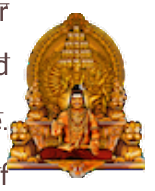
Each Hindu tribes and schools specialized and systematically practiced only singular or a select number of branches of Veda-Agamic scriptures and kept them alive over thousands of years. Each Hindu sect or school (Shakha or Sampradaya) is interdependent on other schools (Shakha) for the practice and application of the entirety of these indigenous peace scriptures of Hinduism. The loss of one lineage, or school (Shakha or Sampradaya) is not just a loss for the respective knowledge stream but a loss of the entire indigenous Hindu tradition.
There are more than two million indigenous Hindu temples in India that once had a library, but today not even one of them has any ancient manuscripts or any library. The extent of this cultural genocide is such that most indigenous people are completely unaware that as per tradition, temples are supposed to have libraries.
“prāsādau caturdikṣu tadvidikṣvantarālake|bhaktoktasthānake vāpi vidyāsthānam prakalpayet ||”
Center for the scriptural (Veda-Agama) studies (libraries) should be constructed in all the four main directions of the temple, in the corner directions of the temple, in its inner enclosure, or the locations recommended for the installation of the images of Śaiva-devotees.
2nd Verse, 74 Chapter, Uttar Kamika Agama
There are about a thousand mutts (Hindu monasteries) that have their ancient libraries destroyed or poorly maintained. India has more than 5 million manuscripts in various libraries, mutts, and personal collections of various individuals. Most of these, however, are either getting destroyed or almost inaccessible to Hindu Scholars.
The destruction of the indigenous libraries destroys several thousands of years of scholarly research and practice of the indigenous Hindu scriptures. The indigenous Hindu scriptures are not just the repository of ancient spiritual and religious knowledge, they are a repository of a phenomenal volume of ancient Human knowledge and expertise. The indigenous Hindu scriptures enable not just excellence in a particular profession but the attainment of spiritual liberation even through the mere practice of the profession. There are primarily 32 such knowledge sciences (Vidya) and 64 such meditative arts (Kalaa) described in indigenous Hindu scriptures, most of which have lost their spiritual components in the contemporary era. The destruction of indigenous Hindu libraries is an intellectual genocide, a cultural genocide of unprecedented scale and impact.