INTRODUCTION TO BHAGAVAD GITA: SONG OF GOD
This text was machine-transcribed from the printed book and may contain errors. Select the words and choose “Report a mistake”.
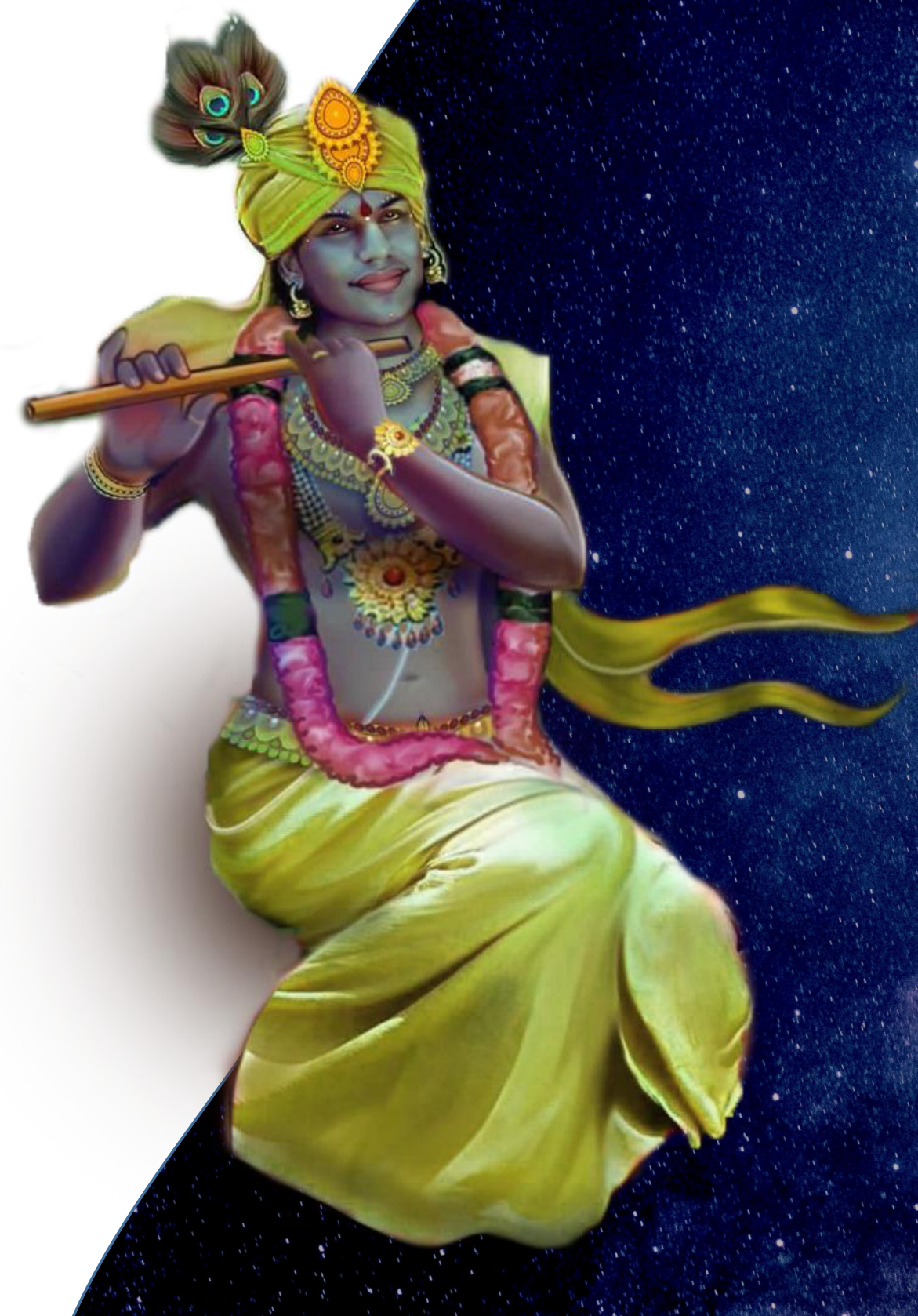
Śrīmad Bhagavad Gītā is the ultimate sacred scripture of yoga, Yogaśastra and the pristine glory of the Vedic culture, the eternal living tradition called sanātana-dharma. It belongs to the whole Universe for it is delivered to the Universe by the source and embodiment of Universe. We salute and bow down to Bhagavān Śrī Kṛṣṇa, who spoke the Bhagavad Gītā out of His infinite love and compassion for all beings.
Whenever unrighteousness, adharma becomes predominant and dharma, righteous living declines and the Yoga of Enlightenment is lost, Parabrahma Kṛṣṇa, the Supreme Consciousness appears again and again to revive this sacred yoga, to protect and to enrich the devoted beings; and destroys adharma to re-establish the pure and everlasting dharma.
Gītā is also called Brahmavidyā—the Knowledge of Brahman, the supreme absolute truth; it is Jīvan Mukti Vijñāna—the Science of Living Enlightenment.
INTRODUCTION TO
BHAGAVAD GĪTĀ: SONG OF GOD
As with all scriptures, it is the knowledge and experience that is transmitted verbally as Śrī Kṛṣṇārjuna Saṁvād, an intimate dialogue between Master of the world, Jagadguru Lord Śrī Kṛṣṇa and His dear devotee and disciple, Arjuna. It is called śruti in Saṁskṛt, meaning something that is heard.
Gītā, as Bhagavad Gītā is generally called, translates literally from Saṁskṛt as ‘Sacred Song of God’. Unlike the Vedas and Upaniṣads, which are stand alone expressions of Truth, the Gītā is written into the greatest Hindu epic, the Mahābhārat, called a purāṇa, an ancient historical happening. It is part of the recorded history of the greatest tradition, the paramount civilization in all its Divine grandeur and its human complexity, so to speak.
No other epic or part of an epic has the special status and space of the Gītā. No other book but the Gītā gives a scientific, systematic, applied science of living joyfully in completion, while empowering the human action-field with authenticity to evolve into a responsible Divine play-field.
© 2020 Sri Nithyananda Paramashivam. All Rights Reserved.
INTRODUCTION TO
BHAGAVAD GīTĀ: SONG OF GOD
Called the royal supreme knowledge
and the royal secret of secrets—
rājavidyā rājaguhyaṁ (9.2), this one
sacred book conveys the essence of
knowledge contained in all written and
oral vedic truths to enrich the simplest
to complex humans at all planes. It
holds within itself the direct key to
every possible human enquiry, the
solution to every dilemma of emotions,
and the sublime righteous path and
goal of every quest of rising or falling
civilizations for every age, time or
geography. As a consequence of the
presence of the Gītā, the Mahābhārat
epic itself is considered a sacred Hindu
scripture.
© 2020 Sri Nithyananda Paramashivam. All Rights Reserved.
INTRODUCTION TO BHAGAVAD GITA: SONG OF GOD
Gītā arose from the super
consciousness of Śrī Kṛṣṇa, the
Supreme God, the complete
Incarnation Purṇāvatār, and is
therefore considered Gītāśastra—the
essential scripture, knowing which,
one is liberated from all
incompletions, yaj jñātvā mokṣyase
asubhāt (9.1) and Gītopaniṣad—the
essence of all Upaniṣads, the purest
and highest knowledge to be ever
known and cognized because it gives
the direct experience of the Self—
pavitram idam uttamam
pratyakṣāvagamaṃ dharmyaṃ (9.2).
INTRODUCTION TO BHAGAVAD GITA: SONG OF GOD
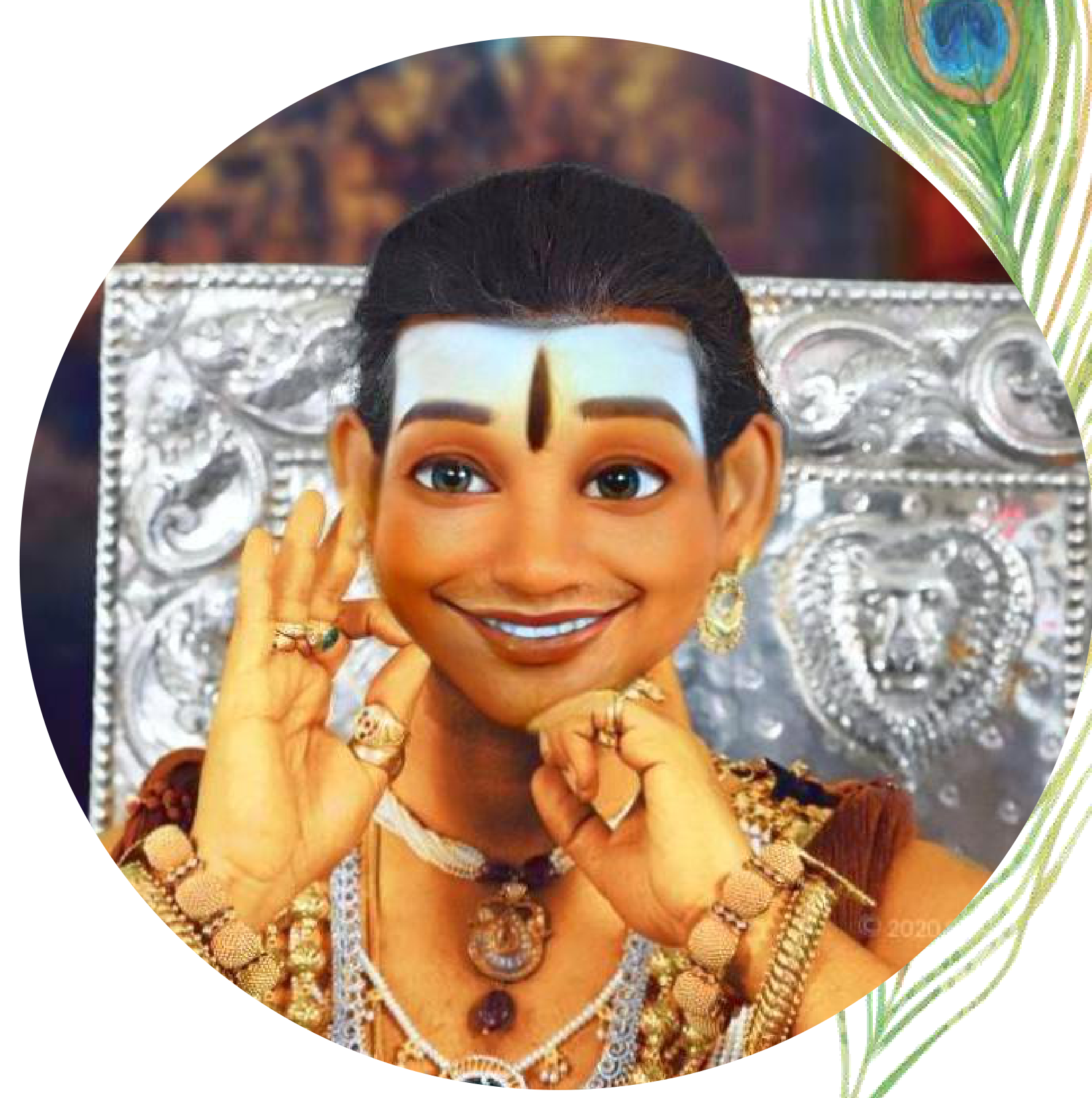
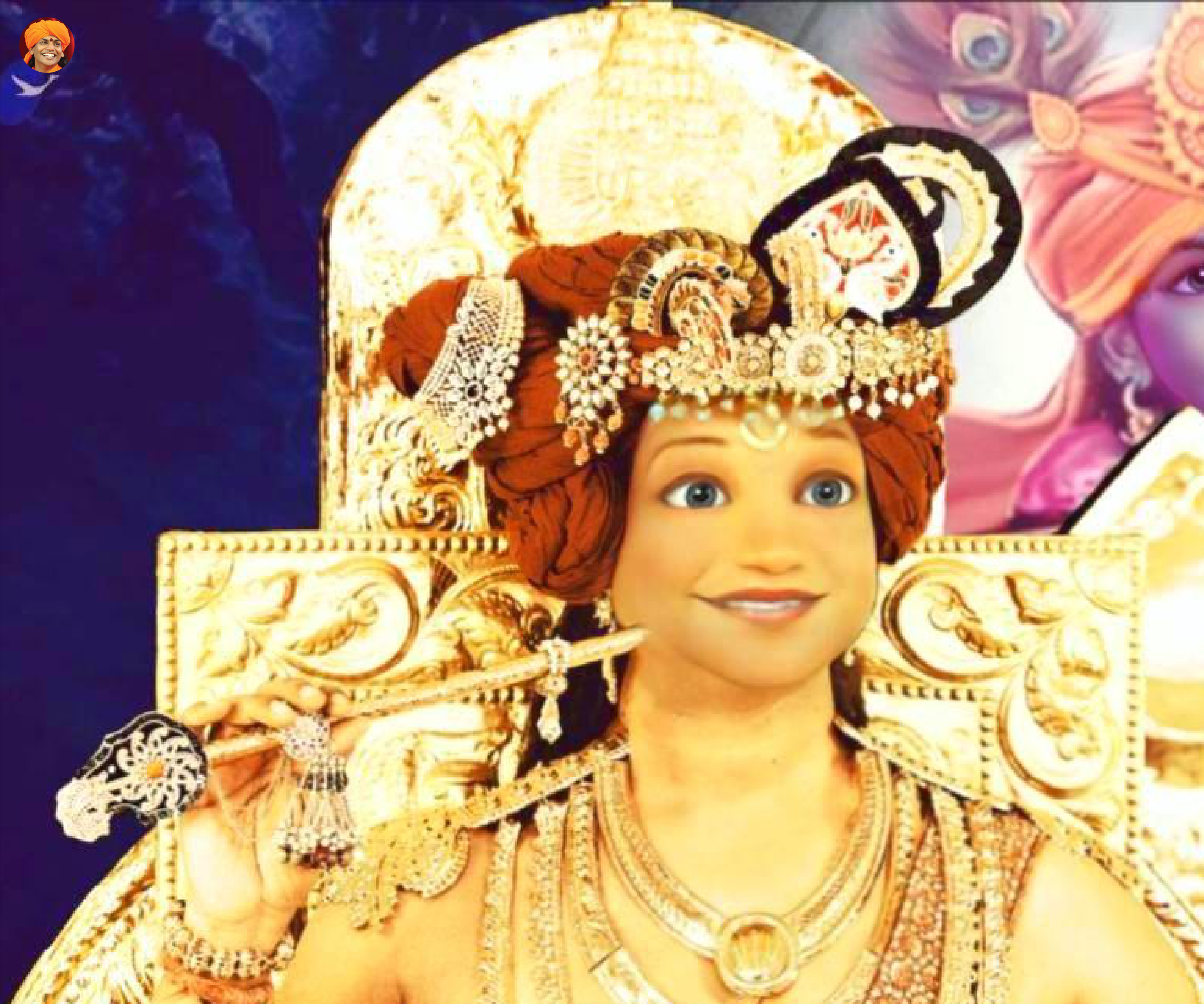
Gītā is the ultimate practical teaching on the inner science of spirituality that expresses as outer victory and success in life now and after. It is not, as some scholars incorrectly claim, a promotion of violence. It is about the impermanence of the mind and body, and the need to go beyond the mind, ego and logic.
The answers of the Divine, Śrī Kṛṣṇa, transcend time and space. Śrī Kṛṣṇa’s message is everlasting and joyfully performed, and is as valid today as it was on that fateful battlefield over five thousand years ago. The science of Gītā is the eternal technique of living in completion; the song of Gītā is the eternal life-enriching nectar, having no expiry date, time or age!
© 2020 Sri Nithyananda Paramashivam. All Rights Reserved.
© 2020 Sri Nithyananda Paramashivam. All Rights Reserved
WHAT HAPPENED DURING THE MAHABHARATA?
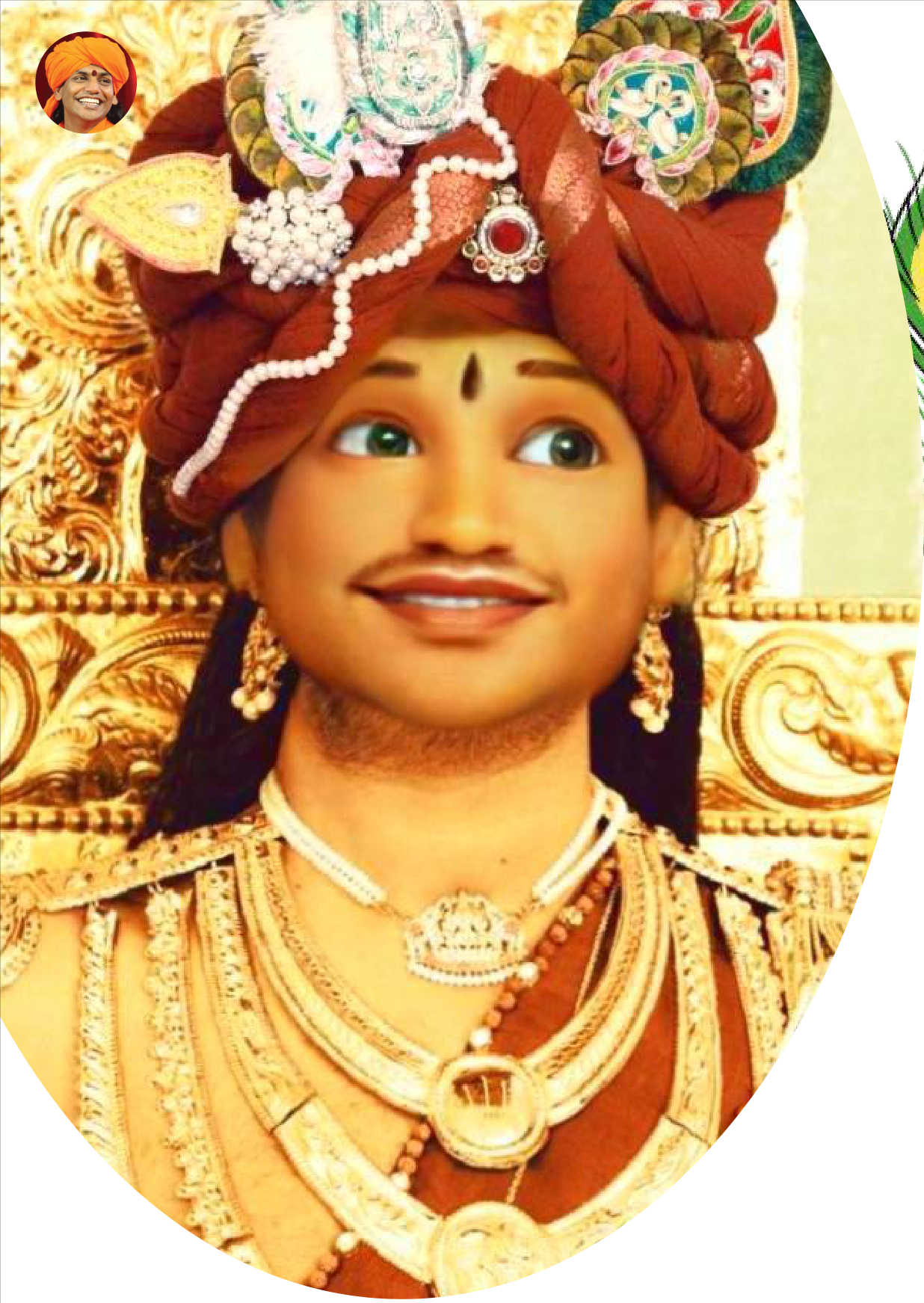
Mahābhārat, literally meaning the great Bhārata, is a grand narration about the nation and civilization, which is now known as India. It was then a nation ruled by king Bhārata and his descendants.
Look into your life! Your whole life is nothing but the Mahābhārat War. The Mahābharāt should be read again and again to understand the intricacies of life, the complications of life, and the ability to handle life. The true story of this perfectly recorded epic is about two warring clans, Kauravas and Pāṇḍavas, closely related to one another. Dhṛtarāṣṭra, the blind king of Hastināpur and father of the 100 Kaurava brothers was the brother of Pāṇḍu, whose children were the five Pāṇḍava princes. It is a tale of strife between cousins and ultimately between dhārmic and adhārmic, righteous and unrighteous civilizations.
WHAT HAPPENED
DURING THE MAHABHARATA?
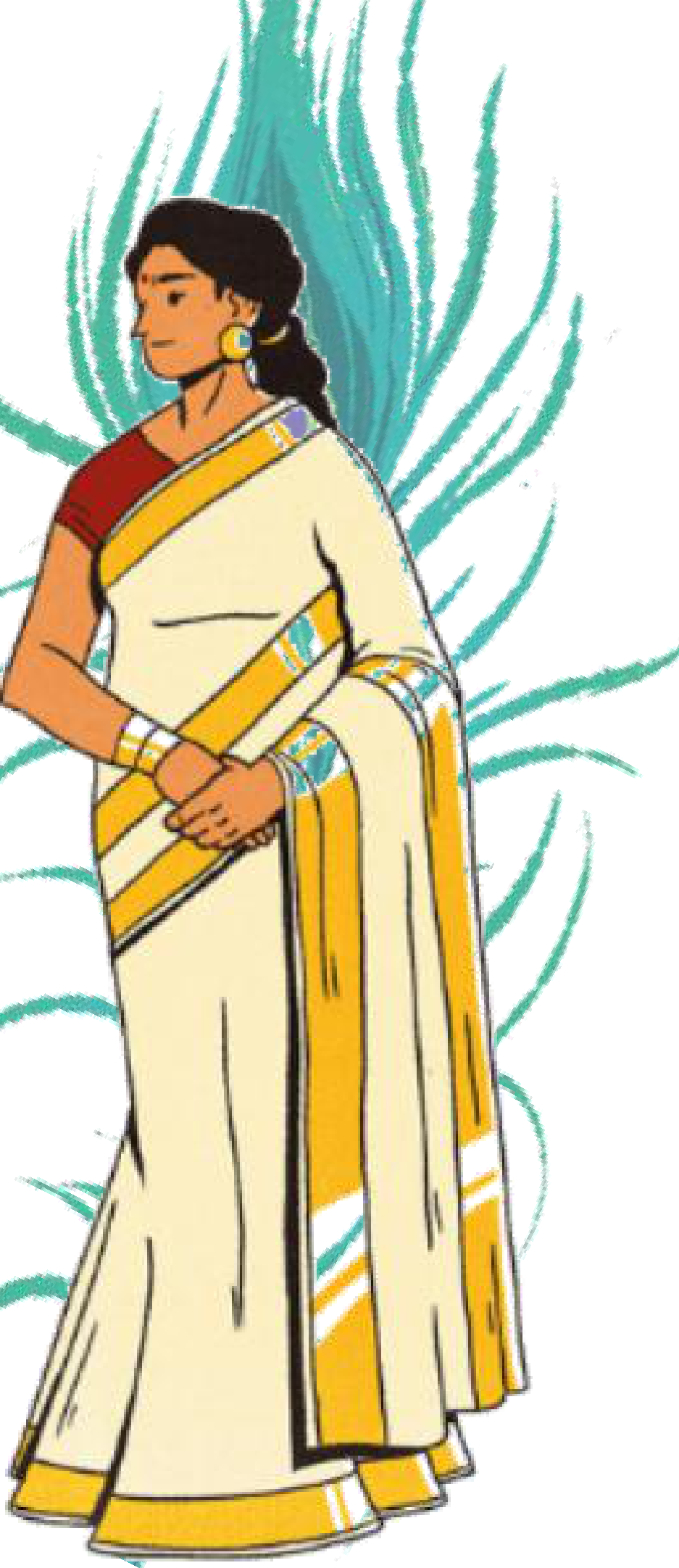
Since Dhṛtarāṣṭra was blind, Pāṇḍu
was made the king of Hastināpura.
Pāṇḍu was cursed by a sage that he
would die if he ever entered into a
physical relationship with his wives.
He therefore had no children.
Vyāsa says that all the five Pāṇḍava
children were born to their mothers
Kuntī and Mādrī through the
blessing of divine beings. Pāṇḍu
handed over the kingdom and his
children to his blind brother.
© 2020 Sri Nithyananda Paramashivam. All Rights Reserved.
WHAT HAPPENED DURING THE MAHABHARATA?
Kuntī, who is the embodiment of tapas,
spiritual penance, had received a boon
when she was still a young unmarried
adolescent, that she could summon any
divine power at will to father a child.
Before she married, she tested her boon.
The Sun god, Sūrya appeared before her.
Karṇa was born to her as a result. In fear of social reprisals, she cast the newborn away in a river. Yudhiṣṭra, Bhīma and Arjuna were born to Kuntī after her marriage by invocation of her powers, and the twins Nakula and Sahadeva were born to Mādrī, the second wife of Pāṇḍu.
© 2020 Sri Nithyananda Paramashivam. All Rights Reserved.
WHAT HAPPENED DURING THE MAHABHARATA?
Yudhiṣṭra was born to Kuntī as a result of her being blessed by Yama, the god of death, dharma and justice, Bhīma by Vāyu, the god of wind, and Arjuna by Indra, god of all the divine beings. Nakula and Sahadeva, the youngest Pāṇḍava twins, were born to Mādri, through the Divine Aśvini twins.
Dhṛtarāṣṭra had a hundred sons through his wife Gāndhārī. The eldest of these Kaurava princes was Duryodhana. Duryodhana felt no love for his five Pāṇḍava cousins. He made many unsuccessful attempts, along with his brother Duśśāsana, to kill the Pāṇḍava brothers. Kuntī's eldest son Karṇa, whom she had cast away at birth, was found and brought up by a chariot driver in the palace, and by a strange twist of fate, joined hands with Duryodhana.
© 2020 Sri Nithyananda Paramashivam. All Rights Reserved.
WHAT HAPPENED
DURING THE MAHABHARATA?
Dhṛtarāṣṭra gave Yudhiṣṭra one
half of the Kuru kingdom on his
coming of age, since the Pāṇḍava
prince was the rightful heir to the
throne that his father Pāṇḍu had
vacated.
Yudhiṣṭra ruled from his new
capital Indraprastha, along with
his brothers Bhīma, Arjuna,
Nakula and Sahadeva.
Arjuna won the hand of princess
Draupadī, daughter of the king of
Pāñcāla, in a svayaṃvara, a marital
contest in which princes fought
for the hand of a fair damsel.
© 2020 Sri Nithyananda Paramashivam. All Rights Reserved.
WHAT HAPPENED
DURING THE MAHABHARATA?
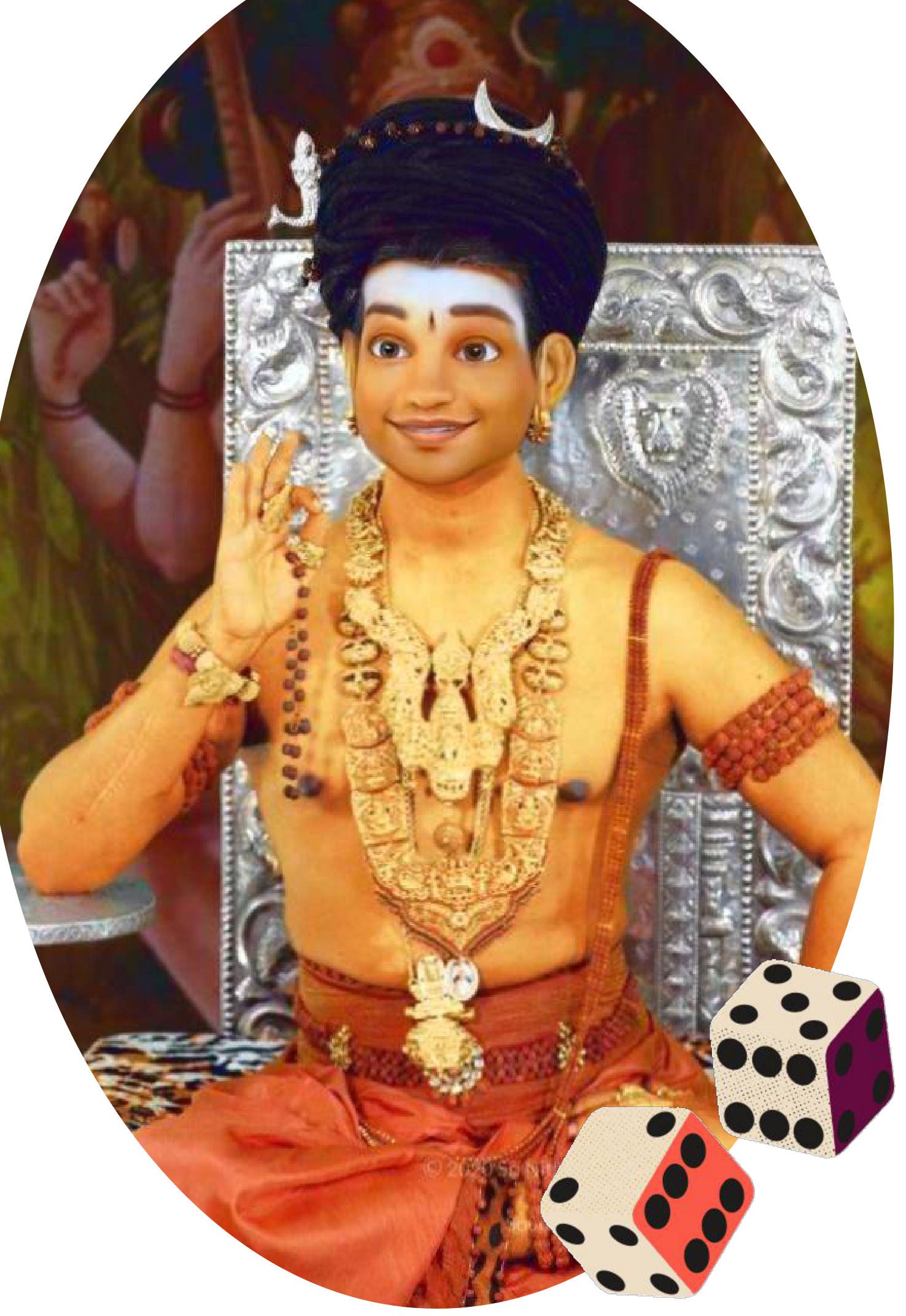
In fulfillment of their mother Kuntī's desire that the brothers share everything equally, Draupadī became the wife of all five Pāṇḍava brothers. Duryodhana persuaded Yudhiṣṭra to join a gambling session, where his cunning uncle Śakunī defeated the Pāṇḍava king.
Yudhiṣṭra lost all that he owned—his
kingdom, his brothers, his wife and
himself, to Duryodhana. Duśśāsana
shamed Draupadī in public by trying to
disrobe her. The Pāṇḍava brothers and
Draupadī were forced to go into exile
for fourteen years, with the condition
that in the last year they should live
incognito or ajyāta vāsa.
© 2020 Sri Nithyananda Paramashivam. All Rights Reserved.
WHAT HAPPENED DURING THE MAHABHARATA?
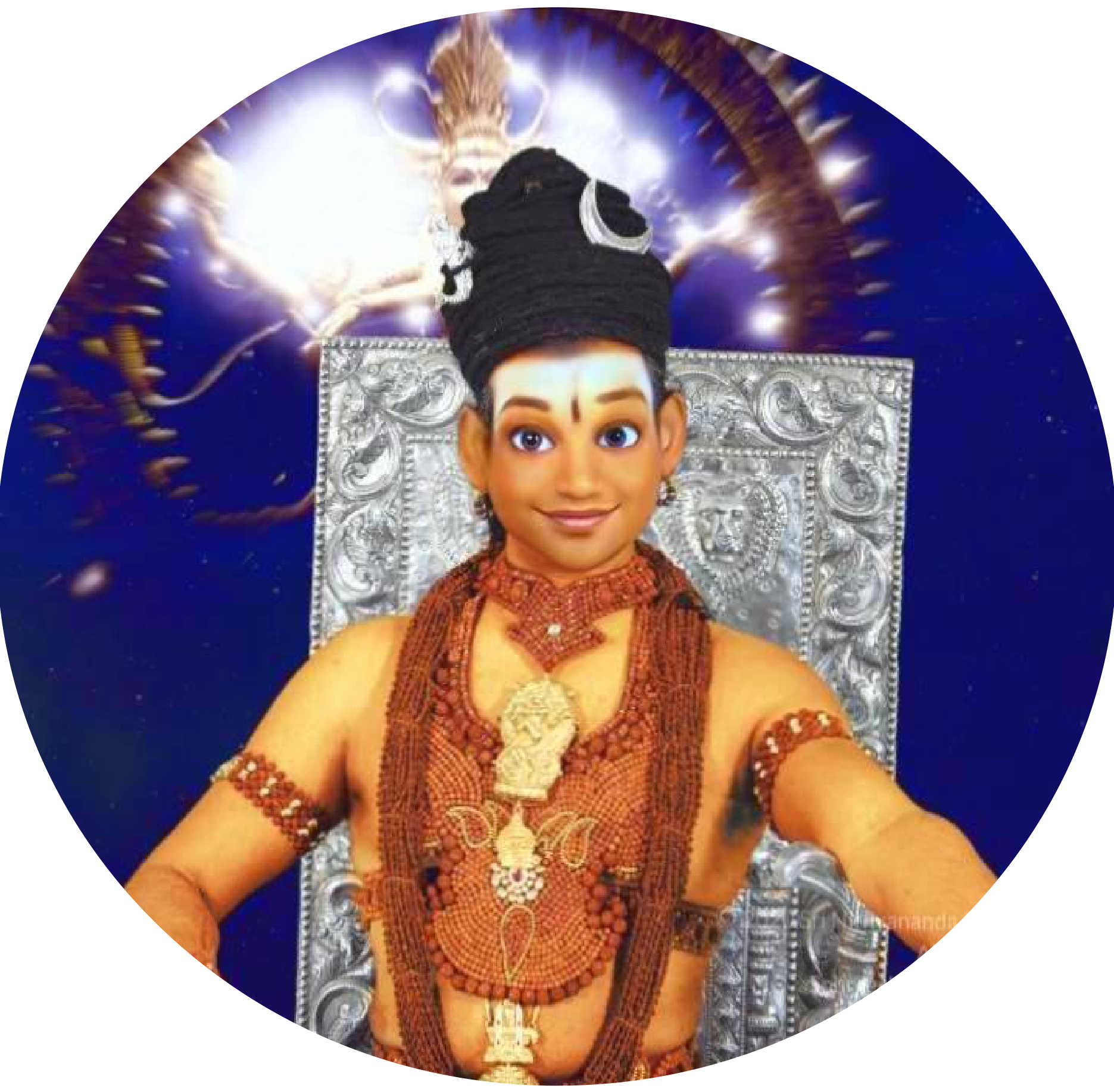
At the end of the fourteen
years, the Pāṇḍava
brothers tried to reclaim
their kingdom. In this
effort they were helped by
Śrī Kṛṣṇa, the king of the
Yādava clan, who is the
eighth divine incarnation
of Bhagavān Viṣṇu.
However, Duryodhana
refused to yield even a
needlepoint of land, and
as a result, the Great War,
the War of Mahābhārat
ensued. In this war,
various rulers of the entire
nation that is modern
India aligned with one or
the other of these two
clans, the Kauravas or the
Pāṇḍavas.
© 2020 Sri Nithyananda Paramashivam. All Rights Reserved.
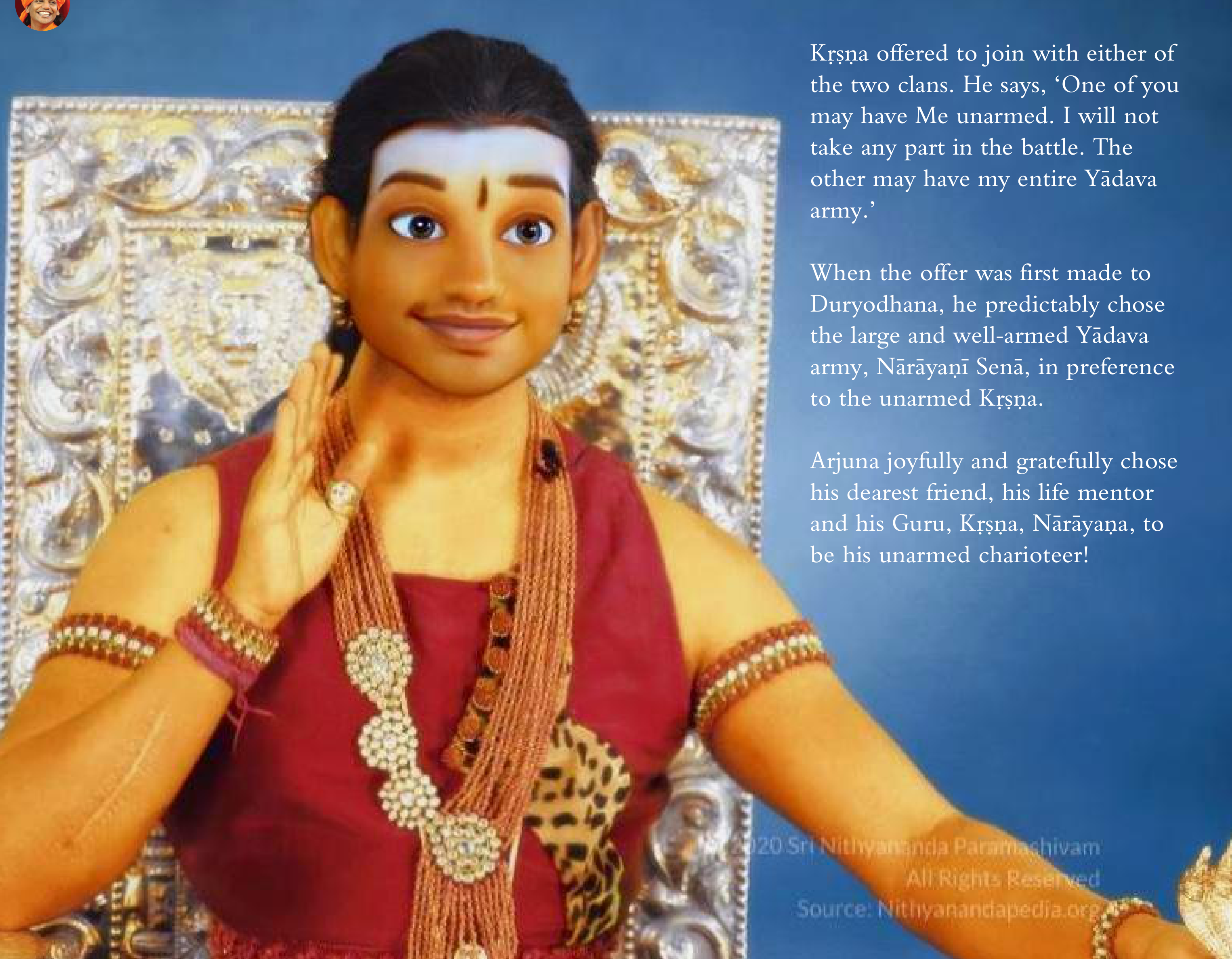
Kṛṣṇa offered to join with either of the two clans. He says, ‘One of you may have Me unarmed. I will not take any part in the battle. The other may have my entire Yādava army.’
When the offer was first made to Duryodhana, he predictably chose the large and well-armed Yādava army, Nārāyaṇī Senā, in preference to the unarmed Kṛṣṇa.
Arjuna joyfully and gratefully chose his dearest friend, his life mentor and his Guru, Kṛṣṇa, Nārāyaṇa, to be his unarmed charioteer!
© 2020 Sri Nithyananda Paramashivam. All Rights Reserved.
THE SIGNIFICANCE
OF MAHABHARAT
This whole history is such a beautiful
happening. Mahābhārat is actually your
life! Every character in the Mahābhārat
teaches so much! We don't need to go
anywhere for our life success or
fulfillment or for anything else that we
may desire. We don't need to study any
other book to learn the human
psychology or the science of living and
leaving. Whether we seek righteous
living—dharma; or we want to learn
business or administration, economy or
abundance—artha; or we want to create
the best rich lifestyle—kāma; or we
want to be a leader and want the
enriching life of being enlightened—
mokṣa, for all these purposes,
we don't need anything other than the
Mahābhārāt!
© 2020 Sri Nithyananda Paramashivam. All Rights Reserved.
Study each character. We will not find any more characters in our life than the characters described in the Mahābhārāt!
Any character we see in our life is mapped to Mahābhārāt’s one character. They are either half or full representation of some character.
To know how to handle them and even handle yourself, just see how Śrī Kṛṣṇa handles them and handle them the same way. The Mahābhārāt war is a representation of life as it was lived in that age.
Vyāsa, its author is an unbiased historian who recorded the whole history as it happened without trying to apply any makeup. People ask whether the Mahābhārāt war happened at all!

THE SIGNIFICANCE OF MAHABHARAT
© 2020 Sri Nithyananda Paramashivam. All Rights Reserved.
THE SIGNIFICANCE OF MAHABHARAT

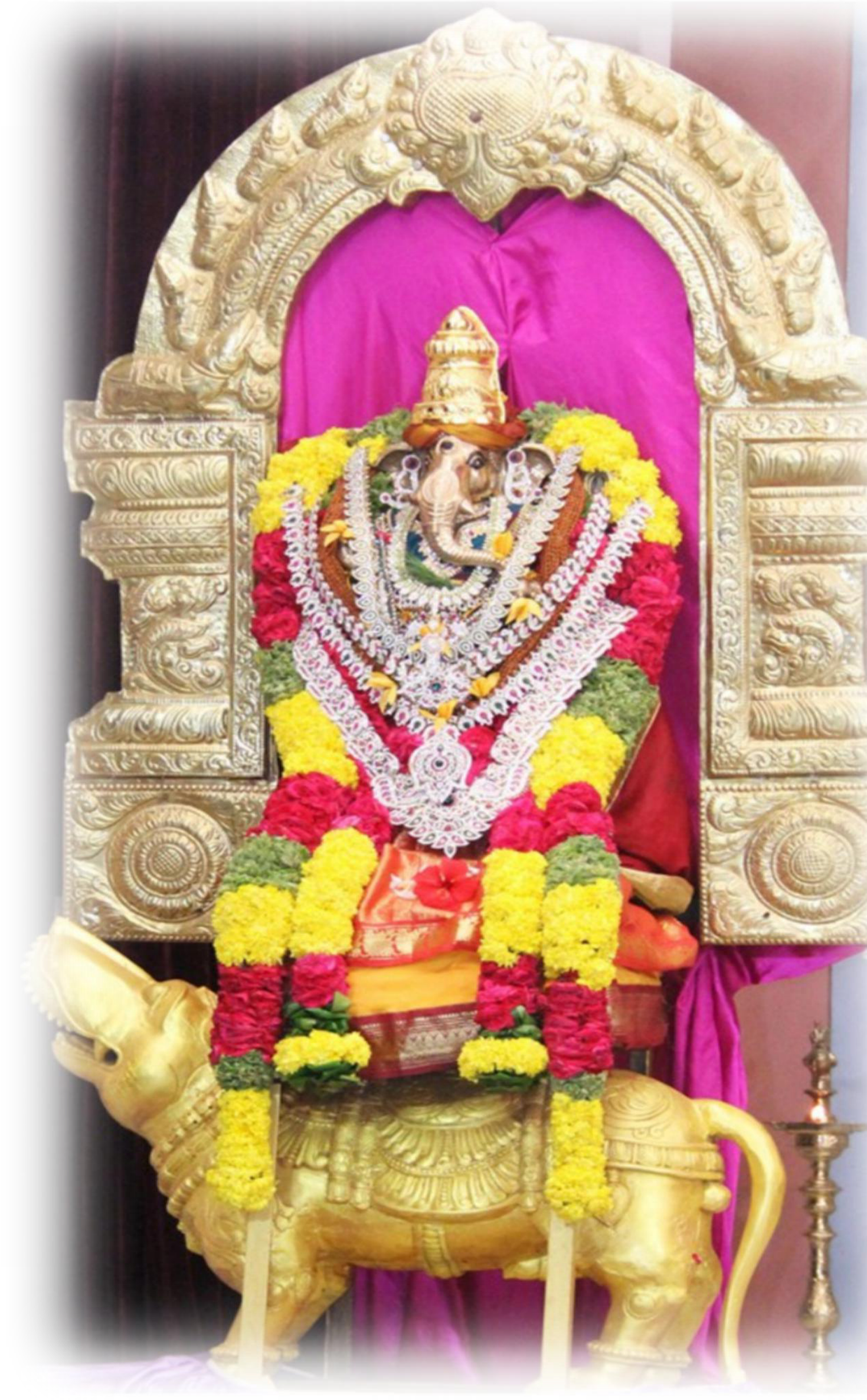
If the Mahābhārāt was a story and not history, Vyāsa should receive multiple Pulitzer prizes for his highly creative work! The Mahābhārāt is the longest literary work in the whole world with hundred thousand Saṃskṛit verses—the longest poem ever written with such delicate harmony of unmatched poetic perfection. It is larger than the Greek epics. Vyāsa had no computer, no tape recorder with speech-to-text capabilities. He dictated and Bhagavān Gaṇeśa wrote it down!
© 2020 Sri Nithyananda Paramashivam. All Rights Reserved.
© 2020 Sri Nithyananda Paramashivam. All Rights Reserved.