ASSESSMENTS
This text was machine-transcribed from the printed book and may contain errors. Select the words and choose “Report a mistake”.
- Differentiate between Satvik, Rajasic, and Tamasic root patterns?
- Why is Powerlessness more dangerous than Alcohol or Poison?
- What is Cognition?
- Name the five karmendriya (sense of actions) ?
- Name the five Jñānendriya (senses of perception)?
© 2020 Sri Nithyananda Paramashivam. All Rights Reserved
ART OF THE DAY
© 2020 Sri Nithyananda Paramashivam. All Rights Reserved
ART OF THE DAY:
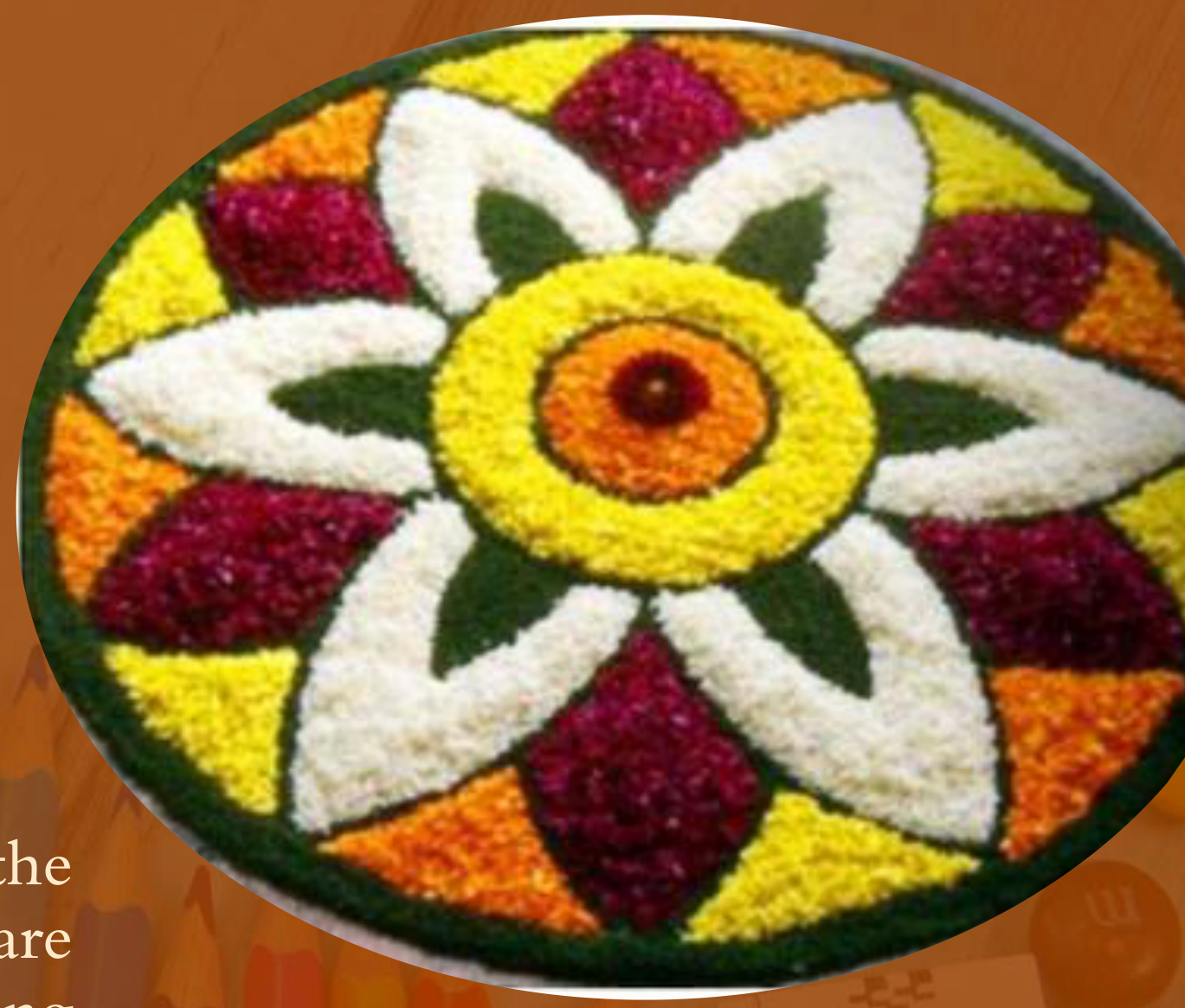
RANGOLI
MATERIALS NEEDED:
- Colored rice
- Colored sand
- Quartz powder
- Flower petal
PROCEDURE
Rangoli is an art form, originating in the Indian subcontinent, in which patterns are created on the floor or the ground using materials such as coloured rice, coloured sand, quartz powder or flower petals. Rangoli is considered auspicious and forms an integral part of festival decor.
INFERENCE If we make satva inducing devotional activities our lifestyle, our pastimes and hobbies, it will automatically lead us to enlightenment.
ACTIVITY OF THE DAY
© 2020 Sri Nithyananda Paramashivam. All Rights Reserved
ACTIVITY OF THE DAY:
USE YOUR SENSE ORGAN
MATERIALS NEEDED:
- Chart paper
- Color pens
- Pencil colors.

PROCEDURE: Divide the class into five groups. Each group is asked to choose any one sense organ. For example, eyes, ears etc.
Each group will draw a flowchart or diagram on a chart paper to show our decision making process, graphically explaining how the chosen Jñānendriya (sense of perception) receives a certain input from the external world, (for example, seeing a person, hearing a song, deciding whether or not to smoke etc) and transmits that input to the part of the mind called chitta (inner space of stored bio-memories where elimination process happens), then to the manas (inner space of stored bio-memories where identification process happens), then to the Buddhi (inner space of stored bio- memories where analysis by reference to old experiences happens), to the unconscious mind (repository of negative bio-memories); and finally to our Ego (unconscious mind where our identity stems from root patterns), in order to form our decisions.
© 2020 Sri Nithyananda Paramashivam. All Rights Reserved
INFERENCE
Cognition is the process of receiving information through our five senses, processing that information internally, relating with it based on our root patterns, and responding to life based on our patterns.
Upon understanding the way our mind works, we will now cognize how we make decisions, opinions, likes and dislikes based upon our flawed root thought patterns, and consequently suffer.
© 2020 Sri Nithyananda Paramashivam. All Rights Reserved
WORKSHOP OF THE DAY
© 2020 Sri Nithyananda Paramashivam. All Rights Reserved
WORKSHOP OF THE DAY: VAAKYARTHA SADHAS
PROCEDURE The topic of discussion is “All restlessness is powerlessness”
CONCLUSION Our unconscious space is filled with negative bio-memories, and powerlessness, restlessness. When your unconscious is loaded with past root thought patterns and memories, it becomes inadequate, inefficient, and incomplete and makes superficial, illogical decisions.
When there are no patterns, there will be no need for the file to drop into the unconscious inner space for a decision. It straightaway meets the buddhi and ego after the mind.
© 2020 Sri Nithyananda Paramashivam. All Rights Reserved