The significance of Arunachala
This text was machine-transcribed from the printed book and may contain errors. Select the words and choose “Report a mistake”.
The mighty Arunachala (the Red Mountain) is among the most ancient and holiest of pilgrimage spots in India.
Even to the eyes of the most unaware, Arunachala reveals itself as no ordinary mountain. Invested with a timeless majesty and enveloped in a shroud of mystery that centuries of legend have only deepened, Arunachala has a presence that is more spiritual than physical. Widely held to be a manifestation of Lord Shiva himself, Arunachala has been declared by Sri Sankara to be none other than Mount Meru, the secret and sacred heart-centre of Shiva. Bhagavan Ramana Maharishi calls Arunachala "the spiritual center of the world."
It is difficult to articulate Swamiji's relationship with Arunachala - for 'relationship' itself would convey a false sense of duality. They both seem to have sprung from the same current, the cosmic force that creates and animates all. Born in the shadow of Arunachala, Swamiji as a boy spent his deepest hours of contemplation in the arms of the mighty mountain. To him, Arunachala was more than a mountain, more even than a father or a deity: Arunachala was Himself. Even as a boy, Swamiji knew himself to be one with Arunachala.
It is not for nothing that Arunachala is known as 'the mountain that beckons'. Even the ordinary traveler, once having set eyes upon Arunachala, is drawn inexplicably to dwell upon its sacred presence again and again. This strange experience, known as 'the call of Arunachala', is commonly felt by seekers even today.
Swamiji explains: I am Arunachala! Arunachala is nothing but the physical manifestation of the unmoving Self. (achala) Arunachala is Consciousness itself. Arunachala is within, and not without. Your journey to Arunachala is your journey inward - just as your journey to me is. No wonder you are drawn here again and again.
Where else is there to go?
he would listen to the tales of the valour of Markandeya and the devotion of Prahlada. Once home, he would repeat these tales word for word, to the astonishment of his family and neighbours.
Then came the occasion of Rajasekaran's third birthday. His parents were at a loss as to what to gift their self-willed, unusual child. But it came as no surprise when the boy himself requested an idol of Lord Ganesha. That idol was to become Rajasekaran's best friend, a living companion that he talked and laughed, played and quarreled with.
His mother remembers with amusement how the boy would scold the idol in much the same way as his parents scolded him: "Come on, eat your food quickly or I'm going to throw you in the well!"
Little Rajasekaran was the darling of all eyes. Perhaps somewhere deep inside, his family had begun to understand that they were but his guardians for a while. In those precious years granted to them, they showered him with unconditional, unquestioning love.
Like all grandmothers, Dhanakoti Ammal had a soft corner for her mischievous grandson. One day, knowing the boy's fondness for all that glittered, she threw open her jewel-box to him as a special treat. But Dhanakoti Ammal was to learn something that day. For her five-year-old grandson picked out without hesitation the only jewellery he would wear in years to come: the sacred rudraaksh mala.
the auspicious
elephant-headed god, remover of all obstacles to success
the necklace of
holy beads worn exclusively by spiritual mendicants
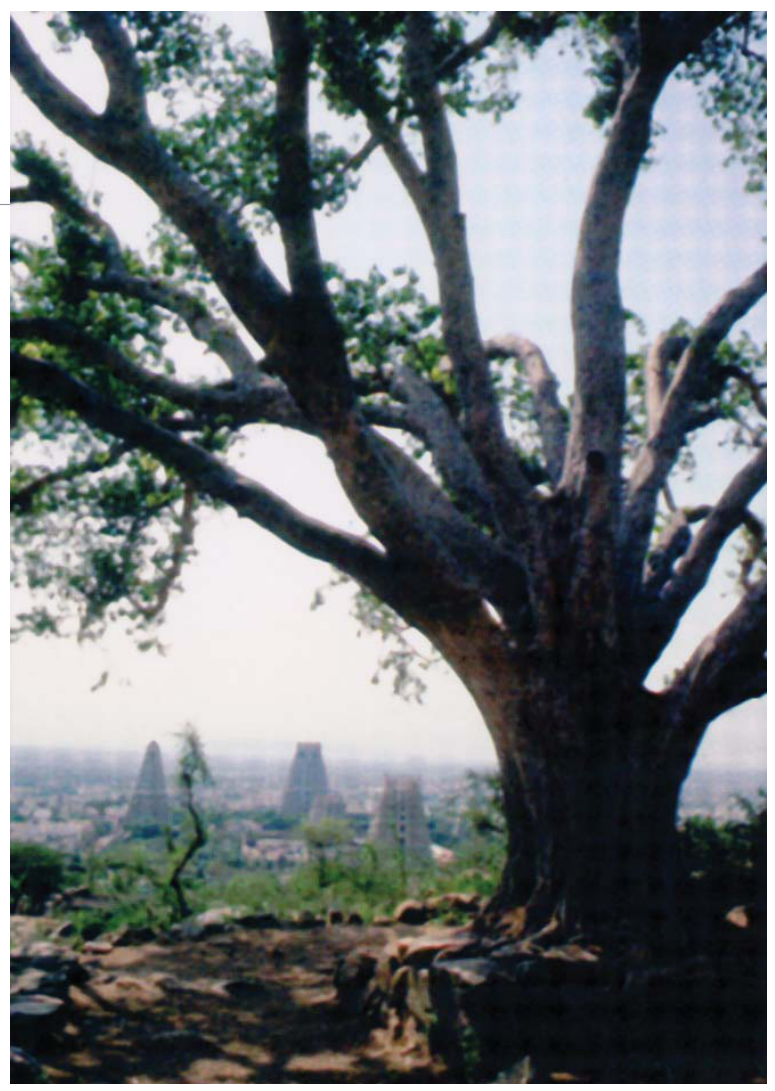
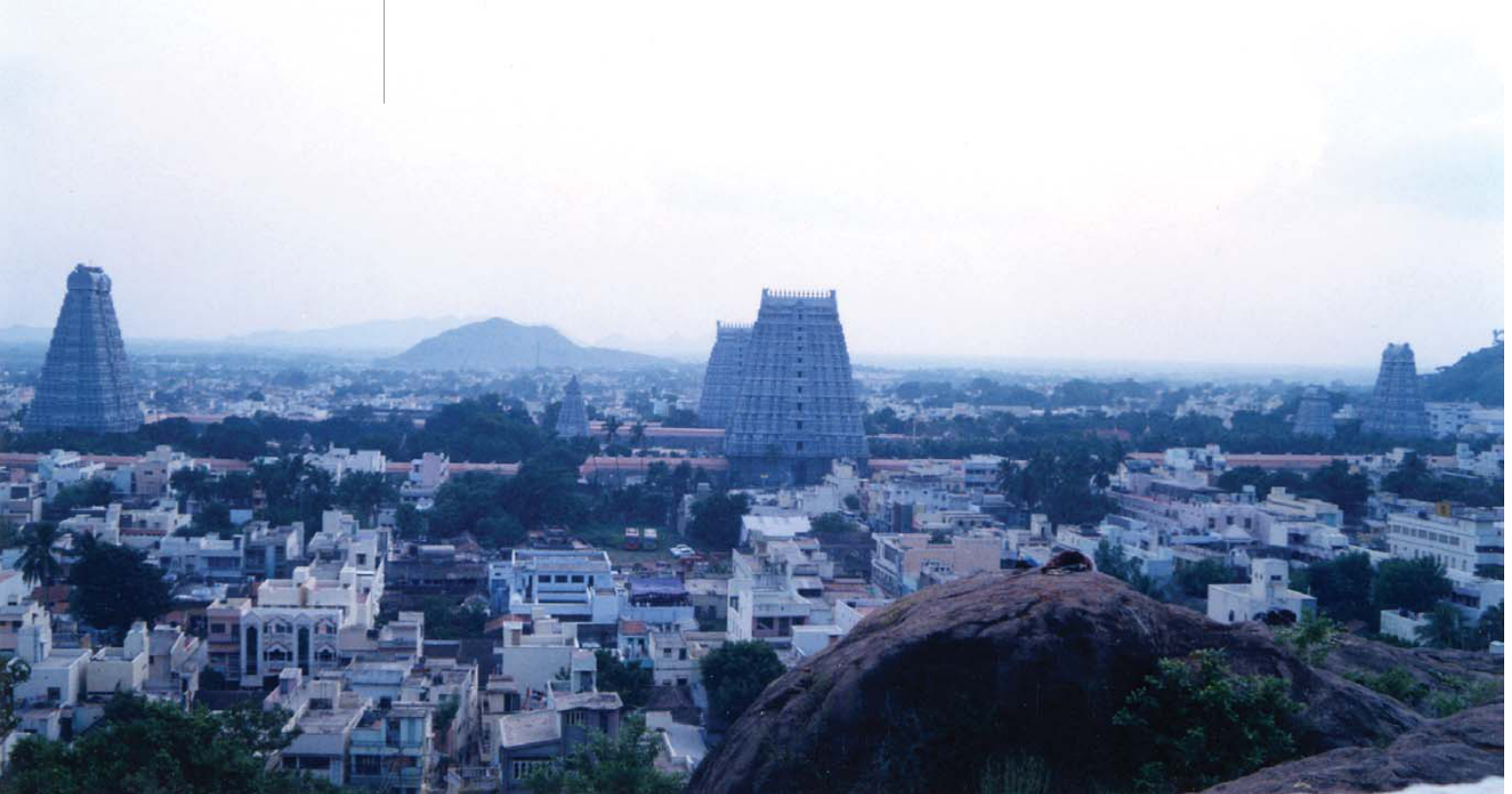
Viewed from the towering
heights of Arunachala,
Thiruvannamalai appears like a
pygmy town! Only the temple
towers stand out majestically
against the skyline.
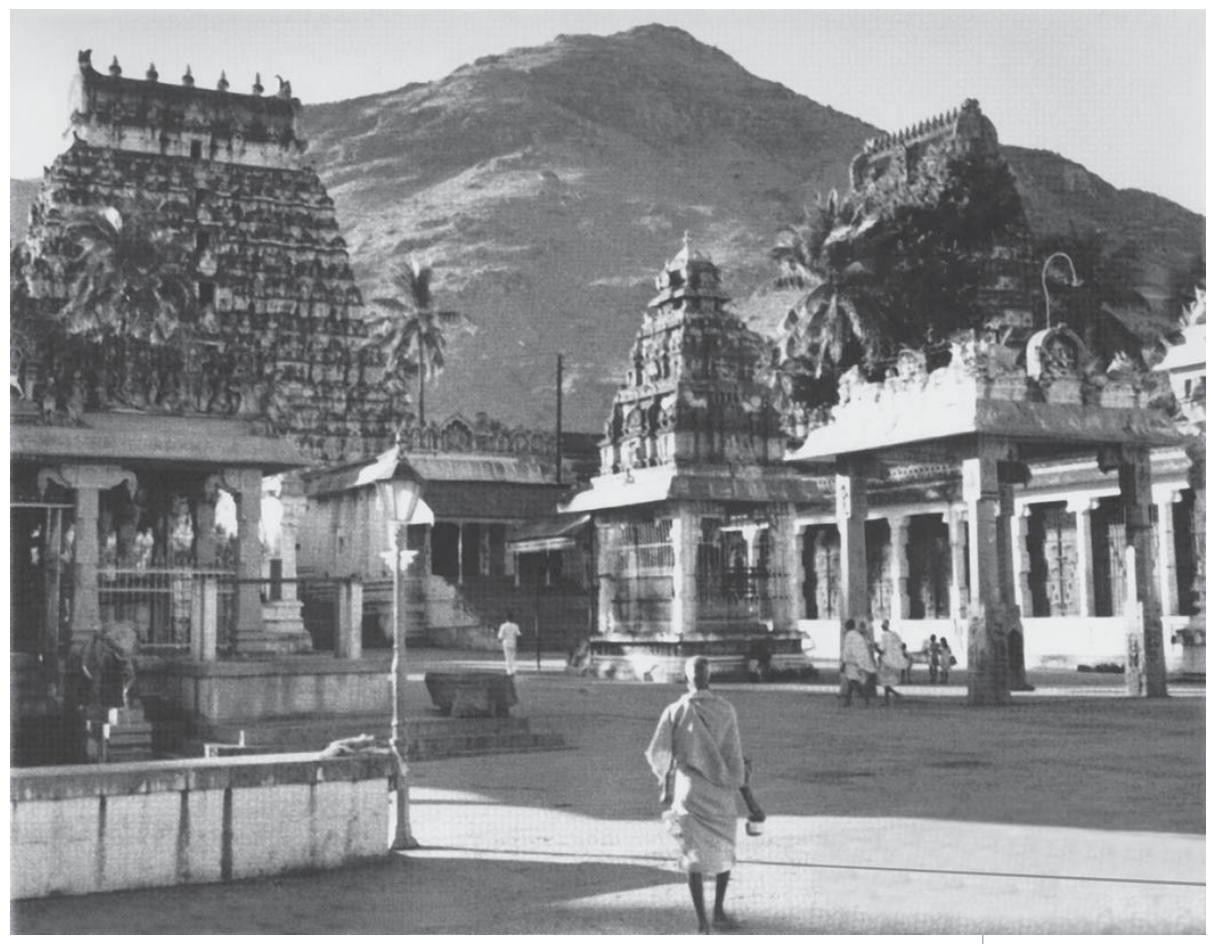
The sacred town of Thiruvannamalai lies prostrate at the feet of the mighty Arunachala. Sanctified by the births of innumerable saints and holy souls over the centuries (famous among them being Sri Ramana Maharishi), Tiruvannamalai town is one of the holiest pilgrimage spots in South India.
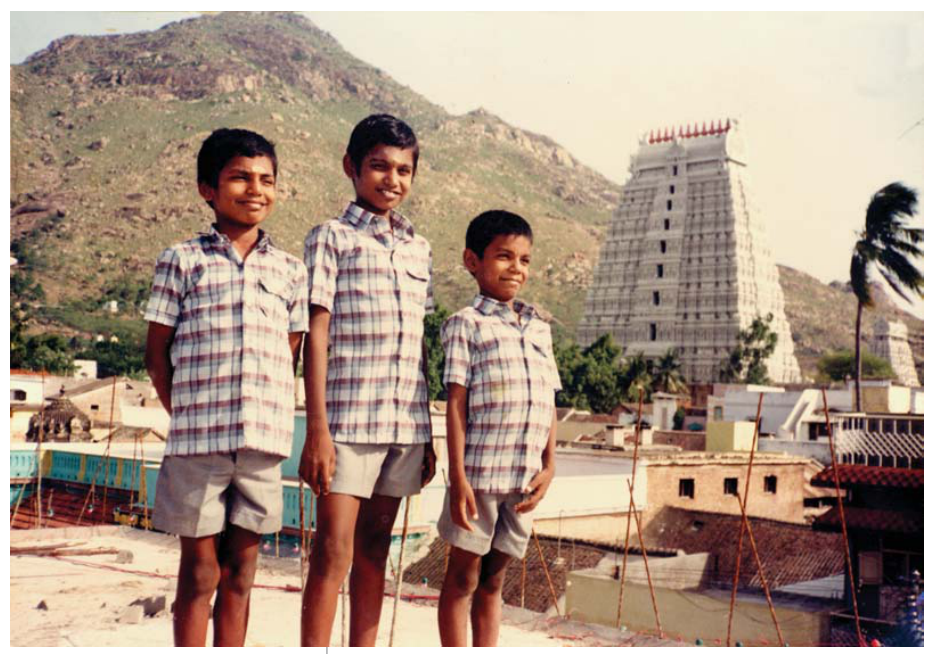
Rajasekaran (left) with his brothers atop the terrace of their house. Seen in the background are two of the nine gopurams (towers) of the Thiruvannamalai temple. Many pleasant hours of Rajasekaran's childhood were spent in the vicinity of this beloved temple.
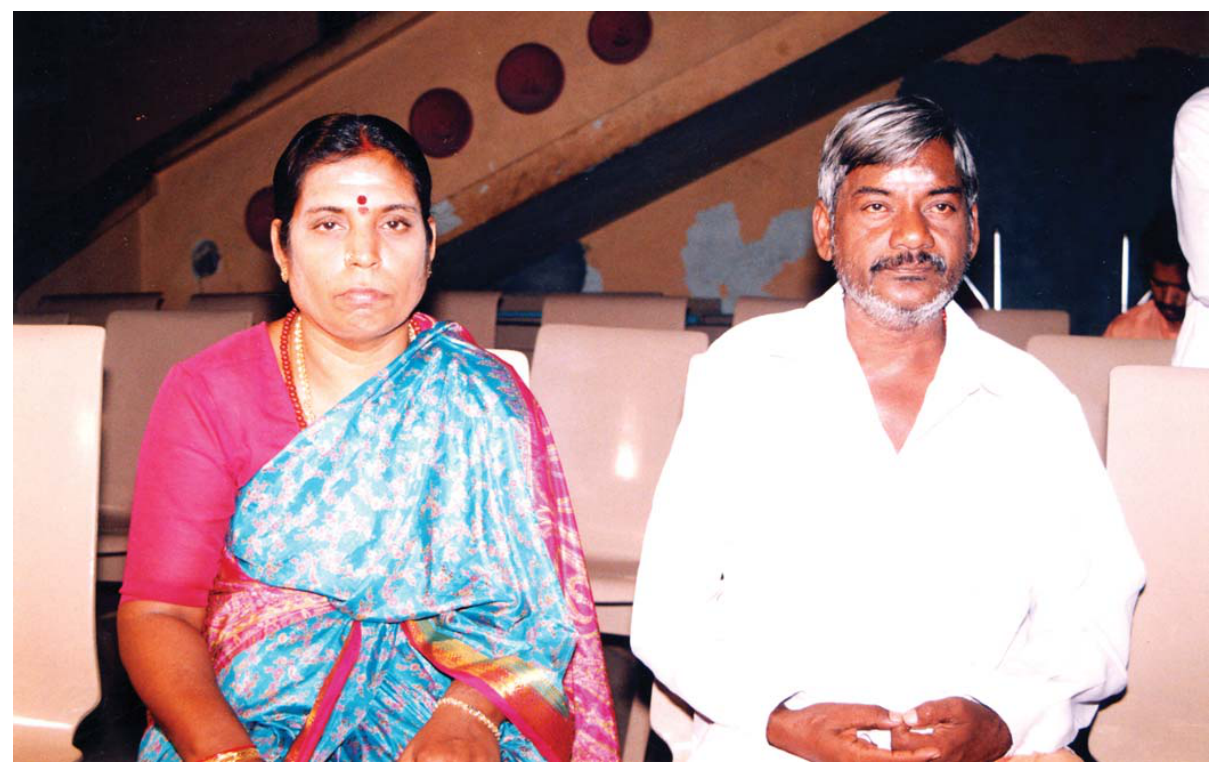
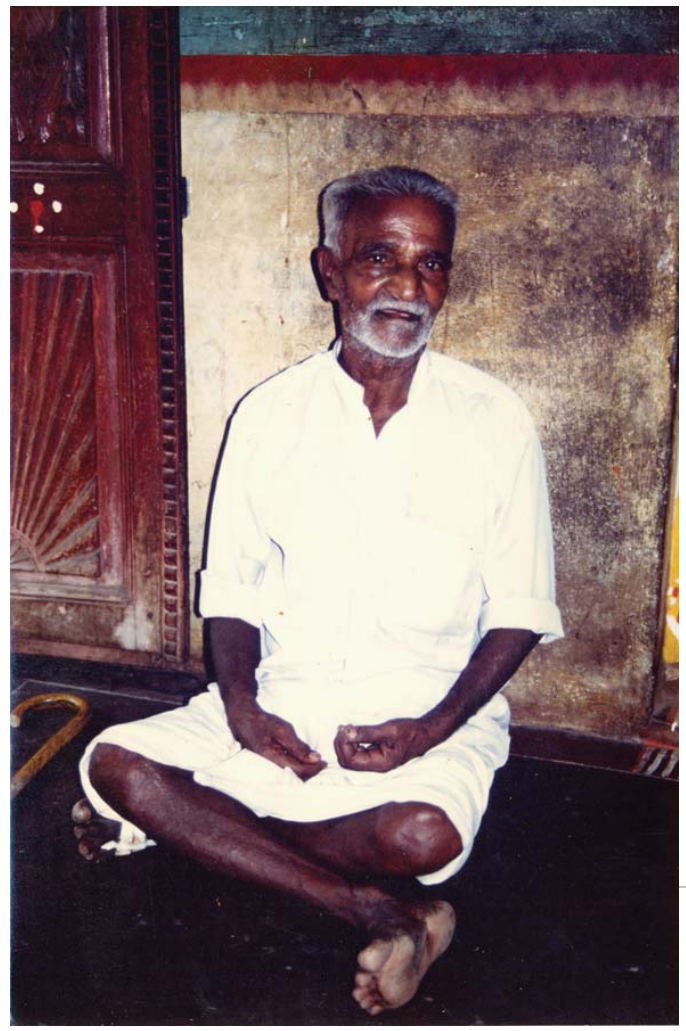
Mother Lokanayaki and father Arunachalam (a recent picture)
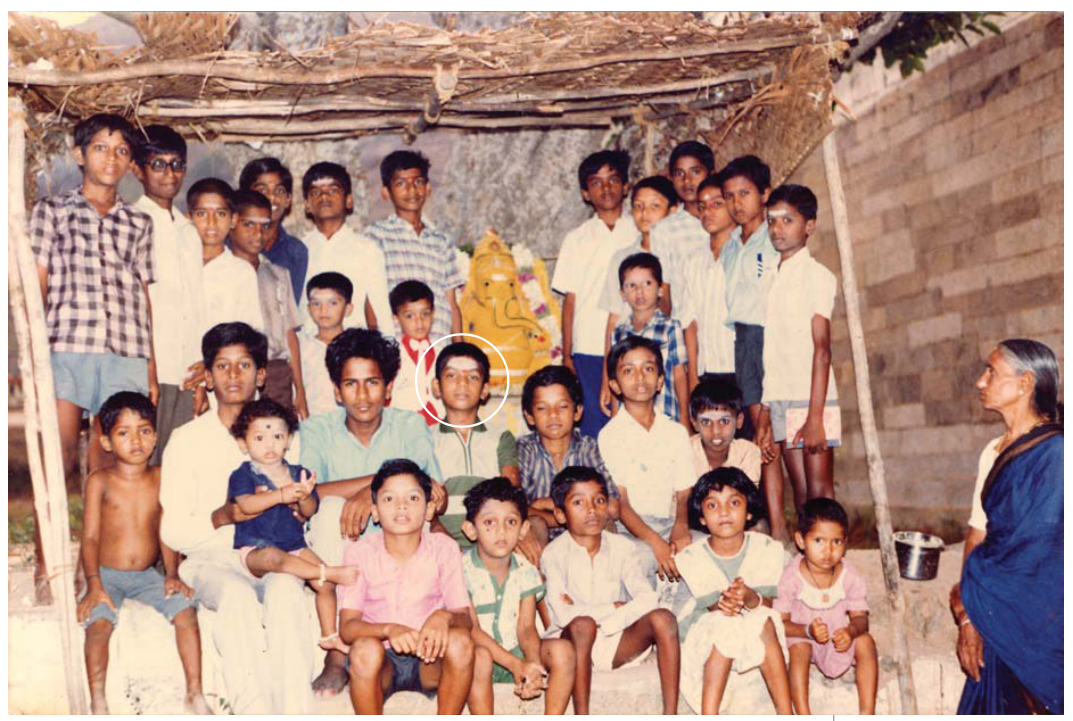
WORSHIP IN PLAY: At an age when his classmates were amusing themselves with toys and games, Rajasekaran was already well-versed in religious rites and rituals. Unmindful of the hours, he would be lost in worship, often urging his family to join in the pooja. A skilled sculptor, the boy would also carve and decorate images of local deities during temple festivals and display them to an admiring crowd. His family remembers with pride that the boy's creations used to give stiff competition to the actual images taken out in the temple processions!