MAHAPARINIRVANA BEYOND LIFE AND DEATH
This text was machine-transcribed from the printed book and may contain errors. Select the words and choose “Report a mistake”.
No one who has seen death can speak of it. Those who can speak have never seen death. Only an enlightened Being can speak about death.
Paramahamsa
Death as it happened…
It was the third and final day of
the Ashtavakra Gita discourse in
Bangalore.
The topic: 'Enlightenment-Have
It!' The hall was packed to
overflowing. There was pin drop
silence as the young Master
expounded so authoritatively on
the sutras of Ashtavakra - the boy
sage of ancient years. The
mesmerized audience listened to
the flow of words suddenly
interrupted by a coughing bout.
Master asked for water, drank and continued talking.
There was another interruption.
Ayya (Secretary to Master for the
mission in
India) came up on to the stage, went behind Master's seat and whispered something. Master covered the mike with his hand, listened calmly with a facial expression that conveyed 'I'll take care' or something to that effect. The discourse resumed. Then to the audience's utter consternation, Master gestured for Ayya to come on stage again. More whispered exchanges followed. There was stillness, finality about Master's body language. Ayya left, the talk continued and finished. The effect of the speech was electrifying. No one left their seats; spontaneous applause; long serpentine queue for Master's blessings.
I sat in the balcony watching the flow of events. Little did I know that one soul had already taken the offer of enlightenment.
The Master is compassion incarnate. He blessed each and every one of those who sought his grace. As the long line of people was shortening, I went down to the entrance to take my allotted place. Just then Ayya came and said, 'Ma, Master's father has attained Maha Samadhi. All of us are leaving for Tiruvannamalai as soon as Master finishes. Please round up all the acharyas (teachers) and healers and gather them in one place. At no point in time should our body language reveal what I have just conveyed to you. Master wants us all to remain calm and act with spiritual maturity.'
That set the tone for the unimaginable series of events that followed. Very smoothly, Master's car moved away with his mother beside him in the center seat and a few others occupying the rear seat. Mini buses were arranged for us, most not knowing why we were leaving. The unknowing ones were delighted by the turn of events. They were traveling out of Bangalore and would be in Master's company.
That was enough!
When we reached Tiruvannamalai, one of the ashramites stopped the bus, clambered down and picked up some fresh garlands for all of us to place on the coffin. In the wee hours of the morning on the thirteenth of November, the bus stopped at the entrance to Rajarajan Street where Master's maternal grandparents lived. A passing thought struck me that the young Rajashekaran had lived in Rajarajan street and was destined to be a Rajasannyasi - royalty in the manner born (Raja meaning king). It looked like Existence had planned very meticulously.
The orchestration was truly exquisite! All of us got down quietly and walked solemnly in single file into the house. Master was sitting on the veranda with some male relatives. He was radiating a serene calmness. The minute he saw us, he remarked to the people beside him, 'For the first time I am seeing these fellows really serious.' He then told us, 'Go inside. Pay your respects. Be with my mother. See to it that no one disturbs her. I don't want anyone wailing and weeping and creating any scenes.'
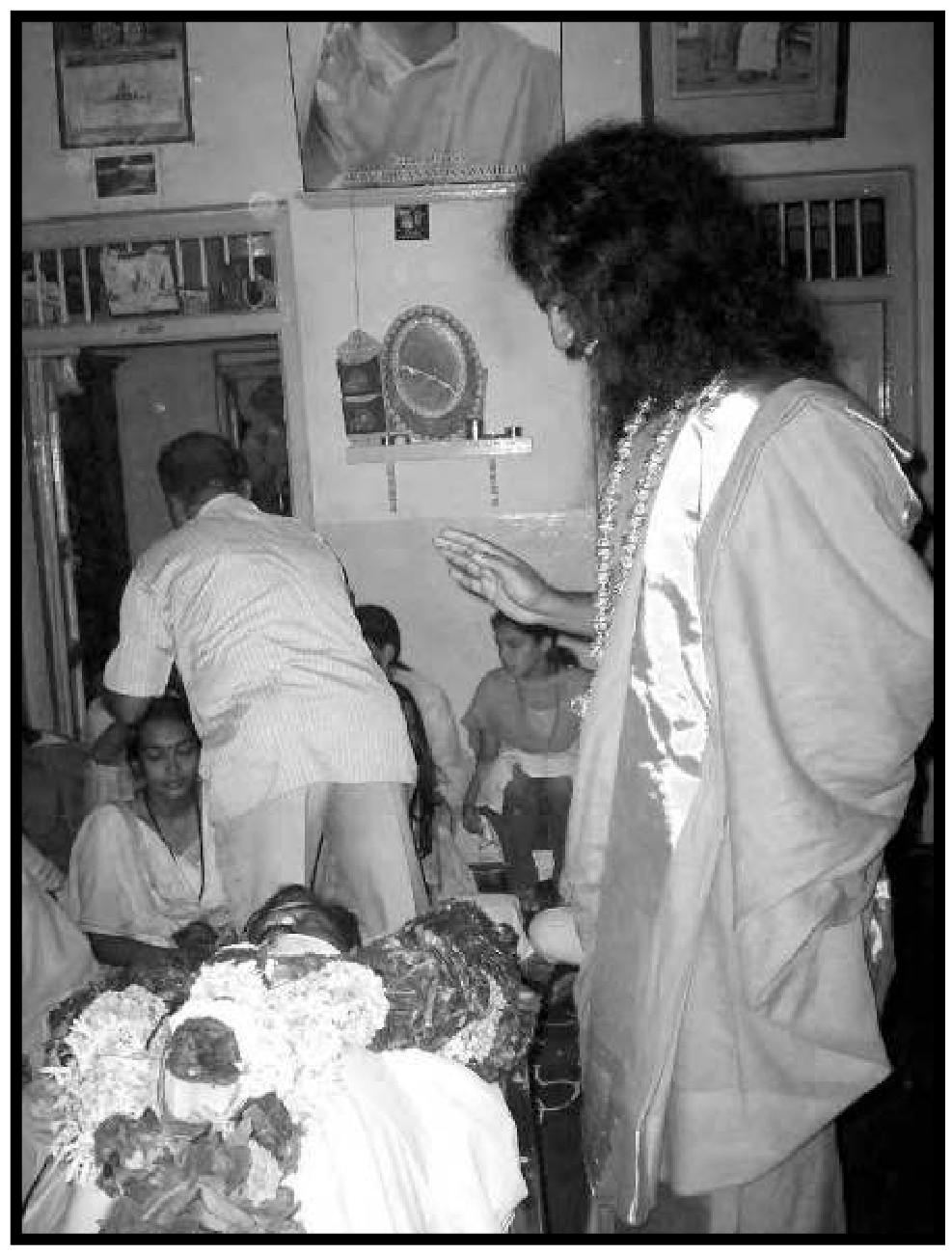
We stepped into the hall and saw a lot of people seated there. Just to the left of the main doorway was the glass coffin. One after the other, in silence, we placed the garlands on the coffin and paid our
respects. I looked at the face and
found it to be utterly calm. It
echoed the final relaxation.
Somehow, I couldn't connect the
fact that this inert mass I was
looking at was a living person to
whom I had spoken just two days
ago in the ashram. I had bid him
goodbye and said that we would
see each other during the Jayanti
celebrations. In his usual manner,
he invited me over to his place for
the Kartigai Deepam festival...
Ellorum vaango (everybody come).
Kartigai Deepam is a festival of
lights exclusive to
Tiruvannamalai. Scores of people
travel from world over to be here
at that time.
Yes, everyone came but not for the festival. Little did we know that we had been invited for a celebration, the likes of which we had never seen in our lives. I found the atmosphere very strange. I couldn't put my finger on it. Then it suddenly dawned on me that no one was crying! Everyone was sitting quietly. I had witnessed too many deaths in the family. The ambience had always been one of great grief; wailing and shouting and calling out to the departed one was the rule rather than the exception.
Now let me take care of all these people who have come here for my blessings. They too need me.'
Only a person in the Paramahamsa state can be so compassionately detached and available unconditionally at all times for those who seek him, no matter the nature of the existing situation. In those few moments, the teachings of Ashtavakra - we are by our very nature unattached, renounced, liberated; we are the all pervading, witnessing consciousness - had been expressed through the Master's body language.
The profound Truths of the Scriptures have to be lived. Here before our eyes was a living example for all of us - devotees, disciples, healers and acharyas were being shown what it really meant to practice what one preaches. Masters do not teach. Their very life is the teaching. If we are alert and awake when around the Master, we can learn within moments what years of pouring over great philosophies cannot teach us.
Every now and then, Master would go out, sit in the veranda, watch the arrangements being made to receive people and speak with his father's relatives and friends in their moments of reminiscing. He said with great fondness: by his own right my father was a V.I.P. (Very Important Person) in this town because of his innate generosity of spirit and his helpful nature. He had a great fan following. He was so considerate to everyone. Even the last moments he spent on planet Earth were with great consideration, just as he did not disturb me when I was a mere boy on the spiritual path, so too in death he chose to cause me the least disturbance. In my very busy schedule, I am relatively free for the next three days. He chose to leave his body only now! He could have gone when I was in America or during the Ananda Ula (tour of Tamilnadu). What would have happened to all the programs, all the arrangements? A beautiful soul! I have blessed him with the ultimate gift of enlightenment. He has left his body smoothly, without any pain. He is relaxed and relating with me. Amma, nee kavalai padadhey, naa pathikirain. (Mother, don't worry. I will take care.)
So saying, Master stood up, walked to the glass coffin and very lovingly, with a beautiful smile on his face blessed his father's body and energy. He repeated this often, throughout the day.
The gentry of Tiruvannamalai were exposed to the joyous dignity of death.
Hearing him talk and watching his utterly relaxed, confident, authoritative body language, I realized we were sitting in a live classroom. He was living the truths that he had spoken of on many occasions, especially during the ASP and NSP. He was showing us the way in which we should receive death, the way we should handle the dead and the living. No book can ever give us this kind of understanding, this kind of confidence. I understood why he was particularly careful on maintaining a deeply joyous atmosphere; why he was insistent that no one should weep or wail.
As far as my understanding goes, when the soul leaves the body it is essential that the atmosphere is light, suffused with spiritual understanding, awareness and a mood of deep celebration. Then we make it easier for the soul to move on smoothly to the next dimension.
This is the greatest gift of love we can give to anyone; this is the ultimate act of selflessness.
When we cry, when we grieve, we create such a heavy atmosphere that the soul struggles to leave. We create an obstruction. This is the greatest act of cruelty that we can commit. We suffer from the misconception that if we weep, we are telling the departed one how much we love him or her. Actually, if we look deeply and honestly within ourselves, we will see that we are crying for the loss, the void that the person's death has caused in our lives. If we really understand that death is the climax of life and not the end of life, we too will celebrate with that understanding.
Then where is the room for tears?
When evening arrived that day, sandhya arti (an offering of lit camphor at sunset time) was performed to the sound of the tinkling bells and the rhythmic clapping of the gathering. Everyone participated with great fervor. I was sitting next to the coffin. Each time my gaze turned to my left, I was looking directly at the face of the departed soul. I was surprised by the fact that at no time was I ever disturbed by this physical proximity to the body. In fact, most often than not we even forgot that the body was there though it was placed in the center of the room. It did not hold center stage. There was no exhibition of grief or any trace of morbidity to keep us focused on the body.
I realized that as the Master was constantly keeping the group occupied with some aspect of spirituality, the mind was diverted from its habituated pattern of responding to such situations. Our energies, instead of being tight and confined to our boundaries through fear and grief, was expanding and relating to the high level of enlightened energy present in the room. The moment of death can be a process of deep alchemy for the dying and the living. Since this blessed soul had attained samadhi, the energy it was radiating combined with the high vibrations that the Master exuded, had the power to transform something in all those tuned to it. And that is exactly what the Master was making us do.
He did not want us to miss the huge opportunity that Existence was offering us.
In between all these extraordinary activities, Master kept the normalcy of the day-to-day activities going. We went out for breakfast, came back, drank coffee that was served with polite hospitality to our bodies and even did the giri-valam (circumambulating the Arunachala hill). In short, the ordinariness of day-to-day life carried on. This in no way showed disrespect to the departed soul. On the contrary, it showed an extremely mature understanding that death is one more event in our lives; it can be as simple as changing our old worn clothes for something new.
That act of changing is death. If while living we had learnt the art of changing well, then we would carry the same attitude while dying. If we wish to die well, all we have to do is to live well, live fully, moment to moment, as if each moment is our last one; then there will be no room for regret. We will have the spiritual understanding that death is neither frightening nor exciting as some naively think. It is
simply a fact of life which gives us a great opportunity for the most profound and beneficial inner experiences to come about.
It carries with it the potentiality to experience the moment of Final Illumination.
Early next morning, around 5.30 a.m., we gathered in the main hall. Master asked that the body be given its final bath and draped in kavi vastra (saffron clothes). At that moment I remembered: once when Master was coming back from a tour of the South, his father told the eldest son, who too had come to visit the ashram, seekaram vaa da... sami varadukulla nambba kazhambalam paatarna nambazhayum samiyara panniduvaru (Come quickly. Let us leave before Master arrives. If he sees us, he will make us also sannyasis!) It looked like Existence had a great sense of humor. Master had the last laugh. I am sure that Master's father, Sri Nithya Arunachalananda would have joined in the laughter.
I noticed that there was no change in the physical condition of the body. Death had arrived on 12ᵗʰ evening and now it was the morning of the 14ᵗʰ. The body looked exactly as it had been on the first day that we had seen it. It was kept on ice; yet there was no change, considering the heat of Tiruvannamalai and that the glass coffin was not the most sophisticated. The face radiated the same sereneness. There was no body odour though the use of incense sticks and room fresheners had stopped.I mused silently: was it because of Master's energy field? Or was it due to the vibrations of all the pujas and artis that were being performed at regular intervals? Or to the fact that the group energy was so profoundly calm and elevating? Perhaps it was a direct reflection of the samadhi state into which Sri Arunachalanada had entered. Before leaving the body, the individuated ego with all its sense-residues had been transformed and purified at the moment of the final exit. There was no odour. Only the lightness and bliss of the liberated soul suffused the air that we
breathed. It could be all these aspects acting together. I honestly don't know. This was not the time to seek clarifications. That understanding would arise automatically when the time was right, without any kind of seeking or prompting. And of course, my ego never got tired of musing.
Once all the necessary formalities were done, Master asked everyone who was not a healer or an acharya (teacher) to pay their respects and leave the room. Then, closing the doors and the windows firmly, He asked to play the ananda darshan music. The room exploded to the beat of bomma bomma, tha thaiya thaiya thaka with everyone singing and clapping. Master threw his hands in the air and clapped, throwing tremendous energy all around. There was a great buildup of heat in the closed room. Then, He placed His ajna (third eye) on his father's ajna. He uttered the maha vakya, 'Tat tvam asi, tat tvam asi, tat tvam asi, aham brahmasmi, aham brahmasmi, aham brahmasmi.' Intense energy transfer must have taken place. One cannot even begin to understand its meaning. Then with absolute grace He removed his turban and put it on his father's head; then he placed rudraksh mala around his neck.
The proceedings that followed are frozen in the memory. He was both the destroyer and the creator. Whatever I had heard, read and studied about Shiva was happening in front of me. The sketches, the sculptures, the paintings were coming alive. The whole atmosphere was deeply tantric in its intensity. Something in me just gave way. I felt an ecstatic connectivity. Shiva was no longer a mere concept for me. I realized that the updated version of Shiva was my own dear Master. It just blew my mind. Something in me died forever for something else to bloom.
Later, just before the doors were opened to let people in, one of the healers echoed the feeling in all our hearts when he said: Master, if this is how death is going to be, then I am ready to die right now!
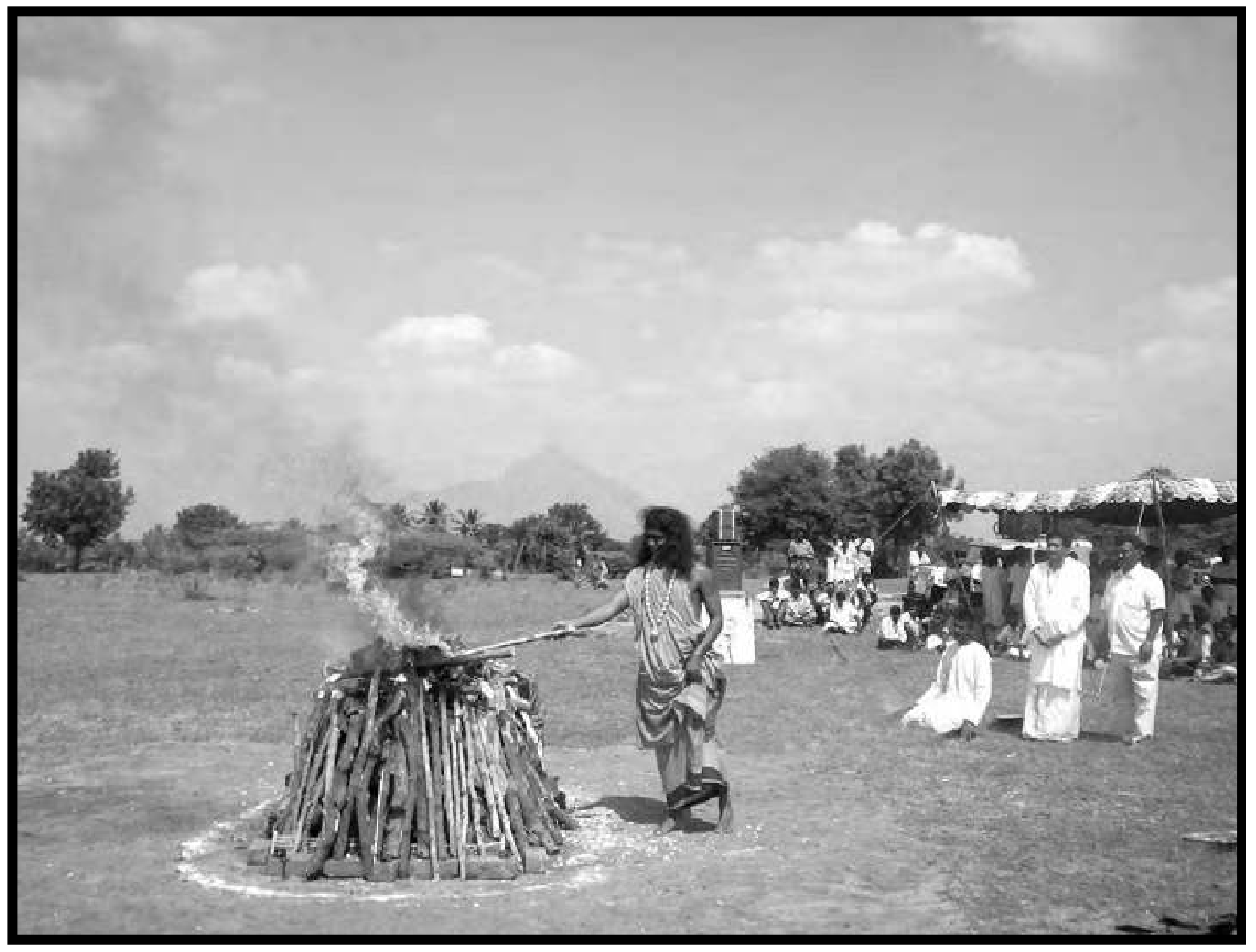
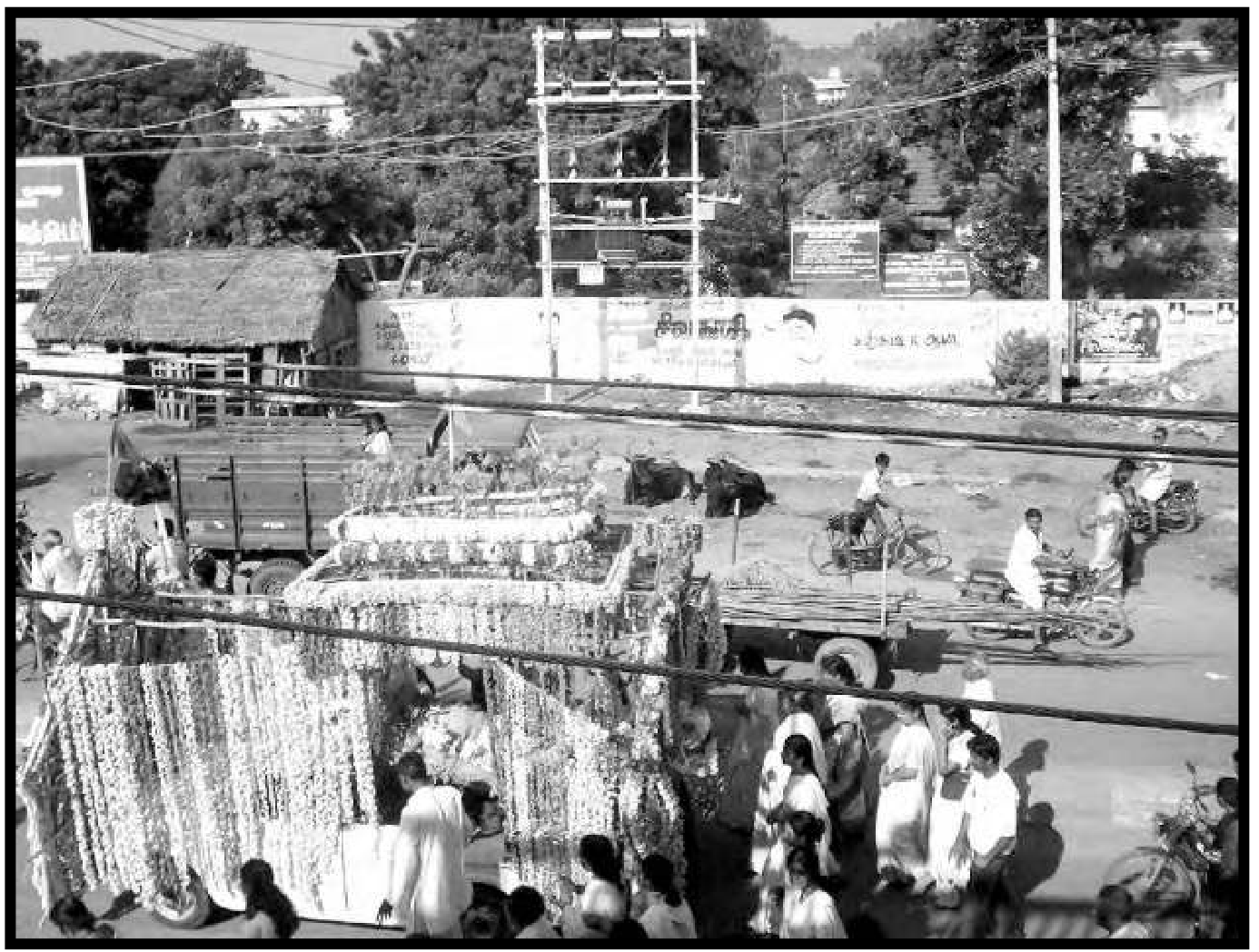
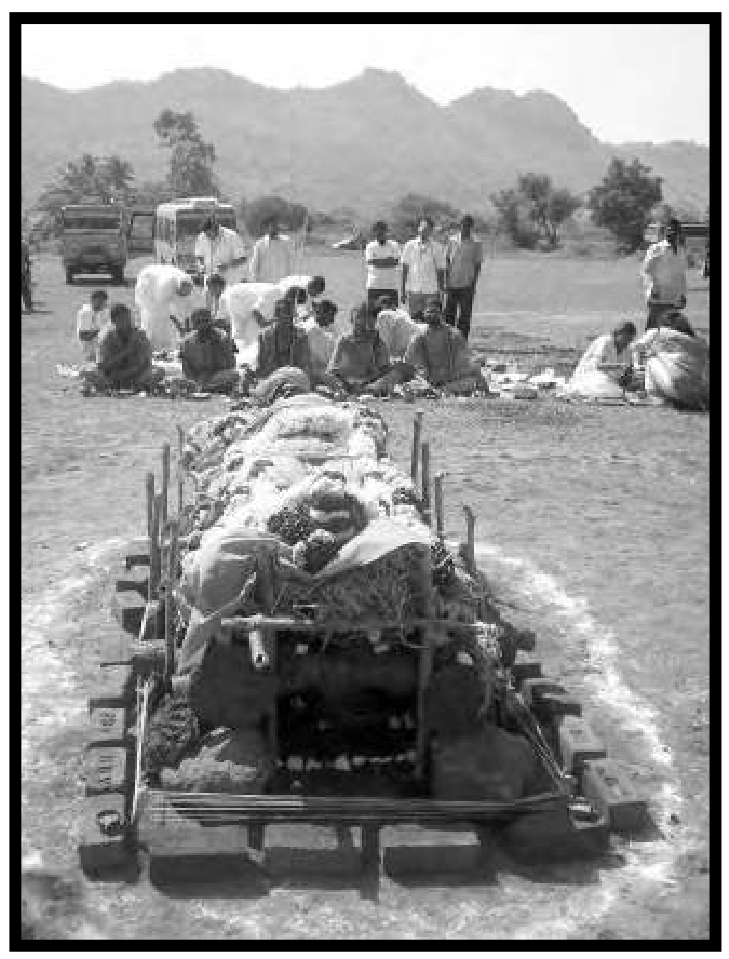
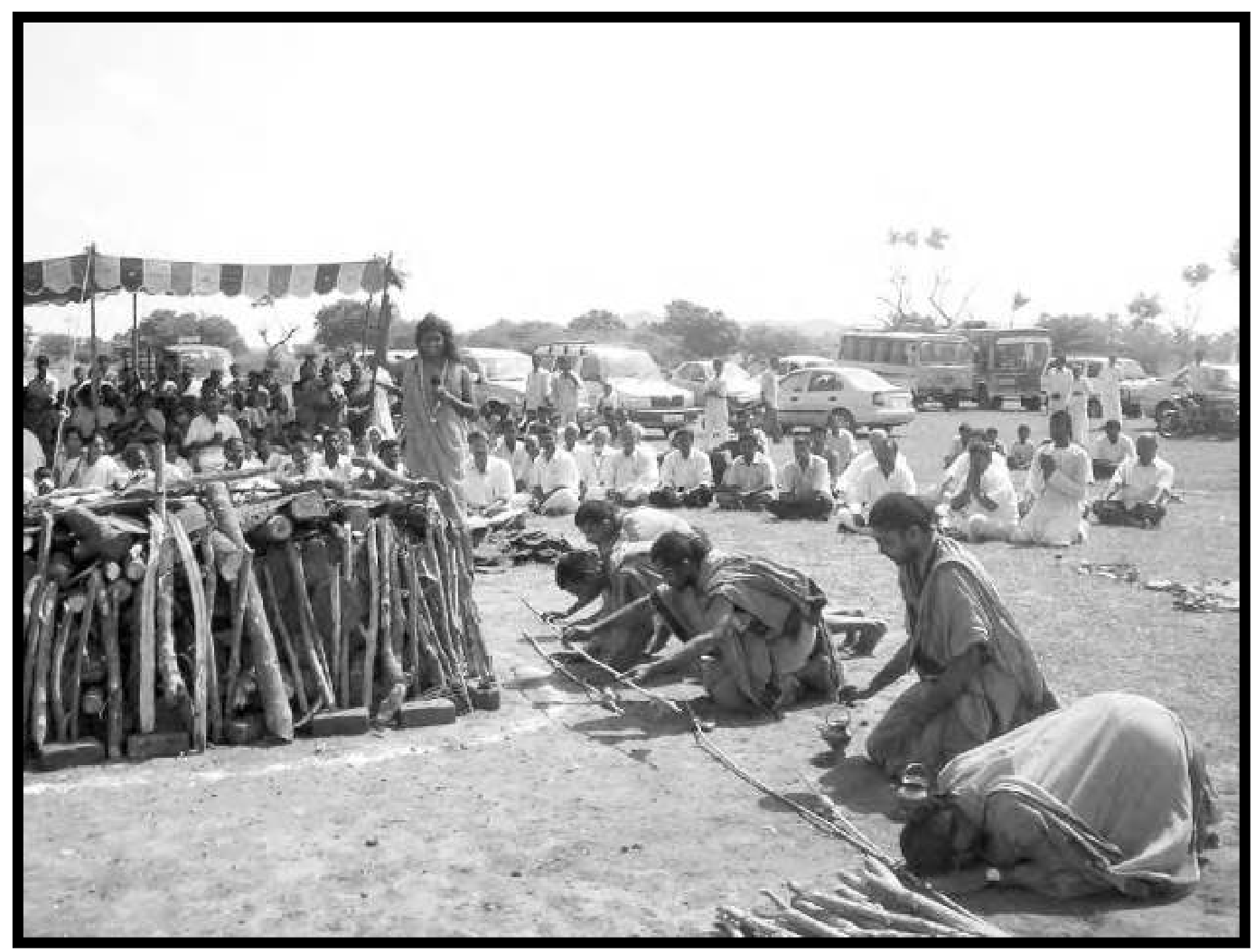
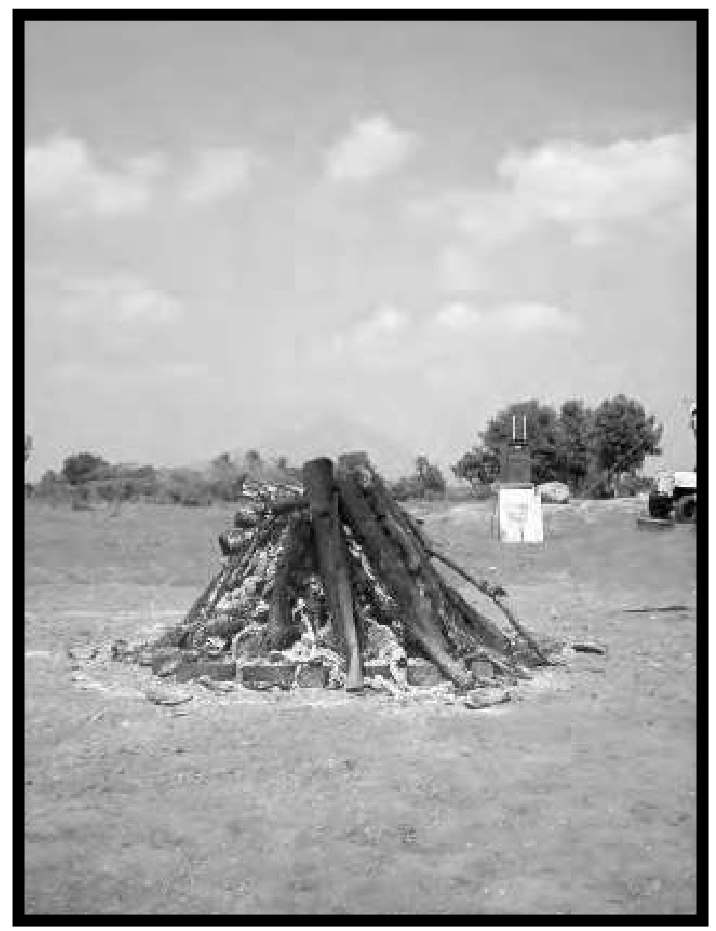
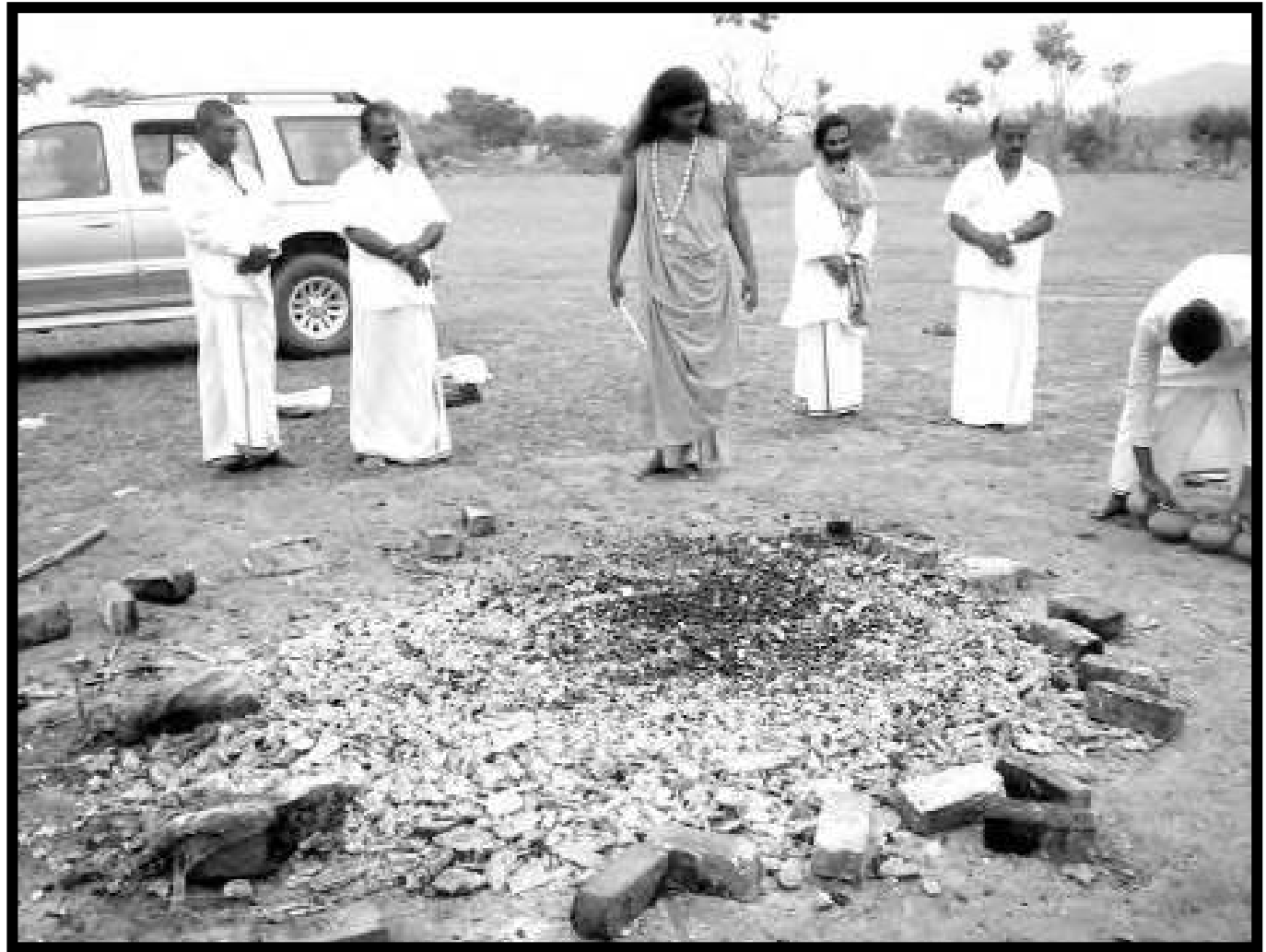
The next moments were all about hi(s)tory being created in Tiruvannamalai. For the very first time women were allowed to accompany the funeral procession to the cremation area. The bier was lifted on to the flower-bedecked vehicle. With Master leading the way, women singing the beautifully evocative devotional lyrics of the Arunachala Aksharamaña Maalai song accompanied it on its last earthly journey. The most poignant and unbelieving part of this moment was the fact that Lokanayaki Amma, the wife of the departed soul was walking alongside, rhythmically clapping her hands to the beat of the devotional song - an expression of implicit trust, of inner steel, of dignified grace.When we reached the cremation area, Master informed us that this was the land gifted by Amma's father to start a Nithyananda Dhyanapeetam centre. He revealed to the gathering that the first person to attend the Nithyananda Spurana Program (NSP) and get enlightened before leaving the body was his father. It was only befitting that the body of a realized soul should be cremated here. When the pyre was readied, the mortal remains of Sri Sri Sri Nithya Arunachalananda was placed on it. The way the body was positioned was truly symbolic. At one end was the sacred Arunachala hillock; at the other end was Master in the formless and in the form.
Can anyone ask for greater protection than this?
As the final moments arrived for the curtain to be drawn, people were given flowers to offer at the feet of the body one last time. Then, Master informed the gathered crowd that as a sannyasi (renunciate), he couldn't perform the last rites, but as a Guru (Master), it was his responsibility to conduct the rites of passage for his disciple. Master recalled that when he had asked his father what kind of help he needed, his father had answered simply: Swami irunda podum. (If you are there, that is enough). Master said, 'At that moment, he became my disciple.' That complete, total trust is enough. Nothing else is needed.
Master also declared that in future, the 12ᵗʰ of November, every year - the death anniversary of Sri Nithya Arunachalananda will be celebrated as the day of Enlightened Souls, in memory of all those who attain enlightenment and leave the body under the Master's grace. He promised no matter where his disciples died, his energy would be there to perform the last rites. With such an amazing promise thundering into our very beings, the last lingering fear of death if any, just melted away.
This was a promise from none other than Existence itself.
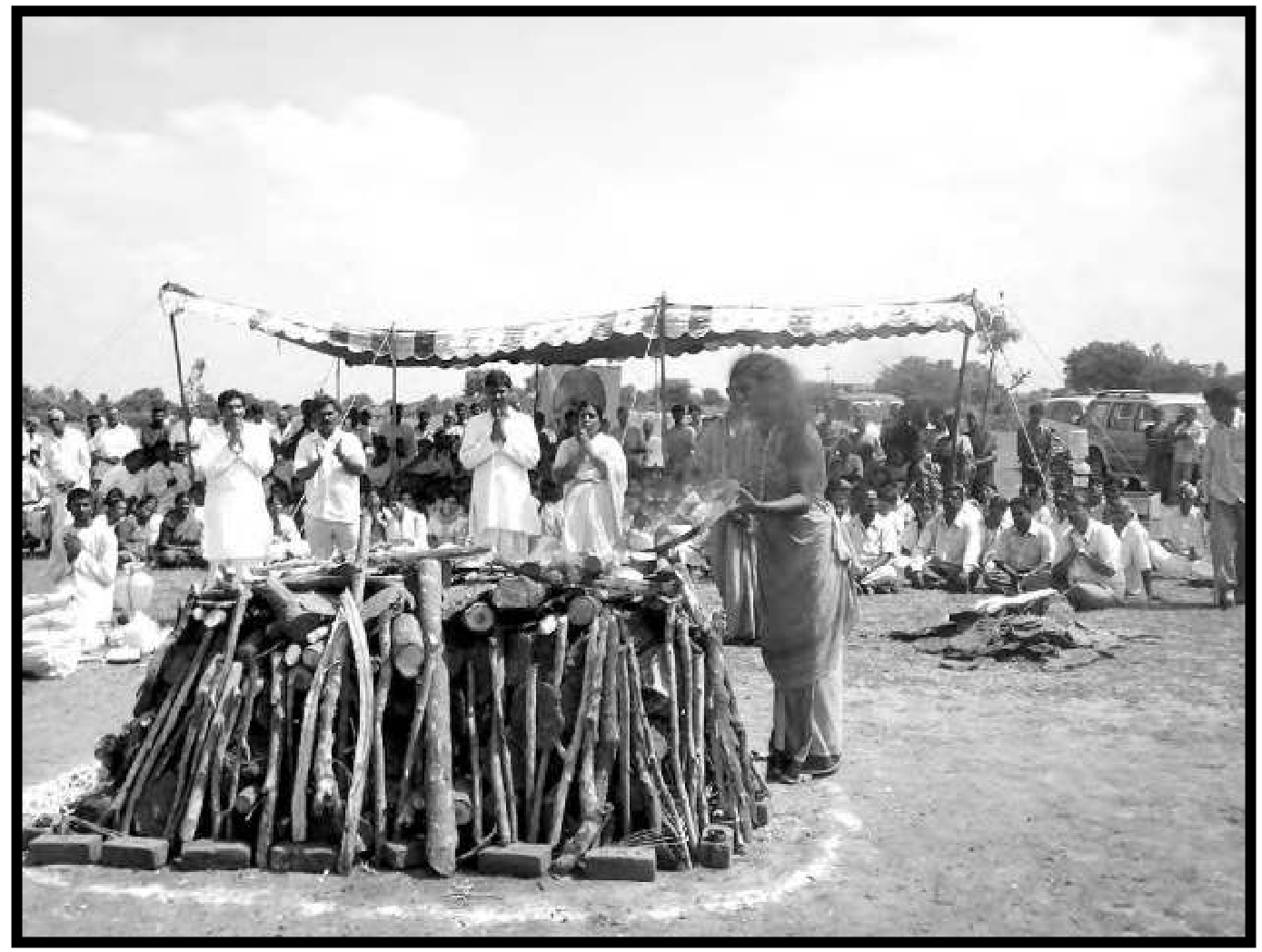
As his father's energy had traveled directly from a conscious state to a super conscious one without slipping into the unconscious coma state, and had remained in that exalted level for 21 minutes, he had become enlightened. Therefore he could not be treated normally. Also since he had been conferred with the Antima Sannyas (final renunciation and enlightenment) by the Master prior to cremation, the body had to be cremated with all the honors that are conferred on enlightened souls. It was like a spiritual military salute of honor to a courageous warrior. Just before the pyre was lit, Master called his mother and brothers, gave them each a sandalwood log to place on the mortal remains of the energy that had been a husband and father for so many years. There was a finality to that act. Then with the shouts of 'Sri Sri Sri Sri Sri Nithya Arunachalananda Ki Jai' rending the air, Master performed the arati, lit the funeral pyre and consigned it to the flames, with flowing grace and compassion.
The last cameo shot that I remember is of Master putting his arm around his mother and hugging her to his side acknowledging her trusting innocence, spiritual strength and courage.
He stood tall with his biological family around him as Son, Brother, Master, God.
I express my love and respect to each and everyone reading this. It was our deep longing to share this experience.
In Nithyananda
- MNM
Paramahamsa declares
November 12ᵗʰ as
Mahaparinirvana Day -
celebration of souls that
departed under Master's
grace.
The first Mahaparinirvana day
is celebrated in Salem ashram
on 12 Nov 2005.
LIFE IS AN ETERNAL CELEBRATION
Know how...
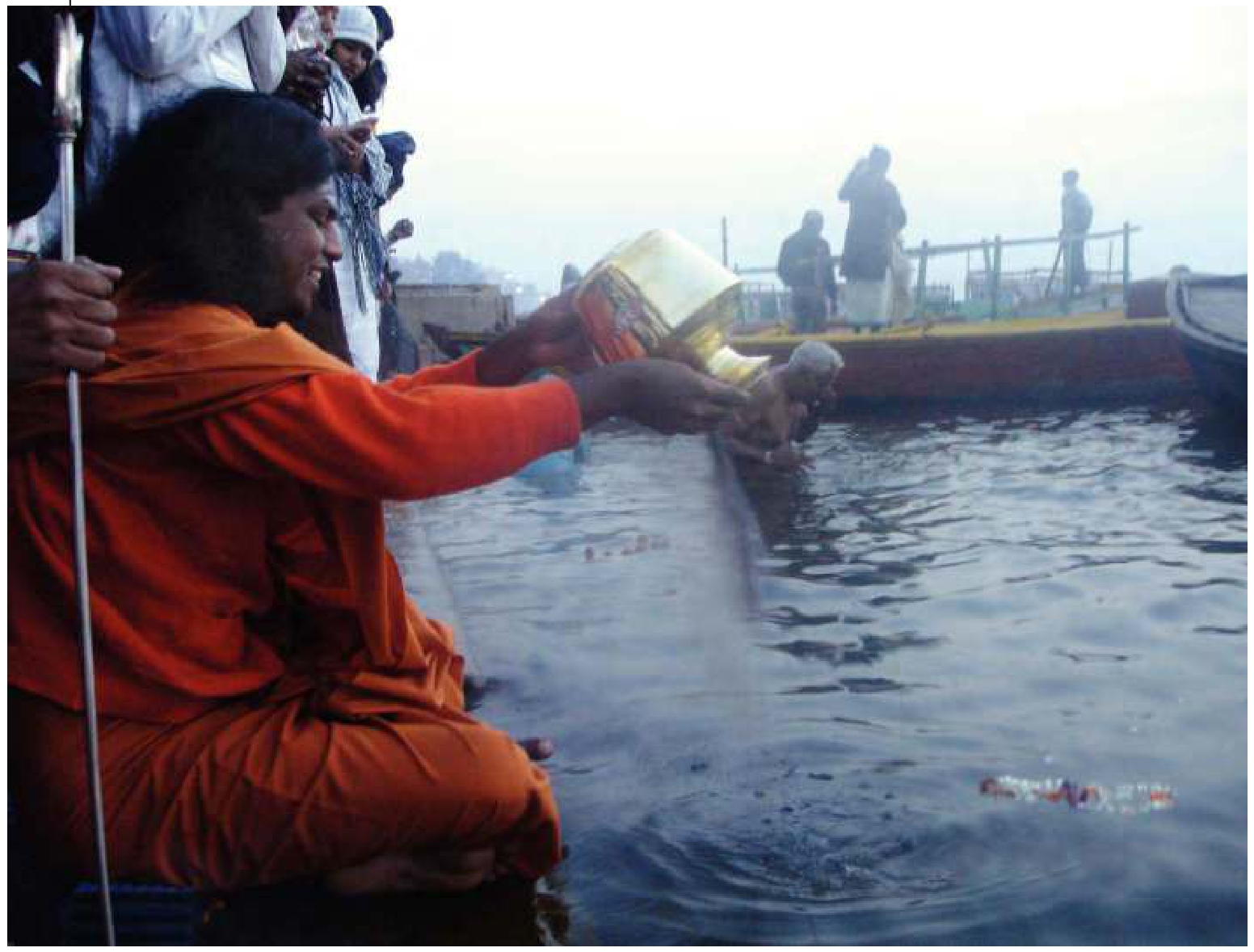
Paramahamsa dissolves the ashes of
His father in the waters of the sacred
river Ganga in Varanasi - 2006.
There is a small story
from Sufism which will
help you understand the
meaning of the word 'eternal'.
There was a Sufi master called
Abdullah. He was a mystic who
lived throughout his life in
nithyananda...eternal bliss! He
used to be continuously blissful
from morning to night, wherever
he was. In Sufism they drink
wine. Even when he drank he was
blissful as always. In Buddhist or
Zen monasteries, you are made to
drink before you enter the
monastery. Once you are drunk,
they watch your behaviour and
read your unconscious; what you
are, who you are. But even when
Abdullah had drunk wine he was
blissful. Even his unconscious
mind was in ecstasy.
One day somebody asked him, 'Master how are you so continuously happy. What is the technique you practice?' His beautiful reply was, 'I never decide to be joyful for two days together. When I get up in the morning, I ask myself, 'Abdullah do you want to be happy? Do you want to be blissful today or do you wish to be in sadness?' My mind always tells me, 'I want to be joyful.' Then I tell myself, 'Okay, then be happy...that's all.' I only decide for that day, not for the next day. I never decide for eternity. If I decide for that day, it works out for eternity.'
If you are asked this question, what will you do? You would say, 'Let me decide for eternity. Tomorrow I may not remember. It is better to decide now itself that I want to be eternally happy.' But that is not going to work. Your idea of eternity is totally different. He says, 'Everyday, as soon as I wake up in the morning, I decide that today I want to be happy. I do not bother about the next day.'
People ask me two or three questions when I relate this story. The first question is, 'Swamiji, he has no other responsibility that is why he can afford to be happy. We have so many responsibilities, how can we be happy, blissful?' If you start worrying, do you think your responsibilities are going to be smoothened? Is it going to give you any solution? If you have ten problems, by worrying you create the eleventh problem.
I always tell people: early in the morning as soon as you wake up, call yourself by your name and ask this question to yourself like Abdullah did. When others call your name it is an unconscious process for you but when you call yourself by your name it is a conscious process. When you call yourself by your name, the ghosts or engraved memories with which you associate yourself get disconnected from you.
You do not know the power of your name. If ten persons are sleeping in one room and one person's name is 'Ram', you call that name and only Ram will wake up! Your name penetrates throughout your being. If you disassociate yourself from your name you totally disassociate yourself from the engraved memories. So it is a powerful technique according to Abdullah. When you call yourself by your name, create an understanding that you are not your engraved memories. Then, when you understand that you are not your memories, half the job is done. Then you ask yourself whether you want to live joyfully or in sadness or in misery. The answer will come automatically!
Our lives are nothing but a simple routine. The same cup whether lifted by the left hand
or right is not going to change, not even the temperature of the coffee in it is going to change. You already know your routine. Give yourself a chance to live the same routine in a mood of bliss. Then you will understand every moment of your life can be penetrated, can be lived in bliss. When bliss enters your life it transforms. In Sanskrit, they use three words sat, chit, ananda - to describe the same phenomena. Sat means 'truth' chit means 'consciousness' and ananda means 'bliss'. When ananda happens, the effect of truth and consciousness happens to it. When consciousness enters, the effect of truth and bliss happens to it. When any of these enter your life, you are transformed; there is alchemy in your life. Especially when you try to live your life in ananda, when you try to penetrate your life with ananda, miraculous transformation can happen. You do not know the miracles that can be performed by living in ananda. When ananda enters, consciousness enters. In consciousness, thousands of things can happen in your life.
Paramahamsa
Life Is an Eternal Celebration
USA
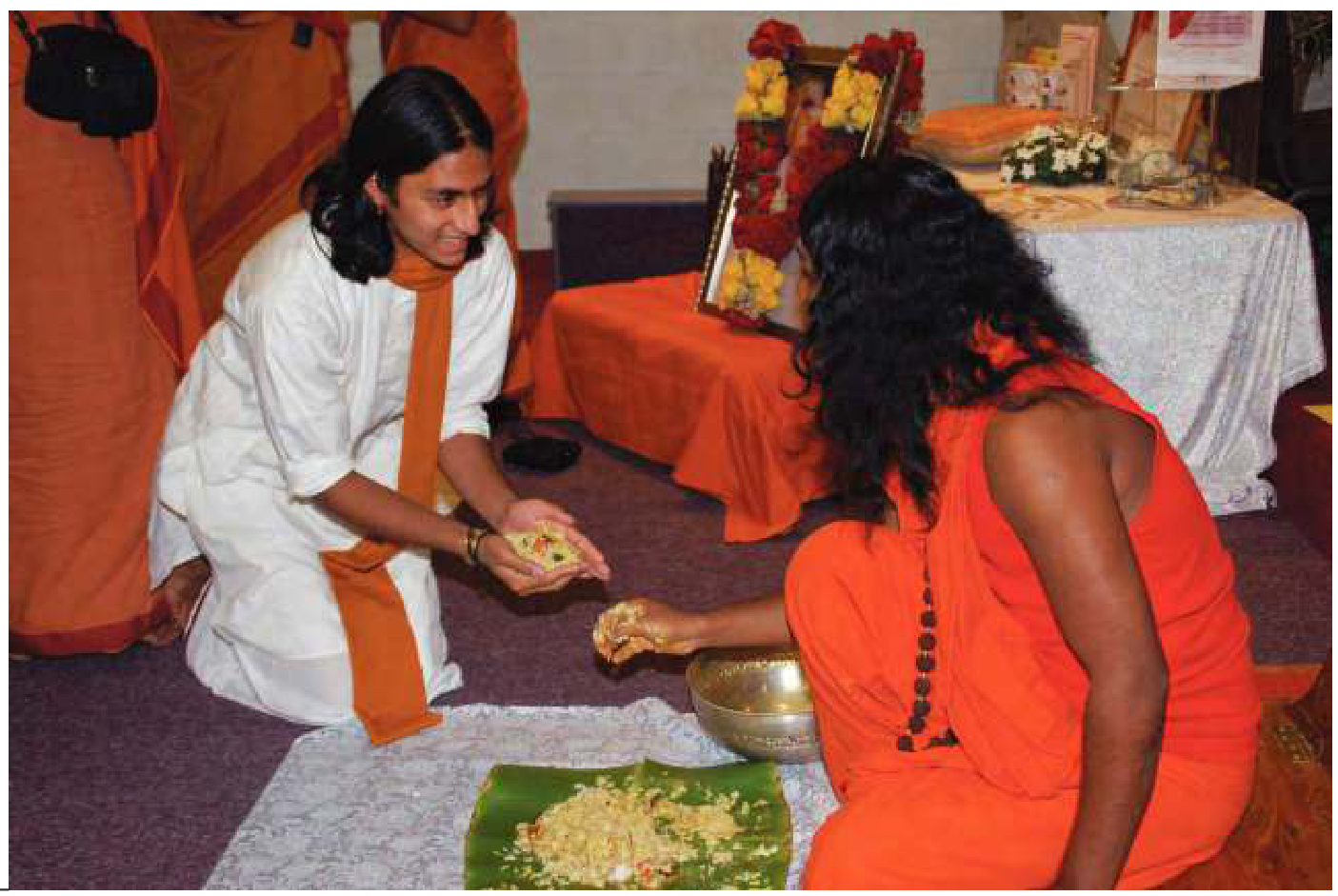
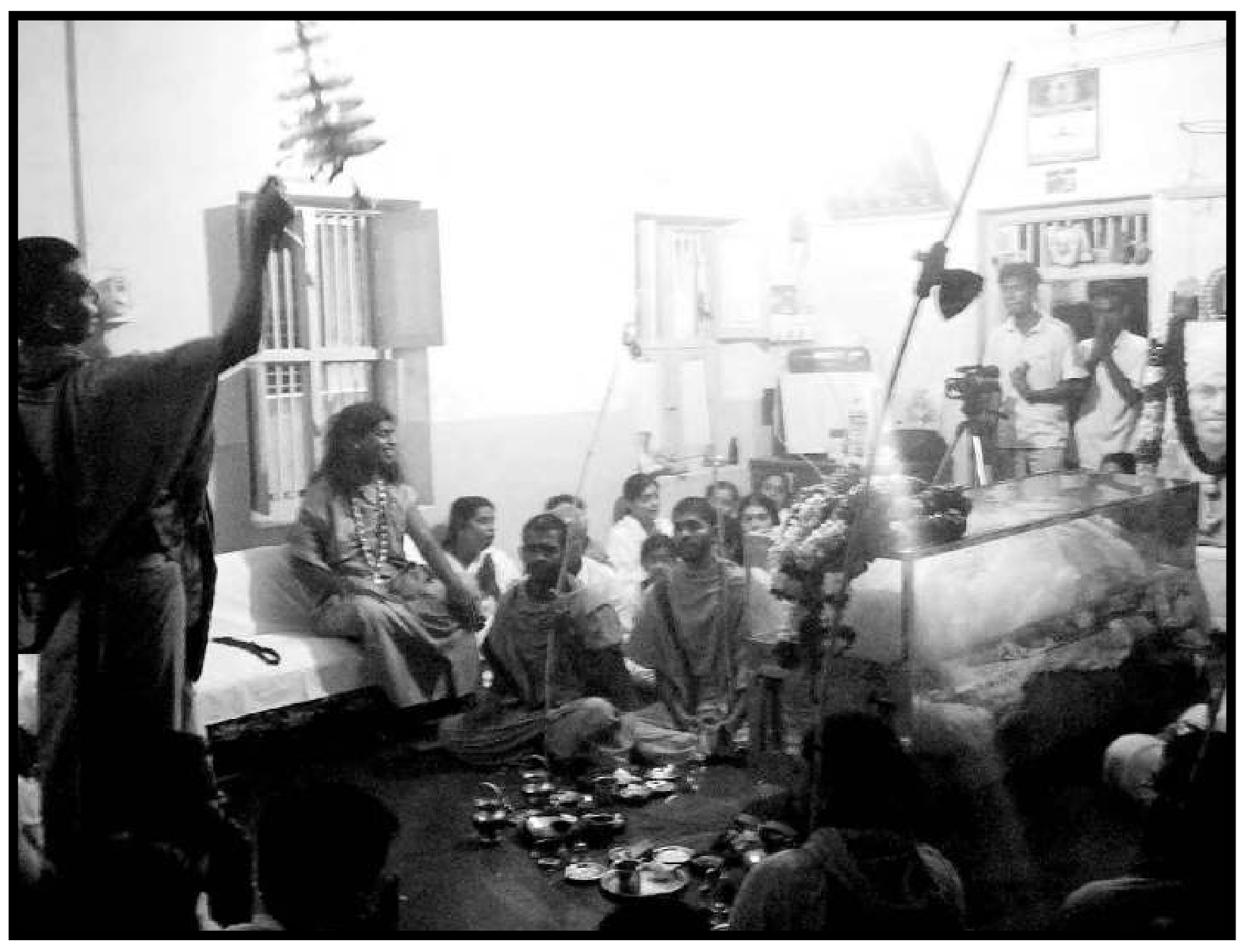
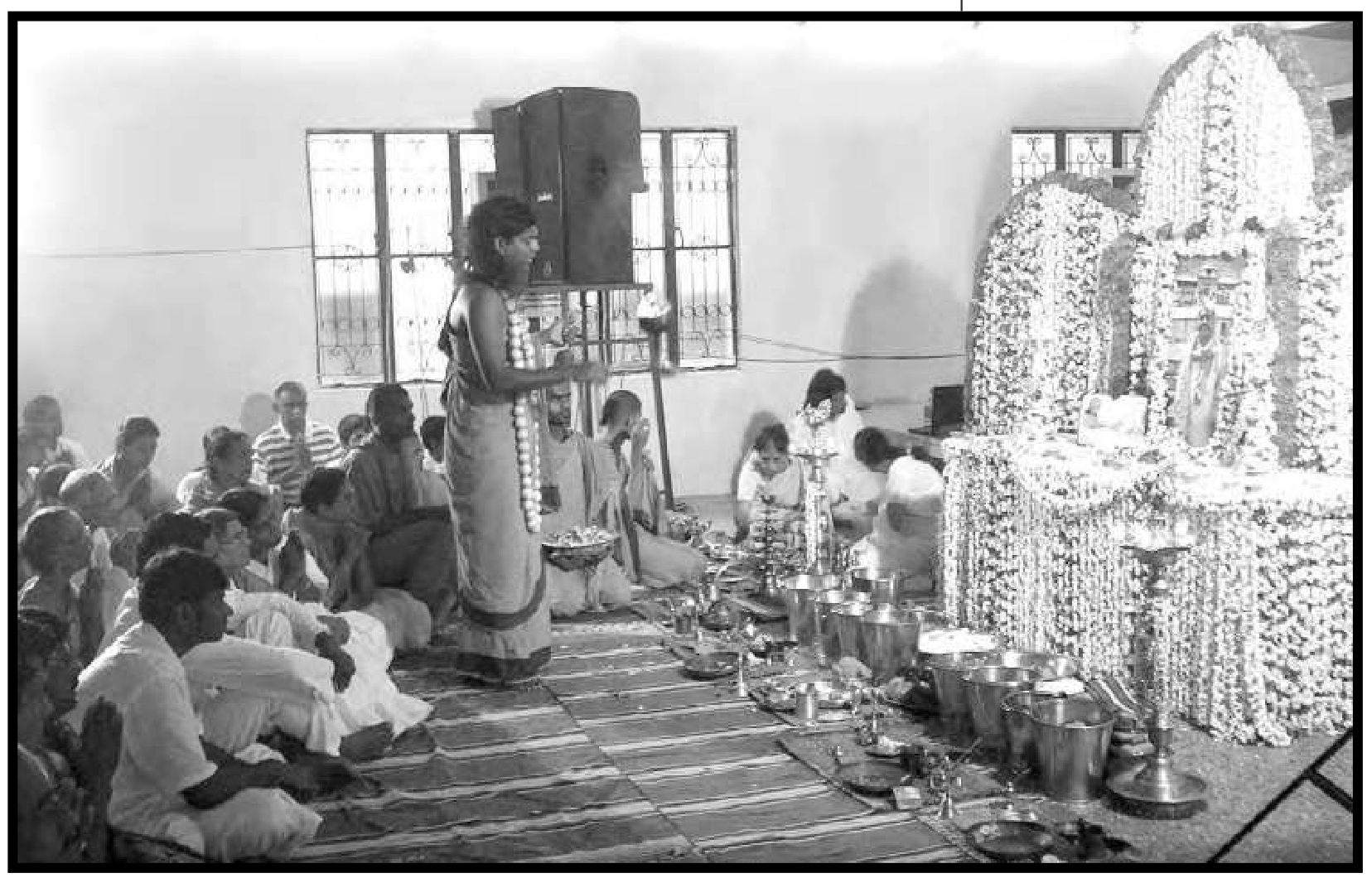
Top: Maheshwara puja at Bangalore ashram. Bottom: Maheshwara puja at Los Angeles ashram.
Maheshwara puja is a symbolic offering to sannyasis, with an intent to offer to departed ones in one's own family.
CREATE YOUR SOUL
Start now, it is never too late
Only when you start living consciously, the soul is created. When you start living consciously, only then is the soul expressed. Conscious decision does not mean decisions about your job or your marriage or your lifestyle. It is not just these big decisions. Ordinary decisions like sitting in a chair is an example. When sitting in a chair, sit consciously. Feel the comfort of the chair consciously. Sit not only consciously, listen to the things happening around you, see things happening around you, consciously. Then you will see that the outer thing or matter will not be enforced upon you. The outer thing will not create its own waves on you.
When you don't decide consciously, samskaras or engraved memories are created. The word samskara should be understood. It is a beautiful Sanskrit term. Whenever you live, whenever you do some action, the imprint of that is created in you. The hangover of that activity is created in you. Samskara means, if you continuously drink coffee, the idea or habit is imprinted in your mind. Samskara has a powerful potential energy to make you do the same thing again. It pulls you to do the same thing again. They are deep and they get deeper by the habit being repeated. It is a vicious circle. 'Doing' makes a samskara and repeating the doing makes it deeper. Making samskara makes you do things, doing things makes the samskara deeper.
When you understand samskara then you will understand what life actually is. As of now, you don't live, only samskaras live through you. The imprints made in your mind by social conditioning, by your unconscious decisions, create a set of samskaras and these live through you.
At first, only you create samskaras then later samskaras live your life. As of now, it is pure samskaras, habits. As I always say, the word 'habit' is the right word. If you drop the 'h', a bit is left, if you drop the 'a', bit is left. If you drop the 'b', it remains. Only when you drop the 'i' it will die! It is just your mental habits which live through you.
When you decide to live consciously, life happens to you. Don't think life happens to you when you are born. When you are born, only the seed, the potentiality of life is given to you, never life itself. When you decide to live, only then, you are born, reborn. In Eastern mysticism there is a word called dvija...a man who decides to take birth; a man who is reborn; a man who decides to give birth to himself, consciously, by taking a decision to live consciously. If you are initiated into a meditation, if you take somebody to be your Master and you are given a technique, you are called dvija reborn.
Paramahamsa
Life is an Eternal Celebration
USA