Effects of Third Eye Awakening℠ – the Spiritual Initiation Given by the SPH
This text was machine-transcribed from the printed book and may contain errors. Select the words and choose “Report a mistake”.
- Blindfolded reading
- Enhanced intuition
- Increased IQ
- Ability to use all aspects of the brain's potential
- Parakaya Pravesham - the ability to enter and understand the other being.
Whole-Brain Activation Studies on Nithyananda Gurukul℠ Students
Bender-Gestalt II Test
The Bender-Gestalt Test is a determinant of neurological functioning. It assesses the level of whole-brain activation; the students' ability to see the "big picture" and recall the details of it.
It is not just an IQ Test. The test is in two phases.
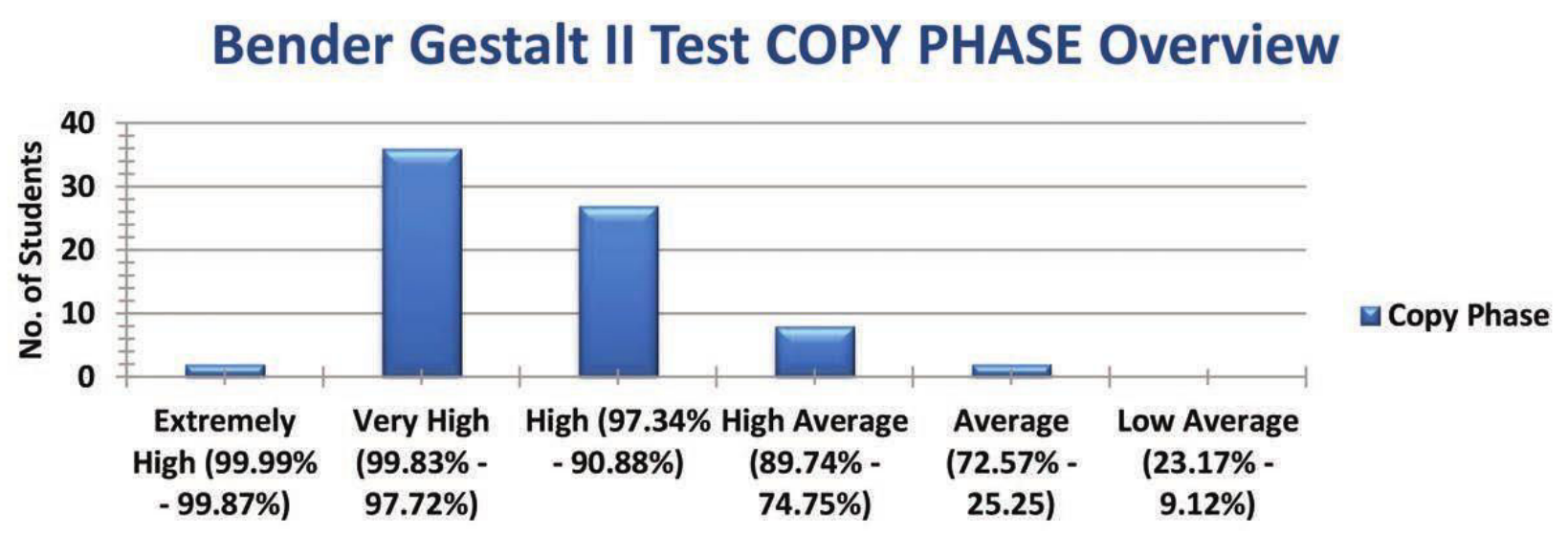
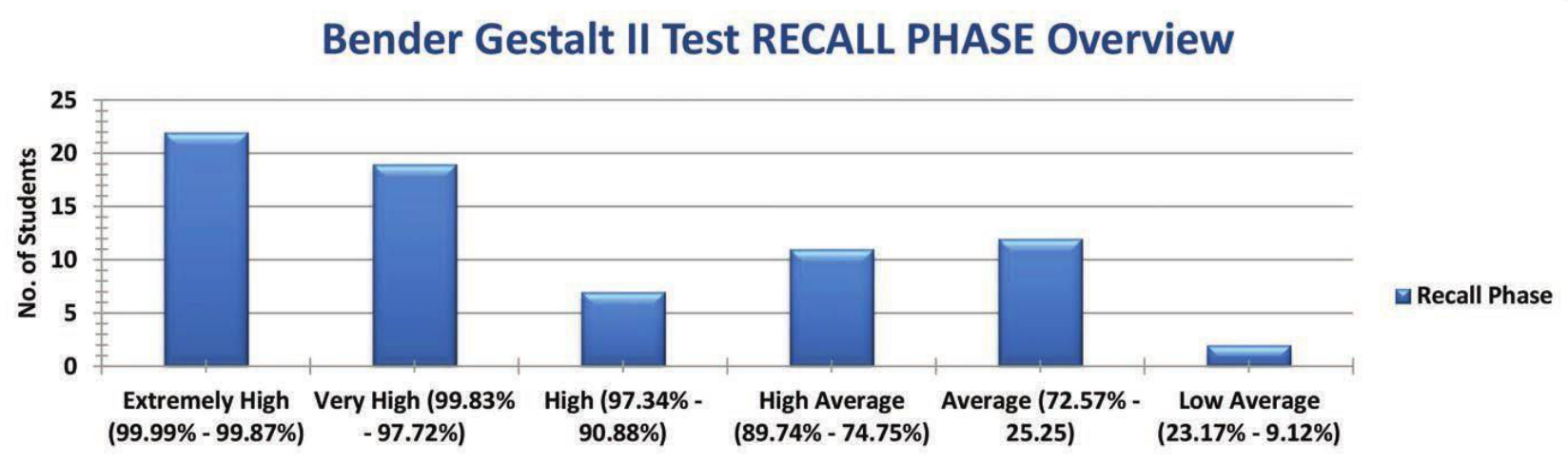
In the first phase or 'copy phase', students are first asked to copy 12 images of various complexities. This 'copy phase' reflects the students' visual-motor intelligence and maturity. In the second phase or 'recall phase', students need to remember all of the images previously drawn without seeing them. The recall phase reflects the students' visual recall intelligence. The recall image is scored based on the level of recall ability. Of the 75 students who have taken the Bender Gestalt II test so far, the average percentile rank of Copy Phase is 95.07 and Recall Phase is 86.91.
Note: These extremely high scores are indicative of above-average results compared to other students who were used to norm this test.
Overview of test-taking behavior
It Is very important to document the way in which the student approaches this test, because (according to the testing protocol) it reflects the way the student approaches life itself.
- Students consistently avoided complaining and approached each event with composure and alertness.
- They exhibited extremely meticulous precision in transposing the Gestalt forms.
- They consistently took much more than the average amount of time to transpose the Gestalt. On average, it took a total of two hours per student: one hour to copy all twelve Gestalt forms and one hour to recall them.
- If an examinee takes a large amount of time to complete the geometric figures, it demonstrates a methodical approach to tasks, low compulsive tendencies, and low symptoms of depression. In the modern world, delayed gratification is considered one of the highest assets of an employee. The observed ability of delayed gratification was the the most impressive result of the Bender Gestalt II test.
- The other outstanding attribute in Bender Gestalt II results was the superior memory ability of students. It is very unusual for students to remember such a high number of Gestalt forms. Each gurukul student attended to the test card carefully, and persistently transposed the Gestalt form; remaining calm, cool, and collected. They initially approached each Gestalt form with keen observation and analysis of the form, and then exhibited steady perseverance, attending to minute details.
- The students appeared to be in the deep state of restful awareness as they performed the memory recall aspect. They showed no signs of confusion, neither were they conflicted nor agitated. They consistently exhibited presence of mind. Because of their deep ease, the clarity of their memory was obvious. These impressions indicate strong mental stability, persistence, attention to detail, high motivation, and emotional maturity. The superior level of precision is evident in the high percentile ranking scores listed in the tables.
The superior level of precision is evident in the high percentile ranking scores listed in the tables.
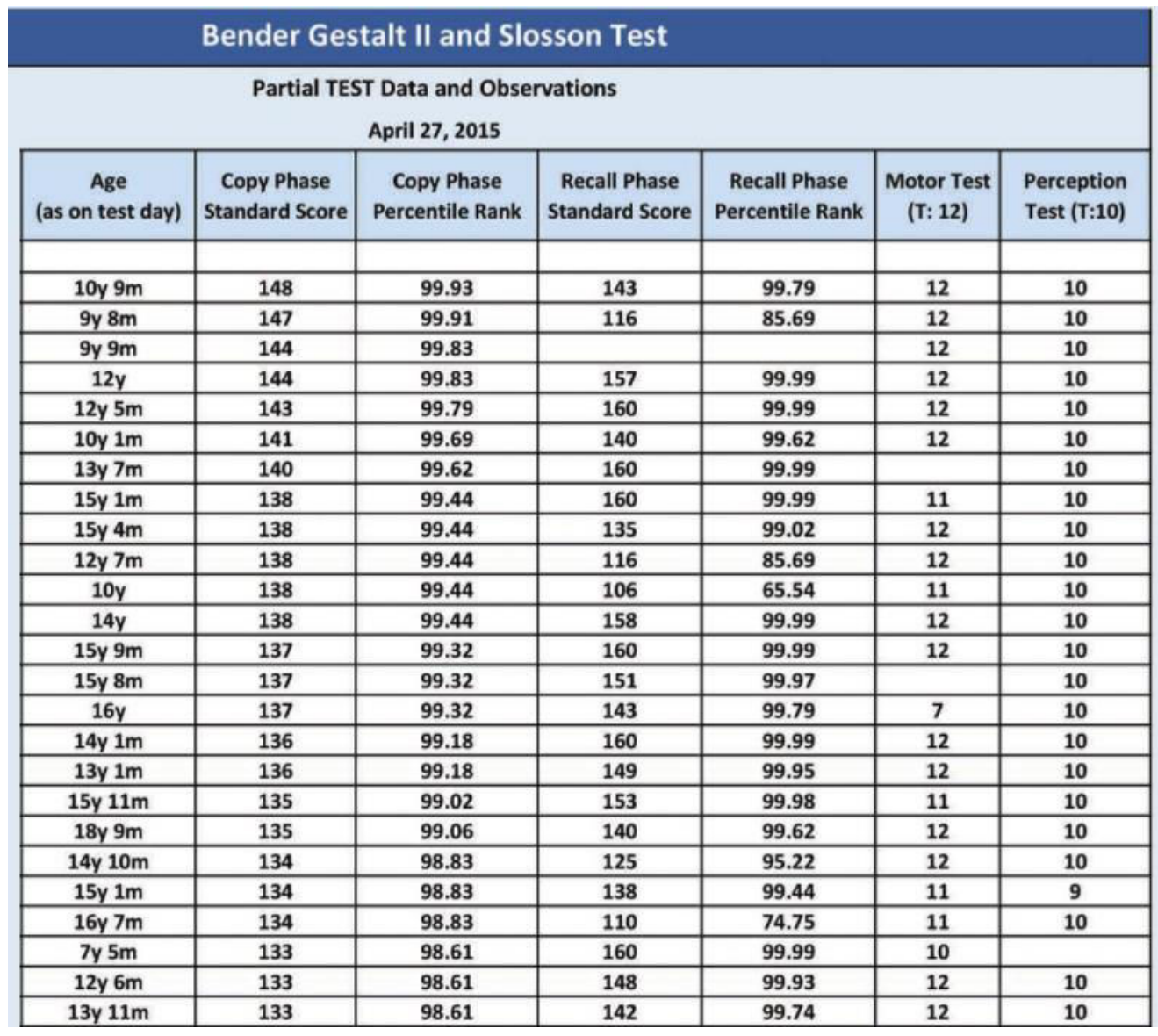
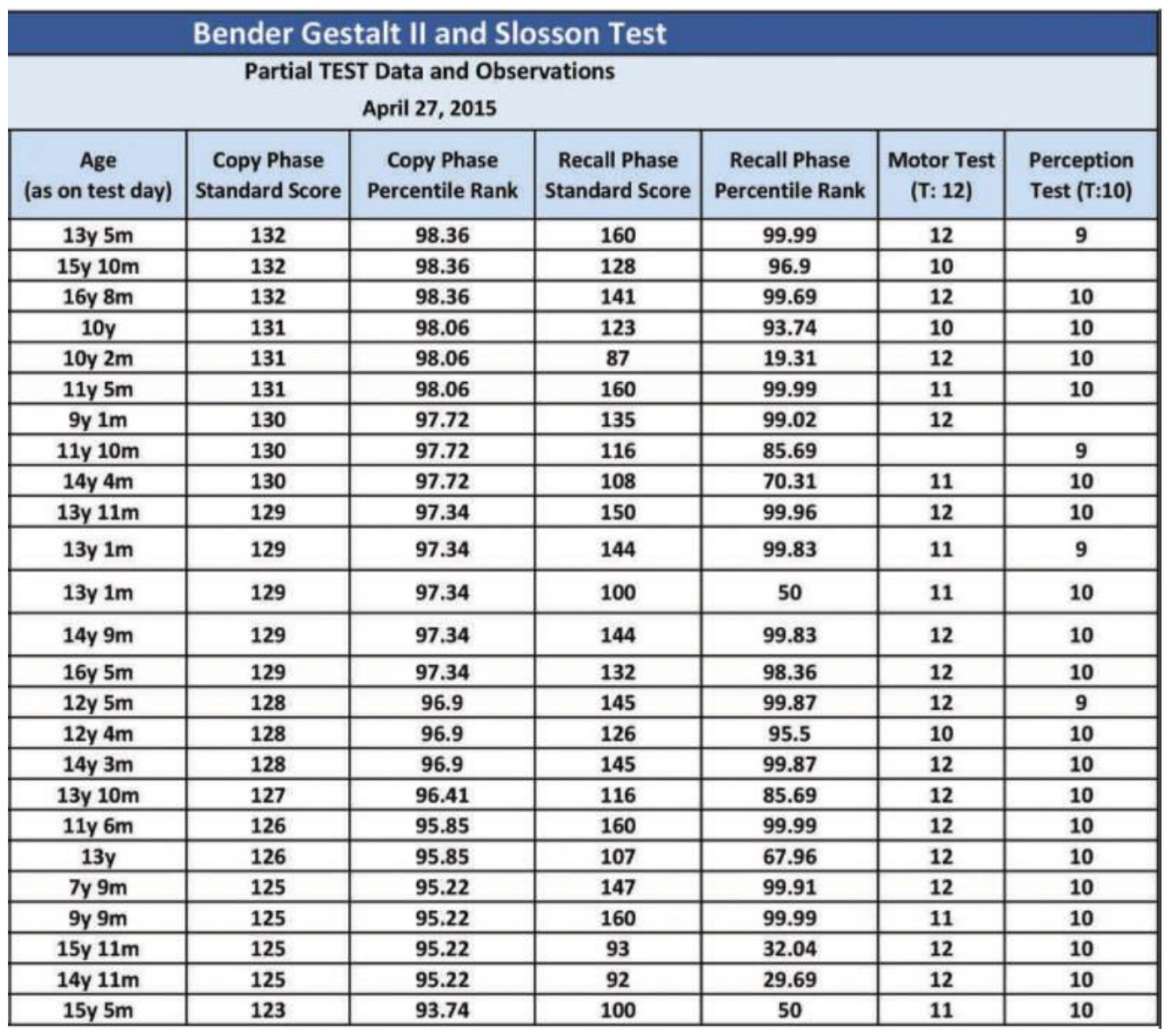
| Bender Gestalt II and Slosson Test | ||||||
|---|---|---|---|---|---|---|
| Partial TEST Data and Observations | ||||||
| April 27, 2015 | ||||||
| Age (as on test day) | Copy Phase Standard Score | Copy Phase Percentile Rank | Recall Phase Standard Score | Recall Phase Percentile Rank | Motor Test (T: 12) | Perception Test (T:10) |
| 17y 4m | 123 | 93.74 | 131 | 98.06 | 12 | 10 |
| 12y | 122 | 92.88 | 140 | 99.62 | 12 | 9 |
| 10y 11m | 121 | 91.92 | 134 | 98.83 | 11 | 10 |
| 13y 2m | 121 | 91.92 | 102 | 55.3 | 12 | 9 |
| 10y 3 m | 121 | 91.92 | 92 | 29.69 | 4 | 10 |
| 14y 3m | 121 | 91.92 | 109 | 72.57 | 10 | 10 |
| 10y 5m | 120 | 90.88 | 133 | 98.61 | 12 | 9 |
| 18y | 119 | 89.74 | 114 | 82.47 | 9 | 9 |
| 12y 5m | 118 | 88.49 | 116 | 85.69 | 12 | 10 |
| 12y 7m | 118 | 88.49 | 123 | 93.74 | 8 | 9 |
| 8y 3m | 117 | 87.15 | 138 | 99.44 | 10 | 10 |
| 14y 9m | 117 | 87.15 | 127 | 96.41 | 10 | 10 |
| 16y | 117 | 87.15 | 86 | 17.53 | 12 | 10 |
| 11y 1m | 115 | 84.13 | 140 | 99.62 | 12 | 10 |
| 12y 4m | 111 | 76.83 | 114 | 82.47 | 9 | 9 |
| 15y 4m | 109 | 72.57 | 116 | 85.69 | 12 | 10 |
| 16y 7m | 134 | 98.83 | 150 | 99.96 | 12 | 10 |
| 10y 8m | 131 | 98.06 | 139 | 99.53 | 11 | 10 |
| 9y 7m | 120 | 90.88 | 105 | 63.06 | 7 | 9 |
| 8y 8m | 124 | 94.52 | 119 | 89.74 | 10 | 10 |
| 9y 7m | 129 | 97.34 | 100 | 50 | 11 | 10 |
| 13y 6m | 140 | 99.62 | 160 | 99.99 | 11 | 10 |
| 7y 2m | 121 | 91.92 | 125 | 95.22 | 7 | 9 |
| 12y 5m | 140 | 99.62 | ||||
| 13y 4m | 99 | 47.34 | 110 | 74.75 | 7 | 10 |
Overview of Percentile Rank of Bender Gestalt II Test
| Copy Phase | Recall Phase | |
|---|---|---|
| Extremely High (99.99% - 99.87%) | 2 | 22 |
| Very High (99.83% - 97.72%) | 36 | 19 |
| High (97.34% - 90.88%) | 27 | 7 |
| High Average (89.74% - 74.75%) | 8 | 11 |
| Average (72.57% - 25.25) | 2 | 12 |
| Low Average (23.17% - 9.12%) | 0 | 2 |
BENDER - COMPARISON WITH NATIONAL AVERAGE
| Copy Phase Percentile Rank | Recall Phase Percentile Rank | Motor Test | Perception Test (Ability to perceive the Whole) |
|---|---|---|---|
| 96.90 | 99.87 | 100% | 100% |
| 99.79 | 99.99 | 100% | |
| 99.93 | 99.79 | 100% | 100% |
| 99.02 | 99.98 | 92% | 100% |
| 98.83 | 95.22 | 100% | 100% |
| 98.83 | 74.75 | 92% | 100% |
| 98.06 | 93.74 | 83% | 100% |
Slosson IQ Test
The Slosson Intelligence (IQ) Test is a well-respected and highly validated intelligence test worldwide. It measures the following categories: general information, similarities and differences, vocabulary, comprehension, digit span, arithmetic, visual-motor capacity, and auditory memory. After all testing is completed, the examiner will do an item analysis on consistently missed items and categories to provide feedback for future instructional strategies.
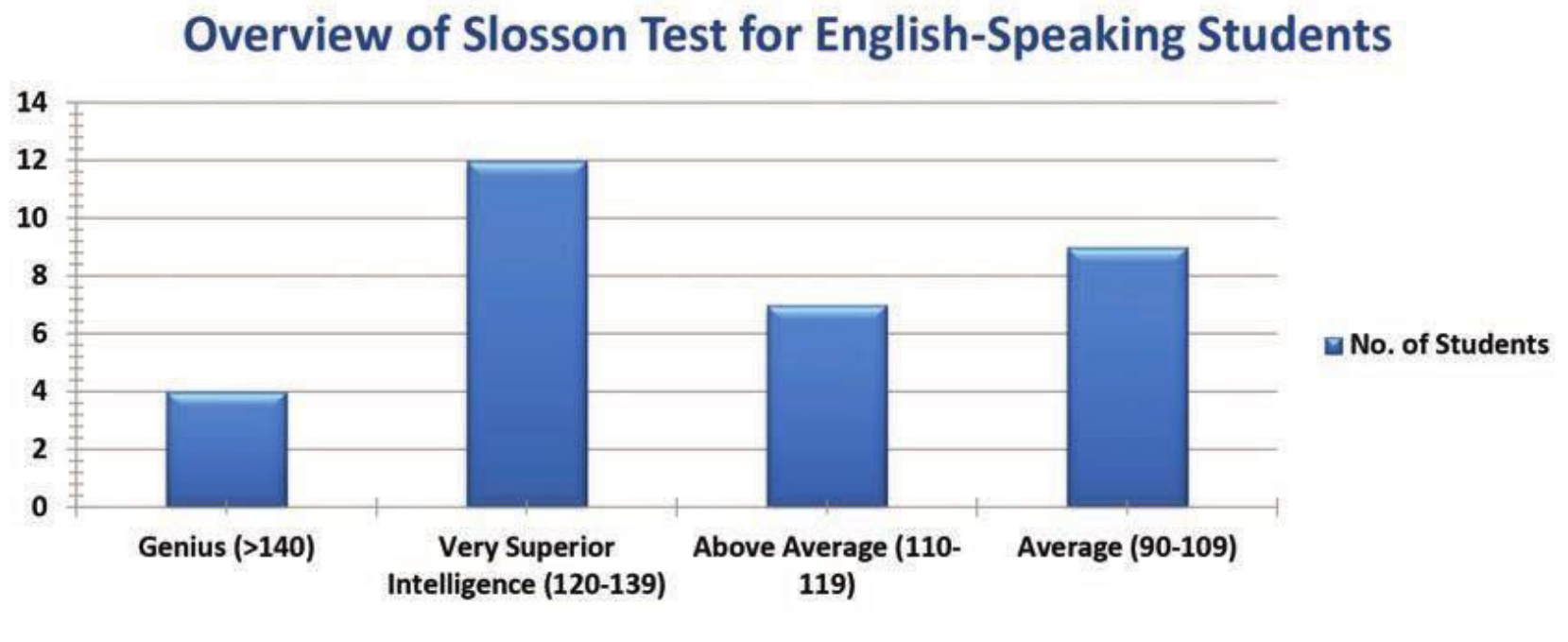
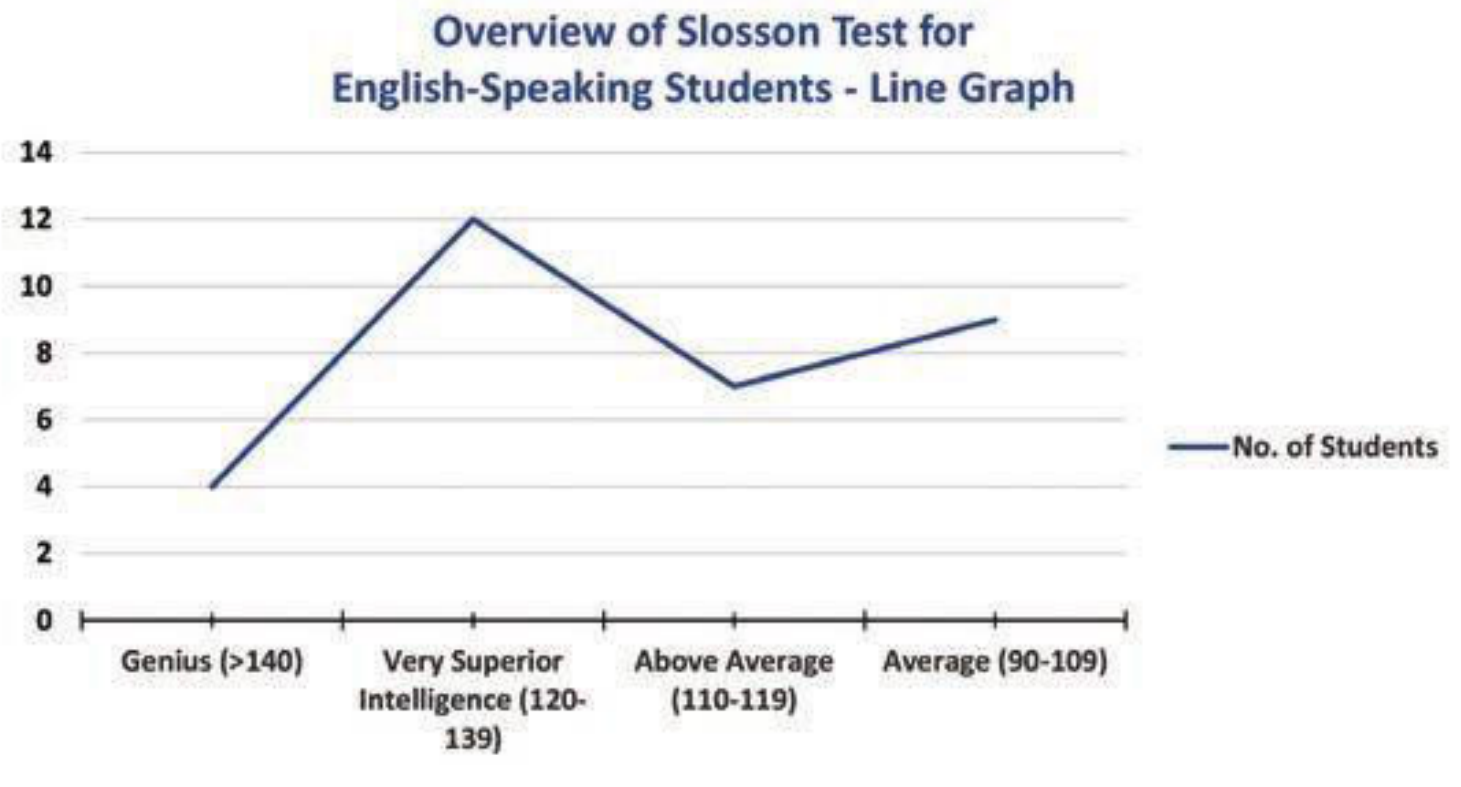
Since the Slosson is a highly verbal test, the test administrator observed that many of the IQ scores were not accurate because of a lack of English language immersion. The results pertaining to students with total English immersion have been reproduced here. (Note: The number of years each student has practiced English has been recorded) 50% of the students with total English immersion fell into the category of Genius and Very Superior Intelligence (IQ Score of 120 and above).
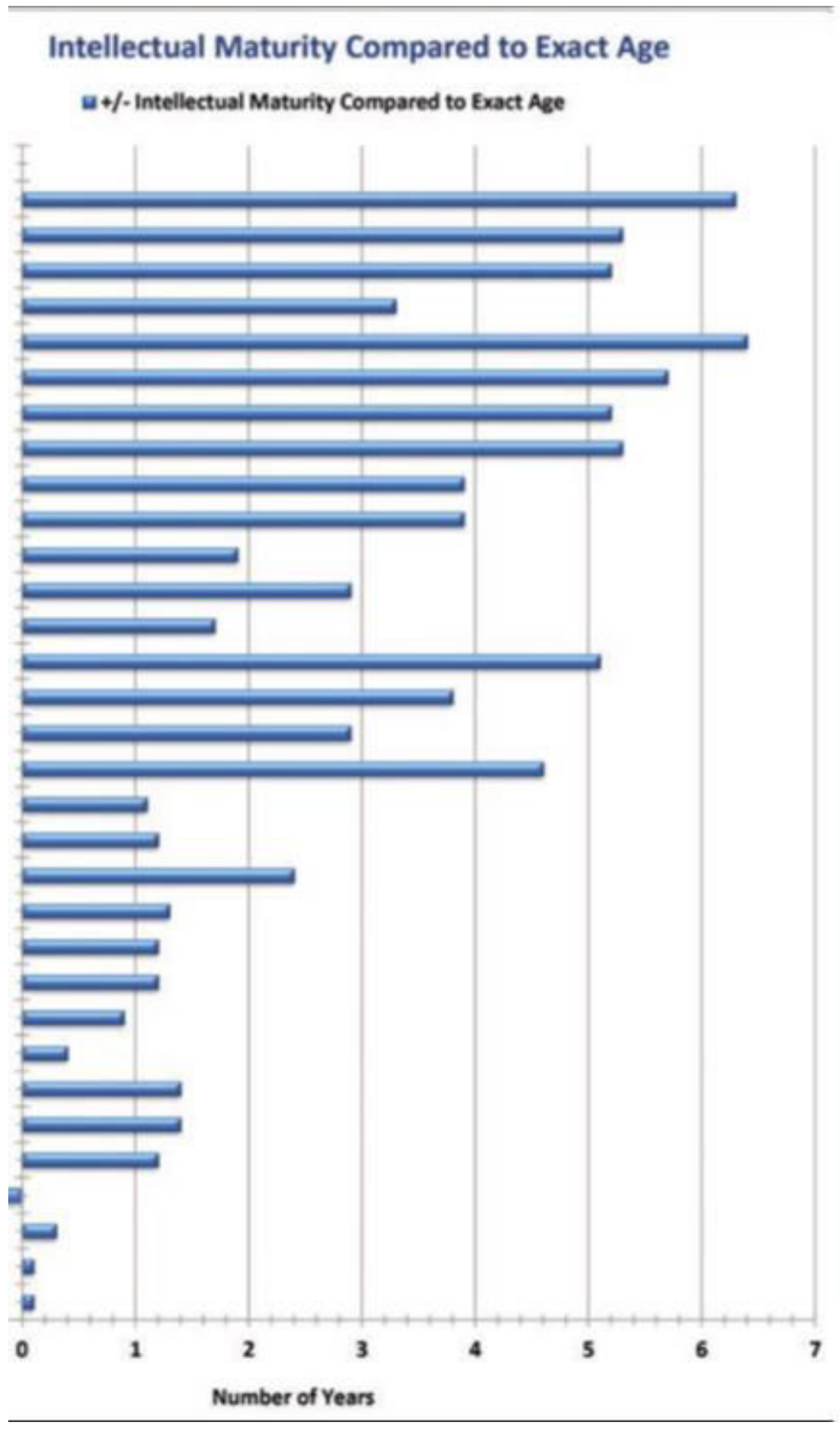
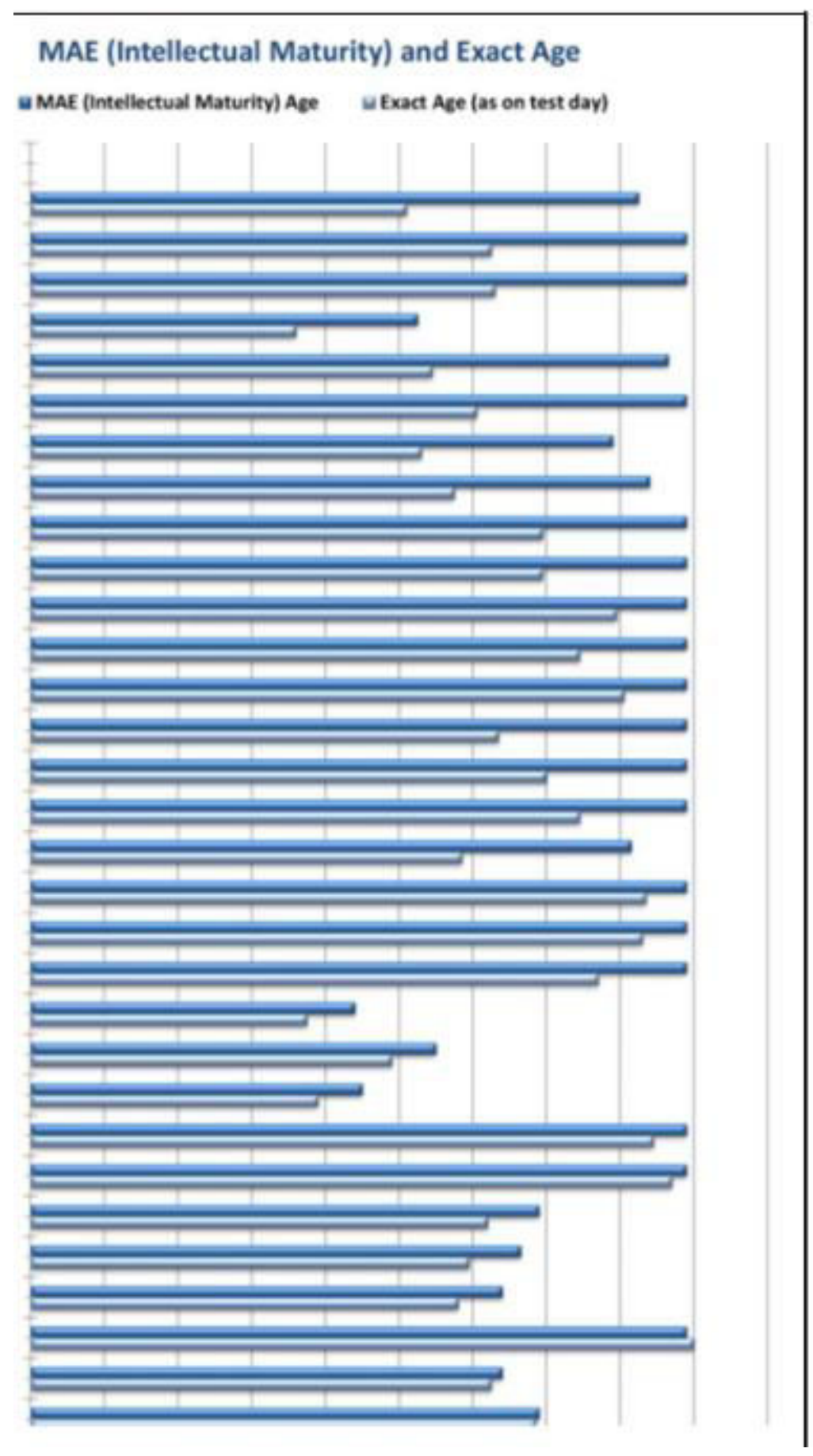
The average difference between the chronological age and the intellectual age is 2.7 years ahead.
Note: The MAE (Mean Age Equivalent) of Nithyananda Gurukul℠ students is much higher than their peers who were used to norm this test.
| Slosson Test for English Speaking Students | ||||
|---|---|---|---|---|
| Exact Age (on test day) | MAE (Intellectual Maturity) Age | +/- Intellectual Maturity Compared to Exact Age | IQ Score | Percentile |
| 10.2 | 16.5 | 6.3 | 144 | 99 |
| 12.5 | 17.8 | 5.3 | 144 | 99 |
| 12.6 | 17.8 | 5.2 | 142 | 99 |
| 7.2 | 10.5 | 3.3 | 140 | 99 |
| 10.9 | 17.3 | 6.4 | 136 | 99 |
| 12.1 | 17.8 | 5.7 | 133 | 98 |
| 10.6 | 15.8 | 5.2 | 133 | 98 |
| 11.5 | 16.8 | 5.3 | 127 | 95 |
| 13.9 | 17.8 | 3.9 | 123 | 92 |
| 13.9 | 17.8 | 3.9 | 123 | 92 |
| 15.9 | 17.8 | 1.9 | 123 | 92 |
| 14.9 | 17.8 | 2.9 | 121 | 90 |
| 16.1 | 17.8 | 1.7 | 121 | 90 |
| 12.7 | 17.8 | 5.1 | 120 | 89 |
| 14 | 17.8 | 3.8 | 120 | 89 |
| 14.9 | 17.8 | 2.9 | 120 | 89 |
| 11.7 | 16.3 | 4.6 | 119 | 88 |
| 16.7 | 17.8 | 1.1 | 119 | 88 |
| 16.6 | 17.8 | 1.2 | 118 | 87 |
| 15.4 | 17.8 | 2.4 | 115 | 82 |
| 7.5 | 8.8 | 1.3 | 111 | 75 |
| 9.8 | 11 | 1.2 | 111 | 75 |
| 7.8 | 9 | 1.2 | 110 | 73 |
| 16.9 | 17.8 | 0.9 | 106 | 64 |
| 17.4 | 17.8 | 0.4 | 105 | 62 |
| 12.4 | 13.8 | 1.4 | 104 | 59 |
| 11.9 | 13.3 | 1.4 | 103 | 57 |
| 11.6 | 12.8 | 1.2 | 100 | 50 |
| 18 | 17.8 | -0.2 | 98 | 45 |
| 12.5 | 12.8 | 0.3 | 95 | 38 |
| 13.7 | 13.8 | 0.1 | 94 | 36 |
| 12.2 | 12.3 | 0.1 | 93 | 33 |
| Overview of Percentile Rank of Slosson IQ Test | |
|---|---|
| Score Range | No. of students |
| Genius (>140) | 4 |
| Very Superior Intelligence (120-139) | 12 |
| Above Average (110-119) | 7 |
| Average (90-109) | 9 |
SLOSSON - COMPARISON WITH NATIONAL AVERAGE
| Age (as on test day) | Developmental (Intellectual Maturity) Age | Difference between Actual Age & Developmental (Intellectual Maturity) Age | IQ Score | Percentile Rank (As compared to national averages) |
|---|---|---|---|---|
| 12.5 | 17.8 | 5.3 | 144 | 99 |
| 12.6 | 17.8 | 5.2 | 142 | 99 |
| 10.9 | 17.3 | 6.4 | 136 | 99 |
| 15.9 | 17.8 | 1.9 | 123 | 92 |
| 14.9 | 17.8 | 2.9 | 120 | 89 |
| 16.7 | 17.8 | 1.1 | 119 | 88 |
| 9.0 | 11.3 | 2.3 | 107 | 67 |
Intellectual Maturity compared to Exact Age
83% of the students are intellectually 1 to 6 years (s) ahead of their actual age (as of studentstested so far), 53% of the students are intellectually 2 to 6 years (s) ahead of their actual age (as of students tested so far)
Unique Observations
- One student, IQ 144, who was very proficient in blindfolded reading, correctly answered the question, ‘Who was Longfellow and what did he do to become famous?’ When the examiner asked him, ‘How did you get this answer?’, he said it came spontaneously to him. This ‘spontaneous knowledge’ acquisition needs to be studied further. There could be a correlation between blindfolded reading and spontaneous knowledge acquisition.
- Another proficient blindfold reader, IQ 123, after getting question number 181 incorrect, asked me if she could read the answer through the examiner’s mind. The question was, ‘Who wrote the following: Much Ado About Nothing?’ She blurted out the letters S H A K E S and S P E A R, then she said M A I L L W (William), which is of course the correct answer. This student has been studied doing blindfolded reading on many occasions, and it has been observed that many times she reads the letters backward.
- IQ 119, who was also a proficient blindfold reader, after getting the question number 181 incorrect, asked me if she could read the answer through the examiner’s mind. For the question, ‘Who wrote the following book: A Tale of Two Cities?’, she read the letters C H A R L E S D I C K E N S, and she was able to get the answer for two other authors as well.
- Sharanya and Lopamudra were asked question number 153: ‘What is a panorama?’ Neither student knew the definition, so the item was marked incorrect. The examiner then visualized a panoramic scene on top of Mount Everest. Both of these students described the scene in detail, including snow, mountains, and sky.