Education
This text was machine-transcribed from the printed book and may contain errors. Select the words and choose “Report a mistake”.
The Two Faces of Education – Historical and Contemporary Context
“The mind once enlightened cannot again become dark,” wrote Thomas Paine in one of his letters expressing the importance of education in the life of an individual. Education is the most potent tool to shape the trajectory of the entire life of an individual. The right kind of education if given at an early age, has the power to not only mold an individual’s life in the direction of his/her good but can organically engineer a society based on the highest principles of peace and tolerance, harmony, collective prosperity, social cohesion, mutual respect as well as scientific temper. The well-known British writer Charlotte Brontë’s quote on education, “Prejudices, it is well known, are most difficult to eradicate from the heart whose soil has never been loosened or fertilized by education: they grow there, firm as weeds among stones,” also alludes to the fact that without proper education, our minds become susceptible breeding grounds for dogmas and prejudice, and even life-long beliefs rooted in violence and hate.
A UNICEF study titled “The Two Faces of Education in Ethnic Conflict”1 presents a detailed analysis of various ways, both constructive and destructive, in which education has been and can be used to further the interests of an interest group with perverted goals, or for the collective good of the society respectively. After witnessing two world wars and the level of destruction they caused on all fronts, and the establishment of the United Nations over the ruins that resulted from them, a crude physical war with a heavy military component has almost become a barbaric concept in the collective psyche of the human civilization. However, the forces whose beliefs and perspective on life are antithetical to the values of collective peace and harmony, social upliftment, democracy, human rights, social justice, and multicultural tolerance are still very much operating amongst us, incessantly trying to co-opt the present social and political structures to further their malicious agendas. It is a well-known fact in the domain of geopolitics and international relations that the modern battlefield is not the ground but the human mind. Wars, now are fought, not using weapons, but ideas. Ideas that sabotage the enemy both from within and without. It is in this context that the role of education becomes even more important as both a positive force to inspire human beings to work collectively towards a bright future, and at the same time, to defend the human consciousness against the hateful, malignant, and self-defeating ideologies, which once sparked in the mental plane and if not checked at the right time, has a possible effect of turning into a chain reaction of collective human behavior that can cause destruction of catastrophic proportions.
The Two Faces of Education in Ethnic Conflict, Towards a Peacebuilding Education for Children, Kenneth D. Bush and
Diana Saltarelli, UNICEF, Innocent Research Center, Florence Italy
Case Study – Education as A Tool for Ethnic Cleansing – Nazi Germany
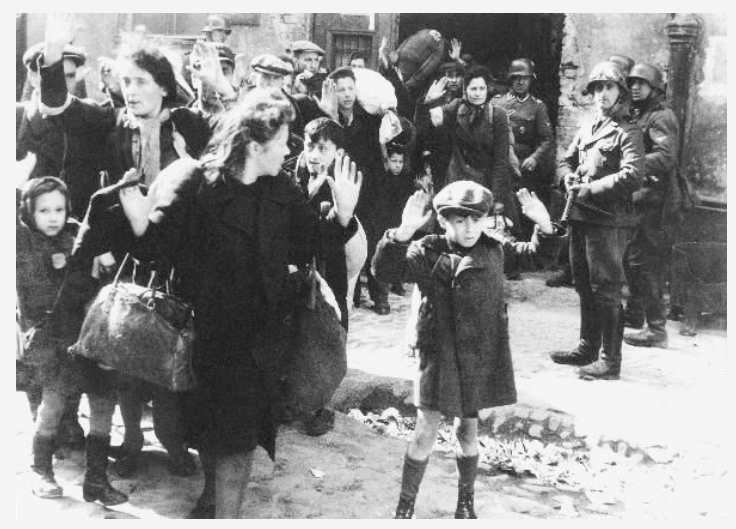
It is essential here to highlight the Nazi era in Germany and how certain policies of the state eventually resulted in one of the bloodiest mass slaughters in human history. Under Hitler’s regime, the schooling system and public institutions were subverted to "normalize" internal oppression and systematic violence. Common people who worked in these state institutions eventually internalized this exclusionary principle, thereby "othering" groups such as Jews, homosexuals, and gypsies. Thereafter, it was a small step from exclusion to dehumanization to extermination. The ideas of a racially superior "Aryan" race, as Hitler mistakenly put it, as well as others such as eugenics, were systematically disseminated using the education system as a carrier of the virus, a virus on the mental plane which would eventually engulf the whole nation into utter chaos, turning it into an appalling spectacle of the most inhuman tortures in history.
As discussed in the case study above, the use (in fact abuse) of education as a tool for establishing the dominion of one group over another is not new. There are several examples where the seeds of many modern-day conflicts and violent worldviews have been sown decades ago, not by armed personnel or statesmen of lofty credentials, but by teachers and thinkers with a strong intellectual bent of mind, that grasps the domain of thought and the workings of the human mind at a deeper level. For instance, contrary to the common perception that modern transnational terrorist groups such as Al Queda and ISIS are but a group of ganged up rabid illiterate violent men (or women) with no understanding of the world, it is important to assert in this discussion that the very ideological foundation on which these groups function was provided, originally, by a school teacher, named Hassan-al-Banna, the founder of Muslim Brotherhood, in the 1920s. The violent Islamist supremacist ideology propounded by Banna and his successor Sayyid Qutb, wrapped in the covering of astute argumentation and seductive appeal to a puritanical moral and just society as opposed to the supposedly exploitative and materialist Western civilization, after years of consistent grassroots-level indoctrination via local mosques and madrasas (traditional schools), has penetrated the collective consciousness of a vast number of people to such an extent that during the Arab Spring, the first “democratically” elected president of Egypt, who came to power through free and fair elections, mostly with the favor of the youth population, was the leader of Muslim Brotherhood, which has openly declared its intention of global civilizational takeover through various sophisticated means, including sabotaging the host society from within, by infiltrating the intelligentsia and education system of that society, and spreading their thought-current through a well-established network of mosques, madrasas,and university chapters.2
Almost all contemporary conflicts inform us that merely sending children to schools and increasing gross enrolment ratio, although commendable work in its own merit, might not be enough to defend our civilization from hateful ideologies and repeated politicization and weaponization of textbooks by State governments to subjugate a section of its population, such as indigenous communities, ethnic minorities, or certain racial or religious groups. It won’t be an exaggeration to say that it is better for a child to not be schooled than to be schooled by an education system with a curriculum that is designed to systematically subjugate and eliminate the identity, culture, tradition, language, and knowledge of his/her ancestors, by means of teaching fabricated history, instilling a sense of self-hate and inferiority complex in the minds of children of a community, resulting in an identity crisis along with the loss of pride and self-respect, in which case the only way to fully cope with the resulting identity crisis would be to leave the ancestral identity altogether, which in turn advances the genocidal cause of the oppressor. There have been several cases where the education system has been used to eliminate indigenous and aboriginal traditions and “convert” these people to a worldview that is aligned with that of the group that controls the State institutions.
The Muslim Brotherhood in North America, Tom Quiggin, report by Terrorism and Security Experts of Canada Network, 27
May, 2014
Case Study – Residential Schools for Canadian Aboriginal Children
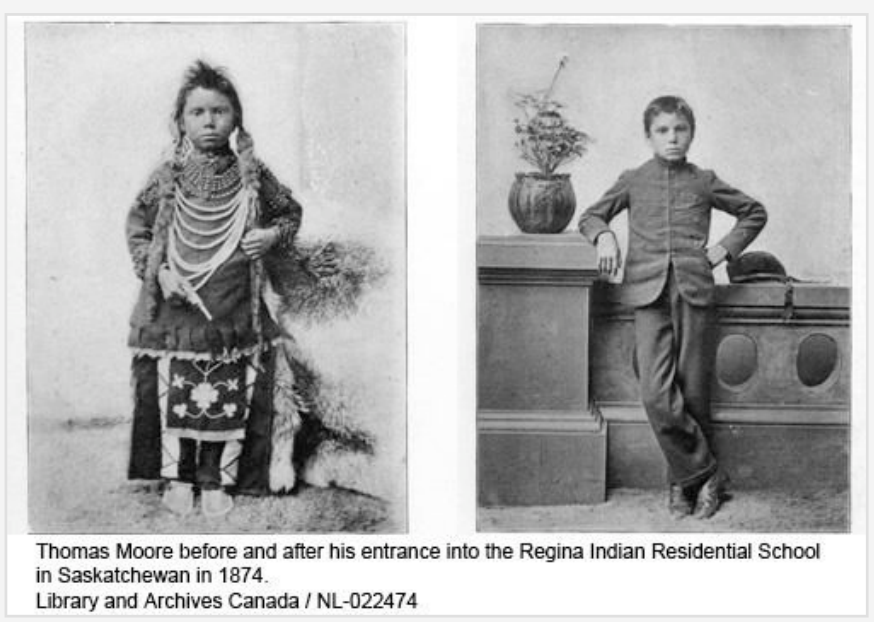
For over a century, Canada followed a policy of "cultural genocide" to eliminate the existence of Aboriginals as distinct legal, social, cultural, religious, and racial entities in Canada, by assimilating them into the Canadian mainstream against their will.3 At the core of this process was the operation of residential schools where about 150,000 Aboriginal children were brought, separated from their parents, not to educate them but to de-link them from their root culture and identity. Canada's first prime minister Sir John A. Macdonald publicly justified this policy as a means to make the Aboriginals "acquire the habits and modes of thought of white men."4 In 1920, Duncan Campbell Scott, the then Deputy Minister of Indian Affairs, told a parliamentary committee that "our object is to continue until there is not a single Indian in Canada that has not been absorbed into the body politic."5 These residential schools provided very harsh conditions to the Aboriginal children and ran on the assumption that European civilization and Christian religions were superior to Aboriginal culture, as a result of which they denigrated and suppressed the Aboriginal cultures and languages, as well as their spiritual practices, to further their plan to "civilize the savages". Many of these children faced physical and sexual abuse and many died because of diseases and other factors. Many children have been reported missing and the discovery of unmarked graves at the sites of abandoned residential schools points to a dark truth in the history of Canada.
The aim here is not to defame any particular religion or country, or their institutions, but to drive home a point that it is "thought" that decides whether an innocent child grows into a contributing global citizen or a hateful ideologue, ready to die and kill for some perverted sense of purpose and identity, and education is the tool to nudge him/her in either direction. Wrong education, instilling hateful thought-current into a child (or an adult), or the absence of right education, which nurtures an individual with the right kind of thought-currents, empowering him/her to become an enricher instead of an invader, has a negative impact on the collective human society, as the lessons from history teach us. It is education alone, that can act as an antidote to hate. It is education alone that can instill long-lasting peace on our planet. It is not military conflicts and wars, no matter how justified they might be, but only education that can defeat the life-negative thought-currents from the collective psyche of human civilization and replace them with life-affirmative and enriching thought-currents, resulting in a just, peaceful and harmonious world we all want to live in. A world where rights
Honouring the Truth, Reconciling for the Future, Summary of the Final Report of the Truth and Reconciliation Commission
of Canada, 2015
Canada, House of Commons Debates (9 May 1883), 1107–1108.
Library and Archives Canada, RG10, volume 6810, file 470-2-3, volume 7, Evidence of D. C. Scott to the Special Committee
of the House of Commons Investigating the Indian Act amendments of 1920, (L-2)(N-3).
and responsibilities are valued, and a world where each being is not merely a statistic but a unique expression of life that deserves dignity and respect.
Setting the Stage for the SPH’s Contribution
> “The highest education is that which does not merely give us information > but makes our life in harmony with all existence.” > > Rabindranath Tagore > (Nobel Prize in Literature, 1913)
In light of the context presented in the previous section, the Supreme Pontiff of Hinduism (SPH) Bhagavan Nithyananda Paramashivam has been a vanguard in championing the cause of education as a means to achieve lasting peace and harmony on the planet and an antidote to poisonous hateful thought-currents plaguing our society. He has given thousands of free public discourses on almost all topics that are relevant to our individual as well as collective journey, touching all dimensions of existence, be it spiritual, social, economic, cultural, personal, societal, etc. His vision is to establish the spiritual, economic, social, and political legitimacy of Sanatana Hindu Dharma (Hinduism) and reveal its solutions for the benefit of modern-day human society ravaged by violent conflicts and socio-economic distress. In addition to this, He has spearheaded the movement of reviving the ancient authentic indigenous Hindu gurukul education system which forms the most important project of his divine mission to establish a conscious society that lives based on evolved principles of non-violence and peaceful co-existence as a core cognition experienced via spiritual and superconscious breakthrough at an existential and experiential level, rather than merely being moral values one has to abide by. He is literally creating a new species that will spearhead the next breakthrough in the evolutionary process of human beings, turning them into divine superhumans, capable of extraordinary abilities previously confined only to ancient Yogis.6
Before we introduce SPH’s relentless contributions to the field of education and in turn contributing towards inner and outer peace and harmony at an individual and collective level, it is essential to understand why his efforts to revive the ancient Hindu education system as well as the Science of Power Manifestation have attracted so much resistance and opposition from so many people, and why He has been subjected to a chain of unending persecution and torture from forces operating from within and outside India. To understand the reason behind the persecution of the SPH and the continuous attempts to sabotage His indigenous Hindu gurukul, the Nithyananda Gurukul, it is important to understand the history of gurukul
[Nithyananda Yoga, Mahasadashivoham World Tour, Houston, Oct 23, 2017](https://youtu.be/zZg6xQ8zE0I)
education in India and how it was systematically dismantled by invaders and colonial forces who, like the cases we discussed in the last section, were motivated solely by the sinister ambition of annihilating the local indigenous Hindu cultural fabric of Indians and turn them into brown-skinned copies of the invaders and colonialists, serving the interests of their masters.
Cultural Genocide of Indigenous Hindu Traditions in Asia - Destruction of the Indigenous Hindu Gurukul Education System
In Hinduism spiritual lineage7 can be passed to the next generation only through lifelong, multi-generational8 spiritual practice, mentoring, and initiation by the Guru9 (or Gurumahasannidanam). Hindu spiritual practices involve yogic processes which cause a conscious mutation at a physical, physiological, psychological, and neurological level, allowing practitioners to maintain meditative states of consciousness (Samadhi10) for prolonged durations.11 These meditative states are essential for the Hindu religion. Some short-duration experiences of these meditative states are studied by contemporary western scientists in various groups of meditators12, martial artists13, and athletes14. Hindu spiritual processes and initiation by the enlightened Guru make the attainment of these meditative states of consciousness accessible to every practitioner, and not just to an accomplished group of people. As per the Hindu religious laws prescribed in Veda-Agamas (scriptures), only the ordained supreme pontiff (Guru or Gurumahasannidanam) can initiate their native Hindu
Kularnava Tantra, 14th Ullasa, verse 8 – “तस्मात् सर्वप्रयत्नेन साक्षात्परशिवोदितम्। सम्प्रदायमविच्छिन्नं सदा कुर्यात् गुरुः प्रिये ॥८॥“ -
“Therefore, O My Beloved! One should seek with all efforts to have a Guru of unbroken tradition originating from Para Siva Himself.”
Early Life Exposure to Environmentally Relevant Levels of Endocrine Disruptors Drive Multigenerational and
Transgenerational Epigenetic Changes in a Fish Model https://www.frontiersin.org/articles/10.3389/fmars.2020.00471/full
(i) Kāmikāgama Uttara Pada Chapter 25 verses 5-7, 8-11, 39-41
docs.google.com/document/d/1UB40gY9qADTdH5VrjIeejIesaDqzdX5nXxHaaXZQe3U www.himalayanacademy.com/media/books/kamika-agama-uttara-pada-part-2/kamika-agama-uttara-pada-part-2.pdf (ii) Regarding ādiśaiva the Kāmikāgama says that they are born in the family of sages such as Kauśika who were initiated directly by Śiva immediately after the creation of the world. Therefore, they are qualified to undertake all the rites [as prescribed in the āgamas] such as consecration, installation [in the temple], worship in public and expounding the [āgamas] (vyākhyāna). The Kāraṇāgama and the Santānāgama also state that only the ādiśaiva is qualified to do these rites and if the rites are done by others it will bring only calamity. www.wisdomlib.org/definition/adishaiva
https://en.wikipedia.org/wiki/Samadhi
Mystic Phenomena Scientific Data - ISBN: 978-1-934364-45-1 books.nithyanandatimes.org/product/mystic-phenomena-
scientific-data
Veltri, Michael (2017). The Mushin Way: How the Power, Clarity and Mindfulness of Aikido Can Bring Success in Business
and Life. John Wiley & Sons, Incorporated. ISBN 9781119285267.
Hyams, Joe. Zen in the Martial Arts. New York: Bantam Books, 1979
(i) Young, Janet A. & Pain, Michelle D. "The Zone: Evidence of a Universal Phenomenon for Athletes Across Sports".
(ii) 'Do Top Athletes Experience the State of Pure Consciousness? Going Beyond Tiredness and Boredom' - youtu.be/tNRUKLy0PMw
community members into the practice of these yogic sciences, lifestyle sciences, knowledge system sciences, and sciences of ritual15.
United Nations Declaration on the Rights of Indigenous Peoples, Article 8 (2) declares, “States shall provide effective mechanisms for prevention of, and redress for: (a) Any action which has the aim or effect of depriving them of their integrity as distinct peoples, or of their cultural values or ethnic identities;”. 16 Killing the Gurus (or Gurumahasannidanam), or breaking the lineage of Gurus, irreversibly disrupts the continuation of the spiritual tradition to the next generation, destroys the distinct identity of indigenous Hindu traditions, and leads to their permanent destruction. This is how the majority of the 8,000 of the 10,00017 indigenous enlightenment ecosystems were destroyed, and less than 2,000 of them remain now. The distinct religious practices of the ASMT are extremely vulnerable to this irreversible destruction. Just like the destruction of Lamas in Buddhism is the destruction of Buddhism as the yogic bodies of the Lamas are the repository18 of Buddhahood19, Hinduism in its entirety and not just some traditions of Hinduism will permanently be destroyed after the extermination of the lineages of the Gurus.
1948 UN-Res.-260(III) Prevention of Crime of Genocide20, Article 2
In the present Convention, genocide means any of the following acts committed with intent to destroy, in whole or in part, a national, ethnical, racial, or religious group, as such:
(a) Killing members of the group;
(b) Causing serious bodily or mental harm to members of the group;
(c) Deliberately inflicting on the group conditions of life calculated to bring about its physical destruction in whole or in part;
(d) Imposing measures intended to prevent births within the group;
(e) Forcibly transferring children of the group to another group.
Destruction of the lineage of Gurus does not only destroy the religion but also the entire Hindu society in totality. The Agama scriptures are voluminous21. As per Hindu scriptural
Pauskara Agama Vidya Pada, 1 Pati Patalah, 1 Chapter, 2nd Verse, www.himalayanacademy.com/view/pauskara-agama-
vidya-pada_v2. docs.google.com/document/d/1UB40gY9qADTdH5VrjIeejIesaDqzdX5nXxHaaXZQe3U
UNDRIP http://un.org/development/desa/indigenouspeoples/wpcontent/uploads/sites/19/2019/01/UNDRIP_E_web.pdf
PARAMANANDA-TANTRA, Chapter 2, verses 7-10
https://tergar.org/about/tergar-lineage/
https://en.wikipedia.org/wiki/Buddhahood
https://www.un.org/en/genocideprevention/genocide.shtml
Klaus Klostermaier (2007), A Survey of Hinduism: Third Edition, State University of New York Press, ISBN 978-0-7914-
7082-4, pg. 49–50
records, there are 10,000 Agamas for the ASMT alone22. In totality, all Agamas and sourcebook scriptures of Hinduism put together are more than 100 million, of which only 20 million remain today.
“Centuries of history of discrimination, exploitation, dispossession, and colonization have led to the loss of traditional knowledge. Traditional knowledge is under threat and is being misused and misappropriated …"
“Indigenous peoples’ traditional knowledge has been developed over generations through daily life practices and a close understanding of local environments. It can offer valuable responses to climate change, food insecurity, reducing inequalities and other challenges that we are trying to resolve …”
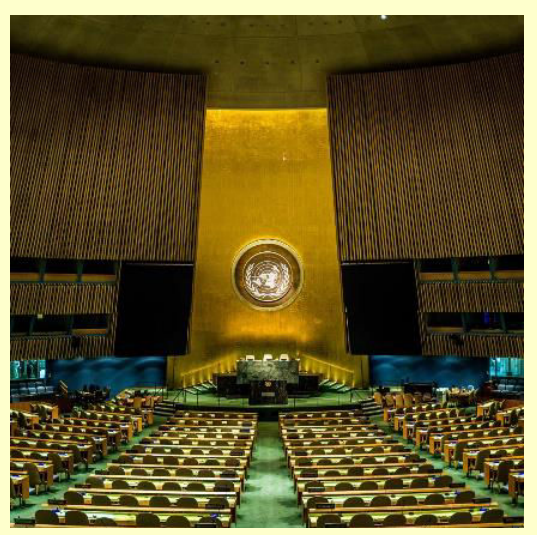
18th Session of the United Nations Permanent Forum on Indigenous Issues (UNPFII)
The mastery over the magnanimous volume of Veda-Agamic scriptures is achieved by specializing in a branch of Veda-Agama scripture over multiple generations. Hindu sects and schools specialize and systematically practice a particular branch (Shakha) of the Veda-Agamas and continue the tradition over thousands of years.23 It is considered nearly impossible for a single group to master the Veda-Agamas (Hindu scriptures) in its entirety, and thus each Hindu sect or school (Shakha or Sampradaya) is interdependent on other schools (Shakha) for practice and application of the entirety of Hinduism.24 (different systems of chanting and preserving)
The loss of one lineage, or school (Shakha or Sampradaya) is not just a loss for the respective Hindu sect but entire Hinduism. Therefore, the persecution of a Hindu Guru is not limited to the destruction of His lineage alone but of an integral body of Hinduism in its entirety.
The destruction of the lineage of Gurus destroys several thousands of years of scholarly research and practice of the Veda-Agamas. The Veda-Agamas is not just the repository of ancient spiritual and religious knowledge, they are a repository of a phenomenal volume of ancient Human knowledge and expertise, in various fields such as State Policies, Politics &
Paramananda Agama (2nd chapter, Verse 7-10)
https://archive.org/details/64.tantraparamanandatantraraghunathmishra/page/n29/mode/2up
https://en.wikipedia.org/wiki/Shakha
http://rajavedapatasala.org/FAQ2.html
Statecraft25, Law26, Banking & Accounting27, Architecture & Civil Engineering28, Performing Arts29, Medicine30, Surgery31, Botany32, Chemistry and Metallurgy33, Music34, Agriculture35, Astrology36, Shipbuilding37, Manufacturing38, Food sciences39, etc. The entire Hindu education is done and supervised by the enlightened Guru. The Hindu knowledge in various fields is unique, unlike their modern counterparts. The Veda Agamas (Hindu scriptures) enable not just excellence in the profession but the attainment of spiritual liberation even through the mere practice of the profession40. This is why, for example, the science of archery in Hinduism (Dhanurvidya), does not just deal with archery alone but also with the attainment of liberation. The Acharyas (Hindu scholars and teachers) can transmit some portion of the domain expertise, but only the Guru guides into the science of liberation41 that is even realized while practicing a particular trade or profession42 without necessarily mandating additional spiritual practices. The destruction of the Guru's lineage destroys this possibility for every Hindu.
This is why, for example, the science of archery in Hinduism (Dhanurvidya), does not just deal with archery alone but also with the attainment of liberation. The science of Dhanurvidya is comparable to Kyūdō a Japanese martial art (budō), which is a form of meditation in action for moral and spiritual development – which has the supreme goal of kyūdō – the state of shin-zen-bi - which loosely translated as – when archers shoot correctly (i.e. truthfully) with virtuous spirit and attitude toward all persons and all things which relate to kyūdō (i.e. with goodness), beautiful shooting is realized naturally.43 There are primarily 32 such knowledge sciences (Vidya) and 64 such meditative arts (Kalaa) in Hinduism, most of which have lost their spiritual components in the contemporary era. The Acharyas (Hindu scholars and teachers) can transmit some portion of the domain expertise, but only the Guru guides into the science
Samrajya Laxmi Pithika, Niti Shashtra, Artha Shashtra, Manu Smriti
Dharmashastra, Manu Smriti, Parasara Smriti, Yagya Valk, Gautama, Mitakshara
Arthashashtra, Krisi-Parasara
Kamikagama, Mahaagama, and Suprabhedagama
Pancharatra Agama
Charaka Saṃhitā, Sham Raj, Nighant, Bhashya Parichehed, Madhava Nidan, Vagbhat
Sushruta Samhita
Vrukshayurveda, Bruhat Samhita, Sarngadhara's Vrukshayurveda, Parasara's Vrukshayurveda
Rasahrudaya Agama, Rasendra Mangala, Rasarathnakara, Karshaputa, Lohasastra
Gandharva Veda
Krishi Parasara
Siddbant Shiromani, Nil Kanthi, Mahurta Chintamani, Brihat Jatak, Shighra Bodh, Parasariya
Yukti Kalpa Taru
Nagalingayna-Kutha, Vishvakurma-Poorana, Kumalesherra Kalikamahata
Bhaga Shashtra
Ishavasya Upanishad, verse 2
Guru Gita verse 1 to 11, https://www.hardlight.org/wordpress/images/Guru-Gita-complete.pdf
Bhagawat Gita Chapter 3 verse 9,17-20.
Kyudo Manual, Volume 1, All Nippon Kyudo Federation (revised edition)
Pre-Independence Era Diarchal Government
The indigenous origin political leaders in South Asia, during and subsequently, after the independence of India, had antagonistic views on indigenous cultures such as Hindu feminism, Hindu worship of divine as Mother, indigenous Gurukul education46, and traditional decentralized self-governance institutes that administered villages and temples. As the Chief Minister of Madras Presidency, Panaganti Ramarayaningar banned the distribution of poems on indigenous forms of governance, Hindu education, Hindu feminism, women empowerment, and religious freedom.47
The origin of the anti-Hindu caste system in India – a colonial-era census
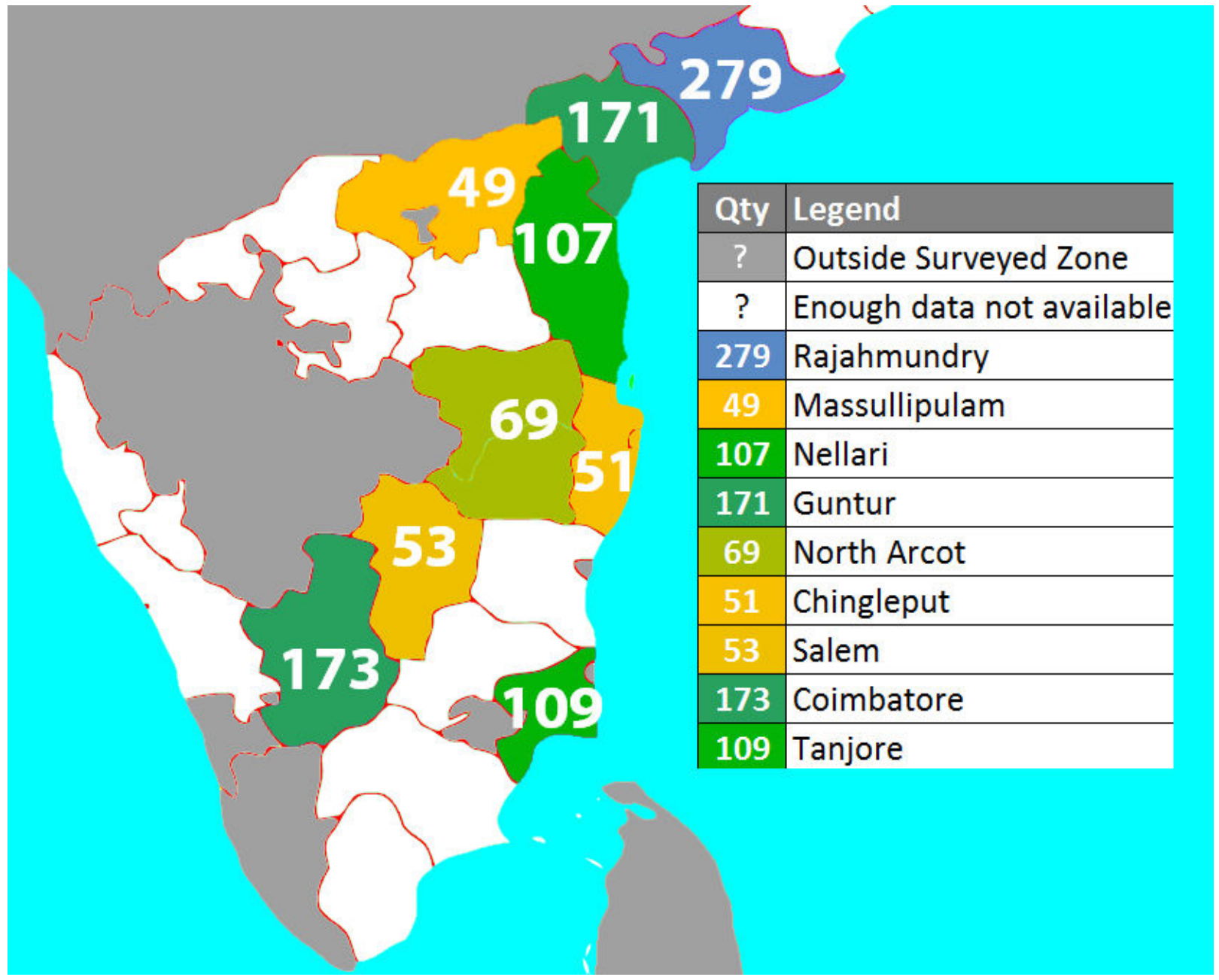
The pre-colonial indigenous education system was widespread48 imparting education to every person even in the remotest village49, it was economical50 and inclusive, catering to boys and girls51 of all sections of society with as many as 70% of students being from impoverished communities52 that now are recognized53 as OBCs, SCs, and STs54. The table below shows data from
Guru Gita verse 1 to 11, https://www.hardlight.org/wordpress/images/Guru-Gita-complete.pdf
Bhagawat Gita Chapter 3 verse 9,17-20.
Eugene F. Irschick (1969). Political and Social Conflict in South India; The non-Brahmin movement and Tamil Separatism,
1916 – 1929. University of California Press.
Parthasarathy, R. (1979). Builders of modern India:S. Satyamurti. Publications Division, Government of India. p. 43.
House of Commons Papers, 1831-32, volume 9, p.468, Presidency of Bombay, G.L. Prendergast 'there is hardly a village,
great or small, throughout our territories, in which there is not at least one school, and in larger villages more.'
House of Commons Papers, 1812-13, volume 7, Evidence of Thomas Munro (Governor of Madras Presidency 1819-1827),
p.127, The Beautiful Tree, Indigenous Indian Education in the Eighteenth Century, Dharampal, (ISBN No.: 81-85569-49-5 republished ISBN-10: 8175310952), page 26.
Collector of Bellary (A.D. Campbell) to Board of Revenue, 17 August 1823 (TNSA: BRP: Vol.958 Pro.25.8.1823 pp.7167-85
Nos.32-33), para 16. “The economy with which children are taught to write in the native schools, and the system by which the more advanced scholars are caused to teach the less advanced and at the same time to confirm their own knowledge is certainly admirable, and well deserved the imitation it has received in England.”
The Beautiful Tree, Indigenous Indian Education in the Eighteenth Century, Dharampal, (ISBN No.: 81-85569-49-5
republished ISBN-10: 8175310952), Chapter IV, “Education of Girls” page 43
(i) The Beautiful Tree, Indigenous Indian Education in the Eighteenth Century, Dharampal, Chapter IV, Table 3 - Caste-
wise division of male school, student, republished here, (ii) Ibid see also pg 29, “while the Soodras and the other castes ranged from about 70% in Salem and Tinnevelly to over 84% in South Arcot” (iii) TNSA: Revenue Consultations: Vol.920: dated 2 July 1822
Ibid Chapter IV page 22 “this included most such groupings which today are listed among the scheduled castes”
OBCs – Other backward castes, SCs – Scheduled Castes, STs – Scheduled Tribes are some of officially designated groups
of people in India that are considered disadvantaged and marginalized by the State of Republic of India.
DIVISION OF SCHOOL STUDENT AS PER COLONIAL CASTE SYSTEM55 (year - 1823)
| District | Classification of Hindus per 1871 British Census | Other religions | TOTAL Students | ||||
|---|---|---|---|---|---|---|---|
| Brahmin/ Scholar | Kshatriya/ Warrior | Vaishya/ Trader | Shudra/ Worker | Others | |||
| TANJORE | 16.2% | 2.1% | 1.3% | 61.3% | 13.9% | 5.4% | 17,423 |
| MADRAS | 7.0% | 15.4% | 68.6% | 6.1% | 2.8% | 5,109 | |
| SERINGAPATAM | 7.8% | 3.8% | 47.8% | 25.8% | 14.0% | 613 | |
| MADURA | 8.7% | 8.2% | 53.0% | 21.8% | 8.4% | 13,676 | |
| SOUTH ARCOT | 9.6% | 3.6% | 76.2% | 8.2% | 2.4% | 10,419 | |
| NORTH ARCOT | 9.6% | 8.7% | 66.7% | 7.4% | 7.6% | 7,274 | |
| SALEM | 10.8% | 7.6% | 39.4% | 32.6% | 10.2% | 4,238 | |
| COIMBATORE | 11.3% | 3.6% | 78.5% | 2.8% | 3.8% | 8,124 | |
| TRICHNOPOLY | 11.8% | 2.2% | 76.0% | 3.2% | 6.8% | 10,191 | |
| CHINGLEPUT | 12.8% | 1.8% | 71.5% | 6.7% | 2.8% | 6,729 | |
| BELLARY | 18.0% | 14.9% | 45.6% | 17.8% | 3.7% | 6,581 | |
| MALABAR | 18.6% | 0.7% | 30.9% | 23.0% | 26.7% | 11,963 | |
| TINNEVELLY | 21.8% | 31.2% | 38.2% | 8.5% | 9,258 | ||
| CUDDAPAH | 24.0% | 29.1% | 30.1% | 11.0% | 5.8% | 5,892 | |
| GANJAM | 27.3% | 8.2% | 33.8% | 29.9% | 0.9% | 2,965 |
The Beautiful Tree, Indigenous Indian Education in the Eighteenth Century, Dharampal, (ISBN No.: 81-85569-49-5
republished ISBN-10: 8175310952)
| DETAILS OF SCHOOLS AND COLLEGES⁵⁶ | ||||||
|---|---|---|---|---|---|---|
| SCHOOLS | COLLEGES | TOTAL POPULATION⁵⁷ | ||||
| Number | Students | Number | Students | (1823 Estimates) | REMARKS | |
| Oriya Speaking | ||||||
| GANJAM | 255 | 2,977 | * | 3,32,015 (9,41,004) | Partial Returns Privately in Agraharams | |
| Telugu Speaking | ||||||
| VIZAGAPATTAM | 914 | 9,715 | 7,72,570 (9,41,004) | Returns somewhat incomplete. | ||
| RAJAHMUNDRY | 291 | 2,658 | 279 | 1,454 | 7,38,308 | |
| MASULIPATAM | 484 | 5,083 | 49 | 199 | 5,29,849 | |
| GUNTOOR | 574 | 7,724 | 171 | 939 | 4,54,754 | Privately Taught |
| NELLORE | 697 | 7,621 | 107 | * | 3,39,647 | Included in schools total |
| CUDDAPAH | 494 | 6,000 | * | 10,94,460 | Privately Taught | |
| 38,801 | ||||||
| Kannada Speaking | ||||||
| BELLARY | 510 | 6,641 | 23 | 9,27,857 | Included in school total | |
| SERINGAPATHAM | 41 | 627 | 31,612 | |||
| 7,268 | ||||||
| Malayalam Speaking | ||||||
| MALABAR | 759 | 14,153 | 1 | 75 | 9,07,575 | Those privately taught given separately |
| Tamil Speaking | ||||||
| NORTH ARCOT | 630 | 7,326 | 69 | 418 | 8,92,292 (5,77,020) | |
| SOUTH ARCOT | 875 | 10,523 | 4,55,020 (4,20,530) | |||
| CHINGLEPUT | 508 | 6,845 | 51 | 398 | 3,63,129 | |
| TANJORE | 884 | 17,582 | 109 | 769 | 9,01,353 (3,82,667) | |
| TRICHNOPOLY | 790 | 10,331 | 9 | 131 | 4,81,292 | Privately in |
| MADURA | 844 | 13,781 | * | 7,88,196 | Agraharams | |
| TINNEVELLY | 607 | 9,377 | 5,64,957 | |||
| COIMBATORE | 763 | 8,206 | 173 | 724 | 6,38,199 | |
| SALEM | 333 | 4,326 | 53 | 324 | 10,75,985 | |
| MADRAS | 322 | 5,699 | * | 4,62,051 | Privately, Gratis | |
| 93,996 | ||||||
| TOTAL: | 11,575 | 1,57,195 | 1,094 | 5,431 | 1,28,50,941 |
⁵⁶ The Beautiful Tree, Indigenous Indian Education in the Eighteenth Century, Dharampal, (ISBN No.: 81-85569-49-5 republished ISBN-10: 8175310952) ⁵⁷ Varying population figures in parenthesis are those sent by the Collectors with the educational data.
The pre-colonial indigenous gurukul education system encouraged harmony amongst all social communities by recognizing the dignity of labor and respect for all professions, for example, the second verse from an ancient treatise on agriculture says, "Despite being learned of four Vedas (core Hindu scriptures) if a Brahmin considers agriculture inferior he is bound to be stuck in a cycle of poverty."58 The Hindu scriptures taught to respect each human being without discrimination as not just an equal human being but a divine manifestation of God - "Whether a woman or a man, a Cāṇdala or a high-born Dvija, there is absolutely no discrimination in the Cakra. Everyone here is considered like Śiva (Primordial Hindu Divinity)" 59 . Despite the inclusive nature of pre-colonial indigenous education and fluid nature of pre-colonial indigenous social structures, the Chief Minister of Madras Presidency, Ramarayaningar, a strong advocate of westernization parroted a colonial trope60 in one of his
"चतुर्वेदान्तगो विप्रः शास्त्रवादी विचक्षणः। अलक्ष्म्या गृह्यते सोऽपि प्रार्थनालाघवान्वितः ॥२॥" कृषिपराशरम्
https://sa.wikisource.org/s/d9w
"स्त्री वाथ पुरुषः षण्डचण्डालो वा द्विजोत्तमः। चक्रेऽस्मिन्नेव भेदोऽस्ति सर्वं शिवसमाः स्मृताः ॥९७॥" verse 97 and “जातिभेदो न
चक्रेऽस्मिन् सर्वे शिवसमाः स्मृताः। वेदेऽपि स्थितमेवं हि सर्वं हि ब्रह्मा चाब्रवीत् ॥१०१॥" verse 101, etc., Kularnava Tantra, 8th Ullasa https://archive.org/details/Kularnava/mode/2up
Wylie, Lesley. “Colonial Tropes and Postcolonial Tricks: Rewriting the Tropics in the ‘Novela De La Selva.’” The Modern
Language Review, vol. 101, no. 3, 2006, pp. 728–742. JSTOR, www.jstor.org/stable/20466906.
most cited interviews stating – “What did the Brahmans do for our education in the five thousand years before Britain came? I remind you: They asserted their right to pour hot lead into the ears of the low-caste man who should dare to study books. All learning belonged to them, they said.”61 The dangerous colonial caste constructs as seen in the Rwanda Genocide are also the basis for depriving Hindus of their religious rights, marginalization of various Hindu people groups, and the destruction of Hindu temples and monasteries. The indigenous Gurukul education system was not limited to imparting spiritual and religious knowledge, they contributed a phenomenal volume of ancient Human knowledge and expertise, in various fields such as State Policies, Politics & Statecraft62, Law63, Banking & Accounting64, Architecture & Civil Engineering65, Performing Arts66, Medicine67, Surgery68, Botany69, Chemistry and Metallurgy70, Music71, Agriculture72, Astrology73, Shipbuilding74, Manufacturing75, Food sciences76, giving breakthrough contributions to humanity such as – knowledge, and application of zero, binomial theorem77 (200BCE78), calculations with zero79, positive numbers, negative numbers, generalization of Fibonacci identity, Euler's four-square identity, Lagrange's identity80, knowledge, and application of infinity81 (300BCE), average values82 (1150 CE), fractions83 (628 CE), arithmetical and geometrical progressions, plane geometry, angular dimensions, solid geometry, simple, quadratic, simultaneous, and
Mayo, Katherine (1937). Mother India. New York. p. 178.
Samrajya Laxmi Pithika, Niti Shashtra, Artha Shashtra, Manu Smriti
Dharmashastra, Manu Smriti, Parasara Smriti, Yajnyavalkya smrit, Gautama, Mitakshara
Arthashashtra, Krisi-Parasara
Kamikagama, Mahaagama, and Suprabhedagama
Pancharatra Agama
Charaka Saṃhitā, Sham Raj, Nighant, Bhashya Parichehed, Madhava Nidan, Vagbhat
Sushruta Samhita
Vrukshayurveda, Bruhat Samhita, Sarngadhara's Vrukshayurveda, Parasara’s Vrukshayurveda
Rasahrudaya Agama, Rasendra Mangala, Rasarathnakara, Karshaputa, Lohasastra
Gandharva Veda
Krishi Parasara
Siddhant Shiromani, Nil Kanthi, Mahurta Chintamani, Brihat Jatak, Shighra Bodh, Parasariya
Yukti Kalpa Taru
Nagalingayna-Kutha, Vishvakurma-Poorana, Kumalesherra Kalikamahata
Bhaga Shashtra
(i) Plofker, Kim (2009). Mathematics in India. Princeton University Press. pp. 54-56. “Pingala's use of a zero symbol as a
marker seems to be the first known explicit reference to zero.” ISBN 0-691-12067-6. (ii) पिङ्गलछन्दःसूत्रम्
(i) R. Hall, Mathematics of Poetry, has "c. 200 BC" (ii) Mylius (1983:68) mentions "very late" within the Vedānga corpus.
The Siddhanta-Sekhara of Sripati: A Sanskrit astronomical work of the 11th century : Cambridge University Press.
Henry Thomas Colebrooke. Algebra, with Arithmetic and Mensuration, from the Sanskrit of Brahmegupta and Bhaascara,
London 1817, p. 339 (online)
(i) Ian Stewart (2017). Infinity: a Very Short Introduction. Oxford University Press. p. 117. ISBN 978-0-19-875523-4. (ii)
वधादौ वियत् खस्य खं खेन घाते खहारो भवेत् खेन भक्तश्च राशिः ॥2.18 ॥ अस्मिन् विकारः खहरे न राशावपि प्रविष्टेष्वपि निःसृतेषु। बहुष्वपि स्यात् लय-सृष्टिकाले अनन्ते अच्युतेभूतगणेषु यद्वत् ॥2.20॥ Bhaskaracharya’s Bijaganita
Plofker, Kim (2009). Mathematics in India. Princeton University Press. page 71, ISBN 0-691-12067-6.
Bhāskara II's treatise on mathematics, Līlāvatī
indeterminate equations84, Baudhayana-Pythagoras Theorem85, Madhava–Leibniz infinite series for the value of pi (П)86, trigonometry, infinite series for calculating value of a sine function, Nilakanta-Taylor series (1685 CE), Govindaswami-Newton-Gauss interpolation (1670 CE), calculus87. Somayaji-Newton Power series (1660 CE), Madhava-Gregory’s series for inverse tangent (1632 AD), astronomy, Velocity of Planets (Puthumana Somayaji 1450 CE), Gravity (1114 CE), freely available organic antibiotic remedies88, free and affordable89 healthcare, vaccination90 procedures, surgical91 procedures including plastic surgery, etc. The State of the Republic of India however, considers indigenous heritage, knowledge, and acumen in poor light. In India, the interference of the State is not limited to Hindu religion and Hindu temples alone, but various fields like business and even science. C V Raman, the first Indian and first Asian to win Nobel Price, in one of his lectures about a series of experiments that required platinum, remarked that he had found his first sliver of platinum, when he, in a fit of rage against the government’s ill-conceived policies on science, had smashed his Bharat Ratna medal (highest civil honor).92 Raman was outraged at what he felt was the government’s use of power to grant funds as a means to establish control over research institutes.93 In his twilight years, he said in frustration, “My life has been an utter failure. I was the first Asian to bring home the Nobel Prize in the scientific field. I thought I would bring true science to our country.” Similarly, the interference of government on the economy was devastating, often termed – License Raj – referring to the red tape of the State
B. S. Yadav (28 Oct 2010). Ancient Indian Leaps Into Mathematics. Springer. p. 88. ISBN 978-0-8176-4694-3, Aryabhatiya
Thibaut, George (1875). "On the Śulvasútras". The Journal of the Asiatic Society of Bengal. 44: 232–238
(i) Edwards (1994), The historical development of the calculus, Springer Study Edition Series (3 ed.), Springer, p. 247,
ISBN 978-0-387-94313-8 (ii) ഇരിഞ്ഞാറ്റപ്പള്ളി മാധവൻ നമ്പൂതിരി Madhava of Sangamagrama discovered before Leibniz
(i) "Neither Newton nor Leibniz - The Pre-History of Calculus and Celestial Mechanics in Medieval Kerala". MAT 314.
Canisius College. (ii) "An overview of Indian mathematics". Indian Maths. School of Mathematics and Statistics University of St Andrews, Scotland.
https://www.nature.com/articles/37838
Gopinath BG. Foundational ideas of Ayurveda. Medicine and Life Sciences in India. In: Subbarayappa BV, Chattopadhyay
DP, editors. New Delhi: Centre for Studies in Civilizations; 2001. pp. 59–107. History of Science, Philosophy and Culture in Indian Civilization; Part 2. Vol. IV.
J. Van Alphen; A. Aris (1995). "Medicine in India". Oriental Medicine: An Illustrated Guide to the Asian Arts of Healing.
London: Serindia Publications. pp. 19-38 ISBN 978-0-906026-36-6.
Kansupada, KB; Sassani, JW (1997). "Sushruta: the father of Indian surgery and ophthalmology". Doc Ophthalmol. 93 (1-
2): 159-67. doi:10.1007/bf02569056. PMID 9476614. S2CID 9045799.
(i) Parameswaran, Uma (2011). C.V. Raman : a biography p. 222. OCLC 772714846. (ii) Malhotra, Inder (2014). "C. V.
Raman and the Bharat Ratna". www.freedomfirst.in
(i) "The ups and downs of a science city". (ii) Krishna, V.V.; Khadria, Binod (1997). "Phasing Scientific Migration in the
Context of Brain Gain and Brain Drain in India". Science, Technology and Society. 2 (2): 347 - 385. doi:10.1177/097172189700200207. S2CID 143870753. (iii) Krishna, V. V. (1 June 2001). "Changing policy cultures, phases and trends in science and technology in India". Science and Public Policy. 28 (3): 179 - 194. doi:10.3152/147154301781781525.
that hindered the setup and running of businesses in India between 1947 and 1990.94 During this era, based on political interest95, the banking sector in India was nationalized. This brought down their profitability96 and viability97. Five decades later, the government was forced to pump in INR 2.5 trillion to counter the effect of several scams98 that had resulted in a high level of non-performing assets standing at around INR 7.5 trillion99. The government had also nationalized the airline industry. Before the nationalization of the airline company Air India, its owner JRD Tata would take interest in minute details like cleanliness and even clean dirty toilets inside aircraft by himself to set an example for his staff to follow100, after nationalization over decades of destruction101 the airline gathered a total of INR 500 billion in debt, with the government determined to sell it off and privatize it again by December 2019.102 Similarly, the government had nationalized various companies and organizations which over decades underperformed for various reasons linked to the economy in general and also because of red tape, and lack of accountability. The same is the fate of Hindu temples that were nationalized by the State governments of India. Madurai Temple for example used to offer Anna Daan (free food as a charitable service) to everyone irrespective of their status, religion, or caste. After State take over of the temple, not just Anna Daan several important services were stopped. In 1990, India faced a severe balance of payments crisis and as a part of a bailout deal with the IMF, India was forced to pledge 20 tonnes of gold to the Union Bank of Switzerland and 47 tonnes to the Bank of England and Bank of Japan and subsequently, liberalized the economy ending the red-tapism to some extent.103 Despite the lessons learned from the past, several political groups in the State of the Republic of India are determined to nationalize and usurp ancient wealth and gold of several Hindu temples and loot it in the guise
(i) Mathew, George Eby (2010). India's Innovation Blueprint: How the Largest Democracy is Becoming an innovation
Super Power. Oxford: Chandos Publishing. pp. 13 ff. ISBN 978-1-78063-224-7. OCLC 867050270. (ii) Nehru, S., ed. (2019). Economic Reforms in India: Achievements and Challenges. Chennai: MJP Publisher. p. 271. ISBN 978-81-8094-251-8. OCLC
913733544. (iii) Street Hawking Promise Jobs in Future Archived March 29, 2008, at the Wayback Machine, The Times of India, 2001-11-25
https://economictimes.indiatimes.com/news/politics-and-nation/view-indias-leap-to-nationalisation-as-world-jumped-
over-the-moon/articleshow/70402194.cms
https://www.business-standard.com/article/opinion/50-years-of-nationalization-119071801749 1.html
https://www.livemint.com/opinion/columns/opinion-the-1969-bank-nationalization-did-india-more-harm-than-good-
1563295097940.html
https://www.business-standard.com/article/opinion/shekhar-gupta-dump-it-sell-it-forget-it-118021601397 1.html
(i) https://www.statista.com/statistics/1064657/india-gross-npa-public-sector-banks-india/ , (ii) https://www.business-
standard.com/article/politics/here-s-why-communist-party-of-india-opposes-privatisation-of-psbs-118022200476 1.html
https://www.livemint.com/Companies/rLr3BwZ3ll8vk5j8xl8ypJ/air-india-tata-air-india-flights-air-india-sale-airline.html
https://www.firstpost.com/business/the-praful-patel-guide-to-destroying-ai-revised-edition-34635.html
https://www.newindianexpress.com/specials/2019/dec/25/from-jet-airways-closure-to-air-india-crisis-how-indian-
aviation-sector-got-stalled-in-2019-2080409.html
(i) Economic Crisis Forcing Once Self-Reliant India to Seek Aid, The New York Times, 29 June 1991(ii) Bank, The World
(12 November 1991). "India - Structural Adjustment Credit Project (English) - Presidents report". World Bank: 1. (iii) "Structural adjustments in India - a reportof the Independent Evaluation Group (IEG)". World Bank.
of the greater interest of the nation – the prime example being the gold monetization104 scheme planned for the Padmanabhaswamy Temple – the largest collection of items of gold and precious stones in the recorded history of the world.105 Though the State of the Republic of India got political independence in 1947, and economic liberalization in 1990, there is a long way to go, especially in terms of religious rights more so for minority Hindu religious sects.
As per the colonial government data, the pre-colonial indigenous education system was widespread106 imparting education to every person even in the remotest village107, it was economical108 and inclusive, catering to boys and girls109 of all sections of society with as many as 70% of students being from impoverished communities110 that now are recognized111 as OBCs, SCs, and STs112. Despite this E. V. Ramasamy concocted several racist theories and delivered a massive volume of anti-Hindu speeches, such as claiming that historically in Hinduism education was fundamentally denied especially to impoverished communities.113
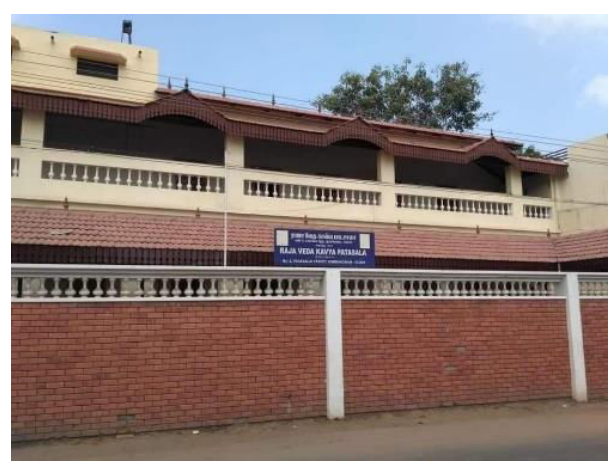
How many of us know that there is a 479 years old Educational Institution in India with an unbroken tradition of imparting knowledge? The oldest living institution is Raja Veda Kavya Patasala, Kumbakonam, TN, established in 1542 AD. Started by Govinda Dikshitar, the prime minister of Nayaka kings, the Veda Patasala still runs in Kumbakonam today.114
https://www.indiatoday.in/india/story/pm-narendra-modi-temples-gold-jewellery-banks-248110-2015-04-11
(i) "India to evaluate world's largest gold treasure soon". Archived from the original on 2015-04-14. (ii) R. Krishnakumar
(16 July 2011). "Treasures of history". Frontline. 28 (15). Retrieved 27 November 2015.
House of Commons Papers, 1831-32, volume 9, p.468, Presidency of Bombay, G.L. Prendergast 'there is hardly a village,
great or small, throughout our territories, in which there is not at least one school, and in larger villages more.'
House of Commons Papers, 1812-13, volume 7, evidence of Thomas Munro (Governor of Madras Presidency 1819-
1827), p.127, The Beautiful Tree, Dr. Dharampal, (ISBN No.: 81-85569-49-5 republished ISBN-10: 8175310952), page 26.
Collector of Bellary (A.D. Campbell) to Board of Revenue, 17 August 1823 (TNSA: BRP: Vol.958 Pro.25.8.1823 pp.7167-85
Nos.32-33), para 16. “The economy with which children are taught to write in the native schools, and the system by which the more advanced scholars are caused to teach the less advanced and at the same time to confirm their own knowledge is certainly admirable, and well deserved the imitation it has received in England.”
The Beautiful Tree, Dr. Dharampal, (ISBN No.: 81-85569-49-5 republished ISBN-10: 8175310952), Chapter IV, “Education
of Girls” page 43
(i) The Beautiful Tree (Dharampal), Chapter IV, Table 3 - Caste-wise division of male school, student, republished here,
(ii) Ibid see also pg 29, “while the Soodras and the other castes ranged from about 70% in Salem and Tinnevelly to over 84% in South Arcot” (iii) TNSA: Revenue Consultations: Vol.920: dated 2 July 1822
Ibid Chapter IV page 22 “this included most such groupings which today are listed among the scheduled castes”
OBCs – Other backward castes, SCs – Scheduled Castes, STs – Scheduled Tribes are some of officially designated groups
of people in India that are considered disadvantaged and marginalized by the State of Republic of India.
Saraswathi, S. (2004) Towards Self-Respect. Institute of South Indian Studies: Madras pp. 119.
https://www.facebook.com/mani.ramalingam.5/posts/4230673080312611
Attacks on Nithyananda Gurukul
In continuation of the constant persecution of Hindu indigenous gurukuls, Nithyananda Gurukul, the revival of the ancient indigenous Hindu ASMT115 gurukul education system, has been subjected to continuous harassment and torture by various Hinduphobic terrorists who have not left any stone unturned to make sure the SPH is not allowed to run His gurukul peacefully. These forces are heavily invested in stopping any genuine attempt of the revival of indigenous Hindu traditions in India as they have a clear-cut policy of cultural genocide of the indigenous Hindu population in India in the next few decades, ASMT community, in particular, completely eliminating the authentic enlightenment-based ecosystems which are in complete alignment with the revealed scriptures – Veda-Agamas of Sanatana Hindu Dharma (Hinduism). This global nexus of various forces, ranging from other religious groups, atheists, communists, or neo-Hindutva terrorists have employed all forms of tactics to sabotage the SPH’s work to revive Sanatana Hindu Dharma in India and elsewhere, especially through the re-establishment of scientifically and spiritually legitimate gurukul education system. These tactics range from mob lynching attempts, assassination attempts, vandalism of monastery properties, assault on His monks and nuns, misuse of State power, and lawfare to coerce the smooth functioning of Nithyananda Gurukuls at several places, especially in the states of Karnataka and Gujarat.
The Gujarat gurukul was housed inside the Yogini Sarvajnapeetham, the ASMT monastery dedicated to female monks of the SPH, with the responsibility of keeping the science of Chatushashtiyogini Sampradaya, an ancient spiritual science within Sanatana Hindu Dharma centered around the worship of the Cosmic Mother Parashakti. This monastery was the largest female Hindu monastery in the world and the only Hindu University in India. In November 2019, based on completely false charges made by a person named Janardhan Sharma, who had close ties with the neo-Hindutva politicians in the State of Gujarat, the Gujarat State government (CWC) Child Welfare Commission officials raided the female monastery and molested the children studying there, particularly the minor girls and boys studying there. The Gujarat State CWC officials and the State policemen showed pornography to the children. When a small girl went to change her clothes the state officials peeped into the bathroom. The state officials pulled the Jattas (dreadlocks) of the children causing them physical pain and emotional pain due to the ridicule. The state officials intimidated the children threatening to put them in jail if they did not attest to the views of the state officials. Some officers pressurized the children to eat unhealthy processed substances containing non-vegetarian substances avoided by the ASMT community on religious grounds and for health
ASMT – Adi Shaivite Minority Tradition, an ancient indigenous Hindu sub-tradition founded by Paramashiva Himself. The
community is the custodian of the ancient spiritual science of the Shaivite sect of Sanatana Hindu Dharma – the science of Power Manifestation from the Space of Oneness with Paramashiva – the Supreme Consciousness – the Source of All Creation
reasons. Children were traumatized by these harassments and for more than a year, a few children became so afraid of going to the bathroom alone that they would otherwise keep the door open in fear somebody might suddenly barge in. The statements of the children collected by coercion by the Gujarat State CWC officials and the State police were further manipulated by these officials wherein the officials attributed false statements against the names of the children and included the names of these children as witnesses of these claims (made by the state authorities) in the chargesheet made against the SPH Nithyananda Paramashivam and volunteer nuns working in the monastery. For the abuse done to children, the CWC officials were pulled up by the parents of these children in the High Court of Gujarat.116
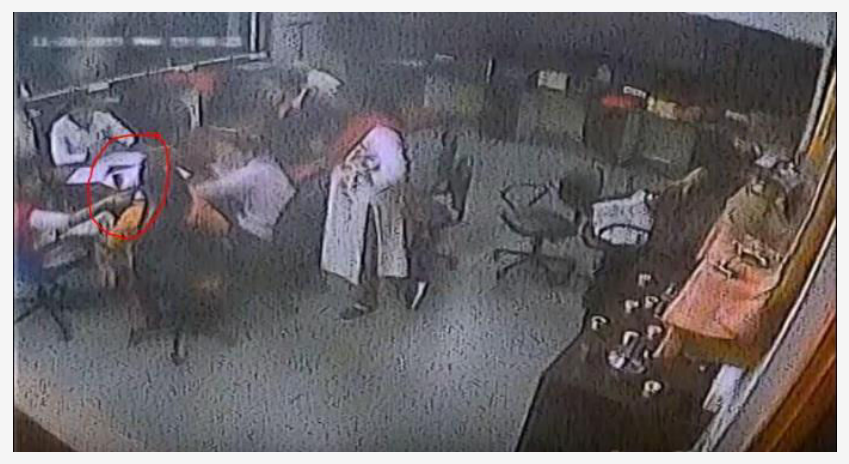
A security camera CCTV footage of an officer touching a minor ASMT girl's Jatta (dreadlocks) made the minor girl very uncomfortable, as per her testimony.
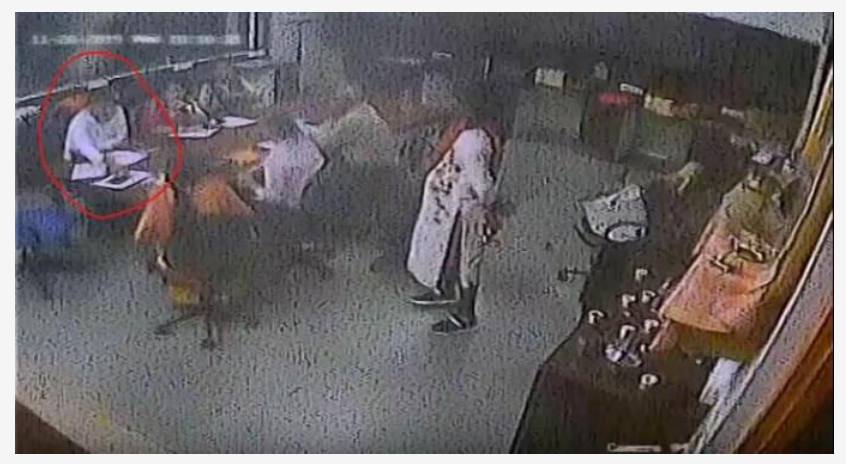
A security camera CCTV footage of an officer who was showing a minor girl an obscene scene with his phone.
Following the High Court order fourteen Gujarat State government Child Welfare Commission (CWC) officials and the Gujarat State government Police officers who had raided the female monastery on the order of a Special Protection of Children from Sexual Offences Court were booked under POCSO Act for showing pornographic material to children. On December 28, 2019, The State Government completely demolished the monastery infrastructure.
In High Court of Gujarat, R/SCR.A/26/2020, https://indiankanoon.org/doc/74023602/
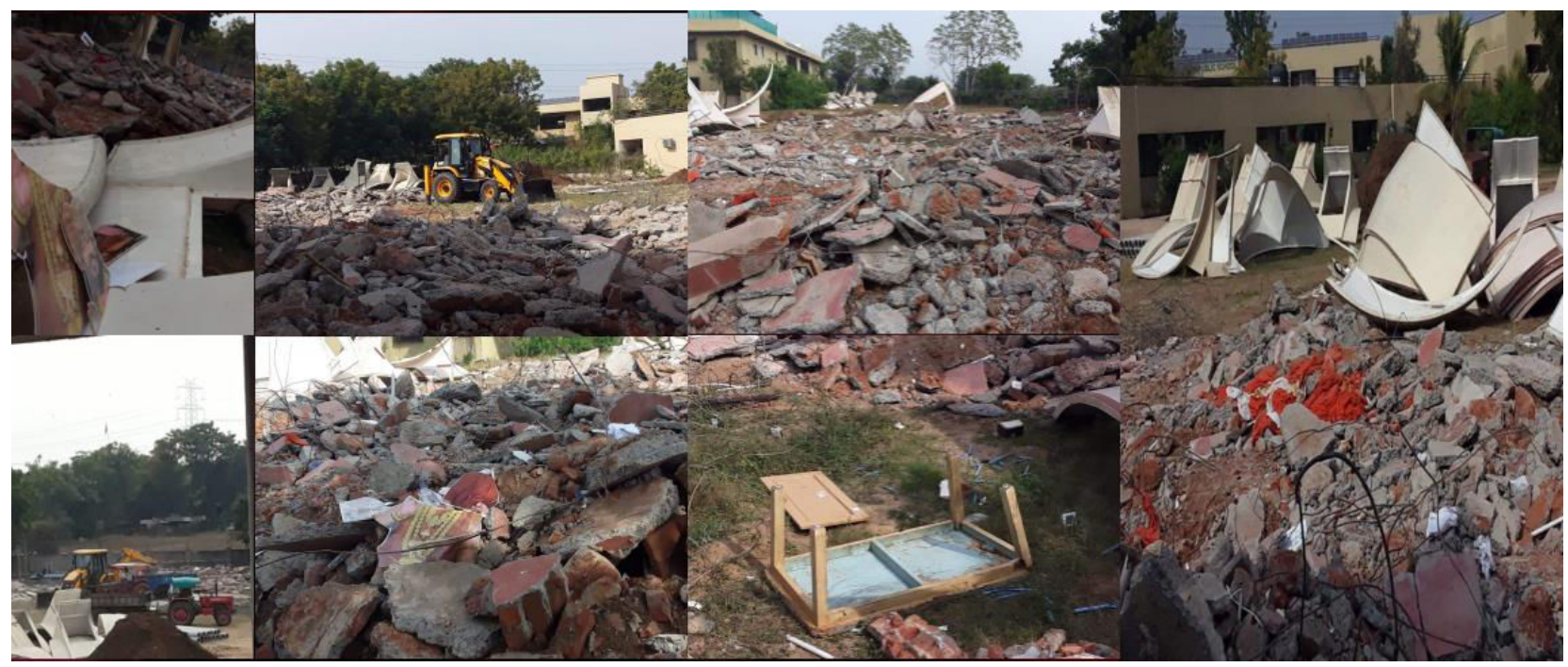
The police complaint against the State authorities was closed without investigation and the petition to the Court was forced to be withdrawn by the Court. The only women monastery and Hindu University in India were demolished by the State.117
This is only one example to illustrate how Hinduphobic forces have gone to the extent of subverting the State authority to completely dismantle the indigenous Hindu enlightenment ecosystems kept alive by gurukuls. They did not even spare a female-centric Hindu ecosystem belonging to the indigenous ASMT community which stood for the values of Vedic feminism and spiritual and social empowerment of women in all forms. Their strategy of completely eliminating the authentic enlightenment-based indigenous spiritual traditions of Hindus from the soil of India via cultural and physical genocide has reached its peak and if nothing substantial is done to address this issue, Hindus who want to practice their religion in unadulterated and authentic ways will become a minority in their own ancestral land – India within no time, like they have been almost wiped out from all the countries where they once lived with pride and dignity. The SPH Bhagavan Sri Nithyananda Paramashivam stands as a tall figure for all two billion Hindus worldwide, as not just their spiritual leader but also their voice on the global stage, addressing the serious issue of consistent human rights violations done to Hindus, especially the ASMT community, telling their story to the whole world, the story of the Hindu Holocaust, which has not only been much gorier and bloodier than the Jewish Holocaust but comes with the additional trauma of complete silence and denial of this genocide for centuries, by almost all world leaders and communities. Despite all these attacks, the SPH stands firm on His ground to revive the indigenous knowledge tradition of Sanatana Hindu Dharma and enrich the whole world with the solutions that this great ancient science offers to solve the contemporary individual and societal problems we are facing as a civilization, especially through the revival of Hindu Gurukul System.
https://timesofindia.indiatimes.com/city/ahmedabad/got-cbse-affiliation-without-govt-noc-
dps/articleshow/72267554.cms