BODY PARTS ( EXTERNAL )
This text was machine-transcribed from the printed book and may contain errors. Select the words and choose “Report a mistake”.
DAY : 1
Topic: Head, eyes, ears, different hair color, about baldness.
Vocabulary: Head, brain, hair, plaiting, think, baldness long hair, curly hair, short hair.
Material required: Picture book, model of a human body, flash cards, ball sized cotton, plastic dolls having different textured and colored hair.
Presentation: ● Invite the children to sing a song related to body parts. Familiarize them with their body parts using flash cards and model of human body. ● Show them plastic dolls and ask them to compare the texture and color of hair. ● Tell them about short, long, straight and curly hair, old people's hair will turn grey because of the loss of melanin pigment. Talk about people like to change the color of their hair by using different products in hair salon and beauty parlors. ● We are able to see only with our eyes, our eyes are located in front of our skull. ● Outer protection to the eye is provided by a thin piece of skin called eyelid, the hairs at the end of the eyelids called eye lashes. ● We have a tear gland just above our eyes which produces moisture when we blink and eyelids cleans the eyeballs with the moistures. ● The ear is a vertebrate organ of hearing responsible for sensing and collecting sounds as well as maintaining the equilibrium. ● Hearing is one of the important senses and ear help us to hear. ● Ear is divided in to three parts- outer ear, middle ear and inner ear. ● The stapes in the middle ear is the smallest bone in the human body. ● Talk about ear and sense of sound. Bring a rattle or a musical instrument and compare the sounds they make and make a list of all things we can hear. Discuss the importance of the ears. ● Talk about eyes-sense of sight. Make a list of the things they see. Now ask them to close eyes and ask can they see. ● Discuss the importance of eyes.
Assessment: ● Can you point to your head? ● Can you touch and tell how your hair is (e.g. soft, shiny, curly, dry). ● What is the color of your hair? ● Can we change the color of the hair? ● Can you tell about the different types of hairs? ● What is the importance of head? ● What are the different colors of hair? ● Who has curly hair? ● Can we change the color of elderly people's hair? ● Where do you go to get your hair cut and styled? ● Where do you store knowledge? ● Have you seen someone with no hair? ● Which is the smallest bone in the body? ● Which organ helps us in hearing? ● Name the organs which help us to see. ● How many eyes do we have?
Closing: Recollect the subject with the children.
Evaluation: Expressive and receptive language skills- question and answer and knowledge about the topic.
Extension: Children can learn to do plaiting with the wool or false hair.
BODY PARTS ( EXTERNAL )
DAY : 2
Topic: Importance of mouth, nose, teeth. Talk about brushing habits. Vocabulary: Mouth, speech, voice, teeth, brushing, jaw, forehead, gargle.
Material required: Flash cards, human body model, good habit chart, mirror.
Presentation: • Invite the children to look at themselves in the mirror. Discuss the body parts like face, teeth, forehead, mouth, ear, tongue, eyes. • Using flash card show face and discuss about face is like a mirror, when we are happy our face glows. Ask them to make faces according to emotions. Ask them about how we keep our faces clean. Discuss about the usage of lotion, cream, talcum powder. • Point to the forehead, mouth, teeth. Discuss in detail about forehead, mouth- it consists of teeth, lips, tongue, etc. • Talk about teeth how it helps to bite and chew the food. Tongue help us to taste the food, there are different types of taste like sweet, sour, bitter, salty. • Focus on brushing, we must brush our teeth twice a day, morning and before going to bed. Back and forth, up and down are the directions of brushing the teeth. • We must gargle after we finish eating food; it helps the teeth to be free of germs. • Show the good habit chart and discuss each one through gesture.
Assessment: • How many times do we brush our teeth in a day? • What are the directions for brushing our teeth? • Which organ helps us in tasting? • Can you speak without opening your mouth? • What is whispering? • Why do you close your ear when you hear a loud noise? • Can you tell any 2 good habits?
Closing: Recollect the subject and explain again if needed. To make them understand about importance of tongue, teeth and practice of good habit.
Evaluation: Expressive and receptive language skills. Pre math skills, gustatory skills (tasting of some sample).
Extension: Dentist and Oral Hygiene Day - Can engage in pretend play having a “dentist” (one child with the help of a mentor) check the children's teeth and have a puppet show with the puppets using a toothbrush and toothpaste and explaining good oral hygiene habits
BODY PARTS ( EXTERNAL )
DAY : 3
Topic: Discuss about shoulders, elbow, wrist and fingers.
Vocabulary: Flash cards, books, drawing, grasping, wrist, catching, picking, plucking
Material required: Flash cards, human body model, good habit chart, mirror,
Presentation: • Invite the children to sing along head shoulder knees and toes rhyme. Warm up the class by rotating shoulder. Ask them about the body part which moves in circular direction. Show them flash card and ask them to point in their body. • Discuss the importance of shoulder it is like a hanger. It holds the upper part of the body. We use it for movement like bowling, batting, skipping etc. • Discuss about the importance of elbow, it is a joint, it bends in and out in one direction. It helps in the movement of picking object, lifting things etc. • Ask the children to lift a block and place it on top of the shelf without folding elbow. Can they do it? If not discuss the importance. • Have the children sit and start the circle time with a song 'where is thumb king'. Point out each finger what it is called as. Go slow when singing the rhyme. • Show a simple paper folding and ask which part of hand we use. • Ask the children to count their fingers tell them there are 10 fingers, thumb, pointer, middle finger, ring finger and little finger. • Discuss the importance of fingers and how they help us in picking up objects, washing; plucking, writing etc. talk about palm, keeping our hands clean by washing them before and after every meal. Usage of soap, wiping it pats dry. Tell about women and girls like to apply henna or mehandi for festivals and weddings. • Show and ask them to point wrist. We put wrist watch on it. It's a joint. It can move in circular direction, to and fro. We use for varied purpose while playing cricket, badminton which help us to move. • Talk about the communication in dance, how dancer use mudra to denote each thing. Discuss about dumb charade, usage of gestures like a hand shake or Namaste.
Assessment: • Where is your shoulder? • What is the function of shoulder? • Can you do bowling, or play game without the movement of shoulder? • Where is the elbow? • Can it move in circular direction? • How it helps us in picking objects? • What happens if there is a fracture in our hand? • Can you touch your shoulders? • What are the different uses of fingers? • Name some sports where our fingers are used? • Which part of our body do we use for catching things? • Where do we tie a watch? • Can we hold things without using our hand? • Can you name the smallest finger in our hand? • In which finger usually people wear a ring? • Where do you apply mehandi?
Closing: Recollect the subject and explain again if needed.
Evaluation: Expressive and receptive language skills (question and answer knowledge of topic). Pre math skills (counting fingers). Fine motor skills (paper folding).
Extension: Children can do free shoulder and elbow exercises, do backward throwing of balls, do over head clapping. Play Simon Says using sign language. Demonstrate different types of gestures.
DAY : 4
Topic: Hip, belly button.
Vocabulary: Hip, belly button.
Material required: Flash cards, model of human body, picture book.
Presentation: • Show the pictures, talk about the hip, waist, waistline. • Invite the children to join and measure their waist using the measuring tape and note down their waist size. Ask them to compare, discuss about thin and fat people's waist line. • Hips provide support for the body and helps in balancing and walking. • Show the pictures and point out the hips and belly button • Make the children to stand in a circle and tell them to move their hip. • Hip joint is a complex joint of ball and socket type which facilitates movement of our lower limbs.
Assessment: • What is the function of the hips? • In what way do the hips help us in walking? • What is the size of your waist? • Where do you wear your pant/ skirt? • Name the type of our hip joint. • Which joint facilitates the movement of our lower limbs?
Closing: Recollect the topic about the importance of hip and belly button.
Evaluation: Expressive and receptive language skills. Pre math skills. Cognitive skills.
BODY PARTS ( EXTERNAL )
DAY : 5
Topic: Talk about knee, thigh, ankle, heel and toes, compare toes and fingers.
Vocabulary: Ankle, anklet, heel, shoes, toes, nail paint, heel walking, nail cutter etc.
Material required: Model of human body, baby doll, flash cards, model x-rays.
Presentation: • Point out ankle, heel, and toes and ask the children to count their toes, heel and ankle. • Talk about the importance of the ankle. It is a joint; it helps us in stability and in walking. • Girls wear anklets on their ankles as decoration. • Heel and toes are very important, the whole body weight is balanced on our feet i.e. heel and toes. We must keep our heels and toes clean and healthy. • Protect them by wearing shoes or slippers when we walk. • Ask the children to walk on either their toes or heels for a distance. Can they walk for a long time? • If we can't reach an object which is placed high up, we raise our heel standing on our tiptoes to give us height. • Talk about nails and clipping the nails once in a week. • Show the pictures and point out the knees, hips and thighs. Now ask the children to tap the thighs, make circles on knee using palm, and move the hip. • Talk about the importance of knee, it's a joint. It bends to and fro. Movement of legs is due to knee joints. We kick; walk etc due to the knee. • Thigh - talk about the importance of the thighs, ask them to tap it, press the thigh and feel it. • People wear knee caps in some sports so that it will protect them from getting hurt. • Discuss the coordination of knee, hip and thighs helps us in movement.
Assessment: • Can we see our ankle? • How many heels do you have? • Can you walk on your toes? • Can you pick up objects with toes? • What do girls/ ladies wear on their ankles? • Can you walk if we tie your ankles together? • Can you see your knee? • Why do people wear knee cap during sports? • Can we walk without our knees? • Which area in your body has the longest bones? • What are some examples of good and healthy foods? • What happens when we always eat high calorie fat food? • What happens when we do not eat food? • How do we get energy for the body?
Closing: Review the importance of heel, toe, ankle and locomotion.
Evaluation: Expressive and receptive language skills. Pre math skills. Cognitive skills. Gross motor skills.
Extension: Heel to toe race. Ask the children to walk on the foot print .Change the foot prints to look like those of various animals. Body bingo cards. Three legged relay race – it is played as a relay game with two partners, and with many players. Each pair gets their two middle feet tied together with a rope or cloth. They can practice walking together and appear to be three legged. When they are all ready, they have to race, working together to walk to the finish line.
BODY PARTS ( EXTERNAL )
DAY 1 : ART
BITS OF PAPER COLLAGE
Goals: To develop their fine motor skills, pincer grasp, eye hand coordination, spatial awareness, and tactile skills.
Materials required: - Glue, uncolored art sheet, bits of paper.
Procedure: Keep the required materials ready before starting an activity. Explain to the children about the art sheet. Encourage them to apply glue inside the picture and ask them to pick the bits of paper and stick with the glue inside the picture.
Skills developed: Fine motor skills, pincer grasp, eye hand coordination, spatial awareness, tactile skills.
CRAYON COLORING
Material required: Crayons of various colors, uncolored picture.
Procedure: Children can select the crayon of their choice related to the picture and color the picture. Children are encouraged to color mostly inside the picture holding the crayon firmly.
Skills developed: Tripod grasp, eye hand coordination, prewriting skills.
DAY 1 : ACTIVITY
IDENTIFYING SOUND BOX BLIND FOLDED
Goals: To identify the objects with the sounds they make. To make them aware of auditory discrimination.
Vocabulary: Hearing, loud, soft, noise, auditory, ear, eardrums
Material required: Different sound producing items kept in non transparent boxes. Items – Stone, pebbles, water, pins, sand, Rava, empty box, small bells. Same objects can be in two boxes so that they can match the sounds.
Presentation: Ask them to shake each sound box and hear the sound; let them match two sound boxes having the same objects inside by hearing the sound produced. You can introduce some more new sound producing items. (noise makers, party blowers, whistles)
Assessment: • Which is the organ used for hearing? • How many ears do we have? • What are the sounds we hear from the nature? • Have you heard a thunder? • Is the sound of thunder loud or soft? • In which festival can you hear sound of fire crackers? • What do fire crackers sound like? • What loud sounds will do to our eardrums?
Evaluation: Note down what all sounds each child matched and identified. Keep a record for knowing further progress when the activity is repeated.
Skills developed: Auditory discrimination Cognitive skills of observing, matching and identifying the sounds
Conclusion: With this activity they will be more aware of their auditory skills and analyze how many sounds they can match and identify.
SORTING AND GROUPING OBJECTS
Goals: To improve their: Cognitive skills, Pre math skills, Fine motor skills, Eye hand coordination
Vocabulary: Grains, leaves, flowers, beans, shapes, colors, sizes.
Material required: Color papers, grains, leaves, flowers, beans, etc. of different types of colors, sizes and shapes.
Presentation: Have all the materials ready for the activity. Give each child the materials in a plate. Give each child different color paper/grains/grams/flowers/leaves etc and show them how to sort and group the objects according to their shapes/size/colors. Ask them to feel the different textures.
Assessment: • Ask them whether we can count the grains and grams when it is large quantity. • Ask them to name the colors and size of given objects. • Ask them about the texture. • Do we measure or count the grains.
Skills developed: Cognitive skills Pre math skills Fine motor skills Eye hand coordination
Conclusion: By this activity they will be able to understand and classify the objects according to the colors, size, texture, and shape.
BODY PARTS ( EXTERNAL )
DAY 1 : GYM
WALK WITH EYES CLOSED
Goal: To stimulate their balance and to increase their spatial awareness.
Presentation: Ask the children to close their eyes and walk for a distance.
Observe how well they are able to walk with balance and whether they are able to walk straight.
Skills developed: To develop their balance.'Co-ordination and spatial awareness skills.
Extension: Backward walking closing eyes. They can walk a distance forward drop an object and get back to position and they can find out the object. They can do walking in a zig-zag pattern.
BALANCE OBJECT ON HEAD AND WALK
Goal: To improve their balance.
Presentation: Give the child a cone and ask the child to keep the cone on the head. Ask the child not to hold the cone with their hands ask the child to hold their hands behind and walk a distance. Observe how well they can balance the cone on the head.
Skills Developed: This game helps in developing their co-ordination, balancing skills, their ability to sustain attention.
DAY 2 : ART
SMELL PAINTING
Material required: Coffee powder or vinegar or different essence e.g vanilla, different aromatic substance, poster colors, uncolored picture, paint brush.
Procedure: Children are asked to paint the picture with the poster colors mixed with coffee powder or vanilla essence etc. encouraged the children to paint inside the picture. After the paint dries they can smell the picture and identify the smell. Children can paint with brush or fingers.
VEGETABLE PRINTING
Goal: To develop their creativity, fine motor skills, cognitive skills of understanding and exploring cause and effect.
Material required: Any vegetable which can be cut in to shapes (e.g. carrot, potatoes, onion, ladys' finger, radish etc), poster colors, paint brushes, uncolored art sheet.
Procedure: Motivate children to sit and present them the ways they can do vegetable printing. Give them the vegetable which is cut in to different shapes or patterns ask them use paint brush to apply paint on vegetable or dip it in the paint. Ask the children to make impressions or print on the art sheet.
Skills developed: Develops their creativity, fine motor skills, tactile skills, cognitive skills of understanding cause and effect.
BODY PARTS ( EXTERNAL )
DAY 2 : ACTIVITY
BLOWING WHISTLE, BALLOON AND BEADS
Goals: To enhance and improve their oral motor muscle power with various activities
Vocabulary: Blowing, whistles, beads, feathers, balloons.
Material required: Whistles, paper bits, beads, feathers, balloons, bubble solution, bubble blower.
Presentation: Demonstrate to the children how to blow balloons, bubbles, etc. Encourage them to blow paper bits ,beads, feathers, balloons individually.
Assessment: • Can you show the action of blowing? • Name the person who blows the whistle in the bus? • What is a whistle? • Can we blow heavy items? • Can we blow balloons? • Why balloons or bubbles fly in air?
Evaluation: Evaluate each child's oral motor strength by asking them to blow different materials like whistle, bubbles, beads, feathers. Ask each child to make different funny faces and watch in the mirror if he or she is able to imitate the same.
MAKING FUNNY FACES ON MIRROR
Goals: To enhance and improve their oral motor muscle power
Vocabulary: Blowing, funny face, mirror, eyes, eyebrows, mouth, cheek.
Material required: Mirror.
Presentation: Explain and show them how to make funny faces by looking at the mirror. Tell them to hold air in mouth, expand their eyes, open their mouth widely to laugh, showing teeth and tongue and they can move their eye brows up and down. They can do all these together to show funny face.
Assessment: • Can you show the action of blowing? • Can you move one eyebrow up and one eyebrow down simultaneously? • How many teeth do you have? • Can you move your ears without touching or without moving your head?
Skills developed: Oral motor skills, fine motor skills, cognitive skills of cause and effect.
DAY 2 : GYM
LEMON AND SPOON
Goal: To develop their co-ordination, balance, ability to sustain attention, oral-motor skill, eye-co-ordination.
Presentation: The children have to hold the spoon in the mouth with the lemon placed on the spoon and walk. They have to walk carefully without the lemon falling down. When they drop the lemon they have to wait for the next turn to join the game. Whoever holds the spoon with the lemon correctly and reaches the target will get applause. Ensure that the lemon is not too small and be cautious.
Variation: They can do fast walking, walking on toes as a variation.
Skills developed: It helps to develop their co-ordination, balance, ability to sustain attention, oral-motor skill, eye-co-ordination.
BLOWING BUBBLES
Goal: To develop their oral motor skills and eye hand coordination skills.
Presentation: Children are asked to blow bubbles or feathers. They can be asked to catch the bubble or feathers which flies higher. We can discuss about how it flies higher, shape of the bubbles, what is inside the bubbles to the children.
Skills developed: Oral motor skills Eye and hand rdination while catching the bubble .
BODY PARTS
( EXTERNAL )
DAY 3 : ART
MAKE A BRACELET
Material required: Color paper (oil) wool, cello tape, glue, scissors
Preparation:
Procedure:
Step: 1: Take the color paper and make three folds, and draw a heart shape and cut it out.

Step: 2: Take the cut out heart shapes and stick together with glue, in the way as it shown below
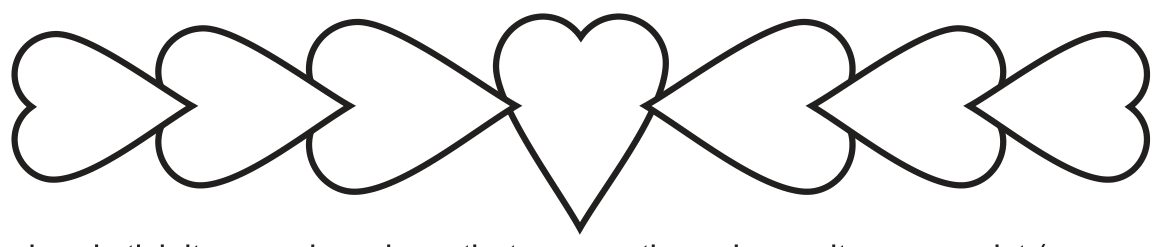
Step: 3: Now take wool and stick it on each ends so that we can tie and wear it on our wrist ( you can plait the wool and stick it)

Variations: Not only heart shape, you can draw any designs and make a bracelet, instead of oil paper you can also make with a chart paper, so that it will be firm and stiff and last longer. You can make anklet using the same method. Another method measure the length of the wrist line with wool and you can stick the heart shape on the wool also.
THUMB PRINTING
Material required: Uncolored art sheet, poster colours of various colors.
Procedure: The children are asked to dip their thumb in to the poster colours and press the thumb print on the given picture. They can do thumb printing with various colors, poster colors. Encourage the children to do the printing only inside the picture.
Skills developed: Fine motor skills, sensory skills, cognitive skills of knowledge of various colors, cause and effect.
Variation: Children can use the thumb printing to make various designs and pictures. Children can also do finger printing as a variation.
BODY PARTS
( EXTERNAL )
DAY 3 : ACTIVITY
TORCH PLAY
Goals: To improve their imagination, critical thinking, fine motor and to understand cause and effect.
Vocabulary: Shadow, faces, animals, flash light, paper holes, light, passing.
Material required: Flash light, paper with tiny holes, wall or table.
Presentation: Keep the room really dark and flash light using torch on the wall using fingers make different images, the shadow of your fingers appear as images of a man or like a deer, a dog etc..Now ask the children to press the safety torch and observe the light.
Assessment: • What is that formed on the wall? • Can shadow be formed without light? • How does the shadow of finger look? • How will their shadow look like big or small.
Closing: Ask them to try making images on the wall with shadows.
Evaluation: Evaluate their critical thinking, their cognitive skills of explaining cause and effect, fine motor skills and record the observation.
Variation: place the paper with holes on the table in a dark room and flash light on the paper the light passed through the paper with resemble like stars on the table. Use glow stars to show them how the light is absorbed and reflected. Put your hand and close the torch making it red in your hand
MASHING BOILED AND UNBOILED POTATOES
Goals: To improve their intrinsic hand muscle power, their fine motor skills , texture sense.
Vocabulary: Mashing, hard, soft, sticky, potatoes, boiled, raw.
Material required: Boiled potato, raw potato and plate.
Presentation: Explain how they can mash and feel the texture of boiled potato. Explain to them why raw potato cannot be mashed like boiled potato. Explain why you cannot mash hard items with hand. Give them boiled potato and raw potato in a plate and encourage them to mash it.
Assessment: • Can we mash raw potato? • Can we mash boiled potato? • Name the items that we can mash easily. • What happens when we mash boiled potato? • What is the texture of potato?
Variations: They can mash the tomato, play dough, cooked rice, cooked pulses, jelly, fruits, boiled vegetables, cooked noodles.
Evaluation: Some children with sensory motor problems may not touch or mash the sticky items, they can be persuaded slowly to get involved in the activity. Record the inference for future verification.
Conclusion: By this activity the development of the children's sensory awareness improves, as well as their tactile skills.
DAY 3 : GYM
FLOOR SWIMMING
Goal: To stimulate their gross motor skills.
Presentation: Children are asked to lie down on the floor on their tummy. Ask the children to move their hands and legs faster simultaneously and ask them to pretend like swimming.
Skills Developed: This activity develops their gross motor skills.
FINGER CLIMBING
Goal: To develop their fine motor skills and gross motor skills.
Presentation: Ask the children to keep their index finger and middle finger on the wall and move the fingers forward simultaneously on the wall in the upward direction as much as they can reach.
Skills developed: Fine motor skills. Gross motor skills.
DAY 4 : ART
BUBBLE WRAP PRINTING
Material needed: Uncolored art sheet, bubble wrap paper, different poster colors.
Procedure: Children are asked to dip the bubble wrap in the different poster colors and print it on the given art sheet. They can observe the impression on the paper.
Skills developed: Develop their fine motor skills, cognitive skills of understanding cause and effect.
THREAD PAINTING
Material required: Thread of varying length, different poster colors, uncolored art sheet or plain sheet.
Procedure: Children can dip the thread in to the paint and keep it on the art sheet and fold the art sheet holding firmly on the table with one hand and pull the thread out after moving the thread in various directions the other hand.
Skills developed: Develops their fine motor skills of tripod grasp, eye hand coordination, cognitive skills of cause and effect
DAY 4 : ACTIVITY
DRESS AND UNDRESS
Goals: To make them independent in the practical life activities of dressing and undressing which involves buttoning, un buttoning, wearing and removing the dress, tying and removing the shoe lace, wearing and removing the socks, zip and unzip etc. Develops their intrinsic hand muscles and fine motor skills, eye hand co ordination, sense of direction/position, sensory skills of wearing clothes of different textures, etc.
Vocabulary: Clothes, shirt, pant, tops, midi, shorts, cap, shoe. Socks, frock, coat, under pant, tie, lace, button, un-buttoning, zip, front, back, scarf, belt, sweater, gloves, T-Shirt, jeans, full sleeve shirt, half sleeve shirt.
Material required: Collection of their own dresses, pair of socks, shoes.
Introduction and presentation: Show them how to button and unbutton, encourage them to remove and wear their own dresses, wear their socks and shoes.
Assessment: • Why do we wear clothes? • Which is your favorite dress? • Can you dress yourself? • Where do we put shoes? • Will all the shoes fit for everybody? • What do we need to do before we wear our shoes? • Do you know to tie shoe lace?
Closing: Encourage the effort made by each child and ask them to try as much as they can.
Evaluation : Evaluate each child's ability to dress up and undress them, how well they wear the accessories like shoes, socks, note the recordings for further improvement and evaluation. Evaluate each child's fine motor skills. Intrinsic hand muscles power, eye hand co ordination, position sense, directions sense and note the recordings for further observation, observe their sense of texture as they try different textured clothes.
Variation: Variation of this practical life activity can be done with dress up boards, wooden shoes, matching socks, buttoning board, laces.
BODY PARTS
( EXTERNAL )
TEXTURE MATCH USING TOES BLIND FOLDED
Goals: Familiarize them with different texture identification by tactile discrimination.
Vocabulary -Rough, smooth, hard, soft, blunt, sharp, funny, scaly, pokey, regular, Irregular, non sticky, elastic, non elastic
Material Required: Texture books, texture toys, various texture brushes, some blunt objects, cooked and uncooked noodles, jelly, texture cards, pokey textured objects, play dough, rice flour and corn flour.
Presentation: Let them to touch each texture and learn about each texture, ask them to match objects of the same texture. Children are asked to touch the texture using their toes blind folded and name the texture which they touch with their toes blindfolded.
Assessment: • Which is the opposite texture for rough? • Which is the opposite texture for hard? • What is tactile discrimination? • Which texture we have to be careful? • Name some materials which have silky texture? • Which animal has very furry texture? • Which animal has pokey texture? • How do we feel when we touch a rough texture?
Evaluation: First evaluate with their eyes open and then let them identify the texture with their eyes closed. Some children may be hesitant to touch few textures, talk to them and let them slowly involve in due course of time. Record the observations. Reinforce the different textures when they eat lunch, snacks and when they play.
Conclusion: Analyze how many textures they are able to identify and name.
DAY 4 : GYM
PHYSIO BALL
Goal: To develop their abdomen muscles and this is also a nice relaxation exercise.
Presentation: Mentor has to hold the ball with one hand and to avoid the ball from rolling off hold with one foot in the front and make the children lie down on the ball on their tummy. Sing a rhyme and roll the ball forward, backward, left and right. When we move the ball children will move in the direction in which we move the ball, they will learn to balance by gripping the ball. If they move their body rhythmically this activity induces relaxation also. They can also bounce and lift the physio ball.
Skills developed: It helps to keep their hip muscles stronger and develops their gross motor skills; this is also a nice relaxation exercise.
HOPSTOCH
Goal: To improve their balance, gross motor skills, eye and foot co-ordination, spatial awareness.
Presentation: A hopscotch box has to be drawn on the floor it can be simple or complex. Ask the children to hop on one foot and to jump, hop, jump, turn and do the same and go back to position. Observe them how well they are able to do it.
Skills developed: It develops their balance, spatial awareness when they hop on one foot and their gross motor skills while jumping. Develops their visualization skills if they are able to do with eyes closed.
Extension: They can try closing their eyes.
DAY 5 : ART
MAKE A MINI BOOK
Goals: To develop their eye hand coordination, fine motor skills, logical thinking skills. Material required: Any materials, pictures related to the theme can be chosen, a small book with plain sheet has to be made, glue, crayons. Introduction and presentation: Children are given one book each and they can be explained about the theme and they can stick the pictures or materials or children can draw related to the theme in their book. Skills developed: Develops their eye hand coordination, and fine motor skills.
CARBON PAPER ART
Goal: To develop their pre writing skills, cognitive skills of exploring cause and effect. Material required: Carbon paper, pencil, plain sheet, shapes or alphabets blocks.. Presentation: Give each child paper and carbon sheet. Guide them to place carbon sheet in right position. Placing the ink side on the paper. Ask children to choose their shapes or alphabets ask them to place it on the carbon sheet and ask them to trace it. Show them the impressions seen on the white sheet. Skills Developed: Develops their pre writing skills, cognitive skills of exploring cause and effect.
DAY 5 : ACTIVITY
SORTING AND PUTTING SOCKS
Activity: Sorting and putting socks correctly in the appropriate feet. Goals: To develop their cognitive skills of comparing, sorting, fine motor skills, eye hand coordination, self help skills. Vocabulary: Socks, wear, pair, one, feet, foot. Material required: Different colored and size socks. Introduction and Presentation: Ask the children to first sort the socks according to the colors and size. They have to take same size, same color matching socks. Let each child hold the socks correctly and put it in their friend's feet. Assessment: What materials are socks made up of? Can a big sock fit your foot? What kind of socks do you need for your foot? How many socks we need to put in each foot? Can we wear different color socks on both the foot? Evaluation: Evaluate their cognitive skills of understanding one to one correspondence, fine motor skills. Skills developed: Cognitive skills of comparing one to one correspondence, Sorting, Fine motor skills, Eye hand coordination, self help skills.
Variation: We can ask the child to sort and wear the mittens also. Turning the socks inside out.
LACING SHOES
Goals: To develop their fine motor skills, eye hand coordination, pincer grasp, pre math skills of patterning and understanding of one to one correspondence. Material required: Toy Shoes with lace Vocabulary: Lace, shoe, thread, hole. Presentation: Place the required material on the table and show them how to lace the shoes by putting the shoe lace through the holes of the shoe. Ask the children to hold the thread using thumb and index finger and ask them to insert the thread through the shoe hole. They can also follow a particular pattern. Assessment: What is the use of shoe? If there is no hole will the thread go inside? What is the color of shoe? Evaluation: Evaluate their skills by repeating the activity and observing the progress. Skills developed: Fine motor skills, eye hand coordination, pincer grasp, pre math skills of patterning, one to one correspondence.
BODY PARTS
( EXTERNAL )
DAY 5 : GYM
PICKING OBJECTS USING TOES
Goal: To develop their fine motor skills ,their balancing skills, eye and foot coordination. Presentation: Place some small objects like beads, feathers, leaves according to the theme on the ground. Ask the children to pick the small objects using their toes. Skills developed: Fine motor. Eye and foot coordination. Balancing.
HEEL - TOE WALK
Goal: To develop their gross motor skills, balancing skills. Presentation: Ask the children to raise their heel and stand on their toes. They are directed to move on their toes for a given distance. They can catch their friend by walking on the toes. Ask the children to raise their toes and stand on their heel and tell them to walk on their heel for given distance. Skills developed: Develops their gross motor skills, balancing skills.
BODY PARTS ( EXTERNAL )
BODY PARTS - 1 - TRIVIA
1. How many sense organs do we have?
2. Name the sense organs.
3. In how many parts our body is divided?
4. Name the three parts.
5. Which is the most important part of the body?
6. What should we do to keep our teeth clean?
7. Which part works like video camera in our body?
8. What is the eyes transparent layer called?
9. How our eyes perceive any object?
10. What do we call the person who has not got the sense of vision?
11. What is the hardest substance in your body?
12. How many teeth are there in milk teeth?
13. Which part of the body can be moved in circular direction?
14. Which organ helps in smelling?
15. What helps the tongue to detect different tastes?
16. Where are the teeth located?
17. Which part of the body has no sweat glands?
18. What prevents the air from dust when you breathe?
19. Which organs help in hearing?
20. The hairs at the rim of the eyelids are called as?
21. How many nostrils do we have?
22. Name the 3 types of teeth.
23. Do our nails grow when we cut them?
24. While sneezing why should we cover our nose?
25. What is produced when we rub our palms?
26. Which part of the body helps to count the months having 30 and 31 days?
27. What part of your body is almost as big as if you are an adult?
28. What detects the four main tastes sweet, salt, sour and bitter in your tongue?
29. Which parts of the body are more sensitive to heat?
30. Which organ helps in feeling things?
31. What is the purpose of the ear wax?
32. Why is our tongue flexible?
33. How is the eye protected?
34. Why do we have skin?
35. Why do our fingers go wrinkly in the bath?
36. Why do we need hair cut?
37. What are teeth for?
38. Do teeth fall out?
39. Carrots helps us see better why?
40. What is our nose for?
41. What is our belly button or navel?
42. Why do we have ears?
43. From where do we get tears?
44. From where do we get saliva?
45. Which grows again when cut other than hair?
46. Which part of our body can be folded?
47. Which sense organ doesn't have any bone?
48. Which is the largest organ of our body?
49. What are the 5 senses of our body?
BODY PARTS
( EXTERNAL )
BODY PARTS - I - ANSWER
1. Five.
2. Eyes, nose, tongue, ears, skin.
3. Three.
4. Head, thorax, and abdomen.
5. Head.
6. Brush.
7. Eyes.
8. Cornea.
9. As inverted image.
10. Visually challenged.
11. Enamel.
12. 20.
13. Arm.
14. Nose.
15. Taste buds.
16. Upper and lower jaw.
17. Lips.
18. Hair inside the nose.
19. Ears.
20. Eyelashes.
21. Two.
22. Incisors, molars, canine.
23. Yes.
24. To prevent cross infection.
25. Heat.
26. Knuckles.
27. Head.
28. Taste buds.
29. Elbows and feet.
30. Skin.
31. To trap dirt, germs and prevent them getting in to the inner ear.
32. Because it doesn't have bones.
33. Eye lids, eyelashes and eye brows.
34. It keeps our inner body safe and helps to keep out water and germs, it protects from too cold and too warm climate.
35. Our skin contains oil that helps to make it water proof, fingers and toes don't have that oil.
36. Because hair grows.
37. Teeth chomp our food into tiny bits and make it easier to swallow.
38. Yes, first 20 milk teeth fall to get permanent teeth.
39. Carrots contain special vitamins that help us to see.
40. For smelling and breathing.
41. It is the cut end of the cord which was connected with our mom when we were in mom's womb through which we got food and oxygen to grow.
42. For hearing.
43. We have a small liquid sac in our eyes called tear glands.
44. Back of the mouth are located salivary glands which produce saliva.
45. Nails.
46. Elbows, knee and finger.
47. Tongue.
48. Skin.
49. Smell, touch, taste, sight and hearing.