Establishing Hindu Temples
This text was machine-transcribed from the printed book and may contain errors. Select the words and choose “Report a mistake”.
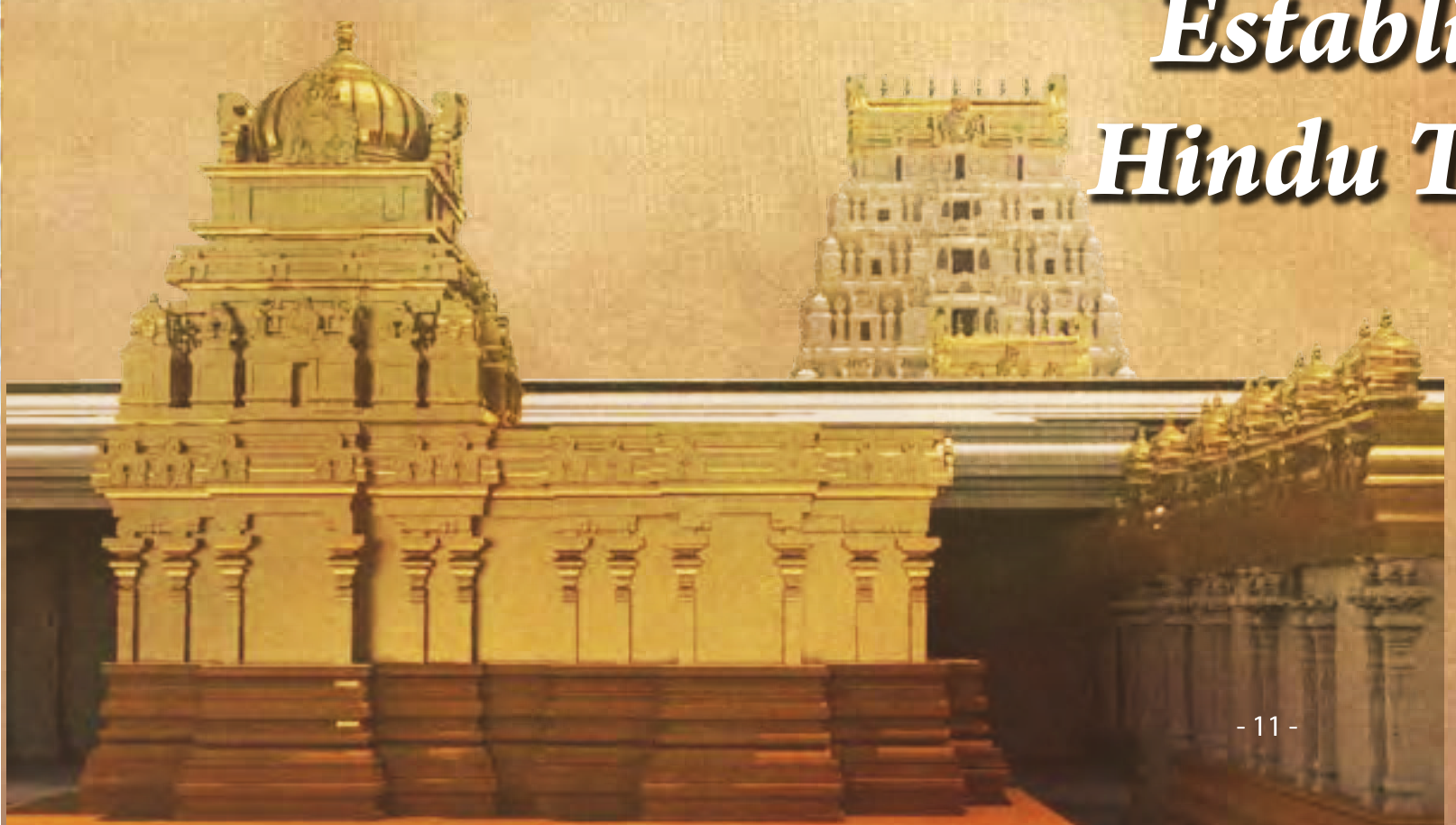
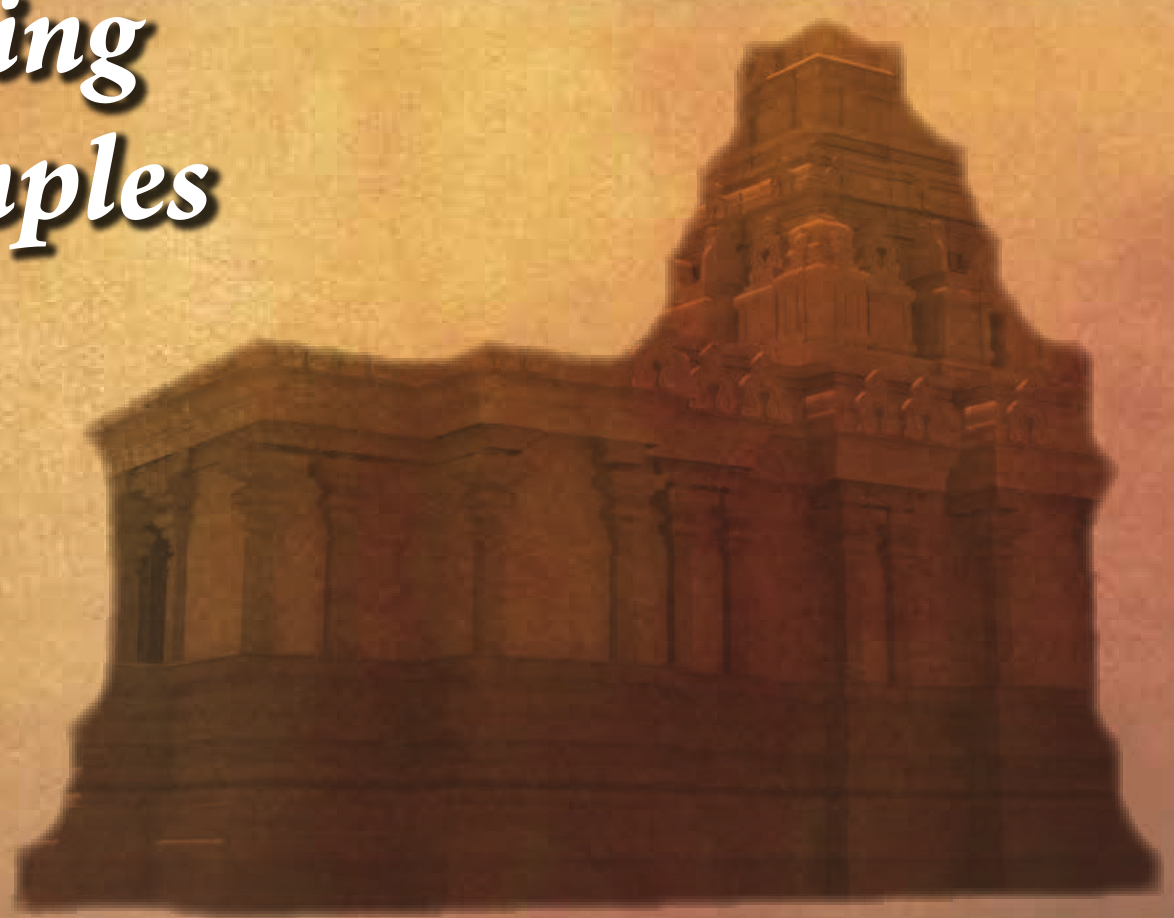
śrisadāśiva uvāca yo yadevapratikṛtiṁ pratiṣṭhāpayati priye | sa tallokamvāpnoti bhogānapi tadudbhavān || iṣṭakāgṛhadāne tu tasmāchhtaguṇaṁ phalam | tato’yutaguṇaṁ puṇyaṁ śīlagrahapradānataḥ || 25 ||
Lord Śrī Sadāśiva said: O Dear Devi! The person who does pratiṣṭhā, which is the science of breathing life into matter and making a specific living form of Divine or Deity, he attains the abode of that very Deity and experiences the enjoyments of that abode. By donating a temple made of bricks, one resides in the heavenly abode for thousand crore years multiplied by hundred times. By donating a temple made of stones, one attains the Divine merit (puṇya) which is ten thousand times more.
~ mahānirvaṇatantraṁ, trayodaśa ullāsa
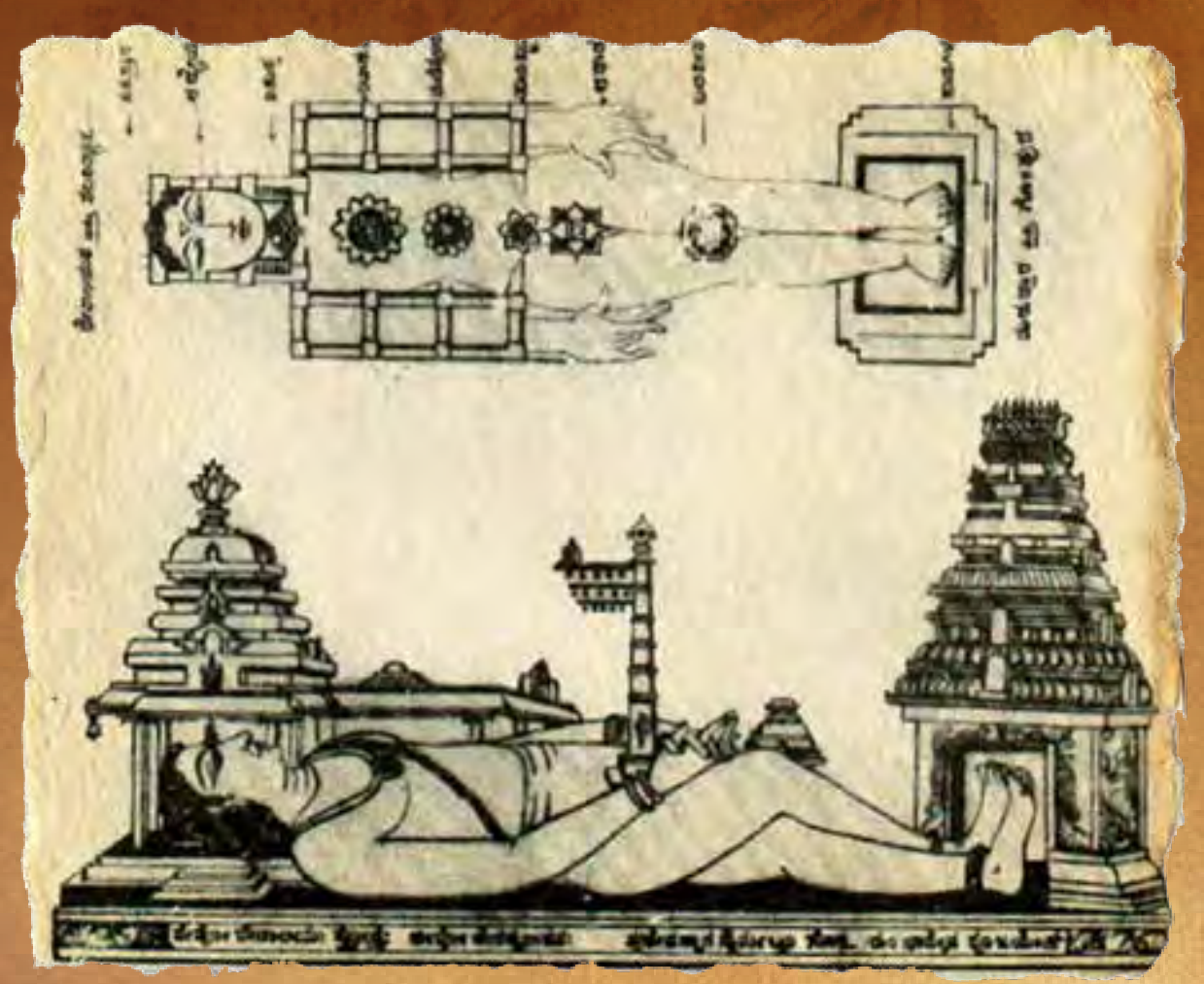
The temple is conceived as the physical form of God. The garbhagriha (womb room) represents the head and the gopura (tower) the feet of the Deity.
The sukanasi or ardhamantapa (small enclosure in front of the garbhagriha) is the nose; the antarala is the neck; the various mantapas are the body; the prakaras are the hands. Vertically, the garbhagriha represents the neck, the shikhara (superstructure over the garbhagriha) the head, the kalasha (finial) the tuft of hair (shikha).
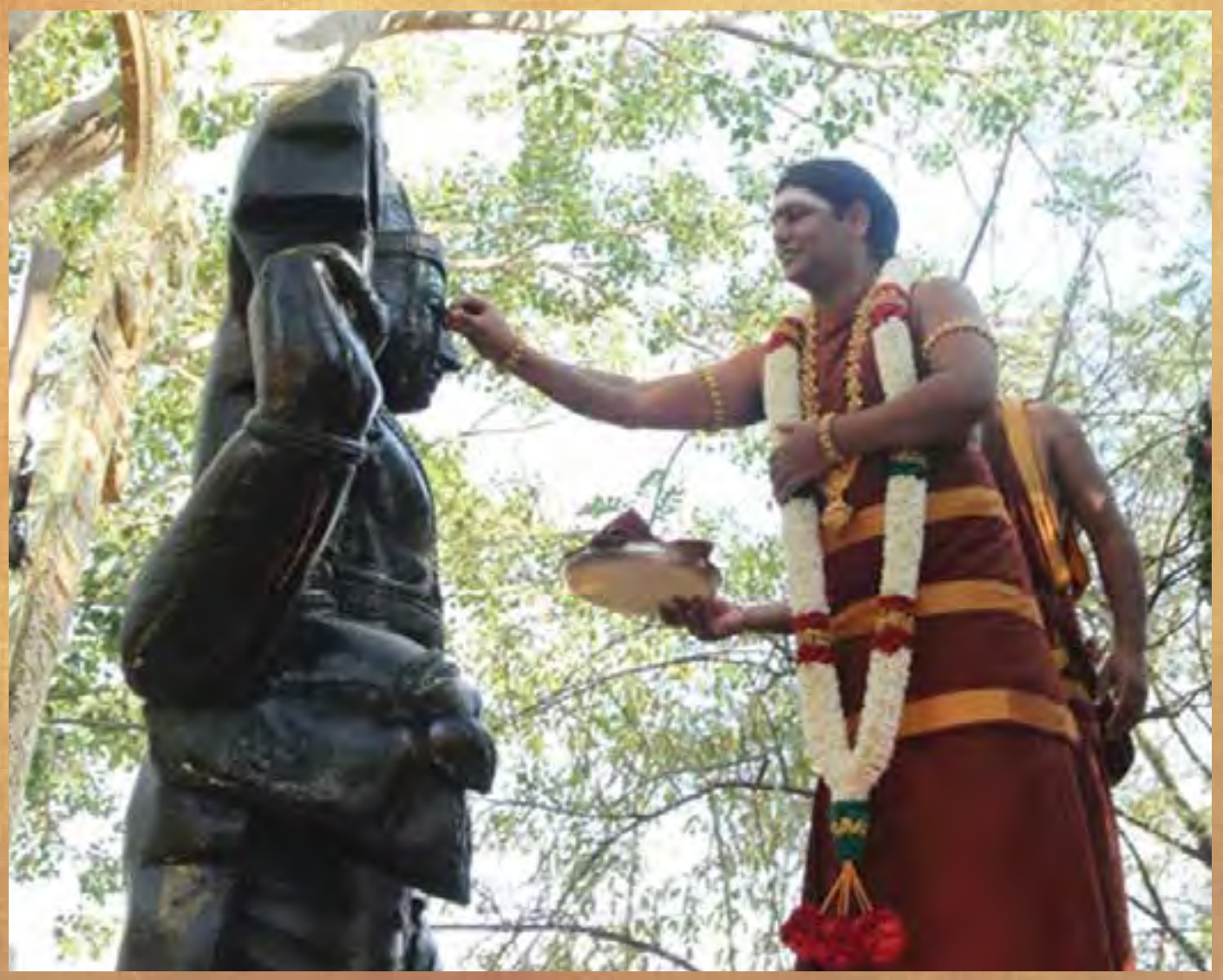
The mystical ceremony of prana pratishta, breathing life into matter, creates a living deity having its own independent intelligence. Only living incarnations can perform this rare, mystical process. In regular temples, priests invoke the deity's energy through mantra prathishta or sacred chants.
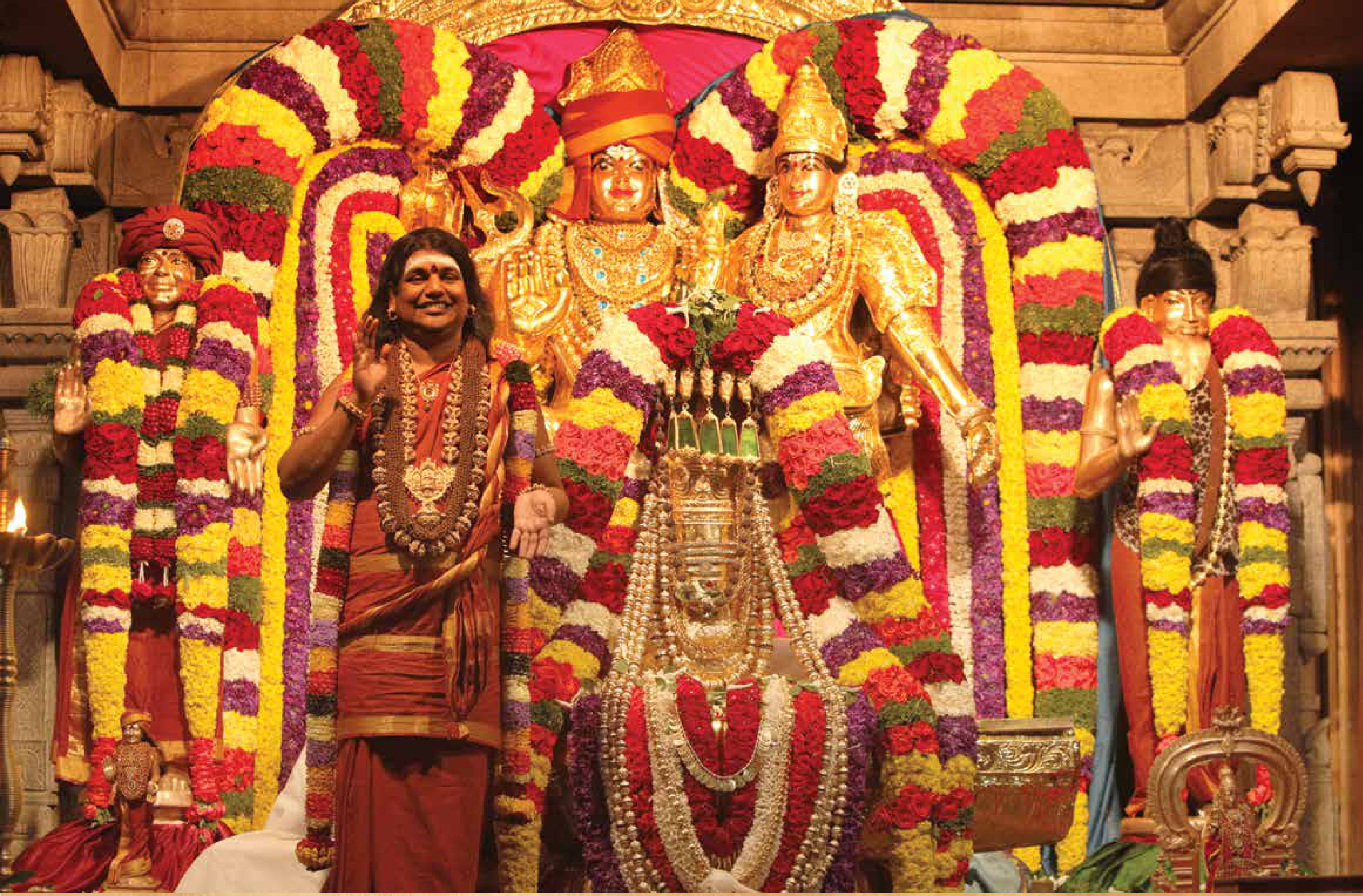
At Sri Nithyanandeshwar Devasthanam are seated (center) the presiding deities of Sri Nithyanandeshwara and Nithyanandeshwari (Lord Shiva and Devi) blessing the world, along with the deities of Sri Nithyananda and Sri Kapila Mahamuni. (bottom center): The primordial Svayambhu Linga (self-manifested Shiva Linga) that burns all karmas.
What is a Hindu temple?
At the heart of the Vedic tradition and Hindu life is the sacred tradition of Hindu temples, the Cosmic Energy centers where the Divine resides in the beautiful forms of deities. Any human settlement in Vedic civilization has flourished around temples, making Hinduism a temple-based civilization of celebratory traditions. Temples have also been the education and cultural centers, where one learns and practices the highest ideals of life and has Satsanga, the truthful association with an evolved, devoted community. Temple rituals are processes to invoke and radiate different Divine energies within and without.
Each temple is an energy circuit created by an Enlightened Master or Avatar and retains that pure energy for thousands of years. Avatars bring down enormous Cosmic Energy which is stored in temples and radiate it to the whole planet, for mankind to experience enlightenment, and to also bring healing, peace, Divine powers and fulfillment of desires.
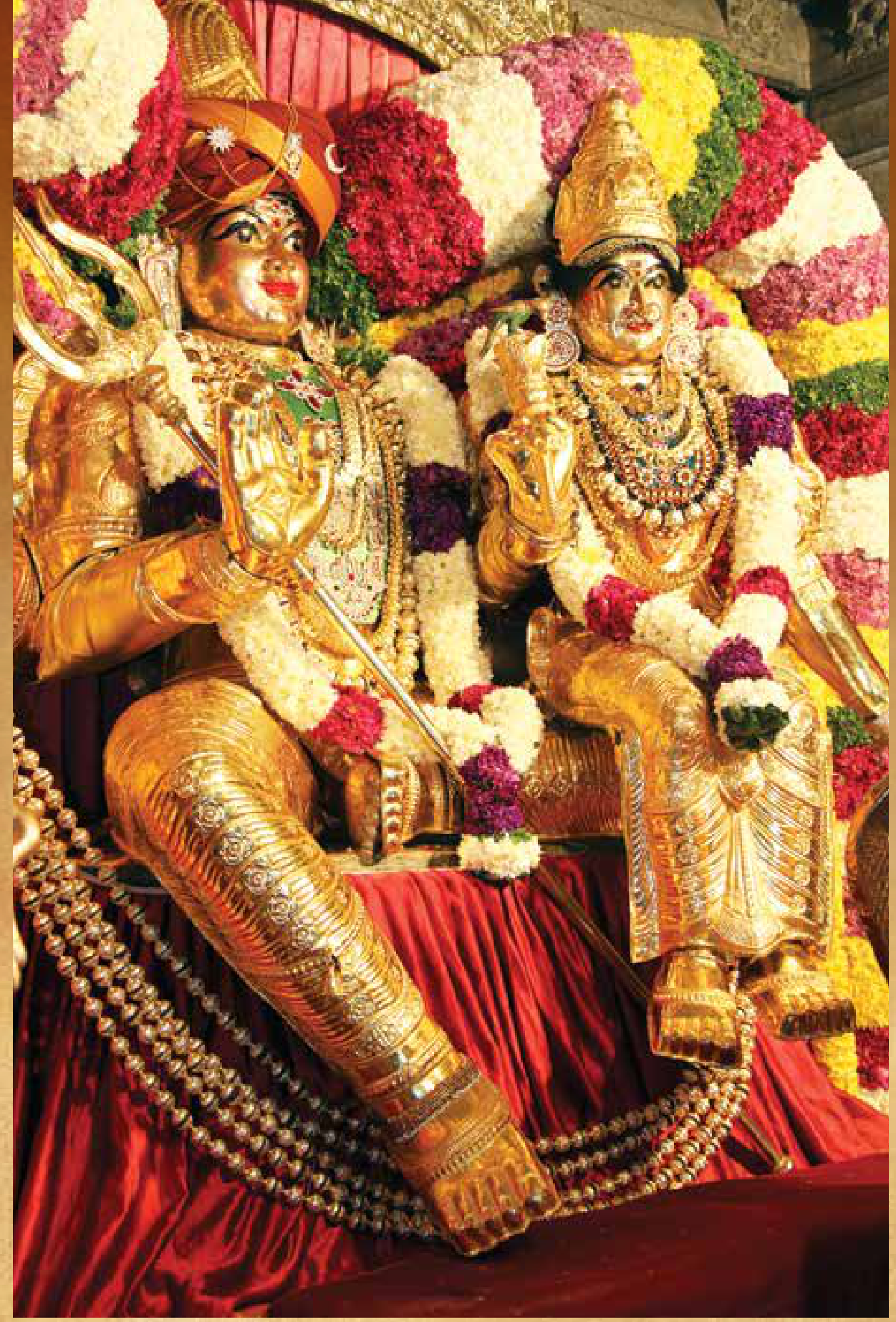
Sri Nithyanandeshwara Devasthanam
Nithyananda Peetham, Bengaluru Aadheenam, India
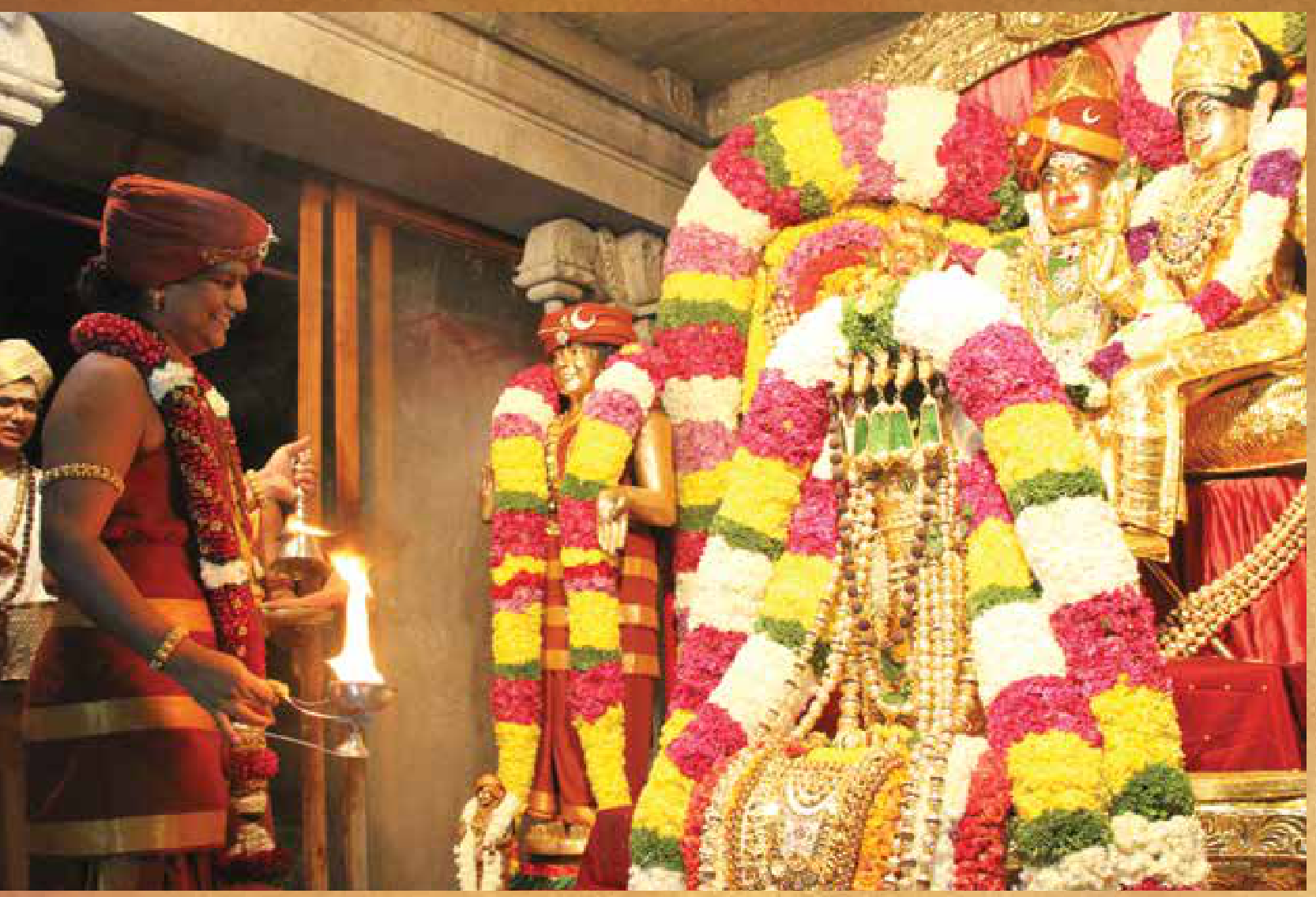
Sacred worship at the garbha mandir (sanctum) of the presiding deities Sri Nithyanandeshwara and Nithyanandeshwari (Lord Shiva and Devi) at Nithyananda Peetham, Bengaluru Aadheenam by H.H. Paramahamsa Nithyananda
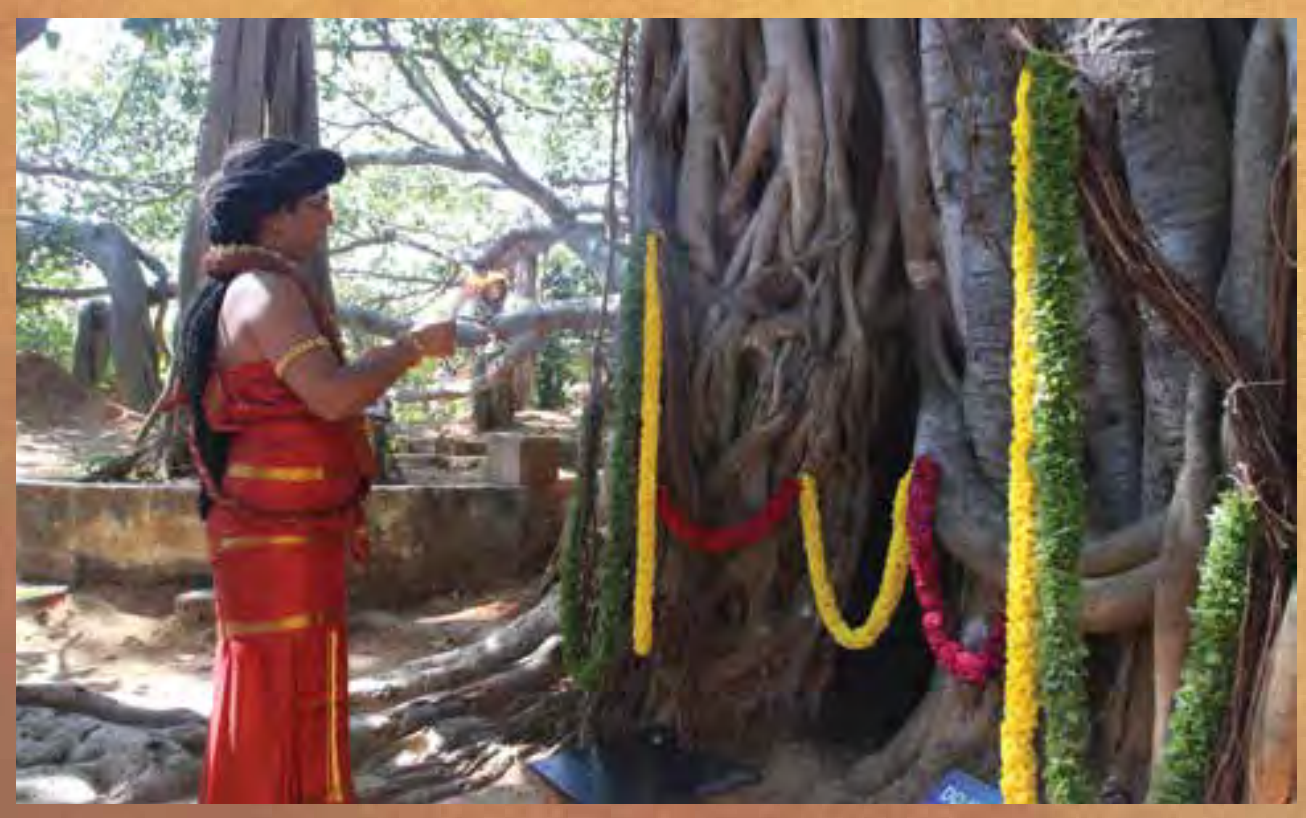
Worshipping the Kalpavriksha, the sacred Banyan tree at Bengaluru Aadheenam
Advaita Bhakti, worshipping Oneness through the living Deities
In Hinduism, there is no idol worship. Worship happens 'through' the idols. Everything, from education, architecture, lifestyle or celebrations, are based on temple traditions. By overflowing devotion (bhakti) onto the living deity in the personal form or 'Archavatar' of pure consciousness, the Oneness (advaita) with Divine is experienced.
Hindu temples were always maintained through donations from royal patrons and individuals, thus creating huge merits (punya) for the donors. The temples were given money, gold, silver, cows and land by the patrons. Such donations keep the vital source of Vedic tradition alive and enriching till date.