WILD ANIMALS - ANSWER
This text was machine-transcribed from the printed book and may contain errors. Select the words and choose “Report a mistake”.
- No
- They mostly feed on carrion, which is left over of bigger hunters some time, they do hunting
- Ape
- Grey Wolf
- Cheetah
- Blue Whale
- Bats
- Packs
- Siberian tiger
- Gorilla
- Opossum, Kangaroo, Koale
- Black Panther
- Yes, when water is frozen - Polar bears
- By howling
- Elephant
- They produce ultrasonic
- Rattle snake
- Giraffe
- Zebra
- Carnivores
- Herbivores
- Omnivores
- Primates
- Primates are animals with fingers, hands and feet like human. They have good sight, smell and color vision. They have largest brain. They are intelligent.
- Dwarf caiman
- Gecko - thumb size
- Python
- Komodo dragon
- It cannot hear instead it can feel the vibration on the earth
- They pick up smell with their tongue which they flick in and out
- Chameleons
- As the snake grows, its scaly skin becomes too small
- Molting
- Thread snake
- Elephants
- They hunt in packs
- Thick, hairless skin
- Densely compacted hair
- Herd
- Trumpeting
- Arctic
- Clever hunters
- Bamboo stem and leaves
- 18 hours
- A leapord has spots where jaguars have spots with rings
- Yes
- Long and pointed spices
- No, they bark or bray
- Rhinoceros
- Ivory
- A male lion has a mane, a lioness has not
- Vixen
- Hibernation
- A pride
BLISS CURRICULUM
June : Week - 3 Alphabets of the Month: E,F,G,H Theme: Actions Color of the Month: Yellow, Beige Shape of the Month: Circle, Sphere, Cylinder
| Monday | Tuesday | Wednesday | Thursday | Friday | |
|---|---|---|---|---|---|
| CIRCLE TIME | Demonstrate actions. | Make children to do actions. | Name the actions. | Show action pictures. | Follow the leader. |
| ART |

Sketch pen tracing, feather painting. | Sponge printing. Dancing doll craft. | Collage cutting and sticking, brushing painting. | Print making. Rock painting. | Spray painting with stencils, clay coloring. | | ACTIVITY |
Gulping, gargling, lacing straw | Rock and sand Pouring, filtering using funnel | Pinning paper. Clips on number dots.Displaceme nt activity | Scrubbing and cleaning, squeezing foam. | Blowing wooden chips, can paper be torn. | | GYM | Jump on the numbers, freeze dance. | Simon says, basket ball. | Throw ball overhead, walk on zig-zag line. | Musical chair. Throw and catch. | Squatting, heel and toe walking. | | A-Z OF ACTIONS | A- Arranging / B- Bathing / C- Creeping, Churning / D- Drip / E- Eating / F- Fetching / G- Gargling, Gulping / H- Hugging / I- Ice Skating / J- Jumping, Jog / K- Kicking / L- Lasso / M- Munching. N- Nodding / O- Opening / P- Plating, Piercing / Q- Squatting / R- Riding / S- Swatting, Soaking, Sip. T- Toss, Threading / U- V- / W- Wringing / X- Y- Z- | | | | |
[Figure: ACTION]
DAY: 1
Topic: Eating, sleeping, gargling, gulping, drinking, yawning, bouncing and cooking.
Vocabulary: eat, sleep, breakfast, bed, nap, taste, dinner, lunch, mat, pillow, blanket, gargling, gulping, drinking,
Material required: Pictures, utensils used for eating, mat.
Presentation: ● Demonstrate to the children different actions like eating, sleeping, washing, bathing etc and ask them to identify the action. ● Explain to them that through actions we communicate or express our ideas, needs etc. ● Some actions such as running, jumping, swimming, crawling, walking etc. represent our physical actions, and the class can familiarize themselves with the action verbs while learning the actions ● Explain and familiarize the children with the concept of eating and sleeping. Explain to them that we eat when we are hungry and food helps us to grow and keep us healthy. ● We sleep at night and take some rest when we are tired. Tell them before going to bed at night we should brush our teeth and put on pajamas, night gowns, or clothes for bed. ● Explain to them that we should eat healthy and clean food, washing fruits and vegetables carefully before eating and cooking correctly to preserve the vitamins and minerals in the food. ● Talk about breakfast, lunch, dinner. We eat three meals a day to get energy and grow, it is important to eat the right kinds of food to build up our strength. Breakfast is an important meal as it's the first thing we eat in the morning and should include fresh fruit. Lunch should be during mid-day and include enough protein, vegetables and starch. And dinner is in the evening including all the food groups. Snacks keep us going between meals. ● Demonstrate the actions for each action word, and children can have fun acting out the different ones while the rest of the class guesses. ● Demonstrate the gargling action and tell them after brushing our teeth we have to gargle nicely. Gargling is rinsing your mouth and throat. ● Demonstrate gulping action and gulping is drinking quickly. We do gulping when we drink medicine. ● Bouncing is the action of applying force to the ball and sustaining the motion through tapping it. We can also bounce by jumping up and down (e.g. the rabbit bounced up and down.) ● When we feel sleepy, and when we lack oxygen, we yawn. ● We cook in the kitchen, we need stove, utensils, food materials, water for cooking.
Assessment: ● Show action of eating and sleeping? ● What are the things we normally drink? ● Why do we eat food? ● What do we dowhen we feel hungry? ● Which is your favorite food? ● Who cooks food? ● What is "bouncing"? Do lions bounce? ● What do you eat for snack? ● What type of food we should eat? ● When do we eat our lunch, breakfast and dinner? ● Where do we sleep? ● What we need to do before going to bed? ● What is gargling? ● When do we gargle? ● What is gulping? ● When do we gulp? ● When do we yawn? ● Where do we cook? ● Name a few things you need for cooking
Closing: To make the children understand the concept of eating, sleeping, and the need of eating healthy and clean food, need of good sleep and washing hands before and after eating food.
Evaluation: Sensory skills-touch different food materials Gustatory skills- taste of different materials, spice, and food. Self help skills- washing hands, eating by self. Cause and effect- eating healthy food and what happens when we eat junk food. If we don't have good sleep what happens.
Extension: Have a cooking party! All the children can have a blast by engaging in pretend play and putting their imaginations to work by cooking food, eating, serving and enjoying while acting out the actions and verbalizing them so that the learning experience stays with them.
[Figure: ACTION]
DAY: 2
Topic: Running, Jumping
Vocabulary: Run, jump, hop, skip, race, exercise, walk, marching, flexible.
Material required: Show charts, pictures.
Presentation:
• Show the actions of running and jumping and explain to them that we use our legs to run and jump
• Demonstrate different types of walking like heel walking, toe walking, heel to toe walking, kneel walking.
• Demonstrate marching. Talk about how police and army people do marching parades.
• Explain the need of exercise and how it helps for the fitness of our body.
• Tell them that we have to be careful while jumping and running. Encourage them that we can jump and run in the gym or in the play ground.
• Talk about the animals that run fast, walk slow and jump very fast.
• Cheetahs run very fast, ostrich is the fastest bird.
• Talk about different games based on running and jumping like running race, relay race, marathon, long jump, high jump, gymnastic and so on. Tell them about the special shoes that are used by athletes, helping them to run fast and shoes that are flexible.
• When we don't exercise we become fat, we lose muscle strength, which is why exercise and healthy living is very important.
Assessment:
• Show actions for running and jumping.
• Which part of our body do we use for running and jumping?
• Which animal runs faster?
• Which animal jumps fast?
• Name few games based on running.
• Name few games based on jumping.
• How exercise helps us?
• What is the need of doing exercise?
• Can we run without our legs?
• Why is it not safe to run on uneven surfaces?
• What is marching, and where can we see people marching?
Closing: To familiarize the children the concept of running and jumping and make them understand the need of exercise for the fitness of our body and being careful while running and jumping.
Evaluation - Skills;
Gross motor – improve their running and jumping.
Math skills- count the times they jump.
Language – new vocabulary words.
Cognitive skills- acquiring facts about different games.
Extension: Games related to jumping and running like running race, lock and key, long jump, high jump, musical chairs etc.
DAY: 3
Topic: Touching and crying, whispering, talking.
Vocabulary: Touch, feel, upset, cry, unhappy, sticky, rough, smooth, gooey, hard, soft, whining, weeping, talking, whispering.
Material required: Pictures showing actions, texture book, texture toys.
Presentation: • Show the children the actions of touching and crying. Tell them that we touch and feel with our skin. • Explain to them that we have to express in words instead of crying and getting upset. Discuss with them in which situations they cry. • Explain to them when we cry, tears come out and tell them if we cry more what happen to our eyes, and that they become red and swollen. • Make the children to touch different textures like rough smooth soft so on and ask them how they feel. • We feel pain when we touch something very hot. • We feel pain when we touch something very cold for a long period of time. • Talk about the ways in which we can express our needs with out crying. • Demonstrate whispering actions and the difference between talking and whispering • Whispering is speaking in a very low voice – murmuring. • Talk about the different means of communication.
Assessment: • Which part of the body helps us to feel? • How do you feel when you touch fur? • What comes out when we cry? • In what situations do we cry? • What is whispering and when do we whisper? • Which texture do you like to touch and feel more? • What happens when you touch very hot things? • What is the difference between crying and whining? • What happens when we cry for a long time? • Ask them to show action of crying and touching different objects.
Closing: To encourage the children that we have to express in words instead of crying and making them feel and touch different texture like hard, soft, smooth etc and making them to understand the concept.
Evaluation:
Skills: Sensory- touching different textures like, soft, hard, gooey, smooth etc. Language – learning new vocabulary words.
Extension: Place objects with different textures in a bag. Have the children reach in and describe the objects they touch or match objects with the same texture. They can play passing the secret.
DAY: 4
Topic: Walking, climbing, threading, fetching, bathing, soaking, wringing.
Vocabulary: Walk, climb, strength, muscles, exercise, heel walk, toe walk, threading, fetching, bathing, soaking, wringing.
Materials: Pictures chart, books.
Presentation:
• Show the children the action of walking and climbing. Explain to them that these actions strengthen our limbs and improve our muscle power.
• Tell them about different walks like toe walk, speed walk, heel walk, marching etc and talk about mountain climbing, climbing tree, jungle gym.
• Explain them that we need to be careful while climbing and walking on roads. We have to follow the rules while climbing and walking.
• Fetching is getting and carrying objects.
• Hiking is a sport of climbing mountains.
• Demonstrate the bathing action with a baby doll and talk about the need of bathing daily to keep ourselves clean and healthy.
• Wringing is squeezing the excess water from the clothes after washing it.
• Demonstrate the washing and wringing actions.
Objective:
• How do you feel after a long walk?
• Which part of body we use for walking and climbing?
• How do they improve our overall physique?
• Is walking an exercise?
• In which places can we climb?
• Name few types of walk
• What is wringing?
• When do we do wringing?
• Where do we take bath?
• What are the things we need for talking bath?
• Why we need to take bath?
• What is hiking?
Closing: To educate the children about the importance of walking and climbing, how it helps in our physical fitness and making them know different types of walks.
Evaluation:
Physical skills- improve the limbs and muscle power.
Visual discrimination- different types of walks.
Acquiring facts- different sports, mountaineering etc.
Extension: Make them do different walks like stride walk, toe walk, heel walk, marching and climbing the stairs and jungle gym. They can give a bath to a baby doll, clean the flood with a wet cloth.
[Figure: ACTION]
DAY: 5
Topic: Reading and playing, churning, plaiting, Vocabulary: read, play, book, group, friends. Materials: Pictures, books, toys etc. Presentation: • Explain to the children we read books to improve our knowledge and with the help of our eyes we read. • Tell them the games we play like follow the leader, tug of war etc and it is only played in group doing lots of actions and physical movement. • Explain them that playing alone is not a fun but playing with group we have fun and enjoy. • Talk about different books we like to read and how book helps our knowledge, develop our memory and to acquire facts. • Plaiting is creating a design or pattern with wool thread,hair • Churning is mixing different ingredients (e.g. We can churn milk cream to turn into butter.) Assessment: • How do you read? • Which book you like to read? • What do you achieve by reading? • Do you love to read? • How should we play alone or in a group? • What games you like to play? • What is plaiting? • Where do we use churning? • Do you like skipping? • Can you plait your hair? Closing: To make the children understand the importance of reading and playing in a group. To make the concept of actions more clear with vocabulary words and the idea of reading and playing. Evaluation: Social skills- playing in group. Physical skills- playing different games and improve fitness. Reading skills- reading different books. Extension: Pretend Reading books Ask them to take a stick and a water glass. They can add some food color or soap solution and then churn the stick to see the reaction. They can use ropes or use false hair to plait in different ways.
© 2011 Copyright Nithya Gnanadhan Trust
DAY 1: ART
SKETCH PEN TRACING
Material required: Plain sheet, pencils or crayons or sketch pen, stencils (related to various themes) or a block or a shapes.
Procedure: Provide plain papers to the children and give them a stencil or a block or a shape and ask them to place it on the paper and ask them to hold it firmly with other hand and trace the stencil or block or shape, inside or outside.
FEATHER PAINTING
Material required: Feathers, poster colors, outline of the birds picture.
Procedure: Children are requested to use the feather like a paint brush and color the bird picture with paint. Encourage the children to color inside the picture; let the children use the colors according to the variety of the birds' picture.
Skills Developed: Texture skills, fine motor skills, Eye-Hand co-ordination, Cognitive skills of knowledge of birds
DAY 1: ACTIVITY
GULPING, GARGLING
Goals: To develops their oral motor skills.
Content:
Vocabulary: Gulping, gargling.
Introduction and Presentation: Ask the children to try and do gulping and gargling. Gulping: holding the water in mouth and trying to drink at a stretch.
Gargling: holding the water in the lower part of the mouth and moving the jaw to produce bubbles.
Assessment:
• How is bubbles form when we gargle?
• Can you gargle with solid food?
• What are you trying to do when you gulp?
Skills developed: Oral motor skills.
LACING STRAW
Goals: To develop their fine motor skills, eye hand coordination, pincer grasp, pre math skills of patterning and understanding of one-one correspondence.
Content:
Material required: Different straws cut in to small pieces, long woolen thread cut equally for all the children.
Vocabulary: String, straws, lacing, pattern etc.
Presentation:
Place the required materials on the table and distribute it to the children equally.
Ask the children to hold the thread in one hand and pick one straw using thumb and index finger and ask them to insert the thread through the straw and string the straw one by one. They can also follow a particular pattern.
Assessment:
• What is the shape of the straw?
• How did the thread go through the straw?
• If there is no hole will the thread go inside?
• How many have you stringed?
Evaluation: Evaluate their skills by repeating the activity and observing the progress.
Skills developed:
Fine motor skills, eye hand coordination.
Pincer grasp.
Per math skills of patterning.
One to one correspondence.
[Figure: ACTION]
DAY 1: GYM
JUMP ON THE NUMBERS
Goal: To develop their gross motor skills, pre math skills, eye coordination and balance. Presentation: Write some numbers on the floor and ask the children to jump on the number prints. We can ask questions about numbers. Skills developed: Gross motor skills, balance and coordination, pre math skills. Variation: Instead we can write alphabets, any pictures according to the theme
FREEZE DANCE
Goal: To develop their direction skills, gross motor skills and social skills, auditory skills Presentation: Children are encouraged to stand in a circle. They are asked to do body movements for action rhymes or for the music or to the instructions e.g. freeze to your right, freeze to your left. They hear the word freeze being told by the mentor. They have to stay still in what position they are in. Whoever moves will be out of the circle and say freeze as a catcher. When they hear the word melt they can move. Skills developed: Develops their direction skills, gross motor skills, social skills, auditory skills..
DAY 2: ART
SPONGE PRINTING
Material required: Uncolored art sheet, paints of various colors, sponge cut in to various shapes. Procedure: The children are asked to dip the sponge in the paint and do the sponge printing on the given picture. They can do printing with various shape or size or design sponges dipped in different colors. Encourage the children to do the printing only inside the picture. Skills developed: fine motor skills, sensory skills, cognitive skills of knowledge of various colors and cause and effect.
DANCING DOLLS (CRAFT)
Materials needed: Plain sheets, colors (sketch) color papers, cello tapes and scissors. Procedure:
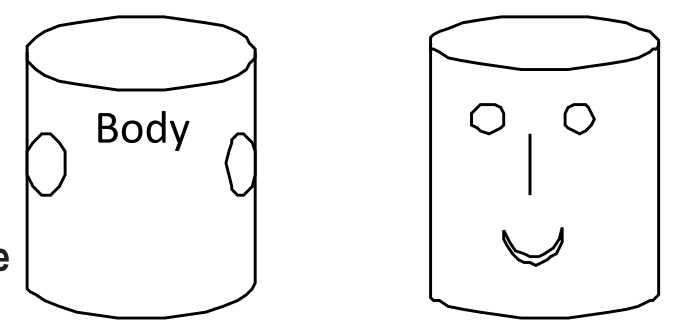
Step: 1: Take two half sheet papers, roll and stick it with glue for two bodies and make a hole on both sides in the middle. Take two small papers and roll it for two head and mark eyes, nose and mouth with the sketch as shown in the picture.
© 2011 Copyright Nithya Gnanadhan Trust
Step: 2: Take another paper and roll it in a cylindrical shapes (8 pieces) for four hands and four legs.
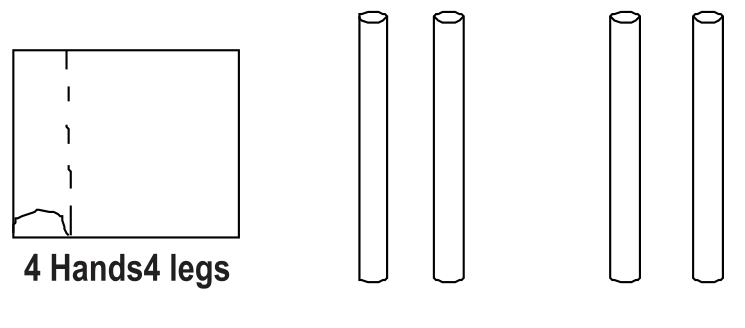
Step: 3: Take the head, legs and stick inside the body (head on top and legs on the bottom) for boy and girl and take the remaining four rolled paper and stick it inside the hole of the body and snip the edge of the hand so that it would look like fingers. Step: 4: Color the half part of the body with any design color, for the girl and brown color for the boy. Step: 5: Draw a skirt and pant on the color paper and cut it out and stick it on the middle of the body (any color which is matching). Step: 6: Take a black color paper and cut out like a hair shape and stick it on the head of the girl, stick both of their hands with cello tapes, so that it would look like holding each other and dancing. Variation: Instead of using paint you can stick with color paper for their dressed, you can decorate with any accessories for the girl.
DAY 2: ACTIVITY
ROCK AND SAND POURING
Activities: Pouring rock and sand Goals: To help their development of fine motor skills and eye hand coordination. Content Vocabulary - Pouring, transferring, bowl, liquid, solid, full, half, empty, quarter, more, less, plenty, few, many etc. Material required: Spoons, measuring cups, rock, sand, various utensils, water. Presentation: Kids can pour sand and rock from one container to another and they can learn which is; more, less, full, empty, half, full, quarter. Ask them which is full, half, empty etc. Assessment: ● Can we lift a bowl with one finger? ● Can we pick a rock with one finger? ● Can we count the Rock? ● Can we count the sand? ● Is it possible to carry rock in hand without dropping? ● Is it possible to carry sand in hand without spilling? ● Can we pick the rock when dropped? ● Can we pick water if it spills? ● Which do you prefer more or less, few or many? ● Which is more, half cup or full cup? ● Can we fill an empty cup and make it full? ● Which one moves first to another container, sand or rock? ● Why sand moves first from one container? Variations: They can use tongs to pick grains like ground nut. They can pick mustard seeds with pincer grasp. They can use the funnel to pour the liquids. Use a sieve to filter or strain leaves from the water. While filtering we can ask why leaves are not pass through the sieve, we can close the end of the funnel and ask them why water is not flowing now? Evaluation: Evaluate how each kid is transferring with or without spilling, record the results for further analysis. Evaluate the terms they learnt. Ask them questions about the shape, size of the grains. Conclusion: This activity helps develop their whole hand grasp and understanding the concept of displacement, as well as fine motor skills.
DAY 2: GYM
SIMON SAYS
Goal: To develop their auditory skills, observing skills, following oral instructions and receptive language skills; gross motor skills. Presentation: A person who will give instruction can be named as pilot, sailor, postman, chef, judge etc related to the theme. Children are given oral instruction like “pilot says to do flying action”. Instruction can be anything to stimulate children's interest. Skills developed: Auditory skills. Receptive language skills. Gross motor skills.
BASKET BALL
Goal: To develop their eye hand coordination, whole hand grasp, gross motor skills, social skill of sharing, emotional skills of waiting and turn taking. Presentation: Children are asked to form a line; each child is given turn to hold the ball and asked to throw it into the basket placed little higher than their level. They are asked to jump and try to drop ball in to the basket. Skills developed: Develops their eye hand coordination, whole hand grasp, gross motor skills, social/ emotional skills.
DAY 3: ART
COLLAGE CUTTING AND STICKING
Goals: To develop their fine motor skills, pincer grasp, eye hand coordination, spatial awareness, and tactile skills. Material required: - Glue, uncolored art sheet, magazine cut outs, safety scissors. Procedure: Keep the required material ready before starting an activity. Explain to the children about the art sheet. Show them how to cut magazine picture with scissors. Encourage them to apply glue inside the picture and ask them pick the cutouts of magazine and stick on the glue inside the picture. Skills developed: Fine motor skills, pincer grasp, eye hand coordination, spatial awareness, and tactile skills.
BRUSH PAINTING
Material required: Uncolored art sheets, different poster colors, paint pallets, paint brush. Procedure: children can dip the paint brush in the paint (different colors) and paint the picture given holding the brush firmly. Children are encouraged to paint inside the picture. Skills developed: Develops their fine motor skills, eye hand coordination.
DAY 3: ACTIVITY
PINNING PAPER CLIPS ON NUMBER DOTS
Goals: To improve their pincer grasp fine motor skills, math skills and cognitive skills of understanding cause and effect.
Content:
Vocabulary: Paper clips, Pincer grasp, Pinning, Pressing, and Opening
Material required: Papers with numbers on it, Paper clips or cloth clips
Presentation: Keep papers, paper clips or cloth clips ready before starting an activity. Hold a piece of paper with one hand and pin the paper clip by opening it using thumb and index finger (pincer grasp) according to the number in a sequence. They can be asked before and after numbers while clipping.
Assessment:
• How does the paper look?
• What is the shape of the paper?
• How does the cloth clips or paper clips look like?
Evaluation: To evaluate development in the following skills
Skills developed: Pincer grasp Eye hand coordination Tripod grasp Math skill
Conclusion: These activities improve fine motor skills of pincer grasp, tripod grasp, and eye hand coordination.
DISPLACEMENT ACTIVITY
Activity: To show the same quantity of material in different containers.
Goals: To improve their cognitive skills of comparing, measuring, sustaining attention, language skills.
Content: Vocabulary: Quantity, displacement, more, less, equal
Material required: Rice/ flour, bowl or glass of different shape and size
Presentation: To present the activity keep the materials ready. Take a bowl of rice and show them the quantity, then take the same quantity of rice and pour it in a glass. Show them the rice kept in different vessels and ask the child which is more/ less/ or whether it is equal. Make the children to do the activity. Explain that the quantity is same, only the size of the vessel differs and it takes the shape of the container.
Assessment:
• What happens when same quantity of rice is kept in two vessels of different sizes?
• Will there be any change in the quantity?
• What does “displacement” mean?
• What happens when we use two identical objects, but move one up higher than the other, does it become larger?
Variation: To do the activity we can use water, flour, straw, play dough, straw etc.
Evaluation: Evaluate each child whether they understood the displacement of the same quantity of rice. Evaluate their cognitive skills of comparing and measuring, language skills.
Conclusion: The concept of displacement is challenging to teach, so using these different activities will help with them to understand.
DAY 3: GYM
THROW BALL OVERHEAD
Goal: To develop their gross motor skills.
Presentation: Welcome the children to the new game to strengthen their shoulder muscles. Make the children hold the ball using one hand or two hands. It helps them understand and judge the position where their hand has to be raised to throw the ball over head.
Skills developed: This game helps them to develop their gross motor skills when their hand is raised given force to throw ball their whole hand movement improves and their spatial sense improves when they judge the position.
Extension: They can close their eyes and try it to drop the ball into the basket over head.
WALKS ON ZIGZAG LINE
Goal: To develop their gross motor skills, eye and foot coordination and balancing print.
Presentation: A straight line or a zigzag line or a crooked line or animal foot prints, bug prints, floral prints can be drawn on the ground. Children are asked to walk on it with balance.
Skills developed:
Eye foot coordination.
Balancing skills.
Gross motor skills.
DAY 4: ART
PRINT MAKING
Material required: Various stamp moulds/ block/vegetables/ shapes etc according to their themes, stamp pad, holder, plain sheet or art sheet.
Procedure: The children are asked to hold the holder firmly and print the stamps pressed in stamp pad on the paper. Children can name the print after seeing the impression.
Skills developed: Tripod grasp, fine motor skills, cognitive skills of understanding cause and effect.
Variation: Instead of stamp moulds we can also use blocks of various shapes for printing.
ROCK PAINTING
Material required: Uncolored art sheets, rock (size: more than 2 inch) for the children to hold, paint pallet, different color poster color.
Procedure: Provide each children art sheet and a rock. Ask the children to dip the rock in to the paint and ask the children to make rock prints on the paper. Encourage them to do it inside the picture.
Skill developed: Fine motor skills, eye hand coordination, and sensory skills.
SCRUBBING AND CLEANING
Activity: To scrub the table using scrubber and clean it using foam
Goals: To improve their whole hand movement, fine motor, self help skill.
Content
Vocabulary: Foam, scrubber, clean, scrub, dirty, messy, wipe
Material required: Scrubber , soap, water, cup, foam
Presentation: Drop few drops of soap and water on the table and ask the children to hold the scrubber using their palm with whole hand grasp and guide them to scrub using circular arm movement. And ask them to clean it by wiping it using foam .
Closing: Ask them to try the same.
Evaluation: Evaluate their self help skills ,fine motor and whole hand movement and record the observation.
Skills Developed: Gross motor, Fine motor, Sensorial, problem solving and language skills.
Variation: They can clean up toys from different cubbies and sort it into right cubbies. Mop after cleaning the dust using wet cloth or mop, learn to squeeze the towel or the mop.
SQUEEZING FOAM
Goals: To improve their intrinsic hand muscle power, their fine motor skills to develop their texture sense. Familiarize them with crushable and non crushable items.
Content:
Vocabulary: squeezing, sponge, hard, soft, sticky
Material required: Sponge, cup of water, food color
Presentation: Encourage children to soak the sponge in the water and ask them to hold it using palm squeezing the sponge giving pressure on their palm.
Explain to them why some can be squeezed some cannot.
Assessment:
Can we squeeze a hard material?
What happens when we squeeze a sponge soaked in water?
What happens when we squeeze a rubber ball?
Can we squeeze a rock?
What happens when we squeeze a lemon?
Variations: Squeezing activities can be done with tomato, wet sponge soaked in water (or) soap water, lemon with or without squeezer.
Evaluation: Some kid with sensory motor problems may not touch the sticky items, they can be persuaded slowly to get involved in the activity. Record the inference for future verification.
Conclusion: By this activity the development of the children's sensory awareness improves, as well as their tactile skills.
DAY 4: GYM
MUSICAL CHAIR
Explanation: Arrange chairs in two rows back to back or in a circle. Use one less chair than there are children playing the game e.g. if 8 children then place 7 chairs). Start some music and have the children run around the chairs. When you stop the music, the children quickly find a chair and sit down. The child left without a chair is out. Continue the game, removing one chair each round, until there are two children and one chair left. The child who gets the last chair wins.
Skills developed: Auditory skills, gross motor skills
THROW AND CATCH
Goal: To develop their gross motor skills, eye hand coordination.
Presentation: Welcome the children to the new game to strengthen their shoulder muscles. Show them how to throw and catch the ball using both hands. Make the children hold the ball using one hand or two hands. It helps them understand and judge the position where their hand has to be raised to throw the ball and catch it.
Skills developed: This game helps them to develop their gross motor skills when they raised their hands by giving force to throw the ball. This improves their whole hand movement, their spatial skills and eye hand movement.
DAY 5: ART
SPRAY PAINTING WITH STENCILS
Material required: uncolored art sheet or plain sheet, different poster colors alphabet stencils or number stencils related to the theme example flowers, fruits, and animals etc, tooth brush.
Procedure: children are asked to keep the stencil in the appropriate place on the art sheet or the plain sheet. They have to dip the toothbrush in the paint and hold the tooth brush upside down with one hand, above the art sheet and move the bristles of the tooth brush with other hand on the comb held in the other hand. Children are asked to observe that the paint is sprayed by this movement in the paper. Now they can take the stencil and observe the design.
Skills developed: fine motor skills, eye hand coordination, cognitive skills of observing cause and effect.
CLAY COLORING
Goal: To develop their fine motor skills, eye hand coordination, sensory awareness skills and their creativity.
Materials required: Clay dough moulds or cookie cutters of different shapes, brush and different poster color paint.
Presentation: Motivate children to create some thing new using play dough related to the theme. Each child is given required amount of play dough. They are directed to take clay dough and ask them to roll it using their both hands initially using the ground or table. Later using only their hands. They can roll it round or long or oval as they wish. They can try out different models. They can also use moulds and cookie cutters to cut out moulds to their interest. They can also paint it once it dries. They can paint different color according to their interest in the clay dough.
Skills developed: Develops fine motor skills, eye hand coordination, sensory awareness skills, their creativity.
DAY 5: ACTIVITIY
BLOW WOODEN CHIPS
Activity: To show how to blow wooden chips/papers / leaves / water / beads etc.
Goals: To improve their oral motor skill, language skill, cause and effect.
Content:
Vocabulary - Blow, wooden, chips, leaves, beads, water, air.
Material required: Straws, wooden chips, bits of paper, leaves, beads.
Presentation: Make each child sit at the table. To present the activity, take wooden chips or bits of paper or leaves on the table. Show them how to blow. Then demonstrate how when you blow the wooden chips or papers or leaves are moving. Ask each child to blow. What happens when they blow? Give some heavy and light objects and ask them to blow it.
Assessment: When we blow what comes out? What happens when we blow the wooden chips or papers or leaves? Can we move heavy objects by blowing? When we blow which object will move fast? (Heavy or light). What happens when you blow a whistle?
Variation: Then can even blow water, beads etc.
Evaluation: Evaluate each child's ability to blow or whistle. Evaluate their oral motor skill, their concentration on the activity, their understanding of cause and effect.
Conclusion: This helps them understand the effects of air pressure and improves their oral motor skills and their understanding of cause and effect.
CAN PAPER BE TORN!
Activity: This is an experiment to tear paper by applying force on both the fingers to tear paper. Goals: To import the concept that two different forces cannot be exerted at the same time Content: Vocabulary - Molecules, bind, tear, hold, center, forces Material required: Paper, pencil (for making holes) Presentation: Introduce how we cannot exert two different forces at the same time. Take a rectangle piece of paper and make two holes of same size at the same distance from the center. Then insert both the index fingers in to the hole and try to tear both the holes at the same time. Reason: Paper is made up of molecules. The molecules are not bounded to each other uniformly at all places in the paper. In some places the binding may be strong and in some places it may be weak. To tear both the holes at the same time it requires two different forces. Since we cannot offer two different forces at the same time, only one of the holes is torn. When we hold the center of the paper and then tear the holes we will be able to tear them at the same time. This is because we are able to offer two different forces. Assessment: Can we tear a cardboard easily? Why? Can we tear a paper easily? Why we canot tear the two holes of the paper at the same time? Can we apply two different forces at the two different places at the same time? Evaluation: Evaluate their language skills- expressive, receptive. Conclusion: Conclude the topic by recalling that we cannot offer two different forces at the same time.
DAY 5: GYM
SQUATTING
Goal: To improve their gross motor skills and their hip muscles. Presentation: Encourage children to stand in a half seated position and move forward in that position. Skills developed: develops gross motor skills and their hip muscles.
HEEL AND TOE WALKING
Goal: to develop their gross motor skills, balancing skills. Presentation: Ask the children to raise their heel or toe and stand on their toes or heel. They are directed to move on their toes or heel for given distance. They can catch their friend walking on the toes or heel. Skills developed: Develops their gross motor skills, balancing skills.
BLISS CURRICULUM
June : Week – 2 Alphabets of the Month: E, F, G, H Theme: Insects Color of the Month: Yellow, Beige Shape of the Month: Circle, Sphere, Cylinder
| Monday | Tuesday | Wednesday | Thursday | Friday | |
|---|---|---|---|---|---|
CIRCLE TIME | Features of insects. | Mystery bag. Body parts. | Spider (Arachnids). | Life cycle of butterfly. Uses of insects. | Find the insects, vertebrates, invertebrates. | |
ART | Stick ant chain. Brush painting. | Making a bug. Bug stamp painting. | Color pencil coloring. Shape sticking. | Paint, cut stick butterfly, mini book. | Collage with color paper strips, buds painting. | |
ACTIVITY | Making ant hill matching color pallets. | Insects patterning. Estimating with beads. | Sorting dots by color. Punching holes. | Making crushed paper balls. Snap fingers. | Mixing color with noodles, size sequencing with noodles. | |

GYM | Walk on bug print, hop, jump and creep | Side wall rolling, bowling. | Skipping, obstacle course. | Skipping, obstacle course. | Bubbles, spider walk, fly like butterfly. | |
A-Z OF INSECTS | A- Ant / B- Butterfly, beetle, bed bug / C- Caterpillar, Cricket / D- Dragon fly / E- Eyes / F- Fly, Fire bug / G- Grasshopper / H- Honey bee, House fly / I- Insect / J- June bug / K- King termite / L- Larva, Leaf insect, Lice / M- Mosquito / N- Nymph, Nectar / O- One eyed bee / P- Praying Mantis / Q- Queen Termite / R- Red bug / S- Stink bugs, Stick insect / T- Termite / U- Bug / V- Velvet Ant / W- Weevil, Wasp / X- Wax / Y- / Z- Buzz | | | | |
[Figure: insects worksheets]
DAY: 1
Topic: Ants Content: Vocabulary: Ant, March, head, thorax, abdomen, antenna. Material required: Presentation: • Explain the children that ants are insects, which have six legs, two antenna, and three body parts (head, thorax and abdomen). • Tell the children that ants live in colonies. They are social insects like bees. They spend their whole life working to build their homes, gathering and storing food. • Show them toy ants or pictures of ants and talk about different colors and size of ants. • Tell them that ants always look for food especially something that is sweet. • Talk about the queen ant which is larger than other ants. Her thorax is particularly larger than that of the worker ants. Assessment: • How many legs and antenna are there in an ant? • What work does the ant do all the life? • What is the main ant called as? • Is the queen ant larger than other ants? • How do the ants live? • Which type of food does the ant like? • How many body parts are there in an ant? • What are the body parts? Closing: to make the child understand about the ants, what they do, eat and their body parts and so on. So enhance their understanding of different colors and sizes of ants. Evaluation: Skills developed: Language skill: answering to questions, learning new words Math skill: counting legs, antenna, Cognitive skill: classifying different size and colors of ants
© 2011 Copyright Nithya Gnanadhan Trust
DAY: 2
Topic: lady bug, caterpillar.
Content:
Vocabulary: lady bug, caterpillar, aphids, crops, ladybird.
Material required: toy insects, picture chart.
Presentation:
• Show the children pictures or toy lady bugs and explain the children that lady bugs are sometimes called as lady birds, lady bugs are a form of beetle.
• Tell the children that ladybugs are usually red with black spots.
• Tell them that farmers and gardeners like lady bugs, because they eat aphids. Aphids are harmful to crops and flowers. Lady bugs can eat up to 25 aphids a day.
• Show the children picture of caterpillar and explain to them that caterpillar is worms that will become butterflies.
• Explain the children about the four stages and that caterpillar is the second stage.
• Caterpillar eats lot and lots of leaves.
Assessment:
• What is the color of the lady bug?
• Why do farmers and gardeners like lady bugs?
• Are caterpillar insects?
• In which stage does caterpillar come?
• What does caterpillar eats?
• What is the previous stage of caterpillar?
Closing: To enable the child to know about ladybugs and caterpillar. Their usefulness, what they eat so on. To know new words for their active vocabulary.
Evaluation:
Skills: Visual discrimination: color of lady bug
Memory skill: remembering the facts, and new words
DAY: 3
Topic: Grass hopper and crickets Content: Vocabulary: grasshopper, cricket, swarm, ridge. Material required: toy insects, picture chart. Presentation: • Explain the children that grasshoppers are insects and crickets are type of grasshopper. • Tell them that grasshoppers eat grass and leaves. They can do enormous damage to flowers and crops. • Explain to them that when grasshoppers move in a group it is called swarm. Grasshopper lays eggs. Tell them that grasshopper grows it sheds its skin. • Tell the children that cricket sings using two mechanics- rubbing the teeth like ridges on their legs against a ridge on their wing and rubbing together the teeth like ridges on their fore wings. Assessment: • What are crickets? • What do grasshoppers eat? • Do they damage the crops? • What is a group of grasshopper called as? • What does the grasshopper shed? • Do they lay eggs? • How does a cricket sing? Closing: To help the children to understand about grasshopper, what they eat and how they damage the crops and also their life cycle. Evaluation: Skills: Cognitive skills: acquiring facts on grasshopper Language skills: learning new words, answering to questions Memory skills: remembering the facts and answering correctly
DAY: 4
Topic: Spider
Content
Vocabulary: spider, web, arthropods.
Material required: toy insects, insects pictures.
Presentation:
- Show the children the picture or toy of insect and explain that spiders are not insects but belong to the class of animals called arthropods. They have eight legs.
- Tell them most spiders spin sticky webs to use as traps to catch their prey. Insects are main food source of spiders.
- Explain the children that spiders come in all sizes. Some spiders live in holes in the ground and in the bark of trees.
Assessment:
- What do spiders make?
- How many legs do spiders have?
- What are the main food sources of spiders?
- Have you seen spider?
- What did your learn about spiders?
- Where can you find spiders?
Closing: To make the child to know about spiders which are not insects as they have 8 legs and they belong to the class of animals called arthropods. To make sure the child has learned new words and helping the child to build up confidence in communication.
Evaluation:
Skills: Language skills- learn new words, answering to questions. Math skills- big/ small spiders.
DAY: 5
Topic: Butterfly and Bumble bees.
Content Vocabulary: butterfly, cocoon, egg, caterpillar, bumble bee, guard bee, queen bee, pollen, nectar, honey. Material required: picture chart of insect, toy butterfly puzzle.
Presentation: ● Show the children pictures of butterfly and bumble bee. Tell to them that butterfly and bumble bee pollinate flowers. ● Explain to the children about the life cycle of butterfly (egg, caterpillar, cocoon, butterfly). ● Talk to them about bees that come in different types, worker bee, guard bee and queen bee. ● Tell to the children that worker bees collect the nectar and pollen from flowers, guard bees watch and protect the nest from intruders. And the queen bee helps reproduce new bees. ● Explain them that bees make honey from nectar and use pollen for food.
Assessment: ● What have you learnt about butterfly? ● Tell the life cycle of butterfly ● How many legs, antenna and wings does butterfly have? ● Do butterfly come in different colors? ● How is butter fly and bees alike? ● What is the work of worker bee? ● What does the queen bee do? ● What does the guard bee do?
Closing: to enable the child to understand and know about butterfly and bumble bees. To make them understand how they collect nectar from flowers and the life cycle of butter fly.
Evaluation:
Skills: Language skills-to develop new vocabulary, communicating ability by answering to questions. Math skills- counting legs, antenna, wings Cognitive skill: acquiring facts about butterflies and bumble bees
© 2011 Copyright Nithya Gnanadhan Trust
DAY 1: ART
STICK ANT CHAIN
Material required: Cut outs of ant pictures, glue, and plain sheet.
Procedure: draw a line on the plain sheet and give to the children and ask them to stick the given ant pictures on the line using glue.
Skills developed: fine motor, eye hand coordination skills.
Variation: bigger children can stick in a row without line.
BRUSH PAINTING
Material required: Uncolored art sheets, different poster colors, paint pallets, paint brush.
Procedure: Children can dip the paint brush in the paint (different colors) and paint the picture given holding the brush firmly. Children are encouraged to paint inside the picture.
Skills developed: Develops their fine motor skills, eye hand coordination.
DAY 1: ACTIVITY
MAKING ANT HILL
Activity: To mix Semolina and water to make ant hill.
Goals: To improve fine motor skills, eye hand coordination, sensory skills, creativity.
Content:
Vocabulary: Ants- insects, hill
Material required: Semolina Water, Plates, Food color (optional).
Introduction and Presentation: Get all the materials ready and make each child sit around a table. Explain that we are going to make an ant hill, a home for ants. Give each child a plate and pour half or quarter cup of Semolina on each plate. Demonstrate how to make an ant hill with your hands and fingers, making a hill like shape with the semolina and a bit of water. If required add color to the semolina.
Assessment:
• What happens when you mix semolina and water?
• How do you feel after mixing semolina with water?
• When color is mixed to semolina what happens?
• What is an ant hill?
• How does the ant hill look like?
Closing: Ask them to make an ant hill with semolina and water. Explain about the team effort in building an ant hill.
Skills developed Tactile skills, sensory skills, eye hand coordination,
Variation: They can even use flour, sand. Add vinegar or vanilla to the semolina. Add some small rocks to the semolina making it a bit difficult to build smoothly.
© 2011 Copyright Nithya Gnanadhan Trust
DAY 1 : GYM
WALKING ON BUG PRINT
Goal: To develop their gross motor skills, eye and foot coordination and balancing print.
Presentation: A straight line or a zig zag line or a crooked line or animal foot prints, bug prints, floral prints can be drawn on the ground. Children are asked to walk on it with balance.
Skills developed: Eye foot coordination. Balancing skills. Gross motor skills.
HOP, JUMP AND CREEP
Goal: To develop their gross motor skills, spatial awareness, balance.
Presentation: Encourage the children to jump lifting both their legs. Encourage the children to hop by lifting their one leg. They can be directed to sit on their knee and keep their hands on the ground and move. They can be asked to lie down on their tummy and they can be asked to move using only their tummy.
Skills developed: Develops their gross motor skills, spatial awareness, balancing skills.
Variation: Using blocks make tunnels and ask them to crawl, creep, and jump backward.
DAY 2 : ART
MAKING A BUG
Material required: Ground nut shells, paint (red color and black color) paper, Scissors.
Preparation: Remove the ground nut and take the ground nut shell. Mix the red color and black color separately. Cut the paper according to ground nut shell.
Procedure:
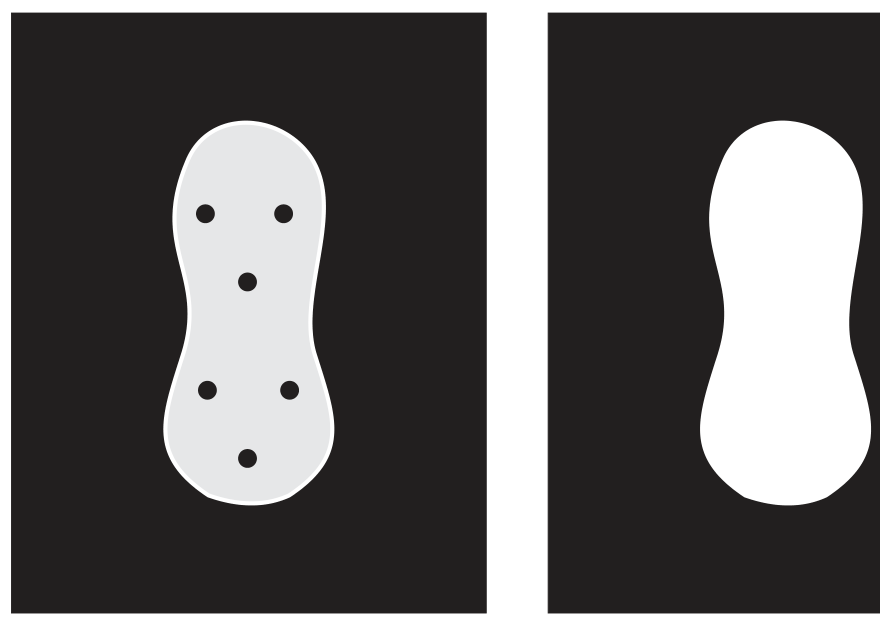
Step: 1 Paint the ground nut shell with red colors and dry, then mark with black color like a circle on top (Wherever its needed) two white dots to indicate the eyes.
[Figure: Ground nut shell outline]
insects worksheets
Step:2: Paint the paper with black color and dry it keep the ground nut shell on the paper and draw the outline and remove the ground nut shell.
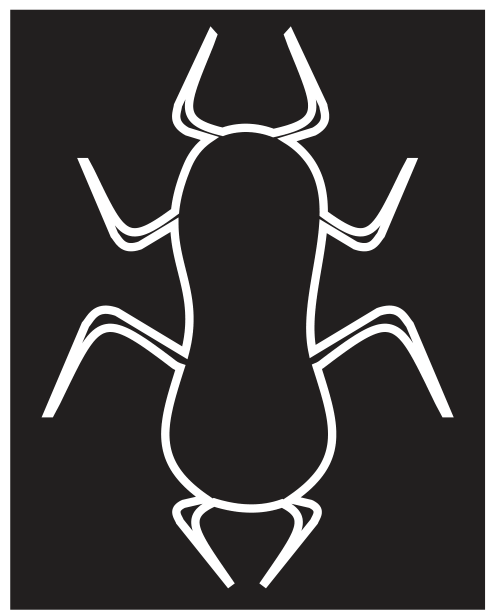
Step:3: Draw 3 pairs of legs and a pair of antenna as shown in the figure. Snip the legs and antenna on either side and bend them as shown.
Step:4: Apply glue inside the ground nut shell out line and s tick the ground nut shell.
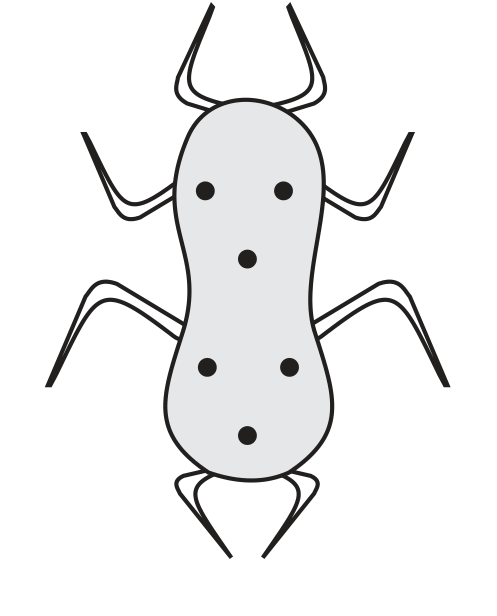
Variation: We can use the black color paper instead of white paper. Skills developed: Physical skills of fine motor skills and eye hand coordination, sensory skills, and cognitive skills.
© 2011 Copyright Nithya Gnanadhan Trust
BUG STAMP PRINTING
Materials needed: Bug stamps, Stamp pad, Pictures of Bug, white paper.
Procedure: Ask the children to press the Bug stamps on the stamp pad and do stamp printing on the picture. Children are asked to observe the prints appearing on the paper, when they press the bug stamp prints on the paper. Children can make the words like birds name with the alphabet prints.
Skills Developed: Fine motor skills, cognitive skills of understanding cause and effect.
DAY 2 : ACTIVITY
INSECTS PATTERNING
Activity: Patterning using toy insects.
Goals: To develop their pre math skills, eye hand coordination, cognitive skills.
Content:
Vocabulary: Pattern, sequence etc.
Material required: Different types of toy insects.
Introduction and Presentation: Place the toy insects' cubby on the table. Take one or two same toy insects and place it on the table. Keep another (one or two) different insect and place nearby the first selected toy insect. Ask the children to follow the same sequence in an order.
Evaluation: Evaluate them by observing whether they are able to follow the sequence correctly.
Skills developed: Pre math skills. Eye hand – coordination. Cognitive skills.
ESTIMATING WITH BEADS
Goals: To improve their pre math skills, Analytical skills, eye hand coordination.
Content:
Vocabulary: Predicting, estimating, more, less, long, short
Material required: Beads
Introduction and Presentation: Place the beads varying in size, shape on the table. Children can randomly collect the beads with both their hands separately and they can place it down and estimate which can be more and which can be less. They can also arrange the beads in vertical order and estimate which can be longer and which can be shorter.
Assessment: Ask them in what order they have arranged? Which is long and which is short? Which set has less number of beads? Which set has more number of beads?
Evaluation: Evaluate them by observing, how well they understood the concept, note the recording for further improvements.
Skill developed: Pre math skills. Analytical skills. Eye hand coordination.
DAY 2 : GYM
SIDE WALL ROLLING
Goals: To improve their spatial awareness and gross motor skills. Presentation: Children are asked to roll on the safety mat forward and backward. They can also do rolling side ways on the wall. Children can do rolling towards right or left listening to the instructions alternatively. Skills developed: Develops their spatial awareness, gross motor skills and listening skills.
BOWLING
Goal: To develop their fine motor skills, gross motor skills, eye hand coordination, focusing on an object. Presentation: ● Plastic bottles can be filled with different colored water and arranged in row, one after the other or in a particular pattern. ● Children are asked to come one by one and roll a ball and bowl the bottle. Whoever bowls more bottles will be applauded. Skills developed: ● Eye hand coordination. ● Fine motor skills. ● Focusing on an object ● Gross motor skills.
DAY 3 : ART
COLOR PENCIL COLORING.
Material required: color pencils of various color, uncolored picture. Procedure: Children can select the color pencils of their choice related to the picture and color the picture. Children are encouraged to color mostly inside the picture holding the pencil firmly. Skills developed: tripod grasp, eye and hand coordination, pre writing skills.
SHAPE STICKING
Goal: To develop their fine motor skills, pincer grasp, eye hand coordination, cognitive skills of understanding shapes and their creativity, spatial awareness skills, sensory skills. Material needed: Different shapes cuts outs of color paper or cloth bits or foam sheet, glue, uncolored art sheet, related to the theme. Procedure: ● Motivate children before starting the activity, keep required materials ready before starting an activity. ● Give each child an uncolored art sheet, or outline of few shapes drawn on the plain sheet , cut out of shapes and describe the picture and present them the way to stick the shapes inside the given space. ● Apply glue on the picture wherever required. ● Ask them to pick one shape cut out using the thumb finger and pointer finger and to stick inside the picture wherever required. ● Skills developed: Develops their fine motor, pincer grasp, eye- hand coordination, cognitive skills of understanding shapes and their creativity, spatial awareness skills, sensory skills. Variation: They can also create their imaginary pictures using shapes. For example fish with one oval and three triangles.
DAY 3 : ACTIVITY
SORTING DOTS BY COLOR
Activity: To sort different materials according to their color, shape and size.
Vocabulary: Grams, grains, leaves, flowers, beans, shapes, color, size.
Goals: To improve their: Cognitive skills, Pre math skills, Fine motor skills, Eye hand coordination
Material required: Color papers, grams, grains, leaves, flowers, beans, etc. of different types of colors, size and shapes.
Presentation: Have all the material ready for the activity. Give each child the material in a plate and have them sit at the table. Give each child different color paper/grains/grams/flowers/leaves etc and show them how to sort according to their shapes/size/colors. Ask them to feel the texture. Give each child the material and have them to sit at the table and tell them to sort according to the size/ shape/ color.
Evaluation: Ask them whether we can count the grains and grams when it is large quantity. Ask them to name the colors and size of given materials. Ask them the texture. Do we measure or count the grains.
PUNCHING HOLES
Material required: Color paper strips or kite paper strips Safety punching machine
Preparation: Before starting an activity keep the color paper strips and safety punching machine ready.
Presentation: Insert the paper strips in to the safety punching machine. Press the safety punching machine holding it with palm and fingers.
Vocabulary: Insert, Color paper strips, Holding, Press, Palm and fingers, Punch holes, punching machine.
Assessment: • What is the color of the paper strips? • What happens when you punch the paper strips? • How does the hole come on the paper? • What is the shape of the punch hole?
Goals: To improve their whole hand muscle movement, cognitive skills of understanding and exploring cause and effect.
Variation of the activity: Use twigs on the paper or leaves. Punching holes on leaves using safety punching machine. Make pattern sheets and ask them to punch holes. Ask them to do art work using these punch dots. Creating patterns with punched dots.
DAY 3 : GYM
THROW BALL WITH ONE HAND AND CATCH
Goal: To develop their gross motor skills and eye hand coordination.
Presentation: Welcome the children to the new game to strengthen their shoulder muscles. Make the children hold the ball using one hand. It helps them understand and judge the position where their hand has to be raised to throw the ball. Encourage them to throw the ball up using one hand and to catch the ball using both hands.
Skills developed: This game helps them to develop their gross motor skills by throwing the ball up and eye hand coordination by catching the ball.
Extension: They can close their eyes while throwing and catching balls.
SLOW RACE OR INCH WORM RELAY
Goal: To develop their gross motor skills, social skills.
Presentation: • Children are given one toy each and they are grouped and ask the first person to walk slowly, moving their legs inch by inch and pass that toy to their friend who is waiting in their position. • Whoever reaches the target slowly will get applaud.
Skilled developed:
• Social skills.
• Gross motor skills.
[Figure: insects worksheets]
DAY 4 : ART
PAINT, CUT AND STICK BUTTERFLY MINI BOOK
Goals: To develop their eye hand coordination, fine motor skills, logical thinking skills. Material required: Any material, pictures related to the theme can be chosen, a small book with plain sheet glue, crayons. Introduction and presentation: Children are given one book each and they can be explained about theme and they can stick the pictures or material or children can draw related to the theme in their book. Skills developed: Develops their eye hand coordination, fine motor skills, logical thinking skills.
DAY 4 : ACTIVITY
MAKING CRUSHED PAPER BALLS
Goals: To improve their whole hand muscles movement, Fine motor. Content Vocabulary: Crushing, Pincer grasps and Pressing, Material required: Papers Presentation: Keep papers ready before starting an activity. Crush the paper using fingers and palm. Assessment: • How does the paper look? • What is the shape of the paper? • Can we crush cardboard? Skills developed: Pincer grasp Eye hand coordination Tripod grasp Math skill Conclusion: These activities improve fine motor skills of whole hand grasp, tripod grasp, and eye hand coordination.
SNAP FINGERS
Goals: To develop their fine motor skills. Content: Vocabulary: Fingers snap, snapping sound. Introduction and Presentation: Demonstrate to the children to rub thumb and middle fingers to produce sound. Children can try, snapping their fingers with their both hands. Skill development: Fine motor skills. Auditory skills. Cognitive skills of cause and effect.
© 2011 Copyright Nithya Gnanadhan Trust
SKIPPING
Goal: To improve their gross motor skills and balancing skills.
Presentation:
Encourage the children to hold the skipping rope in the hand and ask them to skip over the rope.
Encourage them move forward and backward skipping.
Skills developed: develops their gross motor skills and balancing skills.
OBSTACLE COURSE
Goal: To improve their gross motor skills and listening skills, memory skills.
Presentation: Welcome the kids to gather in a place and multiple oral instructions will be given at once to them.
For example: Take three jumps from position, crawl into the tunnel, climb the blue sliding board, balance on yellow beam, take the yellow ball drop it into the basket and get back to position.
Observe how many commands they can remember and follow in the right sequence.
Skills developed: They develops gross motor skills, receptive language skills, memory skills, spatial awareness, listening skills, balancing skills.
Extension: They can try out different instructions including different games.
DAY 5 : ART
COLLAGE WITH COLOR PAPER STRIPS
Goals: To develop their fine motor skills, pincer grasp, eye hand coordination, spatial awareness, and tactile skills.
Materials needed: - Glue, uncolored art sheet, color paper strips.
Procedure:
Keep the required materials ready before starting an activity.
Explain to the children about the art sheet.
Encourage them to apply glue inside the picture and ask them pick color paper strips and stick on the glue inside the picture.
They can also stick the strips in particular pattern.
Skills developed: Fine motor skills, pincer grasp, eye hand coordination, spatial awareness, and tactile skills.
BUDS PAINTING
Material required: Uncolored art sheet, various color crayons.
Procedure: the children are asked to hold the crayon firmly and color inside the given picture ( if possible), they can use various colors of their choices related to the given picture.
Skills developed: Tripod grasp, pre writing skills, eye hand coordination.

DAY 5 : ACTIVITY
MIXING COLOR WITH NOODLES
Goals: To improve fine motor skills, eye hand coordination, sensory skills, creativity. Content: Vocabulary: Noodles, change of color, sticky, soft. Materials required: Boiled noodles, Plates, Food colors. Introduction and Presentation: Get all the materials ready and have each child sit around a table. Explain that we are going to mix color with the noodles. Give each child a plate and noodles and ask them to take food color and mix it with the noodles nicely. Children can observe the change in the color of the noodles. Assessment: • What happens when you mix color with noodles? • What is the texture of noodles? • Name some of the other items which are sticky in texture. Evaluation: To evaluate their development skills Skill development: Tactile skills, sensory skills, eye hand coordination, Variation: Children can mix noodle with water.
SIZE SEQUENCING WITH NOODLES
Activity: To sequence noodles according to their size, length, quantity and height. Goals: To improve their pre math skills, Analytical skills, eye hand coordination.
Content: Vocabulary: Order, sequence, height, length, size, big or small, tall or short, long or short, more or less, big, bigger, biggest, tall, taller, tallest, less, lesser, medium etc. Material required: Plates, Boiled noodles Introduction and Presentation: Place the noodles varying in size, height, length and quantity on the table. Settle the children and ask them to order it or sequence it according to size or height or length or quantity. Assessment: • Ask them in what order they have arranged? • Which is long and which is short? • Which is big, bigger, biggest? • Which is lesser among those? • Which is medium? Evaluation: Evaluate them by observing, how well they understood the concept; note the recording for further improvements. Skill development: Pre math skills. Analytical skills. Eye hand coordination. Variation: They can also estimate the objects whether they are long or short, thick or thin, big or small, tall or short, more or less etc.
DAY 5 : GYM
BLOWING AND CATCHING BUBBLES
OR FEATHERS Goal: To develop their oral motor skills and eye hand coordination skills. Presentation: • Children are asked to blow bubbles or feathers. • They can be asked to catch the bubble or feathers which flies higher. • We can discuss about how it flies higher, shape of the bubbles, what is inside the bubbles to the children.
Skills developed: • Oral motor skills • Eye and hand coordination while catching the bubble or feather.
SPIDER WALK
Goal: To develop their gross motor skills. Presentation: Encourage children to sit on the ground and ask them to place their hands behind and raise their bottom and more in backward position. Skill developed: Develops their gross motor skills
