FRUITS – ANSWER
This text was machine-transcribed from the printed book and may contain errors. Select the words and choose “Report a mistake”.
- Olive, coconut.
- Banana
- From flowers.
- It protects the seeds also and helps in their distribution of seeds.
- Dates.
- Because they gives us vital nutrients like vitamins and minerals.
- From the fruit pod of cocoa tree.
- Seeds which are surrounded by a two layered shell.
- Mango.
- Mango.
- Seed
- Pineapple and jackfruit.
- Coconut.
- Kiwi
- Lemon, orange, strawberry.
- Grapes, cherries, berries, banana.
- Cashew apple.
- Water melon, melon.
- Grapes.
- Olive.
- Watermelon
- High fibers.
- Star fruit
- Dried sweet grapes.
- Leafy floating aquatic plant.
- Brown.
- Custard apple.
- Coconut.
- Rambutan, kiwi.
- Blueberries, crowberries, bilberries.
- Pistachio.
- Almonds.
- Pineapple.
- Apple.
- Yes, because it is rich in vitamin C which increases our body immunity.
- Strawberries that have long stem that creep over the ground are called runners.
- Bitter, sour.
- Jujube.
- Cashew nut.
- Cashew apple.
- Litchi.
- Large orange.
- Citrus fruits.
- Melon.
- Papaya.
- Pomegranate.
- Peach, apricot, plums, avacado
- Dates.
- Yes.
- Avocado
BLISS CURRICULUM
Theme: Household Articles
| Monday | Tuesday | Wednesday | Thursday | Friday | |
|---|---|---|---|---|---|

CIRCLE TIME | Talk about things in living room and bedroom | Discuss about things in kitchen | Talk about things in bathroom and drawing room | Discuss about special tools. Plumbing and carpentry tools | Discuss about gardening tools | |
ART | Sponge printing. Crayon coloring | Blow painting. Carbon tracing | Collage with crush paper. | Wax painting. Making mini book | Block printing. | |

ACTIVITY | Smell matching. | Transferring rice using spoons and ladles. | Bubble bath babies. Wringing towel | Screwing and unscrewing. | Carrying water across the room displacement activity. | |
GYM | Musical chair. tumbling | Dog and the bone. Balancing cone on head | Throw the ball on target. | General exercise. Stride jumping | Yoga. Blow bubbles | |

A-Z OF HOUSEHOLD ARTICLES | | | | | A- Apartment / B- Bedroom-Carpenter / D-Dressing room / E-Electricity F- Furnishing / G- Gate, H- Hall / I- Interiors / J- Jar / K- Kitchen / L- Lawn / M-Micro wave, Mirror / - / Napkin O- Outlet / P- Plumber / Q- Quilt / R- Rug / S- Soap / T- Toilet / tooth brush / U- Utensil / V- Vase / W- Wastebasket / X- axe / Y- Frying pan / Z- |
[Figure: House hold articles illustration]
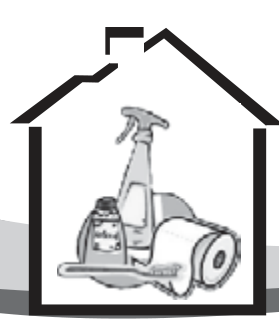
HOUSE HOLD ARTICLES
DAY : 1
Topic: Talk about things in living room and bed room.
Vocabulary: Electric fan, clock, television, calendar, vase, newspaper, sofa, bolster, cushion, telephone, wardrobe, curtain, night stand, mobile, picture, bed, lamp, rug, pillow.
Material required: Pictures, books and toys.
Presentation: ● Talk about things in living room and bed room. ● Living room is decorated with paintings, pictures. ● Discuss about sofa, show case, tube light, T.V, corner table, chair, fan being placed in living room. ● Discuss about things in bedroom cot, wardrobe, fan, night lamp, A.C, blanket, pillow, bed cover. ● Living room has sofa with cushion for sitting, corner table is used to keep telephone and vase, tea poy is used to keep tea if any guest comes home. ● Night stand is used to keep night lamp, in the bed room. ● Wardrobe is used to keep clothes. ● Bolster is used to keep on sides of the bed.
Assessment: ● What is living room? ● Where do you sleep? ● What do you have in the bed room? ● Why do we keep sofa in the living room? ● What is the use of wardrobe? ● How is living room decorated? ● Why do we use night lamp?
Closing: Recollect the facts to make children understand about things in living and bed room.
Evaluation: Language skills; Expressing their thoughts about the topic. Cognitive skills: Observing, thinking and answering.
# HOUSE HOLD ARTICLES
DAY : 2
Topic: Talk about things in the kitchen.
Vocabulary: Sink, dish drainer, roaster, jug, cups, kettle, mug, tray, bowl, pan, knife, pot, spoon, plate, stove, refrigerator, ladle, glass, fork, microwave oven, rolling pin, airtight containers.
Material required: Pictures, books and toys.
Presentation: ● Talk about kitchen, kitchen is a place where we cook food. ● In kitchen we have shelves to keep all the cooking items. ● Toaster in the kitchen is used to toast bread ● Refrigerator is used to preserve food by keeping it very cold. ● Stove is used to cook food using gas. There is electric stove which works on electricity. ● Mixer is used to grind and mix the food. Air tight containers are used to preserve food. ● Grinder is used to grind food in more quantity. ● Dish drainer is use to drain water from the plates and other vessels. ● Sink is used to wash vessels. ● Microwave oven is also used for cooking by producing rays which generate heat.
Assessment: ● What is kitchen? ● What have you seen in kitchen? ● How do you eat food? ● With which utensil you will serve food? ● How will you eat noodles? ● What is kettle? ● Why kettle is used? ● Why knife is used in kitchen?
Closing: Recollect information about things used in kitchen.
Evaluation: Language skills: Expressive and receptive. Cognitive skills: Observing and answering.
DAY : 3
Topic: Talk about things in bathroom and dressing room.
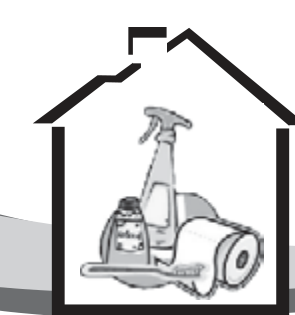
Vocabulary: Basin, sponge, toilet, shower, toilet paper holder, toilet paper, bath tub, shampoo, soap, tap, toilet brush, tooth brush, tooth paste, mirror etc.
Material required: Pictures, books and toys.
Presentation: • Discuss about bathroom and dressing room. • Bathroom is a place where we take bath . • Tooth brush and tooth paste is required to brush our teeth twice a day in morning and also in night. • Dressing room is where we dress up, comb, change clothes. • Shower is used to shower water for bathing. • Sponge, toilet, shower, toilet paper holder, toilet paper, bath tub, shampoo, soap, tap, toilet brush, tooth paste, mirror are the things in bathroom and dressing room. • We have to keep bathroom clean to avoid infection. • Wash hands with soap after using toilet.
Assessment: • Why should we keep toilet clean? • Why should we brush our teeth ? • What is the most important thing that we have to do after using toilet? • What do we need to brush our teeth? • What are the things we require to keep ourselves clean? • What is bath room?
Closing: Recollect information to make children understand the concept.
Evaluation: Language skills: expressive and receptive. Cognitive skills: Observing, thinking and answering.
# HOUSE HOLD ARTICLES
DAY : 4
Topic: Discuss about special tools used in plumbing and carpentry.
Vocabulary: Pliers, tool box, tape measure, wrench, nut, vice, plane, hammer, brace, saw, hacksaw, axe, drill, screw, electric drill, glue, file, nail, screw driver.
Material required: Pictures, models and books.
Presentation: ● Pliers, wrench, is used to unscrew and screw the nuts and bolt. ● Vice is used to keep wood in it for cutting. Saw, hacksaw, axe is used for cutting the wood. ● Brace, drill, electric drill is used for making hole. ● Plane and file are used to shape the wood. ● Screwdriver is used for screwing and unscrewing screws. ● Glue is used to stick plywood. ● Hammer is used to hammer the nail. ● Tool box is used to keep all the tools inside it.
Assessment: ● What will a plumber do? ● What will a carpenter do? ● Name some tools used by plumber and carpenter. ● Why pliers and wrench is used? ● Why drill, electric drill and brace are used? ● Who uses file and plane? ● How do they measure the wood or wall?
Closing: Recollect the facts to make children understand about plumbing and carpentry tools.
Evaluation: Language skills; Expressing their thoughts about the topic. Cognitive skills: Observing, thinking and answering.
# HOUSE HOLD ARTICLES
DAY : 5
Topic: Discuss about gardening tools.
Vocabulary: Hoe, rake, trowel, watering can, wheel barrow, fork, hose pipe, lawnmover, shears, shovel, plant pot.
Material required: Pictures, toy models and books.
Presentation: • Encourage children and talk about garden tools and their uses. • Trowel, shovel, hoe, is used to dig the sand for sowing seeds. • Rake is used to collect the dried raked leaves together. Folk is used to pick the raked leaves. • Wheel barrow is used to carry raked leaves from garden. • Watering can, hosepipe, sprinklers are used to water plants. • Shears are used to trim the bushes. • Lawn mover is used to level the grass. • Plant pots are used to plant flower plants.
Assessment: • Why lawn mover is used in the garden? • What is the use of hoe, trowel and shovel? • How do you sow seeds in your garden? • What do you require for planting in garden? • Why wheel barrow is used in garden? • What all we can see in the garden? • How do you water the plants in the garden?
Closing: Recollect the facts to make children understand about gardening tools.
Evaluation: Language skills; Expressing their thoughts about the topic. Cognitive skills: Observing, showing persistence.
DAY 1: ART
SPONGE PRINTING
Material required: Uncolored art sheet, paints of various colors, sponge cut in to various shapes. Procedure: The children are asked to dip the sponge in the paint and do the sponge printing on the given picture. They can do printing with various shape or size or design sponges dipped in different colors. Encourage the children to do the printing only inside the picture. Skills developed: fine motor skills, sensory skills, cognitive skills of knowledge of various colors and cause and effect.
CRAYON COLORING
Goals: To stimulate their creativity, fine motor skills, eye hand coordination, tripod grasp, prewriting skills. Material required: Art sheet, different color crayons. Introduction and Presentation: Encourage children to sit around the table and give each child one art sheet and they can choose their colors from the crayon tray. Guide them to hold crayon using thumb, pointer and middle finger (tripod grasp). Encourage them to color inside the picture. Skills developed: Develops their eye hand coordination, fine motor skills, tripod grasp, pre writing skills, creativity.
DAY 1: ACTIVITY
SMELL MATCHING
Goals: Familiarize them with different smells, ability to differentiate and match, identify the smells. Vocabulary: Smell, nose, olfactory, pleasant, pungent, strong. Material required: Different smelling objects/materials in similar boxes with small openings to smell. (Clove, cardamom, vanilla, etc.) Two boxes of each item consisting of same materials kept in non transparent boxes. Presentation: Introduce the different smells to the children ask them to smell each. Always keep the boxes in pairs so that they can match the smells when being blindfolded. Assessment: To make them aware of olfactory discrimination Which is the organ used for smelling? Which is your favorite smell? Which of all the items smells good? Which smell you dislike? Do you like the smell of ice cream? Can you identify an object with its smell? Which animals are very good in smelling? Variation: Introduce new smells with different objects like fruits, flowers etc. Evaluation: First do the activities with their eyes open and then evaluate them, with their eyes closed. Note down what all the smells they identified and matched. Keep a record of all open ended questions they answered for future progress. Analyze how many smells they can match and can identify. Repeat the activity until they become very clear in identifying. Conclusion: This activity provides them with the ability to become aware of the olfactory discrimination.
CLEAN UP
Activity: Clean up of paper bits using toy broom and dust pan. Goal: To improve their whole hand movement, fine motor, self help skills, pre math skills of grouping. Vocabulary: Pick, broom, dustpan, clean, paper bits, dirty, messy, gravity, sorting, grouping. Material required: Toy broom, dust pan, bits of paper. Presentation: Drop bits of paper on the ground and show them how to sweep it using toy broom and dust pan. Encourage them to do the same. Evaluation: Evaluate their self help skills and fine motor and whole hand movement and record the observation. Skills Developed: Gross motor, Fine motor, Sensorial, problem solving and language skills. Variation: They can clean up toys from different cubbies and sort it into right cubbies. Go out door and clean the garden. Tell them to sort the paper and leaves and other items into different bins. Mop after cleaning the dust using wet cloth or mop.
[Figure: HOUSE HOLD ARTICLES]
DAY 1 : GYM
MUSICAL CHAIR
Presentation: Arrange chairs in two rows back to back or in a circle. Use one less chair than the number of children playing the game e.g. if 8 children then place 7 chairs). Start some music and have the children run around the chairs. When you stop the music, the children quickly find a chair and sit down. The child left without a chair is out. Continue the game, removing one chair each round, until there are two children and one chair left. The child who gets the last chair wins.
Skills developed: Auditory skills, gross motor skills
TUMBLING
Goal: To improve their balance, co-ordination, spatial awareness and gross motor skills.
Presentation: Children whoever learning to tumble can use the wedge placed on the safety mats to tumble. Place mats on all sides. They can do tumbling on the grass also.
Skills Developed: Develops their spatial awareness, hip muscles, gross motor skills, balance and co-ordination.
Variation: Children can also do tumbling using their hands.
DAY 2 : ART
SKETCH PEN BLOW PAINTING
Material required: Sketch pens for blowing, blower, uncolored art sheet.
Procedure: Insert the specially designed sketch pen in to the blower, nip pointed to the big hole and fix it tight. Ask the children to hold the blower such that nip is pointed to the paper 2 inches above the paper and ask the children to blow hard on the other side of the blower so that colors come out like spray. Encourage children to do it inside the picture.
Skills developed: Oral motor skills.
CARBON TRACING
Goal: To develop their pre writings skills, cognitive skills of exploring cause and effect.
Material required: Carbon paper, pencil, plain sheet, shapes or alphabets blocks..
Presentation: Give each child a paper and carbon sheet. Guide them to place carbon sheet in right position. Placing the ink side on the paper. Ask children to choose their shapes or alphabets, ask them to place it on the carbon sheet and ask them to trace it. Show them the impressions seen on the white sheet.
Skills Developed: Develops their pre writing skills, cognitive skills of exploring cause and effect.
HOUSE HOLD ARTICLES
DAY 2 : ACTIVITY
TRANSFERRING RICE USING TONGS, LADLES, SPOONS
Goals: To improve their pre math skill of measuring and comparing, fine motor skills, cognitive skills, eye hand coordination
Vocabulary: Ladle, Measure, Tongs, Compare, Transfer, Quantity
Material required: Grains, Tongs, Ladles, Bowls
Presentation: Place the grains, tongs, ladles, and bowls on the table Transfer the grains from one bowl to another using tongs. Measure the quantity of the grains being transferred. Transfer the grains from one bowl to other using ladles, measure the quantity and compare the quantity of grains of 2 bowls.
Assessment: • How much grain can you transfer using tong, more or less? • How much grain can you transfer using ladle more or less? • Why only less grain comes when you use tong for transferring and why more grain comes when you use ladle?
Skills developed: Pre-math skills, Estimation, Predicting, Comparing, Fine motor skills, Eye hand coordination
Conclusion: By this activity we can improve their fine motor skills and whole hand grasp.
SORTING EGG FROM RICE
Goals: To improve their pre math skills of sorting, counting, eye hand coordination
Vocabulary: Sort, rice, eggs
Material required: Rice, toy wooden eggs, tub
Introduction and presentation: To present this activity first take a tub and pour sufficient rice to cover the toy eggs inside it and tell each child to sort the eggs from rice. Apart from eggs we can mix grams, pebbles etc and tell each child to sort.
Assessment:
• What did you sort from rice?
• Can you count the egg?
• Can we count the rice?
• How do we measure rice?
Closing: Make each child do the activity and ask them what did they sort
Evaluation: Evaluate each child's ability to sort, to count, their language skill, their concentration, pre math skills.
Variation: We can use sand, stones, grains, leaves, paper etc.
DAY 2 : GYM
DOG AND THE BONE
Goal: To stimulate their observing skills, auditory skills, gross motor skills, receptive language skills.
Presentation: Children are divided into two groups with equal members. They are numbered as 1-1, 2-2, 3-3 in both teams. When any number is been called (say for example-3) child numbered 3 from both the team with come to pick the object. Whoever picks the object that team will get points.
Skills developed: This game develops their auditory skills, attention, gross motor skills, receptive language skills and observing skills.
Variations: The same game can be changed as bird and grains.
BALANCING CONE ON HEAD
Goal: To improve their balance.
Presentation: Give each child a cone and ask the child to keep the cone on the head. Ask the children not to hold the cone with their hands ask the children to fold their hands behind and walk a distance. Observe how well they can balance the cone on the head.
Skills Developed: This game helps in developing their co-ordination, balancing skills, their ability to sustain attention.
HOUSE HOLD ARTICLES
DAY 3 : ART
COLLAGE WITH CRUSH PAPER
Goals: To develop fine motor skills, eye hand coordination, how objects can be used, creativity, tactile skills.
Material required: news paper, glue, and uncolored art sheet.
Procedure: Make the children to cut and crush the paper in the small balls. Ask children to apply glue on the art sheets. They can stick the crushed balls inside the picture. If required they can colors it using poster colors.
Skills developed: Develops their fine motor skills, eye hand coordination, creativity, how objects are used, tactile skills.
SPANNER CRAFT
Material required: Ice cream sticks, glue, chart paper, paint brush, paint pallet, poster color (silver or brown), safety scissors.
Preparation: Keep required material ready before the activity. Cut the chart paper in to crescent shape. Keep two crescent shapes ready. Mix paint.
Procedure: Take the ice cream stick and stick two crescents
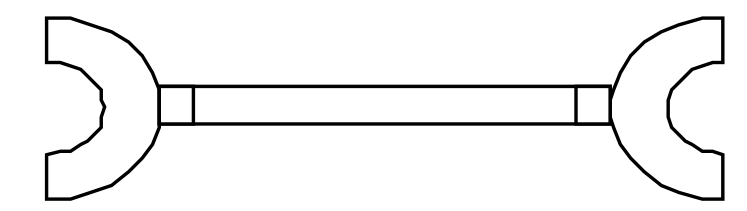
cut outs on either sides using glue. Paint it brown or silver
DAY 3 : ACTIVITY
BUBBLE BATH BABY
Goal: To improve fine motor and whole hand grasp.
Vocabulary: Clean / dirty, Bubbles / transparent, Hot/ warm/ lukewarm/ cold, Wet / dry.
Material required: Water, Soap, Tub, Baby dolls.
Presentation: Explain how it's important to take bath and keep things clean. Demonstrate how to wash the baby very carefully and gently. Take the tub and fill it with water, add the soap and make bubbles by splashing the water around until bubbly. Ask each child to pick a baby doll and sit down next to the tub.
Assessment: • Ask them how the bubbles look? What color do you see? • How does the water and bubbles feel? Ask if they enjoy bubble bath.
Rhyme: This is the way we wash the baby doll, wash the baby doll (from the tune from : Mulberry bush).
Evaluation: Evaluate if they understand the concepts of wet/ dry, temperature, clean/ dirty.
Skills developed: Fine motor skills and whole hand grasp
WRINGING TOWEL
Goals: To develop their fine motor skills, eye hand coordination, whole hand grasping skills.
Vocabulary: Wringing, towel, water, squeezing, wet, dry.
Material required: Towel, big bowl of water, empty bowl.
Introduction and Presentation: Dip the towel in bowl of water and ask the child to wring the towel in another empty bowl using hand movements in opposite direction. Let each child take turn and do this activity.
Assessment: • What happens when we dip the towel in water? • What happens when we squeeze the wet towel? • In what direction your move your hands to wring the towel? • Can you wring the towel by moving your hands in same direction?
Skills developed: Develops their fine motor skills. Eye hand coordination. Hands working together in opposite action.
DAY 3 : GYM
THROW THE BALL ON THE TARGET
Goal: To develop their eye hand coordination, fine motor skills, gross motor skills.
Presentation: Ask the children to hold the ball firmly with one or both hands and throw the ball on the given target. Encourage them to throw it correctly on the target.
Skills developed: Eye hand coordination, fine motor skills and gross motor skills.
BRIDGING
Goal: To develop their gross motor skills and their hip muscles.
Presentation: Ask the children to lie on the back, ask them to fold their legs and lift the hip from the ground and stay in that position for a short period.
Skills developed: Balancing skills. Gross motor skills and it helps to develop their hip muscles.
DAY 4 : ART
WAX PAINTING
Material required: Uncolored art sheet, various color crayons, poster colors (different), brush.
Procedure: Ask the children to first color the picture with crayon and then paint on it with poster colors.
Skills developed: Fine motor skills, cognitive skills of understanding cause and effect.
MAKING MINI BOOK
Goals: To develop their eye hand coordination, fine motor skills, logical thinking skills.
Material required: Any materials, pictures related to the theme can be chosen, a small book with plain sheet has to be made, glue, crayons.
Introduction and presentation: Children are given one book each and they can be explained about theme and they can stick the pictures or materials or children can draw related to the theme in their book.
Skills developed: Develops their eye hand coordination, fine motor skills, logical thinking skills.
DAY 4 : ACTIVITY
SCREWING AND UNSCREWING
Goals: Develops their fine motor skills of whole hand grasp, tripod grasp, and direction skills.
Vocabulary: Screw, unscrew, nuts, bolts, bottle, lid, finger.
Material required: Nuts and bolts or different sized bottles (plastic) with different sized lids.
Presentation: Present to the children to hold the nuts and bolts or bottles with different sized lids, using palm and to screw using thumb and three fingers. We can guide them to screw it in clock wise or anti clockwise direction or direct them to screw it towards left or right.
Assessment: ● Name the instrument we used to fit the screw. ● What direction we normally turn the screw to tight? ● What direction we turn to unscrew the screw?
Evaluation: Evaluate each child's ability to screw and unscrew.
Skills developed: Develops their fine motor skills of whole hand grasp, tripod grasp, direction skills.
CLIPPING
Goals: To improve their whole hand muscles movement, Fine motor, Cognitive skills of understanding cause and effect. Vocabulary: Crushing, Paper clips, Pincer grasp, Pinning, Pressing, and Opening Material required: Papers, Paper clips or cloth clips Presentation: Keep papers, paper clips or cloth clips ready before starting an activity. Hold a piece of paper with one hand and pin the paper clip by opening it using thumb and index finger (pincer grasp). Assessment: ● How does the paper look? ● What is the shape of the paper? ● How does the cloth clips or paper clips look like? ● Can we crush cardboard? Evaluation: To evaluate development in the following skills Skills developed: Pincer grasp, Eye hand coordination, Tripod grasp, Math skill Conclusion: These activities improve fine motor skills of whole hand grasp, tripod grasp, and eye hand coordination.
DAY 4 : GYM
GENERAL EXERCISE STRIDE JUMPING
Goal: To develop their gross motor skills, balancing. Presentation: Children has to keep their legs apart and jump. This is called stride jumping. We can ask them to do normal jumping and stride jumping alternatively as a variation. Skills developed: Gross motor skills. Balance.
DAY 5 : ART
BLOCK PRINTING Material required: Various Shape blocks/ according to their themes, stamp pad, holder, plain sheet or art sheet. Procedure: Children are asked to hold the holder firmly and print the block pressed in stamp pad on the paper. Children can name the print after seeing the impression. Skills developed: Tripod grasp, fine motor skills, cognitive skills of understanding cause and effect. SKETCH PEN DOT COLORING Material required: Sketch pen of various colors, uncolored picture. Procedure: Children can select the sketch pen of their choice related to the picture and color the picture by putting dots inside the picture. Encourage the children to put dots mostly inside the picture holding the sketch pen firmly. Skills developed: Tripod grasp, eye hand coordination, prewriting skills.
HOUSE HOLD ARTICLES
DAY 5 : ACTIVITY
CARRY WATER ACROSS THE ROOM Activity: Carrying a cup/tumbler full of water walking across the room. Goals: To improve their fine motor, eye hand coordination, balancing skills Vocabulary: Carry, across, spill, balance Material required: Glass/cup, water. Introduction and presentation: To present this activity we need to fill the glass with water and hold it with both hands and walk across the room without spilling. If needed draw a line across the room, and ask them to walk on the line with the glass of water. Assessment: • What happens when you hold a glass of water and run? • What happens when we walk carrying a glass of water? • If the water spills what happens to the quantity of water in the glass. • Can we close our eyes while carrying a glass of water? • How should we walk when we have a glass full of water? Closing: Make each child hold a glass of water and walk across the room or on the line without spilling water Evaluation: Evaluate each child's ability to walk with the glass of water across the room without spilling. Evaluate their eye hand coordination, their balance. Variation: They can even use colored water, flour, rice grams, carrying lamp or candle across the room. We can add color to the water, make it hot or cold water, or add some essence, place in a tray. Carry more than one glass of water. Carry in the left hand or one hand.
DISPLACEMENT ACTIVITY Activity: To show them the same quantity of materials in different containers. Goals: To improve their cognitive skills of comparing, measuring, sustaining attention, language skills. Vocabulary: Quantity, displacement, more, less, equal Materials required: Rice/ flour, different shape and size bowl or glass. Introduction and presentation: To present the activity keep the materials ready. Take a bowl of rice and show them the quantity, then take the same quantity of rice and pour it in a glass. Show them the rice kept in different vessels and ask the child which is more/ less/ or whether it is equal. We cannot count the rice when it is in large quantity so we use the unit grams for measuring rice. Assessment: • When same quantity of rice is kept in two different size vessels • Will there be any change in the quantity? • Can we count the rice when it is large quantity? • Name the unit used to measure the rice. Closing: Make the children to do the activity. Explain them that the quantity is same only the size of the vessel differs and it takes the shape of the container. Evaluation: Evaluate each child whether they understood the displacement of the same quantity of rice. Evaluate their cognitive skills of comparing and measuring, language skills. Variation: To do the activity we can use water, flour, rava etc.
DAY 5 : GYM
YOGA
BLOWING AND CATCHING BUBBLES OR FEATHERS Goal: To develop their oral motor skills and eye hand coordination skills. Presentation: Children are asked to blow bubbles or feathers. They can be asked to catch the bubble or feathers which flies higher. We can discuss about how it flies higher, shape of the bubbles, what is inside the bubbles to the children. Skills developed: Oral motor skills Eye and hand coordination while catching the bubble or feather.
BLISS CURRICULUM
Novembr: Week - 4
Alphabets of the Month: U, V, W, X, Y, Z
Theme: Season-1 (Spring & summer)
Color of the Month: Brown, Burgundy
Shape of the Month: Rectangle, cuboid.
| Monday | Tuesday | Wednesday | Thursday | Friday | |
|---|---|---|---|---|---|
CIRCLE TIME | summer and spring season | Summer fruits and need of drinking lots of fluids. | Summer showers | Spring Season | Spring season and signs of spring season | |
ART | Collage with dried leaves, crayon coloring. | Thumb printing, flower painting. | Spray painting, make a kite. | Texture painting, collage with pencil scrap. | Mini book, hand print | |
ACTIVITY | Crushing dried leaves, stringing leaves. | Looping color papers, sort the flowers. | Kaleidoscope, torch light play, shadow play. | Velcro straps, folding towel. | Making sand castle, mixing color to sand. | |
GYM | Freeze dance, picking dried leaves. | Simon says. General exercise. | Tumble. Dog and the bone. | Shape corner. Obstacle course. | Floor swimming. Walk through the hoop. | |
A-Z OF SEASON-1 (SPRING & SUMMER) | A- Air / B-Blossom / C- Cool / D- Dry / E- Earth / F-Flower / G-Grass / H-Hot / I-Ice-cream / J-Jasmine / K-Kite / L-Liquid / M-Mango / N-Cotton / O-Ocean / P- Place / Q- R-Rainbow / S-Sun T- Thermometer / U- Umbrella / V-Vacation / W-Watermelon / X- / Y-Jelly / Z-Breeze | | | | |
SEASON-I
DAY : 1
Topic: summer and spring season
Vocabulary: summer, sun, sunny, hot, sweating, liquids, summer clothing, cotton.
Material required: weather chart, hand fan, paper fan, and pictures of summer clothes, sunglasses, and thermometer.
Presentation: ● The condition of the atmosphere -cold or warm, wet or dry, windy or calm -is called the weather. Although the weather can change from day to day, it does so according to a pattern that is repeated from season to season. ● Seasons are the broad climatic patterns of a place in a given year. ● The pattern of weather in a particular region is called climate. ● Talk about summer. The earth spins like a top in space. In regions that lean toward the sun, it is summer ,in regions tilted away from the sun it is winter. ● Make paper fans and give one to each child during circle time and ask the children what time of the year they will most likely need a fan. ● Show the weather chart and discuss in brief about different seasons. ● Discuss about the need to use the cotton clothes during summer- to absorb sweat and facilitate air flow. Talk about sunglasses. ● Why the sun is hot- because it has huge amount of helium and hydrogen gas. Discuss about sun safety. ● Tell the children they should never look direct at the sun or stay in sun so long as it hurts their skin.
Assessment: ● Why summer season is very hot? What are seasons? ● Why we need to wear cotton clothes in summer? ● What happens when we wear thick synthetic clothes? ● Where do we get cotton from? ● What is the weather like in summer? ● What activities do you do in the summer? ● Can we touch the sun? ● What are sunglasses? ● Can we see sun? ● What is thermometer? ● What helps us keep cool in summer?
Closing: To make sure the children understand about summer and spring season. Recall the information discussed above.
Evaluation: ● Their cognitive skills by asking open ended questions related to summer. ● Sensory skills by asking them to feel and differentiate hot and cold pack. ● The pre writing skills by asking them to draw sun, cotton clothes, hand fan.
Extension: They can play their favorite summer games.

DAY : 2
Topic: summer fruits and need of drinking lots of fluids. Vocabulary: fruits, liquids, sweating, fruit salads, ice cream.
Material required: pictures, charts, models of summer fruits, real summer fruits.
Presentation: ● Present to the children the fruits such as watermelon, muskmelon, sweet lime, mango, tender coconut. ● Explain to them because it is very hot in summer we sweat a lot so we need to drink more liquids in summer to prevent dehydration. ● Explain how these summer fruits- watermelon, muskmelon, and sweet lime, tender coconut provides us with enough liquids and keeps our body cool. ● Talk about the need to drink more fresh juices. ● Encourage the children to think about ways the sun is helpful to us- it keeps us warm, keeps us healthy, helps the plants grow, provide light. ● Sign language of sun - place right C against side of right eye.
Assessment: ● What kind of food do we eat in summer? ● Name some of the summer fruits? ● Why we drink more water? ● What happens when we don't drink enough fluids? ● What are the games you like to play in summer? ● During summer what are the places you like to visit? ● Which is your favorite tourist spot? ● Which season we take ice creams? ● Which is your favorite flavor in ice creams? ● Why it is winter in Australia when it is summer in India?
Closing: To facilitate the children about the need of drinking enough liquids during summer and the fruits that we get in summer.
Evaluation: ● Evaluate their fine motor skills and texture skills by making them to do fruit salad. ● Cognitive skills- by asking them questions related to the texture, color of the fruits.
Extension: They can play and pretend game going on a summer vacation. They can wear cotton clothes by themselves.

DAY : 3
Topic: Summer showers
Vocabulary words: Summer, summer showers, rain, drizzle, umbrella, chill, rainbow.
Material required: picture chart, umbrella, pictures of rainbow.
Presentation: • Discuss with the children when we get summer showers, we get summer showers mostly during the months of March, April, May. Summer showers cool the environment. Talk about the rainbow, colors in the rainbow. • As the rain falls the rays of the sun pass through the drops of water which acts like prism, and the seven colors of light can be seen in the sky. This is called rainbows. • The seven colors are violet, indigo, blue, green, yellow, orange and red. • Discuss the sign language of rain. Claw shape both hands, palms down, move down sharply two or three times. • Present to the children the weather chart wheel and discuss about the rainy season that occurs during the summer season.
Assessment: • Will it rain during summer? • What is the rain shower called? • What is a rainbow? • What are the different colors of rainbow? • When we get rainbow? • How you feel when it rains during the summer? • Do you all like summer showers?
Closing: To make sure the children understood about the rain occurring during summer. Children can make a rainbow with different colored papers.
Evaluation: Evaluate their cognitive skills of time concept, predicting skills.
Extension: The children can have a pretend play of summer showers party.
DAY : 4
Topic: Spring season.
Vocabulary: Spring, seasons, flowers, green leaves, pleasant.
Material required: Fresh plant, flowers, pictures of plant.
Presentation: ● Talk about spring season one of the first things we notice is green leaves returning to the trees. Discuss about the different signs of spring seasons (grass, flowers, tree buds). ● Talk about the birds chirping. ● Discuss about the pleasant whether in spring season. ● Present them puzzles depicting the spring season and talk about it. ● Talk about what are the things plants need for growing- soil, water, sunlight. ● Talk about how the weather has changed with the coming of spring. ● We get spring in between summer and winter. ● Most flowers and vegetables grow in spring.
Assessment: ● Will the spring season come at the same time all over the world? ● What are the signs of the spring season? ● When do we get spring season? ● When do the leaves on the plants grow? ● What are the things we need for a plant to grow?
Closing: To enable the children understand about spring season. Ask the children why they think birds choose the spring season to build their nests.
Evaluation: Evaluate their cognitive skills of logical thinking.
Extension: Plan for spring walk in the neighbourhood. Encourage the children to use their senses- to look, listen, smell and touch to identify signs of spring.
[Figure: SEASON-I]
DAY : 5
Topic: Spring season and signs of spring season
Vocabulary: Spring, pollination, pollens, germination, birds, season.
Material required: Pictures or books depicting spring seasons, spring flowers.
Presentation: • Invite the children to the topic of spring and talk about spring season, what all changes occur during spring, • Plants and trees will be ready to do pollination. • They let their pollens fly in the air during spring. • Discuss about the flowers, clothing people wear, birds, seeds, insects that occur during spring. • Gather some spring flowers and show them. • The buds of new leaves shoot on the trees and slowly open, flowers appear on the trees. • In the month of March the northern hemisphere is tilted towards the sun so we have spring in the northern hemisphere and autumn in the southern. • In September these seasons gets reversed because the southern hemisphere is tilted towards the sun.
Assessment: • What happens during spring season? • What kind of clothes do we wear during spring? • Which is your favorite spring flower? • What happens to the leaves in plants of trees?
Closing: To facilitate the children about the changes that occurs during spring season. Ask the children to tell something that they learned about spring.
Evaluation: • Language skills. • Cognitive skills of understanding time concept.
Extension: They can play games with songs or rhymes like "I am a little flower seed" and do pretend play.
DAY 1 : ART
COLLAGE WITH DRIED LEAVES
Goals: To develop their fine motor skills, pincer grasp, eye hand coordination, spatial awareness, and tactile skills. Material required: Glue, uncolored art sheet, dried leaves. Procedure: Keep the required materials ready before starting an activity. Explain to the children about the art sheet. Encourage them to apply glue inside the picture and ask them to pick the dried leaves and stick on the glue inside the picture. They can also stick the leaves in particular pattern. Skills developed: Fine motor skills, pincer grasp, eye hand coordination, spatial awareness, and tactile skills.
CRAYON COLORING
Material required: uncolored art sheet, various color crayons. Procedure: The children are asked to hold the crayon firmly and color inside the given picture if possible, they can use various colors of their choices related to the given picture. Skills developed: Tripod grasp, pre writing skills, eye hand coordination.
DAY 1 : ACTIVITY
CRUSHING DRIED LEAVES
Goals: To improve their whole hand grasp, Fine motor skill. Vocabulary: Crushing, Pincer grasp and Pressing, leaves. Material required: Dry leaves. Presentation: Keep dried leaves before starting an activity. Crush dried leaves using fingers and palm. Assessment: • What is the color of fresh leaves? • What is the color of dried leaves? • Which season the leaves fall? • Can you hear any sound while crushing leaves? • Can we crush dried leaves? Skills developed: Pincer grasp, Eye hand coordination, Tripod grasp, Math skill Conclusion: These activities improve fine motor skills of whole hand grasp, tripod grasp, and eye hand coordination.
STRINGING LEAVES
Vocabulary: string, threading, leaves. Goals: To improve their pincer grasp, intrinsic muscle control, eye-hand co-ordination. Material required: Thread ,leaves. Introduction and presentation: Explain and show them how to thread flowers using thread. Encourage and help them to do the same. Assessment • Can we thread a very tiny object? • Can we do threading with one hand? • Count the number of threaded leaves. Closing: Ask them what all materials they can thread (or) string, what all we cannot thread. Evaluation: Evaluate each child's ability to thread the various objects, record the observations for further use and ask them to count the flowers. Variation: They can thread the beads in a sequence depending upon the color, size and shape of the beads, count and thread the leaves.
DAY 1 : GYM
FREEZE DANCE
Goal: To develop their direction skills, gross motor skills and social skills, auditory skills
Presentation: Children are encouraged to stand in a circle. They are asked to do body movements for action rhymes or for the music or to the instructions e.g. freeze to your right, freeze to your left. They hear the word freeze being told by the mentor. They have to stay still in what position they are in. Whoever moves will be out of the circle and say freeze as a catcher. When they hear the word melt they can move.
Skills developed: Develops their direction skills, gross motor skills, social skills, auditory skills.
PICKING DRIED LEAVES
Goal: To develop their fine motor skills and their balancing skills, eye and foot coordination.
Presentation: Place some dried leaves on the ground. Ask the children to pick the leaves using their toes.
Skills developed: Fine motor. Eye and foot coordination. Balancing.
DAY 2 : ART
THUMB PRINTING
Material required: Uncolored art sheet, paints of various colors.
Procedure: The children are asked to dip their thumb in to the paint and press the thumb print on the given picture. They can do thumb printing with various colors, poster colors. Encourage the children to do the printing only inside the picture.
Skills developed: Fine motor skills, sensory skills, cognitive skills of knowledge of various colors, cause and effect.
Variation: Children can use the thumb printing to make various designs and pictures. Children can also do finger printing as a variation.
FLOWER PAINTING
Material required: Flower, poster colors, outline of the season or clothes picture.
Procedure: Children are requested to use the flower like a paint brush and color the season or cloth picture with paint. Encourage the children to color inside the picture; let the children use the colors according to the variety of the season picture.
Skills Developed: Texture skills, fine motor skills, Eye-Hand co-ordination, Cognitive skills of knowledge of birds
DAY 2 : ACTIVITY
LOOPING COLOR PAPERS
Goals: To develop their fine motor skills, pincer grasp, eye hand coordination.
Vocabulary: Color paper, strips, loop, pattern etc.
Material required: Color paper strips of different colors, glue.
Presentation: Demonstrate, how to make a loop ask them to stick both the ends of the strip and again insert another color paper through the loop and stick the ends and continue it so on.
Assessment: ● What is the shape of the color paper strip? ● How does the loop look like? ● What is the color of the loop? ● Can we loop an object which has no hole?
Skills developed: Develops their pre math skills of patterning, eye hand coordination, fine motor skills.
SORT THE FLOWERS
Goals: To improve their fine motor skills, pre-math skills of patterning, arranging objects in a series.
Vocabulary: Colors, Pattern, Matching, flower
Material required: Different colored flowers.
Presentation: Arrange the different color flowers on a table. Give each child different color flowers and tell them to sort the flowers according to their color. Ask them to find a matching pair. Question the children about colors.
Assessment: • Name the flowers which they sorted? • How many different colors of flowers they sorted?
Evaluation: Evaluate each child's ability to arrange flowers according to their colors and naming it.
Skills developed: Pre-math skills, Patterning, Grouping, Sorting, Ordering, Language skills, Fine motor skills
Conclusion: This activity helps children in a variety of ways, like they can improve their color sense and eye hand coordination.
DAY 2 : GYM
SIMON SAYS
Goal: To develop their auditory skills, observing skills, following oral instructions and receptive language skills; gross motor skills.
Presentation: A person who will give instruction can be named as pilot, sailor, postman, chef, judge etc related to the theme. Children are given oral instruction like “pilot says to do flying action”. Instruction can be anything to stimulate children's interest.
Skills developed:
Auditory skills.
Receptive language skills.
Gross motor skills.
GENERAL EXERCISE
DAY 3 : ART
SPRAY PAINTING Material required: uncolored art sheet or plain sheet, different poster colors, alphabet stencils or number stencils related to the theme example flowers, fruits, and animals etc, tooth brush. Procedure: children are asked to keep the stencil in the appropriate place on the art sheet or the plain sheet. They have to dip the toothbrush in the paint and hold the tooth brush upside down with one hand, above the art sheet and move the bristles of the tooth brush with other hand on the comb held in the other hand. Children are asked to observe that the paint is sprayed by this movement in the paper. Now they can take the stencil and observe the design. Skills developed: fine motor skills, eye hand coordination, cognitive skills of observing cause and effect.
MAKE A KITE Material required: Kite paper (any color), thin twigs, glue, scissors. Preparation: Take the kite paper sheet and cut in a diamond shape. Cut some long strips from kite paper. Presentation: Step: 1: Take the diamond shape kite paper and take two thin twigs and stick on the kite paper with glue.
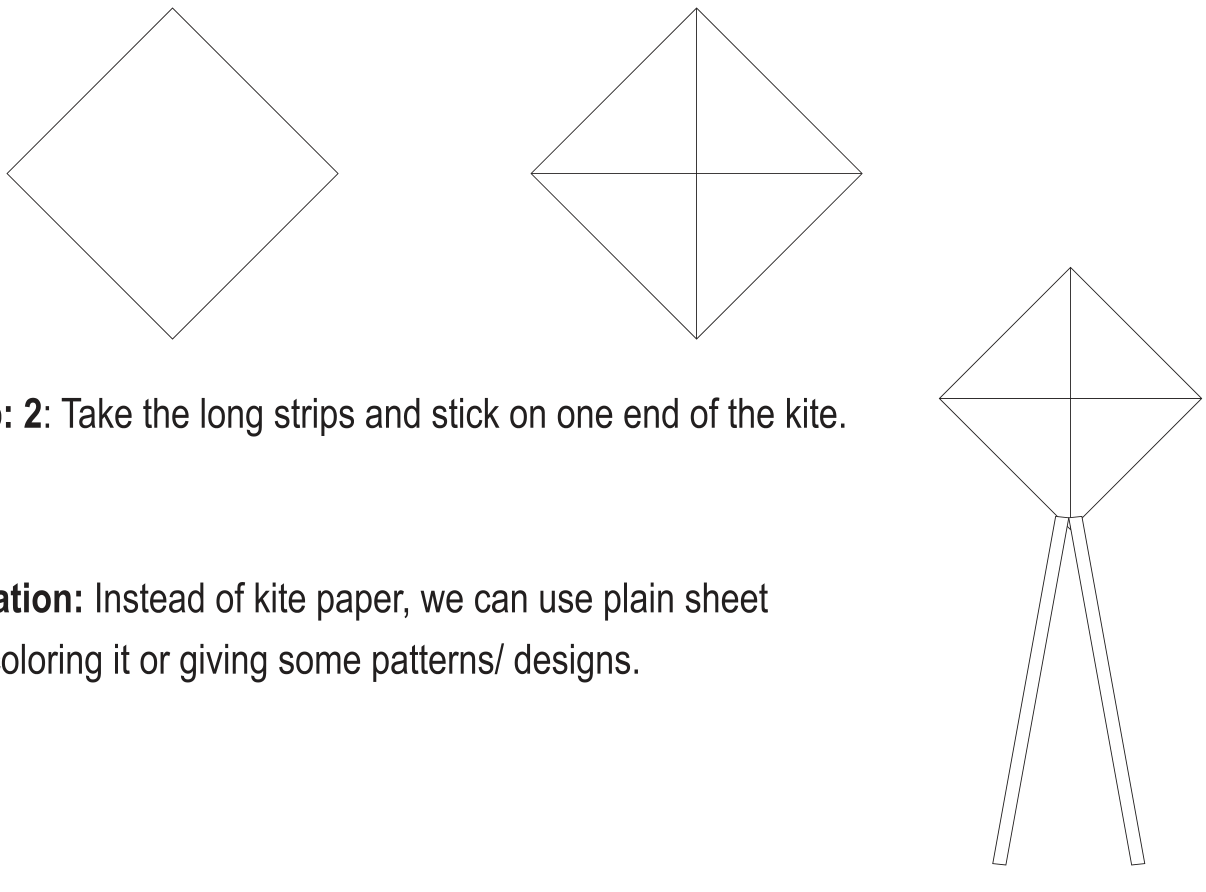
Step: 2: Take the long strips and stick on one end of the kite.
Variation: Instead of kite paper, we can use plain sheet by coloring it or giving some patterns/ designs.
KALEIDOSCOPE
Activity: To watch the design in the kaleidoscope
Goals: To improve their visual discrimination, eye hand coordination, sustaining attention
Vocabulary: Kaleidoscope, prism, cylinder, mirror, pattern and design
Material required: Kaleidoscope
Introduction and presentation: Show how to hold the kaleidoscope and then by closing one eye how we have to see through it. As we keep on turning the kaleidoscope we can see different designs that are formed with different colors. Inside the kaleidoscope there are small pieces of colored glass and the pieces are reflected in the mirror forming the designs and patterns.
Assessment: • What are the shapes of patterns that you see in the kaleidoscope? • What is there inside the kaleidoscope? • How does it make those designs? • Why do you close one of your eyes to see the kaleidoscope?
Closing: Talk about the designs formed, different shapes of kaleidoscope, making of a kaleidoscope
Evaluation: Evaluate each kid's ability to hold the kaleidoscope and see through it by closing one eye, their attention, and language skills. How are they able to explain what they see inside.
TORCH LIGHT PLAY AND SHADOW PLAY
Goals: To improve their imagination, critical thinking, fine motor and to understand cause and effect.
Vocabulary: Shadow, faces, animals, flash light, paper holes, light, passing.
Material required: Flash light, paper with tiny holes, wall or table.
Presentation: Keep the room really dark and flash light using torch on the wall using fingers make different images, the shadow of your fingers appear as images of a man or like a deer, a dog etc.
Assessment: • What is that formed on the wall? • Can shadow be formed without light? • How does the shadow of finger look? • How will their shadow look like big or small?
Closing: Ask them to try making images on the wall with shadows.
Evaluation: Evaluate their critical thinking, their cognitive skills of explaining cause and effect, fine motor skills and record the observation.
Variation: Place the paper with holes on the table in a dark room and flash light on the paper. The light passed through the paper with resemble like stars on the table. Use glow stars to show them how the light is absorbed and reflected. Put your hand and close the torch making it red in your hand
DAY 3 : GYM
TUMBLING
Goal: To improve their balance, co-ordination, spatial awareness and gross motor skills.
Presentation: Children whoever learning to tumble can use the wedge placed on the safety mats to tumble. Place mats on all the sides. They can do tumbling on the grass also.
Skills Developed: Develops their spatial awareness, hip muscles, gross motor skills, balance and co-ordination.
Variation: Children can also do tumbling using their hands.
DOG AND THE BONE
Goal: To stimulate their observing skills, auditory skills, gross motor skills, receptive language skills.
Presentation: Children are divided into two groups with equal members. They are numbered as 1-1, 2-2, 3-3 in both teams. When any number is been called (say for example-3) child numbered 3 from both the team will come and pick the object. Whoever picks the object that team will get points.
Skills developed: This game develops their auditory skills, attention, gross motor skills, receptive language skills and observing skills.
Variations: The same game can be changed as bird and grains.
SEASON-I
DAY 4 : ART
TEXTURE PAINTING
Goal: To develop their creativity, fine motor skills, tactile skill, cognitive skills of understanding and exploring cause and effect. Material required: Uncolored art sheet related to the theme, sand or rava or salt, poster colors, texture toys (like small tyres etc). Introduction and presentation: Encourage children to sit for the art and explain them the ways to do the texture painting. Children can also use texture toys to paint the pictures. They can observe the painting and touch and feel the texture after the paint has dried. Skills developed: Develops their creativity, fine motor skills, tactile skills, cognitive skills of understanding cause and effect.
COLLAGE WITH PENCIL SCRAP
Material required: Uncolored art sheet or plain sheet, pencil scrap, glue, different colors of paint, brush. Procedure: Children can do the collage (sticking) work with pencil scrap on the art sheet or plain sheet with glue. They can also paint it with different colors. Skills developed: Develops their fine motor skills, eye hand coordination and texture skills.
DAY 4 : ACTIVITY
VELCRO STRAPS
Goals: To improve their fine motor skills, cause and effect, language skills, sensory skills. Material required: Velcro straps, Velcro toys Vocabulary: Rough, open, close Introduction and presentation: To present this activity make the children at the table, give each child Velcro straps and show them how to open it and again fix it. Make them touch the Velcro and ask how they feel, whether rough or smooth. Tell them how it opens and closes. Assessment: • What is the texture of Velcro? • Where can we use Velcro straps? • Whether two sides of Velcro strap is rough? • Does any sound come when we open the strap? Evaluation: Evaluate each Childs ability to open and fix the Velcro strap, their eye hand coordination, their language skills, whether they are able to answer how it opens and closes.
FOLDING TOWEL
Goals: To develop their fine motor skills. pincer grasp and eye hand coordination. Vocabulary: Towel, box, thin, thick, fold. Material required: Towel Introduction and Presentation: Ask them to fold the towel first one fold and then repeat it multiple times using their fingers. Children can now unfold the towel. They can also fold the towel to make multiple designs and models by seeing a model Assessment: • Is towel hard or soft? • What are the uses of towel? • What all the materials used to make a towel? • Name the unit we used to measure towel. Evaluation: Evaluate the fine motor skills, eye hand coordination. Skills developed: Fine motor skills. Eye hand coordination. Pincer grasp. Pre math skills of estimating, predicting. Cognitive skills of cause and effect.
DAY 4 : GYM
SHAPE CORNER
Goal: To familiarize the children with different shapes and to develop their auditory skills and gross motor skills.
Presentation: Different shapes should be drawn on the floor. Children are asked to walk around the shapes and listen to the audio music. When the music stops they have to stand on the shapes and name the shape correctly.
Skills developed: It stimulates their auditory skills, gross motor skills, receptive language skills, cognitive skills of knowledge of different shapes. Musical chair (But in musical chair whoever did not get chair to sit will be out waiting for next turn).
OBSTACLE COURSE
Goal: To improve their gross motor skills and listening skills, memory skills.
Presentation: Welcome the kids to gather in a place and multiple oral instructions will be given at once to them. For example: Take three jumps from position, crawl into the tunnel, climb the blue sliding board, balance on yellow beam, take the yellow ball drop it into the basket and get back to position. Observe how many commands they can remember and follow in the right sequence.
Skills developed: They develop gross motor skills, receptive language skills, memory skills, spatial awareness, listening skills, balancing skills.
Extension: They can try out different instructions including different games.
DAY 5 : ART
MINI BOOK
Goals: To develop their eye hand coordination, fine motor skills, logical thinking skills.
Material required: Any materials, pictures related to the theme can be chosen, a small book with plain sheet has to be made, glue, crayons.
Introduction and presentation: Children are given one book each and they can be explained about theme and they can stick the pictures or materials or children can draw related to the theme in their book.
Skills developed: Develops their eye hand coordination, fine motor skills, logical thinking skills.
HAND PRINT
Material required: Uncolored art sheet, paint of various colors.
Procedure: The children are asked to dip their palm in the paint and do the palm painting on the given picture. They can do palm painting with various colors poster colors.
Skills developed: Fine motor skills, sensory skills.
SEASON-I
DAY 5 : ACTIVITY
MAKING SAND CASTLE
Goals: To improve fine motor skills, eye hand coordination, sensory skills, creativity Vocabulary: Sand, castle. Material required: Sand, Plate. Introduction and Presentation: Get all the materials ready and have each child sit at a table. Explain that we are going to make a sand castle. Give each child a plate and give half or quarter cup of sand on each plate. Demonstrate how to make a sand castle with hands and fingers, making a castle like shape with the sand. Assessment: ● What is a castle? ● Name any famous castle. ● Who lives in a castle? Skills developed: Fine motor skills, sensory skills. Variation: They can even use flour, rava. Add vinegar or vanilla to the rava. Add some small rocks to the rava making it not possible to build smoothly.
MIXING COLOR TO SAND
Goals: To improve fine motor skills, eye hand coordination, sensory skills, creativity Vocabulary: Sand, mixing, color Material required: Sand, plate, different poster color. Introduction and Presentation: Get all the materials ready and have each child sit at a table. Explain them how to mix color with sand. Give sand to the children by pouring it in a plate, tell them to mix color with sand. Demonstrate how well they are mixing color with sand using fingers, after mixing the color they can make some designs with sand. Assessment: ● What is the color of sand? ● What happen when you mix color with sand? ● Where do we get sand? ● Can we count sand? Skills developed: Fine motor skills, sensory awareness, eye hand coordination, language skills.
DAY 5 : GYM
FLOOR SWIMMING
Goal: To stimulate their gross motor skills. Presentation: Children are asked to lie down on the floor on their tummy. Ask the children to move their hands and legs faster simultaneously and ask them to pretend like swimming. Skills Developed: This activity develops their gross motor skills.
WALK THROUGH THE HOOP
Goal: To develop their gross motor skills, eye and foot coordination and balancing print. Presentation: Draw the hoop of the ground and tell the children to walk through the hoop to reach the destination. Skills developed: Eye foot coordination. Balancing skills. Gross motor skills.
© 2011 Copyright Nithya Gnanadhan Trust
BLISS CURRICULUM
September: Week - 3 Alphabets of the Month: M, N, O, P
Theme: People at Work
Color of the Month: Green, fluorescent
Shape of the Month: Square, cube
| Monday | Tuesday | Wednesday | Thursday | Friday | |
|---|---|---|---|---|---|
| CIRCLE TIME | Discuss about teachers. | Discuss about doctors. | About farmer and importance of them | About mailman, courier man. | Talk about professions. |
| ART | Collage with wool, spray painting. | Making necklace, vegetable printing. | Buds painting, mini book. | Texture painting. Post box craft | Draw a letter and post it, alphabet stamp print. |
| ACTIVITY | Sorting things according to profession, sweeping bits of paper. | Folding, tearing paper using scale, sharpening pencil. | Dress up dolls, bubble bath babies. | Displacement activities, syringe play. | Bent pencil, screwing, unscrewing. |
| GYM | Stop, go game, tossing ball through hoop. | I sent a letter, hit the target. | Tug of war, bounce the ball and catch. | Obstacle course, follow the leader | Simon says, animal walk |
| A TI Z PEOPLE AT WORK | A-Airhostess, Artist, B- Barber, C- Carpenter, Chef, D- Doctor, Detective, E- Electrician, F- Fashion Designer, G- Gardener, H-Hairdresser, House keeper, Home Maker, I- Interior Decorator, J- Judge, Jockey, K-Kite Designer, L- Librarian, M-Mechanic, N- Nurse, O- Occupation, P- Postman, Pilot, Q- Quilt maker, R- Radio Jockey, S- Sailor, Scientist, T- Taxi Driver, Teacher, U- Umbrella repair person, V-Vendor, W- Waiter, X-X-ray technician, Y- Yawn Maker, Z- Trapeze Artist |
[Figure: PEOPLE AT WORK]
DAY: 1
Topic: Activity of teacher, actor, driver, artist
Content:
Vocabulary: Teacher, school, write, read, chalk, duster, blackboard, chair, table, opera theatre cinema, television, driver, artist, paint, art, draw, canvas
Material required: Picture chart, material used by teacher.
Presentation:
● Explain to the children the work of a teacher. A teacher teaches, helps children in solving problems and they are very gentle and polite.
● Tell them what all materials a teacher needs while writing in a blackboard. Encourage them by telling that teacher is very good friend and a guide.
● Explain to them that teachers play a very important role in children's life. They show us the right path and they help us in learning all skills.
● Talk about Teacher's day celebration on September 5.
● There are different types of actors and actresses. Some act on the stage in front of an audience in plays or in the theater. Tell them about the actors, they act in opera, cinema, and television and so on their work is to entertain the people.
● Movie actors act in films of movies that are recorded and played in the cinema and we can watch the CD's or DVD's in our homes.
● Actors and actresses wear different costumes and play different parts, for example, if they are acting as an old person they will dress up accordingly and use make up to make them look elderly. They will also act the part using props such as a cane or walking stick and act the part.
● Actors and actresses have to be very expressive and show their emotions clearly as they will be watched by audiences all over the world.
● Actors use a script to memorize their lines. The script tells them what to say and the director tells them how to act.
● Famous actors and actresses have people that admire their work and watch all their movies, or come to see them perform. These people are called Fans.
● They also have dressing rooms on their recording sets so that they can change costumes, and make-up artists who help them look the part.
● Drivers are people who drive cars in order to bring us to our destination. There are many types of drivers; taxi drivers, truck drivers, auto drivers etc.
● Talk about the drivers who drive the vehicles like taxi, bus, truck, auto etc. they carry goods or passengers from one place to another.
● Tell them about the work of an artist, he draws/paints pictures and portraits on a canvas board. Tell them about great artists like Picasso, Leonardo da Vinci etc.
Assessment:
● What is the duty of a teacher?
● When is teacher's day celebrated?
● What will you say when you see your teacher in the morning?
● How do they write in the blackboard?
● Where do we see the teachers?
● Who is your favorite teacher?
● What are the things the teacher uses for teaching?
● Why do we celebrate teacher's day on September 5?
● What is the work of an actor?
● Where do they work?
● What does the driver do?
● What do they carry from one place to another?
● What does an artist do?
Closing: To make the children understand the duty of a teacher, what she uses while teaching, work of actor, drivers, and artist.
Evaluation:
Skills: Language- learns the vocabulary words, answering the questions. Social/ emotional- their love for children, helping, caring, sharing etc.
Extension: Provide chalk board, chalks, paper, pencil and books. Invite the children to set up a classroom. Writing – provide chalk board and chalk for children to practice writing.
DAY: 2
Topic: Doctors, surgeons, scientist. Vocabulary: Doctor, nurse, white, patient, treatment, hospital, medicine, clinic, scientist, inventions, discovery. Materials: Pictures showing different instruments, doctor play set. Presentation: ● Show the children the doctor play set and ask them who uses this. Tell them what a doctor does. When we fall sick or are unwell, we go to a doctor. ● Tell them about nurses who help the doctors and take care of the patients. Explain about the different doctors like dentist, orthopedic, pediatrician, child specialist etc. ● Tell them about surgeon who does the surgery in the operation theatre. Talk about operation theatre, ICU, ward, medicines, etc. Tell them about the instruments like stethoscope, thermometer, and blood pressure meter, etc used by the doctors. ● Tell them about the doctor's uniform, the color and also nurses uniforms. Talk about hospitals and clinics. ● Explain the work of a scientist, talk about different scientists their inventions and discoveries. For example Edison- bulb, Graham bell- telephone, telegraph etc. Talk about Indian scientists who got Nobel Prize. (C.V Raman, Chandrasekhar etc). Assessment: ● Where do we normally find the doctor? ● Where will you go if you get hurt or sick? ● Name the instruments used by doctor? ● What is the color of the doctor's coat? ● What is the instrument he uses to check your heart beat? ● How should you behave inside a hospital or doctor's clinic? ● If you have a tooth problem where will you go? ● Do you feel good to visit a doctor? ● What does “family doctor” mean? ● Name some scientist and their inventions? ● What is the work of a scientist? Closing: To make the children understand the work of a doctor, what they do, about their uniforms, hospital, clinic, instruments etc. and to tell them how they help the people. To discuss the work of scientists and their inventions. Evaluation: Skills: Language skills- answer the questions, learn new vocabulary words. Problem solving-treating the sick. Social/ emotional skills-helping the sick people, caring for them. Extension: Pretend play like a doctor using the doctor set (free play). Provide a stethoscope for the children to listen to each others heartbeats (science). Water transfer (fine motor) - provide one empty cup, one cup of water and an eye dropper. Invite the children to transfer water from one cup to another using eye dropper.
# DAY: 3
Topic: Farmers, Chef, Baker, Designer.
Content:
Vocabulary: Farmer, plough, tractor, harvest, ox, grain, chef, hotels, restaurants, designers, dress, baker, designs, pattern, colors, bulls, farm animals, dairy, poultry, orchards, sheep, cows, goats, turkeys, pigs, ducks, hens, fields, scarecrow, tools, fertilizers, fur, wool, leather, rice patties, crops, nutrition, pesticides etc.
Material required: Toy tractor, pictures, vegetables, fruits, pulses etc.
Presentation:
• Explain to the children about farmers, a farmer helps us in so many ways. They play an important role in our every day life, as farms produce food grains, vegetables, fruits etc which is very much useful to us, as food is required for our growth and good health.
• Tell them about the animals that are used for plough like ox, bull's etc. talk about tractor and different new technologies used in farming.
• Farm animals are domestic animals; to give us a steady supply of meat, milk, eggs, fur, wool and leather etc.
• Show the children different pulses, grains and tell them we get many food products from farms.
• Explain that there are different types of farms;
• Poultry farms that have hens, roosters, turkeys, ducks that are raised for food, and eggs.
• Dairy farms where the female cows are kept for milk, butter, and cheese. Male cattle are bulls, females - cows, and young cattle calves.
• Fields are for different types of vegetables and fruits, and orchards are filled with fruit trees that grow fruits of different kinds.
• Discuss plants and fruits that grow from seeds, and vegetables and roots that grow underground.
• Fertilizers are used to help the plants have enough nutrition to grow, and pesticides keep the bugs and insects away from the crops.
• Talk about the clothes they wear, how different materials comes from plants and animals that are raised in farms. (e.g. cotton plants, wool form sheep, leather from cows)
• Talk about the uses of the scare crow; they are used to scare the crows away from the crops.
• Talk about the different tools used like shovels, wheelbarrows, rakes etc.
• Explain that farmers use different strong material and clothing in order to work, for example: Jeans or overalls, gardening gloves, boots, wide brimmed hats for protection for the sun etc.
• Talk about the harvest festival (Pongal) celebrated in our state. It is a celebration offering thanks to the sun and the cattle which help produce food and clothing.
• Talk about chefs and tell their work in hotels, restaurants, schools. They prepare variety of dishes according to the tastes of the people.
• Talk about bakers, ask them that what a baker does, talk about bakers hat and apron. Tell them they make bread, cakes, biscuits etc
• Tell them about designers, they work on giving different designs, patterns, colors and materials on different cloths. They are called as fashion designer.
• Talk about interior designers who decorate the houses, hotels, office etc with different items like painting, chandeliers, color of the wall, etc.
Assessment:
• What does a farmer do?
• What are all the animals used for farming?
• What are the instruments used for farming?
• What do we get from farm?
• What are fertilizers and how are they used?
• What are pesticides? And how do they help the crops?
• What kind of clothing do the farmers use?
• How farmers play an important role in our every day life?
• Can we do farming in beach sand?
• What is the modern way to plough the land or what vehicle is used in the farm?
• What do we call the festival of harvest in our state?
• Where will you find a scare crow?
• What is the work of chef?
• Where do you find a chef?
• What does a baker do?
• What does he wear?
• Name some different types of farms?
• What is the name for male/female cattle?
• Where does wool come from?
• What is the work of a fashion designer?
• Do you like to wear fashionable dresses?
• What is the work of interior designer?
• What does he design?
• What are things an interior designer uses for interior decorating?
Closing: To make them to know about the important of farmers in our daily life, the technology and instruments used and what all we get from farm, about chef and baker, and designer, and the jobs they do.
Evaluation:
Skills: Cause and effect-mustard seeds planting.
Language skills- learning vocabulary words, answering to question.
Cognitive skills- acquiring facts of farming, technology used.
Extension: Dramatic play (farmer dress up) - provide straw hats, gloves and boots for dress up play. Fine motor (seed transfer) provide a variety of seeds in a container and encourage the children to use tweezers to move seeds from one container to another. Science (plant seeds) - provide paper cups, cotton mustard seeds, water for planting.
DAY: 4
Topic: Military, Army, Navy, Air Force Vocabulary: Army, General, soldier, Ship, Tank, Rifle, Gun, Aircraft, missile, Ship, submarine, Admiral, Navy, Air Force, Air Chief Marshall Material required: pictures, models etc.
Presentation: ● Military protects the country. It is made up of Air Force, Navy and Army. ● Air Force uses the Aircrafts and Helicopters to protect us in the sky. The head of Air Force is Air Chief Marshall. Their uniform is Light brown/Khakhi in color. ● Navy uses Ships and submarines to protect from the waters. The head of Navy is Admiral. Their uniform is White in color. ● Army uses Tanks, trucks etc to protect from the land. The head of Army is General in. Their uniform is green in color. ● Countries that are next to a sea or ocean only have Navy. India has a big Naval fleet. ● Big Naval ships also carry fighter aircrafts. They take off and land in the ship. They also have helicopters. Submarines move under water. They use Periscope to see above the water. ● Soldiers train very hard to be strong to protect us from enemies. They undergo lot of hardships like living in mountains, very cold climate etc. They all carry weapons like Guns, knives, bombs etc. ● Soldiers wear a special cap. They also have colored badges on their chest and shoulders.
Assessment: ● What is the Navy? ● Who is a soldier? ● What colored clothes do they wear? ● What is Army? ● What is Air force ● What is a submarine? ● Who are the heads of the three armed forces?
Closing: To make the children understand about the work of the military personnel. How they risk their lives for the security of the country and us.
Evaluation:
Skills: Cognitive skills- acquiring knowledge about military. Language skills- learning vocabulary words, answering questions. Visual discrimination-color of uniforms.
Extension: Writing skills- encourage the children to write or draw about air craft, guns etc. Dramatic play (Flying a fighter jet) –children to create a war scene.
DAY: 5
Topic: Policeman, Architect, Receptionist, Mason, Mechanic.
Vocabulary: Police man, police station, jeep, van, prison, jail, fire fighter, chef, fire engine, fire hose, alarm, siren, hatchet, ladder, fire extinguisher, first aid kit
Material required: Picture of police man, fire fighters, chef.
Presentation: ● Explain to the children about policemen, how they help people. Tell them that they catch the burglars, the people who hurt other people etc. talk about the police uniform, police cars and motorcycles, the vehicles that are used etc. ● Talk to the children about prisoners, jail and prison which they are kept in, talk about police stations. ● Tell them about firefighters, how they rescue the people when there is a fire. Talk about fire engines, its color and what items are there in the fire engine; fire hose, fire extinguisher, alarm siren, hatchet, ladder, first aid kit etc. ● Talk about architects and tell them that an architect designs the house within the given land or space. Explain that a mason builds the house with lot of materials like bricks, stones, rods, cement etc. ● Talk about mechanic, a mechanic repairs the vehicles which is not working, or has some problem. A mechanic works in the garage. Garage is a shed for the vehicles. ● Tell the children about receptionist. We can find a receptionist in every school, hotels, hospitals, company etc. their work is to keep the records, take messages, greet people for enquiry etc.
Assessment: ● What is the work of a policeman? ● Where will the police man be? ● Where are the prisoners kept? ● Does the policeman wear a uniform? ● Have you seen a policeman? ● What does a firefighter do? ● What is the name of the vehicle in which the fire fighter comes? ● What is the work of architect? ● Who construct houses? ● What materials are used to build a house? ● What does a mechanic do? ● Where does he work? ● Where will you find a receptionist? ● What is the work of receptionist?
Closing: To make the children know about the work of policemen, chef, fire fighter and how they help and serve the people. To make sure the children understand the work of an architect, mechanic and receptionist.
Evaluation: Skills: Language skills- learning vocabulary words. Visual discrimination-color of fire engine, uniform color of policemen, firefighter.
Extension: Science- finger prints -invite the children to dip their finger tips in paint and print their finger prints on a paper and examine them with magnifying glass.
Math-lock and key match-provide an assortment of locks and keys. Invite the children to find the matching sets.
DAY: 1 ART
COLLAGE WITH WOOL
Materials needed:- Different colored wool, people at work picture.
Procedure: Children are asked to stick the wool on the people at work picture.
They can observe and feel the texture of wool. We can talk about the uses of wool. Children are encouraged to
stick the wool correctly in the picture.
Skills developed: Fine motor skills, texture skills, and cognitive skills of understanding the uses of wool.
SPRAY PAINTING
Goal: To develop their creativity, fine motor skills, tactile skill, cognitive skills of understandings and exploring cause and effect.
Materials required : Uncolored art sheet, tooth brush, different colored poster colors, combs.
Introduction and presentation
- Encourage children to sit for the art, explain and present them the ways they can try out different types of spray painting.
- Ask the children to take one tooth brush each and to dip it in to their favorite color.
- Ask them to place the tooth brush bristles pointed down towards paper.
- Guide children to use their thumb finger to move the bristles of tooth brush or they can move the tooth brush on the comb.
- When they move the bristles of the tooth brush, the paint is sprayed on the art sheet.
DAY: 1 ACTIVITY
SORTING THINGS ACCORDING TO PROFESSION
Goals: To improve their cognitive skills of comparing, sorting according to specific characteristics. Materials needed: things
belonging to different professions like tools box, syringe, medicine box, postcard, pen, pencil, ruler, stencil etc.
Presentation:
- Mix a set of things belonging different professions like tools box, doctor set, post card, pencil, ruler, stencil and ask them to
sort the things according to the profession like carpenter, doctor, teacher, electrician etc.
- Ask them questions related to the professions.
Skill developed: Develops your cognitive skills of critical thinking, comparing and sorting according to specific characteristics.
Assessment:
- Who uses screw driver?
- Where will carpenter use hammer?
- What will a doctor use?
- Who uses pencil, pen, ruler?
- What can you see in the post office?
SWEEPING BITS OF PAPER
Activity: Clean up of paper bits using toy broom and dust pan.
Vocabulary: Pick, broom, dustpan, clean, paper bits, dirty, messy, gravity, sorting, grouping.
Goal: To improve their whole hand movement, fine motor, self help skills, pre math skills of grouping.
Materials: Toy broom, dust pan, bits of paper.
Presentation: Drop bits of paper on the ground and sweep it using toy broom and dust pan.
Closing: Ask them to try the same.
Evaluation: Evaluate their self help skills and fine motor and whole hand movement and record the observation.
Skill Development: Gross motor; Fine motor, Sensorial, problem solving and language skills.
Variation: They can clean up toys from different cubbies and sort it into right cubbies. Go out door and clean the garden. Tell
them to sort the paper and leaves and other items into different bins. Mop after cleaning the dust using wet cloth or mop
learning about squeezing the towel or the mop. What happens when we use dirty water or flour mixed water to clean?
DAY: 1 GYM
STOP AND GO GAME
Goal: To develop their observing skills, gross motor skills and receptive language skills. Presentation: ● Mentor has to hold two balls one red ball and green ball. ● When mentor shows the green ball the children have to start running and once they see the red ball they have to stop running. ● Children has to be very alert & they have to stop and start running after seeing the respective balls. Skills developed: ● It helps the child to improve the observing skills and be more attentive. ● Develops their gross motor skills and co-ordination. Variation: ● Children can start and stop running listening to the words green light and red light. ● We can play the same game by using the words stop and go.
TOSSING BALL THROUGH HOOP
Goal: To develop their gross motor skills. Presentation: ● Welcome the children to the new game to strengthen their shoulder muscles. ● Make the children hold the ball using one hand or two hands. ● It helps them understand and judge the position where their hand has to be raised to throw the ball over head or through loop. Skills developed: This game helps them to develop their gross motor skills when their hand is raised given force to throw ball their whole hand movement improves and their spatial sense improves when they judge the position. Extension: They can close their eyes and try it to drop the ball into the basket over head.
DAY: 2 ART
MAKING NECKLACE
Material required: Color paper (oil) wool, cello tape, glue, scissors Procedure:
Step: 1
Step: 1: Take the color paper and make a three fold, and draw a heart shapes and cut it out.

Step: 2
Step: 2:- Take the cut out heart shapes and stick together with glue, in the way as it shown below

Step: 3
Step: 3:- Now take wool and stick it on each ends so that we can tie and wear it on our wrist ( you can plait the wool and stick it)

Variations: Not only heart shape, you can draw any designs and make a bracelet, instead of oil paper you can also make with a chart paper, so that it will be firm and stiff and last longer. You can make anklet using the same method. Another method measure the length of the wrist line with wool and you can stick the heart shape on the wool also.
VEGETABLE PRINTING
Goal: To develop their creativity, fine motor skills, cognitive skills of understandings and exploring cause and effect. Material required: Any vegetable which can be cut in to shapes (e.g. carrot, potatoes, onion, ladys fingers, radish etc), poster colors, paint brushes, uncolored art sheet. Introduction and presentation • Motivate children to sit and explain present them the ways they can do vegetable printing. • Keep vegetables cut in to shapes or patterns ask them use paint brush to apply paint on vegetable or dip it in the paint. • Ask the children to make impressions or print on the art sheet. Skill developed: Develops their creativity, fine motor skills, tactile skills, cognitive skills of understanding cause and effect.
DAY: 2 ACTIVITY
FOLDING AND TEARING PAPER USING SCALE
Goals: To develop their fine motor skills. pincer grasp and eye hand coordination. Vocabulary: Paper, chart paper, box, thin, thick, tear, fold, crease, scale. Materials required: Paper, scale. Introduction and Presentation: • Ask them to fold the paper first one fold and then repeat it multiple times and crease it using their fingers. • Children can now unfold the paper and predict the number of boxes. • They can also fold the paper to make multiple designs and models by seeing a model. • They can fold even chart paper. • Children are asked to tear the paper in the folded pattern. • They can also tear the paper in to very thin stripes using scale or tear the paper randomly in to very small bits. • After tearing paper in to small bits they can sweep the bits of paper with toy dust pan. • They can estimate which more or less with the bits of paper. Assessment: • Is it easy to tear paper? • Which is easier to tear large paper or small bits of paper? • Is paper hard or soft? • If paper is torn in to very small pieces can we get back the full paper again? • Where do we get paper from? • What are the uses of paper? Evaluation: Evaluate the fine motor skills, eye hand oordination. Skill development: Fine motor skills, Eye hand coordination, Pincer grasp, Pre math skills of estimating, predicting, Cognitive skills of cause and effect.
SHARPENING PENCIL
Goals: To develop their fine motor skills of circular wrist motion, eye hand coordination. Vocabulary: Pencil, sharp, blunt, scrap, sharpener. Material required: Pencils, sharpener. Introduction and Presentation: • Show the children how to hold the pencil and sharpen it with the sharpener. • Ask them to observe the scrap coming out of the sharpener. • Ask them to differentiate between sharp and blunt. Assessment: • Pencil is soft or hard? • What materials are used to make a pencil? • How was the lead of the pencil before sharpening? • How is the lead of the pencil after sharpening it? Evaluation: Evaluate their eye and hand coordination and fine motor skills. Skill development: Cognitive skills of cause and effect, Knowledge of sharp and blunt, Fine motor skills of circular wrist motion, Eye hand coordination.
[Figure: PEOPLE AT WORK]
DAY: 2 GYM
I SENT A LETTER
Goal: To stimulate their alertness, auditory skills, gross motor skills, social skill of participating in group play.
Presentation: ● Children are asked to sit in a circle. ● One person will have an object and will be walking around the circle for the song. When he/she hears drop it they can drop the object to one of them in the circle. ● The person who has the object should run and catch the person who dropped the object to him/her. The runner can sit in catchers place. ● The catcher now can pass the object to another person. Like that each one in the circle will get turn to be the catcher at the end of the game.
Skills developed: This game improves their alertness, auditory skills, gross motor skills, social skill of participating in group play.
Song: I sent a letter, to my father On the way, I dropped it. Post man came and, picked it up And put it, in his pocket.
Hit the target
Goal: To develop their eye hand coordination, fine motor skills, gross motor skills.
Presentation: ● Ask the children to hold the ball firmly with one or both hands and toss the ball on the target. ● Encourage them to toss it correctly on the target.
Skilled developed: Eye hand coordination, fine motor skills and gross motor skills.
DAY: 3 ART
MINI BOOK
Goals: To develop their eye hand coordination, fine motor skills, logical thinking skills.
Material required: Any materials, pictures related to the theme can be chosen, a small book with plain sheet has to be made, glue, crayons.
.Introduction and presentation: Children are given one book each and they can be explained about theme and they can stick the pictures or materials or children can draw related to the theme in their book.
Skill developed: Develops their eye hand coordination, fine motor skills, logical thinking skills.
COLOR PENCIL COLORING
Goals: To stimulate their creativity, fine motor skills, eye hand coordination, tripod grasp, prewriting skills.
Material required: Art sheet, different color, color pencil.
Introduction and Presentation: Encourage children to sit around the table and give each child one art sheet and they can choose their colors from the color pencil tray. Guide them to fold color pencil using thumb, pointer and middle finger (tripod grasp). Encourage them to color inside the picture.
Skilled developed: Develop their eye hand coordination, fine motor skills, tripod grasp, pre writing skills, creativity.
[Figure: PEOPLE AT WORK]
DAY: 3 ACTIVITIES
BUBBLE BATH BABY
Goals: To improve fine motor and whole hand grasp. Vocabulary: Clean, dirty, bubbles, transparent, hot, warm, lukewarm, cold, wet, dry. Material required: Water, Soap, Tub, Baby dolls. Introduction and Presentation: Take the tub and fill it with water, add the soap and make bubbles by splashing the water around until bubbly. Ask each child to pick a baby doll and sit down next to the tub. Explain how it’s important to take bath and keep things clean. Demonstrate how to wash the baby very carefully and gently. Assessment: ● Ask them how the bubbles look? ● What color of water after adding soap? ● How does the water and bubbles feel? ● What is the shape of the bubble? Rhyme: “This is the way we wash the baby doll, wash the baby doll” (from the tune from: “Mulberry bush”). Evaluation: Evaluate if they understand the concepts of wet, dry, temperature, clean, dirty etc. Add dirt in the beginning to make the baby dirty. Skills development: Sensory awareness, self help skills, tactile skills, whole hand grasp.
DRESS UP DOLLS
Goals: To develops their intrinsic hand muscles and fine motor skills, eye hand coordination, sense of position, sensory skills of different texture etc. Material required: Collection of small clothes for dolls, baby dolls. Presentation: Show them how to button and unbutton, encourage them to remove the clothes for the baby doll and dress them up. Help them place the clothes on the ground initially and teach them positions (left and right). They feel the texture of the cloth. Skill developed: Develops their intrinsic hand muscles and fine motor skills, eye hand coordination, sense of position, sensory skills.
DAY: 3 GYM
BOUNCING THE BALL AND CATCH
Goal: To develop their gross motor skills, fine motor skills and eye hand co-ordination. Presentation: ● Ask the children to drop the ball on the ground and tap it gently to bounce the ball. ● Ask them to catch while the ball bounce up ● When they use their hands to tap the ball they should track the position of the ball to bounce it again and again. Skills developed: This game helps them to develop their, fine motor skills, gross motor skills and eye-hand co-ordination. Extension: ● They can bounce the ball catch it and drop into basket ball net. ● Children can close their eyes and try to bounce the ball if possible. This develops their predicting, estimating, and visualization skills.
TUG OF WAR
Goals: To stimulate their gross motor skills, whole hand grasp, social skills, auditory skills. Presentation: ● Motivate the children and group them as two A and B ● Offer them on long ribbon or cloth to hold on either ends. ● Ask Group A to hold one end of the ribbon or cloth and Group B to hold the other end. ● When they hear the clap sound they should start pulling from each side. Skills developed: Develops his gross motor, whole hand grasp, social skills, auditory skills.
DAY: 4 ART
TEXTURE PAINTING Goal: To develop their creativity, fine motor skills, tactile skill, cognitive skills of understandings and exploring cause and effect. Material required : Uncolored art sheet related to the theme, sand or rava or salt, poster colors, texture toys (like small tyres etc). Introduction and presentation • Encourage children to sit for the art and explain present them the ways to do the texture painting. • Children can also use texture toys to paint the pictures. • They can observe the painting and touch and feel the texture after the paint has dried. Skill developed: Develops their creativity, fine motor skills, tactile skills, cognitive skills of understanding cause and effect.
POST BOX CRAFT Material required : Red and black paint, paint brush and white paper, cello tapes. Procedure:
Step: 1:
Step: 1: Take a half sheet plain paper and paint one side of the paper fully, take another half sheet and paint it with black color.

Step: 2
Step: 2:- Roll the red paint paper in to a cylindrical shape and stick with glue. Draw a rectangle shape in the middle of the cylinder and cut it only one side so that you can lift it up.
Step: 3
Step: 3:- Take the black paint sheet and draw a square and circle. Cut out the square shape little bigger than the size of the cylindrical box and cut the circle shape with the same size of the cylindrical shape. Step: 4:- Stick the square shape on the top of the cylindrical with cello tapes and circle on the bottom.

DAY:4 ACTIVITY
DISPLACEMENT ACTIVITIES Goals: To improve their cognitive of comparing, measuring, sustaining attention, language skills. Vocabulary: Quantity, displacement, more, less, equal Material required: Rice/ flour, bowl or glass of different shape and size Presentation: To present the activity keep the materials ready. Take a bowl of rice and show them the quantity, then take the same quantity of rice and pour it in a glass. Show them the rice kept in different vessels and ask the child which is more/ less/ or whether it is equal. Make the children to do the activity. Explain that the quantity is same, only the size of the vessel differs and it takes the shape of the container.
Assessment: ● What happens when same quantity of rice is kept in two vessels of different sizes? ● Will there be any change in the quantity? ● What does “displacement” mean? ● What happens when we use two identical objects, but move one up higher than the other, does it become larger? Variation: To do the activity we can use water, flour, straw, play dough, straw etc. Evaluation: Evaluate each child whether they understood the displacement of the same quantity of rice. Evaluate their cognitive skills of comparing and measuring, language skills.
Conclusion: The concept of displacement is challenging to teach, so using these different activities will help with them to understand. SYRINGE PLAY Goal: To develop their fine motor skills, eye hand coordination, direction sense. Presentation: ● Give each child one syringe. ● Present to the children how to hold a syringe and fill water in it. ● Ask them to hold the syringe upside down pull in the upward direction. ● Ask them to observe the water gushing in. ● Now ask them to press and push the water out using thumb. ● Ask them to repeat this action by giving instructions like pull and push.
Skilled developed: Develops their fine motor skills, eye hand coordination, direction sense and cognitive skills of understanding cause and effect.. Assessment: ● Who uses syringe? ● What happens when you pull the syringe knob upward? ● How water gushes inside the syringe? ● What happens when you push it back? ● Can you try doing the same outside the water?
DAY:4 GYM
FOLLOW THE LEADER Explanation: ● In this game select one child to be the leader. The other children stand facing the leader and copy the movements the leader does. ● In this the children learn to do different actions or movements. ● To make the game more challenging. Skills: Visual discrimination, gross motor skills. Variation: ● “Copy cat” game is also played in the same way. ● Monkey see, monkey do.
OBSTACLE COURSE Goal: To improve their gross motor skills and listening skills, memory skills. Presentation: Welcome the kids to gather in a place and multiple oral instruction will be given at once to them. For example: Take three jumps from position, crawl into the tunnel, climb the blue sliding board, balance on yellow beam, take the yellow ball drop it into the basket and get back to position. Observe how many commands they can remember and follow in the right sequence. Skills developed: They develop gross motor skills, receptive language skills, memory skills, spatial awareness, listening skills, balancing skills. Extension: They can try out different instructions including different games.
DAY: 5 ART
DRAW A LETTER AND POST IT Goal: To develop their pre writing skills, language skills, social/ emotional skills. Material required: Plain sheet, pencil or sketch pen or crayon or color pencil. Presentation: Invite children to sit in a circle and give each child a plain sheet and pencil or sketch pen or crayon, or color pencil. Ask the children to write or draw a letter to their friends. Ask them to fold it and post it in to a toy post box. Explain them the importance of letters and stamps required for envelop or post card. Skill developed: Develops their pre writing skills, language skills, social/ emotional skills.
ALPHABET STAMP PRINTING Material required: Alphabet stamps, Stamp pad, Pictures of bird. Procedure: Ask the children to press the Alphabet stamps on the stamp pad and do stamp printing on the picture. Children are asked to observe the prints appearing on the paper, when they press the alphabet prints on the paper. Children can make the words like birds name with the alphabet prints. Skills Developed: Fine motor skills, cognitive skills of understanding cause of effect.
DAY: 5 ACTIVITIES
THE BENT PENCIL Activity: How light, when traveling from one medium to another, changes its path. Goals: To help them understand the concepts of light, and how it changes through different mediums and about light transmission. Content: Vocabulary: light, passage, medium, vision, transmission, changes, path, illusion Material required: A glass tumbler, Water, Pencil Presentation: First drop the pencil inside the glass tumbler and observe it from the side. Then fill half of the tumbler, with water. Drop the pencil again. Now observe the pencil from either the left or right side of the tumbler. Observation: From the first observation, only one straight pencil is seen. Upon filling the tumbler with water it looks as though the pencil is bent. Reason: When light travel from one medium to another its path changes. So when light travels from water to air its path changes, which is why the pencil looks like it is bent. Assessment: • Why does the pencil look bent? • How light travels from one medium to another? • Is the pencil really bent? • Why does the illusion happen? Evaluate the following skills: Visual skills, Cause and effect, Logical thinking, Language skills of receptive and expressive Conclusion: Conclude by saying when light travels from one medium to another, its path changes.
SCREWING AND UNSCREWING Goals: Develops their fine motor skills of whole hand grasp, tripod grasp, and direction skills. Materials needed: Nuts and bolts or different sized bottles (plastic) with different sized lids. Presentation: Present to the children to hold the nuts and bolts or bottles with different sized lids, using palm and to screw using thumb and three fingers. We can guide them to screw it in clock wise or anti clockwise direction or direct them to screw it towards left or right. Skill developed: Develops their fine motor skills of whole hand grasp, tripod grasp, direction skills.
DAY: 5 GYM
SIMON SAYS Explanation of the game: • Choose one child to be 'Simon'. All the other children stand side by side facing Simon. • The child playing Simon gives other children orders that they have to carry our, but only when the orders follow the phrase Simon says (e.g. Simon says clap your hands). • If child follows an order that Simon did not say (e.g. clap your hands), then he or she is out and must sit down. • The last child standing becomes the new Simon for the next game of Simon says. Skills: Auditory, gross motor, language expressive skills Variations: You can change the name of the game as 'mother may I' etc.
DIFFERENT KINDS OF WALKING Goal: To develop their gross motor skills, balance and symbolic thinking. Presentation: Children are asked to do different kinds of walking like heel walking- walking on heel toe walking- walking on toes, alternate heel and toe walking, kneel walking- walking on knees, stride walking- walking with foot apart, walking like different aged people like toddler, adult, middle age, old age people, different kinds of animal walk, fast walking- slow walking etc. Skilled developed: Symbolic thinking, Gross motor skills, Balance. Variation: Robot walk- walks like a robot with alternating individual arms, legs and neck movements.