FARM ANIMALS ANSWERS
This text was machine-transcribed from the printed book and may contain errors. Select the words and choose “Report a mistake”.
- Poultry
- Four
- Eggs
- Milk
- Coop
- Wool, Meat
- Stable
- Cud
- Calf
- Shed
- Gander
- Drake
- Hay or Grass
- Hay and Oats
- Piglet
- To carry loads
- To pull cart and for Transportation
- Sty
- Ox, Bullocks
- Horse, Camel, Bullocks
- Grains and Insects
- Milk, Wool, Meat
- Butter, Cheese, Yoghurt, Ghee
- Barn
- Manure, Fertilizer, Biogas
- Veterinarian
- One or two
- 20 Days
- neigh
- Bray
- Wattle of Bare, Floppy skin that hangs doven from their head and neck
- Pen
- Cock or Rooster
- Cattles are raised for meat and provides leather, glue and their droppings are used for fertilizers
- Buffalo
- Herd
- Green Leaves
- Crows
- Thick
- Lamb
- Skin of Animal
- 14-18 Feathers
- Milk
- Yolk
- Protein
- Calcium
- Kid
- To make warm clothes for winter and carpets
- Food, Water and Shelter
- Camel
© 2011 Copyright Nithya Gnanadhan Trust
BLISS CURRICULUM
June : Week - 4 Alphabets of the Month: A, B, C, D Theme: Sea Creatures Color of the Month: Blue, Indigo, violet Shape of the Month: Triangle, Prism, cone
| Monday | Tuesday | Wednesday | Thursday | Friday | |
|---|---|---|---|---|---|
CIRCLE TIME | Talk about fishes, water bodies, fins, gills. | Talk about aquarium, eating habits of fish. | Talk about sponges, corals, jelly fish. | Talk about shell, snail, squid, octopus, crab, sea horse, and star fish. | Talk about sea mammals. | |

ART | Leaf printing. Spray painting. | Texture painting, sea creatures. Stamp printing. | Collage with pencil scrap, make a mini book. | Make a fish tank, origami fish. | Crayon coloring butter paper tracing. | |
ACTIVITY | Fishing, frozen animals. | Float and sink, dissolve, undissolve. | Sound box, making sounds (loud and soft) with different items. | Patterning with sea creatures, picking sea creatures using tongs. | Salty stuff, cloth pegs. | |
GYM | Treasure hunt for fishes, floor swimming. | Backward jump, crawl, creep, walk, air cycling. | Simon says, walking on toes/ one leg. | Crab walking. Blow feathers. | In the pond on the bank. General exercise. | |
A-Z OF SEA CREATURES | A- Algae, Anemones / B- Bony fish / C- Corals, Crabs / D- Dolphins / E- Eel / F- Fishes, fins / G- Gills H- Habitat / I- Pig, Fish / J- Jelly fishes / K- Shark / L- Lobster / M- Marine, Mussels / N- Nest / O- Octopus, Oyster P- Parrot fish / Q- Aquarium, Squid / R- Rays / S- Sponges, starfish, squids / T- Turtle, tentacles U- Urchins / V- Vertebrates / W- Whale, Walrus, Wobbegong / X- Toxin / Y- Prey | | | | |
Sea Creature
DAY: 1
Topic: Welcome the children to the topic of fishes, water bodies, fins, gills, scales.
Vocabulary: Aquatic, vertebrate, jaws, scales, fins, gills, scales, cartilaginous fish, rays, chimaeras, dorsal fins, anal fins, caudal fins, pelvic fin, pectoral fins, rubbery elastic.
Material required: Fishes pictures, toy fishes, books and board puzzle.
Presentation: Fishes live in water. Some live in freshwater, some live in salt water. They are cold blooded. Fishes are aquatic vertebrate animals. They have back bones. They take water through their mouth. They absorb the oxygen and send out the rest through the gills. In whales we can see the water coming out like a fountain. Their body is covered with scales of different types that help them to swim well. Sharks, rays, chimaeras are cartilaginous fish. They have boneless body made of rubbery elastic substances called cartilage. Fishes have jaws. They have dorsal fins, anal fins, caudal fin (tail fin). They also have pectoral fins and pelvic fins. Some fishes eat aquatic plants and other small fishes. Fishes lay eggs. Eggs hatch in to a larvae which grow in to adult fish. There are so many kinds of aquatic animals: like fishes, sharks, snails, squids, octopus, crabs, sponges, jelly fishes, corals, starfishes, sea urchins, seal, walrus, sea horse, sea otter, whale, dolphins etc. Fish is an important source of food for humans. A group of fishes is called as school of fishes.
Assessment: Have you seen a fish? Where can we see them? ● How do they breathe? ● What help them to move in water? ● What do fishes eat? ● Do they lay eggs or give birth to young ones? ● Can fishes live on land? ● Are they vertebrate or invertebrate? ● Who eat the fishes? ( human, birds, mammals) ● Can you name some fishes you know? ● How is their body (rough, scaly, smooth)? ●
Closing: Recollect the information and name some sea creatures like clown fish, eel, sting ray, gold fishes, butterfly fish, and angel fish.
Evaluation: Receptive Language skills: Naming the fishes, talking about their habitat and their life cycle Eye Hand Coordination: Catching the fish using the fishing rod. Fine motor skills : Drawing a fish, a beach.
Extension: They can do fishing activity using magnetic fishes and fishing rod.
[Figure: Sea Creature]
DAY: 2
Topic: About aquarium and eating habits of fishes.
Vocabulary: Small fishes, planktons, algae, aquarium.
Material required: Pictures of fishes and aquarium, model of aquarium.
Presentation: ● Aquarium is a man made habitat for fishes and sea creatures. ● Aquarium has a natural atmosphere created artificially. ● Aquarium contains planktons, algae, small fishes etc.. ● We can keep fishes as pets in aquarium. ● Aquarium needs to be cleaned regularly. ● Dried algae and worms can be given for the fishes in the aquarium at home. ● The water in the aquarium needs to be changed periodically. ● Care should be taken before keeping different types of fishes in the aquarium as few types attack other types of fishes. ● Aquarium has artificial motor to pump oxygen in to the water. ● We can also place some nice hide out places like artificial coral or rocks for the fishes.
Assessment: ● What is an aquarium? ● Have you seen an aquarium? ● What are the colors of the fishes in the aquarium? ● What are the kinds of fishes you know? ● Have you seen any kinds of sea creatures in the aquarium? ● Have you seen a gold fish? ● How often do we feed the fish and what amount of food do they take? (twice, only a pinch of food) ● What happens when we give them some chips or chocolate to eat? (they do not eat them) ● What is the main food for the fishes in the aquarium? ● Why do we need to change the water in the aquarium? ● Why do we need the oxygen in the water for fishes? ● Can we grow fishes as pets in our home?
Closing: Recall their experiences if they have seen an aquarium, if they have fishes as pets.
Evaluation: We can evaluate their logical thinking skills by asking multiple questions. Cognitive skills of cause and effect what happens when we have no oxygen in the water or when we do not clean the tank for a long time.
Extension: They can sort all the fishes with other sea creature.
Sea Creature
DAY: 3
Topic: Sponges, corals, jelly fishes.
Vocabulary: sponges, jelly fish, invertebrate, saucer shaped, pores, distinct, semi transparent, stinging poisonous, tentacles, marine.
Material required: Pictures, models.
Presentation: ● Sponges, jelly fishes, corals are invertebrate animals. ● Jelly fishes are saucer shaped marine animals. ● Sponges are fixed to place and spend their life at the same place. ● Sponges eat small animals and plants such as algae and bacteria. Some are carnivores. ● Sponges have pores to take water in to their body. ● Jelly fishes are carnivorous. ● Sponges and jelly fishes lay eggs that hatch into larvae. ● Corals are of two types hard and soft. ● Hard corals have a rock like skeleton that remains like a rock. ● Soft corals do not have skeleton and they have eight tentacles where as hard corals have six tentacles. ● They are different colors black, blue, red, pink etc. ● Corals live in large colonies. ● They are not fishes
Assessment: ● What are corals and sponges? ● Have you seen jelly fishes? ● Do jelly fishes have bones? ● Can sponges move from one place to another? ● Where do jelly fishes, corals and sponges live? ● How sponges take water into the body? ● Have you seen hard coral rocks? ● What do jelly fishes eat? ● What are the colors of corals?
Closing: Recollect the information about corals, sponges, and jelly fishes, special features in them.
Evaluation: Expressive Language skills: Explaining why they are not fishes ( they are vertebrate), their habitat. Visual discrimination while differentiating sponges and corals from other fishes.
Extension: We can get jelly and ask them to feel the texture of it Rock and corals, a piece of sponge and relate it to the texture of sponges.
[Figure: Sea Creatures]
DAY: 4
Topic: Shells, snails, squid, octopus, crab, sea horse, starfish.
Vocabulary: Crab, shell, snail, squid, octopus, crab, seahorse, starfish, delicate, antennae, chelipeds, exoskeleton.
Material required: Pictures, models, books and toy sea creatures.
Presentation: • Crabs, shells, snail, squids, lobster, octopus, sea horse, star fish are some of the sea creatures living in the sea. They are invertebrates. • Crab and lobsters have a hard outer shell called exoskeleton; it helps them to protect the delicate parts within them. They have two pairs of antennae, two compound eyes and a mouth. • Crabs and lobsters lay eggs and it hatches in to larvae. Crabs are omnivores; lobsters feed on worms, crabs. • Snails, squids, octopuses are soft bodied animals without a backbone, snail has a hard outer shells to protect their soft bodies where as squids have inner shell inside their body. Octopuses do not have either inner or outer shell. • Snails have tentacles as its feelers. • Squids have two fins at the end of their body. Octopus has eight flexible arms on their soft bodies. They have oval shaped body with eyes on each side of the head. • Snails are herbivores. Squids and octopuses are carnivorous feed on other fishes, turtle, and shrimps. • Starfishes have spines on their bodies. Star fish is not a fish but an echinoderm. They have a central disc and five pointed arm. It can grow its arm if it is cut. • Sea horses are not fishes. Female (mommy) sea horses do not hatch their own babies. It gives the eggs to males, who keep them in a special pouch until they hatch.
Assessment: • Have you seen a snail? • How will a snail move? • Have you seen squids, octopus, starfish and sea horse? • What is the special thing that octopus has? • What special thing crab has to protect it inner body? • Do octopuses have shells? • Is star fish a vertebrate or invertebrate?
Closing: Recollect the facts about snails, squids, octopuses, starfishes and sea horses.
Evaluation: Gross motor skill: They are able walk in different styles Critical thinking skill: Why they are different from regular fishes. How they differ from each other.
Extension: They can walk like a snail, crab, octopus, sea horse, and worm.
Sea Creature
DAY: 5
Topic: Sea mammals.
Vocabulary: Sea mammals, sea otter, humpback whale, sea lion, dolphin, pinnipeds, tusk.
Materials: Toy sea creatures, toy fishes, pictures, books puppets.
Material required:
- Talk about aquatic mammals like shark, whale, dolphins, sea otter, walrus, seal etc.
- Shark dolphin and whales have fish shaped body. They give birth to young ones. They have highly developed brains.
- They are warm blooded animals like other mammals.
- They nurse their young ones.
- Blue whale is the largest animal on earth. They feed on krill and plankton. Their heart is as big as a car.
- Most of the sea mammals are carnivores.
- Seals and walruses are pinnipeds. Pinnipeds are large aquatic mammals. Pinniped means fin footed.
- Seals and walruses have four legs that are developed in to flippers, some seals have fur.
- Sea lions and fur seals have ears.
- Sea lion can swim faster.
- Walrus has large tusk like elephants.
- They can perform some tricks. Sea otter can clap, while a dolphin can play ball and blue whale can jump through a hoop. Like circus animals there are many sea animal shows.
Assessment:
- Have you been to any sea animal show?
- What do sea lions eat?
- Where do you find seals and sea lions?
- Have you seen walrus or seal or sea lion? Describe them.
- Have you seen a dolphin?
- Which is your favorite sea mammal?
- How do seals, walrus swim?
- Do they lay eggs or give birth to young ones?
- Which is the largest mammal?
- What special thing do walrus have?
Closing: Recollect the information about sea mammals, their habitat, food, special features.
Evaluation: Language skills: Naming different sea mammals and their special features. Tactile skills: Touching and recognizing the sea mammal
Extension: We can have a water show with the toys sea mammals, water, tub, rings, balls, and dolls The children can feel in the Mystery Bag and find out what are the sea mammals.
DAY 1: ART
SPRAY PAINTING
Topic: Spray Painting. Goal: To develop their creativity, fine motor skills, tactile skill, cognitive skills of understanding and exploring cause and effect. Material required : Uncolored art sheet, tooth brush, different poster colors, combs.
Introduction and presentation • Encourage children to sit for the art and present them the ways they can try out different types of spray painting. • Ask the children to take one tooth brush each and to dip it in to their favorite poster colors. • Ask them to place the tooth brush bristles pointed down towards paper. • Guide children to use their thumb finger to move the bristles of tooth brush or they can move the tooth brush on the comb. • When they move the bristles of the tooth brush, the paint is sprayed on the art sheet.
Skills developed: Develops their creativity, fine motor skills, tactile skills, cognitive skills of understanding cause and effect.
LEAF PRINTING
Topic: Leaf printing. Goal: To develop their creativity, fine motor skills, cognitive skills of understanding and exploring cause and effect. Material required: Any leaves (e.g. mango leaf, hibiscus leaf etc), poster colors, paint brushes, uncolored art sheet.
Introduction and presentation • Motivate children to sit and demonstrate them the ways they can do leaf printing. • Keep leaves cut in to shapes or patterns ask them use paint brush to apply paint on leaf or dip it in the paint. • Ask the children to make impressions or print on the art sheet.
Skill developed: Develops their creativity, fine motor skills, tactile skills, cognitive skills of understanding cause and effect.
DAY 1: ACTIVITY
FROZEN ANIMALS
Activity: Frozen animals
Material required: Toy animals, water, and transparent container
Preparation: Before we start the activity keep the toy animals in a transparent container with water and keep it inside the freezer for the whole day.
Presentation: Take out the frozen animals from the freezer and show them. Make them to touch the container and ask them how they feel. Show the animals inside the ice, which is transparent. When the animals are frozen they get stuck but when the ice melts, we can take it out easily. Explain about 3 states of water.
Vocabulary: Transparent, melt, freeze, frozen, container, snow, ice, hail storm,
Objectives: • How will you feel when you touch the ice? • Can you see the frozen animals? If yes why? • What happens when ice melts? • At what temperature water will become ice? • How did the animal get into the ice? • Why is the ice melting? • Have they seen ice rain ( hail storm)?
Evaluation: Evaluates each child's ability to understand how water turns to ice and how it melts. What they are able to see inside the ice.
Variation: We can take some other toys like flowers, vegetables, fruits, vehicles as per the theme etc. Use string so they can carry it and also figure out how the string went inside.
[Figure: Sea Creature]
FISHING
Activity: To do fishing with toy using magnetic rod.
Goals: To develop their fine motor skills, eye hand coordination, cause and effect relationships.
Vocabulary: Fishing, magnet, water, swimming, attraction, rod.
Material required: Toy fishes with magnets attached, magnetic, stalk, big bowl of water.
Introduction and Presentation:
- Make the children sit in a circle give each child turn to hold the magnetic fishing stalk and catch the magnetic fishes. They have to move the stalk according to the position of the toy fishes in water in order to catch the fishes. We can make the children understand how fish swims in water. Children can actually feel the force of attraction between the magnetic stalk and the toy fishes.
Assessment:
- Where do fishes live?
- Have you seen real fishes?
- Will a plastic be attracted by magnetic?
- Can fishes walk? Why?
- In this activity why fishes are attracted to the magnetic stalk?
- Can fishes live out of water?
Evaluation: Evaluate how well they understood the cause and effect relationship.
Skills development:
- Develops their fine motor skills.
- Eye hand coordination.
- Cause and effect relationships.
DAY 1 : GYM
TREASURE HUNT
Goal:- To stimulate their curiosity, thinking skills and social skills, pre-reading skills
Presentation:
- Objects are taken according to the theme.
- Hide the objects in the out door play area before children come to play.
- Make some clue sheets with pictures to say which color object the treasure is.
- Ask the children to search for the treasure (the hiding objects) with the clue sheets
Variations:
- We can hide the items depending upon the theme (E.g.: Birds, Animals, Vehicles)
- We can also play hide and seek game
Skills developed: This game develops their pre-reading skills when they track the object with the clue. Their cognitive skills, social skills when they work as a team to find the treasure, it will improve their curiosity and critical thinking skills.
FLOOR SWIMMING
Goal: To stimulate their gross motor skills.
Presentation:
- Children are asked to lie down on the floor on their tummy.
- Ask the children to move their hands and legs faster simultaneously and ask them to pretend like swimming.
Skills Developed: This activity develops their gross motor skills.
DAY 2 : ART
TEXTURE PAINTING
Goal: To develop their creativity, fine motor skills, tactile skill, cognitive skills of understandings and exploring cause and effect.
Material required: Uncolored art sheet related to the theme, sand or Semolina or salt, poster colors, texture toys (like small tyres etc).
Introduction and presentation
• Encourage children to sit for the art and demonstrate the ways to do the texture painting.
• Children can also use texture toys to paint the pictures.
• They can observe the painting and touch and feel the texture after the paint has dried.
Skill developed: Develops their creativity, fine motor skills, tactile skills, cognitive skills of understanding cause and effect.
SEA CREATURE STAMP PRINTING.
Material required: Sea creature's stamps, Stamp pad.
Procedure: Ask the children to press the Sea creature stamps on the stamp pad and do stamp printing on the picture. Children are asked to observe the prints appearing on the paper, when they press the stamp prints on the paper. Children can identify and tell the name of the sea creature after pressing the stamp prints on the paper.
Skills Developed: Fine motor skills, cognitive skills of understanding cause of effect.
DAY 2 : ACTIVITY
FLOAT, SINK, SOLUABLE AND INSOLUABLE
Activity: Water play to understand the concept of float-sink, soluable and insoluable
Content
Vocabulary - Float, sink, heavy, light, dissolve, liquid, solid, soluable and insoluable.
Goals: To make them understand the concept of float and sink, soluable and insoluable.
Assessment:
• Can a stone float in water?
• Can a heavy object float in water?
• Feather will float (or) sink in water?
• What will happen when you put a stone in water?
• Will a paper boat float (or) sink in water?
• What will happen if you put salt in water?
• Name the water animal which swims in water
• Can we swim in water?
• What will happen if we put turmeric powder in water?
• Will rice grain dissolve in water?
• Why some objects float and some sink in water?
• Why some objects dissolve and some doesn't dissolve in water?
Material required: Collection of soluable and insoluable items, collection of objects (or) substances which float and sink in water, in a broad, wide bowl.
Introduction and presentation: Make them understand the concept of float and sink, soluable and insoluable items, Ask them to put few different substances in water and observe the result.
Closing: Explain and ask them why different items float and sink, dissolve and some don't dissolve.
Evaluate: Evaluate how well they understand the concept, record the observation for further evaluation.
Variation: We can use thermo coal, color powder, mustard seeds, cotton buds and observe the result.
DAY 2: GYM
AIR CYCLING
Goal: - To develop their gross motor skills and their abdomen muscles.
Presentation:
• Children are asked to lie down on the ground on their back.
• Demonstrate to lift both their legs and try to pedal their legs in the air.
Skills Developed: It develops their leg muscles (gross motor skills) and abdomen muscles.
BACKWARD JUMP, CRAWL, CREEP AND WALK
Goal: To develop their gross motor skills, spatial awareness, balance .
Presentation:
Encourage the children to jump lifting their both legs and jump backward.
They can be directed to sit on their knee and keep their hands on the ground and move backward.
They can be asked to lie down on their tummy and they can be asked to move backward using only their tummy.
Skilled developed: Develops their gross motor skills, spatial awareness, balancing skills.
Variation: Using blocks make tunnels and ask them to crawl, creep, and jump backward.
DAY 3: ART
COLLAGE WITH PENCIL SCRAP
Topic: Collage with pencil scrap.
Goals: To develop fine motor skills, eye hand coordination, how objects can be used, creativity, tactile skills.
Material required: Pencil, sharpener, glue, uncolored art sheet.
Procedure: Make the children to sharpen the pencils and to collect the scrap as required.
Ask children to apply glue on the art sheets.
They can stick the pencil scrap inside the picture. If required they can colors it using poster colors.
Skills developed: Develops their fine motor skills, eye hand coordination, creativity, how objects can be used, tactile skills.
Variations: They can take plain sheets instead of art sheet and create their own imaginaries.
MAKING MINI BOOK
Activity: Mini book
Goals: To develop their eye hand coordination, fine motor skills, logical thinking skills.
Material required: Any materials, pictures related to the theme can be chosen, a small book with plain sheet has to be made, glue, crayons.
Introduction and presentation:
Children are given one book each and they can be explained about the theme and they can stick the pictures or materials or children can draw related to the theme in their book.
Skill developed: Develops their eye hand coordination, fine motor skills, logical thinking skills.
[Figure: Sea Creature]
DAY 3 : ACTIVITY
SOUND BOX
Activity: Sound box/ Hearing activity
Goals: To identify the objects with the sounds they make. To make them aware of auditory discrimination.
Content:
Vocabulary: - Hearing, loud, soft, noise, auditory, ear, eardrums
Material needed: Different sound producing items kept in non transparent boxes. Items – Stone, pebbles, water, pins, sand, Semolina, empty box, small bells. Same objects can be in two boxes so that they can match the sounds.
Presentation:
Ask them to shake each sound box and hear the sound; let them match two sound boxes having the same objects inside by hearing the sound produced. You can introduce some more new sound producing items. (noise makers, party blowers, whistles)
Assessment:
- Which is the organ used for hearing?
- How many ears do we have?
- What are the sounds we hear from the nature?
- Have you heard a thunder?
- Is the sound of thunder loud or soft?
- In which festival can you hear sound of fire crackers?
- What do fire crackers sound like?
- What do loud sounds do to our eardrums?
Evaluation: Note down what all sounds each child matched and identified. Keep a record for knowing further progress when the activity is repeated.
Skills developed:
- Auditory discrimination
- Cognitive skills of observing, matching and identifying the sounds
Conclusion: With this activity they will be more aware of their auditory skills and analyze how many sounds they can match and identify.
LOUD SOUND AND SOFT SOUND
Activity: Identifying, making loud sounds, soft sounds, various different sounds.
Vocabulary: Sound, noise, tapping, wood, granite, metal, plastic.
Goals: To improve their auditory discrimination skills, fine motor skills, eye hand coordination, concentration, ability to change the activity.
Assessment:
- What are the sounds you can hear in the nature?
- Which is your favorite sound?
- What is the difference between sound and noise?
- Which is the sense organ that helps us in hearing?
- How will you feel when you hear a very loud sound?
Material required: Silver bowls, plastic bowl, silver spoons, and plastic spoons.
Introduction and presentation:
Demonstrate step by step how to do the activity. Invert a silver bowl and tap it with a silver spoon and ask the kids to listen to the sound –loud sound.
Invert a plastic bowl and tap it with a plastic spoon and ask the kids to listen to the sound – soft sound. Invert a silver bowl under a plastic bowl and move it around and ask the kids to listen to the sound – machine sound.
Now you give them instruction clearly and give each kind of material needed and ask them to make the sounds- soft, hard, machine, alternatively stopping in the middle.
Closing: Reiterate about the various sounds, by which they made.
Evaluation: Evaluate each child's ability to make different sounds with the material given, their ability to identify and discriminate the sounds, their coordination involved in listening to instructions and producing the sounds appropriately.
Variation: We can play quiet game. Ask them to make noise using bowls with water. Use different types of bowl as wooden or granite.
© 2011 Copyright Nithya Gnanadhan Trust
Sea Creature
DAY 3: GYM
SIMON SAYS
Goal: To develop their auditory skills, observing skills, following oral instructions and receptive language skills; gross motor skills.
Presentation: ● A person who will give instruction can be named as pilot, sailor, postman, chef, judge etc related to the theme. ● Children are given oral instruction like “pilot says to do flying action”. ● Instruction can be anything to stimulate children's interest.
Skills developed:
● Auditory skills.
● Receptive language skills.
● Gross motor skills.
WALKING ON TOES/ONE LEG
Topic: Walking on the toes. Goal: to develop their gross motor skills, balancing skills. Presentation: Ask the children to raise their heel and stand on their toes. They are directed to move on their toes for given distance. They can catch their friend walking on the toes. Skill developed: Develops their gross motor skills, balancing skills.
DAY 4: ART
FISH TANK
Material required: Plain sheet, card board, transparent glass paper, poster colors or water colors, fish stickers, fevicol or glue, cello tape, safety scissors.
Preparation: Mix and paint the white sheet in blue color.
Procedure:
Step: 1:- Draw and cut a two rectangle shapes (14 x 8.5 cm) and two square shapes (8.5 x 8.5 cm) in a white sheet. Similarly repeat the process with transparent glass paper and blue color paper.
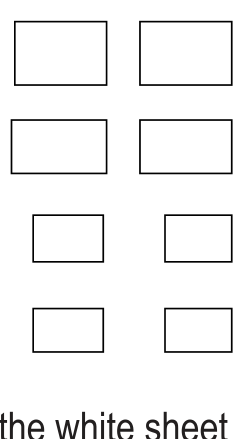
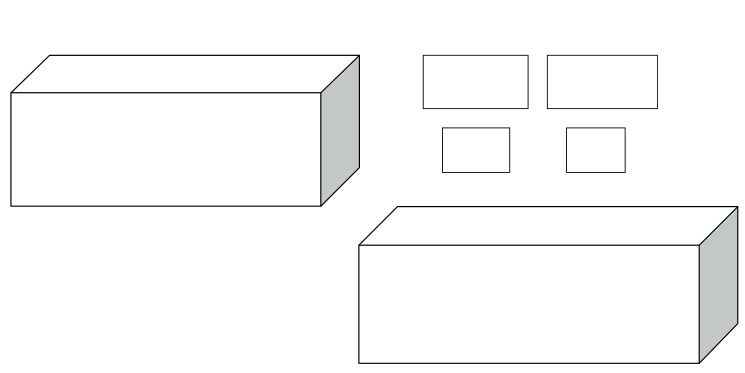
Step: 2:- Draw, and cut a cardboard and remaining blue color paper in rectangle shape and stick it. Take the white sheet rectangles and squares and cut it in the middle (it will look like a frame) and then using cello tape stick it together and stick cardboard at the bottom.
Step: 3:- Stick the transparent glass paper on the four sides. Draw and cut the waves shape in the blue color rectangles and square shape and do some decoration in it and paste it inside the fish tank.
Variation: We can use color paper instead of A4 sheet.
ORIGAMI
Activity: To develop their fine motor skills, eye hand coordination.
Goals: To improve fine motor skills, eye hand coordination.
Material required: Origami paper or white paper.
Introduction and Presentation: Children are encouraged to sit and each child is given a paper and directed to do paper folding related to the topic or theme carried out. E.g. cat, dog, horse, parrot etc.
Skills developed: Develops their eye-hand coordination, fine motor skills.
DAY 4 : ACTIVITY
PATTERN WITH SEA CREATURES
Activity: Patterning with sea creatures.
Goals: To develop their pre math skills, eye hand coordination, cognitive skills.
Content:
Vocabulary: Pattern, sequence etc.
Material required: Different shapes, size, color of objects depending on theme.
Introduction and Presentation: ● Place the cubby with objects on the table. ● Take two or one same object and place it on the table for example: 2 orange blocks or two same sized twigs. ● Keep another different object and place the same two orange blocks. ● Ask the children to follow the same sequence in an order.
Evaluation: Evaluate them by observing whether they are able to follow the sequence correctly.
Skills developed:
● Pre math skills.
● Eye hand – coordination.
● Cognitive skills.
PICKING SEA CREATURES USING TONGS
Goal: To improve their fine motor skills, cognitive skills, eye hand coordination
Material required: Tongs, sea creature toys, plates.
Preparation: Place the toy sea creatures, plates, and tongs on the table.
Presentation: Demonstrate to the children the way to hold the tongs and pick the toy sea creatures. Each child can hold the tongs and pick the toy sea creatures. They can also name the sea creature which they picked. They can also compare the sizes of sea creatures.
Vocabulary: Tongs, Compare, Transfer, Quantity
Assessment: Name some sea creatures. Name the sea creature which you have picked. Why they are called sea creatures?
Variation: They can use their non dominant hand to pick the toy sea creatures with tongs.
DAY 4: GYM
CRAB WALKING
Goal: To develop their gross motor skills.
Presentation: Encourage children to sit on the ground and ask them to place their hands behind and raise their bottom and more in backward position.
Skills developed: Develops their gross motor skills
BLOW FEATHERS
Goal: To develop their oral motor skills and eye hand coordination skills.
Presentation: ● Children are asked to blow bubbles or feathers. ● They can be asked to catch the bubble or feathers which flies higher. ● We can discuss about how it flies higher, shape of the bubbles, what is inside the bubbles to the children.
Skills developed: ● Oral motor skills ● Eye and hand coordination while catching the bubble or feather.
DAY 5: ART
CRAYON COLORING
Activity: Crayon coloring
Goals: To stimulate their creativity, fine motor skills, eye hand coordination, tripod grasp, prewriting skills.
Material required: Art sheet, different color crayons.
Introduction and Presentation: Encourage children to sit around the table and give each child one art sheet and they can choose their colors from the crayon tray. Guide them to hold crayon using thumb, pointer and middle finger (tripod grasp). Encourage them to color inside the picture.
Skills developed: Develop their eye hand coordination, fine motor skills, tripod grasp, pre writing skills, creativity.
BUTTER PAPER TRACING
Topic: Butter paper Tracing.
Goal: To develop their pre writings kills, cognitive skills of exploring cause and effect.
Material required: Plain sheets, butter papers, markers or a sketch pen, pencils
Presentation: Children are provided pencils and butter paper. In a plain sheet write alphabets or draw shapes or words or patterns using marker and give it to children. Ask the children to place butter paper on it and trace using pencil.
Skills Developed: Develops their fine motor skills, eye hand coordination.
[Figure: Sea Creature]
DAY 5 : ACTIVITY
SALTY STUFF
Activity: Hanging ice cube with a thread.
Goals: To help them to understand the concept of freezing point of water and salt lowers the freezing point of ice cube and melts it. The cold water re freezes in to ice cube.
Content:
Vocabulary: Freezing point, melt, re freezes, trap, and plop- slowly drop.
Material required: Ice cube, glass of cold water, sewing thread, and salt.
Introduction and Presentation:
• Gently plop ice cube in to the glass of water, carefully place one end of the thread across the top of the floating cube.
• Where the thread touches the ice, sprinkle salt over it with a spoon.
• Wait for about 30 seconds and carefully lift the string. The ice cube will also come along with the thread.
Observation: Observe the changes occurring after adding salt to the ice cube which is in the cold water.
Reason: Salt lowers the freezing point of water and it melts the ice a little. Then thread sinks in to the little pool of water which re freezes, trapping the thread.
Assessment:
• Why does ice melt?
• What happened to thread?
• How did ice cube get stuck to the thread?
• Why did it refreeze?
Skills development:
• Visual skills
• Cause and effect.
• Logical thinking.
• Language skills of receptive and expressive.
Conclusion:
Conclude by giving explanation of freezing point and melting point.
DAY 5 : GYM
IN THE POND ON THE BANK
Goals: To develop their gross motor skills and balancing skills, auditory skills.
Presentation: Make children stand in a circle and place hoola hoop in the middle or draw a circle and make them stand around the circle. When we say in the pond all have to jump inside the circle and when we say on the pond all have to jump outside the circle.
Skills developed: develops their gross motor skills, balancing skills, auditory skills.
# Sea Creature