CHAPTER 14 -AYURVEDA AND YOGA
This text was machine-transcribed from the printed book and may contain errors. Select the words and choose “Report a mistake”.
Introduction to Ayurveda
Ayurveda is translated as 'ayur' (life) and 'veda' (knowledge of or science). It is commonly known as the 'Science of Life'. Ayurveda is the natural healing system which originated in India over 5000 years ago. Ayurveda is a healing gift that has been given to us from the ancient enlightened Vedic culture. It is a system for maintaining optimal health through adherence to natural rhythms and cycles. Ayurveda employs a variety of natural means to bring harmony to the physiology including diet, herbs, spices, minerals, exercise, meditation, yoga, mental hygiene, sounds and smells.
The Rig Veda which is the oldest of the four Vedic scriptures, contains the main concepts regarding Ayurveda. It speaks about the three cosmic powers associated with Wind, Fire and Earth and how these primal forces relate to the three psycho-physiologic constitutions of man known as Vata, Pitta and Kapha.
From the five elements, the three doshas are derived—Vata, Pitta, and Kapha. Known as mind-body types, the doshas express particular patterns of energy—unique blends of physical, emotional, and mental characteristics.
In Ayurveda, health is defined as the dynamic state of balance between mind, body, and environment. It is possible for each of us to achieve and maintain a vibrant and joyful state of health by identifying our mind-body type and then creating a lifestyle that sustains and nurtures our unique nature.
Relationship of Yoga to Ayurveda
Yoga and Ayurveda are complementary as they are interrelated and interconnected; both springing from the same well of concern for human health and well-being. The scope of Ayurveda is more restricted to the body and, to a certain extent the mind while Yoga extends to the emotions and Spirit as well.
The human constitution depends on a particular configuration of humors (doshas) that influence the body's functioning and structures growth requirements. They are also known to influence emotional and psychological reactions. A healthy body demands a balance of factors; for instance, as external conditions change, dietary changes may be necessary to maintain good health. As Yoga affects the human constitution, balancing the entire system, physical, mental and emotional, the different Yoga techniques can be used to benefit different doshas.
Yogic nutrition
Sattvic Way of Eating
What is the best time to eat?
Ayurveda says that in our manipura region (navel region), we have what is known as digestive fire (jatara agni). This jatara agni is closely related to the sun. When the sun is out, it means your digestion is functioning at its optimum. Always aim to eat your meals between sunrise and sunset (not before or after).
Eat light, sattvic and pure foods for breakfast – fresh squeezed juice, fresh fruit etc.
Our jatara agni is at its strongest when the sun is at its highest in the sky (at approximately 1pm). It is best to eat our largest meal between 12pm and 2pm.
The evening meal should again be light and best eaten before the sun goes down for the day.
Presentation
Devote at least half an hour to eat and digest each meal (1.5 hours per day for eating is not much).
Remember that one fourth of your food is taken through the eye (sense of seeing) so serve your dish on a beautiful plate - you are worth your best cutlery! It is also a nice practice to set the table you are eating at decoratively.
Gratitude
Say a small prayer before eating your food. It doesn't have to be too elaborate, simply just say a small thank you for the food that you have which is about to become part of your body.
Fragrance of the food
Bring your face toward the food and inhale the fragrance of the food. Enjoy the different aromas of the food. Allow this sense to be filled.
Touch the food
Touch the food with both hands and all fingers, feel the textures.
All five fingers have minor chakras. Therefore, when we touch the food, we send a signal to our digestive system that it is time to ingest food.
Eating the food
Let the first morsel be a sacred act to yourself.
Chew the food 32 times – or until food is pulp in the mouth. Do this for two reasons. The first is, when you chew the food slowly, your system has time to understand that enough food has been eaten. You won't overeat when you chew the food slowly. The second reason is, when you chew the food well, the digestive process begins in the mouth itself where the enzymes in the saliva can start to break down the food. When the food reaches your stomach, it does not have to work so hard to breakdown all the food. Breaking down food in the stomach takes more energy than running around your street block. That is why you feel very tired after eating food.
Have positivity when you are eating and digesting your food
Leave some room
You should only fill three quarters of your stomach.
Leave the final quarter for some water and air.
Small sips of warm water can be taken during meal. Never drink cold drinks during a meal as they can weaken your digestive fire.
Wait a complete half an hour after your meal, then you can drink a full glass of warm water if it is required.
Sip water throughout the day. It lubricates the system and breaks down what is known as ama which is residue of your digestion.
Sit in vajrasana to help digestion
Sit in the vajrasana position (sitting on your heels, knees and feet together) for 3 - 5 minutes after a meal. This position can help the food to digest as a lot of blood will be brought to that area.
It helps to remove gas and prevent bloating. Do not suppress the urge to belch or pass gas, as that is what the posture is designed to do.
The posture helps you to feel light and energized after the meal.
Never lie down or sleep after a meal. If you want to gain weight, then this is a 100% guaranteed way to put on weight; sleeping after food
Ayurvedic Constitutional Test
For each variable on the left side of the box, select the description that bests fit you. Tally down the number of times you chose a description under either vata, pitta or kapha. That will tell your dosha.
Body Structure and Appearance
| Variable | Vata | Pitta | Kapha |
|---|---|---|---|
| Frame | Tall or short, thin; poorly developed physique | Medium; moderately developed physique | Stout, stocky, short, big; well-developed physique |
| Weight | Low, hard to hold weight, prominent veins and bones | Moderate, good muscles | Heavy, tends towards obesity |
| Complexi on | Dull, brown, darkish | Red, ruddy, flushed, glowing | White, pale |
| Skin texture & Temperat ure | Thin, dry, cold, rough, cracked, prominent veins | Warm, moist, pink, with moles, freckles, acne | Thick, white, moist, cold, soft, smooth |
| Hair | Scanty, course, dry, brown, slightly wavy | Moderate, fine, soft, early gray or bald | Abundant, oily, thick, very wavy, lustrous |
| Head | Small, thin, long, unsteady | Moderate | Large, stocky, steady |
| Forehead | Small, wrinkled | Moderate, with folds | Large, broad |
| Face | Thin, small, long, wrinkled, dusky, dull | Moderate, ruddy, sharp contours | Large, round, fat, white or pale, soft contours |
| Neck | Thin, long | Medium | Large, thick |
| Eyebrows | Small, thin, unsteady | Moderate, fine | Thick, bushy, many hairs |
| Eyelashe s | Small, dry, firm | Small, thin, fine | Large, thick, oily, firm |
| Eyes | Small, dry, thin, brown, dull, unsteady | Medium, thin, red (inflamed easily) green, piercing | Wide, prominent, thick, oily, white, attractive |
| Nose | Thin, small, long, dry, crooked | Medium | Thick, big, firm, oily |
| Lips | Thin, small, darkish, dry, unsteady | Medium, soft, red | Thick, large, oily, smooth, firm |
| Teeth & Gums | Thin, dry, scaly, rough, crooked, receding gums | Medium, soft, pink, gums bleed easily | Large, thick, soft, pink, oily |
|---|---|---|---|
| Shoulders | Thin, small, flat, hunched | Medium | Broad, thick, firm, |
| Chest | Thin, small, narrow, poorly developed | Medium | Broad, large, well or overly developed |
| Arms | Thin, overly small or long, poorly developed | Medium | Large, thick, round, well developed |
| Hands | Small, thin, dry, cold, rough, fissured, unsteady | Medium, warm, pink | Large, thick, oily, cool, firm |
| Thighs | Thin, narrow | Medium | Well-developed, round, fat |
| Legs | Thin, excessively long or short, prominent knees | Medium | Large, stocky |
| Calves | Small, hard, tight | Loose, soft | Shapely, firm |
| Feet | Small, thin, long, dry, rough, fissured, unsteady | Medium, soft, pink | Large, thick, hard, firm |
| Joints | Small, thin, dry, unsteady, cracking | Medium, soft, loose | Large, thick, well built |
| Nails | Small, thin, dry, rough, fissured, cracked, darkish | Medium, soft, pink | Large, thick, smooth, white, firm, oily |
Waste Materials / Metabolism
| Variable | Vata | Pitta | Kapha |
|---|---|---|---|
| Urine | Scanty, difficult, colourless | Profuse, yellow, red, burning | Moderate, whitish, milky |
| Feces | Scanty, dry, hard, difficult or painful, gas, constipation | Abundant, loose, yellowish, diarrhea, with burning sensation | Moderate, solid, sometimes pale in color, mucus in stool |
| Sweat/Body Odor | Scanty, no smell | Profuse, hot, strong smell | Moderate, cold, pleasant smell |
| Appetite | Variable, erratic | Strong, sharp | Constant, low |
| Taste preferences | Prefers sweet, sour or salty food, cooked with oil and spiced | Prefers sweet, bitter or astringent food, raw, lightly cooked, without spice | Prefers pungent, bitter, astringent food, cooked with spices but not oil |
| Circulation | Poor, variable, erratic | Good, warm | Good, warm, slow, steady |
General Characteristics
| Variable | Vata | Pitta | Kapha |
|---|
| Activity | Quick, fast, unsteady, erratic, hyperactivity | Medium, motivated, purposeful, goal seeking | Slow, steady, stately, strong, good |
|---|---|---|---|
| Strength/ endurance | Low, poor endurance, starts and stops quickly | Medium, intolerant of heat | Endurance, but slow in starting |
| Sexual nature | Variable, erratic, deviant, strong desire but slow energy, few children | Moderate, passionate, quarrelsome, dominating | Low but constant sexual desire, good sexual energy, devoted, many children |
| Sensitivity | Fear of cold, wind, sensitive to dryness | Fear of heat, dislike of sun, fire | Fear of cold, damp, likes wind and sun |
| Resistance to disease | Poor, variable, weak immune system | Medium, prone to infection | Good, prone to congestive disorders |
| Disease tendency | Nervous system diseases, pain, arthritis, mental disorder | Fevers, infections, inflammatory diseases | Respiratory system diseases, mucus, edema |
| Reaction to medications | Quick, low dosage needed, unexpected side effects or nervous reactions | Medium, average dosage | Slow, high dosage required, effects slow to manifest |
| Pulse | Thready, rapid, superficial, irregular, weak/like a snake | Wiry, bounding, moderate/like a frog | Deep, slow, steady, deep, rolling, slippery/ like a swan |
Mental Factors and Expression
| Variable | Vata | Pitta | Kapha |
|---|---|---|---|
| Voice | Low, weak, hoarse | High pitch, sharp, moderate, good | Pleasant, deep, good tone |
| Speech | Quick, inconsistent, erratic, talkative | Intelligent, penetrating, critical | Slow, steady, dull |
| Mental Nature | Quick, adaptable, indecisive | Intelligent, penetrating, critical | Slow, steady, dull |
| Memory | Poor, notices things easily but easily forgets | Sharp, clear | Slow to take notice but will not forget |
| Finances | Earns and spend easily | Spends on specific goals, causes or projects | Holds on to what one earns, particularly property |
| Emotional tendencies | Fearful, anxious, nervous | Angry, irritable, contentious | Calm, content, attached, sentimental |
| Neurotic tendencies | Hysteria, trembling, anxiety attacks | Extreme temper, rages, tantrums | Depression, unresponsiveness, sorrow |
| Faith | Erratic, changeable,
rebel | Determined, fanatic,
leader | Constant, loyal,
conservative |
| --- | --- | --- | --- |
| Sleep | Light, tends towards insomnia | Moderate, may wake up but will fall asleep again | Heavy, difficulty in waking up | | Dreams | Flying, moving, restlessness, nightmares | Colorful, passionate, conflict | Romantic, sentimental, watery, few dreams | | Habits | Likes speed, traveling, parks, plays, jokes, stories, trivia, artistic activities, dancing | Likes competitive sports, debates, politics, hunting, research | Likes water, sailing, flowers, cosmetics, business ventures, cooking |
TOTAL Vata .................... Pitta .................... Kapha ............
Putting Ayurveda into Practice
Waking up
Rise Early (before 4:30am)
Declare completion
Pancha Kriyas-Eye wash, Jala Neti (Sutra Neti for advanced yogis), natural evacuation & enema,
Drink neem juice or lemon juice on empty stomach
Thaila Kriya – Oil Pulling
Cleaning Tongue and Brushing Teeth
Oil Massage
Bathing - Be inside your boundary when you bathe. Let your mind be where the
body is with full awareness of the sensations
Moving - Practice of Hatha Yoga
Being mindful with every movement throughout your day
Mindful Eating - Practice ‘Mindful Eating’ at every meal
Sit in vajrasana after meal
| Vata
(require oils that are
heating and lubricative) | Pitta
(require oils that
are cooling) | Kapha
(require oils that are heating
and invigorating) |
| --- | --- | --- | | • Sesame • Almond • Jojoba • Wheat germ | • Coconut • Sandalwood • Almond • Sunflower | • Sunflower • Sesame • Safflower • Mustard • Corn |
APPENDIX I - INSTRUCTIONS FOR BASIC ASANAS
Adho Mukha Svanasana (downward dog)
Sit in vajrasana.
Come up on the hands and knees, placing them about shoulder width apart. Move onto the hands and feet, and lift the hips up and to the back, lowering your heels close to the mat. As you lift the hips, draw the navel into the spine. Lift the hips as high as you can and let the head drop down between the arms. Neck is relaxed between the arms and shoulder blades, gazing at the feet.
Stay in this posture, breathing deeply and slowly; keep the arms and shoulders strong, and the neck relaxed.
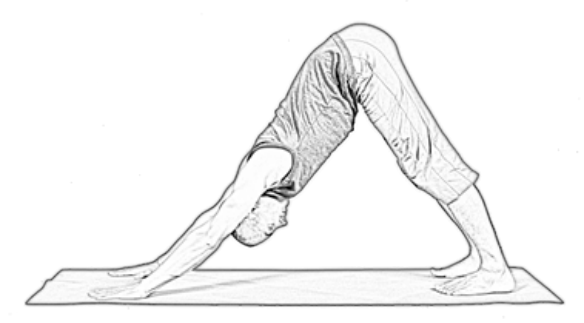
To release the posture, simply drop the knees on the ground, and sit back on the heels in shashankasana, point the toes, bring the forehead to the ground and relax the arms.
Ardha Chandrasana - Ardha Chakrasana (Standing Half Wheel Pose)
Stand in Tadasana with the feet hip-width apart.
Inhale, raise the right arm overhead with the arm close to the ear, palm facing left.
Lift the spine by extending arm and fingers upwards. This creates space in lower vertebra to optimize the side bend.
Exhale, lean over to the left side, keeping the right arm close to the head.
Keep the left arm close to the body, relaxed.
Push the hips gently sideways to the right.
Be sure to breathe while holding in the posture.
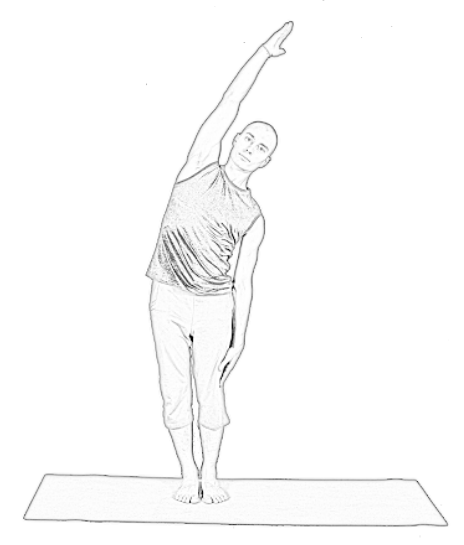
On the next inhale, come up to the upright position, lift the right arm straight overhead.
Exhale, sweep the right arm down to the side,
Come back to Tadasana.
On the next Inhale, repeat on the other side.
Do this 2 times on each side.
Ardh Matsyendrasana (Half Lord of the Fishes Pose)
From dandasana, slide the left leg under the right leg. Bring the left foot next to the right hip. Now cross the right leg over the left thigh, ground the right foot to the mat, right knee is up and close to the chest. Breathe in this posture with the spine straight, looking forward.
Inhale, lift the left arm up.
Exhale as you twist upper body to the right bringing the inside of left elbow across the front of the right knee and left forearm rests on lateral right thigh. Reach the right hand behind your buttocks and place hand on the ground for support. Alternate option is bring right
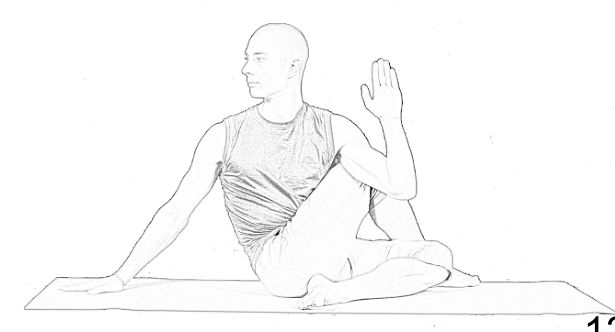
arm around your back reaching for the left hip bone. Sit upright, look over the right shoulder, eyes looking at a spot as far around to the back and left as you can.
Breathe deeply in the posture, lifting the spine on each inhale, and deepening the twist on each exhale, looking farther over the right shoulder. Stay in Ardh Matsyendrasana for 6 breaths or more. Let the breaths be deep and slow, pressing down into the abdomen.
As you inhale, release the left arm, the torso, and then the right arm, and turn chest to front of mat. Stay with the spine straight for a few breaths, and then change the leg position, with the right under the left.
Repeat the above steps, now twisting to your left.
Bhujangasana (Cobra)
Lie down on the stomach. Place hands beneath the shoulders, elbows close to ribs, point the toes. Place forehead or chin on the ground.
Inhale, gently raising the chin and chest using the muscles of the back. You may push down on the hands and gently lift the abdomen off the ground if you wish to. Keep pelvic bone grounded.
Exhale, slowly lower the chest back down and the forehead onto the ground
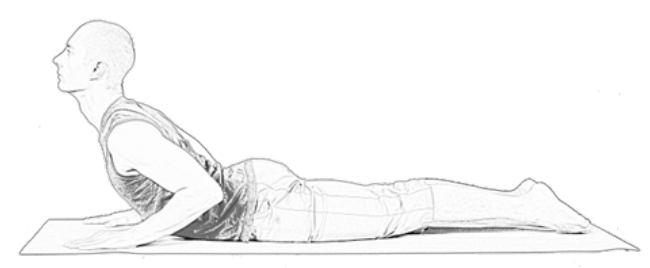
Repeat this movement as recommended. Finally rest in makarasana.
Dwipada Peetam (bridge)
Lie on the back, knees facing up, feet on the ground. Feet and knees are hip width apart. Let fingertips touch the back of the heels. Arms are beside body.
As you Inhale, press the upper arms and feet onto the mat as you lift the tail bone followed by the lower back, middle and upper back off the mat. Push the hips up as much as possible till the thighs are almost parallel to the floor.
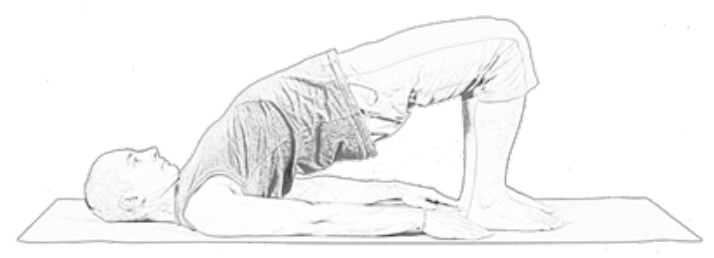
Lift the chin slightly away from the chest to release excess tension in the neck area.
As you exhale, roll your spine down; lower the upper back, middle, lower back and tailbone down in that order to the ground.
Marjaryasana-Chakravakasana
Come onto the hands and knees. Note:Hands are directly below the shoulders. Point the toes.
Inhale, lift your chin and tailbone, allowing chest bone to face up. . Exhale, tuck the chin and tailbone, lift and round the upper back by extending the arms and lightly pressing into the mat with the hands. At the same time, gently pull the abdomen inwards to the
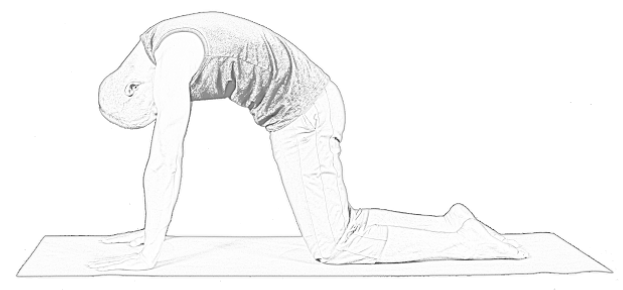
spine.
Repeat the movement a few times with the breath.
Paschimottanasana
Sit in Dandasana.
Inhale, raise and extend the arms overhead feeling the lift in the spine from the hips and ribs.
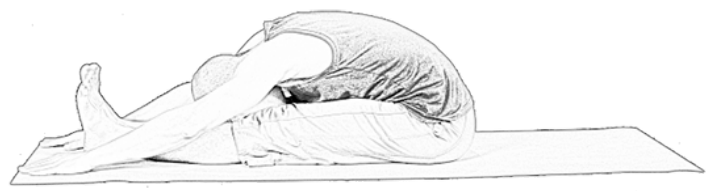
As you exhale, bend forward from the hips, allowing the knees to bend as needed. Hands are comfortably resting on shin or ankles.
Rest the body in this inclined position for five breaths .
Then, inhale as you raise the body and arms.
Exhale, sweep arms down by the side.
Shashankasana
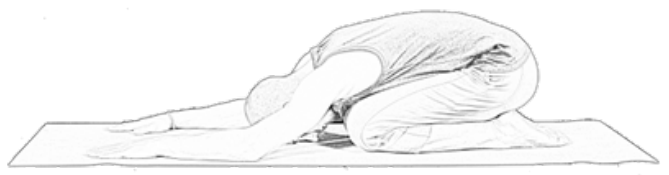
From a kneeling posture, sit back on the heels, bringing the forehead to the ground and the arms extended in front, resting on the ground. Stay in this posture, breathing deeply and slowly with awareness.
Shivasana
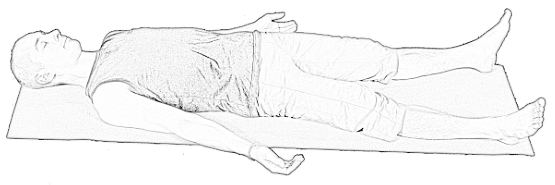
Rest on the back, legs comfortably apart, arms by the sides, palms facing up, neck and head aligned. Consciously, relax the entire body from head to toe. Let the breath be natural. Be in a deep restful awareness. After a few minutes, move the body, gently extending the legs and arms, roll onto the side, and come back to a sitting posture.
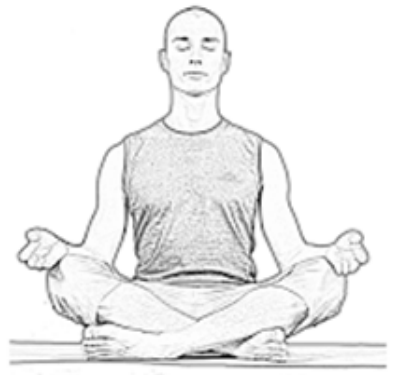
Sukhasana (svastikasana)
Sit comfortably cross-legged on the ground, with the feet below the knees, with either right or left leg in front. Hands in chin mudra on your knees. Spine straight, shoulders, neck and face relaxed.
Surya Namaskar
Stand with the feet slightly apart. Body weight balanced equally on both the feet. Spine straight, shoulders relaxed, and the gaze steady. Take a deep breath...inhale...exhale...
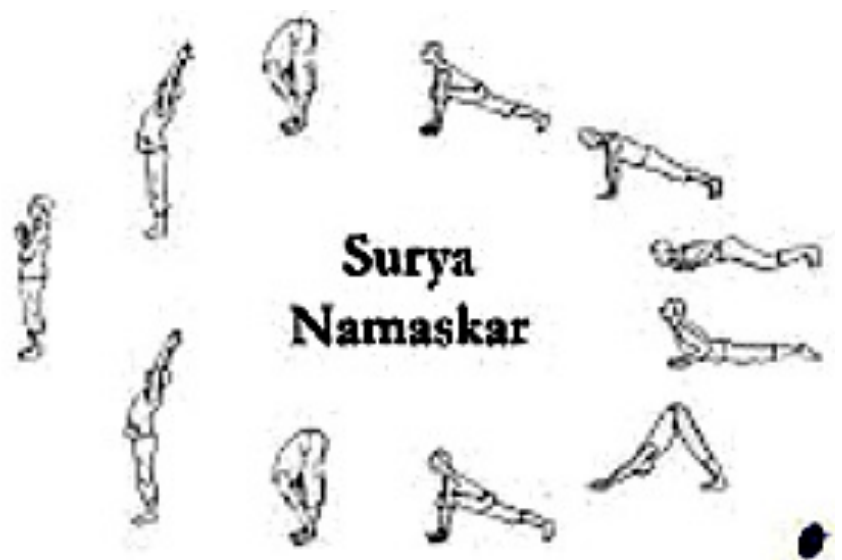
1. Bring the hands together in prayer position in front of the chest. (chant the mantra)
2. Inhale as you raise the arms up with palms together. Raise the chin and look up, opening the chest bone to the sky in utthita Tadasana.
3. Exhale as you bend forward from the hips, palms passing in front of the chest as you bring the hands down to the side of the feet in uttanasana. Bend knees as needed. Drop the head between the arms.
4. Step the right foot back, drop the knee on the ground if needed, and lift the chin and chest up as you inhale into ashwa sanchalasana (lunge).
5. Step the left foot back, into the plank position or dandasana with, head, back and legs in a straight line. Shoulders are directly above the wrists.
6. As you exhale, lower the knees, chest and chin to the ground in ashtanga namaskar.
7. Lower the body down, point toes and inhale as you lift chest and chin into bhujangasana, using the hands as a support.
8. As you exhale, pull abdomen in as you lift the hips up and to the back into Adho Mukha Svanasana. Keep the arms straight, head and neck relaxed between the arms, lower the heels to the ground as comfortably as you can.
9. Looking between the hands, step the left foot forward between the hands. Lower the right knee down if needed. Lift the chin and chest up as you inhale in Ashwa Sanchalasana
10. Step your right foot forward and move into uttanasana, deep forward bend as you exhale. Keep your head relaxed between your arms. Bend the knees if needed.
11. Inhale as you come up, raising the arms overhead with palms together in utthita tadanasana. Lift the chest bone and spine as you look up.
12. Exhale as you lower the arms, bringing both the palms together in prayer position in front of the heart centre.
This completes one repetition of Surya Namaskar. Repeat the same sequence, alternating the movement of the legs (2^nd repetition: step the left foot back, then the right foot back into plank; and from Adho Mukha Svanasana, the right foot forward followed by the left into the deep forward bend).
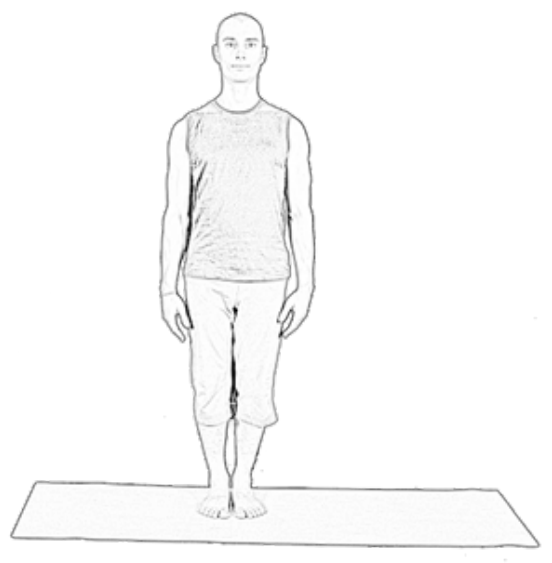
Tadasana (Mountain Pose)
Stand straight with the feet comfortably apart, toes point forward, arms by the side.
Lift the toes off the ground, then slowly bring them down, spreading them gently. Inhale and feel the spine lift, chest open, shoulders broad and relaxed, neck and head straight, without tension in the jaw. Gaze forward.
Parivritta Trikonasana (twist) (Modified)
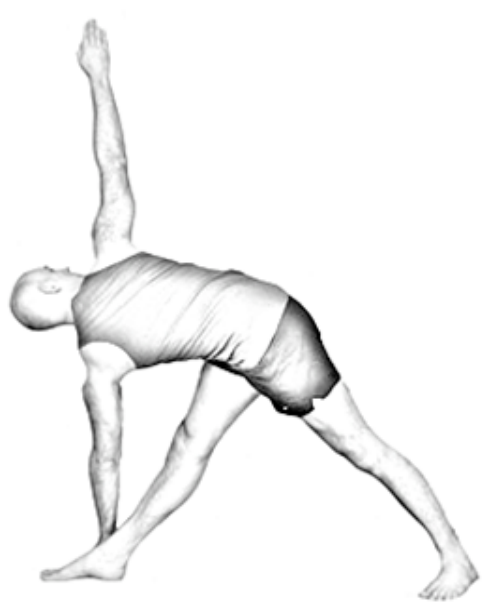
Stand in Tadasana
Take a step sideways, keeping a comfortable distance between the feet
Keep the feet parallel and the hips facing forward
Inhale, lift the arms parallel to the ground
Exhale as you bring the right hand next to the left foot, arms extended, bend left knee if needed
Stay in the posture for up to 6 deep breaths.
Inhale, straighten the body, keeping the arms parallel to the ground
Exhale, lower the arms by the side
Repeat on the other side
Utthita Trikonasana
Stand in Tadasana facing the long side of yoga mat.
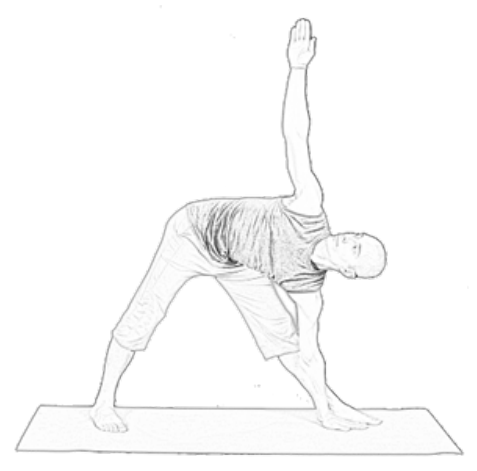
Take a step to the side, keeping a comfortable distance between the feet.
Turn the left foot 90 degrees to face front of mat and the right foot at an angle in the same direction, for balance.
Keep the heels in the same line and the hips and chest facing long side of mat.
Inhale, lift the arms parallel to the ground
Exhale as you lean body over the extended left leg (note - do not hyperextend left knee).
Bring the left hand down to the ground on the inner portion of the left foot, or anywhere on the left leg where it feels comfortable. Right arm extends into air. Body is in a side bending position.
Release the tension in the neck; allow the neck to drop a little and turn the face to look up at the extended right arm or look down at the left foot if not comfortable looking up.
Stay in the posture for up to 6 deep breaths
Inhale, stand back up, keeping the arms open parallel to the ground
Exhale, lower the arms by the side.
Turn the feet back to their original position, facing long side of the mat.
Repeat the same instructions, this time with the right foot turn at 90 degrees and the body leaning over to the right.
When finished, you may step the feet back to Tadasana
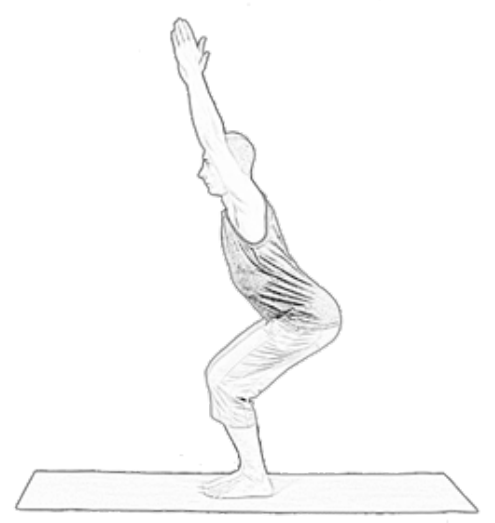
Utkatasana
Stand in Tadasana with the feet shoulder width apart
Inhale as you raise the arms overhead; you may join the palms and look up
Exhale as you bend the legs, pushing the buttocks to the back to come down to a deep squat, keeping the spine straight, arms extended upwards. Try to keep the knees over the ankles or only slightly in front.
You should be able to see the toes if you look down at the feet. If not, move the buttocks more to the back.so as to feel you are sitting back.
Stay in the posture for up to 5 breaths
Inhale as you push down with the feet and stand up with arms overhead.
Exhale as you sweep the arms down by the sides into Tadasana
Uttanasana
Stand in Tadasana.
On inhale- place hands on hips and bring elbows slightly back.
On exhale - Bend forward from the hips. As you bend forward, lengthen the torso/chest by drawing the chest out from the groins to create space to enable you to move more fully into the forward bend. Bring the palms or fingertips to the front or side of the feet or hold the back of the ankles. Press heels firmly into mat as you lift the hips up, bending knees if needed. Head hangs without tension.
Hold the posture for 3-5 breaths. With each inhale, lift and extend torso slightly with the breath. With each exhale, bend more deeply into the posture.
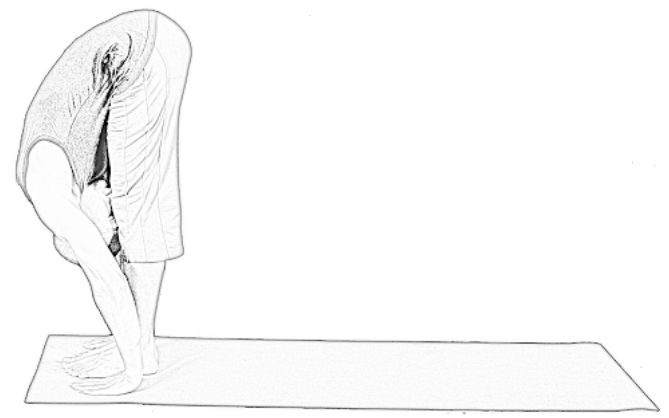
To come up, bring hands to hips, and lift the chin. Extend torso length and come up on the inhale back to Tadasana.
Vajrasana
Kneel down. Sit on heels, feet relaxed on the ground, toes pointing back. Keep spine, neck and head straight. Relax in this posture. Heels are apart and great toes touching or almost touching.
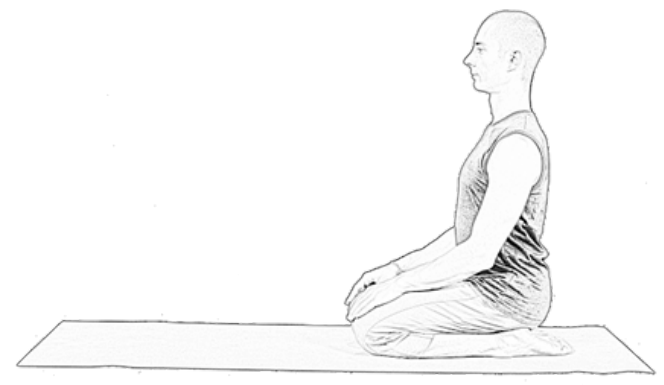
Dynamic Vajrasana
Start in vajrasana
On inhale, rise up on the knees, sweeping the arms overhead. Lift the chin slightly and extend the spine upwards. Exhaling, bend the body forward, sit back on heels, placing the forehead on the ground, and simultaneously sweep the arms down beside you. You may relax the arms by the side or sweep the arms up behind the back, raising them as high as you can comfortably.
Inhaling, sweep the arms forward and above the head as you rise up on the knees.
Exhale, sit down on the heels and relax the arms down by the side into vajrasana
Repeat a few times.
Breath variation
Stay in any of the postures for a few breaths, either in vajrasana, with arms overhead or in balasana.
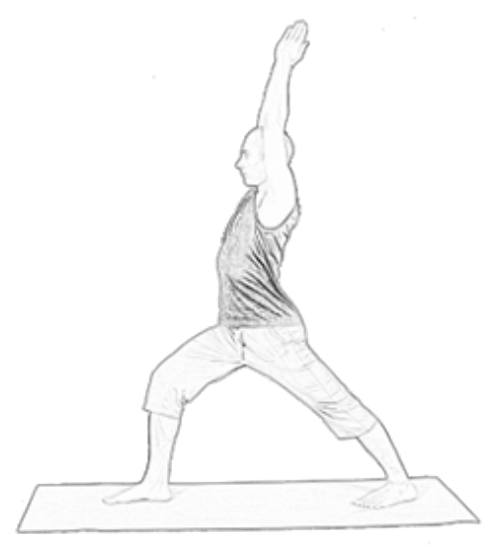
Virabhadrasana I (Warrior I Pose)
Stand in Tadasana at the back of the mat.
Take a wide step backward with the right foot (approximately 3/4 of your mat).
Bend left knee, keeping ankle behind or on top of knee joint.
Note: The left foot should be facing forward and the right foot should be at about 45 degree angle facing forward also.
Pivot your hips and chest to face forward. Bend the left leg. Note: make sure the forward right knee is not overextending beyond the foot.
On inhale, raise the arms overhead lifting the spine straight; brace abdominals, strong legs and weight evenly distributed on both feet.
Gaze straight forward or upwards toward hands. Feel the strength, courage and determination. Let the body language be that of a spiritual warrior.
Stay in the posture for a few deep breaths.
On exhale, step forward with right leg as you lower the arms down to the sides.
Repeat on the other side.
Note: make sure the forward knee is not extending beyond the ankle.
Virabhadrasana II (Warrior II Pose)
Stand in Tadasana at front of the mat.
Take a wide step back with the right foot (approximately 3/4 of your mat). The hips and body are facing sideways. Right leg is extended straight, right foot firmly grounded.
Keep left knee bent with knee above ankle or behind ankle.
Note: The left foot should be facing forward, the right foot facing 45 degrees to the side of mat.
As you inhale, raise the arms to shoulder height. Turn face to gaze at left hand.
Brace abdominals, keep the spine straight, legs strong, weight evenly distributed on both feet.
Feel the lifting of the spine as you ground down.
Note: make sure the forward knee is not overextending
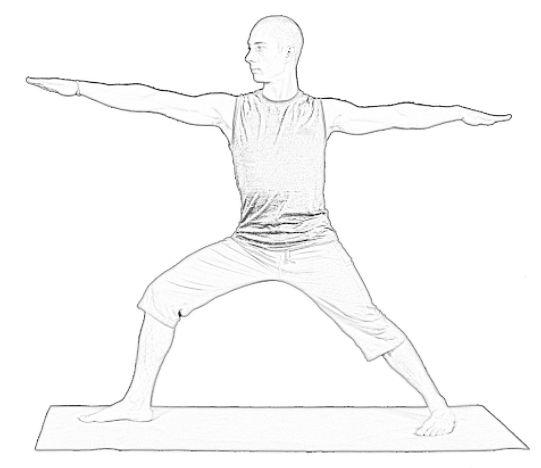
beyond the foot.
Feel the attitude of strength, courage and determination. Let your body language be that of a spiritual warrior.
Stay in the posture for a few deep breaths.
Exhale, sweep the arms down, then step forward, and repeat on the other side.
Virabhadrasana III (Warrior Pose)
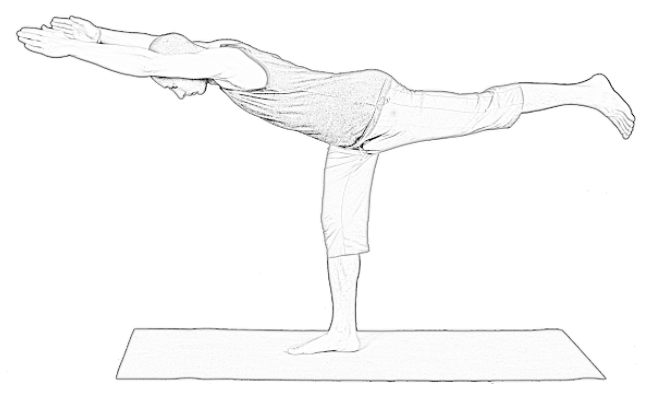
Stand in Tadasana. Move into Virabhadrasana I.
Slowly lean the upper body forward, bringing the weight onto the front leg.
Keep extending the arms overhead as you slowly lift the back leg off the ground. Extend the front leg without locking the knee, and bring the arms, body and back leg parallel to the ground.
Stay in the posture breathing slowly.
Exhale as you bring the back leg down and lower the arms to stand in Tadasana.
Center for few seconds. then move into Virabhadrasana 1 and repeat asana with other side.
Vrksasana (Tree Pose)
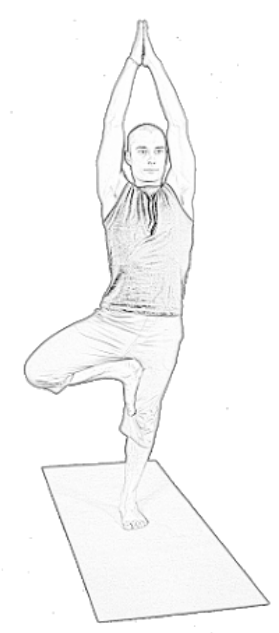
Stand in Tadasana. Shift your weight on to the right leg and press the sole of left foot onto the inner edge of the right thigh with toes pointing downward; knee is opened to the side. Right leg should be strong and hips facing forward.
Focus eyes on a spot some 10 feet away. When eyes are still, mind and body follows.
Place hands in anjali mudra (prayer pose) and slowly rise above your head with full awareness.
Inhale and exhale for a few deep breaths.
Release and repeat on the other side. .
APPENDIX 2 - CONTRAINDICATIONS TO COMMON ASANAS
Adho Mukha Svanasana (Downward Facing Dog)
• Carpal Tunnel Syndrome • Diarrhea • Pregnancy: Do not do this pose in late-term. • High Blood Pressure or Headache: Support your head on a bolster or block, ears level between the arms. • Low blood pressure, symptomatic with body position changes • Eye problems like glaucoma, retina issues
Baddha Konasana (Cobbler’s Pose)
• Groin Injury • Knee Injury
Balasana (Child’s Pose)
• Diarrhea • Pregnancy • Knee Injury: Avoid Child’s Pose unless you have the supervision of an experienced teacher.
Bhujangasana (Cobra Pose)
• Back Injury
• Carpal Tunnel Syndrome
• Headache
• Pregnancy
Dancing Nataraja
• Low Blood Pressure • Back Injury
Dandasana (Plank Pose)
• Carpal Tunnel Syndrome
Dhanurasana (Bow Pose)
• High Blood Pressure
• Low Blood Pressure
• Migraine
• Insomnia
• Serious Lower-Back Injury
• Serious Neck Injury
Setu Bandha Sarvangasana (Bridge Pose)
• Neck injury
Garudasana (Eagle Pose)
• Knee injury
Halasana (Plow Pose)
• Diarrhea • Menstruation • Neck Injury • Asthma & High Blood Pressure: Practice Plow Pose with the legs supported on props. • Pregnancy
Inversions
• Neck Problems
• Eye Problems
• Previous Stroke
• High Blood Pressure
• Heart Problems
• Sinus Problems
• Epilepsy
• Glaucoma (can go blind!)
Janu Sirsasana (Head to Knee Pose)
• Asthma • Diarrhea • Knee injury: Don't flex the injured knee completely and support it on a folded blanket.
Matsyasana (Fish Pose)
• High Blood Pressure
• Low Blood Pressure
• Migraine
• Insomnia
• Serious Lower-Back
• Serious Neck Injury
Navasana (Boat Pose)
• Asthma
• Diarrhea
• Headache
• Heart Problems
• Insomnia
• Low Blood Pressure • Menstruation • Pregnancy • Neck injury: Sit with your back near a wall to perform this pose. As you tilt your torso back rest the back of your head on the wall.
Paschimottanasana (Seated Forward Bend)
• Asthma • Diarrhea • Back injury: Only perform this pose under the supervision of an experienced teacher.
Pursvottanasana (Backward Plank Pose)
• Wrist Injury • Neck Injury
Shalabasana (Locust Pose)
• Headache • Serious Back Injury • Neck Injury: Keep head in a neutral position by looking down at the floor; might also support the forehead on a thickly folded blanket.
Salamba Sarvangasana (Shoulder Stand)
• Diarrhea
• Headache
• High Blood Pressure
• Neck Injury
• Pregnancy
Sirsasana (Headstand)
• Back Injury • Shoulder Injury • Neck Injury • Headache • Heart Condition • High Blood Pressure • Low Blood Pressure: Don’t start practice with this pose. • Menstruation • Pregnancy • Eye problems
Surya Namaskar - Sun Salutation
• Neck & Shoulder Injury: Avoid beginning pose. • Neck Injury: Look down at the floor instead straight ahead in lunge posture. • Knee Injury: Avoid lunge posture.
Tadasana (Mountain Pose)
• Headache
• Insomnia
• Low Blood Pressure
Trikonasana (Triangle Pose)
• Diarrhea • Headache • Heart Condition: Practice against a wall. Keep the top arm on the hip. • High Blood Pressure: Turn the head to gaze downward in the final pose. • Neck Problems: Don't turn your head to look upward; continue looking straight ahead and keep both sides of the neck evenly long. • Back or Spine Injury: Perform this pose only with the supervision of an experienced teacher or avoid it altogether. • Low Blood Pressure • Migraine • Insomnia
Parivrtta Trikonasana (Revolved Triangle)
• Back or Spine Injury. Perform this pose only with the supervision of an experienced teacher or avoid it altogether. • Low Blood Pressure • Migraine • Diarrhea • Headache • Insomnia
Upavistha Konasana (Seated Forward Bend with Legs Spread)
• Lower-Back Problems: Avoid the full forward bend
Shivasana (equivalent to corpse pose or shavasana)
• Back Injury or Discomfort: Do this pose with your knees bent and your feet on the floor, hip-distance apart; either bind the thighs parallel to each other with a strap (taking care not to position the heels too close to the buttocks) or support the bent knees on a bolster. • Pregnancy
Urdhva Hastasana (Upward Salute)
• Neck Injury • Shoulder Injury
Urdhva Mukha Svanasana (Upward Facing Dog)
• Back Injury
• Carpal Tunnel Syndrome
• Headache
• Pregnancy
Ustrasana (Camel Pose)
• High Blood Pressure
• Low Blood Pressure
• Migraine
• Insomnia
• Serious Low-Back Injury
• Serious Neck Injury
Utkatasana (Chair Pose)
• Headache
• Insomnia
• Low Blood Pressure
Uttanasana (Standing Forward Bend)
• Lower-Back Injury • Neck Injuries
Virabhadrasana I (Warrior I-arms above head)
• High Blood Pressure • Heart Problems • Shoulder Problems: Keep raised arms parallel (or slightly wider than parallel) to each other. • Neck Problems: Keep head in a neutral position and do not look up at the hands.
Virabhadrasana II (Warrior II-arms out parallel to floor)
• Diarrhea • High Blood Pressure • Neck Problems: Don't turn your head to look over the front hand; continue to look straight ahead with both sides of the neck lengthened evenly.
Virabhadrasana III (Warrior III-balancing pose)
• High Blood Pressure
Vrksasana (Tree Pose)
• Headache
• Insomnia
• Low Blood Pressure
• High Blood Pressure: Don't hold arms overhead for long time.
Αβουτ τηε Φουνδερ
Paramahamsa Nithyananda is a global leader in the science of brain coherence,
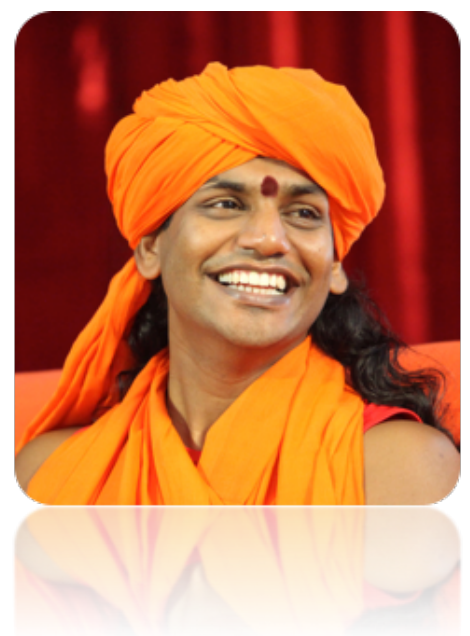
meditation, healing and yoga. He is the most-watched spiritual teacher on YouTube.com with more than 17 million views, and the author of more than 300 books published in 27 global languages. Nithyananda has been named among the worlds top 100 most spiritually influential personalities of 2012 by Watkin's Mind, Body, Spirit magazine, London's oldest and largest independent esoteric bookshop.
NITHYANANDA SANGHA SERVICES AT A GLANCE
• Yoga, meditation and spiritual counseling centers and camps touching over 15 million people in 150 countries
• Over 9000 ordained spiritual healers healing 20,000 people globally every day
• Over 1000 ordained teachers guiding thousands in yoga, meditation, spiritual sciences and life solutions
• Live online morning satsang by Paramahamsa Nithyananda via live streaming and video conferencing, viewed in thousands of places in over 30 countries every day
• Annadaan -10,000 free meals distributed every day at ashrams, schools, medical camps and to the needy
• Weekly medical camps offering conventional and alternative medical care, oral health, eye surgeries, prosthetics, etc. – including free consultation, medicines and follow-up.
• Over a dozen Vedic temples and ashrams worldwide housing 3720 energized deities, including some of the tallest deities in the world.
• Free meditation programs in prisons and schools
• Nithyananda Lakshmi, a non-profit micro-financing scheme for rural entrepreneurs
• Nithyananda Vidyalayas - Schools blending modern education with the Vedic system of learning
• Support for schools in rural areas, including school uniforms, books, stationery and infrastructure
• Over 300 books in more than 20 languages
• Over 2000 free talks by Nithyananda on www.YouTube.com/lifeblissfoundation crossing 16 million views
• Over 230 e-books and 600 meditation techniques and solutions available free online
• Nithyananda Meditation Academy offering courses in meditation, spiritual sciences and life skills being established across the world
• Breakthrough research on mystical yogic sciences like kundalini awakening, levitation, teleportation and yogic age-reversal
• The Nithyananda Order - Hundreds of aspirants from various religions and walks of life receiving intensive spiritual training and sannyas
• Ananda Yogam – free one-year residential program for youth aged 18-35 years, offering vocational and spiritual training for excellence and personal growth • A dynamic volunteer force, including over 1000 full-time resident volunteers, offering services such as disaster relief, counseling, initiatives for youth and women's empowerment
• Nithya Kriyas and Samyamas - 108 authentic yogic solutions for physical and mental ailments
• Holistic lifestyle aids including devotional music, energized jewelry, sacred arts and sculpture, and natural siddha medicines
Inner Awakening
Inner Awakening is a unique and life transforming 21-day yoga and meditation retreat specially designed and conducted by a rare living incarnation Paramahamsa Nithyananda. The program is centered on awakening the ultimate inner potential energy within each of us, the Kundalini energy, and making available the innumerable practical benefits in various dimensions of our life like health, wealth, relationships, education, career, etc.
The Awakening of the Kundalini energy by the power of initiation by a rare living incarnation in just 21 days gives you access to a whole new realm of living. The program works on all the basic dimensions of your life, allowing you to experience deep healing at the physical, mental and emotional levels. You gain a state of deep inner peace coupled with tremendous productivity and creativity. Becoming constantly aware of every moment provides you with astonishing clarity to fully live the life you love!
Visit us to find out more about how to cause your Inner Awakening at http://www.InnerAwakening.org Info: [email protected] • Tel. in India: 080 2727 9999 •
Nithyayoga Vijnana Dindima (Clarion call to experience the Science of Nithya Yoga) reveals a scientific, modern and yet most ancient system of Yoga as originally expressed by Patanjali and other great sages thousands of years ago. For millennia, authentic yoga has remained a secret science, transmitted only from a great master to an adept disciple who has performed many years of purificatory practices. Now, we have the privilege of receiving this ancient science of Yoga straight from the Source, in our own homes! Living enlightened master and accomplished yogi His Holiness Paramahamsa Nithyananda reveals the subtle mysteries of this ancient science, interpreting them lucidly for modern-day minds and needs, and making this powerful science available to all.
Nithya Yoga is not just limited to the practice of physical asana or some philosophical understanding. It is a happening and experience that brings forth benefits and results in every dimension of life.
His Holiness, Paramahamsa Nithyananda, recognized today as a clear, legitimate, apolotical voice of integrated Sanatana Hindu Dharma, is revered as a living incarnation of superconsious- ness by millons worldwide. He is a Maha Mandaleshwar (spiritual head ) of Mahanirvani Peeth, the most ancient apex body of Hinduism. He is the most watched spiritual teacher on Youtube with over 16 million views and the author of more than 300 books published in over 20 languages His talks are watched live every day on http://www.Nithyananda.TV, as well as on multiple inter- national television channels and via video conferencing . Paramahamsa Nithyananda is also a powerful spiritual healer and adept who has successfully demystified yogic sciences like Kunda- lini Awakening , levitation, materialization, anti-aging, and going beyond food . He is a coura- geous survivor of media terrorism , including yellow journalism and blackmail.
Ebook ISBN: 979-8-88572-762-4
Nithyananda University Press