CHAPTER 10 - MORE ON MUDRAS
This text was machine-transcribed from the printed book and may contain errors. Select the words and choose “Report a mistake”.
Introduction
Mudra means to seal, close, lock up. It also means a gesture, a symbol. There are many different types of mudras; they can be categorized into hand mudras, head, postural, mudra locks and perineal mudras. In the West, when mudras are mentioned, it generally refers to hand mudras or gestures. Mudras can occur spontaneously in high states of consciousness. Mudras came spontaneously to evolved yogis and they still occur today to the jivanmukta, the liberated person. Each mudra is a gesture, a signal to the mind. They balance mind and body and act as a catalyst to awaken consciousness. They can be practiced as standalone techniques, or with pranayama and bandhas or in meditation.
Ancient tantric scriptures called bandhas and mudras as mudras. Jalandhara, uddiyana and moola bandha were called mudras and their combination was called maha mudra (great attitude gesture). Hatha Yoga system has defined the three as bandhas but their combination is called a mudra.
Gheranda Samhita (3:1-3), states that there are twenty five mudras, the practice of which gives success to the yogi. The Hatha Yoga Pradipika(3:6-7) says there are ten important bandhas and mudras which destroy old age and death : maha mudra, maha vedha mudra, kechari mudra, vipurita karani mudra, vajroli mudra, Shakti chalani mudra, uddiyana, jalandhara and moola bandhas, maha bandha.
The practice of these ten mudras and bandhas can give rise to eight kinds of divine wealth or ashta siddhis (eight powers). (Hatha Yoga Pradipika 3:8). These siddhis should remain a secret and not be talked about to anyone. (verse 9). Patanjali also emphasized that these siddhis should not be sought after and if they develop should not be exhibited and should be ignored. Mudras give happiness and emancipation, destroy all disease and increase gastric fire to those who practice daily. (Gheranda Samhita 3:94)
Mudras also help in balancing the five elements (pancha bhutas) in the human system to their optimal levels. Every individual is composed of five elements or the panchabhutas. Pancha (five) and bhutas (elements) are earth, water, fire, air, space and ether. Each finger represents a particular element. The first five chakras correspond to these five elements. By balancing the five elements through mudras, we ensure a sense of great well-being. Our hands are a complete representation of these elements, as the following diagrams illustrate:
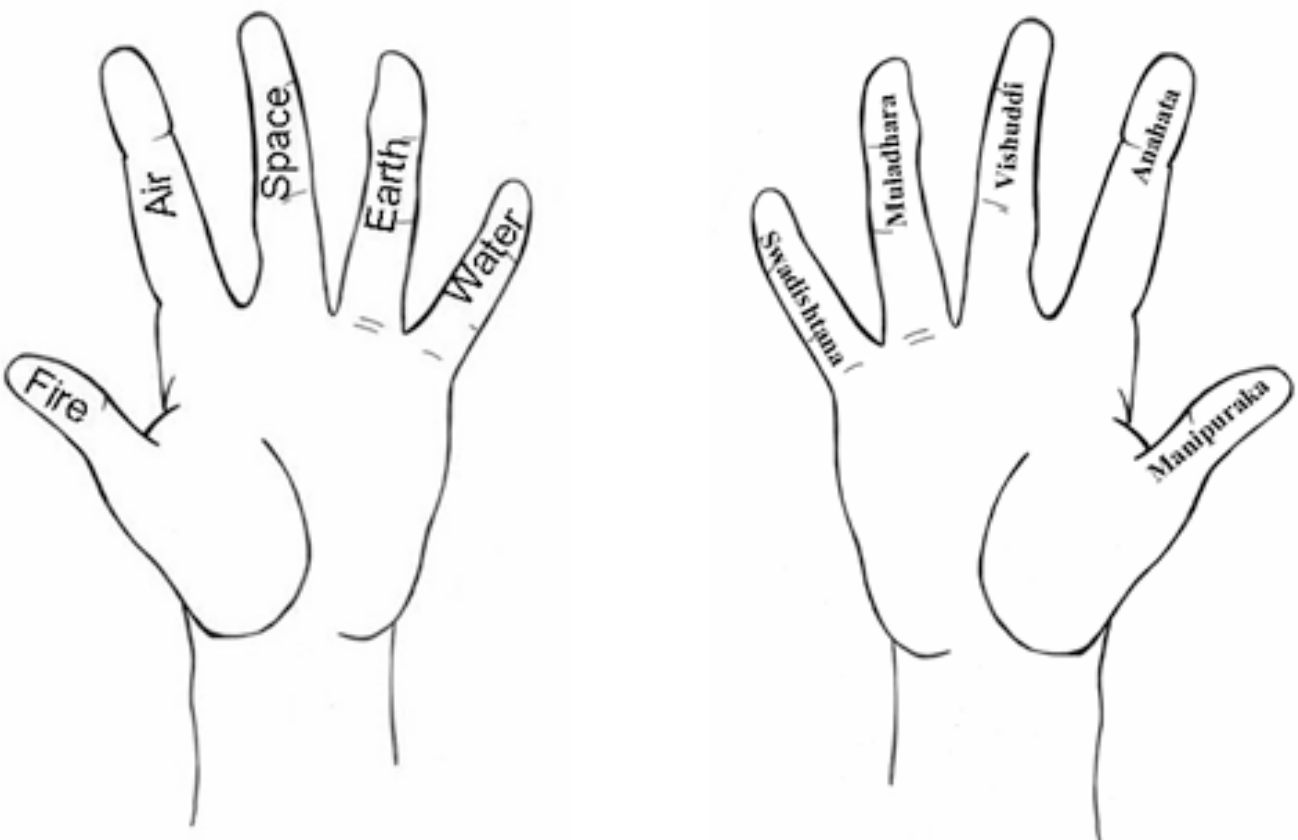
The elements and the corresponding chakras
Apart from representing the elements, the thumb and the index finger hold particular importance. The thumb is symbolic of cosmos (divine) and the index finger (human) is symbolic of consciousness. In other words, the thumb represents God or the higher energy and the index finger represents the individual ego. It is interesting to note that when accusing someone of something you always point your index finger to get your point across. Also in very practical terms, if you lose all the four fingers and have the thumb remaining, you can do most of the activity done by the hands. But if the thumb is lost and all other fingers remain, the hands are as good as useless. Symbolically, this establishes the fact that if divine energy is not present in life, , then life is as good as not being lived.
This book describes chin mudra, kurma mudra, samana mudra, anjali mudra, shambhavi mudra and shanmukhi mudras which are the mudras commonly used in Nithya Yoga. In addition, Maha Mudra and is also described as it is a powerful mudra.
Chin Mudra
Rest hands on thighs or knees with palms facing up. Touch the tips of thumb and index finger together, touching gently and the other three fingers extended. This creates an energy circuit which enhances meditation.
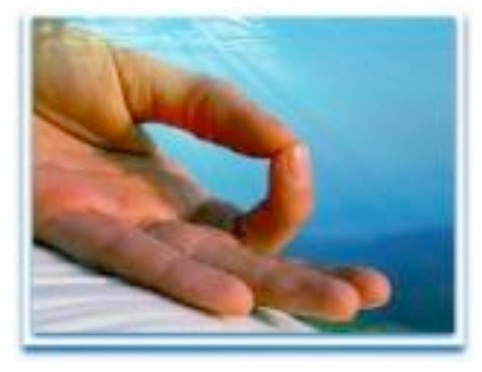
Chin Mudra
Kurma Mudra
Place right hand on top of left hand, palms lifted away from each other. In the right hand, right index finger, little finger and thumb are extended and the ring and middle fingers are curled over the side of area between the thumb and index finger of left hand. In the left hand, thumb, index finger are extended and the last three fingers are curled over the side of left hand below right ring finger.
The extended right index finger touches extended left thumb, extended right little finger touches extended left index finger, extended right thumb touches the base of left palm at wrist crease.
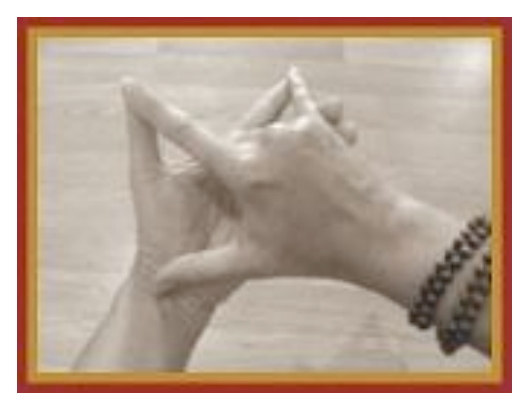
Kurma Mudra
Samana Mudra
Place the right fist onto the palm of the left hand and close the left fingers over the fist. The left thumb crosses over the right thumb. This mudra is described differently elsewhere. Swami Nithyananda uses this mudra when he awakens the kundalini in participants. It creates and locks the energy circuit as well as keeps the hands and arms centered when the body starts moving.
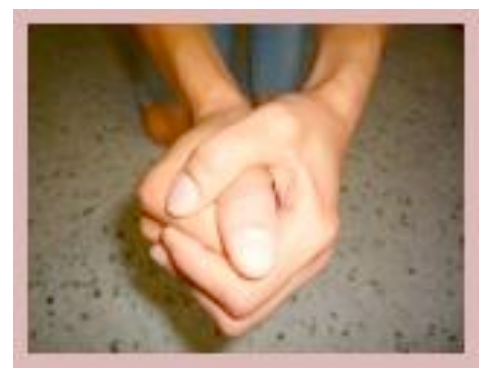
samana mudra
Anjali Mudra
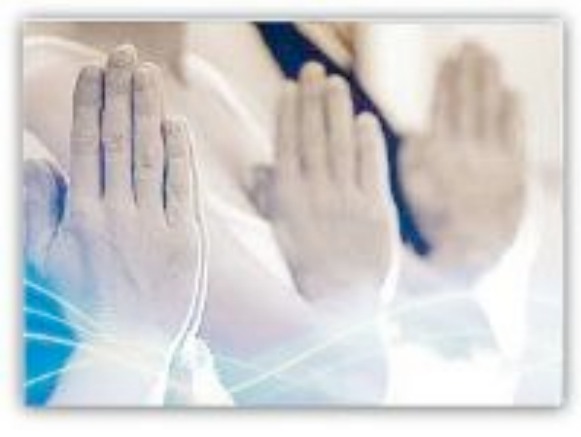
Bring the two hands together, opposite fingers and palms touching in front of the chest bone. This forms an energy circuit. This mudra is also known as prayer pose, or namaskara mudra.When this mudra is repeated multiple times, we become more aware of the subtle effects of the mudra.
Some people have a resistance to doing this mudra as it brings about a perception of submission, humility, acknowledging and recognizing the presence of something superior. This mudra is commonly used in the East when people greet each other and also as a position of praying.
Anjali mudra
Shambhavi mudra- Eyebrow center gazing
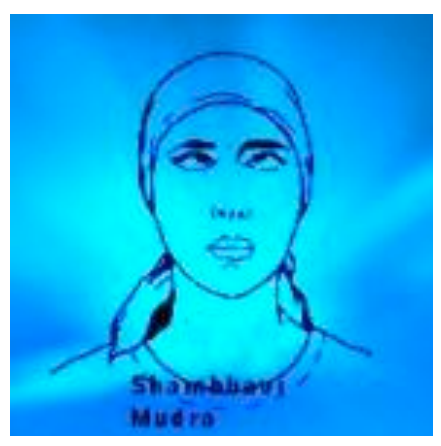
This is a subtle technique involving the eyes. Fixing the gaze between the two eyebrows, behold the self-existence. This is shambhavi mudra, secret in all the Tantras. (Gheranda Samhita 3:65). This is the greatest mudra for bestowing perfection for those who are already in one pointed state and in Samadhi.(Hatha Yoga Pradipika 3:125). He who knows this shambhavi is like Adinatha, he is a Narayana, he is Brahma the creator (Gheranda Samhita 3:66-67)
Shambavi mudra happens spontaneously during samadhi; the eyeballs turn upwards, spontaneously fixed in shambhavi mudra. This is a sign of inner mental tranquillity. The mind becomes still when the eyeballs which are either open or closed are stilled. Gazing at the eyebrow center either externally with eyes open or internally with eyes closed is shambhavi mudra. Once you can practice it externally without the eyes tiring, practice it with closed eyes. It can be practised on its own or with asana, bandha, meditation. It stimulates and opens up the ajna center leading one to the ultimate truths.
Shambhavi Mudra
Maha Mudra –great attitude
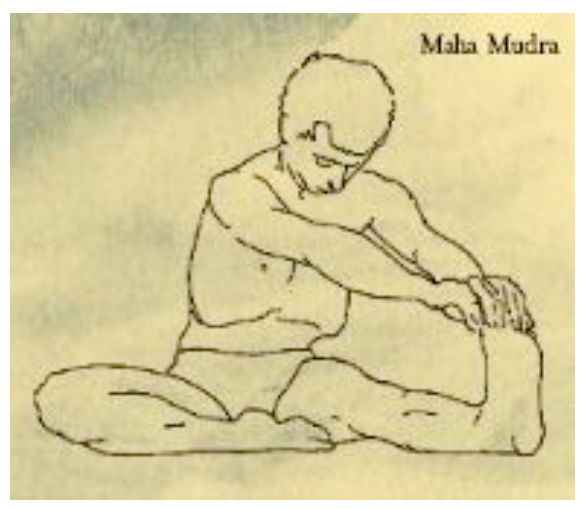
This mudra combines asana, bandha, kumbhaka and mudra. Press left heel into perineum and straighten right leg. Bend forward and firmly take hold of outstretched foot with both hands. Apply jalandhara bandha, retain the breath, fix the gaze between the eyebrows. Eyes can be closed or open. Then exhale slowly and gradually.
By locking the throat and retaining the breath, prana rises straight like a snake beaten with a stick. After practising a few rounds on the right side, practice on the left side. When the number of rounds is even, release the mudra. (Hatha Yoga Pradipika 3:10-15). First, fold the left leg, then the right leg.
For one who practices maha mudra, there is nothing wholesome or unwholesome. Anything can he consumed, even the deadliest of poisons is digested like nectar. The maha mudra is the giver of great siddhis.(Hatha Yoga Pradipika 3:16-18). It cures consumption, obstruction of bowels, enlargement of spleen, indigestion and fever. In fact it cures all diseases. (Gheranda Samhita 3:8)
Shanmukhi Mudra
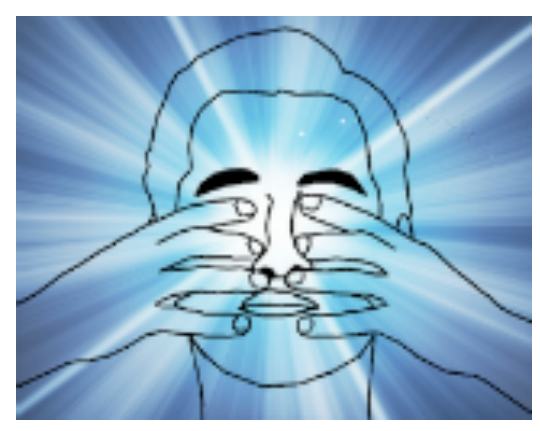
In this mudra, we close the five sense organs, the eyes, ears, nose, and mouth. Sit straight in a comfortable stable meditative pose with eyes closed. Close the ears with the thumbs, eyes with the index and middle fingers, nose with ring fingers and place the little fingers just below the lips. Release fingers on the nose and take a long, deep inhale, retain the breath in and close the nostrils with the ring fingers. This is called shanmukhi mudra.
Its stops the energy going out and sends it intensely in. It redirects your whole energy inwards inducing the state of pratyahara or withdrawal of the senses. Hold as long as you can comfortably. The mind will say you will die but you will not die. Release the fingers and inhale again then repeat the mudra. At the end of the practice, sit with eyes closed for a few minutes as you become aware of the body.
Shanmukhi Mudra