Care for Obesity
This text was machine-transcribed from the printed book and may contain errors. Select the words and choose “Report a mistake”.
According to the American Heart Association, having a body mass index (BMI) of 30 or higher meets the requirements for obesity, which means you are at a higher risk for heart disease, stroke, high blood pressure, diabetes and more.
To maintain a healthy weight, it is best to eat foods in their most natural form, drink plenty of water and con-sume fruits and vegetables daily. Fried and processed foods should not be consumed, and white refined sug-ar should be avoided as much as possible. But there is more to health than what we consume or what we don't consume. We must also move the body. A healthy body has a balance of strength and flexibility. These Nithya Kriyas were designed for care and cure of weight loss.
Do the following (in the order given):
- Bhadra Asana
- Jaalandhara Bandha
- Uddeeyanaa Bandha
- Agneeshoma Kumbhaka
- Vyaana Kumbhaka
- Dakshinaavarta Chakra Kumbhaka
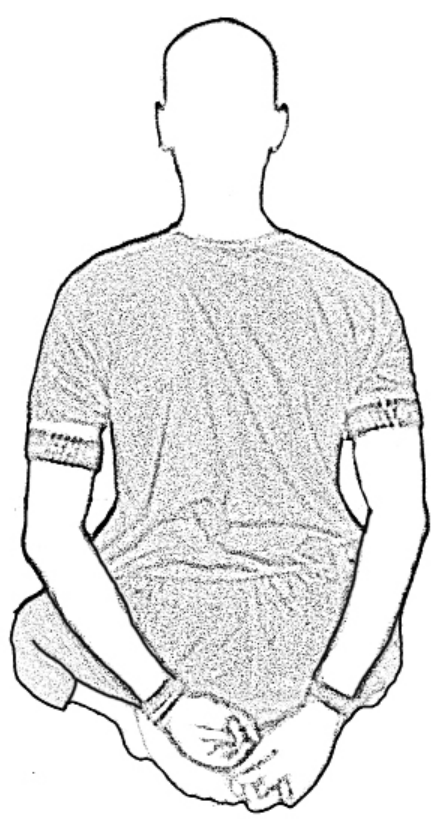
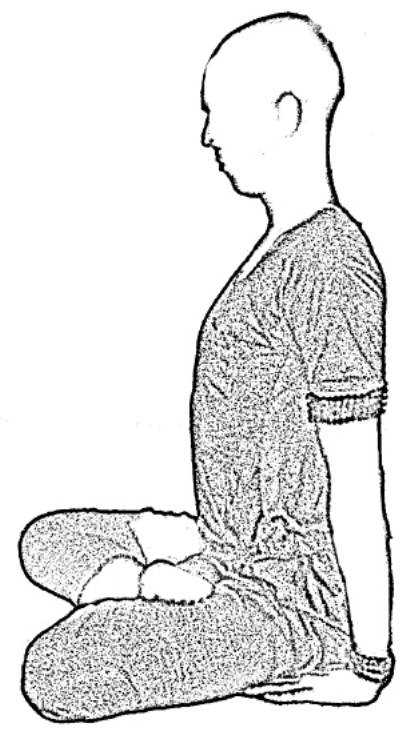
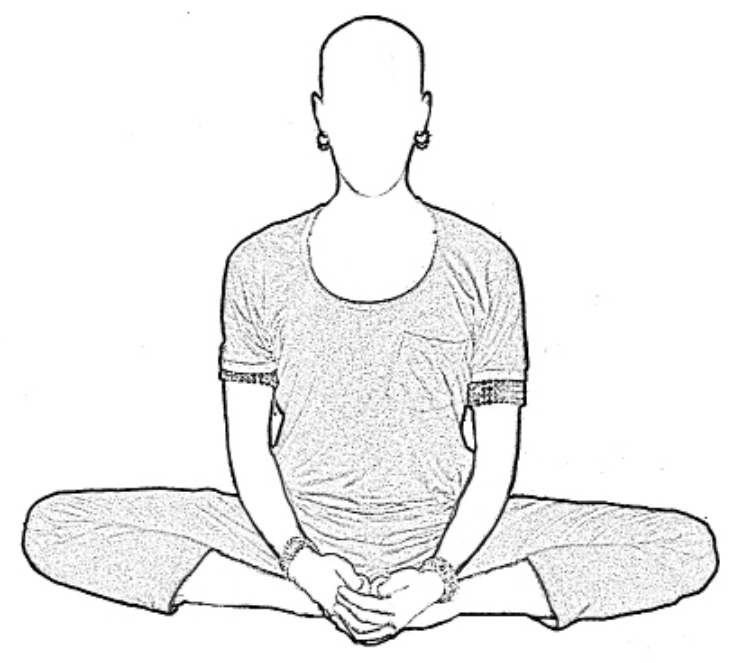
1. Sit in Bhadra Asana. Gheranda Samhita, Upadesha 2, Verses 9 & 100
अथ भद्रासनम्
गुल्फौ चु भभ्रथभहभधरभभकभभन्नु रभन्द्रग्रिह्यटभन्न्रहभ समाहितः ।
पादाङ्गुष्ठौ म्ह्भूभफरभभगचभ धृत्वा च पृष्ठदेशतः ॥
जालन्धरं समासाद्य नासाग्रमवलोकयेत् ।
भद्रासनं भवेदेतत् सर्व्वव्याधिविनाशकम् ॥
Gulphau cha Virusha(a to be deleted)na(a)sya adhaha vuth kramena samaahitaha | Paada-angushtau karaabhyaam cha Dhrutvaa cha prush-ta-deshataha ||2.9|| Jaalandharam samaasaadya Naasaagram avalokayet| Bhadra Asanam bhavet etat Sarva-vyaadhi-vinaashakam ||2.10||
1. Available from: www.heart.org/GettingHealthy/WeightManagement/Obesity
Translation
Place the heels crosswise under the genitals attentively; cross the hands behind the back and take hold of the toes of the feet. Fix the gaze on the tip of the nose, having previously adopted the mudra called Jaalandhara. This is Bhadra Asana which destroys all sorts of diseases.
Technique
• Bend both the legs to the back, sit on feet • With your hands behind your back, hold your right toes with the left hand and left toes with the right hand • Do Jaalandhara Bandha by contracting your throat and resting your chin on your chest • Concentrate your gaze on the tip of your nose • Remain in this pose for 30 seconds and release the Jaaland hara Bandha
2. Remain seated in Bhadra Asana and do Jalaandhara Bandha. Gheranda Samhita, Upadesha Verses 3 & 12
अथ भद्रासनम्
गुल्फौ च॒ मभ्रथभहभधरभभकभभन्नु रभद्धग्रिह्यटभन्न्रहभ समाहितः ।
पादाङ्गुष्ठौ म्भ्रूभपरभभगचभ धृत्वा च पृष्ठदेशतः ॥
जालन्धरं समासाद्य नासाग्रमवलोकयेत् ।
भद्रासनं भवेदेतत् सर्व्वव्याधिविनाशकम् ॥
Kanta-sankochanam krutvaa Chibukam hrudaye nyaset |
Jaalandhare krute bandhe Shodasha-aadhaara-
bandhanam ||3.12||
Translation Contracting the throat, place the chin on the chest. This is called Jaalandhara Bandha. By this bandha the sixteen adharas are closed.
Technique
• Remain in Bhadra Asana • Inhale fully • Place the chin on the chest and contract the throat • Hold as long as possible judiciously • When you can't hold anymore, release the throat lock and exhale slowly • Do this 21 times
3. Next, do Uddeeyaana Bandha. Gheranda Samhita, Upadesha 3, Verse 10
॥ अथ उड्डीयान-बन्धः ॥
उदरे पश्चिमं तानं नाभेरुर्ध्वं तु कारयेत्।
उड्डानं कुरुते यस्मादविश्रान्तं महाखगः।
उड्डीयानं त्वसौ बन्धो मृत्यु-मातङ्ग-केसरी ॥
Udare pashchimam taanam Naabheroordhvam
tu kaarayet |
Uddaanam kurute yasmat Avishraantam mahaakhagaha |
Uddeeyaanam tvasau bandhao Mrutyu-Maatanga-
Kesaree || 3.10 ||
Translation
One should contract the bowels above and below the navel so that the abdominal organs touch the back. The one who practices this uddeeyaana bandha continuously becomes a conqueror of death. The great bird (Kundalini) flies up in the Sushumna and flies there itself constantly.
Technique
• Stand with about half-a-metre gap between your feet • Bend the knees slightly and rest your palms above the knees with the thumbs facing inwards and the fingers outwards • Keep the spine straight, head up and eyes open • Take a deep breath in and exhale completely, but do not be forceful • After exhaling, perform jalandhara bandha by moving the chin down to the chest and raising the shoulders • Pull the abdominal muscles inward so that the organs of the abdomen touch the back muscles. • Hold as long as you can • When you can’t hold anymore, before inhaling, relax the stomach and abdomen, release jaalandhara bandha by raising the head, and stand straight • Then inhale through the nostrils slowly • Before repeating another round, breathe normally for a minute or two • Initially start with 3 times and gradually increase up to 10 times
4. Seated in Bhadra Asana, do Agneeshoma Kumbhaka. Kumbhaka Paddhathi, Verse 87
सूर्येण पूरयेत् प्राणं कुम्भयित्वा यथाविधिः।
रेचयेदन्यमार्गेण पुनस्तेन प्रपूरयेत्॥
येन त्यजेत्तेनापूर्य चाग्निशोमाख्यकुम्भकः॥
Sooryena Poorayeth Praanam Kumbhayithvaa
Yathaavidhihi |
Rechayeth Anya-Maargena Punas-Thena Prapoorayeth ||
Yena Thyajeth Thenaapoorya Chaagnishomaakhya-kum-
bhakaha ||87||
Translation Prana should be inhaled through Surya-naadi (right-nostril) and after retaining the same as prescribed; one should exhale through the other nostril, and again inhale by the same side throughwhichonehasexhaled. Itisknownasagni-shoma-Kum-bhaka.
Technique
• Inhale through the right nostril
• Hold the breath
• Exhale through the left nostril
• Now inhale through left nostril
• Hold the breath
• Exhale through right nostril
• Do this 21 times
5. Remain in Bhadra Asana. Do Vyaana Kumbhaka. Kumbhaka Paddhathi, Verse 66
पूरयित्वान्तरा सम्यक् हृज्जगद्व्याप्तियोगतः ।
सर्वांगस्याकुञ्चनेन कुम्भिते सूक्ष्मचिन्तनात् ॥
पार्वतीवक्त्रभेनोक्तः सम्यक् व्यानस्य कुम्भकः ॥
Poorayitvaantharaa Samyak Hrujjagad-Vyaapti-Yogathaha | Sarvaagaya-Aakunchanena Kumbhithe Sookshma-Chinthanaath || Paarvathee-Vakthra-Bhenokthaha Samyak Vyaanasya Kum-bhakaha ||66||
Translation
Completely filling the chest and contracting the whole body during Khumbaka, with subtle concentration is termed as Vyaana Kumbhaka by Devi Parvati.
Technique
• Inhale deeply • Hold the breath by contracting the whole body • Have intense awareness and visualize the whole body contracting: abdomen, throat, chest, back, the whole body • When you cannot hold anymore slowly exhale • Do this 21 times
6. Seated in Bhadra Asana, do Dakshinaavarta Chakra Kumbhaka. Kumbhaka Paddhati, Verses 107 &108
सूर्येणापूर्य मरुतं कुम्भयेदुदरस्थितम् ।
रेचयेदिन्दुना भूयः तथा दक्षेण पूरयेत् ॥
कुम्भयेदिडया रिच्याद्दक्षिणावर्त्तचक्रकः ॥
Sooryenaapoorya Marutham Kumbhayeth Udharasthitham | Rechayeth Indhuna Bhooyaha Thathaa Dakshena Poorayeth ||107|| Kumbhayeth Idayaa Richyaath Dakshinaavarth-tha-Chakrakaha |
Translation One should inhale through the right nostril and fill the abdomen with breath, exhale through the left nostril, and again one should inhale through the right nostril and hold and exhale through the left nostril. This is Dakshinaavarta Chakra Kumbhaka. Technique • Inhale through the right nostril • Hold the breath as long as you can judiciously • Exhale through the left nostril • Again, inhale through the right nostril • Exhale through the left nostril • Repeat this 21 times
END OF KRIYA