Care for Addiction
This text was machine-transcribed from the printed book and may contain errors. Select the words and choose “Report a mistake”.
Addiction is a syndrome showing up as a compulsive depen-dence upon mood altering substances (substance addic-tions) or behaviors (process addictions). Examples of addic-tive substances include: alcohol, drugs, tobacco, caffeine, and refined sugar. In process addictions the individual is addicted to the process or behavior itself. Gambling, shop-ping, sexual activities, eating disorders, watching TV, playing video games, and work can all be included in this category when they are practiced in excess or obsession. Addicts are frequently addicted to more than one substance and/or be-havior simultaneously, hence the term addictive personality.
Addiction is a progressive health problem which increases in severity if left untreated. In substance abuse the tolerance level of addicted individuals is gradually increasing, hence they require a higher dose of substance to achieve the same effect than that with which they previously achieved with a lower dose. Substance addicted individuals often attempt to quit many times before they are permanently successful. The techniques of cognitive behavioral therapy and mindfulness are being increasingly employed to curb process addictions. This Nithya Kriya was designed for care for addiction. These Nithya Kriyas was designed for care and cure of addiction.
Do the following (in the order given):
- Bhadra Asana
- Kevalee Kumbhaka
- Kapaalabhaati
- Jonee Asana
- Lahiri Praanaayaamaa
- Bhraamaree Kumbhaka
- Plaavinee Kumbhaka
1. Sit in Bhadra Asana. Gheranda Samhita, Upadesha 2, Verses 9 & 10
अथ भद्रासनम्
गुल्फौ च॒ भध्रथभहभध्रभभकमभभ्र॒रभद्बग्रिह्यटभभ्रहभ समाहितः ।
पादाङ्गुष्ठौ म्ह्भपरभभगचभ धृत्वा च पृष्ठदेशतः ॥
जालन्धरं समासाद्य नासाग्रमवलोकयेत् ।
भद्रासनं भवेदेतत् सर्वव्याधिविनाशकम् ॥
Gulphau cha Virushanasyadho vyuthkramena samaahitaha | Paada-angushtau karaabhyaam cha Dhrutvaa cha prushta-deshataha ||2.9|| Jaalandharam samaasaadya Naasaagram avalokayet| Bhadra Asanam bhavet etat Sarva-vyaadhi-vinaashakam ||2.10||
TRANSLATION
Placetheheelscrosswiseunderthegenitalsattentively; crossthe hands behind the back and take hold of the toes of the feet. Fix the gaze on the tip of the nose, having previously adopted the mudra called Jaalandhara. This is Bhadraasana which destroys all sorts of diseases.
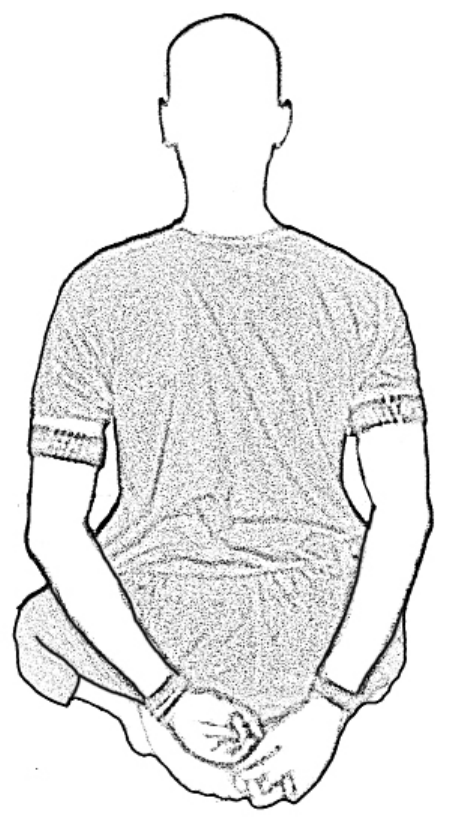
Technique
- Bend both the legs to the back, keep the feet facing up and sit on the heels
- Take both your hands to the back and hold your right toes with the left hand and left toes with the right hand
- Do Jaalandhara bandha, contract your throat, bend your chin and rest it on your chest
- Concentrate your gaze on the tip of your nose
- Remain in this pose for 30 seconds and release the Jaalandhara Bandha
12. In Bhadra Asana, do Kevalee Kumbhaka. Gheranda Samhita, Upadesha 5, Verse 84
हंकारेण बहिर्याति सःकारेण विशेत् पुनः ॥
Ham-Kaarenabahih-Yaati Saha-KaarenaVishetPunaha |
Translation
One should exhale with the mantra "ham" and inhale with the mantra "saha".
Technique
- Inhale through the right nostril along with the internal chanting of the mantra 'sam'
- Hold as long as you can judiciously
- While holding the breath, chant internally the man tra 'soham' slowly
- Exhale through the left nostril with the internal chanting of the mantra 'ham'
- Do this 21 times
3. Next, do Kapaalabhaati Praanaayaamaa. Yoga Rahasya, Chapter 1, Verse 100
Translation and Technique
• Breath out short and fast as you pull your abdomen in and up • Allow the body to inhale • Do this 21 times
4. Next, do Jonee Asana Joga Pradeepikaa, Verses 215-219
दोउ पगथली संपुट करै एडि मेड्र के ढिङ्ग घरे ।
अर्ध हाथ को अंतर राखै लिलाट पगथल्या उपर दाखै ॥
दसे आङ्गुरी अग्र मिलावै फणा अग्र पर ले पहरावै ।
कहुणी लों भूपरि कर् दाखै नली अर कहूणी मिलि ठां राखै ॥
सम करि राखै सकल सरीर नासाद्रिष्ट लगावे धीर ।
मुख मारग सो वाई गहै असक्त होय तहां लो रहे ॥
इडा नाडि कर पवन उतारे वार सात या जुगति विचारै ।
चंमथौ चंम्रजभभञ्र कुंभक साधै वार सात या जुगति अराधै ॥
बंधू होय मूलमूत्र को वायविग्रहै कोय ।
या आसन कै करतही द्रवीभूत सो होय ॥
Dovu Pathagali Samputa Karai Yedi Medra Ke Ding Dhare | Ardha Haath Ko Anthara Raakhai Lilaata Pathagalyaa Upar Dhaakhai || Dase Aanguri Agra Milaavai Phanaa Agra Par Le Paharaavai | Kahunee Lom Bhuupari Kar Daakhai Nalee Ara Kahooni Mili Tam Raakhai || Sama Kari Raakhai Sakala Sareer Naasaadrishti Lagaave Dheer | Mukha Maarga So Vaayee Gahai Asaktha Hoya Thahaam Lo Rahe ||
Idaa Naadi Kar Pavan Uthaare Vaar Saath Yaa Jugathi Vi-chaarai | Chadhthau Chadhthau Kumbhaka Saadhai Vaara Saath Yaa Jugathi Araadhai || Bandh Hoy Moola-Mootra Ko Vaaya Vigrahai Koy| Yaa Aasana Kai Karathahee DraveeMooth So Hoy||
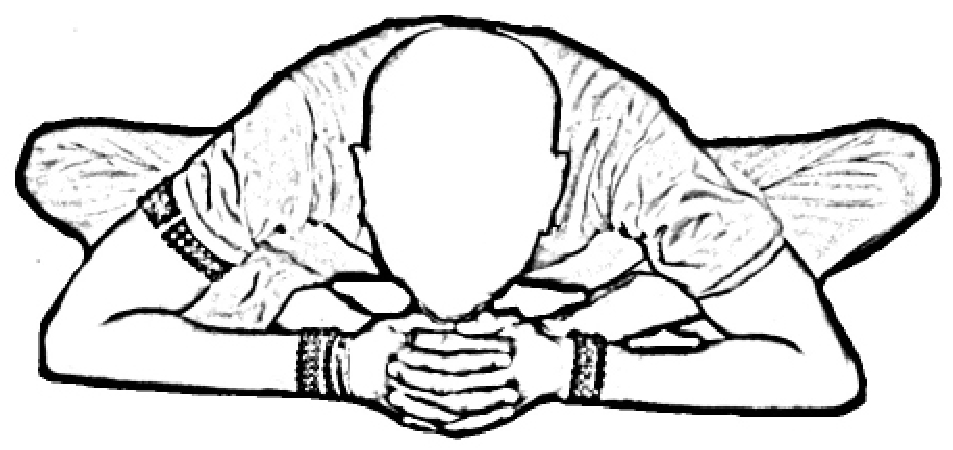
Technique • Stay on the floor with legs extended and bring heels and knees apart • Close the heels together • Bring the head forward and place it on heels • Close hands together and keep the forearms on ground • Gaze at the tip of the nose • Remain in this posture for 30 seconds
5. In Jonee Asana, do Lahari Praanaayaamaa. Yoga Rahasya, Chapter 1, Verse 100
Translation and Technique
• Breath in with short inhalation with one nostril • Then breath out with short exhalation with the other nostril • Do this 21 times
6. In Jonee Asana, do Bhraamaree Kumbhaka. Gheranda Samhita, Upadesha 5, Verses 78-82
॥ अथ भ्रामरी-कुम्भकः ॥
अर्धरात्रे गते योगी जन्तूनां शब्दवर्जिते ।
कर्णौ पिधाय हस्ता यां कुर्यात् पूरक-कुम्भकम् ॥
शृणुयाद्दक्षिणे कर्णे नादमन्तर्गतं शुभम् ।
प्रथमं झिञ्झीनादं च वंशीनादम् अतः परम् ॥
मेघझर्झरभ्रामरी घण्टाकांस्यं ततः परम् ।
तुरीभेरीमृदङ्गादिनिनादानकदन्दुभिः ॥
एवं नानाविधो नादो जायते नित्यम यसात् ।
अनाहृतस्य शब्दस्य तस्य शब्दस्य यो ध्वनिः ॥
ध्वनेरन्तर्गतं ज्योति ज्योतिरन्तर्गतं मनः ।
तन्मनो विलयं याति तद्विष्णोः परमम् पदम् ॥
एवंभ्रामरीसंसिद्धिः समाधिसिद्धिमाप्नुयात् ॥
Ardha-raatre Gate Yogee Jantoonaam Shabda-varjite | Karnau Pidhaaya Hastaabhyaam Kuryaat Pooraka-Kum-bhakam || 5.78 || Shrunuyaat Dakshine Karne Naadamantargatam Shubham | Prathamam Jhinjhimeenaadam Cha Vamsheenaadam Ta-
taha Param ||5.79||
Megha-Jharjhara-Bhraamaree Ghantakamsyam Tataha
Param |
Turee-Bheree-Mrudangaadi-Ninaadaanaka-
Dundubhihi ||5.80||
Evam naanaavidho Naado Jaayate Nithyamabhyasaath |
Anaahatasya Shabdasya Tasya Shabdasya Yo
Dhvanihi || 5.81 ||
Dhvanerantargatam Jyoti Jyotirantargatam manaha |
Tanmano vilayamYaati Tad-vishnoh Paramam Padam |
Evam BhraamareeSamshiddhihi Samaadhi-siddhim-aap-
nuyaath || 5.82 ||
TRANSLATION At the past midnight, in a place where there are no sounds of any animal, &c., to be heared, let the yogi practice pura-ka and kumbhaka, closing the ears by the hands.
He will hear then various internal sounds in his right ear. The first sound will be like that of crickets, then that of a lute, then that of a thunder, then that of a drum, then that of a beetle, then that of bells, then those of gougs of bell-metal, trumpets, kettles-drums, mridanga, military drums, and dundubhi, etc.
Thus various sounds are cognized by daily practice of this Kumbhaka. Last of all is heard the Anahatha sound rising from the heart; of this sound there is a resonance, in that resonance there is a light. In that Light the mind should be immersed. When the mind is absorbed, then it reaches the Highest seat of Vishnu (Parama-pada). By success in this Bharaamaree Kumbhaka one gets success in samadhi.
Technique
• Close your ears with hands and close your eyes and hum intensely • Do this for 7 minutes, then relax
Note: 10-15 minutes after doing this Kumbhaka one should eat something
7. In Jonee Asana, do Plaavinee Kumbhaka. Kumbhaka Paddhathi, Verse 171
यथेष्टं पूरयेद्वायुं बद्धे जालन्धरे दृढे ।
हृदि धृत्वा जले सुप्त्वा प्लाविनीकुम्भको भवेत् ॥
YatheshtampoorayethVaayum BadhdheJaaland-hareDhrude | HrudhiDhruthvaaJaleSupthvaa Plaavinee-Kumbhako-Bhaveth ||171||
TRANSLATION One should fill in the air sumptuously in his lungs and then adopt Jaalandhara Bandha firmly. If one lies on water it is called Plaavinee Kumbhaka.
Technique • Stay on same posture
• Inhale completely • Contract the throat and rest your chin on the chest • Retain the air inside as much as you can possible • When you can't hold anymore, release the throat lock and exhale slowly • Do this 21 times
END OF KRIYA