Cure For Rapid Recovery From Illness
This text was machine-transcribed from the printed book and may contain errors. Select the words and choose “Report a mistake”.
Disease Description
A cure is the end of a medical condition; the substance or procedure that ends the medical condition, such as a medication, a surgical operation, a change in lifestyle, or even a philosophical mindset that helps end a person's suffering. It may also refer to the state of being healed, or cured.
A remission is a temporary end to the medical signs and symptoms of an incurable disease. The proportion of people with a disease that are cured by a given treatment, called the cure fraction or cure rate, is determined by comparing disease-free survival of treated people against a matched control group that never had the disease.
Inherent in the idea of a cure is the permanent end to the specific instance of the disease. When a person has the common cold, and then recovers from it, the person is said to be cured, even though the person might someday catch another cold. Conversely, a person that has successfully managed a disease, such as diabetes mellitus, so that it produces no undesirable symptoms for the moment, but without actually permanently ending it, is not cured.
Related concepts, whose meaning can differ, include response, remission and recovery.
STEPS TO BE FOLLOWED
- ANASOOYA ASANA
- SHEETHALEE KUMBHAKA
- SEETHKAAREE PRAANAAYAAMA
- TRINETRA KUMBHAKA
- TRISHOOLA KUMBHAKA
- KRAMANETRA KUMBHAKA
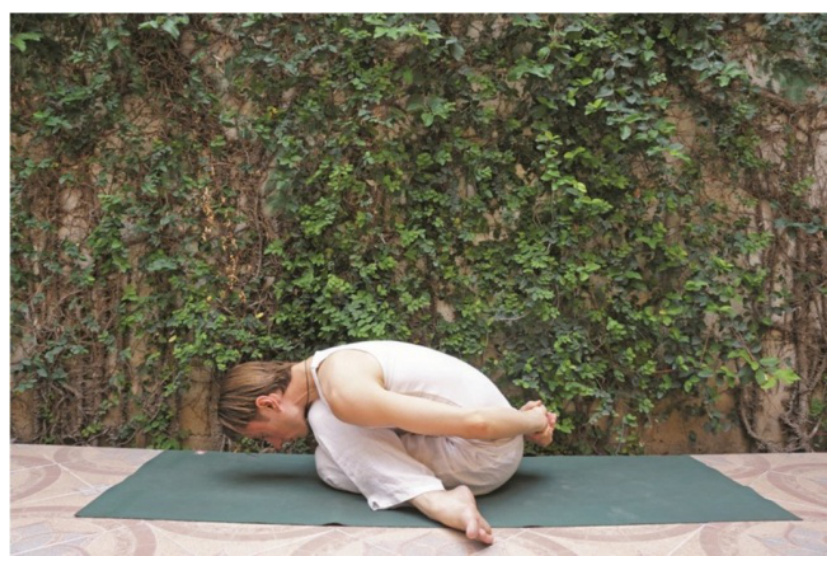
1. ANASOOYA ASANA
YOGAASANA MAALAA SACITRA, VERSE 4
जीमणा गोडा की स्यंधि उपरि डावा गोडा की संधि मिलाइ राखै ।
गोडास्यौ ले पगथल्या लौ आडवाइ सूधा राखै ।
हाथा स्यौ पगाका अगूठा पकडे अथवा दोऊ हाथ पाछा नै करि काकसी करै ।
मूलद्वार पाछै काकसी राखै ।
हथेली पिष्टि मूलद्वार उर्द्ध लगा राखै ।
नासिका धरती लगावै दृष्टि नासा अग्र
आसन कौगुण यहु आसन मास दोई करी साधै तौ कंचनमई देह होई ॥
Jeemanaa Godaa Kee Syamdhi Upari Daavaa Godaa Kee Samdhi Milaayee RaaShai |
Godaasyau Le Pagathalyaa Lau Aadavaayee Soodhaa Raashai | Haathaa Syau Pagaakaa Agoothaa Pakade Athavaa Dovoo Haatha Paachaa Nai Kari Kaakasee Karai |
Mooladvaara Paachai Kaakasee Raashai |
Hathelee Pishti Mooladvaara Urddha Lagaa Raashai | Naasikaa Dharatee Lagaavai Drishti Naasaa Agra Aasana Kauguna Yahu Aasana Maasa Doyee Karee Saadhai Tau Kamcanamayee Deha Hoyee ||
TRANSLATION-cum-TECHNIQUE
- Place one knee above the other
- Hold the hands from the back
- Bend down to touch the nose on the ground
- Gaze at the tip of the nose
- Remain in this pose 30 seconds
IN ANASOOYA ASANA, NEXT-
2. SHEETHALEE KUMBHAKA
GHERANDA SAMHITA, UPADESHA 5, VERSES 73 & 74 --
जिह्वया वायुं आकृष्य उदरे पूरयेत् शनैः ।
क्षणं च कुम्भकं कृत्वा नाशाभ्यां रेचयेत् पुनः ॥
सर्वदा साधयेत् योगी शीतली कुम्भकं शुभम् ।
अजीनं कफ-पित्तं च नैव तस्य प्रजायते ॥
Jihvayaa Vaayum Aakrushya Udare Poorayet Shanaihi | Kshanam Cha Kumbhakam Krutvaa Naasaabhyaam Rechayet Punaha || 5.73 || |
Sarvadaa Saadhayet Yogee Sheethalee-kumbhakam Shubham | Ajeernam Kapha-Pittam Cha Naiva Tasya Prajaayathe || 5.74 ||
TRANSLATION Draw in the air through the mouth (with lips contracted and tongue thrown out), and fill the stomach slowly. Retain it there for a short time. Then exhale through both the nostrils. Let the Yogi always practice this Sheethalee Kumbhaka, giver of bliss; by so doing, he will be free from digestion, phlegm and bilious disorders.
TECHNIQUE
- Continue to sit in same asana
- Close the eyes and relax the whole body
- Extend the tongue outside the mouth and roll the sides of the tongue up so that it forms a tube
- Inhale slowly through the tongue and fill the abdomen slowly
- At the end of inhalation, roll the tongue in, close the mouth
- Retain it there for a short time
- Then exhale through both the nostrils
- Do this 21 times
IN ANASOOYA ASANA, NEXT-
3. SEETHKAAREE PRAANAAYAAMA
HATHA PRADEEPIKAA, UPADESHA 4, VERSE 43
सीत्कां दद्यात् सदा वक्त्रे घ्राणेनैव विसर्जयेत् ।
एवमभ्यास योगेन कामदेवो द्वितीयकः ॥
Seethkaam dadyaath sadaa Vaktre Ghraanenaiva Visarjayet | Evam Abhyaasa-Yogena Kaamadevo Dviteeyakaha ||4.43||
TRANSLATION By drawing the breath in through the mouth, make a hissing sound, without opening the mouth, and exhale through the nose. By practicing this, one becomes a second Kaamadevatha (god of love).
TECHNIQUE
- Stay in same asana
- Press the lower and upper teeth together and separate the lips as much as comfortable
- Breath in slowly through the gaps of the teeth
- Listen to the sound of the breath as the air is being drawn in
- Close the mouth at the end of the inhalation
- Exhale slowly through the nose
- Do this 21 times
IN ANASOOYA ASANA, NEXT-
4. TRINETRA KUMBHAKA
KUMBHAKA PADDHATHI, VERSE: 192
सकृच्चन्द्रेण चापूर्य धार्यं सूर्येण पूरयेत्।
नियम्य पूरयेन्नो यां धारयित्वा यथाविधि ॥
त्रिनेत्रकुम्भकः प्रोक्तः त्रिनेत्रेण त्रिसिद्धिदः ॥
SakruthChandrenaChaapoorya DhaaryaSooryenaPoorayeth |
NiyamyaPoorayennobhyaam DhaarayithvaaYathaa-Vidhi ||
Thrinethra-KumbhakahaProkthaha ThrinethrenaThrisiddhidhaha ||
TRANSLATION Inhale through the left nostril and retain, inhale through the right nostril and retain and then inhale through both the nostrils, retain the breath (all these in one shot before exhalation). This is the Trinetra Kumbhaka – the giver of three siddhis – as explained by the three-eyed Shiva.
TECHNIQUE
- Inhale through the left nostril
- Hold the breath as long as you can judiciously
- Without exhalation, inhale through the right nostril
- Hold the breath as long as you can judiciously
- Again without exhaling, inhale through both the nostrils
- Hold the breath as long as you can judiciously
- Now exhale through both the nostrils slowly
- Do this 21 times
IN ANASOOYA ASANA, NEXT-
5. TRISHOOLA KUMBHAKA
KUMBHAKA PADDHATHI, VERSE: 193
घोणा यां च मुखेनापि युगपत् पूरयेत् सदा।
त्रिशूलिना त्रिशूलाख्यः कुम्भ उक्तस्त्रिशूलनुत् ॥
Ghonaabhyaam Cha Mukhenaapi YugapathPoorayethSadhaa |
ThrishoolinaaTrishoolaakhyaha KumbhaUkthas-Trishoolanuth ||193||
TRANSLATION
Always inhale through the nostrils and mouth together at a time. This is called the Trishoola Kumbhaka – the remover of triple sufferings – as explained by the Thrishooli Shiva.
TECHNIQUE
- Inhale through the nostrils and also through the mouth simultaneously
- Hold the breath as long as you can judiciously
- Now exhale through the nostrils slowly and relax
- Do this 21 times
IN ANASOOYA ASANA, NEXT-
6. KRAMA NETRA KUMBHAKA
KUMBHAKA PADDHATHI, VERSE: 191
॥ अथ क्रमनेत्रकुम्भकः ॥
सकृत्सूर्येण चापूर्य धार्यं चन्द्रेण पूरयेत्।
धारयेच्च प्रयत्नेन रेचयेत् क्रमतस्तथा ॥
नेत्रकुम्भक इति ख्यातः क्रमतो व्युत्क्रमादपि ॥
SakruthSooryenaChaapoorya DhaaryaChandrenaPoorayeth | Dhaarayeth Cha Prayathnena RechayethKramathas-Thathaa ||191 ||
TRANSLATION One should take the breath in through the right nostril, hold the breath and then again inahale through the left nostril. He should with effort hold the breath again and exhale in the same order. This is known as krama-netra kumbhaka. This is also done in the reverse order.
TECHNIQUE
- Inhale through the right nostril
- Hold the breath
- Inhale through the left nostril
- Hold the breath
- Exhale through the right nostril
- Hold the breath
- Exhale through the left nostril
- Hold the breath
- Do this 21 times
END OF KRIYA
31-Dec-2011
Kriya Date