CURE FOR DEPRESSION
This text was machine-transcribed from the printed book and may contain errors. Select the words and choose “Report a mistake”.
Disease Description
Depression or Clinical depression is characterized by an all-encompassing low mood accompanied by low self-esteem, and by loss of interest or pleasure in normally enjoyable activities.
Clinical depression is a disabling condition that adversely affects a person's family, work or school life, sleeping and eating habits, and general health. In the United States, around 3.4% of people with major depression commit suicide, and up to 60% of people who commit suicide had depression or another mood disorder.
Depressed individuals have shorter life expectancies than those without depression, in part because of greater susceptibility to medical illnesses and suicide.
Major depression significantly affects a person's family and personal relationships, work or school life, sleeping and eating habits, and general health.
Depressed people may be preoccupied with, or ruminate over, thoughts and feelings of worthlessness, inappropriate guilt or regret, helplessness, hopelessness, and self-hatred. In severe cases, depressed people may have symptoms of psychosis.
STEPS TO BE FOLLOWED
- PADMA ASANA
- SHEETHALEE KUMBHAKA
- BHASTRIKAA
1. PADMA ASANA (BADDHA) GHERANDA SAMHITA, UPADESHA 2,VERSE 8
अथ पद्मासनं
वामोरूपरि दक्षिणं हि चरणं संस्थाप्य वामं तथा
दक्षोरूपरि पश्चिमेन विधिना कृत्वा कराभ्यां धृडं ।
अङ्गुष्ठौ हृदये निधाय चिबुकं नासाग्रमालोकये
देतद् व्याधि विनाशकारणपरं पद्मासनं प्रोच्यते ॥
Vaamoroopari Dakshinam Hi Charanam Samsthaapya Vaamam Tathaa Dakshoroopari Pashchimena Vidhinaa Krutvaa Karaabhyaam Drudam | Angushtau Hrudaye Nidhaaya Chibukam Naasaagram Aalokaye detat-Vyaadhi-vinaashakaaranaparam Padmaasanam Prochyate || 2.8 ||
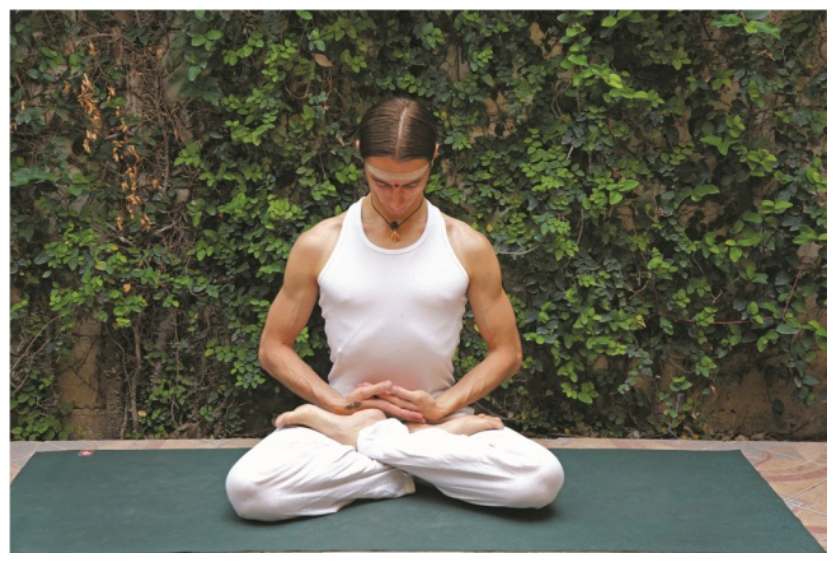
TRANSLATION-cum-TECHNIQUE
- Place the right foot on the left thigh
- Now place the left foot on the right thigh
- Cross the hands behind the back and firmly catch hold of the great toes of the feet so crossed
- Place the chin on the chest and fix the gaze on the tip of the nose (this posture is called the Padmaasanam(or lotus posture). This posture destroys all diseases)
- Settle in this posture for 30 seconds
IN PADMA ASANA, NEXT
2. SHEETHALEE KUMBHAKA
GHERANDA SAMHITA, UPADESHA 5, VERSES 73 & 74
जिह्वया वायुं आकृष्य उदरे पूरयेत् शनैः ।
क्षणं च कुम्भकं कृत्वा नाशाभ्यां रेचयेत् पुनः ॥
सर्वदा साधयेत् योगी शीतली कुम्भकं शुभम् ।
अजीनं कफ-पित्तं च नैव तस्य प्रजायते ॥
Jihvayaa Vaayum Aakrushya Udare Poorayet Shanaihi |
Kshanam Cha Kumbhakam Krutvaa Naasaabhyaam Rechayet Punaha || 5.73 || |
Sarvadaa Saadhayet Yogee Sheethalee-kumbhakam Shubham |
Ajeernam Kapha-Pittam Cha Naiva Tasya Prajaayathe || 5.74 ||
TRANSLATION
Draw in the air through the mouth (with lips contracted and tongue thrown out), and fill the stomach slowly. Retain it there for a short time. Then exhale through both the nostrils. Let the Yogi always practice this Sheethalee Kumbhaka, giver of bliss; by so doing, he will be free from digestion, phlegm and bilious disorders.
TECHNIQUE
- Continue to sit in same asana
- Close the eyes and relax the whole body
- Extend the tongue outside the mouth and roll the sides of the tongue up so that it forms a tube
- Inhale slowly through the tongue and fill the abdomen slowly
- At the end of inhalation, roll the tongue in, close the mouth
- Retain it there for a short time
- Then exhale through both the nostrils
- Do this 21 times
IN PADMA ASANA, NEXT-
3. BHASTRIKAA GHERANDA SAMHITA, UPADESHA-5, VERSES 75-77
॥ अथ भस्त्रिकाकुम्भकः ॥
भस्त्रैव लोहकाराणां यथाक्रमेण संभ्रमेत्।
तथा वायुम् च लभधधभभपरभभटभद्गपभभपरभभत्र चालयेच्छनैः॥
एवंविम्शतिवारं च कृत्वा कुर्याच्च कुम्भकम्।
तदन्ते चालयेद्वायुं पूर्वोक्तं च यथाविधि ॥
त्रिवारं साधयेदेनं भस्त्रिकाकुम्भकं सुधीः।
न च रोगो न च क्लेश आरोग्यं च दिने दिने ॥
Bhastraiva lohakaaraanaam Yathaa-kramena sambhramet |
Tathaa vaayum cha naasaabhyaam Ubhaabhyaam Chaalayet shanaihi || 5.75 ||
Vimshati-vaaram Cha Krutvaa Kuryaachcha Kumbhakam |
Tadante Chaalayet Vaayum Poorvoktam Cha Yathaavidhi || 5.76 ||
Trivaaram SaadhayetEnam Bhastrikaa-Kumbhakam Sudheehi |
Na Cha Rogo Na Cha Klesha Aarogyam Cha Dhine Dhine || 5.77 ||
TRANSLATION As the bellows of the ironsmith constantly dilate and contract, similarly let him slowly draw in the air by both the nostrils and expand the stomach; then throw it out quickly (the wind making sound like bellows).
Having thus inhaled and exhaled twenty times as stated above, then let him perform Kumbhaka and then let him expel it by the previous method (this completes one round of Bhastrikaa). Let the wise one perform this Bhastrikaa(Bellows-like) Kumbhaka thrice; he will never suffer any disease and will be always healthy.
TECHNIQUE
- Inhale slowly expanding the stomach
- Exhale slowly
- Do this 21 times
- After 21 times, Now inhale slowly
- Hold the breath as long as you can
- When you feel you cant hold quickly expel the air with the sound of bellows. At this moment the stomach should contract to touch the back (This is one Bhastrikaa)
- Do this complete sequence three times
END OF KRIYA
Kriya Date
31-Oct-2011