CURE FOR ACHROMATOPSIA
This text was machine-transcribed from the printed book and may contain errors. Select the words and choose “Report a mistake”.
Disease Description
Achromatopsia (ACHM), is a medical syndrome that exhibits symptoms relating to at least five separate individual disorders. Although the term may refer to acquired disorders such as color agnosia and cerebral achromatopsia, it typically refers to an autosomal recessive congenital color vision disorder, the inability to perceive color and to achieve satisfactory visual acuity at high light levels (typically exterior daylight).
The syndrome is frequently noticed first in children around six months of age by their photophobic activity and/or their nystagmus. The nystagmus becomes less noticeable with age but the other symptoms of the syndrome become more relevant as school age approaches. Visual acuity and stability of the eye motions generally improve during the first 6–7 years of life (but remain near 20/200). The congenital forms of the disorder are considered stationary and do not worsen with age.
STEPS TO BE FOLLOWED
- PARVATA ASANA
- SHEETHALEE KUMBHAKA
- SEETHKAAREE KUMBHAKA
- RUDRASANA
- TRINETRA KUMBHAKA
- TRISHOOLA KUMBHAKA
1. PARVATA ASANA
YOGA RAHASYA, CHAPTER 5, VERSE: 22
मूत्रपिण्डयकृत्प्लीहवपाशुद्धये निरन्तरम् ।
उपविश्य च सुप्ताघ पर्वतासनम यसेत् ॥५-२२॥
Moothrapindayakritpleehavapaa-Shuddhaye Nirantaram | Upavishya Cha Supthaagha Parvathaasanam Abhyaseth ||5.22||
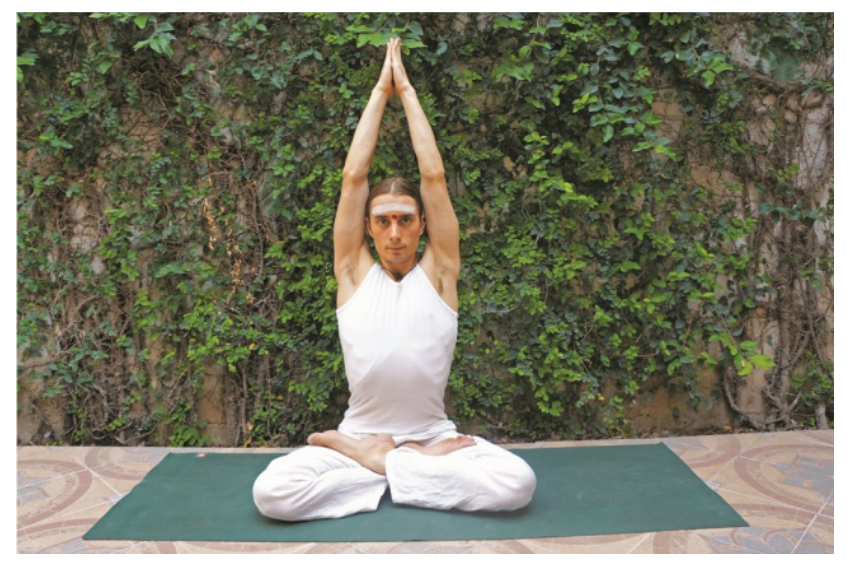
TECHNIQUE
- Place the right foot on the left thigh
- Now place the left foot on the right thigh
- Keep both the arms raised above the head and join the hands
- Remain in this pose 30 seconds (This should be practised in both sitting as well as Lying conditions. But now we do following kumbhakas in sitting pose only)
IN PARVATA ASANA, NEXT- 2. SHEETHALEE KUMBHAKA GHERANDA SAMHITA, UPADESHA 5, VERSES 73 & 74
जिह्वया वायुं आकृष्य उदरे पूरयेत् शनैः ।
क्षणं च कुम्भकं कृत्वा नाशाभ्यां रेचयेत् पुनः ॥
सर्वदा साधयेत् योगी शीतली कुम्भकं शुभम् ।
अजीनं कफ–पित्तं च नैव तस्य प्रजायते ॥
Jihvayaa Vaayum Aakrushya Udare Poorayet Shanaihi | Kshanam Cha Kumbhakam Krutvaa Naasaabhyaam Rechayet Punaha || 5.73 || |
Sarvadaa Saadhayet Yogee Sheethalee-kumbhakam Shubham | Ajeernam Kapha-Pittam Cha Naiva Tasya Prajaayathe || 5.74 ||
TRANSLATION Draw in the air through the mouth (with lips contracted and tongue thrown out), and fill the stomach slowly. Retain it there for a short time. Then exhale through both the nostrils. Let the Yogi always practice this Sheethalee Kumbhaka, giver of bliss; by so doing, he will be free from digestion, phlegm and bilious disorders.
TECHNIQUE
- Continue to sit in same asana
- Close the eyes and relax the whole body
- Extend the tongue outside the mouth and roll the sides of the tongue up so that it forms a tube
- Inhale slowly through the tongue and fill the abdomen slowly
- At the end of inhalation, roll the tongue in, close the mouth
- Retain it there for a short time
- Then exhale through both the nostrils 8. Do this 3 minutes
IN PARVATA ASANA, NEXT-
3. – SEETHKAAREE PRAANAAYAAMA HATHA PRADEEPIKAA, UPADESHA 4, VERSE 43
सीत्कां दद्यात् सदा वक्त्रे घ्राणेनैव विसर्जयेत् ।
एवमभ्यास योगेन कामदेवो द्वितीयकः ॥
Seethkaam dadyaath sadaa Vaktre Ghraanenaiva Visarjayet |
Evam Abhyaasa-Yogena Kaamadevo Dviteeyakaha ||4.43||
TRANSLATION By drawing the breath in through the mouth, make a hissing sound, without opening the mouth, and exhale through the nose. By practicing this, one becomes a second Kaamadevatha (god of love).
TECHNIQUE
- Stay in same asana
- Press the lower and upper teeth together and separate the lips as much as comfortable
- Breath in slowly through the gaps of the teeth
- Listen to the sound of the breath as the air is being drawn in
- Close the mouth at the end of the inhalation
- Exhale slowly through the nose
- Do this for 7 minutes
NEXT-
4. RUDRASANA YOGAASANA MAALAA SACITRA || VERSE: 25
पगथली संपुट करि हाथस्यौ पग उचाई ।
पगाका अंगुठा दोउ लेऊ परलीकानी तालवै लगावै ।
पछै दोउ हाथ पगामाहे करि नीचै करि चीरै आणि ।
पगाकी आगल्यापर कांकसी करै दृष्टि नासा अग्र ।
आसन कौगुण द्र विषै कही भाति कौ रोग होई ।
यदि यहु आसण करी आगानै सोवै जैअवरजाई ।
गारोगपीडा होईतौ यहु आसण करि मूलद्वार तेकि धरति ।
स्यौंबैसे जैरोगनहोई तौ सूइछा आसन करीबौ करै ॥ जज२५जज
Pagathalee Samputa Kari Haathasyau Paga Ucaayee |
Pagaakaa Angutaa Dovu Levoo Paraleekaanee Taalavai Lagaavai | Pachaai Dovu Haatha Pagaamaahe Kari Neecai Kari Ceerai Aani | Pagaakee Aagalyaapara Kaankasee Karai Drishti Naasaa Agra | Aasana Kauguna Oodra Bishai Kahee Bhaati Kau Roga Hoyee | Yadi Yahu Aasana Karee Aagaanai Sovai Jaiavarajaayee | Gaarogapeedaa Hoyeetau Yahu Aasana Kari Mooladvaara Teki Dharati | Syaubaise Jairoganahoyee Tau Sooichaa Aasana Kareebau Karai ||25||
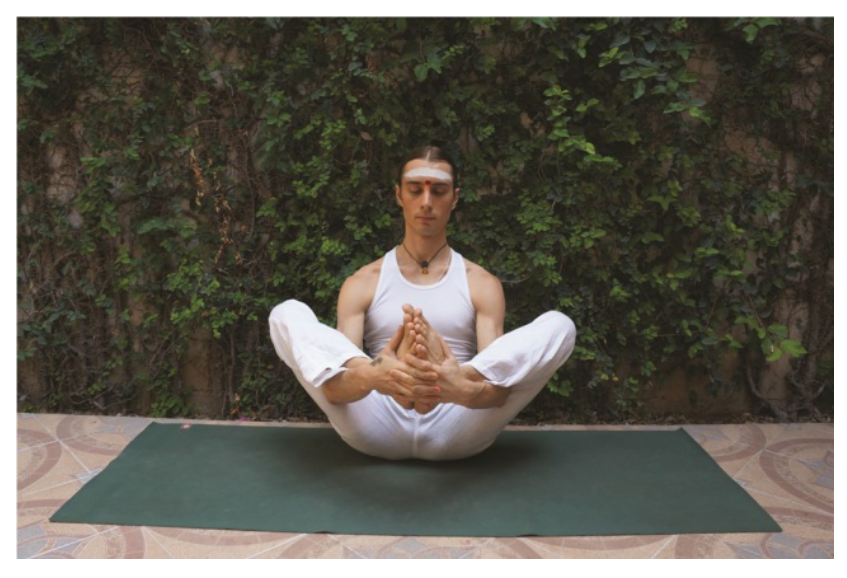
TRANSLATION-cum-TECHNIQUE
- Be seated on the ground
- Hold the corresponding feet by inserting hands under the pair of heels
- Bring the heels towards chest
- Fix the gaze at the tip of the nose
- Remain in this pose 30 seconds
IN RUDRASANA NEXT -
5. TRINETRA KUMBHAKA
KUMBHAKA PADDHATHI, VERSE: 192
सकृच्चन्द्रेण चापूर्य धार्यं सूर्येण पूरयेत् ।
नियम्य पूरयेन्नो यां धारयित्वा यथाविधि ॥
त्रिनेत्रकुम्भकः प्रोक्तः त्रिनेत्रेण त्रिसिद्धिदः ॥
SakruthChandrenaChaapoorya DhaaryaSooryenaPoorayeth | NiyamyaPoorayennobhyaam DhaarayithvaaYathaa-Vidhi || Thrinethra-KumbhakahaProkthaha ThrinethrenaThrisiddhidhaha ||
TRANSLATION
Inhale through the left nostril and retain, inhale through the right nostril and retain and then inhale through both the nostrils, retain the breath (all these in one shot before exhalation). This is the Trinetra Kumbhaka – the giver of three siddhis – as explained by the three-eyed Shiva.
TECHNIQUE
- Inhale through the left nostril
- Hold the breath as long as you can judiciously
- Without exhalation, inhale through the right nostril
- Hold the breath as long as you can judiciously
- Again without exhaling, inhale through both the nostrils
- Hold the breath as long as you can judiciously
- Now exhale through both the nostrils slowly
- Do this 21 times
IN RUDRASANA NEXT –
6. TRISHOOLA KUMBHAKA KUMBHAKA PADDHATHI, VERSE: 193
घोणा यां च मुखेनापि युगपत् पूरयेत् सदा ।
त्रिशूलिना त्रिशूलाख्यः कुम्भ उक्तस्त्रिशूलनुत् ॥
Ghonaabhyaam Cha Mukhenaapi YugapathPoorayethSadhaa | ThrishoolinaaTrishoolaakhyaha KumbhaUkthas-Trishoolanuth ||193||
TRANSLATION Always inhale through the nostrils and mouth together at a time. This is called the Trishoola Kumbhaka – the remover of triple sufferings – as explained by the Thrishooli Shiva.
TECHNIQUE
- Inhale through the nostrils and also through the mouth simultaneously
- Hold the breath as long as you can judiciously
- Now exhale through the nostrils slowly and relax
- Do this 21 times
END OF KRIYA
Kriya Date
20-Jan-2012