CARE FOR STIFF KNEES & KNEE PAIN
This text was machine-transcribed from the printed book and may contain errors. Select the words and choose “Report a mistake”.
Disease Description
Knee pain is a common complaint for many people. There are several factors that can cause knee pain. Awareness and knowledge of knee pain causes lead to faster diagnosis and treatment. Knee pain can be related to knee joint or around the knee. Pain in one of the knees is most commonly caused by overusing the knee or suddenly injuring it.
STEPS TO BE FOLLOWED
- DURVAASA ASANA
- NAAGA KUMBHAKA
- BHRAAMAREE KUMBHAKA
- KUMUDA KUMBHAKA
1. DURVAASA ASANA
YOGAASANA MAALAA SACITRA, VERSE: 87
डाई जांघ परिकरि जीमणौ पग डाई पाषती आणि ।
फणा दोउ धरति टेकी बारला गुल्फ कुला की बारिली कानी लगावै ।
डावा हाथकी आगुल्या की बीचली स्यंधि स्यू ।
जीमणा हाथकी आगुल्या का अंग्र लगावै ।
ऊपरा थली सुधा हाथ राषै हथेली की बारली कोर मेडू उर्द्ध लगावै ।
द्रिष्ट्रि त्रिकुटी आसण कौगुण गरमी आदिदि रोग जाय सीतल रहै ।
Daayee Jaangha Parikari Jeemanau Paga Daayee Paashati Aani | Phanaa Dovu Dharathi Tekee Baarala Gulpha Kulaa Kee Baarilee Kanee Lagaavai | Daavaa Haathakee Aagulyaa Kee Beechali Syandhi Syoo | Jeemanaa Haathakee Aagulyaa Kaa Angra Lagaavai | Ooparaa Thalee Sudhaa Haatha Raashai Hathelee Kee Baaralee Kora Medra Urddha Lagaavai | Drishti Thrikutee Aasana Kauguna Garami Aadhidhi Roga Jaaya Seethala Rahai ||87||
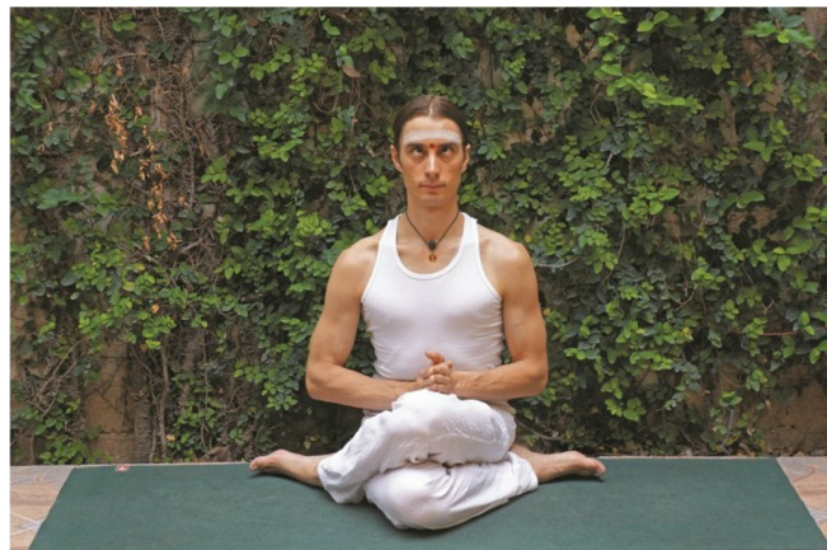
TRANSLATION-cum-TECHNIQUE
- Stay on the floor
- Bend your right knee and place the right leg on the left side hip
- Bend the left knee and place the left foot on the above the right thigh so that the left foot is placed near the right side hip
- Touch the right hand finger tips with the middle joints of left fingers
- Place the hands on the genitals
- Fix the gaze at the eye brow center
- Remain in this position for 30 seconds
IN DURVAASA ASANA, NEXT
2. NAAGA KUMBHAKA KUMBHAKA PADDHATHI, VERSES: 77 & 78
ओदनग्रासवद्वायुं कण्ठेनापूरयेच्छनैः ।
तं रोधयेद्यथाकालं बध्वा जालन्धरं दृढम् ॥
कण्ठेन रेचनं कुर्यात् नागकुम्भः शिवोदितः ।
क्षुधां जयेत् पिपासां च फलमस्य समीरितम् ॥
Odhana-Graasavath-Vaayum Kantena-Aapoorayeth Shanaihi | Tham RodhayethYathaa-Kaalam Badhvaa Jaalandharam Dhrudam ||77||
Kantena Rechanam Kuryaath NaagaKumbhaha Shivodithaha | Kshudhaam Jayeth Pipaasaam Cha Phalamasya Sameeritham || 78 ||
TRANSLATION One should fill the air slowly into the throat like swalowing a morsel of rice and should retain it for maximum possible time, with firm application of Jaalandhara Bandha and then should exhale it from the throat. This is Naaga kumbhaka explained by Shiva. By this practice one is able to win over hunger and thirst.
TECHNIQUE
- Swallow air very slowly and let the air go little by little like eating rice morsel by morsel.
- Once you are full, immediately contract the throat, place the chin on the chest
- Hold the breath in this posture as long as possible
- Then release the lock and exhale slowly from the throat
- Do this 21 times
IN DURVAASA ASANA, NEXT
3. – BHRAAMAREE KUMBHAKA
KUMBHAKA PADDHATI, VERSE: 169
अलिशब्दयुतं वेगात् पूरयेत् कुम्भयेत्ततः।
सालिशब्दाच्छनै रेकात् भ्रामरीकुम्भको मुनेः॥ ॥
Alishabdhayutham Vegaath Poorayeth Kumbhayeth-Thathaha | SaalishabdhaathShanai Rekaath Bhraamareekumbhako Munehe ||169||
TRANSLATION One should inhale rapidly producing the sound of male bee, then hold and then exhale slowly with the sound of female bee. This is called Bhraamaree Kumbhaka.
TECHNIQUE
- Inhale rapidly with the sound 'mmm' of a bee
- Hold
- Exhale steadily and slowly with the sound of a 'mmm' of a bee
- Do this 21 times
(you have to take something to eat within 10-15 minutes after doing this kumbhaka)
IN DURVAASA ASANA, NEXT
4. KUMUDA KUMBHAKA
KUMBHAKA PADDHATHI, VERSE: 190
॥ अथ कुमुदकुम्भकः ॥
पूरयेच्चन्द्रमार्गेण धारयित्वाध्वजायुधे ।
रेचयेत्तमुभा यां चेत्कुमुदः कुम्भकः स्मृतः ॥
Poorayeth Chandra-Maargena DhaarayithvaaDhvajaayudhe |
RechayethThamUbhaabhyaam ChethKumudaha Kumbhakaha Smruthaha ||190||
TRANSLATION The breath should be inhaled through the left nostril. After retaining the breath, if the exhalation is done through both the nostrils, it is called Kumuda Kumbhaka.
TECHNIQUE
- Inhale through the left nostril
- Hold the breath
- Exhale through both the nostrils
- Repeat this 21 times
END OF KRIYA
Kriya Date
11-Feb-2012