CARE FOR HEART DISEASES
This text was machine-transcribed from the printed book and may contain errors. Select the words and choose “Report a mistake”.
Disease Description
Cardiovascular disease is any of a number of specific diseases that affect the heart itself and/or the blood vessel system, especially the veins and arteries leading to and from the heart.
Apart from congenital heart diseases, in which the person is born with the heart disease, three most common types of acquired heart disease are Coronary Artery Disease, if they become blocked, blood cannot flow through them normally. Blocked arteries in the heart are often caused by smoking, high cholesterol, high blood pressure, diabetes and inherited traits from parents. Congestive Heart Failure (CHF) – This is a condition that means that the heart is not pumping at normal levels. Bad Heart Rhythms – This is a problem with electrical activity in the heart. This can make the heart beat too fast or too slow.
A person can have heart disease and not feel sick. Some people with heart disease have symptoms. Some symptoms of heart disease are pain in the chest--the heart muscle is not getting enough flow to keep it going, trouble breathing--blood may back up into the lungs, palpitations, swelling of feet or legs, feeling weak, Cyanosis (skin turning a blue color) means that too little oxygen is in the bloodstream to supply the cells in the body.
Cardiovascular diseases remain the biggest cause of deaths worldwide, throughout the last two decades.
STEPS TO BE FOLLOWED
- BHUJANGA ASANA
- UDDEEYAANA BANDHA
- JAALANDHARA BANDHA
- BHADRA ASANA
- SHEETHALEE KUMBHAKA
- SEETHKAAREE PRAANAAYAAMA
1. BHUJANGA ASANA
GHERANDA SAMHITA, UPADESHA 2, VERSES: 41-42
अष्ठᅀछ्छ्ञ्चलम्पः!,
अङ्गुष्ठनाभिपर्यन्तमधो भूमौ विनिन्यसेत् ।
करतलाभ्याञ्च धरां धृत्वा ऊर्ध्व शीर्षं फणीवहि ॥
देहाग्निर् वर्तते नित्यं सर्वरोगविनाशनम् ।
जागर्ति भुजगी देवी भुजङ्गासन साधनात् ॥
Angushta-Naabhi-Paryantam Adho-Bhoomau Vininyaseth |
Kara-Thalaabhyam Dharaam Dhrutvaa Oordhva-Sheershaha Phaneeva Hi ||2.42||
Dehaagnir-Varddhate Nithyam Sarva-Roga-Vinaashanam |
Jaagarthi Bhujagee Devee Bhujagaasana-Saadhanaath ||2.43||
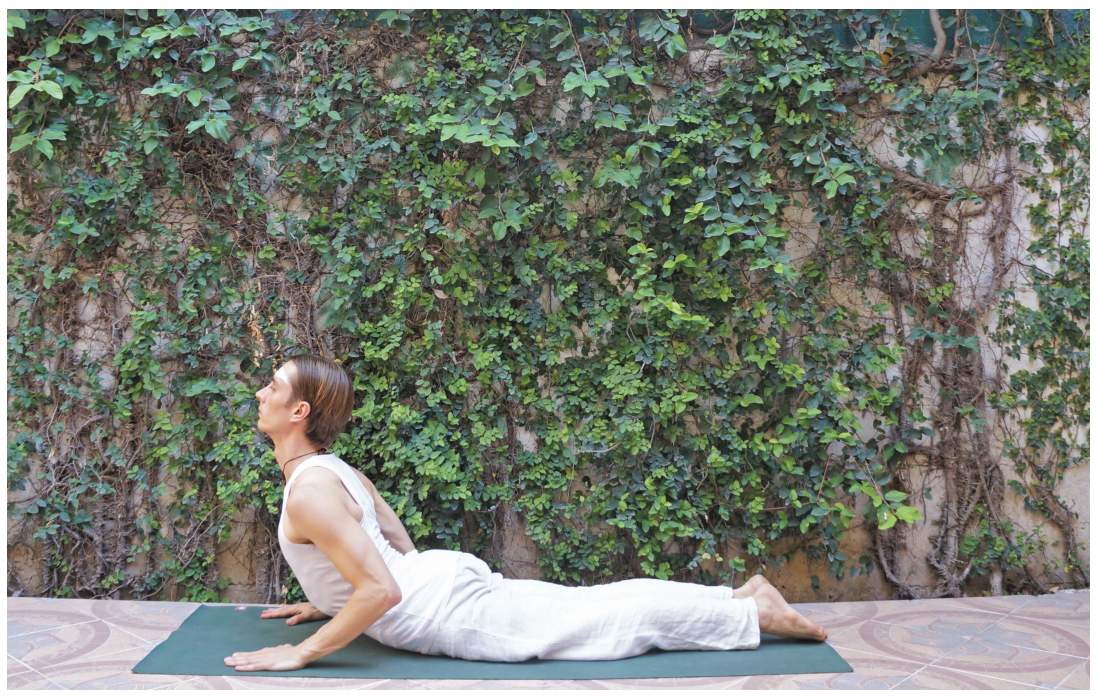
TRANSLATION Let the body, from navel downwards to the toes, touch the ground place the palms on the ground, raise the head (the upper portion f the body) like a serpent. This is called the serpent posture. This always increases the bodily heat, destroys all diseases and by the posture of this posture the serpent-Goddess (the kundalini force) awakes.
TECHNIQUE
- Lie flat on the stomach with legs straight, feet together and soles of the feet facing upward
- Place the palms of the hands flat on the floor, below and slightly to the side of the shoulders
- The fingers should be together and pointing forward
- The arms should be positioned so that the elbows point backward and are close to the sides of the body
- Rest the forehead on the floor and close the eyes
- Relax the whole body, especially the lower back
- Slowly raise the head, neck and shoulders
- Straightening the elbows, raise the trunk as high as possible
- Use the back muscles more than the arm muscles (Be aware of using the back muscle first while starting to raise the trunk. Then use the arm muscle to raise the trunk further and arch the back)
- Tilt the head backward, so that the chin points forward and the back of the neck is gently compressed
- In the final position, the pubic bone remains in contact with the floor and the navel is raised a maximum of 3 cm (if the navel is raised too high, the bend tends to be in the knees and not in the back)
- The arms may or may not be straight
- Hold the final position for 60 seconds 14. To return to the starting position, slowly bring the head forward, release the upper back by bending the arms, lower the navel, chest, shoulders and finally the forehead to the floor
15. Relax the lower back muscles
IN BHUJANGA ASANA, NEXT-
2. UDDEEYAANA BANDHA
GHERANDA SAMHITA, UPADESHA-3, VERSE: 10
॥ अथ उड्डीयान-बन्धः ॥
उदरे पश्चिमं तानं नाभेरुर्ध्वं तु कारयेत्।
उड्डानं कुरुते यस्मादविश्रान्तं महाखगः।
उड्डीयानं त्वसौ बन्धो मृत्यु-मातङ्ग-केसरी ॥
Udare pashchimam taanam Naabheroordhvam tu kaarayet |
Uddaanam kurute yasmat Avishraantam mahaakhagaha |
Uddeeyaanam tvasau bandhao Mrutyu-Maatanga-Kesaree || 3.10 ||
TRANSLATION
One should contract the bowels above and below the navel so that the abdominal organs touch the back. The one who practices this uddeeyaana bandha continuously becomes a conqueror of death. The great bird (Kundalini) flies up in the Sushumna and flies there itself constantly.
TECHNIQUE
- Get into Bhujanga asana. Head should be up and eyes open
- Take a deep breath in and exhale completely, but do not be forceful
- After exhaling, perform jalandhara bandha by moving the chin down to the chest and raising the shoulders
- Pull the abdominal muscles inward so that the organs of the abdomen touch the back muscles
- Hold as long as you can
- When you can't hold anymore, Before inhaling, relax the abdomen and release jaalandhara bandha by raising the head
- Then inhale through the nostrils slowly
- Before repeating another round, breathe normally for a minute or two
- Initially start with 3 times and gradually increase upto 10 times
IN BHUJANGA ASANA, NEXT-
3. JAALANDHARA BANDHA
THE GHERANDA SAMHITA, UPADESHA 3, VERSE: 12
॥अथ जालन्धरबन्धकथनम् ॥
कण्ठसङ्कोचनं कृत्वा चिबुकं हृदये न्यसेत् ।
जालन्धरे कृते बन्धे षोडशाधारबन्धनम् ॥
Kanta-sankochanam krutvaa Chibukam hrudaye nyaset | Jaalandhare krute bandhe Shodasha-aadhaara-bandhanam ||3.12||
TRANSLATION Contracting the throat, place the chin on the chest. This is called Jaalandhara Bandha. By this bandha the sixteen adharas are closed.
TECHNIQUE
- Remain in same asana
- Inhale fully
- Place the chin on the chest and contract the throat
- Fix the Gaze at the tip of the nose
- Hold as long as possible judiciously
- Release the throat lock and exhale slowly, when you feel you can't hold anymore
- Rest with the forehead on the ground for a moment
NEXT-
4. BHADRA ASANA
GHERANDA SAMHITA, UPADESHA 2, VERSES: 9 & 10
अथ भद्रासनम्
गुल्फौ चु भभ्रथभहभधरभभकभभभ्र रभद्धप्रिह्यटभभ्रहभ समाहितः ।
पादाङ्गुष्ठौ म्द्यभपरभभगचभ धृत्वा च पृष्ठदेशतः ॥
जालन्धरं समासाद्य नासाग्रमवलोकयेत् ।
भद्रासनं भवेदेतत् सर्व्वव्याधिविनाशनम् ॥
Gulphau cha Virushanasyadho vyuthkramena samaahitaha | Paada-angushtau karaabhyaam cha Dhrutvaa cha prushta-deshataha ||2.9||
Jaalandharam samaasaadya Naasaagram avalokayet| BHADRA ASANAm bhavet etat Sarva-vyaadhi-vinaashakam ||2.10||
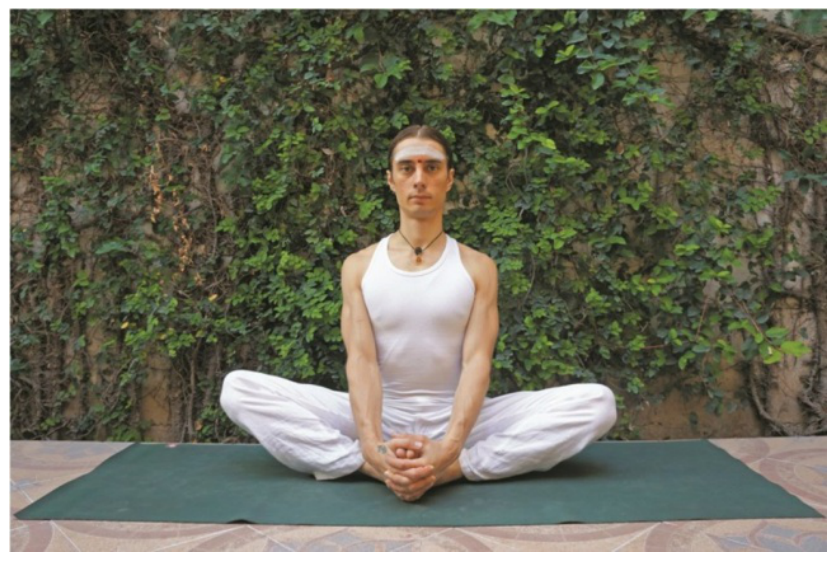
TRANSLATION Place the heels crosswise under the genitals attentively; cross the hands behind the back and take hold of the toes of the feet . Fix the gaze on the tip of the nose, having previously adopted the mudra called Jaalandhara (explanation comes next). This is Bhadra asana which destroys all sorts of diseases.
TECHNIQUE
- Bend both the legs to the back, keep the feet facing up and Sit on it
- Take both your hands to the back and hold your right toes with the left hand and left toes with the right hand
- Do Jaalandhara bandha, contract your throat, bend your chin and rest it on your chest
- Concentrate your gaze on the tip of your nose
- Remain in this pose for 30 seconds and release the Jaalandhara bandha
IN BHADRA ASANA, NEXT-
5. SHEETHALEE KUMBHAKA
GHERANDA SAMHITA, UPADESHA 5, VERSES 73 & 74
जिह्वया वायुं आकृष्य उदरे पूरयेत् शनैः ।
क्षणं च कुम्भकं कृत्वा नाशाभ्यां रेचयेत् पुनः ॥
सर्वदा साधयेत् योगी शीतली कुम्भकं शुभम् ।
अजीनं कफ-पित्तं च नैव तस्य प्रजायते ॥
Jihvayaa Vaayum Aakrushya Udare Poorayet Shanaihi | Kshanam Cha Kumbhakam Krutvaa Naasaabhyaam Rechayet Punaha || 5.73 ||
Sarvadaa Saadhayet Yogee Sheethalee-kumbhakam Shubham | Ajeernam Kapha-Pittam Cha Naiva Tasya Prajaayathe || 5.74 ||
TRANSLATION Draw in the air through the mouth (with lips contracted and tongue thrown out), and fill the stomach slowly. Retain it there for a short time. Then exhale through both the nostrils. Let the Yogi always practice this Sheethalee Kumbhaka, giver of bliss; by so doing, he will be free from digestion, phlegm and bilious disorders.
TECHNIQUE
- Continue to sit in same asana
- Close the eyes and relax the whole body
- Extend the tongue outside the mouth and roll the sides of the tongue up so that it forms a tube
- Inhale slowly through the tongue and fill the abdomen slowly
- At the end of inhalation, roll the tongue in, close the mouth
- Retain it there for a short time
- Then exhale through both the nostrils
- Do this 21 times
IN BHADRA ASANA, NEXT
6. SEETHKAAREE PRAANAAYAAMA
HATHA PRADEEPIKAA, UPADESHA 4, VERSE 43
सीत्कां दद्यात् सदा वक्त्रे घ्राणेनैव विसर्जयेत् ।
एवमभ्यास योगेन कामदेवो द्वितीयकः ॥
Seethkaam dadyaath sadaa Vaktre Ghraanenaiva Visarjayet | Evam Abhyaasa-Yogena Kaamadevo Dviteeyakaha ||4.43||
TRANSLATION By drawing the breath in through the mouth, make a hissing sound, without opening the mouth, and exhale through the nose. By practicing this, one becomes a second Kaamadevatha (god of love).
TECHNIQUE
- Stay in same asana
- Press the lower and upper teeth together and separate the lips as much as comfortable
- Breath in slowly through the gaps of the teeth
- Listen to the sound of the breath as the air is being drawn in
- Close the mouth at the end of the inhalation
- Exhale slowly through the nose
- Do this 21 times
END OF KRIYA Kriya Date 03-Nov-2011