CARE FOR ATTENTION DEFICIT DISORDER (ADD)
This text was machine-transcribed from the printed book and may contain errors. Select the words and choose “Report a mistake”.
Disease Description
ADHD predominantly inattentive (ADHD-PI or ADHD-I) is one of the three subtypes of Attention-deficit hyperactivity disorder (ADHD). While ADHD-PI is sometimes still called "attention deficit disorder" (ADD) by the general public, these older terms were formally changed in 1994 in the new Diagnostic and Statistical Manual of Mental Disorders, fourth edition (DSM-IV).
ADHD-PI is similar to the other subtypes of ADHD in that it is characterized primarily by inattention, easy distractibility, disorganization, procrastination, and forgetfulness; where it differs is in lethargy - fatigue, and having fewer or no symptoms of hyperactivity or impulsiveness typical of the other ADHD subtypes.
In some cases, children who enjoy learning may develop a sense of fear when faced with structured or planned work, especially long or group-based that requires extended focus, even if they thoroughly understand the topic.
Children with ADHD-PI may be at greater risk of academic failures and early withdrawal from school. Teachers and parents may make incorrect assumptions about the behaviors and attitudes of a child with ADHD-PI, and may provide them with frequent and erroneous negative feedback (e.g. "you're irresponsible", "you're immature", "you're lazy", "you don't care/show any effort", "you just aren't trying",etc.).
The inattentive children may realize on some level that they are somehow different internally from their peers. However, they are also likely to accept and internalize the continuous negative feedback, creating a negative self-image that becomes self-reinforcing. If these children progress into adulthood undiagnosed or untreated, their inattentiveness, ongoing frustrations, and poor self-image frequently create numerous and severe problems maintaining healthy relationships, succeeding in postsecondary schooling, or succeeding in the workplace.
These problems can compound frustrations and low self-esteem, and will often lead to the development of secondary pathologies including anxiety disorders, sexual promiscuity, mood disorders, and substance abuse. It has been suggested that some of the symptoms of ADHD present in childhood appear to be less overt in adulthood. This is likely due to an adult's ability to make cognitive adjustments and develop coping skills minimizing the frequency of inattentive or hyperactive behaviors. However, the core problems of ADHD do not disappear with age.
STEPS TO BE FOLLOWED
1. VAJRA ASANA
- DAKSHINAVARTHA SHANKHA KUMBHK A
- VAMAVARTHA SHANKHA KUMBHAKA
- GADAA KUMBHAKA
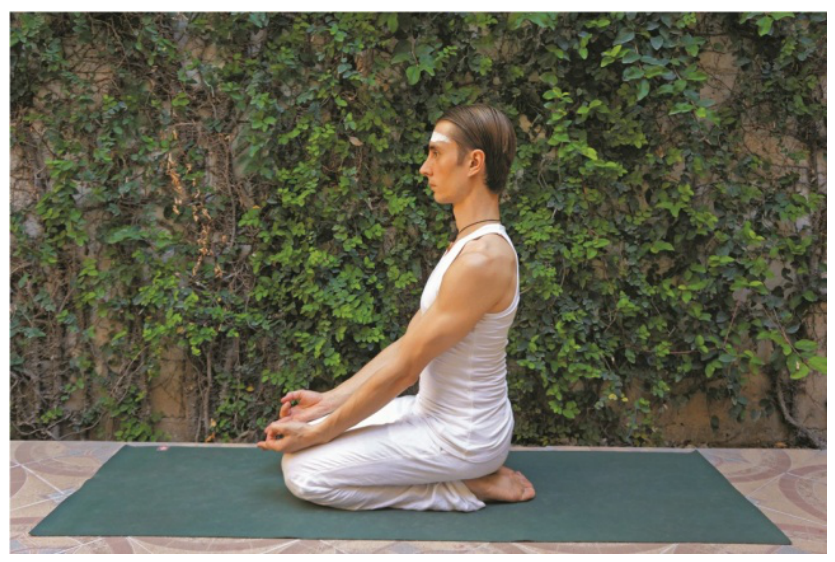
1. VAJRA ASANA
GHERANDA SAMHITA, UPADESHA 2, VERSE 12
॥ अथ वज्रासनम् ॥
जङ्घा यां वज्रवत् कृत्वा गुदपार्श्वे पदावुभौ ।
वज्रासनं भवेदेतत्द्योगिनां सिद्धिदायकम् ॥
Janghaabhyaam Vajravath Kruthvaa Gudha-Paarshve Padhaavubhau | Vajraasanam Bhavedethad Yoginaam Siddhidaayakam ||2.12||
TRANSLATION Having hardened the thighs like steel, and placing both the legs on the sides of the anus is called Vajra asana, which gives great extraordinary powers.
TECHNIQUE
- With knees, ankles and big toes touching the ground, stand on a kneeling position.
- Sit erect with the heels under your buttocks
- Erect in this asana 30 seconds
IN VAJRA ASANA, NEXT-
2. DAKSHINAAVARTA SHANKHA KUMBHAKA
KUMBHAKA PADDHATI, VERSE: 110
चक्रकुम्भकं द्विधा कुर्यादग्निशोमं तथैकधा ।
शङ्खकुम्भोऽयमीशेन पूर्ववद् द्विविधः स्मृतः ॥११०
chakrakumbhakam dvidhaa kuryaadagnishomam tathaikadhaa | shankakumbho (a)yameeshena poorvavad dvividhah smrutah ||
TRANSLATION Practising chakra kumbhaka twice and agnishoma kumbhaka once is called as shankakumbhaka. As said before Shanka kumbhaka is also of two types like chakra Kumbhaka
TECHNIQUE
- Inhale deeply and fully through the right nostril
- Hold the breath inside as long as possible
- When you can’t hold anymore slowly release the breath through the left nostril
- Again inhale deeply and fully through the right nostril
- Hold the breath inside as long as possible
- When you can’t hold anymore slowly release the breath through the left nostril (practice as described from points 1-6 once more. With this two rounds of Dakshinavartha chakrakumbhaka is completed. Then do one round of agnishoma kumbhaka as described below)
- Inhale through the right nostril
- Hold the breath
- Exhale through the left nostril
- Now inhale through the left nostril
- Hold the breath
- Exhale through the right nostril
- Do this 21 times
IN VAJRA ASANA, NEXT
3. VAAMAAVARTHA SHANKHA KUMBHAKA KUMBHAKA PADDHATI
VERSE: 110
चक्रकुम्भकं द्विधा कुर्यादग्निशोमं तथैकधा ।
शङ्ककुम्भोऽयमीशेन पूर्ववद् द्विविधः स्मृतः ॥११०
chakrakumbhakam dvidhaa kuryaadagnishomam tathaikadhaa | shankakumbho (a)yameeshena poorvavad dvividhah smrutah || 110
TRANSLATION Practising chakra kumbhaka twice and agnishoma kumbhaka once is called as shankakumbhaka. As said before Shanka kumbhaka is also of two types like chakra Kumbhaka -Kumbhaka Paddhati, 110th Verse
TECHNIQUE
- Inhale through left nostril
- Hold the breath as long as you can judiciously 3. Exhale through the right nostril
- Again inhale through left nostril
- Hold the breath as long as you can judiciously
- Exhale through the right nostril (practise as described from points 1-6 once more. With this two rounds of Dakshinavartha chakrakumbhaka is completed. Then do one round of agnishoma kumbhaka as described below)
- Inhale through the right nostril
- Hold the breath
- Exhale through the left nostril
- Now inhale through the left nostril
- Hold the breath
- Exhale through the right nostril
- Do this 21 times
IN VAJRA ASANA, NEXT-
4. GADAA KUMBHAKA
KUMBHAKA PADDHATHI, VERSE 112
उभा यां पूरणं यत्र रेचनं सूर्यवर्त्मना ।
गदाकुम्भः शिवेनोक्तो योगिनो बलकारकः ॥
Ubhaabhyaam Pooranam Yathra Rechanam Soorya-Vartmanaa| Gadaakumbhaha-Shivenoktho Yogino Balakaarakaha||112||
TRANSLATION When the inhalation is performed through both the nostrils and exhalation through the right one, it is called Gadaakumbhaka explained by Shiva and strengthener of Yogis.
TECHNIQUE
- Inhale through both the nostrils
- Hold the breath
- Exhale through the right nostril
- Do this 21 times
END OF KRIYA
Kriya Date
21-Jan-2012