Mystic Phenomena Scientific Data
This text was machine-transcribed from the printed book and may contain errors. Select the words and choose “Report a mistake”.
Paramahamsa Nithyananda .......................................................................................... 5
Dr. R. Murali Krishna, M.D. ........................................................................................ 7
Integris Jim Thorpe Rehab. Center - PET tests .......................................................... 10
Body, Mind & Spirit ................................................................................................... 18
Dr. Juan Acosta-Urquidi & Ann Trechak - EEG .......................................................... 19
Dr. Juan Acosta-Urquidi & Ann Trechak - EEG .......................................................... 22
Health, Healing & Energy ........................................................................................... 26
Dr. Acosta-Urquidi & Ann Trechak - Brain studies ..................................................... 27
Intelligence, Consciousness & Energy ........................................................................ 41
Dr. William Collins; Neurofeedback .......................................................................... 42
Appendix A - Definitions ............................................................................................ 47
Appendix B - Life Bliss Foundation Offerings ............................................................ 51
Nithyananda Meditation Academies .......................................................................... 56
Paramahamsa Nithyananda
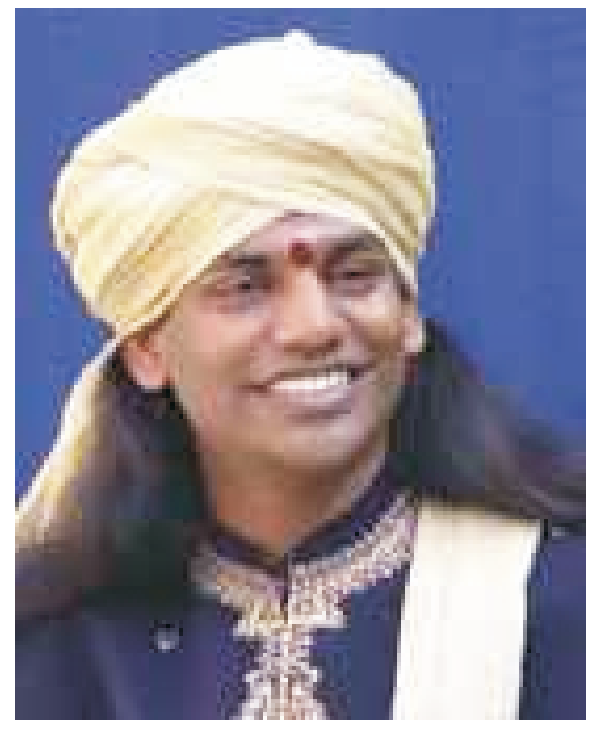
Paramahamsa Nithyananda is a Master and modern mystic living
amidst us today. Starting out at a young age, and enduring years of
intense penance, he persevered with the single-pointed vision of
experiencing inner bliss. He traversed the length and breadth of
India, studying yoga, tantra and other Eastern metaphysical Sciences
with great Masters in India and Nepal. He had many profound
spiritual experiences before experiencing the ultimate inner bliss.
His mission is to help each individual actualize his inherent
potential. With a pragmatic and compassionate approach, and an
enlightened insight into the core of human nature, he has emerged
as an inspiring personality touching and transforming the lives of
millions of people across the world.
His divine healing touch has taken the shape of Nithya Spiritual Healing – a scientific system of
spiritual healing through meditation. Through his direct touch and through ordained healers, this
system of healing simulates the body’s inherent healing powers to heal various diseases at the physi-
cal and mental levels.
His lucid explanation of practical issues and simple and dynamic meditation techniques, help indi-
viduals blossom at the physical, emotional and spiritual levels.
Life Bliss Foundation is his worldwide movement to spread his message of meditation and bliss. With
its spiritual nerve center in Bangalore, India and the Western Hemisphere headquarters in Los Ange-
les, USA, it operates across 30 countries, working steadily in transformation of humanity through
transformation of the individual. Thousands of volunteers – Ananda Sevaks - work to support the
mission world over.
By offering himself as a living laboratory, Nithyananda works with scientists across the globe to
record and analyze the mystic phenomena through modern technology. He strives to bridge the mod-
ern Western system of logic and evidence and the ancient Eastern system of mysticism, for the benefit
of humanity.
He is continuing to intrigue the world of medical science with results from the study of his own
neurological and cardiac system. From the results recorded, scientists feel that the potential for alter-
ing the rates and progression of many diseases like heart ailments, cancer, arthritis, alcoholism etc. is
beginning to look achievable. They are compelled to declare that there continues to be indications that
the human mind can choose to heal the human body.
For centuries, science and spirituality have been battling on
these issues of perennial importance for humanity. Although
spiritual leaders have always maintained that the no-mind state
is a 'real' phenomenon, and a perfectly realizable goal for all
of us, the scientific community has naturally been unwilling
to accept this without solid proof.
For the first time in our century, science has hopefully found a
key to supernormal and paranormal phenomena, with sound
medical evidence that explains why the spiritually super-
evolved are blessed with 'powers' that the rest of us can only
dream about. The following pages are summaries of various
types of medical research conducted on Nithyananda during
his visits to the United States of America.
Meditation is the inherent nature of man. It is nothing to be discovered anew. Every child is born with
infinite intelligence in a state of meditation in this world. Society and state gift the ‘mind’ element to
the child and start conditioning its meditative state. When this process starts, the child slips from
intelligence to intellect.
Meditation is the art of keeping our inner space peaceful and blissful. It takes us from unconscious
decision-making to conscious decision-making. It frees us from the clutches of our own obscure
emotions. It brings us to the present. It gives us tremendous freedom in the inner and outer worlds. It
helps integrate the body, mind and spirit. It propels us from logic to intuition. Logic is a servant while
intuition is a Master. Meditation is the key to become a Master.
- Nithyananda
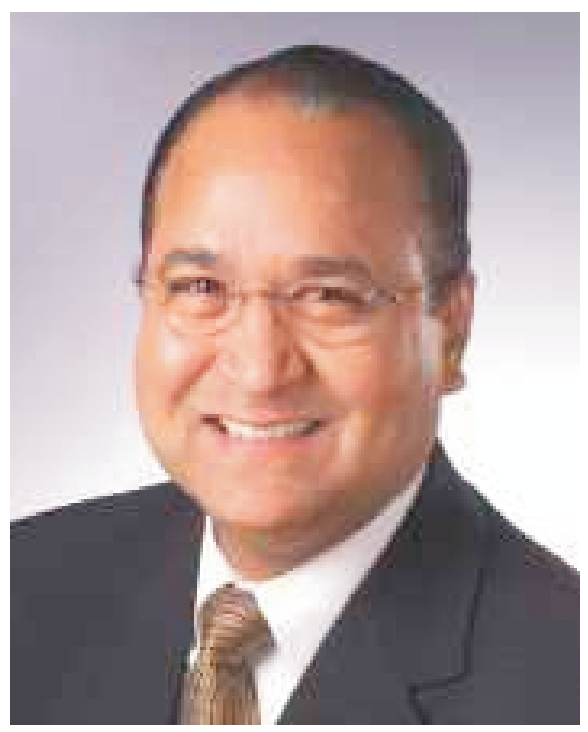
Dr. R. Murali Krishna, M.D.
President, James L. Hall, Jr. Center for Mind, Body & Spirit President
COO, INTEGRIS Mental Health Oklahoma City, Oklahoma, USA
(Following is a write up by Dr. Muralikrishna explaining why doctors
and Scientists the world over are time and again researching
spirituality to obtain tangible results; to bridge Science and
spirituality.)
For many people, spirituality underlies all that they do every moment.
Every thought word or deed of theirs stems from the spiritual chords
within. Spirituality is the ground in which they are rooted as they
work at their job, parent their children, visit with friends or greet
acquaintances. It may be an outwardly obvious action like
volunteering in a spiritual organization or it maybe a quiet thing, an
inner sense of peace and serenity, a trust in life, strength of conviction
beyond mundane logic. No matter how it manifests, medical research says that harboring spirituality
may bring a bonus: better health.
What is spirituality? It is about having a belief system that focuses on intangible elements or forces,
that add vitality and meaning to our life and life's events. Plain believing in those intangible elements
or forces is not enough, though. It is essential that the belief leads to personal experience of these
intangible forces adding meaning to our life.
Spirituality is not a concept limited to any one religion or denomination. It is not even linked to
worship in a church or temple, or belief in a certain God. Regardless of occupation, age, color or
religious affiliation, anyone can discover spirituality and benefit from it.
Medical science is finding more and more evidence of those benefits. Every progressive medical
study supports the notion that spirituality may have a positive effect on health. To be accurate, many
of these studies look at people's participation in religious activities, not strictly spirituality. But from
these studies, we have learned that regular attendees of religious services are likely to have lower
blood pressure than those who attend these less frequently or not at all. We have seen that elderly
people who regularly attend church have healthier immune system than those who don't. Another
study found that people over 60 years of age, who attended church weekly or more often were
significantly less likely in the previous year to have been admitted to the hospital.
These studies are scientifically valid, but still don't tell the whole story. Was it the spirituality inherent
in their religion that kept these people healthier, or was it the social support they received by being
part of a church community? Were they were healthier because the church helped them discover
meaning in their lives, or because their religion or church community discouraged use of tobacco,
alcohol or other drugs? Or was it simply that healthier people are able get up and go to church on a
weekly basis, while people in poorer health remain at home?
While these studies are indicators of the benefits of spirituality, the stronger evidence comes from
medical research into the power of prayer. There have been quite a number of studies in this area, of
which one of the more intriguing works has been done by Mitchell Krucoff, M.D., and Suzanne
Crater, N.P., at Duke University’s Medical Center.
In their study, Krucoff and Crater looked at heart disease patients. The level of each patient’s spiritu-
ality was determined through surveys and other assessment tools. Some patients received only stan-
dard medical therapy. Others received standard therapy along with therapies such as healing touch,
stress relaxation and guided imagery. A final group of patients (who also received the standard therapy)
were prayed for by diverse prayer groups – Carmelite nuns near Baltimore, Baptists in North Caro-
lina, Buddhist monks in Paris and Nepal, etc. None of these people knew there were special prayer
groups saying prayers for their recovery.
Compared to the standard therapy group, the prayer group experienced a 50 percent reduction of
every adverse outcome. Broken down even further, the results were equally interesting. Patients strongly
rooted in a spiritual community did well, regardless of the therapy they received. Patients not rooted
in a spiritual community had better outcomes when they were prayed for than when they were not.
Patients who prayed on their own at least once a day or who felt spirituality was important in their
daily lives, had better outcomes when receiving healing touch, stress relaxation and guided imagery
than when receiving only standard therapy.
Prayer is a spiritual practice. It is intangible. And yet we are learning that when you offer prayers, or
even when others pray for you without your knowledge, there are health benefits.
How can you get in touch with your spirituality?
First, make a conscious effort to tune into spirituality. In the air all around you right now, there are
signals from television stations. To you, they
are intangible. You cannot hear, see or feel any
of them – unless you turn on your television, a
mechanism for tuning in the signals. For spiri-
tuality, too, you must have the capacity to tune
in. You must have openness and willingness to
look into seemingly intangible processes.
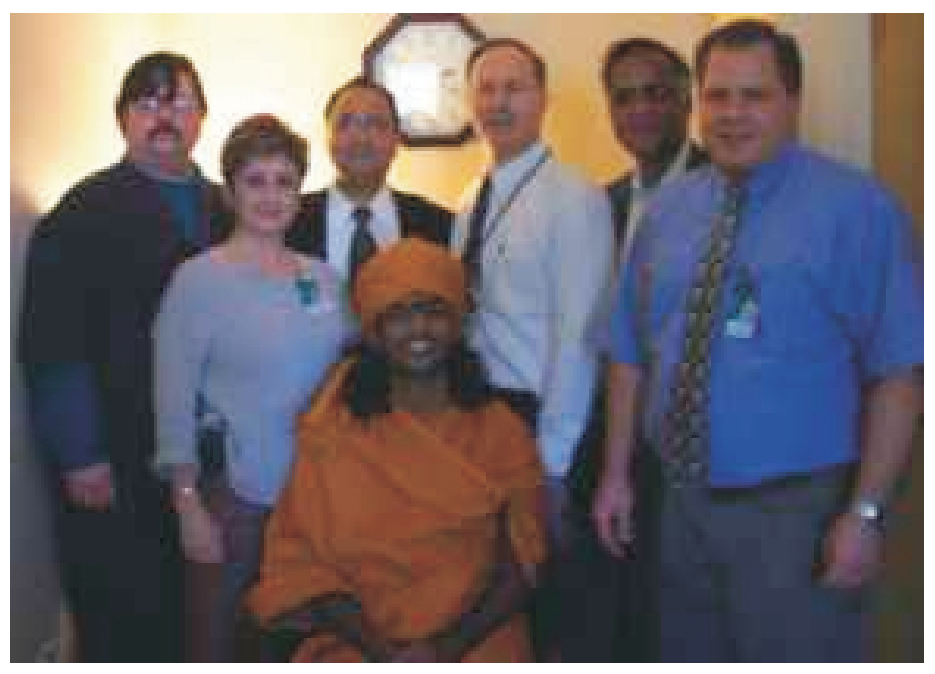
Nithyananda with the research team at the INTEGRIS
Mental Health Oklahoma City, Oklahoma, USA
Second, you must become more aware of the
readily observable effects of spirituality. Love
is intangible, but you know it when you feel it.
Hope is intangible, but it can profoundly and
positively affect the course of a person’s illness.
Trust is intangible, but living out of a sense of
trust can calm your anxieties, lower your blood
pressure and help you feel inner peace and se-
renity. Love, hope and trust are components of
spirituality, and their effects are there for you to see and feel.
Third, live out your spirituality. It is said that God comes to us in the form of suffering human beings.
Toward people you know who are in physical or emotional pain, practice kindness and compassion.
Put yourself in their shoes, understand what they think and feel, and act accordingly.
Fourth, marvel at creation. A movie or television show might bore you if you watch it over and over,
but watching a sunset or viewing a range of snow-covered mountains does not. Those are God’s
creations, not ours. When you wonder at the majesty and complexity of a mountain stream, flowers or
stars, you are engaged in a very spiritual act.
As is the case with everyone, your life will have its share of difficulties. Through spirituality, you can
increase the chances that you will come through them with health and hope intact.
Summer 2004
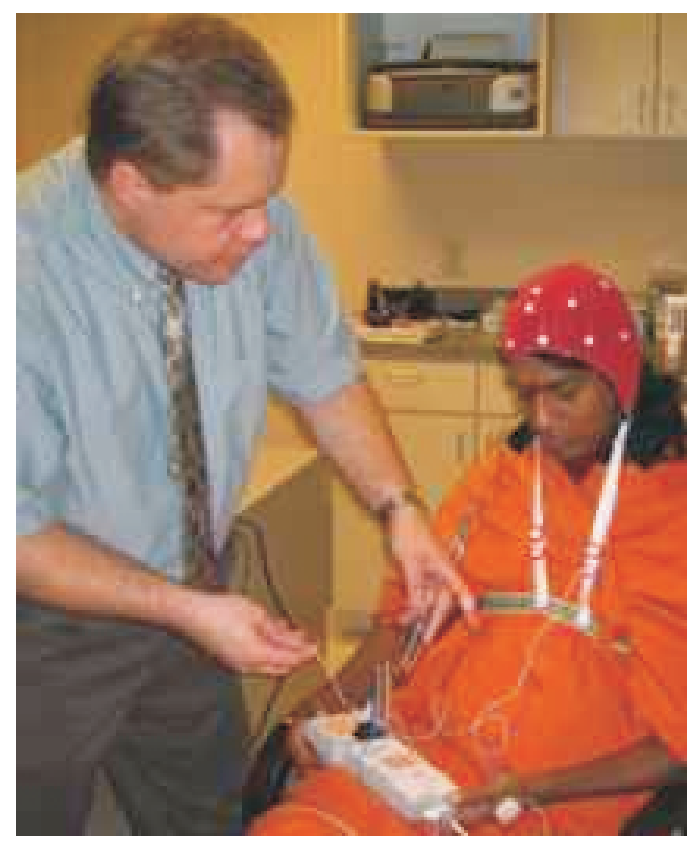
Scientists, researchers and doctors of the Integris Jim Thorpe Rehabilitation Center and the
PET center of Oklahoma, USA administered various tests and analyzed the mystic phenomena
on Nithyananda’s neurological system. Following is the summary of the findings.
A Mind Matters Column™
The Mind of a Mystic
By R. Murali Krishna, M.D.
President, James L. Hall, Jr. Center for Mind, Body & Spirit
President COO, INTEGRIS Mental Health, Oklahoma City, Oklahoma
Sri Nithyananda Swami is a trim, healthy looking young man with dark, shoulder-length hair. Handsome
and polite, possessing an open manner and a wealth of curiosity, he could be any ordinary American
college student.
The difference is that ordinary American college students do not wear orange robes and turbans, have
not experienced spiritual enlightenment and are not regarded as a teacher, healer and mystic by millions
of people in all corners of the world.
A mystic? The term is not a bad fit for ‘Swami,’ as he is known. Mystics, popular culture tells us, have
direct communion with God. Through means not understood or measurable, mystics are thought to
have access to ultimate realities or truths. Picture a mystic and you’ll probably picture someone full of
bliss, someone gifted with lofty thoughts and insights the rest of us do not possess. The very presence
of a mystic is thought to bring peace and healing to others.
That’s an apt description of Swami, a 27-year-old from South India. He is approached by thousands of
people a year seeking relief from diseases and ailments that conventional medical approaches have
not cured. Swami’s background lends him the air of a mystic, too. He left his home as a teen, visited
ashrams across India, immersed himself in philosophy, read extensively and mastered the art of
meditation.
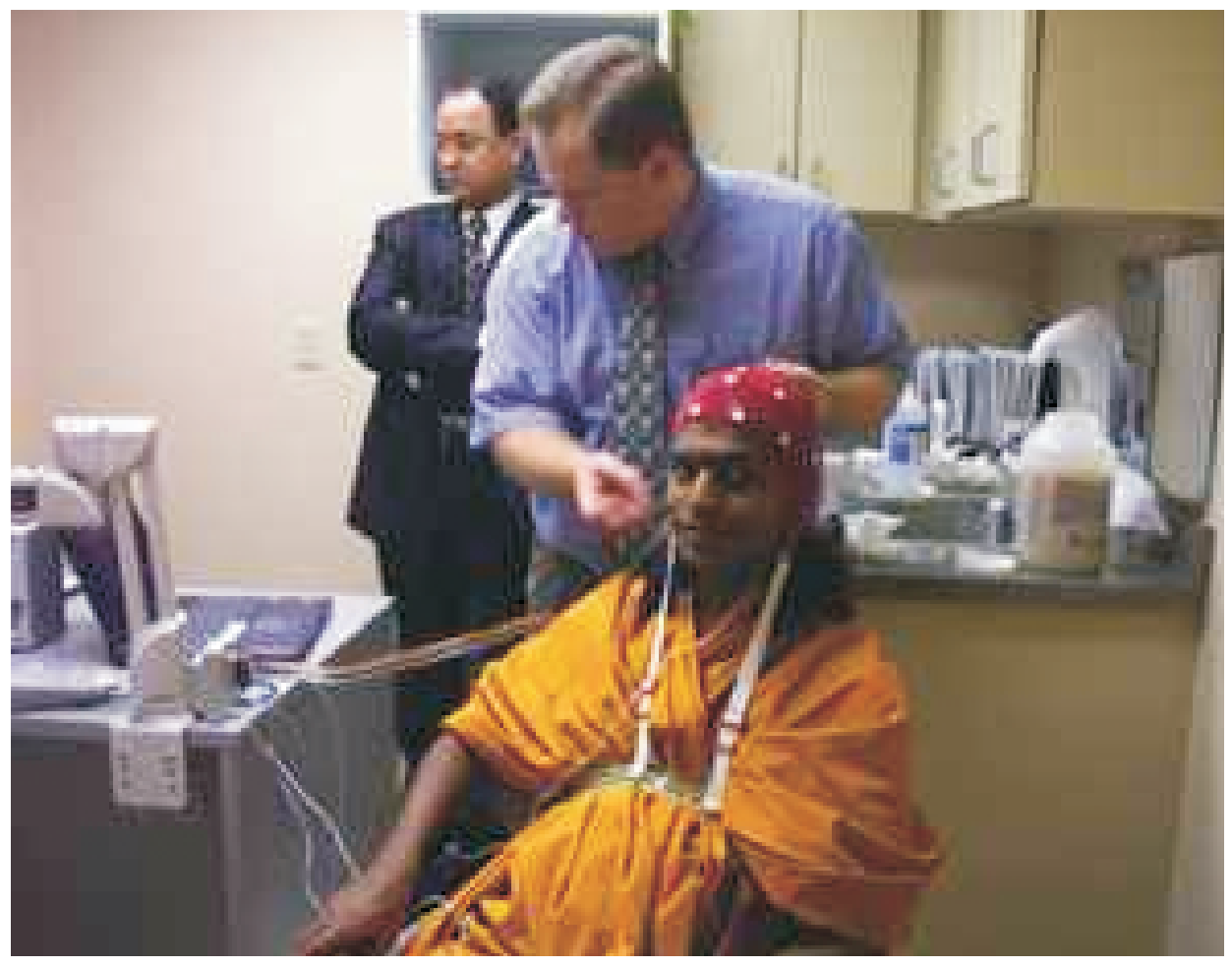
When Swami passed through
Oklahoma City recently as one
stop in his world travels, I
asked him if he would let me
use some of modern
medicine's newest technology
to peer into his brain while he
meditated. My goal: to
understand, measure and
demystify what happens
during the mystic phenomena.
Swami, who believes that
meditation has a scientific
basis, happily agreed.
The procedures Swami went
through were administered by
some of Oklahoma City's
finest and most experienced
physicians, neuropsychologists and researchers: Drs. Fordyce, Ruwe and Higgins of the Jim Thorpe
Rehabilitation Center Neuropsychology Department and Dr. Chacko of the PET Center of Oklahoma.
These doctors were using technology they use with patients on a routine basis. When they look at
images obtained by their technology, they know what's normal and what's not.
The results from testing Swami? Decidedly not normal.
Imaging Brain Activity
Our first look into Swami's brain was achieved with the help of a Positron Emission Tomography
(PET) device. Unlike traditional diagnostic techniques that produce images of the body's structure or
anatomy, such as X-rays, CT scans or MRI, PET produces images of the function of the brain through
the metabolic activity of cells. An analog of glucose is attached to a radioactive PET tracer. The PET
scanner then images the metabolically active brain areas at any given time.
In the case of Swami, the drug was intended to identify highly active areas of the brain in an alert and
conscious state, in the early stages of meditation and during deep meditation.
The results of the PET scan tests were stunning. To begin with, the activity in the frontal lobes of
Swami's brain were significantly heightened, even in early meditation stages. The level of activity
was higher than would be seen in the average human brain under any conditions.
When we then asked Swami to go into the deepest meditation state, there were two more remarkable
findings.
Mystic Phenomena, Scientific data
First, the dominant hemisphere of Swami's brain was more
than 90 percent shut down. It was as if Swami's brain had
packed up and gone on vacation. It was quiet and still,
completely at peace ... and Swami had made it so at will. A
second amazing aspect of Swami's deep meditation was that
the lower portion of his mesial frontal areas lighted up in a
very significant way. This area roughly corresponds to the
reputed location of the mystical "Third Eye."
When we later asked Swami what he was doing when the mesial
frontal areas lighted up, he said he was opening his third eye.
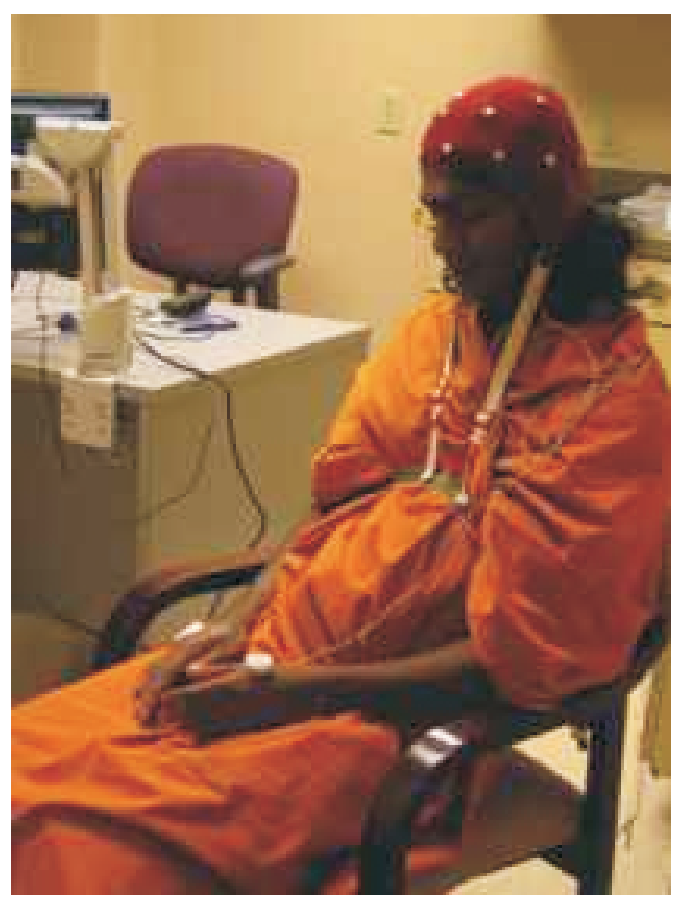
Associated with both cosmic and inner knowledge and thought
to be a place of clarity and peace, the Third Eye is considered
by many to be the seat of the soul. Were we seeing an indication
that deep meditation can open an area of the brain responsible
for communicating with the divine, looking deep into the
mysteries of self or creation? I believe the PET scan revealed
what I call the brain's "D-spot." Whether you consider the "D"
in D-spot to stand for delight, the divine or even dopamine, the chemical through which our bodies
experience pleasure, initial indications are that meditation can stimulate it.