Mṛgaśira-Ārdra Punarvasu Nakṣatras
This text was machine-transcribed from the printed book and may contain errors. Select the words and choose “Report a mistake”.
Moon in Gemini
'The Lord is in all beings and the entire Universe is in Him.'
- Bṛhat Parāśara Hora Śāstra
The meditation techniques included in this book are to be practiced only under
the direct supervision of an ordained teacher of Nithyananda Dhyanapeetam
and in consultation with your personal physician to determine your fitness and
ability to do the techniques. They are not intended to be a substitute for medical
attention, examination, diagnosis or treatment. If someone tries these techniques
without prior participation in the meditation programs of Nithyananda
Dhyanapeetam and without the direct supervision of an ordained teacher of
Nithyananda Dhyanapeetam, they shall be doing so entirely at their own risk;
neither the author nor Nithyananda Dhyanapeetam nor Nithyananda Publishers
shall be responsible for the consequences of their actions.
Published by:
Nithyananda Publishers
Nithyanandapuri, Off Mysore road
Bidadi 562 109, Bengaluru, Karnataka state, India
Copyright© 2009 - 'Living Enlightenment year'
First Edition: December 2009, M.R.P in India only:
Ebook ISBN : 979-8-88572-203-2
ISBN: 978-1-60607-117-5 ISBN: 1-60607-117-3
All rights reserved. No part of this publication may be reproduced, or stored in a
retrieval system, or transmitted by any form or by any means, electronic,
mechanical, photocopying, recording or otherwise, without written permission
of the publisher. In the event that you use any of the information in this book for
yourself, the author and the publisher assume no responsibility for your actions.
All proceeds from the sale of this book go towards supporting charitable activities.
Printed in India by : W Q Judge Press, 97, Residency Road, Bangalore - 560 025,
Karnataka state Ph: +91 80 2221 1168 Email: [email protected]
Universal Truth
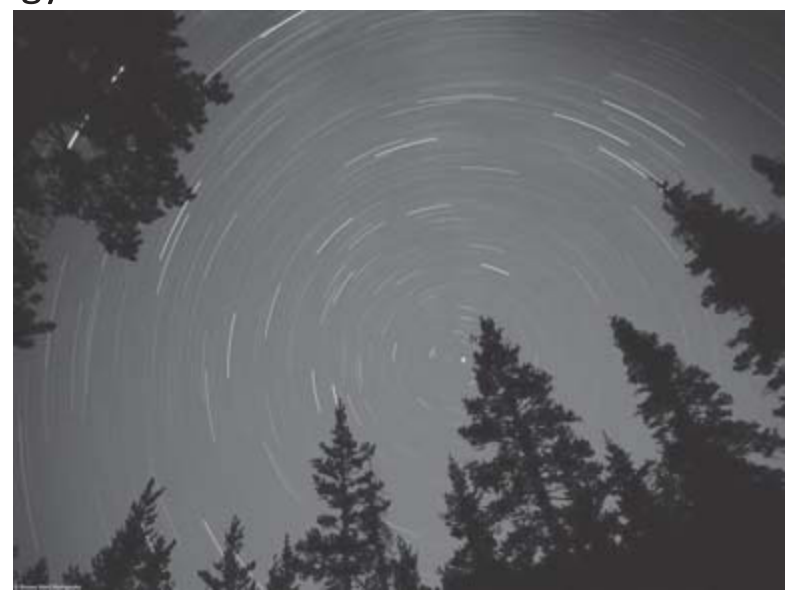
If you look deeply, if you look beyond mundane life, beyond the day-to-day life we live... If you contemplate on a night sky... you will see that the most intimate and complete relationship man owns is the relationship to the Universe. In fact, it is man's ultimate relationship: he takes birth, lives and merges back into it. Nothing happens outside of it; even his enlightenment happens in it. Just as the child grows in his mother's womb, man evolves in the cosmic womb. He is the microcosm of a tremendous cosmic macrocosm. Therefore, all components of man, from the grossest to the subtlest, come from the universe: his body, his mind, his energy and his very consciousness are elements of the cosmos. Universe and man are indivisible. Whatever happens in the Universe resounds in the human consciousness, and whatever happens in the human consciousness resounds in the Universe. Both are a unique consciousness.
The Great Vedic Astronomy
Man has been deeply fascinated by the Cosmos since the beginning of time. Early cultures worked on understanding the phenomena that happen in the sky; they observed them in order to understand what role the sky played in their lives. From these attempts, the science of astronomy was born.
In this field, the ancient Vedic contribution is well known. The earliest references to astronomy are found in the Ṛg Veda, which are dated 2000 BC. Around 500 BCE, Āryabhaṭa, a great astronomer, presented a system that showed the earth to spin on its axis and considered the motions of the planets with respect to the Sun. He also discovered how the lunar and solar eclipses occur and was the earliest to discover that the orbits of the planets around the Sun are ellipses, just as Copernicus and Galileo concluded a thousand years later. He even determined the diameter of the Earth to be 5,000 yojanas, approximately 36,000 km, which is very close to the actual figure. These traditions related these objects and their movements to natural events such as rain, drought, seasons and tides; they related them to auspicious or inauspicious occurrences on planet Earth. Jyotiṣa, the science of Vedic astrology, took birth out of observations and perceptions based on these astronomical phenomena. The first astronomers were actually Ṛṣis and sages, who understood the sky was a divine happening; they identified celestial objects with energies and Gods and connected astronomy to astrology.
Jyotiṣa Simply Put
Astrology manifested in the inner vision of the ancient sages and Ṛṣis of India. These yogis and enlightened beings were able to see beyond the realm of names and forms. They could feel and express the subtle reality that exists behind cosmic phenomena. As such, they perceived the primal powers of cosmic intelligence in the planets and stars (the macrocosm), and worshipped the cosmic powers within themselves (the microcosm) as powers of their being.
By concentrating intensely on the Sun and other planets, they understood the movement of the life force in their body, and by meditating on the life force, they also came to understand the movement of the Sun and the planets in the heavens. Through this technique called saṁyama, they could unravel the secrets of the universe. They brought down their understanding into a system of Vedic science, which became known as Jyotiṣa: the science of light.
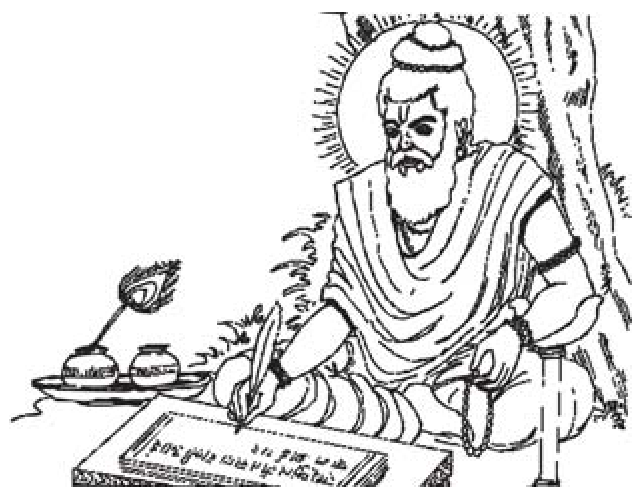
Parāśara was one such sage. He is known for being the father of Jyotiṣa. He wrote the magnum opus Bṛhat Parāśara Hora Śāstra, which systematically explains the theory of predictive astrology. According to history, he is the grandson of Vaśiṣṭa and also father of Veda Vyāsa, who wrote the great epic Māhābhārata. The depth of his astrological knowledge was so great that one evening while crossing a river in a boat, he casually looked at his favorite stars in heaven and suddenly realized it was an exceptionally auspicious moment. He concluded that if a child were conceived at that moment, he would be an expert in the scriptures. So he told this to the lady rowing the boat and requested that she marry him. She agreed and the son born out of their spiritual union was Veda Vyāsa!
By observing the movements of the celestial bodies through time and space, the science of Vedic Astrology can be applied to each human incarnation to encourage the soul to develop to its fullest potential.
In Paramahamsa Nithyananda’s own words:
‘The moment the consciousness enters the body, the energy level of the cosmos at the time of birth gets printed in that consciousness. Your inner space gets a print of the cosmic energy level and the position of the nine major energy centers of the solar system.
The astrological planets are not only astronomical, they are energies. A particular energy of push and pull exists between them. The different energy positions clearly decide the cosmic energy level during the time of birth. Based on that, Jyotiṣa will be able to predict the course of life. Understand, not exact incidences because you have freedom. You have freedom to decide whether to sit here or not, to read this or not. The major course of life- if you will get enlightened or not can be predicted. Principles can be predicted, not policies! Having an idea about your horoscope will give you intelligence and acceptance in your life: intelligence to take decisions and the acceptance to bear the inevitable things. According to me, a seeker should have a basic knowledge about his horoscope.’
Jyotiṣa and Living Enlightenment
Jyotiṣa can help one to read his destiny. But what is actually destiny?
There are only two types of destinies:
The first one is destiny as defined by a dictionary: destiny lived within the boundaries of the ego, with its own expectations, hopes, desires, successes and failures. It is constantly changing. Because it evolves under mind’s law, it is mechanical, accidental and coincidental. This ‘destiny’ is lived in the dimension of the mind, so it has no existential reality in itself. It is nothing more than a reproduction of one’s past in the present, which conditions the future in a mechanical way.
The other destiny is existential and ultimate; it is the flowering of consciousness into enlightenment. Understand: the only thing predestined in the scheme of life is that man is meant to evolve to reach enlightenment. The rest is just incidental; it happens for no other reason than to teach and mold the being towards seeking enlightenment. Living enlightenment is all about making conscious choices, free from the unconscious push and pull of the saṁskāras.
The further you wander from your center, the more you lose yourself in your periphery, the more you are subjected to incidents and accidents. Whereas, when you live enlightenment, you are centered, you are within your boundaries, you are aware. You become predestined, because your predestination is to reach enlightenment; your destiny is to become more and more aware. Then you become the agent of your fate, and you move beyond grahas’ influences. This is how you come to terms with your karmas.
For that to happen, a simple understanding of the forces at work in you can help clarity manifest in your daily routine. In addition to this, you can follow a couple of guidelines to keep your body healthy with the science of Āyurveda and raise your energy level with yoga, the use of gemstones, rudrākṣa beads, mantra chanting, and a basic knowledge of your psychological tendencies coupled with the ancient Vedic wisdom expressed by the great enlightened Masters.
All these remedies will bring lucidity about your mental set-up and support for eventually dropping your conditionings, unclutching from your mind and emotions and fostering your intelligence and energy to Live Enlightenment.

Understanding Grahas and Nakṣatras
The grahas are energy centers, energy fields that planets exert in the universe. Each of the nine main grahas in Vedic astrology has a specific energy field that creates specific effects on our planet Earth. For example, the moon has a strong impact on the movements of the sea and on plant growth; it even influences the mind of human beings. In the same way, the major energy centers produce an effect on living beings and influence their potential at birth, their mental set-up and, therefore, the course of their destiny. In Jyotiṣa, grahas are often referred as the agents of the karmas for which the soul took birth. Human personality and life have their counterparts in the structure of the cosmic physiology, represented by the grahas and the nakṣatras.
There are nine grahas (nine influences or ‘planets’) in our solar system: the Sun (Sūrya), the Moon (Candra), Mars (Mangal), Mercury (Budha), Jupiter (Guru), Venus (Śukra), Saturn (Śani) and two nodes called Rāhu (ascending lunar node) and Ketu (descending lunar node). These represent archetypes. Sūrya, for example, represents consciousness; Candra represents the cosmic mind; Budha represents the cosmic intellect, etc.
Most of the calendars of the world have been set by the Sun's and Moon's movements (measuring the day, month and year) and were of great importance for agriculture, because the harvest depended on planting at the correct time of the year. But the Vedic tradition uses a system of 27 nakṣatras to calculate months. The nakṣatra is the constellation in which the moon sits in the heaven at a particular time. In each month, the full moon sits in a particular constellation, and the Vedic month will have this nakṣatra's name.
Each nakṣatra falls under the rule of one, sometimes two grahas. Each graha is assigned three nakṣatras. For example, if the child is born when the moon sits in Aśvini nakṣatra, his birth star will be Aśvini, and his sign will be Aries (called mesha in Sanskrit), ruled by planet Mars (Mangala). Bharaṇi and Kṛttika, the two next nakṣatras, also fall under the lordship of Aries sign. All three will therefore have similar characteristics and will influence the child’s mind and consciousness at the time of birth, shaping his destiny.