Nithya Sutras, Dhyana Sutras, Ananda Sutras
This text was machine-transcribed from the printed book and may contain errors. Select the words and choose “Report a mistake”.
Earlier, I had mentioned three types of techniques - the techniques which need to be practised twenty-four hours a day, the techniques which are to be practiced at a particular time and the techniques which can directly transport you to the space of enlightenment. I call these techniques nithya Sutras, dhyana Sutras and ananda sutras. Nithya means ‘everyday’; these are techniques that need to be practiced everyday. Dhyana means ‘to contemplate; these are the techniques you need to practice for a particular period. Ananda means ‘bliss’ - these are the techniques which can directly give you a glimpse of the bliss of enlightenment. Sutra means ‘aphorism’ or a technique. The techniques for sudden enlightenment are what I call ananda sutras.
Understand, the same technique may be a nithya sutra for someone, a dhyana sutra for another and an ananda sutra for a really advanced seeker. In my experience, I have seen that about one-third of the people are able to catch a technique immediately. The moment they hear it, they feel, ‘Yes, it is true!’ The click happens. They simply start expressing it in their lives. Another one-third connect to the technique, but they don’t have the experience. This group needs to work with the technique. The technique has worked for them also, but they need time. The third group, the remaining one-third, simply cannot connect to the technique. It makes no sense to them. For this group, it is better to move on, to try something else.
Sometimes, even when the same person works with the same technique, it can be a nithya sutra or dhyana sutra for him first, and suddenly one day it may become an ananda sutra. For example, when you first try unclutching as a technique, you may do it only for a fixed period of time – maybe during your daily meditation session, or whenever you remember.
Then slowly, it becomes a nithya sutra – no matter what you are doing, you are aware, you are trying to be unclutched.
When the technique has soaked into you, when it has become part of your being – suddenly, one day you will see - the very same technique becomes an ananda sutra for you. You don't have to practice it, the experience just happens. You experience the final break from depression, the ultimate freedom.
The koans used by Zen Masters work in this way. Koans are riddles which cannot be solved logically – in fact, they cannot even be understood by the intellect. One of the most famous koans is, ‘What is the sound of one hand clapping?’ Just imagine! You will be shocked just hearing the koan, just trying to grasp it with your mind! The whole purpose of the koan is to baffle your logic – to make you leap out of your thinking mind, at least for a few seconds.
Sometimes, a koan will have immediate effect, sometimes, the seeker will keep it in a corner of his mind, continuously working with it. It all depends on the ripeness of the seeker.
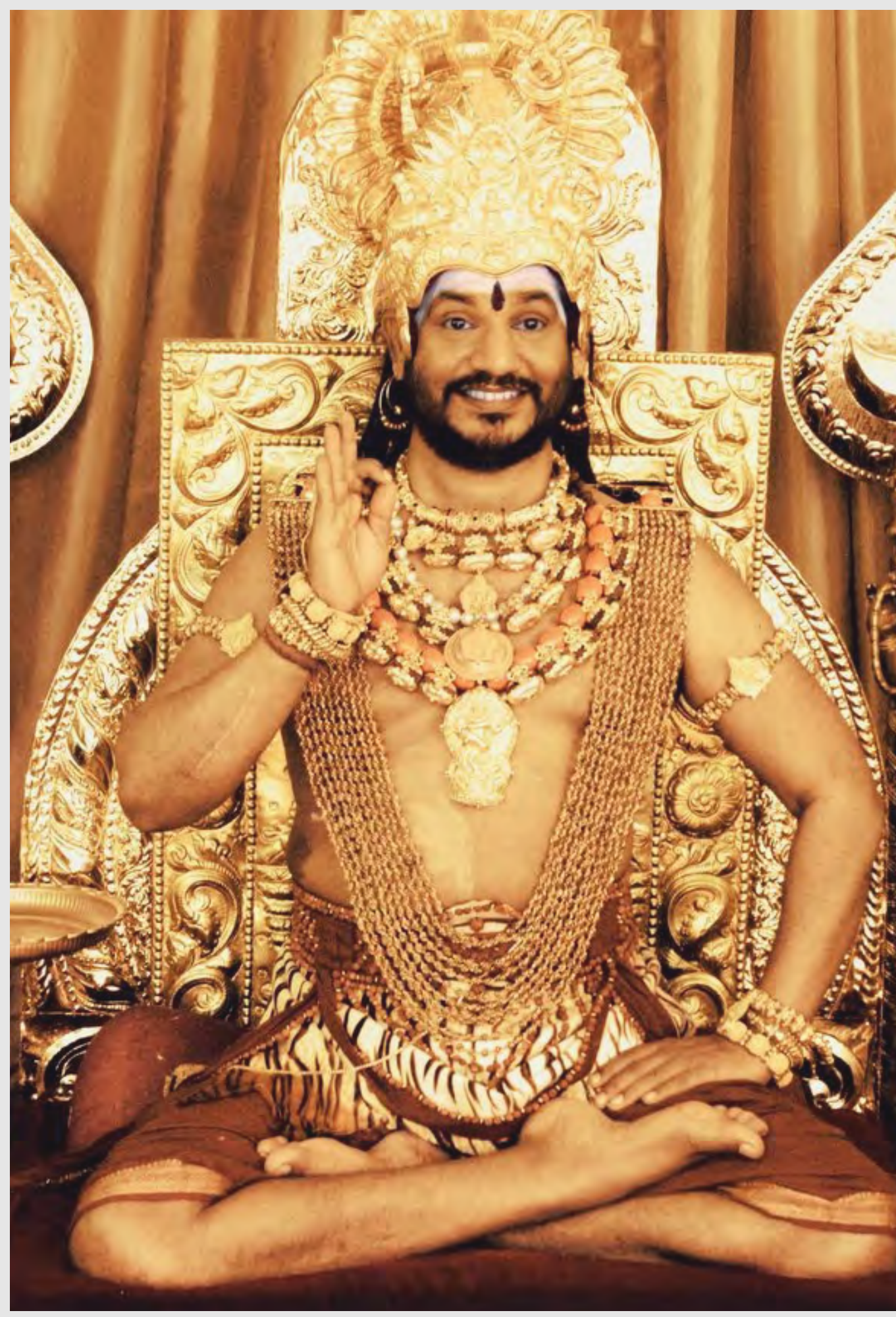
The sutra need not always be expressed in words!
Zen Masters are famous for using the Zen stick – a staff with which they give a sudden blow to a disciple to wake him up. Of course, nowadays, Masters don't carry sticks – but they can still give blows at the right moment! The 'blow' can be a physical action, a well-aimed word or a look.
If the connection between Master and disciple is so deep, so total, even words are not needed. Then even a look, even a simple movement of the Master's hand is enough to awaken the disciple in a moment.
For such a miracle to happen, the Master's compassion has to be unconditional, and the disciple's trust has to be total.

A small story:
A Zen Master was bringing up a small boy from a young age to be his successor. This little boy had a very deep, loving connection with the Master, but he was very naughty. He would always try to behave in the same way as the Master. Standing behind the Master, he would imitate the Master and make fun of him. The Master had a habit of always holding his thumb up whenever he wanted to emphasize a particular point.
This boy also would stand behind the Master and do the same thing! One day, when the boy was standing behind him and holding up his thumb, that Master simply turned around and cut off the boy's thumb with his knife. Understand, he simply cut off his thumb!
The story says beautifully that the trust and the feeling of connectedness with the Master was so deep, the boy did not even think for a moment that something wrong was done to him. The disciple felt very clearly that if the Master does something, it must be good for him. The story says that this deep trust, even during the intense pain, enlightened him at that very moment.

Understand two important things here. First thing, the disciple was willing to go through any suffering, any kind of tapas (penance) for the sake of realization. Penance is nothing but being ready to work on the technique at any cost. Second thing, such a deep sense of connection and trust in the Master existed in the boy.
He had the two qualities that can carry you to the ultimate: deep passion, and deep patience. Passion is the powerful will to realize the truth, the courage to gamble your life to experience the Truth. Patience is the deep prayer that you will have the experience, the deep passivity to wait for the experience. Understand, when I say patience, I don’t mean the kind of patience we usually have. When it comes to enlightenment, we all have a lot of patience. We don’t mind waiting till next year or the next life for the experience! No! Patience comes out of the deep trust that the Divine is supporting you at every moment. Actually, when you have passion with patience, you don’t even have to wait! Any moment can be the right moment for you. Of course, such sharp techniques as the Zen Master used are only for whom enlightenment has become their first priority, who are willing to give their life for the experience.
When you are able to surrender your ego in the midst of such intense pain, you don’t need another teaching. The very surrender will lead you to the space beyond ego.