Meditation on Dakshinamurti Stotram [Hymn to the Prime Guru]
This text was machine-transcribed from the printed book and may contain errors. Select the words and choose “Report a mistake”.
Truth is the path, the goal and the experience!
The whole effort of Vedanta is to draw us away from our fascination with the outer world and turn our awareness to the changeless witnessing Consciousness within. Continuously perceiving the outer world as ‘unreal’ and the amtan (inner consciousness) as real is a technique that is widely employed by Vedanta to this end. Since the world certainly doesn’t appear unreal in our experience, Vedanta has been called impractical and out of touch with reality. This is because the words ‘unreal’ and ‘real’ as used in Vedanta have not been correctly understood. When the world is called ‘unreal’, it does not mean that it has no existence! The world definitely has existence and a certain reality on its own plane – but it is not the ultimate reality. Just as the dream world has reality on its own plane (i.e. to the dreamer), the waking world also appears real to us - but only till we ‘awaken’ to the realization that it is nothing but pure Consciousness playing in diverse forms. The grace of the realized guru is of supreme importance in this awakening. Just as a man who is trapped in a swamp can be rescued only by one who is himself standing on safe ground, only a guru who is already living in the space of enlightened consciousness can guide a seeker surely to the goal.
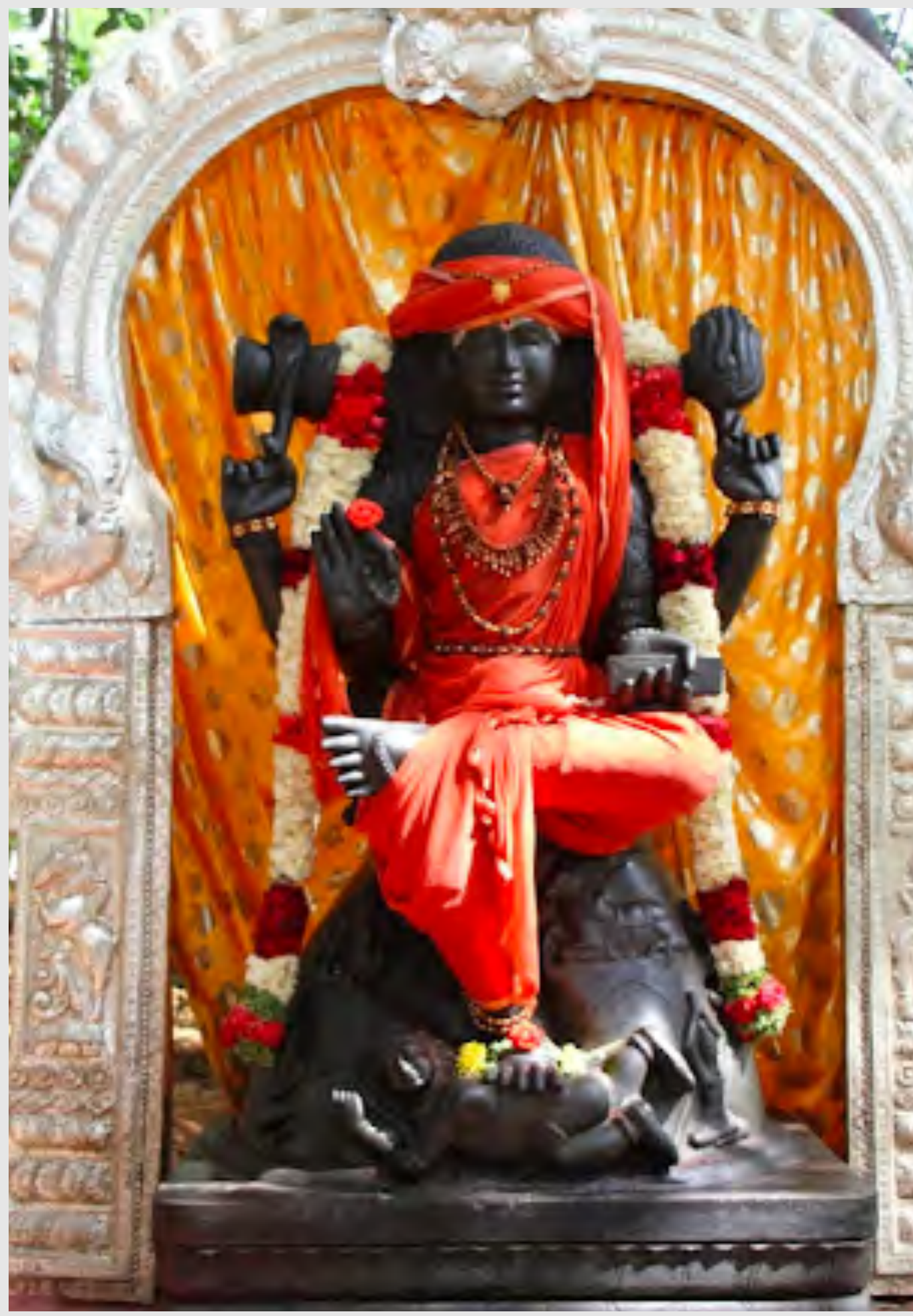
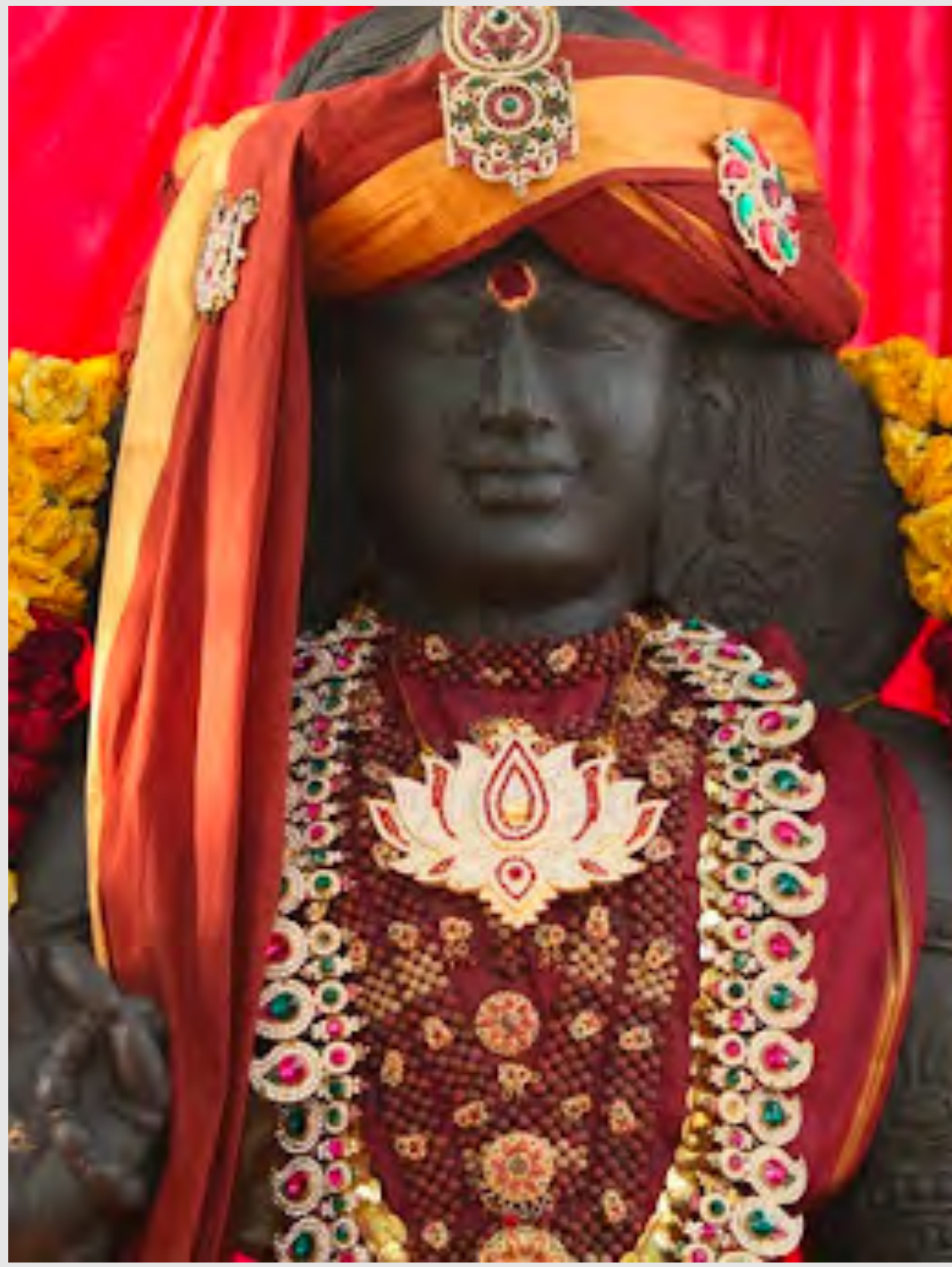
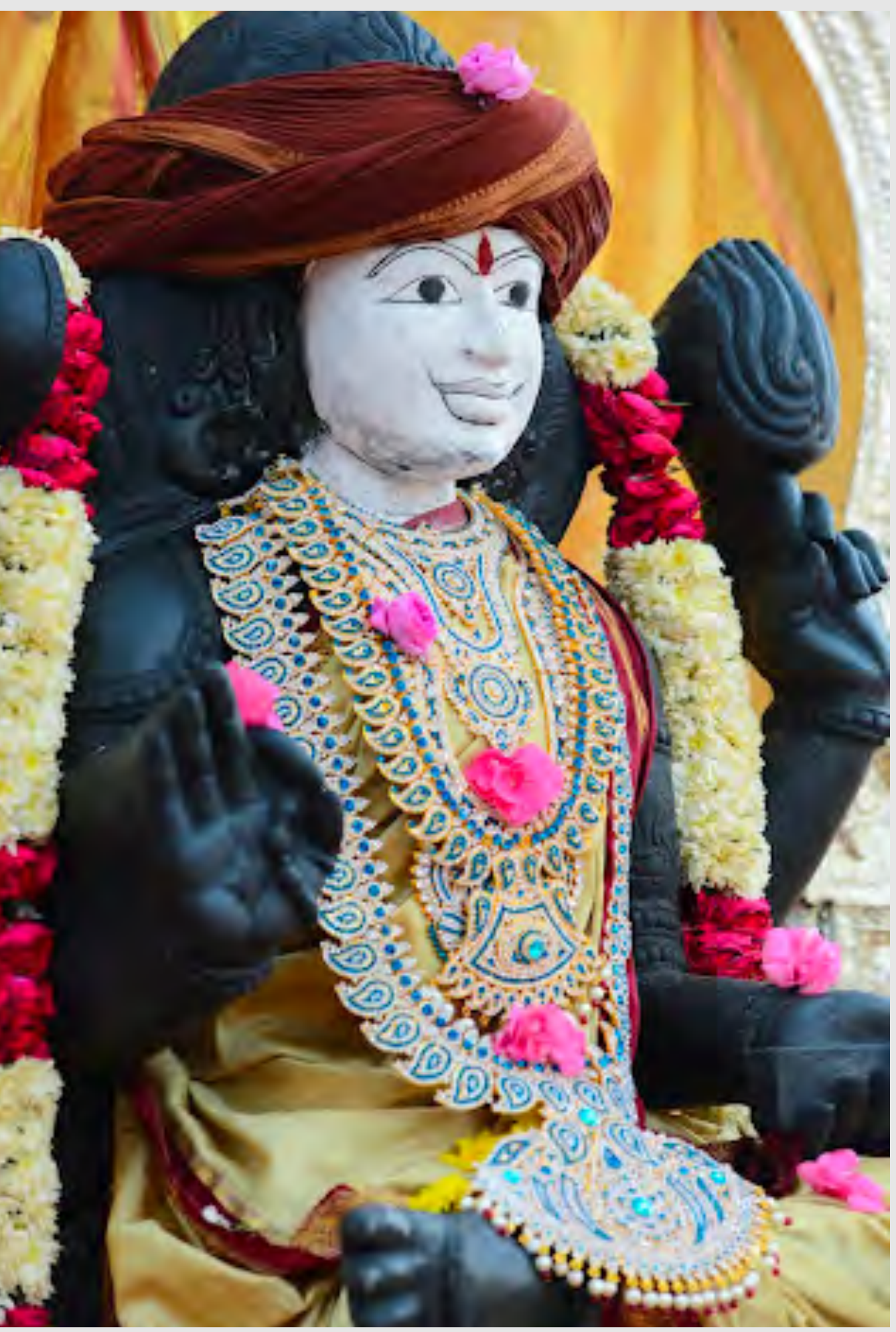
Dakshinamurti stotram is a hymn addressed to Sri Dakshinamurti, the great enlightened master who is said to be the first-ever guru of the world. Believed to be a manifestation of Lord Shiva himself, Dakshinamurti is depicted as a radiant youth who sits under a banyan tree and reveals, through eloquent silence, the truth of non-dual Consciousness.
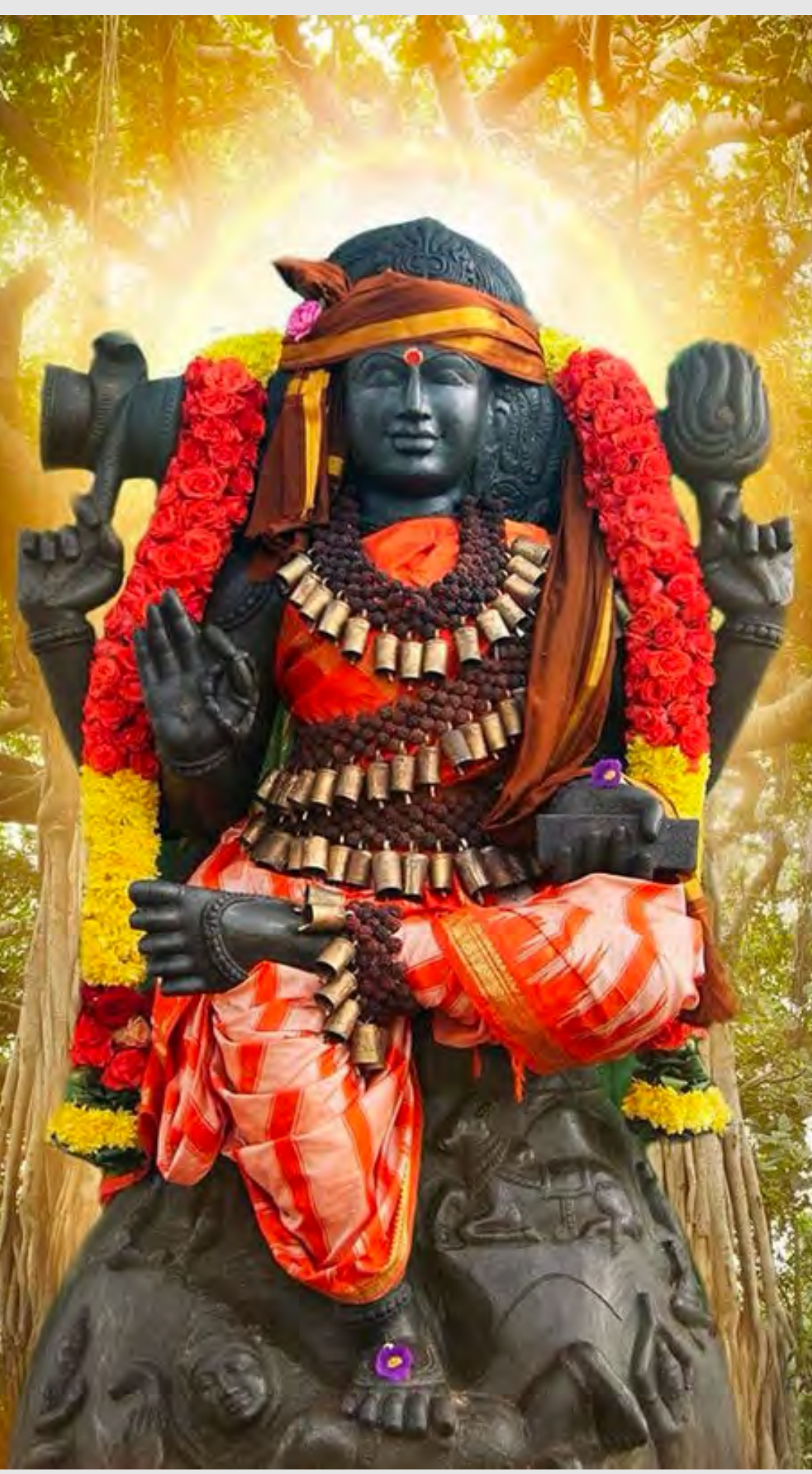
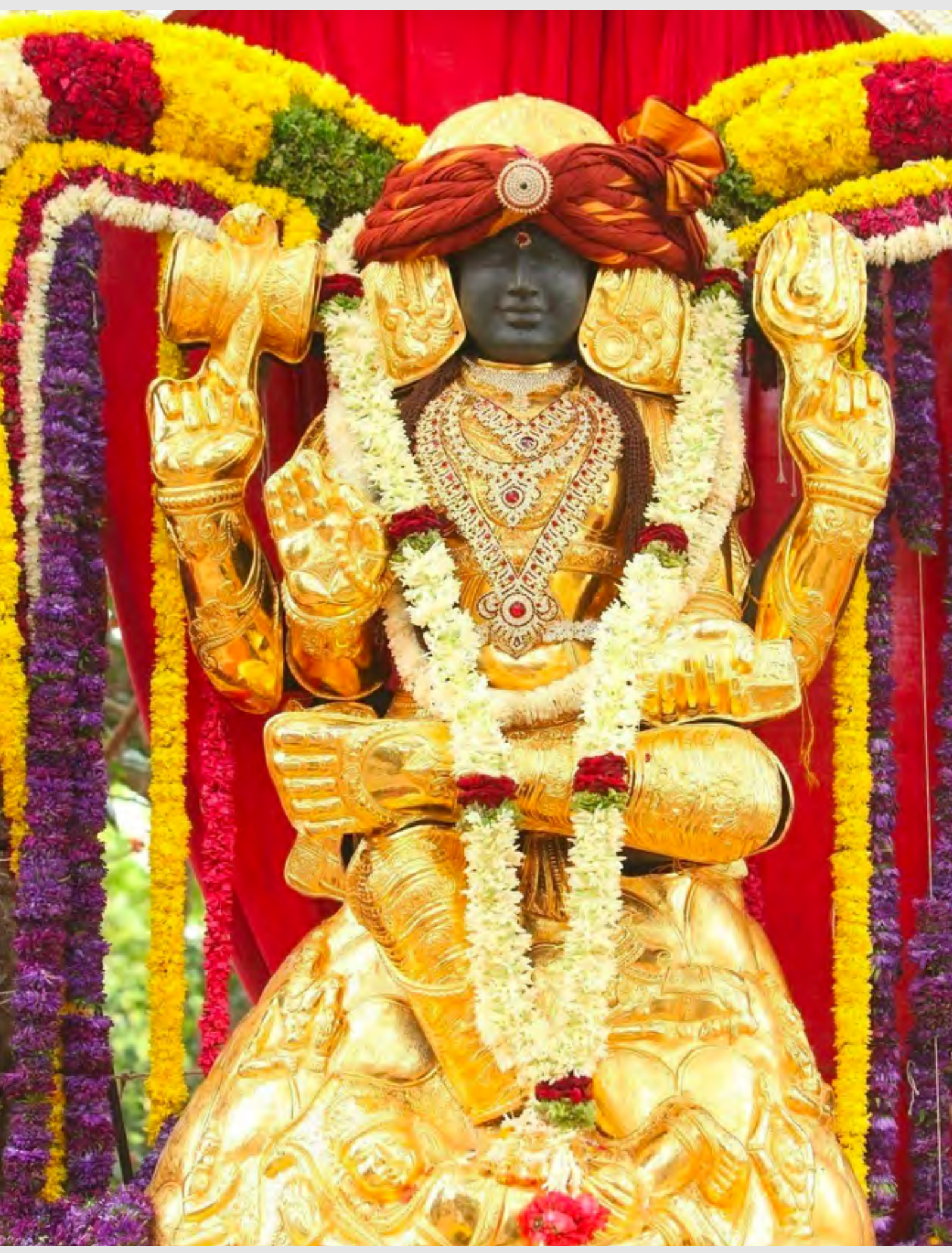
Dakshinamurti stotram is a gem of Vedantic wisdom, equivalent in scope and insight to an Upanishad. Written by Sri Sankaracharya, the great enlightened master of the 8th century, it flawlessly blends the various spiritual disciplines of gnana (wisdom), bhakti (devotion) and dhyana (meditation).
Shaastra are the intellectual treatises (gnana) that help us understand the Truth; stotra are the devotional hymns (bhakti) that express the experience of the Truth; sutra are the techniques (dhyana) that show us how to go from the understanding to the experience. Dakshinamurti stotram is at one a shaastra, a stotra and a sutra. For the discerning intellectual, it can trigger a psychological revolution in the comprehension of Reality, for the devotee, it is a revelation of the incomparable play of the Divine in the world, and for the meditator, every line is a powerful technique that can open the door to Truth.
Although the hymn has ten verses, plus an invocatory and a concluding verse, each verse can be contemplated independently. In fact, each phrase can be an independent technique! The best way to enter into this hymn is to meditate on one verse, or even one line at a time, for as many days as you feel necessary.
Dakshinamurti Stotram
Dhyana shloka (Invocatory verse):
Chitram vatataror mooley
Vriddha shishyaa gururyuva
Gurostu mounam vyaakhyaanam
Shishyaaastu chinna samshayah
(Under the banyan tree they sit, the disciples aged, the guru a mere youth! The guru speaks through silence alone But lo! The disciples’ doubts dissolve on their own.)
vishvam darpanadrishyamaana nagaritulyam nijaantargatam pashyan aatmani maayayaa bahirivodbhootam yathaa nidrayaa yah saakshaatkurute prabodhasamaye svaatmaanam evaadvayam tasmai shri gurumurtaye nama idam shri dakshinamurtaye [1]
The universe is reflected in Consciousness as a city seen in a mirror. Although the universe exists within our Consciousness alone, it appears as if outside, just as the dream-world appears to the dreamer as if it exists outside him, while in reality it has been created by him (and has no existence outside of him). On awakening from the dream (of life) and seeing the Truth, the dreamer realizes that he himself is the absolute, non-dual Self. My salutations to Dakshinamurti, the embodiment of the auspicious Guru (who symbolizes this truth).
Dakshinamurti Stotram (continuation)
Dhyana shloka (Invocatory verse):
bijasyaantarivaankuro jagadidam praang nirvikalpam punah maayaakalpita deshakaalakalanaa vaichitrya chitrikritam. maayaaveeva vijrimbhayatyapi mahaayogeeva yah svechchhayaa tasmai shri gurumurtaye nama idam shri dakshinamurtaye [2]
As a (potential) tree lies hidden inside a seed, this universe exists unmanifested in Conscisouness before its projection. The dimensions of time, space and distinctions are nothing but the varied pictures created by maya (illusion), like the magician unfolds (an illusory world), or a great yogi creates (a universe) by his willpower. My salutations to Dakshinamurti, the embodiment of the auspicious Guru (who symbolizes this truth).
yasyaiva sphuranam sadaatmakam asatkalpaarthagam bhaasate saakshaat tatvamasiti vedavachasaa yo bodhayatyaashritaan yatsaakshaatkaranaad bhavenna punaraavrittir bhavaambhonidhau tasmai shri gurumurtaye nama idam shri dakshinamurtaye [3]
He, by whose Light alone this (unreal) universe appears real, teaches the Truth to those who seek the Atman, through the vedic teaching tat tvam asi (thou art That) - by realizing which the ocean of birth and death can rise no more. My salutations to Dakshinamurti, the embodiment of the auspicious Guru (who symbolizes this truth).
Dakshinamurti Stotram (continuation)
Dhyana shloka (Invocatory verse):
Naanaachhidra ghatodarasthita mahaadeepaprabhaa bhaasvaram gyaanam yasya tu chakshuraadikarana dvaaraa bahih spandate jaanaamiiti tameva bhaantam anubhaatyetat samastam jagat. tasmai shri gurumurtaye nama idam shri dakshinamurtaye |4|
Just as the light of a lamp kept in a pot studded with holes escapes through the holes, it is the inner light of Consciousness that gleams through the eyes and other senses. This entire universe shines (exists) only when the light of Consciousness ('I know') perceives it. My salutations to Dakshinamurti, the embodiment of the auspicious Guru (who symbolizes this truth).
deham praanamapindriyaanyapi chalaan buddhim cha shuunyam viduh stribaalaandhajadopamaastvahamiti bhraantaa bhrisham vaadinah maayaashaktivilaasa kalpita mahaavyaamoha samhaarine tasmai shri gurumurtaye nama idam shri dakshinamurtaye |5|
Some philosophers consider the changing body, life-force, senses, intellect and non-existence (shunya) as the real 'I' (Atman). Their comprehension is worse than that of women, children, the blind and the dimwitted. He who destroys this great delusion caused by the power of maya (and makes us aware of the Truth)- to that Dakshinamurti, who is embodied in the auspicious Guru, I offer my salutations.
Dakshinamurti Stotram (continuation)
Dhyana shloka (Invocatory verse):
Raahugrasta divaakarendusadrisho maayaasamaachchhaadanaat sanmaatrah karanopasamharanato yo'bhutsushhuptah pumaan praagasvaapsamiti prabodhasamaye yah pratyabhijnaayate tasmai shri gurumurtaye nama idam shri dakshinaamurtaye [6]
The brilliance of sun exists even when intercepted by the planet Rahu during the solar eclipse. Similarly, the power of cognition only remains suspended during deep sleep, when the senses are withdrawn into the Self. The Self exists as pure being even though enshrouded in Maya. A person on awakening becomes aware that he was asleep earlier (and the dream was unreal). Similarly, a person who awakens to the consciousness of the Self recognizes his previous state of ignorance as unreal. He by whose grace alone one awakens to the consciousness of the Self - to that Dakshinamurti, who is embodied in the auspicious Guru, I offer my salutations.
baalyaadishhvapi jaagradaadishu tathaa sarvaasvavasthaasvapi vyaavrittaasvanuvartamaanamahamitityantah sphurantam sadaa svaatmaanam prakatikaroti bhajataam yo mudrayaa bhadrayaa tasmai shri gurumurtaye nama idam shri dakshinaamurtaye [7]
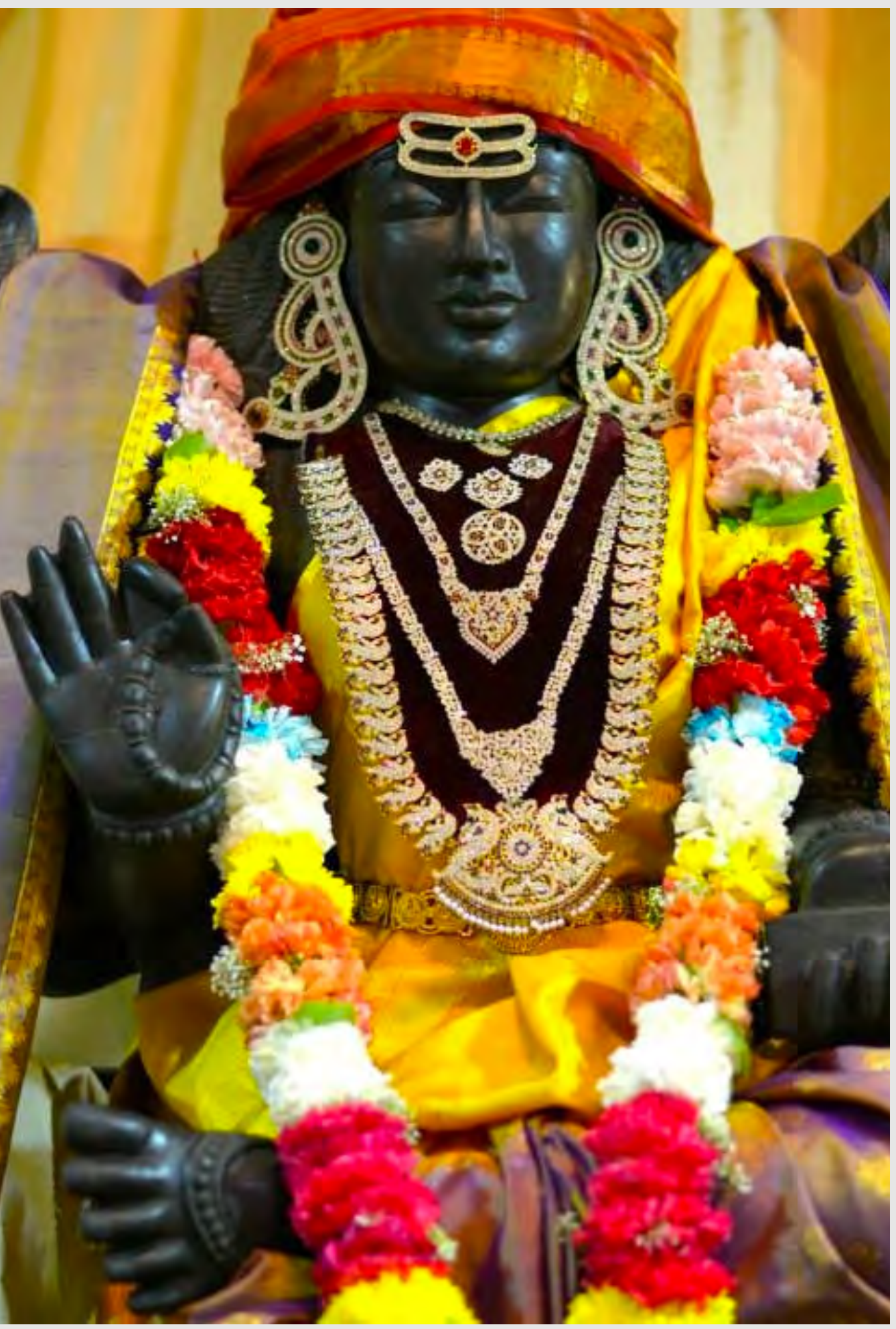
He, whose existence is changeless through the various states of body (like old, young, etc.) as well as mind (like waking, dreaming etc); who reveals the unchanging Atman by the auspicious gnana-mudra (the hand gesture that symbolizes the one Absolute) - to that Dakshinamurti, who is embodied in the auspicious Guru, I offer my salutations.